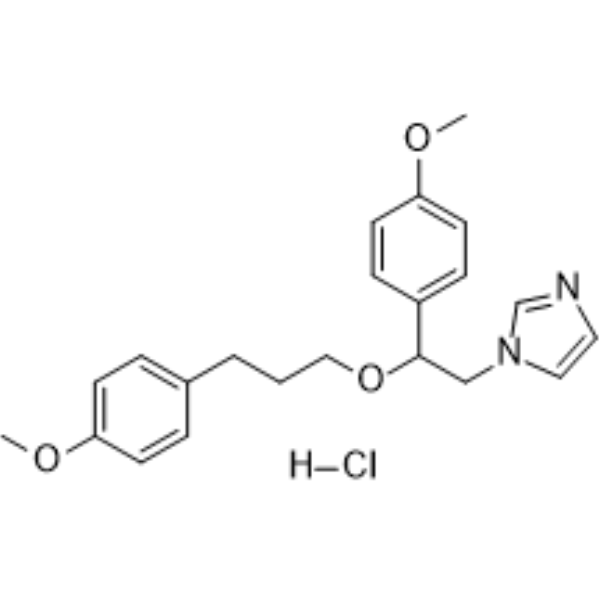
1. Search Result
Search Result
Pathways Recommended: Membrane Transporter/Ion Channel
Results for "

Potassium Channel Activator

" in MedChemExpress (MCE) Product Catalog:

566

Inhibitors & Agonists

6

Screening Libraries

1

Fluorescent Dyes

3

Biochemical Assay Reagents

48

Peptides

84

Natural
Products

49

Isotope-Labeled Compounds

1

Click Chemistry

5

Oligonucleotides

Cat. No. Product Name Target Research Areas Chemical Structure
  • HY-18723
    Yoda 1
    95+ Cited Publications

    Piezo Channel Akt ERK Potassium Channel Cardiovascular Disease
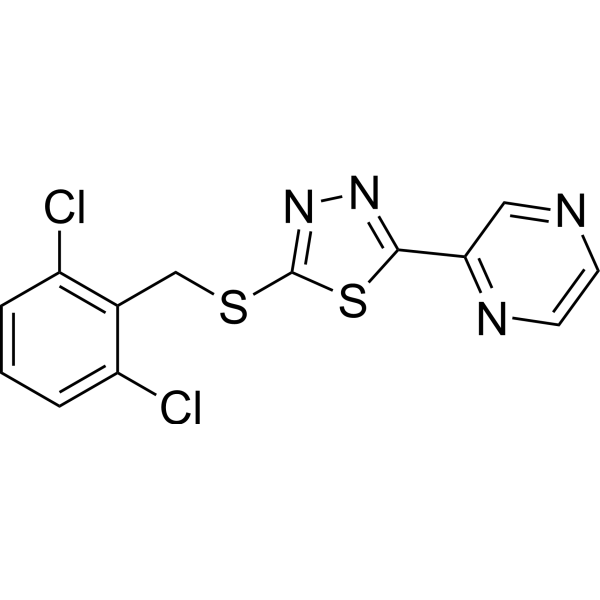
    Yoda 1 is a potent and selective Piezo1 agonist. Yoda 1 activates purified Piezo1 channels. Yoda 1 potently inhibits macropinocytosis induced by epidermal growth factor (EGF). Yoda 1 enhances Ca 2+ influx followed by activation of the calcium-activated potassium channel KCa3.1 and inhibition of Rac1 activation .
    Yoda 1
  • HY-B0285
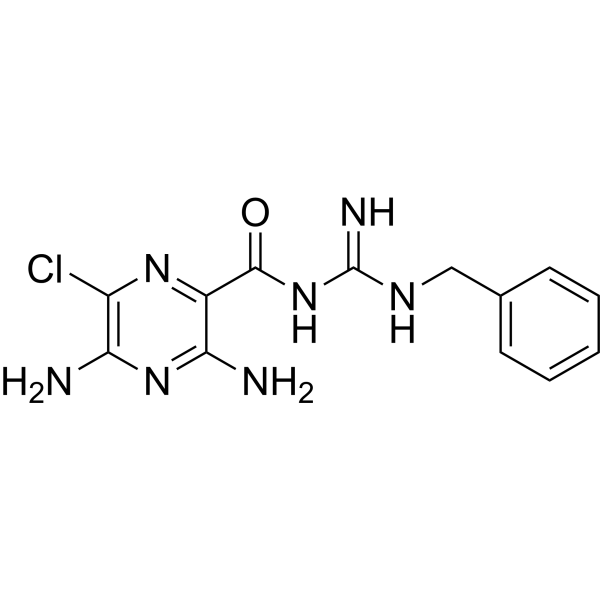
    Amiloride
    60+ Cited Publications

    MK-870

    Sodium Channel TRP Channel Apoptosis Cardiovascular Disease Metabolic Disease
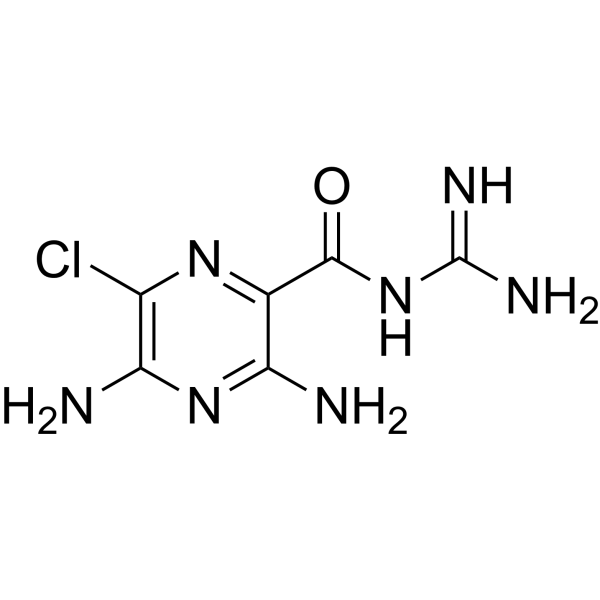
    Amiloride (MK-870) is an inhibitor of both epithelial sodium channel (ENaC ) and urokinase-type plasminogen activator receptor (uTPA ). Amiloride is a blocker of polycystin-2 (PC2; TRPP2 ) channel.
    Amiloride
  • HY-N6691
    Veratridine
    4 Publications Verification

    3-Veratroylveracevine

    Sodium Channel Neurological Disease
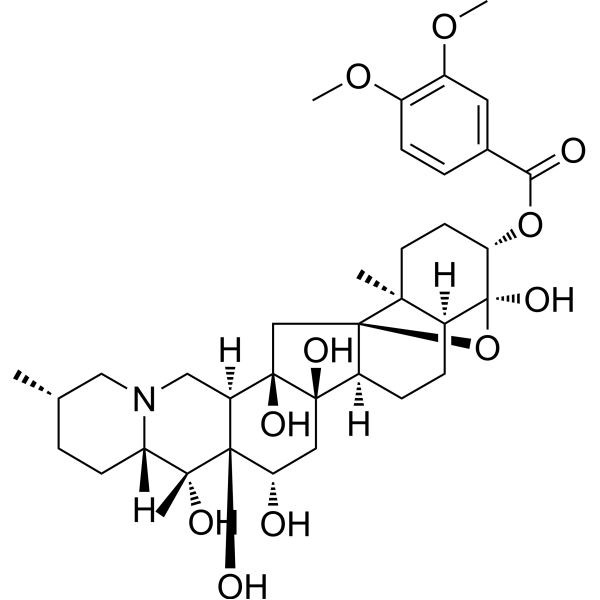
    Veratridine (3-Veratroylveracevine) is a plant neurotoxin, a voltage-gated sodium channels (VGSCs) agonist. Veratridine inhibits the peak current of Nav1.7, with an IC50 of 18.39 µM. Veratridine regulates sodium ion channels mainly by activating sodium ion channels, preventing channel inactivation and increasing sodium ion flow .
    Veratridine
  • HY-B1140
    Diazoxide
    5+ Cited Publications

    Sch-6783; SRG-95213

    Potassium Channel Autophagy Cardiovascular Disease Cancer
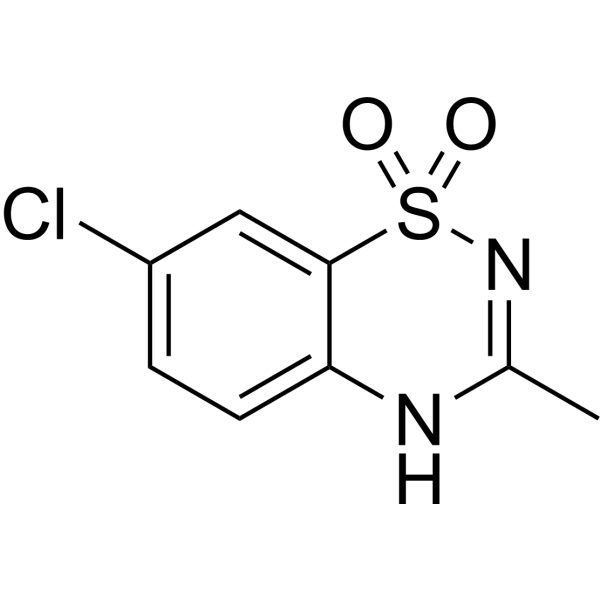
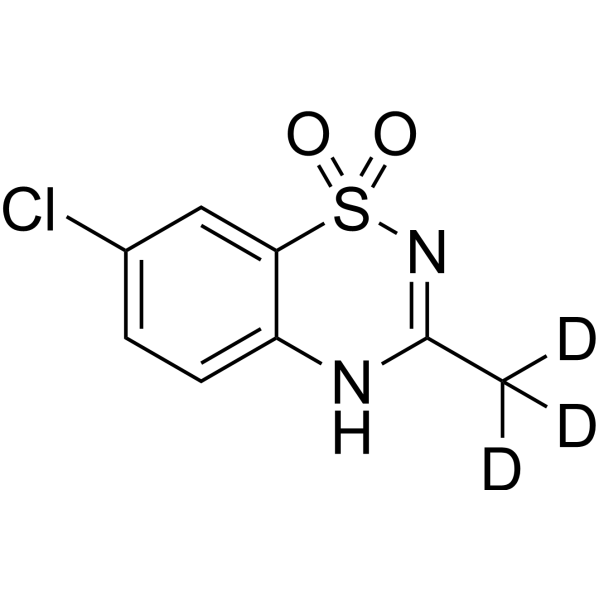
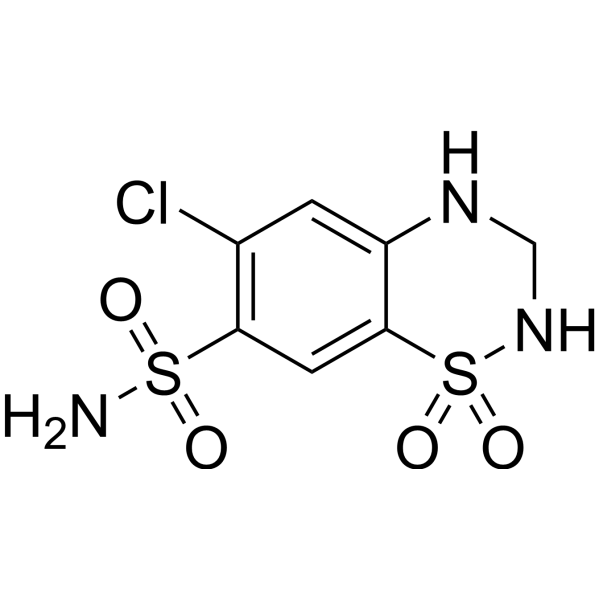
    Diazoxide (Sch-6783) is an ATP-sensitive potassium channel activator, has the potential for hyperinsulinism treatment.
    Diazoxide
  • HY-B0285A
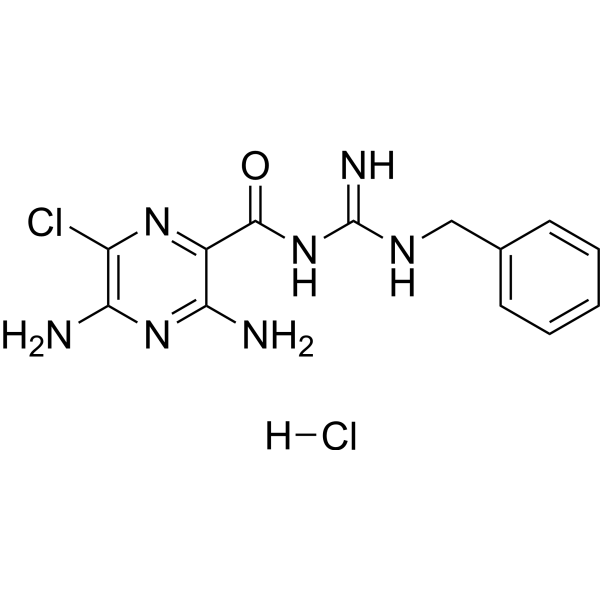
    Amiloride hydrochloride
    60+ Cited Publications

    MK-870 hydrochloride

    Sodium Channel TRP Channel Apoptosis Cardiovascular Disease Metabolic Disease
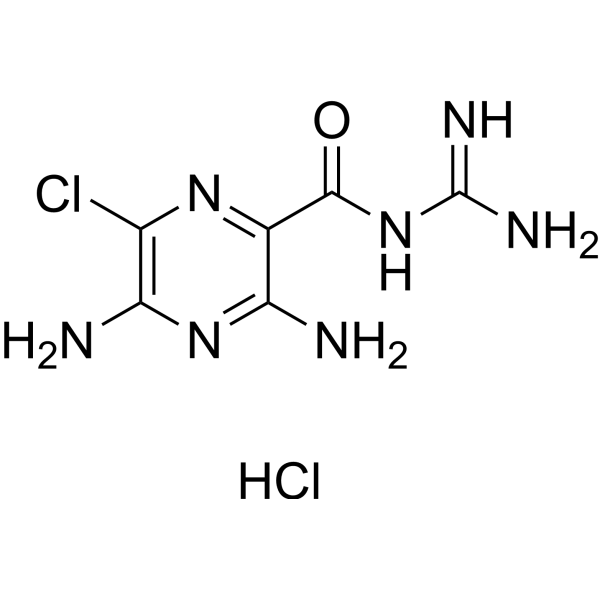
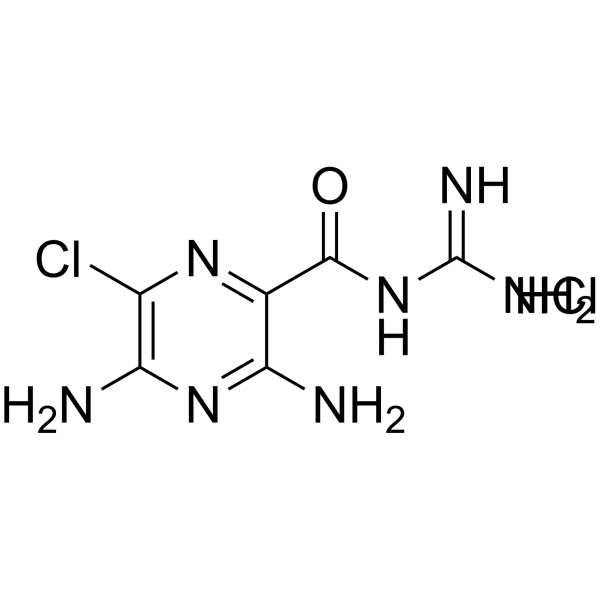
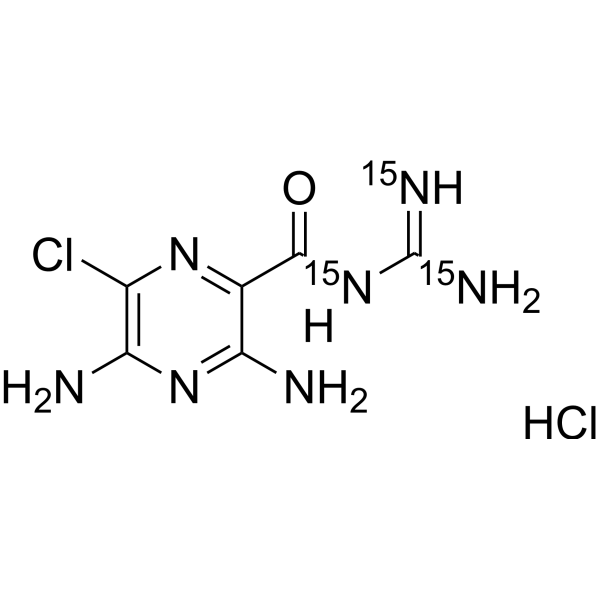
    Amiloride hydrochloride (MK-870 hydrochloride) is an inhibitor of both epithelial sodium channel (ENaC ) and urokinase-type plasminogen activator receptor (uTPA ). Amiloride hydrochloride is a blocker of polycystin-2 (PC2; TRPP2 ) channel.
    Amiloride hydrochloride
  • HY-139791

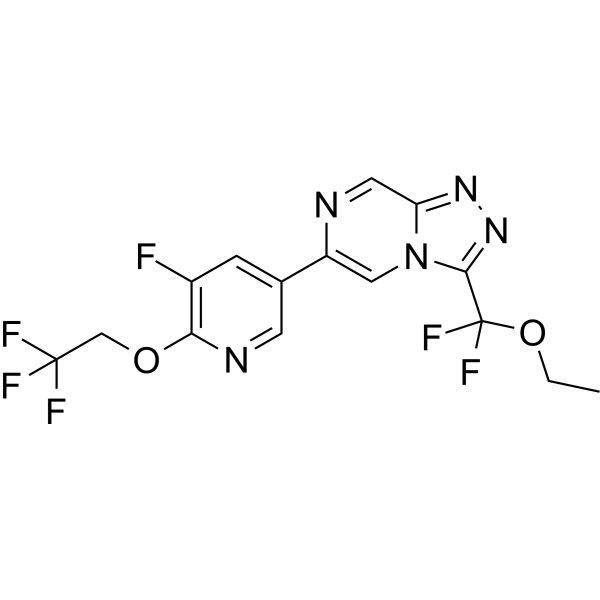
    XEN1101

    Potassium Channel Neurological Disease
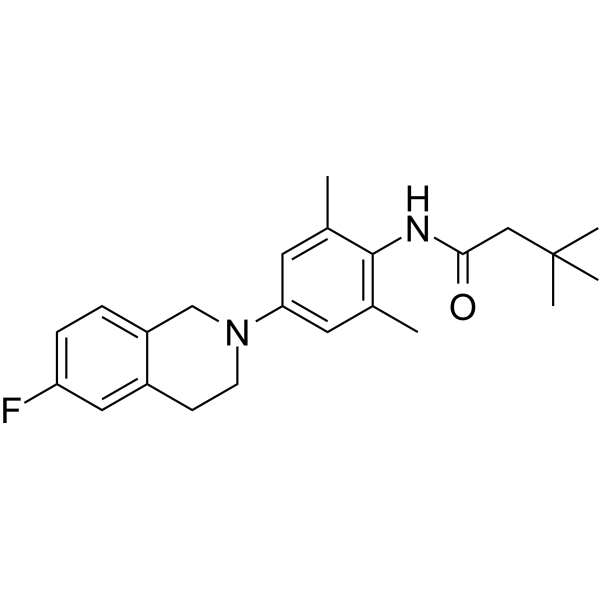
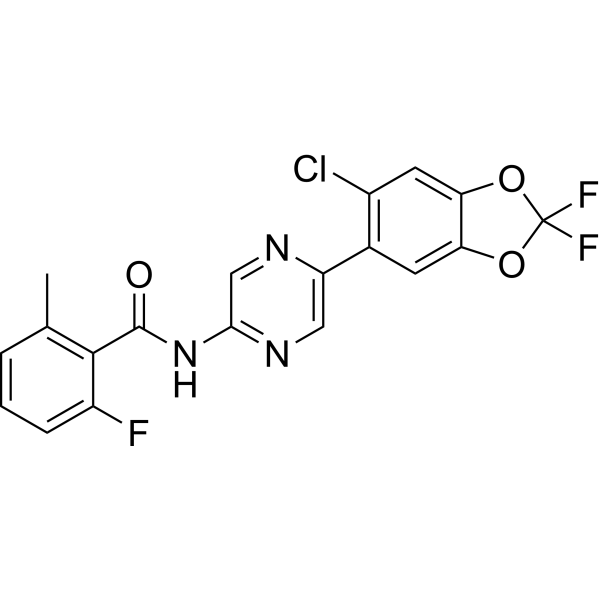
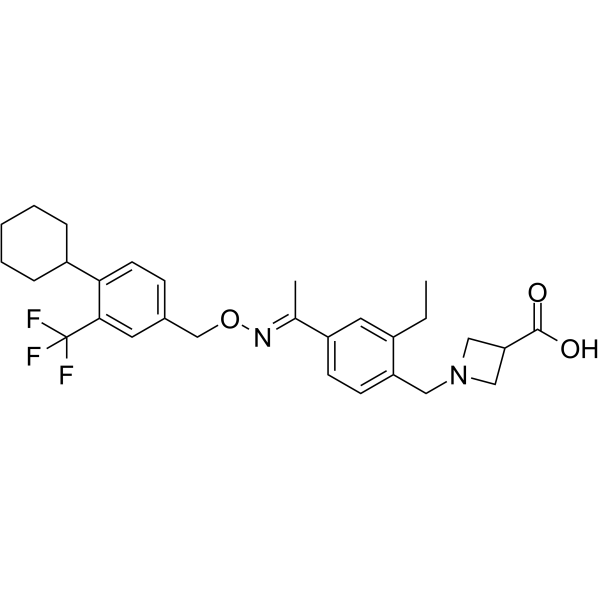
    Azetukalner (XEN1101) is a selective and orally active Kv7.2/Kv7.3 potassium channel opener with an EC50 of 27 nM. Azetukalner is approximately 4-fold more selective for Kv7.2/7.3 over Kv7.3/7.5 (EC50 of 94 nM) and Kv7.4 (EC50 of 113 nM) channels. Azetukalner exhibits a selectivity >100-fold for Kv7 channels over other ion channels and receptors. Azetukalner can be used for the study of focal epilepsy .
    Azetukalner
  • HY-B1221
    Flufenamic acid
    5+ Cited Publications

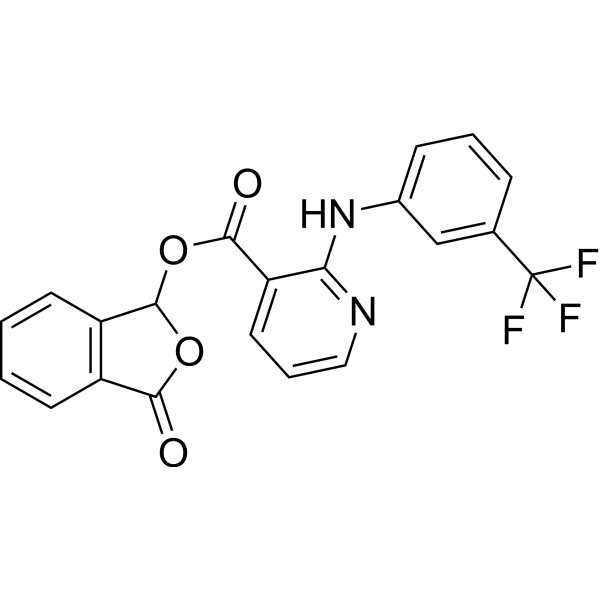
    COX AMPK Potassium Channel Chloride Channel Calcium Channel Parasite Inflammation/Immunology
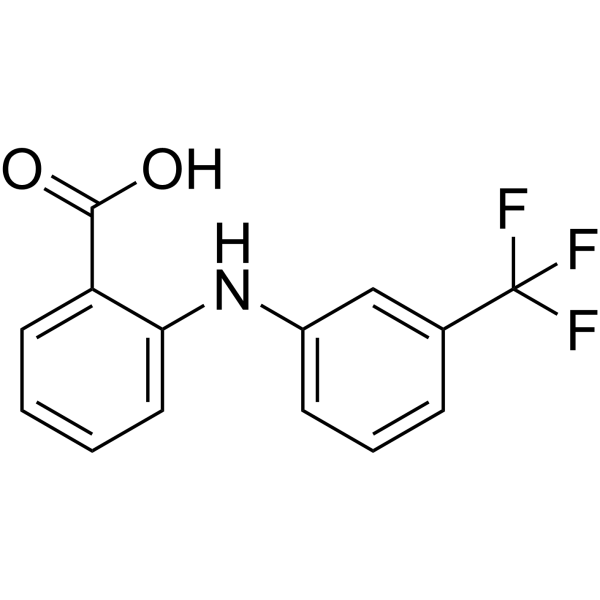
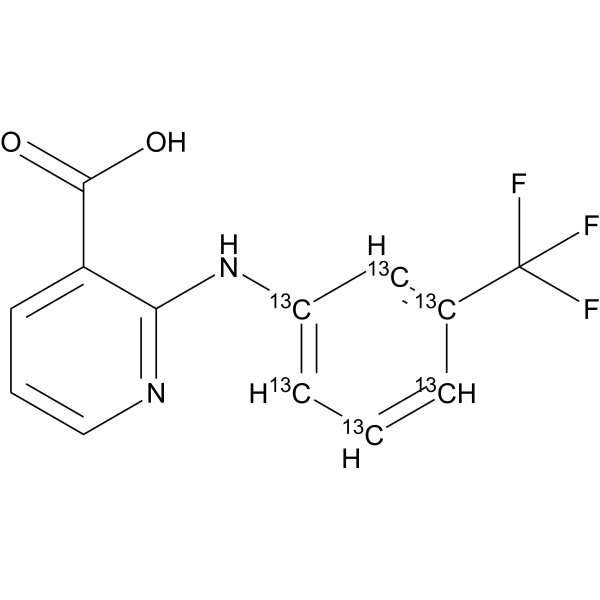
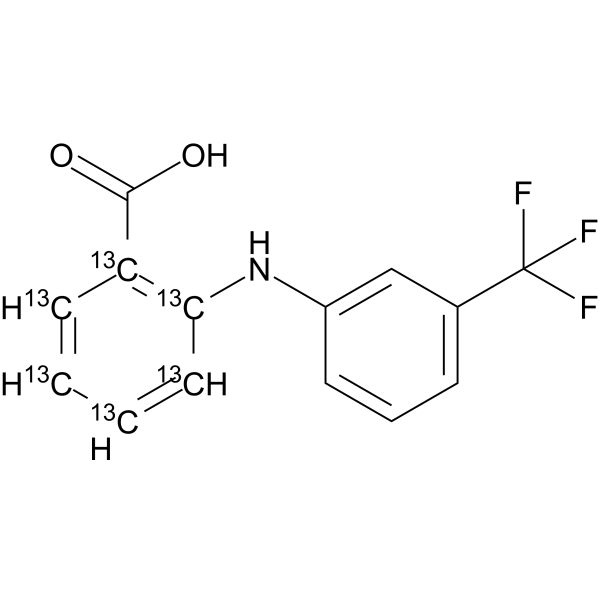
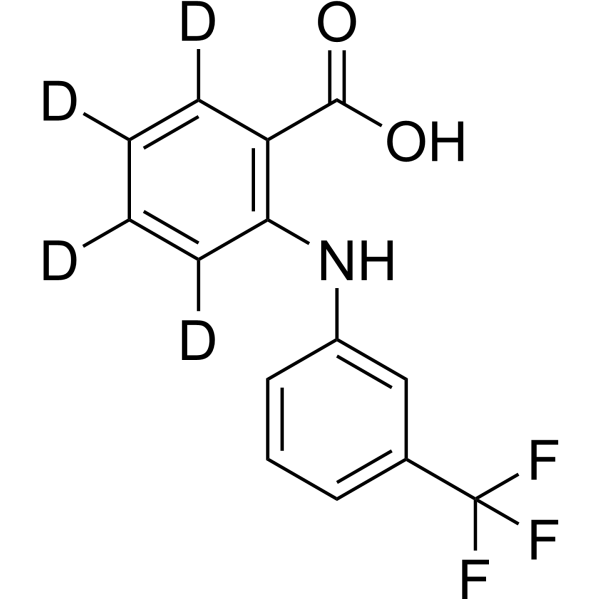
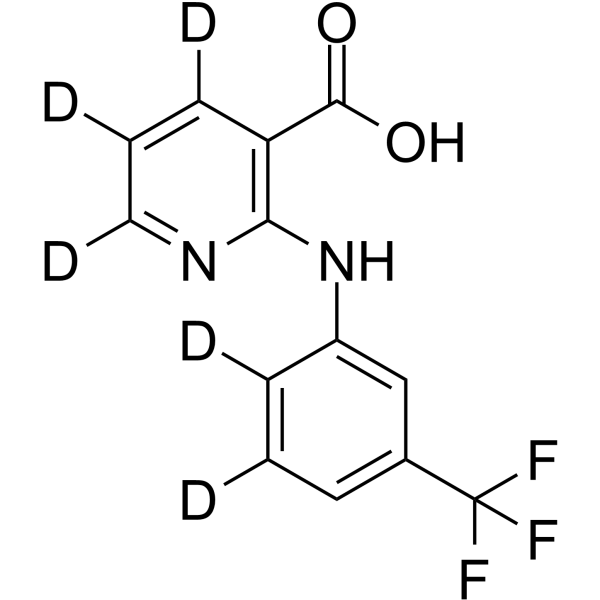
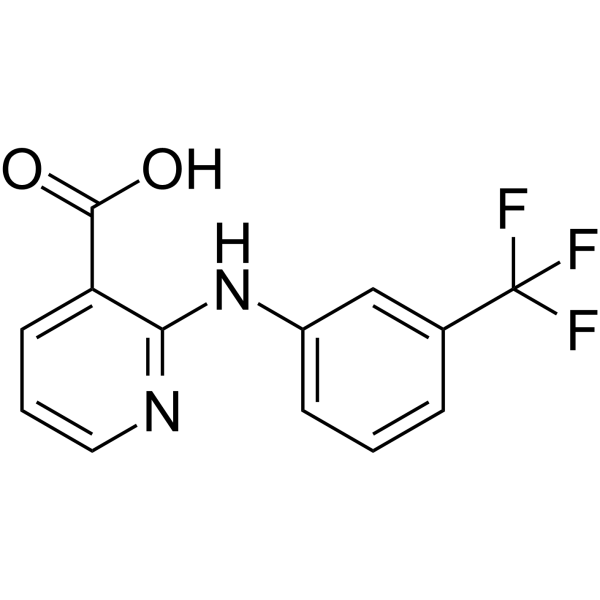
    Flufenamic acid is a non-steroidal anti-inflammatory agent, inhibits cyclooxygenase (COX), activates AMPK, and also modulates ion channels, blocking chloride channels and L-type Ca 2+ channels, modulating non-selective cation channels (NSC), activating K + channels. Flufenamic acid binds to the central pocket of TEAD2 YBD and inhibits both TEAD function and TEAD-YAP-dependent processes, such as cell migration and proliferation.
    Flufenamic acid
  • HY-50694
    Senicapoc
    10+ Cited Publications

    ICA-17043

    Potassium Channel Others
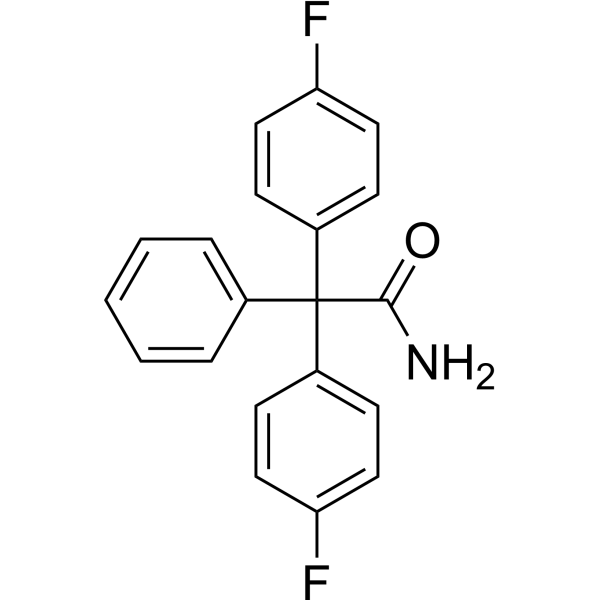
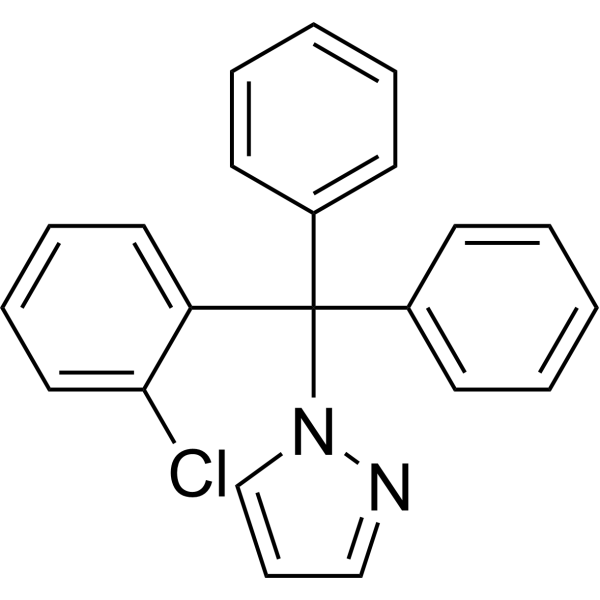
    Senicapoc (ICA-17043) is a potent and selective Gardos channel (Ca 2+-activated K + channel; KCa3.1) blocker with an IC50 of 11 nM. Senicapoc blocks Ca 2+-induced rubidium flux from human RBCs with an IC50 value of 11 nM and inhibits RBC dehydration with IC50 of 30 nM .
    Senicapoc
  • HY-101346
    ZD7288
    5+ Cited Publications

    ICI D7288

    HCN Channel Neurological Disease
    ZD7288 (ICI D7288) is a selective hyperpolarization-activated cyclic nucleotide-gated (HCN) channel blocker .
    ZD7288
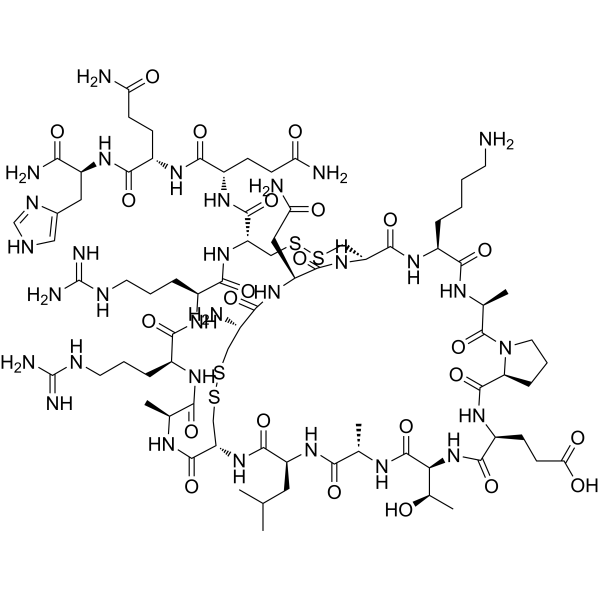
  • HY-P0190
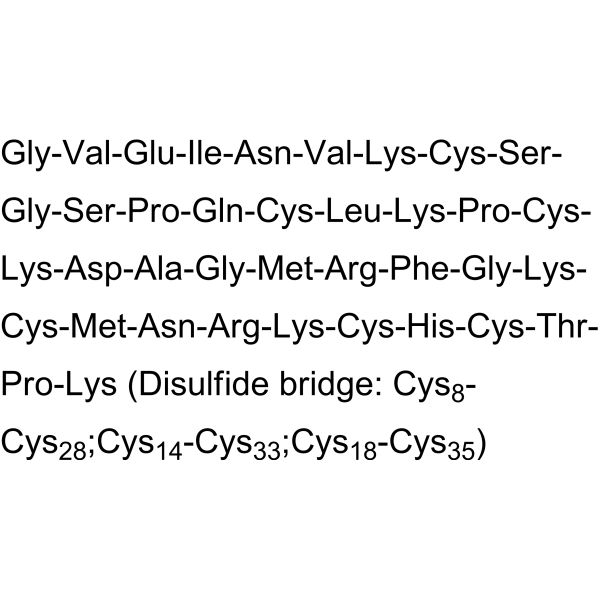
    Iberiotoxin
    2 Publications Verification

    Potassium Channel Cardiovascular Disease
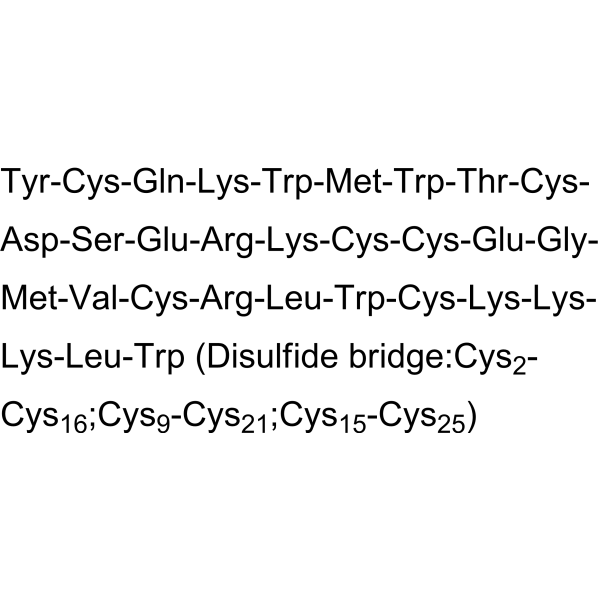
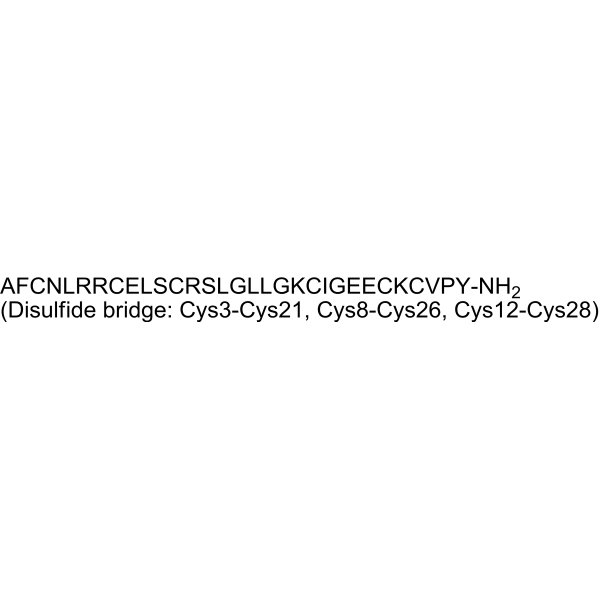
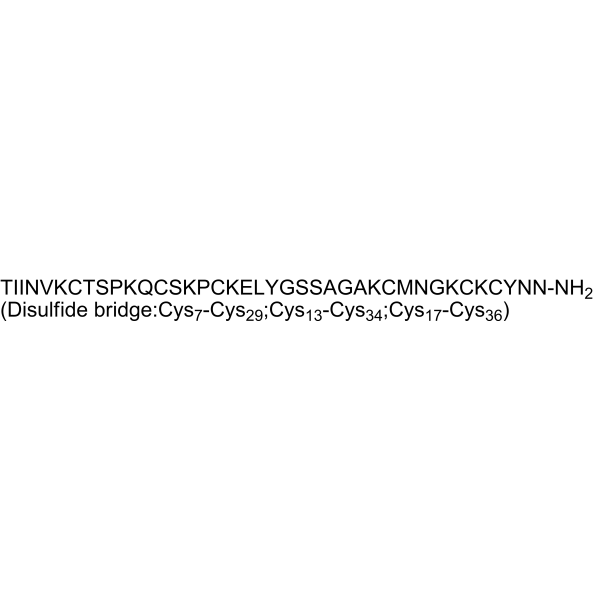
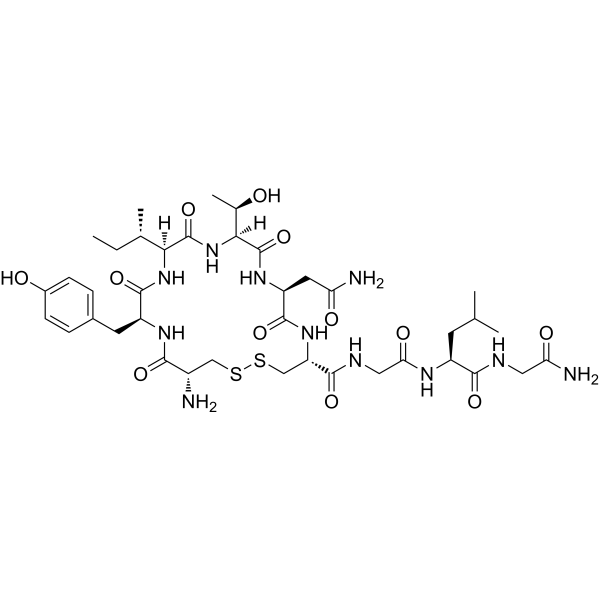
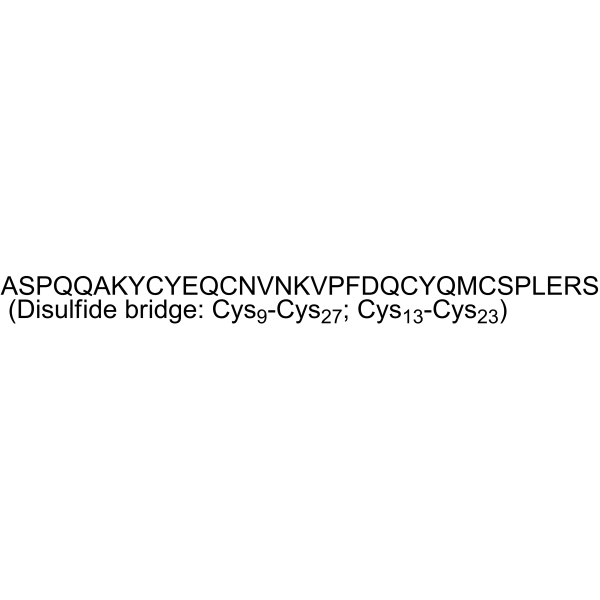
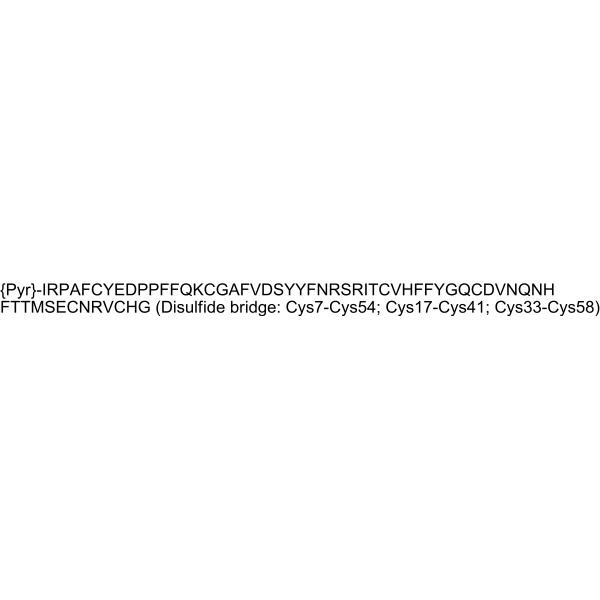
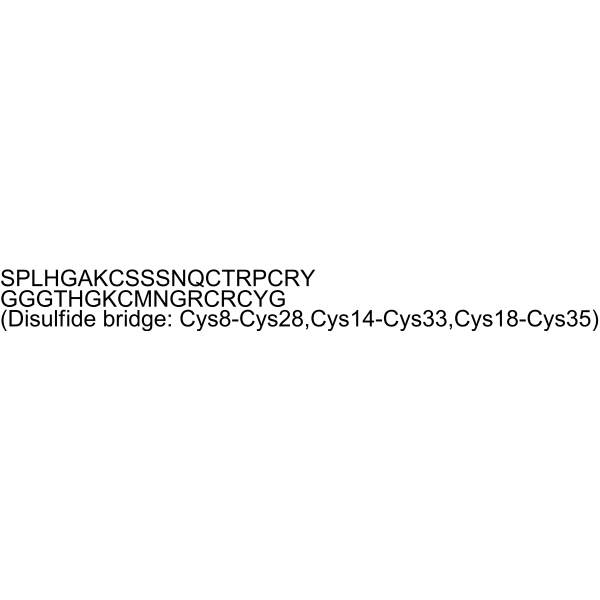
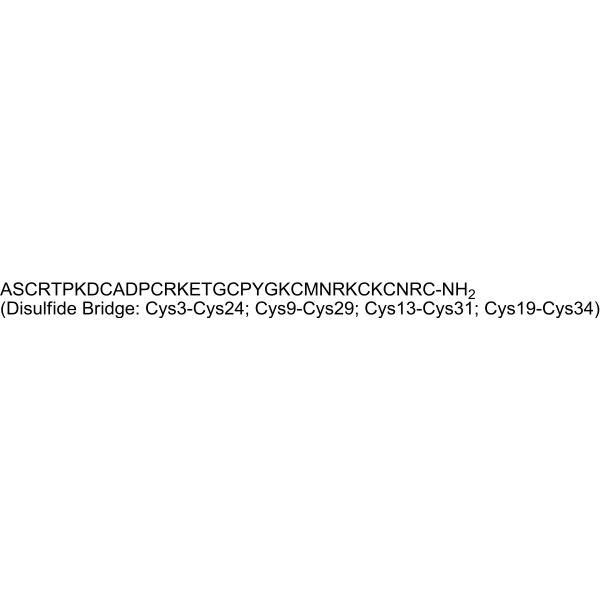
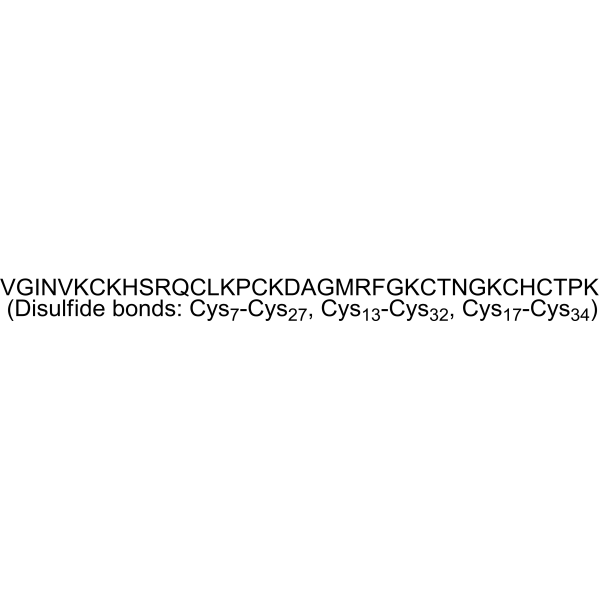
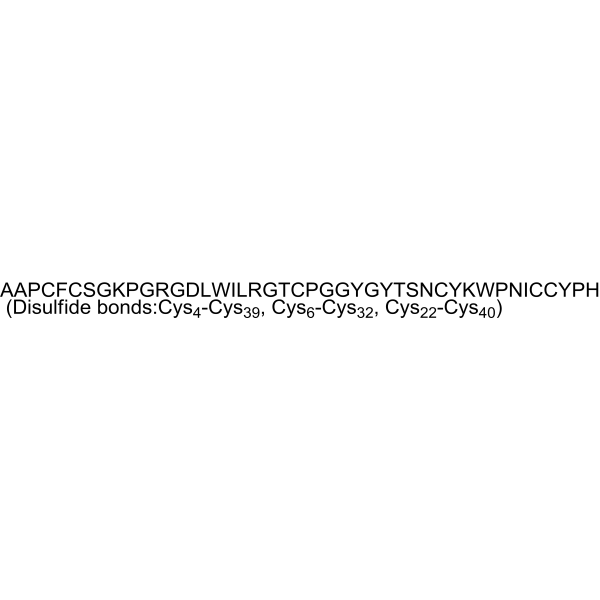
    Iberiotoxin is a toxin isolated from Buthus tamulus scorpion venom. Iberiotoxin is a selective high conductance high conductance Ca 2+-activated K + channel inhibitor with a Kd of ~1 nM. Iberiotoxin does not block other types of voltage-dependent ion channels .
    Iberiotoxin
  • HY-13103
    NS 11021
    3 Publications Verification

    Potassium Channel Others
    NS 11021 is a potent and specific Ca 2+-activated big-conductance K + Channels (KCa1.1 channels) activator. NS 11021 at concentrations above 0.3 μM activates KCa1.1 in a concentration-dependent manner by parallelshifting the channel activation curves to more negative potentials .
    NS 11021
  • HY-12343
    ML277
    1 Publications Verification

    CID-53347902

    Potassium Channel Cardiovascular Disease
    ML277 (CID-53347902) is a potent and selective activator of K(v)7.1 (KCNQ1) potassium channel activator (EC50=270 nM), rescues function of pathophysiologically important mutant channel complexes in human induced pluripotent stem cell-derived cardiomyocytes .
    ML277
  • HY-101942
    Zegocractin
    15+ Cited Publications

    CM-4620

    CRAC Channel Neurological Disease
    Zegocractin (CM-4620) is a calcium-release activated calcium-channel (CRAC channel) inhibitor, with IC50s of 119 nM and 895 nM for Orai1/STIM1 and Orai2/STIM1 channels, respectively .
    Zegocractin
  • HY-13519
    TRAM-34
    25+ Cited Publications

    Potassium Channel Neurological Disease
    TRAM-34 is a highly selective blocker of intermediate-conductance calcium-activated K + channel (IKCa1) (Kd=20 nM).
    TRAM-34
  • HY-15416

    Potassium Channel Cardiovascular Disease Neurological Disease
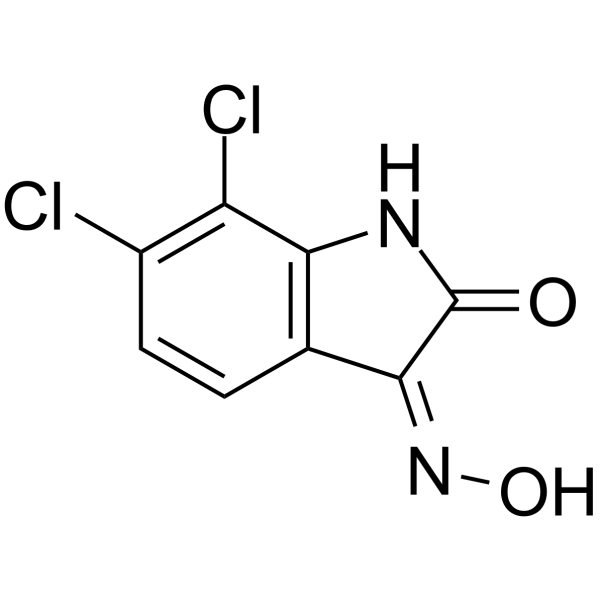
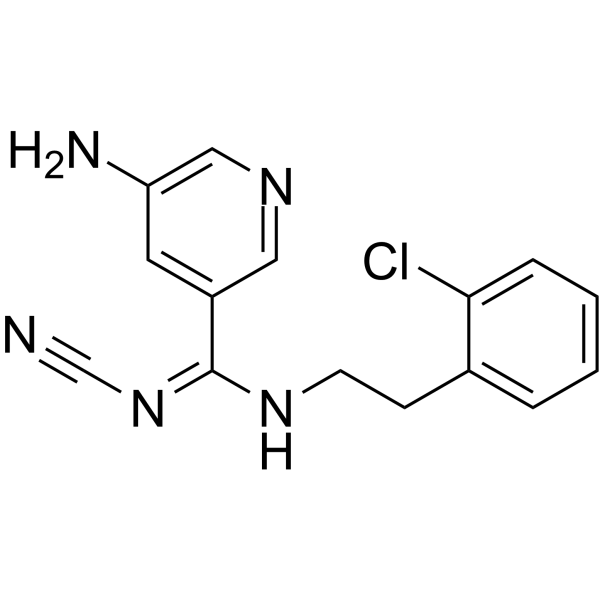
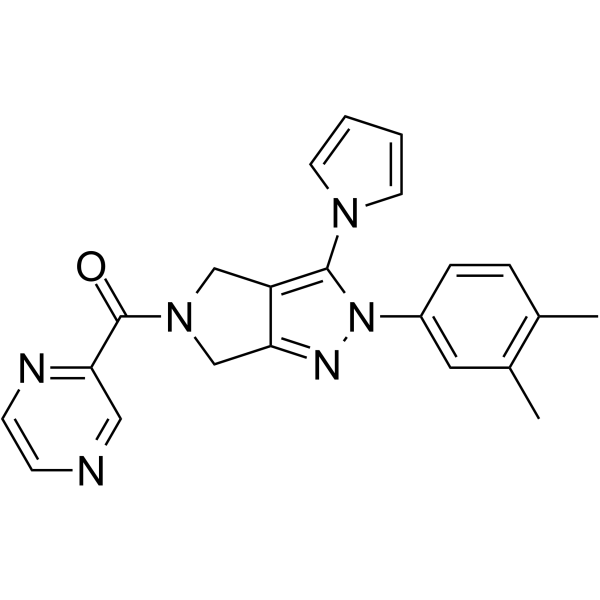
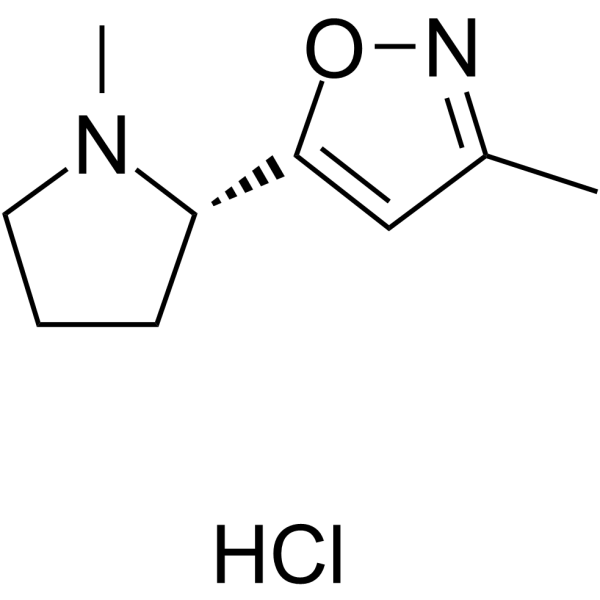
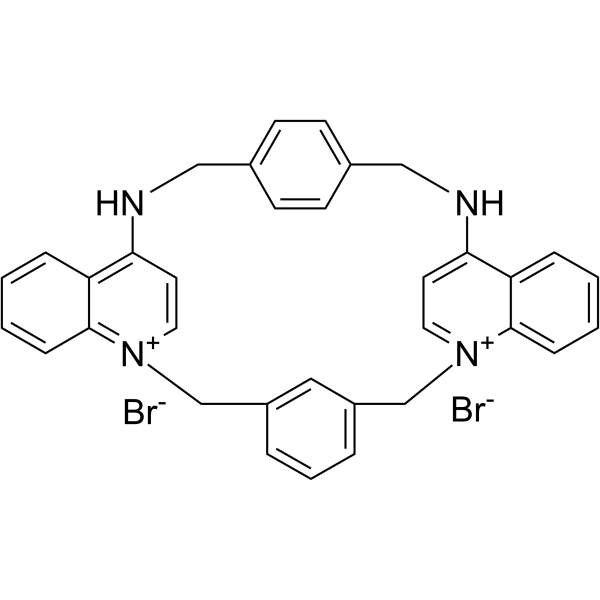
    NS309 is a potent and selective activator of the Ca 2+-activated SK/IK potassium channels, but displays no activity at BK channels .
    NS309
  • HY-110105
    NS8593 hydrochloride
    1 Publications Verification

    Potassium Channel Neurological Disease
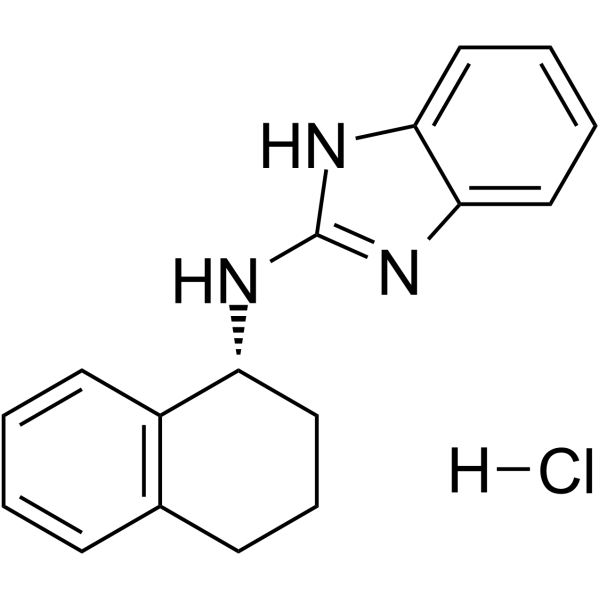
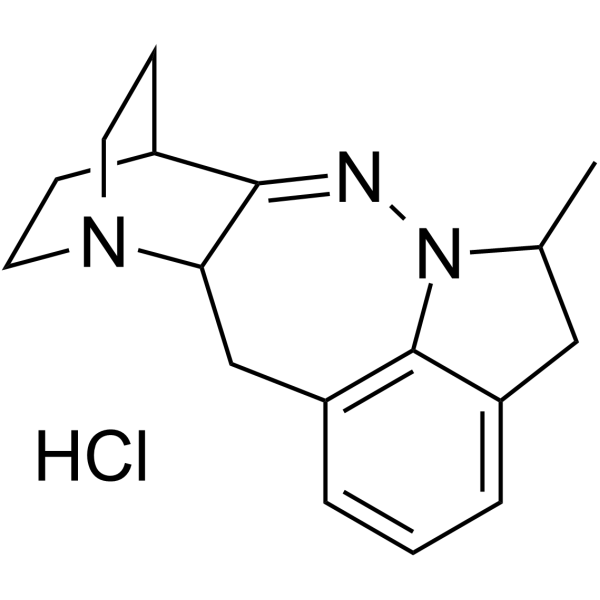
    NS8593 hydrochloride is a potent and selective small conductance Ca 2+-activated K + channels (SK channels) inhibitor. NS8593 hydrochloride reversibly inhibits SK3-mediated currents with a Kd value of 77 nM. NS8593 hydrochloride inhibits all the SK1-3 subtypes Ca 2+-dependently (Kds of 0.42, 0.60, and 0.73 μM, respectively, at 0.5 μM Ca 2+), and does not affect the Ca 2+-activated K + channels of intermediate and large conductance (hIK and hBK channels, respectively) .
    NS8593 hydrochloride
  • HY-112472

    Sodium Channel Metabolic Disease
    S3969 is a potent and reversible activator of the human epithelial sodium channel (hENaC). The apparent EC50 for S3969 activation of hENaC is 1.2 μm .
    S3969
  • HY-101843

    Potassium Channel Neurological Disease
    ML213 is a selective activator of Kv7.2 and Kv7.4 channels, enhances Kv7.2 and Kv7.4 channels with EC50s of 230 and 510 nM, respectively.
    ML213
  • HY-109160
    Rimtuzalcap
    2 Publications Verification

    CAD-1883

    Potassium Channel Neurological Disease
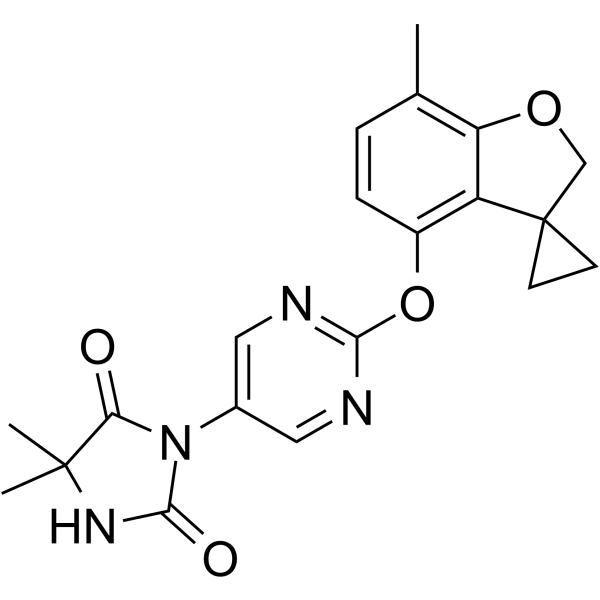
    Rimtuzalcap (CAD-1883) is a first-in-class selective positive allosteric modulator of small-conductance calcium-activated potassium channels (SK channels). Rimtuzalcap can be used for the research of movement disorders including essential tremor (ET) and spinocerebellar ataxia (SCA) .
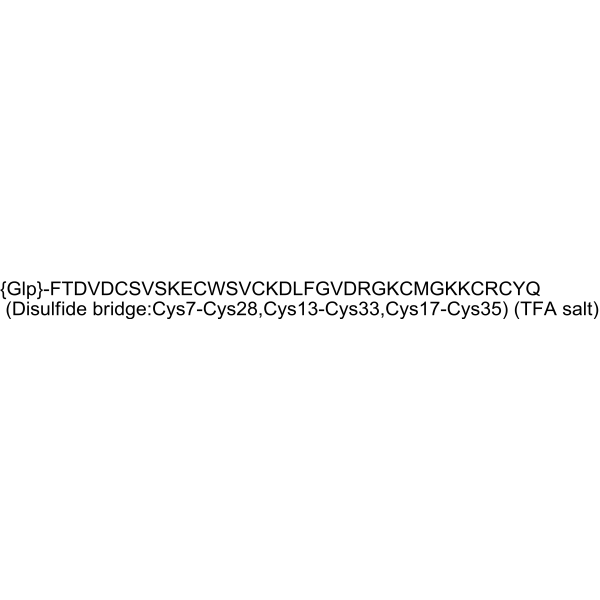
    Rimtuzalcap
  • HY-103368
    Eact
    1 Publications Verification

    Chloride Channel Neurological Disease
    Eact is a selective and potent activator of TMEM16A, directly activates the TRPV1 channels in sensory nociceptors and produces itch, acute nociception and thermal hypersensitivity .
    Eact
  • HY-B0341
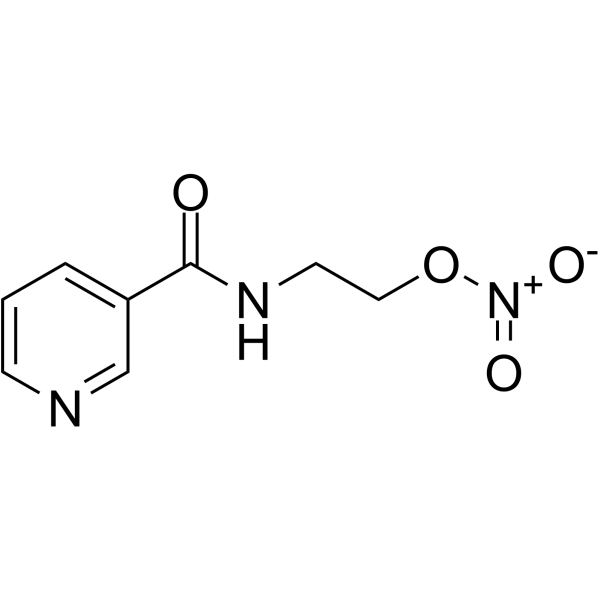
    Nicorandil
    1 Publications Verification

    SG-75

    Potassium Channel Cardiovascular Disease
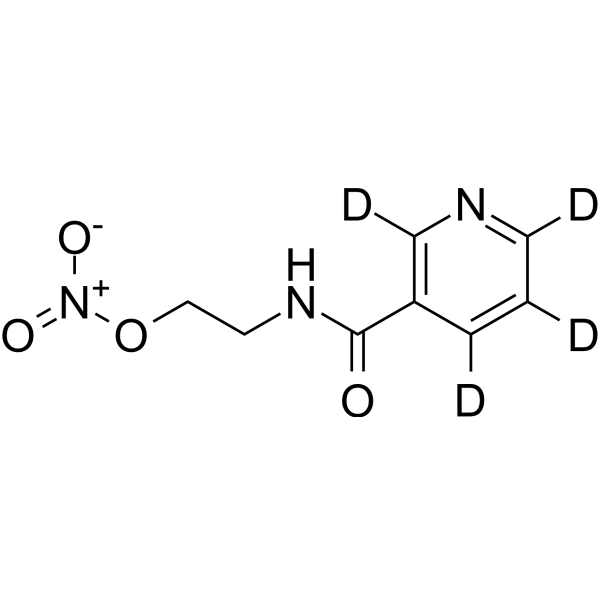
    Nicorandil (SG-75) is a potent potassium channel activator and targets vascular nucleoside diphosphate-dependent K + channels and cardiac ATP-sensitive K + channels (KATP). Nicorandil is a nicotinamide ester with vasodilatory and cardioprotective effects and has the potential for angina and forischemic heart diseases .
    Nicorandil
  • HY-108573
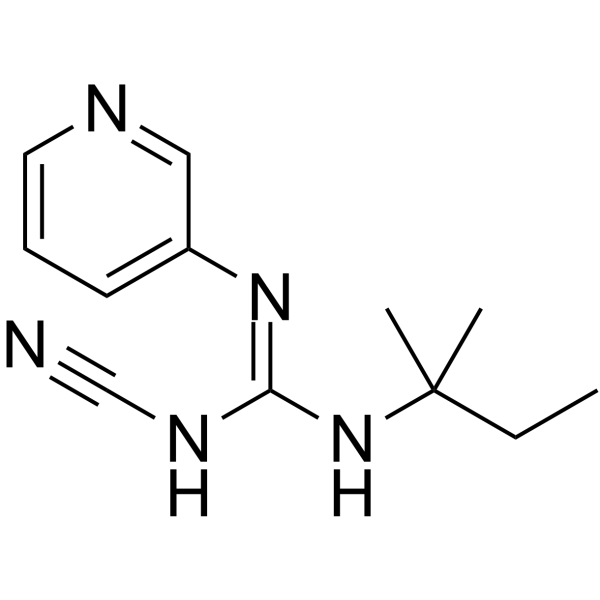
    P-1075
    1 Publications Verification

    Potassium Channel Cardiovascular Disease
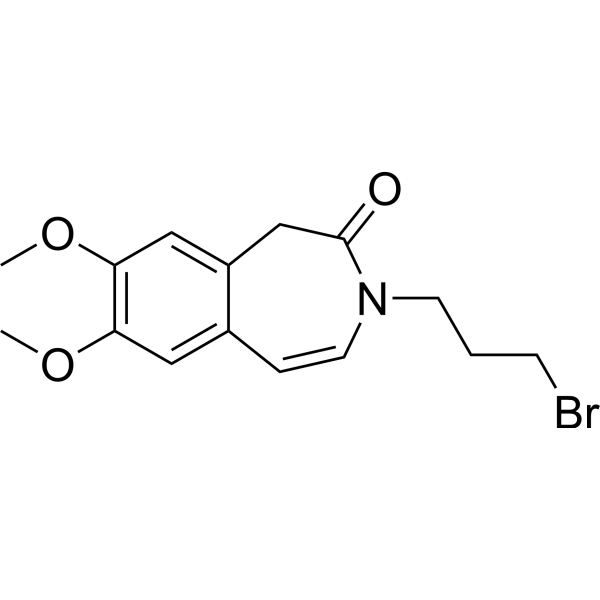
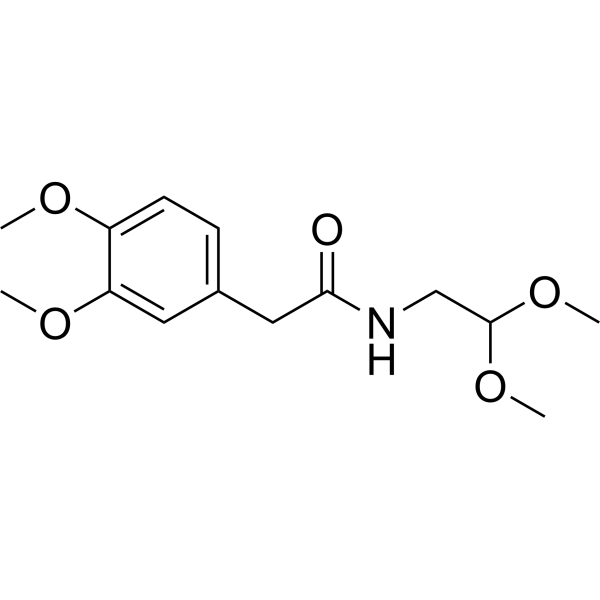
    P-1075 is a potent activator of sulfonylurea receptor 2-associated ATP-sensitive potassium channels (SUR2-KIR6), with an EC50 value of 45 nM for SUR2B-KIR6 channel activation . P-1075 also P1075 opens mitochondrial K(ATP) channels and generates reactive oxygen species resulting in cardioprotection of rabbit hearts .
    P-1075
  • HY-100345
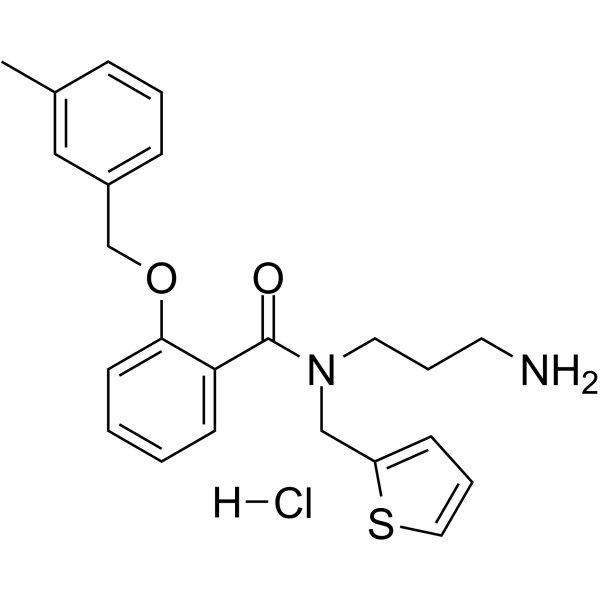
    AMTB hydrochloride
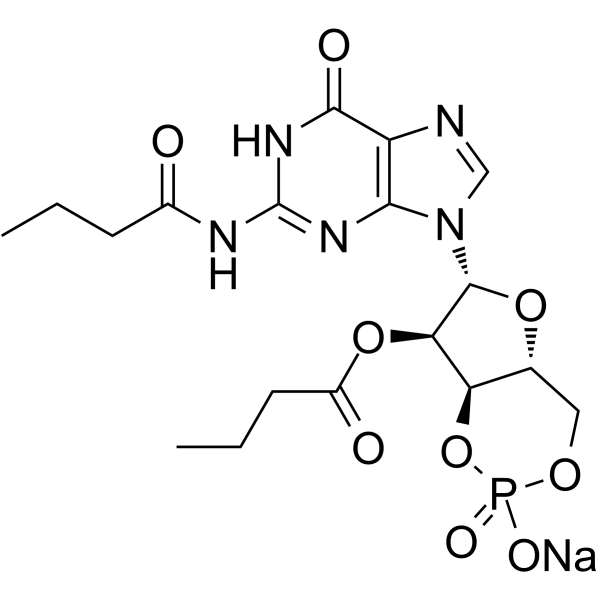
    2 Publications Verification

    TRP Channel Neurological Disease Cancer
    AMTB hydrochloride is a selective TRPM8 channel blocker. AMTB hydrochloride inhibits icilin-induced TRPM8 channel activation with a pIC50 of 6.23. AMTB hydrochloride can be used for the research of the overactive bladder and painful bladder syndrome. AMTB hydrochloride is a non-selective inhibitor of voltage-gated sodium channels (NaV) .
    AMTB hydrochloride
  • HY-N8264
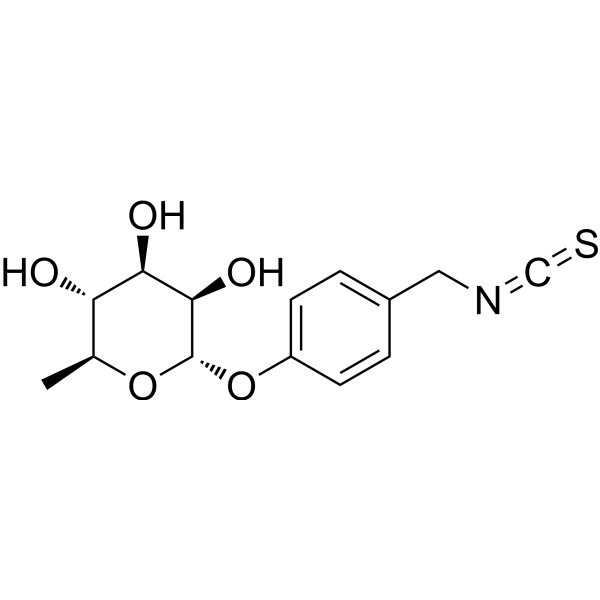
    Moringin
    1 Publications Verification

    TRP Channel Neurological Disease Inflammation/Immunology Cancer
    Moringin is a potent and selective TRPA1 ion channel natural agonist with an EC50 of 3.14 μM. Moringin does not activate or activates very weakly the vanilloids somatosensory channels TRPV1, TRPV2, TRPV3 and TRPV4, and the melastatin cooling receptor TRPM8. Moringin has hypoglycemic, antimicrobial, anti-inflammatory, anticancer and neuroprotection activities .
    Moringin
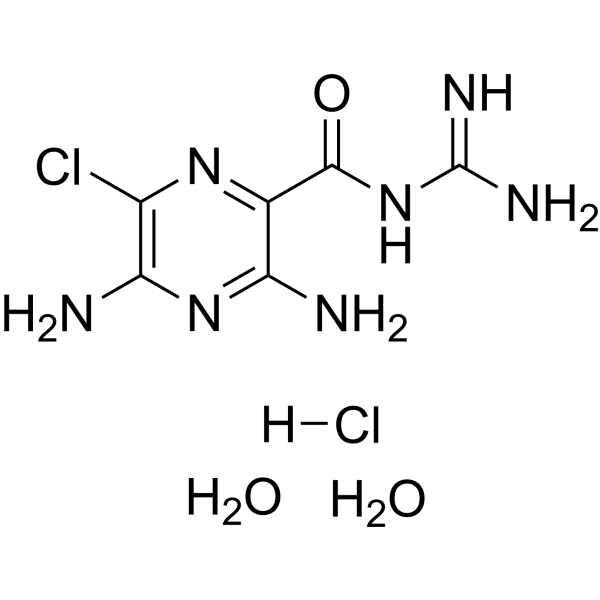
  • HY-B0285B

    MK-870 hydrochloride dihydrate

    Sodium Channel Apoptosis TRP Channel Cardiovascular Disease Metabolic Disease
    Amiloride hydrochloride dihydrate (MK-870 hydrochloride dihydrate) is an inhibitor of both epithelial sodium channel (ENaC ) and urokinase-type plasminogen activator receptor (uTPA ). Amiloride hydrochloride dihydrate is a blocker of polycystin-2 (PC2; TRPP2 ) channel.
    Amiloride hydrochloride dihydrate
  • HY-108593
    BMS-191011
    3 Publications Verification

    BMS-A

    Potassium Channel Neurological Disease
    BMS 191011 (BMS-A) is a potent BKCa channel opener (large-conductance Ca 2+-activated potassium channel). BMS-191011 shows neuroprotective activities in rodent models of stroke .
    BMS-191011
  • HY-101360

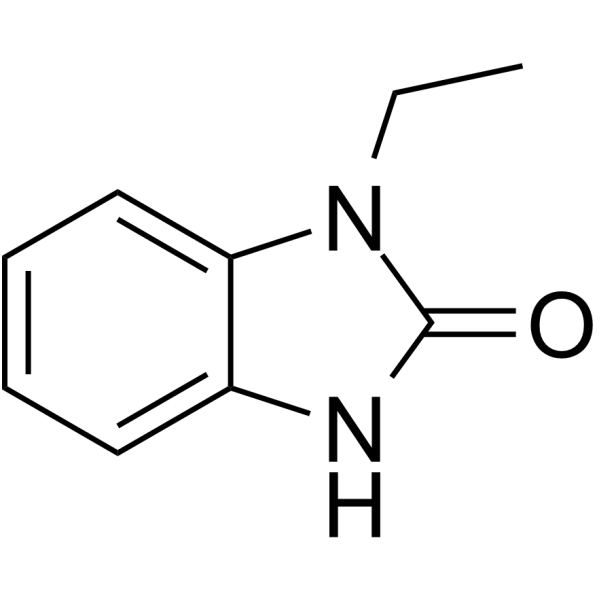
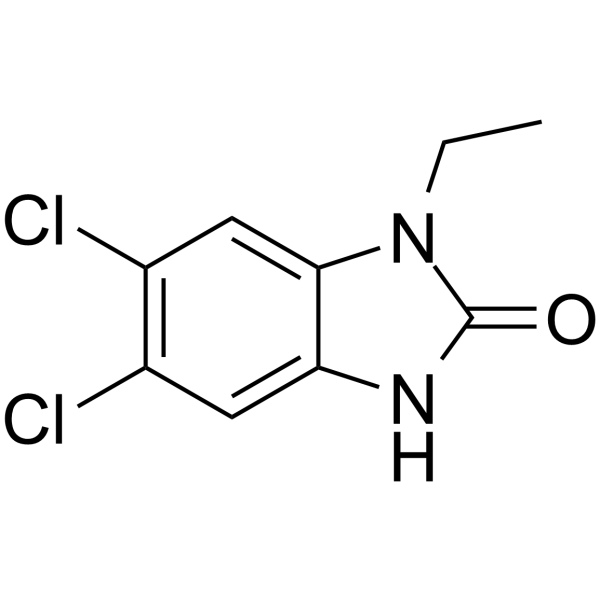
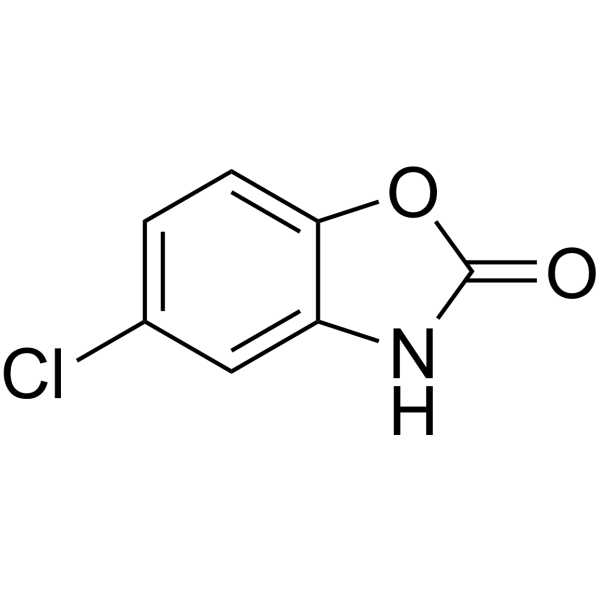
    1-Ethyl-2-benzimidazolinone

    Potassium Channel Neurological Disease
    1-EBIO is an activator of Ca 2+ sensitive K + channels. 1-EBIO is used to study the role of K + channels in diverse physiological functions .
    1-EBIO
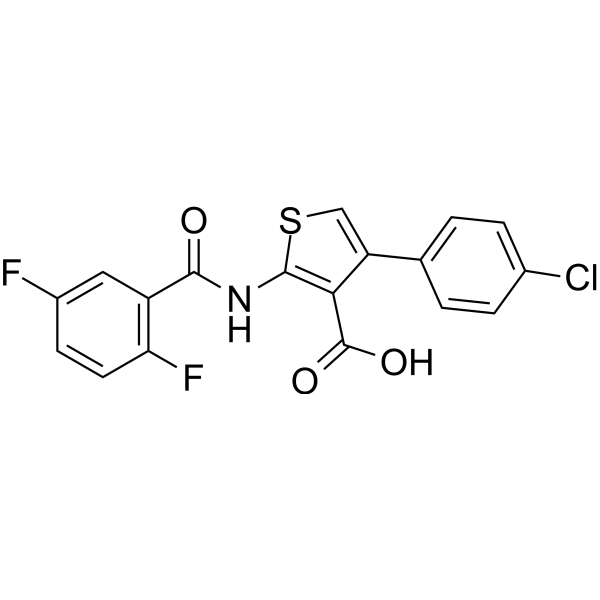
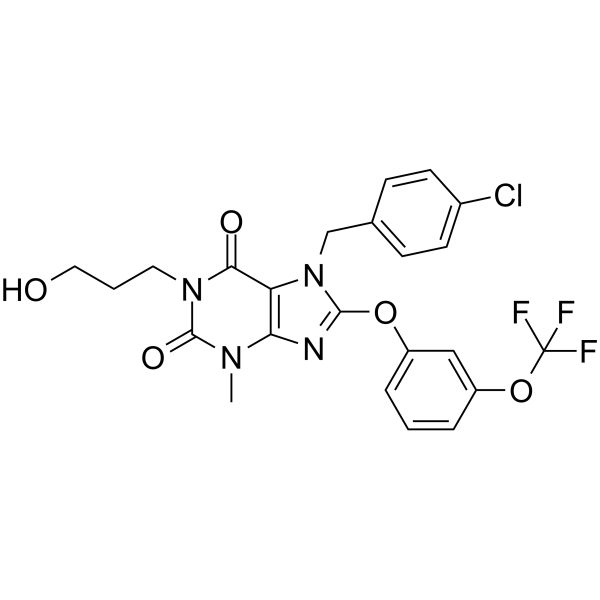
  • HY-108586

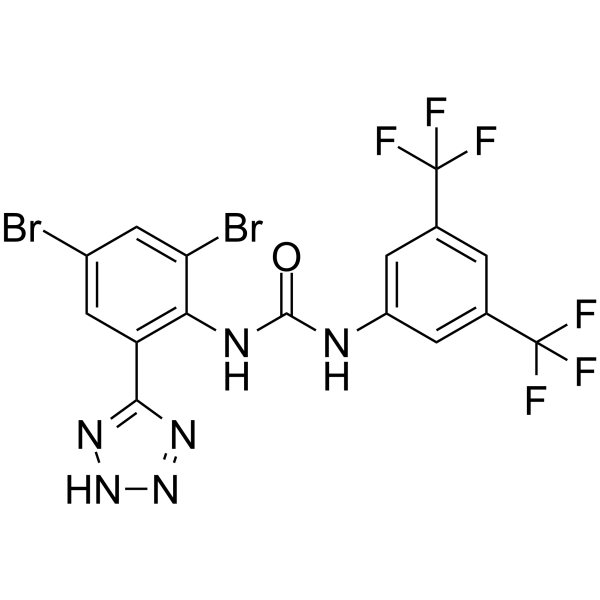
    Potassium Channel Neurological Disease
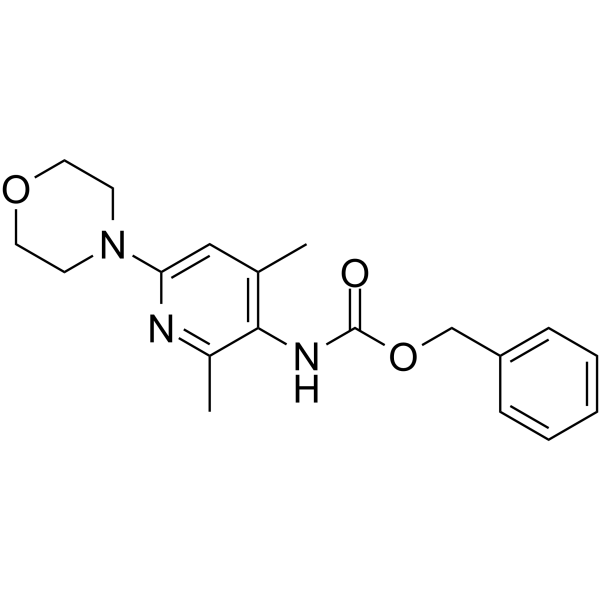
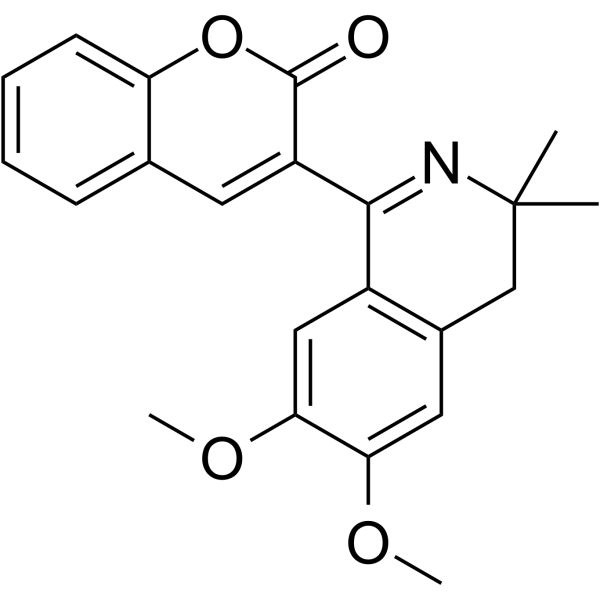
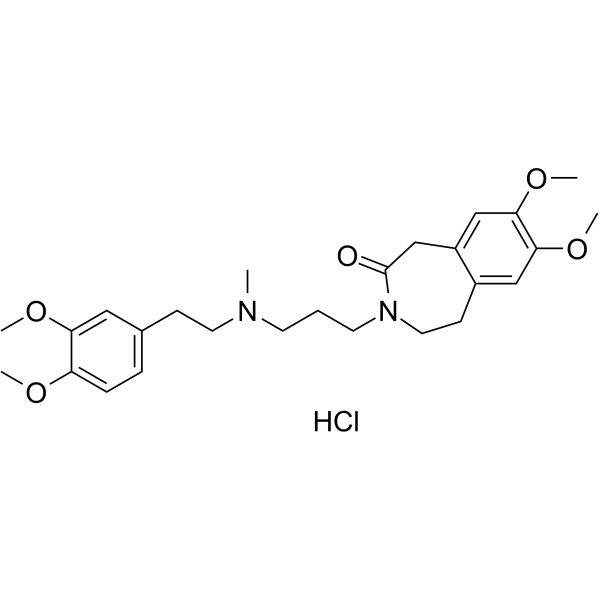
    NS3623 is an activator of human ether-a-go-go-related gene (hERG1/KV11.1) potassium channels. NS3623 activates the IKr and Ito currents and has antiarrhythmic effect. NS3623 has a dual mode of action, being an inhibitor of hERG1 channels .
    NS3623
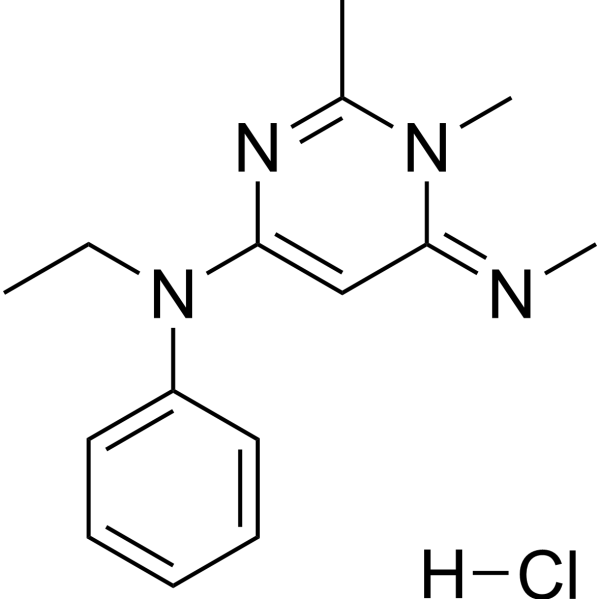
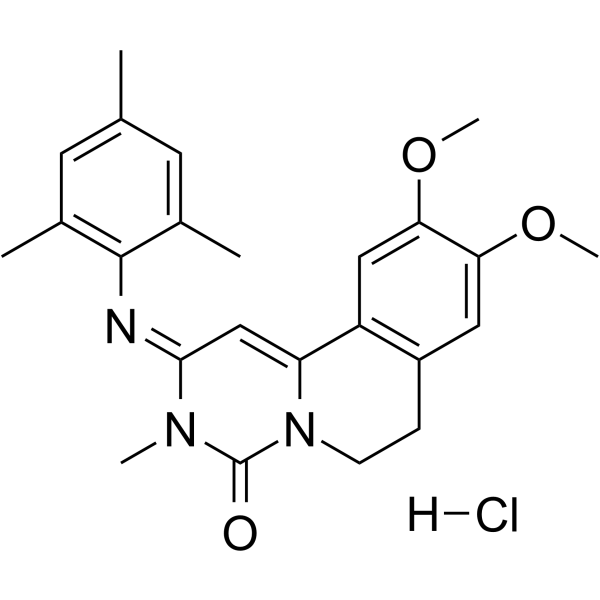
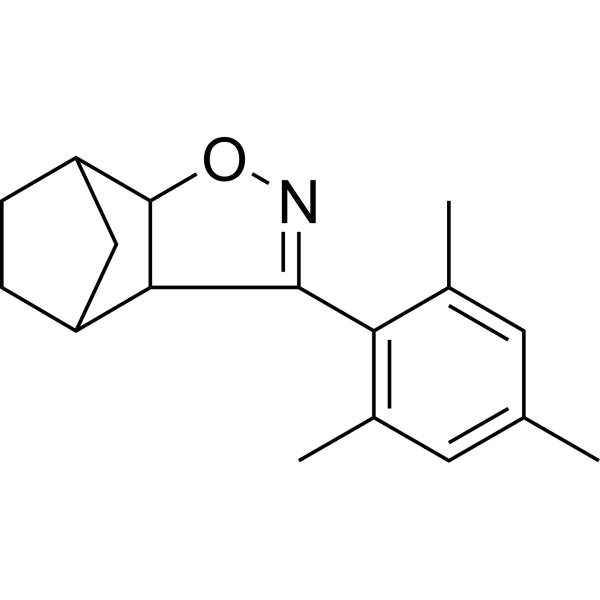
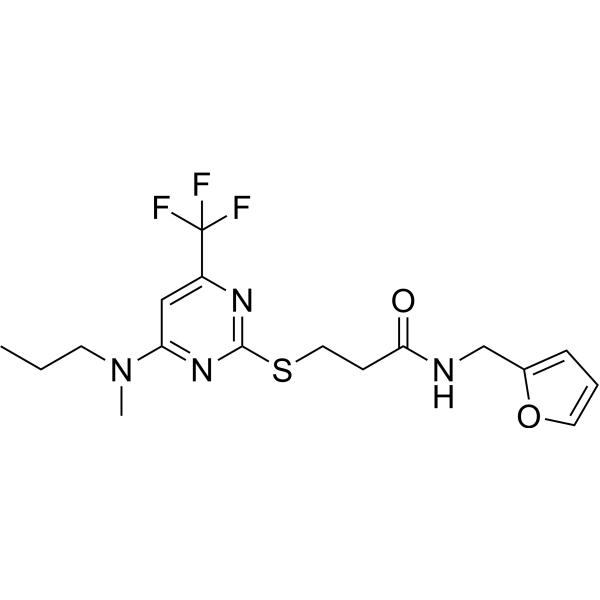
  • HY-148802

    Sodium Channel Inflammation/Immunology
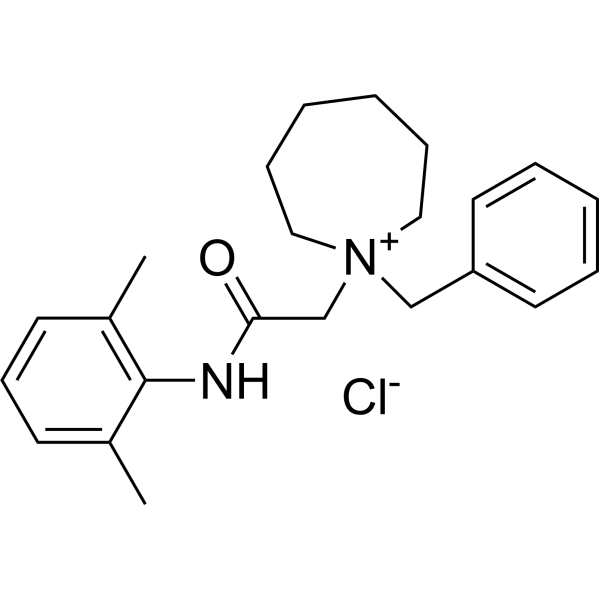
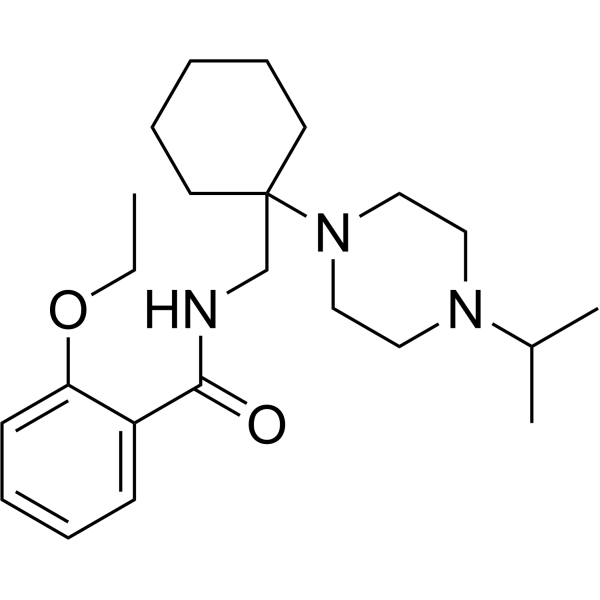
    Taplucainium chloride is a sodium channel blocker. Taplucainium chloride selectively inhibits nociceptors in an activated or inflammatory state. Taplucainium chloride may be used in research on chronic cough .
    Taplucainium chloride
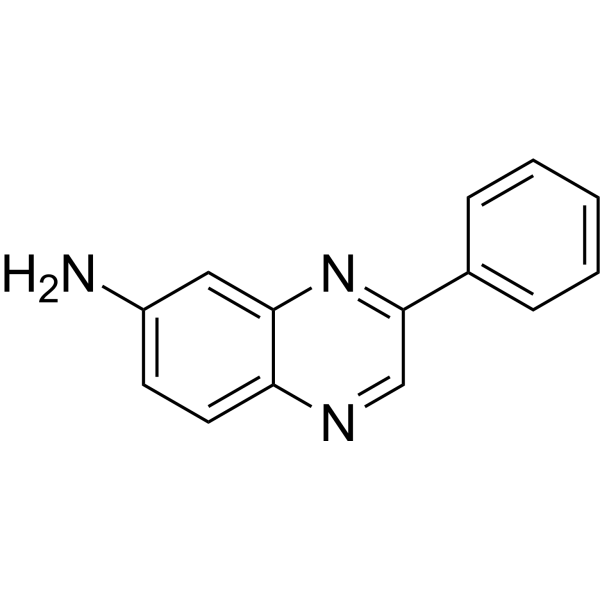
  • HY-108594

    Potassium Channel Metabolic Disease
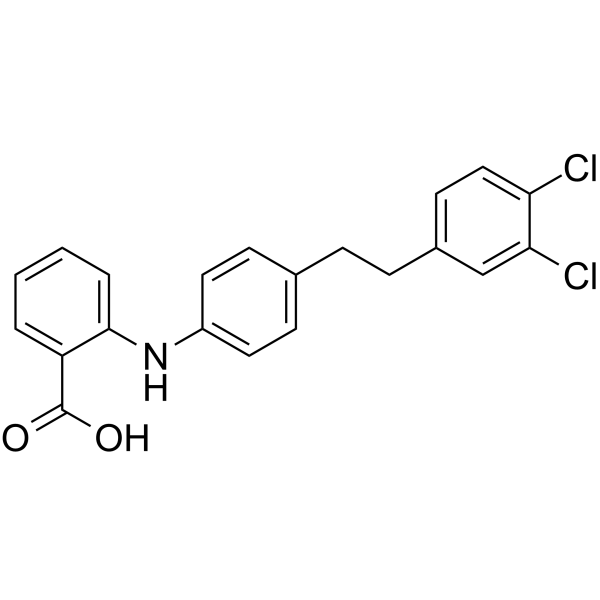
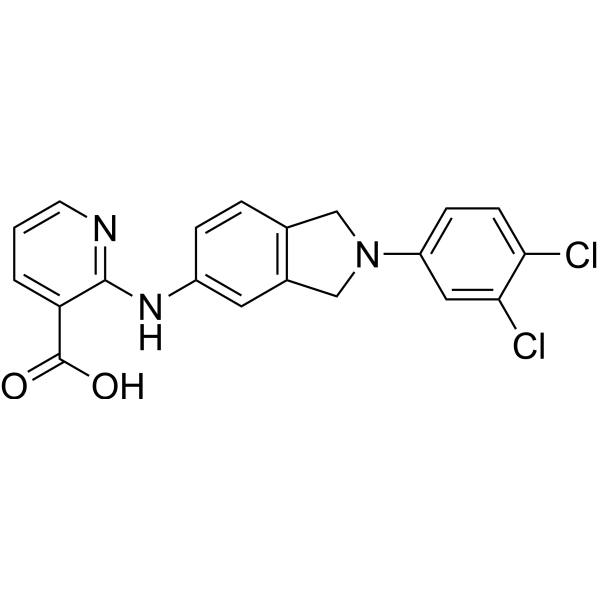
    PD-118057 is a hERG channel activator without causing hERG blockade. PD-118057 activates hERG channel to suppress changes in membrane excitability .
    PD-118057
  • HY-14255
    Levcromakalim
    4 Publications Verification

    (-)-Cromakalim; BRL 38227

    Potassium Channel Cardiovascular Disease
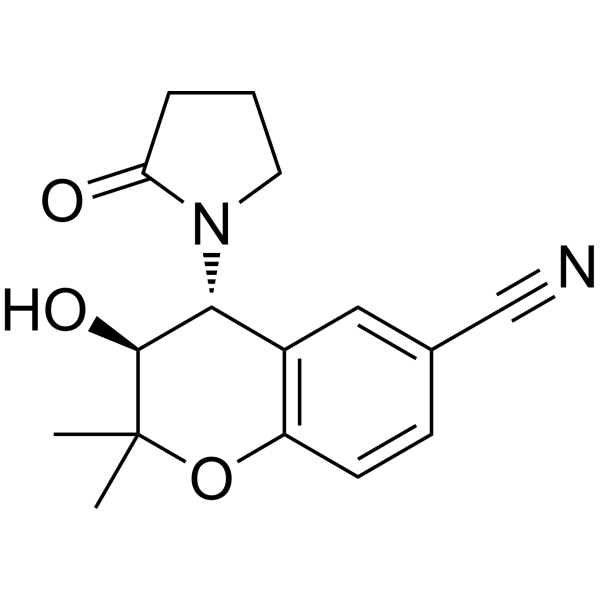
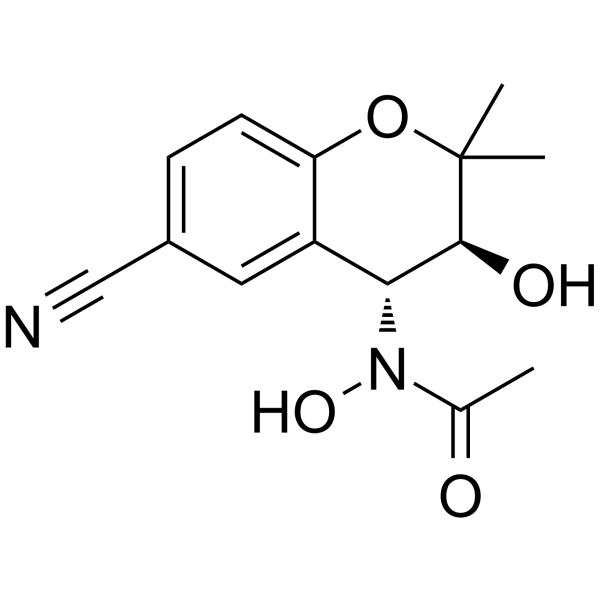
    Levcromakalim ((-)-Cromakalim) is an ATP-sensitive K + channel (KATP) activator.
    Levcromakalim
  • HY-110153

    Potassium Channel Neurological Disease
    NS19504 is a Ca 2+-activated K + channel (BK channel, KCa1.1 channel) activator (EC50=11.0 μM) with relaxing effect on bladder smooth muscle spontaneous phasic contractions .
    NS19504
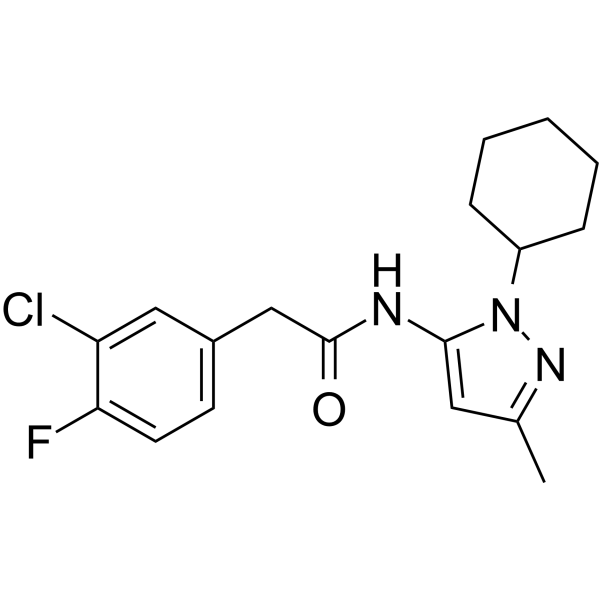
  • HY-157485

    Potassium Channel Others
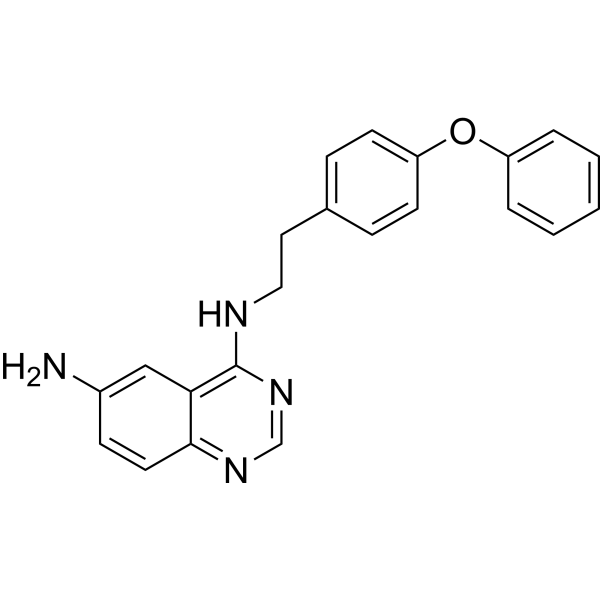
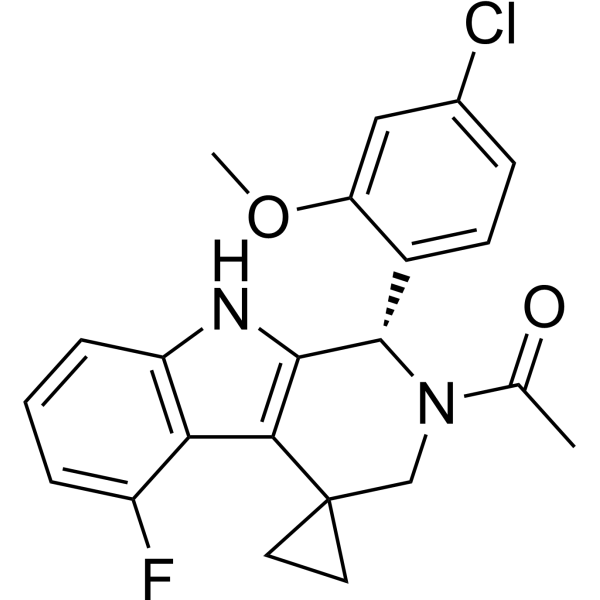
    Ebio1 is a selective voltage-gated potassium channel KCNQ2 activator. Ebio1 activates KCNQ2 by generating an extended channel gate with greater conductance at a saturation voltage (+50 mV) .
    Ebio1
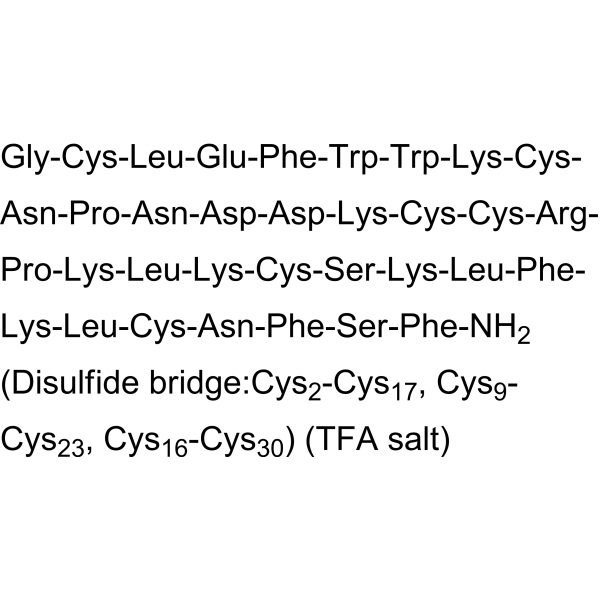
  • HY-P0190A
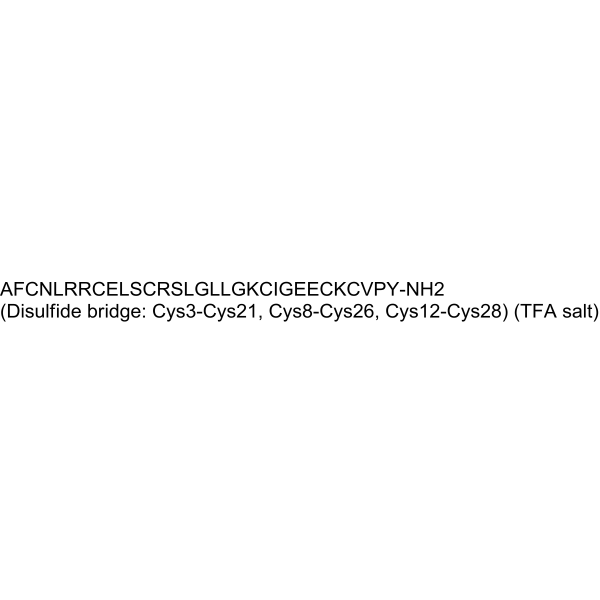
    Iberiotoxin TFA
    2 Publications Verification

    Potassium Channel Others
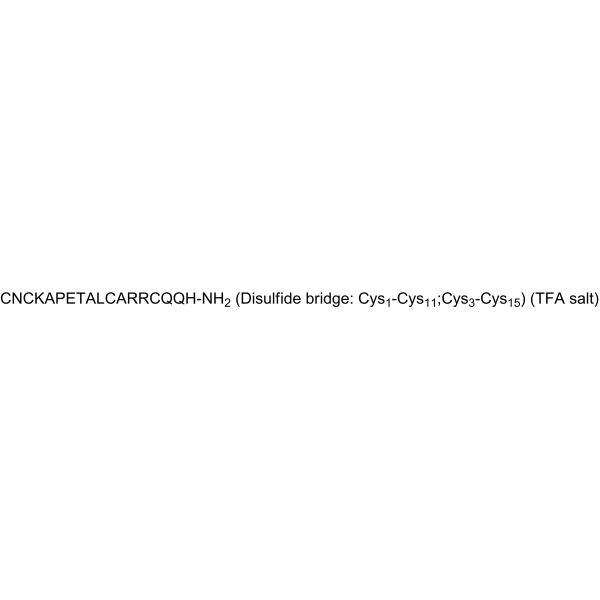
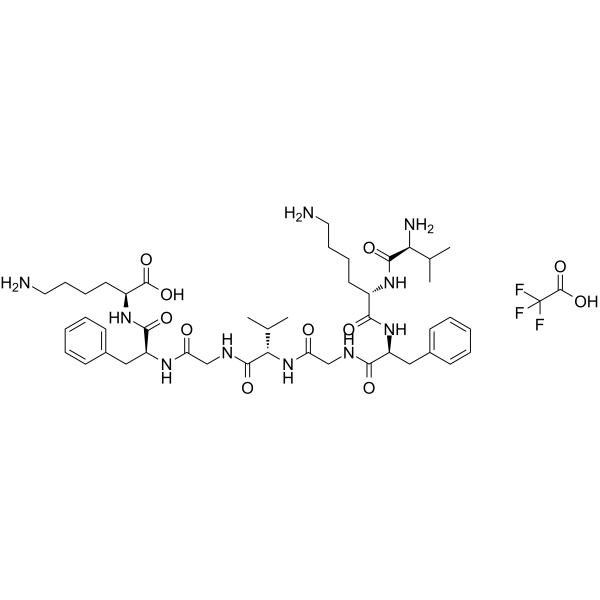
    Iberiotoxin (TFA) is a selective high conductance high conductance Ca 2+-activated K + channel inhibitor with a Kd of ~1 nM. Iberiotoxin (TFA) does not block other types of voltage-dependent ion channels .
    Iberiotoxin TFA
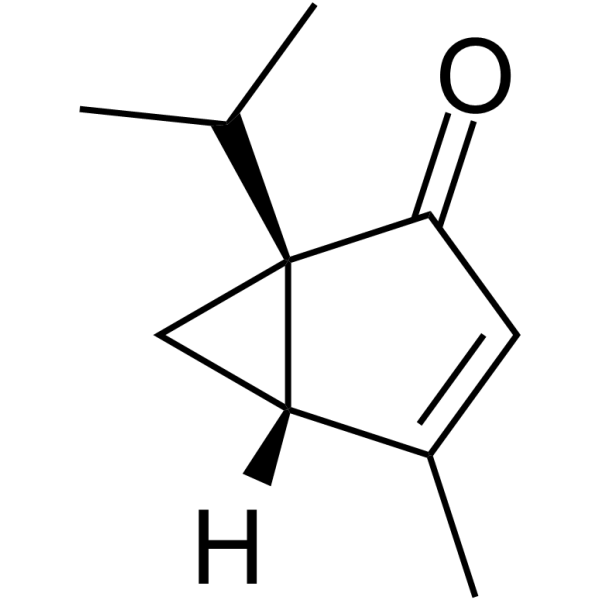
  • HY-107301

    Soyasaponin Be; DHS-I

    Potassium Channel Neurological Disease
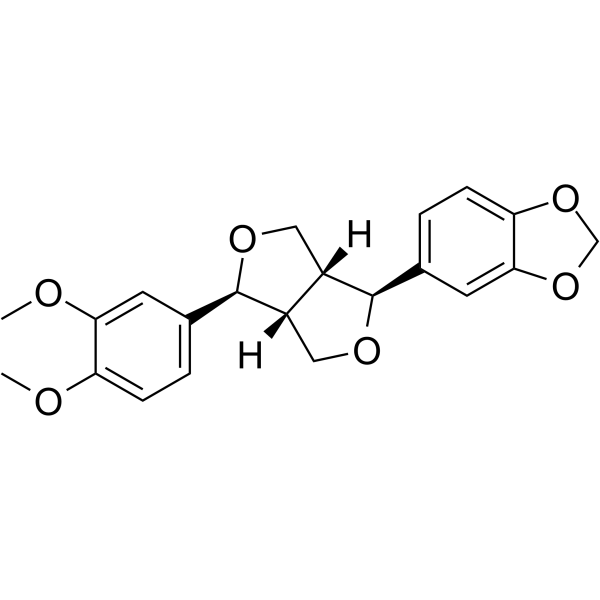
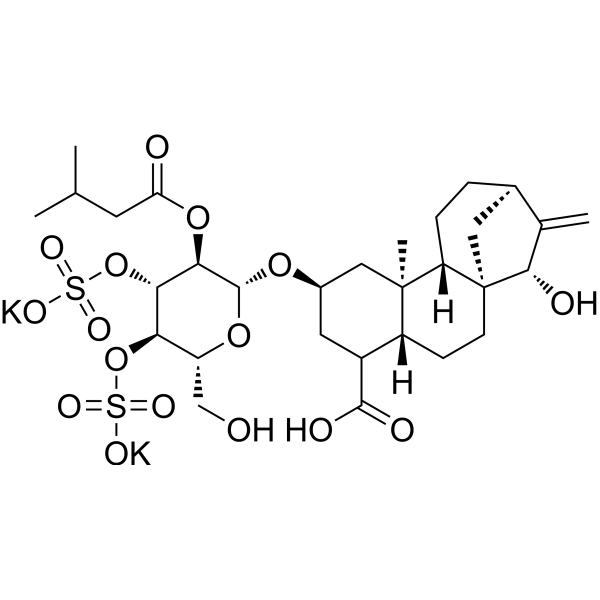
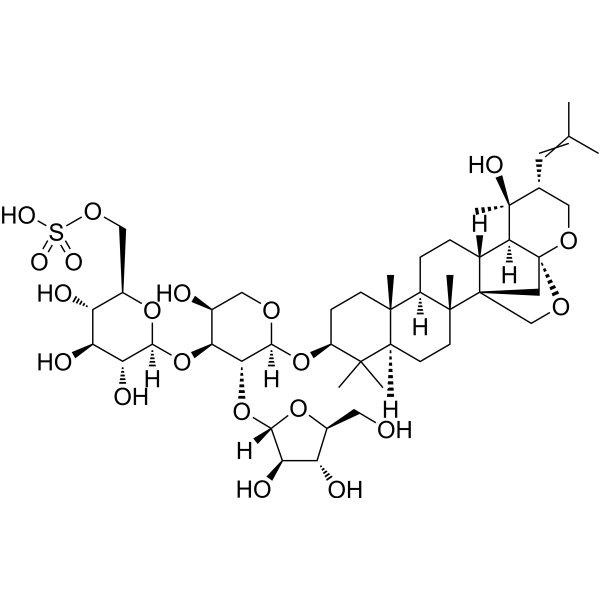
    Dehydrosoyasaponin I (Soyasaponin Be;DHS-I), a triterpene glycoside, is a potent and reversible calcium-activated potassium (maxi-K) channels activator .
    Dehydrosoyasaponin I
  • HY-N3463

    Potassium Channel Neurological Disease
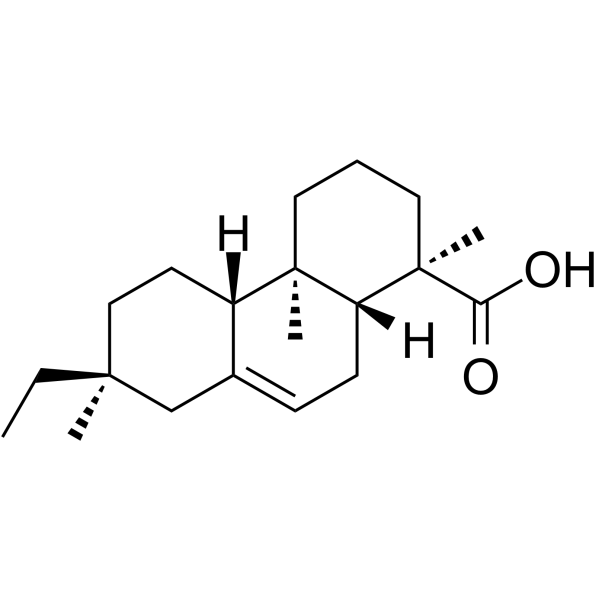
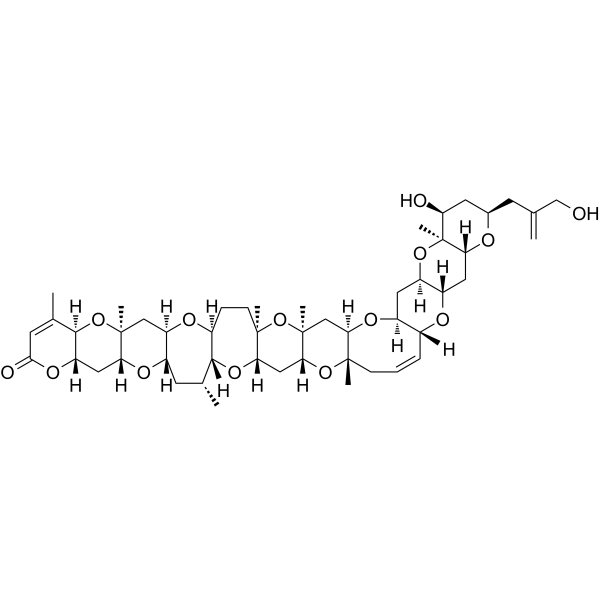
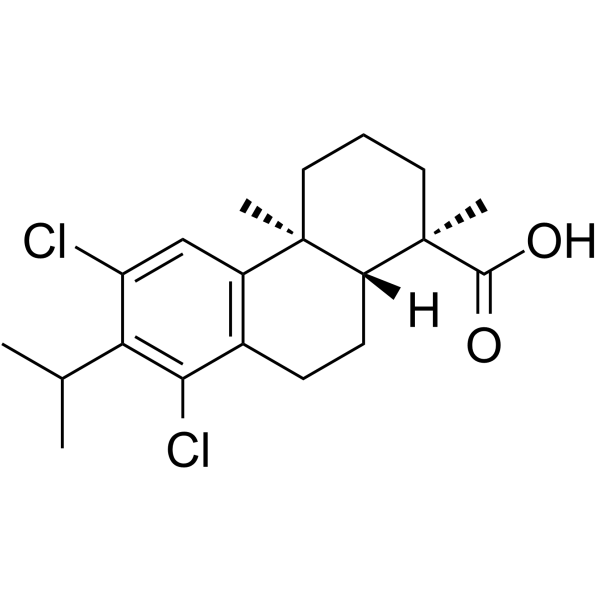
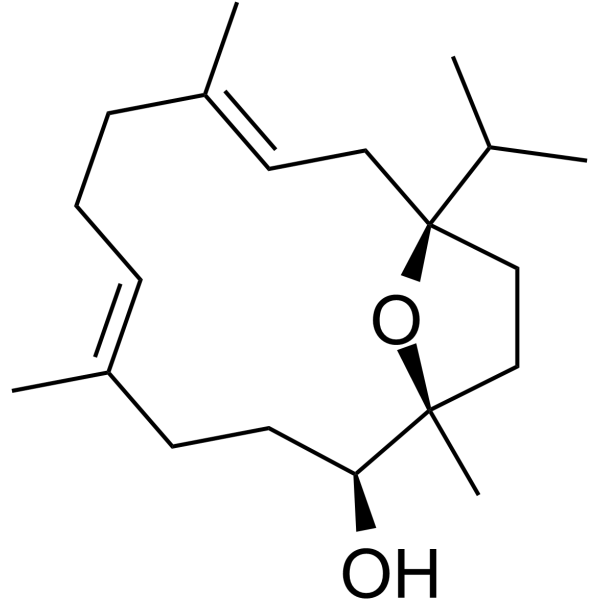
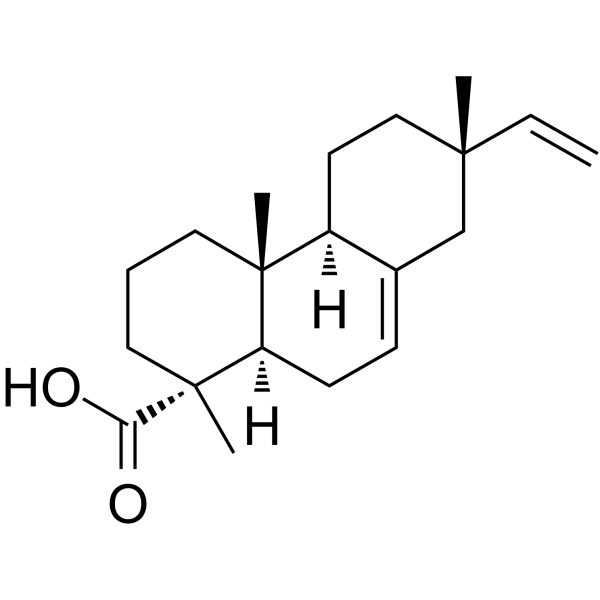
    Isopimaric acid is a potent opener of large conductance calcium activated K + (BK) channels.
    Isopimaric acid
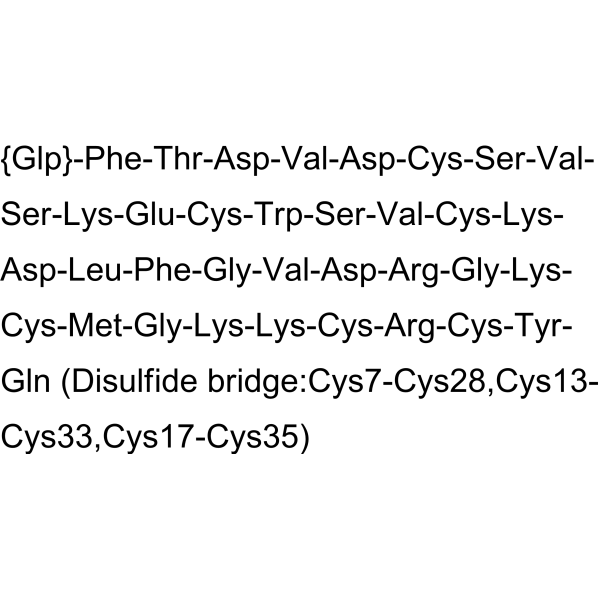
  • HY-P1221A

    Sodium Channel Neurological Disease
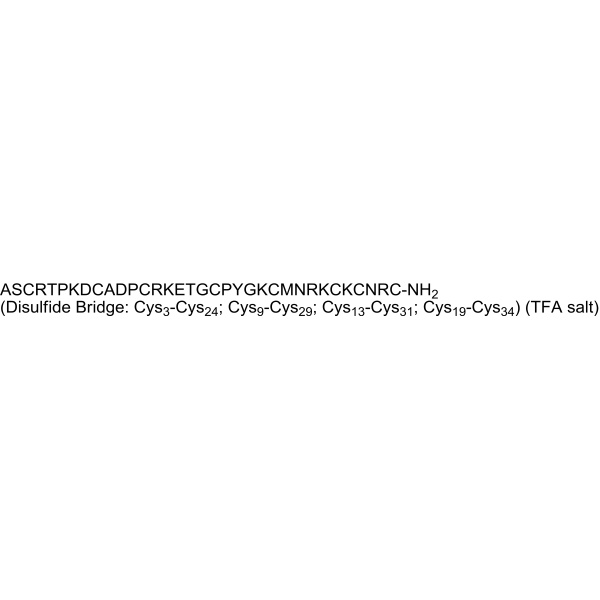
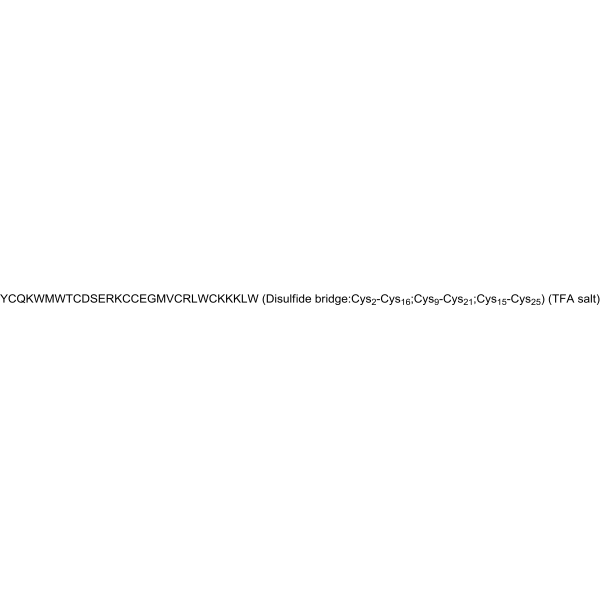
    ProTx II TFA is a selective blocker of Nav1.7 sodium channels with an IC50 of 0.3 nM, and is at least 100-fold selective for Nav1.7 over other sodium channel subtypes. ProTx-II inhibits sodium channels by decreasing channel conductance and shifting activation to more positive potentials and blocks action potential propagation in nociceptors .
    ProTx II TFA
  • HY-N7875

    Others Others
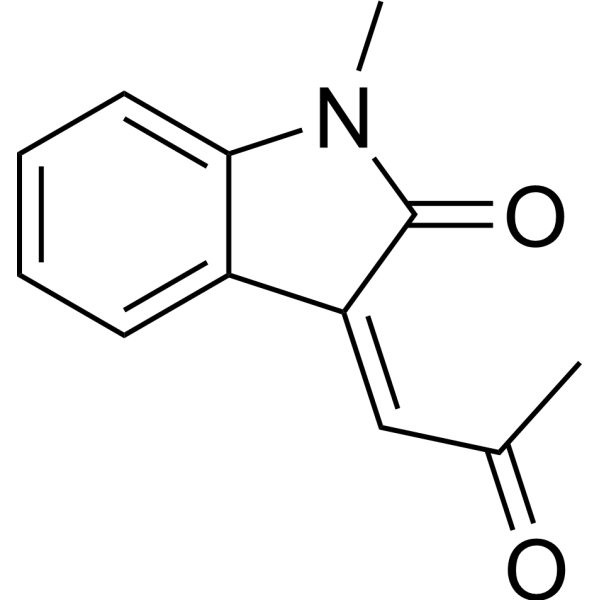
    Celangulin is an insecticidal component isolated from Celastrus angulatus. Celangulin activates the calcium channel on the plasma membrane with increasing the intracellular Ca 2+ after influx from the external. Celangulin activates the calcium channel in the ER .
    Celangulin
  • HY-N2164

    Sodium Channel Others
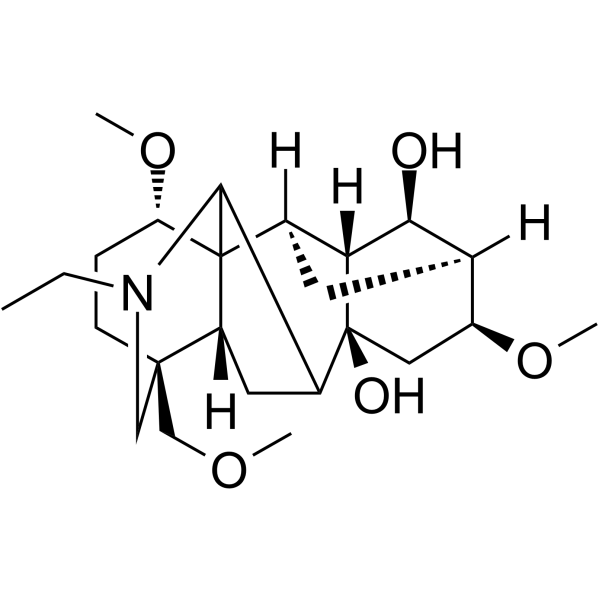
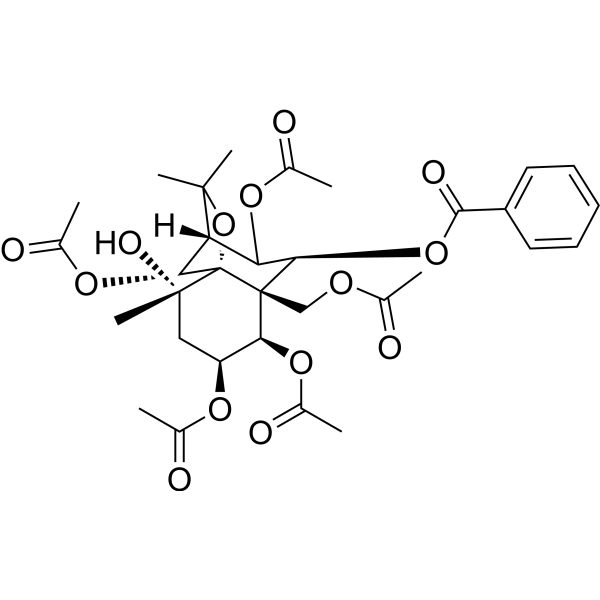
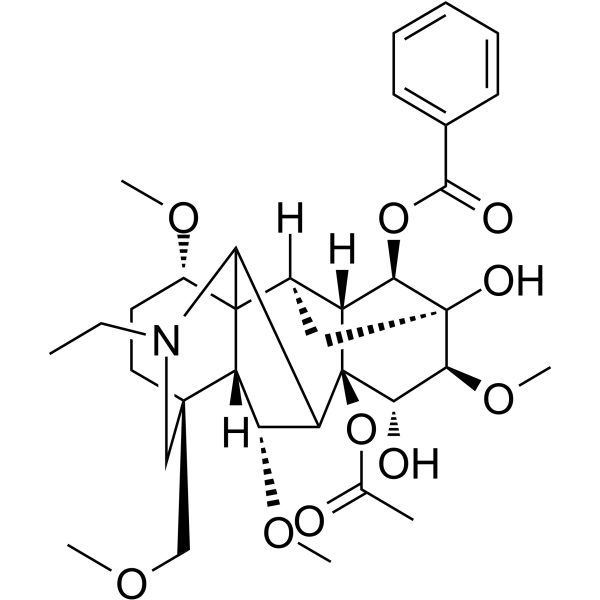
    3-Deoxyaconitine a diterpenoid alkaloid, is a sodium channel activator .
    3-Deoxyaconitine
  • HY-131012

    Potassium Channel Others
    GoSlo-SR-5-69 is a potent activator of large conductance Ca 2+-activated K + (BK) channels, with an EC50 of 251 nM .
    GoSlo-SR-5-69
  • HY-137952

    Potassium Channel TRP Channel Neurological Disease
    NS8593 is an SK channel (small conductance Ca 2+-activated K+ channels) inhibitor. NS8593 reversibly inhibited recombinant SK3-mediated currents (human SK3 and rat SK3). NS8593 inhibits all the SK1-3 subtypes Ca 2+-dependently (Kd = 0.42, 0.60, and 0.73 μM, respectively, at 0.5 μM Ca 2+). NS8593 does not affect the Ca 2+-activated K channels of intermediate and large conductance (hlk and hBK channels, respectively). NS8593 can also inhibit TRPM7 (melastatin-related TRP cation channel 7) (IC50 = 1.6 mM). NS8593 can be used for the study of central nervous system (CNS) related diseases .
    NS8593
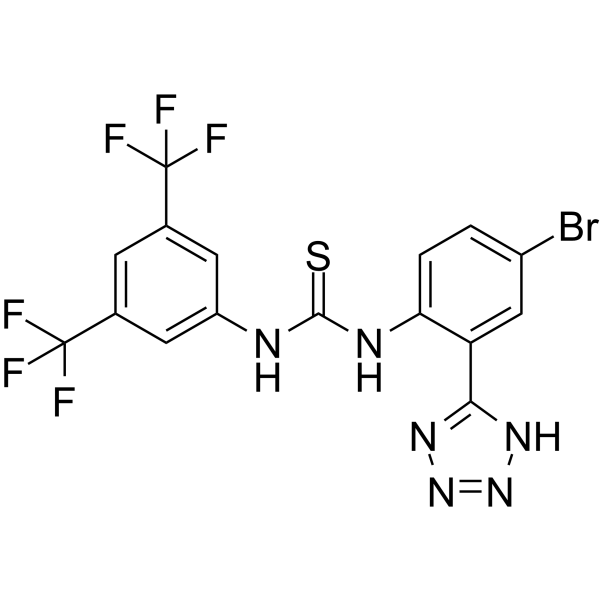
  • HY-139064

    Potassium Channel Neurological Disease Inflammation/Immunology
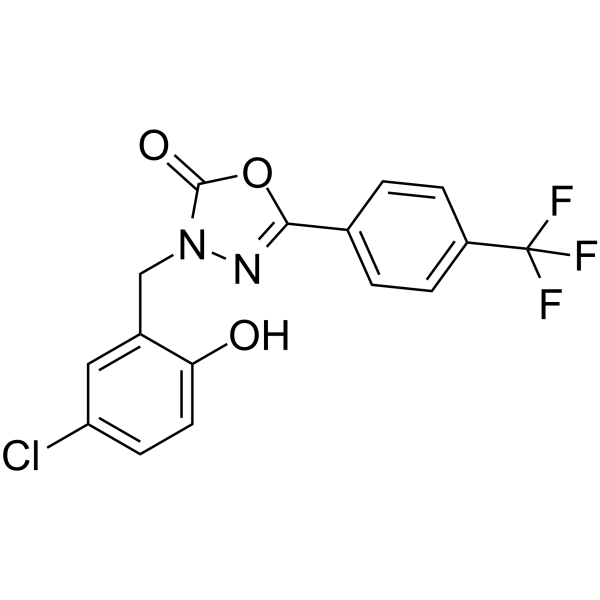
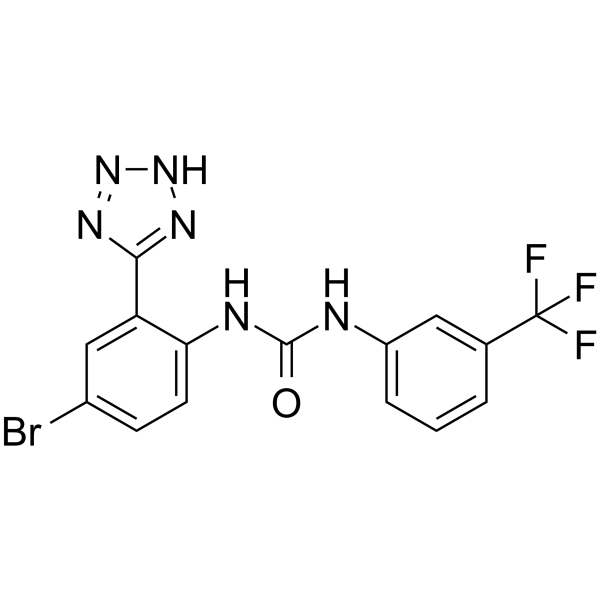
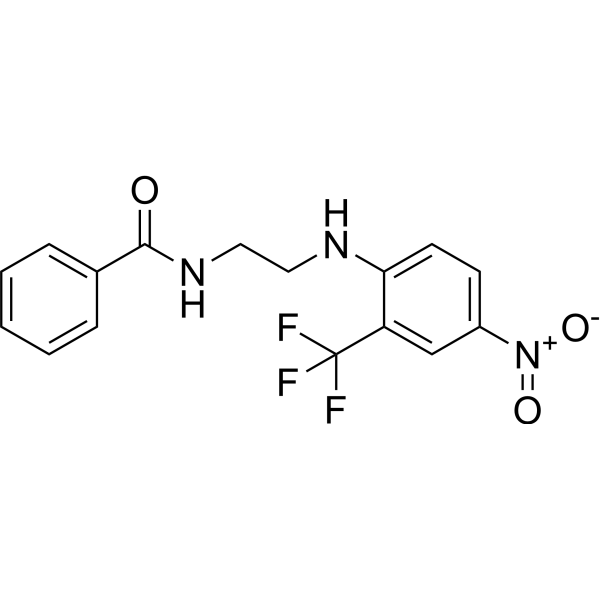
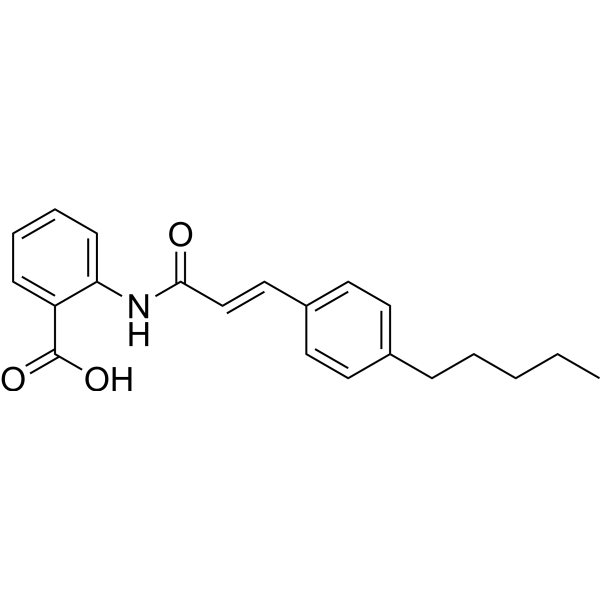
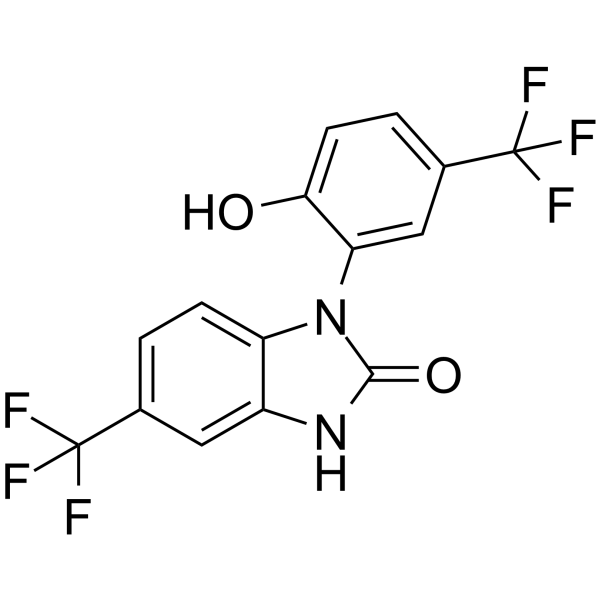
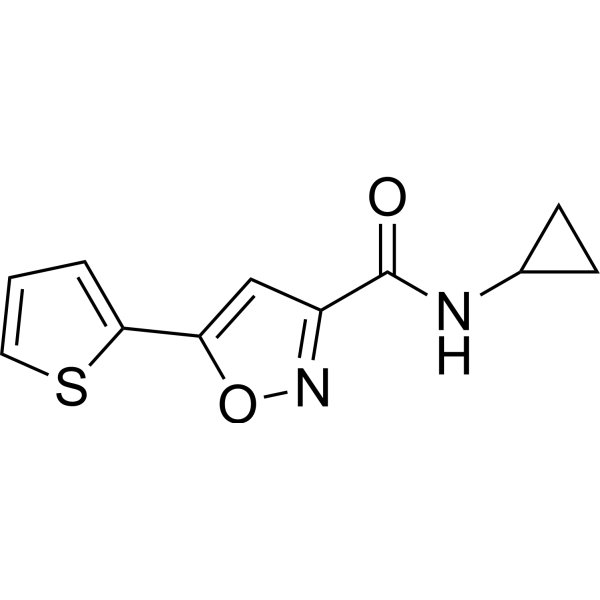
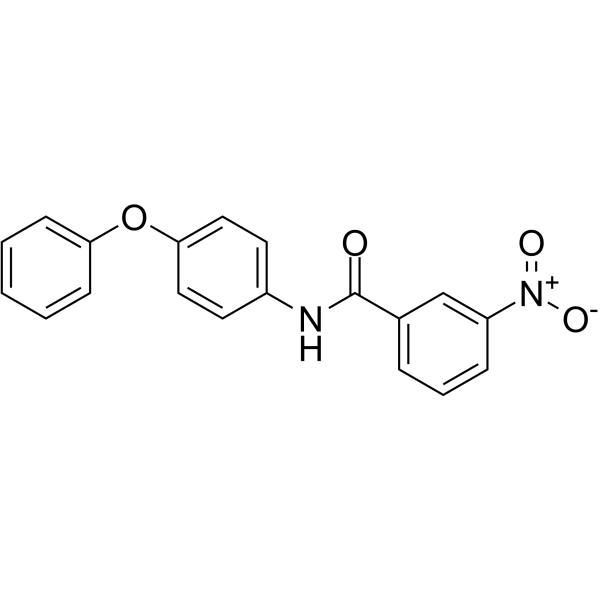
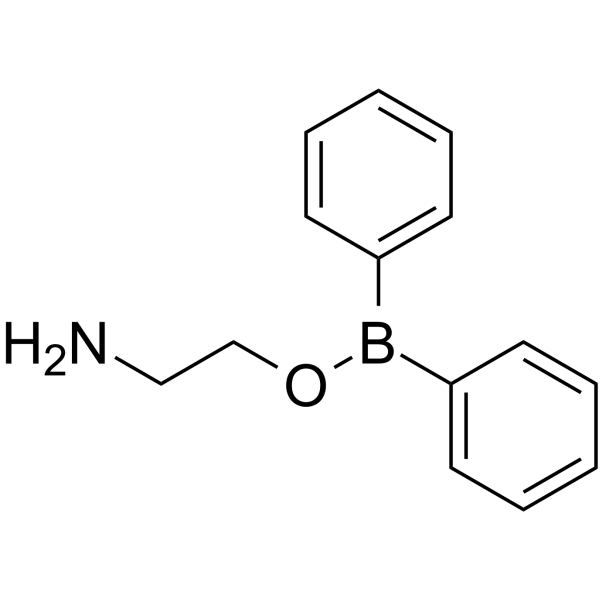
    NPBA, a potassium K2P channel TASK-3 (KCNK9) agonist, is a tandem pore domain weak inward rectifying K + channel (TWIK2) channel blocker. NPBA suppresses NLRP3 inflammasome activation in macrophages .
    NPBA
  • HY-113654

    TRP Channel Others
    AMG 7905 is a hypothermia-inducing transient receptor potential vanilloid type 1 (TRPV1) antagonist. AMG 7905 potentiates TRPV1 channels activation by protons and drives the reflectory inhibition of thermogenesis and tail-skin vasoconstriction, while potently blocking channel activation by capsaicin .
    AMG 7905
  • HY-14256
    BMS-191095
    1 Publications Verification

    Potassium Channel Cardiovascular Disease Neurological Disease
    BMS-191095 is a selective activator of mitochondrial ATP-sensitive potassium (mitoKATP) channels. BMS-191095 inhibits human platelet aggregation by opening mitochondrial K(ATP) channels .
    BMS-191095
  • HY-111996

    Potassium Channel Neurological Disease Inflammation/Immunology
    Kv3 activator-1 is a Kv3 family voltage-gated potassium channel activator. Kv3 activator-1 reverses mechanical hyperalgesia in rat models of neuropathic and inflammatory pain, with rapid onset and long-lasting, dose-related effects. Kv3 activator-1 can be used for the research of pain .
    Kv3 activator-1
  • HY-P5174

    Sodium Channel Neurological Disease
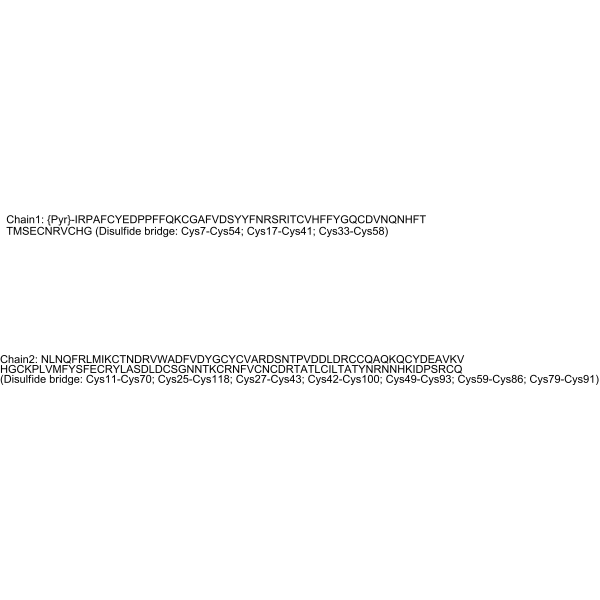
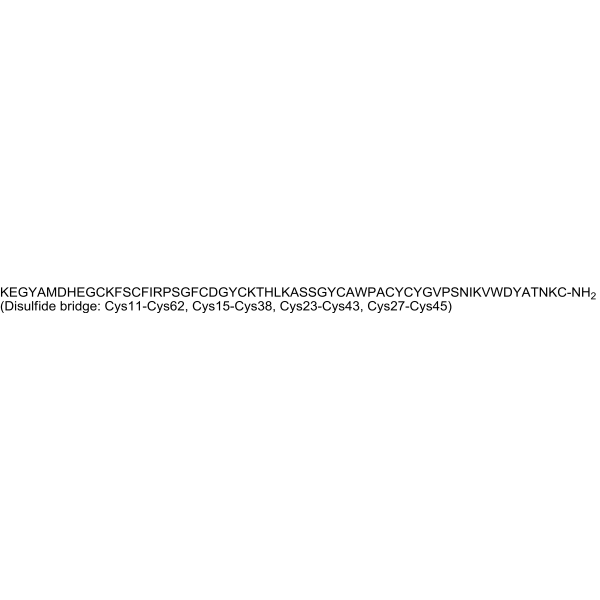
    MitTx is a complex formed by MitTx-α and MitTx-β. MitTx is an ASIC1 channel activator with EC50 values of 9.4 and 23 nM for ASIC1a and ASIC1b isoforms, respectively. MitTx is highly selective for ASIC1 isoforms at neutral pH. Under acidic conditions, MitTx greatly enhances proton-evoked ASIC2a channel activation .
    MitTx
  • HY-121539
    Supercinnamaldehyde
    1 Publications Verification

    TRP Channel Neurological Disease
    Supercinnamaldehyde is a potent transient receptor potential ankyrin 1 (TRPA1) activator with an EC50 value of 0.8 μM. Supercinnamaldehyde activates TRPA1 ion channels through covalent modification of cysteines .
    Supercinnamaldehyde
  • HY-161092A

    HCN Channel Potassium Channel Neurological Disease
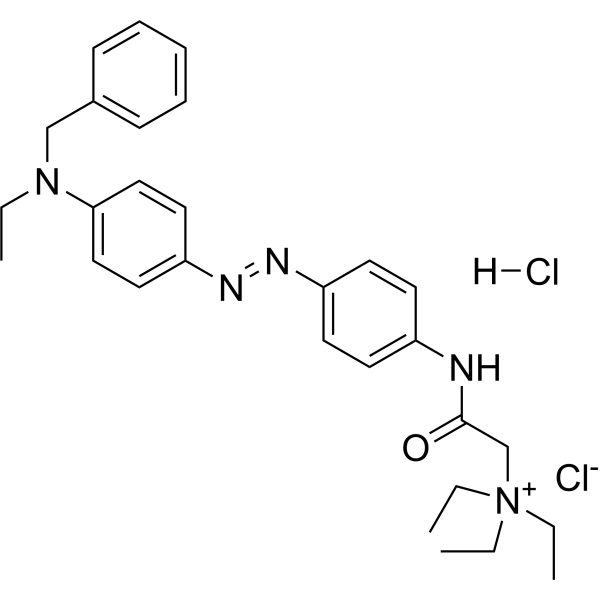
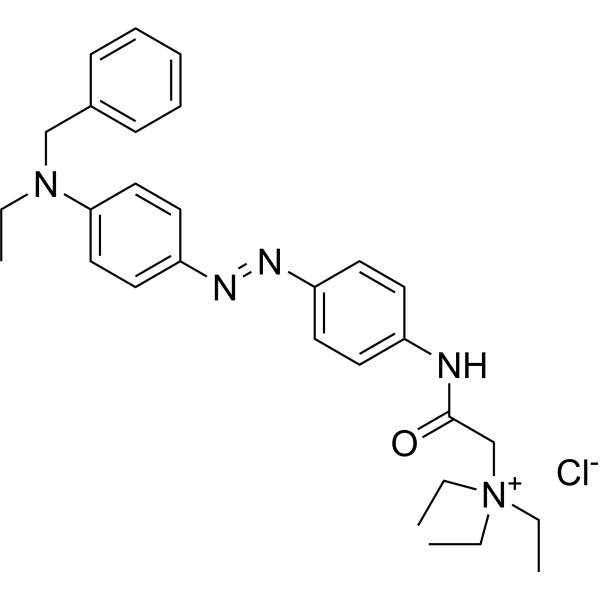
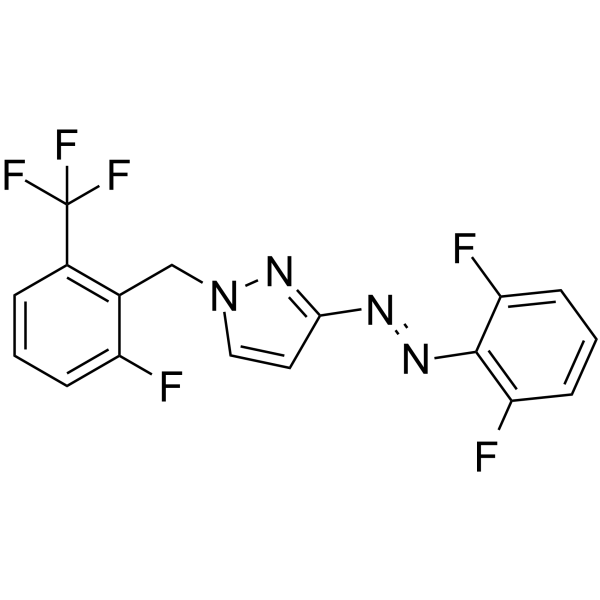
    KIO-301 chloride hydrochloride is an azobenzene photoswitchable compound that blocks voltage-gated ion channels, including hyperpolarization-activated cyclic nucleotide gating (HCN, during exposure to visible light) ) and voltage-gated potassium channels (voltage-gated potassium channels) .
    KIO-301 chloride hydrochloride
  • HY-101069
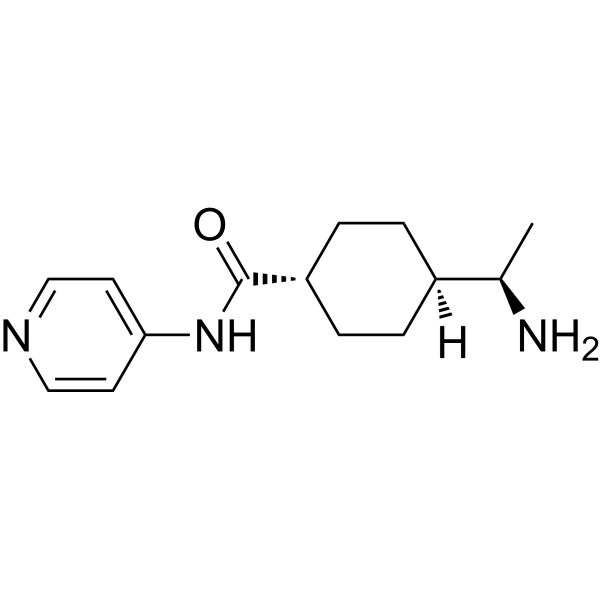
    Y-26763
    2 Publications Verification

    Potassium Channel Cardiovascular Disease
    Y-26763 is a K + channel opener and active metabolite of Y-27152 . Y-26763 is an ATP-sensitive K + (KATP) channel activator .
    Y-26763
  • HY-P5152

    Sodium Channel Neurological Disease
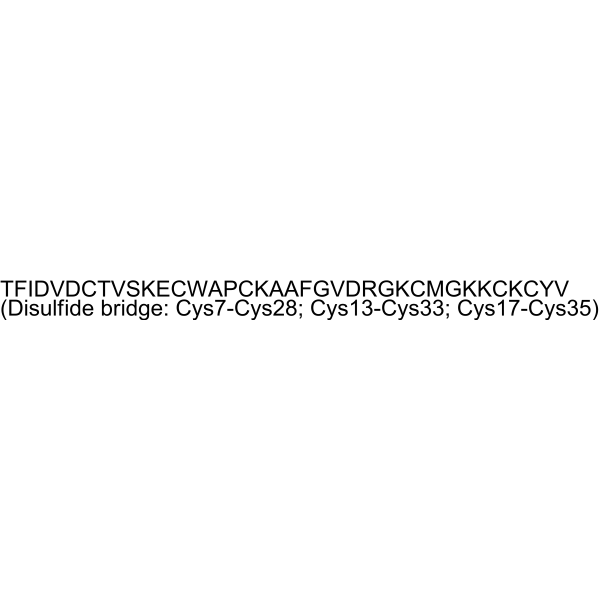
    Scorpion toxin Tf2 is a selective human voltage-gated sodium channel Nav1.3 (hNav1.3) activator. Scorpion toxin Tf2 selectively shifts the channel's activation voltage to more negative values, enabling channel opening at resting membrane potentials. Scorpion toxin Tf2 can be used for the research of epilepsy, nociception (after spinal cord injury) .
    Scorpion toxin Tf2

Inquiry Online

Your information is safe with us. * Required Fields.

Salutation


Country or Region *

Applicant Name *


Organization Name *

Department *


Email Address *


Product Name *

Cat. No.


Requested quantity *

Phone Number *


Remarks

Inquiry Online

Inquiry Information

Product Name:
Cat. No.:
Quantity:
MCE Japan Authorized Agent: