



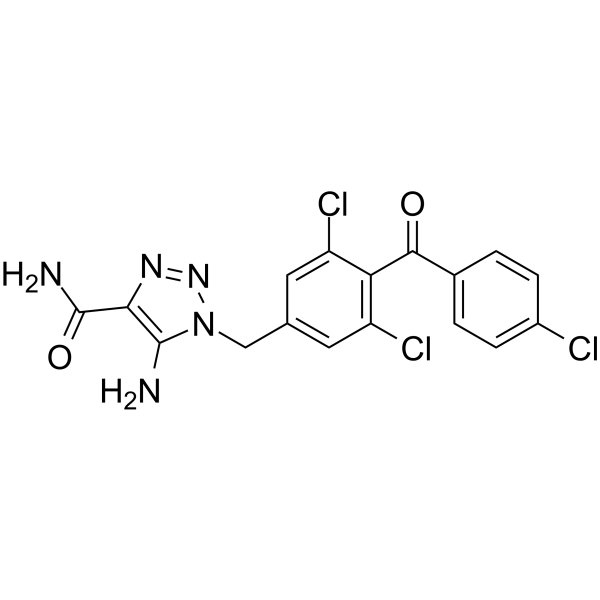
Carboxyamidotriazole
Based on 6 publication(s) in Google Scholar
Carboxyamidotriazole (L-651582) is an orally active cytostatic inhibitor of nonvoltage-operated calcium channels and calcium channel-mediated signaling pathways. Carboxyamidotriazole inhibits NF-κB, MAPK activation and NO production. Carboxyamidotriazole has anti-angiogenic and anti-inflammatory activities. Carboxyamidotriazole has anticancer activity against liver cancer, lung cancer and leukemia.
For research use only. We do not sell to patients.
- Purity : 99.82%
- CAS No.: 99519-84-3
- Formula: C17H12Cl3N5O2
- Molecular Weight:424.67
-
Storage:Powder -20°C, 3 years , 4°C, 2 years ; In solvent -80°C, 6 months , -20°C, 1 month

To place orders, for customer services and technical support, please contact: MedChemExpress USA
Tel: 609-228-6898 E-mail: [email protected] [email protected]


-
 Biological Activity
-
Chemical Information
-
Solvent & Solubility
- Purity & Documentation
- References
-
 Help & FAQs


-
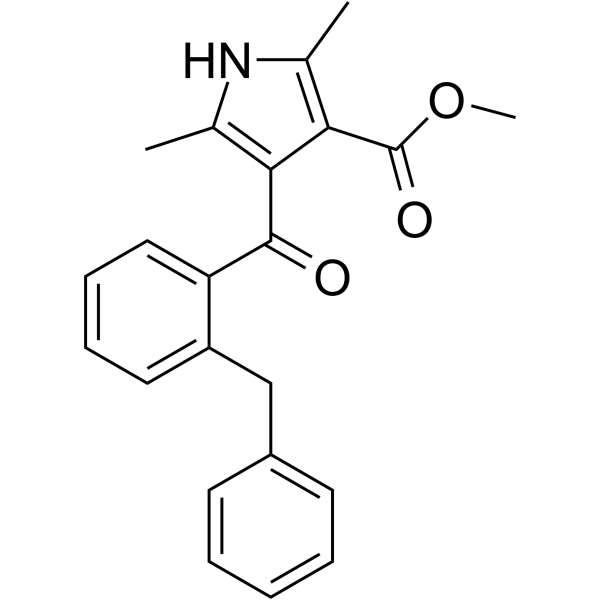
HY-103307
FPL64176 -
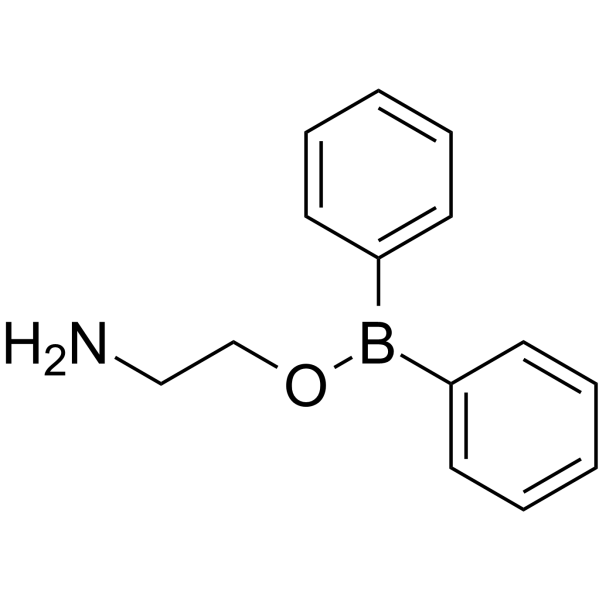
HY-W009724
2-Aminoethyl diphenylborinate -
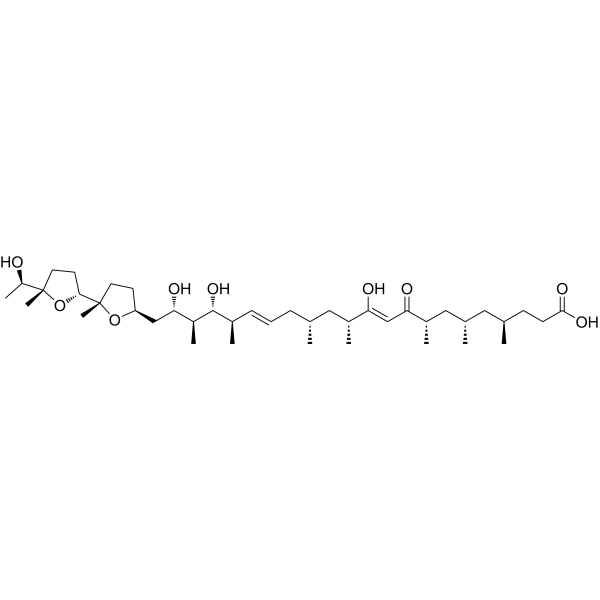
HY-13434
Ionomycin -
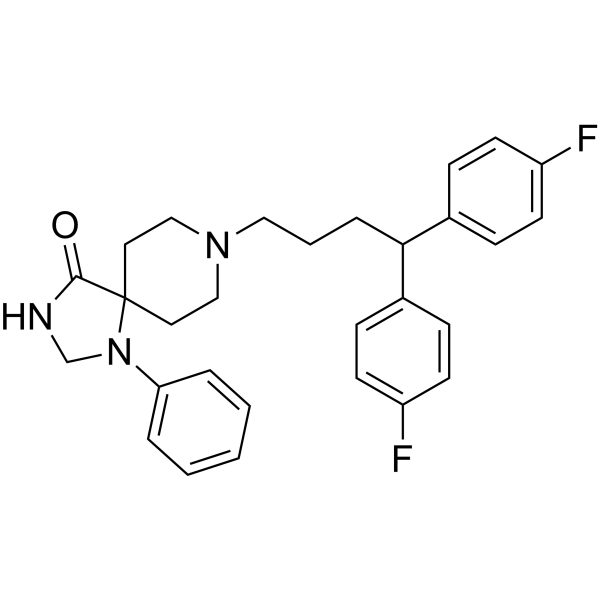
HY-B1655
Fluspirilene -
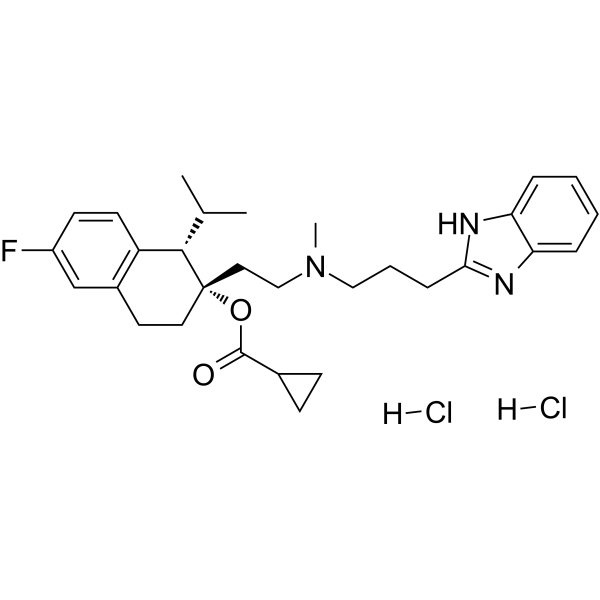
HY-50722
NNC 55-0396 -

HY-16126R
Carboxyamidotriazole (Standard) -
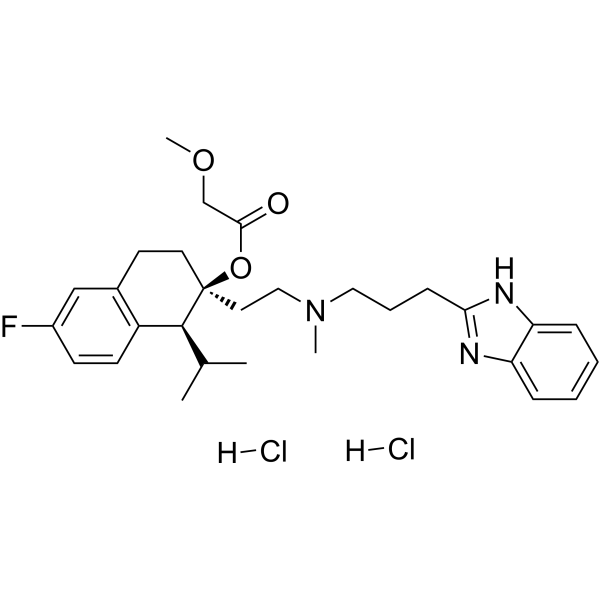
HY-15553A
Mibefradil dihydrochloride -
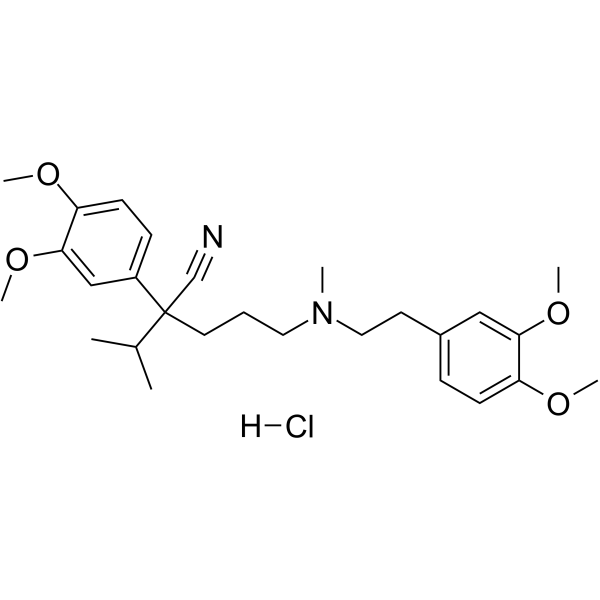
HY-A0064
Verapamil hydrochloride -
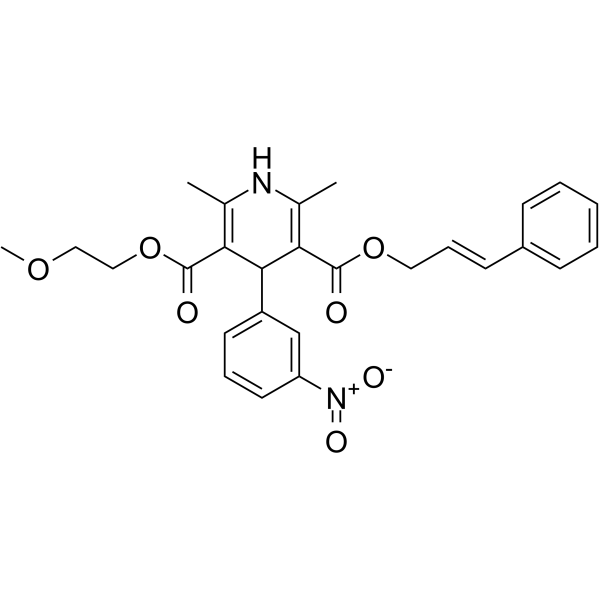
HY-17404
Cilnidipine -
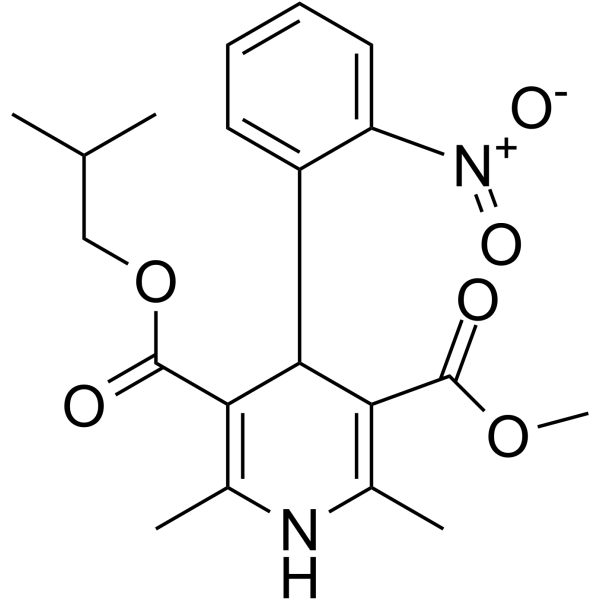
HY-17402
Nisoldipine -
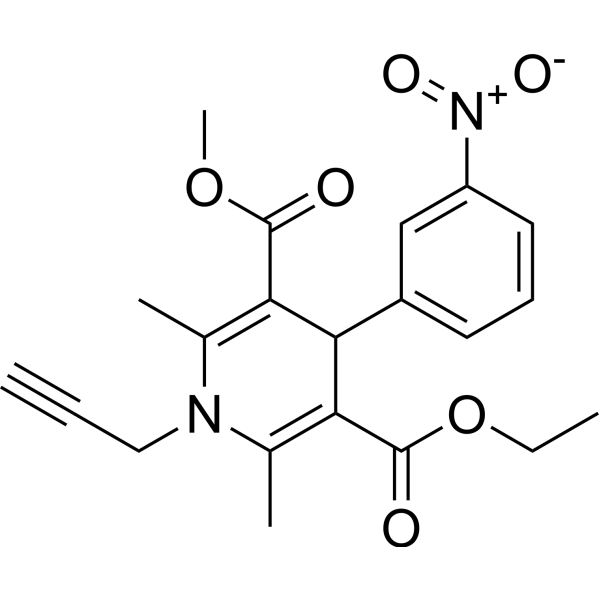
HY-103310
MRS1845 -
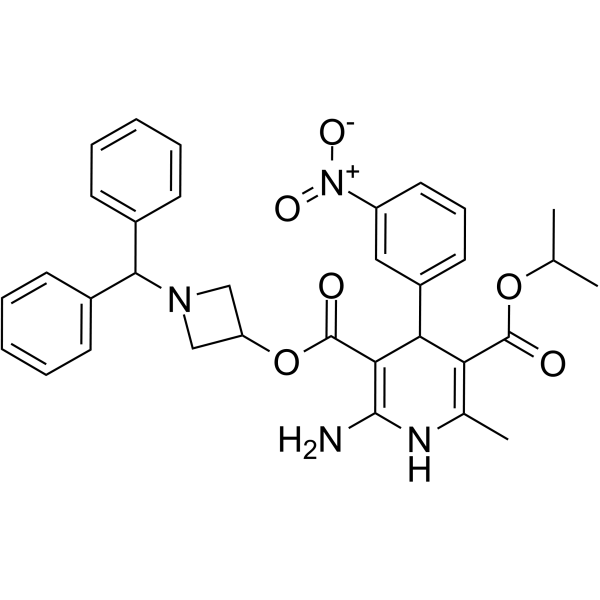
HY-B0023
Azelnidipine
Publications Citing Use of MedChemExpress (MCE) Carboxyamidotriazole
MoreAll Calcium Channel Isoforms
More

Biological Activity
Description
IC50 & Target
Calcium channel[1]
Cellular Effect
|
Cell Line

|
Type | Value | Description | References |
|---|---|---|---|---|
| Caco-2 | CC50 |
0.11 μM
Compound: CARBOXYAMIDOTRIAZOLE
|
Toxicity against Caco-2 cells determined at 48 hours by intracellular ATP concentration using the CellTiter-Glo Luminescent Cell Viability Assay
Toxicity against Caco-2 cells determined at 48 hours by intracellular ATP concentration using the CellTiter-Glo Luminescent Cell Viability Assay
|
10.21203/rs.3.rs-23951/v1 |
| Caco-2 | IC50 |
0.09 μM
Compound: CARBOXYAMIDOTRIAZOLE
|
Determination of IC50 values for inhibition of SARS-CoV-2 induced cytotoxicity of Caco-2 cells after 48 hours by high content imaging
Determination of IC50 values for inhibition of SARS-CoV-2 induced cytotoxicity of Caco-2 cells after 48 hours by high content imaging
|
10.21203/rs.3.rs-23951/v1 |
In Vitro
Carboxyamidotriazole (10 μM; 15 min) suppresses mitochondrial calcium import in Digitonin (HY-N4000)-permeabilized HEK -293 cells[2].
Carboxyamidotriazole (24 h) inhibits the proliferation of HepG2 and Huh-7 cells, with IC50s of 0.7 μM and 4.5 μM, respectively, as measured by [3H]thymidine incorporation[3].
Carboxyamidotriazole (10-20 μM; 48 h) dose-dependently inhibits the viability of LLC cells and promotes glucose uptake and lactate production in them[4].
Carboxyamidotriazole (1-40 μM; 0-5 days) inhibited cell growth in a dose- and time-dependent manner in a proliferation assay of human chronic myeloid leukemia (CML) cell lines (LAMA84R, K562R, KCL22R)[7].
Carboxyamidotriazole (10-40 μM; pretreatment for 2 h, then co-stimulation with LPS for 6 h) reduced NO production and iNOS expression and downregulated proinflammatory cytokine levels in mouse RAW264.7 macrophages[8].
Carboxyamidotriazole (5-40 μM, 48 h) inhibited the proliferation of fibroblast-like synoviocytes in a rat adjuvant arthritis model[9].
Carboxyamidotriazole (1.25-40 μM; 48-72 h) significantly inhibits the proliferation of Lewis lung carcinoma (LLC) cells[10].
Carboxyamidotriazole (10 μM; 24 h) enhances the cytotoxicity of cytotoxic T lymphocytes (CTLs) and promotes the release of IFN-γ in the co-culture experiment of mouse B16 melanoma cells and CTLs[12].
MedChemExpress (MCE) has not independently confirmed the accuracy of these methods. They are for reference only.
-
Cell Line:RAW264.7 macrophages
-
Concentration:10, 20 40 μM
-
Incubation Time:Pretreatment for 2 h and then co-stimulation with LPS for different times (6 h for iNOS detection, 1 h for NF-κB and MAPK analysis)
-
Result:Reduced iNOS expression.
Inhibited NF-κB activation and MAPK activation.
In Vivo
Carboxyamidotriazole (10-40 mg/kg; i.g.; once daily; from day 12 to day 26 after arthritis induction) reduces the severity of arthritis, inhibits hind paw swelling, decreases the infiltration of joint pathological inflammatory cells in the adjuvant arthritis model of Lewis rats induced by complete Freund's adjuvant[9].
Carboxyamidotriazole (30 mg/kg; i.g.; once daily; from day 7 to day 29 after inoculation of tumor cells) inhibits tumor growth, enhances the weights of gastrocnemius muscle and epididymal adipose tissue in the C57BL/6J mouse model inoculated with Lewis lung carcinoma cells[10].
Carboxyamidotriazole (30 mg/kg; i.g.; once daily; for 29 days) combined with low-dose Sorafenib (HY-10201) synergistically inhibits tumor growth in the C57BL/6J mouse model inoculated with Lewis lung carcinoma cells[11].
Carboxyamidotriazole (20 mg/kg; i.g.; once daily) combined with 1-MT or DMF, increases the number of CD8+ T cells in tumor-infiltrating lymphocytes (TILs), enhances the anti-tumor immune response of T cells, inhibits tumor growth, and prolongs the survival in the C57BL/6, BALB/c or RAG1 KO mouse models inoculated with B16, C26, 4T1 or B16-OVA tumor cells[12].
Carboxyamidotriazole (40 mg/kg, p.o., once daily, 14 days) reduces Bleomycin (HY-108345)-induced lung injury in mice[13].
MedChemExpress (MCE) has not independently confirmed the accuracy of these methods. They are for reference only.
-
Animal Model:C57BL/6 mice (weight: 18-22 g) + LLC xenograft model[4]
-
Dosage:Carboxyamidotriazole (30 mg/kg, dissolved in PEG 400), 2-DG (450 mg/kg)
-
Administration:Carboxyamidotriazole was administered intragastrically daily, and 2-DG was administered intraperitoneally daily for 19 days
-
Result:Caused no obvious changes in the animal body weight and behaviors.
Resulted in slower tumor growth than in the groups treated with Carboxyamidotriazole or 2-DG alone.
-
Animal Model:C57BL/6J male mice (weight: 18-22 g, 6-8 weeks old) inoculated with Lewis lung carcinoma cells[11]
-
Dosage:30 mg/kg
-
Administration:Intragastric administration, once daily, 29 days
-
Result:Synergistically inhibited tumor growth in combination with low-dose Sorafenib.
Showed comparable efficacy to high-dose Sorafenib monotherapy.
Alleviated weight loss during cancer progression and inhibited NANOG expression in tumor tissues.


Chemical Information
-
CAS No. 99519-84-3
-
Appearance Solid
-
Molecular Weight 424.67
-
Formula C17H12Cl3N5O2
-
Color White to yellow
-
SMILES
O=C(C1=C(N)N(CC2=CC(Cl)=C(C(C3=CC=C(Cl)C=C3)=O)C(Cl)=C2)N=N1)N
-
Synonyms
L-651582; CAI
-
Shipping
Room temperature in continental US; may vary elsewhere.
-
Storage
Powder -20°C 3 years 4°C 2 years In solvent -80°C 6 months -20°C 1 month


Publications (6)
-
Journal Impact Factor
-
Most Recent
-
Adv Sci (Weinh)
2025 Nov 21:e13299. PMID: 41272999 -
Adv Sci (Weinh)
ANO1-Mediated Inhibition of Cancer Ferroptosis Confers Immunotherapeutic Resistance through Recruiting Cancer-Associated Fibroblasts. [Abstract]2023 Aug;10(24):e2300881. PMID: 37341301 -
Cell Death Dis
Targeting mitochondrial α-ketoglutarate sequestration disables dual oncogenic drivers and metabolic adaptability in pancreatic ductal adenocarcinoma. [Abstract]2026 Jun 25. PMID: 42350388 -
-
iScience
Disruption of mitochondrial energy metabolism is a putative pathogenesis of Diamond-Blackfan anemia. [Abstract]2024 Feb 9;27(3):109172. PMID: 38414864 -


Solvent & Solubility
In Vitro:
DMSO : 100 mg/mL (235.48 mM; Need ultrasonic; Hygroscopic DMSO has a significant impact on the solubility of product, please use newly opened DMSO)
Please refer to the solubility information to select the appropriate solvent. Once prepared, please aliquot and store the solution to prevent product inactivation from repeated freeze-thaw cycles.
Storage method and period of stock solution: -80°C, 6 months; -20°C, 1 month. When stored at -80°C, please use it within 6 months. When stored at -20°C, please use it within 1 month.
Please refer to the solubility information to select the appropriate solvent. Once prepared, please aliquot and store the solution to prevent product inactivation from repeated freeze-thaw cycles.
Storage method and period of stock solution: -80°C, 6 months; -20°C, 1 month. When stored at -80°C, please use it within 6 months. When stored at -20°C, please use it within 1 month.
Concentration (start) × Volume (start) = Concentration (final) × Volume (final)
In Vivo:
Select the appropriate dissolution method based on your experimental animal and administration route.
- For the following dissolution methods, please ensure to first prepare a clear stock solution using an In Vitro approach and then sequentially add co-solvents:
- To ensure reliable experimental results, the clarified stock solution can be appropriately stored based on storage conditions. As for the working solution for In Vivo experiments, it is recommended to prepare freshly and use it on the same day.
- The percentages shown for the solvents indicate their volumetric ratio in the final prepared solution. If precipitation or phase separation occurs during preparation, heat and/or sonication can be used to aid dissolution.
Add each solvent one by one: 10% DMSO 40% PEG300 5% Tween-80 45% Saline
Solubility: ≥ 2.5 mg/mL (5.89 mM); Clear solution
This protocol yields a clear solution of ≥ 2.5 mg/mL (saturation unknown).
Taking 1 mL working solution as an example, add 100 μL DMSO stock solution (25.0 mg/mL) to 400 μL PEG300, and mix evenly; then add 50 μL Tween-80 and mix evenly; then add 450 μL Saline to adjust the volume to 1 mL.
Preparation of Saline: Dissolve 0.9 g sodium chloride in ddH₂O and dilute to 100 mL to obtain a clear Saline solution.
Add each solvent one by one: 10% DMSO 90% (20% SBE-β-CD in Saline)
Solubility: ≥ 2.5 mg/mL (5.89 mM); Clear solution
This protocol yields a clear solution of ≥ 2.5 mg/mL (saturation unknown).
Taking 1 mL working solution as an example, add 100 μL DMSO stock solution (25.0 mg/mL) to 900 μL 20% SBE-β-CD in Saline, and mix evenly.
Preparation of 20% SBE-β-CD in Saline (4°C, storage for one week): 2 g SBE-β-CD powder is dissolved in 10 mL Saline, completely dissolve until clear.
In Vivo Dissolution Calculator
Please enter the basic information of animal experiments:
-
-
-
-
Recommended: Prepare an additional quantity of animals to account for potential losses during experiments.
Please enter your animal formula composition:
-
%DMSO +
Recommended: Keep the proportion of DMSO in working solution below 2% if your animal is weak.
-
%+
-
+%Tween-80 + +
-
%Saline +
The co-solvents required include: DMSO, . All of co-solvents are available by MedChemExpress (MCE). , Tween 80. All of co-solvents are available by MedChemExpress (MCE).
Working solution concentration: 0.22 mg/mL
Method for preparing stock solution: mg drug dissolved in μL DMSO. Stock solution concentration: mg/mL.
1. Take μL DMSO stock solution;
2. Add μL .
μL , mix evenly;
3. Then add μL Tween 80, mix evenly;
4. Then add μL
Please ensure that the stock solution in the first step is dissolved to a clear state, and add co-solvents in sequence. You can use ultrasonic heating (ultrasonic cleaner, recommended frequency 20-40 kHz), vortexing, etc. to assist dissolution.


Purity & Documentation
-
Data Sheet (285 KB)
-
SDS (479 KB)
- English - EN (479 KB)
- Français - FR (479 KB)
- Deutsch - DE (479 KB)
- Norwegian - NO (479 KB)
- Español - ES (479 KB)
- Swedish - SV (479 KB)
- Italian - IT (479 KB)
- Korean - KR (479 KB)
- Portuguese - PT (479 KB)
-
Handling Instructions (2659 KB)
References
[1]. Hussain MM, et al. J Clin Oncol. 2003 Dec 1;21(23):4356-63. [Content Brief]
[2]. Mignen O, et al. Carboxyamidotriazole-induced inhibition of mitochondrial calcium import blocks capacitative calcium entry and cell proliferation in HEK-293 cells. J Cell Sci. 2005 Dec 1;118(Pt 23):5615-23. [Content Brief]
[3]. Enfissi A, et al. The blocking of capacitative calcium entry by 2-aminoethyl diphenylborate (2-APB) and carboxyamidotriazole (CAI) inhibits proliferation in Hep G2 and Huh-7 human hepatoma cells. Cell Calcium. 2004 Dec;36(6):459-67. [Content Brief]
[4]. Ju R, et al. Carboxyamidotriazole inhibits oxidative phosphorylation in cancer cells and exerts synergistic anti-cancer effect with glycolysis inhibition. Cancer Lett. 2016 Jan 28;370(2):232-41. [Content Brief]
[5]. Faehling M, et al. Essential role of calcium in vascular endothelial growth factor A-induced signaling: mechanism of the antiangiogenic effect of carboxyamidotriazole. FASEB J. 2002 Nov;16(13):1805-7. [Content Brief]
[6]. Bonnefond ML, et al. Inhibition of store-operated channels by carboxyamidotriazole sensitizes ovarian carcinoma cells to anti-BclxL strategies through Mcl-1 down-regulation. Oncotarget. 2018 Sep 21;9(74):33896-33911. [Content Brief]
[7]. Alessandro R, et al. Effects of carboxyamidotriazole on in vitro models of imatinib-resistant chronic myeloid leukemia. J Cell Physiol. 2008 Apr;215(1):111-21. [Content Brief]
[8]. Lu S, et al. Carboxyamidotriazole exerts anti-inflammatory activity in lipopolysaccharide-induced RAW264.7 macrophages by inhibiting NF-κB and MAPKs pathways. Exp Ther Med. 2020 Aug;20(2):1455-1466. [Content Brief]
[9]. Zhou Y, et al. Carboxyamidotriazole alleviates pannus formation and cartilage erosion in rats with adjuvant arthritis. Heliyon. 2023 Sep 14;9(9):e20105. [Content Brief]
[11]. Chen C, et al. Carboxyamidotriazole Synergizes with Sorafenib to Combat Non-Small Cell Lung Cancer through Inhibition of NANOG and Aggravation of Apoptosis. J Pharmacol Exp Ther. 2017 Aug;362(2):219-229. [Content Brief]
[12]. Shi J, et al. Carboxyamidotriazole combined with IDO1-Kyn-AhR pathway inhibitors profoundly enhances cancer immunotherapy. J Immunother Cancer. 2019 Sep 11;7(1):246. [Content Brief]
[13]. Tao Z, et al. Therapeutic effect and mechanism of carboxyamidotriazole on the pulmonary fibrosis of mice induced by bleomycin. Zhonghua Yi Xue Za Zhi. 2018 Feb 27;98(8):612-616. Chinese. [Content Brief]


Complete Stock Solution Preparation Table
Please refer to the solubility information to select the appropriate solvent. Once prepared, please aliquot and store the solution to prevent product inactivation from repeated freeze-thaw cycles.
Storage method and period of stock solution: -80°C, 6 months; -20°C, 1 month. When stored at -80°C, please use it within 6 months. When stored at -20°C, please use it within 1 month.
| Optional Solvent | Concentration Solvent Mass | 1 mg | 5 mg | 10 mg | 25 mg |
|---|---|---|---|---|---|
| DMSO | 1 mM | 2.3548 mL | 11.7738 mL | 23.5477 mL | 58.8692 mL |
| 5 mM | 0.4710 mL | 2.3548 mL | 4.7095 mL | 11.7738 mL | |
| 10 mM | 0.2355 mL | 1.1774 mL | 2.3548 mL | 5.8869 mL | |
| 15 mM | 0.1570 mL | 0.7849 mL | 1.5698 mL | 3.9246 mL | |
| 20 mM | 0.1177 mL | 0.5887 mL | 1.1774 mL | 2.9435 mL | |
| 25 mM | 0.0942 mL | 0.4710 mL | 0.9419 mL | 2.3548 mL | |
| 30 mM | 0.0785 mL | 0.3925 mL | 0.7849 mL | 1.9623 mL | |
| 40 mM | 0.0589 mL | 0.2943 mL | 0.5887 mL | 1.4717 mL | |
| 50 mM | 0.0471 mL | 0.2355 mL | 0.4710 mL | 1.1774 mL | |
| 60 mM | 0.0392 mL | 0.1962 mL | 0.3925 mL | 0.9812 mL | |
| 80 mM | 0.0294 mL | 0.1472 mL | 0.2943 mL | 0.7359 mL | |
| 100 mM | 0.0235 mL | 0.1177 mL | 0.2355 mL | 0.5887 mL |


Carboxyamidotriazole Related Classifications
HY-16126 Related Classifications
 Powered by Bioz