



Nisoldipine
Based on 2 publication(s) in Google Scholar
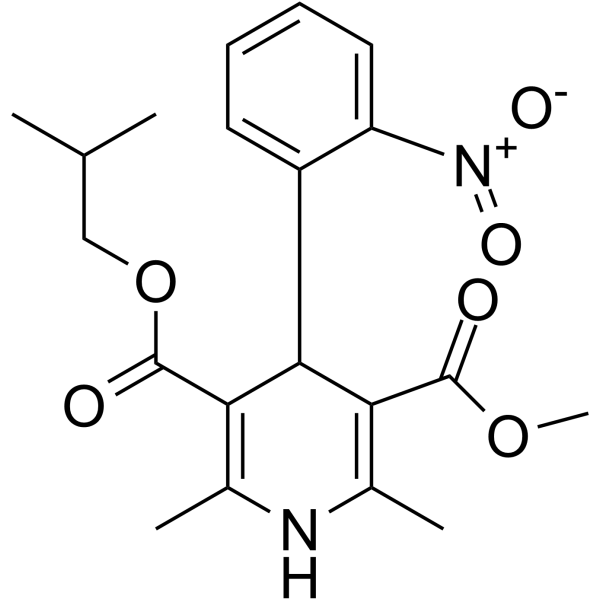
Nisoldipine (BAY-k 5552; Sular) is an orally active and blood-brain barrier-penetrating dihydropyridine calcium antagonist, with greater vascular selectivity than other calcium channel antagonists. Nisoldipine inhibits calcium influx and blocks voltage-gated calcium channels. Nisoldipine dilates coronary and systemic arteries. Nisoldipine has antihypertensive and anti-anginal activity. Nisoldipine also displays neuroprotective and antiviral activity.
For research use only. We do not sell to patients.
- Purity : 99.56%
- CAS No.: 63675-72-9
- Formula: C20H24N2O6
- Molecular Weight:388.41
-
Storage:
4°C, protect from light
* In solvent : -80°C, 6 months; -20°C, 1 month (protect from light)

To place orders, for customer services and technical support, please contact: MedChemExpress USA
Tel: 609-228-6898 E-mail: [email protected] [email protected]


-
 Biological Activity
-
Chemical Information
-
Solvent & Solubility
- Protocols
- Purity & Documentation
- References
-
 Help & FAQs


-
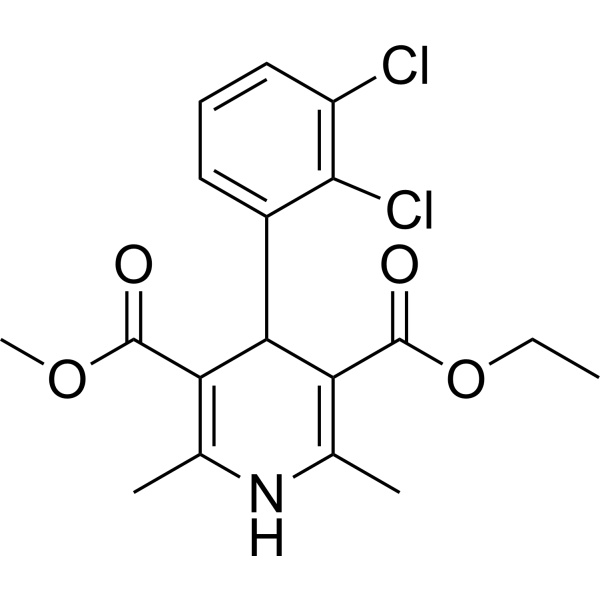
HY-B0309
FelodipineCalcium Channel Antagonist -
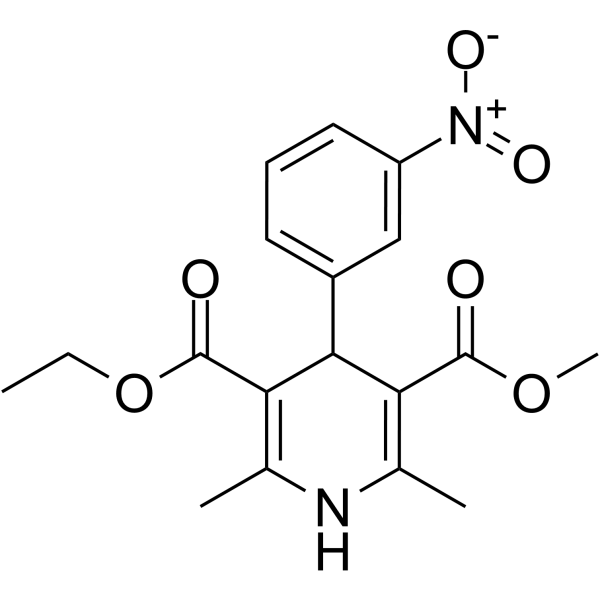
HY-B0424
NitrendipineCalcium Channel Blocker -
HY-B0284
NifedipineCalcium Channel Antagonist -
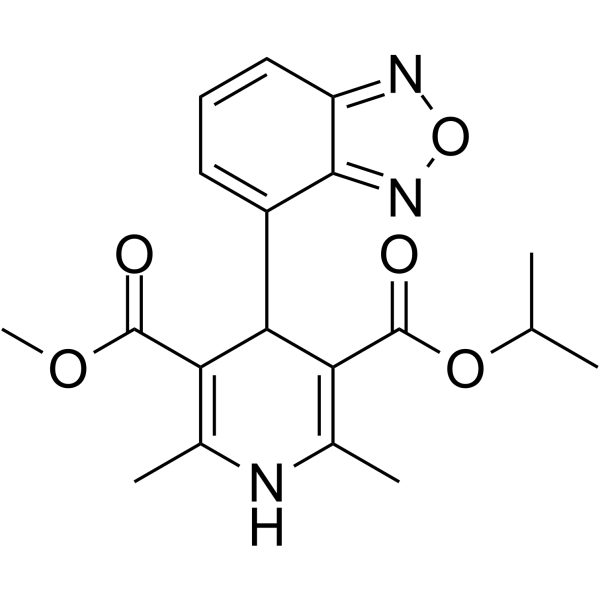
HY-B0233
IsradipineL-type Calcium Channel Blocker -
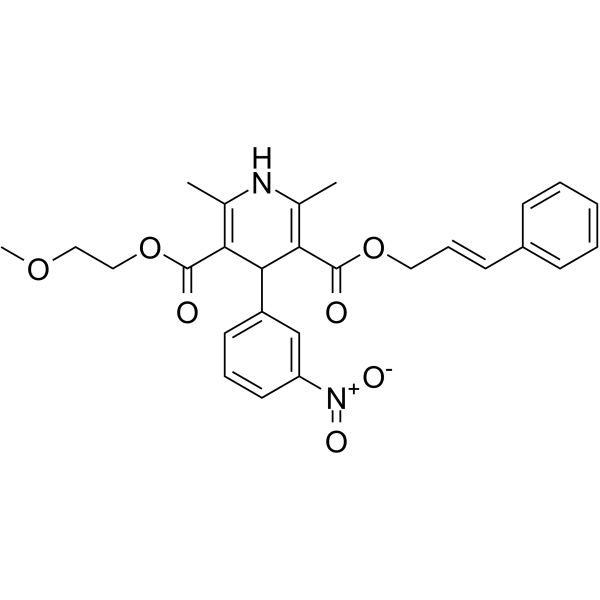
HY-17404
CilnidipineCa Channel Blocker -
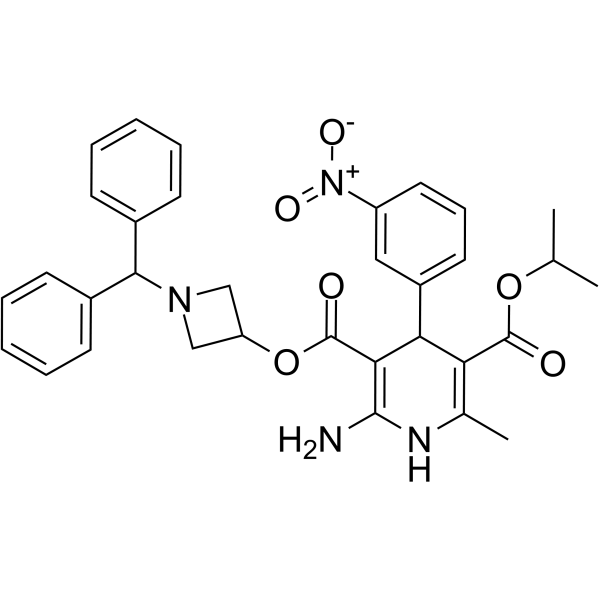
HY-B0023
AzelnidipineCalcium Channel Blocker -
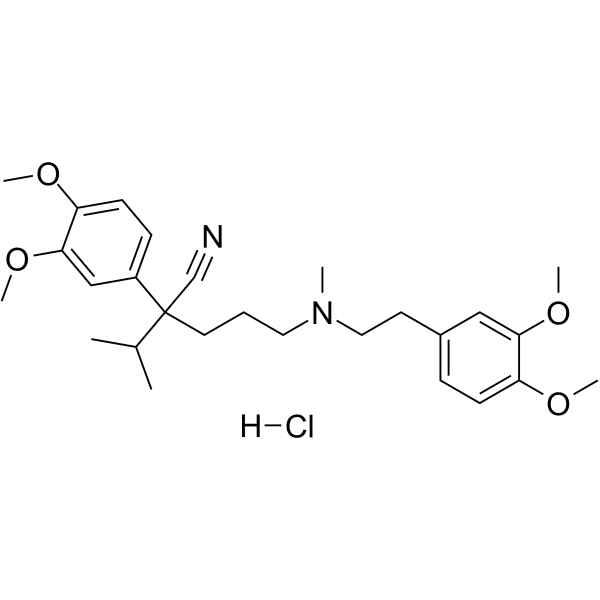
HY-A0064
Verapamil hydrochlorideCalcium Channel Blocker -
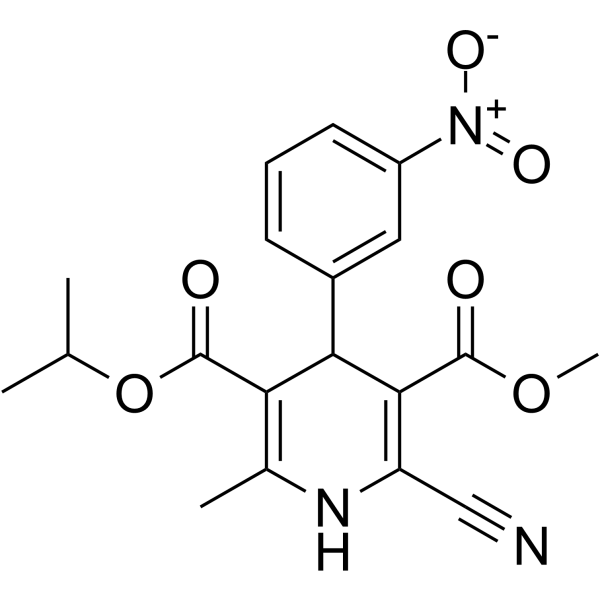
HY-14284
NilvadipineCalcium Channel Antagonist -
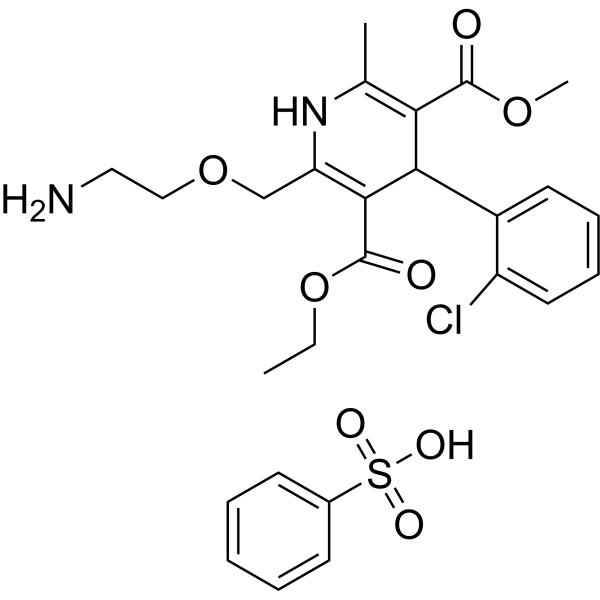
HY-B0317B
Amlodipine besylateCalcium Channel Blocker -
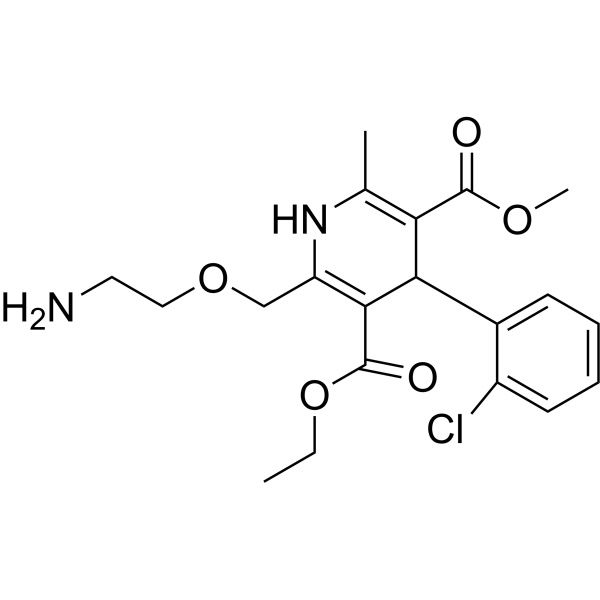
HY-B0317
AmlodipineCalcium Channel Blocker -
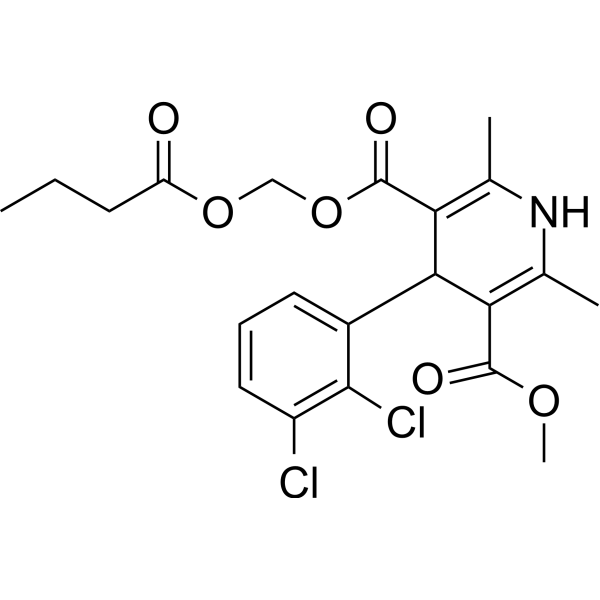
HY-17436
ClevidipineCalcium Channel Antagonist -
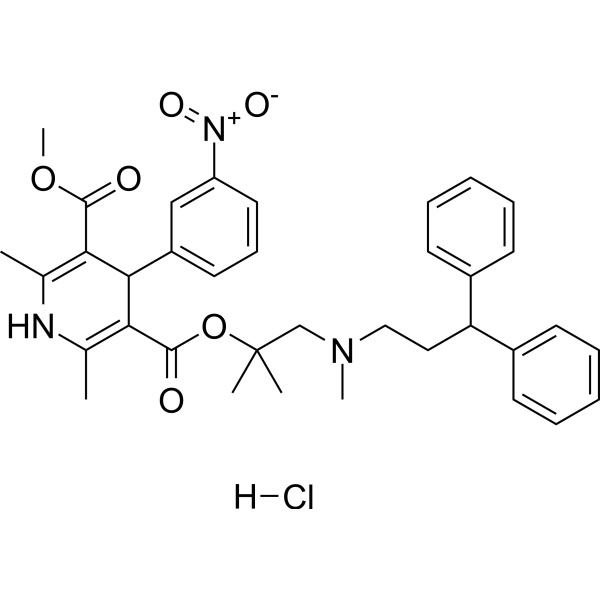
HY-B0612A
Lercanidipine hydrochlorideCalcium Channel Blocker
Publications Citing Use of MedChemExpress (MCE) Nisoldipine
MoreAll Calcium Channel Isoforms
More

Biological Activity
Description
IC50 & Target
|
L-type calcium channel |
Cellular Effect
|
Cell Line

|
Type | Value | Description | References |
|---|---|---|---|---|
| CHO | IC50 |
0.003 μM
Compound: Nisoldipine
|
Inhibition of L-type calcium channel measured using 2-electrode voltage-clamp in Chinese hamster ovary cells heterologically expressing alpha-1C subunit
Inhibition of L-type calcium channel measured using 2-electrode voltage-clamp in Chinese hamster ovary cells heterologically expressing alpha-1C subunit
|
[PMID: 22761000] |
| HepG2 | EC50 |
10 μM
Compound: Nisoldipine
|
Activation of human PXR expressed in human HepG2 (DPX-2) cells after 24 hrs by luciferase reporter gene based luminescent analysis
Activation of human PXR expressed in human HepG2 (DPX-2) cells after 24 hrs by luciferase reporter gene based luminescent analysis
|
[PMID: 20966043] |
| HepG2 | EC50 |
12.6 μM
Compound: Nisoldipine
|
Activation of human PXR expressed in human HepG2 (DPX-2) cells assessed as induction of CYP3A4 after 24 hrs by luminescent analysis
Activation of human PXR expressed in human HepG2 (DPX-2) cells assessed as induction of CYP3A4 after 24 hrs by luminescent analysis
|
[PMID: 20966043] |
| HepG2 | EC50 |
31.6 μM
Compound: Nisoldipine
|
Activation of rat PXR expressed in human HepG2 cells after 24 hrs by luciferase reporter gene based luminescent analysis
Activation of rat PXR expressed in human HepG2 cells after 24 hrs by luciferase reporter gene based luminescent analysis
|
[PMID: 20966043] |
| LLC-PK1 | IC50 |
44.1 μM
Compound: Nisoldipine
|
TP_TRANSPORTER: inhibition of Digoxin transepithelial transport (basal to apical) (Digoxin: 0.1 uM) in MDR1-expressing LLC-PK1 cells
TP_TRANSPORTER: inhibition of Digoxin transepithelial transport (basal to apical) (Digoxin: 0.1 uM) in MDR1-expressing LLC-PK1 cells
|
[PMID: 12128170] |
In Vitro
Nisoldipine noncompetitively reduces the activity of human Paraoxonase 1, with an IC50 of 13.987 μM[3].
Nisoldipine (10-100 μM, 8-10 min) is about 30 times less selective for delayed-rectifier K+ channels than for L-type Ca2+ channels in fully polarised guinea-pig ventricular myocytes[4].
Nisoldipine also displays antioxidant potency with IC50 of 28.2 μM both before and after the addition of active oxygen[5].
Nisoldipine (1 μM, 90 s) largely prevents the elevation in [Ca2+]i caused by Lipopolysaccharide in Kupffer cells[6].
Nisoldipine (20 μM, 3 h pretreatment) exerts antiviral effect by interfering with the internalization of influenza A virus into A549 cells[7].
Nisoldipine (a cumulative manner from 1 to 10 and 100 nM at 5-min intervals) decreases elevated coronary perfusion pressure in NG-nitro-L-arginine (HY-12115)-perfused rat hearts[8].
MedChemExpress (MCE) has not independently confirmed the accuracy of these methods. They are for reference only. Further protocols information, click here.
In Vivo
Nisoldipine (1000 ppm, diet, 12-14 weeks) prevents the development of hypertension and attenuates concomitant cardiac and aortic hypertrophy in spontaneously hypertensive rats[9].
Nisoldipine (1000 ppm, diet, 22 weeks) attenuates hypertension and protects the heart, reducing the incidence of microscopic scarring, reactive interstitial and perivascular fibrosis in spontaneously hypertensive rats[10].
Nisoldipine (20-40 mg/kg, intragastric gavage, daily, from day 2 to day 21) attenuates foot-shock-induced post-traumatic stress disorder and restores normal corticosterone levels in mice[11].
MedChemExpress (MCE) has not independently confirmed the accuracy of these methods. They are for reference only.
-
Animal Model:Male Wistar rats with chronic intragastric ethanol exposure[1]
-
Dosage:10 ppm
-
Administration:Added to the diet, 4 weeks
-
Result:Decreased serum aspartate transaminase (AST) levels, reaching 101 U/L.
Decreased steatosis and necrosis.
Blocked the swift increase in alcohol metabolism and elevated oxygen consumption in perfused livers from rats treated with alcohol.
Clinical Trial
| NCT Number | Sponsor | Condition | Start Date |
Phase
|
|---|---|---|---|---|
| NCT01329991 | Plexxikon| | 2011-05 | PHASE1 |


Chemical Information
-
CAS No. 63675-72-9
-
Appearance Solid
-
Molecular Weight 388.41
-
Formula C20H24N2O6
-
Color Light yellow to yellow
-
SMILES
O=C(C1=C(C)NC(C)=C(C(OCC(C)C)=O)C1C2=CC=CC=C2[N+]([O-])=O)OC
-
Synonyms
BAY-k 5552
-
Shipping
Room temperature in continental US; may vary elsewhere.
-
Storage
4°C, protect from light
* In solvent : -80°C, 6 months; -20°C, 1 month (protect from light)


Publications (2)
-
Journal Impact Factor
-
Most Recent
-
Anim Nutr
Arginine promotes myogenic differentiation and myotube formation through the elevation of cytoplasmic calcium concentration. [Abstract]2021 Dec;7(4):1115-1123. PMID: 34738042 -
Cells Dev
Small molecules induces dorsal root ganglion satellite glial cells to differentiate into sensory neuron-like cells. [Abstract]2026 Mar:185:204073. PMID: 41690597


Solvent & Solubility
In Vitro:
DMSO : 100 mg/mL (257.46 mM; Need ultrasonic; Hygroscopic DMSO has a significant impact on the solubility of product, please use newly opened DMSO)
H2O : < 0.1 mg/mL (insoluble)
Please refer to the solubility information to select the appropriate solvent. Once prepared, please aliquot and store the solution to prevent product inactivation from repeated freeze-thaw cycles.
Storage method and period of stock solution: -80°C, 6 months; -20°C, 1 month (protect from light). When stored at -80°C, please use it within 6 months. When stored at -20°C, please use it within 1 month.
Please refer to the solubility information to select the appropriate solvent. Once prepared, please aliquot and store the solution to prevent product inactivation from repeated freeze-thaw cycles.
Storage method and period of stock solution: -80°C, 6 months; -20°C, 1 month (protect from light). When stored at -80°C, please use it within 6 months. When stored at -20°C, please use it within 1 month.
Concentration (start) × Volume (start) = Concentration (final) × Volume (final)
In Vivo:
Select the appropriate dissolution method based on your experimental animal and administration route.
- For the following dissolution methods, please ensure to first prepare a clear stock solution using an In Vitro approach and then sequentially add co-solvents:
- To ensure reliable experimental results, the clarified stock solution can be appropriately stored based on storage conditions. As for the working solution for In Vivo experiments, it is recommended to prepare freshly and use it on the same day.
- The percentages shown for the solvents indicate their volumetric ratio in the final prepared solution. If precipitation or phase separation occurs during preparation, heat and/or sonication can be used to aid dissolution.
Add each solvent one by one: 10% DMSO 40% PEG300 5% Tween-80 45% Saline
Solubility: ≥ 2.5 mg/mL (6.44 mM); Clear solution
This protocol yields a clear solution of ≥ 2.5 mg/mL (saturation unknown).
Taking 1 mL working solution as an example, add 100 μL DMSO stock solution (25.0 mg/mL) to 400 μL PEG300, and mix evenly; then add 50 μL Tween-80 and mix evenly; then add 450 μL Saline to adjust the volume to 1 mL.
Preparation of Saline: Dissolve 0.9 g sodium chloride in ddH₂O and dilute to 100 mL to obtain a clear Saline solution.
Add each solvent one by one: 10% DMSO 90% (20% SBE-β-CD in Saline)
Solubility: ≥ 2.5 mg/mL (6.44 mM); Clear solution
This protocol yields a clear solution of ≥ 2.5 mg/mL (saturation unknown).
Taking 1 mL working solution as an example, add 100 μL DMSO stock solution (25.0 mg/mL) to 900 μL 20% SBE-β-CD in Saline, and mix evenly.
Preparation of 20% SBE-β-CD in Saline (4°C, storage for one week): 2 g SBE-β-CD powder is dissolved in 10 mL Saline, completely dissolve until clear.
In Vivo Dissolution Calculator
Please enter the basic information of animal experiments:
-
-
-
-
Recommended: Prepare an additional quantity of animals to account for potential losses during experiments.
Please enter your animal formula composition:
-
%DMSO +
Recommended: Keep the proportion of DMSO in working solution below 2% if your animal is weak.
-
%+
-
+%Tween-80 + +
-
%Saline +
The co-solvents required include: DMSO, . All of co-solvents are available by MedChemExpress (MCE). , Tween 80. All of co-solvents are available by MedChemExpress (MCE).
Working solution concentration: 0.22 mg/mL
Method for preparing stock solution: mg drug dissolved in μL DMSO. Stock solution concentration: mg/mL. * In solvent : -80°C, 6 months; -20°C, 1 month (protect from light)
1. Take μL DMSO stock solution;
2. Add μL .
μL , mix evenly;
3. Then add μL Tween 80, mix evenly;
4. Then add μL
Please ensure that the stock solution in the first step is dissolved to a clear state, and add co-solvents in sequence. You can use ultrasonic heating (ultrasonic cleaner, recommended frequency 20-40 kHz), vortexing, etc. to assist dissolution.

Protocols
-
Research Protocol for Infectious Diseases
Infectious-disease experiments test how pathogens interact with host barriers, innate immune receptors, inflammatory signaling, pathogen replication, and tissue injury; pattern-recognition receptors such as TLRs, RIG-I-like receptors, NOD-like receptors, and inflammasomes detect microbial molecules and activate NF-κB, interferon, and cytokine responses. The central hypothesis is that infection severity reflects the balance between pathogen burden and host response: protective inflammation restricts pathogen growth, whereas excessive or mislocalized inflammation contributes to tissue damage and disease phenotype. Unresolved questions include which host pathways are protective versus pathogenic, why some infection models fail to translate to human disease, and which combined readouts best predict clinically relevant infection outcomes.
-
Ca2+ Staining Technique
Ca2+ staining is an experimental technique that utilizes specific fluorescent probes (such as Fluo-4 AM, Fura-2, etc.) to qualitatively or quantitatively detect dynamic changes in intracellular Ca2+ concentrations; this is achieved by monitoring the changes in fluorescent signals generated when these probes bind to free intracellular calcium ions. The underlying principle relies primarily on the presence of chelating groups within the probe's molecular structure that possess high affinity for calcium ions.


Purity & Documentation
-
Data Sheet (287 KB)
-
SDS (393 KB)
- English - EN (393 KB)
- Français - FR (393 KB)
- Deutsch - DE (393 KB)
- Norwegian - NO (393 KB)
- Español - ES (393 KB)
- Swedish - SV (393 KB)
- Italian - IT (393 KB)
- Korean - KR (393 KB)
- Portuguese - PT (393 KB)
-
Handling Instructions (2659 KB)
References
[1]. Hamilton SF, et al. Rapid-release and coat-core formulations of nisoldipine in treatment of hypertension, angina, and heart failure. Heart Dis. 1999 Nov-Dec;1(5):279-88. [Content Brief]
[2]. Sidhu G, et al. Nisoldipine. 2024 Feb 28. In: StatPearls [Internet]. Treasure Island (FL): StatPearls Publishing; 2025 Jan–. [Content Brief]
[3]. Gökçe B, et al. Evaluation of in vitro effect, molecular docking, and molecular dynamics simulations of some dihydropyridine-class calcium channel blockers on human serum paraoxonase 1 (hPON1) enzyme activity. Biotechnol Appl Biochem. 2023 Oct;70(5):1707-1719. [Content Brief]
[4]. Missan S, et al. Block of cardiac delayed-rectifier and inward-rectifier K+ currents by nisoldipine. Br J Pharmacol. 2003 Nov;140(5):863-70. [Content Brief]
[5]. Sugawara H, et al. Antioxidant effects of calcium antagonists on rat myocardial membrane lipid peroxidation. Hypertens Res. 1996 Dec;19(4):223-8. [Content Brief]
[6]. Iimuro Y, et al. Nimodipine, a dihydropyridine-type calcium channel blocker, prevents alcoholic hepatitis caused by chronic intragastric ethanol exposure in the rat. Hepatology. 1996 Aug;24(2):391-7. [Content Brief]
[7]. Huang Y, et al. Nisoldipine Inhibits Influenza A Virus Infection by Interfering with Virus Internalization Process. Viruses. 2022 Dec 8;14(12):2738. [Content Brief]
[8]. Okada T, et al. Comparison of the effects of nifedipine and nisoldipine on coronary vasoconstriction in the Langendorff-perfused rat heart. J Cardiovasc Pharmacol. 2000 Jan;35(1):145-9. [Content Brief]
[9]. Godfraind T, et al. Effects of a chronic treatment by nisoldipine, a calcium antagonistic dihydropyridine, on arteries of spontaneously hypertensive rats. Circ Res. 1991 Mar;68(3):674-82. [Content Brief]
[10]. Campbell SE, et al. Cardiac structural remodelling after treatment of spontaneously hypertensive rats with nifedipine or nisoldipine. Cardiovasc Res. 1993 Jul;27(7):1350-8. [Content Brief]
[11]. Verma M, et al. Investigating the role of nisoldipine in foot-shock-induced post-traumatic stress disorder in mice. Fundam Clin Pharmacol. 2016 Apr;30(2):128-36. [Content Brief]


Complete Stock Solution Preparation Table
Please refer to the solubility information to select the appropriate solvent. Once prepared, please aliquot and store the solution to prevent product inactivation from repeated freeze-thaw cycles.
Storage method and period of stock solution: -80°C, 6 months; -20°C, 1 month (protect from light). When stored at -80°C, please use it within 6 months. When stored at -20°C, please use it within 1 month.
| Optional Solvent | Concentration Solvent Mass | 1 mg | 5 mg | 10 mg | 25 mg |
|---|---|---|---|---|---|
| DMSO | 1 mM | 2.5746 mL | 12.8730 mL | 25.7460 mL | 64.3650 mL |
| 5 mM | 0.5149 mL | 2.5746 mL | 5.1492 mL | 12.8730 mL | |
| 10 mM | 0.2575 mL | 1.2873 mL | 2.5746 mL | 6.4365 mL | |
| 15 mM | 0.1716 mL | 0.8582 mL | 1.7164 mL | 4.2910 mL | |
| 20 mM | 0.1287 mL | 0.6436 mL | 1.2873 mL | 3.2182 mL | |
| 25 mM | 0.1030 mL | 0.5149 mL | 1.0298 mL | 2.5746 mL | |
| 30 mM | 0.0858 mL | 0.4291 mL | 0.8582 mL | 2.1455 mL | |
| 40 mM | 0.0644 mL | 0.3218 mL | 0.6436 mL | 1.6091 mL | |
| 50 mM | 0.0515 mL | 0.2575 mL | 0.5149 mL | 1.2873 mL | |
| 60 mM | 0.0429 mL | 0.2145 mL | 0.4291 mL | 1.0727 mL | |
| 80 mM | 0.0322 mL | 0.1609 mL | 0.3218 mL | 0.8046 mL | |
| 100 mM | 0.0257 mL | 0.1287 mL | 0.2575 mL | 0.6436 mL |


Nisoldipine Related Classifications
HY-17402 Related Classifications
 Powered by Bioz