



Nicorandil
Based on 1 publication(s) in Google Scholar
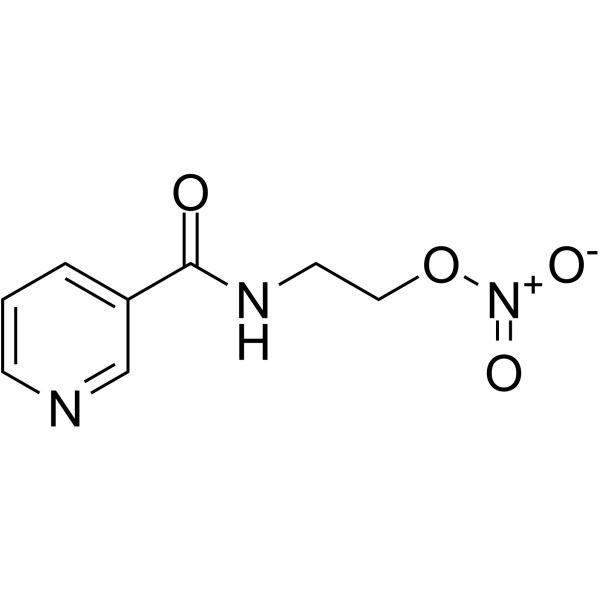
Nicorandil (SG-75) is a potent potassium channel activator and targets vascular nucleoside diphosphate-dependent K+ channels and cardiac ATP-sensitive K+ channels (KATP). Nicorandil is a nicotinamide ester with vasodilatory and cardioprotective effects and has the potential for angina and forischemic heart diseases.
For research use only. We do not sell to patients.
- Purity : 99.45%
- CAS No.: 65141-46-0
- Formula: C8H9N3O4
- Molecular Weight:211.17
-
Storage:Powder -20°C, 3 years , 4°C, 2 years ; In solvent -80°C, 2 years , -20°C, 1 year

To place orders, for customer services and technical support, please contact: MedChemExpress USA
Tel: 609-228-6898 E-mail: [email protected] [email protected]


-
 Biological Activity
-
Chemical Information
-
Solvent & Solubility
- Purity & Documentation
- References
-
 Help & FAQs


-
HY-B0112
MinoxidilEndogenous Metabolite -
HY-B0220
ErythromycinAntibiotic -
HY-B0589
AtorvastatinHMG-CoA Reductase Inhibitor -
HY-B0162A
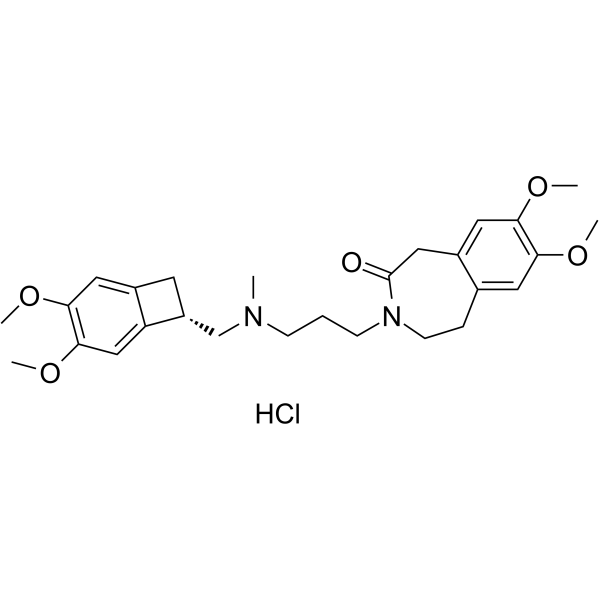
Ivabradine hydrochlorideHCN Channel Blocker -
HY-10401
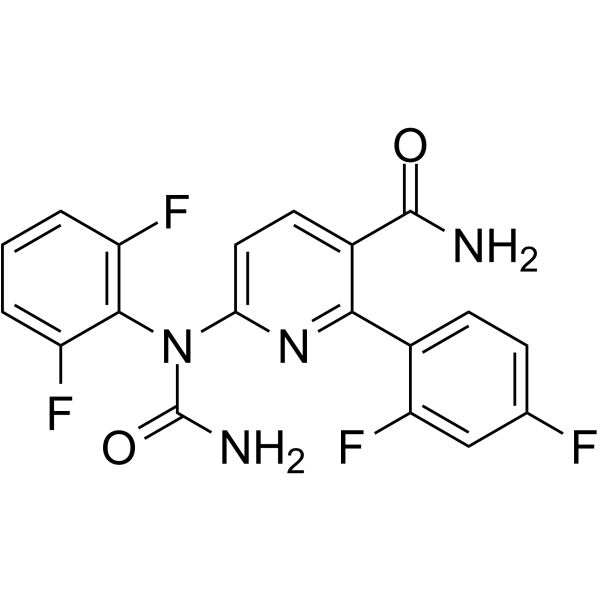
VX-702p38α MAPK Inhibitor -

HY-B0112R
Minoxidil (Standard)Endogenous Metabolite -

HY-B0341R
Nicorandil (Standard)Potassium Channel Activator -
HY-12496
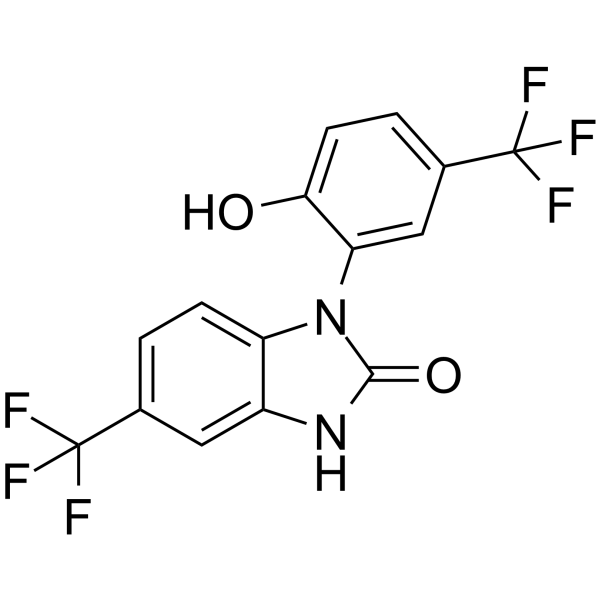
NS-1619BK Channel Opener -
HY-B0232
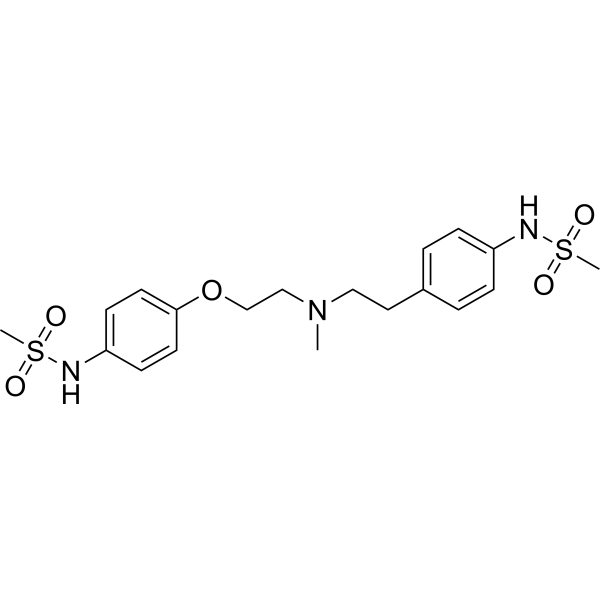
DofetilideIKr Blocker -
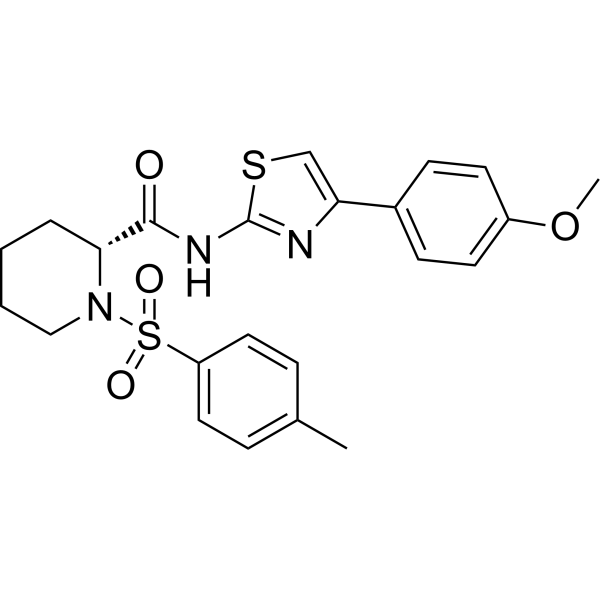
HY-12343
ML277Potassium Channel Activator -
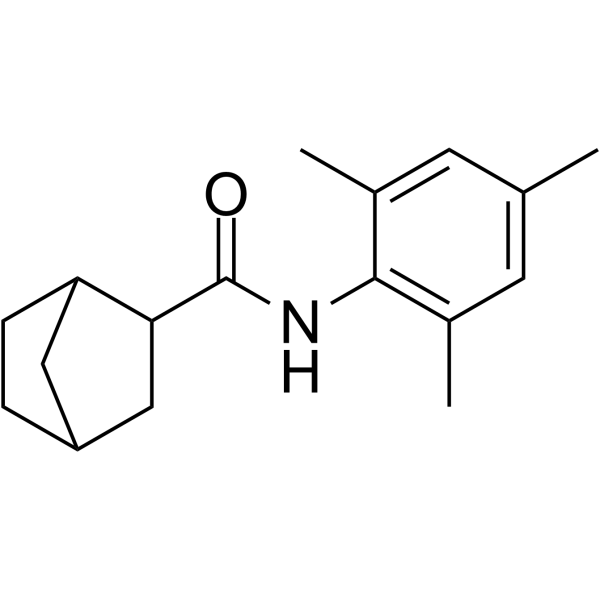
HY-101843
ML213Kv7.2/7.4 Channels Activator -
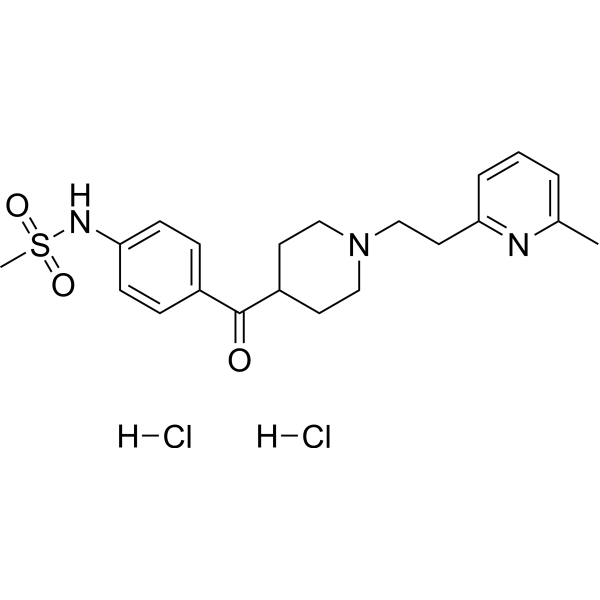
HY-15551
E-4031hERG Channels Blocker
Publications Citing Use of MedChemExpress (MCE) Nicorandil
More

Biological Activity
Description
IC50 & Target
Potassium Channel[1].
In Vitro
Nicorandil (SG-75) activates ATP-sensitive K+ channels composed of Kir6.2 and either sulfonylurea receptor (SUR) 2A or 2B[1].
Nicorandil is a vasodilatory drug used to treat angina. Nicorandil (SG-75) stimulates guanylate cyclase to increase formation of cyclic GMP (cGMP). cGMP activates protein kinase G (PKG) which phosphorylates and inhibits GTPase RhoA and decreases Rho-kinase activity. Reduced Rho-kinase activity permits an increase in myosin phosphatase activity, decreasing the calcium sensitivity of the smooth muscle. PKG also activates the sarcolemma calcium pump to remove activating calcium. PKG acts on K+ channels to promote K+ efflux and the ensuing hyperpolarization inhibits voltage-gated calcium channels. Overall, this leads to relaxation of the smooth muscle and coronary vasodilation[2][3].
MedChemExpress (MCE) has not independently confirmed the accuracy of these methods. They are for reference only.
Clinical Trial
| NCT Number | Sponsor | Condition | Start Date |
Phase

|
|---|---|---|---|---|
| NCT01329991 | Plexxikon| | 2011-05 | PHASE1 |


Chemical Information
-
CAS No. 65141-46-0
-
Appearance Solid
-
Molecular Weight 211.17
-
Formula C8H9N3O4
-
Color White to off-white
-
SMILES
O=C(C1=CC=CN=C1)NCCO[N+]([O-])=O
-
Synonyms
SG-75
-
Shipping
Room temperature in continental US; may vary elsewhere.
-
Storage
Powder -20°C 3 years 4°C 2 years In solvent -80°C 2 years -20°C 1 year


Publications (1)
-
Journal Impact Factor
-
Most Recent
-
Int Immunopharmacol
Nicorandil restores endothelial cell Kir6.2 expression to alleviate neuropathic pain in mice after chronic constriction injury. [Abstract]2024 Oct 27;143(Pt 2):113494. PMID: 39467345


Solvent & Solubility
In Vitro:
DMSO : ≥ 100 mg/mL (473.55 mM; Hygroscopic DMSO has a significant impact on the solubility of product, please use newly opened DMSO)
H2O : ≥ 20 mg/mL (94.71 mM)
* "≥" means soluble, but saturation unknown.
Please refer to the solubility information to select the appropriate solvent. Once prepared, please aliquot and store the solution to prevent product inactivation from repeated freeze-thaw cycles.
Storage method and period of stock solution: -80°C, 2 years; -20°C, 1 year. When stored at -80°C, please use it within 2 years. When stored at -20°C, please use it within 1 year.
* Note: If you choose water as the stock solution, please dilute it to the working solution, then filter and sterilize it with a 0.22 μm filter before use.
Please refer to the solubility information to select the appropriate solvent. Once prepared, please aliquot and store the solution to prevent product inactivation from repeated freeze-thaw cycles.
Storage method and period of stock solution: -80°C, 2 years; -20°C, 1 year. When stored at -80°C, please use it within 2 years. When stored at -20°C, please use it within 1 year.
* Note: If you choose water as the stock solution, please dilute it to the working solution, then filter and sterilize it with a 0.22 μm filter before use.
Concentration (start) × Volume (start) = Concentration (final) × Volume (final)
In Vivo:
Select the appropriate dissolution method based on your experimental animal and administration route.
- For the following dissolution methods, please ensure to first prepare a clear stock solution using an In Vitro approach and then sequentially add co-solvents:
- To ensure reliable experimental results, the clarified stock solution can be appropriately stored based on storage conditions. As for the working solution for In Vivo experiments, it is recommended to prepare freshly and use it on the same day.
- The percentages shown for the solvents indicate their volumetric ratio in the final prepared solution. If precipitation or phase separation occurs during preparation, heat and/or sonication can be used to aid dissolution.
Add each solvent one by one: 10% DMSO 40% PEG300 5% Tween-80 45% Saline
Solubility: ≥ 2.5 mg/mL (11.84 mM); Clear solution
This protocol yields a clear solution of ≥ 2.5 mg/mL (saturation unknown).
Taking 1 mL working solution as an example, add 100 μL DMSO stock solution (25.0 mg/mL) to 400 μL PEG300, and mix evenly; then add 50 μL Tween-80 and mix evenly; then add 450 μL Saline to adjust the volume to 1 mL.
Preparation of Saline: Dissolve 0.9 g sodium chloride in ddH₂O and dilute to 100 mL to obtain a clear Saline solution.
Add each solvent one by one: 10% DMSO 90% (20% SBE-β-CD in Saline)
Solubility: ≥ 2.5 mg/mL (11.84 mM); Clear solution
This protocol yields a clear solution of ≥ 2.5 mg/mL (saturation unknown).
Taking 1 mL working solution as an example, add 100 μL DMSO stock solution (25.0 mg/mL) to 900 μL 20% SBE-β-CD in Saline, and mix evenly.
Preparation of 20% SBE-β-CD in Saline (4°C, storage for one week): 2 g SBE-β-CD powder is dissolved in 10 mL Saline, completely dissolve until clear.
In Vivo Dissolution Calculator
Please enter the basic information of animal experiments:
-
-
-
-
Recommended: Prepare an additional quantity of animals to account for potential losses during experiments.
Working solution concentration: 0.22 mg/mL
This product has good water solubility, please refer to the measured solubility data in water/PBS/Saline for details.


Purity & Documentation
-
Data Sheet (273 KB)
-
SDS (477 KB)
- English - EN (477 KB)
- Français - FR (477 KB)
- Deutsch - DE (477 KB)
- Norwegian - NO (477 KB)
- Español - ES (477 KB)
- Swedish - SV (477 KB)
- Italian - IT (477 KB)
- Korean - KR (477 KB)
- Portuguese - PT (477 KB)
-
Handling Instructions (2659 KB)
References
[1]. Mitsuhiko Yamada, et al. The nucleotide-binding domains of sulfonylurea receptor 2A and 2B play different functional roles in nicorandil-induced activation of ATP-sensitive K+ channels. Mol Pharmacol. 2004 May;65(5):1198-207. [Content Brief]
[2]. Nakae, I., et al., Effects of intravenous nicorandil on coronary circulation in humans: plasma concentration and action mechanism. J Cardiovasc Pharmacol, 2000. 35(6): p. 919-25. [Content Brief]
[3]. Sauzeau, V., et al., Cyclic GMP-dependent protein kinase signaling pathway inhibits RhoA-induced Ca2+ sensitization of contraction in vascular smooth muscle. J Biol Chem, 2000. 275(28): p. 21722-9. [Content Brief]


Complete Stock Solution Preparation Table
Please refer to the solubility information to select the appropriate solvent. Once prepared, please aliquot and store the solution to prevent product inactivation from repeated freeze-thaw cycles.
Storage method and period of stock solution: -80°C, 2 years; -20°C, 1 year. When stored at -80°C, please use it within 2 years. When stored at -20°C, please use it within 1 year.
| Optional Solvent | Concentration Solvent Mass | 1 mg | 5 mg | 10 mg | 25 mg |
|---|---|---|---|---|---|
| H2O / DMSO | 1 mM | 4.7355 mL | 23.6776 mL | 47.3552 mL | 118.3880 mL |
| 5 mM | 0.9471 mL | 4.7355 mL | 9.4710 mL | 23.6776 mL | |
| 10 mM | 0.4736 mL | 2.3678 mL | 4.7355 mL | 11.8388 mL | |
| 15 mM | 0.3157 mL | 1.5785 mL | 3.1570 mL | 7.8925 mL | |
| 20 mM | 0.2368 mL | 1.1839 mL | 2.3678 mL | 5.9194 mL | |
| 25 mM | 0.1894 mL | 0.9471 mL | 1.8942 mL | 4.7355 mL | |
| 30 mM | 0.1579 mL | 0.7893 mL | 1.5785 mL | 3.9463 mL | |
| 40 mM | 0.1184 mL | 0.5919 mL | 1.1839 mL | 2.9597 mL | |
| 50 mM | 0.0947 mL | 0.4736 mL | 0.9471 mL | 2.3678 mL | |
| 60 mM | 0.0789 mL | 0.3946 mL | 0.7893 mL | 1.9731 mL | |
| 80 mM | 0.0592 mL | 0.2960 mL | 0.5919 mL | 1.4799 mL | |
| DMSO | 100 mM | 0.0474 mL | 0.2368 mL | 0.4736 mL | 1.1839 mL |
* Note: If you choose water as the stock solution, please dilute it to the working solution, then filter and sterilize it with a 0.22 μm filter before use.


Nicorandil Related Classifications
HY-B0341 Related Classifications
 Powered by Bioz