



PAQ
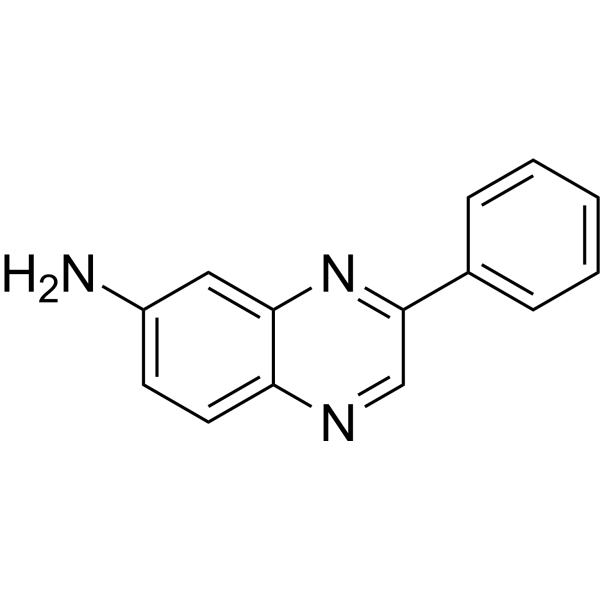
PAQ (Compound 4c) is a quinoxaline derivative. PAQ is an orally active neuroprotective agent, which targets dopamine (DA) neurons and activates reticulum endoplasmic ryanodine receptor (RyR) channels, without effects on glia cells.
For research use only. We do not sell to patients.
- CAS No.: 943902-10-1
- Formula: C14H11N3
- Molecular Weight:221.26
-
Storage:
Please store the product under the recommended conditions in the Certificate of Analysis.

To place orders, for customer services and technical support, please contact: MedChemExpress USA
Tel: 609-228-6898 E-mail: [email protected] [email protected]


-
 Biological Activity
-
Chemical Information
- Protocols
- Purity & Documentation
- References
-
 Help & FAQs


-
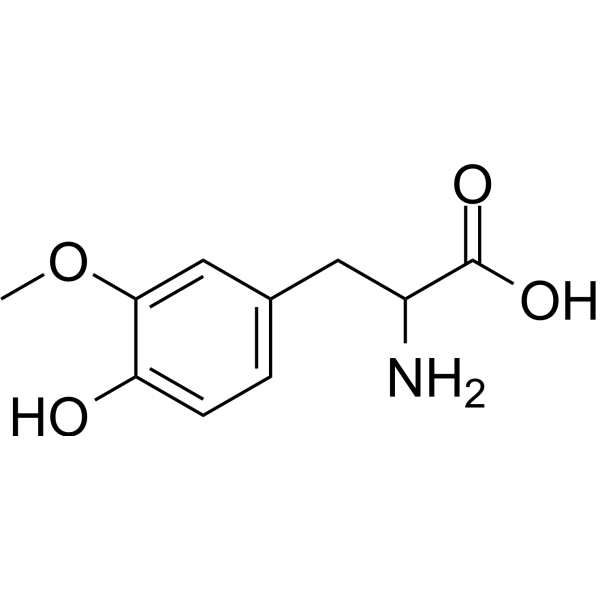
HY-113468
3-O-Methyl-DL-DOPAEndogenous Metabolite -

HY-113468R
3-O-Methyl-DL-DOPA (Standard)Endogenous Metabolite -

HY-121252
DopalNeurotoxin -
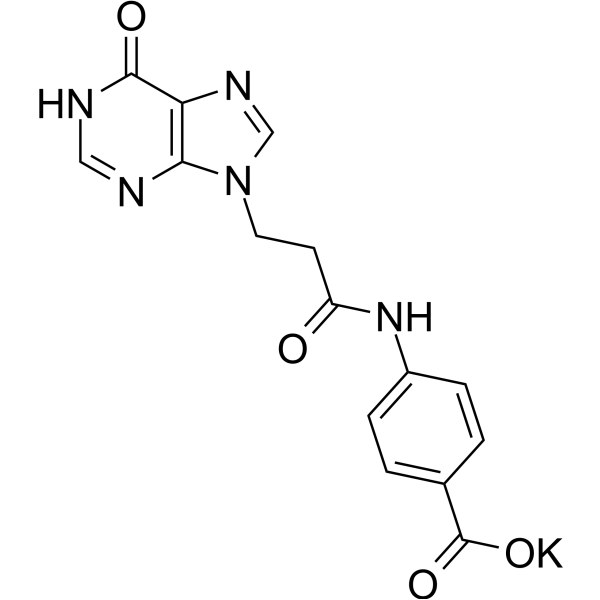
HY-120251A
Leteprinim potassiumNeuroprotective Agent -
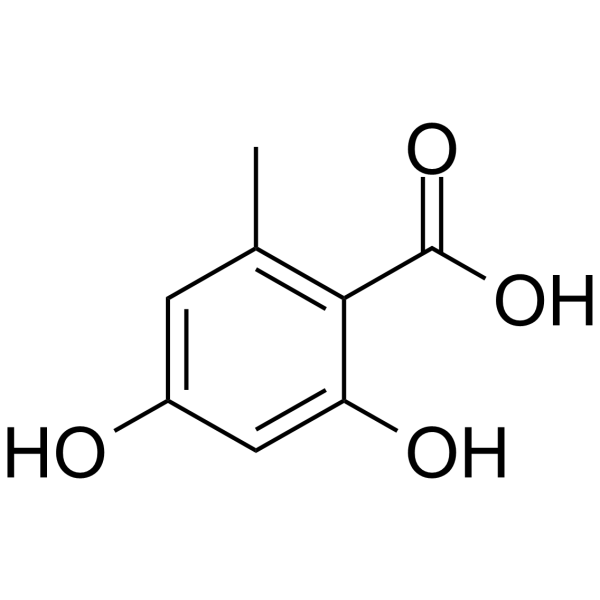
HY-N3126
Orsellinic acidBenzoic Acid Derivative -

HY-W096171
D-DopaGCPII Inhibitor -
HY-125339
Ro 41-0960COMT Inhibitor -

HY-N3126R
Orsellinic acid (Standard)Standard Of Orsellinic Acid -

HY-121252A
Dopal (purity>80%)α-Synuclein Aggregation Inducer -

HY-138185
Collismycin ABacterial Metabolite Xie -

HY-139008
RC363GPx1 Activator
All Calcium Channel Isoforms
More

Biological Activity
Description
In Vivo
MedChemExpress (MCE) has not independently confirmed the accuracy of these methods. They are for reference only.
-
Animal Model:Neurotoxin MPTP (HY-15608) induced dopamine depletion in Parkinson disease in C57BL/6 mice[1]
-
Dosage:25-50 mg/kg
-
Administration:p.o. for 11 days
-
Result:Reduced levels of striatal DA and DOPAC+HVA/DA ratios. Maintained dendritic network in midbrain tissue sections in TH+ neurons.
Clinical Trial
| NCT Number | Sponsor | Condition | Start Date |
Phase

|
|---|---|---|---|---|
| NCT01329991 | 2011-05 | PHASE1 |


Chemical Information
-
CAS No. 943902-10-1
-
Molecular Weight 221.26
-
Formula C14H11N3
-
SMILES
NC1=CC=C2N=CC(C3=CC=CC=C3)=NC2=C1
-
Shipping
Room temperature in continental US; may vary elsewhere.
-
Storage
Please store the product under the recommended conditions in the Certificate of Analysis.


Purity & Documentation
References

Calculators
Concentration (start) × Volume (start) = Concentration (final) × Volume (final)


PAQ Related Classifications
HY-138806 Related Classifications
 Powered by Bioz