



Diazoxide
Based on 10 publication(s) in Google Scholar
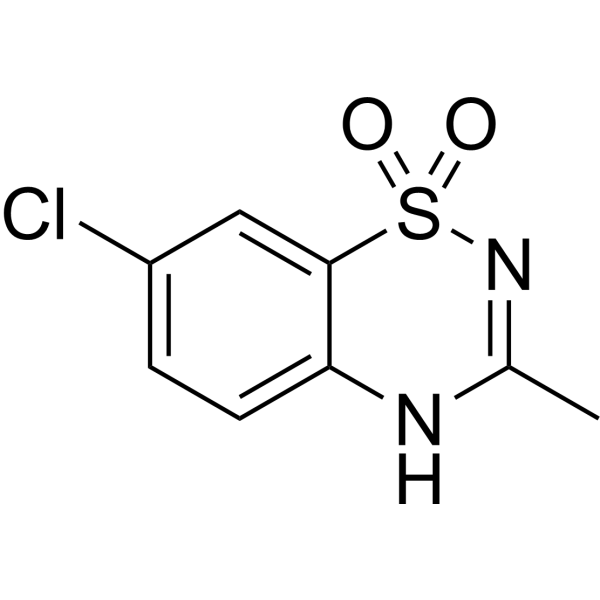
Diazoxide (Sch-6783) is an ATP-sensitive potassium channel activator, has the potential for hyperinsulinism treatment.
For research use only. We do not sell to patients.
- Purity : 99.99%
- CAS No.: 364-98-7
- Formula: C8H7ClN2O2S
- Molecular Weight:230.67
-
Storage:
4°C, protect from light
* In solvent : -80°C, 6 months; -20°C, 1 month (protect from light)

To place orders, for customer services and technical support, please contact: MedChemExpress USA
Tel: 609-228-6898 E-mail: [email protected] [email protected]


-
 Biological Activity
-
Chemical Information
-
Solvent & Solubility
- Purity & Documentation
- References
-
 Help & FAQs


-
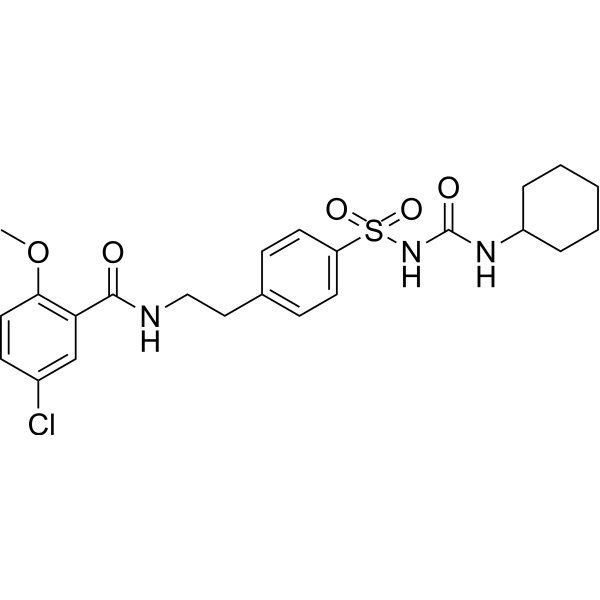
HY-15206
GlibenclamideKATP Inhibitor -
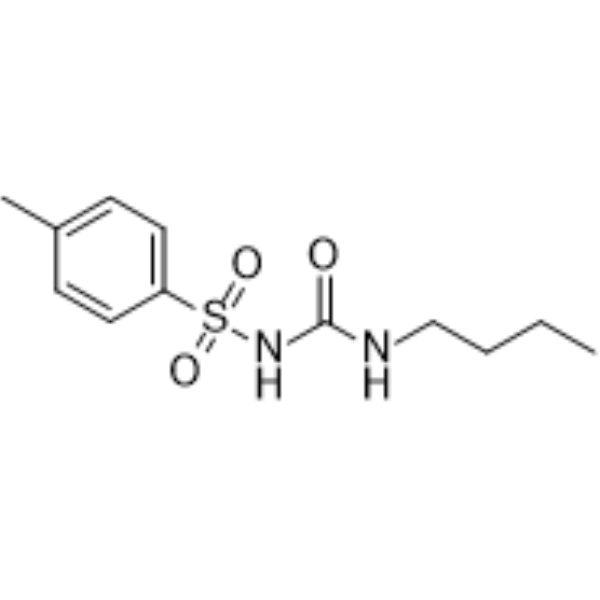
HY-B0401
TolbutamideKATP Inhibitor -

HY-B1140R
Diazoxide (Standard)Autophagy Inducer -
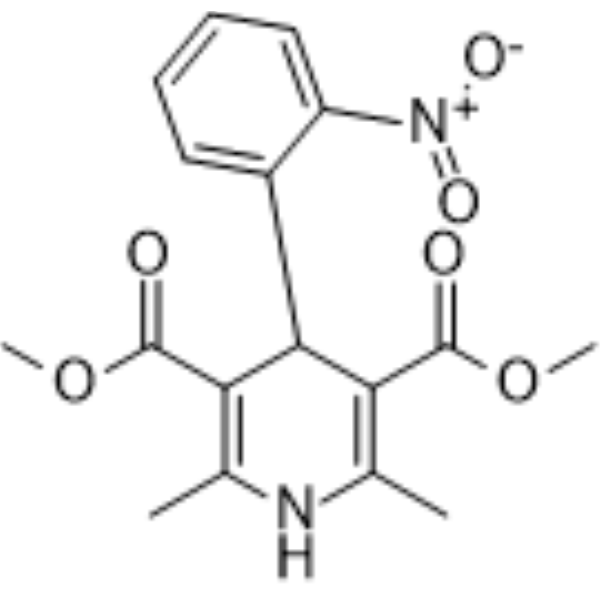
HY-B0284
NifedipineCalcium Channel Antagonist -
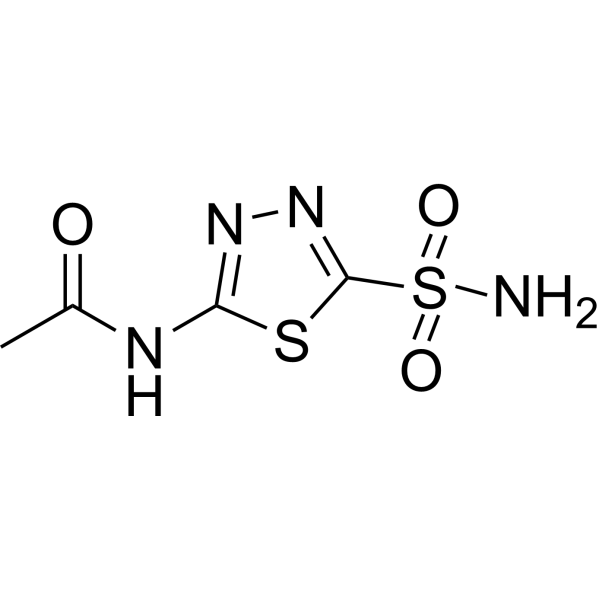
HY-B0782
AcetazolamideCA IX Inhibitor -
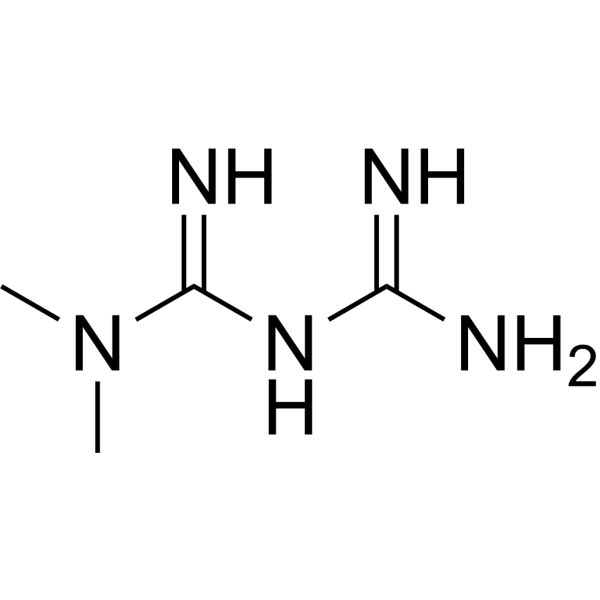
HY-B0627
MetforminAntihyperglycemic Agent -
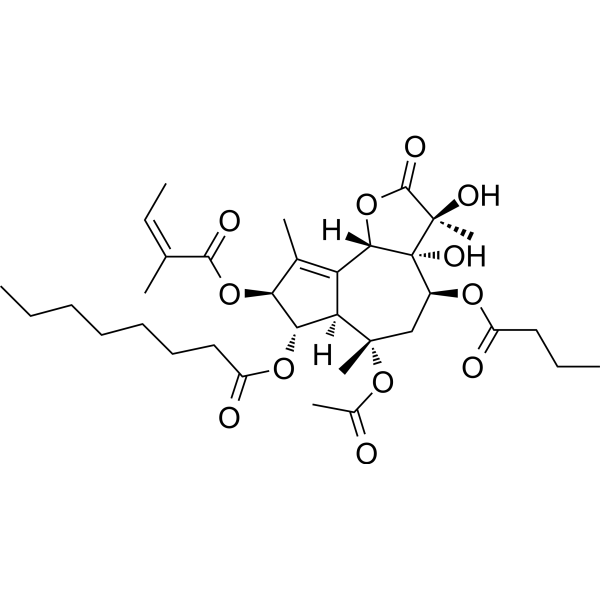
HY-13433
ThapsigarginER Stress Inducer -
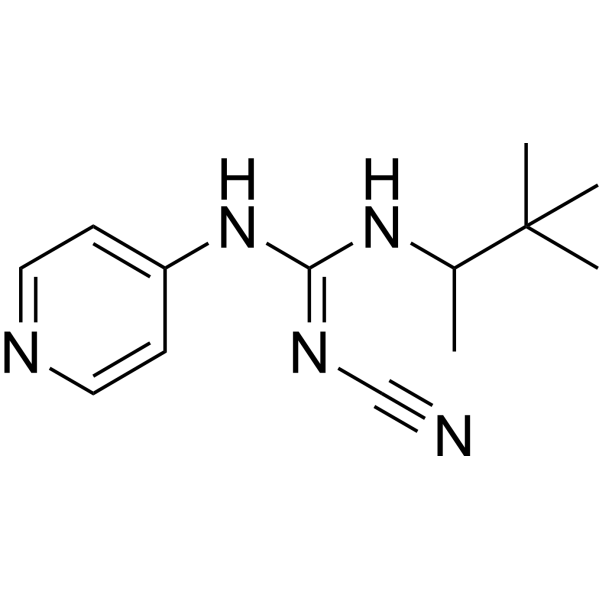
HY-14290
PinacidilPotassium Channel Activator -
HY-15886
Mdivi-1Drp1 Inhibitor -
HY-13027
DAPTγ-secretase Inhibitor -

HY-114118
SemaglutideGLP-1R Agonist -
HY-100410
FCCPOXPHOS Uncoupler
Publications Citing Use of MedChemExpress (MCE) Diazoxide
More- Cell Stem Cell. 2025 Apr 3;32(4):547-563.e7. [Abstract]
- Redox Biol. 2021 Nov:47:102168. [Abstract]
- ACS Environ Au. 2025 Aug 5;5(6):573-582. [Abstract]
- Sci China Life Sci. 2025 Feb 20. [Abstract]
- Cell Syst. 2026 Jun 17;17(6):101587. [Abstract]
- Cell Syst. 2026 May 20;17(5):101568. [Abstract]
- Pharmaceuticals (Basel). 2025 Jun 12;18(6):877. [Abstract]
- Cell Biol Int. 2020 Jun;44(6):1353-1362. [Abstract]
- Patent. US20240299405A1.
- Biological Sciences. 2020 Sep.
 Customer Validation & Images

-
WB
-
In Vivo Efficacy Study
-
In Vivo Efficacy Study
-
In Vivo Efficacy Study
-
RT-PCR


Biological Activity
Description
Cellular Effect
|
Cell Line

|
Type | Value | Description | References |
|---|---|---|---|---|
| Beta-TC3 | EC50 |
13.7 μM
Compound: 3, diazoxide
|
Repolarization of tolbutamide-depolarized beta-TC3 cells
Repolarization of tolbutamide-depolarized beta-TC3 cells
|
[PMID: 17425298] |
| Beta-TC3 | EC50 |
13.7 μM
Compound: diazoxide
|
Repolarization of beta-TC3 cells
Repolarization of beta-TC3 cells
|
[PMID: 16821773] |
| Beta-TC3 | IC50 |
13.7 μM
Compound: Diazoxide
|
Ability to repolarize beta-TC3 cell membrane potential
Ability to repolarize beta-TC3 cell membrane potential
|
[PMID: 15163199] |
| Beta-TC6 | EC50 |
22.98 μM
Compound: diazoxide
|
Inhibition of glucose-stimulated insulin release in betaTC6 cells
Inhibition of glucose-stimulated insulin release in betaTC6 cells
|
[PMID: 16821773] |
| Beta-TC6 | IC50 |
22.4 μM
Compound: Diazoxide
|
In vitro inhibition of insulin release from murine beta-TC6 cells
In vitro inhibition of insulin release from murine beta-TC6 cells
|
[PMID: 11425552] |
| Beta-TC6 | IC50 |
22.4 μM
Compound: diazoxide
|
Ability to inhibit the release of insulin from the mouse beta-TC6 cell line
Ability to inhibit the release of insulin from the mouse beta-TC6 cell line
|
[PMID: 12213059] |
| Beta-TC6 | IC50 |
22.4 μM
Compound: Diazoxide
|
In vitro ability to inhibit glucose stimulated insulin release in beta-TC6 cells from rat islets
In vitro ability to inhibit glucose stimulated insulin release in beta-TC6 cells from rat islets
|
[PMID: 15163199] |
| Beta-TC6 | IC50 |
22.98 μM
Compound: Diazoxide
|
Concentration required for inhibition of glucose stimulated insulin release from beta TC6 cells
Concentration required for inhibition of glucose stimulated insulin release from beta TC6 cells
|
[PMID: 15501029] |
| HEK293 | EC50 |
23.5 μM
Compound: 3
|
Activation of human recombinant SUR1/Kir6.2 channel expressed in HEK293 cells assessed as increase in ionic current by whole cell patch clamp assay
Activation of human recombinant SUR1/Kir6.2 channel expressed in HEK293 cells assessed as increase in ionic current by whole cell patch clamp assay
|
[PMID: 19919106] |
| HEK293 | EC50 |
31 μM
Compound: 3, diazoxide
|
Activity at Kir6.2/SUR1 KATP channels expressed in HEK293 cells assessed as activation of K+ currents
Activity at Kir6.2/SUR1 KATP channels expressed in HEK293 cells assessed as activation of K+ currents
|
[PMID: 17425298] |
| HEK293 | EC50 |
33 μM
Compound: 3, diazoxide
|
Activity at Kir6.2/SUR1 KATP channels expressed in HEK293 cells assessed as repolarization of tolbutamide-induced membrane depolarization
Activity at Kir6.2/SUR1 KATP channels expressed in HEK293 cells assessed as repolarization of tolbutamide-induced membrane depolarization
|
[PMID: 17425298] |
| HEK293 | EC50 |
33 μM
Compound: diazoxide
|
Repolarization of HEK293 cells expressing Kir6.2/SUR1 KATP channels
Repolarization of HEK293 cells expressing Kir6.2/SUR1 KATP channels
|
[PMID: 16821773] |
| HEK293 | IC50 |
194 μM
Compound: diazoxide
|
Displacement of [3H]glibenclamide from human Kir6.2/SUR1 expressed in HEK293 cells in presence of 2 mM ATP
Displacement of [3H]glibenclamide from human Kir6.2/SUR1 expressed in HEK293 cells in presence of 2 mM ATP
|
[PMID: 16821773] |
| HEK293 | IC50 |
198 μM
Compound: diazoxide
|
Inhibition of [3H]glibenclamide binding to HEK293 cells co-expressing human Sulfonylurea receptor SUR1 and Inward rectifier K+ channel Kir6.2 at low affinity state with 2 mM MgATP
Inhibition of [3H]glibenclamide binding to HEK293 cells co-expressing human Sulfonylurea receptor SUR1 and Inward rectifier K+ channel Kir6.2 at low affinity state with 2 mM MgATP
|
[PMID: 12213059] |
| HEK293 | IC50 |
33 μM
Compound: Diazoxide
|
Potency by glucose stimulated insulin release from HEK 293 cells
Potency by glucose stimulated insulin release from HEK 293 cells
|
[PMID: 15501029] |
| HEK293 | IC50 |
740 μM
Compound: diazoxide
|
Displacement of [3H]glibenclamide from human Kir6.2/SUR1 expressed in HEK293 cells
Displacement of [3H]glibenclamide from human Kir6.2/SUR1 expressed in HEK293 cells
|
[PMID: 16821773] |
| HEK293 | IC50 |
750 μM
Compound: diazoxide
|
Inhibition of [3H]glibenclamide binding to HEK293 cells co-expressing human Sulfonylurea receptor SUR1 and Inward rectifier K+ channel Kir6.2 without ATP
Inhibition of [3H]glibenclamide binding to HEK293 cells co-expressing human Sulfonylurea receptor SUR1 and Inward rectifier K+ channel Kir6.2 without ATP
|
[PMID: 12213059] |
| INS-1E | EC50 |
20.28 μM
Compound: 3, diazoxide
|
Inhibition of insulin release from rat INS-1E cells
Inhibition of insulin release from rat INS-1E cells
|
[PMID: 17425298] |
| Murine cell line | EC50 |
77.4 μM
Compound: diazoxide
|
Changes in potassium fluxes assessed in the glucose responsive insulin-producing murine cell line beta-TC3
Changes in potassium fluxes assessed in the glucose responsive insulin-producing murine cell line beta-TC3
|
[PMID: 12213059] |
| Oocyte | EC50 |
8.8 μM
Compound: Diazoxide
|
Maximum activation of human KATP (SUR1/Kir6.2) channel expressed in Xenopus oocytes
Maximum activation of human KATP (SUR1/Kir6.2) channel expressed in Xenopus oocytes
|
[PMID: 14741296] |
| VSMC | EC50 |
22.4 μM
Compound: 3
|
Myorelaxant effect in KCl-induced precontracted rat aorta ring VSMC
Myorelaxant effect in KCl-induced precontracted rat aorta ring VSMC
|
[PMID: 21428460] |
In Vitro
Diazoxide (Sch-6783) has a number of physiological effects, including lowering the blood pressure and rectifying hypoglycemia. Diazoxide has powerful protective properties against cardiac ischemia[1].
?
Diazoxide (Sch-6783) could protect NSC-34 neurons against the main sources of neurodegenerative damage. Diazoxide increases Nrf2 nuclear translocation in NSC-34 motoneurons and prevents endogenous oxidative damage[2].
MedChemExpress (MCE) has not independently confirmed the accuracy of these methods. They are for reference only.
In Vivo
Treatment with Diazoxide (Sch-6783) in wild-type mice decreases intraocular pressure (IOP) by 21.5±3.2% with an absolute IOP reduction of 3.9 ± 0.6 mm Hg[4].
MedChemExpress (MCE) has not independently confirmed the accuracy of these methods. They are for reference only.
Clinical Trial
| NCT Number | Sponsor | Condition | Start Date |
Phase
|
|---|---|---|---|---|
| NCT01329991 | Plexxikon| | 2011-05 | PHASE1 |


Chemical Information
-
CAS No. 364-98-7
-
Appearance Solid
-
Molecular Weight 230.67
-
Formula C8H7ClN2O2S
-
Color Off-white to gray
-
SMILES
CC(NC1=CC=C(Cl)C=C12)=NS2(=O)=O
-
Synonyms
Sch-6783; SRG-95213
-
Shipping
Room temperature in continental US; may vary elsewhere.
-
Storage
4°C, protect from light
* In solvent : -80°C, 6 months; -20°C, 1 month (protect from light)


Publications (10)
-
Journal Impact Factor
-
Most Recent
-
Cell Stem Cell
Enhanced viability and functional maturity of iPSC-derived islet organoids by collagen-VI-enriched ECM scaffolds. [Abstract]2025 Apr 3;32(4):547-563.e7. PMID: 39999846 -
Redox Biol
Kir6.2 is essential to maintain neurite features by modulating PM20D1-reduced mitochondrial ATP generation. [Abstract]2021 Nov:47:102168. PMID: 34673451
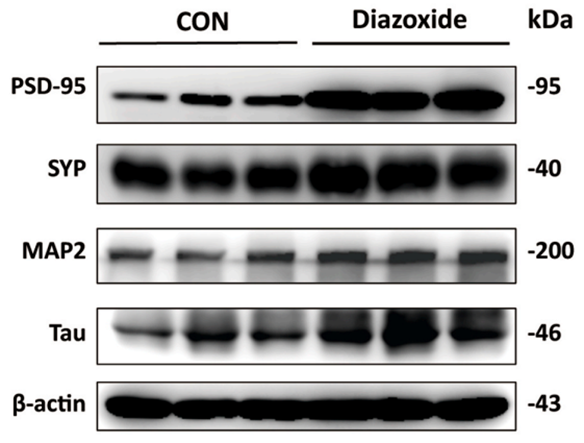
Diazoxide purchased from MedChemExpress. Usage Cited in: Redox Biol. 2021 Nov:47:102168. [Abstract]
Diazoxide (oral administration, 10 mg/kg bodyweight, every day for two weeks). Immunoblotting analysis of neurite related markers including PSD95, SYP, MAP2, and Tau were detected in midbrain samples from diazoxide-treated and untreated mice.
Diazoxide purchased from MedChemExpress. Usage Cited in: Redox Biol. 2021 Nov:47:102168. [Abstract]
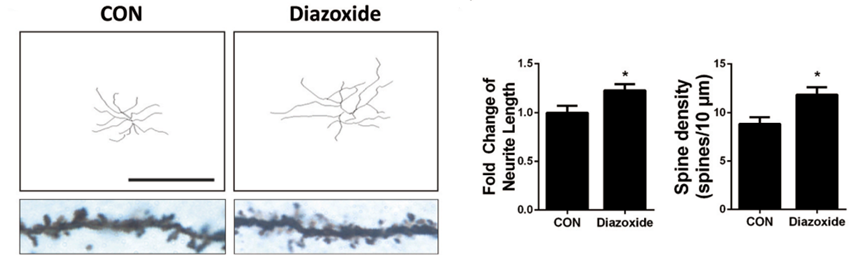
Diazoxide (oral administration, 10 mg/kg bodyweight, every day for two weeks). Neuronal morphology in Golgi staining was reflected in a two-dimensional map generated by the Image J software (up). Scale bar is 200 μm. Dendritic spines photographed by oil microscope under 100x magnification (down).
Diazoxide purchased from MedChemExpress. Usage Cited in: Redox Biol. 2021 Nov:47:102168. [Abstract]
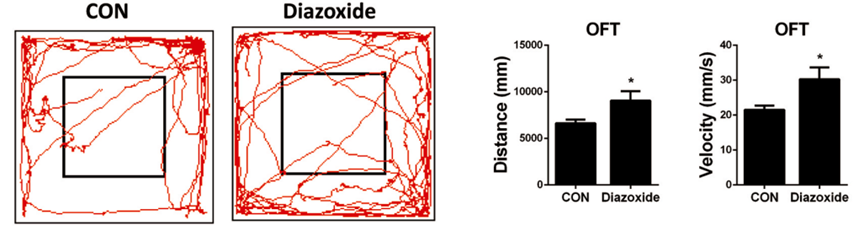
Diazoxide (oral administration, 10 mg/kg bodyweight, every day for two weeks). Movement trace diagrams (red curve) of untreated and diazoxide-treated mice in the OFT. Statistical charts of movement distance and moved speed in the OFT.
Diazoxide purchased from MedChemExpress. Usage Cited in: Redox Biol. 2021 Nov:47:102168. [Abstract]
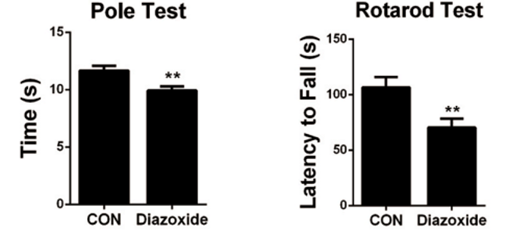
Diazoxide (oral administration, 10 mg/kg bodyweight, every day for two weeks). Analysis of the time consumed in pole test and the latency time in the rotarod test.
Diazoxide purchased from MedChemExpress. Usage Cited in: Redox Biol. 2021 Nov:47:102168. [Abstract]
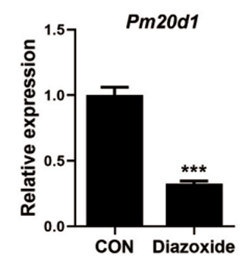
Diazoxide (oral administration, 10 mg/kg bodyweight, every day for two weeks). Pm20d1 mRNA in the midbrain of untreated and diazoxide-treated mice detected by RT-PCR.
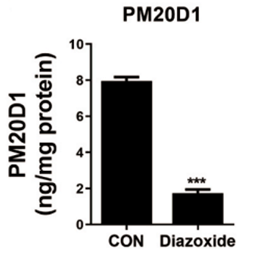
Diazoxide purchased from MedChemExpress. Usage Cited in: Redox Biol. 2021 Nov:47:102168. [Abstract]
Diazoxide (oral administration, 10 mg/kg bodyweight, every day for two weeks). Levels of PM20D1 in the midbrain of untreated and diazoxide-treated mice were determined by ELISA kit.
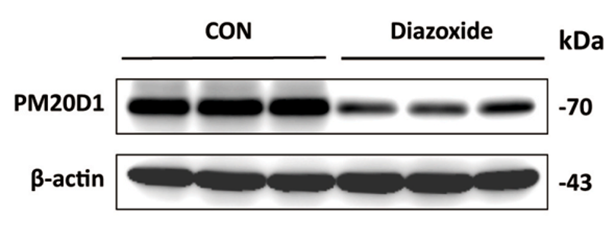
Diazoxide purchased from MedChemExpress. Usage Cited in: Redox Biol. 2021 Nov:47:102168. [Abstract]
Diazoxide (oral administration, 10 mg/kg bodyweight, every day for two weeks). Immunoblotting analysis of PM20D1 in midbrain samples from diazoxide-treated and untreated mice.
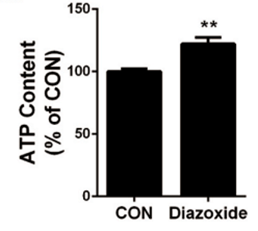
Diazoxide purchased from MedChemExpress. Usage Cited in: Redox Biol. 2021 Nov:47:102168. [Abstract]
Diazoxide (oral administration, 10 mg/kg bodyweight, every day for two weeks). ATP contents in the midbrain of untreated and diazoxide-treated mice.
-
ACS Environ Au
Machine Learning-Assisted Recognition of Environmental Sulfur-Containing Chemicals in Nontargeted Mass Spectrometry Analysis of Inadequate Mass Resolution. [Abstract]2025 Aug 5;5(6):573-582. PMID: 41277996 -
Sci China Life Sci
2025 Feb 20. PMID: 39985646 -
Cell Syst
2026 Jun 17;17(6):101587. PMID: 41997145 -
Cell Syst
Glycemia shifts pancreatic islet rhythmicity by influencing interactions between δ cells and α cells. [Abstract]2026 May 20;17(5):101568. PMID: 41916313 -
Pharmaceuticals (Basel)
An Alternative Mechanism of Glutamate Dehydrogenase Inhibition by EGCG: Promotion of Protein Degradation. [Abstract]2025 Jun 12;18(6):877. PMID: 40573270 -
Cell Biol Int
Penehyclidine hydrochloride protects against anoxia/reoxygenation injury in cardiomyocytes through ATP-sensitive potassium channels, and the Akt/GSK-3β and Akt/mTOR signaling pathways. [Abstract]2020 Jun;44(6):1353-1362. PMID: 32125033 -
-


Solvent & Solubility
In Vitro:
DMSO : ≥ 35 mg/mL (151.73 mM; Hygroscopic DMSO has a significant impact on the solubility of product, please use newly opened DMSO)
* "≥" means soluble, but saturation unknown.
Please refer to the solubility information to select the appropriate solvent. Once prepared, please aliquot and store the solution to prevent product inactivation from repeated freeze-thaw cycles.
Storage method and period of stock solution: -80°C, 6 months; -20°C, 1 month (protect from light). When stored at -80°C, please use it within 6 months. When stored at -20°C, please use it within 1 month.
Please refer to the solubility information to select the appropriate solvent. Once prepared, please aliquot and store the solution to prevent product inactivation from repeated freeze-thaw cycles.
Storage method and period of stock solution: -80°C, 6 months; -20°C, 1 month (protect from light). When stored at -80°C, please use it within 6 months. When stored at -20°C, please use it within 1 month.
Concentration (start) × Volume (start) = Concentration (final) × Volume (final)
In Vivo:
Select the appropriate dissolution method based on your experimental animal and administration route.
- For the following dissolution methods, please ensure to first prepare a clear stock solution using an In Vitro approach and then sequentially add co-solvents:
- To ensure reliable experimental results, the clarified stock solution can be appropriately stored based on storage conditions. As for the working solution for In Vivo experiments, it is recommended to prepare freshly and use it on the same day.
- The percentages shown for the solvents indicate their volumetric ratio in the final prepared solution. If precipitation or phase separation occurs during preparation, heat and/or sonication can be used to aid dissolution.
Add each solvent one by one: 10% DMSO 40% PEG300 5% Tween-80 45% Saline
Solubility: ≥ 2.08 mg/mL (9.02 mM); Clear solution
This protocol yields a clear solution of ≥ 2.08 mg/mL (saturation unknown).
Taking 1 mL working solution as an example, add 100 μL DMSO stock solution (20.8 mg/mL) to 400 μL PEG300, and mix evenly; then add 50 μL Tween-80 and mix evenly; then add 450 μL Saline to adjust the volume to 1 mL.
Preparation of Saline: Dissolve 0.9 g sodium chloride in ddH₂O and dilute to 100 mL to obtain a clear Saline solution.
In Vivo Dissolution Calculator
Please enter the basic information of animal experiments:
-
-
-
-
Recommended: Prepare an additional quantity of animals to account for potential losses during experiments.
Please enter your animal formula composition:
-
%DMSO +
Recommended: Keep the proportion of DMSO in working solution below 2% if your animal is weak.
-
%+
-
+%Tween-80 + +
-
%Saline +
The co-solvents required include: DMSO, . All of co-solvents are available by MedChemExpress (MCE). , Tween 80. All of co-solvents are available by MedChemExpress (MCE).
Working solution concentration: 0.22 mg/mL
Method for preparing stock solution: mg drug dissolved in μL DMSO. Stock solution concentration: mg/mL. * In solvent : -80°C, 6 months; -20°C, 1 month (protect from light)
1. Take μL DMSO stock solution;
2. Add μL .
μL , mix evenly;
3. Then add μL Tween 80, mix evenly;
4. Then add μL
Please ensure that the stock solution in the first step is dissolved to a clear state, and add co-solvents in sequence. You can use ultrasonic heating (ultrasonic cleaner, recommended frequency 20-40 kHz), vortexing, etc. to assist dissolution.


Purity & Documentation
-
Data Sheet (282 KB)
-
SDS (420 KB)
- English - EN (420 KB)
- Français - FR (420 KB)
- Deutsch - DE (420 KB)
- Norwegian - NO (420 KB)
- Español - ES (420 KB)
- Swedish - SV (420 KB)
- Italian - IT (420 KB)
- Korean - KR (420 KB)
- Portuguese - PT (420 KB)
-
Handling Instructions (2659 KB)
References
[1]. Coetzee WA, et al. Multiplicity of effectors of the cardioprotective agent, diazoxide. Pharmacol Ther. 2013 Nov;140(2):167-75. [Content Brief]
[2]. Virgili N, et al. K(ATP) channel opener diazoxide prevents neurodegeneration: a new mechanism of action viaantioxidative pathway activation. PLoS One. 2013 Sep 11;8(9):e75189. [Content Brief]
[3]. Wu H, et al. Diazoxide Attenuates Postresuscitation Brain Injury in a Rat Model of Asphyxial Cardiac Arrest by Opening Mitochondrial ATP-Sensitive Potassium Channels. Biomed Res Int. 2016;2016:1253842. [Content Brief]
[4]. Chowdhury UR, et al. ATP-sensitive potassium (K(ATP)) channel openers diazoxide and nicorandil lower intraocular pressure in vivo. Invest Ophthalmol Vis Sci. 2013 Jul 22;54(7):4892-9. [Content Brief]


Complete Stock Solution Preparation Table
Please refer to the solubility information to select the appropriate solvent. Once prepared, please aliquot and store the solution to prevent product inactivation from repeated freeze-thaw cycles.
Storage method and period of stock solution: -80°C, 6 months; -20°C, 1 month (protect from light). When stored at -80°C, please use it within 6 months. When stored at -20°C, please use it within 1 month.
| Optional Solvent | Concentration Solvent Mass | 1 mg | 5 mg | 10 mg | 25 mg |
|---|---|---|---|---|---|
| DMSO | 1 mM | 4.3352 mL | 21.6760 mL | 43.3520 mL | 108.3799 mL |
| 5 mM | 0.8670 mL | 4.3352 mL | 8.6704 mL | 21.6760 mL | |
| 10 mM | 0.4335 mL | 2.1676 mL | 4.3352 mL | 10.8380 mL | |
| 15 mM | 0.2890 mL | 1.4451 mL | 2.8901 mL | 7.2253 mL | |
| 20 mM | 0.2168 mL | 1.0838 mL | 2.1676 mL | 5.4190 mL | |
| 25 mM | 0.1734 mL | 0.8670 mL | 1.7341 mL | 4.3352 mL | |
| 30 mM | 0.1445 mL | 0.7225 mL | 1.4451 mL | 3.6127 mL | |
| 40 mM | 0.1084 mL | 0.5419 mL | 1.0838 mL | 2.7095 mL | |
| 50 mM | 0.0867 mL | 0.4335 mL | 0.8670 mL | 2.1676 mL | |
| 60 mM | 0.0723 mL | 0.3613 mL | 0.7225 mL | 1.8063 mL | |
| 80 mM | 0.0542 mL | 0.2709 mL | 0.5419 mL | 1.3547 mL | |
| 100 mM | 0.0434 mL | 0.2168 mL | 0.4335 mL | 1.0838 mL |


Diazoxide Related Classifications
HY-B1140 Related Classifications
 Powered by Bioz