



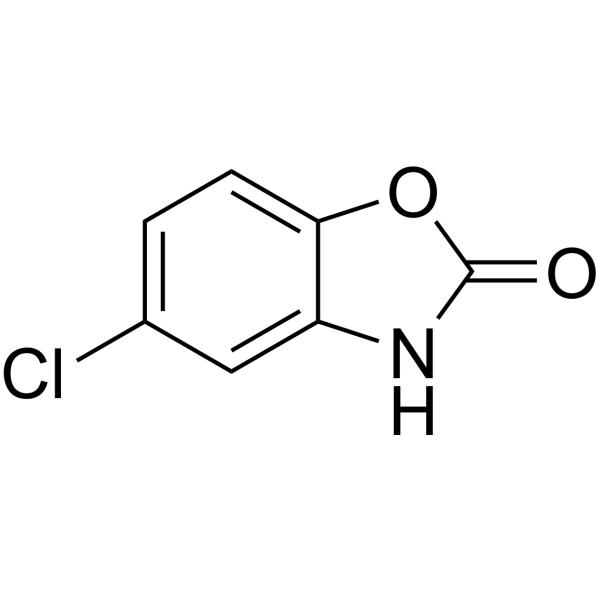
Chlorzoxazone
Based on 3 publication(s) in Google Scholar
Chlorzoxazone is a SK-type potassium channel activator. Chlorzoxazone modulates FOXO3 phosphorylation and Aβ. Chlorzoxazone enhances immunosuppression, attenuates vasoconstriction, attenuates cognitive deficits, and improves experimental autoimmune encephalomyelitis.
For research use only. We do not sell to patients.
- Purity : 99.77%
- CAS No.: 95-25-0
- Formula: C7H4ClNO2
- Molecular Weight:169.57
-
Storage:Powder -20°C, 3 years , 4°C, 2 years ; In solvent -80°C, 2 years , -20°C, 1 year

To place orders, for customer services and technical support, please contact: MedChemExpress USA
Tel: 609-228-6898 E-mail: [email protected] [email protected]


-
 Biological Activity
-
Chemical Information
-
Solvent & Solubility
- Protocols
- Purity & Documentation
- References
-
 Help & FAQs


-

HY-N0709
CoumarinAnti-inflammatory Agent -
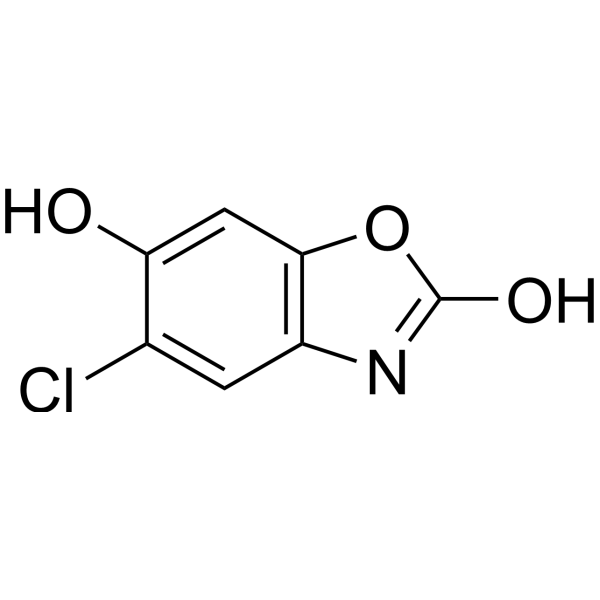
HY-W016221
6-Hydroxy ChlorzoxazoneChlorzoxazone Metabolite -
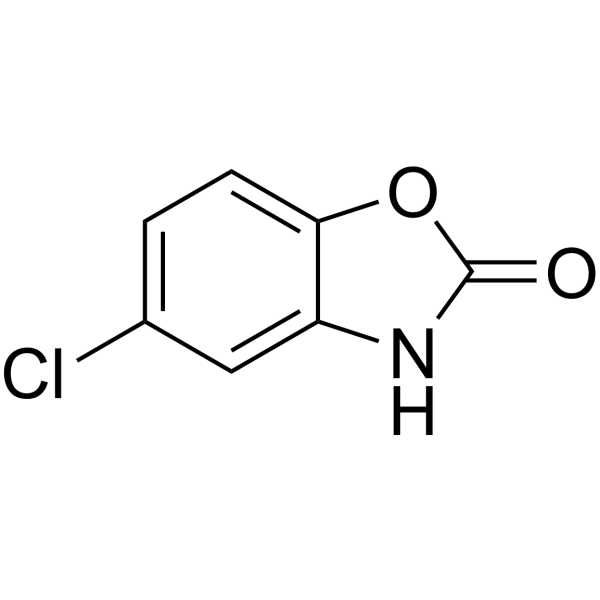
HY-B1462R
Chlorzoxazone (Standard) -
HY-B1322A
AmodiaquineAntimalarial Agent -
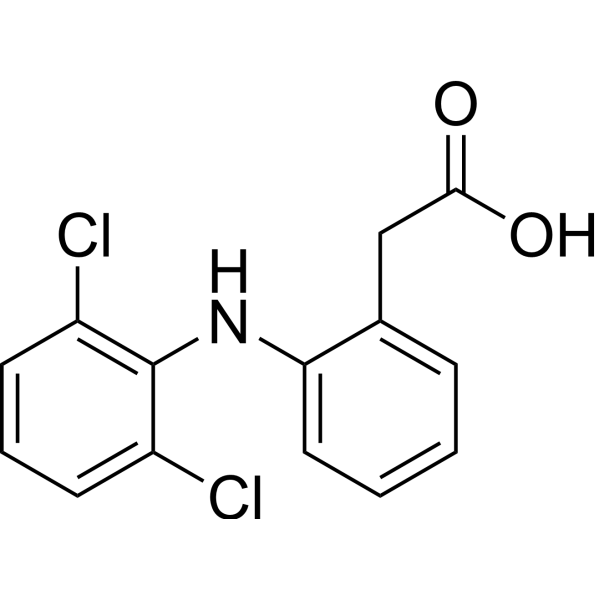
HY-15036
DiclofenacCOX Inhibitor -
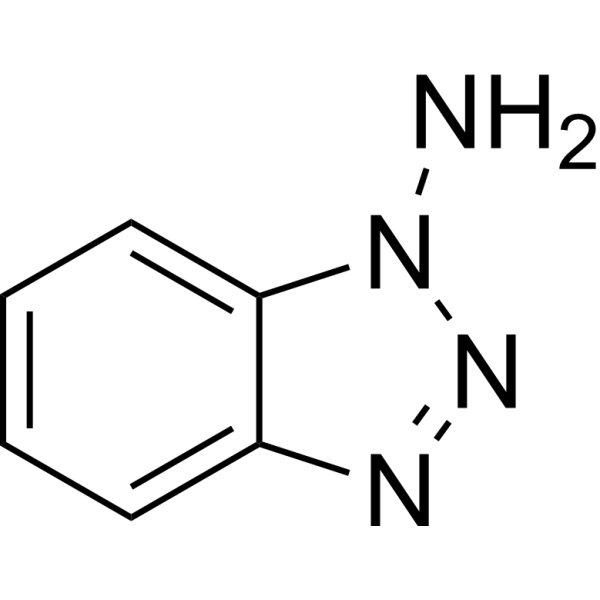
HY-103389
1-AminobenzotriazoleCytochrome P450 Inhibitor -
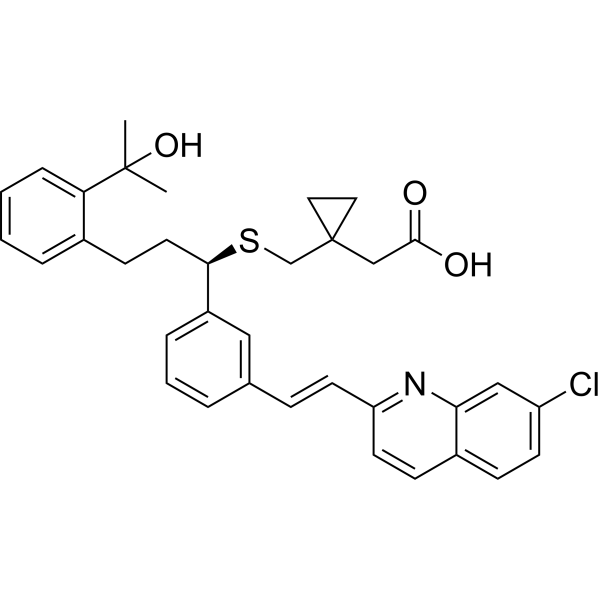
HY-13315A
MontelukastCysLT1 Antagonist -
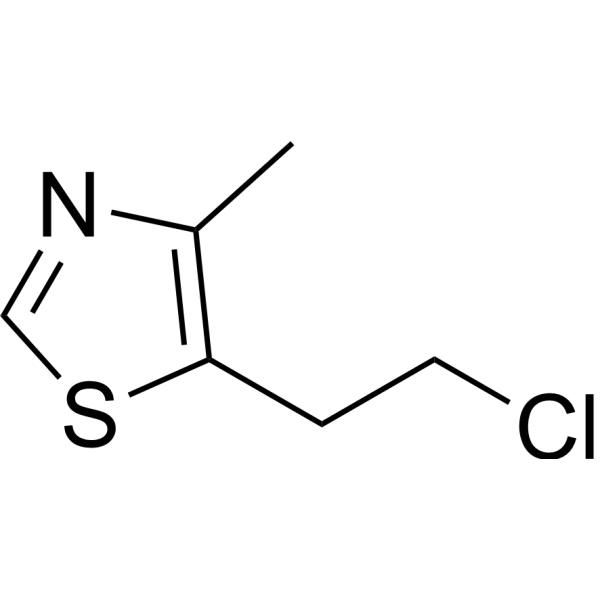
HY-129105
ClomethiazoleGABAA Agonist -
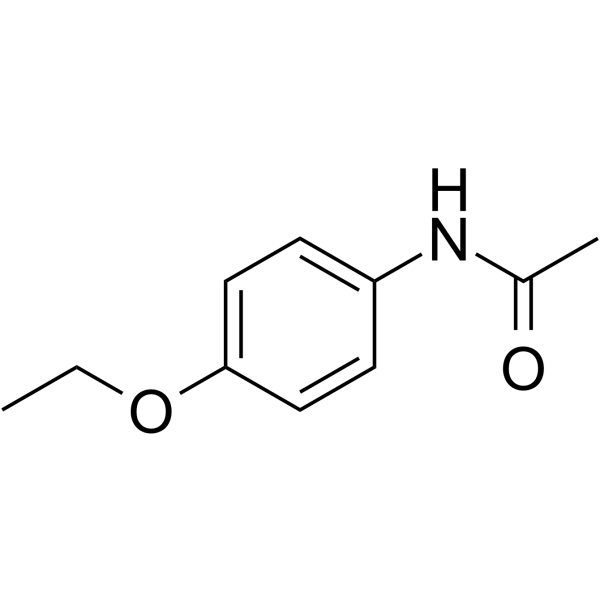
HY-B0476
PhenacetinCOX-3 Inhibitor -

HY-113324
NADPHReducing Agent -
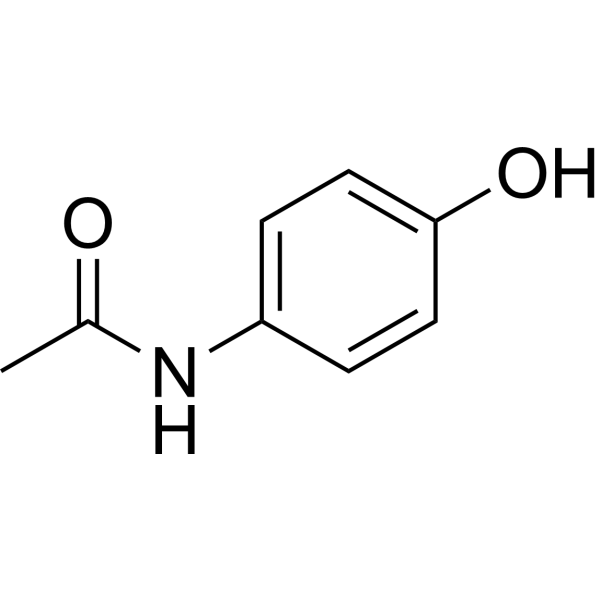
HY-66005
AcetaminophenCOX-2 Inhibitor -
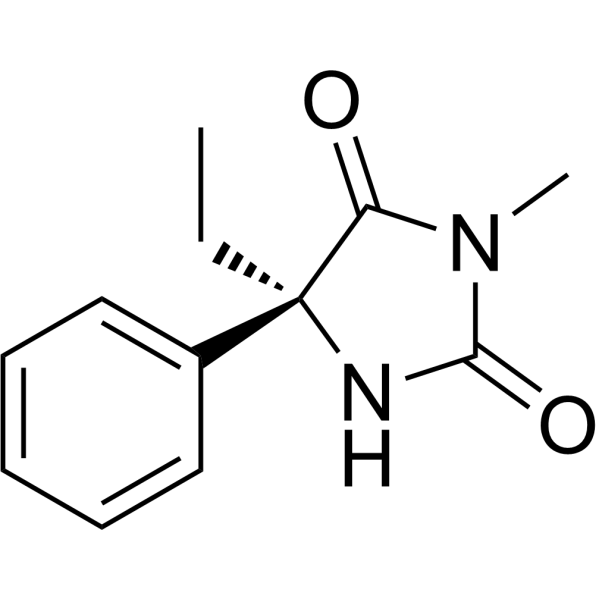
HY-B1184A
(S)-MephenytoinAnticonvulsive Agent
Publications Citing Use of MedChemExpress (MCE) Chlorzoxazone
More

Biological Activity
Description
IC50 & Target
|
CYP2 |
In Vitro
Chlorzoxazone (200-1000 μM, 0-24 h) decreases viability and induces [Ca2+]i rises in a concentration‑dependent manner in OC2 cells[2].
Chlorzoxazone (2-20 μM, 4 days) augments immunosuppressive capacity of mesenchymal stem cells via modulation of FOXO3 phosphorylation[3].
Chlorzoxazone (1-30 μM, 30 min) inhibits IL-6 secretion of dendritic cells[4].
Chlorzoxazone (30 μM) suppresses voltage-dependent L-type Ca2+ current in pituitary GH3 cells[5].
Chlorzoxazone (2.5-80 μM, 24 h) attenuates inflammatory response and amyloidogenesis in the isolated astrocytes and microglial cells with Aβ[6].
Chlorzoxazone (300 μM) abolishs 4-aminopyridine (HY-B0604)-induced vasoconstriction in rat thoracic aorta[7].
Chlorzoxazone (600 μM) or 1-EBIO increases Na+ absorption across cystic fibrosis airway epithelial cells[8].
MedChemExpress (MCE) has not independently confirmed the accuracy of these methods. They are for reference only.
-
Cell Line:OC2
-
Concentration:200, 300, 400, 500, 600, 700 µM
-
Incubation Time:24 h
-
Result:Decreased cell viability in a concentration‑dependent manner.
Showed that BAPTA loading failed to reverse chlorzoxazone‑evoked cell death.
In Vivo
Chlorzoxazone (25-100 mg/kg, p.o., daily, 4 weeks) attenuates cognitive deficits and neuron death in AD mice[6].
Chlorzoxazone (20 mg/kg, i.v.; 50 mg/kg, p.o.) is metabolized to OH-CZX via CYP2E1 in rat models of diabetes induced by Alloxan (HY-W017227) or Streptozotocin (HY-13753)[9].
Chlorzoxazone (10-50 mg/kg, i.p., 20-30 min before onset of access to alcohol) reduces excessive alcohol intake in IAA rats[10].
MedChemExpress (MCE) has not independently confirmed the accuracy of these methods. They are for reference only.
-
Animal Model:Male C57BL/6 mice with EAE[4]
-
Dosage:10, 30, or 100 mg/kg
-
Administration:Oral gavage (p.o.), daily, from day 3 following immunization until the end of the experiment
-
Result:Displayed dose-dependent inhibition of EAE severity.
Delayed the onset of EAE and reduced clinical scores during remission of EAE.
Reduced CNS leukocyte infiltration and neuropathy.
Did not affect the size and weight of the spleen.
Clinical Trial
| NCT Number | Sponsor | Condition | Start Date |
Phase

|
|---|---|---|---|---|
| NCT01329991 | 2011-05 | PHASE1 |


Chemical Information
-
CAS No. 95-25-0
-
Appearance Solid
-
Molecular Weight 169.57
-
Formula C7H4ClNO2
-
Color White to off-white
-
SMILES
O=C1OC2=CC=C(Cl)C=C2N1
-
Shipping
Room temperature in continental US; may vary elsewhere.
-
Storage
Powder -20°C 3 years 4°C 2 years In solvent -80°C 2 years -20°C 1 year


Publications (3)
-
Journal Impact Factor
-
Most Recent
-
Anal Chem
Exposome-Scale Investigation of Cl-/Br-Containing Chemicals Using High-Resolution Mass Spectrometry, Multistage Machine Learning, and Cloud Computing. [Abstract]2025 Jun 3;97(21):11099-11109. PMID: 40401576 -
Int Immunopharmacol
Chlorzoxazone exhibits neuroprotection against Alzheimer's disease by attenuating neuroinflammation and neurodegeneration in vitro and in vivo. [Abstract]2020 Nov:88:106790. PMID: 32795892 -
Comput Struct Biotechnol J
Network Proximity-based computational pipeline identifies drug candidates for different pathological stages of Alzheimer's disease. [Abstract]2023 Feb 24:21:1907-1920. PMID: 36936813


Solvent & Solubility
In Vitro:
DMSO : ≥ 100 mg/mL (589.74 mM; Hygroscopic DMSO has a significant impact on the solubility of product, please use newly opened DMSO)
* "≥" means soluble, but saturation unknown.
Please refer to the solubility information to select the appropriate solvent. Once prepared, please aliquot and store the solution to prevent product inactivation from repeated freeze-thaw cycles.
Storage method and period of stock solution: -80°C, 2 years; -20°C, 1 year. When stored at -80°C, please use it within 2 years. When stored at -20°C, please use it within 1 year.
Please refer to the solubility information to select the appropriate solvent. Once prepared, please aliquot and store the solution to prevent product inactivation from repeated freeze-thaw cycles.
Storage method and period of stock solution: -80°C, 2 years; -20°C, 1 year. When stored at -80°C, please use it within 2 years. When stored at -20°C, please use it within 1 year.
Concentration (start) × Volume (start) = Concentration (final) × Volume (final)
In Vivo:
Select the appropriate dissolution method based on your experimental animal and administration route.
- For the following dissolution methods, please ensure to first prepare a clear stock solution using an In Vitro approach and then sequentially add co-solvents:
- To ensure reliable experimental results, the clarified stock solution can be appropriately stored based on storage conditions. As for the working solution for In Vivo experiments, it is recommended to prepare freshly and use it on the same day.
- The percentages shown for the solvents indicate their volumetric ratio in the final prepared solution. If precipitation or phase separation occurs during preparation, heat and/or sonication can be used to aid dissolution.
Add each solvent one by one: 10% DMSO 40% PEG300 5% Tween-80 45% Saline
Solubility: ≥ 2.5 mg/mL (14.74 mM); Clear solution
This protocol yields a clear solution of ≥ 2.5 mg/mL (saturation unknown).
Taking 1 mL working solution as an example, add 100 μL DMSO stock solution (25.0 mg/mL) to 400 μL PEG300, and mix evenly; then add 50 μL Tween-80 and mix evenly; then add 450 μL Saline to adjust the volume to 1 mL.
Preparation of Saline: Dissolve 0.9 g sodium chloride in ddH₂O and dilute to 100 mL to obtain a clear Saline solution.
Add each solvent one by one: 10% DMSO 90% (20% SBE-β-CD in Saline)
Solubility: ≥ 2.5 mg/mL (14.74 mM); Clear solution
This protocol yields a clear solution of ≥ 2.5 mg/mL (saturation unknown).
Taking 1 mL working solution as an example, add 100 μL DMSO stock solution (25.0 mg/mL) to 900 μL 20% SBE-β-CD in Saline, and mix evenly.
Preparation of 20% SBE-β-CD in Saline (4°C, storage for one week): 2 g SBE-β-CD powder is dissolved in 10 mL Saline, completely dissolve until clear.
In Vivo Dissolution Calculator
Please enter the basic information of animal experiments:
-
-
-
-
Recommended: Prepare an additional quantity of animals to account for potential losses during experiments.
Please enter your animal formula composition:
-
%DMSO +
Recommended: Keep the proportion of DMSO in working solution below 2% if your animal is weak.
-
%+
-
+%Tween-80 + +
-
%Saline +
The co-solvents required include: DMSO, . All of co-solvents are available by MedChemExpress (MCE). , Tween 80. All of co-solvents are available by MedChemExpress (MCE).
Working solution concentration: 0.22 mg/mL
Method for preparing stock solution: mg drug dissolved in μL DMSO. Stock solution concentration: mg/mL.
1. Take μL DMSO stock solution;
2. Add μL .
μL , mix evenly;
3. Then add μL Tween 80, mix evenly;
4. Then add μL
Please ensure that the stock solution in the first step is dissolved to a clear state, and add co-solvents in sequence. You can use ultrasonic heating (ultrasonic cleaner, recommended frequency 20-40 kHz), vortexing, etc. to assist dissolution.


Purity & Documentation
-
Data Sheet (280 KB)
-
SDS (393 KB)
- English - EN (393 KB)
- Français - FR (393 KB)
- Deutsch - DE (393 KB)
- Norwegian - NO (393 KB)
- Español - ES (393 KB)
- Swedish - SV (393 KB)
- Italian - IT (393 KB)
- Korean - KR (393 KB)
- Portuguese - PT (393 KB)
-
Handling Instructions (2659 KB)
References
[1]. Yamamura Y, et al. Comprehensive kinetic analysis and influence of reaction components for chlorzoxazone 6-hydroxylation in human liver microsomes with CYP antibodies. Xenobiotica. 2015 Apr;45(4):353-360. [Content Brief]
[2]. Lu T, et al. Action of chlorzoxazone on Ca2+movement and viability in human oral cancer cells. Chin J Physiol. 2019 May-Jun;62(3):123-130. [Content Brief]
[3]. Deng L, et al. Chlorzoxazone, a small molecule drug, augments immunosuppressive capacity of mesenchymal stem cells via modulation of FOXO3 phosphorylation. Cell Death Dis. 2020 Mar 2;11(3):158. [Content Brief]
[4]. Lv J, et al. Chlorzoxazone Alleviates Experimental Autoimmune Encephalomyelitis via Inhibiting IL-6 Secretion of Dendritic Cells. J Immunol. 2022 Apr 1;208(7):1545-1553. [Content Brief]
[5]. Liu YC, et al. Stimulatory effects of chlorzoxazone, a centrally acting muscle relaxant, on large conductance calcium-activated potassium channels in pituitary GH3 cells. Brain Res. 2003 Jan 3;959(1):86-97. [Content Brief]
[6]. Bai Y, et al. Chlorzoxazone exhibits neuroprotection against Alzheimer's disease by attenuating neuroinflammation and neurodegeneration in vitro and in vivo. Int Immunopharmacol. 2020 Nov;88:106790. [Content Brief]
[7]. Dong DL, et al. Chlorzoxazone inhibits contraction of rat thoracic aorta. Eur J Pharmacol. 2006 Sep 18;545(2-3):161-6. [Content Brief]
[8]. Gao L, et al. Chlorzoxazone or 1-EBIO increases Na(+) absorption across cystic fibrosis airway epithelial cells. Am J Physiol Lung Cell Mol Physiol. 2001 Nov;281(5):L1123-9. [Content Brief]
[9]. Baek HW, et al. Pharmacokinetics of chlorzoxazone in rats with diabetes: Induction of CYP2E1 on 6-hydroxychlorzoxazone formation. J Pharm Sci. 2006 Nov;95(11):2452-62. [Content Brief]
[10]. Hopf FW, et al. Chlorzoxazone, an SK-type potassium channel activator used in humans, reduces excessive alcohol intake in rats. Biol Psychiatry. 2011 Apr 1;69(7):618-24. [Content Brief]


Complete Stock Solution Preparation Table
Please refer to the solubility information to select the appropriate solvent. Once prepared, please aliquot and store the solution to prevent product inactivation from repeated freeze-thaw cycles.
Storage method and period of stock solution: -80°C, 2 years; -20°C, 1 year. When stored at -80°C, please use it within 2 years. When stored at -20°C, please use it within 1 year.
| Optional Solvent | Concentration Solvent Mass | 1 mg | 5 mg | 10 mg | 25 mg |
|---|---|---|---|---|---|
| DMSO | 1 mM | 5.8974 mL | 29.4869 mL | 58.9737 mL | 147.4343 mL |
| 5 mM | 1.1795 mL | 5.8974 mL | 11.7947 mL | 29.4869 mL | |
| 10 mM | 0.5897 mL | 2.9487 mL | 5.8974 mL | 14.7434 mL | |
| 15 mM | 0.3932 mL | 1.9658 mL | 3.9316 mL | 9.8290 mL | |
| 20 mM | 0.2949 mL | 1.4743 mL | 2.9487 mL | 7.3717 mL | |
| 25 mM | 0.2359 mL | 1.1795 mL | 2.3589 mL | 5.8974 mL | |
| 30 mM | 0.1966 mL | 0.9829 mL | 1.9658 mL | 4.9145 mL | |
| 40 mM | 0.1474 mL | 0.7372 mL | 1.4743 mL | 3.6859 mL | |
| 50 mM | 0.1179 mL | 0.5897 mL | 1.1795 mL | 2.9487 mL | |
| 60 mM | 0.0983 mL | 0.4914 mL | 0.9829 mL | 2.4572 mL | |
| 80 mM | 0.0737 mL | 0.3686 mL | 0.7372 mL | 1.8429 mL | |
| 100 mM | 0.0590 mL | 0.2949 mL | 0.5897 mL | 1.4743 mL |


Chlorzoxazone Related Classifications
HY-B1462 Related Classifications
 Powered by Bioz