



(E/Z)-BML264
Based on 8 publication(s) in Google Scholar
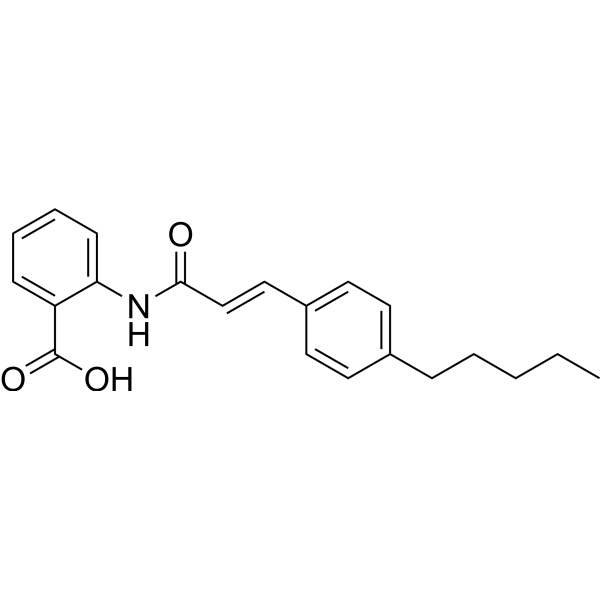
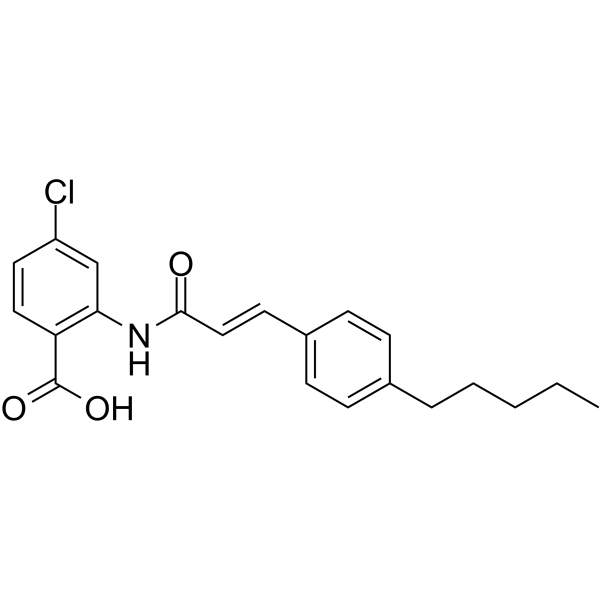
(E/Z)-BML264 (N-(p-amylcinnamoyl) Anthranilic Acid) is a broad spectrum Phospholipase A2 (PLA2) inhibitor and TRP channel blocker. (E/Z)-BML264 is a SLC13A3 inhibitor. (E/Z)-BML264 (N-(p-amylcinnamoyl) Anthranilic Acid) is also an effective reversible inhibitor of calcium-activated chloride channels, has potential to treat arrhythmia.
For research use only. We do not sell to patients.
- Purity : 99.72%
- CAS No.: 110683-10-8
- Formula: C21H23NO3
- Molecular Weight:337.41
-
Storage:Powder -20°C, 3 years , 4°C, 2 years ; In solvent -80°C, 2 years , -20°C, 1 year

To place orders, for customer services and technical support, please contact: MedChemExpress USA
Tel: 609-228-6898 E-mail: [email protected] [email protected]


-
 Biological Activity
-
Chemical Information
-
Solvent & Solubility
- Protocols
- Purity & Documentation
- References
-
 Help & FAQs


-
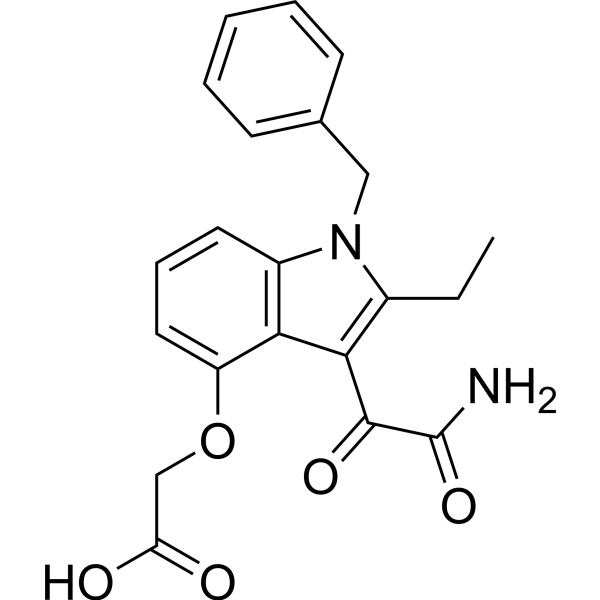
HY-13402
VarespladibsPLA2 Inhibitor -
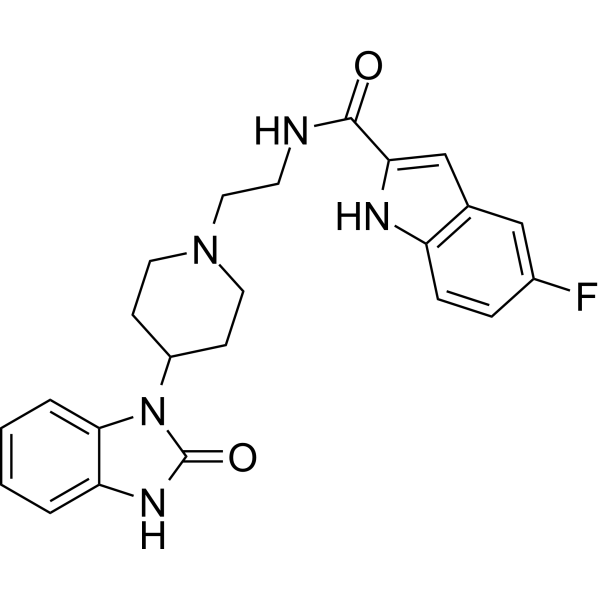
HY-12807
FIPIPLD Inhibitor -
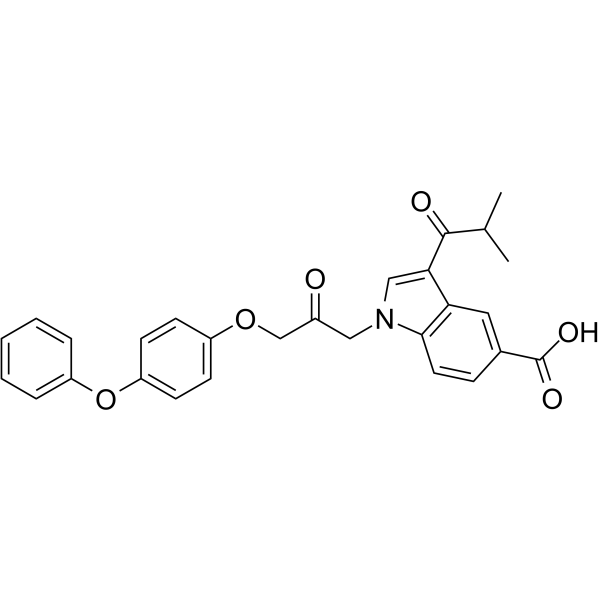
HY-10801
CAY10650cPLA2α Inhibitor -
HY-111376
PyrrophenonePLA2 Inhibitor -
HY-123070
ONO-RS-082PLA2 Inhibitor -
HY-W009724
2-Aminoethyl diphenylborinateIP3R Inhibitor -
HY-100736
ML348APT1/LYPLA1 Inhibitor -
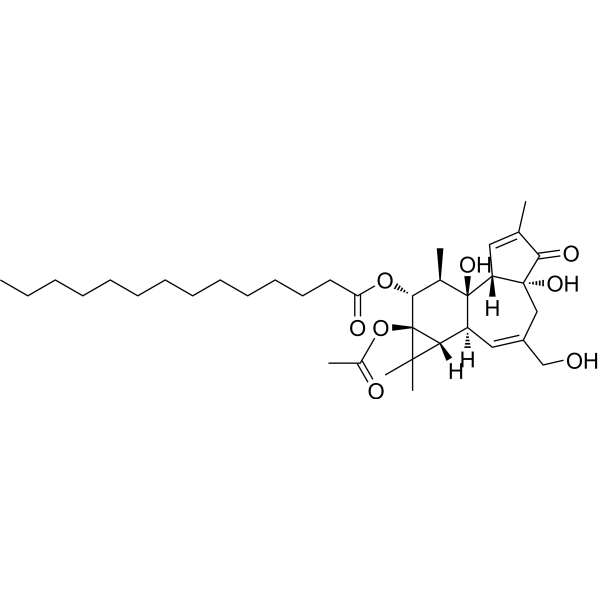
HY-18739
Phorbol 12-myristate 13-acetatePKC Activator -
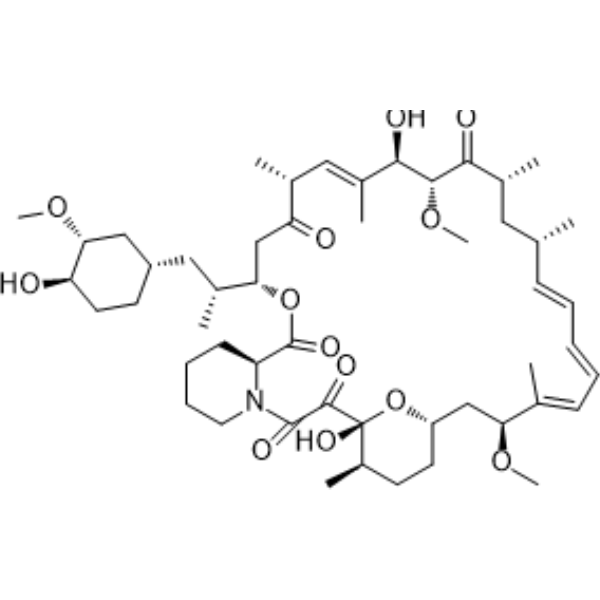
HY-10219
RapamycinmTOR Inhibitor -
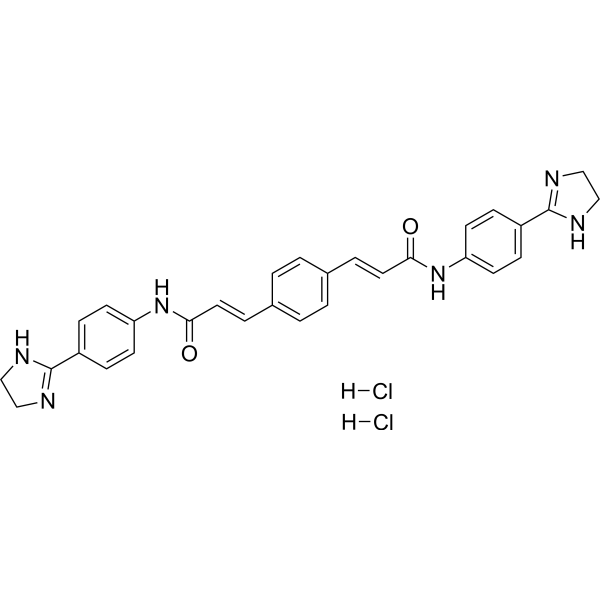
HY-19363
GW4869N-SMase Inhibitor -
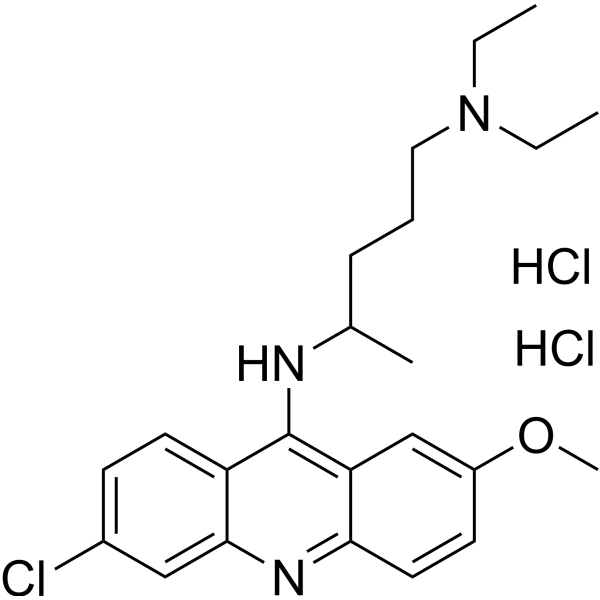
HY-13735A
Quinacrine dihydrochlorideAntimalarial Agent -
HY-15832
GSK 2830371Wip1 Phosphatase Inhibitor
Publications Citing Use of MedChemExpress (MCE) (E/Z)-BML264
More- Cell Metab. 2025 Feb 4;37(2):514-526.e5. [Abstract]
- Adv Sci (Weinh). 2024 Sep;11(35):e2310126. [Abstract]
- Cell Rep. 2025 Jun 10;44(6):115842. [Abstract]
- Clin Exp Med. 2023 Nov;23(7):3465-3478. [Abstract]
- Water Biol Secur. 2025 Sep 18.
- BMC Cancer. 2025 May 28;25(1):956. [Abstract]
- Transbound Emerg Dis. 2026 Apr 13:2026:1766395. [Abstract]
- Oxid Med Cell Longev. 2021 Jul 27;2021:7356266. [Abstract]
 Customer Validation & Images

-
Bio/Physico-chemical Assay

-
Flow Cytometry

-
WB

-
IF
-
Cell Proliferation/Viability Assay

All Phospholipase Isoforms
More

Biological Activity
Description
IC50 & Target
PLA2[1][2].
TRP channel[1][2].
Calcium-activated chloride channels[3].
Cellular Effect
|
Cell Line

|
Type | Value | Description | References |
|---|---|---|---|---|
| HEK293 | EC50 |
28 μM
Compound: ACA
|
Agonist activity at human TRPA1 expressed in HEK293 cells assessed as increase in calcium influx by Fluo-4-AM dye based fluorescence assay
Agonist activity at human TRPA1 expressed in HEK293 cells assessed as increase in calcium influx by Fluo-4-AM dye based fluorescence assay
|
[PMID: 30878828] |
| HEK293 | IC50 |
1.7 μM
Compound: ACA
|
Inhibition of human TRPM2 expressed in HEK293 cells assessed as inhibition of H2O2-induced intracellular calcium level by patch clamp technique
Inhibition of human TRPM2 expressed in HEK293 cells assessed as inhibition of H2O2-induced intracellular calcium level by patch clamp technique
|
[PMID: 24304219] |
In Vitro
(E/Z)-BML264 (N-(p-amylcinnamoyl) Anthranilic Acid) (ACA; 20 μM) completely blocks ADPR-induced whole-cell currents and H2O2-induced Ca2+ signals (IC50=1.7 μM) in HEK293cells transfected with human TRPM2[1].
(E/Z)-BML264 (ACA; 20 μM) also blocks currents through human TRPM8 and TRPC6 expressed in HEK293 cells[1].
(E/Z)-BML264 (ACA) modulates the activity of different TRP channels independent of PLA22 inhibition[1].
MedChemExpress (MCE) has not independently confirmed the accuracy of these methods. They are for reference only. Further protocols information, click here.


Chemical Information
-
CAS No. 110683-10-8
-
Appearance Solid
-
Molecular Weight 337.41
-
Formula C21H23NO3
-
Color White to off-white
-
SMILES
CCCCCC1=CC=C(C=C1)/C=C/C(NC2=CC=CC=C2C(O)=O)=O
-
Synonyms
N-(p-Amylcinnamoyl) anthranilic acid; ACA
-
Shipping
Room temperature in continental US; may vary elsewhere.
-
Storage
Powder -20°C 3 years 4°C 2 years In solvent -80°C 2 years -20°C 1 year


Publications (8)
-
Journal Impact Factor
-
Most Recent
-
Cell Metab
Itaconate transporter SLC13A3 confers immunotherapy resistance via alkylation-mediated stabilization of PD-L1. [Abstract]2025 Feb 4;37(2):514-526.e5. PMID: 39809284
(E/Z)-BML264 purchased from MedChemExpress. Usage Cited in: Cell Metab. 2025 Feb 4;37(2):514-526.e5. [Abstract]
A549 cells treated with (E/Z)-BML264 (NAA, 50 μM; 6 h) before treatment with ITA (2.5 mM), and LC-MS analysis was used to measure intracellular ITA level. n = 3.
(E/Z)-BML264 purchased from MedChemExpress. Usage Cited in: Cell Metab. 2025 Feb 4;37(2):514-526.e5. [Abstract]
A549 cells treated with (E/Z)-BML264 (NAA, 50 μM; 6 h) before treatment with ITA-ICG (2.5 mM), and intracellular and extracellular MFI from ICG was measured by flow cytometry.
(E/Z)-BML264 purchased from MedChemExpress. Usage Cited in: Cell Metab. 2025 Feb 4;37(2):514-526.e5. [Abstract]
Renca cells were treated with (E/Z)-BML264 (NAA, 50 μM; 6 h) before treatment with 5 mM itaconate, and then cell lysates wereharvested and analyzed by immunoblotting.
-
Adv Sci (Weinh)
Targeting Transient Receptor Potential Melastatin-2 (TRPM2) Enhances Therapeutic Efficacy of Third Generation EGFR Inhibitors against EGFR Mutant Lung Cancer. [Abstract]2024 Sep;11(35):e2310126. PMID: 39044361
(E/Z)-BML264 purchased from MedChemExpress. Usage Cited in: Adv Sci (Weinh). 2024 Sep;11(35):e2310126. [Abstract]
The indicated cell lines were treated with 200 nM osimertinib alone, the tested agent alone or their respectively combinations for 3 days. The concentrations of (E/Z)-BML264 (ACA), D9, JNJ-28583113, econazone, clotrimazole, 2-APB, FFA, 12-decetylscalarradial and carvacrol were 10 µM. The concentrations of ZA-10 and ZA-18 were 5 µM. The results showed that (E/Z)-BML264 (ACA), ZA‐10, ZA‐18, JNJ‐28583113, and particularly D9, when combined with osimertinib, were significantly more active than each agent alone in killing both PC‐9/AR and HCC827/AR cells.
-
Cell Rep
Lysophosphatidic acid and sphingosine-1-phosphate are apical polarity cues in multiple organoid systems. [Abstract]2025 Jun 10;44(6):115842. PMID: 40503936
(E/Z)-BML264 purchased from MedChemExpress. Usage Cited in: Cell Rep. 2025 Jun 10;44(6):115842. [Abstract]
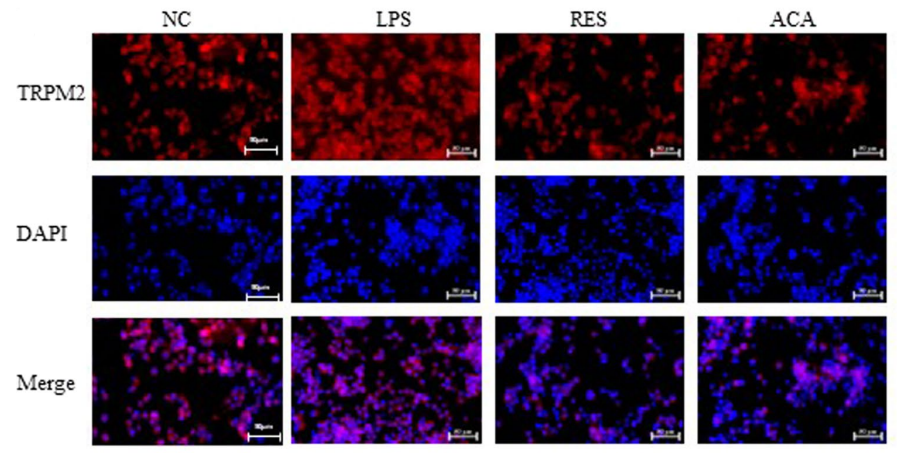
The TRPM2 was detected after treatment of RES (30 μM) and (E/Z)-BML264 (ACA, 25 μM) in LPS (1 μg/mL)-induced RAW264.7 cells for 24 h. The results showed that the expression of TRPM2 increased under LPS stimulation. Treatment of cells with ACA and RES suppressed the TRPM2 fluorescence intensity induced by LPS.
-
Clin Exp Med
SIRT1 slows the progression of lupus nephritis by regulating the NLRP3 inflammasome through ROS/TRPM2/Ca2+ channel. [Abstract]2023 Nov;23(7):3465-3478. PMID: 37261640 -
-
BMC Cancer
TRPM2 channels mediate ROS-induced actin remodeling and cell migration of prostate cancer cells. [Abstract]2025 May 28;25(1):956. PMID: 40437388 -
Transbound Emerg Dis
Numb-Associated Kinases-Mediated AP2M1 Activation Facilitates Porcine Reproductive and Respiratory Syndrome Virus Entry. [Abstract]2026 Apr 13:2026:1766395. PMID: 41982333 -
Oxid Med Cell Longev
Deficiency of ROS-Activated TRPM2 Channel Protects Neurons from Cerebral Ischemia-Reperfusion Injury through Upregulating Autophagy. [Abstract]2021 Jul 27;2021:7356266. PMID: 34367466


Solvent & Solubility
In Vitro:
DMSO : 233.33 mg/mL (691.53 mM; Need ultrasonic; Hygroscopic DMSO has a significant impact on the solubility of product, please use newly opened DMSO)
Please refer to the solubility information to select the appropriate solvent. Once prepared, please aliquot and store the solution to prevent product inactivation from repeated freeze-thaw cycles.
Storage method and period of stock solution: -80°C, 2 years; -20°C, 1 year. When stored at -80°C, please use it within 2 years. When stored at -20°C, please use it within 1 year.
Please refer to the solubility information to select the appropriate solvent. Once prepared, please aliquot and store the solution to prevent product inactivation from repeated freeze-thaw cycles.
Storage method and period of stock solution: -80°C, 2 years; -20°C, 1 year. When stored at -80°C, please use it within 2 years. When stored at -20°C, please use it within 1 year.
Concentration (start) × Volume (start) = Concentration (final) × Volume (final)
In Vivo:
Select the appropriate dissolution method based on your experimental animal and administration route.
- For the following dissolution methods, please ensure to first prepare a clear stock solution using an In Vitro approach and then sequentially add co-solvents:
- To ensure reliable experimental results, the clarified stock solution can be appropriately stored based on storage conditions. As for the working solution for In Vivo experiments, it is recommended to prepare freshly and use it on the same day.
- The percentages shown for the solvents indicate their volumetric ratio in the final prepared solution. If precipitation or phase separation occurs during preparation, heat and/or sonication can be used to aid dissolution.
Add each solvent one by one: 10% DMSO 40% PEG300 5% Tween-80 45% Saline
Solubility: ≥ 2.08 mg/mL (6.16 mM); Clear solution
This protocol yields a clear solution of ≥ 2.08 mg/mL (saturation unknown).
Taking 1 mL working solution as an example, add 100 μL DMSO stock solution (20.8 mg/mL) to 400 μL PEG300, and mix evenly; then add 50 μL Tween-80 and mix evenly; then add 450 μL Saline to adjust the volume to 1 mL.
Preparation of Saline: Dissolve 0.9 g sodium chloride in ddH₂O and dilute to 100 mL to obtain a clear Saline solution.
In Vivo Dissolution Calculator
Please enter the basic information of animal experiments:
-
-
-
-
Recommended: Prepare an additional quantity of animals to account for potential losses during experiments.
Please enter your animal formula composition:
-
%DMSO +
Recommended: Keep the proportion of DMSO in working solution below 2% if your animal is weak.
-
%+
-
+%Tween-80 + +
-
%Saline +
The co-solvents required include: DMSO, . All of co-solvents are available by MedChemExpress (MCE). , Tween 80. All of co-solvents are available by MedChemExpress (MCE).
Working solution concentration: 0.22 mg/mL
Method for preparing stock solution: mg drug dissolved in μL DMSO. Stock solution concentration: mg/mL.
1. Take μL DMSO stock solution;
2. Add μL .
μL , mix evenly;
3. Then add μL Tween 80, mix evenly;
4. Then add μL
Please ensure that the stock solution in the first step is dissolved to a clear state, and add co-solvents in sequence. You can use ultrasonic heating (ultrasonic cleaner, recommended frequency 20-40 kHz), vortexing, etc. to assist dissolution.

Protocols
-
Cardiac voltage-sensitive optical mapping
Cardiac voltage-sensitive optical mapping records changes in transmembrane potential from cardiac tissue by staining the preparation with a voltage-sensitive dye and imaging fluorescence changes during electrical activation; the resulting optical action potentials can be used to map activation time, action potential duration, conduction velocity, wavefront propagation, and arrhythmia dynamics. The optical signal represents a relative fluorescence change from a tissue volume rather than a single-cell intracellular recording, so spatial resolution, sampling rate, voltage resolution, optical magnification, light penetration, and motion control must be considered together when interpreting optical action potentials.


Purity & Documentation
-
Data Sheet (279 KB)
-
SDS (396 KB)
- English - EN (396 KB)
- Français - FR (396 KB)
- Deutsch - DE (396 KB)
- Norwegian - NO (396 KB)
- Español - ES (396 KB)
- Swedish - SV (396 KB)
- Italian - IT (396 KB)
- Korean - KR (396 KB)
- Portuguese - PT (396 KB)
-
Handling Instructions (2659 KB)
References
[1]. Kraft R, et al. Inhibition of TRPM2 cation channels by N-(p-amylcinnamoyl)anthranilic acid. Br J Pharmacol. 2006 Jun;148(3):264-73. [Content Brief]
[2]. Harteneck C, et al. N-(p-amylcinnamoyl)anthranilic acid (ACA): a phospholipase A(2) inhibitor and TRP channel blocker. Cardiovasc Drug Rev. 2007 Spring;25(1):61-75. [Content Brief]
[3]. Gwanyanya A, et al. Inhibition of the calcium-activated chloride current in cardiac ventricular myocytes by N-(p-amylcinnamoyl)anthranilic acid (ACA). Biochem Biophys Res Commun. 2010 Nov 19;402(3):531-6. [Content Brief]
[4]. Fan Y, et al. Itaconate transporter SLC13A3 confers immunotherapy resistance via alkylation-mediated stabilization of PD-L1. Cell Metab. 2025 Feb 4;37(2):514-526.e5. [Content Brief]


Complete Stock Solution Preparation Table
Please refer to the solubility information to select the appropriate solvent. Once prepared, please aliquot and store the solution to prevent product inactivation from repeated freeze-thaw cycles.
Storage method and period of stock solution: -80°C, 2 years; -20°C, 1 year. When stored at -80°C, please use it within 2 years. When stored at -20°C, please use it within 1 year.
| Optional Solvent | Concentration Solvent Mass | 1 mg | 5 mg | 10 mg | 25 mg |
|---|---|---|---|---|---|
| DMSO | 1 mM | 2.9638 mL | 14.8188 mL | 29.6375 mL | 74.0938 mL |
| 5 mM | 0.5928 mL | 2.9638 mL | 5.9275 mL | 14.8188 mL | |
| 10 mM | 0.2964 mL | 1.4819 mL | 2.9638 mL | 7.4094 mL | |
| 15 mM | 0.1976 mL | 0.9879 mL | 1.9758 mL | 4.9396 mL | |
| 20 mM | 0.1482 mL | 0.7409 mL | 1.4819 mL | 3.7047 mL | |
| 25 mM | 0.1186 mL | 0.5928 mL | 1.1855 mL | 2.9638 mL | |
| 30 mM | 0.0988 mL | 0.4940 mL | 0.9879 mL | 2.4698 mL | |
| 40 mM | 0.0741 mL | 0.3705 mL | 0.7409 mL | 1.8523 mL | |
| 50 mM | 0.0593 mL | 0.2964 mL | 0.5928 mL | 1.4819 mL | |
| 60 mM | 0.0494 mL | 0.2470 mL | 0.4940 mL | 1.2349 mL | |
| 80 mM | 0.0370 mL | 0.1852 mL | 0.3705 mL | 0.9262 mL | |
| 100 mM | 0.0296 mL | 0.1482 mL | 0.2964 mL | 0.7409 mL |


(E/Z)-BML264 Related Classifications
HY-118628 Related Classifications
 Powered by Bioz