



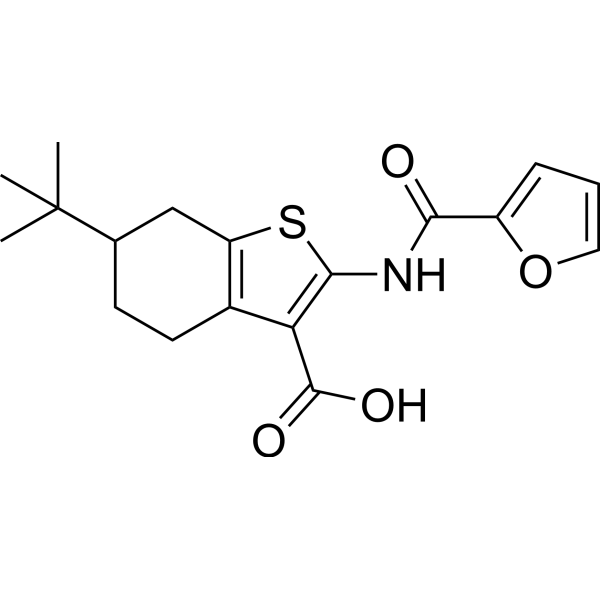
CaCCinh-A01
Based on 12 publication(s) in Google Scholar
CaCCinh-A01 is an inhibitor of both TMEM16A and calcium-activated chloride channel (CaCC) with IC50s of 2.1 and 10 μM, respectively.
For research use only. We do not sell to patients.
- Purity : 99.35%
- CAS No.: 407587-33-1
- Formula: C18H21NO4S
- Molecular Weight:347.43
-
Storage:Powder -20°C, 3 years , 4°C, 2 years ; In solvent -80°C, 2 years , -20°C, 1 year

To place orders, for customer services and technical support, please contact: MedChemExpress USA
Tel: 609-228-6898 E-mail: [email protected] [email protected]


-
 Biological Activity
-
Chemical Information
-
Solvent & Solubility
- Purity & Documentation
- References
-
 Help & FAQs


-
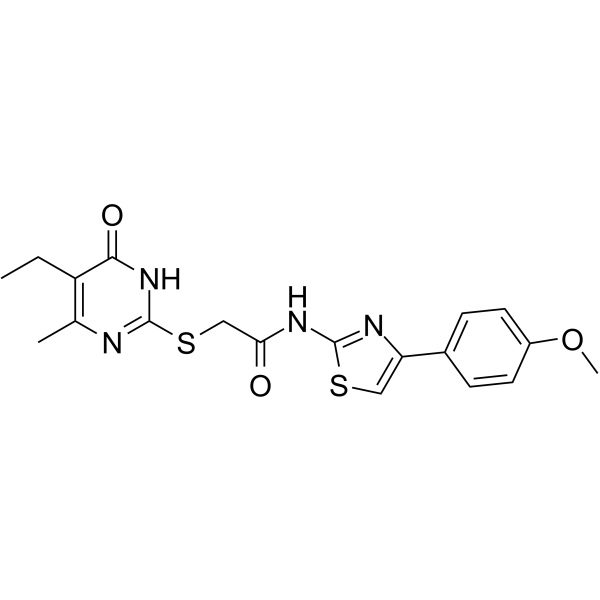
HY-100612
T16Ainh-A01TMEM16A Inhibitor -
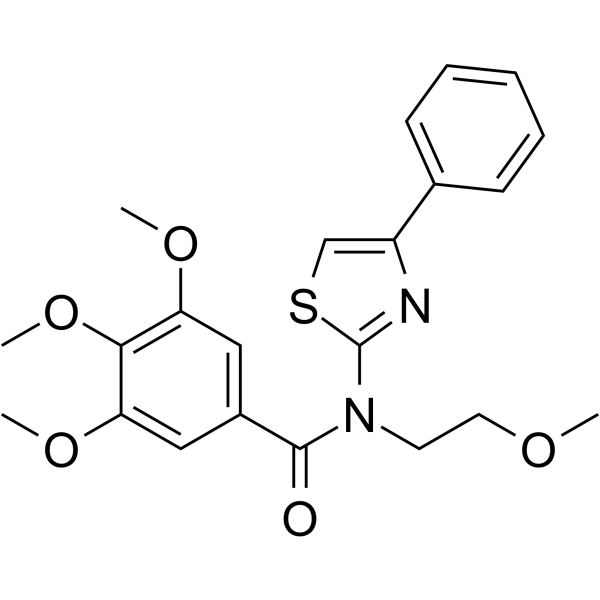
HY-103368
EactTMEM16A Activator -
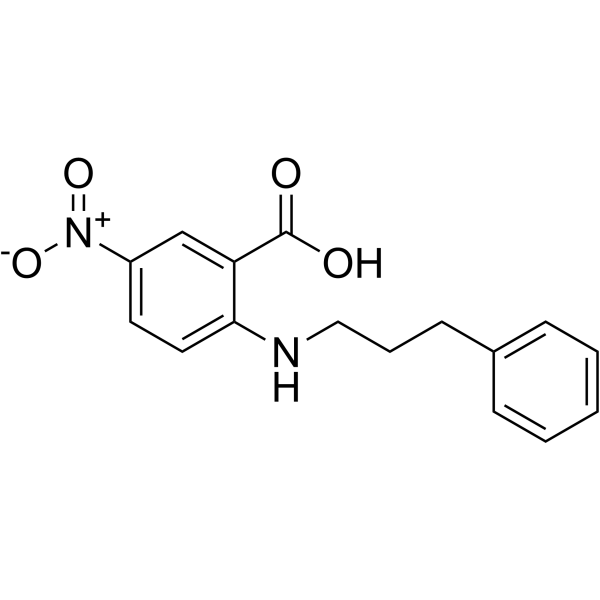
HY-101012
NPPBORCC Blocker -
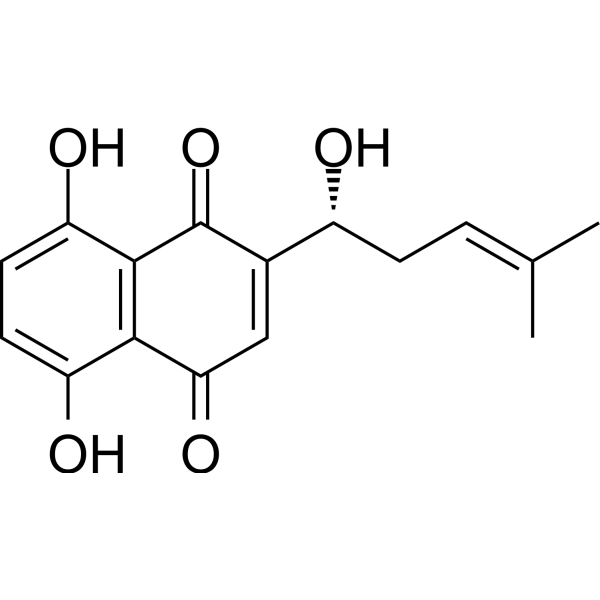
HY-N0822
ShikoninChloride Channel Inhibitor -
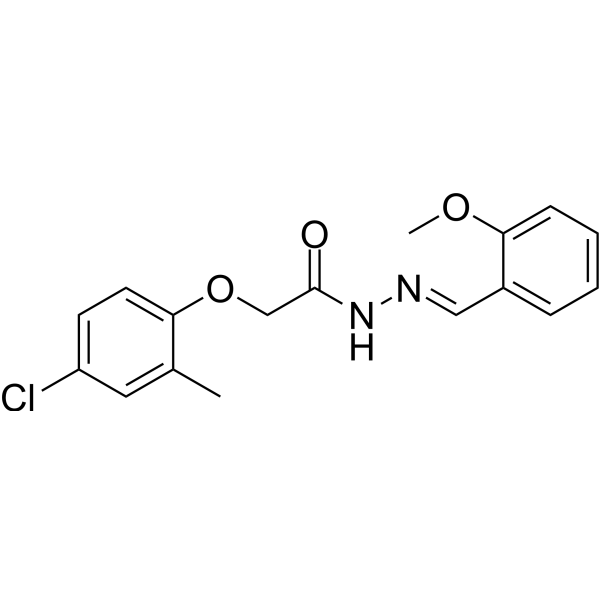
HY-119981
Ani9Chloride Channel Inhibitor -
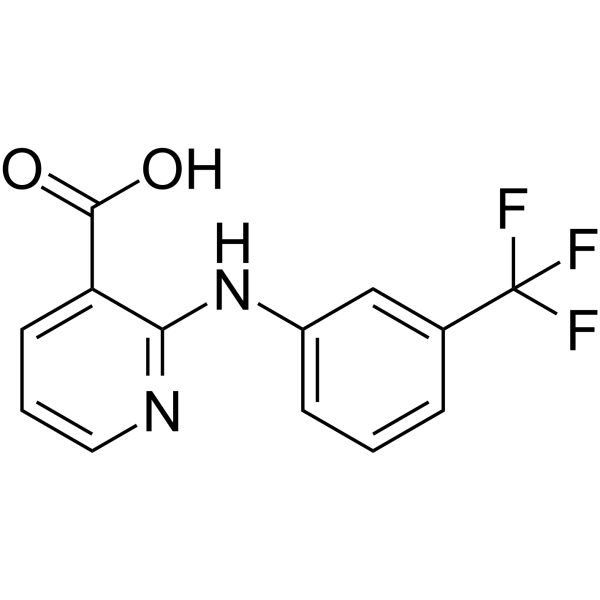
HY-B0493
Niflumic acidChloride Channel/COX Inhibitor -
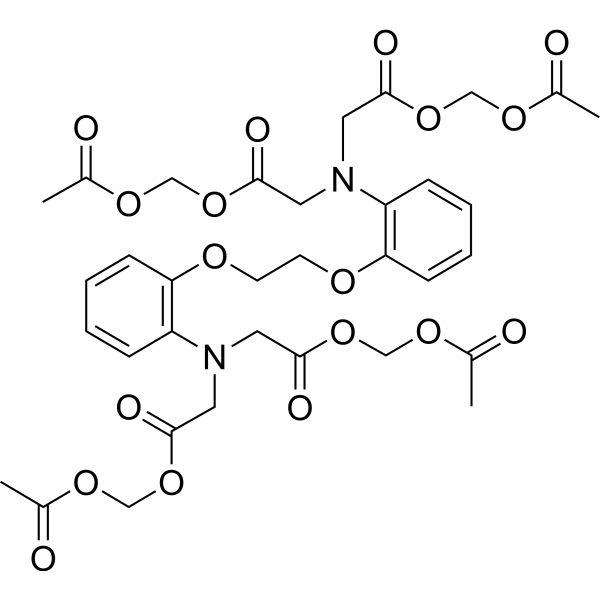
HY-100545
BAPTA-AMCa2+ Chelator -
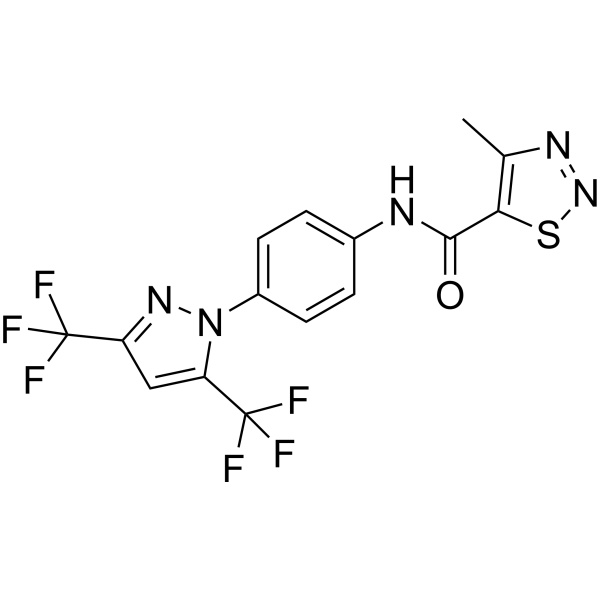
HY-100831
YM-58483CRAC Channel/SOCE Blocker -
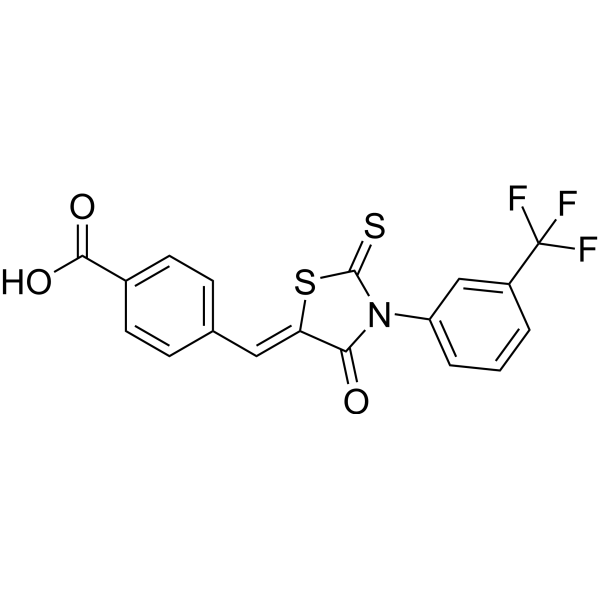
HY-16671
CFTR(inh)-172CFTR Inhibitor -
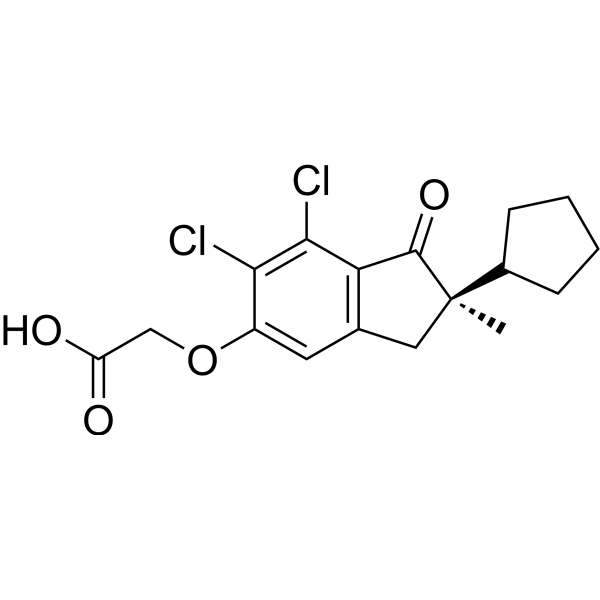
HY-12693
R(+)-MethylindazoneChloride Channel Inhibitor -
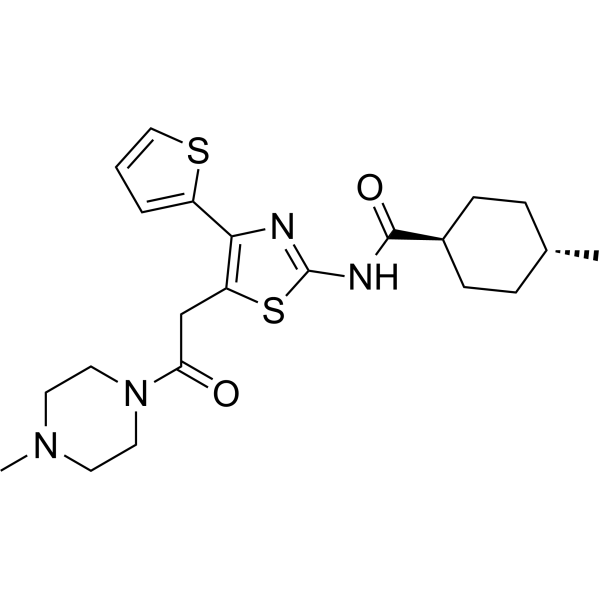
HY-135982
GPR81 agonist 1GPR81 Agonist -
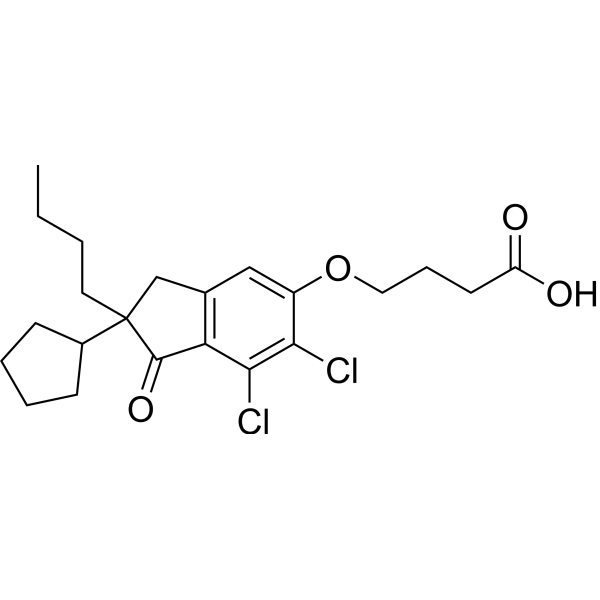
HY-103371
DCPIBVRAC Blocker
Publications Citing Use of MedChemExpress (MCE) CaCCinh-A01
More- Nat Commun. 2026 Jan 8;17(1):1253. [Abstract]
- Br J Pharmacol. 2026 Apr 29. [Abstract]
- J Agric Food Chem. 2025 Sep 17;73(37):23376-23389. [Abstract]
- Biochem Pharmacol. 2020 Aug:178:114062. [Abstract]
- J Virol. 2026 May 11.
- Vet J. 2025 Oct:313:106417. [Abstract]
- Dublin City University. 2026.
- Albert Einstein College of Medicine. 2026.
- bioRxiv. 2025 Oct 28:2025.10.28.685002. [Abstract]
- bioRxiv. 2024 Sep 22:2024.09.18.613746. [Abstract]
- SSRN. 2023 Nov 14.
- bioRxiv. 2023 Jul 3.
 Customer Validation & Images

-
In Vivo Efficacy Study

-
Bio/Physico-chemical Assay

-
Cell Imaging/Staining

-
Bio/Physico-chemical Assay

-
Bio/Physico-chemical Assay


Biological Activity
Description
IC50 & Target
Cellular Effect
|
Cell Line

|
Type | Value | Description | References |
|---|---|---|---|---|
| U138-MG | GI50 |
89.38 μM
Compound: 1
|
Antiproliferative activity against human U138 cells overexpressing ANO1 assessed as reduction in cell viability measured after 72 hrs by Celltiter-glo assay
Antiproliferative activity against human U138 cells overexpressing ANO1 assessed as reduction in cell viability measured after 72 hrs by Celltiter-glo assay
|
[PMID: 32906067] |
| U-251 | GI50 |
41.89 μM
Compound: 1
|
Antiproliferative activity against human U251 cells overexpressing ANO1 assessed as reduction in cell viability measured after 72 hrs by Celltiter-glo assay
Antiproliferative activity against human U251 cells overexpressing ANO1 assessed as reduction in cell viability measured after 72 hrs by Celltiter-glo assay
|
[PMID: 32906067] |
In Vitro
30 μM CaCCinh-A01 and 100 μM tannic acid strongly inhibit CaCC current following ATP stimulation[1]. Calcium-dependent chloride current is reduced by 38±14, 66±10, and 91±1% by 0.1, 1, and 10 μM CaCCinh-A01, respectively. ATP-induced short-circuit currents are reduced by 38±7 and 78±3% at 10 and 30 μM CaCCinh-A01, respectively[2].
MedChemExpress (MCE) has not independently confirmed the accuracy of these methods. They are for reference only.
In Vivo
MedChemExpress (MCE) has not independently confirmed the accuracy of these methods. They are for reference only.
-
Animal Model:Two-month-old male C57/BL6J mice[3]
-
Dosage:5 mg/kg
-
Administration:Vein injection; 5 mg/kg; caudal vein injection within 15 min after the onset of reperfusion
-
Result:Attenuated brain infarct size, improved neurological outcomes and lowered BBB permeability after ischemic stroke in mice.


Chemical Information
-
CAS No. 407587-33-1
-
Appearance Solid
-
Molecular Weight 347.43
-
Formula C18H21NO4S
-
Color White to off-white
-
SMILES
O=C(C1=C(NC(C2=CC=CO2)=O)SC3=C1CCC(C(C)(C)C)C3)O
-
Shipping
Room temperature in continental US; may vary elsewhere.
-
Storage
Powder -20°C 3 years 4°C 2 years In solvent -80°C 2 years -20°C 1 year


Publications (12)
-
Journal Impact Factor
-
Most Recent
-
Nat Commun
2026 Jan 8;17(1):1253. PMID: 41507162
CaCCinh-A01 purchased from MedChemExpress. Usage Cited in: Nat Commun. 2026 Jan 8;17(1):1253. [Abstract]
CaCCinh-A01 (A01; 3 mg/kg; i.p.; 30 min prior to the administration of DAB, every 12 h) completely abolished DAB-induced laxative effect, as assessed by both Bristol score and fecal water content.
-
Br J Pharmacol
A novel role of propofol and its analogues in arterial vasorelaxation and blood pressure reduction via inhibition of calcium activated chloride channel ANO1. [Abstract]2026 Apr 29. PMID: 42055772
CaCCinh-A01 purchased from MedChemExpress. Usage Cited in: Br J Pharmacol. 2026 Apr 29. [Abstract]
CaCCinh-A01 (10 μM) completely abolished Intracellular Ca2+ at a concentration of 600 nM evoked TMEM16A currents by electrophysiological validation through whole-cell patch-clamp experiments.
CaCCinh-A01 purchased from MedChemExpress. Usage Cited in: Br J Pharmacol. 2026 Apr 29. [Abstract]
CaCCinh-A01 (0-200 s) capacity to modulate ion channels in LA795 cells showed no effect in YFP fluorescence.
-
J Agric Food Chem
A Natural TMEM16A Inhibitor with Conformational Lock Mechanism: Thymol Reverses Secretory Diarrhea via Chloride Flux Regulation and Antiinflammatory. [Abstract]2025 Sep 17;73(37):23376-23389. PMID: 40905427 -
Biochem Pharmacol
TMEM16A-inhibitor loaded pH-responsive nanoparticles: A novel dual-targeting antitumor therapy for lung adenocarcinoma. [Abstract]2020 Aug:178:114062. PMID: 32492446
CaCCinh-A01 purchased from MedChemExpress. Usage Cited in: Biochem Pharmacol. 2020 Aug:178:114062. [Abstract]
CaCCinh-A01 ( 20 μM) inhibited the typical current of HEK293 cells transfected with TMEM16A.
CaCCinh-A01 purchased from MedChemExpress. Usage Cited in: Biochem Pharmacol. 2020 Aug:178:114062. [Abstract]
CaCCinh-A01 (1, 2, 5, 19, 20, 50 μM) inhibited the typical whole-cell currents of TMEM16A in LA795 cells.

CaCCinh-A01 purchased from MedChemExpress. Usage Cited in: Biochem Pharmacol. 2020 Aug:178:114062. [Abstract]
CaCCinh-A01 (0-100 μM; 24 h) significantly inhibited LA795 cell proliferation, with little effect on HEK293 and HeLa cell proliferation.
-
-
Vet J
Generation of canine gallbladder cholangiocyte organoids from healthy and gallbladder mucocele patient dogs for functional analysis of anion channels. [Abstract]2025 Oct:313:106417. PMID: 40835125 -
-
-
bioRxiv
Glypican-1 upregulation elicited in response to a cell-impermeable kinase inhibitor and its overexpression enhance HIV-1 infection. [Abstract]2025 Oct 28:2025.10.28.685002. PMID: 41278678 -
bioRxiv
Acute tuft cell ablation induces malabsorption and alterations in secretory and immune cell lineages in small intestine. [Abstract]2024 Sep 22:2024.09.18.613746. PMID: 39345424 -
-


Solvent & Solubility
In Vitro:
DMSO : 100 mg/mL (287.83 mM; Need ultrasonic; Hygroscopic DMSO has a significant impact on the solubility of product, please use newly opened DMSO)
Please refer to the solubility information to select the appropriate solvent. Once prepared, please aliquot and store the solution to prevent product inactivation from repeated freeze-thaw cycles.
Storage method and period of stock solution: -80°C, 2 years; -20°C, 1 year. When stored at -80°C, please use it within 2 years. When stored at -20°C, please use it within 1 year.
Please refer to the solubility information to select the appropriate solvent. Once prepared, please aliquot and store the solution to prevent product inactivation from repeated freeze-thaw cycles.
Storage method and period of stock solution: -80°C, 2 years; -20°C, 1 year. When stored at -80°C, please use it within 2 years. When stored at -20°C, please use it within 1 year.
Concentration (start) × Volume (start) = Concentration (final) × Volume (final)
In Vivo:
Select the appropriate dissolution method based on your experimental animal and administration route.
- For the following dissolution methods, please ensure to first prepare a clear stock solution using an In Vitro approach and then sequentially add co-solvents:
- To ensure reliable experimental results, the clarified stock solution can be appropriately stored based on storage conditions. As for the working solution for In Vivo experiments, it is recommended to prepare freshly and use it on the same day.
- The percentages shown for the solvents indicate their volumetric ratio in the final prepared solution. If precipitation or phase separation occurs during preparation, heat and/or sonication can be used to aid dissolution.
Add each solvent one by one: 10% DMSO 40% PEG300 5% Tween-80 45% Saline
Solubility: ≥ 2.5 mg/mL (7.20 mM); Clear solution
This protocol yields a clear solution of ≥ 2.5 mg/mL (saturation unknown).
Taking 1 mL working solution as an example, add 100 μL DMSO stock solution (25.0 mg/mL) to 400 μL PEG300, and mix evenly; then add 50 μL Tween-80 and mix evenly; then add 450 μL Saline to adjust the volume to 1 mL.
Preparation of Saline: Dissolve 0.9 g sodium chloride in ddH₂O and dilute to 100 mL to obtain a clear Saline solution.
Add each solvent one by one: 10% DMSO 90% (20% SBE-β-CD in Saline)
Solubility: ≥ 2.5 mg/mL (7.20 mM); Clear solution
This protocol yields a clear solution of ≥ 2.5 mg/mL (saturation unknown).
Taking 1 mL working solution as an example, add 100 μL DMSO stock solution (25.0 mg/mL) to 900 μL 20% SBE-β-CD in Saline, and mix evenly.
Preparation of 20% SBE-β-CD in Saline (4°C, storage for one week): 2 g SBE-β-CD powder is dissolved in 10 mL Saline, completely dissolve until clear.
In Vivo Dissolution Calculator
Please enter the basic information of animal experiments:
-
-
-
-
Recommended: Prepare an additional quantity of animals to account for potential losses during experiments.
Please enter your animal formula composition:
-
%DMSO +
Recommended: Keep the proportion of DMSO in working solution below 2% if your animal is weak.
-
%+
-
+%Tween-80 + +
-
%Saline +
The co-solvents required include: DMSO, . All of co-solvents are available by MedChemExpress (MCE). , Tween 80. All of co-solvents are available by MedChemExpress (MCE).
Working solution concentration: 0.22 mg/mL
Method for preparing stock solution: mg drug dissolved in μL DMSO. Stock solution concentration: mg/mL.
1. Take μL DMSO stock solution;
2. Add μL .
μL , mix evenly;
3. Then add μL Tween 80, mix evenly;
4. Then add μL
Please ensure that the stock solution in the first step is dissolved to a clear state, and add co-solvents in sequence. You can use ultrasonic heating (ultrasonic cleaner, recommended frequency 20-40 kHz), vortexing, etc. to assist dissolution.


Purity & Documentation
-
Data Sheet (276 KB)
-
SDS (393 KB)
- English - EN (393 KB)
- Français - FR (393 KB)
- Deutsch - DE (393 KB)
- Norwegian - NO (393 KB)
- Español - ES (393 KB)
- Swedish - SV (393 KB)
- Italian - IT (393 KB)
- Korean - KR (393 KB)
- Portuguese - PT (393 KB)
-
Handling Instructions (2659 KB)
References
[1]. TMEM16A inhibitors reveal TMEM16A as a minor component of calcium-activated chloridechannel conductance in airway and intestinal epithelial cells. J Biol Chem. 2011 Jan 21;286(3):2365-74. [Content Brief]
[2]. De La Fuente R, et al. Small-molecule screen identifies inhibitors of a human intestinal calcium-activated chloridechannel. Mol Pharmacol. 2008 Mar;73(3):758-68. [Content Brief]
[3]. Pin-Yi Liu, et al. TMEM16A Inhibition Preserves Blood-Brain Barrier Integrity After Ischemic Stroke.Front Cell Neurosci. 2019 Aug 6;13:360. [Content Brief]


Complete Stock Solution Preparation Table
Please refer to the solubility information to select the appropriate solvent. Once prepared, please aliquot and store the solution to prevent product inactivation from repeated freeze-thaw cycles.
Storage method and period of stock solution: -80°C, 2 years; -20°C, 1 year. When stored at -80°C, please use it within 2 years. When stored at -20°C, please use it within 1 year.
| Optional Solvent | Concentration Solvent Mass | 1 mg | 5 mg | 10 mg | 25 mg |
|---|---|---|---|---|---|
| DMSO | 1 mM | 2.8783 mL | 14.3914 mL | 28.7828 mL | 71.9569 mL |
| 5 mM | 0.5757 mL | 2.8783 mL | 5.7566 mL | 14.3914 mL | |
| 10 mM | 0.2878 mL | 1.4391 mL | 2.8783 mL | 7.1957 mL | |
| 15 mM | 0.1919 mL | 0.9594 mL | 1.9189 mL | 4.7971 mL | |
| 20 mM | 0.1439 mL | 0.7196 mL | 1.4391 mL | 3.5978 mL | |
| 25 mM | 0.1151 mL | 0.5757 mL | 1.1513 mL | 2.8783 mL | |
| 30 mM | 0.0959 mL | 0.4797 mL | 0.9594 mL | 2.3986 mL | |
| 40 mM | 0.0720 mL | 0.3598 mL | 0.7196 mL | 1.7989 mL | |
| 50 mM | 0.0576 mL | 0.2878 mL | 0.5757 mL | 1.4391 mL | |
| 60 mM | 0.0480 mL | 0.2399 mL | 0.4797 mL | 1.1993 mL | |
| 80 mM | 0.0360 mL | 0.1799 mL | 0.3598 mL | 0.8995 mL | |
| 100 mM | 0.0288 mL | 0.1439 mL | 0.2878 mL | 0.7196 mL |


CaCCinh-A01 Related Classifications
HY-100611 Related Classifications
 Powered by Bioz