



ML-SA5
Based on 4 publication(s) in Google Scholar
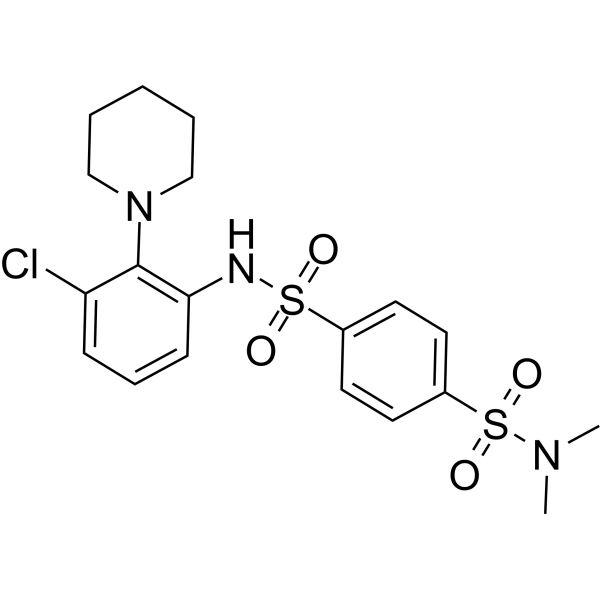
ML-SA5 is a potent TRPML1 cation channel agonist that activates the entire endosomal TRPML1 (ML1) current in DMD myocytes with an EC50 of 285 nM and is more potent than ML-SA1. ML-SA5 has anticancer activity and can inhibit tumour growth.
For research use only. We do not sell to patients.
- Purity : 99.69%
- CAS No.: 2418670-70-7
- Formula: C19H24ClN3O4S2
- Molecular Weight:457.99
-
Storage:
4°C, sealed storage, away from moisture and light
* In solvent : -80°C, 6 months; -20°C, 1 month (sealed storage, away from moisture and light)

To place orders, for customer services and technical support, please contact: MedChemExpress USA
Tel: 609-228-6898 E-mail: [email protected] [email protected]


-
 Biological Activity
-
Chemical Information
-
Solvent & Solubility
- Purity & Documentation
- References
-
 Help & FAQs


-
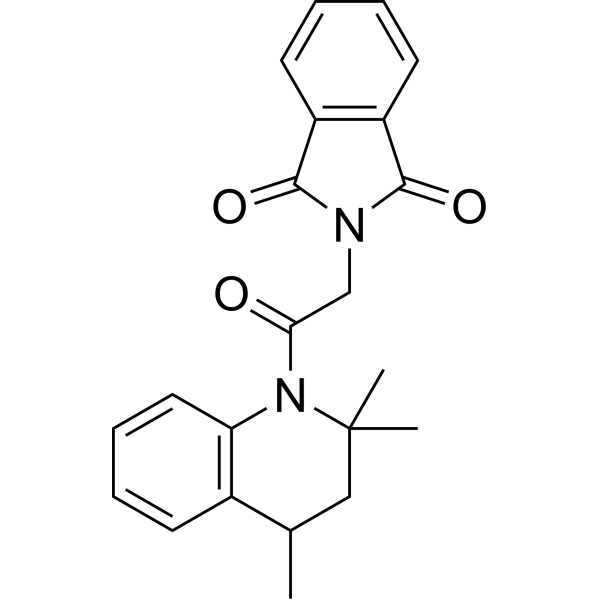
HY-108462
ML-SA1TRPML Agonist -
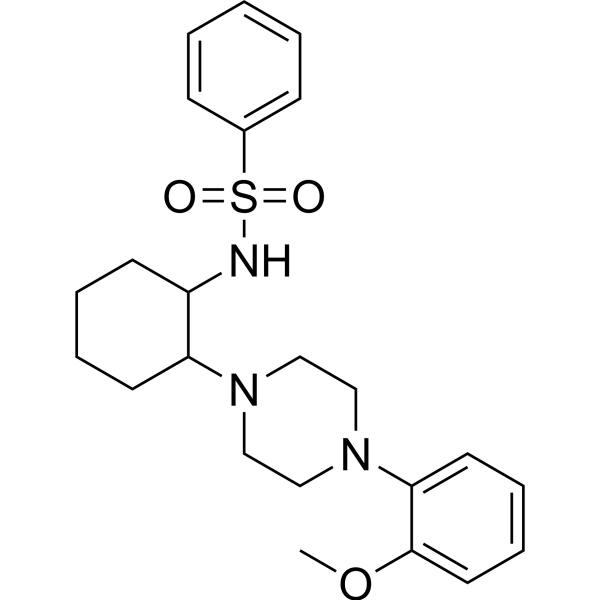
HY-139426
ML-SI3TRPML Modulator -
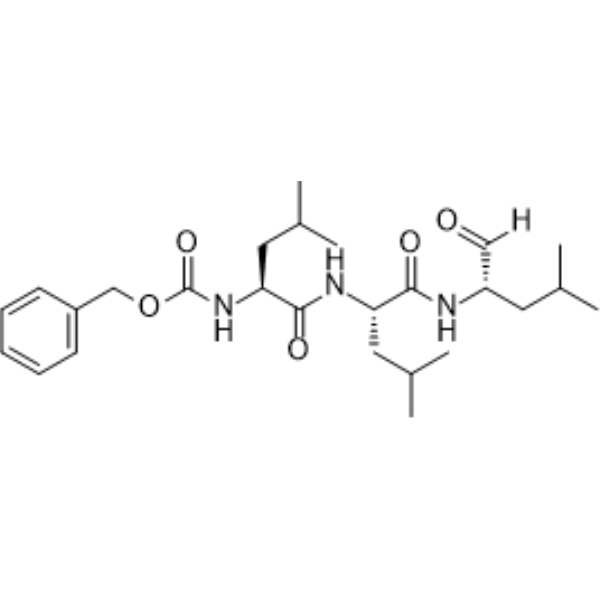
HY-13259
MG-132Proteasome Inhibitor -
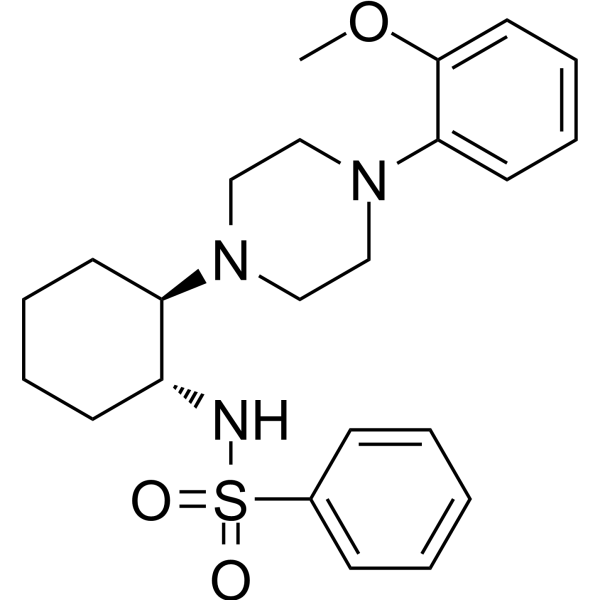
HY-134819A
(1R,2R)-ML-SI3TRPML1/2/3 Inhibitor -
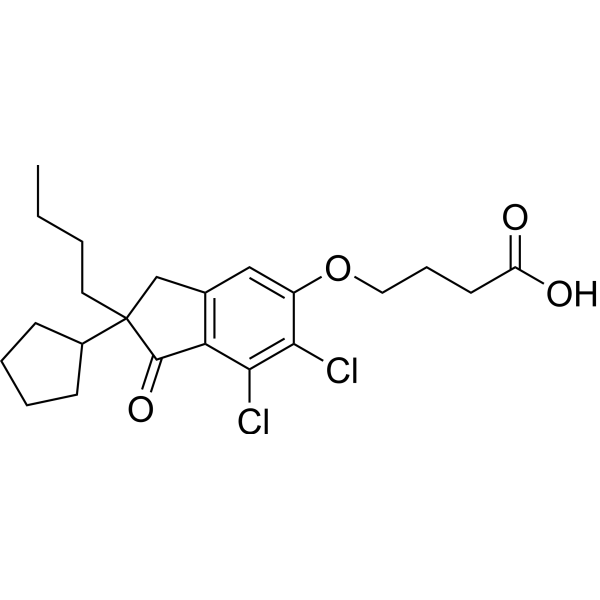
HY-103371
DCPIBVRAC Blocker -
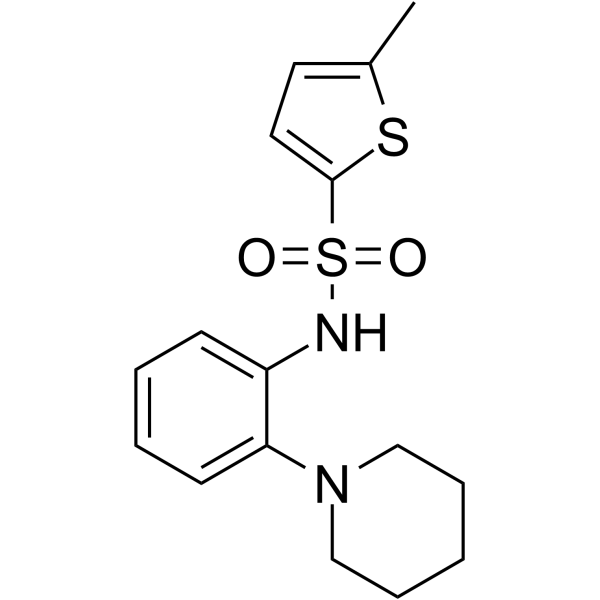
HY-110238
MK6-83TRPML1 Agonist -
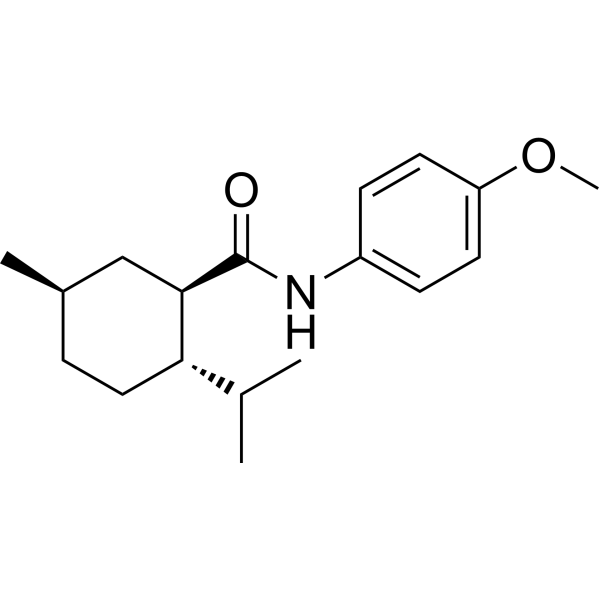
HY-108449
AcoltremonTRPM8 agonist -
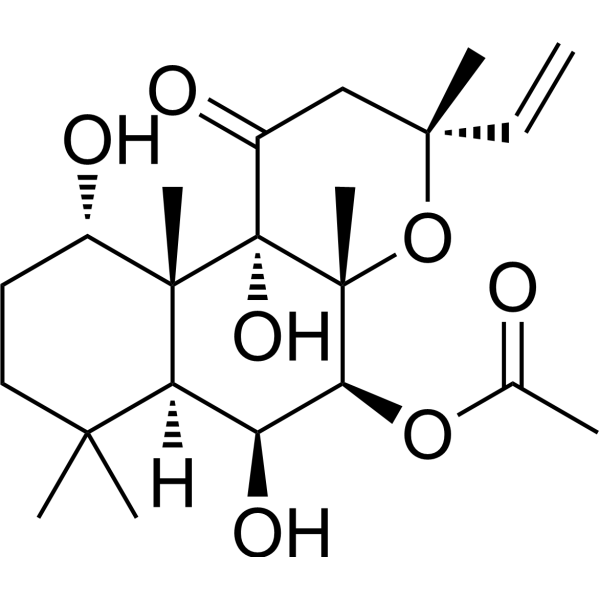
HY-15371
ForskolinAdenylate Cyclase Activator -
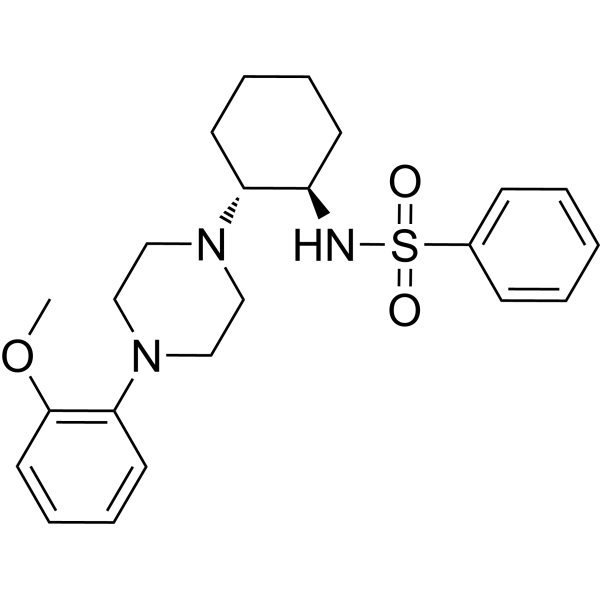
HY-139426A
(rel)-ML-SI3TRPML1/3 Inhibitor -
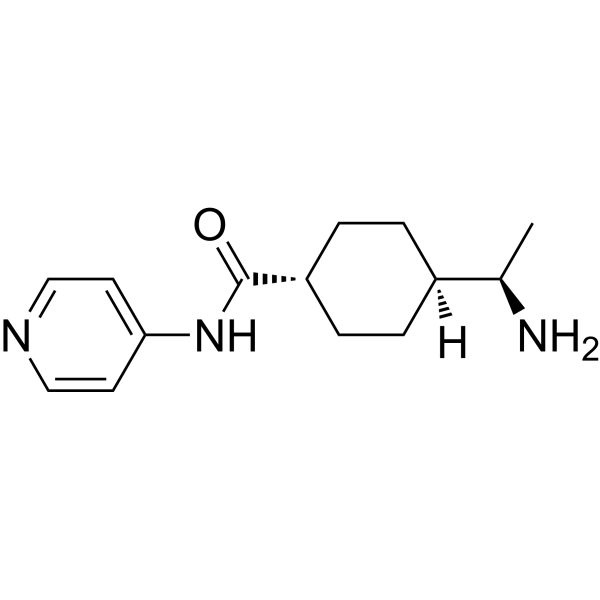
HY-10071
Y-27632ROCK Inhibitor -
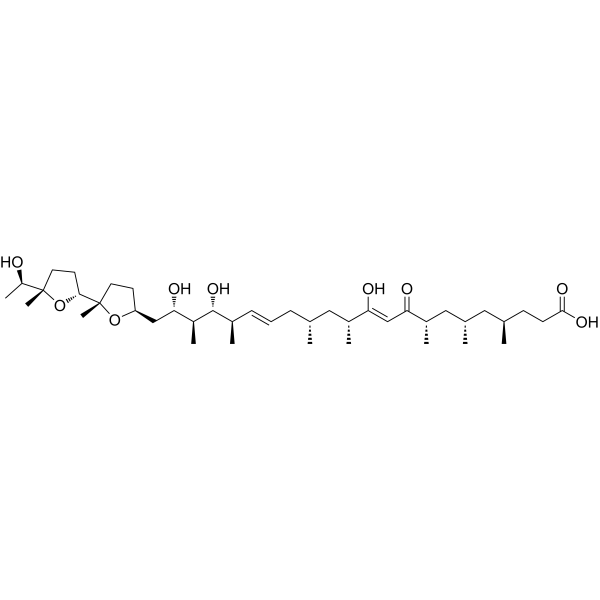
HY-13434
IonomycinCalcium Ionophore -
HY-Y0873
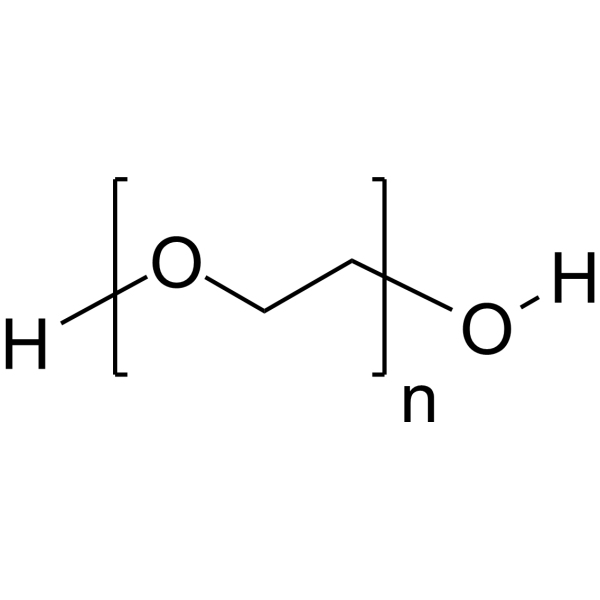
PEG300Neutral Polymer
Publications Citing Use of MedChemExpress (MCE) ML-SA5
More Customer Validation & Images

-
IF
-
IF
-
Flow Cytometry
-
IF


Biological Activity
Description
Cellular Effect
|
Cell Line

|
Type | Value | Description | References |
|---|---|---|---|---|
| HEK293 | EC50 |
1 μM
Compound: ML-SA5
|
Effect on TRPML1 knockout HEK293 cells
Effect on TRPML1 knockout HEK293 cells
|
[PMID: 38141860] |
In Vitro
ML-SA5(1-100 μM, 24 h) has some cell-targeting specificity and induces substantial cell death in M12 and MeWo cells, but fully preserves normal melanocytes. It also causes a loss of mitochondrial membrane potential in M12 cells[1].
MedChemExpress (MCE) has not independently confirmed the accuracy of these methods. They are for reference only.
In Vivo
MedChemExpress (MCE) has not independently confirmed the accuracy of these methods. They are for reference only.


Chemical Information
-
CAS No. 2418670-70-7
-
Appearance Solid
-
Molecular Weight 457.99
-
Formula C19H24ClN3O4S2
-
Color White to light brown
-
SMILES
O=S(NC1=C(N2CCCCC2)C(Cl)=CC=C1)(C3=CC=C(S(=O)(N(C)C)=O)C=C3)=O
-
Shipping
Room temperature in continental US; may vary elsewhere.
-
Storage
4°C, sealed storage, away from moisture and light
* In solvent : -80°C, 6 months; -20°C, 1 month (sealed storage, away from moisture and light)


Publications (4)
-
Journal Impact Factor
-
Most Recent
-
Nat Aging
Targeting dysregulated phago-/auto-lysosomes in Sertoli cells to ameliorate late-onset hypogonadism. [Abstract]2024 May;4(5):647-663. PMID: 38649614
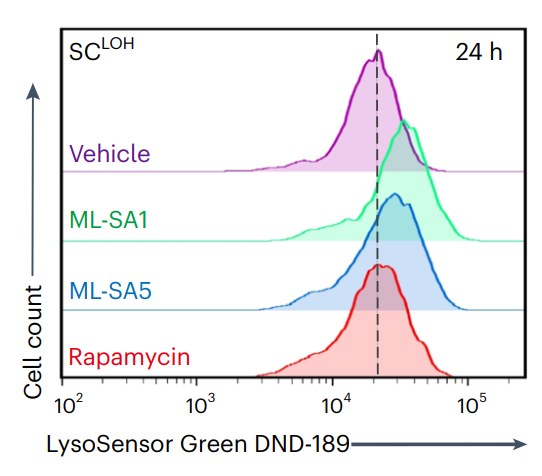
ML-SA5 purchased from MedChemExpress. Usage Cited in: Nat Aging. 2024 May;4(5):647-663. [Abstract]
Representative FACS profile showing lysosomal acidity in SCLOH treated with ML-SA1, ML-SA5 (5-25 μM) and rapamycin for 24 h.
ML-SA5 purchased from MedChemExpress. Usage Cited in: Nat Aging. 2024 May;4(5):647-663. [Abstract]
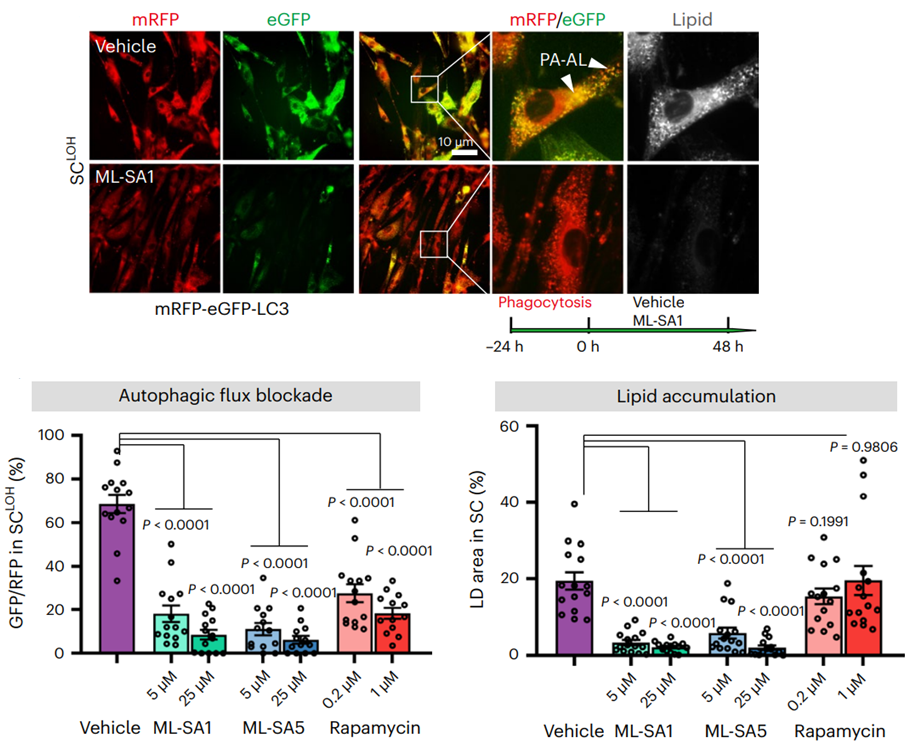
Representative images of mRFP-eGFP-LC3 fluorescence change and lipid accumulation, as well as quantification analysis, in PALD SC samples after phagocytosis and with or without ML-SA1, ML-SA5 (5-25 μM; 48 h) and rapamycin treatment at the indicated concentrations (n = 14 ROIs in each group).
-
Nat Struct Mol Biol
2025 Jun 17:10.1038/s41594-025-01581-x. PMID: 40527988
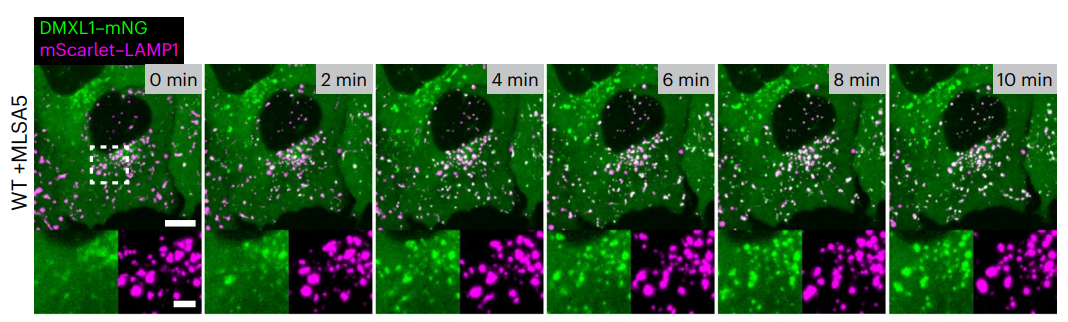
ML-SA5 purchased from MedChemExpress. Usage Cited in: Nat Struct Mol Biol. 2025 Jun 17:10.1038/s41594-025-01581-x. [Abstract]
Live-cell imaging of WT expressing DMXL1–mNG and mScarlet–LAMP1 to mark lysosomes upon treatment with MLSA5. Images taken at 2-min intervals for 10 min are shown. c, As in a, but after pretreatment with BafA1 to block CASM.
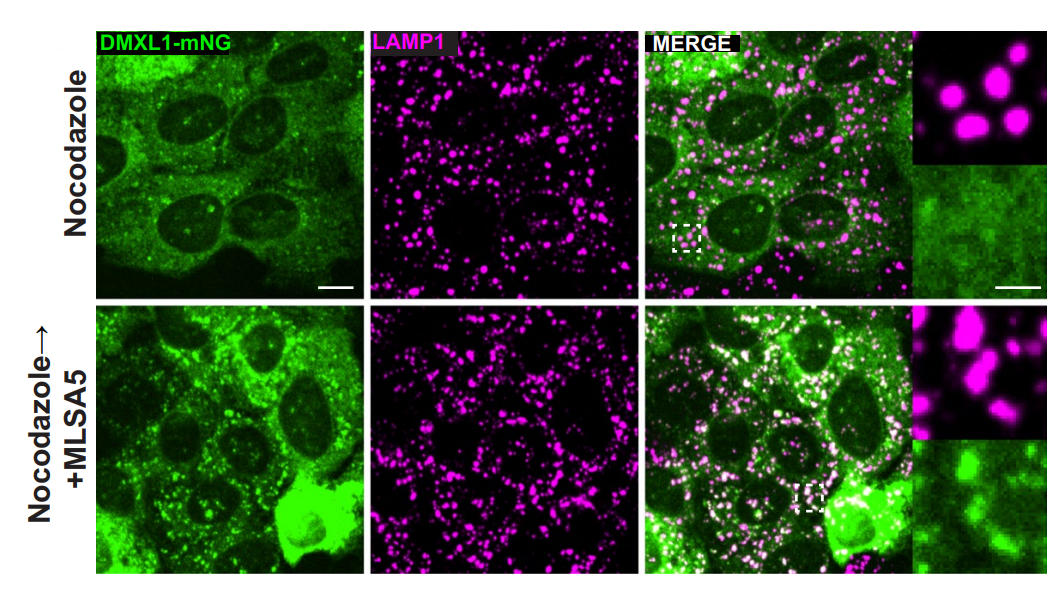
ML-SA5 purchased from MedChemExpress. Usage Cited in: Nat Struct Mol Biol. 2025 Jun 17:10.1038/s41594-025-01581-x. [Abstract]
Confocal images of fixed WT U2OS cells stably expressing DMXL1-mNG treated with nocodazole (top) or pre-treated with nocodazole (5 ug/ml; 1 h) and co-treated with MLSA5 (5 μM, 2 h) (bottom). Immunostaining of LAMP1 was used to mark lysosomes (magenta). Scale bar is 10 microns; inset scale bar is 5 microns. Micrographs are from a single experiment.
-
bioRxiv
Proteome Landscapes Decode Organelle Vulnerabilities in cortical and dopaminergic-like induced neurons Across Lysosomal Storage Disorders. [Abstract]2025 Oct 8:2025.10.08.681047. PMID: 41279717 -


Solvent & Solubility
In Vitro:
DMSO : 100 mg/mL (218.35 mM; Need ultrasonic; Hygroscopic DMSO has a significant impact on the solubility of product, please use newly opened DMSO)
Please refer to the solubility information to select the appropriate solvent. Once prepared, please aliquot and store the solution to prevent product inactivation from repeated freeze-thaw cycles.
Storage method and period of stock solution: -80°C, 6 months; -20°C, 1 month (sealed storage, away from moisture and light). When stored at -80°C, please use it within 6 months. When stored at -20°C, please use it within 1 month.
Please refer to the solubility information to select the appropriate solvent. Once prepared, please aliquot and store the solution to prevent product inactivation from repeated freeze-thaw cycles.
Storage method and period of stock solution: -80°C, 6 months; -20°C, 1 month (sealed storage, away from moisture and light). When stored at -80°C, please use it within 6 months. When stored at -20°C, please use it within 1 month.
Concentration (start) × Volume (start) = Concentration (final) × Volume (final)
In Vivo:
Select the appropriate dissolution method based on your experimental animal and administration route.
- For the following dissolution methods, please ensure to first prepare a clear stock solution using an In Vitro approach and then sequentially add co-solvents:
- To ensure reliable experimental results, the clarified stock solution can be appropriately stored based on storage conditions. As for the working solution for In Vivo experiments, it is recommended to prepare freshly and use it on the same day.
- The percentages shown for the solvents indicate their volumetric ratio in the final prepared solution. If precipitation or phase separation occurs during preparation, heat and/or sonication can be used to aid dissolution.
Add each solvent one by one: 10% DMSO 40% PEG300 5% Tween-80 45% Saline
Solubility: ≥ 2.08 mg/mL (4.54 mM); Clear solution
This protocol yields a clear solution of ≥ 2.08 mg/mL (saturation unknown).
Taking 1 mL working solution as an example, add 100 μL DMSO stock solution (20.8 mg/mL) to 400 μL PEG300, and mix evenly; then add 50 μL Tween-80 and mix evenly; then add 450 μL Saline to adjust the volume to 1 mL.
Preparation of Saline: Dissolve 0.9 g sodium chloride in ddH₂O and dilute to 100 mL to obtain a clear Saline solution.
In Vivo Dissolution Calculator
Please enter the basic information of animal experiments:
-
-
-
-
Recommended: Prepare an additional quantity of animals to account for potential losses during experiments.
Please enter your animal formula composition:
-
%DMSO +
Recommended: Keep the proportion of DMSO in working solution below 2% if your animal is weak.
-
%+
-
+%Tween-80 + +
-
%Saline +
The co-solvents required include: DMSO, . All of co-solvents are available by MedChemExpress (MCE). , Tween 80. All of co-solvents are available by MedChemExpress (MCE).
Working solution concentration: 0.22 mg/mL
Method for preparing stock solution: mg drug dissolved in μL DMSO. Stock solution concentration: mg/mL. * In solvent : -80°C, 6 months; -20°C, 1 month (sealed storage, away from moisture and light)
1. Take μL DMSO stock solution;
2. Add μL .
μL , mix evenly;
3. Then add μL Tween 80, mix evenly;
4. Then add μL
Please ensure that the stock solution in the first step is dissolved to a clear state, and add co-solvents in sequence. You can use ultrasonic heating (ultrasonic cleaner, recommended frequency 20-40 kHz), vortexing, etc. to assist dissolution.


Purity & Documentation
-
Data Sheet (278 KB)
-
SDS (393 KB)
- English - EN (393 KB)
- Français - FR (393 KB)
- Deutsch - DE (393 KB)
- Norwegian - NO (393 KB)
- Español - ES (393 KB)
- Swedish - SV (393 KB)
- Italian - IT (393 KB)
- Korean - KR (393 KB)
- Portuguese - PT (393 KB)
-
Handling Instructions (2659 KB)
References
[1]. Wanlu Du, et al. Lysosomal Zn2+ release triggers rapid, mitochondria-mediated, non-apoptotic cell death in metastatic melanoma. Cell Rep. 2021 Oct 19;37(3):109848. [Content Brief]
[2]. Lu Yu, et al. Small-molecule activation of lysosomal TRP channels ameliorates Duchenne muscular dystrophy in mouse models. Sci Adv. 2020 Feb 7;6(6):eaaz2736. [Content Brief]


Complete Stock Solution Preparation Table
Please refer to the solubility information to select the appropriate solvent. Once prepared, please aliquot and store the solution to prevent product inactivation from repeated freeze-thaw cycles.
Storage method and period of stock solution: -80°C, 6 months; -20°C, 1 month (sealed storage, away from moisture and light). When stored at -80°C, please use it within 6 months. When stored at -20°C, please use it within 1 month.
| Optional Solvent | Concentration Solvent Mass | 1 mg | 5 mg | 10 mg | 25 mg |
|---|---|---|---|---|---|
| DMSO | 1 mM | 2.1835 mL | 10.9173 mL | 21.8345 mL | 54.5863 mL |
| 5 mM | 0.4367 mL | 2.1835 mL | 4.3669 mL | 10.9173 mL | |
| 10 mM | 0.2183 mL | 1.0917 mL | 2.1835 mL | 5.4586 mL | |
| 15 mM | 0.1456 mL | 0.7278 mL | 1.4556 mL | 3.6391 mL | |
| 20 mM | 0.1092 mL | 0.5459 mL | 1.0917 mL | 2.7293 mL | |
| 25 mM | 0.0873 mL | 0.4367 mL | 0.8734 mL | 2.1835 mL | |
| 30 mM | 0.0728 mL | 0.3639 mL | 0.7278 mL | 1.8195 mL | |
| 40 mM | 0.0546 mL | 0.2729 mL | 0.5459 mL | 1.3647 mL | |
| 50 mM | 0.0437 mL | 0.2183 mL | 0.4367 mL | 1.0917 mL | |
| 60 mM | 0.0364 mL | 0.1820 mL | 0.3639 mL | 0.9098 mL | |
| 80 mM | 0.0273 mL | 0.1365 mL | 0.2729 mL | 0.6823 mL | |
| 100 mM | 0.0218 mL | 0.1092 mL | 0.2183 mL | 0.5459 mL |


ML-SA5 Related Classifications
HY-152182 Related Classifications
 Powered by Bioz