



Pregnenolone monosulfate sodium
Based on 7 publication(s) in Google Scholar
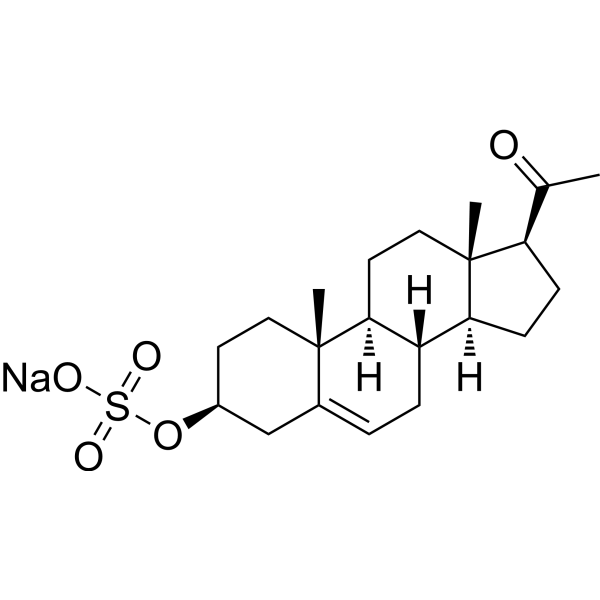
Pregnenolone monosulfate sodium (3β-Hydroxy-5-pregnen-20-one monosulfate sodium) is a powerful neurosteroid, the main precursor of various steroid hormones including steroid ketones. Pregnenolone monosulfate sodium acts as a signaling-specific inhibitor of cannabinoid CB1 receptor, inhibits the effects of tetrahydrocannabinol (THC) that are mediated by the CB1 receptors. Pregnenolone monosulfate sodium can protect the brain from cannabis intoxication. Pregnenolone monosulfate sodium is also a TRPM3 channel activator, and also can weakly activate TRPM1 channels.
For research use only. We do not sell to patients.
- Purity : 99.96%
- CAS No.: 1852-38-6
- Formula: C21H31NaO5S
- Molecular Weight:418.52
-
Storage:
-20°C, sealed storage, away from moisture
* In solvent : -80°C, 6 months; -20°C, 1 month (sealed storage, away from moisture)

To place orders, for customer services and technical support, please contact: MedChemExpress USA
Tel: 609-228-6898 E-mail: [email protected] [email protected]


-
 Biological Activity
-
Chemical Information
-
Solvent & Solubility
- Protocol
- Purity & Documentation
- References
-
 Help & FAQs


-
HY-110220
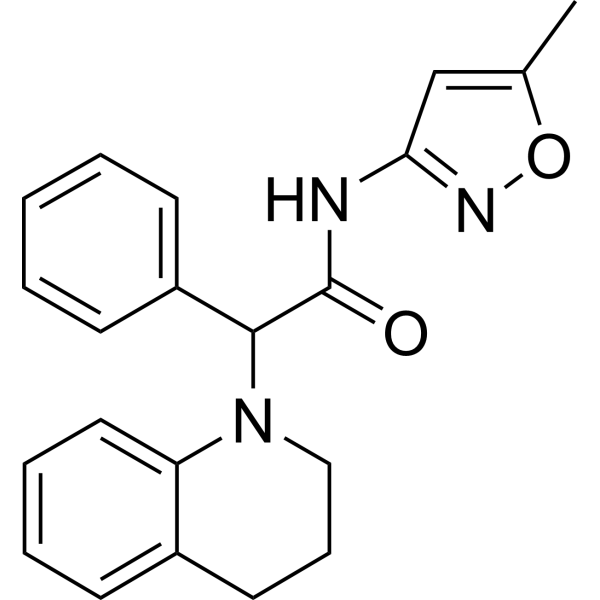
CIM0216 -
HY-B1739
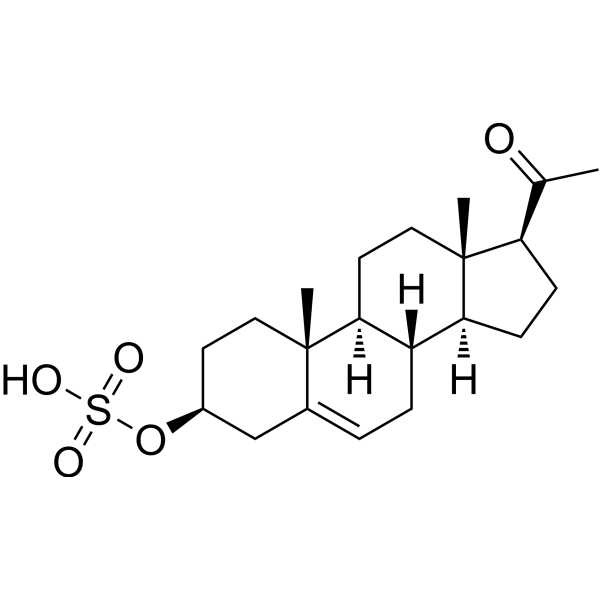
Pregnenolone monosulfate -
HY-113416
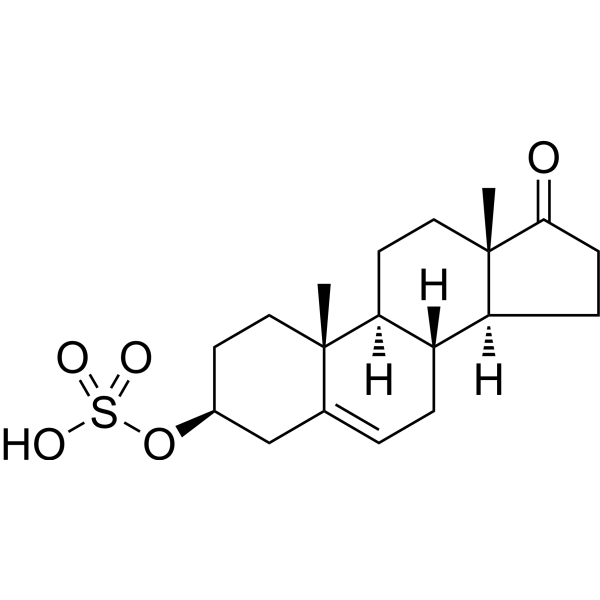
Dehydroepiandrosterone sulfate -
HY-N0919
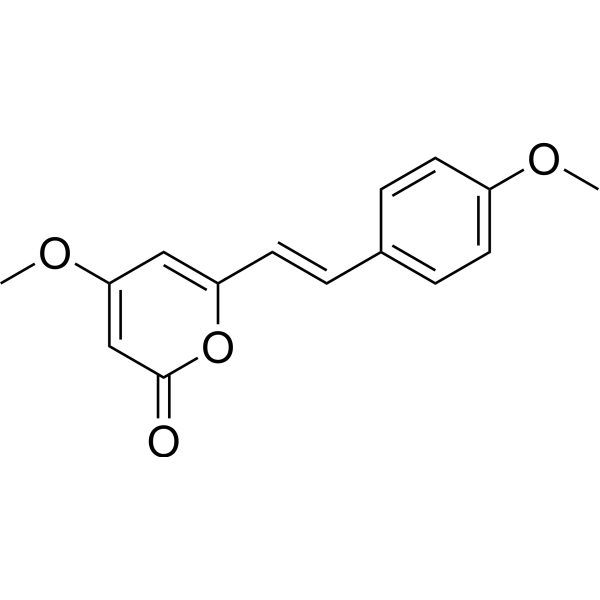
Yangonin -
HY-141672
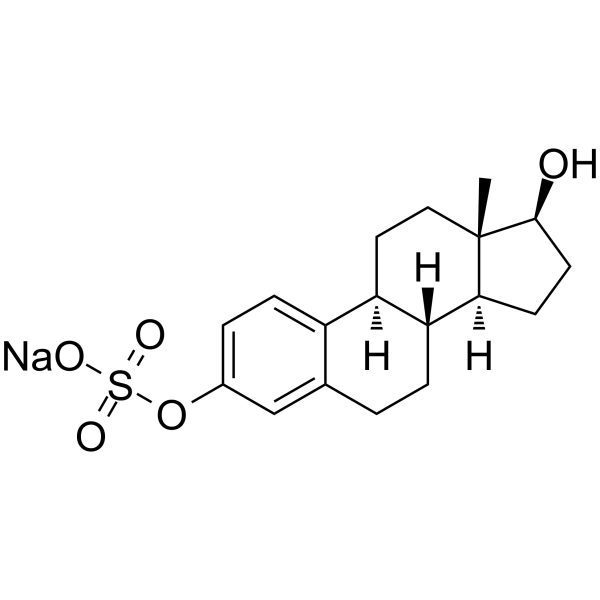
17β-Estradiol sulfate sodium -

HY-110189R
Pregnenolone monosulfate sodium (Standard) -
HY-10863
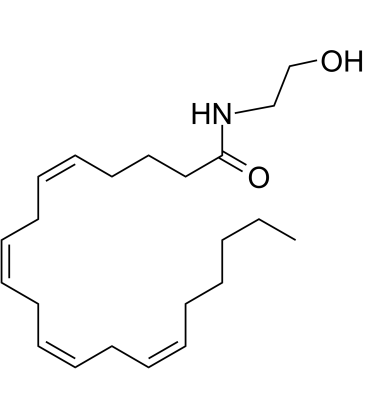
Anandamide -
HY-14137
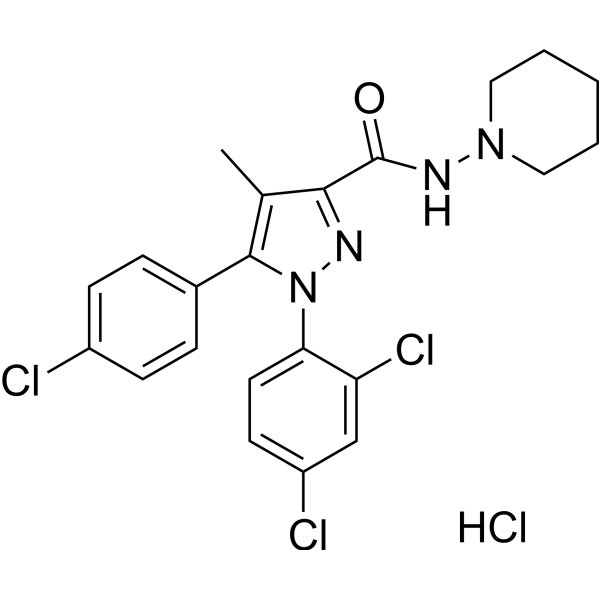
Rimonabant Hydrochloride -
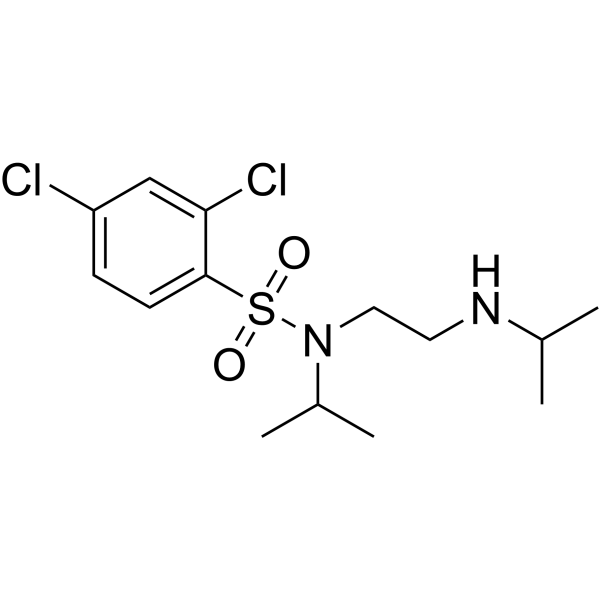
HY-19975
RN-1734 -
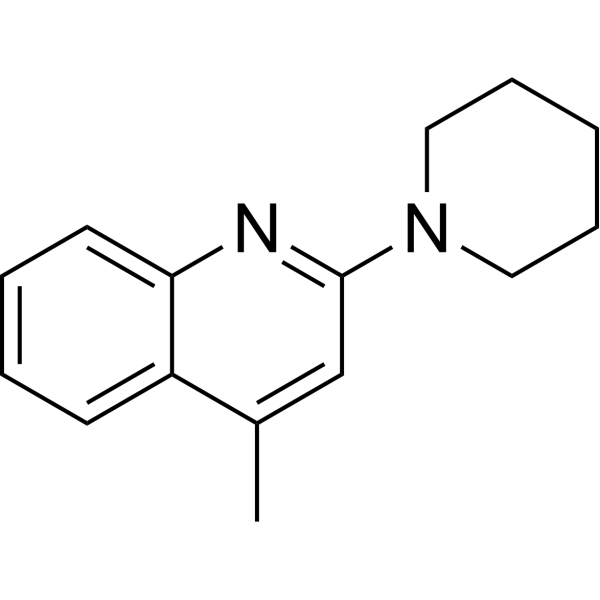
HY-12949
ML204 -
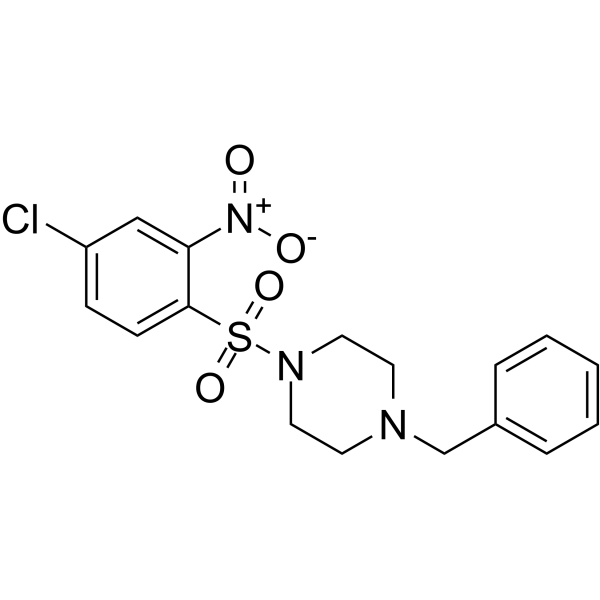
HY-19976
RN-1747 -
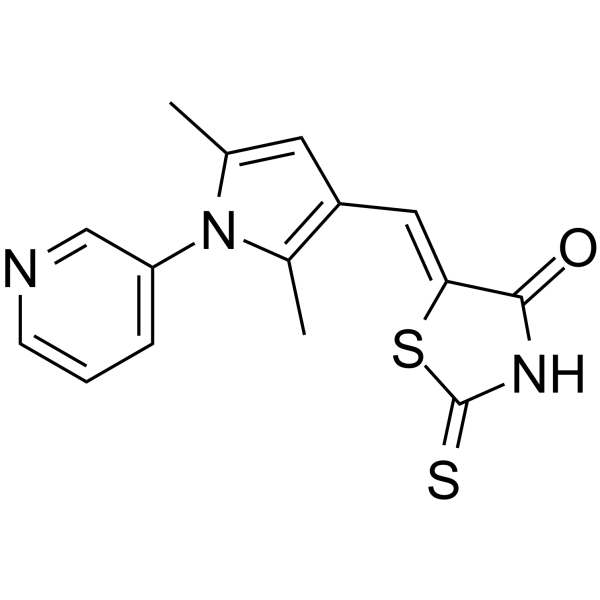
HY-12809
Optovin
Publications Citing Use of MedChemExpress (MCE) Pregnenolone monosulfate sodium
More- Cell Metab. 2026 Jan 23:S1550-4131(25)00584-4. [Abstract]
- Cell Metab. 2024 Nov 5;36(11):2402-2418.e10. [Abstract]
- Nat Chem Biol. 2022 Nov;18(11):1196-1203. [Abstract]
- Proc Natl Acad Sci U S A. 2022 Apr 12;119(15):e2117004119. [Abstract]
- Dev Cell. 2026 Apr 29:S1534-5807(26)00150-4. [Abstract]
- EMBO J. 2025 Aug;44(15):4222-4251. [Abstract]
- Sci Rep. 2025 Mar 11;15(1):8409. [Abstract]
All Endogenous Metabolite Isoforms
More

Biological Activity
Description
IC50 & Target
[1]|
CB1 |
Human Endogenous Metabolite |
In Vitro
CB1 receptor stimulation increases brain Pregnenolone levels, which in turn exerts a negative feedback on the activity of the CB1 receptor antagonizing most of the known behavioral and somatic effects of THC. Pregnenolone likely acts as a signaling-specific negative allosteric modulator binding to a site distinct from that occupied by orthosteric ligands. Pregnenolone does not modify agonist binding but only agonist efficacy[1].
The effect of THC is significantly attenuated when slices are pre-treated with Pregnenolone 100 nM (15.1±1.8 % of inhibition). These effects are likely due to a pre-synaptic action of Pregnenolone. Thus, Pregnenolone blocks the increase in paired-pulse ratio (PPR) induced by THC but does not modify either the amplitude or the decay time of miniature EPSC (mEPSC)[1].
MedChemExpress (MCE) has not independently confirmed the accuracy of these methods. They are for reference only.
In Vivo
MedChemExpress (MCE) has not independently confirmed the accuracy of these methods. They are for reference only.
Clinical Trial
| NCT Number | Sponsor | Condition | Start Date |
Phase

|
|---|---|---|---|---|
| NCT01329991 | Plexxikon| | 2011-05 | PHASE1 |


Chemical Information
-
CAS No. 1852-38-6
-
Appearance Solid
-
Molecular Weight 418.52
-
Formula C21H31NaO5S
-
Color White to off-white
-
SMILES
CC([C@H]1CC[C@@]2([H])[C@]3([H])CC=C4C[C@@H](OS(=O)(O[Na])=O)CC[C@]4(C)[C@@]3([H])CC[C@]12C)=O
-
Synonyms
3β-Hydroxy-5-pregnen-20-one monosulfate sodium
-
Structure Classification
-
Initial Source
-
Shipping
Room temperature in continental US; may vary elsewhere.
-
Storage
-20°C, sealed storage, away from moisture
* In solvent : -80°C, 6 months; -20°C, 1 month (sealed storage, away from moisture)


Publications (7)
-
Journal Impact Factor
-
Most Recent
-
Cell Metab
2026 Jan 23:S1550-4131(25)00584-4. PMID: 41579859 -
Cell Metab
Sensing steroid hormone 17α-hydroxypregnenolone by GPR56 enables protection from ferroptosis-induced liver injury. [Abstract]2024 Nov 5;36(11):2402-2418.e10. PMID: 39389061 -
Nat Chem Biol
2022 Nov;18(11):1196-1203. PMID: 35982227 -
Proc Natl Acad Sci U S A
2022 Apr 12;119(15):e2117004119. PMID: 35394864 -
Dev Cell
2026 Apr 29:S1534-5807(26)00150-4. PMID: 42061405 -
EMBO J
Copine-6 is a TRPM3 escort protein controlling the sensitivity of sensory neurons to noxious heat. [Abstract]2025 Aug;44(15):4222-4251. PMID: 40537608 -
Sci Rep
2025 Mar 11;15(1):8409. PMID: 40069295


Solvent & Solubility
In Vitro:
DMSO : 100 mg/mL (238.94 mM; Need ultrasonic; Hygroscopic DMSO has a significant impact on the solubility of product, please use newly opened DMSO)
H2O : 5 mg/mL (11.95 mM; ultrasonic and warming and heat to 60°C)
Please refer to the solubility information to select the appropriate solvent. Once prepared, please aliquot and store the solution to prevent product inactivation from repeated freeze-thaw cycles.
Storage method and period of stock solution: -80°C, 6 months; -20°C, 1 month (sealed storage, away from moisture). When stored at -80°C, please use it within 6 months. When stored at -20°C, please use it within 1 month.
* Note: If you choose water as the stock solution, please dilute it to the working solution, then filter and sterilize it with a 0.22 μm filter before use.
Please refer to the solubility information to select the appropriate solvent. Once prepared, please aliquot and store the solution to prevent product inactivation from repeated freeze-thaw cycles.
Storage method and period of stock solution: -80°C, 6 months; -20°C, 1 month (sealed storage, away from moisture). When stored at -80°C, please use it within 6 months. When stored at -20°C, please use it within 1 month.
* Note: If you choose water as the stock solution, please dilute it to the working solution, then filter and sterilize it with a 0.22 μm filter before use.
Concentration (start) × Volume (start) = Concentration (final) × Volume (final)
In Vivo:
Select the appropriate dissolution method based on your experimental animal and administration route.
- For the following dissolution methods, please ensure to first prepare a clear stock solution using an In Vitro approach and then sequentially add co-solvents:
- To ensure reliable experimental results, the clarified stock solution can be appropriately stored based on storage conditions. As for the working solution for In Vivo experiments, it is recommended to prepare freshly and use it on the same day.
- The percentages shown for the solvents indicate their volumetric ratio in the final prepared solution. If precipitation or phase separation occurs during preparation, heat and/or sonication can be used to aid dissolution.
Add each solvent one by one: 10% DMSO 40% PEG300 5% Tween-80 45% Saline
Solubility: ≥ 2.5 mg/mL (5.97 mM); Clear solution
This protocol yields a clear solution of ≥ 2.5 mg/mL (saturation unknown).
Taking 1 mL working solution as an example, add 100 μL DMSO stock solution (25.0 mg/mL) to 400 μL PEG300, and mix evenly; then add 50 μL Tween-80 and mix evenly; then add 450 μL Saline to adjust the volume to 1 mL.
Preparation of Saline: Dissolve 0.9 g sodium chloride in ddH₂O and dilute to 100 mL to obtain a clear Saline solution.
Add each solvent one by one: 10% DMSO 90% (20% SBE-β-CD in Saline)
Solubility: ≥ 2.5 mg/mL (5.97 mM); Clear solution
This protocol yields a clear solution of ≥ 2.5 mg/mL (saturation unknown).
Taking 1 mL working solution as an example, add 100 μL DMSO stock solution (25.0 mg/mL) to 900 μL 20% SBE-β-CD in Saline, and mix evenly.
Preparation of 20% SBE-β-CD in Saline (4°C, storage for one week): 2 g SBE-β-CD powder is dissolved in 10 mL Saline, completely dissolve until clear.
In Vivo Dissolution Calculator
Please enter the basic information of animal experiments:
-
-
-
-
Recommended: Prepare an additional quantity of animals to account for potential losses during experiments.
Please enter your animal formula composition:
-
%DMSO +
Recommended: Keep the proportion of DMSO in working solution below 2% if your animal is weak.
-
%+
-
+%Tween-80 + +
-
%Saline +
The co-solvents required include: DMSO, . All of co-solvents are available by MedChemExpress (MCE). , Tween 80. All of co-solvents are available by MedChemExpress (MCE).
Working solution concentration: 0.22 mg/mL
Method for preparing stock solution: mg drug dissolved in μL DMSO. Stock solution concentration: mg/mL. * In solvent : -80°C, 6 months; -20°C, 1 month (sealed storage, away from moisture)
1. Take μL DMSO stock solution;
2. Add μL .
μL , mix evenly;
3. Then add μL Tween 80, mix evenly;
4. Then add μL
Please ensure that the stock solution in the first step is dissolved to a clear state, and add co-solvents in sequence. You can use ultrasonic heating (ultrasonic cleaner, recommended frequency 20-40 kHz), vortexing, etc. to assist dissolution.

Protocol
Animal Administration[1]
Mice and Rats[1]
Adult male Wistar rats (weighing 320-340g), Sprague Dawley male rats (weighing 330-350g), C57BL/6N mice (2-3 months) and CD1 mice (weighing 25-30 g at the beginning of the experiments) are used. Pregnenolone is injected subcutaneously (sc). The injection volumes are 1 mL/kg of body weight for rats and 10 mL/kg for mice[1].
MedChemExpress (MCE) has not independently confirmed the accuracy of these methods. They are for reference only.


Purity & Documentation
-
Data Sheet (281 KB)
-
SDS (252 KB)
- English - EN (252 KB)
- Français - FR (252 KB)
- Deutsch - DE (252 KB)
- Norwegian - NO (252 KB)
- Español - ES (252 KB)
- Swedish - SV (252 KB)
- Italian - IT (252 KB)
- Korean - KR (252 KB)
- Portuguese - PT (252 KB)
-
Handling Instructions (2659 KB)
References
[1]. Vallée M, et al. Pregnenolone can protect the brain from cannabis intoxication. Science. 2014 Jan 3;343(6166):94-8. [Content Brief]
[2]. Ducharme N, et al. Brain distribution and behavioral effects of progesterone and pregnenolone after intranasal or intravenous administration. Eur J Pharmacol. 2010 Sep 1;641(2-3):128-34. [Content Brief]
[3]. Alan Shiels. TRPM3_miR-204: a complex locus for eye development and disease. Hum Genomics. 2020 Feb 18;14(1):7. [Content Brief]


Complete Stock Solution Preparation Table
Please refer to the solubility information to select the appropriate solvent. Once prepared, please aliquot and store the solution to prevent product inactivation from repeated freeze-thaw cycles.
Storage method and period of stock solution: -80°C, 6 months; -20°C, 1 month (sealed storage, away from moisture). When stored at -80°C, please use it within 6 months. When stored at -20°C, please use it within 1 month.
| Optional Solvent | Concentration Solvent Mass | 1 mg | 5 mg | 10 mg | 25 mg |
|---|---|---|---|---|---|
| H2O / DMSO | 1 mM | 2.3894 mL | 11.9469 mL | 23.8937 mL | 59.7343 mL |
| 5 mM | 0.4779 mL | 2.3894 mL | 4.7787 mL | 11.9469 mL | |
| 10 mM | 0.2389 mL | 1.1947 mL | 2.3894 mL | 5.9734 mL | |
| DMSO | 15 mM | 0.1593 mL | 0.7965 mL | 1.5929 mL | 3.9823 mL |
| 20 mM | 0.1195 mL | 0.5973 mL | 1.1947 mL | 2.9867 mL | |
| 25 mM | 0.0956 mL | 0.4779 mL | 0.9557 mL | 2.3894 mL | |
| 30 mM | 0.0796 mL | 0.3982 mL | 0.7965 mL | 1.9911 mL | |
| 40 mM | 0.0597 mL | 0.2987 mL | 0.5973 mL | 1.4934 mL | |
| 50 mM | 0.0478 mL | 0.2389 mL | 0.4779 mL | 1.1947 mL | |
| 60 mM | 0.0398 mL | 0.1991 mL | 0.3982 mL | 0.9956 mL | |
| 80 mM | 0.0299 mL | 0.1493 mL | 0.2987 mL | 0.7467 mL | |
| 100 mM | 0.0239 mL | 0.1195 mL | 0.2389 mL | 0.5973 mL |
* Note: If you choose water as the stock solution, please dilute it to the working solution, then filter and sterilize it with a 0.22 μm filter before use.


Pregnenolone monosulfate sodium Related Classifications
HY-110189 Related Classifications
 Powered by Bioz