



ICA-27243
Based on 2 publication(s) in Google Scholar
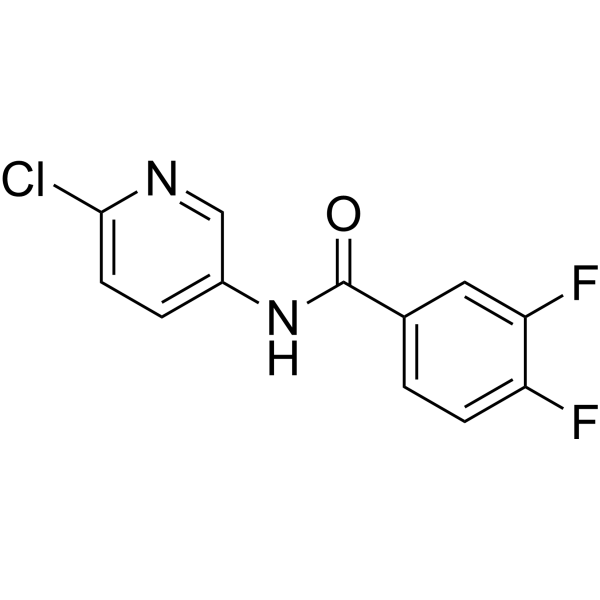
ICA-27243 is a selective, potent and orally active KCNQ2/Q3 potassium channel opener with an EC50 of 0.38 μM. ICA-27243 is less effective at activating KCNQ4 and KCNQ3/Q5. ICA-27243 has antiepileptic and anticonvulsant effects.
For research use only. We do not sell to patients.
- Purity : 98.74%
- CAS No.: 325457-89-4
- Formula: C12H7ClF2N2O
- Molecular Weight:268.65
-
Storage:Powder -20°C, 3 years , 4°C, 2 years ; In solvent -80°C, 2 years , -20°C, 1 year

To place orders, for customer services and technical support, please contact: MedChemExpress USA
Tel: 609-228-6898 E-mail: [email protected] [email protected]


-
 Biological Activity
-
Chemical Information
-
Solvent & Solubility
- Purity & Documentation
- References
-
 Help & FAQs


-
HY-101396
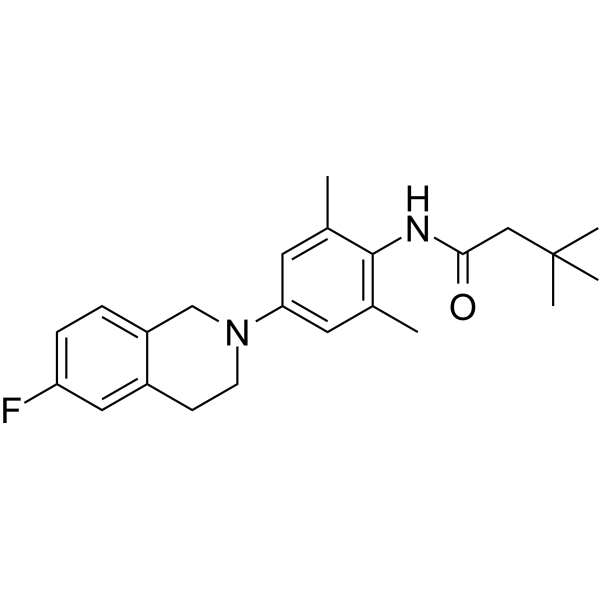
ICA-069673KCNQ2/Q3 Activator -
HY-139791
AzetukalnerKCNQ2/3 Activator -
HY-110192
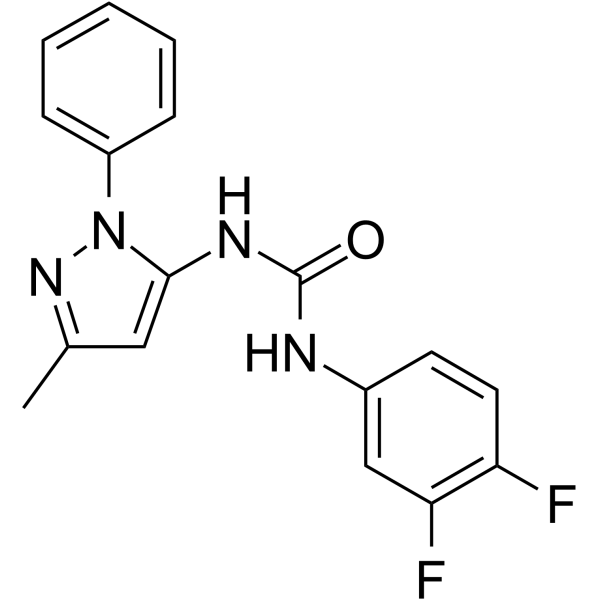
ML 297GIRK1/2 Activator -
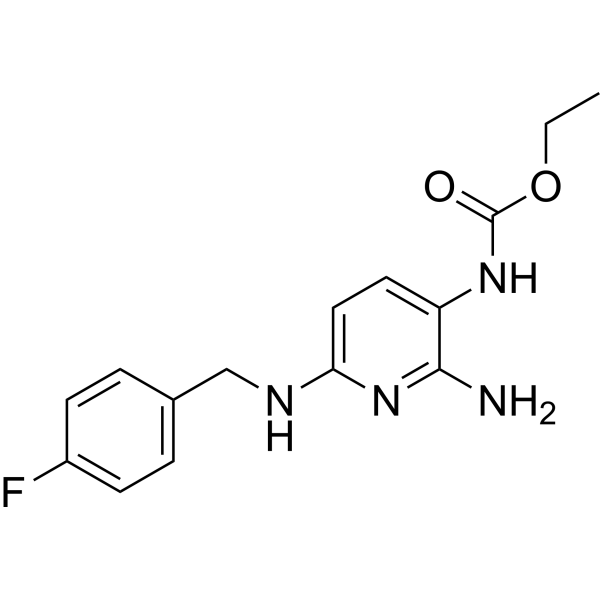
HY-17001A
FlupirtinePotassium Channel Opener -
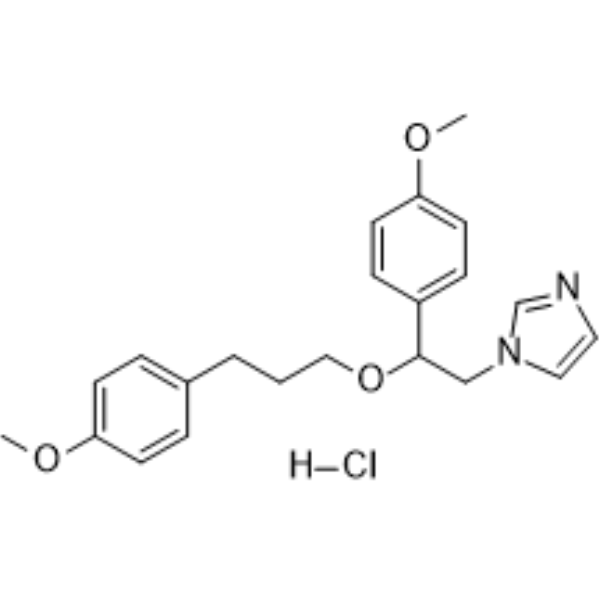
HY-100001
SKF-96365 (hydrochloride)TRPC Channel Antagonist, SOCE Inhibitor -
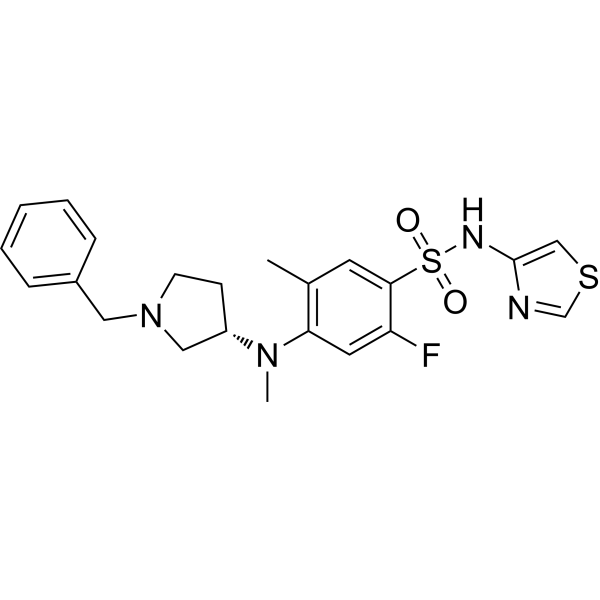
HY-147423
ZandatrigineSCN8A Blocker -
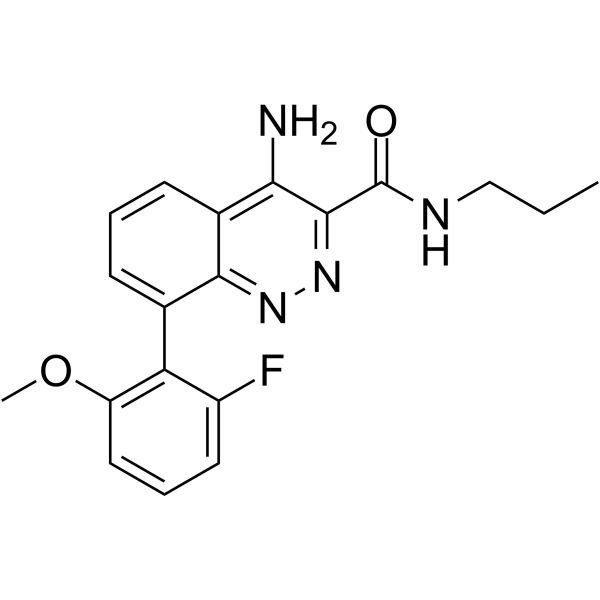
HY-111052
AZD7325GABAA Receptor Modulator -
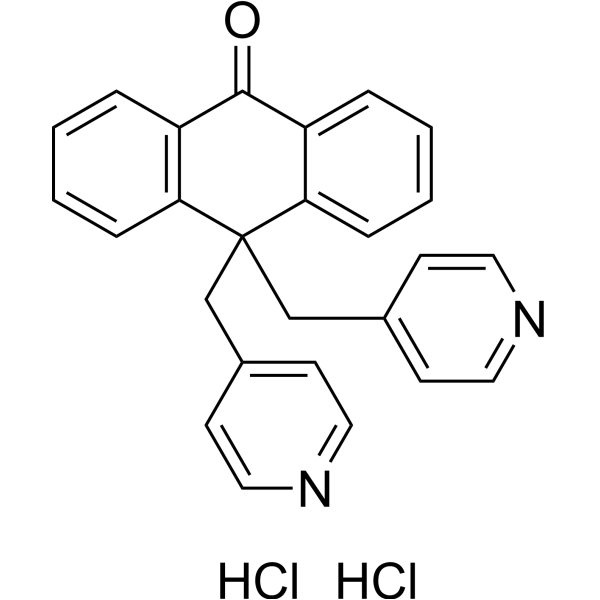
HY-108577
XE991 dihydrochlorideKCNQ Channel Blocker -

HY-121389
HexadecanamideAnti-inflammatory Agent -
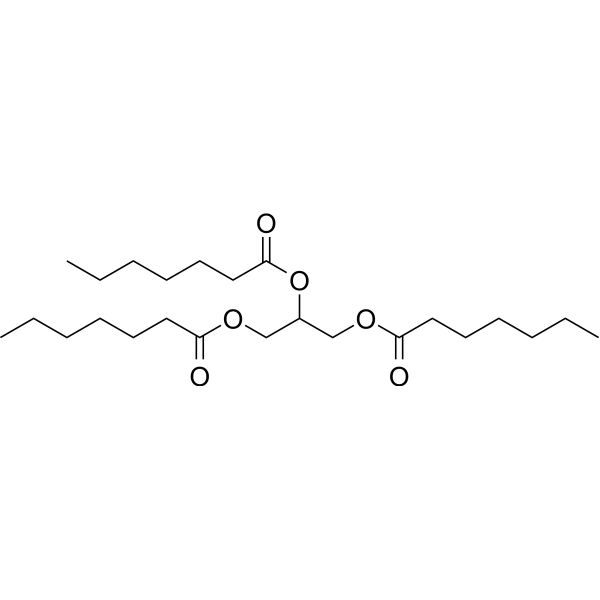
HY-W013136
TriheptanoinNutritional Supplement/Anaplerotic Agent -

HY-Z2493
Aripiprazole N1-oxide -

HY-172004
N-Desmethyl asenapineAsenapine Metabolite
Publications Citing Use of MedChemExpress (MCE) ICA-27243
More

Biological Activity
Description
IC50 & Target
EC50: 0.38 μM (KCNQ2/Q3 potassium channel)[2]
Cellular Effect
|
Cell Line

|
Type | Value | Description | References |
|---|---|---|---|---|
| CHO | EC50 |
0.38 μM
Compound: 12, ICA-027243
|
Agonist activity at KCNQ2/KCNQ3 expressed in CHO cells assessed as increase in KCl-induced 86Rb+ efflux incubated for 10 mins prior to KCl-induction by liquid scintillation counting
Agonist activity at KCNQ2/KCNQ3 expressed in CHO cells assessed as increase in KCl-induced 86Rb+ efflux incubated for 10 mins prior to KCl-induction by liquid scintillation counting
|
[PMID: 24900334] |
| CHO | IC50 |
41 μM
Compound: 12, ICA-027243
|
Antagonist activity at KCNQ1/MINK expressed in CHO cells assessed as inhibition of KCl-induced 86Rb+ efflux incubated for 10 mins prior to KCl-induction by liquid scintillation counting
Antagonist activity at KCNQ1/MINK expressed in CHO cells assessed as inhibition of KCl-induced 86Rb+ efflux incubated for 10 mins prior to KCl-induction by liquid scintillation counting
|
[PMID: 24900334] |
In Vitro
In SH-SY5Y human neuroblastoma cells, ICA-27243 produces membrane potential hyperpolarization that could be prevented by coadministration with the M-current inhibitors XE-991 and Linopirdine. ICA-27243 enhances both 86Rb+ efflux (EC50 = 0.2 μM) and whole-cell currents in Chinese hamster ovary cells stably expressing heteromultimeric KCNQ2/Q3 channels (EC50 = 0.4 μM). Activation of KCNQ2/Q3 channels is associated with a hyperpolarizing shift of the voltage dependence of channel activation (V1/2 shift of -19 mV at 10 μM)[1].
MedChemExpress (MCE) has not independently confirmed the accuracy of these methods. They are for reference only.
In Vivo
MedChemExpress (MCE) has not independently confirmed the accuracy of these methods. They are for reference only.
-
Animal Model:Male CD-1 mice with electroshock assay[1]
-
Dosage:1-100 mg/kg
-
Administration:Oral administration
-
Result:Produced a dose-dependent increase in the latency to hind limb extension, exhibiting an ED50 value of 8.4 mg/kg.


Chemical Information
-
CAS No. 325457-89-4
-
Appearance Solid
-
Molecular Weight 268.65
-
Formula C12H7ClF2N2O
-
Color White to off-white
-
SMILES
O=C(C1=CC=C(C(F)=C1)F)NC2=CC=C(N=C2)Cl
-
Shipping
Room temperature in continental US; may vary elsewhere.
-
Storage
Powder -20°C 3 years 4°C 2 years In solvent -80°C 2 years -20°C 1 year


Publications (2)
-
Journal Impact Factor
-
Most Recent


Solvent & Solubility
In Vitro:
DMSO : 250 mg/mL (930.58 mM; Need ultrasonic; Hygroscopic DMSO has a significant impact on the solubility of product, please use newly opened DMSO)
Please refer to the solubility information to select the appropriate solvent. Once prepared, please aliquot and store the solution to prevent product inactivation from repeated freeze-thaw cycles.
Storage method and period of stock solution: -80°C, 2 years; -20°C, 1 year. When stored at -80°C, please use it within 2 years. When stored at -20°C, please use it within 1 year.
Please refer to the solubility information to select the appropriate solvent. Once prepared, please aliquot and store the solution to prevent product inactivation from repeated freeze-thaw cycles.
Storage method and period of stock solution: -80°C, 2 years; -20°C, 1 year. When stored at -80°C, please use it within 2 years. When stored at -20°C, please use it within 1 year.
Concentration (start) × Volume (start) = Concentration (final) × Volume (final)
In Vivo:
Select the appropriate dissolution method based on your experimental animal and administration route.
- For the following dissolution methods, please ensure to first prepare a clear stock solution using an In Vitro approach and then sequentially add co-solvents:
- To ensure reliable experimental results, the clarified stock solution can be appropriately stored based on storage conditions. As for the working solution for In Vivo experiments, it is recommended to prepare freshly and use it on the same day.
- The percentages shown for the solvents indicate their volumetric ratio in the final prepared solution. If precipitation or phase separation occurs during preparation, heat and/or sonication can be used to aid dissolution.
In Vivo Dissolution Calculator
Please enter the basic information of animal experiments:
-
-
-
-
Recommended: Prepare an additional quantity of animals to account for potential losses during experiments.
Please enter your animal formula composition:
-
%DMSO +
Recommended: Keep the proportion of DMSO in working solution below 2% if your animal is weak.
-
%+
-
+%Tween-80 + +
-
%Saline +
The co-solvents required include: DMSO, . All of co-solvents are available by MedChemExpress (MCE). , Tween 80. All of co-solvents are available by MedChemExpress (MCE).
Working solution concentration: 0.22 mg/mL
Method for preparing stock solution: mg drug dissolved in μL DMSO. Stock solution concentration: mg/mL.
1. Take μL DMSO stock solution;
2. Add μL .
μL , mix evenly;
3. Then add μL Tween 80, mix evenly;
4. Then add μL
Please ensure that the stock solution in the first step is dissolved to a clear state, and add co-solvents in sequence. You can use ultrasonic heating (ultrasonic cleaner, recommended frequency 20-40 kHz), vortexing, etc. to assist dissolution.


Purity & Documentation
-
Data Sheet (274 KB)
-
SDS (396 KB)
- English - EN (396 KB)
- Français - FR (396 KB)
- Deutsch - DE (396 KB)
- Norwegian - NO (396 KB)
- Español - ES (396 KB)
- Swedish - SV (396 KB)
- Italian - IT (396 KB)
- Korean - KR (396 KB)
- Portuguese - PT (396 KB)
-
Handling Instructions (2659 KB)
References
[1]. Wickenden AD, et al. N-(6-chloro-pyridin-3-yl)-3,4-difluoro-benzamide (ICA-27243): a novel, selective KCNQ2/Q3 potassium channel activator. Mol Pharmacol. 2008 Mar;73(3):977-86. [Content Brief]
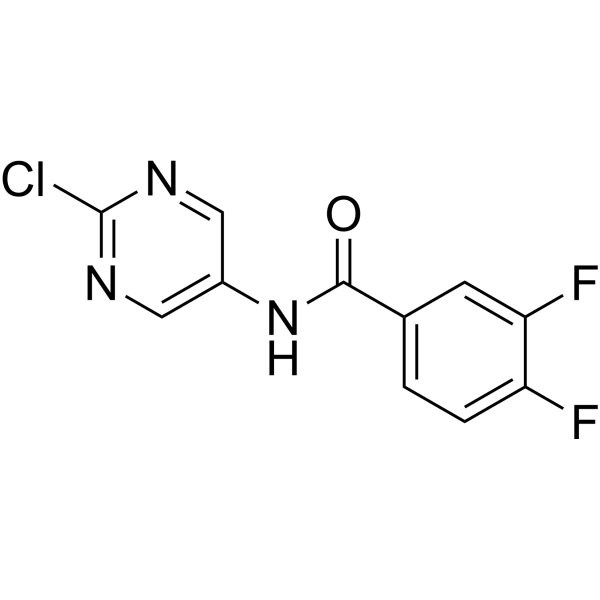
[2]. Amato G, et al. N-Pyridyl and Pyrimidine Benzamides as KCNQ2/Q3 Potassium Channel Openers for the Treatment of Epilepsy. ACS Med Chem Lett. 2011 Mar 31;2(6):481-4. [Content Brief]


Complete Stock Solution Preparation Table
Please refer to the solubility information to select the appropriate solvent. Once prepared, please aliquot and store the solution to prevent product inactivation from repeated freeze-thaw cycles.
Storage method and period of stock solution: -80°C, 2 years; -20°C, 1 year. When stored at -80°C, please use it within 2 years. When stored at -20°C, please use it within 1 year.
| Optional Solvent | Concentration Solvent Mass | 1 mg | 5 mg | 10 mg | 25 mg |
|---|---|---|---|---|---|
| DMSO | 1 mM | 3.7223 mL | 18.6116 mL | 37.2232 mL | 93.0579 mL |
| 5 mM | 0.7445 mL | 3.7223 mL | 7.4446 mL | 18.6116 mL | |
| 10 mM | 0.3722 mL | 1.8612 mL | 3.7223 mL | 9.3058 mL | |
| 15 mM | 0.2482 mL | 1.2408 mL | 2.4815 mL | 6.2039 mL | |
| 20 mM | 0.1861 mL | 0.9306 mL | 1.8612 mL | 4.6529 mL | |
| 25 mM | 0.1489 mL | 0.7445 mL | 1.4889 mL | 3.7223 mL | |
| 30 mM | 0.1241 mL | 0.6204 mL | 1.2408 mL | 3.1019 mL | |
| 40 mM | 0.0931 mL | 0.4653 mL | 0.9306 mL | 2.3264 mL | |
| 50 mM | 0.0744 mL | 0.3722 mL | 0.7445 mL | 1.8612 mL | |
| 60 mM | 0.0620 mL | 0.3102 mL | 0.6204 mL | 1.5510 mL | |
| 80 mM | 0.0465 mL | 0.2326 mL | 0.4653 mL | 1.1632 mL | |
| 100 mM | 0.0372 mL | 0.1861 mL | 0.3722 mL | 0.9306 mL |


ICA-27243 Related Classifications
HY-122114 Related Classifications
 Powered by Bioz