




1. Search Result
Search Result
Results for "

Cell-Surface

" in MedChemExpress (MCE) Product Catalog:

256

Inhibitors & Agonists

4

Screening Libraries

20

Fluorescent Dyes

48

Biochemical Assay Reagents

27

Peptides

46

Inhibitory Antibodies

17

Natural
Products

190

Recombinant Proteins

3

Isotope-Labeled Compounds

101

Antibodies

7

Click Chemistry

47

Oligonucleotides

Cat. No. Product Name Target Research Areas Chemical Structure
  • HY-111496
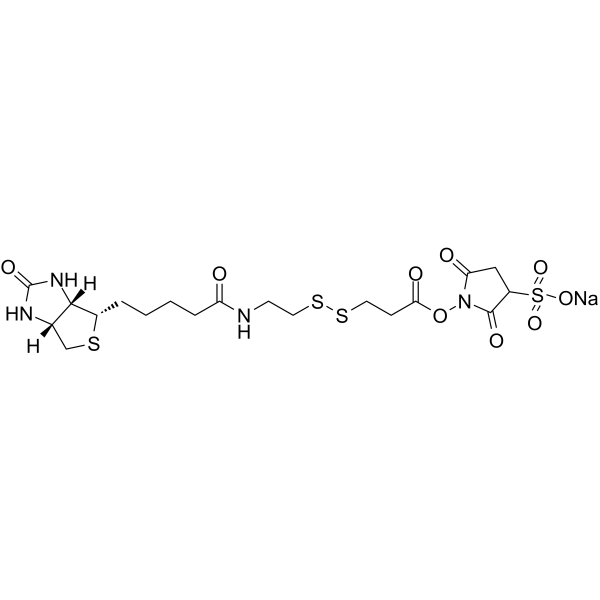
    Sulfo-NHS-SS-Biotin sodium
    4 Publications Verification

    Biochemical Assay Reagents Others
    Sulfo-NHS-SS-biotin sodium is a long-chain cleavable and cell-impermeant amine-reactive biotinylation reagent. Sulfo-NHS-SS-biotin sodium can be used for the labeling and purifying of cell-surface protein .
    Sulfo-NHS-SS-Biotin sodium
  • HY-141598
    Datopotamab deruxtecan (solution)
    2 Publications Verification

    DS-1062 (solution); Dato-DXd (solution)

    TROP2 Antibody-Drug Conjugates (ADCs) Topoisomerase Cancer
    Datopotamab deruxtecan (DS-1062; Dato-DXd) is a trophoblast cell surface antigen 2 (TROP2)-directed antibody-drug conjugate (ADC). Datopotamab deruxtecan has a potent antitumor activity .
    Datopotamab deruxtecan (solution)
  • HY-101916
    Heparan Sulfate
    Maximum Cited Publications
    20 Publications Verification

    FGFR Wnt Endogenous Metabolite Neurological Disease Inflammation/Immunology Cancer
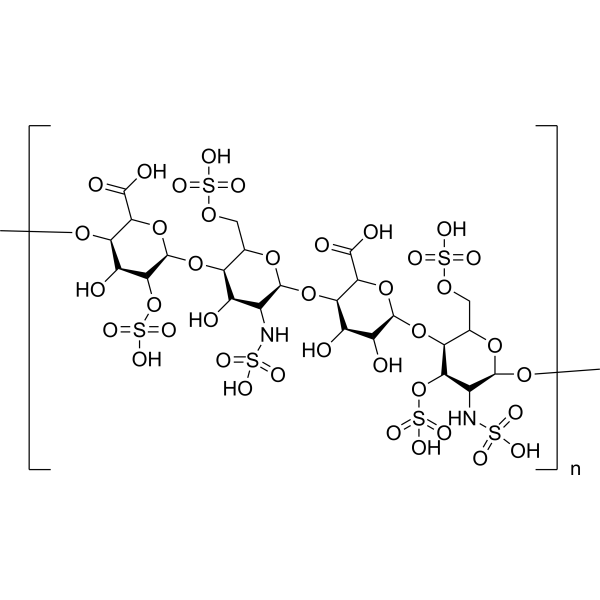
    Heparan sulfate, a complex and linear polysaccharide, exists as part of glycoproteins named heparan sulfate proteoglycans, which are expressed abundantly on the cell surface and in the extracellular matrix.
    Heparan Sulfate
  • HY-P0023
    Cyclo(-RGDfK)
    Maximum Cited Publications
    27 Publications Verification

    Integrin Cancer
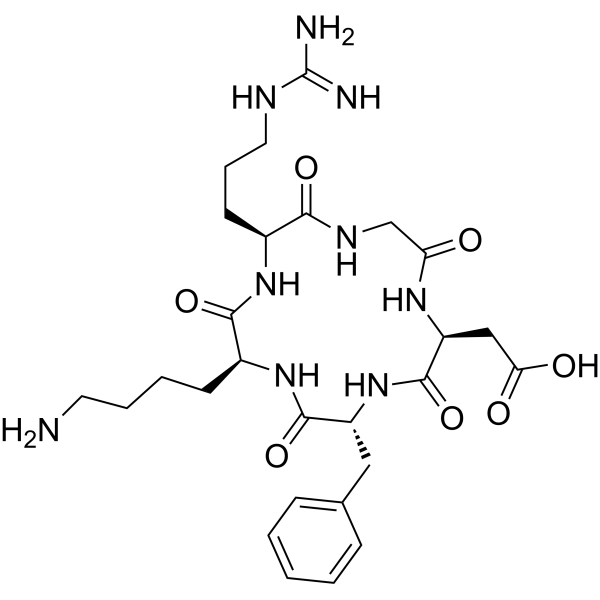
    Cyclo(-RGDfK) is a potent and selective inhibitor of the αvβ3 integrin, with an IC50 of 0.94 nM. Cyclo(-RGDfK) potently targets tumor microvasculature and cancer cells through the specific binding to the αvβ3 integrin on the cell surface .
    Cyclo(-RGDfK)
  • HY-111772
    Elexacaftor
    Maximum Cited Publications
    48 Publications Verification

    VX-445

    CFTR Autophagy Inflammation/Immunology
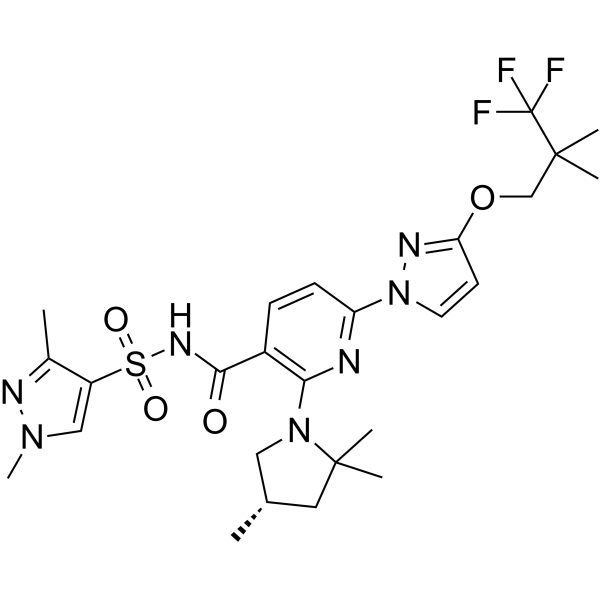
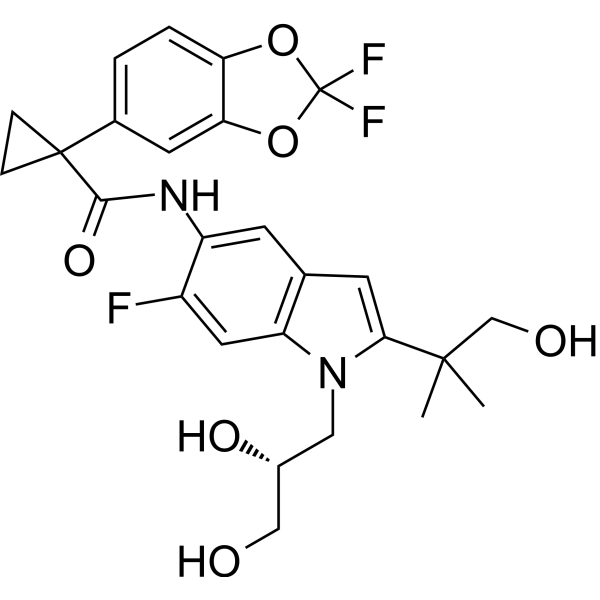
    Elexacaftor (VX-445, Compound 1) is a modulator of cystic fibrosis transmembrane conductance regulator (CFTR). Elexacaftor (VX-445, Compound 1) facilitates the processing and trafficking of CFTR to increase the amount of CFTR at the cell surface .
    Elexacaftor
  • HY-15448
    Tezacaftor
    20+ Cited Publications

    VX-661

    CFTR Cancer
    Tezacaftor (VX-661) is a F508del CFTR corrector. It helps CFTR protein reach the cell surface. However, Ivacaftor (VX-770, HY-13017), a CFTR potentiator, helps to prolong the opening time of cell surface CFTR protein channels. Tezacaftor combining with Ivacaftor, shows potent efficacy against cystic fibrosis and diseases with homozygous for the CFTR Phe508del mutation. Moreover, Elexacaftor (VX-445, HY-111772) is also a CFTR corrector. Elexacaftor-Tezacaftor-Ivacaftor aims at with cystic fibrosis (CF) with at least one Phe508del mutation, often avoids the indication for lung transplantation .
    Tezacaftor
  • HY-P9981
    Tafasitamab
    1 Publications Verification

    XmAb5574; MOR00208; Tafasitamab-cxix; MOR-208

    Apoptosis Inflammation/Immunology Cancer
    Tafasitamab (XmAb5574) is an Fc-modified, humanized monoclonal antibody that binds to the human B-cell surface antigenCD19 .
    Tafasitamab
  • HY-P99023
    Girentuximab
    1 Publications Verification

    G250; cG250

    Carbonic Anhydrase Cancer
    Girentuximab (G250) is a chimeric monoclonal antibody that binds carbonic anhydrase IX (CAIX), a cell surface glycoprotein ubiquitously expressed in clear cell renal cell carcinoma (ccRCC) .
    Girentuximab
  • HY-P99006
    Amatuximab
    3 Publications Verification

    MORab-009

    Mesothelin Cancer
    Amatuximab (MORab-009) is a chimeric, humanized IgG1/k MAb that targets the cell surface mesothelin (MSLN). Mesothelin is a glycosylphosphatidyl inositol (GPI)-anchored membrane glycoprotein, which is present in a restricted set of normal adult tissues such as the mesothelium .
    Amatuximab
  • HY-P0023A
    Cyclo(-RGDfK) TFA
    Maximum Cited Publications
    27 Publications Verification

    Integrin Cancer
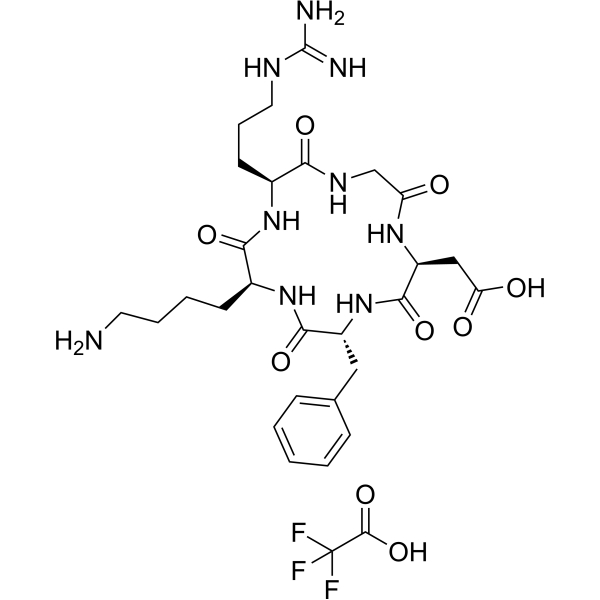
    Cyclo(-RGDfK) TFA is a potent and selective inhibitor of the αvβ3 integrin, with an IC50 of 0.94 nM . Cyclo(-RGDfK) TFA potently targets tumor microvasculature and cancer cells through the specific binding to the αvβ3 integrin on the cell surface .
    Cyclo(-RGDfK) TFA
  • HY-W133898

    Environmental Pollutants Biochemical Assay Reagents Others
    Tryptone is a peptide-rich bacterial culture medium component that can regulate bacterial cell surface proteins and biofilm-related genes. Tryptone promotes the expression and assembly of bacterial adhesion proteins (such as LapA and LapF) by providing peptide substances as structural factors, enhancing cell surface hydrophobicity and intercellular adhesion, thereby stabilizing the biofilm matrix and supporting the maturation and maintenance of bacterial biofilms. The peptide mixture contained in Tryptone can specifically regulate the transcription of bacterial adhesion-related genes (such as activating LapA and inhibiting LapF), affecting the synthesis and localization of biofilm structural proteins .
    Tryptone
  • HY-P99011
    Cibisatamab
    2 Publications Verification

    CD3 Cancer
    Cibisatamab, a T cell bispecific antibody, binds Carcino-Embryonic Antigen (CEA) on cancer cells and CD3 on T cells. Cibisatamab triggers T cell killing of cancer cell lines expressing moderate to high levels of CEA at the cell surface. Cibisatamab can be used for colorectal cancer research .
    Cibisatamab
  • HY-P0251
    Neurotensin(8-13)
    1 Publications Verification

    Neurotensin Receptor Neurological Disease
    Neurotensin (8-13) is an active fragment of Neurotensin. Neurotensin(8-13) results in a decrease in cell-surface NT1 receptors (NTR1) density.
    Neurotensin(8-13)
  • HY-134884
    INCB086550
    2 Publications Verification

    PD-1/PD-L1-IN-8

    PD-1/PD-L1 Cancer
    INCB086550 is a potent, oral, small-molecule PD-L1 inhibitor with IC50s value of 3.1, 4.9 and 1.9 nM for human, cynomolgus, and rat, respectively. INCB086550 promotes the dimerization of cell-surface PD-L1 and induces PD-L1 entry into Golgi vesicles then traffick to the nucleus. INCB086550 can be used for multiple cancers research .
    INCB086550
  • HY-P99829

    PF-06647020; ABBV-647; h6M24-vc0101

    Antibody-Drug Conjugates (ADCs) Microtubule/Tubulin Cancer
    Cofetuzumab pelidotin (PF-06647020) is a PTK7-targeting ADC comprising a humanized anti-PTK7 mAb (hu6M024, IgG1) joined to an auristatin microtubule inhibitor payload, auristatin-0101 (Aur0101; HY-12522), by a cleavable valine-citrulline (vc)-based linker. Cofetuzumab pelidotin has a DAR of 4. Cofetuzumab pelidotin binds to cell-surface PTK7 with an EC50 of 1153 pM by flow cytometry. Cofetuzumab pelidotin has the potential for solid tumors research .
    Cofetuzumab pelidotin
  • HY-E70234
    Sortase A, S. aureus
    1 Publications Verification

    SrtA

    Bacterial Others
    Sortase A, S. aureus (SrtA), a transpeptidase enzyme is present in many Gram-positive bacteria and helps in the recruitment of the cell surface proteins. Sortase A, S. aureus plays an important part in ligation of various molecules on the cell surfaces .
    Sortase A, S. aureus
  • HY-P991728

    TORL-3-600 antibody

    Cadherin ADC Antibody Cancer
    Zarutatug (TORL-3-600 antibody) is an IgG1κ humanized antibody targeting cadherin 17 (CDH17). It selectively binds to cell-surface CDH17, triggering endocytosis and trafficking to lysosomes. Zarutatug can be used to construct ADCs, such as TORL-3-600 .
    Zarutatug
  • HY-16657A

    MMP mAChR Neurological Disease Inflammation/Immunology Cancer
    (S,S)-TAPI-1 is an isomer of TAPI-1. TAPI-1 is a TACE (ADAM17) inhibitor and blocks the shedding of several cell surface proteins. TAPI-1 is also a metalloproteinase (MMP) inhibitor .
    (S,S)-TAPI-1
  • HY-W014605

    Diphencyprone

    Interleukin Related Apoptosis p38 MAPK IRE1 Inflammation/Immunology Cancer
    Diphenylcyclopropenone (Diphencyprone) is a potent hapten acting as a topical immunomodulatory agent, which induces an allergic contact dermatitis. Diphenylcyclopropenone induces an increase of cell-surface thiols in cells of a human monocytic cell line, THP-1. Diphenylcyclopropenone acts on the autoreactive T-lymphocytes within the follicular milieu to induce Apoptosis. Diphenylcyclopropenone can be used for alopecia areata research .
    Diphenylcyclopropenone
  • HY-W332335

    Biochemical Assay Reagents Others
    Sulfosuccinimidyl-6-(biotinamido)hexanoate sodium is a protein crosslinker, and is a biotinylation reagentcan for labeling cell surface proteins .
    Sulfosuccinimidyl-6-(biotinamido)hexanoate sodium
  • HY-P99230

    Integrin CD22 Cancer
    Pinatuzumab is a humanized monoclonal antibody targeting cell-surface antigen CD22. Pinatuzumab can be used to synthesize antibody-drug conjugate (ADC) such as Pinatuzumab vedotin (HY-141602). Pinatuzumab can be studied in research on cancer such as non-Hodgkin lymphoma. Recommend Isotype Controls: Human IgG1 kappa, Isotype Control (HY-P99001) .
    Pinatuzumab
  • HY-171860

    PROTACs HIV Infection Cancer
    FC-14369 is a PROTAC degrader targeting the HIV-1 Nef protein, with a DC50 value of 160 nM. Through its bifunctional structure, FC-14369 binds to Nef and the Cereblon E3 ubiquitin ligase, induces Nef ubiquitination and proteasomal degradation, restores the expression of cell-surface CD4 and MHC-I, and inhibits HIV-1 replication. FC-14369 can be used in research on HIV infection and AIDS. FC-14369 is applicable to studies related to HIV-1 infection .
    FC-14369
  • HY-P3443
    Peanut agglutinin
    1 Publications Verification

    PNA

    Biochemical Assay Reagents Cancer
    Peanut agglutinin (PNA) is a carbohydrate-recognition protein that binds competitively and irreversibly to cell-surface β-D-Gal (1-3)-GalNAc, and this binding can be inhibited by D-galactose and asialofetuin. Peanut agglutinin recognizes exposed glycoepitopes and reflects the glycosylation status of cells. Peanut agglutinin can label glycoconjugates at neuromuscular junctions to safely visualize synaptic structures. Peanut agglutinin can be used to synthesize dyes to distinguish between normal and tumor tissues. Peanut agglutinin provides support for research on leukemia, Burkitt's tumors, and cutaneous squamous lesions .
    Peanut agglutinin
  • HY-P99573

    MGD-013

    LAG-3 Inflammation/Immunology Cancer
    Tebotelimab (MGD-013) is a humanized IgG4κ bispecific PD-1/LAG-3 dual-affinity re-targeting (DART) antibody. Tebotelimab binds cell-surface expressed PD-1 and LAG-3 with EC50s of 1.65 nM and 0.41 nM in NS0 cells, respectively. Tebotelimab blocks PD-1/PD-L1, PD-1/PD-L2 and LAG-3/HLA (MHC-II) interactions and PD-1 signaling. Tebotelimab restores exhausted T-cell responses and and enhances antitumour immunity .
    Tebotelimab
  • HY-122066

    Others Infection
    NSC47924 is a laminin receptor (LR) inhibitor. NSC47924 affects 37/67 kDa LR cell surface localization and interaction with the cellular prion protein. NSC47924 can be used for testing prion diseases .
    NSC47924
  • HY-15448S

    VX-661-d4

    CFTR Autophagy Cancer
    Tezacaftor-d4 (VX-661-d4) is the deuterium-labeled Tezacaftor (HY-15448), a F508del CFTR corrector. Tezacaftor helps CFTR protein reach the cell surface .
    Tezacaftor-d4
  • HY-P990785

    ABBV-383; TNB 383B

    CD3 Cardiovascular Disease Inflammation/Immunology Cancer
    Etentamig is a BCMA × CD3 bispecific T-cell engager (BiTE) that can inhibit the activity of B-cell maturation antigen (BCMA) and activate the T-cell surface glycoprotein CD3 complex. Etentamig can be used for research in multiple myeloma, immunoglobulin light chain amyloidosis, and cardiovascular diseases .
    Etentamig
  • HY-P99454

    ABBV-838

    Antibody-Drug Conjugates (ADCs) Cancer
    Azintuxizumab vedotin (ABBV-838) is an antibody–drug conjugate (ADC) targeting a unique epitope of CD2 subset 1, a cell-surface glycoprotein expressed on multiple myeloma cells .
    Azintuxizumab vedotin
  • HY-NP0190

    UEA I (Biotinylated)

    Fluorescent Dye Others
    Ulex Europaeus Agglutinin I Biotinylated (UEA I Biotinylated) is a biotinylated lectin that binds to α1,2-fucosylated proteins and cell-surface glycoconjugates containing α-L-fucose. Ulex Europaeus Agglutinin I Biotinylated serves as a histochemical marker for endothelial cells .
    Ulex Europaeus Agglutinin I (Biotinylated)
  • HY-158002

    CFTR Inflammation/Immunology
    IDOR-4 is a type IV CFTR corrector. IDOR-4 restores F508del-CFTR trafficking to the cell surface .
    IDOR-4
  • HY-P99795

    GSK 3196165; MOR103

    c-Fms Inflammation/Immunology
    Otilimab (GSK 3196165) is an anti-granulocyte-macrophage colony-stimulating factor (GM-CSF) human monoclonal antibody. Otilimab neutralises the biological function of GM-CSF by blocking the interaction of GM-CSF with its cell surface receptor .
    Otilimab
  • HY-133705
    Geldanamycin-FITC
    1 Publications Verification

    HSP Others
    Geldanamycin-FITC, a Geldanamycin fluorescent probe, can be used in a fluorescence polarization assay for HSP90 inhibitors. Geldanamycin-FITC also can be used for detection of cell surface HSP90 (Ex/Em = 488/515 nm) .
    Geldanamycin-FITC
  • HY-P991611

    iGluR Inflammation/Immunology
    ART5803 is a humanized IgG1 monoclonal antibody inhibitor targeting NMDAR. ART5803 binds to the N-terminal domain (NTD) of the NMDAR GluN1 subunit (GluN1-NTD) with a high affinity. ART5803 blocks NMDAR internalization induced by pathogenic autoantibodies and restores cell-surface NMDAR expression and functions. ART5803 reverses behavioral abnormalities and NMDAR expression in marmoset disease models. ABT-147 can be used to study anti-NMDAR encephalitis .
    ART5803
  • HY-P99109

    GLS-010; AB-122; WBP-3055

    PD-1/PD-L1 Cancer
    Zimberelimab (GLS-010) is a fully human IgG4 anti-PD-1 monoclonal antibody with an EC50 of 210 pM for human PD-1. Zimberelimab effectively blocks the binding of PD-L1 and PD-L2 to cell-surface PD-1 in CHO-S cells, with IC50 values of 580 pM and 670 pM, respectively. Zimberelimab shows antitumor activities, and can be used for various cancers research, including cervical cancer, non-small cell lung cancer and classical Hodgkin’s lymphoma .
    Zimberelimab
  • HY-156209

    Biochemical Assay Reagents Cardiovascular Disease Cancer
    Gb3 (d18:1/16:0) (Compound 1) is the P k antigen of the P blood group system. Gb3 (d18:1/16:0) acts as a cell surface receptor. Gb3 (d18:1/16:0) is used for research on Burkitt's lymphoma, teratocarcinoma, embryonal carcinoma, and Fabry's disease .
    Gb3(d18:1/16:0)
  • HY-E70234A

    Bacterial Infection Inflammation/Immunology
    Sortase A, S. aureus (non-Ca 2+-dependent), a transpeptidase enzyme is present in many Gram-positive bacteria and helps in the recruitment of the cell surface proteins. Sortase A, S. aureus (non-Ca 2+-dependent) plays an important part in ligation of various molecules on the cell surfaces .
    Sortase A, S. aureus (non-Ca<sup>2+</sup>-dependent)
  • HY-124512

    Pentaacetylquercetin

    RSV Infection Inflammation/Immunology
    Quercetin pentaacetate could interact with F-protein with lower binding energy and better stability to block viral adhesion. Quercetin pentaacetate interacts with RSV and inhibit the viral adhesion on cell surface .
    Quercetin pentaacetate
  • HY-110147B

    Furin Infection
    SSM3 tetraTFA hydrate is a potent synthetic furin inhibitor with an EC50 and a Ki of 54 nM and 12 nM, respectively. SSM3 tetraTFA hydrate is able to block furin-dependent cell surface processing of anthrax protective antigen-83 in vitro .
    SSM3 tetraTFA hydrate
  • HY-P99226

    MEDI7734; VIB7734

    SARS-CoV Human leukocyte immunoglobulin (Ig)-like receptors (LILR) Cancer
    Daxdilimab is an anti-ILT7 monoclonal antibody, ILT7 is a cell surface molecule specific to the pDC type of dendritic cells. Daxdilimab can be used in acute lung injury (ALI) in patients with COVID-19 infection research .
    Daxdilimab
  • HY-135279

    CFTR Inflammation/Immunology
    CFTR corrector 4 (Compound 13), an active (R,R)-form enantiomer, is a highly potent and orally active cystic fibrosis transmembrane conductance regulator (CFTR) corrector. CFTR corrector 4 can increase CFTR levels at the cell surface and have the potential for treatment of cystic fibrosis .
    CFTR corrector 4
  • HY-W168754

    MHC Others
    DB28 is a novel MR1 ligand. DB28 decreases cell surface expression of MR1 and competitively inhibits activation of MAIT cells by agonist ligands .
    DB28
  • HY-130588

    GSAO

    Mitochondrial Metabolism Cancer
    Glutathione arsenoxide (GSAO) is a potential anticancer agent and a tumour metabolism inhibitor. Glutathione arsenoxide targets Mitochondrial endomycin nucleotide transferase (ANT). Glutathione arsenoxide causes cell proliferation arrest and cell death. Glutathione arsenoxide can be used to identify cell-surface proteins, such as Protein disulphide isomerase .
    Glutathione arsenoxide
  • HY-130588A

    GSAO TFA

    Mitochondrial Metabolism Cancer
    Glutathione arsenoxide (GSAO) TFA is a potential anticancer agent and a tumour metabolism inhibitor. Glutathione arsenoxide TFA targets Mitochondrial endomycin nucleotide transferase (ANT). Glutathione arsenoxide TFA causes cell proliferation arrest and cell death. Glutathione arsenoxide TFA can be used to identify cell-surface proteins, such as Protein disulphide isomerase .
    Glutathione arsenoxide TFA
  • HY-P991708

    REGN-4336

    PSMA CD3 Cancer
    Olsutamig is a bivalent humanized IgG4κ monoclonal antibody inhibitor targeting FOLH1/PSMA and CD3E. Olsutamig simultaneously binds to PSMA on the tumor cell surface and CD3E on the T cell surface, markedly activating T cells and thereby specifically killing prostate cancer cells .
    Olsutamig
  • HY-P3430

    Biochemical Assay Reagents Cancer
    JM3A is a highly specific peptoid reagent that targets newly appears cell surface vimentin (CSV) on tumor-transformed early lung cancer cells. JM3A can detect and stain CSV by coupling with fluorophores .
    JM3A
  • HY-177892A

    Drug Derivative Biochemical Assay Reagents Others
    UDP-2-alkyne-GlcNAc disodium (Compound 3) is a UDP-GlcNAc (HY-148596) derivative. UDP-2-alkyne-GlcNAc disodium can be used for the remodeling of cell surface glycans .
    UDP-2-alkyne-GlcNAc disodium
  • HY-NP0144

    WGA (Fluorescein)

    Fluorescent Dye Others
    Succinylated Wheat Germ Agglutinin (Fluorescein) (WGA (Fluorescein)) is a fluorescent lectin that acts as a probe to specifically bind biomolecules. Succinylated Wheat Germ Agglutinin (Fluorescein) binds to cell surface glycoconjugates containing N-acetylglucosamine. Succinylated Wheat Germ Agglutinin (Fluorescein) is a selective agglutinating agent targeting specific red blood cells, thymocytes, splenocytes and lymphocytes. Succinylated Wheat Germ Agglutinin (Fluorescein) binds to fibroblasts and lymphocytes via dual binding sites in a temperature-dependent, saturable manner. Succinylated Wheat Germ Agglutinin (Fluorescein) can be used for quantitative studies of cell surface receptor glycoconjugates (Ex=495 nm, Em=515 nm) .
    Succinylated Wheat Germ Agglutinin (Fluorescein)
  • HY-15615A
    Dordaviprone
    5+ Cited Publications

    TIC10; ONC-201

    TNF Receptor Apoptosis Cancer
    Dordaviprone (TIC10) is a potent, orally active, and stable tumor necrosis factor-related apoptosis-inducing ligand (TRAIL) inducer which acts by inhibiting Akt and ERK, consequently activating Foxo3a and significantly inducing cell surface TRAIL. Dordaviprone can cross the blood-brain barrier .
    Dordaviprone
  • HY-171859

    PROTACs HIV Cancer
    FC-14367 is a PROTAC degrader targeting HIV-1 Nef protein. FC-14367 forms a ternary complex by binding Nef and Cereblon E3 ubiquitin ligase, inducing Nef ubiquitination and proteasomal degradation, restoring cell-surface CD4 and MHC-I expression and inhibiting HIV-1 replication. FC-14367 can be used in research on HIV infection and AIDS . (Black: Glycolic acid (HY-W015967); Blue: 2-(2,6-Dioxopiperidin-3-yl)phthalimidine (HY-138793))
    FC-14367
  • HY-172478

    Liposome Cancer
    DSPE-PEG1000-F3 is a PEG compound which composed of DSPE and a nucleolin targeting peptide (F3). F3 peptide can specifically bind to cell surface nucleolin and undergo an effective cell surface to nucleus transport. DSPE-PEG1000-F3 can be used for drug delivery .
    DSPE-PEG1000-F3

Inquiry Online

Your information is safe with us. * Required Fields.

Salutation


Country or Region *

Applicant Name *


Organization Name *

Department *


Email Address *


Product Name *

Cat. No.


Requested quantity *

Phone Number *


Remarks

Inquiry Online

Inquiry Information

Product Name:
Cat. No.:
Quantity:
MCE Japan Authorized Agent:

