



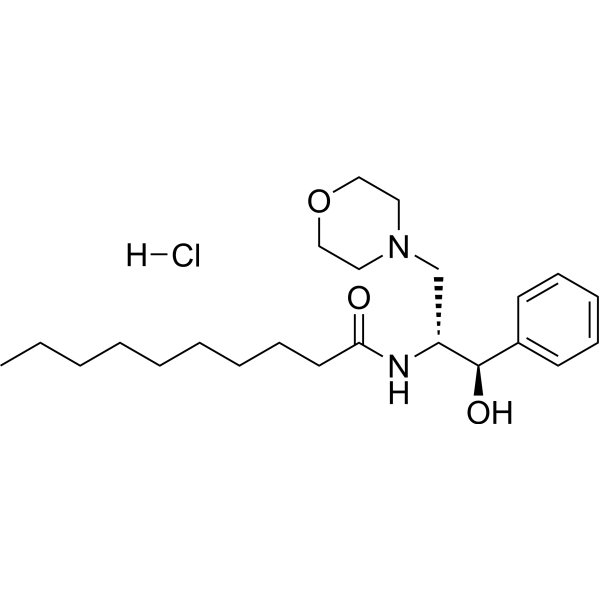
D-threo-PDMP hydrochloride

Based on 1 Customer Validation
D-threo-PDMP hydrochloride is a potent glucoceramide synthase (GCS) inhibitor, which reduces the glycosphingolipids (such as GM3 and GD3) on the cell surface by inhibiting glycosylation, reduces the total length of the axon plexus and the number of axon branch points, and inhibits neurite growth. D-threo-PDMP hydrochloride inhibits the synthesis of GM3, thereby reducing the adhesion ability of B16 melanoma cells and mimicking the pathological effects of hyperglycemia/TGF-β1. D-threo-PDMP hydrochloride inhibits the synthesis of GD3, thereby protecting liver cells from apoptosis induced by TNF-α. D-threo-PDMP hydrochloride can be used to study diseases related to targeted glycosphingolipid metabolism.
For research use only. We do not sell to patients.
- Purity : 98.0%
- CAS No.: 139889-62-6
- Formula: C23H39ClN2O3
- Molecular Weight:427.02
-
Storage:
-20°C, sealed storage, away from moisture
* In solvent : -80°C, 6 months; -20°C, 1 month (sealed storage, away from moisture)

To place orders, for customer services and technical support, please contact: MedChemExpress USA
Tel: 609-228-6898 E-mail: [email protected] [email protected]


-
 Biological Activity
-
Chemical Information
-
Solvent & Solubility
- Purity & Documentation
- References
-
 Help & FAQs


-
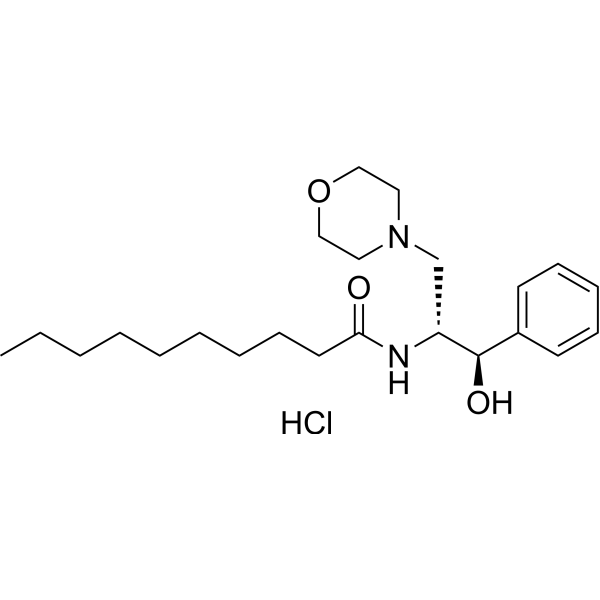
HY-116392B
DL-threo-PDMP hydrochloride -
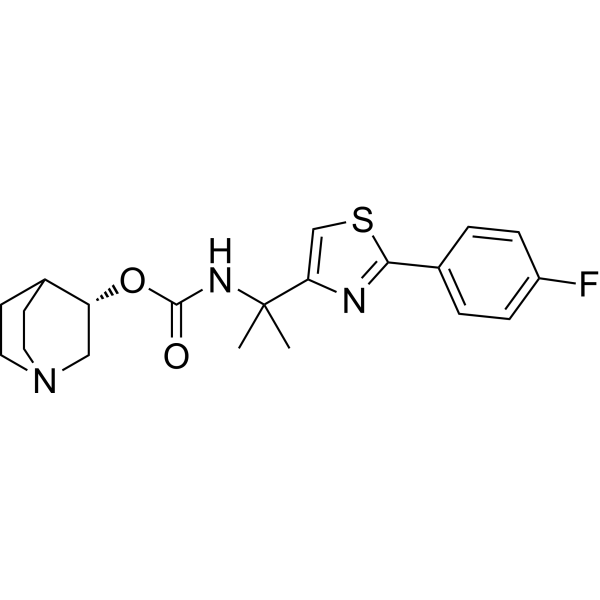
HY-16743
Ibiglustat -
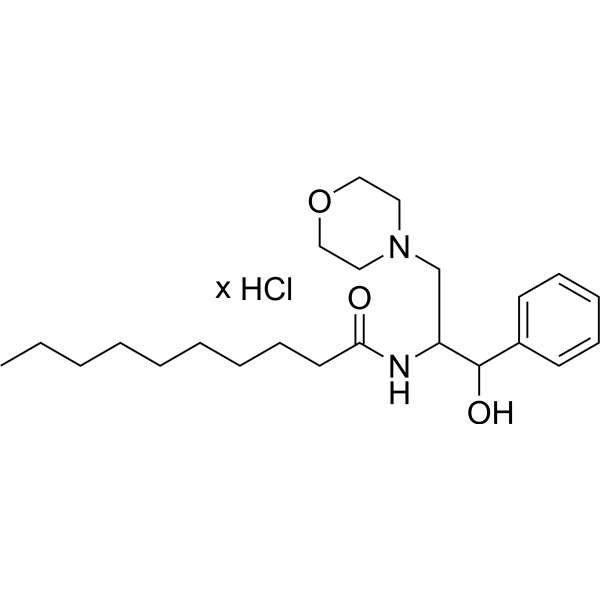
HY-116392D
PDMP hydrochloride -
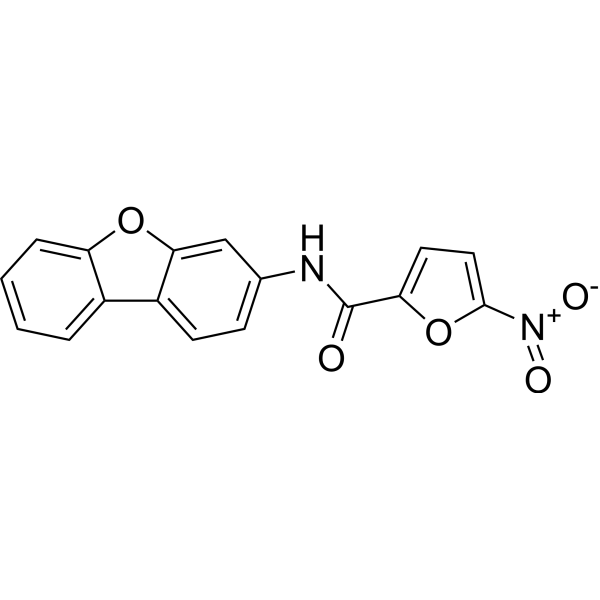
HY-123963
C-178 -
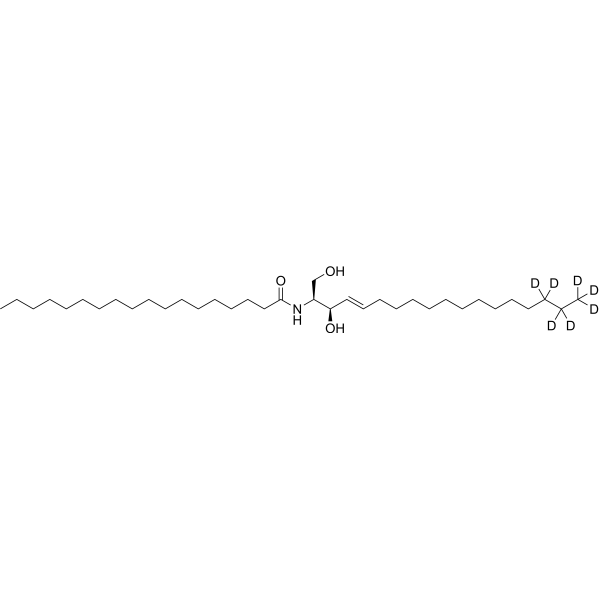
HY-100355S1
C18-Ceramide-d7 -
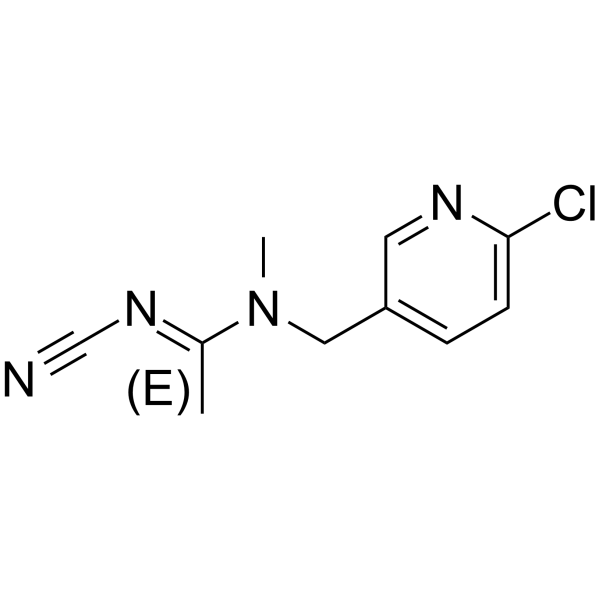
HY-B0823
Acetamiprid -

HY-116535A
DL-threo-PPMP hydrochloride -
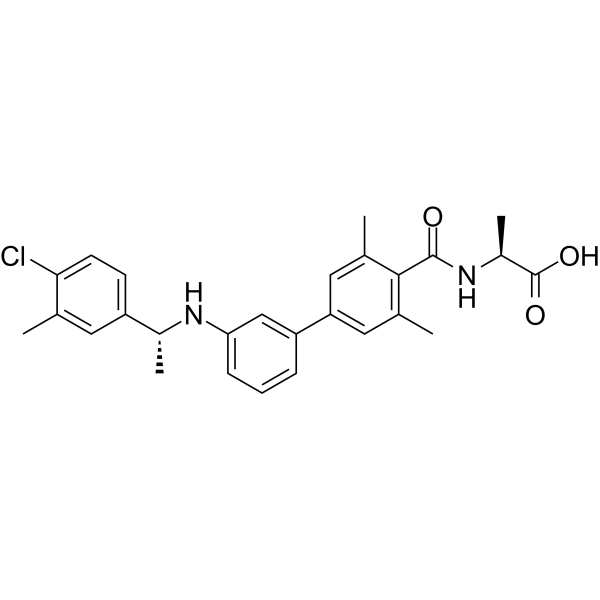
HY-18166
NIBR0213 -
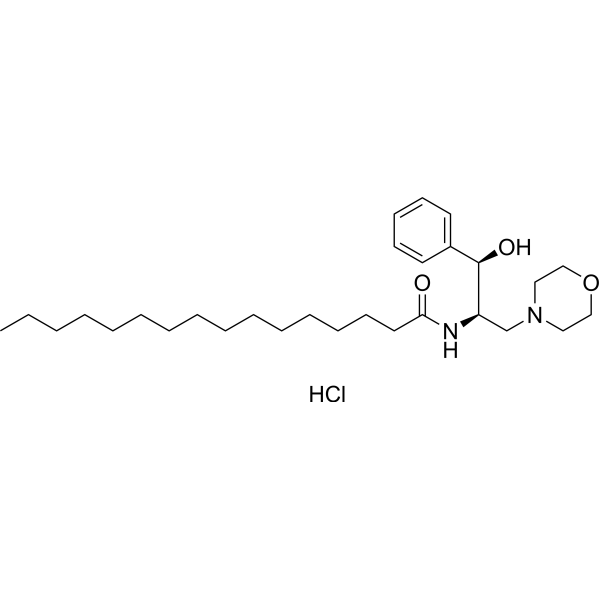
HY-116535
D-threo-PPMP hydrochloride -
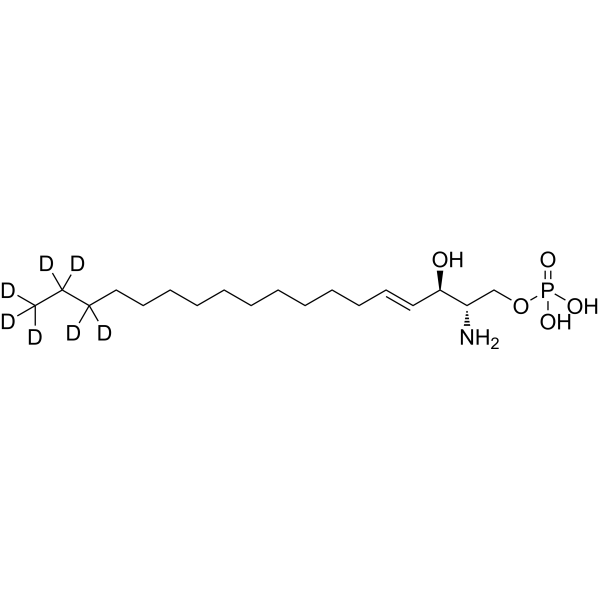
HY-108496S
Sphingosine-1-phosphate-d7 -
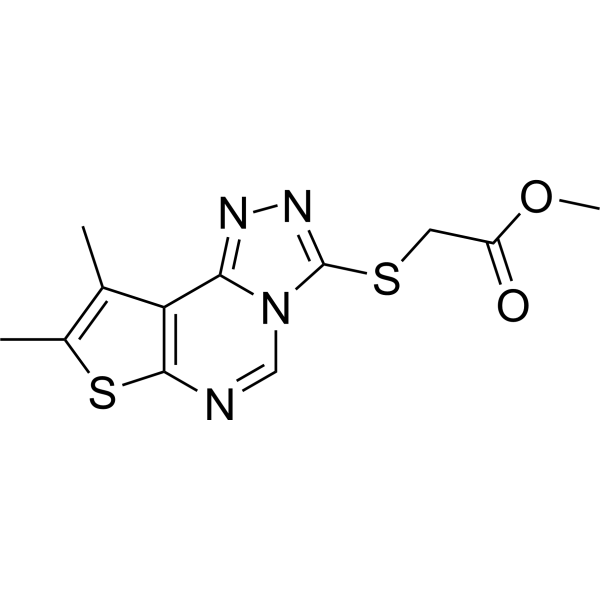
HY-162465
BDW568 -
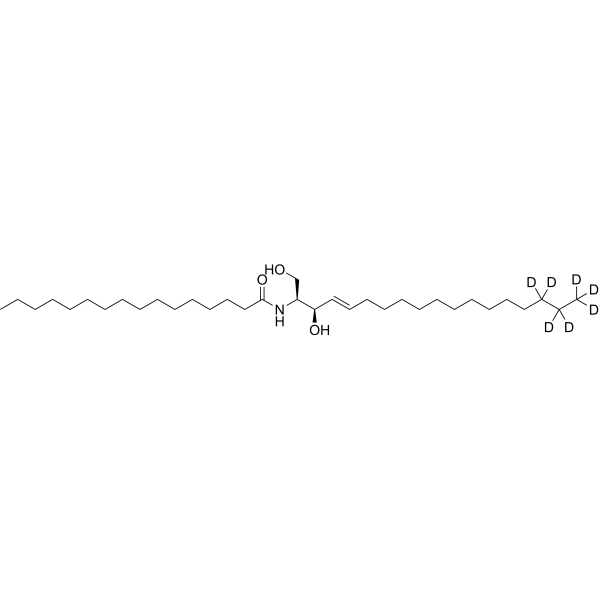
HY-116258S
C16 Ceramide-d7 (d16:1,C16:0)


Biological Activity
Description
In Vitro
D-threo-PDMP (2-14 h) hydrochloride inhibits the synthesis of glycosphingolipids and enhances the accumulation of ceramides, and protects hepatocytes from death induced by TNF-α[1].
D-threo-PDMP (20 μM, 24 h) hydrochloride significantly stimulates the proliferation of tethered glomerular mesangial cells (GMC) and also inhibit the synthesis enzyme of ganglioside, specifically reducing the level of GM3[2].
D-threo-PDMP hydrochloride (5-20 μM, 2 d) dose-dependently inhibits the neurite growth of rat explants[3].
D-threo-PDMP hydrochloride (5-40 μM, 8 d) significantly reduces the frequency of synchronous Ca2+ oscillations in cortical neurons[3].
D-threo-PDMP (10-15 μM, 20 h) hydrochloride inhibits the adhesion of B16 melanoma cells by blocking glycolipid synthesis[4].
MedChemExpress (MCE) has not independently confirmed the accuracy of these methods. They are for reference only.
In Vivo
MedChemExpress (MCE) has not independently confirmed the accuracy of these methods. They are for reference only.
-
Animal Model:The model of anterior brain ischemia induced by the four-vessel occlusion (4-VO) method established in male Wistar rats (200-250 g) [1]
-
Dosage:40 mg/kg
-
Administration:Intraperitoneal injection (i.p.), twice daily for 6 days
-
Result:Increased the memory impairment caused by ischemia in rats.


Chemical Information
-
CAS No. 139889-62-6
-
Appearance Solid
-
Molecular Weight 427.02
-
Formula C23H39ClN2O3
-
Color White to off-white
-
SMILES
CCCCCCCCCC(N[C@H](CN1CCOCC1)[C@H](O)C2=CC=CC=C2)=O.Cl[H]
-
Shipping
Room temperature in continental US; may vary elsewhere.
-
Storage
-20°C, sealed storage, away from moisture
* In solvent : -80°C, 6 months; -20°C, 1 month (sealed storage, away from moisture)


Solvent & Solubility
In Vitro:
Ethanol : 50 mg/mL (117.09 mM; Need ultrasonic)
Please refer to the solubility information to select the appropriate solvent. Once prepared, please aliquot and store the solution to prevent product inactivation from repeated freeze-thaw cycles.
Storage method and period of stock solution: -80°C, 6 months; -20°C, 1 month (sealed storage, away from moisture). When stored at -80°C, please use it within 6 months. When stored at -20°C, please use it within 1 month.
Please refer to the solubility information to select the appropriate solvent. Once prepared, please aliquot and store the solution to prevent product inactivation from repeated freeze-thaw cycles.
Storage method and period of stock solution: -80°C, 6 months; -20°C, 1 month (sealed storage, away from moisture). When stored at -80°C, please use it within 6 months. When stored at -20°C, please use it within 1 month.
Concentration (start) × Volume (start) = Concentration (final) × Volume (final)
In Vivo:
Select the appropriate dissolution method based on your experimental animal and administration route.
- For the following dissolution methods, please ensure to first prepare a clear stock solution using an In Vitro approach and then sequentially add co-solvents:
- To ensure reliable experimental results, the clarified stock solution can be appropriately stored based on storage conditions. As for the working solution for In Vivo experiments, it is recommended to prepare freshly and use it on the same day.
- The percentages shown for the solvents indicate their volumetric ratio in the final prepared solution. If precipitation or phase separation occurs during preparation, heat and/or sonication can be used to aid dissolution.
Add each solvent one by one: 10% EtOH 40% PEG300 5% Tween-80 45% Saline
Solubility: ≥ 1.25 mg/mL (2.93 mM); Clear solution
This protocol yields a clear solution of ≥ 1.25 mg/mL (saturation unknown).
Taking 1 mL working solution as an example, add 100 μL EtOH stock solution (12.5 mg/mL) to 400 μL PEG300, and mix evenly; then add 50 μL Tween-80 and mix evenly; then add 450 μL Saline to adjust the volume to 1 mL.
Preparation of Saline: Dissolve 0.9 g sodium chloride in ddH₂O and dilute to 100 mL to obtain a clear Saline solution.
Add each solvent one by one: 10% EtOH 90% (20% SBE-β-CD in Saline)
Solubility: ≥ 1.25 mg/mL (2.93 mM); Clear solution
This protocol yields a clear solution of ≥ 1.25 mg/mL (saturation unknown).
Taking 1 mL working solution as an example, add 100 μL EtOH stock solution (12.5 mg/mL) to 900 μL 20% SBE-β-CD in Saline, and mix evenly.
Preparation of 20% SBE-β-CD in Saline (4°C, storage for one week): 2 g SBE-β-CD powder is dissolved in 10 mL Saline, completely dissolve until clear.
Add each solvent one by one: 10% EtOH 90% Corn Oil
Solubility: ≥ 1.25 mg/mL (2.93 mM); Clear solution
This protocol yields a clear solution of ≥ 1.25 mg/mL (saturation unknown). If the continuous dosing period exceeds half a month, please choose this protocol carefully.
Taking 1 mL working solution as an example, add 100 μL EtOH stock solution (12.5 mg/mL) to 900 μL Corn oil, and mix evenly.
In Vivo Dissolution Calculator
Please enter the basic information of animal experiments:
-
-
-
-
Recommended: Prepare an additional quantity of animals to account for potential losses during experiments.
Working solution concentration: 0.22 mg/mL


Purity & Documentation
-
Data Sheet (272 KB)
-
SDS (252 KB)
- English - EN (252 KB)
- Français - FR (252 KB)
- Deutsch - DE (252 KB)
- Norwegian - NO (252 KB)
- Español - ES (252 KB)
- Swedish - SV (252 KB)
- Italian - IT (252 KB)
- Korean - KR (252 KB)
- Portuguese - PT (252 KB)
-
Handling Instructions (2659 KB)
References


Complete Stock Solution Preparation Table
Please refer to the solubility information to select the appropriate solvent. Once prepared, please aliquot and store the solution to prevent product inactivation from repeated freeze-thaw cycles.
Storage method and period of stock solution: -80°C, 6 months; -20°C, 1 month (sealed storage, away from moisture). When stored at -80°C, please use it within 6 months. When stored at -20°C, please use it within 1 month.
| Optional Solvent | Concentration Solvent Mass | 1 mg | 5 mg | 10 mg | 25 mg |
|---|---|---|---|---|---|
| Ethanol | 1 mM | 2.3418 mL | 11.7091 mL | 23.4181 mL | 58.5453 mL |
| 5 mM | 0.4684 mL | 2.3418 mL | 4.6836 mL | 11.7091 mL | |
| 10 mM | 0.2342 mL | 1.1709 mL | 2.3418 mL | 5.8545 mL | |
| 15 mM | 0.1561 mL | 0.7806 mL | 1.5612 mL | 3.9030 mL | |
| 20 mM | 0.1171 mL | 0.5855 mL | 1.1709 mL | 2.9273 mL | |
| 25 mM | 0.0937 mL | 0.4684 mL | 0.9367 mL | 2.3418 mL | |
| 30 mM | 0.0781 mL | 0.3903 mL | 0.7806 mL | 1.9515 mL | |
| 40 mM | 0.0585 mL | 0.2927 mL | 0.5855 mL | 1.4636 mL | |
| 50 mM | 0.0468 mL | 0.2342 mL | 0.4684 mL | 1.1709 mL | |
| 60 mM | 0.0390 mL | 0.1952 mL | 0.3903 mL | 0.9758 mL | |
| 80 mM | 0.0293 mL | 0.1464 mL | 0.2927 mL | 0.7318 mL | |
| 100 mM | 0.0234 mL | 0.1171 mL | 0.2342 mL | 0.5855 mL |


D-threo-PDMP hydrochloride Related Classifications
HY-116392F Related Classifications
 Powered by Bioz