1. Search Result
Search Result
Results for "

26b pde Inhibitors

" in MedChemExpress (MCE) Product Catalog:

783

Inhibitors & Agonists

2

Screening Libraries

2

Fluorescent Dyes

5

Biochemical Assay Reagents

59

Natural
Products

12

Recombinant Proteins

51

Isotope-Labeled Compounds

20

Antibodies

81

Oligonucleotides

2

GMP Molecules

Cat. No. Product Name Target Research Areas Chemical Structure
  • HY-D1056A3

    LPS, from Escherichia coli (O26:B6)

    Toll-like Receptor (TLR) Inflammation/Immunology
    Lipopolysaccharides, from E. coli (Escherichia coli) O26:B6 are lipopolysaccharide endotoxins and TLR-4 activators derived from E. coli, classified as S-type LPS, which can activate pathogen-associated molecular patterns (PAMP) of the immune system and induce cellular secretion of migrasomes. Lipopolysaccharides, from E. coli O26:B6 exhibit a typical three-part structure: O-antigen, core oligosaccharide, and lipid A, and can be recognized by the core-specific monoclonal antibody MAb J8-4C10. Lipopolysaccharides, from E. coli O26:B6 can promote an increase in pro-inflammatory cytokines in plasma, thereby triggering hypothalamic-pituitary-adrenal (HPA) activation and leading to adrenal oxidative damage. The pathogenic effects of Lipopolysaccharides, from E. coli O26:B6 can be used to construct various models, such as cellular inflammation models, sepsis, acute lung injury models, adrenal dysfunction models, and bladder infection models, etc .
    It is recommended to prepare a solution with concentration ≥2 mg/mL. Vortex thoroughly for more than 10 minutes. Due to the adsorption characteristics of LPS, silanized container or low adsorption centrifuge tubes should be used for aliquoting and storage, and mix thoroughly before use.
    Lipopolysaccharides, from E. coli O26:B6
  • HY-115687

    Phosphodiesterase (PDE) Inflammation/Immunology
    PDE4B-IN-2 is an orally active and selective PDE4B inhibitor with an IC50 of 15 nM. PDE4B-IN-2 inhibits PDE4D (IC50=1.7 μM). PDE4B-IN-2 exhibits potent anti-inflammatory effects .
    PDE4B-IN-2
  • HY-163285

    Phosphodiesterase (PDE) Metabolic Disease
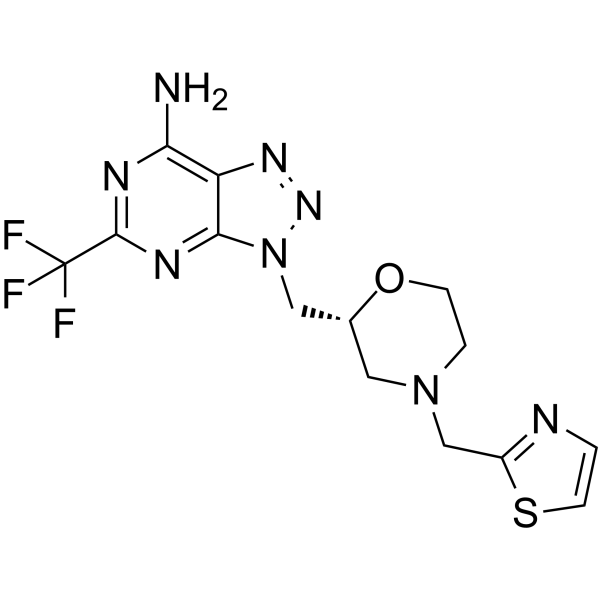
    PDE3B-IN-1 is a potent selective PDE3B inhibitor that demonstrates PDE3B inhibitory activity (pIC50 = 6.5) and >300-fold PDE3B/A selectivity .
    PDE3B-IN-1
  • HY-100326

    Phosphodiesterase (PDE) Neurological Disease Inflammation/Immunology
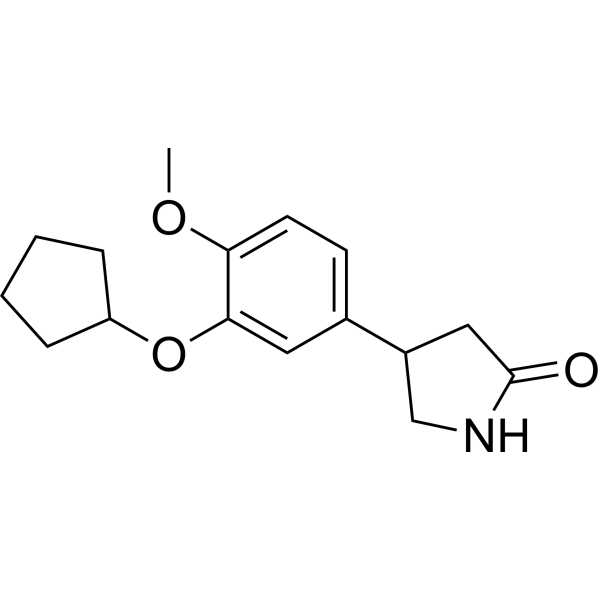
    Pde7-in-3 (example 2) is an inhibitor of the phosphodiesterase PDE7 with potential analgesic activity. PDE7-IN-3 can be used to study inflammatory, neuropathic, visceral and nociceptive pain .
    PDE7-IN-3
  • HY-117318

    Phosphodiesterase (PDE) Infection
    PDE12-IN-1 is a potent and selective PDE12 inhibitor with a pIC50 value for enzyme inhibition of 9.1. PDE12-IN-1 increases 2′,5′-linked adenylate polymers (2-5A) levels, and the pEC50 value is 7.7. PDE12-IN-1 shows antiviral activity .
    PDE12-IN-1
  • HY-W011336

    Phosphodiesterase (PDE) Others
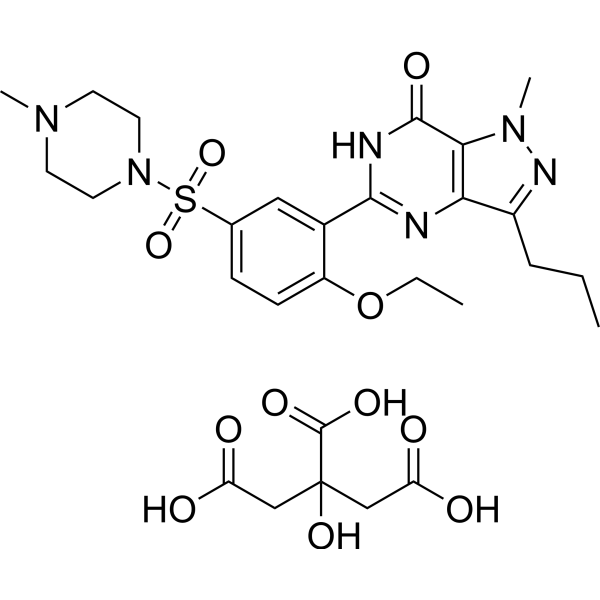
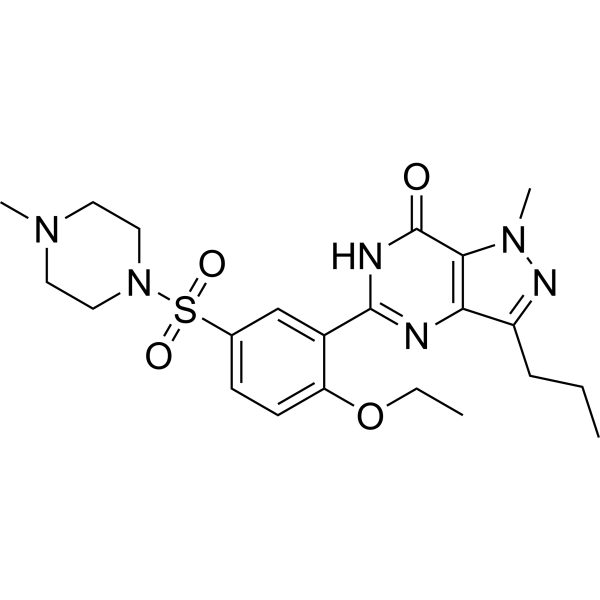
    PDE5-IN-7 (compound 8) is a selective phosphodiesterase 5 (PDE 5) inhibitor with an IC50 value of 5 nM, while an IC50 of 300 nM for PDE 1 .
    PDE5-IN-7
  • HY-124768

    Phosphodiesterase (PDE) Infection Inflammation/Immunology
    PDE12-IN-3 is a phosphodiesterase 12 (PDE12) inhibitor with a pXC50 of 7.68. Antiviral activity .
    PDE12-IN-3
  • HY-R00497

    MicroRNA Cancer
    hsa-miR-26b-5p mimics are small, chemically synthesized double-stranded RNAs that mimic endogenous miRNAs and enable miRNA functional analysis by up-regulation of miRNA activity.
    hsa-miR-26b-5p mimic
    hsa-miR-26b-5p mimic
  • HY-RI00497

    MicroRNA Cancer
    hsa-miR-26b-5p inhibitors are chemically-modified oligonucleotides that hybridize with mature miRNAs. The miRNA inhibitors have full-length nucleotide 2'-methoxy modification. The miRNA inhibitors strongly compete with mature miRNAs to prevent the complementary pairing of miRNAs and their target genes, thereby inhibiting miRNAs from functioning.
    hsa-miR-26b-5p inhibitor
    hsa-miR-26b-5p inhibitor
  • HY-170788

    Phosphodiesterase (PDE) Metabolic Disease
    PDE7A-IN-1 is an orally active and selective PDE7A inhibitor with an IC50 of 0.0037 μM against PDE7A. PDE7A-IN-1 shows excellent isozyme selectivity over PDE7B. PDE7A-IN-1 elevates intracellular cAMP levels, suppresses ECR5 enhancer activity and reduces sclerostin expression. PDE7A-IN-1 significantly increases bone mineral density in rats. PDE7A-IN-1 can be used for the study of osteoporosis .
    PDE7A-IN-1
  • HY-112555

    Phosphodiesterase (PDE) Neurological Disease
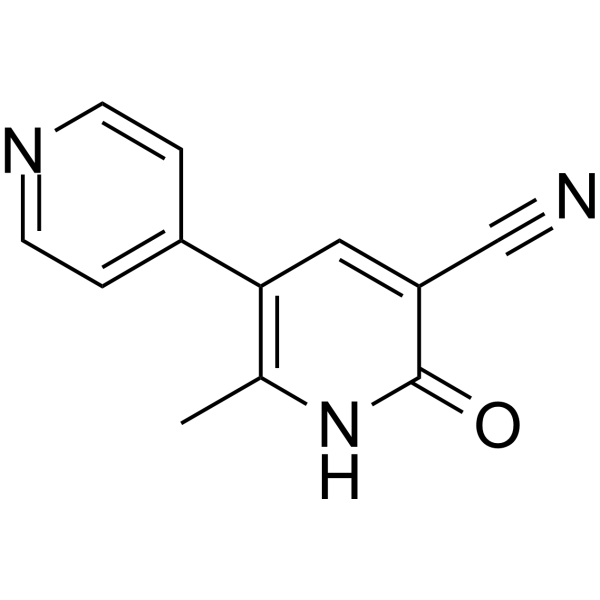
    PDE7-IN-2 (compound 2) is a potent PDE7 (phosphodiesterase 7) inhibitor with IC50 value of 2.1 µM. PDE7-IN-2 has the potential for the research of parkinson’s disease .
    PDE7-IN-2
  • HY-101490

    Phosphodiesterase (PDE) Neurological Disease
    PDE1-IN-2 is a PDE1 inhibitor extracted from patent WO2016/55618 A1, example 31. PDE1-IN-2 has IC50 values of 6 nM, 140 nM and 164 nM for PDE1C, PDE1B and PDE1A, respectvely. PDE1-IN-2 is developed for the research of neurodegenerative disorders and psychiatric disorders .
    PDE1-IN-2
  • HY-169981

    Phosphodiesterase (PDE) Inflammation/Immunology
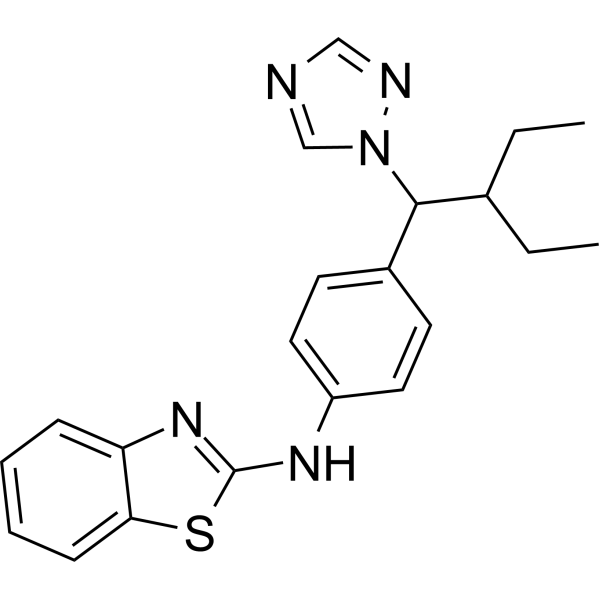
    PDE4-IN-24 (compoud 14h) is a potent inhibitor of PDE4D with the IC50 of 0.57 nM and >4100-fold selectivity over other PDE families. PDE4-IN-24 plays an important role in inflammatory disease .
    PDE4-IN-24
  • HY-169402A

    Phosphodiesterase (PDE) NO Synthase Reactive Oxygen Species (ROS) Interleukin Related Inflammation/Immunology
    PDE1-IN-9 (Compound 7a) hydrochloride is a selective inhibitor for phosphodiesterase 1 (PDE1), that inhibits PDE1C with an IC50 of 11 nM. PDE1-IN-9 hydrochloride reduces mRNA expression of IL-1β, IL-6, TNF-α and iNOS, inhibits the production of nitric oxide (NO) and reactive oxygen species (ROS). PDE1-IN-9 hydrochloride exhibits good metabolic stability in rat liver microsomes .
    PDE1-IN-9 hydrochloride
  • HY-114727

    Phosphodiesterase (PDE) Inflammation/Immunology
    PDE7-IN-4 is a phosphodiesterase 7 (PDE7) inhibitor with activity that increases intracellular cyclic adenosine monophosphate (cAMP) levels. PDE7-IN-4 shows potential inhibitory effects in neurotransmission and anti-inflammatory applications. PDE7-IN-4 exerts its biological activity by acting on the cAMP/cAMP response element binding protein (CREB) pathway. The development of PDE7-IN-4 aims to improve its pharmacokinetic characteristics to more effectively target neurodegenerative diseases and other inflammation-related diseases .
    PDE7-IN-4
  • HY-174383

    Phosphodiesterase (PDE) Inflammation/Immunology
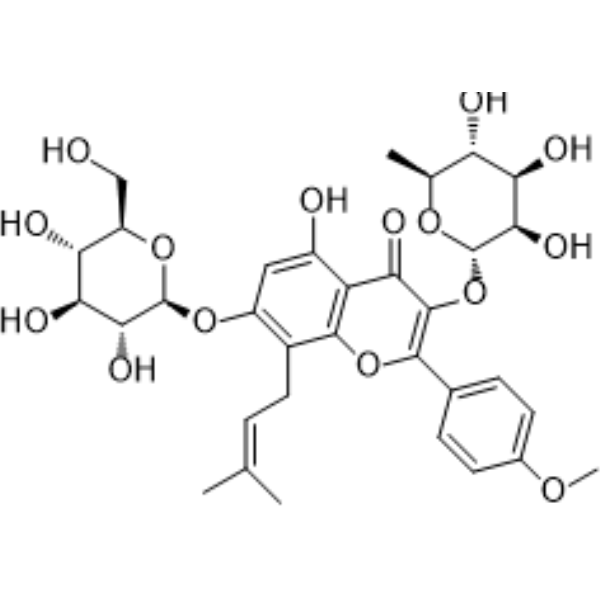
    PDE3/4-IN-2 is a dual PDE3A and PDE4B1 inhibitor, with an IC50 of 0.13 nM against PDE3A and 50 nM against PDE4B1. PDE3/4-IN-2 exhibits higher systemic exposure and longer retention time in lung tissues in ICR mice. PDE3/4-IN-2 can be used in research on respiratory diseases such as asthma and chronic obstructive pulmonary disease, as well as autoimmune inflammation-related studies .
    PDE3/4-IN-2
  • HY-RI00497A

    MicroRNA Cancer
    hsa-miR-26b-5p antagomirs are chemically-modified oligonucleotides that hybridize with mature miRNAs. The miRNA antagomirs have 2 phosphorothioates at the 5' end, 4 phosphorothioates at the 3' end, 1 cholesterol group at the 3' end, and full-length nucleotide 2'-methoxy modification. The miRNA antagomirs strongly compete with mature miRNAs to prevent the complementary pairing of miRNAs and their target genes, thereby inhibiting miRNAs from functioning. Stability of miRNA antagomirs appears to be significantly higher than miRNA inhibitors, they exhibits enhanced cellular uptake, stability and regulatory activity in vivo.
    hsa-miR-26b-5p antagomir
    hsa-miR-26b-5p antagomir
  • HY-151174

    Phosphodiesterase (PDE) Inflammation/Immunology
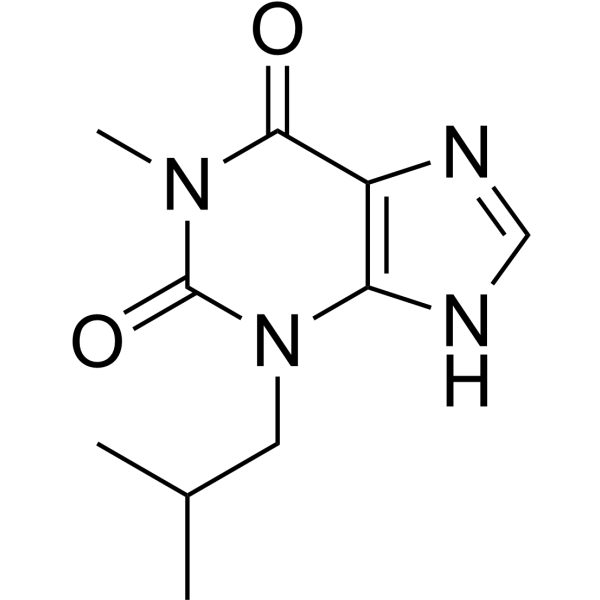
    PDE4-IN-12 is a potent pan-PDE4 inhibitor, with IC50s of 3.5 and 15 nM for PDE4 and PDE7, respectively (SI=2.71 and 4.27, respectively). PDE4-IN-12 shows well tolerated, can be used in study of inflammatory bowel diseases (IBDs) .
    PDE4-IN-12
  • HY-12813

    Phosphodiesterase (PDE) Neurological Disease
    PDE10-IN-1 is a potent PDE10-IN-1 inhibitor extracted from Patent WO 2013192273 A1, for treating CNS and metabolic disorders.
    PDE10-IN-1
  • HY-173477

    Apoptosis Cancer
    JR5-26B is an orally active apoptosis inducer. JR5-26B induces cell death through copper-mediated apoptosis and necroptosis. JR5-26B exhibits antiproliferative activity on MIA PaCa-2, PANC-1, PAN02, SU.86.86, and KPC-2 cells with IC50s of 0.6, 4.4, 8.0, 1.1, and 3.4μM, respectively .
    JR5-26B
  • HY-E71311

    Biochemical Assay Reagents Others
    β-Mannanase 26B, Clostridium cellulovorans (EC 3.2.1.78) is an enzyme with system name 4-beta-D-mannan mannanohydrolase. This enzyme catalyses the following chemical reaction: Random hydrolysis of (1->4)-beta-D-mannosidic linkages in mannans, galactomannans and glucomannans.
    β-Mannanase 26B, Clostridium cellulovorans
  • HY-R00496

    MicroRNA Cancer
    hsa-miR-26b-3p mimics are small, chemically synthesized double-stranded RNAs that mimic endogenous miRNAs and enable miRNA functional analysis by up-regulation of miRNA activity.
    hsa-miR-26b-3p mimic
    hsa-miR-26b-3p mimic
  • HY-179337

    Phosphodiesterase (PDE) PKA Neurological Disease
    PDE2-IN-1 is a potent and orally active PDE2 inhibitor with an IC50 of 0.6 μM, demonstrating neuroprotective effects. PDE2-IN-1 modulates the PKA/CREB/BDNF signaling pathway by inhibiting PDE2. PDE2-IN-1 improves memory deficits and cognitive impairment in an okadai acid (OKA)-induced Alzheimer’s disease (AD) mouse model. PDE2-IN-1 can be used for the research of AD .
    PDE2-IN-1
  • HY-131710

    Phosphodiesterase (PDE) EGFR Wnt Apoptosis Cancer
    PDE5-IN-3 (compound 11j) is a potent PDE5 inhibitor with an IC50 of 1.57 nM. PDE5-IN-3 shows moderate EGFR inhibition with IC50 of 5.827 µM. PDE5-IN-3 significantly inhibits the Wnt/β-catenin pathway (IC50=1286.96 ng/mL). PDE5-IN-3 induces the intrinsic apoptotic mitochondrial pathway in HepG2 cells. PDE5-IN-3 has strong antitumor activity .
    PDE5-IN-3
  • HY-112704

    Phosphodiesterase (PDE) Cardiovascular Disease
    PDE5-IN-2 is a potent, highly selective, and orally active PDE5 inhibitor, with an IC50 of 0.31 nM, less potently inhibits PDE2A, PDE10A, PDE4D2, and PDE6C, with IC50s of 106, 46, 43, 1.2 nM, respectively. Anti-pulmonary arterial hypertension activity .
    PDE5-IN-2
  • HY-50865

    Phosphodiesterase (PDE) Neurological Disease
    PDE-9 inhibitor is useful for neurodegenerative diseases.
    PDE-9 inhibitor
  • HY-156434

    Phosphodiesterase (PDE) Neurological Disease
    PDE11A4-IN-1 (compound 23b) is a potent and selective PDE11A4 inhibitor with an IC50 of 12 nM. PDE11A4-IN-1 show high selectivity for PDE11A4 over PDE1, PDE2, PDE7, PDE8, and PDE9 .
    PDE11A4-IN-1
  • HY-176524S

    Phosphodiesterase (PDE) Inflammation/Immunology
    PDE3/4-IN-3 (Compound 7) is an orally active dual PDE3/4 inhibitor with IC50 s of 0.17 and ≤50 nM for PDE3A and PDE4B2, respectively. PDE3/4-IN-3 significantly inhibits methacholine-induced bronchoconstriction in guinea pigs. PDE3/4-IN-3 can be used for chronic obstructive pulmonary disease (COPD) and asthma research .
    PDE3/4-IN-3
  • HY-179504

    Phosphodiesterase (PDE) TNF Receptor Inflammation/Immunology
    PDE4B-IN-6 (compound 4i) is a potent and selective PDE4B inhibitor with an IC50 of 7.42 nM. PDE4B-IN-6 shows ~195- and ~169-fold selectivity for PDE4B over PDE4A (IC50 = 1540 nM) and PDE4C (IC50 = 1260 nM), respectively. PDE4B-IN-6 increases cAMP level and suppresses TNF-α expression. PDE4B-IN-6 shows favorable antioxidant profiles and low cytotoxicity. PDE4B-IN-6 can be used for chronic obstructive pulmonary disease (COPD) research .
    PDE4B-IN-6
  • HY-176234

    Phosphodiesterase (PDE) TNF Receptor NO Synthase Bacterial Infection Neurological Disease Inflammation/Immunology
    PDE4-IN-28 (Compound G1) is a PDE4D inhibitor (IC50: 29 nM). PDE4-IN-28 inhibits the production of TNF-α and NO (IC50: 13.32 and 2.32 μM, respectively). PDE4-IN-28 exhibits anti-inflammatory, antibacterial and analgesic effects in a rat pressure ulcer (PU) model and promotes HUVEC cell migration, thereby accelerating wound healing .
    PDE4-IN-28
  • HY-RI02857A

    MicroRNA Cancer
    mmu-miR-26b-3p antagomirs are chemically-modified oligonucleotides that hybridize with mature miRNAs. The miRNA antagomirs have 2 phosphorothioates at the 5' end, 4 phosphorothioates at the 3' end, 1 cholesterol group at the 3' end, and full-length nucleotide 2'-methoxy modification. The miRNA antagomirs strongly compete with mature miRNAs to prevent the complementary pairing of miRNAs and their target genes, thereby inhibiting miRNAs from functioning. Stability of miRNA antagomirs appears to be significantly higher than miRNA inhibitors, they exhibits enhanced cellular uptake, stability and regulatory activity in vivo.
    mmu-miR-26b-3p antagomir
    mmu-miR-26b-3p antagomir
  • HY-170956

    Drug Intermediate Inflammation/Immunology
    BTN3A1 ligand-1 (Compound 26b) is a triazole-containing aryl/acyloxyalkyl phosphonate prodrug. BTN3A1 ligand-1 can stimulate T cell proliferation (EC50 : 0.49 nM) and interferon γ secretion. BTN3A1 ligand-1 has certain plasma stability and can be used in related immunotherapy research .
    BTN3A1 ligand-1
  • HY-W171611

    Phosphodiesterase (PDE) Neurological Disease
    PDE-IN-3 (compound 23) is a phosphodiesterase (PDE) inhibitor with an IC50 of 260 μM .
    PDE-IN-3
  • HY-149661

    Phosphodiesterase (PDE) Cardiovascular Disease
    PDE5-IN-11 is a potent inhibitor of PDE5 with an IC50 of 40 nM. PDE5-IN-11 also inhibits PDE4 and PDE6 with IC50s of 1.78 and 0.09 μM, respectively .
    PDE5-IN-11
  • HY-R02857

    MicroRNA Cancer
    mmu-miR-26b-3p mimics are small, chemically synthesized double-stranded RNAs that mimic endogenous miRNAs and enable miRNA functional analysis by up-regulation of miRNA activity.
    mmu-miR-26b-3p mimic
    mmu-miR-26b-3p mimic
  • HY-162583

    Phosphodiesterase (PDE) Inflammation/Immunology
    PDE4-IN-17 (compound 4e) is a potent PDE4 inhibitor. PDE4-IN-17 inhibits PDE4B and PDE4D with IC50s of 10.0 and 15.2 nM, respectively. PDE4-IN-17 has good oral bioavailability (F=66%) and longer half-life (t1/2=2.0 h) in SD rats .
    PDE4-IN-17
  • HY-RI02857

    MicroRNA Cancer
    mmu-miR-26b-3p inhibitors are chemically-modified oligonucleotides that hybridize with mature miRNAs. The miRNA inhibitors have full-length nucleotide 2'-methoxy modification. The miRNA inhibitors strongly compete with mature miRNAs to prevent the complementary pairing of miRNAs and their target genes, thereby inhibiting miRNAs from functioning.
    mmu-miR-26b-3p inhibitor
    mmu-miR-26b-3p inhibitor
  • HY-RI00496

    MicroRNA Cancer
    hsa-miR-26b-3p inhibitors are chemically-modified oligonucleotides that hybridize with mature miRNAs. The miRNA inhibitors have full-length nucleotide 2'-methoxy modification. The miRNA inhibitors strongly compete with mature miRNAs to prevent the complementary pairing of miRNAs and their target genes, thereby inhibiting miRNAs from functioning.
    hsa-miR-26b-3p inhibitor
    hsa-miR-26b-3p inhibitor
  • HY-R00497A

    MicroRNA Cancer
    hsa-miR-26b-5p agomirs are chemically-modified double-strand miRNA mimics with modified mature miRNA strand: 2 phosphorothioates at the 5' end, 4 phosphorothioates at the 3' end, 3' end cholesterol group, and full-length nucleotide 2'-methoxy modification. They are designed to mimic endogenous miRNAs and recommended for miRNA functional studies. Compared with miRNA mimics, they exhibits enhanced cellular uptake, stability and regulatory activity in vivo.
    hsa-miR-26b-5p agomir
    hsa-miR-26b-5p agomir
  • HY-R02857A

    MicroRNA Cancer
    mmu-miR-26b-3p agomirs are chemically-modified double-strand miRNA mimics with modified mature miRNA strand: 2 phosphorothioates at the 5' end, 4 phosphorothioates at the 3' end, 3' end cholesterol group, and full-length nucleotide 2'-methoxy modification. They are designed to mimic endogenous miRNAs and recommended for miRNA functional studies. Compared with miRNA mimics, they exhibits enhanced cellular uptake, stability and regulatory activity in vivo.
    mmu-miR-26b-3p agomir
    mmu-miR-26b-3p agomir
  • HY-R00496A

    MicroRNA Cancer
    hsa-miR-26b-3p agomirs are chemically-modified double-strand miRNA mimics with modified mature miRNA strand: 2 phosphorothioates at the 5' end, 4 phosphorothioates at the 3' end, 3' end cholesterol group, and full-length nucleotide 2'-methoxy modification. They are designed to mimic endogenous miRNAs and recommended for miRNA functional studies. Compared with miRNA mimics, they exhibits enhanced cellular uptake, stability and regulatory activity in vivo.
    hsa-miR-26b-3p agomir
    hsa-miR-26b-3p agomir
  • HY-RS07280

    Small Interfering RNA (siRNA) Others

    KIF26B Human Pre-designed siRNA Set A contains three designed siRNAs for KIF26B gene (Human), as well as a negative control, a positive control, and a FAM-labeled negative control.

    KIF26B Human Pre-designed siRNA Set A
    KIF26B Human Pre-designed siRNA Set A
  • HY-RS15680

    Small Interfering RNA (siRNA) Others

    VPS26B Human Pre-designed siRNA Set A contains three designed siRNAs for VPS26B gene (Human), as well as a negative control, a positive control, and a FAM-labeled negative control.

    VPS26B Human Pre-designed siRNA Set A
    VPS26B Human Pre-designed siRNA Set A
  • HY-RS03448

    Small Interfering RNA (siRNA) Others

    CYP26B1 Human Pre-designed siRNA Set A contains three designed siRNAs for CYP26B1 gene (Human), as well as a negative control, a positive control, and a FAM-labeled negative control.

    CYP26B1 Human Pre-designed siRNA Set A
    CYP26B1 Human Pre-designed siRNA Set A
  • HY-170435

    Phosphodiesterase (PDE) Cardiovascular Disease
    PDE5-IN-13 (Compound 14b) inhibits phosphodiesterase 5 (PDE5A) with an IC50 of 3 nM. PDE5-IN-13 is a potential candidate for PAH (pulmonary arterial hypertension) research. PDE5-IN-13 has high selectivity for targets over PDE1, PDE2, PDE3, PDE4, PDE7, PDE8, PDE9, PDE10, and PDE11. PDE5-IN-13 is orally active .
    PDE5-IN-13
  • HY-128060

    Phosphodiesterase (PDE) Cardiovascular Disease
    PDE5-IN-42 (Compound 42) is a potent and orally active PDE5 inhibitor with an IC50 of 0.04 nM. PDE5-IN-42 maintains selectivity over PDE6 and PDE11 .
    PDE5-IN-42
  • HY-W787896

    Phosphodiesterase (PDE) Inflammation/Immunology
    PDE4-IN-25 (compound 12) is a potent inhibitor of PDE4,with the IC50 of 0.1 μM. PDE4-IN-25 plays an important role in inflammatory diseases research .
    PDE4-IN-25
  • HY-130262

    Phosphodiesterase (PDE) Inflammation/Immunology
    PDE1-IN-3, compound 4 (WO2019156861), is a selective human phosphodiesterase 1 (PDE1) inhibitor. PDE1-IN-3 inhibits PDE4D and PDE6AB with IC50 values of 23.99 μM and 10 μM, respectively .
    PDE1-IN-3
  • HY-161290

    Phosphodiesterase (PDE) Cardiovascular Disease
    PDE5-IN-12 (compound 4h) is a potent phosphodiesterase-5 (PDE-5) inhibitor with an IC50 of 22 nM. PDE5-IN-12 shows anti-proliferative effects against the aortic cell line .
    PDE5-IN-12
  • HY-153766

    Phosphodiesterase (PDE) Cardiovascular Disease
    PDE5-IN-9 (Compound 59) is a PDE5 inhibitor (IC50: 11.2 μM). PDE5-IN-9 shows interaction with Gln 817, Tyr 612, and Ala 767 amino acid residues. PDE5-IN-9 can be used for research of cardiovascular disease .
    PDE5-IN-9

Inquiry Online

Your information is safe with us. * Required Fields.

Salutation


Country or Region *

Applicant Name *


Organization Name *

Department *


Email Address *


Product Name *

Cat. No.


Requested quantity *

Phone Number *


Remarks

Inquiry Online

Inquiry Information

Product Name:
Cat. No.:
Quantity:
MCE Japan Authorized Agent:

