



Dipyridamole (Standard)

Based on 1 Customer Validation
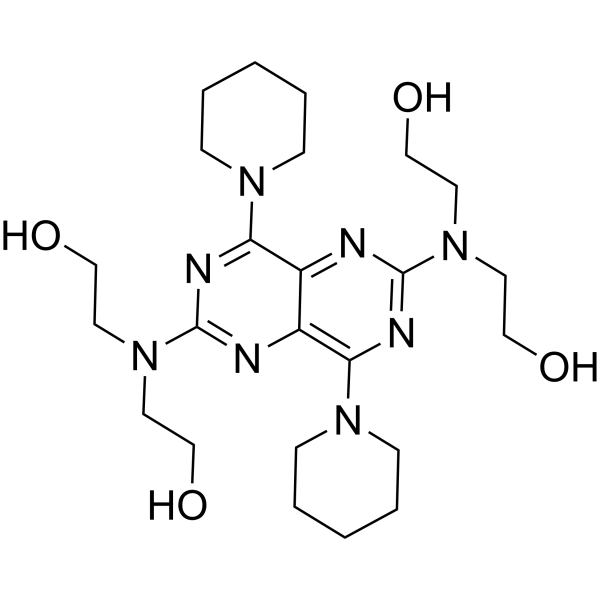
Dipyridamole (Standard) is the analytical standard of Dipyridamole. This product is intended for research and analytical applications. Dipyridamole is an orally active phosphodiesterase (PDE) inhibitor. Dipyridamole also is an antiplatelet agent used in secondary prophylaxis against stroke. Dipyridamole can induce cancer cell-specific apoptosis.
Nos produits utilisent uniquement pour la recherche. Nous ne vendons pas aux patients.
- CAS No.: 58-32-2
- Formule: C24H40N8O4
- Masse moléculaire:504.63
-
Stockage:
Please store the product under the recommended conditions in the Certificate of Analysis.


To place orders, for customer services and technical support, please contact: MedChemExpress USA
Tel: 609-228-6898 E-mail: [email protected] [email protected]


-
 Product Information
-
Chemical Information
- Pureté et documentation
-
 Help & FAQs


-
HY-B0312
DipyridamolePDE Inhibitor -
HY-14252
Milrinone -
HY-16900
RolipramPDE4 Inhibitor -
HY-12318
IBMXPDE Inhibitor -
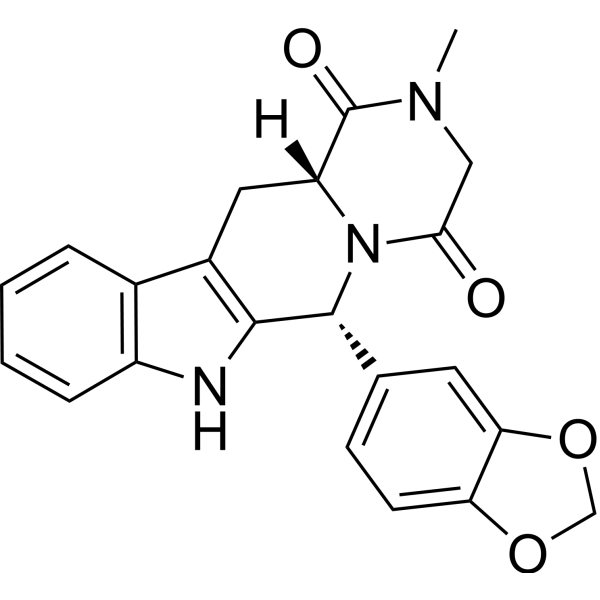
HY-90009A
TadalafilPDE5 Inhibitor -
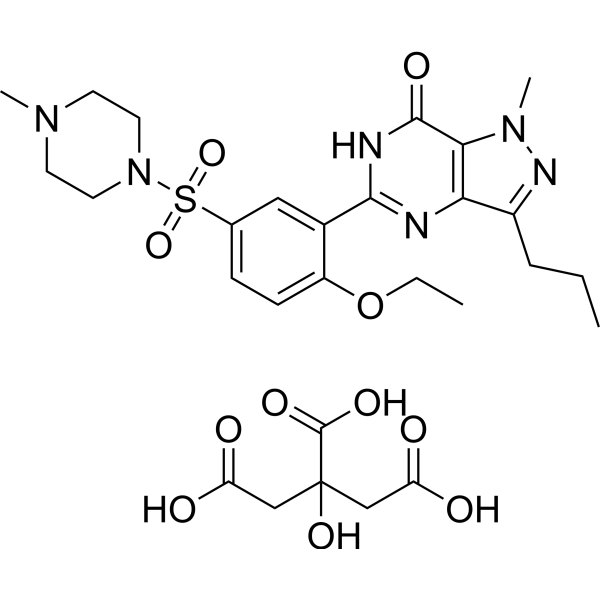
HY-15025A
Sildenafil citratePDE5 Inhibitor -
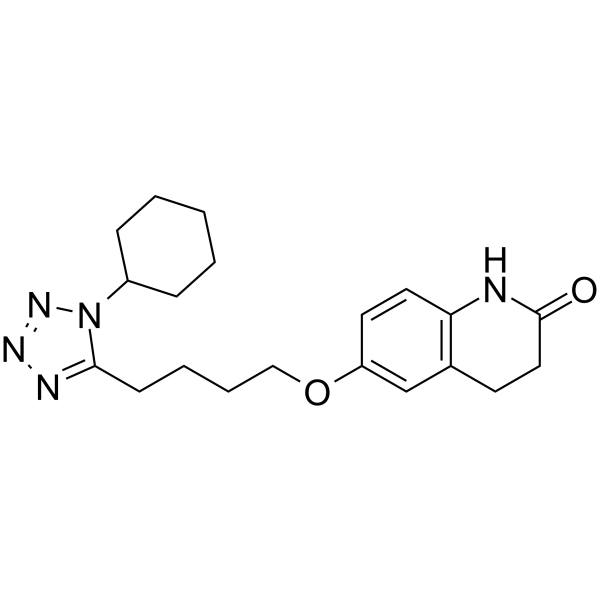
HY-17464
CilostazolPDE3 Inhibitor -
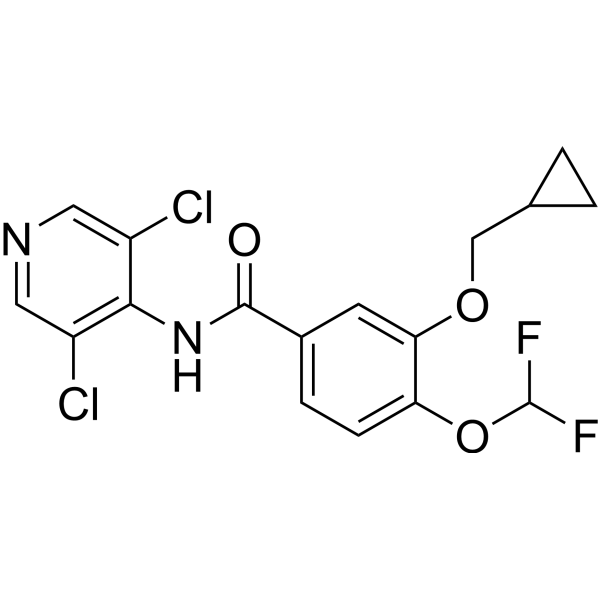
HY-15455
RoflumilastPDE4 Inhibitor -
HY-B0128
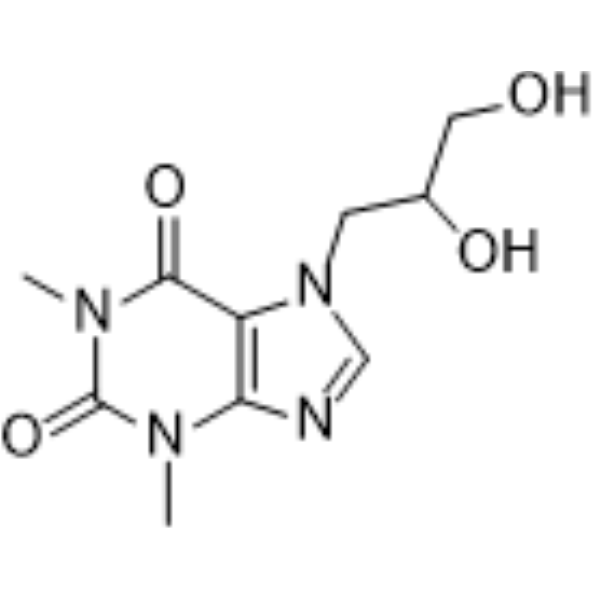
DiphyllinePDE Inhibitor -
HY-B0204
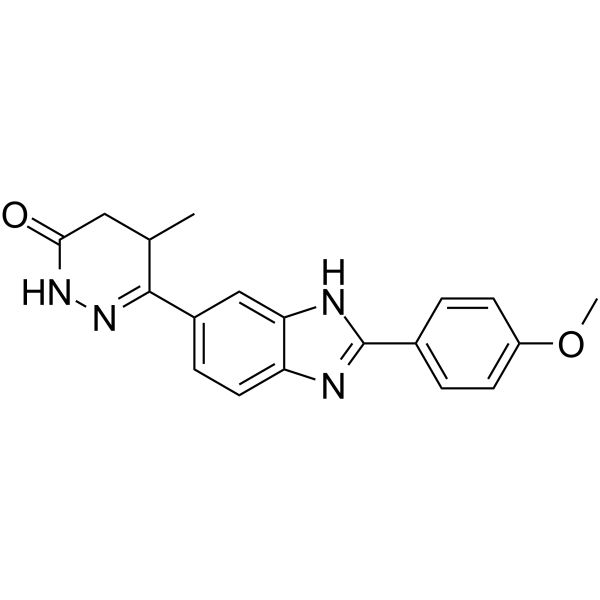
PimobendanPDE Inhibitor -
HY-15025AR
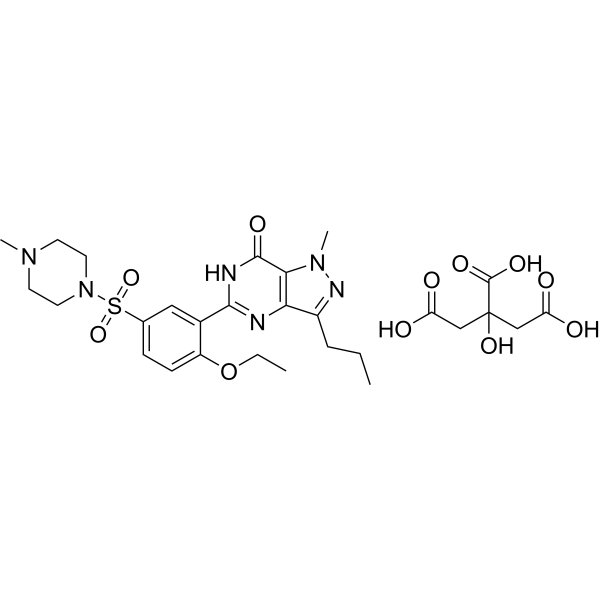
Sildenafil citrate (Standard)PDE5 Inhibitor -
HY-B0004
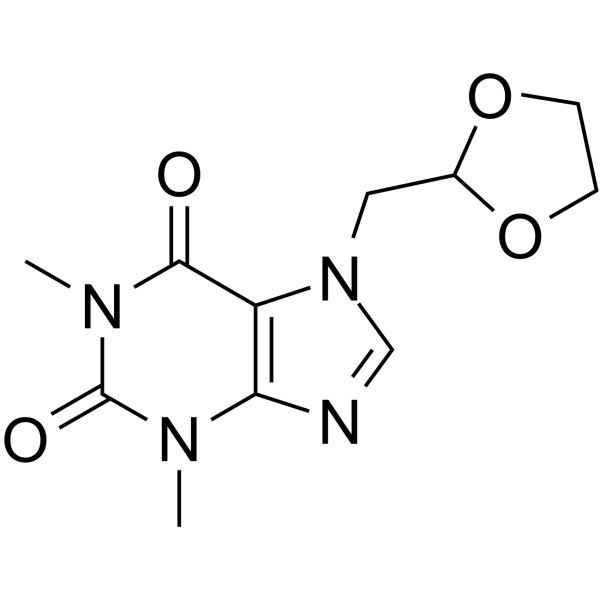
DoxofyllinePDE IV Inhibitor/A1AR Antagonist


Product Information
Information
Application
The compound is the grade of analytical standard, which is the reference standard supplied assay. It is commonly used in qualitative, quantitative and methodological research experiments in HPLC, GC and MS.


Chemical Information
-
CAS No. 58-32-2
-
Appearance Solid
-
Masse moléculaire 504.63
-
Formule C24H40N8O4
-
Color Light yellow to yellow
-
SMILES
OCCN(CCO)C1=NC(N2CCCCC2)=C(N=C(N(CCO)CCO)N=C3N4CCCCC4)C3=N1
-
Livraison
Room temperature in continental US; may vary elsewhere.
-
Stockage
Please store the product under the recommended conditions in the Certificate of Analysis.


Pureté et documentation
-
SDS (396 KB)
- English - EN (396 KB)
- Français - FR (396 KB)
- Deutsch - DE (396 KB)
- Norwegian - NO (396 KB)
- Español - ES (396 KB)
- Swedish - SV (396 KB)
- Italian - IT (396 KB)
- Korean - KR (396 KB)
- Portuguese - PT (396 KB)
-
Instruction de manipulation (2659 KB)
Références
[1]. Kerndt CC, Nagalli S. Dipyridamole. 2021 Nov 25. In: StatPearls [Internet]. Treasure Island (FL): StatPearls Publishing; 2022 Jan–. PMID: 32119342. [Content Brief]
[2]. Longo, Joseph, etal. Cyclic AMP-hydrolyzing phosphodiesterase inhibitors potentiate statin-induced cancer cell death. Molecular oncology vol. 14,10 (2020): 2533-2545 [Content Brief]
[3]. Wang, Jiaan-Der, etal. Exosomal HMGB1 Promoted Cancer Malignancy. Cancers vol. 13,4 877. 19 Feb. 2021. [Content Brief]

Calculators
Concentration (start) × Volume (start) = Concentration (final) × Volume (final)


Dipyridamole (Standard) Related Classifications
HY-B0312R Related Classifications
 Powered by Bioz