



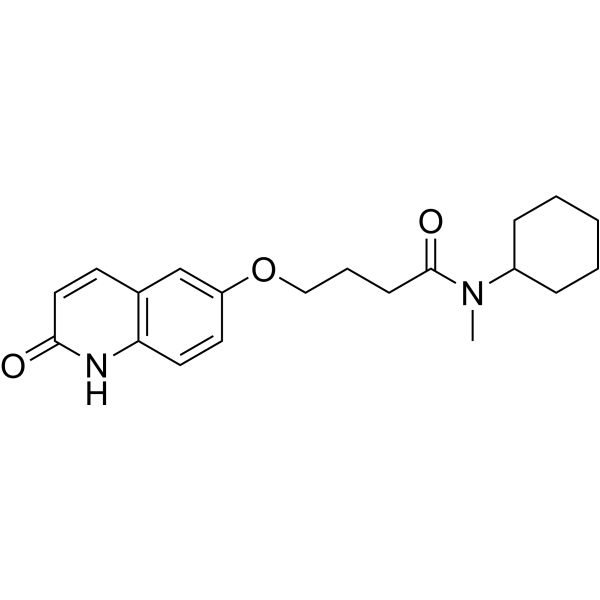
Cilostamide
Based on 2 publication(s) in Google Scholar
Cilostamide is a selective and potent PDE3 inhibitor, with IC50s of 27 nM and 50 nM for PDE3A and PDE3B, respectively, and has antithrombotic and anti-intimal hyperplastic activity.
Nur für Forschungszwecke. Wir verkaufen nicht an Patienten.
- Reinheit : 99.13%
- CAS. Nr.: 68550-75-4
- Formel: C20H26N2O3
- Molecular Weight:342.43
-
Speicherung:Powder -20°C, 3 years , 4°C, 2 years ; In solvent -80°C, 2 years , -20°C, 1 year

To place orders, for customer services and technical support, please contact: MedChemExpress USA
Tel: 609-228-6898 E-mail: [email protected] [email protected]


-
 Biologische Aktivität
-
Chemical Information
-
Lösungsmittel & Löslichkeit
- Reinheit & Dokumentation
- Verweise
-
 Help & FAQs


-
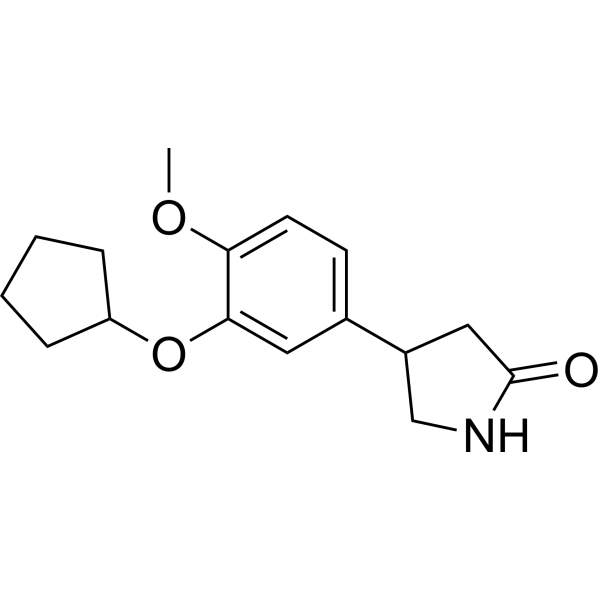
HY-16900
RolipramPDE4 Inhibitor -
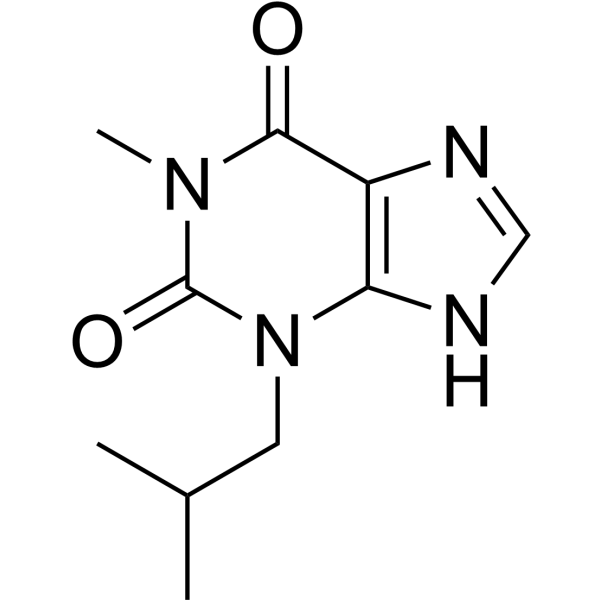
HY-12318
IBMXPDE Inhibitor -
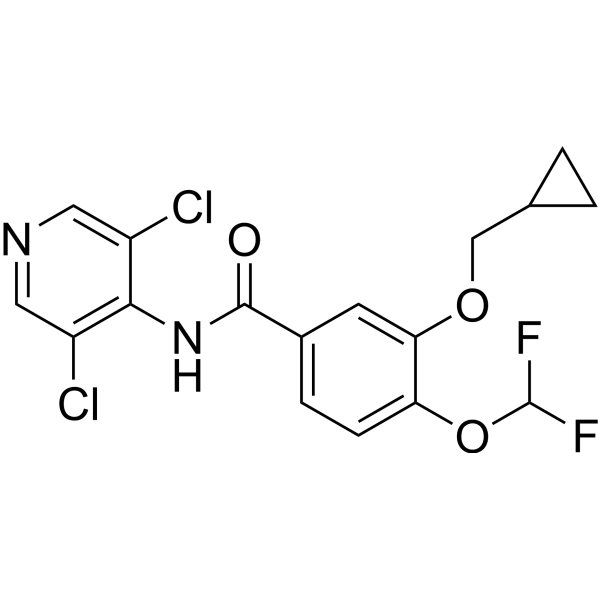
HY-15455
RoflumilastPDE4 Inhibitor -
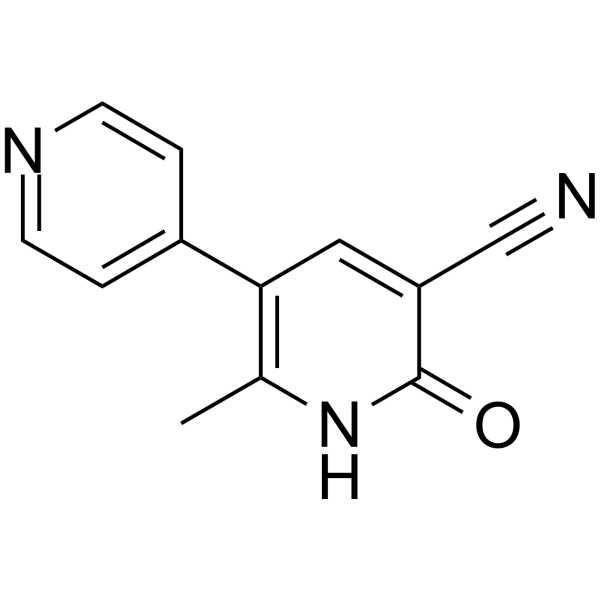
HY-14252
Milrinone -
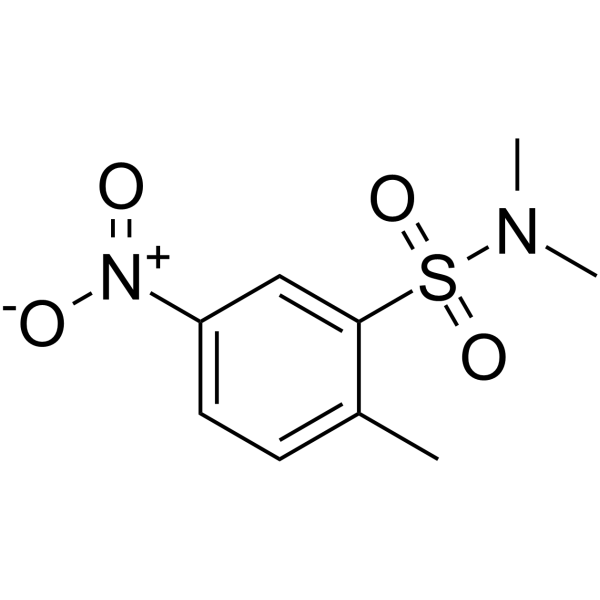
HY-109586
BRL-50481PDE Inhibitor -
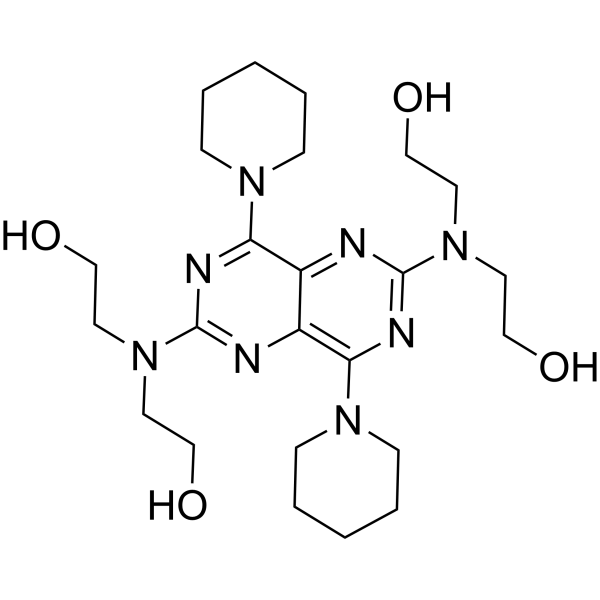
HY-B0312
DipyridamolePDE Inhibitor -
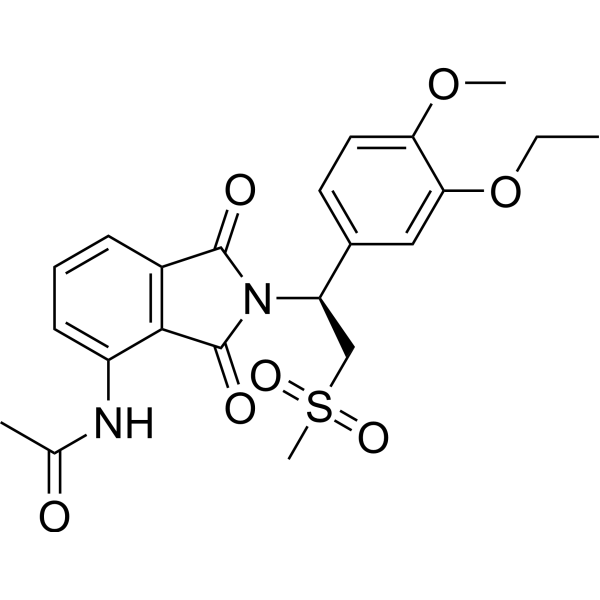
HY-12085
ApremilastPDE-4 Inhibitor -
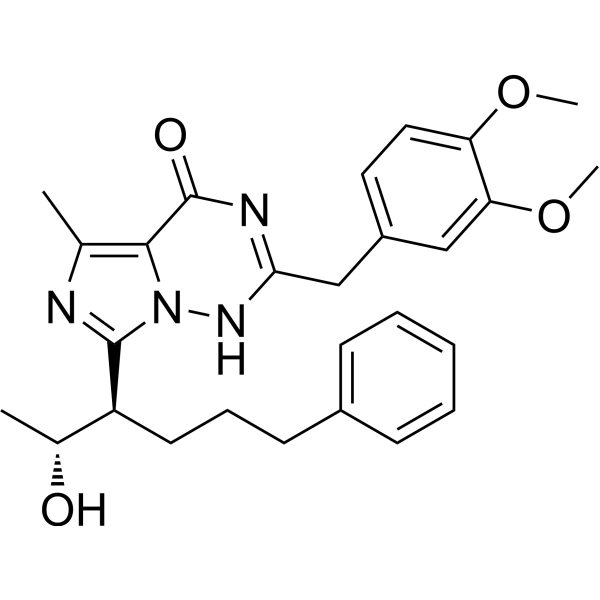
HY-14992
Bay 60-7550PDE2 Inhibitor -
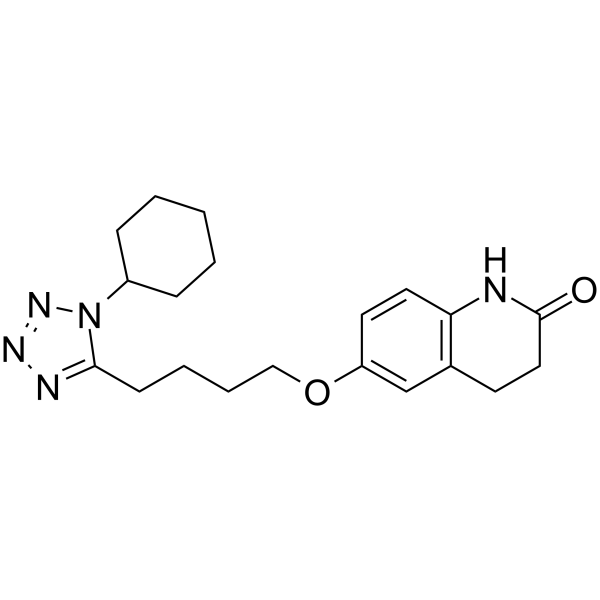
HY-17464
CilostazolPDE3 Inhibitor -
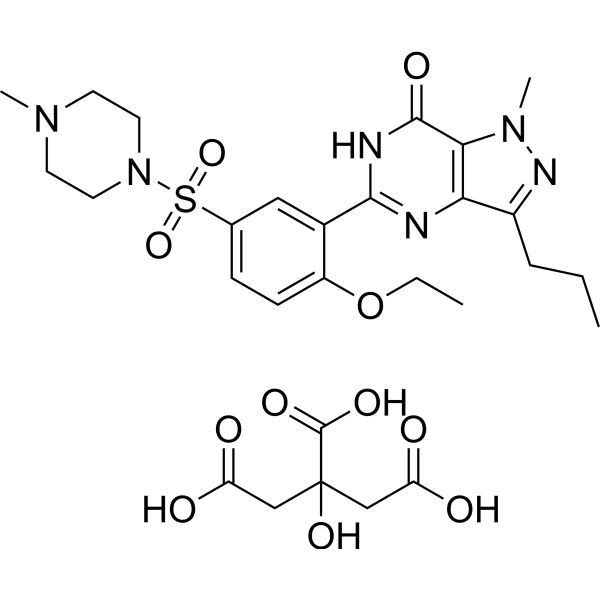
HY-15025A
Sildenafil citratePDE5 Inhibitor -
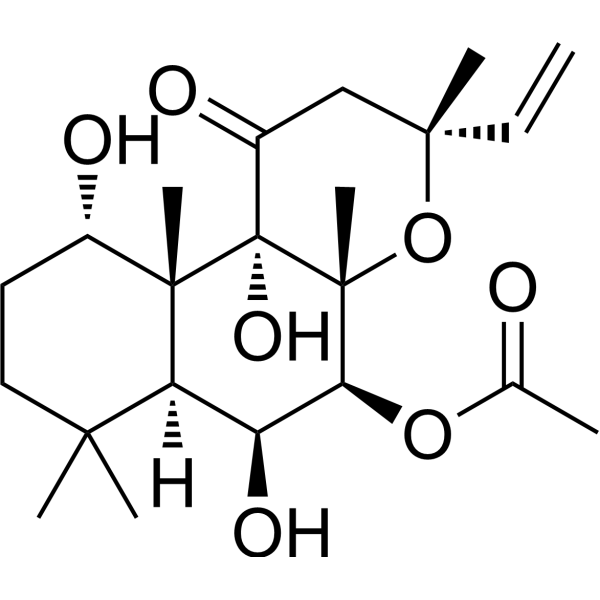
HY-15371
ForskolinAdenylate Cyclase Activator -
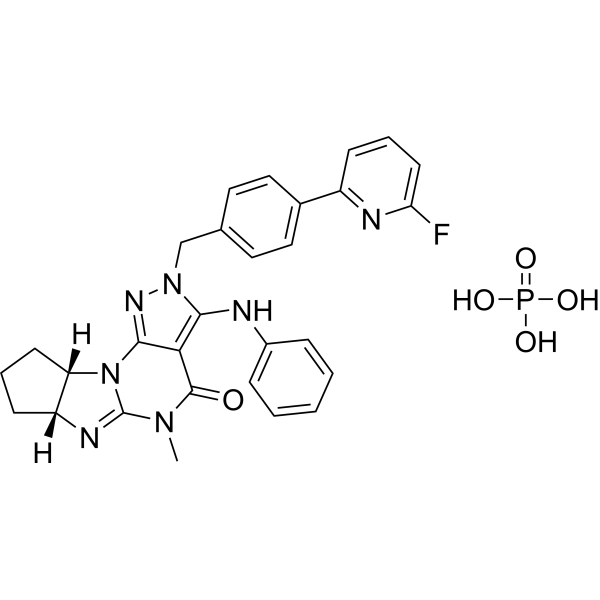
HY-12501A
ITI-214PDE1 Inhibitor
Publications Citing Use of MedChemExpress (MCE) Cilostamide
More Customer Validation & Images

-
Cell Proliferation/Viability Assay


Biologische Aktivität
Beschreibung
IC50 & Target
|
PDE3 |
Cellular Effect
|
Cell Line

|
Type | Value | Description | References |
|---|---|---|---|---|
| C3H 10T1/2 | EC50 |
9.1 nM
Compound: 6
|
Induction of lipolysis in mouse C3H10T1/2 assessed as glycerol concentration
Induction of lipolysis in mouse C3H10T1/2 assessed as glycerol concentration
|
[PMID: 21330134] |
In Vitro
Cilostamide is a selective and potent PDE3 inhibitor, with IC50s of 27 nM and 50 nM for PDE3A and PDE3B, respectively, and has antithrombotic and anti-intimal hyperplastic activity. Cilostamide weakly inhibits PDE2, PDE4, PDE5, PDE7, and PDE1, with IC50s of 12.5, 88.8, 15.2, 22.0 and > 300 μM, respectively. Cilostamide potently inhibits thrombin-induced platelet aggregation (IC50, 1.1 μM)[1].
MedChemExpress (MCE) has not independently confirmed the accuracy of these methods. They are for reference only.


Chemical Information
-
CAS. Nr. 68550-75-4
-
Appearance Solid
-
Molecular Weight 342.43
-
Formel C20H26N2O3
-
Color White to off-white
-
SMILES
O=C(N(C1CCCCC1)C)CCCOC2=CC3=C(NC(C=C3)=O)C=C2
-
Synonyms
OPC3689
-
Versand
Room temperature in continental US; may vary elsewhere.
-
Speicherung
Powder -20°C 3 years 4°C 2 years In solvent -80°C 2 years -20°C 1 year


Publications (2)
-
Journal Impact Factor
-
Most Recent
-
Clin Cancer Res
A PDE3A-SLFN12 Molecular Glue Exhibits Significant Antitumor Activity in TKI-Resistant Gastrointestinal Stromal Tumors. [Abstract]2024 Aug 15;30(16):3603-3621. PMID: 38864850
Cilostamide purchased from MedChemExpress. Usage Cited in: Clin Cancer Res. 2024 Aug 15;30(16):3603-3621. [Abstract]
Effects of OPB-171775 on the cell cycle. PFSK-1 cells were treated with DMSO or OPB-171775 as indicated in the absence or presence of 1 μmol/L of cilostamide or GCN2iB for 24 hours, and the cell cycle distribution was then analyzed by flow cytometry using BrdU and 7-AAD.
-
Int J Mol Sci
Salicylate Sodium Suppresses Monocyte Chemoattractant Protein-1 Production by Directly Inhibiting Phosphodiesterase 3B in TNF-α-Stimulated Adipocytes. [Abstract]2022 Dec 24;24(1):320. PMID: 36613764


Lösungsmittel & Löslichkeit
In Vitro:
DMSO : 31 mg/mL (90.53 mM; Need ultrasonic and warming; Hygroscopic DMSO has a significant impact on the solubility of product, please use newly opened DMSO)
Please refer to the solubility information to select the appropriate solvent. Once prepared, please aliquot and store the solution to prevent product inactivation from repeated freeze-thaw cycles.
Storage method and period of stock solution: -80°C, 2 years; -20°C, 1 year. When stored at -80°C, please use it within 2 years. When stored at -20°C, please use it within 1 year.
Please refer to the solubility information to select the appropriate solvent. Once prepared, please aliquot and store the solution to prevent product inactivation from repeated freeze-thaw cycles.
Storage method and period of stock solution: -80°C, 2 years; -20°C, 1 year. When stored at -80°C, please use it within 2 years. When stored at -20°C, please use it within 1 year.
Konzentration (Stammlösung) × Volumen (Stammlösung) = Konzentration (Ziellösung) × Volumen (Ziellösung)
In Vivo:
Select the appropriate dissolution method based on your experimental animal and administration route.
- For the following dissolution methods, please ensure to first prepare a clear stock solution using an In Vitro approach and then sequentially add co-solvents:
- To ensure reliable experimental results, the clarified stock solution can be appropriately stored based on storage conditions. As for the working solution for In Vivo experiments, it is recommended to prepare freshly and use it on the same day.
- The percentages shown for the solvents indicate their volumetric ratio in the final prepared solution. If precipitation or phase separation occurs during preparation, heat and/or sonication can be used to aid dissolution.
Add each solvent one by one: 10% DMSO 40% PEG300 5% Tween-80 45% Saline
Solubility: ≥ 1.67 mg/mL (4.88 mM); Clear solution
This protocol yields a clear solution of ≥ 1.67 mg/mL (saturation unknown).
Taking 1 mL working solution as an example, add 100 μL DMSO stock solution (16.7 mg/mL) to 400 μL PEG300, and mix evenly; then add 50 μL Tween-80 and mix evenly; then add 450 μL Saline to adjust the volume to 1 mL.
Preparation of Saline: Dissolve 0.9 g sodium chloride in ddH₂O and dilute to 100 mL to obtain a clear Saline solution.
Add each solvent one by one: 10% DMSO 90% (20% SBE-β-CD in Saline)
Solubility: ≥ 1.67 mg/mL (4.88 mM); Clear solution
This protocol yields a clear solution of ≥ 1.67 mg/mL (saturation unknown).
Taking 1 mL working solution as an example, add 100 μL DMSO stock solution (16.7 mg/mL) to 900 μL 20% SBE-β-CD in Saline, and mix evenly.
Preparation of 20% SBE-β-CD in Saline (4°C, storage for one week): 2 g SBE-β-CD powder is dissolved in 10 mL Saline, completely dissolve until clear.
In Vivo Dissolution Calculator
Please enter the basic information of animal experiments:
-
-
-
-
Recommended: Prepare an additional quantity of animals to account for potential losses during experiments.
Please enter your animal formula composition:
-
%DMSO +
Recommended: Keep the proportion of DMSO in working solution below 2% if your animal is weak.
-
%+
-
+%Tween-80 + +
-
%Saline +
The co-solvents required include: DMSO, . All of co-solvents are available by MedChemExpress (MCE). , Tween 80. All of co-solvents are available by MedChemExpress (MCE).
Working solution concentration: 0.22 mg/mL
Method for preparing stock solution: mg drug dissolved in μL DMSO. Stock solution concentration: mg/mL.
1. Take μL DMSO stock solution;
2. Add μL .
μL , mix evenly;
3. Then add μL Tween 80, mix evenly;
4. Then add μL
Please ensure that the stock solution in the first step is dissolved to a clear state, and add co-solvents in sequence. You can use ultrasonic heating (ultrasonic cleaner, recommended frequency 20-40 kHz), vortexing, etc. to assist dissolution.


Reinheit & Dokumentation
-
Data Sheet (271 KB)
-
SDS (393 KB)
- English - EN (393 KB)
- Français - FR (393 KB)
- Deutsch - DE (393 KB)
- Norwegian - NO (393 KB)
- Español - ES (393 KB)
- Swedish - SV (393 KB)
- Italian - IT (393 KB)
- Korean - KR (393 KB)
- Portuguese - PT (393 KB)
-
Handling Instructions (2659 KB)
Verweise


Complete Stock Solution Preparation Table
Please refer to the solubility information to select the appropriate solvent. Once prepared, please aliquot and store the solution to prevent product inactivation from repeated freeze-thaw cycles.
Storage method and period of stock solution: -80°C, 2 years; -20°C, 1 year. When stored at -80°C, please use it within 2 years. When stored at -20°C, please use it within 1 year.
| Optional Solvent | Concentration Solvent Mass | 1 mg | 5 mg | 10 mg | 25 mg |
|---|---|---|---|---|---|
| DMSO | 1 mM | 2.9203 mL | 14.6015 mL | 29.2030 mL | 73.0076 mL |
| 5 mM | 0.5841 mL | 2.9203 mL | 5.8406 mL | 14.6015 mL | |
| 10 mM | 0.2920 mL | 1.4602 mL | 2.9203 mL | 7.3008 mL | |
| 15 mM | 0.1947 mL | 0.9734 mL | 1.9469 mL | 4.8672 mL | |
| 20 mM | 0.1460 mL | 0.7301 mL | 1.4602 mL | 3.6504 mL | |
| 25 mM | 0.1168 mL | 0.5841 mL | 1.1681 mL | 2.9203 mL | |
| 30 mM | 0.0973 mL | 0.4867 mL | 0.9734 mL | 2.4336 mL | |
| 40 mM | 0.0730 mL | 0.3650 mL | 0.7301 mL | 1.8252 mL | |
| 50 mM | 0.0584 mL | 0.2920 mL | 0.5841 mL | 1.4602 mL | |
| 60 mM | 0.0487 mL | 0.2434 mL | 0.4867 mL | 1.2168 mL | |
| 80 mM | 0.0365 mL | 0.1825 mL | 0.3650 mL | 0.9126 mL |


Cilostamide Related Classifications
HY-101312 Related Classifications
 Powered by Bioz