



Aristolochic acid D

Based on 1 Customer Validation
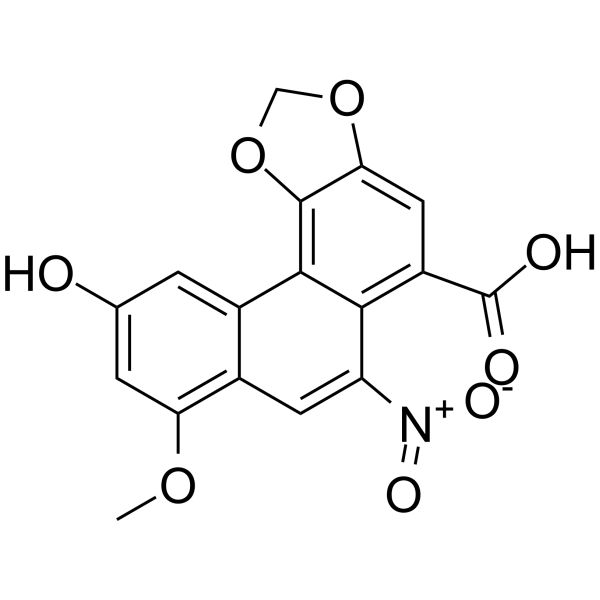
Aristolochic acid D (Aristolochic acid-IVa) is an orally active PDE2 (IC50: 4.673 μM) and CDK2 (IC50: 25 μM) inhibitor that can be isolated from Aristolochia indica L. Aristolochic acid D exhibits anti-inflammatory activity and is non-carcinogenic and non-nephrotoxic. Aristolochic acid D can be used in the research of inflammation and tumor-related diseases.
For research use only. We do not sell to patients.
- Purity : 99.74%
- CAS No.: 17413-38-6
- Formula: C17H11NO8
- Molecular Weight:357.27
-
Storage:Powder -20°C, 3 years , 4°C, 2 years ; In solvent -80°C, 6 months , -20°C, 1 month

To place orders, for customer services and technical support, please contact: MedChemExpress USA
Tel: 609-228-6898 E-mail: [email protected] [email protected]


-
 Biological Activity
-
Chemical Information
-
Solvent & Solubility
- Protocols
- Purity & Documentation
- References
-
 Help & FAQs


-
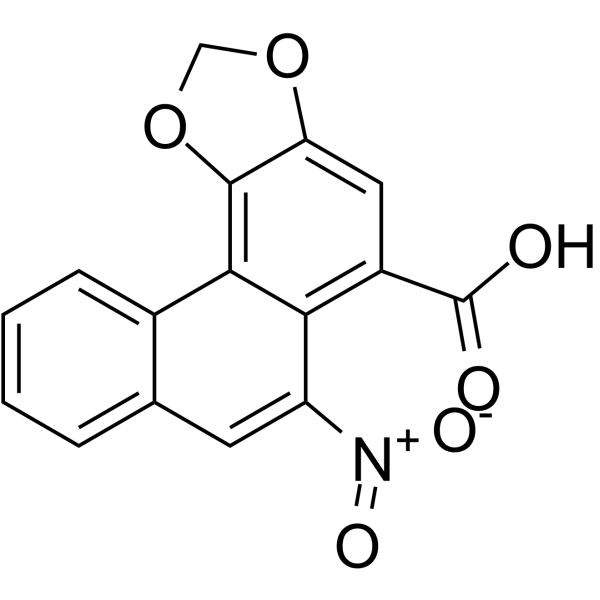
HY-N0511
Aristolochic acid BBioactive Alkaloid -
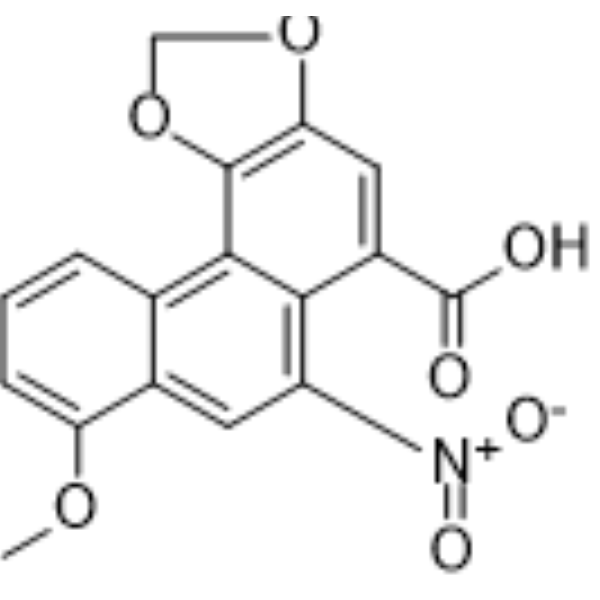
HY-N0510
Aristolochic acid ANF-κB Inhibitor -
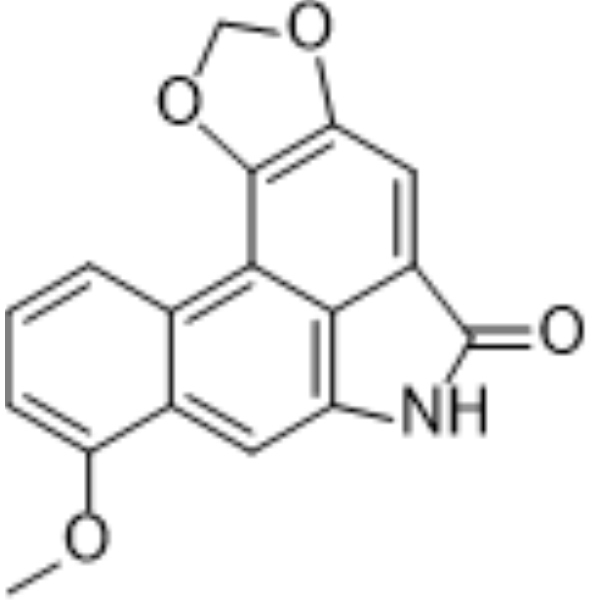
HY-N2013
Aristolactam IAQP1 Inhibitor -
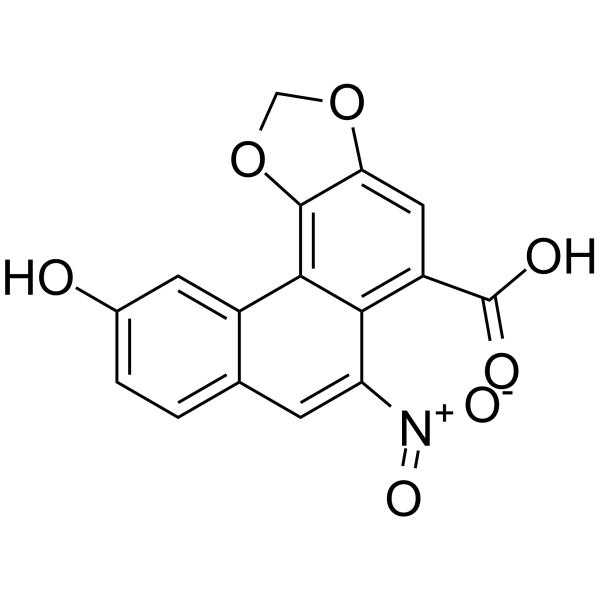
HY-N1450
Aristolochic acid CPhospholipase Inhibitor -
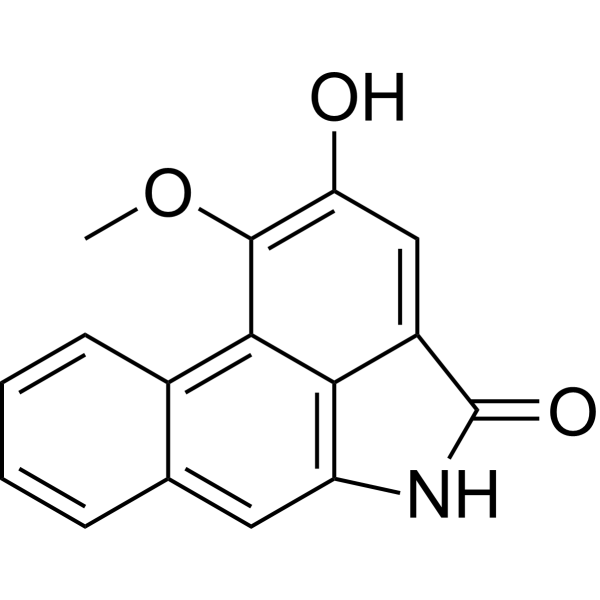
HY-N2891
Aristolactam A IIAnti-plasmodial Agent -

HY-N1465R
Aristolochic acid D (Standard)Standard of Aristolochic acid D


Biological Activity
Description
|
IL-6 |
PDE2 4.673 μM (IC50) |
CDK2 25 μM (IC50) |
Cellular Effect
|
Cell Line

|
Type | Value | Description | References |
|---|---|---|---|---|
| Neutrophil | IC50 |
5.78 μg/mL
Compound: 5
|
Antiinflammatory activity in human neutrophils assessed as inhibition of fMLP/CB-induced superoxide anion generation after 5 mins
Antiinflammatory activity in human neutrophils assessed as inhibition of fMLP/CB-induced superoxide anion generation after 5 mins
|
[PMID: 21353775] |
| Neutrophil | IC50 |
8.49 μg/mL
Compound: 5
|
Antiinflammatory activity in human neutrophils assessed as inhibition of fMLP/CB-induced elastase release after 5 mins
Antiinflammatory activity in human neutrophils assessed as inhibition of fMLP/CB-induced elastase release after 5 mins
|
[PMID: 21353775] |
In Vitro
Aristolochic acid D (0-300 μM; 48 h) exerts no significant cytotoxicity on LLC-PK1 cells and fails to induce caspase-3/7 activation[1].
Aristolochic acid D (50-100 μM; 8 h) significantly reduces the production of TNF-α and IL-6 in RAW 264.7 cells treated with LPS (HY-D1056A1)[2].
MedChemExpress (MCE) has not independently confirmed the accuracy of these methods. They are for reference only.
-
Cell Line:RAW 264.7 cells treated LPS (HY-D1056A1)
-
Concentration:50 and 100 μM
-
Incubation Time:Pretreated with 2 h, then co-incubation for 6 h
-
Result:Reduced the production of TNF-α and IL-6.
In Vivo
Aristolochic acid D (100 mg/kg; oral gavage; single dose) significantly reduces TNF-α luciferase activity in TNF-IRES-Luc mice treated with LPS (HY-D1056A1), exhibiting a rapid inhibitory effect on systemic inflammation but with a short duration[2].
Aristolochic acid D (3-10 mg/kg; oral gavage; five times a week; from day 12 to day 42) possesses anti-inflammatory activity in the mouse model of chronic arthritis[3].
MedChemExpress (MCE) has not independently confirmed the accuracy of these methods. They are for reference only.
-
Animal Model:Male ICR mice aged 6-8 weeks old treated phorbol 12-myristate 13-acetate (HY-18739) to induce ear edema[2]
-
Dosage:400 and 600 μg/ear
-
Administration:Topical application; single dose
-
Result:Exhibitd topical anti-inflammatory activity.
Significantly reduced ear weight, inflammatory cell infiltration and edema.
-
Animal Model:Male BALB/cAnSmoc-Zap70em(W163C)Smoc (SKG) mice aged 6-8 weeks old treated Mannan (HY-W145667) (SKG model that spontaneously develops chronic arthritis closely resembling human Rheumatoid Arthritis)[3]
-
Dosage:3 and 10 mg/kg
-
Administration:Oral gavage; five times a week; from day 12 to day 42
-
Result:Alleviated mannan-accelerated arthritis symptoms, reducing inflammatory infiltration, improving bone microstructure, decreasing levels of inflammatory factors, and regulating macrophage polarization as well as restoring the Th17/Treg balance.


Chemical Information
-
CAS No. 17413-38-6
-
Appearance Solid
-
Molecular Weight 357.27
-
Formula C17H11NO8
-
Color Yellow to orange
-
SMILES
O=C(C1=C2C([N+]([O-])=O)=CC3=C(OC)C=C(O)C=C3C2=C(OCO4)C4=C1)O
-
Synonyms
Aristolochic acid-IVa
-
Structure Classification
-
Initial Source
-
Shipping
Room temperature in continental US; may vary elsewhere.
-
Storage
Powder -20°C 3 years 4°C 2 years In solvent -80°C 6 months -20°C 1 month


Solvent & Solubility
In Vitro:
DMSO : 25 mg/mL (69.98 mM; ultrasonic and warming and heat to 60°C; Hygroscopic DMSO has a significant impact on the solubility of product, please use newly opened DMSO)
Please refer to the solubility information to select the appropriate solvent. Once prepared, please aliquot and store the solution to prevent product inactivation from repeated freeze-thaw cycles.
Storage method and period of stock solution: -80°C, 6 months; -20°C, 1 month. When stored at -80°C, please use it within 6 months. When stored at -20°C, please use it within 1 month.
Please refer to the solubility information to select the appropriate solvent. Once prepared, please aliquot and store the solution to prevent product inactivation from repeated freeze-thaw cycles.
Storage method and period of stock solution: -80°C, 6 months; -20°C, 1 month. When stored at -80°C, please use it within 6 months. When stored at -20°C, please use it within 1 month.
Concentration (start) × Volume (start) = Concentration (final) × Volume (final)


Purity & Documentation
-
Data Sheet (283 KB)
-
SDS (644 KB)
- English - EN (644 KB)
- Français - FR (644 KB)
- Deutsch - DE (644 KB)
- Norwegian - NO (644 KB)
- Español - ES (644 KB)
- Swedish - SV (644 KB)
- Italian - IT (644 KB)
- Korean - KR (644 KB)
- Portuguese - PT (644 KB)
-
Handling Instructions (2659 KB)
References
[1]. Balachandran P, et al. Structure activity relationships of aristolochic acid analogues: toxicity in cultured renal epithelial cells. Kidney Int. 2005 May;67(5):1797-805. [Content Brief]
[2]. Liu W, et al. Non-carcinogenic/non-nephrotoxic aristolochic acid IVa exhibited anti-inflammatory activities in mice. J Nat Med. 2023 Mar;77(2):251-261. [Content Brief]
[3]. Gao QW, et al. Aristolochic acid IVa ameliorates arthritis in SKG Mice by regulating macrophage polarization and Th17/Treg balance. Phytomedicine. 2025 Apr;139:156557. [Content Brief]
[4]. Kupchan SM, et al. The isolation and structural elucidation of novel derivatives of aristolochic acid from Aristolochia indica. J Org Chem. 1968 Oct;33(10):3735-8. [Content Brief]
[5]. Song, GQ, et al. Inhibitors of phosphodiesterase 2 activity. CN116898835A. 2023-10-20.
[6]. Hegde VR, et al. Semi-synthetic aristolactams--inhibitors of CDK2 enzyme. Bioorg Med Chem Lett. 2010 Feb 15;20(4):1384-7. [Content Brief]


Complete Stock Solution Preparation Table
Please refer to the solubility information to select the appropriate solvent. Once prepared, please aliquot and store the solution to prevent product inactivation from repeated freeze-thaw cycles.
Storage method and period of stock solution: -80°C, 6 months; -20°C, 1 month. When stored at -80°C, please use it within 6 months. When stored at -20°C, please use it within 1 month.
| Optional Solvent | Concentration Solvent Mass | 1 mg | 5 mg | 10 mg | 25 mg |
|---|---|---|---|---|---|
| DMSO | 1 mM | 2.7990 mL | 13.9950 mL | 27.9900 mL | 69.9751 mL |
| 5 mM | 0.5598 mL | 2.7990 mL | 5.5980 mL | 13.9950 mL | |
| 10 mM | 0.2799 mL | 1.3995 mL | 2.7990 mL | 6.9975 mL | |
| 15 mM | 0.1866 mL | 0.9330 mL | 1.8660 mL | 4.6650 mL | |
| 20 mM | 0.1400 mL | 0.6998 mL | 1.3995 mL | 3.4988 mL | |
| 25 mM | 0.1120 mL | 0.5598 mL | 1.1196 mL | 2.7990 mL | |
| 30 mM | 0.0933 mL | 0.4665 mL | 0.9330 mL | 2.3325 mL | |
| 40 mM | 0.0700 mL | 0.3499 mL | 0.6998 mL | 1.7494 mL | |
| 50 mM | 0.0560 mL | 0.2799 mL | 0.5598 mL | 1.3995 mL | |
| 60 mM | 0.0467 mL | 0.2333 mL | 0.4665 mL | 1.1663 mL |


Aristolochic acid D Related Classifications
HY-N1465 Related Classifications
 Powered by Bioz