



Cilomilast
Based on 3 publication(s) in Google Scholar
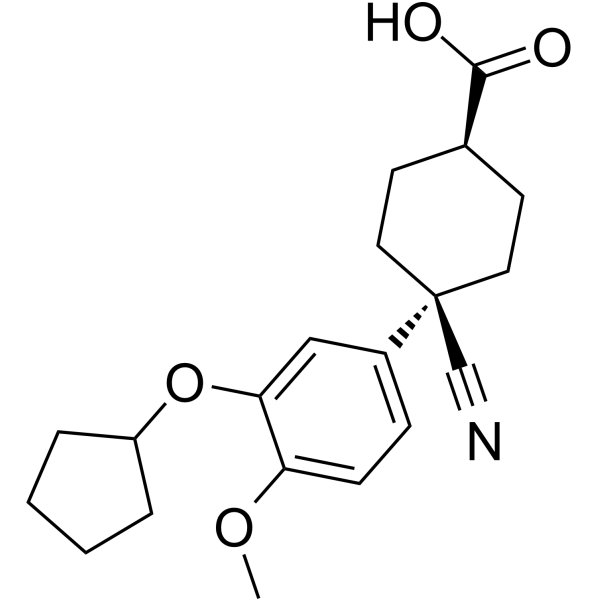
Cilomilast (SB-207499) is a potent, selective and orally active inhibitor of Phosphodiesterase 4 (PDE4), with IC50s of ~100 and 120 nM for LPDE4 and HPDE4, respectively. Cilomilast shows selectivity for PDE4 over PDE1, PDE2, PDE3 and PDE5 (IC50=74, 65, >100, and 83 μM, respectively). Cilomilast has anti-inflammatory and immunomodulatory effects and can be used for thr research of asthma and chronic obstructive pulmonary disease (COPD).
Nur für Forschungszwecke. Wir verkaufen nicht an Patienten.
- Reinheit : 99.91%
- CAS. Nr.: 153259-65-5
- Formel: C20H25NO4
- Molecular Weight:343.42
-
Speicherung:Powder -20°C, 3 years , 4°C, 2 years ; In solvent -80°C, 2 years , -20°C, 1 year

To place orders, for customer services and technical support, please contact: MedChemExpress USA
Tel: 609-228-6898 E-mail: [email protected] [email protected]


-
 Biologische Aktivität
-
Chemical Information
-
Lösungsmittel & Löslichkeit
- Protokoll
- Reinheit & Dokumentation
- Verweise
-
 Help & FAQs


-
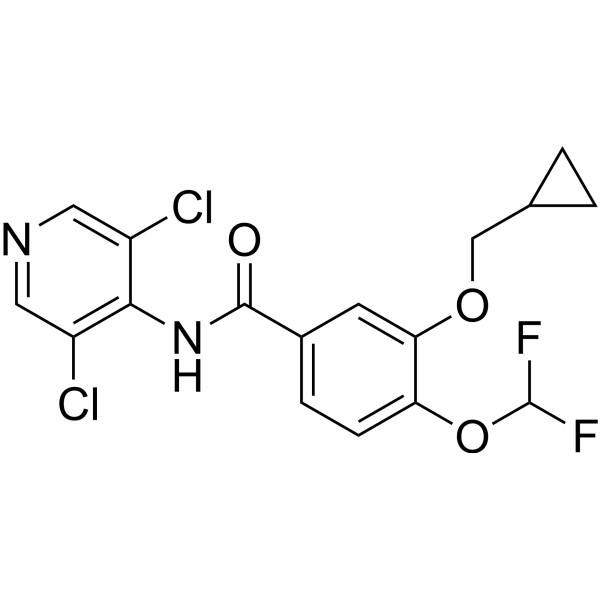
HY-15455
RoflumilastPDE4 Inhibitor -
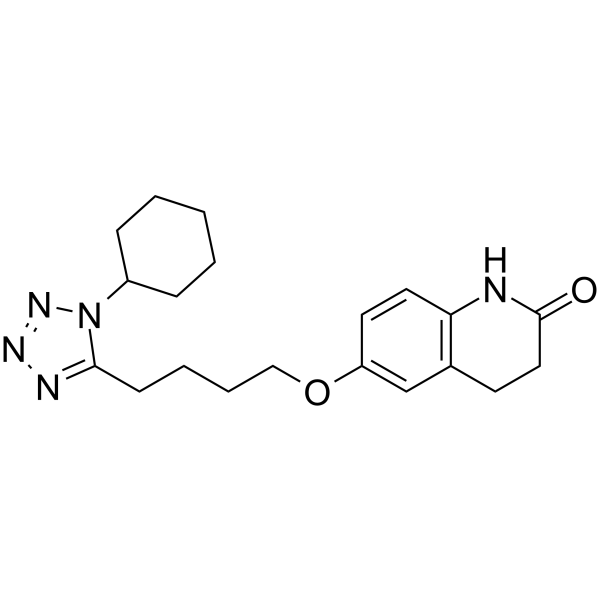
HY-17464
CilostazolPDE3 Inhibitor -
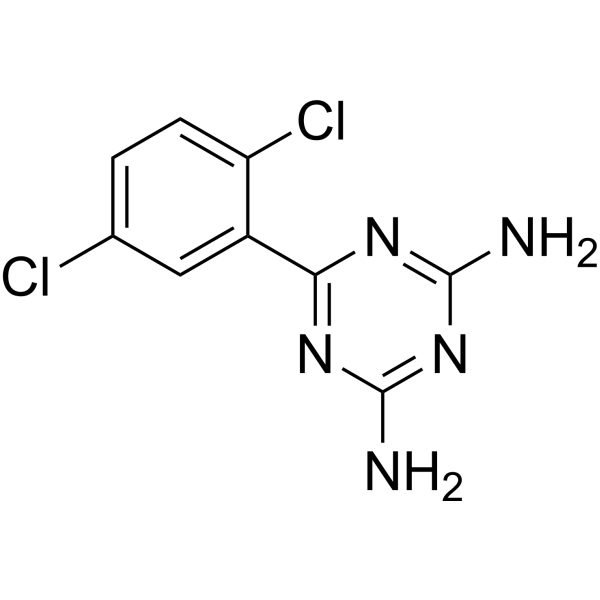
HY-B0327
IrsogladineGastric Mucosal Protective Agent -
HY-14252
Milrinone -
HY-16900
RolipramPDE4 Inhibitor -
HY-10469
GSK256066Phosphodiesterase 4 Inhibitor -
HY-B0204
PimobendanPDE Inhibitor -
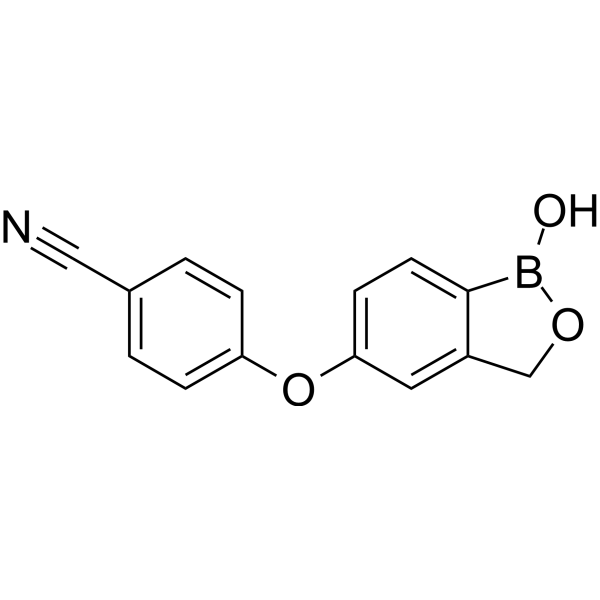
HY-10978
CrisaborolePDE Inhibitor -
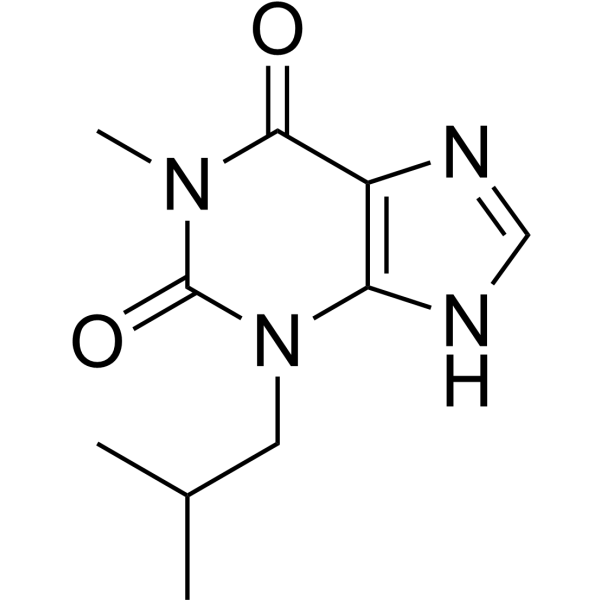
HY-12318
IBMXPDE Inhibitor -
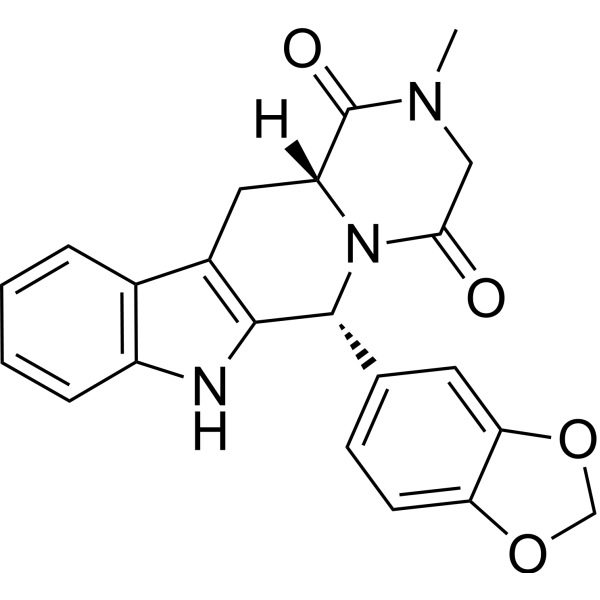
HY-90009A
TadalafilPDE5 Inhibitor -
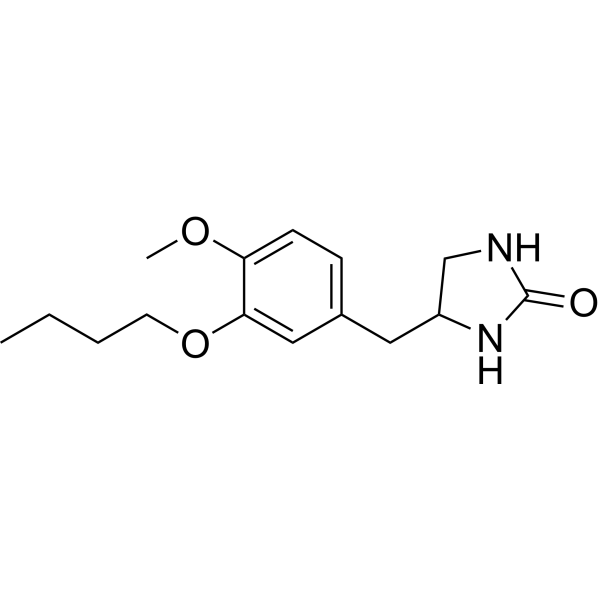
HY-100927
Ro 20-1724PDE4/PDE IV Inhibitor -
HY-12085
ApremilastPDE-4 Inhibitor
Publications Citing Use of MedChemExpress (MCE) Cilomilast
More

Biologische Aktivität
Beschreibung
IC50 & Target
[1]|
LPDE4 ~100 nM (IC50) |
HPDE4 120 nM (IC50) |
Cellular Effect
|
Cell Line

|
Type | Value | Description | References |
|---|---|---|---|---|
| Eosinophil | ED50 |
17 μM/g
Compound: Cilomilast
|
Anti-inflammatory activity against ovalbumin induced lung inflammatory rat model assessed as reduction in eosinophil influx
Anti-inflammatory activity against ovalbumin induced lung inflammatory rat model assessed as reduction in eosinophil influx
|
[PMID: 33569941] |
| Neutrophil | ED50 |
>30 μM/g
Compound: Cilomilast
|
Anti-inflammatory activity in LPS-induced inflammatory mouse model assessed as reduction in neutrophil influx
Anti-inflammatory activity in LPS-induced inflammatory mouse model assessed as reduction in neutrophil influx
|
[PMID: 33569941] |
| PBMC | EC50 |
3.47 nM
Compound: Cilomilast
|
Anti-inflammatory activity against human PBMCs assessed as reduction in LPS-induced TNF-alpha release by ELISA analysis
Anti-inflammatory activity against human PBMCs assessed as reduction in LPS-induced TNF-alpha release by ELISA analysis
|
[PMID: 33569941] |
| PBMC | IC50 |
0.2 M
Compound: Cilomilast
|
Inhibition of LPS-induced TNFalpha production in mouse PBMCs
Inhibition of LPS-induced TNFalpha production in mouse PBMCs
|
[PMID: 19447034] |
| PBMC | IC50 |
3467 nM
Compound: SB-207499
|
Inhibition of TNF-alpha release from human peripheral blood mononuclear cells
Inhibition of TNF-alpha release from human peripheral blood mononuclear cells
|
[PMID: 11755362] |
| Sf21 | IC50 |
62 nM
Compound: 2
|
Inhibition of human full length PDE4A4 expressed in baculovirus infected sf21 cells
Inhibition of human full length PDE4A4 expressed in baculovirus infected sf21 cells
|
[PMID: 23806553] |
| Sf9 | IC50 |
38 nM
Compound: Ariflo
|
Inhibition of human Phosphodiesterase 4A isoform using construct representing the common region of spliced variants expressed as GST-fusion proteins in Sf9 cells.
Inhibition of human Phosphodiesterase 4A isoform using construct representing the common region of spliced variants expressed as GST-fusion proteins in Sf9 cells.
|
[PMID: 12270195] |
| Sf9 | IC50 |
38 nM
Compound: Ariflo 2, SB-207499
|
Inhibitory concentration against human PDE4A isoform using a construct representing the common region of spliced variants expressed as GST-fusion protein in Sf9 cells
Inhibitory concentration against human PDE4A isoform using a construct representing the common region of spliced variants expressed as GST-fusion protein in Sf9 cells
|
[PMID: 12031319] |
| U-937 | EC50 |
3.63 μM
Compound: SB-207499
|
Arbitary maximal response for cAMP elevation from baseline level was evaluated in Human U-937 cells
Arbitary maximal response for cAMP elevation from baseline level was evaluated in Human U-937 cells
|
[PMID: 9632360] |
| U-937 | IC50 |
0.03 μM
Compound: Ariflo
|
Inhibition of phosphodiesterase type 4 isozyme (PDE4) from the U937 human cell line.
Inhibition of phosphodiesterase type 4 isozyme (PDE4) from the U937 human cell line.
|
[PMID: 11123995] |
| U-937 | IC50 |
10 nM
Compound: 1 (Ariflo)
|
Inhibition of PDE4 from U937 monocytic cells
Inhibition of PDE4 from U937 monocytic cells
|
[PMID: 14980691] |
| U-937 | IC50 |
3.63 μM
Compound: 2
|
Ability to elevate intracellular levels of cAMP in human U937 cells
Ability to elevate intracellular levels of cAMP in human U937 cells
|
10.1016/S0960-894X(97)00097-8 |
In Vitro
Cilomilast (0.1 nM-10 μM; 5 min) inhibits human neutrophil functions[2].
Cilomilast (0.1 nM-10 μM; 5 min) inhibits eosinophil chemiluminescence response[2].
Cilomilast (0.001-100 μM; 30 min) inhibits the synthesis of TNFα in human monocytes and in human whole blood[2].
MedChemExpress (MCE) has not independently confirmed the accuracy of these methods. They are for reference only.
In Vivo
SB-207499 (0.1-100 mg/kg; oral gavage) reverses reserpine-induced hypothermia in mice, with an ED50 of 2.3 mg/kg[1].
SB-207499 (500 μg/ear; b.i.d. for 6 d) inhibits the chronic oxazolone-induced inflammatory response and intralesional IL-4 concentrations in mice[1].
MedChemExpress (MCE) has not independently confirmed the accuracy of these methods. They are for reference only.
-
Animal Model:Male Balb/c mice (18-25 g) are injected with human monocytes and LPS[1]
-
Dosage:1, 5, 10, 50, 100 mg/kg
-
Administration:P.o. after the injection of human monocytes and before LPS challenge
-
Result:Inhibited the production of human TNFα, with an ED50 of 4.9 mg/kg.
Clinical Trial
| NCT Number | Sponsor | Condition | Start Date |
Phase
|
|---|---|---|---|---|
| NCT01329991 | 2011-05 | PHASE1 |


Chemical Information
-
CAS. Nr. 153259-65-5
-
Appearance Solid
-
Molecular Weight 343.42
-
Formel C20H25NO4
-
Color White to off-white
-
SMILES
O=C([C@H]1CC[C@@](C#N)(CC1)C2=CC=C(OC)C(OC3CCCC3)=C2)O
-
Synonyms
SB-207499
-
Versand
Room temperature in continental US; may vary elsewhere.
-
Speicherung
Powder -20°C 3 years 4°C 2 years In solvent -80°C 2 years -20°C 1 year


Publications (3)
-
Journal Impact Factor
-
Most Recent
-
Int J Biol Sci
Glucocorticoids improve severe or critical COVID-19 by activating ACE2 and reducing IL-6 levels. [Abstract]2020 Jun 27;16(13):2382-2391. PMID: 32760206 -
Cancer Res Commun
Metastasis-Associated Wound Repair Promotes Reciprocal Lung Epithelium Activation and Breast Cancer Metastatic Outgrowth. [Abstract]2026 Apr 1;6(4):750-768. PMID: 41937294 -
bioRxiv
Metastasis-associated wound repair promotes reciprocal activation of the lung epithelium and breast cancer metastases during outgrowth. [Abstract]2025 Jul 27:2025.07.23.666437. PMID: 40777238


Lösungsmittel & Löslichkeit
In Vitro:
DMSO : ≥ 100 mg/mL (291.19 mM; Hygroscopic DMSO has a significant impact on the solubility of product, please use newly opened DMSO)
* "≥" means soluble, but saturation unknown.
Please refer to the solubility information to select the appropriate solvent. Once prepared, please aliquot and store the solution to prevent product inactivation from repeated freeze-thaw cycles.
Storage method and period of stock solution: -80°C, 2 years; -20°C, 1 year. When stored at -80°C, please use it within 2 years. When stored at -20°C, please use it within 1 year.
Please refer to the solubility information to select the appropriate solvent. Once prepared, please aliquot and store the solution to prevent product inactivation from repeated freeze-thaw cycles.
Storage method and period of stock solution: -80°C, 2 years; -20°C, 1 year. When stored at -80°C, please use it within 2 years. When stored at -20°C, please use it within 1 year.
Konzentration (Stammlösung) × Volumen (Stammlösung) = Konzentration (Ziellösung) × Volumen (Ziellösung)
In Vivo:
Select the appropriate dissolution method based on your experimental animal and administration route.
- For the following dissolution methods, please ensure to first prepare a clear stock solution using an In Vitro approach and then sequentially add co-solvents:
- To ensure reliable experimental results, the clarified stock solution can be appropriately stored based on storage conditions. As for the working solution for In Vivo experiments, it is recommended to prepare freshly and use it on the same day.
- The percentages shown for the solvents indicate their volumetric ratio in the final prepared solution. If precipitation or phase separation occurs during preparation, heat and/or sonication can be used to aid dissolution.
Add each solvent one by one: 10% DMSO 40% PEG300 5% Tween-80 45% Saline
Solubility: ≥ 2.5 mg/mL (7.28 mM); Clear solution
This protocol yields a clear solution of ≥ 2.5 mg/mL (saturation unknown).
Taking 1 mL working solution as an example, add 100 μL DMSO stock solution (25.0 mg/mL) to 400 μL PEG300, and mix evenly; then add 50 μL Tween-80 and mix evenly; then add 450 μL Saline to adjust the volume to 1 mL.
Preparation of Saline: Dissolve 0.9 g sodium chloride in ddH₂O and dilute to 100 mL to obtain a clear Saline solution.
Add each solvent one by one: 10% DMSO 90% (20% SBE-β-CD in Saline)
Solubility: ≥ 2.5 mg/mL (7.28 mM); Clear solution
This protocol yields a clear solution of ≥ 2.5 mg/mL (saturation unknown).
Taking 1 mL working solution as an example, add 100 μL DMSO stock solution (25.0 mg/mL) to 900 μL 20% SBE-β-CD in Saline, and mix evenly.
Preparation of 20% SBE-β-CD in Saline (4°C, storage for one week): 2 g SBE-β-CD powder is dissolved in 10 mL Saline, completely dissolve until clear.
In Vivo Dissolution Calculator
Please enter the basic information of animal experiments:
-
-
-
-
Recommended: Prepare an additional quantity of animals to account for potential losses during experiments.
Please enter your animal formula composition:
-
%DMSO +
Recommended: Keep the proportion of DMSO in working solution below 2% if your animal is weak.
-
%+
-
+%Tween-80 + +
-
%Saline +
The co-solvents required include: DMSO, . All of co-solvents are available by MedChemExpress (MCE). , Tween 80. All of co-solvents are available by MedChemExpress (MCE).
Working solution concentration: 0.22 mg/mL
Method for preparing stock solution: mg drug dissolved in μL DMSO. Stock solution concentration: mg/mL.
1. Take μL DMSO stock solution;
2. Add μL .
μL , mix evenly;
3. Then add μL Tween 80, mix evenly;
4. Then add μL
Please ensure that the stock solution in the first step is dissolved to a clear state, and add co-solvents in sequence. You can use ultrasonic heating (ultrasonic cleaner, recommended frequency 20-40 kHz), vortexing, etc. to assist dissolution.


Reinheit & Dokumentation
-
Data Sheet (282 KB)
-
SDS (252 KB)
- English - EN (252 KB)
- Français - FR (252 KB)
- Deutsch - DE (252 KB)
- Norwegian - NO (252 KB)
- Español - ES (252 KB)
- Swedish - SV (252 KB)
- Italian - IT (252 KB)
- Korean - KR (252 KB)
- Portuguese - PT (252 KB)
-
Handling Instructions (2659 KB)
Verweise
[1]. Griswold DE, et, al. SB 207499 (Ariflo), a second generation phosphodiesterase 4 inhibitor, reduces tumor necrosis factor alpha and interleukin-4 production in vivo. J Pharmacol Exp Ther. 1998 Nov;287(2):705-11. [Content Brief]
[2]. Hatzelmann A, et, al. Anti-inflammatory and immunomodulatory potential of the novel PDE4 inhibitor roflumilast in vitro. J Pharmacol Exp Ther. 2001 Apr;297(1):267-79. [Content Brief]
[3]. Barnette MS, et, al. SB 207499 (Ariflo), a potent and selective second-generation phosphodiesterase 4 inhibitor: in vitro anti-inflammatory actions. J Pharmacol Exp Ther. 1998 Jan;284(1):420-6. [Content Brief]


Complete Stock Solution Preparation Table
Please refer to the solubility information to select the appropriate solvent. Once prepared, please aliquot and store the solution to prevent product inactivation from repeated freeze-thaw cycles.
Storage method and period of stock solution: -80°C, 2 years; -20°C, 1 year. When stored at -80°C, please use it within 2 years. When stored at -20°C, please use it within 1 year.
| Optional Solvent | Concentration Solvent Mass | 1 mg | 5 mg | 10 mg | 25 mg |
|---|---|---|---|---|---|
| DMSO | 1 mM | 2.9119 mL | 14.5594 mL | 29.1189 mL | 72.7972 mL |
| 5 mM | 0.5824 mL | 2.9119 mL | 5.8238 mL | 14.5594 mL | |
| 10 mM | 0.2912 mL | 1.4559 mL | 2.9119 mL | 7.2797 mL | |
| 15 mM | 0.1941 mL | 0.9706 mL | 1.9413 mL | 4.8531 mL | |
| 20 mM | 0.1456 mL | 0.7280 mL | 1.4559 mL | 3.6399 mL | |
| 25 mM | 0.1165 mL | 0.5824 mL | 1.1648 mL | 2.9119 mL | |
| 30 mM | 0.0971 mL | 0.4853 mL | 0.9706 mL | 2.4266 mL | |
| 40 mM | 0.0728 mL | 0.3640 mL | 0.7280 mL | 1.8199 mL | |
| 50 mM | 0.0582 mL | 0.2912 mL | 0.5824 mL | 1.4559 mL | |
| 60 mM | 0.0485 mL | 0.2427 mL | 0.4853 mL | 1.2133 mL | |
| 80 mM | 0.0364 mL | 0.1820 mL | 0.3640 mL | 0.9100 mL | |
| 100 mM | 0.0291 mL | 0.1456 mL | 0.2912 mL | 0.7280 mL |


Cilomilast Related Classifications
HY-10790 Related Classifications
 Powered by Bioz