



Zatolmilast
Based on 5 publication(s) in Google Scholar
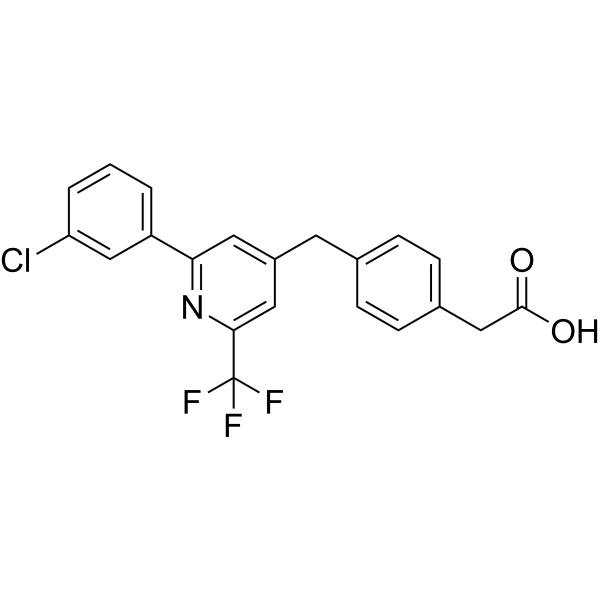
Zatolmilast (BPN14770) is a selective phosphodiesterase 4D (PDE4D) allosteric inhibitor with IC50s of 7.8 nM and 7.4 nM for PDE4D7 and PDE4D3, respectively.
For research use only. We do not sell to patients.
- Purity : 99.50%
- CAS No.: 1606974-33-7
- Formula: C21H15ClF3NO2
- Molecular Weight:405.80
-
Storage:Powder -20°C, 3 years , 4°C, 2 years ; In solvent -80°C, 2 years , -20°C, 1 year

To place orders, for customer services and technical support, please contact: MedChemExpress USA
Tel: 609-228-6898 E-mail: [email protected] [email protected]


-
 Biological Activity
-
Chemical Information
-
Solvent & Solubility
- Purity & Documentation
- References
-
 Help & FAQs


-
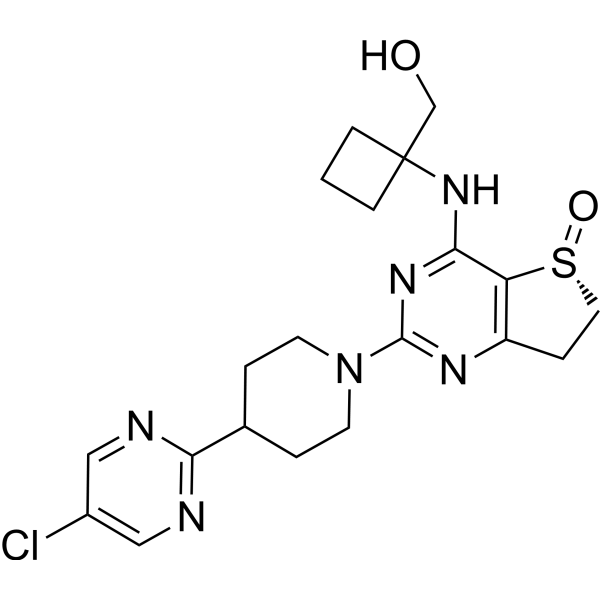
HY-153192
NerandomilastPDE4B Inhibitor -
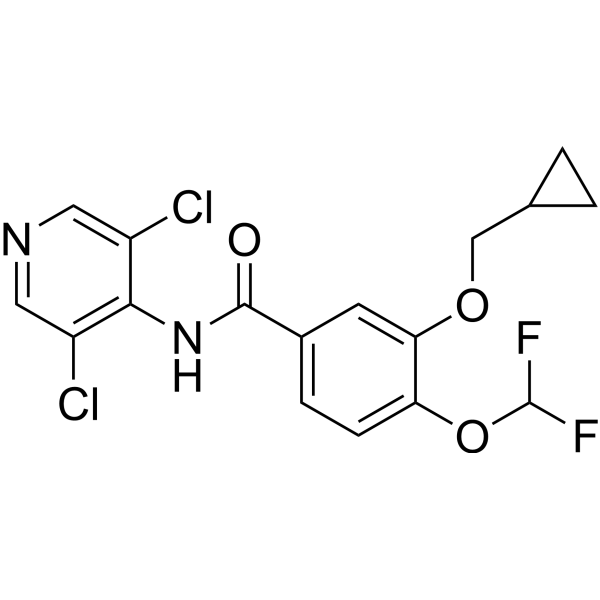
HY-15455
RoflumilastPDE4 Inhibitor -
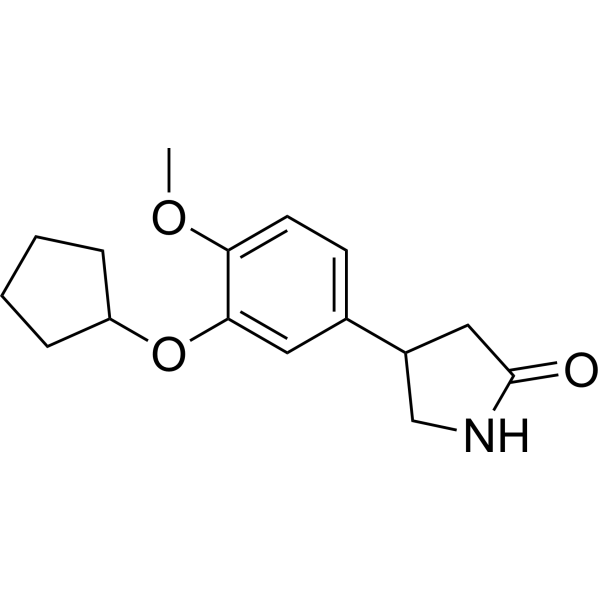
HY-16900
RolipramPDE4 Inhibitor -
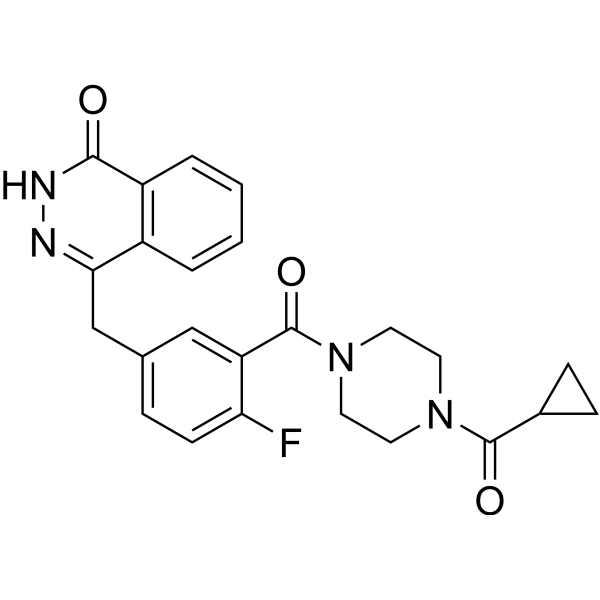
HY-10162
OlaparibPARP Inhibitor -
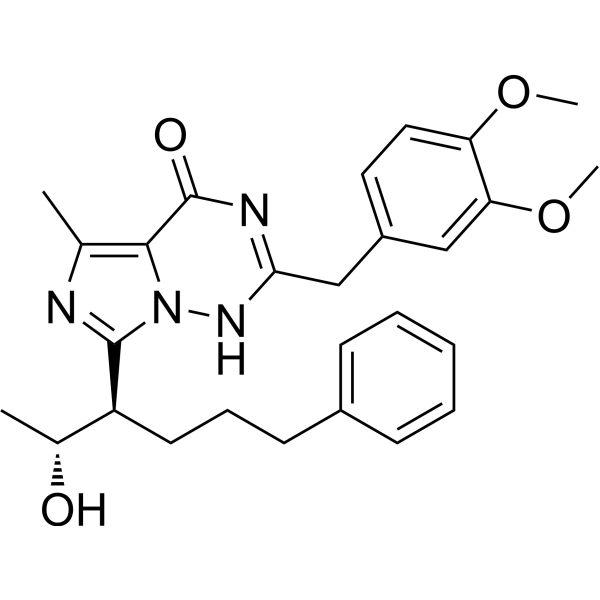
HY-14992
Bay 60-7550PDE2 Inhibitor -
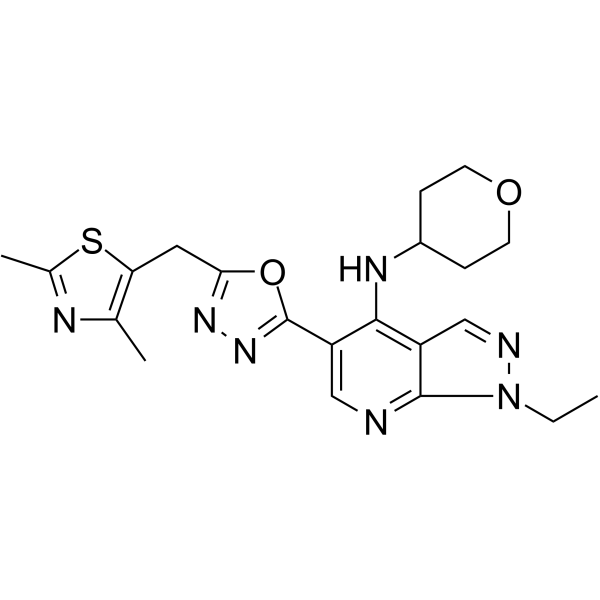
HY-106003
GSK356278PDE4 Inhibitor -

HY-114118
SemaglutideGLP-1R Agonist -
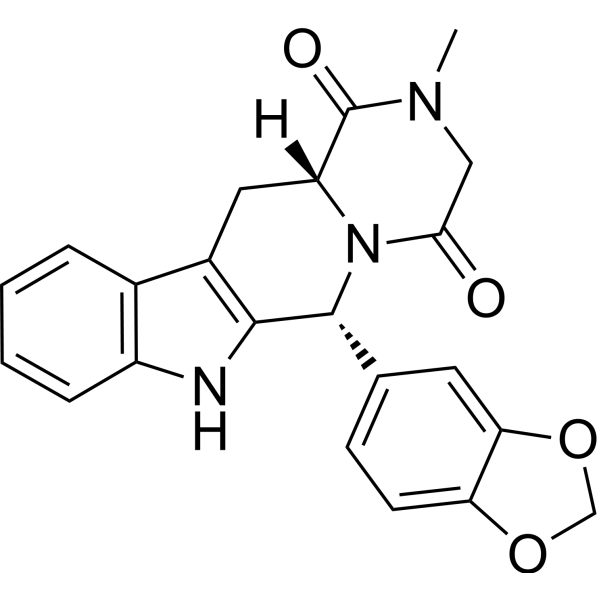
HY-90009A
TadalafilPDE5 Inhibitor -
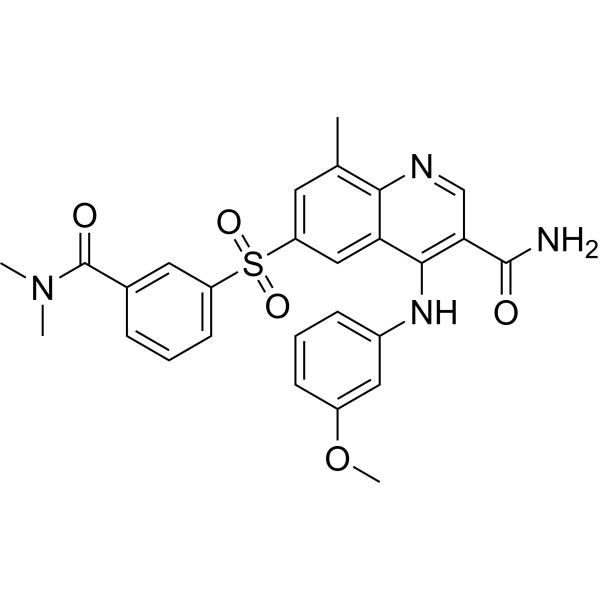
HY-10469
GSK256066Phosphodiesterase 4 Inhibitor -
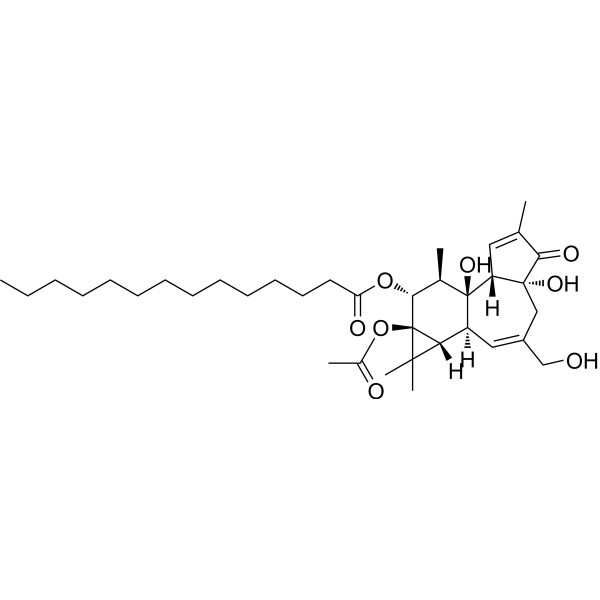
HY-18739
Phorbol 12-myristate 13-acetatePKC Activator -
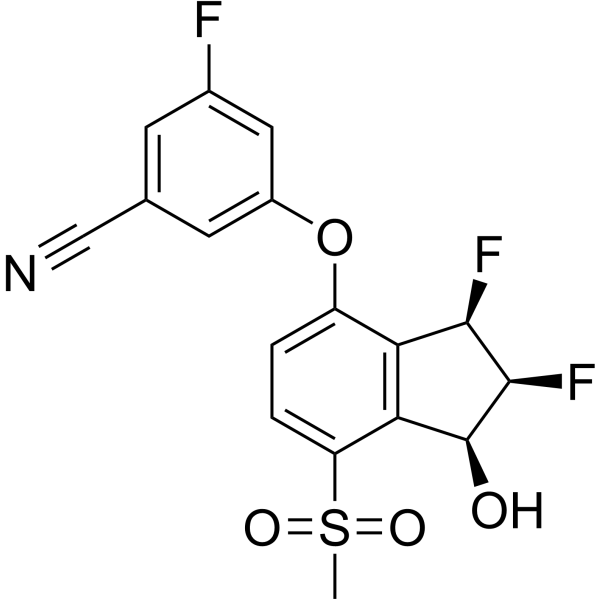
HY-125840
BelzutifanHIF-2α Inhibitor -
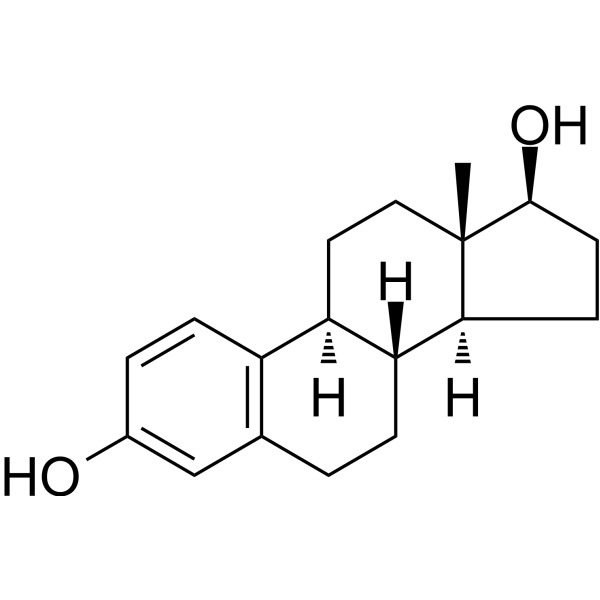
HY-B0141
EstradiolHuman Endogenous Metabolite
Publications Citing Use of MedChemExpress (MCE) Zatolmilast
More Customer Validation & Images

-
WB
-
WB


Biological Activity
Description
IC50 & Target
[1]|
PDE4D3 7.4 nM (IC50) |
PDE4D7 7.8 nM (IC50) |
Cellular Effect
|
Cell Line

|
Type | Value | Description | References |
|---|---|---|---|---|
| Sf9 | IC50 |
1018 nM
Compound: 28; BPN14770
|
Inhibition of recombinant human wild-type His6-tagged PDE4D7 UCR1 domain (S129 residues) expressed in baculovirus infected Sf9 insect cells using cAMP as substrate preincubated for 5 to 10 mins followed by substrate addition and measured for 10 mins by ye
Inhibition of recombinant human wild-type His6-tagged PDE4D7 UCR1 domain (S129 residues) expressed in baculovirus infected Sf9 insect cells using cAMP as substrate preincubated for 5 to 10 mins followed by substrate addition and measured for 10 mins by ye
|
[PMID: 31013090] |
| Sf9 | IC50 |
127 nM
Compound: 28; BPN14770
|
Inhibition of recombinant human His6-tagged PDE4D2 expressed in baculovirus infected Sf9 insect cells using cAMP as substrate preincubated for 5 to 10 mins followed by substrate addition and measured for 10 mins by yeast myokinase/pyruvate kinase/lactate
Inhibition of recombinant human His6-tagged PDE4D2 expressed in baculovirus infected Sf9 insect cells using cAMP as substrate preincubated for 5 to 10 mins followed by substrate addition and measured for 10 mins by yeast myokinase/pyruvate kinase/lactate
|
[PMID: 31013090] |
| Sf9 | IC50 |
2013 nM
Compound: 28; BPN14770
|
Inhibition of recombinant human His6-tagged PDE4B1 UCR1 S133D mutant expressed in baculovirus infected Sf9 insect cells using cAMP as substrate preincubated for 5 to 10 mins followed by substrate addition and measured for 10 mins by yeast myokinase/pyruva
Inhibition of recombinant human His6-tagged PDE4B1 UCR1 S133D mutant expressed in baculovirus infected Sf9 insect cells using cAMP as substrate preincubated for 5 to 10 mins followed by substrate addition and measured for 10 mins by yeast myokinase/pyruva
|
[PMID: 31013090] |
| Sf9 | IC50 |
6561 nM
Compound: 28; BPN14770
|
Inhibition of recombinant human His6-tagged PDE4D UCR2 deletion mutant catalytic domain expressed in baculovirus infected Sf9 insect cells using cAMP as substrate preincubated for 5 to 10 mins followed by substrate addition and measured for 10 mins by yea
Inhibition of recombinant human His6-tagged PDE4D UCR2 deletion mutant catalytic domain expressed in baculovirus infected Sf9 insect cells using cAMP as substrate preincubated for 5 to 10 mins followed by substrate addition and measured for 10 mins by yea
|
[PMID: 31013090] |
| Sf9 | IC50 |
7.4 nM
Compound: 28; BPN14770
|
Inhibition of recombinant human His6-tagged PDE4D3 UCR1 S54D mutant expressed in baculovirus infected Sf9 insect cells using cAMP as substrate preincubated for 5 to 10 mins followed by substrate addition and measured for 10 mins by yeast myokinase/pyruvat
Inhibition of recombinant human His6-tagged PDE4D3 UCR1 S54D mutant expressed in baculovirus infected Sf9 insect cells using cAMP as substrate preincubated for 5 to 10 mins followed by substrate addition and measured for 10 mins by yeast myokinase/pyruvat
|
[PMID: 31013090] |
| Sf9 | IC50 |
7.8 nM
Compound: 28; BPN14770
|
Inhibition of recombinant human His6-tagged PDE4D7 UCR1 S129D mutant expressed in baculovirus infected Sf9 insect cells using cAMP as substrate preincubated for 5 to 10 mins followed by substrate addition and measured for 10 mins by yeast myokinase/pyruva
Inhibition of recombinant human His6-tagged PDE4D7 UCR1 S129D mutant expressed in baculovirus infected Sf9 insect cells using cAMP as substrate preincubated for 5 to 10 mins followed by substrate addition and measured for 10 mins by yeast myokinase/pyruva
|
[PMID: 31013090] |
In Vivo
Zatolmilast (0.1-30 mg/kg; p.o.; 24 hours) provides cognitive benefit in the mouse novel object recognition (NOR) at doses above 0.3 mg/kg[2].
MedChemExpress (MCE) has not independently confirmed the accuracy of these methods. They are for reference only.
-
Animal Model:C57Bl6 mice[2]
-
Dosage:0.1, 0.3, 1, 3, 10, 30 mg/kg
-
Administration:p.o.; 24 hours
-
Result:Significantly improved novel object discrimination at doses above 0.3 mg/kg.
Clinical Trial
| NCT Number | Sponsor | Condition | Start Date |
Phase
|
|---|---|---|---|---|
| NCT01329991 | Plexxikon| | 2011-05 | PHASE1 |


Chemical Information
-
CAS No. 1606974-33-7
-
Appearance Solid
-
Molecular Weight 405.80
-
Formula C21H15ClF3NO2
-
Color White to off-white
-
SMILES
O=C(O)CC1=CC=C(CC2=CC(C3=CC=CC(Cl)=C3)=NC(C(F)(F)F)=C2)C=C1
-
Synonyms
BPN14770
-
Shipping
Room temperature in continental US; may vary elsewhere.
-
Storage
Powder -20°C 3 years 4°C 2 years In solvent -80°C 2 years -20°C 1 year


Publications (5)
-
Journal Impact Factor
-
Most Recent
-
Nat Metab
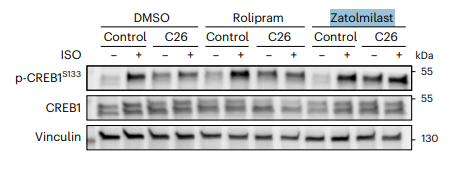
Impaired cAMP-PKA-CREB1 signalling drives mitochondrial dysfunction in skeletal muscle during cancer cachexia. [Abstract]2025 Nov 12. PMID: 41224958
Zatolmilast purchased from MedChemExpress. Usage Cited in: Nat Metab. 2025 Nov 12. [Abstract]
Densitometry analysis of phosphorylated over total CREB1 was performed 10 min after 10 μM ISO treatment in human primary myotubes pretreated for 24 h with C26 TCM. Two minutes before the ISO challenge, 10 μM rolipram, 10 μM Zatolmilast, or vehicle (DMSO) was added. n = 3 independent experiments.
-
-
BMC Neurosci
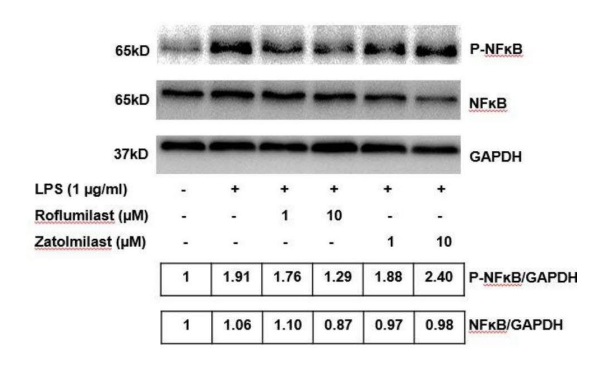
Differential effects of two phosphodiesterase 4 inhibitors against lipopolysaccharide-induced neuroinflammation in mice. [Abstract]2023 Jul 31;24(1):39. PMID: 37525115
Zatolmilast purchased from MedChemExpress. Usage Cited in: BMC Neurosci. 2023 Jul 31;24(1):39. [Abstract]
Western blotting results showed phosphorylated (p-)NF-κB and NF-κB protein expression regulated by the PDE4 inhibitors Roflumilast and Zatolmilast (1–10 μM).
-
Behav Brain Res
Treatment with the selective PDE4B inhibitor A-33 or PDE4D inhibitor zatolmilast prevents sleep deprivation-induced deficits in spatial pattern separation. [Abstract]2024 Feb 29:459:114798. PMID: 38056709 -


Solvent & Solubility
In Vitro:
DMSO : ≥ 100 mg/mL (246.43 mM; Hygroscopic DMSO has a significant impact on the solubility of product, please use newly opened DMSO)
* "≥" means soluble, but saturation unknown.
Please refer to the solubility information to select the appropriate solvent. Once prepared, please aliquot and store the solution to prevent product inactivation from repeated freeze-thaw cycles.
Storage method and period of stock solution: -80°C, 2 years; -20°C, 1 year. When stored at -80°C, please use it within 2 years. When stored at -20°C, please use it within 1 year.
Please refer to the solubility information to select the appropriate solvent. Once prepared, please aliquot and store the solution to prevent product inactivation from repeated freeze-thaw cycles.
Storage method and period of stock solution: -80°C, 2 years; -20°C, 1 year. When stored at -80°C, please use it within 2 years. When stored at -20°C, please use it within 1 year.
Concentration (start) × Volume (start) = Concentration (final) × Volume (final)
In Vivo:
Select the appropriate dissolution method based on your experimental animal and administration route.
- For the following dissolution methods, please ensure to first prepare a clear stock solution using an In Vitro approach and then sequentially add co-solvents:
- To ensure reliable experimental results, the clarified stock solution can be appropriately stored based on storage conditions. As for the working solution for In Vivo experiments, it is recommended to prepare freshly and use it on the same day.
- The percentages shown for the solvents indicate their volumetric ratio in the final prepared solution. If precipitation or phase separation occurs during preparation, heat and/or sonication can be used to aid dissolution.
Add each solvent one by one: 10% DMSO 40% PEG300 5% Tween-80 45% Saline
Solubility: ≥ 2.17 mg/mL (5.35 mM); Clear solution
This protocol yields a clear solution of ≥ 2.17 mg/mL (saturation unknown).
Taking 1 mL working solution as an example, add 100 μL DMSO stock solution (21.7 mg/mL) to 400 μL PEG300, and mix evenly; then add 50 μL Tween-80 and mix evenly; then add 450 μL Saline to adjust the volume to 1 mL.
Preparation of Saline: Dissolve 0.9 g sodium chloride in ddH₂O and dilute to 100 mL to obtain a clear Saline solution.
In Vivo Dissolution Calculator
Please enter the basic information of animal experiments:
-
-
-
-
Recommended: Prepare an additional quantity of animals to account for potential losses during experiments.
Please enter your animal formula composition:
-
%DMSO +
Recommended: Keep the proportion of DMSO in working solution below 2% if your animal is weak.
-
%+
-
+%Tween-80 + +
-
%Saline +
The co-solvents required include: DMSO, . All of co-solvents are available by MedChemExpress (MCE). , Tween 80. All of co-solvents are available by MedChemExpress (MCE).
Working solution concentration: 0.22 mg/mL
Method for preparing stock solution: mg drug dissolved in μL DMSO. Stock solution concentration: mg/mL.
1. Take μL DMSO stock solution;
2. Add μL .
μL , mix evenly;
3. Then add μL Tween 80, mix evenly;
4. Then add μL
Please ensure that the stock solution in the first step is dissolved to a clear state, and add co-solvents in sequence. You can use ultrasonic heating (ultrasonic cleaner, recommended frequency 20-40 kHz), vortexing, etc. to assist dissolution.


Purity & Documentation
-
Data Sheet (272 KB)
-
SDS (393 KB)
- English - EN (393 KB)
- Français - FR (393 KB)
- Deutsch - DE (393 KB)
- Norwegian - NO (393 KB)
- Español - ES (393 KB)
- Swedish - SV (393 KB)
- Italian - IT (393 KB)
- Korean - KR (393 KB)
- Portuguese - PT (393 KB)
-
Handling Instructions (2659 KB)
References
[1]. Ricciarelli R, et al. Memory-enhancing effects of GEBR-32a, a new PDE4D inhibitor holding promise for the treatment of Alzheimer's disease. Sci Rep. 2017 Apr 12;7:46320. [Content Brief]
[2]. Gurney ME, et al. Design and Synthesis of Selective Phosphodiesterase 4D (PDE4D) Allosteric Inhibitors for the Treatment of Fragile X Syndrome and Other Brain Disorders. J Med Chem. 2019 May 23;62(10):4884-4901. [Content Brief]


Complete Stock Solution Preparation Table
Please refer to the solubility information to select the appropriate solvent. Once prepared, please aliquot and store the solution to prevent product inactivation from repeated freeze-thaw cycles.
Storage method and period of stock solution: -80°C, 2 years; -20°C, 1 year. When stored at -80°C, please use it within 2 years. When stored at -20°C, please use it within 1 year.
| Optional Solvent | Concentration Solvent Mass | 1 mg | 5 mg | 10 mg | 25 mg |
|---|---|---|---|---|---|
| DMSO | 1 mM | 2.4643 mL | 12.3213 mL | 24.6427 mL | 61.6067 mL |
| 5 mM | 0.4929 mL | 2.4643 mL | 4.9285 mL | 12.3213 mL | |
| 10 mM | 0.2464 mL | 1.2321 mL | 2.4643 mL | 6.1607 mL | |
| 15 mM | 0.1643 mL | 0.8214 mL | 1.6428 mL | 4.1071 mL | |
| 20 mM | 0.1232 mL | 0.6161 mL | 1.2321 mL | 3.0803 mL | |
| 25 mM | 0.0986 mL | 0.4929 mL | 0.9857 mL | 2.4643 mL | |
| 30 mM | 0.0821 mL | 0.4107 mL | 0.8214 mL | 2.0536 mL | |
| 40 mM | 0.0616 mL | 0.3080 mL | 0.6161 mL | 1.5402 mL | |
| 50 mM | 0.0493 mL | 0.2464 mL | 0.4929 mL | 1.2321 mL | |
| 60 mM | 0.0411 mL | 0.2054 mL | 0.4107 mL | 1.0268 mL | |
| 80 mM | 0.0308 mL | 0.1540 mL | 0.3080 mL | 0.7701 mL | |
| 100 mM | 0.0246 mL | 0.1232 mL | 0.2464 mL | 0.6161 mL |


Zatolmilast Related Classifications
HY-117571 Related Classifications
 Powered by Bioz