



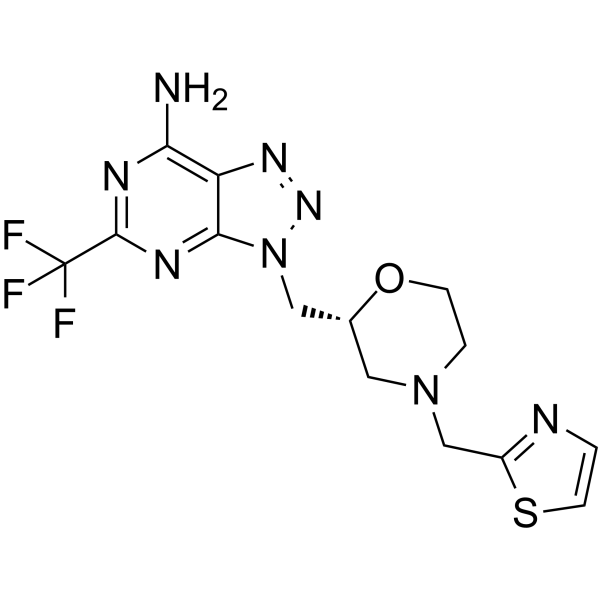
PF-04957325
Based on 14 publication(s) in Google Scholar
PF-04957325 is a highly potent and selective PDE8 inhibitor, with IC50s of 0.7 nM and 0.3 nM for PDE8A and PDE8B, respectively.
For research use only. We do not sell to patients.
- Purity : 99.55%
- CAS No.: 1305115-80-3
- Formula: C14H15F3N8OS
- Molecular Weight:400.38
-
Storage:Powder -20°C, 3 years , 4°C, 2 years ; In solvent -80°C, 2 years , -20°C, 1 year

To place orders, for customer services and technical support, please contact: MedChemExpress USA
Tel: 609-228-6898 E-mail: [email protected] [email protected]


-
 Biological Activity
-
Chemical Information
-
Solvent & Solubility
- Purity & Documentation
- References
-
 Help & FAQs


-
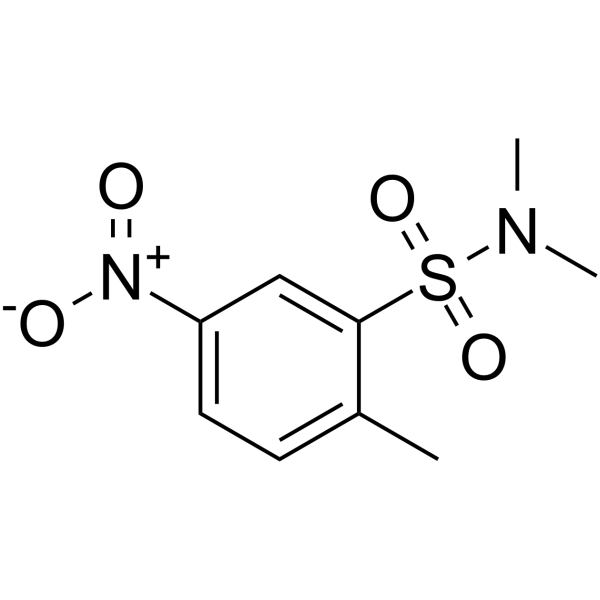
HY-109586
BRL-50481PDE Inhibitor -
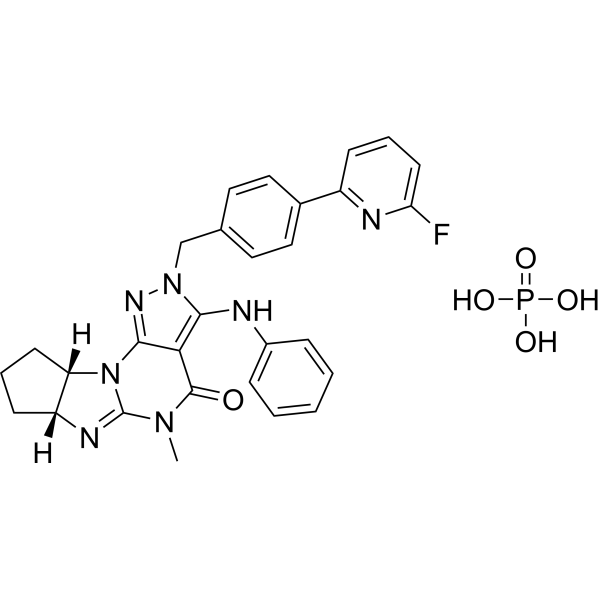
HY-12501A
ITI-214PDE1 Inhibitor -
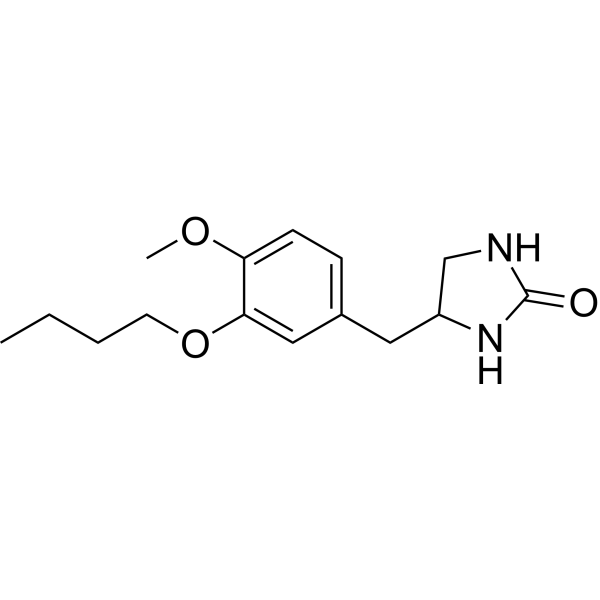
HY-100927
Ro 20-1724PDE4/PDE IV Inhibitor -
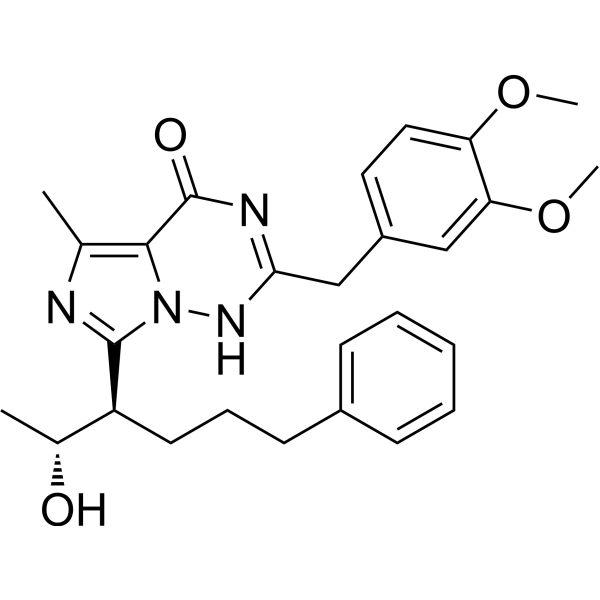
HY-14992
Bay 60-7550PDE2 Inhibitor -
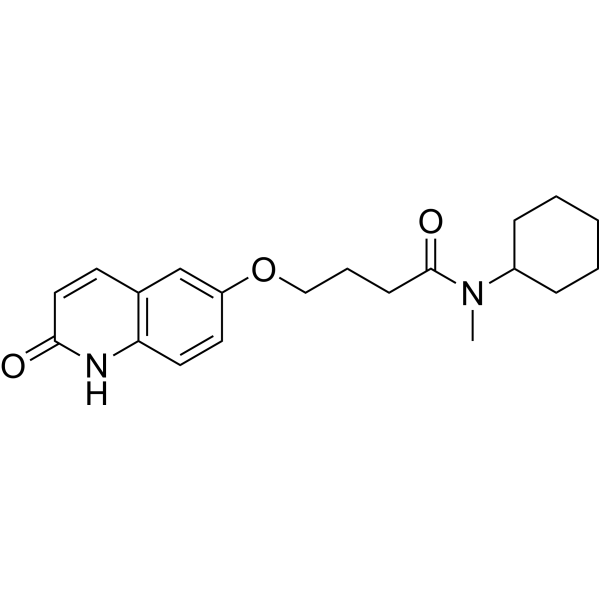
HY-101312
CilostamidePDE3 Inhibitor -
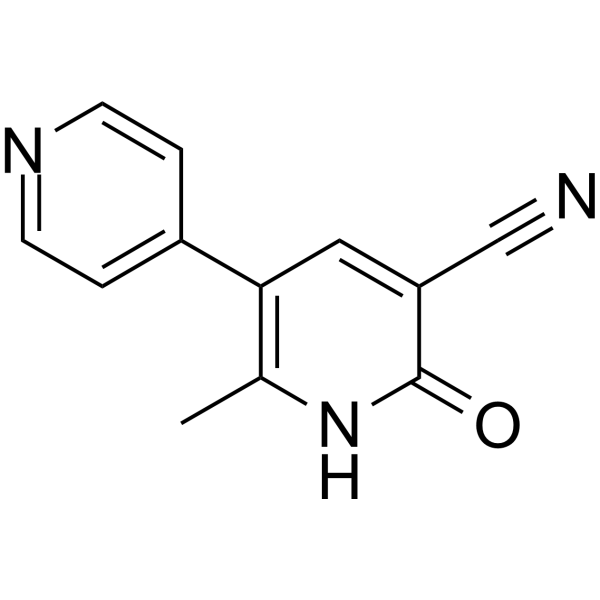
HY-14252
Milrinone -
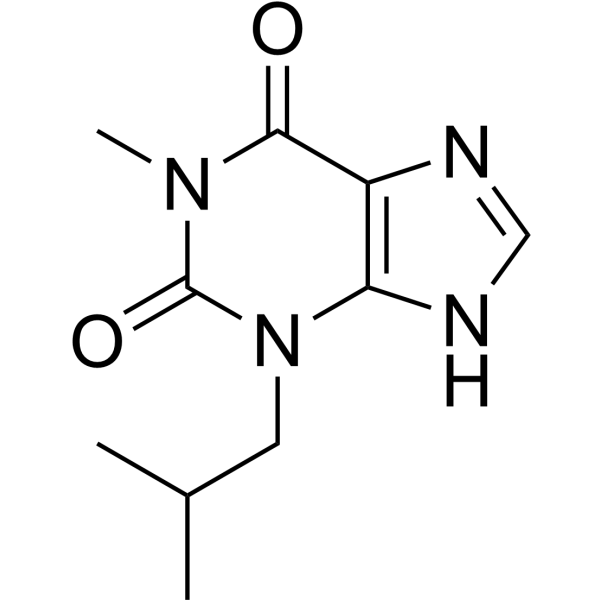
HY-12318
IBMXPDE Inhibitor -
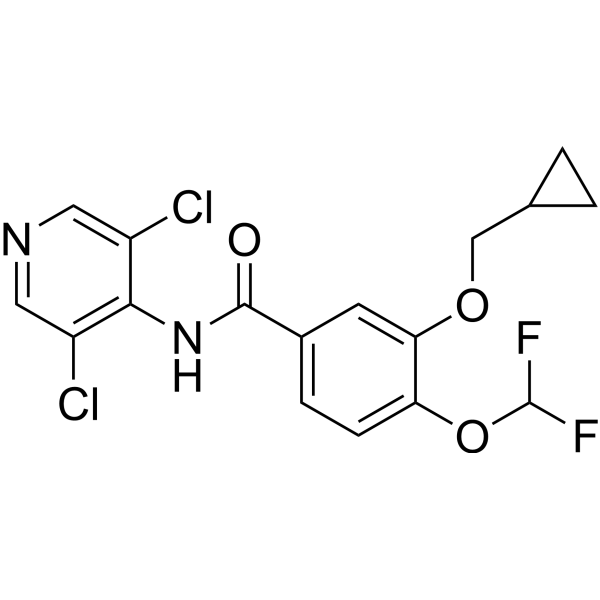
HY-15455
RoflumilastPDE4 Inhibitor -

HY-12318R
IBMX (Standard)PDE Inhibitor -
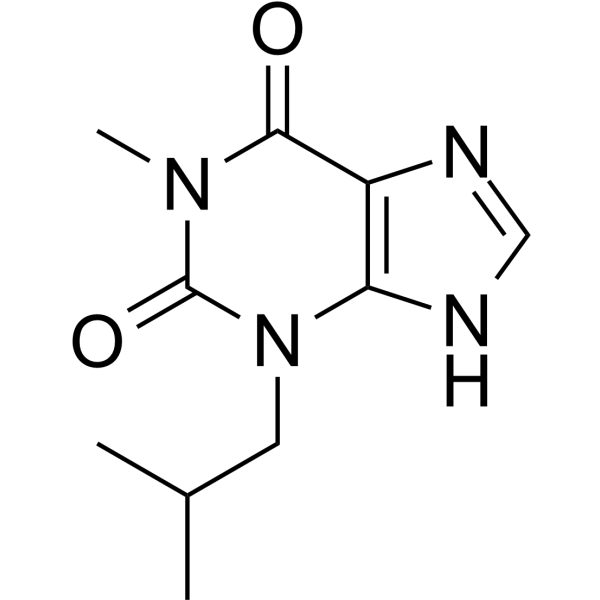
HY-12318G
IBMX (GMP)PDE Inhibitor -
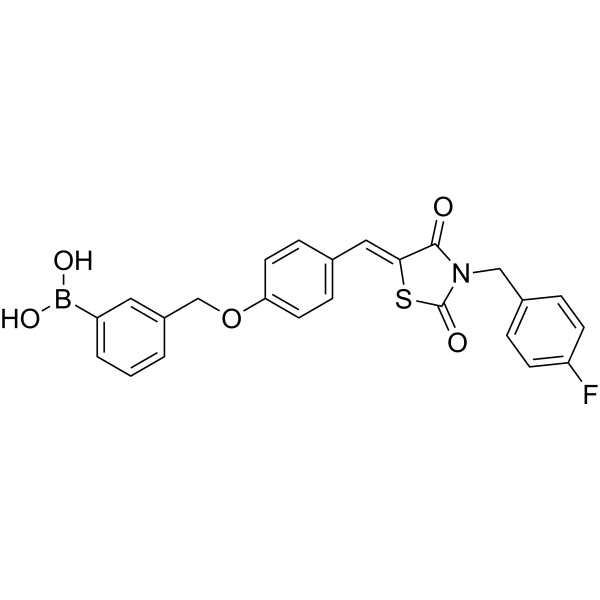
HY-19329
HA130Autotaxin Inhibitor -
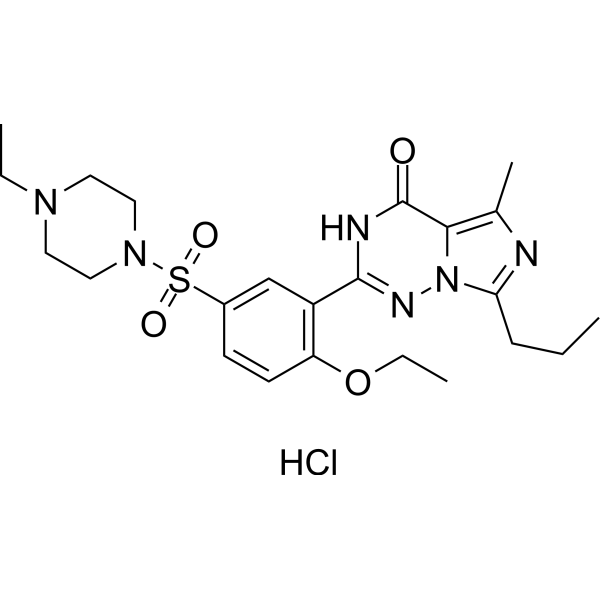
HY-B0442A
Vardenafil hydrochloridePDE5 Inhibitor
Publications Citing Use of MedChemExpress (MCE) PF-04957325
More- Cell Chem Biol. 2019 Oct 17;26(10):1393-1406.e7. [Abstract]
- Sci Signal. 2020 Nov 24;13(659):eaax0273. [Abstract]
- Inflamm Res. 2024 Nov;73(11):2043-2056. [Abstract]
- EMBO Rep. 2021 Dec 23;e53135. [Abstract]
- Sci Rep. 2024 Jan 3;14(1):436. [Abstract]
- Int J Neuropsychopharmacol. 2025 May 9;28(5):pyaf028. [Abstract]
- Neurochem Res. 2026 Jul 9;51(4):210.
- Endocrinology. 2018 May 1;159(5):2142-2152. [Abstract]
- PLoS One. 2019 Aug 23;14(8):e0215188. [Abstract]
- Cell Physiol Biochem. 2021 Dec 23;55(6):784-804. [Abstract]
- J Plant Res. 2022 Jan;135(1):137-144. [Abstract]
- Universität Hamburg. 2022 Oct.
- Preprints. 2021, 2021040174.
- University of Adelaide. 2019 Dec.


Biological Activity
Description
IC50 & Target
IC50: 0.7 nM (PDE8A), less than 0.3 nM (PDE8B)[1]
In Vitro
PF-04957325 is over two orders of magnitude less efficient than PICL in suppressing polyclonal Teff cell proliferation, and shows no effect on cytokine gene expression in these cells, despite its robust effect on T cell adhesion[1]. PF-04957325 is a selective PDE8 inhibitor and inhibits breast cancer cell migration[2]. PF-04957325 greatly potentiates steroidogenesis in WT adrenal cells. PF-04957325 shows a reported IC50 of 0.7 nM against PDE8A, 0.2 nM against PDE8B, and > 1.5 μM against all other PDE isoforms[3]. PF-04957325 treatment of WT Leydig cells or MA10 cells increases steroid production but has no effect in PDE8A (-/-)/B(-/-) double-knockout cells, confirming the selectivity of the drug. Moreover, under basal conditions, cotreatment with PF-04957325 plus rolipram, a PDE4-selective inhibitor, synergistically potentiates steroid production[4].
MedChemExpress (MCE) has not independently confirmed the accuracy of these methods. They are for reference only.


Chemical Information
-
CAS No. 1305115-80-3
-
Appearance Solid
-
Molecular Weight 400.38
-
Formula C14H15F3N8OS
-
Color White to off-white
-
SMILES
NC1=C(N=NN2C[C@H]3CN(CC4=NC=CS4)CCO3)C2=NC(C(F)(F)F)=N1
-
Shipping
Room temperature in continental US; may vary elsewhere.
-
Storage
Powder -20°C 3 years 4°C 2 years In solvent -80°C 2 years -20°C 1 year


Publications (14)
-
Journal Impact Factor
-
Most Recent
-
Cell Chem Biol
2019 Oct 17;26(10):1393-1406.e7. PMID: 31353320 -
Sci Signal
Airway relaxation mechanisms and structural basis of osthole for improving lung function in asthma. [Abstract]2020 Nov 24;13(659):eaax0273. PMID: 33234690 -
Inflamm Res
Cyclic adenosine monophosphate critically modulates cardiac GLP-1 receptor's anti-inflammatory effects. [Abstract]2024 Nov;73(11):2043-2056. PMID: 39305297 -
EMBO Rep
A longer isoform of Stim1 is a negative SOCE regulator but increases cAMP-modulated NFAT signaling. [Abstract]2021 Dec 23;e53135. PMID: 34942054 -
Sci Rep
The follicle-stimulating hormone triggers rapid changes in mitochondrial structure and function in porcine cumulus cells. [Abstract]2024 Jan 3;14(1):436. PMID: 38172520 -
Int J Neuropsychopharmacol
Cognitive improvement effects of PF-04957325, a phosphodiesterase-8 inhibitor, in mouse models of Alzheimer's disease via modulating neuroinflammation. [Abstract]2025 May 9;28(5):pyaf028. PMID: 40312965 -
-
Endocrinology
Multiple cAMP Phosphodiesterases Act Together to Prevent Premature Oocyte Meiosis and Ovulation. [Abstract]2018 May 1;159(5):2142-2152. PMID: 29608743 -
PLoS One
Regulation of cAMP accumulation and activity by distinct phosphodiesterase subtypes in INS-1 cells and human pancreatic β-cells. [Abstract]2019 Aug 23;14(8):e0215188. PMID: 31442224 -
Cell Physiol Biochem
2021 Dec 23;55(6):784-804. PMID: 34936285 -
J Plant Res
Characterization of the cAMP phosphodiesterase domain in plant adenylyl cyclase/cAMP phosphodiesterase CAPE from the liverwort Marchantia polymorpha. [Abstract]2022 Jan;135(1):137-144. PMID: 34779957 -
-
-


Solvent & Solubility
In Vitro:
DMSO : ≥ 100 mg/mL (249.76 mM; Hygroscopic DMSO has a significant impact on the solubility of product, please use newly opened DMSO)
* "≥" means soluble, but saturation unknown.
Please refer to the solubility information to select the appropriate solvent. Once prepared, please aliquot and store the solution to prevent product inactivation from repeated freeze-thaw cycles.
Storage method and period of stock solution: -80°C, 2 years; -20°C, 1 year. When stored at -80°C, please use it within 2 years. When stored at -20°C, please use it within 1 year.
Please refer to the solubility information to select the appropriate solvent. Once prepared, please aliquot and store the solution to prevent product inactivation from repeated freeze-thaw cycles.
Storage method and period of stock solution: -80°C, 2 years; -20°C, 1 year. When stored at -80°C, please use it within 2 years. When stored at -20°C, please use it within 1 year.
Concentration (start) × Volume (start) = Concentration (final) × Volume (final)
In Vivo:
Select the appropriate dissolution method based on your experimental animal and administration route.
- For the following dissolution methods, please ensure to first prepare a clear stock solution using an In Vitro approach and then sequentially add co-solvents:
- To ensure reliable experimental results, the clarified stock solution can be appropriately stored based on storage conditions. As for the working solution for In Vivo experiments, it is recommended to prepare freshly and use it on the same day.
- The percentages shown for the solvents indicate their volumetric ratio in the final prepared solution. If precipitation or phase separation occurs during preparation, heat and/or sonication can be used to aid dissolution.
Add each solvent one by one: 10% DMSO 40% PEG300 5% Tween-80 45% Saline
Solubility: ≥ 2.5 mg/mL (6.24 mM); Clear solution
This protocol yields a clear solution of ≥ 2.5 mg/mL (saturation unknown).
Taking 1 mL working solution as an example, add 100 μL DMSO stock solution (25.0 mg/mL) to 400 μL PEG300, and mix evenly; then add 50 μL Tween-80 and mix evenly; then add 450 μL Saline to adjust the volume to 1 mL.
Preparation of Saline: Dissolve 0.9 g sodium chloride in ddH₂O and dilute to 100 mL to obtain a clear Saline solution.
Add each solvent one by one: 10% DMSO 90% (20% SBE-β-CD in Saline)
Solubility: ≥ 2.5 mg/mL (6.24 mM); Clear solution
This protocol yields a clear solution of ≥ 2.5 mg/mL (saturation unknown).
Taking 1 mL working solution as an example, add 100 μL DMSO stock solution (25.0 mg/mL) to 900 μL 20% SBE-β-CD in Saline, and mix evenly.
Preparation of 20% SBE-β-CD in Saline (4°C, storage for one week): 2 g SBE-β-CD powder is dissolved in 10 mL Saline, completely dissolve until clear.
In Vivo Dissolution Calculator
Please enter the basic information of animal experiments:
-
-
-
-
Recommended: Prepare an additional quantity of animals to account for potential losses during experiments.
Please enter your animal formula composition:
-
%DMSO +
Recommended: Keep the proportion of DMSO in working solution below 2% if your animal is weak.
-
%+
-
+%Tween-80 + +
-
%Saline +
The co-solvents required include: DMSO, . All of co-solvents are available by MedChemExpress (MCE). , Tween 80. All of co-solvents are available by MedChemExpress (MCE).
Working solution concentration: 0.22 mg/mL
Method for preparing stock solution: mg drug dissolved in μL DMSO. Stock solution concentration: mg/mL.
1. Take μL DMSO stock solution;
2. Add μL .
μL , mix evenly;
3. Then add μL Tween 80, mix evenly;
4. Then add μL
Please ensure that the stock solution in the first step is dissolved to a clear state, and add co-solvents in sequence. You can use ultrasonic heating (ultrasonic cleaner, recommended frequency 20-40 kHz), vortexing, etc. to assist dissolution.


Purity & Documentation
-
Data Sheet (278 KB)
-
SDS (406 KB)
- English - EN (406 KB)
- Français - FR (406 KB)
- Deutsch - DE (406 KB)
- Norwegian - NO (406 KB)
- Español - ES (406 KB)
- Swedish - SV (406 KB)
- Italian - IT (406 KB)
- Korean - KR (406 KB)
- Portuguese - PT (406 KB)
-
Handling Instructions (2659 KB)
References
[1]. Vang AG, et al. Differential Expression and Function of PDE8 and PDE4 in Effector T cells: Implications for PDE8 as a Drug Target in Inflammation. Front Pharmacol. 2016 Aug 23;7:259. [Content Brief]
[2]. Dong H, et al. Inhibition of breast cancer cell migration by activation of cAMP signaling. Breast Cancer Res Treat. 2015 Jul;152(1):17-28. [Content Brief]
[3]. Tsai LC, et al. Regulation of adrenal steroidogenesis by the high-affinity phosphodiesterase 8 family. Horm Metab Res. 2012 Sep;44(10):790-4. [Content Brief]
[4]. Shimizu-Albergine M, et al. cAMP-specific phosphodiesterases 8A and 8B, essential regulators of Leydig cell steroidogenesis. Mol Pharmacol. 2012 Apr;81(4):556-66. [Content Brief]


Complete Stock Solution Preparation Table
Please refer to the solubility information to select the appropriate solvent. Once prepared, please aliquot and store the solution to prevent product inactivation from repeated freeze-thaw cycles.
Storage method and period of stock solution: -80°C, 2 years; -20°C, 1 year. When stored at -80°C, please use it within 2 years. When stored at -20°C, please use it within 1 year.
| Optional Solvent | Concentration Solvent Mass | 1 mg | 5 mg | 10 mg | 25 mg |
|---|---|---|---|---|---|
| DMSO | 1 mM | 2.4976 mL | 12.4881 mL | 24.9763 mL | 62.4407 mL |
| 5 mM | 0.4995 mL | 2.4976 mL | 4.9953 mL | 12.4881 mL | |
| 10 mM | 0.2498 mL | 1.2488 mL | 2.4976 mL | 6.2441 mL | |
| 15 mM | 0.1665 mL | 0.8325 mL | 1.6651 mL | 4.1627 mL | |
| 20 mM | 0.1249 mL | 0.6244 mL | 1.2488 mL | 3.1220 mL | |
| 25 mM | 0.0999 mL | 0.4995 mL | 0.9991 mL | 2.4976 mL | |
| 30 mM | 0.0833 mL | 0.4163 mL | 0.8325 mL | 2.0814 mL | |
| 40 mM | 0.0624 mL | 0.3122 mL | 0.6244 mL | 1.5610 mL | |
| 50 mM | 0.0500 mL | 0.2498 mL | 0.4995 mL | 1.2488 mL | |
| 60 mM | 0.0416 mL | 0.2081 mL | 0.4163 mL | 1.0407 mL | |
| 80 mM | 0.0312 mL | 0.1561 mL | 0.3122 mL | 0.7805 mL | |
| 100 mM | 0.0250 mL | 0.1249 mL | 0.2498 mL | 0.6244 mL |


PF-04957325 Related Classifications
HY-15426 Related Classifications
 Powered by Bioz