



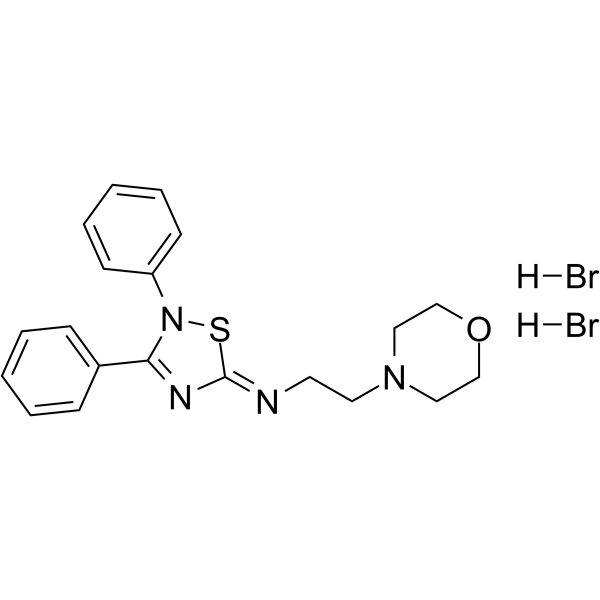
VP3.15 dihydrobromide
Based on 3 publication(s) in Google Scholar
VP3.15 dihydrobromide is a highly potent, orally bioavailable, and CNS-penetrant PDE7-GSK3 dual inhibitor, with IC50 values of 1.59 μM and 0.88 μM against PDE7 and GSK3, respectively. VP3.15 dihydrobromide elevates intracellular cAMP levels, suppresses immune responses, enhances remyelination, limits excessive tau phosphorylation, and alleviates neuroinflammation and neuronal loss. VP3.15 dihydrobromide promotes oligodendrocyte precursor cell differentiation, improves in vivo remyelination, inhibits autoimmune encephalomyelitis, and mitigates germinal matrix-intraventricular hemorrhage-related brain injury, cerebral atrophy, ventricular enlargement, and cognitive impairment. VP3.15 dihydrobromide can be used in research related to multiple sclerosis and germinal matrix-intraventricular hemorrhage.
For research use only. We do not sell to patients.
- Purity : 98.0%
- CAS No.: 1281681-33-1
- Formula: C20H24Br2N4OS
- Molecular Weight:528.30
-
Storage:
4°C, sealed storage, away from moisture
* In solvent : -80°C, 6 months; -20°C, 1 month (sealed storage, away from moisture)

To place orders, for customer services and technical support, please contact: MedChemExpress USA
Tel: 609-228-6898 E-mail: [email protected] [email protected]


-
 Biological Activity
-
Chemical Information
-
Solvent & Solubility
- Protocols
- Purity & Documentation
- References
-
 Help & FAQs


-
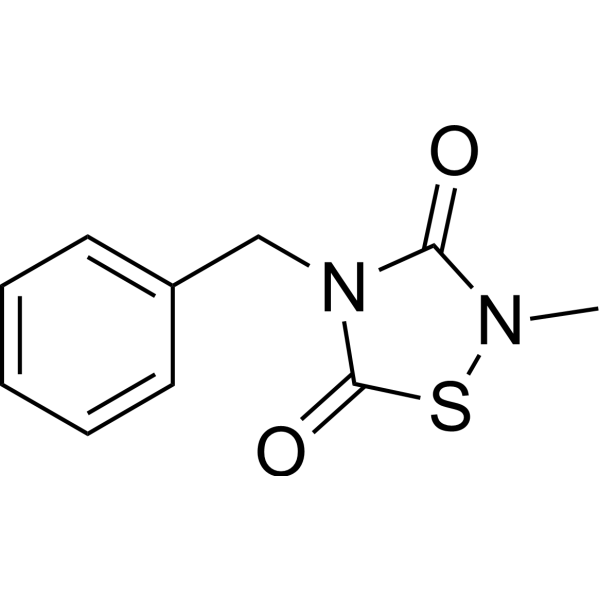
HY-11012
TDZD-8GSK-3 Inhibitor -
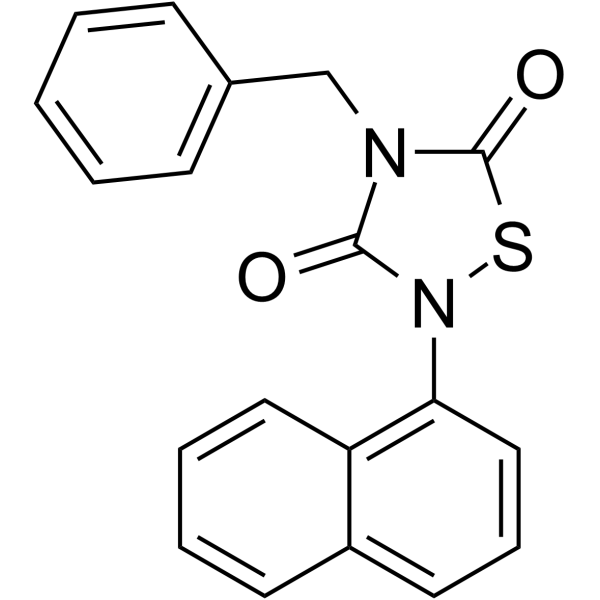
HY-14872
TideglusibGSK-3 Inhibitor -
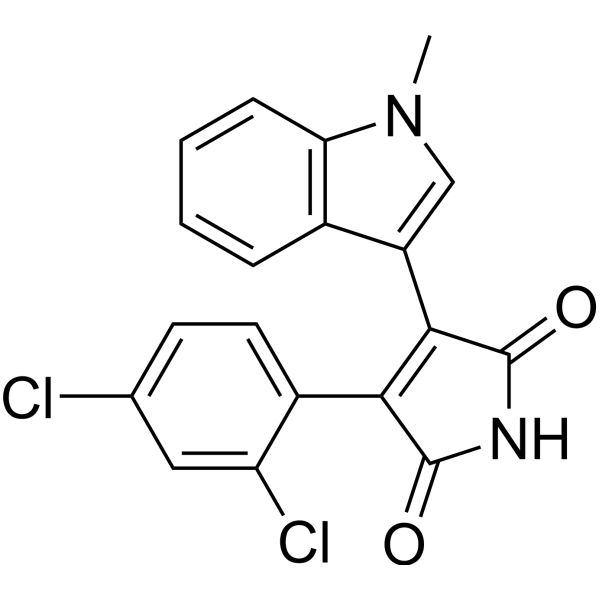
HY-12012
SB 216763Autophagy Inducer -
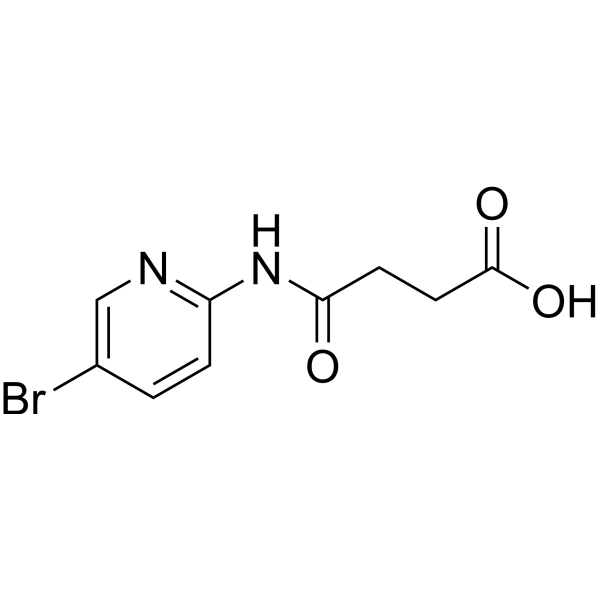
HY-12524
BikininGSK-3 Inhibitor -
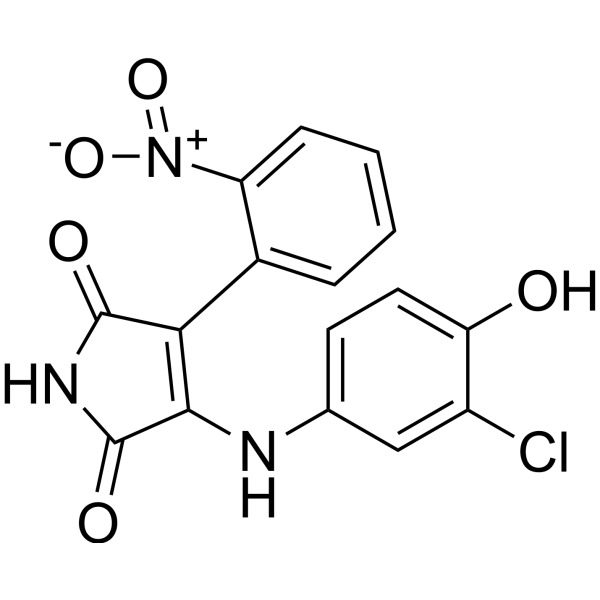
HY-15438
SB 415286Apoptosis Inducer -
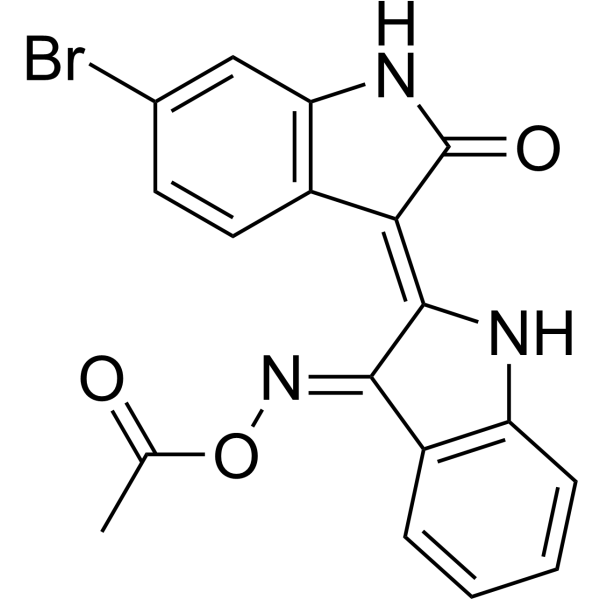
HY-15356
BIO-acetoxime -
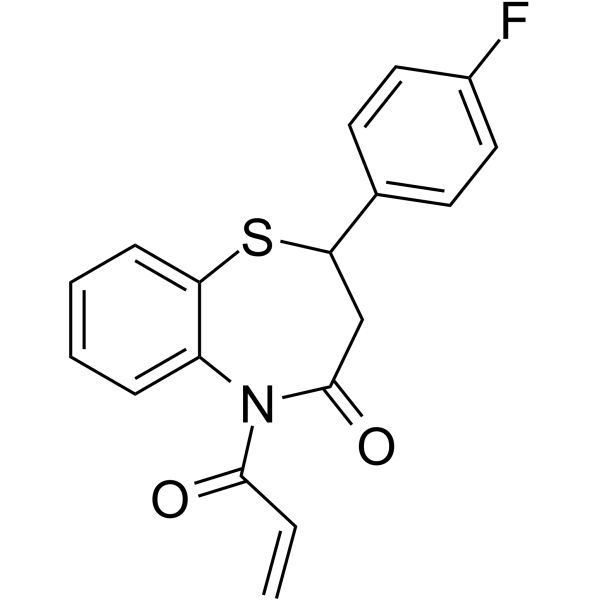
HY-141480
GSK-3β inhibitor 3GSK-3β Inhibitor -
HY-124607B
BRD3731GSK3β Inhibitor -
HY-14679
GSK3β inhibitor IIGSK3β Inhibitor -
HY-16294
LY2090314GSK-3 Inhibitor -
HY-13973A
GSK-3 inhibitor 1GSK-3 Inhibitor -
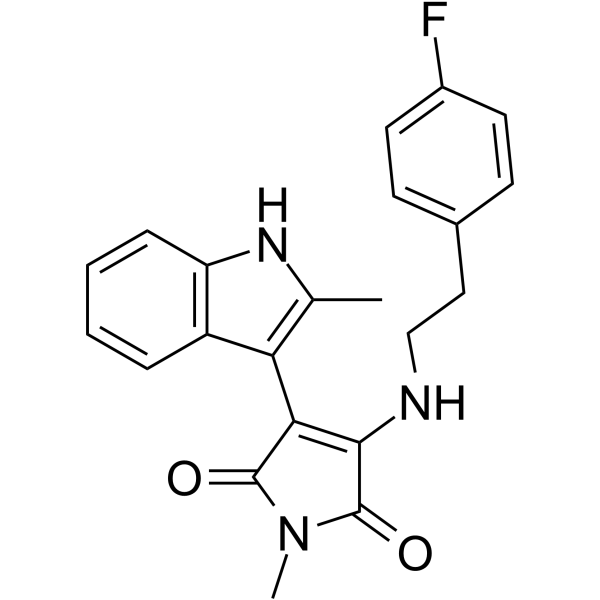
HY-12292
IM-12GSK-3β Inhibitor
Publications Citing Use of MedChemExpress (MCE) VP3.15 dihydrobromide
More

Biological Activity
Description
IC50 & Target
|
PDE7 |
In Vitro
VP3.15 dihydrobromide exhibits an IC50 of 1.59 μM against PDE7 and an IC50 of 0.88 μM against GSK3 in cell-free biochemical assays[1].
VP3.15 dihydrobromide (1 μM; 5-10 DIV (in vitro culture days)) enhances the differentiation of oligodendrocyte precursor cells (OPCs) from P0 CD1 mice into CNPase+-Olig2+ and MBP+-Olig2+ mature oligodendrocytes, without altering the morphology of oligodendrocytes[1].
VP3.15 dihydrobromide (1 μM; 5 DIV) significantly promotes the differentiation of adult oligodendrocyte precursor cells (OPCs) into CNPase+ mature oligodendrocytes at 5 DIV without altering the morphology of oligodendrocytes[1].
VP3.15 dihydrobromide (5 μM; 1-3 DPL (days post-lesion)) significantly enhances remyelination at 3 DPL in demyelinated cerebellar slices from P7 CD1 mice induced by Lysophosphatidylcholines (LPC) (HY-139414), whereas no effect is observed at 1 DPL[1].
MedChemExpress (MCE) has not independently confirmed the accuracy of these methods. They are for reference only. Further protocols information, click here.
-
Cell Line:OPCs
-
Concentration:1 μM
-
Incubation Time:5, 7, 10 DIV
-
Result:Significantly increased the number of mature oligodendrocytes (identified as double-positive cells of CNPase+-Olig2+ and MBP+-Olig2+).
Parmacokinetics
| Species | Dose | Route | Tmax (Plasma) | Cmax | AUClast | AUCINF_obs | MRTlast | MRT0-inf | Tmax (Brain) | AUCinf |
|---|---|---|---|---|---|---|---|---|---|---|
| Mice[1] | 10 mg/kg | i.p. | 0.25 h | 1990.43 ng/mL | 1956.74 ng·h/mL | 1998.55 ng·h/mL | 0.82 h | 0.91 h | 0.08 h | 1506.00 h·ng/g |
| Mice[1] | 50 mg/kg | p.o. | 1.00 h | 880.76 ng/mL | 2292.94 ng·h/mL | / | 1.64 h | 1.86 h | 0.5 h | 2378.17 ng·h/mL |
In Vivo
VP3.15 dihydrobromide (10 mg/kg; daily for 7 consecutive days) improves cognitive impairment, reduces hemorrhage and microglial burden, limits brain atrophy, restores neuronal density and myelination, promotes neurogenesis, and normalizes p-GLS levels in mice with intraventricular hemorrhage[2].
MedChemExpress (MCE) has not independently confirmed the accuracy of these methods. They are for reference only.
-
Animal Model:C57/BL6 (8-week-old male, demyelination induced by 5 weeks of ad libitum feeding with 0.2% Cuprizone mixed with milled chow/focal demyelination induced by stereotactic injection of 2 μl of 1% LPC into the corpus callosum)[1]
-
Dosage:10 mg/kg
-
Administration:i.p.; 3 alternate days (1-week group); 3 doses per week on alternate days (3-week group)/2 doses (14 dpi group); 3 doses (21 dpi group)
-
Result:Showed significantly higher eriochrome cyanine myelin staining and MBP fluorescence intensity in the corpus callosum one week after cuprizone withdrawal.
Had a significantly lower number of PDGFRα+ oligodendrocyte progenitor cells (OPCs) in the corpus callosum one week after cuprizone withdrawal.
Exhibited equivalent myelin staining (eriochrome cyanine and MBP) and OPC counts compared to vehicle controls three weeks after cuprizone withdrawal.
Showed no changes in microglial activation or astrocyte immunoreactivity compared to vehicle controls.
Significantly increased myelin sheath thickness (reduced G-ratio) compared to vehicle controls at both 14 and 21 dpi, with values approaching those of unlesioned control mice without evidence of hypermyelination.
-
Animal Model:CD1 (7-day-old at study initiation)[2]
-
Dosage:10 mg/kg
-
Administration:daily; 7 consecutive days (P7-P13)
-
Result:Improved learning in the Morris Water Maze (MWM) acquisition phase, restored time spent and number of entries in the target quadrant during 24-hour and 72-hour MWM retention tests, and normalized performance in the "where" paradigm of the New Object Discrimination test, compared to untreated GM-IVH mice.
Significantly reduced hemorrhage burden in the cortex at P14 and completely reversed cortical hemorrhage burden to control levels at P110; reduced hemorrhage burden in the hippocampus and striatum at P14, with a non-significant trend toward reduction at P110.
Reduced Iba1+ microglial burden to control levels in the cortex, hippocampus, and subventricular zone (SVZ) at P14; limited microglial burden increases in these regions at P110 compared to untreated GM-IVH mice.
Ameliorated reductions in brain weight at P14 and P110; significantly improved hemisection size at P110, normalized cortical size reductions at P14 and P110, and reduced ventricle enlargement at both time points compared to untreated GM-IVH mice.
Restored NeuN/DAPI ratios (neuronal density) in the cortex and SVZ at P14, and in the hippocampus at P110; reduced tau hyperphosphorylation (p-tau/total tau ratio) in the cortex at P110 to match control levels; restored myelin basic protein (MBP) levels in the cortex at P14.
Increased BrdU+ cell counts (proliferation), DCX+ area (neurogenesis), and BrdU/DCX ratio in the SVZ at P14; restored BrdU+ cell counts, DCX+ cell counts, and BrdU/DCX ratio in the dentate gyrus (DG) at P110, and normalized DCX+ cell counts in the DG at P14 compared to untreated GM-IVH mice.
Restored plasma gelsolin (p-GLS) levels to control values at P110.


Chemical Information
-
CAS No. 1281681-33-1
-
Appearance Solid
-
Molecular Weight 528.30
-
Formula C20H24Br2N4OS
-
Color Light yellow to yellow
-
SMILES
[H]Br.[H]Br.N1(CC/N=C2N=C(C3=CC=CC=C3)N(C4=CC=CC=C4)S/2)CCOCC1
-
Shipping
Room temperature in continental US; may vary elsewhere.
-
Storage
4°C, sealed storage, away from moisture
* In solvent : -80°C, 6 months; -20°C, 1 month (sealed storage, away from moisture)


Publications (3)
-
Journal Impact Factor
-
Most Recent
-
J Biol Chem
REDD1-dependent GSK3β signaling in podocytes promotes canonical NF-κB activation in diabetic nephropathy. [Abstract]2025 Mar;301(3):108244. PMID: 39880090 -
J Biol Chem
REDD1-dependent GSK3β dephosphorylation promotes NF-κB activation and macrophage infiltration in the retina of diabetic mice. [Abstract]2023 Aug;299(8):104991. PMID: 37392853 -


Solvent & Solubility
In Vitro:
DMSO : 62.5 mg/mL (118.30 mM; Need ultrasonic; Hygroscopic DMSO has a significant impact on the solubility of product, please use newly opened DMSO)
Please refer to the solubility information to select the appropriate solvent. Once prepared, please aliquot and store the solution to prevent product inactivation from repeated freeze-thaw cycles.
Storage method and period of stock solution: -80°C, 6 months; -20°C, 1 month (sealed storage, away from moisture). When stored at -80°C, please use it within 6 months. When stored at -20°C, please use it within 1 month.
Please refer to the solubility information to select the appropriate solvent. Once prepared, please aliquot and store the solution to prevent product inactivation from repeated freeze-thaw cycles.
Storage method and period of stock solution: -80°C, 6 months; -20°C, 1 month (sealed storage, away from moisture). When stored at -80°C, please use it within 6 months. When stored at -20°C, please use it within 1 month.
Concentration (start) × Volume (start) = Concentration (final) × Volume (final)
In Vivo:
Select the appropriate dissolution method based on your experimental animal and administration route.
- For the following dissolution methods, please ensure to first prepare a clear stock solution using an In Vitro approach and then sequentially add co-solvents:
- To ensure reliable experimental results, the clarified stock solution can be appropriately stored based on storage conditions. As for the working solution for In Vivo experiments, it is recommended to prepare freshly and use it on the same day.
- The percentages shown for the solvents indicate their volumetric ratio in the final prepared solution. If precipitation or phase separation occurs during preparation, heat and/or sonication can be used to aid dissolution.
Add each solvent one by one: 10% DMSO 40% PEG300 5% Tween-80 45% Saline
Solubility: ≥ 2.08 mg/mL (3.94 mM); Clear solution
This protocol yields a clear solution of ≥ 2.08 mg/mL (saturation unknown).
Taking 1 mL working solution as an example, add 100 μL DMSO stock solution (20.8 mg/mL) to 400 μL PEG300, and mix evenly; then add 50 μL Tween-80 and mix evenly; then add 450 μL Saline to adjust the volume to 1 mL.
Preparation of Saline: Dissolve 0.9 g sodium chloride in ddH₂O and dilute to 100 mL to obtain a clear Saline solution.
Add each solvent one by one: 10% DMSO 90% (20% SBE-β-CD in Saline)
Solubility: ≥ 2.08 mg/mL (3.94 mM); Clear solution
This protocol yields a clear solution of ≥ 2.08 mg/mL (saturation unknown).
Taking 1 mL working solution as an example, add 100 μL DMSO stock solution (20.8 mg/mL) to 900 μL 20% SBE-β-CD in Saline, and mix evenly.
Preparation of 20% SBE-β-CD in Saline (4°C, storage for one week): 2 g SBE-β-CD powder is dissolved in 10 mL Saline, completely dissolve until clear.
In Vivo Dissolution Calculator
Please enter the basic information of animal experiments:
-
-
-
-
Recommended: Prepare an additional quantity of animals to account for potential losses during experiments.
Please enter your animal formula composition:
-
%DMSO +
Recommended: Keep the proportion of DMSO in working solution below 2% if your animal is weak.
-
%+
-
+%Tween-80 + +
-
%Saline +
The co-solvents required include: DMSO, . All of co-solvents are available by MedChemExpress (MCE). , Tween 80. All of co-solvents are available by MedChemExpress (MCE).
Working solution concentration: 0.22 mg/mL
Method for preparing stock solution: mg drug dissolved in μL DMSO. Stock solution concentration: mg/mL. * In solvent : -80°C, 6 months; -20°C, 1 month (sealed storage, away from moisture)
1. Take μL DMSO stock solution;
2. Add μL .
μL , mix evenly;
3. Then add μL Tween 80, mix evenly;
4. Then add μL
Please ensure that the stock solution in the first step is dissolved to a clear state, and add co-solvents in sequence. You can use ultrasonic heating (ultrasonic cleaner, recommended frequency 20-40 kHz), vortexing, etc. to assist dissolution.

Protocols
-
Kinase activity and phosphorylation assays
Kinase activity assays measure the ability of kinases to transfer phosphate groups from ATP to specific substrates, while phosphorylation assays detect the presence and levels of phosphorylated proteins. Common methods include radiolabeled ATP incorporation (e. g. ,), ADP release detection via bioluminescence (e. g. ,[3]), enzyme-linked immunosorbent assays (ELISA) for phospho-specific epitopes (e. g. ,[6]), and microtiter-based formats for high-throughput screening (e. g. ,[8]). The ADP-Glo assay quantifies kinase activity by measuring ADP produced during phosphorylation using a luciferase-based system. Radiometric assays involve autoradiography or scintillation counting after incorporation of 32P-labeled ATP into substrate proteins. ELISA-based approaches rely on phospho-specific antibodies to detect activated kinases in cell lysates or purified samples.
-
Western Blot
Western blotting (WB) is a commonly used experimental method in molecular biology, biochemistry, and immunogenetics for identifying and quantifying target proteins. It combines gel electrophoresis with immunoassay, enabling researchers to analyze protein expression, post-translational modifications, and molecular weight.
-
Cell Cytotoxicity Assay
Cytotoxicity assays are usually based on the assessment of cell membrane damage, which can also be indirectly detected by measuring cell viability. Detection methods include MTT assay, CKK-8 assay, LDH assay and ATP assay, etc.
-
Protocol for Kinase activity and phosphorylation assays
Kinase activity assays measure transfer of phosphate from ATP to a protein or peptide substrate, generating phosphorylated substrate, ADP, or incorporated radiolabeled phosphate as the readout; phosphorylation assays measure site-specific phosphorylation in cells or tissues as a proxy for kinase-pathway activation, inhibition, or substrate regulation. Phosphorylation can be detected by phospho-specific Western blot, immunoprecipitation kinase assay, phospho-immunofluorescence, phospho-flow cytometry, luminescent ADP detection, radiolabeled ATP incorporation, or reporter-based pathway assays, and these readouts can be applied to cancer cells, primary neurons, mouse tumors, organoids, inflammatory macrophages, ferroptosis studies, and mitophagy studies when the kinase target is biologically relevant.
-
Research Protocol for Neurological Diseases
PINK1/Parkin-mediated mitophagy pathway is a mitochondrial quality-control signaling axis in which mitochondrial depolarization stabilizes PINK1 on damaged mitochondria, activates Parkin recruitment and E3 ubiquitin ligase activity, promotes ubiquitination of outer mitochondrial membrane proteins, recruits selective autophagy adaptors, and drives lysosomal degradation of damaged mitochondria. In neurological disease research, this pathway is experimentally important because neurons, especially dopaminergic neurons, are highly dependent on mitochondrial integrity, and defective mitochondrial turnover can lead to mitochondrial dysfunction, oxidative stress, impaired neuronal survival, α-synuclein accumulation, and neuroinflammatory damage-associated signals. The genetic disease link is strongest in Parkinson’s disease because mutations in PRKN/parkin cause autosomal recessive juvenile parkinsonism, mutations in PINK1 cause hereditary early-onset Parkinson’s disease, and Drosophila studie
-
iPSC cell differentiation
Induced pluripotent stem cells (iPSCs) are a type of cell that has similar properties to embryonic stem cells through somatic cell reprogramming.
-
Alzheimer’s Disease Modeling
Alzheimer’s Disease (AD) is a neurodegenerative disorder characterized by a progressive decline in cognitive functions and loss of specific types of neurons and synapses. Alzheimer's symptoms can be simulated in mice by injecting drugs (such as Aβ) or genetically modified.


Purity & Documentation
-
Data Sheet (282 KB)
-
SDS (252 KB)
- English - EN (252 KB)
- Français - FR (252 KB)
- Deutsch - DE (252 KB)
- Norwegian - NO (252 KB)
- Español - ES (252 KB)
- Swedish - SV (252 KB)
- Italian - IT (252 KB)
- Korean - KR (252 KB)
- Portuguese - PT (252 KB)
-
Handling Instructions (2659 KB)
References
[1]. Medina-Rodríguez EM, et al. Promoting in vivo remyelination with small molecules: a neuroreparative pharmacological treatment for Multiple Sclerosis. Sci Rep. 2017;7:43545. Published 2017 Mar 3. [Content Brief]
[2]. Atienza-Navarro I, et al. Glycogen Synthase Kinase-3β Inhibitor VP3.15 Ameliorates Neurogenesis, Neuronal Loss and Cognitive Impairment in a Model of Germinal Matrix-intraventricular Hemorrhage of the Preterm Newborn. Transl Stroke Res. 2025 Apr;16(2):467-483. [Content Brief]


Complete Stock Solution Preparation Table
Please refer to the solubility information to select the appropriate solvent. Once prepared, please aliquot and store the solution to prevent product inactivation from repeated freeze-thaw cycles.
Storage method and period of stock solution: -80°C, 6 months; -20°C, 1 month (sealed storage, away from moisture). When stored at -80°C, please use it within 6 months. When stored at -20°C, please use it within 1 month.
| Optional Solvent | Concentration Solvent Mass | 1 mg | 5 mg | 10 mg | 25 mg |
|---|---|---|---|---|---|
| DMSO | 1 mM | 1.8929 mL | 9.4643 mL | 18.9286 mL | 47.3216 mL |
| 5 mM | 0.3786 mL | 1.8929 mL | 3.7857 mL | 9.4643 mL | |
| 10 mM | 0.1893 mL | 0.9464 mL | 1.8929 mL | 4.7322 mL | |
| 15 mM | 0.1262 mL | 0.6310 mL | 1.2619 mL | 3.1548 mL | |
| 20 mM | 0.0946 mL | 0.4732 mL | 0.9464 mL | 2.3661 mL | |
| 25 mM | 0.0757 mL | 0.3786 mL | 0.7571 mL | 1.8929 mL | |
| 30 mM | 0.0631 mL | 0.3155 mL | 0.6310 mL | 1.5774 mL | |
| 40 mM | 0.0473 mL | 0.2366 mL | 0.4732 mL | 1.1830 mL | |
| 50 mM | 0.0379 mL | 0.1893 mL | 0.3786 mL | 0.9464 mL | |
| 60 mM | 0.0315 mL | 0.1577 mL | 0.3155 mL | 0.7887 mL | |
| 80 mM | 0.0237 mL | 0.1183 mL | 0.2366 mL | 0.5915 mL | |
| 100 mM | 0.0189 mL | 0.0946 mL | 0.1893 mL | 0.4732 mL |


VP3.15 dihydrobromide Related Classifications
HY-128879A Related Classifications
 Powered by Bioz