

1. Search Result
Search Result
Pathways Recommended: Anti-infection
Results for "

virus infection

" in MedChemExpress (MCE) Product Catalog:

550

Inhibitors & Agonists

6

Screening Libraries

9

Fluorescent Dyes

11

Biochemical Assay Reagents

30

Peptides

64

Inhibitory Antibodies

65

Natural
Products

17

Isotope-Labeled Compounds

4

Click Chemistry

17

Oligonucleotides

1

GMP Molecules

Cat. No. Product Name Target Research Areas Chemical Structure
  • HY-14532
    Brincidofovir
    5 Publications Verification

    CMX001; HDP-CDV

    CMV HSV Orthopoxvirus Infection
    Brincidofovir (CMX001), the lipid-conjugated prodrug of Cidofovir (HY-17438), is an orally available, long-acting antiviral. Brincidofovir shows activity against a broad spectrum of DNA viruses including cytomegalovirus (CMV), adenovirus (ADV), varicella zoster virus, herpes simplex virus, polyomaviruses, papillomaviruses, poxviruses, and mixed double-stranded DNA virus infections. Brincidofovir, an oral antiviral in late stage development, has proven effective against orthopoxviruses in vitro and in vivo .
    Brincidofovir
  • HY-20685

    Palmidrol; Loramine P 256

    Endogenous Metabolite Influenza Virus Infection Cancer
    Palmitoylethanolamide (Palmidrol) is an active endogenous compound which can used for preventing virus infection of the respiratory tract.
    Palmitoylethanolamide
  • HY-P990794

    TNF Receptor Dengue Virus Infection Inflammation/Immunology Cancer
    Anti-Mouse TNF-alpha/TNFSF2 Antibody (XT3.11) is a rat-derived IgG1 antibody inhibitor, targeting to TNF-alpha/TNFSF2. Anti-Mouse TNF-alpha/TNFSF2 Antibody (XT3.11) neutralizes of TNF-alpha. Anti-Mouse TNF-alpha/TNFSF2 Antibody (XT3.11) can be used for the researches of cancer, infection and immunology, such as dengue virus and B16K1 tumor .
    Anti-Mouse TNF-alpha/TNFSF2 Antibody (XT3.11)
  • HY-145586

    ZSP1273

    Influenza Virus DNA/RNA Synthesis Infection
    Onradivir (ZSP1273) is an orally active antiviral agent targeting influenza A virus RNA polymerase PB2 subunit with an IC50 of 0.562 nM. Onradivir inhibits cap binding to influenza A virus RNA polymerase PB2 subunit, suppresses viral replication, reduces viral titres and RNA loads, and inhibits influenza A virus infection. Onradivir maintains high survival rates in influenza A virus-infected mice, and reduces influenza A virus titers in a murine model. Onradivir can be used for the research of influenza A virus infection .
    Onradivir
  • HY-P99209

    MEDI-524

    RSV Infection
    Motavizumab (MEDI-524) is an anti-human RSV (respiratory syncytial virus) monoclonal antibody. Motavizumab can be used in respiratory syncytial virus infection in high-risk infants research .
    Motavizumab
  • HY-50001
    Nucleozin
    5+ Cited Publications

    Influenza Virus Infection
    Nucleozin, a potent inhibitor of influenza A virus infection, induces the formation of nucleoprotein (NP) aggregates and antagonizes its nuclear accumulation, leading to cessation of viral replication. Nucleozin impedes influenza A virus replication in vitro with a nanomolar EC50 .
    Nucleozin
  • HY-113431

    Nucleoside Antimetabolite/Analog HSV DNA/RNA Synthesis Infection
    Arabinosylhypoxanthine is a purine nucleoside analog. Arabinosylhypoxanthine selectively inhibits viral DNA synthesis. Arabinosylhypoxanthine exhibits anti-HSV activity. Arabinosylhypoxanthine can be used in studies related to herpes simplex virus infection .
    Arabinosylhypoxanthine
  • HY-18257

    Antibiotic Bacterial Dengue Virus Amyloid-β HIV Integrase Infection Neurological Disease Inflammation/Immunology
    Rolitetracycline is a highly soluble, broad-spectrum antibiotic derived from tetracycline. Rolitetracycline binds to and stabilizes bovine serum albumin, and also inhibits HIV-1 integrase, blocks Aβ fibril formation and suppresses dengue virus proliferation. Rolitetracycline mediates the inhibition of Aβ fibrils via a specific three-dimensional pharmacophore conformation, and exerts bacteriostatic and bactericidal activities. Rolitetracycline acts synergistically with Penicillin G (HY-N7139) or Cephalothin (HY-B1275A) to alter the effects on microbial growth. Rolitetracycline serves as an important tool compound for the study of bacterial infections (urinary tract infections, sepsis), HIV-1 and dengue virus infections, as well as Alzheimer's disease .
    Rolitetracycline
  • HY-N0093
    Ancitabine hydrochloride
    1 Publications Verification

    Cyclocytidine hydrochloride; Cyclo-CMP hydrochloride; Cyclo-C

    Autophagy CMV DNA/RNA Synthesis Infection Cancer
    Ancitabine hydrochloride is a cytarabine derivative that inhibits viral replication. Ancitabine hydrochloride blocks vaccinia virus DNA replication, the progression of viral protein synthesis from early to late stages, and one-step growth of vaccinia virus. Ancitabine hydrochloride is applicable to research related to vaccinia virus infection, leukemia, human cytomegalovirus infection and colorectal cancer .
    Ancitabine hydrochloride
  • HY-B0277A

    ara-AMP; ara-A 5'-monophosphate

    EBV HSV Fungal DNA/RNA Synthesis Apoptosis Drug Intermediate Reactive Oxygen Species (ROS) Infection
    Vidarabine phosphate (ara-AMP; ara-A 5'-monophosphate) is a purine nucleoside antiviral agent and a prodrug of Vidarabine (HY-B0277). Vidarabine phosphate is rapidly converted into the antiviral active Vidarabine in vivo, which selectively inhibits viral DNA polymerase and cellular ribonucleotide reductase, thereby blocking viral replication. Vidarabine phosphate also exhibits antifungal activity, induces late-stage cellular apoptosis, and causes cell cycle arrest. Vidarabine phosphate can be used in research related to severe chronic active Epstein-Barr virus (EBV) infection, herpes infection, and candidiasis .
    Vidarabine phosphate
  • HY-105070A

    E5564

    EBV Toll-like Receptor (TLR) Infection Inflammation/Immunology
    Eritoran tetrasodium (E5564) is a Toll-like receptor 4 (TLR4) antagonist. Eritoran tetrasodium protects mice against lethal influenza virus infection, such as Ebola virus (EBOV), Marburg virus (MARV). Eritoran tetrasodium decreases the level of granulocytosis, may alleviate the severity of the "cytokine storm". Eritoran tetrasodium inhibits pathogenesis of filovirus infection. Eritoran tetrasodium has anti-inflammatory activity .
    Eritoran tetrasodium
  • HY-P99764
    Odesivimab
    1 Publications Verification

    REGN-3471

    Filovirus Infection
    Odesivimab is a human monoclonal antibody, targeting Ebola virus glycoprotein with a KD value of 7.74 nM for recombinant histidine-tagged Makona strain Ebola virus glycoprotein ectodomain protein. Odesivimab can be used in research of Ebola virus infection .
    Odesivimab
  • HY-13337

    INX-08189

    HCV Infection
    BMS-986094 (INX-08189) is a potent inhibitor of hepatitis C virus (HCV) replication, with an EC50 of 35 nM at 24 h in Huh-7 cells. BMS-986094 is a phosphoramidate proagent of 6-O-methyl-2’-C-methyl guanosine. BMS-986094 can be used for the research of chronic HCV infection .
    BMS-986094
  • HY-108675

    MMP P2X Receptor Infection Cancer
    PPNDS tetrasodium is a selective and competitive meprin β inhibitor (IC50: 80 nM, Ki: 8 nM), and also inhibits ADAM10 (IC50: 1.2 μM). PPNDS tetrasodium is also a P2X1 receptor antagonist. PPNDS is an agonist for the ATP receptor of Paramecium. PPNDS tetrasodium potently inhibits polymerases from viruses. PPNDS tetrasodium can be used in the research of infection and cancers .
    PPNDS tetrasodium
  • HY-141567A

    Pseudo-UTP trisodium solution (100 mM)

    DNA/RNA Synthesis Infection
    Pseudouridine 5'-triphosphate (Pseudo-UTP) trisodium solution (100 mM) is a modified ribonucleoside triphosphate and uracil base-modified UTP derivative. Pseudouridine 5'-triphosphate trisodium solution (100 mM) enhances translational properties and stability of mRNA, reduces innate immune responses in mammalian cells, and inhibits signal-dependent transcription termination of vaccinia virus early gene transcription while supporting transcription elongation. Pseudouridine 5'-triphosphate trisodium solution (100 mM) can be used for the research of vaccinia virus infection .
    Pseudouridine 5'-triphosphate trisodium solution (100 mM)
  • HY-148560A

    HBV DNA/RNA Synthesis Infection
    trans-ccc_R08 (Compound 1-B) is a cccDNA inhibitor with anti-HBV activity, with an IC50 of 0.14 μM for HBeAg and an IC50 of 0.08 μM for HBsAg in in vitro assays. trans-ccc_R08 inhibits covalently closed circular DNA (cccDNA). trans-ccc_R08 is applicable to research related to hepatitis B virus infection .
    trans-ccc_R08
  • HY-N11630

    Influenza Virus Biochemical Assay Reagents Infection
    Pinellic acid is an orally active adjuvant for intranasal influenza vaccines. Pinellic acid can be extracted from the tubers of Pinellia ternata Breitenbach. When administered intranasally in combination with influenza HA vaccine, Pinellic acid slightly increases the titers of antiviral IgG antibodies in bronchoalveolar lavage fluid and serum. Pinellic acid shows no hemolytic activity. Pinellic acid can be used in studies related to influenza virus infection .
    Pinellic acid
  • HY-147358

    Emitasvir diphosphate; DAG-181 diphosphate

    HCV Infection
    Yimitasvir diphosphate (Emitasvir diphosphate; DAG-181 diphosphate) is an orally active inhibitor of hepatitis C virus (HCV) nonstructural protein 5A (NS5A). Yimitasvir diphosphate is applicable to research related to HCV infection .
    Yimitasvir diphosphate
  • HY-P991492

    RSV Infection
    RSM-01 is a monoclonal antibody targeting site Ø of the pre-fusion F glycoprotein (Fusion glycoprotein F0) of respiratory syncytial virus (RSV). RSM-01 can be used in studies related to RSV infection .
    RSM-01
  • HY-100662

    Bisdesethylchloroquine

    Drug Metabolite Cardiovascular Disease Infection
    Didesethyl chloroquine (Bisdesethylchloroquine) is the major metabolite of the antimalarial agent Chloroquine (HY-17589A). Didesethyl chloroquine is a potent myocardial inhibitor. Didesethyl chloroquine reduces calcium binding and accumulation in cardiac mitochondria, induces mitochondrial swelling, rupture and membrane conformational changes. Didesethyl chloroquine inhibits the growth of Plasmodium falciparum strains. Didesethyl chloroquine can be used in research related to malaria, chikungunya virus infection, and cardiovascular and cerebrovascular diseases .
    Didesethyl chloroquine
  • HY-117411A

    KW-136 dihydrochloride

    HCV HCV Protease Infection
    Coblopasvir (KW-136) dihydrochloride is a pangenotypic non-structural protein 5A (NS5A) inhibitor. Coblopasvir dihydrochloride can be used for research of chronic hepatitis C virus infection .
    Coblopasvir dihydrochloride
  • HY-134910

    Virus Protease Infection
    SID-852843 is a WNV NS2B-NS3 proteinase inhibitor. SID-852843 can inhibit WNV NS2B-NS3 proteinase activity with IC50 value of 0.105 μM. SID-852843 can be used for the research of virus infection .
    SID-852843
  • HY-141567

    Pseudo-UTP

    DNA/RNA Synthesis Infection
    Pseudouridine 5'-triphosphate (Pseudo-UTP) is a modified ribonucleoside triphosphate and uracil base-modified UTP derivative. Pseudouridine 5'-triphosphate enhances translational properties and stability of mRNA, reduces innate immune responses in mammalian cells, and inhibits signal-dependent transcription termination of vaccinia virus early gene transcription while supporting transcription elongation. Pseudouridine 5'-triphosphate can be used for the research of vaccinia virus infection .
    Pseudouridine 5'-triphosphate
  • HY-13465
    VCH-916
    1 Publications Verification

    HCV Infection
    VCH-916 is a thiophene derivative and non-nucleoside inhibitor of HCV NS5B polymerase with sub-micromolar IC50 values versus genotype 1a and 1b replicons. VCH-916 binds to Thumb Site II. VCH-916 can be used for the research of hepatitis c virus (hcv) infection .
    VCH-916
  • HY-P10868

    RLS-0071

    Reactive Oxygen Species (ROS) Infection Inflammation/Immunology
    Pegtarazimod (RLS-0071) is a dual-target anti-inflammatory peptide that exerts its effects by simultaneously regulating the complement system and neutrophil-associated inflammatory pathways. Pegtarazimod reduces ROS production both in vitro and in vivo, and decreases the level of neutrophil elastase, a marker of neutrophil extracellular traps (NETs), in vivo, thereby alleviating inflammatory responses. Pegtarazimod significantly improves the survival rate of mice in multiple in vivo models of acute graft-versus-host disease (aGVHD). Pegtarazimod inhibits the activation of the C1 complex, reduces the herpes zoster-like spread of herpes simplex virus type 1 skin infection, and improves the survival rate of infected mice . Pegtarazimod can be used in research related to acute graft-versus-host disease, acute pulmonary diseases, and skin herpes simplex virus type 1 infection .
    Pegtarazimod
  • HY-124871

    Arenavirus Infection
    LASV-IN-1 is a Lassa fever virus (LASV) inhibitor. LASV-IN-1 binds with LASV glycoprotein (GP) and promotes virus membrane fusion and infection. LASV-IN-1 can be used for LASV infection research .
    LASV-IN-1
  • HY-109004

    BTA-C585

    RSV Infection
    Enzaplatovir (BTA-C585) is an orally bioavailable Inhibitor for respiratory syncytial virus (RSV) infection .
    Enzaplatovir
  • HY-121513

    2'-Deoxy-L-cytidine; L-dC

    HBV Infection
    Torcitabine (2'-Deoxy-L-cytidine) is an antiviral agent. Torcitabine has the potential for chronic hepatitis B virus infection treatment .
    Torcitabine
  • HY-114247

    D-FMAU

    Nucleoside Antimetabolite/Analog Infection Cancer
    FMAU is a nucleoside analog and cell proliferation marker that can be phosphorylated by human thymidine kinase and subsequently incorporated into DNA. FMAU is applicable to research related to herpes simplex virus infection, various cancers, hepatitis B virus infection, and Epstein-Barr virus infection .
    FMAU
  • HY-161844

    SARS-CoV Dengue Virus Infection
    Virapinib is a macropinocytosis inhibitor with antiviral activity. Virapinib exhibits broad-spectrum antiviral activity against SARS-CoV-2, monkeypox virus, tick-borne encephalitis virus, and Ebola pseudotyped vesicular stomatitis virus, and it enhances Dengue Virus infection. Virapinib blocks viral entry by inhibiting macropinocytosis, reduces syncytium formation in SARS-CoV-2-infected cells, and impairs cellular entry of SARS-CoV-2 variants. Virapinib upregulates the expression of genes related to sterol biosynthesis. Virapinib can be used in studies related to COVID-19, monkeypox, tick-borne encephalitis, and Ebola virus infection .
    Virapinib
  • HY-106777
    Cyclopentenylcytosine
    1 Publications Verification

    CPEC; NSC 375575

    DNA/RNA Synthesis Nucleoside Antimetabolite/Analog Apoptosis Necroptosis Influenza Virus HSV Infection Cancer
    Cyclopentenylcytosine (CPEC), a carbocyclic nucleoside analog of cytosine, is a potent inhibitor of CTP synthetase and causes depletion of CTP and dCTP pools. Cyclopentenylcytosine shows broad-spectrum (both DNA and RNA viruses) antiviral activity. Cyclopentenyl cytosine increases Gemcitabine (HY-17026) radiosensitisation in human pancreatic cancer cells. Cyclopentenylcytosine shows effective antiviral activity in the Ad5/NZW rabbit ocular replication model and shows anti-tumor activity in various tumor xenografts model. Cyclopentenylcytosine can be used for the study of infection and cancer .
    Cyclopentenylcytosine
  • HY-P990817

    Dengue Virus Flavivirus Infection
    Anti-West Nile/dengue virus E protein Antibody (E60) is mouse-derived IgG2a κ type antibody inhibitor, targeting to West Nile/dengue virus E protein. Anti-West Nile/dengue virus E protein Antibody (E60) can cross-neutralize West Nile virus (WNV) and dengue virus (DENV) envelope (E) protein. Anti-West Nile/dengue virus E protein Antibody (E60) can be used for the researches of WNV and DENV infection .
    Anti-West Nile/dengue virus E protein Antibody (E60)
  • HY-14532S

    CMX001-d6; HDP-CDV-d6

    Isotope-Labeled Compounds HSV CMV Orthopoxvirus Infection
    Brincidofovir-d6 (CMX001-d6) is the deuterium labeled Brincidofovir (HY-14532). Brincidofovir (CMX001), the lipid-conjugated prodrug of Cidofovir (HY-17438), is an orally available, long-acting antiviral. Brincidofovir shows activity against a broad spectrum of DNA viruses including cytomegalovirus (CMV), adenovirus (ADV), varicella zoster virus, herpes simplex virus, polyomaviruses, papillomaviruses, poxviruses, and mixed double-stranded DNA virus infections. Brincidofovir, an oral antiviral in late stage development, has proven effective against orthopoxviruses in vitro and in vivo. .
    Brincidofovir-d6
  • HY-147358A

    Emitasvir; DAG-181

    HCV Infection
    Yimitasvir (Emitasvir; DAG-181) is an orally active inhibitor of hepatitis C virus (HCV) nonstructural protein 5A (NS5A). Yimitasvir is applicable to research related to HCV infection .
    Yimitasvir
  • HY-N2076

    (-)-Cephaeline hydrochloride; NSC 32944 monohydrochloride

    Flavivirus Filovirus Infection
    Cephaeline hydrochloride ((-)-Cephaeline hydrochloride) is a phenolic alkaloid in Indian Ipecac roots. Cephaeline hydrochloride exhibits potent inhibition of both Zika virus (ZIKV) and Ebola virus (EBOV) infections .
    Cephaeline hydrochloride
  • HY-141426

    Enterovirus Infection
    MDL-860 is a broad-spectrum antipicornavirus compound that has low cytotoxicity toward human cells. MDL-860 can be used for the research of virus infection .
    MDL-860
  • HY-172515

    Influenza Virus Virus Protease Drug Isomer Infection
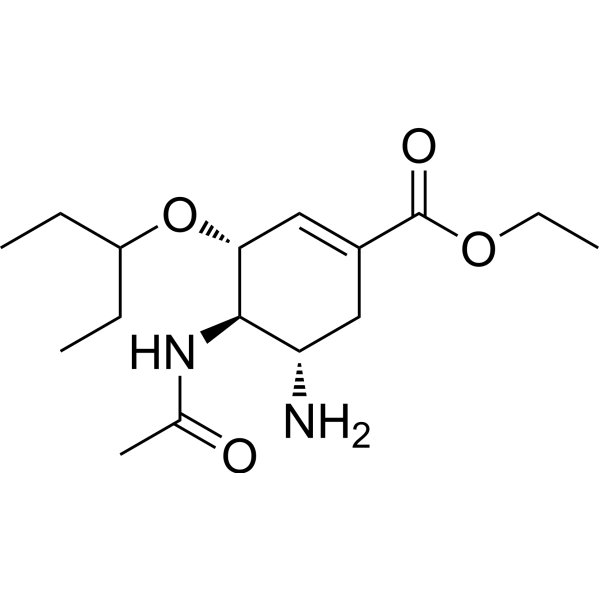
    ent-Oseltamivir, the enantiomer of Oseltamivir (HY-13317), is a neuraminidase (NA) of influenza virus inhibitor. ent-Oseltamivir is promising for research of influenza virus infections .
    ent-Oseltamivir
  • HY-147015

    Orthopoxvirus Infection
    HOE961, the diacetate ester proagent of S2242, is active against respiratory cowpox virus infections, is orally active in infection models. Anti-orthopoxvirus activity .
    HOE961
  • HY-109072

    DNA/RNA Synthesis SARS-CoV Infection
    Riamilovir is an antiviral drug whose activity is primarily directed against RNA viruses. Riamilovir acts directly on the virus's RNA-dependent RNA polymerase, thereby preventing the virus from replicating. This mechanism allows Riamilovir to effectively reduce the amount of virus, accelerate the relief of symptoms, and help reduce the severity of the disease. Riamilovir can be used in the study of acute respiratory viral infections caused by new variants of SARS-CoV-2 .
    Riamilovir
  • HY-143769

    Cap-dependent endonuclease-IN-15

    Influenza Virus Infection
    Sebaloxavir marboxil (Cap-dependent endonuclease-IN-15) (Compound c-1) is a potent inhibitor of cap-dependent endonuclease (CEN). Sebaloxavir marboxil inhibits the replication of influenza virus. Sebaloxavir marboxil has the potential for the research of viral infections caused by influenza viruses .
    Sebaloxavir marboxil
  • HY-P991497

    RSV Infection
    ASN-500 is a human monoclonal antibody (mAb) targeting F/Fusion glycoprotein F0. ASN-500 can be used in respiratory syncytial virus infection research .
    ASN-500
  • HY-117411

    KW-136

    HCV HCV Protease Infection Inflammation/Immunology
    Coblopasvir (KW-136) is a pangenotypic non-structural protein 5A (NS5A) inhibitor. Coblopasvir can be used for research of chronic hepatitis C virus infection .
    Coblopasvir
  • HY-P991496

    RSV Infection
    IDB-002 is a human monoclonal antibody (mAb) targeting F/Fusion glycoprotein F0. IDB-002 can be used in respiratory syncytial virus infection research. Recommended isotype control: Human IgG1 kappa, Isotype Control (HY-P99001).
    IDB-002
  • HY-128660

    HCV Dengue Virus Influenza Virus Infection
    RYL-634 is a potent broad-spectrum antiviral agent. RYL-634 exerts its antiviral effect by inhibiting the activity of human dihydroorotate dehydrogenase (HsDHODH) and blocking the supply of pyrimidines required for viral replication. RYL-634 shows significant inhibition against many viruses, with the EC50 values against DENV, ZIKV, EV71, HCV and HIV are 7 nM, 20 nM, 4 nM, 5 nM and 13 nM respectively. RYL-634 can be used for the study of various virus infection-related diseases .
    RYL-634
  • HY-149467

    Dengue Virus Virus Protease Infection
    JMX0254 is an orally active and potent inhibitor of the dengue virus NS4B protein. JMX0254’s EC50 for DENV-1, DENV-2, and DENV-3 are 0.78 µM, 0.16 µM, and 0.035 µM, respectively. JMX0254 can be used for research on viral infections .
    JMX0254
  • HY-148568

    TMV Bacterial Infection Inflammation/Immunology Cancer
    TMV-IN-2, chalcone derivative, is a tobacco mosaic virus (TMV) inhibitor. TMV-IN-2 has antiviral activity against TMV with an EC50 value of 89.9 μg/mL. TMV-IN-2 can be used for the research of infection, inflammation and tumor .
    TMV-IN-2
  • HY-144062

    SARS-CoV Infection
    INSCoV-614(1B) is a potent inhibitor of M pro (3CL pro). Proteases (PL pro and 3CL pro) are involved with transcription and replication of the virus. INSCoV-614(1B) has the potential for the research of SARS-CoV-2 infection (extracted from patent WO2021219089A1) .
    INSCoV-614(1B)
  • HY-151446

    DNA Methyltransferase Virus Protease Flavivirus Infection
    ZIKV-IN-3 (compound 5a), an andrographolide derivatives, is a potent ZIKV NS5 methyl transferase (MTase) inhibitor with an IC50 value of 18.34 μM. ZIKV-IN-3 inhibits ZIKV replication and infection. ZIKV-IN-3 can be used in research of Zika virus (ZIKV) .
    ZIKV-IN-3
  • HY-P11299

    EBV Infection Neurological Disease Inflammation/Immunology
    EBNA-1 (386-405 aa) is a cross-reactive viral antigen peptide. EBNA-1 (386-405 aa) has a high molecular similarity to GlialCAM (370-389 aa) and it induces the production of cross-reactive antibodies that recognize both EBV antigens and glial cells in the central nervous system, thereby triggering autoimmune responses. EBNA-1 (386-405 aa) can used for Epstein-Barr virus (EBV) infection and multiple sclerosis (MS) research .
    EBNA-1 (386–405 aa)
  • HY-145586A

    ZSP1273 monohydrate

    Influenza Virus DNA/RNA Synthesis Infection
    Onradivir (ZSP1273) monohydrate is an orally active antiviral agent targeting influenza A virus RNA polymerase PB2 subunit with an IC50 of 0.562 nM. Onradivir monohydrate inhibits cap binding to influenza A virus RNA polymerase PB2 subunit, suppresses viral replication, reduces viral titres and RNA loads, and inhibits influenza A virus infection. Onradivir monohydrate maintains high survival rates in influenza A virus-infected mice, and reduces influenza A virus titers in a murine model. Onradivir monohydrate can be used for the research of influenza A virus infection .
    Onradivir monohydrate

Inquiry Online

Your information is safe with us. * Required Fields.

Salutation


Country or Region *

Applicant Name *


Organization Name *

Department *


Email Address *


Product Name *

Cat. No.


Requested quantity *

Phone Number *


Remarks

Inquiry Online

Inquiry Information

Product Name:
Cat. No.:
Quantity:
MCE Japan Authorized Agent:

