



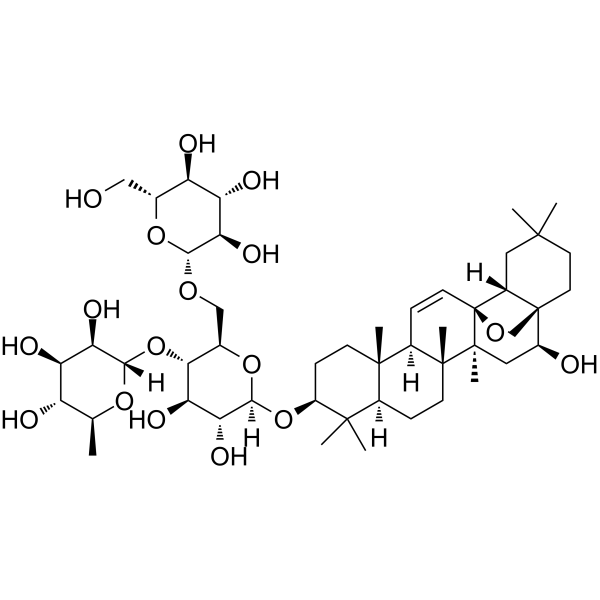
Saikosaponin C
Based on 2 publication(s) in Google Scholar
Saikosaponin C is an orally active MMP-2 inducer. Saikosaponin C induces the survival, growth, migration and capillary tube formation of endothelial cells. Saikosaponin C inhibits the early stage of hepatitis C virus infection. Saikosaponin C can be used in research related to ischemic tissue diseases, chronic kidney diseases and hepatitis C virus infection.
For research use only. We do not sell to patients.
- Purity : 98.09%
- CAS No.: 20736-08-7
- Formula: C48H78O17
- Molecular Weight:927.12
-
Storage:
4°C, protect from light
* In solvent : -80°C, 6 months; -20°C, 1 month (protect from light)

To place orders, for customer services and technical support, please contact: MedChemExpress USA
Tel: 609-228-6898 E-mail: [email protected] [email protected]


-
 Biological Activity
-
Chemical Information
-
Solvent & Solubility
- Protocols
- Purity & Documentation
- References
-
 Help & FAQs


-
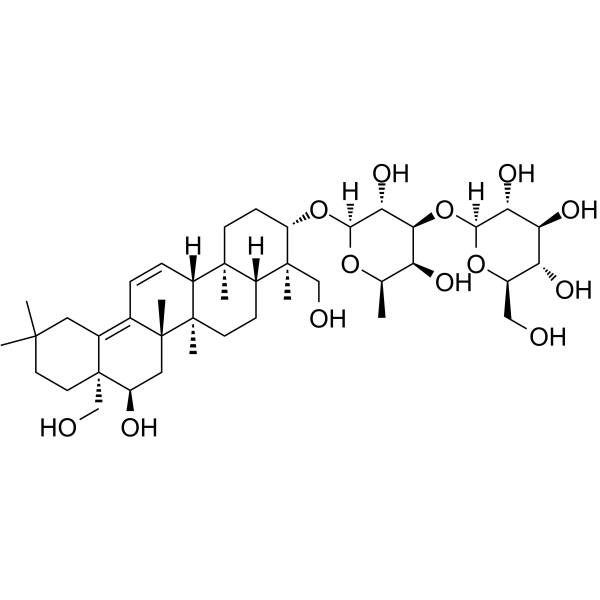
HY-N0248
Saikosaponin B2Solute Carrier Modulator, ATP-Binding Cassette Transporter Modulator -
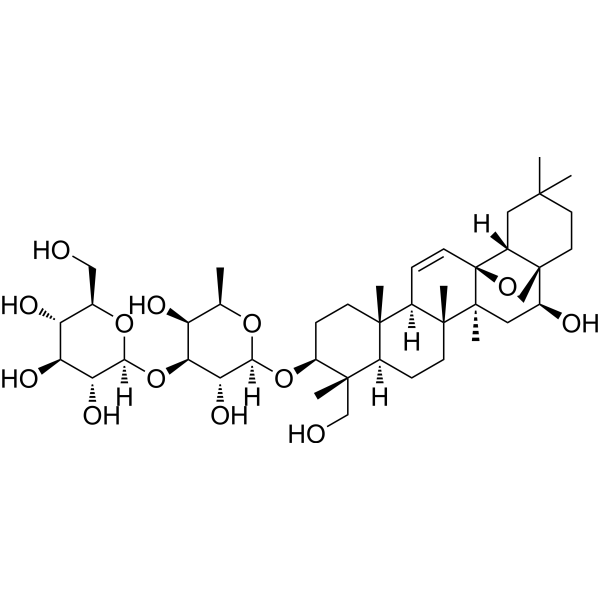
HY-N0246
Saikosaponin AAnti-inflammatory Agent -
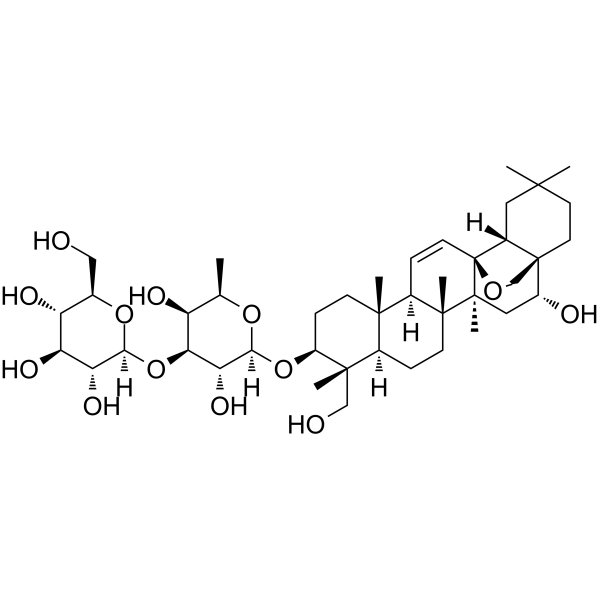
HY-N0250
Saikosaponin DTriterpenoid Saponin -
HY-N2178
Saikosaponin FNatural Product -
HY-N0247
Saikosaponin B1Hedgehog Inhibitor -

HY-N0249R
Saikosaponin C (Standard)Anti-inflammatory/Analgesic Agent -
HY-N0615
Notoginsenoside R1Apoptosis Inhibitor -
HY-N0431
Astragaloside IVMMP Inhibitor -
HY-N0156
Oleanolic acidAutophagy Inducer -
HY-N0045
Ginsenoside Rg1Apoptosis Inducer -

HY-N0431R
Astragaloside IV (Standard)MMP Inhibitor -
HY-N0370
BergaptenCytochrome P450 Inhibitor
Publications Citing Use of MedChemExpress (MCE) Saikosaponin C
More

Biological Activity
Description
Cellular Effect
|
Cell Line

|
Type | Value | Description | References |
|---|---|---|---|---|
| A549 | IC50 |
>50 μM
Compound: 15
|
Cytotoxicity against human A549 cells assessed as induction of cell death incubated for 2 days by MTT assay
Cytotoxicity against human A549 cells assessed as induction of cell death incubated for 2 days by MTT assay
|
[PMID: 26259802] |
| Bcap37 | IC50 |
>50 μM
Compound: 15
|
Cytotoxicity against human Bcap37 cells assessed as induction of cell death incubated for 2 days by MTT assay
Cytotoxicity against human Bcap37 cells assessed as induction of cell death incubated for 2 days by MTT assay
|
[PMID: 26259802] |
| Hep 3B2 | IC50 |
>50 μM
Compound: 15
|
Cytotoxicity against human Hep3B cells assessed as induction of cell death incubated for 2 days by MTT assay
Cytotoxicity against human Hep3B cells assessed as induction of cell death incubated for 2 days by MTT assay
|
[PMID: 26259802] |
| HepG2 | IC50 |
>50 μM
Compound: 15
|
Cytotoxicity against human HepG2 cells assessed as induction of cell death incubated for 2 days by MTT assay
Cytotoxicity against human HepG2 cells assessed as induction of cell death incubated for 2 days by MTT assay
|
[PMID: 26259802] |
| MCF7 | IC50 |
>50 μM
Compound: 15
|
Cytotoxicity against human MCF7 cells assessed as induction of cell death incubated for 2 days by MTT assay
Cytotoxicity against human MCF7 cells assessed as induction of cell death incubated for 2 days by MTT assay
|
[PMID: 26259802] |
In Vitro
Saikosaponin C (100 μM; 72 h) increases primary human umbilical vein endothelial cell viability, with a 1.75-fold increase relative to untreated cells[1].
Saikosaponin C (100 μM; 72 h) promotes primary human umbilical vein endothelial cell growth, resulting in a cell count of 12.9× 10⁵ per plate[1].
Saikosaponin C (100 μM; 4, 8, 24 h) enhances primary human umbilical vein endothelial cell migration, significantly narrowing scratch wound gaps at 4, 8, and 24 h post-treatment[1].
Saikosaponin C (100 μM; 8, 24 h) promotes primary human umbilical vein endothelial cell invasion through matrigel, increasing invaded cell counts at 8 and 24 h post-seeding[1].
Saikosaponin C (10-100 μM; 8 h) induces primary human umbilical vein endothelial cell capillary tube formation, with 10 μM treatment increasing total capillary length to 2.68-fold relative to untreated cells[1].
Saikosaponin C (100 μM; 4, 8 h) increases matrix metalloproteinase-2 activity and matrix metalloproteinase-2 mRNA expression in primary human umbilical vein endothelial cells, with 1.8-fold higher mRNA expression at 4 h and 1.5-fold higher mRNA expression at 8 h relative to untreated cells[1].
Saikosaponin C (100 μM; 4, 8, 24 h) increases vascular endothelial growth factor protein expression and activates p42/p44 mitogen-activated protein kinase in primary human umbilical vein endothelial cells, with 2.6-fold higher VEGF protein at 8 h and 3.2-fold higher phosphorylated ERK at 4 h relative to untreated cells[1].
Saikosaponin C exhibits stable binding affinity with HK2 protein, with a binding energy of -9.528 kcal/mol[2].
Saikosaponin C (2-16 μg/mL; 24 h) is non-toxic to TCMK1 renal tubular epithelial cells at concentrations of 2, 4, and 8 μg/mL after 24 h of incubation, while 12 and 16 μg/mL reduce cell viability[2].
Saikosaponin C (2-8 μg/mL; 24 h post-TGF-β stimulation) inhibits TGF-β-induced fibrosis in TCMK1 renal tubular epithelial cells, with 4 and 8 μg/mL concentrations significantly suppressing fibronectin and α-SMA expression after 24 h of treatment[2].
Saikosaponin C (4-8 μg/mL; 24 h post-TGF-β stimulation) exerts anti-inflammatory and anti-apoptotic effects in TGF-β-stimulated TCMK1 renal tubular epithelial cells, with 4 and 8 μg/mL concentrations reducing inflammatory cytokine expression and late apoptotic cell proportions after 24 h of treatment[2].
Saikosaponin C (4-8 μg/mL; 24 h post-TGF-β stimulation) suppresses HK2/PKM2/LDHA-mediated glycolysis in TGF-β-stimulated TCMK1 renal tubular epithelial cells, with 4 and 8 μg/mL concentrations reducing HK2 expression, PKM2 and LDHA phosphorylation, and lactate production after 24 h of treatment[2].
Saikosaponin C (0-1000 μM) inhibits Jc1-GLuc HCV infection of Huh-7.5 cells with an EC50 of 86.12 μM[3].
MedChemExpress (MCE) has not independently confirmed the accuracy of these methods. They are for reference only. Further protocols information, click here.
-
Cell Line:Mouse renal tubular epithelial TCMK1 cells
-
Concentration:2-16 μg/mL
-
Incubation Time:24 h
-
Result:Exhibited no adverse effect on TCMK1 cell viability at 2, 4, and 8 μg/mL; significantly reduced cell viability at 12 and 16 μg/mL.
In Vivo
Saikosaponin C (50 mg/kg/day; p.o.; daily) ameliorates adenine-induced chronic kidney disease renal injury and fibrosis by improving renal function, reducing fibrotic marker expression, and lowering serum lactate levels[2].
MedChemExpress (MCE) has not independently confirmed the accuracy of these methods. They are for reference only.
-
Animal Model:C57BL/6J (male, 8 weeks old, 22-25 g, unilateral ureteral obstruction-induced)[2]
-
Dosage:50 mg/kg/day; 100 mg/kg/day
-
Administration:p.o.; daily; 7 days
-
Result:Reduced renal tubular injury percentages, with the 50 mg/kg/day group showing superior renal protection compared to the 100 mg/kg/day group.
Substantially downregulated renal mRNA expression of inflammatory markers TNF-α, IL-1β, and IL-6.
Reduced renal protein expression of fibrotic markers fibronectin (Fn) and α-smooth muscle actin (α-SMA) as measured by immunohistochemistry and Western blot.


Chemical Information
-
CAS No. 20736-08-7
-
Appearance Solid
-
Molecular Weight 927.12
-
Formula C48H78O17
-
Color White to off-white
-
SMILES
O[C@H]([C@@H](O)[C@]([H])(O[C@@H]1C(C)(C)[C@@](CC[C@]2(C)[C@]3([H])C=C[C@@]45[C@@]2(C)C[C@H](O)[C@]6(CO5)[C@@]4([H])CC(C)(C)CC6)([H])[C@]3(C)CC1)O[C@@H]7CO[C@H]8[C@H](O)[C@@H](O)[C@H](O)[C@@H](CO)O8)[C@@H]7O[C@]9([H])O[C@@H](C)[C@H](O)[C@@H](O)[C@H]9O
-
Structure Classification
-
Shipping
Room temperature in continental US; may vary elsewhere.
-
Storage
4°C, protect from light
* In solvent : -80°C, 6 months; -20°C, 1 month (protect from light)


Publications (2)
-
Journal Impact Factor
-
Most Recent
-
Pestic Biochem Physiol
Mechanistic insights into chlorogenic acid and caffeic acid as novel juvenile hormone antagonists. [Abstract]2025 Dec:215:106655. PMID: 41162045 -
Vet Microbiol
The Chinese medicine monomer Schisandrin C inhibits PRRSV infection by regulating the OGT-PI3K/AKT/mTOR signaling pathway. [Abstract]2026 May:316:110992. PMID: 41865607


Solvent & Solubility
In Vitro:
DMSO : 100 mg/mL (107.86 mM; Need ultrasonic; Hygroscopic DMSO has a significant impact on the solubility of product, please use newly opened DMSO)
Please refer to the solubility information to select the appropriate solvent. Once prepared, please aliquot and store the solution to prevent product inactivation from repeated freeze-thaw cycles.
Storage method and period of stock solution: -80°C, 6 months; -20°C, 1 month (protect from light). When stored at -80°C, please use it within 6 months. When stored at -20°C, please use it within 1 month.
Please refer to the solubility information to select the appropriate solvent. Once prepared, please aliquot and store the solution to prevent product inactivation from repeated freeze-thaw cycles.
Storage method and period of stock solution: -80°C, 6 months; -20°C, 1 month (protect from light). When stored at -80°C, please use it within 6 months. When stored at -20°C, please use it within 1 month.
Concentration (start) × Volume (start) = Concentration (final) × Volume (final)
In Vivo:
Select the appropriate dissolution method based on your experimental animal and administration route.
- For the following dissolution methods, please ensure to first prepare a clear stock solution using an In Vitro approach and then sequentially add co-solvents:
- To ensure reliable experimental results, the clarified stock solution can be appropriately stored based on storage conditions. As for the working solution for In Vivo experiments, it is recommended to prepare freshly and use it on the same day.
- The percentages shown for the solvents indicate their volumetric ratio in the final prepared solution. If precipitation or phase separation occurs during preparation, heat and/or sonication can be used to aid dissolution.
Add each solvent one by one: 10% DMSO 40% PEG300 5% Tween-80 45% Saline
Solubility: ≥ 2.5 mg/mL (2.70 mM); Clear solution
This protocol yields a clear solution of ≥ 2.5 mg/mL (saturation unknown).
Taking 1 mL working solution as an example, add 100 μL DMSO stock solution (25.0 mg/mL) to 400 μL PEG300, and mix evenly; then add 50 μL Tween-80 and mix evenly; then add 450 μL Saline to adjust the volume to 1 mL.
Preparation of Saline: Dissolve 0.9 g sodium chloride in ddH₂O and dilute to 100 mL to obtain a clear Saline solution.
Add each solvent one by one: 10% DMSO 90% (20% SBE-β-CD in Saline)
Solubility: ≥ 2.5 mg/mL (2.70 mM); Clear solution
This protocol yields a clear solution of ≥ 2.5 mg/mL (saturation unknown).
Taking 1 mL working solution as an example, add 100 μL DMSO stock solution (25.0 mg/mL) to 900 μL 20% SBE-β-CD in Saline, and mix evenly.
Preparation of 20% SBE-β-CD in Saline (4°C, storage for one week): 2 g SBE-β-CD powder is dissolved in 10 mL Saline, completely dissolve until clear.
In Vivo Dissolution Calculator
Please enter the basic information of animal experiments:
-
-
-
-
Recommended: Prepare an additional quantity of animals to account for potential losses during experiments.
Please enter your animal formula composition:
-
%DMSO +
Recommended: Keep the proportion of DMSO in working solution below 2% if your animal is weak.
-
%+
-
+%Tween-80 + +
-
%Saline +
The co-solvents required include: DMSO, . All of co-solvents are available by MedChemExpress (MCE). , Tween 80. All of co-solvents are available by MedChemExpress (MCE).
Working solution concentration: 0.22 mg/mL
Method for preparing stock solution: mg drug dissolved in μL DMSO. Stock solution concentration: mg/mL. * In solvent : -80°C, 6 months; -20°C, 1 month (protect from light)
1. Take μL DMSO stock solution;
2. Add μL .
μL , mix evenly;
3. Then add μL Tween 80, mix evenly;
4. Then add μL
Please ensure that the stock solution in the first step is dissolved to a clear state, and add co-solvents in sequence. You can use ultrasonic heating (ultrasonic cleaner, recommended frequency 20-40 kHz), vortexing, etc. to assist dissolution.

Protocols
-
Research Protocol for Infectious Diseases
Infectious-disease experiments test how pathogens interact with host barriers, innate immune receptors, inflammatory signaling, pathogen replication, and tissue injury; pattern-recognition receptors such as TLRs, RIG-I-like receptors, NOD-like receptors, and inflammasomes detect microbial molecules and activate NF-κB, interferon, and cytokine responses. The central hypothesis is that infection severity reflects the balance between pathogen burden and host response: protective inflammation restricts pathogen growth, whereas excessive or mislocalized inflammation contributes to tissue damage and disease phenotype. Unresolved questions include which host pathways are protective versus pathogenic, why some infection models fail to translate to human disease, and which combined readouts best predict clinically relevant infection outcomes.
-
Mitochondrial membrane-potential fluorescent assay
Mitochondrial membrane potential fluorescent assays estimate ΔΨm in living cells using lipophilic cationic dyes such as TMRM, TMRE, rhodamine 123, and JC-1, which accumulate in mitochondria according to membrane polarization; loss of signal after FCCP or CCCP treatment is interpreted as mitochondrial depolarization. TMRM/TMRE and rhodamine 123 are commonly used for semi-quantitative live-cell microscopy or flow cytometry, while JC-1 can report a shift from red aggregate fluorescence to green monomer fluorescence during depolarization; interpretation requires controls because dye concentration, quenching mode, cell type, dye efflux, and mitochondrial mass can affect fluorescence independently of ΔΨm.
-
Cell migration
Cell migration is a method that plays an important role in wound healing, cell differentiation, embryonic development, etc.
-
Mitochondrial membrane-potential and mitochondrial mass staining
Mitochondrial membrane potential staining measures the electrochemical polarization across the mitochondrial inner membrane in live cells using lipophilic cationic fluorescent probes; early rhodamine-based work showed that selective mitochondrial dye accumulation is lost when the mitochondrial transmembrane potential is dissipated. JC-1 reports mitochondrial polarization by shifting from green monomer fluorescence to red J-aggregate fluorescence as dye concentration increases within energized mitochondria; therefore, the red/green fluorescence ratio is used as a relative readout of mitochondrial membrane potential. TMRE or TMRM staining provides a single-channel relative readout because these cationic rhodamine esters accumulate in polarized mitochondria, and lower fluorescence indicates reduced mitochondrial polarization when acquisition and dye-loading conditions are controlled. Mitochondrial mass staining is commonly performed with MitoTracker Green FM or related MitoTracker dyes as
-
Endothelial Tube Formation Assay
Endothelial tube formation assay evaluates the ability of endothelial cells to attach, migrate, align, and organize into capillary-like networks when cultured on gelled basement membrane extract or Matrigel; the readout is the morphology and quantity of tube-like networks, which reflects an in vitro endothelial morphogenesis step related to angiogenesis. Basement membrane extract/Matrigel provides laminin-rich extracellular matrix cues that support endothelial differentiation into capillary-like structures, but it can contain biologically active growth factors, so growth-factor-reduced matrix is preferred when testing defined angiogenic stimulators or inhibitors.


Purity & Documentation
-
Data Sheet (285 KB)
-
SDS (393 KB)
- English - EN (393 KB)
- Français - FR (393 KB)
- Deutsch - DE (393 KB)
- Norwegian - NO (393 KB)
- Español - ES (393 KB)
- Swedish - SV (393 KB)
- Italian - IT (393 KB)
- Korean - KR (393 KB)
- Portuguese - PT (393 KB)
-
Handling Instructions (2659 KB)
References
[1]. Shyu KG, et al. Saikosaponin C induces endothelial cells growth, migration and capillary tube formation. Life Sci. 2004;76(7):813-826. [Content Brief]
[2]. Deng C, et al. Saikosaponin C ameliorates renal injury and fibrosis via suppression of the HK2/PKM2/LDHA signaling mediated glycolysis in CKD. J Ethnopharmacol. 2025;353(Pt A):120283. [Content Brief]
[3]. Lin LT, et al. Saikosaponin b2 is a naturally occurring terpenoid that efficiently inhibits hepatitis C virus entry. J Hepatol. 2015;62(3):541-548. [Content Brief]


Complete Stock Solution Preparation Table
Please refer to the solubility information to select the appropriate solvent. Once prepared, please aliquot and store the solution to prevent product inactivation from repeated freeze-thaw cycles.
Storage method and period of stock solution: -80°C, 6 months; -20°C, 1 month (protect from light). When stored at -80°C, please use it within 6 months. When stored at -20°C, please use it within 1 month.
| Optional Solvent | Concentration Solvent Mass | 1 mg | 5 mg | 10 mg | 25 mg |
|---|---|---|---|---|---|
| DMSO | 1 mM | 1.0786 mL | 5.3930 mL | 10.7861 mL | 26.9652 mL |
| 5 mM | 0.2157 mL | 1.0786 mL | 2.1572 mL | 5.3930 mL | |
| 10 mM | 0.1079 mL | 0.5393 mL | 1.0786 mL | 2.6965 mL | |
| 15 mM | 0.0719 mL | 0.3595 mL | 0.7191 mL | 1.7977 mL | |
| 20 mM | 0.0539 mL | 0.2697 mL | 0.5393 mL | 1.3483 mL | |
| 25 mM | 0.0431 mL | 0.2157 mL | 0.4314 mL | 1.0786 mL | |
| 30 mM | 0.0360 mL | 0.1798 mL | 0.3595 mL | 0.8988 mL | |
| 40 mM | 0.0270 mL | 0.1348 mL | 0.2697 mL | 0.6741 mL | |
| 50 mM | 0.0216 mL | 0.1079 mL | 0.2157 mL | 0.5393 mL | |
| 60 mM | 0.0180 mL | 0.0899 mL | 0.1798 mL | 0.4494 mL | |
| 80 mM | 0.0135 mL | 0.0674 mL | 0.1348 mL | 0.3371 mL | |
| 100 mM | 0.0108 mL | 0.0539 mL | 0.1079 mL | 0.2697 mL |


Saikosaponin C Related Classifications
HY-N0249 Related Classifications
 Powered by Bioz
Keywords
- Saikosaponin C
- 20736-08-7
- MMP
- Huh-7.5 cells
- endothelial cells
- renal fibrosis markers
- inflammatory cytokines
- p42/p44 mitogen-activated protein kinase
- matrix metalloproteinase-2
- HK2/PKM2/LDHA signaling axis
- hepatitis C virus
- vascular endothelial growth factor
- TCMK1 renal tubular epithelial cells
- Inhibitor
- inhibitor
- inhibit