



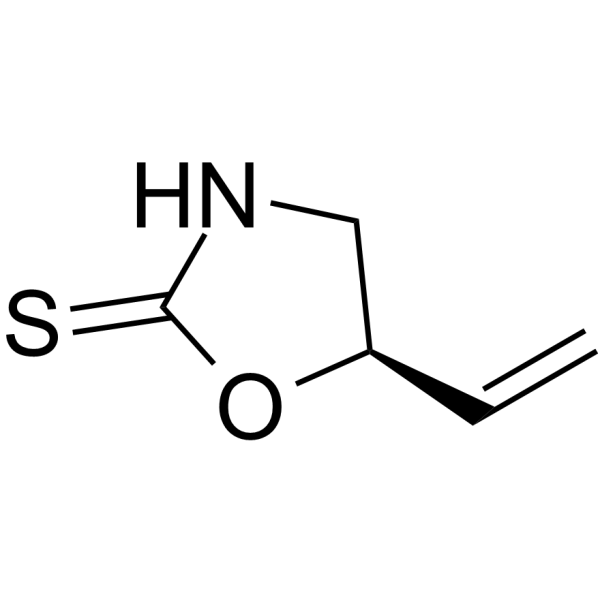
Epigoitrin
Based on 1 publication(s) in Google Scholar
Epigoitrin is a natural alkaloid that provides protection against influenza infection by reducing the host’s susceptibility to influenza virus under stress. Epigoitrin exerts antiviral activity against influenza A1 virus FM1 via inhibiting virus attachment and multiplication in vitro. Epigoitrin also has lipid-lowering effects.
Nur für Forschungszwecke. Wir verkaufen nicht an Patienten.
- Reinheit : 99.91%
- CAS. Nr.: 1072-93-1
- Formel: C5H7NOS
- Molecular Weight:129.18
-
Speicherung:
4°C, protect from light
* In solvent : -80°C, 6 months; -20°C, 1 month (protect from light)

To place orders, for customer services and technical support, please contact: MedChemExpress USA
Tel: 609-228-6898 E-mail: [email protected] [email protected]


-
 Biologische Aktivität
-
Chemical Information
-
Lösungsmittel & Löslichkeit
- Protokoll
- Reinheit & Dokumentation
- Verweise
-
 Help & FAQs


-
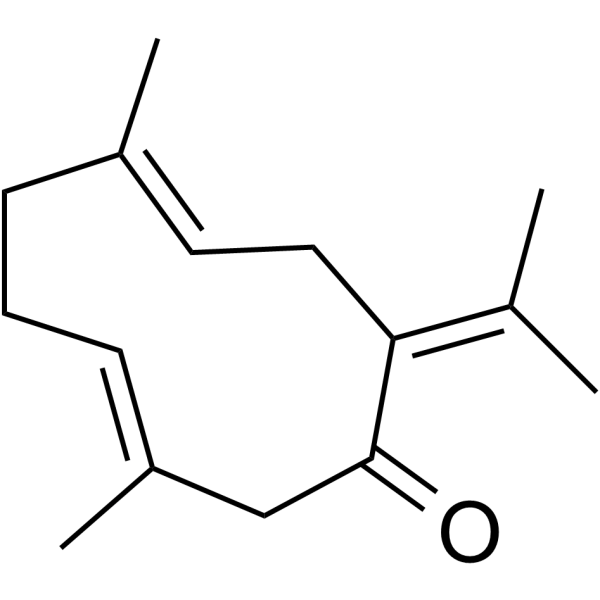
HY-N0440
GermacroneAnti-viral/Cancer/Inflammatory Agent -
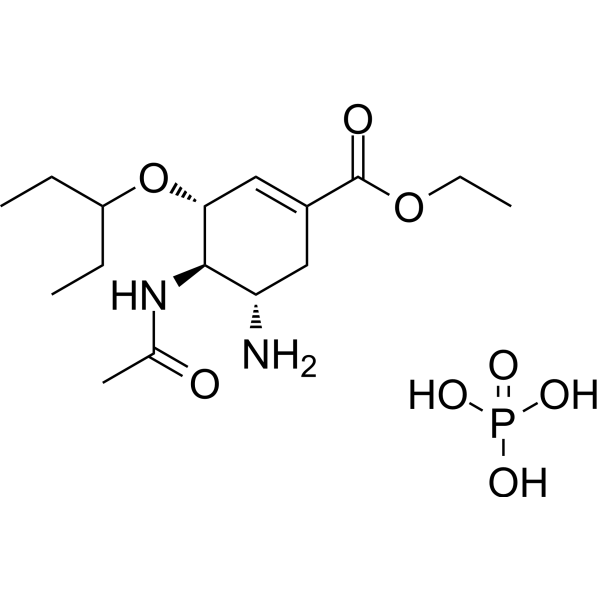
HY-17016
Oseltamivir phosphateInfluenza A/B Inhibitor -
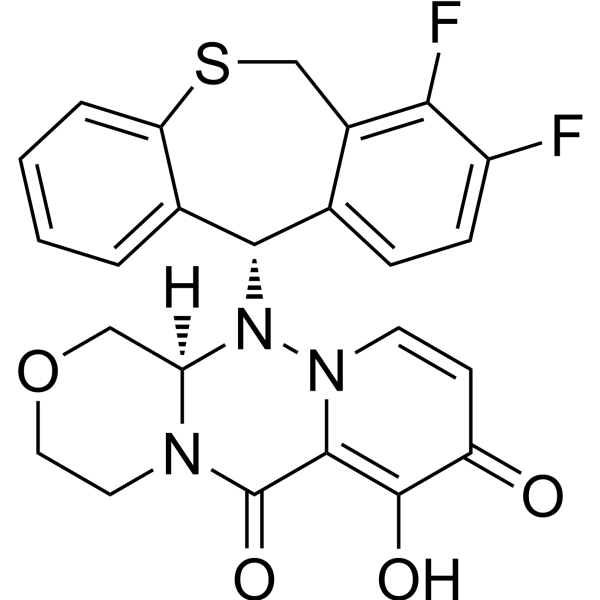
HY-109025A
BaloxavirCap-Endonuclease Inhibitor -

HY-N0224R
Epigoitrin (Standard)Influenza Virus Inhibitor -
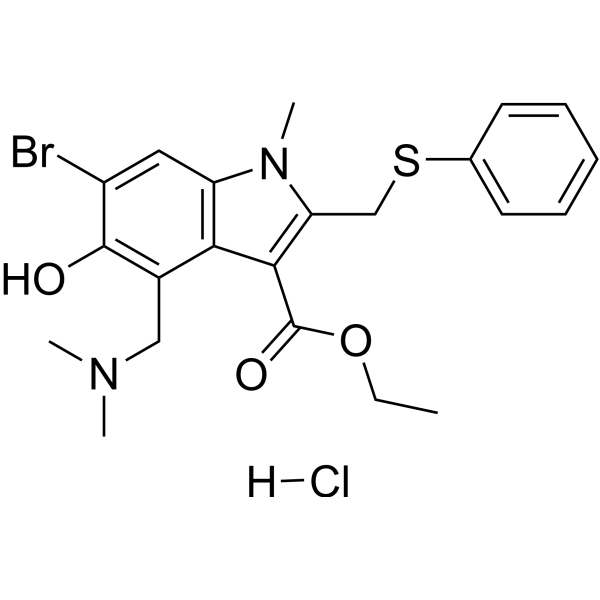
HY-14904A
Umifenovir hydrochlorideAntiviral Agent -
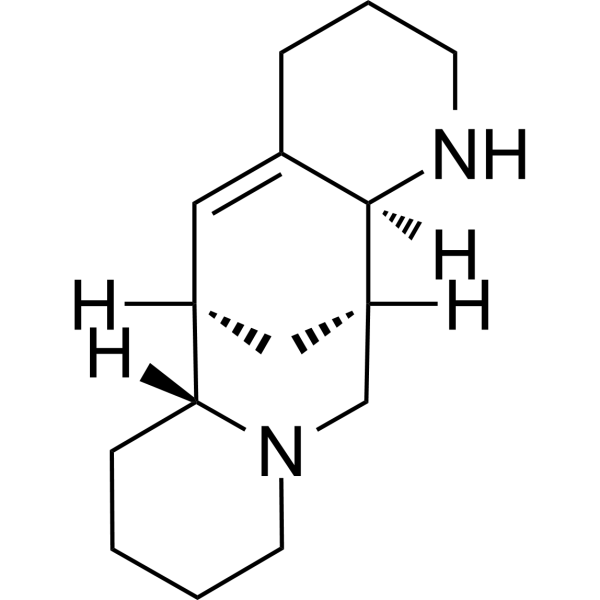
HY-13516
AloperineAutophagy Inducer -
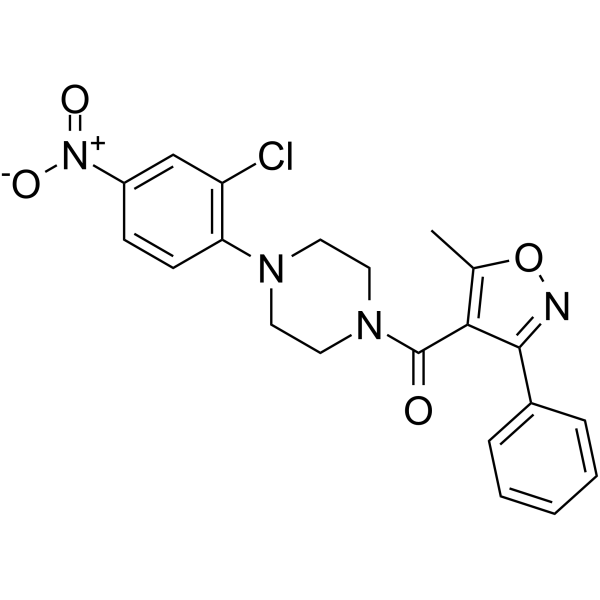
HY-50001
NucleozinInfluenza Virus Inhibitor -
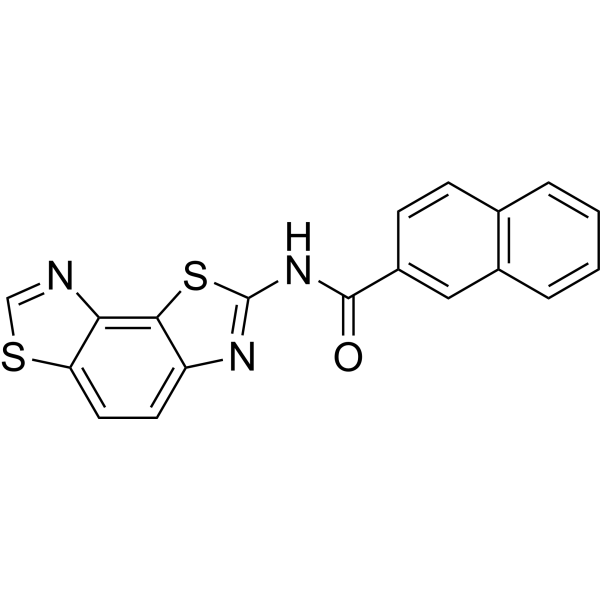
HY-101950
KIN1148IRF3 Agonist -
HY-N0677
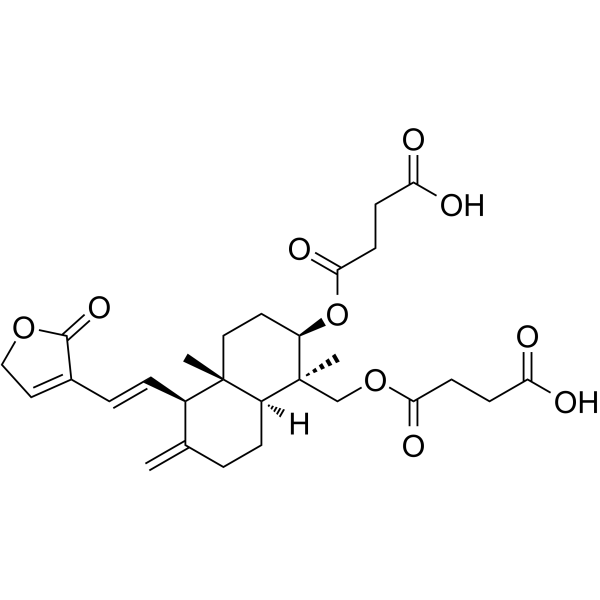
Dehydroandrographolide succinateInfluenza Virus Inhibitor -
HY-13210
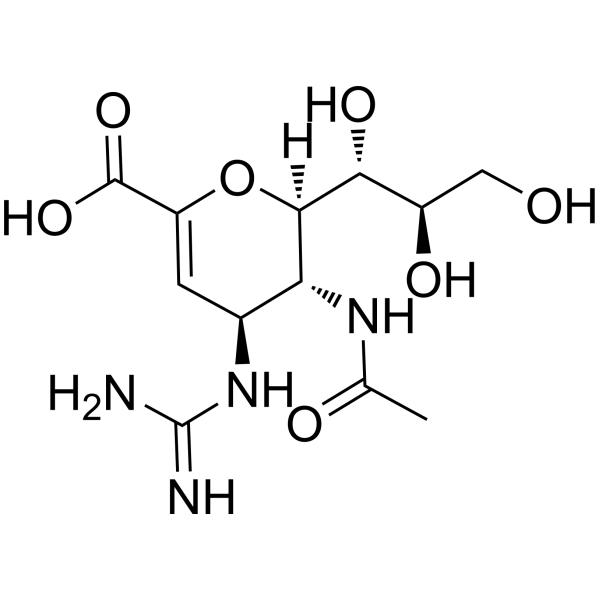
ZanamivirNeuraminidase Inhibitor -
HY-N0862
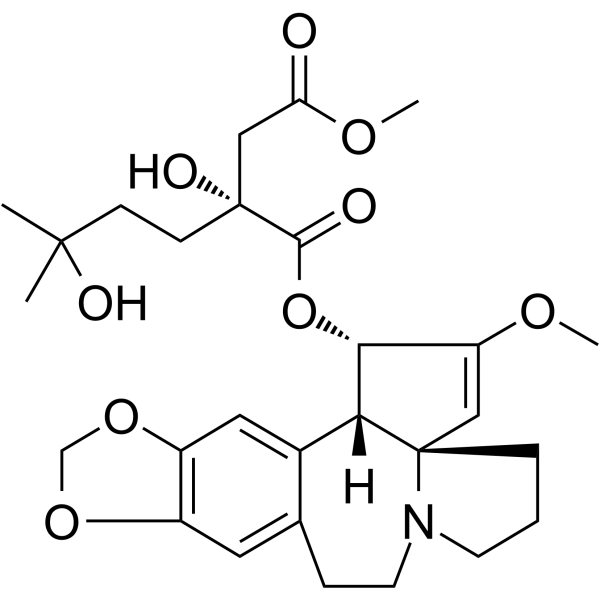
HarringtonineInfluenza Virus Inhibitor -
HY-107201
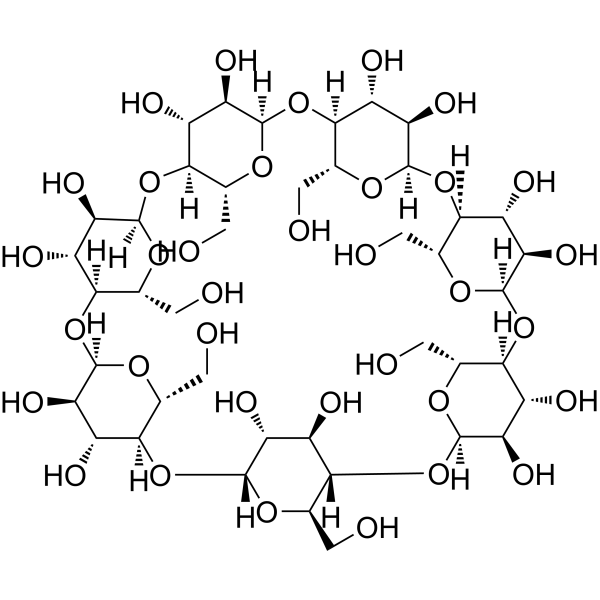
β-CyclodextrinInfluenza Virus Inhibitor
Publications Citing Use of MedChemExpress (MCE) Epigoitrin
More

Biologische Aktivität
Beschreibung
In Vitro
Epigoitrin (100 μM; 24 h) reduces intracellular triglyceride and total cholesterol levels, increases short-chain acyl-CoA dehydrogenase activity, promotes glucose uptake and glycogen storage, increases ATP production, reduces glutathione content, decreases reactive oxygen species, and enhances superoxide dismutase activity in HepG2 cells[3].
Epigoitrin inhibits the viability of RAW264.7 cells,with an IC50 of 2 mM[2].
Epigoitrin (1-100 μM; pretreated for 2 h, co-treated with Corticosterone (HY-B1618) for 48 h, and infected with H1N1 virus for 1.5 h) shows a dose-dependent inhibition of the mRNA expression of the NP gene in A549 cells compared with untreated cells[1].
MedChemExpress (MCE) has not independently confirmed the accuracy of these methods. They are for reference only.
-
Cell Line:Corticosterone-loaded A549 cell.
-
Concentration:1 μM, 12.5 μM, 25 μM, 50 μM, 100 μM
-
Incubation Time:Pretreated for 2 h, co-treated for 48 h
-
Result:Inhibited the mRNA expression of the NP gene.
In Vivo
Epigoitrin (50-100 mg/kg; added to the feed; for 12 weeks) reduces fat deposition, improves glucose tolerance and insulin sensitivity, and increases energy expenditure in a high-fat diet-induced obese mouse model[3].
MedChemExpress (MCE) has not independently confirmed the accuracy of these methods. They are for reference only.
-
Animal Model:Five-week-old male C57BL/6J mice were fed a high-fat diet to establish an obesity model[3].
-
Dosage:50 mg/kg, 100 mg/kg
-
Administration:Added to the feed, continuously administered for 12 weeks
-
Result:Reduced fat deposition in HFD mice.
Reduced adipocyte hypertrophy.
Alleviated hepatic steatosis, as shown by reduced liver lipid droplets and lower liver and serum TG and TC levels.
Had no effect on food intake.
-
Animal Model:Specific-pathogen-free male Kunming mice (4 weeks of age; 12-15 g) loaded with restraint stress[1]
-
Dosage:88 mg/kg, 176 mg/kg
-
Administration:Oral administration, once daily, for 7 days
-
Result:Increased the survival rate, prolonged the mean day to death, and reduced the morbidity sign.
Significantly decreased the virus titer in the lungs, reduced the infiltration of inflammatory cells in the lungs, and lowered the levels of TNF-α and IL-1β in bronchoalveolar lavage fluid.
Increased the protein expressions of MAVS, IFN-β, and IFITM3 in the lung tissue, and decreased the protein level of MFN2 and virus nucleoprotein (NP) in stressed mice.


Chemical Information
-
CAS. Nr. 1072-93-1
-
Appearance Solid
-
Molecular Weight 129.18
-
Formel C5H7NOS
-
Color White to yellow
-
SMILES
S=C1O[C@H](C=C)CN1
-
Structure Classification
-
Initial Source
-
Versand
Room temperature in continental US; may vary elsewhere.
-
Speicherung
4°C, protect from light
* In solvent : -80°C, 6 months; -20°C, 1 month (protect from light)


Publications (1)
-
Journal Impact Factor
-
Most Recent
-
Vet Microbiol
The Chinese medicine monomer Schisandrin C inhibits PRRSV infection by regulating the OGT-PI3K/AKT/mTOR signaling pathway. [Abstract]2026 May:316:110992. PMID: 41865607


Lösungsmittel & Löslichkeit
In Vitro:
DMSO : 50 mg/mL (387.04 mM; Need ultrasonic; Hygroscopic DMSO has a significant impact on the solubility of product, please use newly opened DMSO)
Ethanol : 3.33 mg/mL (25.78 mM; Need ultrasonic)
Please refer to the solubility information to select the appropriate solvent. Once prepared, please aliquot and store the solution to prevent product inactivation from repeated freeze-thaw cycles.
Storage method and period of stock solution: -80°C, 6 months; -20°C, 1 month (protect from light). When stored at -80°C, please use it within 6 months. When stored at -20°C, please use it within 1 month.
Please refer to the solubility information to select the appropriate solvent. Once prepared, please aliquot and store the solution to prevent product inactivation from repeated freeze-thaw cycles.
Storage method and period of stock solution: -80°C, 6 months; -20°C, 1 month (protect from light). When stored at -80°C, please use it within 6 months. When stored at -20°C, please use it within 1 month.
Konzentration (Stammlösung) × Volumen (Stammlösung) = Konzentration (Ziellösung) × Volumen (Ziellösung)
In Vivo:
Select the appropriate dissolution method based on your experimental animal and administration route.
- For the following dissolution methods, please ensure to first prepare a clear stock solution using an In Vitro approach and then sequentially add co-solvents:
- To ensure reliable experimental results, the clarified stock solution can be appropriately stored based on storage conditions. As for the working solution for In Vivo experiments, it is recommended to prepare freshly and use it on the same day.
- The percentages shown for the solvents indicate their volumetric ratio in the final prepared solution. If precipitation or phase separation occurs during preparation, heat and/or sonication can be used to aid dissolution.
Add each solvent one by one: 10% DMSO 40% PEG300 5% Tween-80 45% Saline
Solubility: ≥ 2.5 mg/mL (19.35 mM); Clear solution
This protocol yields a clear solution of ≥ 2.5 mg/mL (saturation unknown).
Taking 1 mL working solution as an example, add 100 μL DMSO stock solution (25.0 mg/mL) to 400 μL PEG300, and mix evenly; then add 50 μL Tween-80 and mix evenly; then add 450 μL Saline to adjust the volume to 1 mL.
Preparation of Saline: Dissolve 0.9 g sodium chloride in ddH₂O and dilute to 100 mL to obtain a clear Saline solution.
Add each solvent one by one: 10% DMSO 90% (20% SBE-β-CD in Saline)
Solubility: 2.5 mg/mL (19.35 mM); Suspended solution; Need ultrasonic
This protocol yields a suspended solution of 2.5 mg/mL. Suspended solution can be used for oral and intraperitoneal injection.
Taking 1 mL working solution as an example, add 100 μL DMSO stock solution (25.0 mg/mL) to 900 μL 20% SBE-β-CD in Saline, and mix evenly.
Preparation of 20% SBE-β-CD in Saline (4°C, storage for one week): 2 g SBE-β-CD powder is dissolved in 10 mL Saline, completely dissolve until clear.
In Vivo Dissolution Calculator
Please enter the basic information of animal experiments:
-
-
-
-
Recommended: Prepare an additional quantity of animals to account for potential losses during experiments.
Please enter your animal formula composition:
-
%DMSO +
Recommended: Keep the proportion of DMSO in working solution below 2% if your animal is weak.
-
%+
-
+%Tween-80 + +
-
%Saline +
The co-solvents required include: DMSO, . All of co-solvents are available by MedChemExpress (MCE). , Tween 80. All of co-solvents are available by MedChemExpress (MCE).
Working solution concentration: 0.22 mg/mL
Method for preparing stock solution: mg drug dissolved in μL DMSO. Stock solution concentration: mg/mL. * In solvent : -80°C, 6 months; -20°C, 1 month (protect from light)
1. Take μL DMSO stock solution;
2. Add μL .
μL , mix evenly;
3. Then add μL Tween 80, mix evenly;
4. Then add μL
Please ensure that the stock solution in the first step is dissolved to a clear state, and add co-solvents in sequence. You can use ultrasonic heating (ultrasonic cleaner, recommended frequency 20-40 kHz), vortexing, etc. to assist dissolution.


Reinheit & Dokumentation
-
Data Sheet (280 KB)
-
SDS (604 KB)
- English - EN (604 KB)
- Français - FR (604 KB)
- Deutsch - DE (604 KB)
- Norwegian - NO (604 KB)
- Español - ES (604 KB)
- Swedish - SV (604 KB)
- Italian - IT (604 KB)
- Korean - KR (604 KB)
- Portuguese - PT (604 KB)
-
Handling Instructions (2659 KB)
Verweise
[1]. Luo Z, et al. Epigoitrin, an Alkaloid From Isatis indigotica, Reduces H1N1 Infection in Stress-Induced Susceptible Model in vivo and in vitro. Front Pharmacol. 2019 Feb 7;10:78. [Content Brief]
[2]. He L, et al. 4(3H)-Quinazolone regulates innate immune signaling upon respiratory syncytial virus infection by moderately inhibiting the RIG-1 pathway in RAW264.7 cell. Int Immunopharmacol. 2017 Nov;52:245-252. [Content Brief]
[3]. Li M, et al. Epigoitrin alleviates lipid and glucose metabolic disorders induced by a high-fat diet. Food Funct. 2022 Jul 4;13(13):7260-7273. [Content Brief]


Complete Stock Solution Preparation Table
Please refer to the solubility information to select the appropriate solvent. Once prepared, please aliquot and store the solution to prevent product inactivation from repeated freeze-thaw cycles.
Storage method and period of stock solution: -80°C, 6 months; -20°C, 1 month (protect from light). When stored at -80°C, please use it within 6 months. When stored at -20°C, please use it within 1 month.
| Optional Solvent | Concentration Solvent Mass | 1 mg | 5 mg | 10 mg | 25 mg |
|---|---|---|---|---|---|
| Ethanol / DMSO | 1 mM | 7.7409 mL | 38.7045 mL | 77.4090 mL | 193.5224 mL |
| 5 mM | 1.5482 mL | 7.7409 mL | 15.4818 mL | 38.7045 mL | |
| 10 mM | 0.7741 mL | 3.8704 mL | 7.7409 mL | 19.3522 mL | |
| 15 mM | 0.5161 mL | 2.5803 mL | 5.1606 mL | 12.9015 mL | |
| 20 mM | 0.3870 mL | 1.9352 mL | 3.8704 mL | 9.6761 mL | |
| 25 mM | 0.3096 mL | 1.5482 mL | 3.0964 mL | 7.7409 mL | |
| DMSO | 30 mM | 0.2580 mL | 1.2901 mL | 2.5803 mL | 6.4507 mL |
| 40 mM | 0.1935 mL | 0.9676 mL | 1.9352 mL | 4.8381 mL | |
| 50 mM | 0.1548 mL | 0.7741 mL | 1.5482 mL | 3.8704 mL | |
| 60 mM | 0.1290 mL | 0.6451 mL | 1.2901 mL | 3.2254 mL | |
| 80 mM | 0.0968 mL | 0.4838 mL | 0.9676 mL | 2.4190 mL | |
| 100 mM | 0.0774 mL | 0.3870 mL | 0.7741 mL | 1.9352 mL |


Epigoitrin Related Classifications
HY-N0224 Related Classifications
 Powered by Bioz