



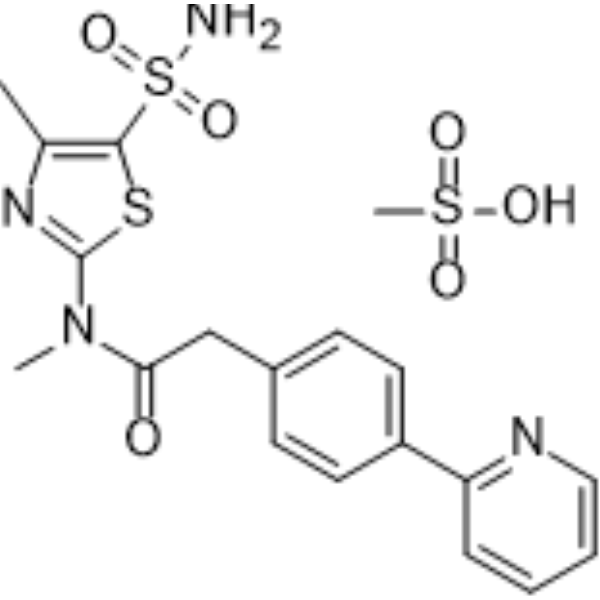
Pritelivir mesylate
Based on 7 publication(s) in Google Scholar
Pritelivir mesylate (BAY 57-1293 mesylate), an inhibitor of the viral helicase-primase complex, exhibits antiviral activity in vitro and in animal models of herpes simplex virus (HSV) infection. Pritelivir mesylate is active against herpes simplex virus types 1 and 2 (HSV-1 and HSV-2) with the IC50 of 0.02 μM against HSV1-2.
For research use only. We do not sell to patients.
- Purity : 99.33%
- CAS No.: 1428333-96-3
- Formula: C19H22N4O6S3
- Molecular Weight:498.60
-
Storage:
4°C, sealed storage, away from moisture
* In solvent : -80°C, 6 months; -20°C, 1 month (sealed storage, away from moisture)

To place orders, for customer services and technical support, please contact: MedChemExpress USA
Tel: 609-228-6898 E-mail: [email protected] [email protected]


-
 Biological Activity
-
Chemical Information
-
Solvent & Solubility
- Protocols
- Purity & Documentation
- References
-
 Help & FAQs


-
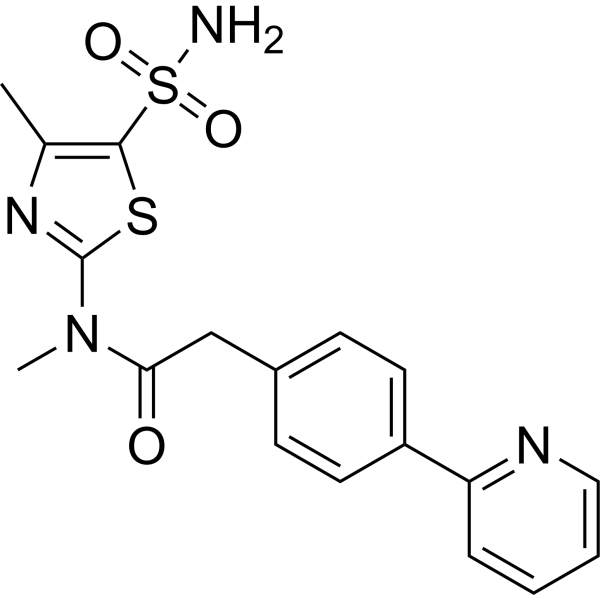
HY-15303
PritelivirHSV Inhibitor -
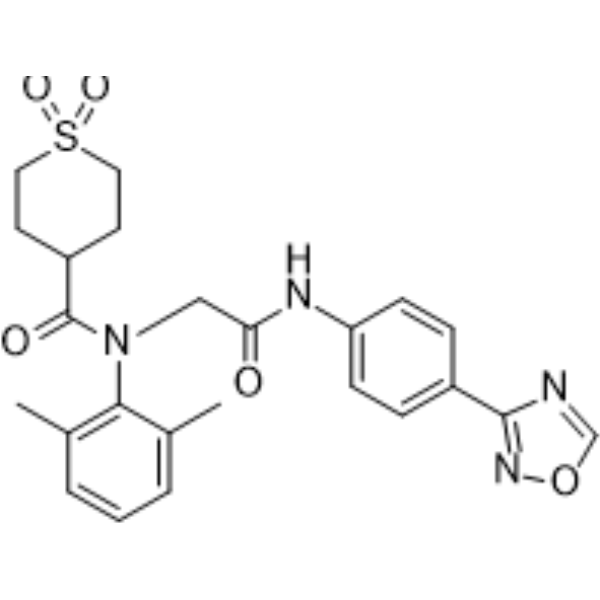
HY-14809
AmenamevirHSV Inhibitor -
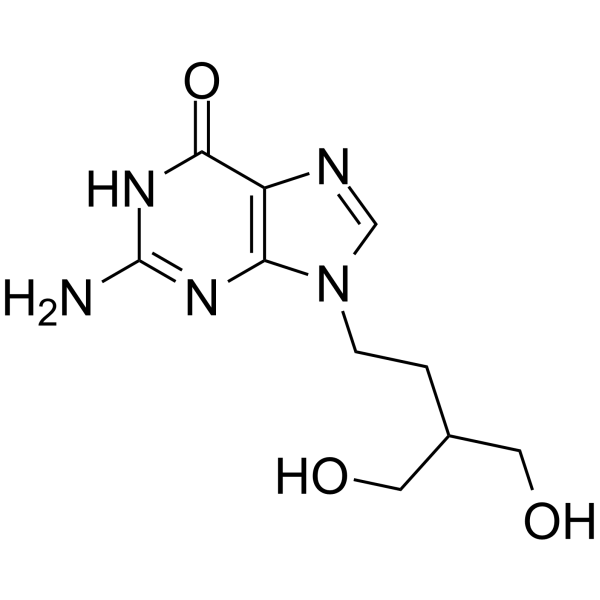
HY-17424
PenciclovirAnti-herpesvirus Agent -
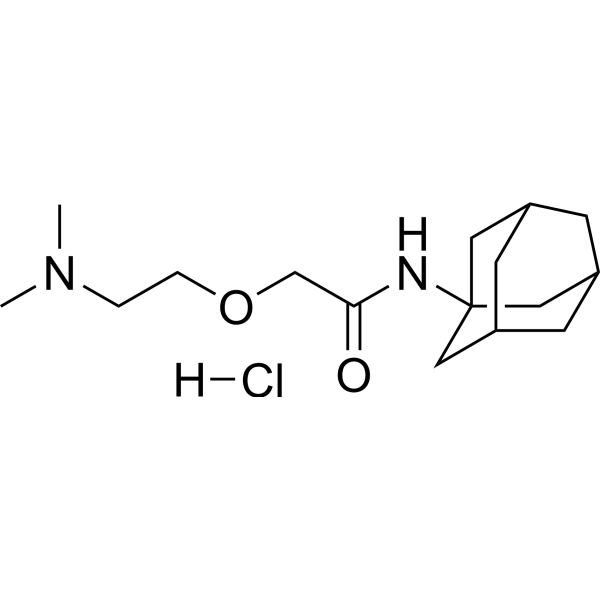
HY-U00124B
Tromantadine hydrochlorideHSV Replication Inhibitor -

HY-14809R
Amenamevir (Standard)HSV Inhibitor -
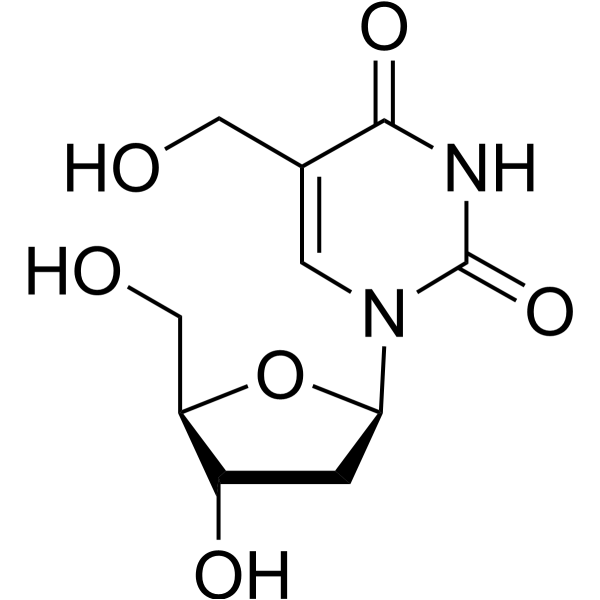
HY-129983
5-Hydroxymethyl-2'-deoxyuridineNucleoside Analog -
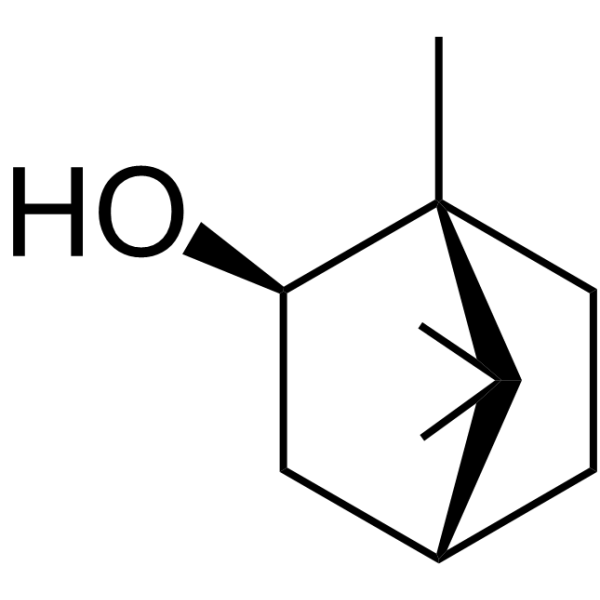
HY-N2004
IsoborneolHSV Inhibitor -

HY-17424R
Penciclovir (Standard)Anti-herpesvirus Agent -
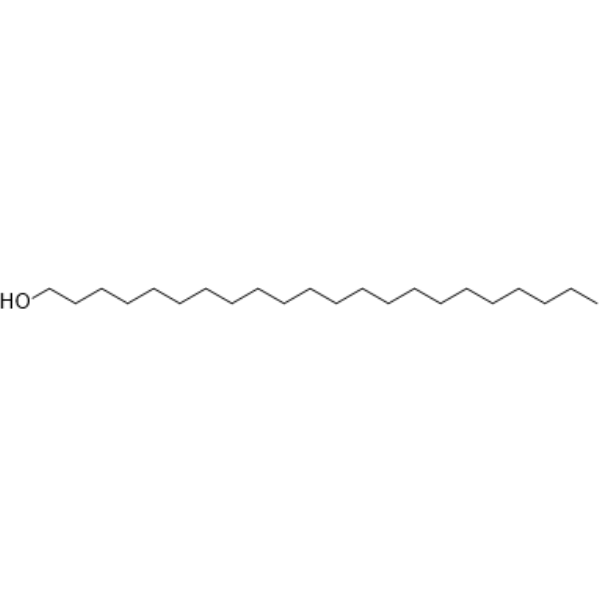
HY-B0222
1-DocosanolHSV Inhibitor -

HY-15303AR
Pritelivir mesylate (Standard)Helicase-primase Complex Inhibitor -
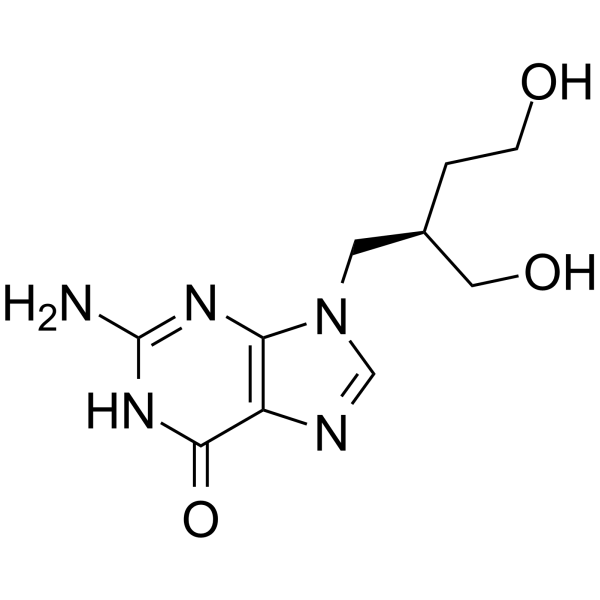
HY-116174
OmaciclovirHerpesvirus Inhibitor -
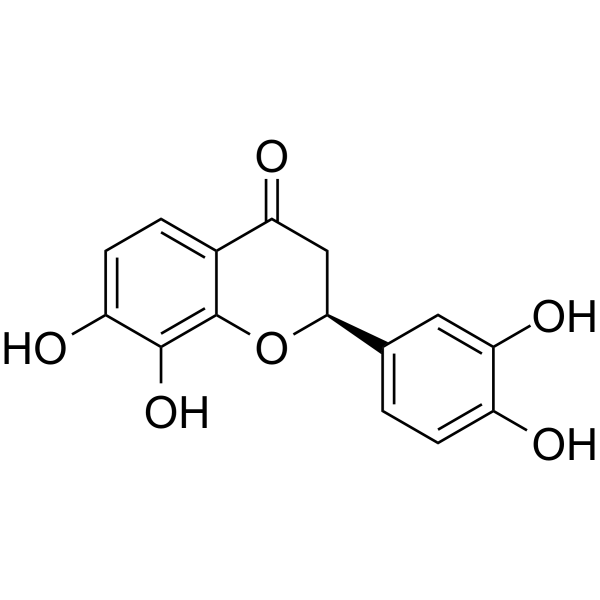
HY-N7677
IsookaninAntioxidant/Anti-Viral
Publications Citing Use of MedChemExpress (MCE) Pritelivir mesylate
More- ACS Environ Au. 2025 Aug 5;5(6):573-582. [Abstract]
- Anal Chem. 2025 Jun 3;97(21):11099-11109. [Abstract]
- Antiviral Res. 2025 Nov:243:106271. [Abstract]
- Antiviral Res. 2020 Nov:183:104931. [Abstract]
- J Infect Dis. 2023 Nov 28;228(11):1505-1515. [Abstract]
- J Antimicrob Chemother. 2022 Oct 28;77(11):3153-3162. [Abstract]
- Virus Evol. 2024 Nov 23;10(1):veae101. [Abstract]
All DNA/RNA Synthesis Isoforms
More

Biological Activity
Description
IC50 & Target
[1]|
Helicase |
HSV-1 0.02 μM (IC50) |
HSV-2 0.02 μM (IC50) |
In Vivo
Pritelivir (0.03-45 mg/kg) significantly increases survival. Pritelivir (0.3-30 mg/kg) reduces mortality against HSV-1, E-377. Pritelivir has potent and resistance-breaking antiviral efficacy with potential for the treatment of potentially life-threatening HSV type 1 and 2 infections, including herpes simplex encephalitis[3].
Combination therapies of Pritelivir at 0.1 or 0.3 mg/kg/dose with Acyclovir (10 mg/kg/dose) are protective when compared to the vehicle treated group against HSV-2, strain MS[3].
MedChemExpress (MCE) has not independently confirmed the accuracy of these methods. They are for reference only.
-
Animal Model:Female BALB/c mice[3]
-
Dosage:0.03 to 45 mg/kg
-
Administration:Administered orally, twice daily at approximately 12 h intervals, for 7 days
-
Result:Survival was significantly increased to 80-100% as compared to the vehicle treatment. Even the lowest dose of 0.3 mg/kg was effective in increasing survival to 53%.
Clinical Trial
| NCT Number | Sponsor | Condition | Start Date |
Phase

|
|---|---|---|---|---|
| NCT01329991 | Plexxikon| | 2011-05 | PHASE1 |


Chemical Information
-
CAS No. 1428333-96-3
-
Appearance Solid
-
Molecular Weight 498.60
-
Formula C19H22N4O6S3
-
Color White to off-white
-
SMILES
O=C(N(C1=NC(C)=C(S(=O)(N)=O)S1)C)CC2=CC=C(C3=NC=CC=C3)C=C2.OS(=O)(C)=O
-
Synonyms
AIC316 mesylate; BAY 57-1293 mesylate
-
Shipping
Room temperature in continental US; may vary elsewhere.
-
Storage
4°C, sealed storage, away from moisture
* In solvent : -80°C, 6 months; -20°C, 1 month (sealed storage, away from moisture)


Publications (7)
-
Journal Impact Factor
-
Most Recent
-
ACS Environ Au
Machine Learning-Assisted Recognition of Environmental Sulfur-Containing Chemicals in Nontargeted Mass Spectrometry Analysis of Inadequate Mass Resolution. [Abstract]2025 Aug 5;5(6):573-582. PMID: 41277996 -
Anal Chem
Exposome-Scale Investigation of Cl-/Br-Containing Chemicals Using High-Resolution Mass Spectrometry, Multistage Machine Learning, and Cloud Computing. [Abstract]2025 Jun 3;97(21):11099-11109. PMID: 40401576 -
Antiviral Res
Structural determinants of nervous system exposure of adibelivir (IM-250) and related herpes helicase-primase inhibitors across animal species. [Abstract]2025 Nov:243:106271. PMID: 40912604 -
Antiviral Res
Identification of antiviral compounds against equid herpesvirus-1 using real-time cell assay screening: Efficacy of decitabine and valganciclovir alone or in combination. [Abstract]2020 Nov:183:104931. PMID: 32926887 -
J Infect Dis
A Herpes Simplex virus 1 DNA Polymerase Multidrug Resistance Mutation Identified in an Immunocompromised Patient - Confirmed by Gene Editing. [Abstract]2023 Nov 28;228(11):1505-1515. PMID: 37224525 -
J Antimicrob Chemother
Heterogeneity and viral replication fitness of HSV-1 clinical isolates with mutations in the thymidine kinase and DNA polymerase. [Abstract]2022 Oct 28;77(11):3153-3162. PMID: 36059135 -
Virus Evol
Combined use of pritelivir with acyclovir or foscarnet suppresses evolution of HSV-1 drug resistance. [Abstract]2024 Nov 23;10(1):veae101. PMID: 39717706


Solvent & Solubility
In Vitro:
DMSO : 83.33 mg/mL (167.13 mM; Need ultrasonic; Hygroscopic DMSO has a significant impact on the solubility of product, please use newly opened DMSO)
Please refer to the solubility information to select the appropriate solvent. Once prepared, please aliquot and store the solution to prevent product inactivation from repeated freeze-thaw cycles.
Storage method and period of stock solution: -80°C, 6 months; -20°C, 1 month (sealed storage, away from moisture). When stored at -80°C, please use it within 6 months. When stored at -20°C, please use it within 1 month.
Please refer to the solubility information to select the appropriate solvent. Once prepared, please aliquot and store the solution to prevent product inactivation from repeated freeze-thaw cycles.
Storage method and period of stock solution: -80°C, 6 months; -20°C, 1 month (sealed storage, away from moisture). When stored at -80°C, please use it within 6 months. When stored at -20°C, please use it within 1 month.
Concentration (start) × Volume (start) = Concentration (final) × Volume (final)
In Vivo:
Select the appropriate dissolution method based on your experimental animal and administration route.
- For the following dissolution methods, please ensure to first prepare a clear stock solution using an In Vitro approach and then sequentially add co-solvents:
- To ensure reliable experimental results, the clarified stock solution can be appropriately stored based on storage conditions. As for the working solution for In Vivo experiments, it is recommended to prepare freshly and use it on the same day.
- The percentages shown for the solvents indicate their volumetric ratio in the final prepared solution. If precipitation or phase separation occurs during preparation, heat and/or sonication can be used to aid dissolution.
Add each solvent one by one: 10% DMSO 40% PEG300 5% Tween-80 45% Saline
Solubility: ≥ 2.08 mg/mL (4.17 mM); Clear solution
This protocol yields a clear solution of ≥ 2.08 mg/mL (saturation unknown).
Taking 1 mL working solution as an example, add 100 μL DMSO stock solution (20.8 mg/mL) to 400 μL PEG300, and mix evenly; then add 50 μL Tween-80 and mix evenly; then add 450 μL Saline to adjust the volume to 1 mL.
Preparation of Saline: Dissolve 0.9 g sodium chloride in ddH₂O and dilute to 100 mL to obtain a clear Saline solution.
Add each solvent one by one: 10% DMSO 90% (20% SBE-β-CD in Saline)
Solubility: ≥ 2.08 mg/mL (4.17 mM); Clear solution
This protocol yields a clear solution of ≥ 2.08 mg/mL (saturation unknown).
Taking 1 mL working solution as an example, add 100 μL DMSO stock solution (20.8 mg/mL) to 900 μL 20% SBE-β-CD in Saline, and mix evenly.
Preparation of 20% SBE-β-CD in Saline (4°C, storage for one week): 2 g SBE-β-CD powder is dissolved in 10 mL Saline, completely dissolve until clear.
In Vivo Dissolution Calculator
Please enter the basic information of animal experiments:
-
-
-
-
Recommended: Prepare an additional quantity of animals to account for potential losses during experiments.
Please enter your animal formula composition:
-
%DMSO +
Recommended: Keep the proportion of DMSO in working solution below 2% if your animal is weak.
-
%+
-
+%Tween-80 + +
-
%Saline +
The co-solvents required include: DMSO, . All of co-solvents are available by MedChemExpress (MCE). , Tween 80. All of co-solvents are available by MedChemExpress (MCE).
Working solution concentration: 0.22 mg/mL
Method for preparing stock solution: mg drug dissolved in μL DMSO. Stock solution concentration: mg/mL. * In solvent : -80°C, 6 months; -20°C, 1 month (sealed storage, away from moisture)
1. Take μL DMSO stock solution;
2. Add μL .
μL , mix evenly;
3. Then add μL Tween 80, mix evenly;
4. Then add μL
Please ensure that the stock solution in the first step is dissolved to a clear state, and add co-solvents in sequence. You can use ultrasonic heating (ultrasonic cleaner, recommended frequency 20-40 kHz), vortexing, etc. to assist dissolution.

Protocols
-
Research Protocol for Infectious Diseases
Infectious-disease experiments test how pathogens interact with host barriers, innate immune receptors, inflammatory signaling, pathogen replication, and tissue injury; pattern-recognition receptors such as TLRs, RIG-I-like receptors, NOD-like receptors, and inflammasomes detect microbial molecules and activate NF-κB, interferon, and cytokine responses. The central hypothesis is that infection severity reflects the balance between pathogen burden and host response: protective inflammation restricts pathogen growth, whereas excessive or mislocalized inflammation contributes to tissue damage and disease phenotype. Unresolved questions include which host pathways are protective versus pathogenic, why some infection models fail to translate to human disease, and which combined readouts best predict clinically relevant infection outcomes.
-
Cell Cytotoxicity Assay
Cytotoxicity assays are usually based on the assessment of cell membrane damage, which can also be indirectly detected by measuring cell viability. Detection methods include MTT assay, CKK-8 assay, LDH assay and ATP assay, etc.


Purity & Documentation
-
Data Sheet (283 KB)
-
SDS (393 KB)
- English - EN (393 KB)
- Français - FR (393 KB)
- Deutsch - DE (393 KB)
- Norwegian - NO (393 KB)
- Español - ES (393 KB)
- Swedish - SV (393 KB)
- Italian - IT (393 KB)
- Korean - KR (393 KB)
- Portuguese - PT (393 KB)
-
Handling Instructions (2659 KB)
References
[1]. Ligat G, et al. Identification of Amino Acids Essential for Viral Replication in the HCMV Helicase-PrimaseComplex. Front Microbiol. 2018 Oct 23;9:2483. [Content Brief]
[2]. Wald A, et al. Helicase-primase inhibitor Pritelivir for HSV-2 infection. N Engl J Med. 2014 Jan 16;370(3):201-10. [Content Brief]
[3]. Quenelle DC, et al. Efficacy of pritelivir and acyclovir in the treatment of herpes simplex virus infections in a mouse model of herpes simplex encephalitis. Antiviral Res. 2018 Jan;149:1-6. [Content Brief]


Complete Stock Solution Preparation Table
Please refer to the solubility information to select the appropriate solvent. Once prepared, please aliquot and store the solution to prevent product inactivation from repeated freeze-thaw cycles.
Storage method and period of stock solution: -80°C, 6 months; -20°C, 1 month (sealed storage, away from moisture). When stored at -80°C, please use it within 6 months. When stored at -20°C, please use it within 1 month.
| Optional Solvent | Concentration Solvent Mass | 1 mg | 5 mg | 10 mg | 25 mg |
|---|---|---|---|---|---|
| DMSO | 1 mM | 2.0056 mL | 10.0281 mL | 20.0562 mL | 50.1404 mL |
| 5 mM | 0.4011 mL | 2.0056 mL | 4.0112 mL | 10.0281 mL | |
| 10 mM | 0.2006 mL | 1.0028 mL | 2.0056 mL | 5.0140 mL | |
| 15 mM | 0.1337 mL | 0.6685 mL | 1.3371 mL | 3.3427 mL | |
| 20 mM | 0.1003 mL | 0.5014 mL | 1.0028 mL | 2.5070 mL | |
| 25 mM | 0.0802 mL | 0.4011 mL | 0.8022 mL | 2.0056 mL | |
| 30 mM | 0.0669 mL | 0.3343 mL | 0.6685 mL | 1.6713 mL | |
| 40 mM | 0.0501 mL | 0.2507 mL | 0.5014 mL | 1.2535 mL | |
| 50 mM | 0.0401 mL | 0.2006 mL | 0.4011 mL | 1.0028 mL | |
| 60 mM | 0.0334 mL | 0.1671 mL | 0.3343 mL | 0.8357 mL | |
| 80 mM | 0.0251 mL | 0.1254 mL | 0.2507 mL | 0.6268 mL | |
| 100 mM | 0.0201 mL | 0.1003 mL | 0.2006 mL | 0.5014 mL |


Pritelivir mesylate Related Classifications
HY-15303A Related Classifications
 Powered by Bioz