



Anti-Mouse CD45RB Antibody (MB23G2)
Anti-Mouse CD45RB Antibody (MB23G2) is a rat-derived IgG2a κ type antibody inhibitor, targeting to mouse CD45RB. Anti-Mouse CD45RB Antibody (MB23G2) blocks CD45RB and induces transplantation tolerance. Anti-Mouse CD45RB Antibody (MB23G2) can be used for the researches of infection, immunology and metabolic disease, such as diabetes and Mem71 (H3N1) virus-infection.
For research use only. We do not sell to patients.
- Molecular Weight:150 kDa
-
Storage:
Please store the product under the recommended conditions in the Certificate of Analysis.

To place orders, for customer services and technical support, please contact: MedChemExpress USA
Tel: 609-228-6898 E-mail: [email protected] [email protected]


-
 Biological Activity
-
Chemical Information
- Protocols
- Purity & Documentation
- References
-
 Help & FAQs




Biological Activity
Description
Isotype
Rat IgG2a kappa
Recommend Isotype Controls
Species Reactivity
Mouse
In Vitro
The antibody framework is stable, specific and adaptable, and has the ability to bind both antigens and endogenous immune receptors. Monoclonal antibodies have several derivatives, including bispecific antibodies, antibody-drug conjugates, and antibody fragments, and have significant effects in fields such as immunology and oncology. When designing inhibitory antibodies, considerations include identification of antigen-specific variable regions, choice of expression system, use of multispecific formats, and antibody derivatives based on fragmentation, oligomerization, or conjugation with other functional moieties[1].
MedChemExpress (MCE) has not independently confirmed the accuracy of these methods. They are for reference only. Further protocols information, click here.
In Vivo
Anti-Mouse CD45RB Antibody (MB23G2) (200 μg, i.p., 1 day prior to infection and thereafter every 3 days) delays viral clearance in Mem71 (H3N1) virus-infected mice[2].
MedChemExpress (MCE) has not independently confirmed the accuracy of these methods. They are for reference only.
-
Animal Model:Streptozotocin (HY-13753)-induced diabetic mice with Islet grafts[1]
-
Dosage:100 μg
-
Administration:Intravenously injection, at days -1, 0, and 5
-
Result:Became normoglycemic within 3 days and prolonged survival.
Reduced IL-2, IFN-α,and IL-4 mRNA amounts.
Decreased white blood cell counts on day 3 and 7.
Reduced the CD45RBbright population for a week, but the population had already partially returned 5 days after the last injection.
-
Animal Model:Mem71 (H3N1) virus-infected mice models[2]
-
Dosage:200 μg
-
Administration:Intraperitoneally injection, 1 day prior to infection and thereafter every 3 days
-
Result:Showed delayed viral clearance.
Showed fewer T cells were present in both MLN and lung.
Reduced total influenza-specific CD8+ T cells.
Delayed the humoral response.
Conjugated
Unconjugated
Reconsititution
The product can be reconstituted/diluted with sterile PBS or saline.
Format
-
Product Image
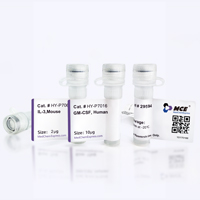
Application
in vivo anti-CD45RB_mediated tolerance induction; in vivo pre-mNK cell depletion


Chemical Information
-
Molecular Weight 150 kDa
-
SMILES
[Anti-Mouse CD45RB Antibody (MB23G2)]
-
Formulation
Please refer to the lot-specific COA for specific buffer information.
-
Storage
Please store the product under the recommended conditions in the Certificate of Analysis.

Protocols
-
Research Protocol for Infectious Diseases
Infectious-disease experiments test how pathogens interact with host barriers, innate immune receptors, inflammatory signaling, pathogen replication, and tissue injury; pattern-recognition receptors such as TLRs, RIG-I-like receptors, NOD-like receptors, and inflammasomes detect microbial molecules and activate NF-κB, interferon, and cytokine responses. The central hypothesis is that infection severity reflects the balance between pathogen burden and host response: protective inflammation restricts pathogen growth, whereas excessive or mislocalized inflammation contributes to tissue damage and disease phenotype. Unresolved questions include which host pathways are protective versus pathogenic, why some infection models fail to translate to human disease, and which combined readouts best predict clinically relevant infection outcomes.
-
Research Protocol for Metabolic Diseases
AMP-activated protein kinase, AMPK, is a conserved cellular energy sensor that responds to reduced cellular energy status and coordinates metabolism by increasing ATP-generating catabolic pathways while suppressing ATP-consuming anabolic processes. In metabolic disease research, the AMPK pathway is experimentally relevant because it regulates hepatic lipid synthesis, fatty acid oxidation, glucose production, skeletal-muscle glucose disposal, mTORC1-linked biosynthesis, autophagy, mitochondrial homeostasis, and whole-body energy balance. The central pathway logic is that energy stress, metformin, exercise-like stimulation, or direct AMPK activators increase AMPKα Thr172 phosphorylation and downstream substrate phosphorylation, including ACC and RAPTOR. Phosphorylation of ACC suppresses lipogenesis and supports fatty acid oxidation, whereas phosphorylation of RAPTOR suppresses mTORC1 signaling and links cellular energy status to growth and protein synthesis control. The pathway is linked


Purity & Documentation
References

Calculators
Concentration (start) × Volume (start) = Concentration (final) × Volume (final)


Anti-Mouse CD45RB Antibody (MB23G2) Related Classifications
HY-P990267 Related Classifications
 Powered by Bioz