Search Result
Results for "
PEG conjugate
" in MedChemExpress (MCE) Product Catalog:
1202
Inhibitors & Agonists
339
Biochemical Assay Reagents
| Cat. No. |
Product Name |
Target |
Research Areas |
Chemical Structure |
-
- HY-164239
-
|
|
Drug-Linker Conjugates for ADC
Microtubule/Tubulin
|
Cancer
|
|
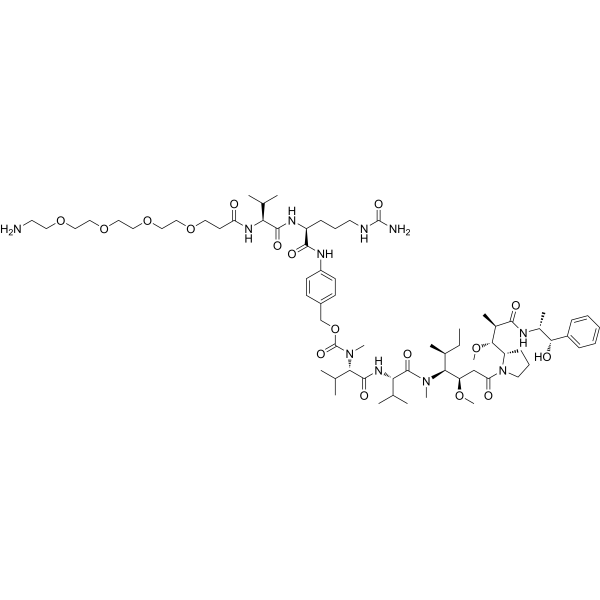
NH2-PEG3-VC-PAB-MMAE is a drug-linker conjugate for ADC, consisting of a cleavable ADC linker (NH2-PEG3-VC-PAB) and a potent tubulin inhibitor Monomethyl auristatin E (MMAE) (HY-15162). NH2-PEG3-VC-PAB-MMAE can be used in the synthesis of antibody-drug conjugates (ADCs) .
|
-
-
- HY-144006
-
|
14:0 PEG2000 PE ammonium; 1,2-Dimyristoyl-sn-glycero-3-phosphoethanolamine-N-[methoxy(polyethylene glycol)-2000] ammonium
|
Liposome
|
Others
|
|
DMPE-PEG2000 ammonium (14:0 PEG2000 PE ammonium) is a PEG-phospholipid conjugate to prepare nanostructured lipid carrier .
|
-
-
- HY-128968
-
-
-
- HY-126885
-
|
|
ADC Linker
PROTAC Linkers
|
Cancer
|
|
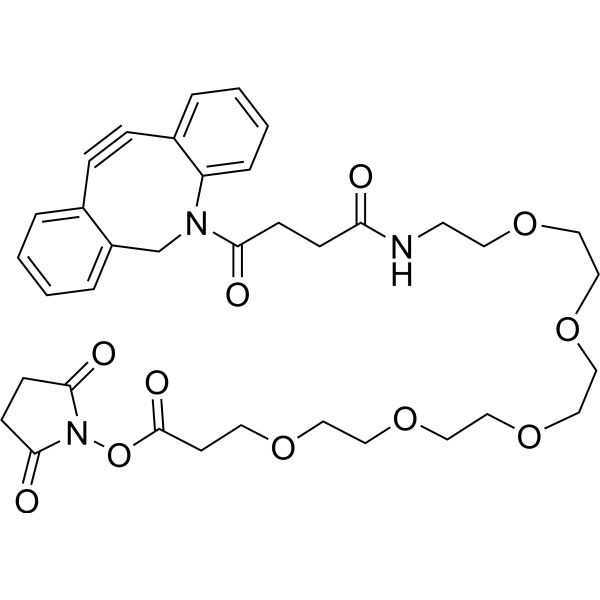
DBCO-PEG5-NHS ester is a PEG/Alkyl/ether-based PROTAC linker can be used in the synthesis of PROTACs. DBCO-PEG5-NHS ester is a cleavable ADC linker used in the synthesis of antibody-drug conjugates (ADCs) . DBCO-PEG5-NHS ester is a click chemistry reagent, it contains a DBCO group that can undergo strain-promoted alkyne-azide cycloaddition (SPAAC) with molecules containing Azide groups.
|
-
-
- HY-W051634
-
|
|
ADC Linker
PROTAC Linkers
|
Cancer
|
|
Propargyl-PEG2-amine is a non-cleavable ADC linker used in the synthesis of antibody-drug conjugates (ADCs). Propargyl-PEG2-amine is a PEG-based PROTAC linker can be used in the synthesis of PROTACs . Propargyl-PEG2-amine is a click chemistry reagent, it contains an Alkyne group and can undergo copper-catalyzed azide-alkyne cycloaddition (CuAAc) with molecules containing Azide groups.
|
-
-
- HY-130442
-
|
|
ADC Linker
PROTAC Linkers
|
Cancer
|
|
Mal-PEG2-acid is a non-cleavable ADC linker used in the synthesis of antibody-drug conjugates (ADCs). Mal-PEG2-acid can be conjugated to Tubulysin (HY-128914) and its derivative cytotoxic molecule . Mal-PEG2-acid is also a PROTAC linker that can be used in the synthesis of PROTACs.
|
-
-
- HY-W018174
-
|
|
ADC Linker
PROTAC Linkers
|
Cancer
|
|
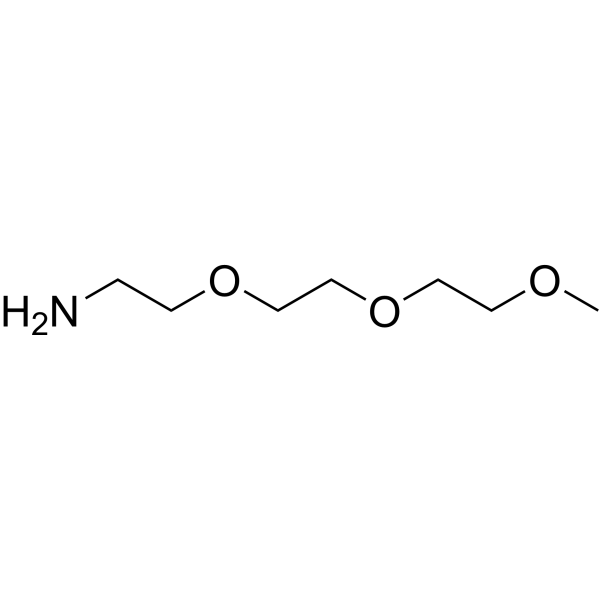
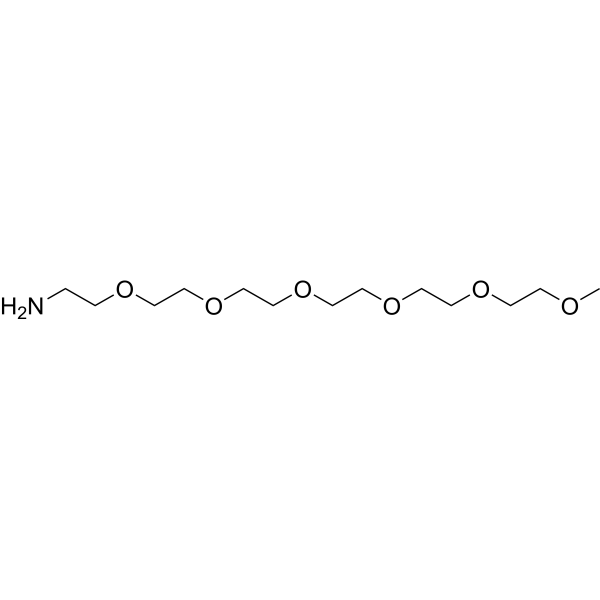
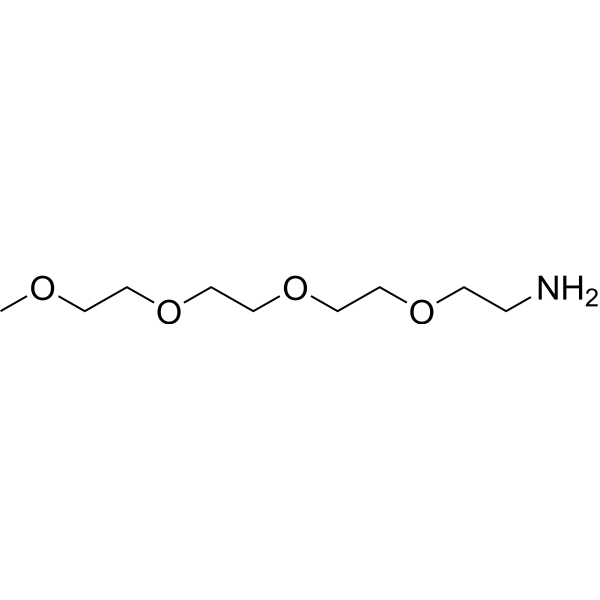
m-PEG3-Amine is a PEG-based PROTAC linker can be used in the synthesis of PROTACs. m-PEG3-Amine is a cleavable ADC linker used in the synthesis of antibody-drug conjugates (ADCs) .
|
-
-
- HY-130410
-
|
|
ADC Linker
PROTAC Linkers
|
Cancer
|
|
Bis-PEG6-NHS ester is a PEG-based PROTAC linker can be used in the synthesis of PROTACs. Bis-PEG6-NHS ester is a cleavable ADC linker used in the synthesis of antibody-drug conjugates (ADCs) .
|
-
-
- HY-136261
-
|
|
Drug-Linker Conjugates for ADC
|
Cancer
|
|
DM1-(PEG)4-DBCO is a agent-linker conjugate composed of a potent microtubulin inhibitor DM1 and a linker DBCO-PEG4-Ahx to make antibody agent conjugate (ADC). Mertansine (DM1) is a microtubulin inhibitor and is an antibody-conjugatable maytansinoid that is developed to overcome systemic toxicity associated with maytansine and to enhance tumor-specific delivery. DM1-PEG4-DBCO is a click chemistry reagent, it contains a DBCO group that can undergo strain-promoted alkyne-azide cycloaddition (SPAAC) with molecules containing Azide groups.
|
-
-
- HY-21930
-
|
Cereblon Ligand -Linker conjugates 1; E3 Ligase Ligand-Linker conjugates 1
|
E3 Ligase Ligand-Linker Conjugates
|
Cancer
|
|
Pomalidomide-PEG4-C-COOH (Cereblon Ligand -Linker Conjugate 1) is a synthesized E3 ligase ligand-linker conjugate that incorporates the Pomalidomide based cereblon ligand and 4-unit PEG linker used in PROTAC technology.
|
-
-
- HY-W019793
-
-
-
- HY-144010
-
|
DOPE-PEG2000 ammonium; 1,2-Dioleoyl-sn-glycero-3-phosphoethanolamine-N-[methoxy(polyethylene glycol)-2000] ammonium
|
Liposome
|
Others
|
|
18:1 PEG2000 PE ammonium (DOPE-PEG2000 ammonium) is a polyethyleneglycol/phosphatidyl-ethanolamine conjugate. 18:1 PEG2000 PE ammonium (DOPE-PEG2000 ammonium) can be used for drug delivery .
|
-
-
- HY-126976
-
|
|
ADC Linker
PROTAC Linkers
|
Cancer
|
|
Propargyl-PEG5-amine is a non-cleavable ADC linker used in the synthesis of antibody-drug conjugates (ADCs). Propargyl-PEG5-amine is a PEG-based PROTAC linker can be used in the synthesis of PROTACs . Propargyl-PEG5-amine is a click chemistry reagent, it contains an Alkyne group and can undergo copper-catalyzed azide-alkyne cycloaddition (CuAAc) with molecules containing Azide groups.
|
-
-
- HY-136133
-
|
|
ADC Linker
|
Cancer
|
|
NHS-PEG2-SS-PEG2-NHS is a cleavable 4 unit PEG ADC linker used in the synthesis of antibody-drug conjugates (ADCs) .
|
-
-
- HY-W190908A
-
|
|
Biochemical Assay Reagents
|
Others
|
|
Desthiobiotin-PEG4-NHS ester is a PEG derivative composed of desthiobiotin, 4 PEG units, and NHS ester. NHS ester can be conjugated to amino acids or other molecules containing amino groups.
|
-
-
- HY-140134
-
|
|
ADC Linker
|
Cancer
|
|
PC Biotin-PEG3-NHS ester is a cleavable 3 unit PEG ADC linker used in the synthesis of antibody-drug conjugates (ADCs) .
|
-
-
- HY-126958
-
-
-
- HY-126960
-
-
-
- HY-103599
-
|
VH032-PEG2-N3; VHL Ligand-Linker conjugates 6; E3 ligase Ligand-Linker conjugates 13
|
E3 Ligase Ligand-Linker Conjugates
|
Cancer
|
|
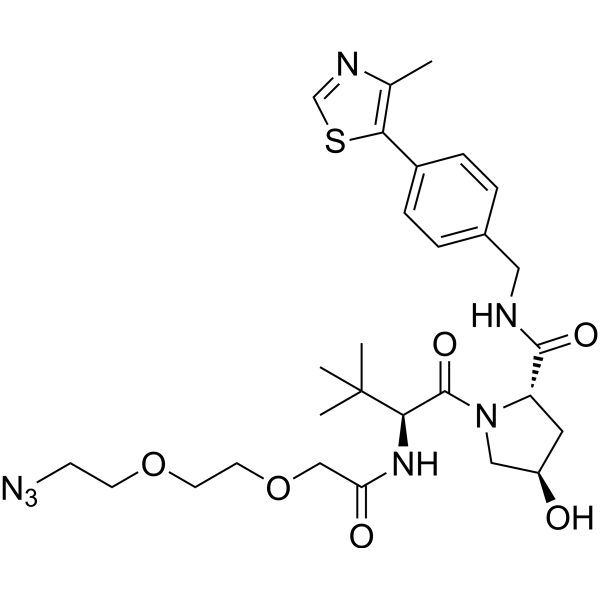
(S,R,S)-AHPC-PEG2-N3 is a synthesized E3 ligase ligand-linker conjugate that incorporates the (S,R,S)-AHPC based VHL ligand and 2-unit PEG linker. (S,R,S)-AHPC-PEG2-N3 can be used for the synthesis of PROTACs .
|
-
-
- HY-118808
-
|
|
ADC Linker
PROTAC Linkers
|
Cancer
|
|
Propargyl-PEG2-NHBoc is a cleavable ADC linker used in the synthesis of antibody-drug conjugates (ADCs). Propargyl-PEG2-NHBoc is a PEG-based PROTAC linker can be used in the synthesis of PROTACs . Propargyl-PEG2-NHBoc is a click chemistry reagent, it contains an Alkyne group and can undergo copper-catalyzed azide-alkyne cycloaddition (CuAAc) with molecules containing Azide groups.
|
-
-
- HY-W879004
-
|
|
Biochemical Assay Reagents
|
Others
|
|
m-PEG16-NHS ester is a PEG derivative composed of an NHS ester that can be conjugated to amino acids or other molecules containing amino groups .
|
-
-
- HY-130654
-
|
VH032-C2-PEG4-N3
|
E3 Ligase Ligand-Linker Conjugates
|
Cancer
|
|
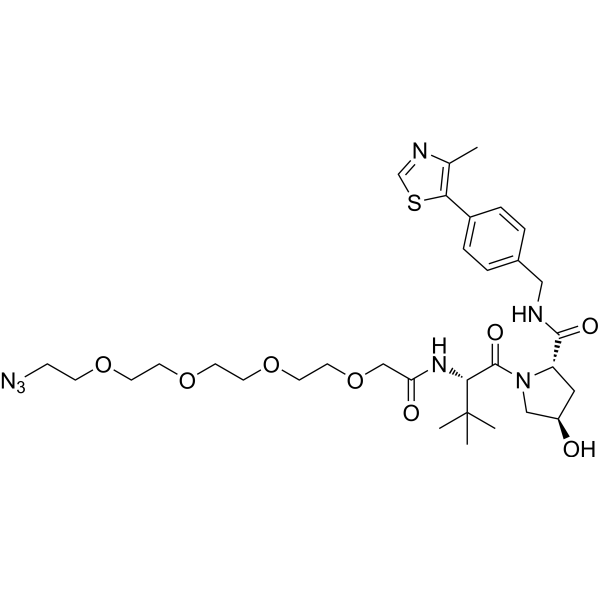
(S,R,S)-AHPC-C2-PEG4-N3 (VH032-C2-PEG4-N3) is a synthesized E3 ligase ligand-linker conjugate that incorporates the (S,R,S)-AHPC based VHL ligand and 4-unit PEG linker used in PROTAC technology. (S,R,S)-AHPC-C2-PEG4-N3 can be used in the synthesis of vRucaparib-TP4 (HY-130647). vRucaparib-TP4 a highly potent PARP1 degrader with a half-maximal degrading concentration (DC50) of 82 nM . (S,R,S)-AHPC-C2-PEG4-N3 is a click chemistry reagent, it contains an Azide group and can undergo copper-catalyzed azide-alkyne cycloaddition reaction (CuAAc) with molecules containing Alkyne groups. It can also undergo strain-promoted alkyne-azide cycloaddition (SPAAC) reactions with molecules containing DBCO or BCN groups.
|
-
-
- HY-126893
-
|
|
PROTAC Linkers
ADC Linker
|
Cancer
|
|
Bis-PEG8-acid is a PEG-based PROTAC linker can be used in the synthesis of PROTACs. Bis-PEG8-acid is a cleavable ADC linker used in the synthesis of antibody-drug conjugates (ADCs) .
|
-
-
- HY-W190908C
-
|
|
Biochemical Assay Reagents
|
Others
|
|
Desthiobiotin-PEG12-NHS ester is a PEG derivative composed of desthiobiotin, 12 PEG units, and NHS ester. NHS ester can be conjugated to amino acids or other molecules containing amino groups.
|
-
-
- HY-W190908B
-
|
|
Biochemical Assay Reagents
|
Others
|
|
Desthiobiotin-PEG6-NHS ester is a PEG derivative composed of desthiobiotin, 6 PEG units, and NHS ester. NHS ester can be conjugated to amino acids or other molecules containing amino groups.
|
-
-
- HY-133050
-
|
|
ADC Linker
|
Cancer
|
|
Hydroxy-PEG6-acid is a PEG-based non-cleavable ADC linker that can be used in the synthesis of Antibody-Drug Conjugates (ADCs) .
|
-
-
- HY-138488
-
|
|
ADC Linker
|
Cancer
|
|
Biotin-PEG4-PFP ester is a cleavable 4 unit PEG ADC linker used in the synthesis of antibody-drug conjugates (ADCs) .
|
-
-
- HY-126892
-
|
|
PROTAC Linkers
ADC Linker
|
Cancer
|
|
Bis-PEG7-acid is a PEG-based PROTAC linker can be used in the synthesis of PROTACs. Bis-PEG6-propionic acid is a cleavable ADC linker used in the synthesis of antibody-drug conjugates (ADCs) .
|
-
-
- HY-130387
-
|
|
PROTAC Linkers
ADC Linker
|
Cancer
|
|
Propargyl-PEG4-Tos is a PEG-based PROTAC linker can be used in the synthesis of PROTACs. Propargyl-PEG4-Tos is a cleavable ADC linker used in the synthesis of antibody-drug conjugates (ADCs) . Propargyl-PEG4-Tos is a click chemistry reagent, it contains an Alkyne group and can undergo copper-catalyzed azide-alkyne cycloaddition (CuAAc) with molecules containing Azide groups.
|
-
-
- HY-140310
-
|
|
ADC Linker
PROTAC Linkers
|
Cancer
|
|
TCO-PEG4-DBCO is a PEG-based PROTAC linker can be used in the synthesis of PROTACs. TCO-PEG4-DBCO is a cleavable ADC linker used in the synthesis of antibody-drug conjugates (ADCs) . TCO-PEG4-DBCO is a click chemistry reagent, it contains a DBCO group that can undergo strain-promoted alkyne-azide cycloaddition (SPAAC) with molecules containing Azide groups. TCO-PEG4-DBCO also contains a TCO group that can undergo an inverse electron demand Diels-Alder reaction (iEDDA) with molecules containing Tetrazine groups.
|
-
-
- HY-126496
-
|
|
ADC Linker
|
Cancer
|
|
PEG4-SPDP is a cleavable ADC linker used for the antibody-drug conjugates (ADCs).
|
-
-
- HY-144001
-
|
|
Liposome
|
Others
|
|
DSPE-PEG-Carboxylic acid ammonium is a phospholipid PEG conjugate. DSPE-PEG-Carboxylic Acid can be widely used in the delivery of targeted agents and genes .
|
-
-
- HY-144000A
-
|
|
Liposome
|
Others
|
|
DSPE-PEG2000-PDP is a phospholipid PEG conjugate that can be used in drug delivery applications .
|
-
-
- HY-117050
-
|
|
ADC Linker
PROTAC Linkers
|
Cancer
|
|
Tos-PEG12 is a noncleavable ADC linker used in the synthesis of antibody-drug conjugates (ADCs). PEG12-Tos is also a PEG-based PROTAC linker that can be used in the synthesis of PROTACs.
|
-
-
- HY-160280
-
-
-
- HY-136051
-
|
|
ADC Linker
|
Cancer
|
|
Biotin-PEG3-aldehyde is a cleavable 3 unit PEG ADC linker used in the synthesis of antibody-drug conjugates (ADCs) .
|
-
-
- HY-120258
-
-
-
- HY-172351A
-
|
|
Biochemical Assay Reagents
|
Cancer
|
|
PEG6000-bis-amine synthesizes folate-conjugated polymeric micelles for encapsulation of the anticancer agent Rubitecan (HY-16560) .
|
-
-
- HY-172351B
-
|
|
Biochemical Assay Reagents
|
Cancer
|
|
PEG10000-bis-amine synthesizes folate-conjugated polymeric micelles for encapsulation of the anticancer agent Rubitecan (HY-16560) .
|
-
-
- HY-P10946
-
|
|
Radionuclide-Drug Conjugates (RDCs)
|
Cancer
|
|
FAP targeting peptide-PEG2 conjugate (Example A1) is the peptide (HY-P10945) and linker conjugate of Unlabeled FXX489 (HY-P10944). Unlabeled FXX489 is a fibroblast activation protein (FAP)-targeting ligand .
|
-
-
- HY-174813
-
|
|
E3 Ligase Ligand-Linker Conjugates
|
Others
|
|
Pomalidomide-PEG3-Cys is an E3 ligase ligand-linker conjugate that incorporates a CRBN ligand Pomalidomide (HY-10984) and 3-unit PEG linker. Pomalidomide-PEG3-Cys can be used for synthesis of PROTAC BRD4 Degrader-33 (HY-174811) .
|
-
-
- HY-172465
-
|
|
Liposome
Integrin
|
Cardiovascular Disease
Cancer
|
|
DSPE-PEG5000-cRGD is a PEG conjugate composed of DSPE and the αvβ3-targeting peptide (cRGD). The cRGD peptide specifically binds to αvβ3 on the surface of various cancer cells and neovascular cells. DSPE-PEG5000-cRGD is applicable for research on drug delivery, cancer and vascular diseases .
|
-
-
- HY-126894
-
|
|
PROTAC Linkers
ADC Linker
|
Cancer
|
|
Bis- PEG9- acid is a PEG-based PROTAC linker can be used in the synthesis of PROTACs. Bis- PEG9- acid is a cleavable ADC linker used in the synthesis of antibody-drug conjugates (ADCs).
|
-
-
- HY-130408
-
|
|
ADC Linker
PROTAC Linkers
|
Cancer
|
|
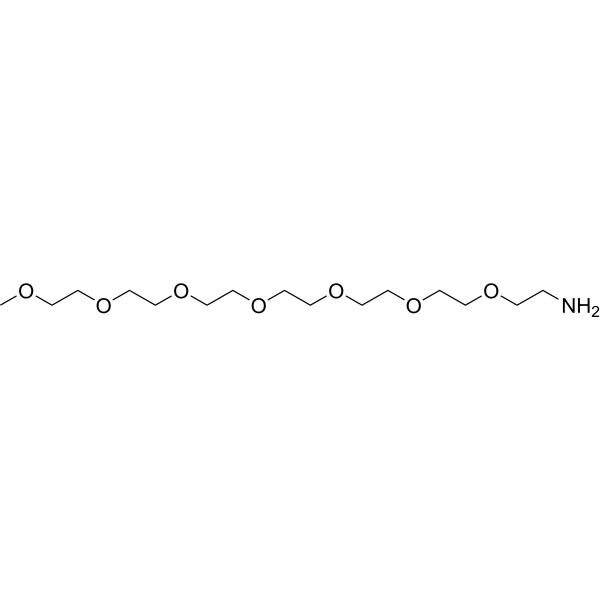
m-PEG6-Amine is a PEG-based PROTAC linker can be used in the synthesis of PROTACs. m-PEG6-Amine is a cleavable ADC linker used in the synthesis of antibody-drug conjugates (ADCs) .
|
-
-
- HY-135964
-
|
|
ADC Linker
|
Cancer
|
|
(2-pyridyldithio)-PEG4 acid is a cleavable 4 unit PEG ADC linker used in the synthesis of antibody-drug conjugates (ADCs) .
|
-
-
- HY-138484
-
|
|
ADC Linker
|
Cancer
|
|
Folate-PEG3-amine is a cleavable 3 unit PEG ADC linker used in the synthesis of antibody-drug conjugates (ADCs) .
|
-
-
- HY-133544
-
|
|
ADC Linker
|
Cancer
|
|
Mal-CO-PEG5- NHS ester is a non-cleavable 5 unit PEG ADC linker used in the synthesis of antibody-drug conjugates (ADCs).
|
-
-
- HY-136048
-
|
|
ADC Linker
|
Cancer
|
|
Methylcyclopropene-PEG4-NHS is a cleavable 4 unit PEG ADC linker used in the synthesis of antibody-drug conjugates (ADCs) .
|
-
-
- HY-136047
-
|
|
ADC Linker
|
Cancer
|
|
Methylcyclopropene-PEG3-amine is a cleavable 3 unit PEG ADC linker used in the synthesis of antibody-drug conjugates (ADCs) .
|
-
-
- HY-172351
-
|
|
Biochemical Assay Reagents
|
Cancer
|
|
PEG400-bis-amine synthesizes folate-conjugated polymeric micelles for encapsulation of the anticancer agent Rubitecan (HY-16560) .
|
-
- HY-135961
-
|
|
ADC Linker
|
Cancer
|
|
PTAD-PEG4-amine is a cleavable 4 unit PEG ADC linker used in the synthesis of antibody-drug conjugates (ADCs) .
|
-
- HY-44149
-
|
|
ADC Linker
|
Cancer
|
|
m-C-tri(CH2-PEG1-NHS ester) is a non-cleavable 1 unit PEG ADC linker used in the synthesis of antibody-drug conjugates (ADCs) .
|
-
- HY-133545
-
|
|
ADC Linker
|
Cancer
|
|
Mal-Ph-CONH-PEG4- NHS ester is a non-cleavable 4 unit PEG ADC linker used in the synthesis of antibody-drug conjugates (ADCs).
|
-
- HY-144000D
-
-
- HY-144000K
-
-
- HY-144000J
-
-
- HY-144000C
-
-
- HY-144000E
-
-
- HY-144000B
-
-
- HY-W440715
-
|
|
Liposome
|
Others
|
|
Cholesterol-PEG2000-Folate is an excipient and can be used for the preparation of folate-conjugated PEG-liposomes .
|
-
- HY-173625
-
|
|
Drug-Linker Conjugates for ADC
Topoisomerase
|
Cancer
|
|
P5(PEG12)-VC-PAB-Exatecan (LP3) is a drug-linker conjugate composed of a potent a DNA Topoisomerase I inhibitor Exatecan (HY-13631) and a linker P5(PEG24)-VC-PAB to make antibody agent conjugate (ADC). P5(PEG12)-VC-PAB-Exatecan can be used for the research of tumor .
|
-
- HY-140113
-
|
|
ADC Linker
|
Cancer
|
|
Acid-PEG3-SS-PEG3-acid is a cleavable 6 unit PEG ADC linker used in the synthesis of antibody-drug conjugates (ADCs) .
|
-
- HY-140112
-
|
|
ADC Linker
|
Cancer
|
|
Acid-PEG2-SS-PEG2-acid is a cleavable 4 unit PEG ADC linker used in the synthesis of antibody-drug conjugates (ADCs) .
|
-
- HY-141355
-
|
|
ADC Linker
|
Cancer
|
|
OPSS-PEG36-acid is a cleavable 36 unit PEG ADC linker used in the synthesis of antibody-drug conjugates (ADCs) .
|
-
- HY-141353
-
|
|
ADC Linker
|
Cancer
|
|
SPDP-PEG12-acid is a cleavable 12 unit PEG ADC linker used in the synthesis of antibody-drug conjugates (ADCs) .
|
-
- HY-140242
-
|
|
ADC Linker
|
Cancer
|
|
NH2-PEG4-Lys(Boc)-NH-(m-PEG24) is a cleavable 28 unit PEG ADC linker used in the synthesis of antibody-drug conjugates (ADCs) .
|
-
- HY-140121
-
|
|
ADC Linker
|
Cancer
|
|
m-PEG6-SS-PEG6-methyl is a cleavable 12 unit PEG ADC linker used in the synthesis of antibody-drug conjugates (ADCs) .
|
-
- HY-126883
-
-
- HY-116655
-
|
|
ADC Linker
|
Cancer
|
|
Hydroxy-PEG1-acid is a non-cleavable 1 unit PEG ADC linker used in the synthesis of antibody-drug conjugates (ADCs) .
|
-
- HY-136309
-
|
|
ADC Linker
|
Cancer
|
|
Ald-PEG23-SPDP is a cleavable 23 unit PEG ADC linker used in the synthesis of antibody-drug conjugates (ADCs) .
|
-
- HY-140115
-
|
|
ADC Linker
|
Cancer
|
|
Bis-(PEG6-acid)-SS is a cleavable 6 unit PEG ADC linker used in the synthesis of antibody-drug conjugates (ADCs) .
|
-
- HY-140244
-
|
|
ADC Linker
|
Cancer
|
|
Gly-PEG3-amine is a cleavable 3 unit PEG ADC linker used in the synthesis of antibody-drug conjugates (ADCs) .
|
-
- HY-140097
-
|
|
ADC Linker
|
Cancer
|
|
Amino-SS-PEG12-acid is a cleavable 12 unit PEG ADC linker used in the synthesis of antibody-drug conjugates (ADCs) .
|
-
- HY-136127
-
|
|
ADC Linker
|
Cancer
|
|
ALD-PEG4-OPFP is a cleavable 4 unit PEG ADC linker used in the synthesis of antibody-drug conjugates (ADCs) .
|
-
- HY-141358
-
|
|
ADC Linker
|
Cancer
|
|
SPDP-PEG36-NHS ester is a cleavable 36 unit PEG ADC linker used in the synthesis of antibody-drug conjugates (ADCs) .
|
-
- HY-129311
-
-
- HY-135974
-
|
|
ADC Linker
|
Cancer
|
|
Amino-PEG3-SS-acid is a cleavable 3 unit PEG ADC linker used in the synthesis of antibody-drug conjugates (ADCs) .
|
-
- HY-132086
-
|
|
ADC Linker
|
Cancer
|
|
2-Pyridyldithio-PEG6 acid is a cleavable 6 unit PEG ADC linker used in the synthesis of antibody-drug conjugates (ADCs) .
|
-
- HY-130546
-
|
|
ADC Linker
|
Cancer
|
|
Hydroxy-PEG3-SS-PEG3-alcohol is also a cleavable 6 unit PEG ADC linker used in the synthesis of antibody-drug conjugates (ADCs) .
|
-
- HY-W588715D
-
|
|
Biochemical Assay Reagents
|
Others
|
|
Acid-PEG6-NHS ester is a PEG derivative composed of NHS ester, which can be conjugated to amino acids or other molecules containing amino groups.
|
-
- HY-140123
-
|
|
ADC Linker
|
Cancer
|
|
THP-SS-PEG1-Boc is a cleavable 1 unit PEG ADC linker used in the synthesis of antibody-drug conjugates (ADCs) .
|
-
- HY-112561
-
-
- HY-130295
-
-
- HY-W588715
-
|
|
Biochemical Assay Reagents
|
Others
|
|
Acid-PEG8-NHS ester is a PEG derivative composed of NHS ester, which can be conjugated to amino acids or other molecules containing amino groups.
|
-
- HY-135962
-
|
|
ADC Linker
|
Cancer
|
|
Boc-Aminooxy-PEG2-bromide is a cleavable 2 unit PEG ADC linker used in the synthesis of antibody-drug conjugates (ADCs) .
|
-
- HY-140124
-
|
|
ADC Linker
|
Cancer
|
|
THP-SS-PEG1-Tos is a cleavable 1 unit PEG ADC linker used in the synthesis of antibody-drug conjugates (ADCs) .
|
-
- HY-W588715A
-
|
|
Biochemical Assay Reagents
|
Others
|
|
Acid-PEG2-NHS ester is a PEG derivative composed of NHS ester, which can be conjugated to amino acids or other molecules containing amino groups.
|
-
- HY-136041
-
|
|
ADC Linker
|
Cancer
|
|
Boc-amino-PEG3-SSPy is a cleavable 3 unit PEG ADC linker used in the synthesis of antibody-drug conjugates (ADCs) .
|
-
- HY-W588715B
-
|
|
Biochemical Assay Reagents
|
Others
|
|
Acid-PEG12-NHS ester is a PEG derivative composed of NHS ester, which can be conjugated to amino acids or other molecules containing amino groups.
|
-
- HY-136037
-
|
|
ADC Linker
|
Cancer
|
|
Boc-amino-PEG3-SS-acid is a cleavable 3 unit PEG ADC linker used in the synthesis of antibody-drug conjugates (ADCs) .
|
-
- HY-138508
-
|
|
ADC Linker
|
Cancer
|
|
Biotin-PEG2-methyl ethanethioate is a cleavable 2 unit PEG ADC linker used in the synthesis of antibody-drug conjugates (ADCs) .
|
-
- HY-N16285
-
|
|
Biochemical Assay Reagents
|
Others
|
|
DSPE-PEG400 carboxylic acid sodium is a lipid that consists of a DSPE-PEG400 unit conjugated to a carboxy group. DSPE-PEG400 carboxylic acid sodium can be used to prepare lipid nanoparticles for drug delivery.
|
-
- HY-179313
-
|
|
Biochemical Assay Reagents
|
Others
|
|
PEG-DPCA conjugate 1 is a PEG-DPCA conjugate that can co-assemble with mPEG-Amide-tri(DPCA) (HY-179320) into a supramolecular polymer hydrogel with nanofiber structures. The supramolecular polymer hydrogel exhibits shear-thinning behavior for injectable delivery, high drug loading, and degrades in vivo to release only DPCA and PEG, induces in vivo earhole regeneration in adult non-healing mice. PEG-DPCA conjugate 1 can be used for tissue regeneration research .
|
-
- HY-103599R
-
|
VH032-PEG2-N3 (Standard); VHL Ligand-Linker conjugates 6 (Standard); E3 ligase Ligand-Linker conjugates 13 (Standard)
|
Reference Standards
E3 Ligase Ligand-Linker Conjugates
|
Cancer
|
|
(S,R,S)-AHPC-PEG2-N3 (Standard) is the analytical standard of (S,R,S)-AHPC-PEG2-N3 (HY-103599). This product is intended for research and analytical applications. (S,R,S)-AHPC-PEG2-N3 is a synthesized E3 ligase ligand-linker conjugate that incorporates the (S,R,S)-AHPC based VHL ligand and 2-unit PEG linker. (S,R,S)-AHPC-PEG2-N3 can be used for the synthesis of PROTACs .
|
-
- HY-144000H
-
-
- HY-167789
-
-
- HY-181183
-
|
|
ADC Linker
|
Cancer
|
|
Propargyl-PEG24-acid (Compound 88) is an ADC linker, belonging to the PEG category, and can be used for the synthesis of antibody-drug conjugates (ADCs) .
|
-
- HY-174895
-
|
|
Biochemical Assay Reagents
|
Others
|
|
Propargyl-PEG12-NHS ester is a PEG derivative composed of NHS ester, which can be conjugated to amino acids or other molecules containing amino groups.
|
-
- HY-W588715C
-
|
|
Biochemical Assay Reagents
|
Others
|
|
Acid-PEG1-NHS ester is a PEG derivative composed of NHS ester, which can be conjugated to amino acids or other molecules containing amino groups.
|
-
- HY-174889
-
|
|
Biochemical Assay Reagents
|
Others
|
|
Acetal-PEG18-NHS is a PEG derivative composed of NHS ester, which can be conjugated to amino acids or other molecules containing amino groups.
|
-
- HY-140535
-
|
|
Biochemical Assay Reagents
|
Others
|
|
Boc-NH-Bis(acid-PEG1-m) is a PEG derivative contains carboxylic acid moieties. Boc-NH-Bis(acid-PEG1-m) can be conjugated with amine containing molecule .
|
-
- HY-N16299
-
|
|
Biochemical Assay Reagents
|
Others
|
|
DSPE-PEG12 carboxy sodium is a lipid that consists of a DSPE-PEG12 unit conjugated to a carboxy group. DSPE-PEG12 carboxy sodium can be used to prepare lipid nanoparticles for drug delivery.
|
-
- HY-141147
-
|
|
Drug-Linker Conjugates for ADC
|
Cancer
|
|
7-O-(Amino-PEG4)-paclitaxel is a PEG-class Drug-linker conjugates for ADC, containing a paclitaxel moiety and a amino group. The amine group is reactive with carboxylic acids, activated NHS esters, carbonyls (ketone, aldehyde) etc. 7-O-(Amino-PEG4)-paclitaxel can be used in the synthesis of Antibody-Drug Conjugates (ADCs) .
|
-
- HY-W019939
-
|
|
ADC Linker
|
Cancer
|
|
Hydroxy-PEG10-Boc is extacted from patent CN108707228 (example 0024) . Hydroxy-PEG10-Boc is a uncleavable ADC linker used in the synthesis of antibody-drug conjugates (ADCs). Hydroxy-PEG10-Boc can be conjugated to Paclitaxel (HY-B0015) or docetaxel (HY-B0011) .
|
-
- HY-141292
-
|
|
ADC Linker
|
Cancer
|
|
Oleoyl-Gly-Lys-N-(m-PEG11) is a cleavable 11 unit PEG ADC linker used in the synthesis of antibody-drug conjugates (ADCs) .
|
-
- HY-126510
-
|
|
ADC Linker
|
Cancer
|
|
MC-PEG2-C2- NHS ester is a nonclaevable 2-unit PEG linker used in the synthesis of antibody-drug conjugates (ADCs).
|
-
- HY-136135
-
|
|
ADC Linker
|
Cancer
|
|
(2-pyridyldithio)-PEG1-hydrazine is a cleavable 1 unit PEG ADC linker used in the synthesis of antibody-drug conjugates (ADCs) .
|
-
- HY-W591384
-
|
|
Biochemical Assay Reagents
|
Others
|
|
Boc-NH-PEG12-NHS ester is a PEG derivative composed of NHS ester, which can be conjugated to amino acids or other molecules containing amino groups.
|
-
- HY-140099
-
|
|
ADC Linker
|
Cancer
|
|
Amino-ethyl-SS-PEG3-NHBoc is a cleavable 3 unit PEG ADC linker used in the synthesis of antibody-drug conjugates (ADCs) .
|
-
- HY-N15903
-
|
|
Biochemical Assay Reagents
|
Others
|
|
DSPE-PEG2k-tri Mannose ammonium is a trimannose-DSPE-conjugated PEG derivative that can be used to synthesize lipid nanoparticles for drug delivery.
|
-
- HY-141190A
-
|
|
ADC Linker
|
Cancer
|
|
Gly-Gly-Gly-PEG3-TCO TFA is a 3 unit PEG ADC linker used in the synthesis of antibody-drug conjugates (ADCs) .
|
-
- HY-136134
-
|
|
ADC Linker
|
Cancer
|
|
SS-bis-amino-PEG4-NHS ester is a cleavable 4 unit PEG ADC linker used in the synthesis of antibody-drug conjugates (ADCs) .
|
-
- HY-126908A
-
|
|
Biochemical Assay Reagents
|
Others
|
|
Tetrazine-Ph-PEG17-NHS ester is a PEG derivative composed of NHS ester, which can be conjugated to amino acids or other molecules containing amino groups.
|
-
- HY-W096135
-
|
|
ADC Linker
|
Cancer
|
|
Biotin-PEG1-NH2 is a cleavable 1 unit PEG ADC linker used in the synthesis of antibody-drug conjugates (ADCs) .
|
-
- HY-164724
-
|
|
ADC Linker
|
Cancer
|
|
Bis-PEG30-NHS ester is a non-claevable 30-unit PEG ADC linker used in the synthesis of antibody-drug conjugates (ADCs) .
|
-
- HY-133459
-
|
|
ADC Linker
|
Cancer
|
|
Mal-PEG1-Val-Cit-OH is a cleavable 1 unit PEG ADC linker used in the synthesis of antibody-drug conjugates (ADCs) .
|
-
- HY-130962
-
|
|
ADC Linker
|
Cancer
|
|
Ald-Ph-amido-PEG23-OPSS is a cleavable 23 unit PEG ADC linker used in the synthesis of antibody-drug conjugates (ADCs) .
|
-
- HY-130328
-
|
|
ADC Linker
PROTAC Linkers
|
Cancer
|
|
NH-bis-PEG2 is a non-cleavable 2 unit PEG ADC linker used in the synthesis of antibody-drug conjugates (ADCs). NH-bis-PEG2 is also a PEG-based PROTAC linker that can be used in the synthesis of PROTACs.
|
-
- HY-168871
-
|
|
E3 Ligase Ligand-Linker Conjugates
|
Cancer
|
|
E3 Ligase Ligand-linker Conjugate 161 is an E3 ligase ligand-linker conjugate. E3 Ligase Ligand-linker Conjugate 161 can be used to synthesize Tamoxifen-PEG-Clozapine (HY-168869) .
|
-
- HY-163549
-
-
- HY-139956
-
|
|
ADC Linker
|
Cancer
|
|
Mal-amido-PEG9-Val-Ala-PAB-SG3200 is a cleavable ADC linker conjugate used in the synthesis of antibody-drug conjugates (ADCs) .
|
-
- HY-W019798
-
|
|
ADC Linker
PROTAC Linkers
|
Cancer
|
|
NH2-PEG8-acid is a non-cleavable 8 unit PEG ADC linker used in the synthesis of antibody-drug conjugates (ADCs) . NH2-PEG8-acid also is a PEG-based PROTAC linker that can be used in the synthesis of PROTACs .
|
-
- HY-130165
-
-
- HY-141382
-
|
|
PROTAC Linkers
ADC Linker
|
Cancer
|
|
Bromoacetamido-PEG4-acid is a PEG-based PROTAC linker that can be used in the synthesis of PROTACs . Bromoacetamido-PEG4-acid is also a cleavable 4 unit PEG ADC linker used in the synthesis of antibody-drug conjugates (ADCs) .
|
-
- HY-117104
-
|
|
ADC Linker
PROTAC Linkers
|
Cancer
|
|
Hydroxy-PEG4-acid is a non-cleavable 4 unit PEG ADC linker used in the synthesis of antibody-drug conjugates (ADCs). Hydroxy-PEG4-acid is also a PEG-based PROTAC linker that can be used in the synthesis of PROTACs .
|
-
- HY-153672
-
|
|
ADC Linker
|
Cancer
|
|
Amine-PEG3-Lys(PEG3-N3)-PEG3-N3 (compound 5) is a branched linker that can be used in the synthesis of antibody-drug conjugates (ADCs) .
|
-
- HY-120845
-
-
- HY-130941
-
|
|
ADC Linker
|
Cancer
|
|
Fmoc-N-bis-PEG3-NH-Boc is a cleavable 3 unit PEG ADC linker used in the synthesis of antibody-drug conjugates (ADCs) .
|
-
- HY-140145
-
|
|
ADC Linker
|
Cancer
|
|
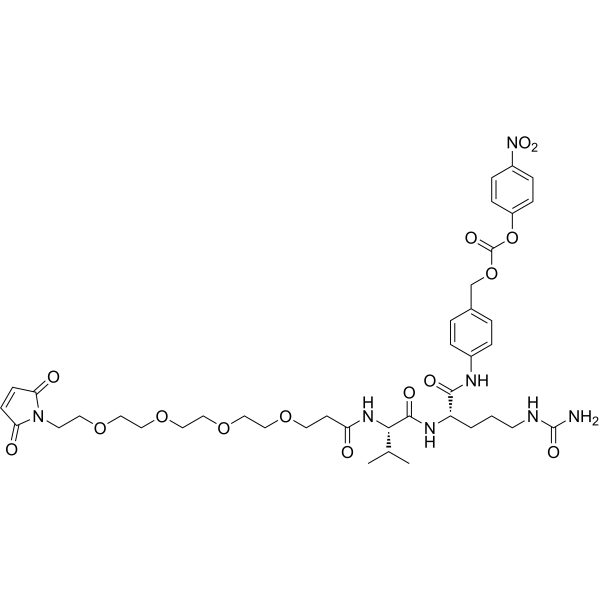
Mal-PEG4-Val-Cit-PAB-PNP is a cleavable 4 unit PEG ADC linker used in the synthesis of antibody-drug conjugates (ADCs) .
|
-
- HY-136157
-
|
|
ADC Linker
|
Cancer
|
|
Py-ds-dmBut-amido-PEG4-NHS ester is a cleavable 4 unit PEG ADC linker used in the synthesis of antibody-drug conjugates (ADCs) .
|
-
- HY-140143
-
|
|
ADC Linker
|
Cancer
|
|
Mal-PEG4-Val-Cit-PAB-OH is a cleavable 4 unit PEG ADC linker used in the synthesis of antibody-drug conjugates (ADCs) .
|
-
- HY-141154
-
-
- HY-130094
-
|
|
ADC Linker
|
Cancer
|
|
NHPI-PEG2-C2-Pfp ester is a nonclaevable 2-unit PEG linker used in the synthesis of antibody-drug conjugates (ADCs).
|
-
- HY-130944
-
|
|
ADC Linker
|
Cancer
|
|
Mal-PEG1-Val-Cit-PABC-OH is a cleavable 1 unit PEG ADC linker used in the synthesis of antibody-drug conjugates (ADCs) .
|
-
- HY-130095
-
|
|
ADC Linker
|
Cancer
|
|
NHPI-PEG2-C2-NHS ester is a nonclaevable 2-unit PEG linker used in the synthesis of antibody-drug conjugates (ADCs).
|
-
- HY-141149
-
|
|
ADC Linker
|
Cancer
|
|
Fmoc-PEG4-Ala-Ala-Asn-PAB is a cleavable 4 unit PEG ADC linker used in the synthesis of antibody-drug conjugates (ADCs) .
|
-
- HY-133579
-
|
|
ADC Linker
|
Cancer
|
|
Ald-Ph-amido-PEG3-NHS ester is a non-cleavable 3 unit PEG ADC linker used in the synthesis of antibody-drug conjugates (ADCs) .
|
-
- HY-130092
-
|
|
ADC Linker
|
Cancer
|
|
NHPI-PEG3-C2-Pfp ester is a nonclaevable 3-unit PEG linker used in the synthesis of antibody-drug conjugates (ADCs).
|
-
- HY-130093
-
|
|
ADC Linker
|
Cancer
|
|
NHPI-PEG3-C2-NHS ester is a nonclaevable 3-unit PEG linker used in the synthesis of antibody-drug conjugates (ADCs).
|
-
- HY-107440
-
|
Cereblon Ligand-Linker conjugates 3 ; E3 Ligase Ligand-Linker conjugates 14
|
E3 Ligase Ligand-Linker Conjugates
Autophagy
Apoptosis
|
Cancer
|
|
Thalidomide-O-amido-PEG3-C2-NH2 (Cereblon Ligand-Linker Conjugates 3) is a synthesized E3 ligase ligand-linker conjugate that incorporates the Thalidomide based cereblon ligand and 3-unit PEG linker used in PROTAC technology.
|
-
- HY-130521
-
|
Cereblon Ligand-Linker conjugates 22; E3 ligase Ligand-Linker conjugates 55
|
E3 Ligase Ligand-Linker Conjugates
|
Cancer
|
|
Pomalidomide-amido-PEG3-C2-NH2 (Cereblon Ligand-Linker Conjugates 22) is a synthesized E3 ligase ligand-linker conjugate that incorporates the Pomalidomide based cereblon ligand and 3-unit PEG linker used in PROTAC technology .
|
-
- HY-145943
-
-
- HY-172322
-
|
THK42 TFA
|
Biochemical Assay Reagents
|
Others
|
|
Trimethoprim-PEG-amine (TFA) (tTHK42 (TFA)) is a conjugated form of trimethoprim linked with polyethylene glycol (PEG) amine. Trimethoprim-PEG-amine (TFA) can be studied in research for enhancing drug delivery and overcoming drug resistance .
|
-
- HY-130166
-
|
|
ADC Linker
PROTAC Linkers
|
Cancer
|
|
Amino-PEG9-acid is a PEG-based PROTAC linker can be used in the synthesis of PROTACs. Amino-PEG9-acid is a non-cleavable ADC linker used in the synthesis of antibody-drug conjugates (ADCs) .
|
-
- HY-140501
-
|
|
ADC Linker
PROTAC Linkers
|
Cancer
|
|
m-PEG11-acid is a non-cleavable 11 unit PEG ADC linker used in the synthesis of antibody-drug conjugates (ADCs) . m-PEG11-acid is also a PEG-based PROTAC linker that can be used in the synthesis of PROTACs .
|
-
- HY-W019799
-
|
|
ADC Linker
PROTAC Linkers
|
Cancer
|
|
Amino-PEG8-Boc is a cleavable 8 unit PEG ADC linker used in the synthesis of antibody-drug conjugates (ADCs). Amino-PEG8-Boc is also a PEG-based PROTAC linker that can be used in the synthesis of PROTACs .
|
-
- HY-140500
-
|
|
ADC Linker
PROTAC Linkers
|
Cancer
|
|
m-PEG10-acid is a non-cleavable 10 unit PEG ADC linker used in the synthesis of antibody-drug conjugates (ADCs) . m-PEG10-acid is also a PEG-based PROTAC linker that can be used in the synthesis of PROTACs .
|
-
- HY-131872
-
|
Pomalidomide 4'-PEG2-acid
|
E3 Ligase Ligand-Linker Conjugates
|
Cancer
|
|
Pomalidomide-PEG2-COOH (Pomalidomide 4'-PEG2-acid) is a synthesized E3 ligase ligand-linker conjugate that incorporates the Pomalidomide based cereblon ligand and 2-unit PEG linker used in PROTAC technology .
|
-
- HY-132288
-
|
|
E3 Ligase Ligand-Linker Conjugates
|
Cancer
|
|
Pom-8PEG, an E3 ligase ligand-linker conjugate, incorporates a cereblon (CRBN) ligand for the E3 ubiquitin ligase and an 8-unit PEG linker. Pom-8PEG can be used in the synthesis of PROTAC, such as IDO1 PROTAC degrader .
|
-
- HY-139957
-
-
- HY-147271
-
|
|
Drug-Linker Conjugates for ADC
Topoisomerase
|
Cancer
|
|
Mal-PEG8-Val-Ala-PAB-Exatecan (Compound 9b) is an antibody-drug conjugate linker (ADC linker) that binds to Nectin-4 polypeptides conjugated to chemotherapeutic agents. Mal-PEG8-Val-Ala-PAB-Exatecan can be used for cancer research .
|
-
- HY-174879
-
|
|
E3 Ligase Ligand-Linker Conjugates
|
Cancer
|
|
Dioxopiperidin-phthalimidine-PEG3-NBoc is a conjugate of the CRBN ligand (HY-138793) and the linker (E3 Ligase Ligand-Linker Conjugate). Dioxopiperidin-phthalimidine-PEG3-NBoc can be used for synthesizing Bcl-xL PROTAC degrader PZ671 (HY-174876) .
|
-
- HY-129637
-
|
|
PROTAC Linkers
ADC Linker
|
Cancer
|
|
NH2-PEG5-OH is a PEG-based PROTAC linker that can be used in the synthesis of PROTACs . NH2-PEG5-OH is also a non-cleavable 5 unit PEG ADC linker used in the synthesis of antibody-drug conjugates (ADCs) .
|
-
- HY-130486
-
|
|
PROTAC Linkers
ADC Linker
|
Cancer
|
|
NH2-PEG6-Boc is a PEG-based PROTAC linker that can be used in the synthesis of PROTACs . NH2-PEG6-Boc is also a non-cleavable 6 unit PEG ADC linker used in the synthesis of antibody-drug conjugates (ADCs) .
|
-
- HY-186088
-
|
|
Drug Intermediate
|
Others
|
|
DOTA-tris (t-Bu) ester-PEG3-C2-amine (Compound 9) is a conjugate of DOTA-based chelator and linker, bearing tris (t-Bu) ester and PEG3-C2-amine functional groups. DOTA-tris (t-Bu) ester-PEG3-C2-amine can be conjugated to payloads via bioorthogonal click chemistry for targeted delivery .
|
-
- HY-138300
-
-
- HY-130099
-
|
|
ADC Linker
|
Cancer
|
|
Ald-Ph-amido-PEG2 is a noncleavable ADC linker for antibody-drug conjugate .
|
-
- HY-141151
-
|
|
ADC Linker
|
Cancer
|
|
Fmoc-PEG3-Ala-Ala-Asn(Trt)-PAB is a cleavable 3 unit PEG ADC linker used in the synthesis of antibody-drug conjugates (ADCs) .
|
-
- HY-140147
-
|
|
ADC Linker
|
Cancer
|
|
Mal-amido-PEG2-Val-Cit-PAB-PNP is a cleavable 2 unit PEG ADC linker used in the synthesis of antibody-drug conjugates (ADCs) .
|
-
- HY-140146
-
|
|
ADC Linker
|
Cancer
|
|
Mal-amido-PEG2-Val-Cit-PAB-OH is a cleavable 2 unit PEG ADC linker used in the synthesis of antibody-drug conjugates (ADCs) .
|
-
- HY-140656H
-
|
|
Biochemical Assay Reagents
|
Others
|
|
Biotin-PEG40000-Biotin can be used for crosslinking PEGylation by binding to two streptavidin and avidin. Biotin is conjugated to a linear PEG through a stable amide linker .
|
-
- HY-130315
-
-
- HY-141146
-
|
|
ADC Linker
|
Cancer
|
|
Mal-amido-PEG8-val-gly-PAB-OH is a cleavable 8 unit PEG ADC linker used in the synthesis of antibody-drug conjugates (ADCs) .
|
-
- HY-133572
-
|
|
ADC Linker
|
Cancer
|
|
Ald-Ph-amido-PEG11-NH-Boc is a non-cleavable 11 unit PEG ADC linker used in the synthesis of antibody-drug conjugates (ADCs) .
|
-
- HY-133582
-
|
|
ADC Linker
|
Cancer
|
|
Mal-amido-PEG3-C1- NHS ester is a non-cleavable 3 unit PEG ADC linker used in the synthesis of antibody-drug conjugates (ADCs).
|
-
- HY-126669
-
|
|
ADC Linker
|
Cancer
|
|
Mal-PEG4-VA is a cleavable ADC linker containing a Maleimide group. Mal-PEG4-VA is used for making antibody-drug conjugate.
|
-
- HY-126942
-
|
|
ADC Linker
PROTAC Linkers
|
Cancer
|
|
Amino-PEG6-alcohol is a non-cleavable 6 unit PEG ADC linker used in the synthesis of antibody-drug conjugates (ADCs). Amino-PEG6-alcohol is also a PEG-based PROTAC linker that can be used in the synthesis of PROTACs .
|
-
- HY-130298
-
|
|
ADC Linker
PROTAC Linkers
|
Cancer
|
|
Amino-PEG11-OH is non-cleavable 11 unit PEG ADC linker used in the synthesis of antibody-drug conjugates (ADCs). Amino-PEG11-OH is also a PEG-based PROTAC linker that can be used in the synthesis of PROTACs .
|
-
- HY-133066
-
|
|
PROTAC Linkers
ADC Linker
|
Inflammation/Immunology
Cancer
|
|
m-PEG6-NHS ester is a non-cleavable 6 unit PEG ADC linker used in the synthesis of antibody-drug conjugates (ADCs). m-PEG6-NHS ester is a PEG/Alkyl/ether-based PROTAC linker can be used in the synthesis of PROTACs.
|
-
- HY-141395
-
|
|
ADC Linker
PROTAC Linkers
|
Cancer
|
|
m-PEG4-Boc is a cleavable 4 unit PEG ADC linker used in the synthesis of antibody-drug conjugates (ADCs) . m-PEG4-Boc is also a PEG-based PROTAC linker that can be used in the synthesis of PROTACs .
|
-
- HY-120761
-
|
|
ADC Linker
PROTAC Linkers
|
Cancer
|
|
Amino-PEG10-OH is non-cleavable 10 unit PEG ADC linker used in the synthesis of antibody-drug conjugates (ADCs). Amino-PEG10-OH is also a PEG-based PROTAC linker that can be used in the synthesis of PROTACs .
|
-
- HY-130528
-
|
|
ADC Linker
PROTAC Linkers
|
Cancer
|
|
m-PEG7-MS is a PEG-based PROTAC linker can be used in the synthesis of PROTACs. m-PEG7-MS is a cleavable ADC linker used in the synthesis of antibody-drug conjugates (ADCs) .
|
-
- HY-116186
-
|
|
ADC Linker
PROTAC Linkers
|
Cancer
|
|
m-PEG5-MS is a PEG-based PROTAC linker can be used in the synthesis of PROTACs. m-PEG5-MS is a cleavable ADC linker used in the synthesis of antibody-drug conjugates (ADCs) .
|
-
- HY-W040214
-
|
|
ADC Linker
PROTAC Linkers
|
Cancer
|
|
m-PEG4-Amine is a PEG-based PROTAC linker can be used in the synthesis of PROTACs. m-PEG4-Amine is a cleavable ADC linker used in the synthesis of antibody-drug conjugates (ADCs) .
|
-
- HY-W008429
-
|
|
ADC Linker
PROTAC Linkers
|
Cancer
|
|
m-PEG2-Amine is a PEG-based PROTAC linker can be used in the synthesis of PROTACs. m-PEG2-Amine is a cleavable ADC linker used in the synthesis of antibody-drug conjugates (ADCs) .
|
-
- HY-42745
-
|
|
ADC Linker
PROTAC Linkers
|
Cancer
|
|
m-PEG2-Tos is a uncleavable ADC linker used in the synthesis of antibody-drug conjugates (ADCs). m-PEG2-Tos is also a PEG-based PROTAC linker that can be used in the synthesis of PROTACs.
|
-
- HY-141170
-
|
|
ADC Linker
PROTAC Linkers
|
Cancer
|
|
TCO-PEG12-NHS ester is a PEG-based PROTAC linker can be used in the synthesis of PROTACs. TCO-PEG12-NHS ester is a cleavable ADC linker used in the synthesis of antibody-drug conjugates (ADCs) .
|
-
- HY-130457
-
|
|
ADC Linker
PROTAC Linkers
|
Cancer
|
|
m-PEG4-MS is a PEG-based PROTAC linker can be used in the synthesis of PROTACs. m-PEG4-MS is a cleavable ADC linker used in the synthesis of antibody-drug conjugates (ADCs) .
|
-
- HY-120237
-
|
|
ADC Linker
PROTAC Linkers
|
Cancer
|
|
m-PEG7-Amine is a PEG-based PROTAC linker can be used in the synthesis of PROTACs. m-PEG7-Amine is a cleavable ADC linker used in the synthesis of antibody-drug conjugates (ADCs) .
|
-
- HY-126886
-
|
|
ADC Linker
PROTAC Linkers
|
Cancer
|
|
Mal-PEG1-NHS ester is a non-cleavable ADC linker used in the synthesis of antibody-drug conjugates (ADCs). Mal-PEG1-NHS ester is PEG-based PROTAC linker that can be used in the synthesis of PROTACs.
|
-
- HY-130571
-
|
|
ADC Linker
PROTAC Linkers
|
Cancer
|
|
m-PEG9-Amine is a PEG-based PROTAC linker can be used in the synthesis of PROTACs. m-PEG9-Amine is a cleavable ADC linker used in the synthesis of antibody-drug conjugates (ADCs) .
|
-
- HY-117031
-
|
|
ADC Linker
PROTAC Linkers
|
Cancer
|
|
m-PEG8-MS is a PEG-based PROTAC linker can be used in the synthesis of PROTACs. m-PEG8-MS is a cleavable ADC linker used in the synthesis of antibody-drug conjugates (ADCs) .
|
-
- HY-141148
-
|
|
Drug-Linker Conjugates for ADC
|
Cancer
|
|
7-O-(Cbz-N-amido-PEG4)-paclitaxel is a PEG-class Drug-linker conjugates for ADC, containing a paclitaxel moiety and a amino group. The amine group is reactive with carboxylic acids, activated NHS esters, carbonyls (ketone, aldehyde) etc. 7-O-(Cbz-N-amido-PEG4)-paclitaxel can be used in the synthesis of Antibody-Drug Conjugates (ADCs) .
|
-
- HY-131158
-
|
|
Drug-Linker Conjugates for ADC
|
Cancer
|
|
DBCO-PEG3-Glu-VC-PABC-MMAF (compound s19b) is a drug-linker conjugate for ADC by using the tubulin inhibitor, MMAF (HY-15579), linked via cathepsin cleavable DBCO-PEG3-Glu-VC-PABC. DBCO-PEG3-Glu-VC-PABC-MMAF can be used in the synthesis of antibody-drug conjugates (ADCs) .
|
-
- HY-126918
-
|
|
PROTAC Linkers
ADC Linker
|
Cancer
|
|
THP-PEG6-OH is a PEG-based PROTAC linker that can be used in the synthesis of PROTACs . THP-PEG6-OH is also a non-cleavable 3 unit PEG ADC linker used in the synthesis of antibody-drug conjugates (ADCs) .
|
-
- HY-126951
-
|
|
ADC Linker
PROTAC Linkers
|
Cancer
|
|
Aminooxy-PEG2-alcohol is a non-cleavable 2 unit PEG ADC linker used in the synthesis of antibody-drug conjugates (ADCs) . Aminooxy-PEG2-alcohol is also a PEG-based PROTAC linker that can be used in the synthesis of PROTACs .
|
-
- HY-141220
-
|
|
PROTAC Linkers
ADC Linker
|
Cancer
|
|
m-PEG12-OH is a PEG-based PROTAC linker that can be used in the synthesis of PROTACs . m-PEG12-OH is also a non-cleavable 12 unit PEG ADC linker used in the synthesis of antibody-drug conjugates (ADCs) .
|
-
- HY-D2429
-
|
|
Fluorescent Dye
|
Others
|
|
Dextran-PEG-Cy3 is the Cy3 (HY-D0822)-labeled Dextran-PEG conjugate. Dextran-PEG is used as polymer-polymer systems for the high biocompatibility to maintain cell osmolarity. Dextran-PEG coatings can reduce nanoparticle cytotoxicity .
|
-
- HY-140227
-
|
|
PROTAC Linkers
ADC Linker
|
Cancer
|
|
m-PEG12-amine is a PEG-based PROTAC linker that can be used in the synthesis of PROTACs . m-PEG12-amine is also a non-cleavable 12 unit PEG ADC linker used in the synthesis of antibody-drug conjugates (ADCs) .
|
-
- HY-W042654
-
-
- HY-124123
-
|
|
ADC Linker
PROTAC Linkers
|
Cancer
|
|
Aminooxy-PEG4-alcohol is a non-cleavable 4 unit PEG ADC linker used in the synthesis of antibody-drug conjugates (ADCs) . Aminooxy-PEG4-alcohol is also a PEG-based PROTAC linker that can be used in the synthesis of PROTACs .
|
-
- HY-W008005
-
|
|
PROTAC Linkers
ADC Linker
|
Cancer
|
|
Amino-PEG4-alcohol is a PEG-based PROTAC linker can be used in the synthesis of PROTACs . Amino-PEG4-alcohol is also a non-cleavable 4 unit PEG ADC linker used in the synthesis of antibody-drug conjugates (ADCs) .
|
-
- HY-114995
-
-
- HY-140226
-
|
|
ADC Linker
PROTAC Linkers
|
Cancer
|
|
m-PEG10-amine is a non-cleavable 10 unit PEG ADC linker used in the synthesis of antibody-drug conjugates (ADCs) . m-PEG10-amine is also a PEG-based PROTAC linker that can be used in the synthesis of PROTACs .
|
-
- HY-133581
-
|
|
ADC Linker
|
Cancer
|
|
Mal-PEG3-C1-NHS ester is a non-cleavable 3 unit PEG ADC linker used in the synthesis of antibody-drug conjugates (ADCs) .
|
-
- HY-126685
-
-
- HY-129526
-
|
|
ADC Linker
|
Cancer
|
|
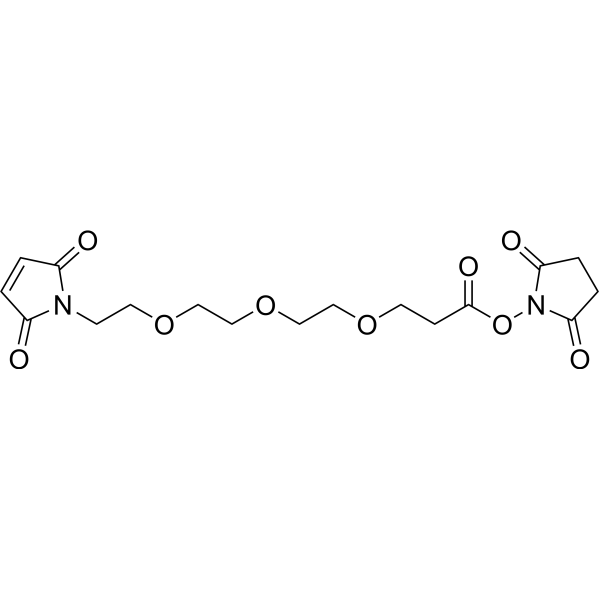
Mal-PEG3-NHS ester is a noncleavable ADC linker containing a Maleimide group. Mal-PEG3-NHS ester is used for making antibody-drug conjugate .
|
-
- HY-179677B
-
|
|
Liposome
|
Others
|
|
DSPE-PEG5000-Mal-Cys-DT7 is a phospholipid-PEG conjugate. DSPE-PEG5000-Mal-Cys-DT7 utilizes the amphiphilicity of DSPE to insert into the lipid bilayer of liposomes or nanoparticles.
|
-
- HY-179677A
-
|
|
Liposome
|
Others
|
|
DSPE-PEG3400-Mal-Cys-DT7 is a phospholipid-PEG conjugate. DSPE-PEG3400-Mal-Cys-DT7 utilizes the amphiphilicity of DSPE to insert into the lipid bilayer of liposomes or nanoparticles.
|
-
- HY-W040222
-
|
|
ADC Linker
PROTAC Linkers
|
Cancer
|
|
m-PEG11-Amino is a cleavable ADC linker used in the synthesis of antibody-drug conjugates (ADCs). m-PEG11-Amine is also a PEG-based PROTAC linker that can be used in the synthesis of PROTACs .
|
-
- HY-179677
-
|
|
Liposome
|
Others
|
|
DSPE-PEG2000-Mal-Cys-DT7 is a phospholipid-PEG conjugate. DSPE-PEG2000-Mal-Cys-DT7 utilizes the amphiphilicity of DSPE to insert into the lipid bilayer of liposomes or nanoparticles.
|
-
- HY-164146
-
|
|
Drug-Linker Conjugates for ADC
Microtubule/Tubulin
|
Cancer
|
|
BCN-HS-PEG2(vcPABC-MMAE)2 is a drug-linker conjugate for ADC consists an ADC linker and a tubulin polymerization inhibitor MMAE (HY-15162). BCN-HS-PEG2(vcPABC-MMAE)2 can be used in the synthesis of antibody-agent conjugates (ADCs) .
|
-
- HY-W190944
-
-
- HY-130150
-
|
|
PROTAC Linkers
ADC Linker
|
Inflammation/Immunology
Cancer
|
|
m-PEG5-succinimidyl carbonate is a non-cleavable 5 unit PEG ADC linker used in the synthesis of antibody-drug conjugates (ADCs). m-PEG5-succinimidyl carbonate is a PEG/Alkyl/ether-based PROTAC linker can be used in the synthesis of PROTACs.
|
-
- HY-112560
-
|
|
PROTAC Linkers
ADC Linker
|
Cancer
|
|
Bis-PEG2-PFP ester is also a non-cleavable 2 unit PEG ADC linker used in the synthesis of antibody-drug conjugates (ADCs) . Bis-PEG2-PFP ester is also a PEG-based PROTAC linker that can be used in the synthesis of PROTACs .
|
-
- HY-174304
-
|
|
Drug-Linker Conjugates for ADC
|
Cancer
|
|
Bis (vinylsulfonyl) piperazine-triazole-PEG3-O-diisopropylsilyl-triptolide is a drug-linker conjugates for ADC. Bis (vinylsulfonyl) piperazine-triazole-PEG3-O-diisopropylsilyl-triptolide consists of Triptolide (HY-32735) and a stable cleavable linker (Bis (vinylsulfonyl) piperazine-triazole-PEG3-O-diisopropylsilyl-Cl) (HY-174810). Bis (vinylsulfonyl) piperazine-triazole-PEG3-O-diisopropylsilyl-triptolide can be used for the synthesis of antibody-drug conjugates (ADCs) .
|
-
- HY-164346
-
|
|
Microtubule/Tubulin
Drug-Linker Conjugates for ADC
|
Cancer
|
|
Amine-PEG8-Val-Cit-PAB-MMAE is a potent drug-linker conjugate for antibody-drug conjugates (ADCs).Amine-PEG8-Val-Cit-PAB-MMAE consists of the linker amine-PEG8-Vali-Cit-PAB and the payload MMAE (HY-15162), and can be used to synthesize ADCs. Amine-PEG8-Val-Cit-PAB-MMAE can be used for the research of gastric cancer, colon cancer, lung adenocarcinoma .
|
-
- HY-183175A
-
|
|
Biochemical Assay Reagents
|
Others
|
|
DSG-PEG2000-N3 is a conjugate composed of DSG, PEG chains, and terminal azido groups (-N3). DSG-PEG2000-Azide is a click chemistry reagent used for the targeted modification of liposomes/nanoparticles.
|
-
- HY-117009
-
|
|
ADC Linker
PROTAC Linkers
|
Cancer
|
|
Bis-PEG9-NHS ester is a PEG/Alkyl/ether-based PROTAC linker can be used in the synthesis of PROTACs. Bis-PEG9-NHS ester is a cleavable ADC linker used in the synthesis of antibody-drug conjugates (ADCs) .
|
-
- HY-126889
-
|
|
ADC Linker
PROTAC Linkers
|
Cancer
|
|
Bis-PEG5-NHS ester is a PEG/Alkyl/ether-based PROTAC linker can be used in the synthesis of PROTACs. Bis-PEG5-NHS ester is a cleavable ADC linker used in the synthesis of antibody-drug conjugates (ADCs) .
|
-
- HY-130825
-
|
|
PROTAC Linkers
ADC Linker
|
Cancer
|
|
Bis-PEG13-NHS ester is a PEG/Alkyl/ether-based PROTAC linker can be used in the synthesis of PROTACs. Bis-PEG13-NHS ester is a cleavable ADC linker used in the synthesis of antibody-drug conjugates (ADCs) .
|
-
- HY-183175B
-
|
|
Biochemical Assay Reagents
|
Others
|
|
DSG-PEG3400-N3 is a conjugate composed of DSG, PEG chains, and terminal azido groups (-N3). DSG-PEG3400-Azide is a click chemistry reagent used for the targeted modification of liposomes/nanoparticles.
|
-
- HY-130827
-
|
|
PROTAC Linkers
ADC Linker
|
Cancer
|
|
Bis-PEG21-NHS ester is a PEG/Alkyl/ether-based PROTAC linker can be used in the synthesis of PROTACs. Bis-PEG21-NHS ester is a cleavable ADC linker used in the synthesis of antibody-drug conjugates (ADCs) .
|
-
- HY-183175D
-
|
|
Biochemical Assay Reagents
|
Others
|
|
DSG-PEG10000-N3 is a conjugate composed of DSG, PEG chains, and terminal azido groups (-N3). DSG-PEG10000-Azide is a click chemistry reagent used for the targeted modification of liposomes/nanoparticles.
|
-
- HY-183175
-
|
|
Biochemical Assay Reagents
|
Others
|
|
DSG-PEG1000-N3 is a conjugate composed of DSG, PEG chains, and terminal azido groups (-N3). DSG-PEG1000-Azide is a click chemistry reagent used for the targeted modification of liposomes/nanoparticles.
|
-
- HY-N16233
-
|
|
Fluorescent Dye
|
Others
|
|
Chol-PEG2000 fluorescein is a fluorescent lipid that consists of a cholesterol-PEG2000 unit conjugated to fluorescein. Chol-PEG2000 fluorescein can be used to prepare lipid nanoparticles for drug delivery research (Ex/Em = 480/520 nm).
|
-
- HY-183175C
-
|
|
Biochemical Assay Reagents
|
Others
|
|
DSG-PEG5000-N3 is a conjugate composed of DSG, PEG chains, and terminal azido groups (-N3). DSG-PEG5000-Azide is a click chemistry reagent used for the targeted modification of liposomes/nanoparticles.
|
-
- HY-130826
-
|
|
ADC Linker
PROTAC Linkers
|
Cancer
|
|
Bis-PEG17-NHS ester is a PEG/Alkyl/ether-based PROTAC linker can be used in the synthesis of PROTACs. Bis-PEG17-NHS ester is a cleavable ADC linker used in the synthesis of antibody-drug conjugates (ADCs) .
|
-
- HY-130828
-
|
|
PROTAC Linkers
ADC Linker
|
Cancer
|
|
Bis-PEG25-NHS ester is a PEG/Alkyl/ether-based PROTAC linker can be used in the synthesis of PROTACs. Bis-PEG25-NHS ester is a cleavable ADC linker used in the synthesis of antibody-drug conjugates (ADCs) .
|
-
- HY-133699
-
|
|
E3 Ligase Ligand-Linker Conjugates
|
Cancer
|
|
Pomalidomide-PEG4-COOH is a E3 ligase ligand-linker conjugate. Pomalidomide-PEG4-COOH contains the Pomalidomide based cereblon ligand and 4-unit PEG linker used in PROTAC technology .
|
-
- HY-126890
-
|
|
ADC Linker
PROTAC Linkers
|
Cancer
|
|
Bis-PEG7-NHS ester is a PEG/Alkyl/ether-based PROTAC linker can be used in the synthesis of PROTACs. Bis-PEG7-NHS ester is a cleavable ADC linker used in the synthesis of antibody-drug conjugates (ADCs) .
|
-
- HY-N16234
-
|
|
Fluorescent Dye
|
Others
|
|
Chol-PEG1000 fluorescein is a fluorescent lipid that consists of a cholesterol-PEG1000 unit conjugated to fluorescein. Chol-PEG1000 fluorescein can be used to prepare lipid nanoparticles for drug delivery research (Ex/Em = 480/520 nm).
|
-
- HY-160271
-
|
|
Fluorescent Dye
|
Others
|
|
DSPE-CH2-PEG2000-Fluor 488 is a PEG lipid conjugate with a DSPE group and a Fluor 488 dye. DSPE is a phosphoethanolamine (PE) lipid that can be used in the synthesis of liposomes. And Fluor 488 is a fluorescent dye .
|
-
- HY-130824
-
|
|
PROTAC Linkers
ADC Linker
|
Cancer
|
|
Bis-PEG10-NHS ester is a PEG/Alkyl/ether-based PROTAC linker can be used in the synthesis of PROTACs. Bis-PEG10-NHS ester is a cleavable ADC linker used in the synthesis of antibody-drug conjugates (ADCs) .
|
-
- HY-133574
-
|
|
ADC Linker
|
Cancer
|
|
Mal-amido-PEG3-C1-PFP ester is a non-cleavable 3 unit PEG ADC linker used in the synthesis of antibody-drug conjugates (ADCs) .
|
-
- HY-156377
-
|
|
Drug-Linker Conjugates for ADC
|
Cancer
|
|
Biotin-PEG7-Maleimide is a biotinylation reagent that reacts with thiol groups (SH). Biotin-PEG7-Maleimide can be used as Drug-Linker Conjugates for ADCs .
|
-
- HY-164929
-
|
|
ADC Linker
|
Cancer
|
|
PTAD-PEG8-azide is a cleavable ADC linker containing an azide group. PTAD-PEG8-azide can be used in the synthesis of antibody-drug conjugates (ADCs).
|
-
- HY-130929
-
|
|
ADC Linker
|
Cancer
|
|
β-Estradiol-6-CMO-PEG3-biotin is a cleavable 3 unit PEG ADC linker used in the synthesis of antibody-drug conjugates (ADCs) .
|
-
- HY-163219
-
-
- HY-136260
-
|
|
Drug-Linker Conjugates for ADC
|
Cancer
|
|
DBCO-PEG4-Ahx-DM1 is a agent-linker conjugate composed of a potent microtubulin inhibitor DM1 and a linker DBCO-PEG4-Ahx to make antibody agent conjugate (ADC). Mertansine (DM1) is a microtubulin inhibitor and is an antibody-conjugatable maytansinoid that is developed to overcome systemic toxicity associated with maytansine and to enhance tumor-specific delivery. DBCO-PEG4-Ahx-DM1 is a click chemistry reagent, it contains a DBCO group that can undergo strain-promoted alkyne-azide cycloaddition (SPAAC) with molecules containing Azide groups.
|
-
- HY-182836C
-
|
DMPE-PEG5000-Azide
|
Biochemical Assay Reagents
|
Others
|
|
DMPE-PEG5000-N3 (DMPE-PEG5000-Azide) is a conjugate composed of DMPE, PEG chains, and terminal azido groups (-N3). DMPE-PEG5000-Azide is a click chemistry reagent used for the targeted modification of liposomes/nanoparticles.
|
-
- HY-W1052051A
-
|
DPPE-PEG3400-Azide
|
Biochemical Assay Reagents
|
Others
|
|
DPPE-PEG3400-N3 (DPPE-PEG3400-Azide) is a conjugate composed of DPPE, PEG chains, and terminal azido groups (-N3). DPPE-PEG3400-Azide is a click chemistry reagent used for the targeted modification of liposomes/nanoparticles.
|
-
- HY-W1052051
-
|
DPPE-PEG2000-Azide
|
Biochemical Assay Reagents
|
Others
|
|
DPPE-PEG2000-N3 (DPPE-PEG2000-Azide) is a conjugate composed of DPPE, PEG chains, and terminal azido groups (-N3). DPPE-PEG2000-Azide is a click chemistry reagent used for the targeted modification of liposomes/nanoparticles.
|
-
- HY-182836A
-
|
DMPE-PEG2000-Azide
|
Biochemical Assay Reagents
|
Others
|
|
DMPE-PEG2000-N3 (DMPE-PEG2000-Azide) is a conjugate composed of DMPE, PEG chains, and terminal azido groups (-N3). DMPE-PEG2000-Azide is a click chemistry reagent used for the targeted modification of liposomes/nanoparticles.
|
-
- HY-131647
-
|
Pomalidomide-PEG5-CO2H
|
E3 Ligase Ligand-Linker Conjugates
|
Cancer
|
|
Pomalidomide 4'-PEG5-acid (Pomalidomide-PEG5-CO2H) is a synthesized E3 ligase ligand-linker conjugate that incorporates the Pomalidomide based cereblon ligand and 5-unit PEG linker used in PROTAC technology .
|
-
- HY-182836
-
|
DMPE-PEG1000-Azide
|
Biochemical Assay Reagents
|
Others
|
|
DMPE-PEG1000-N3 (DMPE-PEG1000-Azide) is a conjugate composed of DMPE, PEG chains, and terminal azido groups (-N3). DMPE-PEG1000-Azide is a click chemistry reagent used for the targeted modification of liposomes/nanoparticles.
|
-
- HY-182836B
-
|
DMPE-PEG3400-Azide
|
Biochemical Assay Reagents
|
Others
|
|
DMPE-PEG3400-N3 (DMPE-PEG3400-Azide) is a conjugate composed of DMPE, PEG chains, and terminal azido groups (-N3). DMPE-PEG3400-Azide is a click chemistry reagent used for the targeted modification of liposomes/nanoparticles.
|
-
- HY-W1052051B
-
|
DPPE-PEG5000-Azide
|
Biochemical Assay Reagents
|
Others
|
|
DPPE-PEG5000-N3 (DPPE-PEG5000-Azide) is a conjugate composed of DPPE, PEG chains, and terminal azido groups (-N3). DPPE-PEG5000-Azide is a click chemistry reagent used for the targeted modification of liposomes/nanoparticles.
|
-
- HY-W040165
-
|
|
ADC Linker
PROTAC Linkers
|
Cancer
|
|
Amino-PEG3-C2-acid is a cleavable PEG ADC linker used in the synthesis of antibody-drug conjugates (ADCs). Amino-PEG3-C2-acid is also a PEG-based PROTAC linker that can be used in the synthesis of PROTACs .
|
-
- HY-W1052051D
-
|
DPPE-PEG1000-Azide
|
Biochemical Assay Reagents
|
Others
|
|
DPPE-PEG1000-N3 (DPPE-PEG1000-Azide) is a conjugate composed of DPPE, PEG chains, and terminal azido groups (-N3). DPPE-PEG1000-Azide is a click chemistry reagent used for the targeted modification of liposomes/nanoparticles.
|
-
- HY-W1052051C
-
|
DPPE-PEG10000-Azide
|
Biochemical Assay Reagents
|
Others
|
|
DPPE-PEG10000-N3 (DPPE-PEG10000-Azide) is a conjugate composed of DPPE, PEG chains, and terminal azido groups (-N3). DPPE-PEG10000-Azide is a click chemistry reagent used for the targeted modification of liposomes/nanoparticles.
|
-
- HY-182836D
-
|
DMPE-PEG10000-Azide
|
Biochemical Assay Reagents
|
Others
|
|
DMPE-PEG10000-N3 (DMPE-PEG10000-Azide) is a conjugate composed of DMPE, PEG chains, and terminal azido groups (-N3). DMPE-PEG10000-Azide is a click chemistry reagent used for the targeted modification of liposomes/nanoparticles.
|
-
- HY-158199
-
|
|
ADC Linker
|
Cancer
|
|
BCN-HS-PEG2-bis(PNP) (Compound 62) is a p-nitrophenyl-containing ADC linker that can be used to further couple ADC cytotoxins with peptide linkers. BCN-HS-PEG2-bis(PNP) can conjugate with vc-PABC-MMAE (HY-15162) to form Drug-Linker Conjugates for ADC .
|
-
- HY-177683
-
|
|
Drug-Linker Conjugates for ADC
Topoisomerase
Microtubule/Tubulin
|
Cancer
|
|
N-(DBCO-PEG4)-N-(PEG4-Val-Cit-PAB-MMAE)-N-(PEG4-Val-Cit-PAB-Exatecan) is a drug-linker conjugate for ADC (Drug-Linker Conjugate for ADC), consisting of a tubulin polymerization inhibitor MMAE (HY-15162) and a DNA topoisomerase I inhibitor Exatecan (HY-13631), and an ADC linker composition. N-(DBCO-PEG4)-N-(PEG4-Val-Cit-PAB-MMAE)-N-(PEG4-Val-Cit-PAB-Exatecan) can be used for synthesis of ADCs and for cancer research.
|
-
- HY-177678
-
|
|
Drug-Linker Conjugates for ADC
Topoisomerase
Microtubule/Tubulin
|
Cancer
|
|
N-(Azido-PEG4)-N-(PEG4-Val-Cit-PAB-MMAE)-N-(PEG4-Val-Cit-PAB-Exatecan) is a drug-linker conjugate for ADC (Drug-Linker Conjugate for ADC), consisting of a tubulin polymerization inhibitor MMAE (HY-15162) and a DNA topoisomerase I inhibitor Exatecan (HY-13631), and an ADC linker composition. N-(Azido-PEG4)-N-(PEG4-Val-Cit-PAB-MMAE)-N-(PEG4-Val-Cit-PAB-Exatecan) can be used for synthesis of ADCs and for cancer research.
|
-
- HY-177686
-
|
|
Drug-Linker Conjugates for ADC
Topoisomerase
Microtubule/Tubulin
|
Cancer
|
|
N-(Azido-PEG4)-N-(PEG4-Val-Cit-PAB-MMAF)-N-(PEG4-Val-Cit-PAB-Exatecan) is a drug-linker conjugate for ADC (Drug-Linker Conjugate for ADC), consisting of a tubulin polymerization inhibitor MMAE (HY-15162) and a DNA topoisomerase I inhibitor Exatecan (HY-13631), and an ADC linker composition. N-(Azido-PEG4)-N-(PEG4-Val-Cit-PAB-MMAF)-N-(PEG4-Val-Cit-PAB-Exatecan) can be used for synthesis of ADCs and for cancer research.
|
-
- HY-177685
-
|
|
Drug-Linker Conjugates for ADC
Topoisomerase
Microtubule/Tubulin
|
Cancer
|
|
N-(TCO-PEG4)-N-(PEG4-Val-Cit-PAB-MMAE)-N-(PEG4-Val-Cit-PAB-Exatecan) is a drug-linker conjugate for ADC (Drug-Linker Conjugate for ADC), consisting of a tubulin polymerization inhibitor MMAE (HY-15162) and a DNA topoisomerase I inhibitor Exatecan (HY-13631), and an ADC linker composition. N-(TCO-PEG4)-N-(PEG4-Val-Cit-PAB-MMAE)-N-(PEG4-Val-Cit-PAB-Exatecan) can be used for synthesis of ADCs and for cancer research.
|
-
- HY-177679
-
|
|
Drug-Linker Conjugates for ADC
Topoisomerase
Microtubule/Tubulin
|
Cancer
|
|
N-(Amino-PEG4)-N-(PEG4-Val-Cit-PAB-MMAE)-N-(PEG4-Val-Cit-PAB-Exatecan) is a drug-linker conjugate for ADC (Drug-Linker Conjugate for ADC), consisting of a tubulin polymerization inhibitor MMAE (HY-15162) and a DNA topoisomerase I inhibitor Exatecan (HY-13631), and an ADC linker composition. N-(Amino-PEG4)-N-(PEG4-Val-Cit-PAB-MMAE)-N-(PEG4-Val-Cit-PAB-Exatecan) can be used for synthesis of ADCs and for cancer research.
|
-
- HY-177687
-
|
|
Drug-Linker Conjugates for ADC
Topoisomerase
Microtubule/Tubulin
|
Cancer
|
|
N-(Mal-PEG4)-N-(PEG4-Val-Cit-PAB-MMAF)-N-(PEG4-Val-Cit-PAB-Exatecan) is a drug-linker conjugate for ADC (Drug-Linker Conjugate for ADC), consisting of a tubulin polymerization inhibitor MMAE (HY-15162) and a DNA topoisomerase I inhibitor Exatecan (HY-13631), and an ADC linker composition. N-(Mal-PEG4)-N-(PEG4-Val-Cit-PAB-MMAF)-N-(PEG4-Val-Cit-PAB-Exatecan) can be used for synthesis of ADCs and for cancer research.
|
-
- HY-177682
-
|
|
Drug-Linker Conjugates for ADC
Topoisomerase
Microtubule/Tubulin
|
Cancer
|
|
N-(NHS-PEG4)-N-(PEG4-Val-Cit-PAB-MMAE)-N-(PEG4-Val-Cit-PAB-Exatecan) is a drug-linker conjugate for ADC (Drug-Linker Conjugate for ADC), consisting of a tubulin polymerization inhibitor MMAE (HY-15162) and a DNA topoisomerase I inhibitor Exatecan (HY-13631), and an ADC linker composition. N-(NHS-PEG4)-N-(PEG4-Val-Cit-PAB-MMAE)-N-(PEG4-Val-Cit-PAB-Exatecan) can be used for synthesis of ADCs and for cancer research.
|
-
- HY-177684
-
|
|
Drug-Linker Conjugates for ADC
Topoisomerase
Microtubule/Tubulin
|
Cancer
|
|
N-(endo-BCN-PEG4)-N-(PEG4-Val-Cit-PAB-MMAE)-N-(PEG4-Val-Cit-PAB-Exatecan) is a drug-linker conjugate for ADC (Drug-Linker Conjugate for ADC), consisting of a tubulin polymerization inhibitor MMAE (HY-15162) and a DNA topoisomerase I inhibitor Exatecan (HY-13631), and an ADC linker composition. N-(endo-BCN-PEG4)-N-(PEG4-Val-Cit-PAB-MMAE)-N-(PEG4-Val-Cit-PAB-Exatecan) can be used for synthesis of ADCs and for cancer research.
|
-
- HY-177688
-
|
|
Drug-Linker Conjugates for ADC
Topoisomerase
Microtubule/Tubulin
|
Cancer
|
|
N-(NHS-PEG4)-N-(PEG4-Val-Cit-PAB-MMAF)-N-(PEG4-Val-Cit-PAB-Exatecan) is a drug-linker conjugate for ADC (Drug-Linker Conjugate for ADC), consisting of a tubulin polymerization inhibitor MMAE (HY-15162) and a DNA topoisomerase I inhibitor Exatecan (HY-13631), and an ADC linker composition. N-(NHS-PEG4)-N-(PEG4-Val-Cit-PAB-MMAF)-N-(PEG4-Val-Cit-PAB-Exatecan) can be used for synthesis of ADCs and for cancer research.
|
-
- HY-177680
-
|
|
Drug-Linker Conjugates for ADC
Topoisomerase
Microtubule/Tubulin
|
Cancer
|
|
N-(Mal-PEG4)-N-(PEG4-Val-Cit-PAB-MMAE)-N-(PEG4-Val-Cit-PAB-Exatecan) is a drug-linker conjugate for ADC (Drug-Linker Conjugate for ADC), consisting of a tubulin polymerization inhibitor MMAE (HY-15162) and a DNA topoisomerase I inhibitor Exatecan (HY-13631), and an ADC linker composition. N-(Mal-PEG4)-N-(PEG4-Val-Cit-PAB-MMAE)-N-(PEG4-Val-Cit-PAB-Exatecan) can be used for synthesis of ADCs and for cancer research.
|
-
- HY-141155
-
|
|
Drug-Linker Conjugates for ADC
|
Cancer
|
|
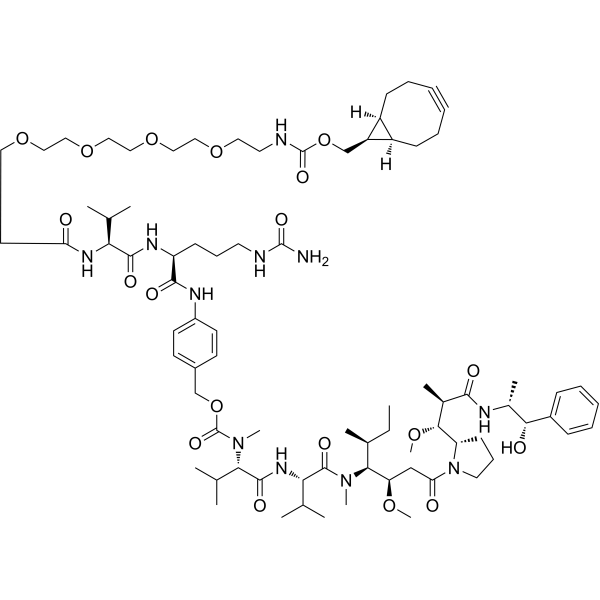
endo-BCN-PEG4-Val-Cit-PAB-MMAE is a cleavable ADC linker conjugated with drug containing 4-unit PEG, which can be used for synthesizing antibody-drug conjugates (ADCs). endo-BCN-PEG4-Val-Cit-PAB-MMAE is a click chemistry reagent, it contains a BCN group that can undergo strain-promoted alkyne-azide cycloaddition (SPAAC) with molecules containing Azide groups .
|
-
- HY-W590556
-
|
|
Drug-Linker Conjugates for ADC
|
Cancer
|
|
Endo-BCN-PEG4-Val-Cit-PAB-MMAF is a cleavable ADC linker conjugated with drug containing 4-unit PEG, which can be used for synthesizing antibody-drug conjugates (ADCs). endo-BCN-PEG4-Val-Cit-PAB-MMAF is a click chemistry reagent, it contains a BCN group that can undergo strain-promoted alkyne-azide cycloaddition (SPAAC) with molecules containing Azide groups .
|
-
- HY-153795
-
|
|
Drug-Linker Conjugates for ADC
Topoisomerase
|
Cancer
|
|
Mal-PEG2-Gly-Gly-Phe-Gly-Exatecan is a bioactive drug-linker conjugate for ADC (Drug-Linker Conjugates for ADC). Mal-PEG2-Gly-Gly-Phe-Gly-Exatecan consists of Exatecan (HY-13631) and a linker. Mal-PEG2-Gly-Gly-Phe-Gly-Exatecan is applicable to ADC synthesis and cancer research. Exatecan acts as a DNA Topoisomerase I inhibitor .
|
-
- HY-128716A
-
|
Cereblon Ligand-Linker conjugates 5 TFA ; E3 ligase Ligand-Linker conjugates 30 TFA
|
E3 Ligase Ligand-Linker Conjugates
|
Cancer
|
|
Pomalidomide-PEG3-C2-NH2 TFA (Cereblon Ligand-Linker Conjugates 5 (TFA)) is a synthetic E3 ligase ligand-linker conjugate comprising a Pomalidomide (HY-10984)-based cereblon ligand and a 3-unit PEG linker. Pomalidomide-PEG3-C2-NH2 TFA can be used for the synthesis of PROTACs .
|
-
- HY-N16323
-
|
|
Biochemical Assay Reagents
|
Others
|
|
DSPE-PEG2K-triGalNAc (II) ammonium is a functionalized PEG lipid that consists of a DSPE unit conjugated to a triGalNAc. DSPE-PEG2K-triGalNAc (II) ammonium can be used to prepare lipid nanoparticles for drug delivery.
|
-
- HY-133307
-
|
HO-PEG10-CH2CH2COOH
|
ADC Linker
|
Cancer
|
|
Hydroxy-PEG10-acid (HO-PEG10-CH2CH2COOH) is a PEG-based non-cleavable ADC linker that can be used in the synthesis of Antibody-Drug Conjugates (ADCs) .
|
-
- HY-164731
-
|
|
ADC Linker
|
Cancer
|
|
Mal-PEG12-DOTA is an ADC linker used in the synthesis of antibody-drug conjugates (ADCs) .
|
-
- HY-126497
-
|
|
ADC Linker
|
Cancer
|
|
LC-PEG8-SPDP is a cleavable ADC linker used for the antibody-drug conjugates (ADCs) .
|
-
- HY-167791
-
-
- HY-175218
-
|
|
ADC Linker
|
Cancer
|
|
Maleimide-Ph(3,5-F)-PEG4-Val-Ala is a cleavable PEG-based ADC linker that can be used in the synthesis of antibody-drug conjugates (ADCs) .
|
-
- HY-144012H
-
|
16:0 PEG5000 PE; 1,2-Dipalmitoyl-sn-glycero-3-phosphoethanolamine-N-[methoxy(polyethylene glycol)-5000] ammonium
|
Liposome
|
Others
|
|
DPPE-PEG5000 (16:0 PEG5000 PE) is a polymer-lipid conjugate and LipoParticle stabilizer with a PEG chain of 5,000 g/mol molecular weight attached to its polar head, and it can be internalized by biological membranes. DPPE-PEG5000 enables LipoParticle to maintain colloidal stability after 20-fold dilution in PBS or cell culture medium, and prevents aggregate formation during lyophilization and rehydration. DPPE-PEG5000 helps enhance the non-cytotoxic property of LipoParticle formulations against human osteoblasts. DPPE-PEG5000 serves as a PEG lipid functional end group for synthesizing liposomes (LPs), is used in the design of conjugated polymer nanoparticles, and applies to research related to bone and joint infections .
|
-
- HY-172270D
-
|
|
Liposome
|
Cancer
|
|
DSPE-PEG1000-PTP is synthesised by conjugating the amino group of plectin-1 peptide (PTP) with DSPE-PEG-NHS ester via amide bonds. DSPE-PEG1000-PTP can be used to construct drug delivery vectors .
|
-
- HY-183174B
-
|
|
Biochemical Assay Reagents
|
Others
|
|
DSG-PEG3400-Galactose is a conjugate composed of DSG, a PEG chain, and terminal galactose. DSG-PEG3400-Galactose combines the membrane compatibility of phospholipids with the targeted recognition capabilities of galactose, making it suitable for research in biomaterial construction and drug delivery.
|
-
- HY-120702
-
|
|
ADC Linker
PROTAC Linkers
|
Cancer
|
|
N-Boc-PEG5-bromide is a PEG/Alkyl/ether-based PROTAC linker can be used in the synthesis of PROTACs. N-Boc-PEG5-bromide is a cleavable ADC linker used in the synthesis of antibody-drug conjugates (ADCs) .
|
-
- HY-W006445
-
|
|
ADC Linker
PROTAC Linkers
|
Cancer
|
|
N-Boc-PEG2-bromide is a PEG/Alkyl/ether-based PROTAC linker can be used in the synthesis of PROTACs. N-Boc-PEG2-bromide is a cleavable ADC linker used in the synthesis of antibody-drug conjugates (ADCs) .
|
-
- HY-172270C
-
|
|
Liposome
|
Cancer
|
|
DSPE-PEG1000-PTP is synthesised by conjugating the amino group of plectin-1 peptide (PTP) with DSPE-PEG-NHS ester via amide bonds. DSPE-PEG1000-PTP can be used to construct drug delivery vectors .
|
-
- HY-183127
-
|
|
Biochemical Assay Reagents
|
Others
|
|
BOC-NH-PEG1000-DMG is a conjugate composed of a Boc-protected primary amine (-NH2), a PEG chain, and terminal dimyristoylglycerol (DMG). BOC-NH-PEG1000-DMG can be used for research in biomaterial construction and drug delivery.
|
-
- HY-183127D
-
|
|
Biochemical Assay Reagents
|
Others
|
|
BOC-NH-PEG10000-DMG is a conjugate composed of a Boc-protected primary amine (-NH2), a PEG chain, and terminal dimyristoylglycerol (DMG). BOC-NH-PEG10000-DMG can be used for research in biomaterial construction and drug delivery.
|
-
- HY-183174A
-
|
|
Biochemical Assay Reagents
|
Others
|
|
DSG-PEG1000-Galactose is a conjugate composed of DSG, a PEG chain, and terminal galactose. DSG-PEG1000-Galactose combines the membrane compatibility of phospholipids with the targeted recognition capabilities of galactose, making it suitable for research in biomaterial construction and drug delivery.
|
-
- HY-182947C
-
|
|
Biochemical Assay Reagents
|
Others
|
|
DSG-PEG5000-Mannose is a conjugate composed of DSG, a PEG chain, and terminal mannose. DSG-PEG5000-Mannose combines the membrane compatibility of phospholipids with the targeted recognition capabilities of mannose, making it suitable for research in biomaterial construction and drug delivery.
|
-
- HY-W071584
-
|
|
ADC Linker
PROTAC Linkers
|
Cancer
|
|
N-Boc-PEG6-alcohol is a PEG/Alkyl/ether-based PROTAC linker can be used in the synthesis of PROTACs. N-Boc-PEG6-alcohol is a cleavable ADC linker used in the synthesis of antibody-drug conjugates (ADCs) .
|
-
- HY-182947A
-
|
|
Biochemical Assay Reagents
|
Others
|
|
DSG-PEG2000-Mannose is a conjugate composed of DSG, a PEG chain, and terminal mannose. DSG-PEG2000-Mannose combines the membrane compatibility of phospholipids with the targeted recognition capabilities of mannose, making it suitable for research in biomaterial construction and drug delivery.
|
-
- HY-183174C
-
|
|
Biochemical Assay Reagents
|
Others
|
|
DSG-PEG5000-Galactose is a conjugate composed of DSG, a PEG chain, and terminal galactose. DSG-PEG5000-Galactose combines the membrane compatibility of phospholipids with the targeted recognition capabilities of galactose, making it suitable for research in biomaterial construction and drug delivery.
|
-
- HY-W046471
-
|
|
ADC Linker
PROTAC Linkers
|
Cancer
|
|
N-Boc-PEG4-bromide is a PEG/Alkyl/ether-based PROTAC linker can be used in the synthesis of PROTACs. N-Boc-PEG4-bromide is a cleavable ADC linker used in the synthesis of antibody-drug conjugates (ADCs) .
|
-
- HY-130503
-
|
|
ADC Linker
PROTAC Linkers
|
Cancer
|
|
N-Boc-PEG1-bromide is a PEG/Alkyl/ether-based PROTAC linker can be used in the synthesis of PROTACs. N-Boc-PEG1-bromide is a cleavable ADC linker used in the synthesis of antibody-drug conjugates (ADCs) .
|
-
- HY-168374D
-
|
|
Biochemical Assay Reagents
|
Others
|
|
DSPE-PEG10000-Mannose is a conjugate composed of DSPE, a PEG chain, and terminal mannose. DSPE-PEG10000-Mannose combines the membrane compatibility of phospholipids with the targeted recognition capabilities of mannose, making it suitable for research in biomaterial construction and drug delivery.
|
-
- HY-183174D
-
|
|
Biochemical Assay Reagents
|
Others
|
|
DSG-PEG10000-Galactose is a conjugate composed of DSG, a PEG chain, and terminal galactose. DSG-PEG10000-Galactose combines the membrane compatibility of phospholipids with the targeted recognition capabilities of galactose, making it suitable for research in biomaterial construction and drug delivery.
|
-
- HY-182947D
-
|
|
Biochemical Assay Reagents
|
Others
|
|
DSG-PEG10000-Mannose is a conjugate composed of DSG, a PEG chain, and terminal mannose. DSG-PEG10000-Mannose combines the membrane compatibility of phospholipids with the targeted recognition capabilities of mannose, making it suitable for research in biomaterial construction and drug delivery.
|
-
- HY-182947B
-
|
|
Biochemical Assay Reagents
|
Others
|
|
DSG-PEG3400-Mannose is a conjugate composed of DSG, a PEG chain, and terminal mannose. DSG-PEG3400-Mannose combines the membrane compatibility of phospholipids with the targeted recognition capabilities of mannose, making it suitable for research in biomaterial construction and drug delivery.
|
-
- HY-183127C
-
|
|
Biochemical Assay Reagents
|
Others
|
|
BOC-NH-PEG5000-DMG is a conjugate composed of a Boc-protected primary amine (-NH2), a PEG chain, and terminal dimyristoylglycerol (DMG). BOC-NH-PEG5000-DMG can be used for research in biomaterial construction and drug delivery.
|
-
- HY-183127B
-
|
|
Biochemical Assay Reagents
|
Others
|
|
BOC-NH-PEG3400-DMG is a conjugate composed of a Boc-protected primary amine (-NH2), a PEG chain, and terminal dimyristoylglycerol (DMG). BOC-NH-PEG3400-DMG can be used for research in biomaterial construction and drug delivery.
|
-
- HY-143209B
-
|
|
Liposome
|
Cancer
|
|
DSPE-PEG3400 is a phospholipid-PEG polymer conjugate that can be used in drug delivery applications. DSPE-PEG3400 serves as a material for preparing nanocarriers, which is used to prolong blood circulation time, enhance stability and improve encapsulation efficiency .
|
-
- HY-167759
-
|
Pomalidomide-PEG2-CH2COOH
|
E3 Ligase Ligand-Linker Conjugates
|
Cancer
|
|
Pomalidomide-PEG2-acetic acid (Pomalidomide-PEG2-CH2COOH) is the conjugate composed of a E3 ligase ligand and a linker. Pomalidomide-PEG2-acetic acid can be used for PROTAC synthesis .
|
-
- HY-172270
-
|
|
Liposome
|
Cancer
|
|
DSPE-PEG1000-PTP is synthesised by conjugating the amino group of plectin-1 peptide (PTP) with DSPE-PEG-NHS ester via amide bonds. DSPE-PEG1000-PTP can be used to construct drug delivery vectors .
|
-
- HY-183127A
-
|
|
Biochemical Assay Reagents
|
Others
|
|
BOC-NH-PEG2000-DMG is a conjugate composed of a Boc-protected primary amine (-NH2), a PEG chain, and terminal dimyristoylglycerol (DMG). BOC-NH-PEG2000-DMG can be used for research in biomaterial construction and drug delivery.
|
-
- HY-130505
-
|
|
ADC Linker
PROTAC Linkers
|
Cancer
|
|
N-Boc-PEG7-alcohol is a PEG/Alkyl/ether-based PROTAC linker can be used in the synthesis of PROTACs. N-Boc-PEG7-alcohol is a cleavable ADC linker used in the synthesis of antibody-drug conjugates (ADCs) .
|
-
- HY-168374B
-
|
|
Biochemical Assay Reagents
|
Others
|
|
DSPE-PEG5000-Mannose is a conjugate composed of DSPE, a PEG chain, and terminal mannose. DSPE-PEG5000-Mannose combines the membrane compatibility of phospholipids with the targeted recognition capabilities of mannose, making it suitable for research in biomaterial construction and drug delivery.
|
-
- HY-172270A
-
|
|
Liposome
|
Cancer
|
|
DSPE-PEG1000-PTP is synthesised by conjugating the amino group of plectin-1 peptide (PTP) with DSPE-PEG-NHS ester via amide bonds. DSPE-PEG1000-PTP can be used to construct drug delivery vectors .
|
-
- HY-182947
-
|
|
Biochemical Assay Reagents
|
Others
|
|
DSG-PEG1000-Mannose is a conjugate composed of DSG, a PEG chain, and terminal mannose. DSG-PEG1000-Mannose combines the membrane compatibility of phospholipids with the targeted recognition capabilities of mannose, making it suitable for research in biomaterial construction and drug delivery.
|
-
- HY-168374C
-
|
|
Biochemical Assay Reagents
|
Others
|
|
DSPE-PEG3400-Mannose is a conjugate composed of DSPE, a PEG chain, and terminal mannose. DSPE-PEG3400-Mannose combines the membrane compatibility of phospholipids with the targeted recognition capabilities of mannose, making it suitable for research in biomaterial construction and drug delivery.
|
-
- HY-183174
-
|
|
Biochemical Assay Reagents
|
Others
|
|
DSG-PEG1000-Galactose is a conjugate composed of DSG, a PEG chain, and terminal galactose. DSG-PEG1000-Galactose combines the membrane compatibility of phospholipids with the targeted recognition capabilities of galactose, making it suitable for research in biomaterial construction and drug delivery.
|
-
- HY-W071583
-
|
|
ADC Linker
PROTAC Linkers
|
Cancer
|
|
N-Boc-PEG9-alcohol is a PEG/Alkyl/ether-based PROTAC linker can be used in the synthesis of PROTACs. N-Boc-PEG9-alcohol is a cleavable ADC linker used in the synthesis of antibody-drug conjugates (ADCs) .
|
-
- HY-W040168
-
|
|
ADC Linker
PROTAC Linkers
|
Cancer
|
|
Amino-PEG2-C2-acid is a cleavable 3 unit PEG ADC linker used in the synthesis of antibody-drug conjugates (ADCs). Amino-PEG2-C2-acid is also a PEG-based PROTAC linker that can be used in the synthesis of PROTACs .
|
-
- HY-159777
-
-
- HY-141218
-
|
Decaethylene glycol monomethyl ether
|
ADC Linker
PROTAC Linkers
|
Cancer
|
|
m-PEG10-alcohol (Decaethylene glycol monomethyl ether) is a non-cleavable 10 unit PEG ADC linker used in the synthesis of antibody-drug conjugates (ADCs) . m-PEG10-alcohol is also a PEG-based PROTAC linker that can be used in the synthesis of PROTACs .
|
-
- HY-163964
-
-
- HY-155926
-
|
14:0 PEG750 PE ammonium; 1,2-Dimyristoyl-sn-glycero-3-phosphoethanolamine-N-[methoxy(polyethylene glycol)-750] ammonium
|
Liposome
|
Others
|
|
DMPE-PEG750 ammonium (14:0 PEG750 PE ammonium) is a PEG lipid functional end group used in the synthesis of liposomes (LPs) for the design of conjugated polymeric nanoparticles. Through biotin modification and carboxyl terminus, lipid nanoparticles (LNPs) further coupling with other biomolecules can be achieved. Functionalized nanoparticles can be used for targeted labeling of specific cellular proteins. With streptavidin as a linker, biotinylated PEG lipid-conjugated polymer nanoparticles are able to bind to biotinylated antibodies on cell surface receptors, yielding the utility of fluorescence-based imaging and sensing.
|
-
- HY-155931
-
|
DOPE-PEG550 ammonium; 1,2-Dioleoyl-sn-glycero-3-phosphoethanolamine-N-[methoxy(polyethylene glycol)-550] ammonium
|
Liposome
|
Others
|
|
18:1 PEG550 PE ammonium (DOPE-PEG550 ammonium) is a PEG lipid functional end group used in the synthesis of liposomes (LPs) for the design of conjugated polymer nanoparticles. Through biotin modification and carboxyl terminus, lipid nanoparticles (LNPs) further coupling with other biomolecules can be achieved. Functionalized nanoparticles can be used for targeted labeling of specific cellular proteins. With streptavidin as a linker, biotinylated PEG lipid-conjugated polymer nanoparticles are able to bind to biotinylated antibodies on cell surface receptors, yielding the utility of fluorescence-based imaging and sensing.
|
-
- HY-155934
-
|
DOPE-PEG5000 ammonium; 1,2-Dioleoyl-sn-glycero-3-phosphoethanolamine-N-[methoxy(polyethylene glycol)-5000] ammonium
|
Liposome
|
Others
|
|
18:1 PEG5000 PE ammonium (DOPE-PEG5000 ammonium) is a PEG lipid functional end group used in the synthesis of liposomes (LPs) for the design of conjugated polymer nanoparticles. Through biotin modification and carboxyl terminus, lipid nanoparticles (LNPs) further coupling with other biomolecules can be achieved. Functionalized nanoparticles can be used for targeted labeling of specific cellular proteins. With streptavidin as a linker, biotinylated PEG lipid-conjugated polymer nanoparticles are able to bind to biotinylated antibodies on cell surface receptors, yielding the utility of fluorescence-based imaging and sensing.
|
-
- HY-155933
-
|
DOPE-PEG3000 ammonium; 1,2-Dioleoyl-sn-glycero-3-phosphoethanolamine-N-[methoxy(polyethylene glycol)-3000] ammonium
|
Liposome
|
Others
|
|
18:1 PEG3000 PE ammonium (DOPE-PEG3000 ammonium) is a PEG lipid functional end group used in the synthesis of liposomes (LPs) for the design of conjugated polymer nanoparticles. Through biotin modification and carboxyl terminus, lipid nanoparticles (LNPs) further coupling with other biomolecules can be achieved. Functionalized nanoparticles can be used for targeted labeling of specific cellular proteins. With streptavidin as a linker, biotinylated PEG lipid-conjugated polymer nanoparticles are able to bind to biotinylated antibodies on cell surface receptors, yielding the utility of fluorescence-based imaging and sensing.
|
-
- HY-155932
-
|
DOPE-PEG1000 ammonium; 1,2-Dioleoyl-sn-glycero-3-phosphoethanolamine-N-[methoxy(polyethylene glycol)-1000] ammonium
|
Liposome
|
Others
|
|
18:1 PEG1000 PE ammonium (DOPE-PEG1000 ammonium) is a PEG lipid functional end group used in the synthesis of liposomes (LPs) for the design of conjugated polymer nanoparticles. Through biotin modification and carboxyl terminus, lipid nanoparticles (LNPs) further coupling with other biomolecules can be achieved. Functionalized nanoparticles can be used for targeted labeling of specific cellular proteins. With streptavidin as a linker, biotinylated PEG lipid-conjugated polymer nanoparticles are able to bind to biotinylated antibodies on cell surface receptors, yielding the utility of fluorescence-based imaging and sensing.
|
-
- HY-155925
-
|
14:0 PEG550 PE ammonium; 1,2-Dimyristoyl-sn-glycero-3-phosphoethanolamine-N-[methoxy(polyethylene glycol)-550] ammonium
|
Liposome
|
Others
|
|
DMPE-PEG550 ammonium (14:0 PEG550 PE ammonium) is a PEG lipid functional end group used in the synthesis of liposomes (LPs) for the design of conjugated polymeric nanoparticles. Through biotin modification and carboxyl terminus, lipid nanoparticles (LNPs) further coupling with other biomolecules can be achieved. Functionalized nanoparticles can be used for targeted labeling of specific cellular proteins. With streptavidin as a linker, biotinylated PEG lipid-conjugated polymer nanoparticles are able to bind to biotinylated antibodies on cell surface receptors, yielding the utility of fluorescence-based imaging and sensing.
|
-
- HY-155930
-
|
DOPE-PEG350 ammonium; 1,2-Dioleoyl-sn-glycero-3-phosphoethanolamine-N-[methoxy(polyethylene glycol)-350] ammonium
|
Liposome
|
Others
|
|
18:1 PEG350 PE ammonium (DOPE-PEG350 ammonium) is a PEG lipid functional end group used in the synthesis of liposomes (LPs) for the design of conjugated polymer nanoparticles. Through biotin modification and carboxyl terminus, lipid nanoparticles (LNPs) further coupling with other biomolecules can be achieved. Functionalized nanoparticles can be used for targeted labeling of specific cellular proteins. With streptavidin as a linker, biotinylated PEG lipid-conjugated polymer nanoparticles are able to bind to biotinylated antibodies on cell surface receptors, yielding the utility of fluorescence-based imaging and sensing.
|
-
- HY-155924
-
|
14:0 PEG350 PE ammonium; 1,2-Dimyristoyl-sn-glycero-3-phosphoethanolamine-N-[methoxy(polyethylene glycol)-350] ammonium
|
Liposome
|
Others
|
|
DMPE-PEG350 ammonium (14:0 PEG350 PE ammonium) is a PEG lipid functional end group used in the synthesis of liposomes (LPs) for the design of conjugated polymer nanoparticles. Through biotin modification and carboxyl terminus, lipid nanoparticles (LNPs) further coupling with other biomolecules can be achieved. Functionalized nanoparticles can be used for targeted labeling of specific cellular proteins. With streptavidin as a linker, biotinylated PEG lipid-conjugated polymer nanoparticles are able to bind to biotinylated antibodies on cell surface receptors, yielding the utility of fluorescence-based imaging and sensing.
|
-
- HY-155927
-
|
14:0 PEG1000 PE ammonium; 1,2-Dimyristoyl-sn-glycero-3-phosphoethanolamine-N-[methoxy(polyethylene glycol)-1000] ammonium
|
Liposome
|
Others
|
|
DMPE-PEG1000 ammonium (14:0 PEG1000 PE ammonium) is a PEG lipid functional end group used in the synthesis of liposomes (LPs) for the design of conjugated polymer nanoparticles. Through biotin modification and carboxyl terminus, lipid nanoparticles (LNPs) further coupling with other biomolecules can be achieved. Functionalized nanoparticles can be used for targeted labeling of specific cellular proteins. With streptavidin as a linker, biotinylated PEG lipid-conjugated polymer nanoparticles are able to bind to biotinylated antibodies on cell surface receptors, yielding the utility of fluorescence-based imaging and sensing.
|
-
- HY-155929
-
|
14:0 PEG5000 PE ammonium; 1,2-Dimyristoyl-sn-glycero-3-phosphoethanolamine-N-[methoxy(polyethylene glycol)-5000] ammonium
|
Liposome
|
Others
|
|
DMPE-PEG5000 ammonium (14:0 PEG5000 PE ammonium) is a PEG lipid functional end group used in the synthesis of liposomes (LPs) for the design of conjugated polymer nanoparticles. Through biotin modification and carboxyl terminus, lipid nanoparticles (LNPs) further coupling with other biomolecules can be achieved. Functionalized nanoparticles can be used for targeted labeling of specific cellular proteins. With streptavidin as a linker, biotinylated PEG lipid-conjugated polymer nanoparticles are able to bind to biotinylated antibodies on cell surface receptors, yielding the utility of fluorescence-based imaging and sensing.
|
-
- HY-155928
-
|
14:0 PEG3000 PE ammonium; 1,2-Dimyristoyl-sn-glycero-3-phosphoethanolamine-N-[methoxy(polyethylene glycol)-3000] ammonium
|
Liposome
|
Others
|
|
DMPE-PEG3000 ammonium (14:0 PEG3000 PE ammonium) is a PEG lipid functional end group used in the synthesis of liposomes (LPs) for the design of conjugated polymer nanoparticles. Through biotin modification and carboxyl terminus, lipid nanoparticles (LNPs) further coupling with other biomolecules can be achieved. Functionalized nanoparticles can be used for targeted labeling of specific cellular proteins. With streptavidin as a linker, biotinylated PEG lipid-conjugated polymer nanoparticles are able to bind to biotinylated antibodies on cell surface receptors, yielding the utility of fluorescence-based imaging and sensing.
|
-
- HY-132161
-
|
|
Drug-Linker Conjugates for ADC
|
Cancer
|
|
MP-PEG4-Val-Lys-Gly-7-MAD-MDCPT is a Camptothecin-linker compound extracted from patent WO2019195665A1, example 4-1. MP-PEG4-Val-Lys-Gly-7-MAD-MDCPT is a agent-linker conjugate for antibody-drug conjugate (ADC) .
|
-
- HY-W115607
-
|
Poly(ethylene glycol)-bis-amine 4000
|
Biochemical Assay Reagents
|
Cancer
|
|
PEG4000-bis-amine synthesizes folate-conjugated polymeric micelles for encapsulation of the anticancer agent 9-nitrocamptothecin HY-16560 (HY-16560). Folic acid-conjugated polymer micelles are effective carriers of insoluble anticancer drugs, which can avoid macrophages and play a role in endocytosis of tumor cells mediated by folate receptors (FR).
|
-
- HY-W040236
-
-
- HY-130090
-
|
|
ADC Linker
|
Cancer
|
|
NHPI-PEG4-C2-Pfp ester is used as a linker for antibody-drug conjugates (ADC).
|
-
- HY-130098
-
|
|
ADC Linker
|
Cancer
|
|
Ald-Ph-amido-PEG3-C-COOH is a noncleavable linker used for the antibody-drug conjugate (ADC).
|
-
- HY-174891
-
|
|
Biochemical Assay Reagents
|
Others
|
|
Betiatide-NHS ester is a PEG derivative composed of NHS ester, which can be conjugated to amino acids or other molecules containing amino groups.
|
-
- HY-181426
-
|
|
ADC Linker
|
Cancer
|
|
GDP-L-Fuc-PEG4-BCN is a cleavable ADC linker used in the synthesis of antibody-drug conjugates (ADCs).
|
-
- HY-164928
-
|
|
ADC Linker
|
Others
|
|
PTAD-PEG8-alkyne is a cleavable ADC linker used in the synthesis of antibody-drug conjugates (ADCs) .
|
-
- HY-185464
-
|
|
Drug Derivative
|
Others
|
|
DBCO-Headpiece is a conjugate of DBCO-PEG4-NHS ester (HY-140272) and Headpiece (HY-185129).
|
-
- HY-182903D
-
|
|
Biochemical Assay Reagents
|
Others
|
|
DMG-PEG10000-Mannose is a conjugate composed of dimyristoylglycerol (DMG), a PEG chain, and terminal mannose. DMG-PEG10000-Mannose combines the membrane compatibility of phospholipids with the targeted recognition capabilities of mannose, making it suitable for research in biomaterial construction and drug delivery.
|
-
- HY-183171
-
|
|
Biochemical Assay Reagents
|
Others
|
|
DSG-PEG1000-CHO is a conjugate composed of DSG, a PEG chain, and a terminal aldehyde group (-CHO). DSG-PEG1000-CHO combines the membrane compatibility of phospholipids with the flexibility of hydroxyl modification, making it suitable for research in biomaterial construction and drug delivery.
|
-
- HY-182903C
-
|
|
Biochemical Assay Reagents
|
Others
|
|
DMG-PEG5000-Mannose is a conjugate composed of dimyristoylglycerol (DMG), a PEG chain, and terminal mannose. DMG-PEG5000-Mannose combines the membrane compatibility of phospholipids with the targeted recognition capabilities of mannose, making it suitable for research in biomaterial construction and drug delivery.
|
-
- HY-183171B
-
|
|
Biochemical Assay Reagents
|
Others
|
|
DSG-PEG5000-CHO is a conjugate composed of DSG, a PEG chain, and a terminal aldehyde group (-CHO). DSG-PEG5000-CHO combines the membrane compatibility of phospholipids with the flexibility of hydroxyl modification, making it suitable for research in biomaterial construction and drug delivery.
|
-
- HY-183170A
-
|
|
Biochemical Assay Reagents
|
Others
|
|
DSG-PEG2000-Biotin is a conjugate composed of DSG, PEG chains, and biotin. DSG-PEG2000-Biotin combines the membrane compatibility of phospholipids with the high affinity of biotin for avidin/streptavidin, enabling applications such as targeted drug delivery systems and nanoparticle modification.
|
-
- HY-183170C
-
|
|
Biochemical Assay Reagents
|
Others
|
|
DSG-PEG5000-Biotin is a conjugate composed of DSG, PEG chains, and biotin. DSG-PEG5000-Biotin combines the membrane compatibility of phospholipids with the high affinity of biotin for avidin/streptavidin, enabling applications such as targeted drug delivery systems and nanoparticle modification.
|
-
- HY-183170
-
|
|
Biochemical Assay Reagents
|
Others
|
|
DSG-PEG1000-Biotin is a conjugate composed of DSG, PEG chains, and biotin. DSG-PEG1000-Biotin combines the membrane compatibility of phospholipids with the high affinity of biotin for avidin/streptavidin, enabling applications such as targeted drug delivery systems and nanoparticle modification.
|
-
- HY-183170B
-
|
|
Biochemical Assay Reagents
|
Others
|
|
DSG-PEG3400-Biotin is a conjugate composed of DSG, PEG chains, and biotin. DSG-PEG3400-Biotin combines the membrane compatibility of phospholipids with the high affinity of biotin for avidin/streptavidin, enabling applications such as targeted drug delivery systems and nanoparticle modification.
|
-
- HY-183171C
-
|
|
Biochemical Assay Reagents
|
Others
|
|
DSG-PEG3400-CHO is a conjugate composed of DSG, a PEG chain, and a terminal aldehyde group (-CHO). DSG-PEG3400-CHO combines the membrane compatibility of phospholipids with the flexibility of hydroxyl modification, making it suitable for research in biomaterial construction and drug delivery.
|
-
- HY-182903A
-
|
|
Biochemical Assay Reagents
|
Others
|
|
DMG-PEG2000-Mannose is a conjugate composed of dimyristoylglycerol (DMG), a PEG chain, and terminal mannose. DMG-PEG2000-Mannose combines the membrane compatibility of phospholipids with the targeted recognition capabilities of mannose, making it suitable for research in biomaterial construction and drug delivery.
|
-
- HY-183171A
-
|
|
Biochemical Assay Reagents
|
Others
|
|
DSG-PEG2000-CHO is a conjugate composed of DSG, a PEG chain, and a terminal aldehyde group (-CHO). DSG-PEG2000-CHO combines the membrane compatibility of phospholipids with the flexibility of hydroxyl modification, making it suitable for research in biomaterial construction and drug delivery.
|
-
- HY-182903
-
|
|
Biochemical Assay Reagents
|
Others
|
|
DMG-PEG1000-Mannose is a conjugate composed of dimyristoylglycerol (DMG), a PEG chain, and terminal mannose. DMG-PEG1000-Mannose combines the membrane compatibility of phospholipids with the targeted recognition capabilities of mannose, making it suitable for research in biomaterial construction and drug delivery.
|
-
- HY-183171D
-
|
|
Biochemical Assay Reagents
|
Others
|
|
DSG-PEG10000-CHO is a conjugate composed of DSG, a PEG chain, and a terminal aldehyde group (-CHO). DSG-PEG10000-CHO combines the membrane compatibility of phospholipids with the flexibility of hydroxyl modification, making it suitable for research in biomaterial construction and drug delivery.
|
-
- HY-182903B
-
|
|
Biochemical Assay Reagents
|
Others
|
|
DMG-PEG3400-Mannose is a conjugate composed of dimyristoylglycerol (DMG), a PEG chain, and terminal mannose. DMG-PEG3400-Mannose combines the membrane compatibility of phospholipids with the targeted recognition capabilities of mannose, making it suitable for research in biomaterial construction and drug delivery.
|
-
- HY-42149
-
|
|
PROTAC Linkers
ADC Linker
|
Cancer
|
|
NH2-PEG2-C2-Boc is a PEG-based PROTAC linker that can be used in the synthesis of PROTACs . NH2-PEG2-C2-Boc is also a non-cleavable 2 unit PEG ADC linker used in the synthesis of antibody-drug conjugates (ADCs) .
|
-
- HY-136084
-
|
|
ADC Linker
|
Cancer
|
|
Mal-PEG4-(PEG3-DBCO)-(PEG3-TCO) is a cleavable 10 unit PEG ADC linker used in the synthesis of antibody-drug conjugates (ADCs) . Mal-PEG4-(PEG3-DBCO)-(PEG3-TCO) is a click chemistry reagent, it contains a TCO group that can undergo an inverse electron demand Diels-Alder reaction (iEDDA) with molecules containing Tetrazine groups.
|
-
- HY-144012B
-
|
16:0 PEG550 PE; 1,2-Dipalmitoyl-sn-glycero-3-phosphoethanolamine-N-[methoxy(polyethylene glycol)-550] ammonium
|
Biochemical Assay Reagents
Liposome
|
Others
|
|
DPPE-PEG550 is a PEG lipid functional end group used in the synthesis of liposomes (LPs) for the design of conjugated polymer nanoparticles. Through biotin modification and carboxyl terminus, lipid nanoparticles (LNPs) further coupling with other biomolecules can be achieved. Functionalized nanoparticles can be used for targeted labeling of specific cellular proteins. With streptavidin as a linker, biotinylated PEG lipid-conjugated polymer nanoparticles are able to bind to biotinylated antibodies on cell surface receptors, yielding the utility of fluorescence-based imaging and sensing.
|
-
- HY-144012E
-
|
16:0 PEG3000 PE; 1,2-Dipalmitoyl-sn-glycero-3-phosphoethanolamine-N-[methoxy(polyethylene glycol)-3000] ammonium
|
Liposome
|
Others
|
|
DPPE-PEG3000 is a PEG lipid functional end group used in the synthesis of liposomes (LPs) for the design of conjugated polymer nanoparticles. Through biotin modification and carboxyl terminus, lipid nanoparticles (LNPs) further coupling with other biomolecules can be achieved. Functionalized nanoparticles can be used for targeted labeling of specific cellular proteins. With streptavidin as a linker, biotinylated PEG lipid-conjugated polymer nanoparticles are able to bind to biotinylated antibodies on cell surface receptors, yielding the utility of fluorescence-based imaging and sensing.
|
-
- HY-177953
-
|
|
Drug-Linker Conjugates for ADC
c-Met/HGFR
|
Cancer
|
|
Mal-PEG2-Val-Arg-PABC-OMe-Eribulin (Compound L-1) is a drug-linker conjugate composed of O-Me Eribulin (HY-159576) and the linker Mal-PEG2-Val-Cit-PAB-OH (HY-130222). Mal-PEG2-Val-Arg-PABC-OMe-Eribulin can be used to synthesize anti-HER3/MET antibody-drug conjugates (ADCs) .
|
-
- HY-144012D
-
|
16:0 PEG1000 PE; 1,2-Dipalmitoyl-sn-glycero-3-phosphoethanolamine-N-[methoxy(polyethylene glycol)-1000] ammonium
|
Liposome
|
Others
|
|
DPPE-PEG1000 is a PEG lipid functional end group used in the synthesis of liposomes (LPs) for the design of conjugated polymer nanoparticles. Through biotin modification and carboxyl terminus, lipid nanoparticles (LNPs) further coupling with other biomolecules can be achieved. Functionalized nanoparticles can be used for targeted labeling of specific cellular proteins. With streptavidin as a linker, biotinylated PEG lipid-conjugated polymer nanoparticles are able to bind to biotinylated antibodies on cell surface receptors, yielding the utility of fluorescence-based imaging and sensing.
|
-
- HY-144012C
-
|
16:0 PEG750 PE; 1,2-Dipalmitoyl-sn-glycero-3-phosphoethanolamine-N-[methoxy(polyethylene glycol)-750] ammonium
|
Biochemical Assay Reagents
Liposome
|
Others
|
|
DPPE-PEG750 is a PEG lipid functional end group used in the synthesis of liposomes (LPs) for the design of conjugated polymer nanoparticles. Through biotin modification and carboxyl terminus, lipid nanoparticles (LNPs) further coupling with other biomolecules can be achieved. Functionalized nanoparticles can be used for targeted labeling of specific cellular proteins. With streptavidin as a linker, biotinylated PEG lipid-conjugated polymer nanoparticles are able to bind to biotinylated antibodies on cell surface receptors, yielding the utility of fluorescence-based imaging and sensing.
|
-
- HY-160274
-
|
|
Fluorescent Dye
|
Others
|
|
DSPE-PEG2000-Fluor 555 is a PEG lipid conjugate with a DSPE group and a Fluor 555 dye. DSPE is a phosphoethanolamine (PE) lipid that can be used in the synthesis of liposomes. And Fluor 555 is a fluorescent dye .
|
-
- HY-138786
-
-
- HY-176562
-
|
|
ADC Linker
|
Cancer
|
|
4-DTM-phenoxy-PEG4-CH2COOH (Formula 3) is a cleavable PEG-based ADC linker that can be used in the synthesis of antibody-drug conjugates (ADCs) .
|
-
- HY-164212
-
|
|
ADC Linker
|
Cancer
|
|
DBCO-PEG2-C2-acid is an ADC Linker. DBCO-PEG2-C2-acid can be used to synthesize Antibody-Drug Conjugates (ADCs) .
|
-
- HY-136166
-
-
- HY-136156
-
|
|
E3 Ligase Ligand-Linker Conjugates
|
Cancer
|
|
Pomalidomide-PEG6-butyl iodide is a synthesized E3 ligase ligand-linker conjugate that incorporates the Pomalidomide based cereblon ligand and 6-unit PEG linker used in PROTAC technology .
|
-
- HY-164210
-
|
|
ADC Linker
|
Cancer
|
|
DBCO-PEG2-C2-acid is an ADC Linker. DBCO-PEG2-C2-acid can be used to synthesize Antibody-Drug Conjugates (ADCs) .
|
-
- HY-138786A
-
|
|
E3 Ligase Ligand-Linker Conjugates
|
Cancer
|
|
Thalidomide-5-PEG3-NH2 is a synthesized E3 ligase ligand-linker conjugate that incorporates the Thalidomide based cereblon ligand and a linker used in PROTAC technology .
|
-
- HY-136161
-
|
|
E3 Ligase Ligand-Linker Conjugates
|
Cancer
|
|
Pomalidomide-PEG6-NH2 hydrochloride is a synthesized E3 ligase ligand-linker conjugate that incorporates the Pomalidomide based cereblon ligand and 6-unit PEG linker used in PROTAC technology.
|
-
- HY-138785A
-
|
|
E3 Ligase Ligand-Linker Conjugates
|
Cancer
|
|
Thalidomide-5-PEG4-NH2 hydrochloride is a synthesized E3 ligase ligand-linker conjugate that incorporates the Thalidomide based cereblon ligand and a linker used in PROTAC technology .
|
-
- HY-164367
-
-
- HY-142740
-
|
|
Drug-Linker Conjugates for ADC
|
Cancer
|
|
Rha-PEG3-SMCC (compound 13) is a agent-linker conjugate for ADC with potent antitumor activity by using SMCC (a protein crosslinker), linked via the noncleavable ADC linker Rha-PEG3.
|
-
- HY-167788
-
|
|
Drug Intermediate
|
Cancer
|
|
DOTA-PEG4-Osu is a conjugate of a chelating agent and a linker, which can be used for the synthesis of the radionuclide reagent 68Ga-DOTA-PEG4-(GGG-cKiE)2.
|
-
- HY-133546
-
|
|
ADC Linker
|
Cancer
|
|
Ald-Ph-amido-PEG11-C2-NH2 is a non-cleavable 11 unit PEG ADC linker used in the synthesis of antibody-drug conjugates (ADCs) .
|
-
- HY-138785
-
-
- HY-151741
-
|
|
ADC Linker
|
Others
|
|
Biotin-PEG4-MeTz is a click chemistry reagent containing a terminal methyltetrazine group that reacts with trans-cyclooctene. Biotin-PEG4-MeTz can be used for the preparation of biotinylated conjugates .
|
-
- HY-182841D
-
|
DMPE-PEG10000-Thiol
|
Biochemical Assay Reagents
|
Others
|
|
DMPE-PEG10000-SH (DMPE-PEG10000-Thiol) is a conjugate composed of DMPE, a PEG chain, and a terminal thiol group (-SH). The thiol group in DMPE-PEG10000-SH exhibits strong chemical reactivity and can participate in various bioconjugation reactions for targeted modification of liposomes/nanoparticles.
|
-
- HY-W580022
-
|
|
E3 Ligase Ligand-Linker Conjugates
|
Cancer
|
|
Pomalidomide-5'-PEG8-C2-COOH is an E3 Ligase Ligand-Linker Conjugates, consisting of Pomalidomide (HY-10984) and a linker. Pomalidomide-5'-PEG8-C2-COOH can be used for synthesis of PROTACs .
|
-
- HY-182841C
-
|
DMPE-PEG5000-Thiol
|
Biochemical Assay Reagents
|
Others
|
|
DMPE-PEG5000-SH (DMPE-PEG5000-Thiol) is a conjugate composed of DMPE, a PEG chain, and a terminal thiol group (-SH). The thiol group in DMPE-PEG5000-SH exhibits strong chemical reactivity and can participate in various bioconjugation reactions for targeted modification of liposomes/nanoparticles.
|
-
- HY-183055A
-
|
DSG-PEG2000-Thiol
|
Biochemical Assay Reagents
|
Others
|
|
DSE-PEG2000-SH (DSE-PEG2000-Thiol) is a conjugate composed of DSE, a PEG chain, and a terminal thiol group (-SH). The thiol group in DSE-PEG2000-SH exhibits strong chemical reactivity and can participate in various bioconjugation reactions for targeted modification of liposomes/nanoparticles.
|
-
- HY-182882A
-
|
DPPE-PEG2000-Thiol
|
Biochemical Assay Reagents
|
Others
|
|
DPPE-PEG2000-SH (DPPE-PEG2000-Thiol) is a conjugate composed of DPPE, a PEG chain, and a terminal thiol group (-SH). The thiol group in DPPE-PEG2000-SH exhibits strong chemical reactivity and can participate in various bioconjugation reactions for targeted modification of liposomes/nanoparticles.
|
-
- HY-183055B
-
|
DSG-PEG3400-Thiol
|
Biochemical Assay Reagents
|
Others
|
|
DSE-PEG3400-SH (DSE-PEG3400-Thiol) is a conjugate composed of DSE, a PEG chain, and a terminal thiol group (-SH). The thiol group in DSE-PEG3400-SH exhibits strong chemical reactivity and can participate in various bioconjugation reactions for targeted modification of liposomes/nanoparticles.
|
-
- HY-182882C
-
|
DPPE-PEG5000-Thiol
|
Biochemical Assay Reagents
|
Others
|
|
DPPE-PEG5000-SH (DPPE-PEG5000-Thiol) is a conjugate composed of DPPE, a PEG chain, and a terminal thiol group (-SH). The thiol group in DPPE-PEG5000-SH exhibits strong chemical reactivity and can participate in various bioconjugation reactions for targeted modification of liposomes/nanoparticles.
|
-
- HY-130271
-
|
VH032-PEG5-COOH; VHL Ligand-Linker conjugates 16; E3 Ligase Ligand-Linker conjugates 58
|
E3 Ligase Ligand-Linker Conjugates
|
Cancer
|
|
(S,R,S)-AHPC-PEG5-COOH (VH032-PEG5-COOH) is a synthesized E3 ligase ligand-linker conjugate that incorporates the (S,R,S)-AHPC based VHL ligand and 5-unit PEG linker used in PROTAC technology .
|
-
- HY-182882
-
|
DPPE-PEG1000-Thiol
|
Biochemical Assay Reagents
|
Others
|
|
DPPE-PEG1000-SH (DPPE-PEG1000-Thiol) is a conjugate composed of DPPE, a PEG chain, and a terminal thiol group (-SH). The thiol group in DPPE-PEG1000-SH exhibits strong chemical reactivity and can participate in various bioconjugation reactions for targeted modification of liposomes/nanoparticles.
|
-
- HY-183055
-
|
DSG-PEG1000-Thiol
|
Biochemical Assay Reagents
|
Others
|
|
DSE-PEG1000-SH (DSE-PEG1000-Thiol) is a conjugate composed of DSE, a PEG chain, and a terminal thiol group (-SH). The thiol group in DSE-PEG1000-SH exhibits strong chemical reactivity and can participate in various bioconjugation reactions for targeted modification of liposomes/nanoparticles.
|
-
- HY-182841
-
|
DMPE-PEG1000-Thiol
|
Biochemical Assay Reagents
|
Others
|
|
DMPE-PEG1000-SH (DMPE-PEG1000-Thiol) is a conjugate composed of DMPE, a PEG chain, and a terminal thiol group (-SH). The thiol group in DMPE-PEG1000-SH exhibits strong chemical reactivity and can participate in various bioconjugation reactions for targeted modification of liposomes/nanoparticles.
|
-
- HY-182882D
-
|
DPPE-PEG10000-Thiol
|
Biochemical Assay Reagents
|
Others
|
|
DPPE-PEG10000-SH (DPPE-PEG10000-Thiol) is a conjugate composed of DPPE, a PEG chain, and a terminal thiol group (-SH). The thiol group in DPPE-PEG10000-SH exhibits strong chemical reactivity and can participate in various bioconjugation reactions for targeted modification of liposomes/nanoparticles.
|
-
- HY-183055D
-
|
DSG-PEG10000-Thiol
|
Biochemical Assay Reagents
|
Others
|
|
DSE-PEG10000-SH (DSE-PEG10000-Thiol) is a conjugate composed of DSE, a PEG chain, and a terminal thiol group (-SH). The thiol group in DSE-PEG10000-SH exhibits strong chemical reactivity and can participate in various bioconjugation reactions for targeted modification of liposomes/nanoparticles.
|
-
- HY-182882B
-
|
DPPE-PEG3400-Thiol
|
Biochemical Assay Reagents
|
Others
|
|
DPPE-PEG3400-SH (DPPE-PEG3400-Thiol) is a conjugate composed of DPPE, a PEG chain, and a terminal thiol group (-SH). The thiol group in DPPE-PEG3400-SH exhibits strong chemical reactivity and can participate in various bioconjugation reactions for targeted modification of liposomes/nanoparticles.
|
-
- HY-112600A
-
|
Cereblon Ligand-Linker conjugates 12 TFA; E3 Ligase Ligand-Linker conjugates 23 TFA
|
E3 Ligase Ligand-Linker Conjugates
Autophagy
Apoptosis
|
Cancer
|
|
Thalidomide-O-amido-PEG1-(C1-PEG)2-C2-NH2 TFA is a synthesized E3 ligase ligand-linker conjugate that incorporates the Thalidomide based cereblon ligand and 3-unit PEG linker used in PROTAC technology.
|
-
- HY-182841A
-
|
DMPE-PEG2000-Thiol
|
Biochemical Assay Reagents
|
Others
|
|
DMPE-PEG2000-SH (DMPE-PEG2000-Thiol) is a conjugate composed of DMPE, a PEG chain, and a terminal thiol group (-SH). The thiol group in DMPE-PEG2000-SH exhibits strong chemical reactivity and can participate in various bioconjugation reactions for targeted modification of liposomes/nanoparticles.
|
-
- HY-130449
-
|
|
ADC Linker
PROTAC Linkers
|
Cancer
|
|
N-Boc-N-bis(PEG4-OH) is a PEG-based PROTAC linker can be used in the synthesis of PROTACs. N-Boc-N-bis(PEG4-OH) is a cleavable ADC linker used in the synthesis of antibody-drug conjugates (ADCs) .
|
-
- HY-183196
-
|
|
Biochemical Assay Reagents
|
Others
|
|
DMG-PEG1000-Galactose is a conjugate composed of dimyristic glycerol (DMG), a PEG chain, and terminal galactose. DMG-PEG1000-Galactose combines the membrane compatibility of phospholipids with the targeted recognition capabilities of galactose, making it suitable for research in biomaterial construction and drug delivery.
|
-
- HY-182981A
-
|
|
Biochemical Assay Reagents
|
Others
|
|
Mannose-PEG2000-Biotin is a conjugate composed of mannose, PEG chains, and biotin. Mannose-PEG-Biotin combines the targeting recognition ability of mannose with the high affinity of biotin to bind avidin/link avidin, and is used for applications such as constructing targeted drug delivery systems and nanoparticle modification.
|
-
- HY-177546
-
-
- HY-183196D
-
|
|
Biochemical Assay Reagents
|
Others
|
|
DMG-PEG10000-Galactose is a conjugate composed of dimyristic glycerol (DMG), a PEG chain, and terminal galactose. DMG-PEG10000-Galactose combines the membrane compatibility of phospholipids with the targeted recognition capabilities of galactose, making it suitable for research in biomaterial construction and drug delivery.
|
-
- HY-182981
-
|
|
Biochemical Assay Reagents
|
Others
|
|
Mannose-PEG1000-Biotin is a conjugate composed of mannose, PEG chains, and biotin. Mannose-PEG-Biotin combines the targeting recognition ability of mannose with the high affinity of biotin to bind avidin/link avidin, and is used for applications such as constructing targeted drug delivery systems and nanoparticle modification.
|
-
- HY-183196C
-
|
|
Biochemical Assay Reagents
|
Others
|
|
DMG-PEG5000-Galactose is a conjugate composed of dimyristic glycerol (DMG), a PEG chain, and terminal galactose. DMG-PEG5000-Galactose combines the membrane compatibility of phospholipids with the targeted recognition capabilities of galactose, making it suitable for research in biomaterial construction and drug delivery.
|
-
- HY-183196A
-
|
|
Biochemical Assay Reagents
|
Others
|
|
DMG-PEG2000-Galactose is a conjugate composed of dimyristic glycerol (DMG), a PEG chain, and terminal galactose. DMG-PEG2000-Galactose combines the membrane compatibility of phospholipids with the targeted recognition capabilities of galactose, making it suitable for research in biomaterial construction and drug delivery.
|
-
- HY-182981B
-
|
|
Biochemical Assay Reagents
|
Others
|
|
Mannose-PEG3400-Biotin is a conjugate composed of mannose, PEG chains, and biotin. Mannose-PEG-Biotin combines the targeting recognition ability of mannose with the high affinity of biotin to bind avidin/link avidin, and is used for applications such as constructing targeted drug delivery systems and nanoparticle modification.
|
-
- HY-182981C
-
|
|
Biochemical Assay Reagents
|
Others
|
|
Mannose-PEG5000-Biotin is a conjugate composed of mannose, PEG chains, and biotin. Mannose-PEG-Biotin combines the targeting recognition ability of mannose with the high affinity of biotin to bind avidin/link avidin, and is used for applications such as constructing targeted drug delivery systems and nanoparticle modification.
|
-
- HY-182981D
-
|
|
Biochemical Assay Reagents
|
Others
|
|
Mannose-PEG10000-Biotin is a conjugate composed of mannose, PEG chains, and biotin. Mannose-PEG-Biotin combines the targeting recognition ability of mannose with the high affinity of biotin to bind avidin/link avidin, and is used for applications such as constructing targeted drug delivery systems and nanoparticle modification.
|
-
- HY-126458
-
|
E3 ligase Ligand-Linker conjugates 32
|
E3 Ligase Ligand-Linker Conjugates
Autophagy
Apoptosis
|
Cancer
|
|
Thalidomide-O-PEG2-propargyl (E3 ligase Ligand-Linker Conjugates 32) is an E3 ligase ligand-linker conjugate. Thalidomide-O-PEG2-propargyl is also a click chemistry reagent containing an alkyne group, which can undergo copper-catalyzed azide-alkyne cycloaddition (CuAAC) with molecules bearing an azide group .
|
-
- HY-130572
-
|
|
PROTAC Linkers
ADC Linker
|
Inflammation/Immunology
Cancer
|
|
Azido-PEG5-acid is a PEG-based PROTAC linker can be used in the synthesis of PROTACs, such as the conjugate CPT-APO (CPT: Camptothecin (HY-16560)). Azido-PEG5-acid is a non-cleavable 5 unit PEG ADC linker used in the synthesis of antibody-drug conjugates (ADCs) . Azido-PEG5-acid is a click chemistry reagent, it contains an Azide group and can undergo copper-catalyzed azide-alkyne cycloaddition reaction (CuAAc) with molecules containing Alkyne groups. It can also undergo strain-promoted alkyne-azide cycloaddition (SPAAC) reactions with molecules containing DBCO or BCN groups.
|
-
- HY-158348
-
-
- HY-181438
-
-
- HY-183134A
-
|
|
Biochemical Assay Reagents
|
Others
|
|
C16-PEG3400-NHS is a conjugate composed of hexadecyl (C16, i.e., palmitoyl), a PEG chain, and an active ester (NHS). C16-PEG3400-NHS combines the membrane compatibility of lipids with glucose as an active site for sugar recognition or subsequent conjugation reactions, making it suitable for research in biomaterial construction and drug delivery.
|
-
- HY-183169B
-
|
|
Biochemical Assay Reagents
|
Others
|
|
C18-PEG5000-NHS is a conjugate composed of octadecyl (C18 aliphatic chain), PEG chains, and an active ester (NHS). C18-PEG5000-NHS combines the membrane compatibility of lipids with glucose as an active site for sugar recognition or subsequent coupling reactions, making it suitable for research in biomaterial construction and drug delivery.
|
-
- HY-183134B
-
|
|
Biochemical Assay Reagents
|
Others
|
|
C16-PEG5000-NHS is a conjugate composed of hexadecyl (C16, i.e., palmitoyl), a PEG chain, and an active ester (NHS). C16-PEG5000-NHS combines the membrane compatibility of lipids with glucose as an active site for sugar recognition or subsequent conjugation reactions, making it suitable for research in biomaterial construction and drug delivery.
|
-
- HY-183169
-
|
|
Biochemical Assay Reagents
|
Others
|
|
C18-PEG2000-NHS is a conjugate composed of octadecyl (C18 aliphatic chain), PEG chains, and an active ester (NHS). C18-PEG2000-NHS combines the membrane compatibility of lipids with glucose as an active site for sugar recognition or subsequent coupling reactions, making it suitable for research in biomaterial construction and drug delivery.
|
-
- HY-183169A
-
|
|
Biochemical Assay Reagents
|
Others
|
|
C18-PEG3400-NHS is a conjugate composed of octadecyl (C18 aliphatic chain), PEG chains, and an active ester (NHS). C18-PEG3400-NHS combines the membrane compatibility of lipids with glucose as an active site for sugar recognition or subsequent coupling reactions, making it suitable for research in biomaterial construction and drug delivery.
|
-
- HY-183134
-
|
|
Biochemical Assay Reagents
|
Others
|
|
C16-PEG2000-NHS is a conjugate composed of hexadecyl (C16, i.e., palmitoyl), a PEG chain, and an active ester (NHS). C16-PEG2000-NHS combines the membrane compatibility of lipids with glucose as an active site for sugar recognition or subsequent conjugation reactions, making it suitable for research in biomaterial construction and drug delivery.
|
-
- HY-177681
-
|
|
Drug-Linker Conjugates for ADC
Topoisomerase
Microtubule/Tubulin
|
Cancer
|
|
N-(Mal)-N-(PEG8-Val-Cit-PAB-MMAE)-N-(PEG8-Val-Cit-PAB-Exatecan) is a drug-linker conjugate for ADC (Drug-Linker Conjugate for ADC), consisting of a tubulin polymerization inhibitor MMAE (HY-15162) and a DNA topoisomerase I inhibitor Exatecan (HY-13631), and an ADC linker composition. N-(Mal)-N-(PEG8-Val-Cit-PAB-MMAE)-N-(PEG8-Val-Cit-PAB-Exatecan) can be used for synthesis of ADCs and for cancer research.
|
-
- HY-183172A
-
|
|
Biochemical Assay Reagents
|
Others
|
|
DSG-PEG2000-Alkyne is a conjugate composed of DSG, a PEG chain, and a terminal alkyne group. DSG-PEG2000-Alkyne combines the membrane compatibility of phospholipids with the high reactivity of the alkyne group in click chemistry, making it suitable for research in biomaterial construction and drug delivery.
|
-
- HY-183172B
-
|
|
Biochemical Assay Reagents
|
Others
|
|
DSG-PEG3400-Alkyne is a conjugate composed of DSG, a PEG chain, and a terminal alkyne group. DSG-PEG3400-Alkyne combines the membrane compatibility of phospholipids with the high reactivity of the alkyne group in click chemistry, making it suitable for research in biomaterial construction and drug delivery.
|
-
- HY-183398B
-
|
|
Biochemical Assay Reagents
|
Others
|
|
DMG-PEG3400-CHO is a conjugate composed of dimyristic glycerol (DMG), a PEG chain, and a terminal aldehyde group (-CHO). DMG-PEG3400-CHO combines the membrane compatibility of phospholipids with the flexibility of hydroxyl modification, making it suitable for research in biomaterial construction and drug delivery.
|
-
- HY-183132B
-
|
|
Biochemical Assay Reagents
|
Others
|
|
DSG-PEG3400-OH is a conjugate composed of dimyristic glycerol (DMG), a PEG chain, and terminal hydroxyl groups (-OH). DSG-PEG3400-OH combines the membrane compatibility of phospholipids with the flexibility of hydroxyl modification, making it suitable for research in biomaterial construction and drug delivery.
|
-
- HY-183164B
-
|
|
Biochemical Assay Reagents
|
Others
|
|
Glucose-PEG3400-OH is a conjugate composed of glucose, PEG chains, and hydroxyl groups (-OH). Glucose-PEG3400-OH combines the targeted recognition capability of glucose with the modification flexibility of hydroxyl groups, enabling applications such as targeted drug delivery systems and nanoparticle modification.
|
-
- HY-136273
-
|
|
E3 Ligase Ligand-Linker Conjugates
|
Cancer
|
|
A 410099.1 amide-PEG2-amine-Boc is a functionalized IAP ligand for PROTACs that incorporates an IAP ligand and an amide-PEG3 linker with terminal amine. A 410099.1 amide-PEG2-amine-Boc can conjugates with target protein ligands.
|
-
- HY-183132D
-
|
|
Biochemical Assay Reagents
|
Others
|
|
DSG-PEG10000-OH is a conjugate composed of dimyristic glycerol (DMG), a PEG chain, and terminal hydroxyl groups (-OH). DSG-PEG10000-OH combines the membrane compatibility of phospholipids with the flexibility of hydroxyl modification, making it suitable for research in biomaterial construction and drug delivery.
|
-
- HY-183172D
-
|
|
Biochemical Assay Reagents
|
Others
|
|
DSG-PEG10000-Alkyne is a conjugate composed of DSG, a PEG chain, and a terminal alkyne group. DSG-PEG10000-Alkyne combines the membrane compatibility of phospholipids with the high reactivity of the alkyne group in click chemistry, making it suitable for research in biomaterial construction and drug delivery.
|
-
- HY-183164A
-
|
|
Biochemical Assay Reagents
|
Others
|
|
Glucose-PEG2000-OH is a conjugate composed of glucose, PEG chains, and hydroxyl groups (-OH). Glucose-PEG2000-OH combines the targeted recognition capability of glucose with the modification flexibility of hydroxyl groups, enabling applications such as targeted drug delivery systems and nanoparticle modification.
|
-
- HY-183398D
-
|
|
Biochemical Assay Reagents
|
Others
|
|
DMG-PEG10000-CHO is a conjugate composed of dimyristic glycerol (DMG), a PEG chain, and a terminal aldehyde group (-CHO). DMG-PEG10000-CHO combines the membrane compatibility of phospholipids with the flexibility of hydroxyl modification, making it suitable for research in biomaterial construction and drug delivery.
|
-
- HY-183398C
-
|
|
Biochemical Assay Reagents
|
Others
|
|
DMG-PEG5000-CHO is a conjugate composed of dimyristic glycerol (DMG), a PEG chain, and a terminal aldehyde group (-CHO). DMG-PEG5000-CHO combines the membrane compatibility of phospholipids with the flexibility of hydroxyl modification, making it suitable for research in biomaterial construction and drug delivery.
|
-
- HY-136272
-
|
|
E3 Ligase Ligand-Linker Conjugates
|
Cancer
|
|
A 410099.1 amide-PEG3-amine-Boc is a functionalized IAP ligand for PROTACs that incorporates an IAP ligand and an amide-PEG3 linker with terminal amine. A 410099.1 amide-PEG3-amine-Boc can conjugates with target protein ligands.
|
-
- HY-183172
-
|
|
Biochemical Assay Reagents
|
Others
|
|
DSG-PEG1000-Alkyne is a conjugate composed of DSG, a PEG chain, and a terminal alkyne group. DSG-PEG1000-Alkyne combines the membrane compatibility of phospholipids with the high reactivity of the alkyne group in click chemistry, making it suitable for research in biomaterial construction and drug delivery.
|
-
- HY-183164D
-
|
|
Biochemical Assay Reagents
|
Others
|
|
Glucose-PEG10000-OH is a conjugate composed of glucose, PEG chains, and hydroxyl groups (-OH). Glucose-PEG10000-OH combines the targeted recognition capability of glucose with the modification flexibility of hydroxyl groups, enabling applications such as targeted drug delivery systems and nanoparticle modification.
|
-
- HY-183132A
-
|
|
Biochemical Assay Reagents
|
Others
|
|
DSG-PEG2000-OH is a conjugate composed of dimyristic glycerol (DMG), a PEG chain, and terminal hydroxyl groups (-OH). DSG-PEG2000-OH combines the membrane compatibility of phospholipids with the flexibility of hydroxyl modification, making it suitable for research in biomaterial construction and drug delivery.
|
-
- HY-183164
-
|
|
Biochemical Assay Reagents
|
Others
|
|
Glucose-PEG1000-OH is a conjugate composed of glucose, PEG chains, and hydroxyl groups (-OH). Glucose-PEG1000-OH combines the targeted recognition capability of glucose with the modification flexibility of hydroxyl groups, enabling applications such as targeted drug delivery systems and nanoparticle modification.
|
-
- HY-183398A
-
|
|
Biochemical Assay Reagents
|
Others
|
|
DMG-PEG2000-CHO is a conjugate composed of dimyristic glycerol (DMG), a PEG chain, and a terminal aldehyde group (-CHO). DMG-PEG2000-CHO combines the membrane compatibility of phospholipids with the flexibility of hydroxyl modification, making it suitable for research in biomaterial construction and drug delivery.
|
-
- HY-183172C
-
|
|
Biochemical Assay Reagents
|
Others
|
|
DSG-PEG5000-Alkyne is a conjugate composed of DSG, a PEG chain, and a terminal alkyne group. DSG-PEG5000-Alkyne combines the membrane compatibility of phospholipids with the high reactivity of the alkyne group in click chemistry, making it suitable for research in biomaterial construction and drug delivery.
|
-
- HY-183398
-
|
|
Biochemical Assay Reagents
|
Others
|
|
DMG-PEG1000-CHO is a conjugate composed of dimyristic glycerol (DMG), a PEG chain, and a terminal aldehyde group (-CHO). DMG-PEG1000-CHO combines the membrane compatibility of phospholipids with the flexibility of hydroxyl modification, making it suitable for research in biomaterial construction and drug delivery.
|
-
- HY-183132
-
|
|
Biochemical Assay Reagents
|
Others
|
|
DSG-PEG1000-OH is a conjugate composed of dimyristic glycerol (DMG), a PEG chain, and terminal hydroxyl groups (-OH). DSG-PEG1000-OH combines the membrane compatibility of phospholipids with the flexibility of hydroxyl modification, making it suitable for research in biomaterial construction and drug delivery.
|
-
- HY-183132C
-
|
|
Biochemical Assay Reagents
|
Others
|
|
DSG-PEG1000-OH is a conjugate composed of dimyristic glycerol (DMG), a PEG chain, and terminal hydroxyl groups (-OH). DMG-PEG1000-Glucose combines the membrane compatibility of phospholipids with the flexibility of hydroxyl modification, making it suitable for research in biomaterial construction and drug delivery.
|
-
- HY-115384
-
|
|
ADC Linker
PROTAC Linkers
|
Cancer
|
|
Amino-PEG5-C2-acid is a PEG-based PROTAC linker can be used in the synthesis of PROTACs. Amino-PEG5-C2-acid is a non-cleavable ADC linker used in the synthesis of antibody-drug conjugates (ADCs) .
|
-
- HY-183164C
-
|
|
Biochemical Assay Reagents
|
Others
|
|
Glucose-PEG5000-OH is a conjugate composed of glucose, PEG chains, and hydroxyl groups (-OH). Glucose-PEG5000-OH combines the targeted recognition capability of glucose with the modification flexibility of hydroxyl groups, enabling applications such as targeted drug delivery systems and nanoparticle modification.
|
-
- HY-126668
-
|
|
ADC Linker
|
Cancer
|
|
Mal-PEG4-VC-PAB-DMEA is a cleavable ADC linker containing a Maleimide group. Mal-PEG4-VC-PAB-DMEA is used in the synthesis of antibody-drug conjugates (ADCs) .
|
-
- HY-117519A
-
|
|
ADC Linker
PROTAC Linkers
|
Cancer
|
|
Amino-Tri-(carboxyethoxymethyl)-methane hydrochloride is a cleavable PEG ADC linker used in the synthesis of antibody-drug conjugates (ADCs). Amino-Tri-(carboxyethoxymethyl)-methan hydrochloride is also a PEG-based PROTAC linker that can be used in the synthesis of PROTACs .
|
-
- HY-41549
-
|
Cereblon Ligand-Linker conjugates 9; E3 Ligase Ligand-Linker conjugates 2
|
E3 Ligase Ligand-Linker Conjugates
|
Cancer
|
|
Pomalidomide-PEG4-Ph-NH2 is a synthesized E3 ligase ligand-linker conjugate that incorporates the Pomalidomide based cereblon ligand and 4-unit PEG linker used in PROTAC technology.
|
-
- HY-117519
-
|
|
ADC Linker
PROTAC Linkers
|
Cancer
|
|
Amino-Tri-(carboxyethoxymethyl)-methane is a cleavable PEG ADC linker used in the synthesis of antibody-drug conjugates (ADCs) . Amino-Tri-(carboxyethoxymethyl)-methan is also a PEG-based PROTAC linker that can be used in the synthesis of PROTACs .
|
-
- HY-W924949
-
|
|
E3 Ligase Ligand-Linker Conjugates
|
Others
|
|
Pomalidomide-PEG3-OH (compound 53a) is an E3 Ligase Ligand-Linker Conjugates consisting of a pomalidomide (HY-10984)-based cereblon ligand and a 2-unit PEG linker .
|
-
- HY-174897
-
|
|
Biochemical Assay Reagents
|
Others
|
|
DSPE-PEG4-NHS ester is a lipid-containing PEG derivative that can be used to form micelles as nanoparticles for drug delivery . NHS esters can be conjugated to amino acids or other molecules containing an amino group.
|
-
- HY-160788
-
-
- HY-145448
-
|
|
E3 Ligase Ligand-Linker Conjugates
|
Cancer
|
|
MC-VC-PABC-amide-PEG1-CH2-CC-885 (compound I-1) is a neoDegrader-Linker conjugate, consists of the GSPT1 degrader/molecular glue CC-885 (HY-101488) and a linker. MC-VC-PABC-amide-PEG1-CH2-CC-885 can be conjugated to the antibody DAR3.7 that specifically targets CD56 to synthesize Antibody-Drug Conjugates (ADCs) .
|
-
- HY-160497
-
|
|
PROTAC-Linker Conjugates for PAC
|
Cancer
|
|
MC-(β-Ala)-PABC-(β-D-GlcUA)-amide-PEG1-CH2-CC-885 (Compound Ie) is a neodegrader conjugate, can be used in the synthesis of antibody neoDegrader conjugate (AnDC) .
|
-
- HY-144012
-
|
16:0 PEG2000 PE ammonium; 1,2-Dipalmitoyl-sn-glycero-3-phosphoethanolamine-N-[methoxy(polyethylene glycol)-2000] ammonium
|
Liposome
|
Others
|
|
DPPE-PEG2000 ammonium (16:0 PEG5000 PE) is a polymer-lipid conjugate and LipoParticle stabilizer with a PEG chain of 5,000 g/mol molecular weight attached to its polar head, and it can be internalized by biological membranes. DPPE-PEG2000 ammonium enables LipoParticle to maintain colloidal stability after 20-fold dilution in PBS or cell culture medium, and prevents aggregate formation during lyophilization and rehydration. DPPE-PEG2000 ammonium helps enhance the non-cytotoxic property of LipoParticle formulations against human osteoblasts. DPPE-PEG2000 ammonium serves as a PEG lipid functional end group for synthesizing liposomes (LPs), is used in the design of conjugated polymer nanoparticles, and applies to research related to bone and joint infections .
|
-
- HY-130524
-
|
|
PROTAC Linkers
ADC Linker
|
Cancer
|
|
Amino-PEG4-CH2COOH is a PEG-based PROTAC linker that can be used in the synthesis of PROTACs . Amino-PEG4-CH2COOH is also a non-cleavable 4 unit PEG ADC linker used in the synthesis of antibody-drug conjugates (ADCs) .
|
-
- HY-186063
-
|
|
Biochemical Assay Reagents
|
Cancer
|
|
Mal-b-Lys(mal)-PEG4-amide-PEG3-azide is a cross-linking agent that can be used to cross-link antibodies. Mal-b-Lys(mal)-PEG4-amide-PEG3-azide can be used to synthesize antibody-drug conjugates (ADCs) .
|
-
- HY-174948B
-
|
NHS-PEG3400-Aldehyde
|
Biochemical Assay Reagents
|
Others
|
|
NHS-PEG3400-CHO (NHS-PEG3400-Aldehyde) is a PEG derivative consisting of an aldehyde group (-CHO), a PEG unit, and an NHS ester. NHS esters can be conjugated to amino acids or other molecules containing amino groups. Aldehyde groups are reactive functional groups that can react with compounds containing amino or hydroxyl groups .
|
-
- HY-174948
-
|
NHS-PEG1000-Aldehyde
|
Biochemical Assay Reagents
|
Others
|
|
NHS-PEG1000-CHO (NHS-PEG1000-Aldehyde) is a PEG derivative consisting of an aldehyde group (-CHO), a PEG unit, and an NHS ester. NHS esters can be conjugated to amino acids or other molecules containing amino groups. Aldehyde groups are reactive functional groups that can react with compounds containing amino or hydroxyl groups .
|
-
- HY-176962
-
|
|
Influenza Virus
Drug Derivative
|
Infection
|
|
Di(zanamivir-amide(N-Me)-PEG1)-N-PEG4-alkyne is a conjugate of Zanamivir (a viral neuraminidase inhibitor) (HY-13210) and linker. Di(zanamivir-amide(N-Me)-PEG1)-N-PEG4-alkyne can be used for viral infection research .
|
-
- HY-103602
-
|
VH032-PEG3-NH2 hydrochloride; VHL Ligand-Linker conjugates 1 hydrochloride; E3 ligase Ligand-Linker conjugates 5
|
E3 Ligase Ligand-Linker Conjugates
|
Cancer
|
|
(S,R,S)-AHPC-PEG3-NH2 (VH032-PEG3-NH2) hydrochloride is a synthesized E3 ligase ligand-linker conjugate that incorporates the (S,R,S)-AHPC based VHL ligand and 3-unit PEG linker used in PROTAC technology.
|
-
- HY-174948A
-
|
NHS-PEG2000-Aldehyde
|
Biochemical Assay Reagents
|
Others
|
|
NHS-PEG2000-CHO (NHS-PEG2000-Aldehyde) is a PEG derivative consisting of an aldehyde group (-CHO), a PEG unit, and an NHS ester. NHS esters can be conjugated to amino acids or other molecules containing amino groups. Aldehyde groups are reactive functional groups that can react with compounds containing amino or hydroxyl groups .
|
-
- HY-174948C
-
|
NHS-PEG5000-Aldehyde
|
Biochemical Assay Reagents
|
Others
|
|
NHS-PEG5000-CHO (NHS-PEG5000-Aldehyde) is a PEG derivative consisting of an aldehyde group (-CHO), a PEG unit, and an NHS ester. NHS esters can be conjugated to amino acids or other molecules containing amino groups. Aldehyde groups are reactive functional groups that can react with compounds containing amino or hydroxyl groups .
|
-
- HY-W021787
-
|
|
ADC Linker
PROTAC Linkers
|
Cancer
|
|
NH2-PEG4-CH2CH2COOH is a cleavable 4 unit PEG ADC linker used in the synthesis of antibody-drug conjugates (ADCs). NH2-PEG4-CH2CH2COOH is also a PEG-based PROTAC linker that can be used in the synthesis of PROTACs.
|
-
- HY-200288B
-
|
|
Biochemical Assay Reagents
|
Others
|
|
DMG-PEG3400-COOH is a conjugate composed of DMG, a PEG chain, and a terminal carboxyl group (-COOH). The carboxyl group in DMG-PEG3400-COOH can form an amide bond with a primary amine via EDC/NHS activation, enabling targeted modification of liposomes/nanoparticles.
|
-
- HY-183159B
-
|
|
Biochemical Assay Reagents
|
Others
|
|
DSG-PEG3400-Glucose is a conjugate composed of DSG, a PEG chain, and terminal glucose. DSG-PEG3400-Glucose combines the membrane compatibility of phospholipids with glucose as an active site for sugar recognition or subsequent coupling reactions, making it suitable for research in biomaterial construction and drug delivery.
|
-
- HY-144012A
-
|
16:0 PEG350 PE; 1,2-Dipalmitoyl-sn-glycero-3-phosphoethanolamine-N-[methoxy(polyethylene glycol)-350] ammonium
|
Liposome
CD1
|
Others
|
|
DPPE-PEG350 is a CD1d-dependent lipid antagonist thus blocking the ERK phosphorylation pathway in iNKT cells . DPPE-PEG350 is a PEG lipid functional end group used in the synthesis of liposomes (LPs) for the design of conjugated polymer nanoparticles.
|
-
- HY-W1052117A
-
|
|
Biochemical Assay Reagents
|
Others
|
|
DMPE-PEG3400-COOH is a conjugate composed of DMPE, a PEG chain, and a terminal carboxyl group (-COOH). The carboxyl group in DMPE-PEG3400-COOH can form an amide bond with a primary amine via EDC/NHS activation, enabling targeted modification of liposomes/nanoparticles.
|
-
- HY-W1052873C
-
|
|
Biochemical Assay Reagents
|
Others
|
|
DPPE-PEG1000-COOH is a conjugate composed of DPPE, a PEG chain, and a terminal carboxyl group (-COOH). The carboxyl group in DPPE-PEG1000-COOH can form an amide bond with a primary amine via EDC/NHS activation, enabling targeted modification of liposomes/nanoparticles.
|
-
- HY-W1052117
-
|
|
Biochemical Assay Reagents
|
Others
|
|
DMPE-PEG2000-COOH is a conjugate composed of DMPE, a PEG chain, and a terminal carboxyl group (-COOH). The carboxyl group in DMPE-PEG2000-COOH can form an amide bond with a primary amine via EDC/NHS activation, enabling targeted modification of liposomes/nanoparticles.
|
-
- HY-183159C
-
|
|
Biochemical Assay Reagents
|
Others
|
|
DSG-PEG5000-Glucose is a conjugate composed of DSG, a PEG chain, and terminal glucose. DSG-PEG5000-Glucose combines the membrane compatibility of phospholipids with glucose as an active site for sugar recognition or subsequent coupling reactions, making it suitable for research in biomaterial construction and drug delivery.
|
-
- HY-183159
-
|
|
Biochemical Assay Reagents
|
Others
|
|
DSG-PEG1000-Glucose is a conjugate composed of DSG, a PEG chain, and terminal glucose. DSG-PEG1000-Glucose combines the membrane compatibility of phospholipids with glucose as an active site for sugar recognition or subsequent coupling reactions, making it suitable for research in biomaterial construction and drug delivery.
|
-
- HY-183173B
-
|
|
Biochemical Assay Reagents
|
Others
|
|
DSG-PEG3400-COOH is a conjugate composed of DSG, a PEG chain, and a terminal carboxyl group (-COOH). The carboxyl group in DSG-PEG3400-COOH can form an amide bond with a primary amine via EDC/NHS activation, enabling targeted modification of liposomes/nanoparticles.
|
-
- HY-W1052981A
-
|
|
Biochemical Assay Reagents
|
Others
|
|
DSPE-PEG5000-Glucose is a conjugate composed of DSPE, a PEG chain, and terminal glucose. DSPE-PEG5000-Glucose combines the membrane compatibility of phospholipids with glucose as an active site for sugar recognition or subsequent coupling reactions, making it suitable for research in biomaterial construction and drug delivery.
|
-
- HY-183173
-
|
|
Biochemical Assay Reagents
|
Others
|
|
DSG-PEG1000-COOH is a conjugate composed of DSG, a PEG chain, and a terminal carboxyl group (-COOH). The carboxyl group in DSG-PEG1000-COOH can form an amide bond with a primary amine via EDC/NHS activation, enabling targeted modification of liposomes/nanoparticles.
|
-
- HY-183160B
-
|
|
Biochemical Assay Reagents
|
Others
|
|
Glucose-PEG3400-Biotin is a conjugate composed of glucose, PEG chains, and biotin. Glucose-PEG3400-Biotin combines the targeted recognition capabilities of glucose with the high-affinity binding ability of biotin to avidin/streptavidin, enabling applications such as targeted drug delivery systems and nanoparticle modification.
|
-
- HY-117079
-
|
|
ADC Linker
PROTAC Linkers
|
Cancer
|
|
N-Boc-N-bis(PEG2-OH) is a PEG/Alkyl/ether-based PROTAC linker can be used in the synthesis of PROTACs. N-Boc-N-bis(PEG2-OH) is a cleavable ADC linker used in the synthesis of antibody-drug conjugates (ADCs) .
|
-
- HY-W1052873D
-
|
|
Biochemical Assay Reagents
|
Others
|
|
DPPE-PEG10000-COOH is a conjugate composed of DPPE, a PEG chain, and a terminal carboxyl group (-COOH). The carboxyl group in DPPE-PEG10000-COOH can form an amide bond with a primary amine via EDC/NHS activation, enabling targeted modification of liposomes/nanoparticles.
|
-
- HY-131646
-
-
- HY-W1052981D
-
|
|
Biochemical Assay Reagents
|
Others
|
|
DSPE-PEG3400-Glucose is a conjugate composed of DSPE, a PEG chain, and terminal glucose. DSPE-PEG3400-Glucose combines the membrane compatibility of phospholipids with glucose as an active site for sugar recognition or subsequent coupling reactions, making it suitable for research in biomaterial construction and drug delivery.
|
-
- HY-183160A
-
|
|
Biochemical Assay Reagents
|
Others
|
|
Glucose-PEG2000-Biotin is a conjugate composed of glucose, PEG chains, and biotin. Glucose-PEG2000-Biotin combines the targeted recognition capabilities of glucose with the high-affinity binding ability of biotin to avidin/streptavidin, enabling applications such as targeted drug delivery systems and nanoparticle modification.
|
-
- HY-200288
-
|
|
Biochemical Assay Reagents
|
Others
|
|
DMG-PEG2000-COOH is a conjugate composed of DMG, a PEG chain, and a terminal carboxyl group (-COOH). The carboxyl group in DMG-PEG2000-COOH can form an amide bond with a primary amine via EDC/NHS activation, enabling targeted modification of liposomes/nanoparticles.
|
-
- HY-183173A
-
|
|
Biochemical Assay Reagents
|
Others
|
|
DSG-PEG2000-COOH is a conjugate composed of DSG, a PEG chain, and a terminal carboxyl group (-COOH). The carboxyl group in DSG-PEG2000-COOH can form an amide bond with a primary amine via EDC/NHS activation, enabling targeted modification of liposomes/nanoparticles.
|
-
- HY-200288A
-
|
|
Biochemical Assay Reagents
|
Others
|
|
DMG-PEG1000-COOH is a conjugate composed of DMG, a PEG chain, and a terminal carboxyl group (-COOH). The carboxyl group in DMG-PEG1000-COOH can form an amide bond with a primary amine via EDC/NHS activation, enabling targeted modification of liposomes/nanoparticles.
|
-
- HY-183160D
-
|
|
Biochemical Assay Reagents
|
Others
|
|
Glucose-PEG10000-Biotin is a conjugate composed of glucose, PEG chains, and biotin. Glucose-PEG10000-Biotin combines the targeted recognition capabilities of glucose with the high-affinity binding ability of biotin to avidin/streptavidin, enabling applications such as targeted drug delivery systems and nanoparticle modification.
|
-
- HY-W1052873
-
|
|
Biochemical Assay Reagents
|
Others
|
|
DPPE-PEG2000-COOH is a conjugate composed of DPPE, a PEG chain, and a terminal carboxyl group (-COOH). The carboxyl group in DPPE-PEG2000-COOH can form an amide bond with a primary amine via EDC/NHS activation, enabling targeted modification of liposomes/nanoparticles.
|
-
- HY-W1052981B
-
|
|
Biochemical Assay Reagents
|
Others
|
|
DSPE-PEG10000-Glucose is a conjugate composed of DSPE, a PEG chain, and terminal glucose. DSPE-PEG10000-Glucose combines the membrane compatibility of phospholipids with glucose as an active site for sugar recognition or subsequent coupling reactions, making it suitable for research in biomaterial construction and drug delivery.
|
-
- HY-183159D
-
|
|
Biochemical Assay Reagents
|
Others
|
|
DSG-PEG10000-Glucose is a conjugate composed of DSG, a PEG chain, and terminal glucose. DSG-PEG10000-Glucose combines the membrane compatibility of phospholipids with glucose as an active site for sugar recognition or subsequent coupling reactions, making it suitable for research in biomaterial construction and drug delivery.
|
-
- HY-W1052117D
-
|
|
Biochemical Assay Reagents
|
Others
|
|
DMPE-PEG1000-COOH is a conjugate composed of DMPE, a PEG chain, and a terminal carboxyl group (-COOH). The carboxyl group in DMPE-PEG1000-COOH can form an amide bond with a primary amine via EDC/NHS activation, enabling targeted modification of liposomes/nanoparticles.
|
-
- HY-183173D
-
|
|
Biochemical Assay Reagents
|
Others
|
|
DSG-PEG10000-COOH is a conjugate composed of DSG, a PEG chain, and a terminal carboxyl group (-COOH). The carboxyl group in DSG-PEG10000-COOH can form an amide bond with a primary amine via EDC/NHS activation, enabling targeted modification of liposomes/nanoparticles.
|
-
- HY-200288D
-
|
|
Biochemical Assay Reagents
|
Others
|
|
DMG-PEG10000-COOH is a conjugate composed of DMG, a PEG chain, and a terminal carboxyl group (-COOH). The carboxyl group in DMG-PEG10000-COOH can form an amide bond with a primary amine via EDC/NHS activation, enabling targeted modification of liposomes/nanoparticles.
|
-
- HY-W1052873B
-
|
|
Biochemical Assay Reagents
|
Others
|
|
DPPE-PEG5000-COOH is a conjugate composed of DPPE, a PEG chain, and a terminal carboxyl group (-COOH). The carboxyl group in DPPE-PEG5000-COOH can form an amide bond with a primary amine via EDC/NHS activation, enabling targeted modification of liposomes/nanoparticles.
|
-
- HY-W1052981
-
|
|
Biochemical Assay Reagents
|
Others
|
|
DSPE-PEG2000-Glucose is a conjugate composed of DSPE, a PEG chain, and terminal glucose. DSPE-PEG2000-Glucose combines the membrane compatibility of phospholipids with glucose as an active site for sugar recognition or subsequent coupling reactions, making it suitable for research in biomaterial construction and drug delivery.
|
-
- HY-W1052873A
-
|
|
Biochemical Assay Reagents
|
Others
|
|
DPPE-PEG3400-COOH is a conjugate composed of DPPE, a PEG chain, and a terminal carboxyl group (-COOH). The carboxyl group in DPPE-PEG3400-COOH can form an amide bond with a primary amine via EDC/NHS activation, enabling targeted modification of liposomes/nanoparticles.
|
-
- HY-120775
-
|
|
ADC Linker
PROTAC Linkers
|
Cancer
|
|
Boc-NH-PEG1-CH2CH2COOH is a cleavable (1 unit PEG) ADC linker and also a PEG- and Alkyl/ether-based PROTAC linker can be used in the synthesis of antibody-drug conjugates (ADCs) or PROTACs .
|
-
- HY-W1052117C
-
|
|
Biochemical Assay Reagents
|
Others
|
|
DMPE-PEG1000-COOH is a conjugate composed of DMPE, a PEG chain, and a terminal carboxyl group (-COOH). The carboxyl group in DMPE-PEG1000-COOH can form an amide bond with a primary amine via EDC/NHS activation, enabling targeted modification of liposomes/nanoparticles.
|
-
- HY-183160
-
|
|
Biochemical Assay Reagents
|
Others
|
|
Glucose-PEG1000-Biotin is a conjugate composed of glucose, PEG chains, and biotin. Glucose-PEG1000-Biotin combines the targeted recognition capabilities of glucose with the high-affinity binding ability of biotin to avidin/streptavidin, enabling applications such as targeted drug delivery systems and nanoparticle modification.
|
-
- HY-183173C
-
|
|
Biochemical Assay Reagents
|
Others
|
|
DSG-PEG5000-COOH is a conjugate composed of DSG, a PEG chain, and a terminal carboxyl group (-COOH). The carboxyl group in DSG-PEG5000-COOH can form an amide bond with a primary amine via EDC/NHS activation, enabling targeted modification of liposomes/nanoparticles.
|
-
- HY-W1052981E
-
|
|
Biochemical Assay Reagents
|
Others
|
|
DSPE-PEG1000-Glucose is a conjugate composed of DSPE, a PEG chain, and terminal glucose. DSPE-PEG1000-Glucose combines the membrane compatibility of phospholipids with glucose as an active site for sugar recognition or subsequent coupling reactions, making it suitable for research in biomaterial construction and drug delivery.
|
-
- HY-164792
-
-
- HY-200288C
-
|
|
Biochemical Assay Reagents
|
Others
|
|
DMG-PEG5000-COOH is a conjugate composed of DMG, a PEG chain, and a terminal carboxyl group (-COOH). The carboxyl group in DMG-PEG5000-COOH can form an amide bond with a primary amine via EDC/NHS activation, enabling targeted modification of liposomes/nanoparticles.
|
-
- HY-W1052117B
-
|
|
Biochemical Assay Reagents
|
Others
|
|
DMPE-PEG5000-COOH is a conjugate composed of DMPE, a PEG chain, and a terminal carboxyl group (-COOH). The carboxyl group in DMPE-PEG5000-COOH can form an amide bond with a primary amine via EDC/NHS activation, enabling targeted modification of liposomes/nanoparticles.
|
-
- HY-183160C
-
|
|
Biochemical Assay Reagents
|
Others
|
|
Glucose-PEG5000-Biotin is a conjugate composed of glucose, PEG chains, and biotin. Glucose-PEG5000-Biotin combines the targeted recognition capabilities of glucose with the high-affinity binding ability of biotin to avidin/streptavidin, enabling applications such as targeted drug delivery systems and nanoparticle modification.
|
-
- HY-183159A
-
|
|
Biochemical Assay Reagents
|
Others
|
|
DSG-PEG2000-Glucose is a conjugate composed of DSG, a PEG chain, and terminal glucose. DSG-PEG2000-Glucose combines the membrane compatibility of phospholipids with glucose as an active site for sugar recognition or subsequent coupling reactions, making it suitable for research in biomaterial construction and drug delivery.
|
-
- HY-174863
-
|
|
E3 Ligase Ligand-Linker Conjugates
|
Inflammation/Immunology
|
|
Pomalidomide-C2-PEG-NHCO-C2-COOH is a conjugate of the CRBN ligand (HY-10984) and the linker (E3 Ligase Ligand-Linker Conjugate). Pomalidomide-C2-PEG-NHCO-C2-COOH can be used for synthesizing PROTAC ASK1 degrader dASK1 (HY-174862) .
|
-
- HY-171337B
-
|
|
Biochemical Assay Reagents
|
Others
|
|
C18-PEG5000-Mal is a conjugate composed of a octadecyl (C18 aliphatic chain), a PEG chain, and maleimide (Mal). C18-PEG5000-Mal combines the membrane compatibility of lipids with the specific Michael addition reaction with thiol-containing (-SH) biomolecules (such as peptides, antibodies, and aptamers), making it suitable for research in biomaterial construction and drug delivery.
|
-
- HY-183135
-
|
|
Biochemical Assay Reagents
|
Others
|
|
C16-PEG2000-Mal is a conjugate composed of a hexadecyl (C16 aliphatic chain), a PEG chain, and maleimide (Mal). C16-PEG2000-Mal combines the membrane compatibility of lipids with the specific Michael addition reaction with thiol-containing (-SH) biomolecules (such as peptides, antibodies, and aptamers), making it suitable for research in biomaterial construction and drug delivery.
|
-
- HY-140109
-
|
|
ADC Linker
|
Cancer
|
|
Propargyl-PEG1-SS-PEG1-acid is a cleavable 2 unit PEG ADC linker used in the synthesis of antibody-drug conjugates (ADCs) . Propargyl-PEG1-SS-PEG1-acid is a click chemistry reagent, it contains an Alkyne group and can undergo copper-catalyzed azide-alkyne cycloaddition (CuAAc) with molecules containing Azide groups.
|
-
- HY-171337
-
|
|
Biochemical Assay Reagents
|
Others
|
|
C18-PEG2000-Mal is a conjugate composed of a octadecyl (C18 aliphatic chain), a PEG chain, and maleimide (Mal). C18-PEG2000-Mal combines the membrane compatibility of lipids with the specific Michael addition reaction with thiol-containing (-SH) biomolecules (such as peptides, antibodies, and aptamers), making it suitable for research in biomaterial construction and drug delivery.
|
-
- HY-183135A
-
|
|
Biochemical Assay Reagents
|
Others
|
|
C16-PEG3400-Mal is a conjugate composed of a hexadecyl (C16 aliphatic chain), a PEG chain, and maleimide (Mal). C16-PEG3400-Mal combines the membrane compatibility of lipids with the specific Michael addition reaction with thiol-containing (-SH) biomolecules (such as peptides, antibodies, and aptamers), making it suitable for research in biomaterial construction and drug delivery.
|
-
- HY-183135B
-
|
|
Biochemical Assay Reagents
|
Others
|
|
C16-PEG5000-Mal is a conjugate composed of a hexadecyl (C16 aliphatic chain), a PEG chain, and maleimide (Mal). C16-PEG5000-Mal combines the membrane compatibility of lipids with the specific Michael addition reaction with thiol-containing (-SH) biomolecules (such as peptides, antibodies, and aptamers), making it suitable for research in biomaterial construction and drug delivery.
|
-
- HY-136131
-
|
|
ADC Linker
|
Cancer
|
|
NH2-PEG4-hydrazone-DBCO is a cleavable 4 unit PEG ADC linker used in the synthesis of antibody-drug conjugates (ADCs) . NH2-PEG4-hydrazone-DBCO is a click chemistry reagent, it contains a DBCO group that can undergo strain-promoted alkyne-azide cycloaddition (SPAAC) with molecules containing Azide groups.
|
-
- HY-130097
-
|
|
ADC Linker
|
Cancer
|
|
Ald-Ph-amido-PEG4-C2-acid is a noncleavable linker used for the antibody-drug conjugate (ADC).
|
-
- HY-145489
-
|
|
ADC Linker
|
Cancer
|
|
Mal-PEG2-Val-Cit-PABA is a cleavable ADC linker used in the synthesis of antibody-drug conjugates (ADCs) .
|
-
- HY-148550
-
|
|
ADC Linker
|
Cancer
|
|
MC-PEG2-NH2 is a cleavable ADC linker used in the synthesis of antibody-drug conjugates (ADCs) .
|
-
- HY-400676
-
|
|
ADC Linker
|
Cancer
|
|
NH2-PEG4-GGFG-CH2-O-CH2-Cbz is a reactant for the synthesis of ADC linker and is used to synthesize Antibody-Drug Conjugates (ADCs) .
|
-
- HY-W1123937A
-
|
|
Biochemical Assay Reagents
|
Others
|
|
Biotin-PEG2000-CHO is a biotin-conjugated PEG derivative that can be used to biotinylate biomolecules or other surfaces. Biotin can be easily detected by biotin/streptavidin binding assay and is widely used in molecular targeted detection .
|
-
- HY-W1123937B
-
|
|
Biochemical Assay Reagents
|
Others
|
|
Biotin-PEG3400-CHO is a biotin-conjugated PEG derivative that can be used to biotinylate biomolecules or other surfaces. Biotin can be easily detected by biotin/streptavidin binding assay and is widely used in molecular targeted detection .
|
-
- HY-W924948
-
|
|
E3 Ligase Ligand-Linker Conjugates
|
Others
|
|
Pomalidomide-PEG3-OH (compound 53b) is an E3 Ligase Ligand-Linker Conjugates consisting of a pomalidomide (HY-10984)-based cereblon ligand and a 3-unit PEG linker .
|
-
- HY-W1123937
-
|
|
Biochemical Assay Reagents
|
Others
|
|
Biotin-PEG1000-CHO is a biotin-conjugated PEG derivative that can be used to biotinylate biomolecules or other surfaces. Biotin can be easily detected by biotin/streptavidin binding assay and is widely used in molecular targeted detection .
|
-
- HY-126690
-
|
|
Drug-Linker Conjugates for ADC
|
Cancer
|
|
DBCO-(PEG2-VC-PAB-MMAE)2 is made by MMAE conjugated to the cleavable DBCO-(PEG2-VC-PAB)2 linker. Monomethyl auristatin E (MMAE), a potent tubulin inhibitor, is a toxin payload in antibody agent conjugate . DBCO-(PEG2-VC-PAB-MMAE)2 is a click chemistry reagent, it contains a DBCO group that can undergo strain-promoted alkyne-azide cycloaddition (SPAAC) with molecules containing Azide groups.
|
-
- HY-183191
-
|
|
Biochemical Assay Reagents
|
Others
|
|
DMG-PEG1000-Alkyne is a conjugate composed of dimyristic glycerol (DMG), a PEG chain, and a terminal alkyne group. DMG-PEG1000-Alkyne combines the membrane compatibility of phospholipids with the high reactivity of the alkyne group in click chemistry, making it suitable for research in biomaterial construction and drug delivery.
|
-
- HY-W1052492
-
|
|
Biochemical Assay Reagents
|
Others
|
|
DPPE-PEG2000-Mal is a conjugate composed of DPPE, PEG chains, and maleimide (Mal). The maleimide group in DPPE-PEG2000-Mal can undergo a specific Michael addition reaction with thiol-containing (-SH) biomolecules (such as peptides, antibodies, and aptamers), enabling targeted modification of liposomes/nanoparticles.
|
-
- HY-W1052227A
-
|
|
Biochemical Assay Reagents
|
Others
|
|
DMPE-PEG3400-Mal is a conjugate composed of DMPE, PEG chains, and maleimide (Mal). The maleimide group in DMPE-PEG3400-Mal can undergo a specific Michael addition reaction with thiol-containing (-SH) biomolecules (such as peptides, antibodies, and aptamers), enabling targeted modification of liposomes/nanoparticles.
|
-
- HY-183126A
-
|
|
Biochemical Assay Reagents
|
Others
|
|
DSG-PEG2000-Mal is a conjugate composed of DSG, PEG chains, and maleimide (Mal). The maleimide group in DSG-PEG2000-Mal can undergo a specific Michael addition reaction with thiol-containing (-SH) biomolecules (such as peptides, antibodies, and aptamers), enabling targeted modification of liposomes/nanoparticles.
|
-
- HY-183191D
-
|
|
Biochemical Assay Reagents
|
Others
|
|
DMG-PEG10000-Alkyne is a conjugate composed of dimyristic glycerol (DMG), a PEG chain, and a terminal alkyne group. DMG-PEG10000-Alkyne combines the membrane compatibility of phospholipids with the high reactivity of the alkyne group in click chemistry, making it suitable for research in biomaterial construction and drug delivery.
|
-
- HY-183126B
-
|
|
Biochemical Assay Reagents
|
Others
|
|
DSG-PEG3400-Mal is a conjugate composed of DSG, PEG chains, and maleimide (Mal). The maleimide group in DSG-PEG3400-Mal can undergo a specific Michael addition reaction with thiol-containing (-SH) biomolecules (such as peptides, antibodies, and aptamers), enabling targeted modification of liposomes/nanoparticles.
|
-
- HY-183126D
-
|
|
Biochemical Assay Reagents
|
Others
|
|
DSG-PEG10000-Mal is a conjugate composed of DSG, PEG chains, and maleimide (Mal). The maleimide group in DSG-PEG10000-Mal can undergo a specific Michael addition reaction with thiol-containing (-SH) biomolecules (such as peptides, antibodies, and aptamers), enabling targeted modification of liposomes/nanoparticles.
|
-
- HY-W1052227C
-
|
|
Biochemical Assay Reagents
|
Others
|
|
DMPE-PEG1000-Mal is a conjugate composed of DMPE, PEG chains, and maleimide (Mal). The maleimide group in DMPE-PEG1000-Mal can undergo a specific Michael addition reaction with thiol-containing (-SH) biomolecules (such as peptides, antibodies, and aptamers), enabling targeted modification of liposomes/nanoparticles.
|
-
- HY-W1052227B
-
|
|
Biochemical Assay Reagents
|
Others
|
|
DMPE-PEG5000-Mal is a conjugate composed of DMPE, PEG chains, and maleimide (Mal). The maleimide group in DMPE-PEG5000-Mal can undergo a specific Michael addition reaction with thiol-containing (-SH) biomolecules (such as peptides, antibodies, and aptamers), enabling targeted modification of liposomes/nanoparticles.
|
-
- HY-W1052492C
-
|
|
Biochemical Assay Reagents
|
Others
|
|
DPPE-PEG1000-Mal is a conjugate composed of DPPE, PEG chains, and maleimide (Mal). The maleimide group in DPPE-PEG1000-Mal can undergo a specific Michael addition reaction with thiol-containing (-SH) biomolecules (such as peptides, antibodies, and aptamers), enabling targeted modification of liposomes/nanoparticles.
|
-
- HY-W1052492B
-
|
|
Biochemical Assay Reagents
|
Others
|
|
DPPE-PEG5000-Mal is a conjugate composed of DPPE, PEG chains, and maleimide (Mal). The maleimide group in DPPE-PEG5000-Mal can undergo a specific Michael addition reaction with thiol-containing (-SH) biomolecules (such as peptides, antibodies, and aptamers), enabling targeted modification of liposomes/nanoparticles.
|
-
- HY-W1052227D
-
|
|
Biochemical Assay Reagents
|
Others
|
|
DMPE-PEG10000-Mal is a conjugate composed of DMPE, PEG chains, and maleimide (Mal). The maleimide group in DMPE-PEG10000-Mal can undergo a specific Michael addition reaction with thiol-containing (-SH) biomolecules (such as peptides, antibodies, and aptamers), enabling targeted modification of liposomes/nanoparticles.
|
-
- HY-W1052492A
-
|
|
Biochemical Assay Reagents
|
Others
|
|
DPPE-PEG3400-Mal is a conjugate composed of DPPE, PEG chains, and maleimide (Mal). The maleimide group in DPPE-PEG3400-Mal can undergo a specific Michael addition reaction with thiol-containing (-SH) biomolecules (such as peptides, antibodies, and aptamers), enabling targeted modification of liposomes/nanoparticles.
|
-
- HY-183191B
-
|
|
Biochemical Assay Reagents
|
Others
|
|
DMG-PEG3400-Alkyne is a conjugate composed of dimyristic glycerol (DMG), a PEG chain, and a terminal alkyne group. DMG-PEG3400-Alkyne combines the membrane compatibility of phospholipids with the high reactivity of the alkyne group in click chemistry, making it suitable for research in biomaterial construction and drug delivery.
|
-
- HY-W1052492D
-
|
|
Biochemical Assay Reagents
|
Others
|
|
DPPE-PEG10000-Mal is a conjugate composed of DPPE, PEG chains, and maleimide (Mal). The maleimide group in DPPE-PEG10000-Mal can undergo a specific Michael addition reaction with thiol-containing (-SH) biomolecules (such as peptides, antibodies, and aptamers), enabling targeted modification of liposomes/nanoparticles.
|
-
- HY-112600
-
|
Cereblon Ligand-Linker conjugates 12; E3 Ligase Ligand-Linker conjugates 23
|
E3 Ligase Ligand-Linker Conjugates
Autophagy
Apoptosis
|
Cancer
|
|
Thalidomide-O-amido-PEG1-(C1-PEG)2-C2-NH2 is a synthesized E3 ligase ligand-linker conjugate that incorporates the Thalidomide based cereblon ligand and a linker used in PROTAC technology .
|
-
- HY-42974
-
|
|
ADC Linker
|
Cancer
|
|
DBCO-PEG3-acid is a non-cleavable 3 unit PEG ADC linker used in the synthesis of antibody-drug conjugates (ADCs). DBCO-PEG3-acid contains a DBCO group that can undergo strain-promoted alkyne-azide cycloaddition (SPAAC) with molecules containing Azide groups .
|
-
- HY-183126C
-
|
|
Biochemical Assay Reagents
|
Others
|
|
DSG-PEG5000-Mal is a conjugate composed of DSG, PEG chains, and maleimide (Mal). The maleimide group in DSG-PEG5000-Mal can undergo a specific Michael addition reaction with thiol-containing (-SH) biomolecules (such as peptides, antibodies, and aptamers), enabling targeted modification of liposomes/nanoparticles.
|
-
- HY-W1052227
-
|
|
Biochemical Assay Reagents
|
Others
|
|
DMPE-PEG2000-Mal is a conjugate composed of DMPE, PEG chains, and maleimide (Mal). The maleimide group in DMPE-PEG2000-Mal can undergo a specific Michael addition reaction with thiol-containing (-SH) biomolecules (such as peptides, antibodies, and aptamers), enabling targeted modification of liposomes/nanoparticles.
|
-
- HY-183191C
-
|
|
Biochemical Assay Reagents
|
Others
|
|
DMG-PEG5000-Alkyne is a conjugate composed of dimyristic glycerol (DMG), a PEG chain, and a terminal alkyne group. DMG-PEG5000-Alkyne combines the membrane compatibility of phospholipids with the high reactivity of the alkyne group in click chemistry, making it suitable for research in biomaterial construction and drug delivery.
|
-
- HY-183191A
-
|
|
Biochemical Assay Reagents
|
Others
|
|
DMG-PEG2000-Alkyne is a conjugate composed of dimyristic glycerol (DMG), a PEG chain, and a terminal alkyne group. DMG-PEG2000-Alkyne combines the membrane compatibility of phospholipids with the high reactivity of the alkyne group in click chemistry, making it suitable for research in biomaterial construction and drug delivery.
|
-
- HY-183126
-
|
|
Biochemical Assay Reagents
|
Others
|
|
DSG-PEG1000-Mal is a conjugate composed of DSG, PEG chains, and maleimide (Mal). The maleimide group in DSG-PEG1000-Mal can undergo a specific Michael addition reaction with thiol-containing (-SH) biomolecules (such as peptides, antibodies, and aptamers), enabling targeted modification of liposomes/nanoparticles.
|
-
- HY-W040257
-
|
|
ADC Linker
PROTAC Linkers
|
Cancer
|
|
NH2-PEG6-CH2CH2COOH is a cleavable 6 unit PEG ADC linker used in the synthesis of antibody-drug conjugates (ADCs). NH2-PEG6-CH2CH2COOH is also a PEG-based PROTAC linker that can be used in the synthesis of PROTACs .
|
-
- HY-103603A
-
|
VH032-PEG2-NH2 ; VHL Ligand-Linker conjugates 3 ; E3 ligase Ligand-Linker conjugates 6 Free Base
|
E3 Ligase Ligand-Linker Conjugates
|
Cancer
|
|
(S,R,S)-AHPC-PEG2-NH2 (VH032-PEG2-NH2) is a synthesized E3 ligase ligand-linker conjugate that incorporates the (S,R,S)-AHPC based VHL ligand and 2-unit PEG linker used in the synthesis of PROTACs .
|
-
- HY-103603
-
|
VH032-PEG2-NH2 hydrochloride; VHL Ligand-Linker conjugates 3 hydrochloride; E3 ligase Ligand-Linker conjugates 6
|
E3 Ligase Ligand-Linker Conjugates
|
Cancer
|
|
(S,R,S)-AHPC-PEG2-NH2 hydrochloride (VH032-PEG2-NH2 hydrochloride) is a synthesized E3 ligase ligand-linker conjugate that incorporates the (S,R,S)-AHPC based VHL ligand and 2-unit PEG linker used in the synthesis of PROTACs .
|
-
- HY-103603B
-
|
VH032-PEG2-NH2 dihydrochloride
|
E3 Ligase Ligand-Linker Conjugates
|
Cancer
|
|
(S,R,S)-AHPC-PEG2-NH2 dihydrochloride (VH032-PEG2-NH2 dihydrochloride) is a synthesized E3 ligase ligand-linker conjugate that incorporates the (S,R,S)-AHPC based VHL ligand and 2-unit PEG linker used in the synthesis of PROTACs .
|
-
- HY-103602B
-
|
VH032-PEG3-NH2 dihydrochloride; VHL Ligand-Linker conjugates 1 dihydrochloride; E3 ligase Ligand-Linker conjugates 5 dihydrochloride
|
E3 Ligase Ligand-Linker Conjugates
|
Cancer
|
|
(S,R,S)-AHPC-PEG3-NH2 dihydrochloride (VH032-PEG3-NH2 dihydrochloride) is a synthesized E3 ligase ligand-linker conjugate that incorporates the (S,R,S)-AHPC based VHL ligand and 3-unit PEG linker used in PROTAC technology
|
-
- HY-400677
-
|
|
ADC Linker
|
Cancer
|
|
NH2-PEG4-GGFG-NH-CH2-O-CH2COOH is a reactant for the synthesis of ADC linkers and is used to synthesize Antibody-Drug Conjugates (ADCs) .
|
-
- HY-137531
-
|
|
E3 Ligase Ligand-Linker Conjugates
|
Cancer
|
|
Pomalidomide-PEG1-C2-COOH is a synthesized E3 ligase ligand-linker conjugate that incorporates the Pomalidomide based cereblon ligand and 1-unit PEG linker used in PROTAC technology .
|
-
- HY-176339
-
-
- HY-126684
-
-
- HY-160275
-
|
|
Liposome
|
Others
|
|
DOPE-PEG2000-Fluor 555 is a PEG-lipid-dye conjugate featuring a DOPE phospholipid and a Fluor 555 dye. DOPE (HY-112005) is a neutral helper lipid for cationic liposome. Fluor 555 is a fluorescent dye .
|
-
- HY-131308
-
-
- HY-130973
-
|
|
ADC Linker
|
Cancer
|
|
Mal-PEG4-bis-PEG4-propargyl is a cleavable 8 unit PEG ADC linker used in the synthesis of antibody-drug conjugates (ADCs) . Mal-PEG4-bis-PEG4-propargyl is a click chemistry reagent, it contains an Alkyne group and can undergo copper-catalyzed azide-alkyne cycloaddition (CuAAc) with molecules containing Azide groups.
|
-
- HY-130971
-
|
|
ADC Linker
|
Cancer
|
|
Mal-PEG4-bis-PEG3-DBCO is a cleavable 7 unit PEG ADC linker used in the synthesis of antibody-drug conjugates (ADCs) . Mal-PEG4-bis-PEG3-DBCO is a click chemistry reagent, it contains a DBCO group that can undergo strain-promoted alkyne-azide cycloaddition (SPAAC) with molecules containing Azide groups.
|
-
- HY-140111
-
|
|
ADC Linker
|
Cancer
|
|
Propargyl-PEG1-SS-PEG1-propargyl is a cleavable 2 unit PEG ADC linker used in the synthesis of antibody-drug conjugates (ADCs) . Propargyl-PEG1-SS-PEG1-propargyl is a click chemistry reagent, it contains an Alkyne group and can undergo copper-catalyzed azide-alkyne cycloaddition (CuAAc) with molecules containing Azide groups.
|
-
- HY-136089
-
|
|
ADC Linker
|
Cancer
|
|
Aminooxy-PEG2-bis-PEG3-BCN is a cleavable 5 unit PEG ADC linker used in the synthesis of antibody-drug conjugates (ADCs) . Aminooxy-PEG2-bis-PEG3-BCN is a click chemistry reagent, it contains a BCN group that can undergo strain-promoted alkyne-azide cycloaddition (SPAAC) with molecules containing Azide groups.
|
-
- HY-140110
-
|
|
ADC Linker
|
Cancer
|
|
Propargyl-PEG1-SS-PEG1-PFP ester is a cleavable 1 unit PEG ADC linker used in the synthesis of antibody-drug conjugates (ADCs) . Propargyl-PEG1-SS-PEG1-PFP ester is a click chemistry reagent, it contains an Alkyne group and can undergo copper-catalyzed azide-alkyne cycloaddition (CuAAc) with molecules containing Azide groups.
|
-
- HY-135970
-
|
|
ADC Linker
|
Cancer
|
|
Alkyne-PEG4-SS-PEG4-alkyne is a cleavable 8 unit PEG ADC linker used in the synthesis of antibody-drug conjugates (ADCs) . Alkyne-PEG4-SS-PEG4-alkyne is a click chemistry reagent, it contains an Alkyne group and can undergo copper-catalyzed azide-alkyne cycloaddition (CuAAc) with molecules containing Azide groups.
|
-
- HY-130968
-
|
|
ADC Linker
|
Cancer
|
|
Amino-PEG4-bis-PEG3-propargyl is a cleavable 6 unit PEG ADC linker used in the synthesis of antibody-drug conjugates (ADCs) . Amino-PEG4-bis-PEG3-propargyl is a click chemistry reagent, it contains an Alkyne group and can undergo copper-catalyzed azide-alkyne cycloaddition (CuAAc) with molecules containing Azide groups.
|
-
- HY-136088
-
|
|
ADC Linker
|
Cancer
|
|
Acid-PEG1-bis-PEG3-BCN is a cleavable 4 unit PEG ADC linker used in the synthesis of antibody-drug conjugates (ADCs) . Acid-PEG1-bis-PEG3-BCN is a click chemistry reagent, it contains a BCN group that can undergo strain-promoted alkyne-azide cycloaddition (SPAAC) with molecules containing Azide groups.
|
-
- HY-136060
-
|
|
ADC Linker
|
Cancer
|
|
Mal-PEG2-bis-PEG3-BCN is a cleavable 5 unit PEG ADC linker used in the synthesis of antibody-drug conjugates (ADCs) . Mal-PEG2-bis-PEG3-BCN is a click chemistry reagent, it contains a BCN group that can undergo strain-promoted alkyne-azide cycloaddition (SPAAC) with molecules containing Azide groups.
|
-
- HY-183003C
-
|
|
Biochemical Assay Reagents
|
Others
|
|
Mannose-PEG5000-COOH is a conjugate composed of mannose, PEG chains, and carboxyl groups (COOH). Mannose-PEG-COOH combines the targeting recognition ability of mannose with the carboxyl group, which can undergo condensation or esterification reactions with amino and hydroxyl groups, for applications such as targeted drug delivery systems and nanoparticle modification.
|
-
- HY-42640
-
|
|
ADC Linker
PROTAC Linkers
|
Cancer
|
|
Boc-NH-PEG4-CH2COOH is a cleavable ADC linker used as a linker for antibody-drug conjugates (ADC). Boc-NH-PEG4-CH2COOH is also a PEG-based PROTAC linker that can be used in the synthesis of PROTACs .
|
-
- HY-133062
-
|
|
ADC Linker
PROTAC Linkers
|
Cancer
|
|
Fmoc-NH-PEG5-CH2COOH is a cleavable ADC linker used in the synthesis of antibody-drug conjugates (ADCs). Fmoc-NH-PEG5-CH2COOH is also a PEG-based PROTAC linker that can be used in the synthesis of PROTACs .
|
-
- HY-183195C
-
|
|
Biochemical Assay Reagents
|
Others
|
|
DMG-PEG5000-DBCO is a conjugate composed of dimyristic glycerol (DMG), a PEG chain, and a terminal dibenzocyclooctylene (DBCO). DMG-PEG5000-DBCO combines the membrane compatibility of phospholipids with the high reactivity of the DBCO group in copper-free click chemistry, making it suitable for research in biomaterial construction and drug delivery.
|
-
- HY-177205
-
|
|
Biochemical Assay Reagents
|
Others
|
|
DSPE-PEG2000-CRPPR is a polyethylene glycol (PEG) conjugate composed of DSPE and Heart-homing peptide (CRPPR) (HY-P10641). DSPE-PEGs are modified with the CRPPR peptide to bind cysteine-rich protein 2 (CRIP2) as well as FITC-labeled superparamagnetic iron oxide nanoparticles .
|
-
- HY-136008
-
|
VH032-PEG1-NH2
|
E3 Ligase Ligand-Linker Conjugates
|
Cancer
|
|
(S,R,S)-AHPC-PEG1-NH2 (VH032-PEG1-NH2) is a synthesized E3 ligase ligand-linker conjugate that incorporates the VH032 based VHL ligand and a linker used in PROTAC technology .
|
-
- HY-130364
-
|
|
ADC Linker
PROTAC Linkers
|
Cancer
|
|
Fmoc-NH-PEG6-CH2COOH is a cleavable ADC linker used in the synthesis of antibody-drug conjugates (ADCs). Fmoc-NH-PEG6-CH2COOH is also a PEG-based PROTAC linker that can be used in the synthesis of PROTACs .
|
-
- HY-158985
-
|
|
AUTACs
Autophagy
|
Cancer
|
|
Amino-PEG3-2G degrader-1 (compound ) is a conjugate of a PEG Linker and a pyrazole-linked FBnG tag for ubiquitin-proteasome system (UPS) induction. Amino-PEG3-2G degrader-1 can be used to synthesize autophagy-targeting chimeras (AUTACs) .
|
-
- HY-158768
-
|
|
Drug-Linker Conjugates for ADC
|
Cancer
|
|
Amino-PEG4-GGFG-Dxd (Compound 13-7) is a drug-linker conjugate for ADC. Amino-PEG4-GGFG-Dxd is composed of Dxd (HY-13631D) and a linker. Amino-PEG4-GGFG-Dxd can be used for synthesis of ADCs
|
-
- HY-183003D
-
|
|
Biochemical Assay Reagents
|
Others
|
|
Mannose-PEG10000-COOH is a conjugate composed of mannose, PEG chains, and carboxyl groups (COOH). Mannose-PEG-COOH combines the targeting recognition ability of mannose with the carboxyl group, which can undergo condensation or esterification reactions with amino and hydroxyl groups, for applications such as targeted drug delivery systems and nanoparticle modification.
|
-
- HY-120537
-
|
|
ADC Linker
PROTAC Linkers
|
Cancer
|
|
m-PEG5-CH2COOH is a non-cleavable ADC linker used in the synthesis of antibody-drug conjugates (ADCs). m-PEG5-CH2COOH is also a PEG-based PROTAC linker that can be used in the synthesis of PROTACs .
|
-
- HY-183195B
-
|
|
Biochemical Assay Reagents
|
Others
|
|
DMG-PEG2000-DBCO is a conjugate composed of dimyristic glycerol (DMG), a PEG chain, and a terminal dibenzocyclooctylene (DBCO). DMG-PEG2000-DBCO combines the membrane compatibility of phospholipids with the high reactivity of the DBCO group in copper-free click chemistry, making it suitable for research in biomaterial construction and drug delivery.
|
-
- HY-145593
-
|
|
ADC Linker
|
Cancer
|
|
Aminooxy-PEG2-BCN is a cleavable PEG ADC linker used in the synthesis of antibody-drug conjugates (ADCs) . Aminooxy-PEG2-BCN is a click chemistry reagent, it contains a BCN group that can undergo strain-promoted alkyne-azide cycloaddition (SPAAC) with molecules containing Azide groups.
|
-
- HY-133063
-
|
|
ADC Linker
PROTAC Linkers
|
Cancer
|
|
Fmoc-NH-PEG8-CH2COOH is a cleavable ADC linker used in the synthesis of antibody-drug conjugates (ADCs). Fmoc-NH-PEG8-CH2COOH is also a PEG-based PROTAC linker that can be used in the synthesis of PROTACs .
|
-
- HY-183156D
-
|
|
Biochemical Assay Reagents
|
Others
|
|
DMG-PEG10000-Glucose is a conjugate composed of dimyristic glycerol (DMG), a PEG chain, and terminal glucose. DMG-PEG10000-Glucose combines the membrane compatibility of phospholipids with glucose as an active site for sugar recognition or subsequent coupling reactions, making it suitable for research in biomaterial construction and drug delivery.
|
-
- HY-W055861
-
|
|
ADC Linker
PROTAC Linkers
|
Cancer
|
|
Fmoc-NH-PEG1-CH2COOH is a cleavable ADC linker used in the synthesis of antibody-drug conjugates (ADCs). Fmoc-NH-PEG1-CH2COOH is also a PEG-based PROTAC linker that can be used in the synthesis of PROTACs .
|
-
- HY-183003A
-
|
|
Biochemical Assay Reagents
|
Others
|
|
Mannose-PEG2000-COOH is a conjugate composed of mannose, PEG chains, and carboxyl groups (COOH). Mannose-PEG-COOH combines the targeting recognition ability of mannose with the carboxyl group, which can undergo condensation or esterification reactions with amino and hydroxyl groups, for applications such as targeted drug delivery systems and nanoparticle modification.
|
-
- HY-160270
-
|
|
Liposome
|
Others
|
|
DSPE-PEG5000-Fluor 488 is a PEG-dye-lipid conjugate consists of a DSPE phospholipid which is an unsaturated phospholipid, a Fluor 488 dye which is a cyanine dye that is prominently used in fluorescence microscopy with excitation and emission maxima at 499 nm and 520 nm and a large PEG spacer which links the former substance together.
|
-
- HY-183195D
-
|
|
Biochemical Assay Reagents
|
Others
|
|
DMG-PEG10000-DBCO is a conjugate composed of dimyristic glycerol (DMG), a PEG chain, and a terminal dibenzocyclooctylene (DBCO). DMG-PEG10000-DBCO combines the membrane compatibility of phospholipids with the high reactivity of the DBCO group in copper-free click chemistry, making it suitable for research in biomaterial construction and drug delivery.
|
-
- HY-N16321
-
|
|
Biochemical Assay Reagents
|
Others
|
|
C18:0 DG-PEG2K-triGalNAc is a functionalized PEG lipid that consists of a C18:0 DG unit conjugated to a triGalNAc. C18:0 DG-PEG2K-triGalNAc can be used to prepare lipid nanoparticles for drug delivery.
|
-
- HY-183156B
-
|
|
Biochemical Assay Reagents
|
Others
|
|
DMG-PEG3400-Glucose is a conjugate composed of dimyristic glycerol (DMG), a PEG chain, and terminal glucose. DMG-PEG3400-Glucose combines the membrane compatibility of phospholipids with glucose as an active site for sugar recognition or subsequent coupling reactions, making it suitable for research in biomaterial construction and drug delivery.
|
-
- HY-130175
-
|
|
ADC Linker
PROTAC Linkers
|
Cancer
|
|
Fmoc-NH-PEG4-CH2COOH is a cleavable ADC linker used in the synthesis of antibody-drug conjugates (ADCs). Fmoc-NH-PEG4-CH2COOH is also a PEG-based PROTAC linker that can be used in the synthesis of PROTACs .
|
-
- HY-183195A
-
|
|
Biochemical Assay Reagents
|
Others
|
|
DMG-PEG2000-DBCO is a conjugate composed of dimyristic glycerol (DMG), a PEG chain, and a terminal dibenzocyclooctylene (DBCO). DMG-PEG2000-DBCO combines the membrane compatibility of phospholipids with the high reactivity of the DBCO group in copper-free click chemistry, making it suitable for research in biomaterial construction and drug delivery.
|
-
- HY-183156A
-
|
|
Biochemical Assay Reagents
|
Others
|
|
DMG-PEG2000-Glucose is a conjugate composed of dimyristic glycerol (DMG), a PEG chain, and terminal glucose. DMG-PEG2000-Glucose combines the membrane compatibility of phospholipids with glucose as an active site for sugar recognition or subsequent coupling reactions, making it suitable for research in biomaterial construction and drug delivery.
|
-
- HY-183156
-
|
|
Biochemical Assay Reagents
|
Others
|
|
DMG-PEG1000-Glucose is a conjugate composed of dimyristic glycerol (DMG), a PEG chain, and terminal glucose. DMG-PEG1000-Glucose combines the membrane compatibility of phospholipids with glucose as an active site for sugar recognition or subsequent coupling reactions, making it suitable for research in biomaterial construction and drug delivery.
|
-
- HY-183003
-
|
|
Biochemical Assay Reagents
|
Others
|
|
Mannose-PEG1000-COOH is a conjugate composed of mannose, PEG chains, and carboxyl groups (COOH). Mannose-PEG-COOH combines the targeting recognition ability of mannose with the carboxyl group, which can undergo condensation or esterification reactions with amino and hydroxyl groups, for applications such as targeted drug delivery systems and nanoparticle modification.
|
-
- HY-183156C
-
|
|
Biochemical Assay Reagents
|
Others
|
|
DMG-PEG5000-Glucose is a conjugate composed of dimyristic glycerol (DMG), a PEG chain, and terminal glucose. DMG-PEG5000-Glucose combines the membrane compatibility of phospholipids with glucose as an active site for sugar recognition or subsequent coupling reactions, making it suitable for research in biomaterial construction and drug delivery.
|
-
- HY-183003B
-
|
|
Biochemical Assay Reagents
|
Others
|
|
Mannose-PEG3400-COOH is a conjugate composed of mannose, PEG chains, and carboxyl groups (COOH). Mannose-PEG-COOH combines the targeting recognition ability of mannose with the carboxyl group, which can undergo condensation or esterification reactions with amino and hydroxyl groups, for applications such as targeted drug delivery systems and nanoparticle modification.
|
-
- HY-131156
-
|
|
ADC Linker
|
Cancer
|
|
Mal-PEG2-Val-Cit-PABA-PNP is a cleavable ADC linker used in the synthesis of antibody-drug conjugates (ADCs) .
|
-
- HY-W352966
-
|
|
ADC Linker
|
Cancer
|
|
Mal-PEG2-CH2COOH is an ADC linker used in the synthesis of antibody-drug conjugates (ADCs) .
|
-
- HY-131955
-
|
|
ADC Linker
|
Cancer
|
|
Fmoc-aminooxy-PEG2-NH2 is a cleavable ADC linker used in the synthesis of antibody-drug conjugates (ADCs) .
|
-
- HY-140144
-
|
|
ADC Linker
|
Cancer
|
|
Mal-PEG1-Val-Cit-PAB-PNP is a cleavable ADC linker used in the synthesis of antibody-drug conjugates (ADCs) .
|
-
- HY-132252
-
|
MP-PEG8-Val-Ala-PABC; MP-PEG8-VA-PABC
|
ADC Linker
|
Cancer
|
|
Mal-PEG8-Val-Ala-PABC is a cleavable Tesirine linker used in the synthesis of Tesirine, a agent-linker conjugate for ADC .
|
-
- HY-167987
-
-
- HY-141153
-
|
|
ADC Linker
|
Cancer
|
|
Fmoc-PEG3-Ala-Ala-Asn(Trt)-PAB-PNP is a cleavable linker for synthesis of antibody-drug conjugates (ADCs) .
|
-
- HY-132163
-
|
|
ADC Linker
|
Cancer
|
|
MP-PEG4-VK(Boc)G-OSu is a cleavable ADC linker used in the synthesis of antibody-drug conjugates (ADCs) .
|
-
- HY-164656
-
|
|
Drug-Linker Conjugates for ADC
|
Cancer
|
|
DOTA-tris(acid)-amido-PEG24-amido-PEG24-DSPE is a radionuclide conjugate (RDC), which is capable of binding to a radionuclide. RDC has the ability to specifically target biomolecules and can be used in medical imaging or therapy .
|
-
- HY-112599B
-
|
|
E3 Ligase Ligand-Linker Conjugates
|
Cancer
|
|
Pomalidomide-PEG4-C2-NH2 hydrochloride is a synthesized E3 ligase ligand-linker conjugate that incorporates the Pomalidomide based cereblon ligand and 4-unit PEG linker used in the synthesis of PROTACs..
|
-
- HY-112599
-
|
Cereblon Ligand-Linker conjugates 8; E3 Ligase Ligand-Linker conjugates 22
|
E3 Ligase Ligand-Linker Conjugates
|
Cancer
|
|
Pomalidomide-PEG4-C2-NH2 is a synthesized E3 ligase ligand-linker conjugate that incorporates the Pomalidomide based cereblon ligand and 4-unit PEG linker used in PROTAC technology.
|
-
- HY-W800626
-
|
|
ADC Linker
|
Cancer
|
|
Boc-PEG6-Val-Cit-PAB-OH is an ADC linker that can be used for synthesizing antibody-drug conjugates (ADC). Boc-PEG6-Val-Cit-PAB-OH can be used for cancer research .
|
-
- HY-125846
-
|
VH032-PEG1-OTs; VHL Ligand-Linker conjugates 2; E3 ligase Ligand-Linker conjugates 51
|
E3 Ligase Ligand-Linker Conjugates
|
Cancer
|
|
(S,R,S)-AHPC-PEG1-OTs is a synthesized E3 ligase ligand-linker conjugate that incorporates the (S,R,S)-AHPC based VHL ligand and 1-unit PEG linker used in PROTAC technology.
|
-
- HY-148380A
-
-
- HY-139292
-
|
|
Amino Acid Derivatives
|
Cancer
|
|
Fmoc-NH-PEG6-alcohol is a cleavable ADC linker used in the synthesis of antibody-drug conjugates (ADCs). Fmoc-NH-PEG6-alcohol is extracted from patent WO2016030791, example comp 91 .
|
-
- HY-128716
-
|
Cereblon Ligand-Linker conjugates 5; E3 ligase Ligand-Linker conjugates 30
|
E3 Ligase Ligand-Linker Conjugates
|
Cancer
|
|
Pomalidomide-PEG3-C2-NH2 is a synthesized E3 ligase ligand-linker conjugate that incorporates the Pomalidomide based cereblon ligand and 3-unit PEG linker used in PROTAC technology.
|
-
- HY-161974
-
-
- HY-156755
-
|
|
Drug-Linker Conjugates for ADC
|
Cancer
|
|
Propargyl-PEG4-GGFG-DXd is a drug-linker conjugate for ADC. Propargyl-PEG4-GGFG-DXd contains a ADC linker and a DNA topoisomerase I inhibitor DXd (HY-13631D) .
|
-
- HY-128716B
-
|
Cereblon Ligand-Linker conjugates 5 hydrochloride; E3 ligase Ligand-Linker conjugates 30 hydrochloride
|
E3 Ligase Ligand-Linker Conjugates
|
Cancer
|
|
Pomalidomide-PEG3-C2-NH2 (Cereblon Ligand-Linker Conjugates 5) hydrochloride is a synthesized E3 ligase ligand-linker conjugate that incorporates the Pomalidomide based cereblon ligand and a linker used in PROTAC technology .
|
-
- HY-176369
-
-
- HY-W998298
-
|
|
E3 Ligase Ligand-Linker Conjugates
|
Cancer
|
|
(S,R,S)-AHPC-C5-PEG3-C3 is an E3 ligase ligand-linker conjugate containing a VHL ligand and linker based on (S,R,S)-AHPC. (S,R,S)-AHPC-C5-PEG3-C3 can be used to synthesize PROTAC.
|
-
- HY-W1053112B
-
|
DOPE-PEG10000-NH2
|
Biochemical Assay Reagents
|
Others
|
|
DOPE-PEG10000-Amine (DOPE-PEG1000-NH2) is a conjugate composed of dioleoylphosphatidylethanolamine (DOPE), a PEG chain, and a terminal amino group (-NH2). The amino group in DOPE-PEG10000-Amine can chemically react with carboxyl groups, activated esters, etc., participating in various bioconjugation reactions for targeted modification of liposomes/nanoparticles.
|
-
- HY-W440990
-
|
DOPE-PEG1000-NH2
|
Biochemical Assay Reagents
|
Others
|
|
DOPE-PEG1000-Amine (DOPE-PEG1000-NH2) is a conjugate composed of dioleoylphosphatidylethanolamine (DOPE), a PEG chain, and a terminal amino group (-NH2). The amino group in DOPE-PEG1000-Amine can chemically react with carboxyl groups, activated esters, etc., participating in various bioconjugation reactions for targeted modification of liposomes/nanoparticles.
|
-
- HY-183133B
-
|
|
Biochemical Assay Reagents
|
Others
|
|
C16-PEG5000-COOH is a conjugate composed of a hexadecyl (C16 aliphatic chain), a PEG chain, and a carboxyl group (-COOH). C16-PEG5000-COOH combines the membrane compatibility of lipids with the carboxyl group, which can form amide bonds with primary amines via EDC/NHS activation, making it suitable for research in biomaterial construction and drug delivery.
|
-
- HY-183168B
-
|
|
Biochemical Assay Reagents
|
Others
|
|
C18-PEG5000-COOH is a conjugate composed of an octadecyl group (C18 aliphatic chain), a PEG chain, and a carboxyl group (-COOH). C18-PEG5000-COOH combines the membrane compatibility of lipids with the carboxyl group, which can form amide bonds with primary amines via EDC/NHS activation, making it suitable for research in biomaterial construction and drug delivery.
|
-
- HY-183168A
-
|
|
Biochemical Assay Reagents
|
Others
|
|
C18-PEG3400-COOH is a conjugate composed of an octadecyl group (C18 aliphatic chain), a PEG chain, and a carboxyl group (-COOH). C18-PEG3400-COOH combines the membrane compatibility of lipids with the carboxyl group, which can form amide bonds with primary amines via EDC/NHS activation, making it suitable for research in biomaterial construction and drug delivery.
|
-
- HY-130967
-
|
|
ADC Linker
|
Cancer
|
|
Ald-Ph-PEG4-bis-PEG4-propargyl is a cleavable 8 unit PEG ADC linker used in the synthesis of antibody-drug conjugates (ADCs) . Ald-Ph-PEG4-bis-PEG4-propargyl is a click chemistry reagent, it contains an Alkyne group and can undergo copper-catalyzed azide-alkyne cycloaddition (CuAAc) with molecules containing Azide groups.
|
-
- HY-183168
-
|
|
Biochemical Assay Reagents
|
Others
|
|
C18-PEG2000-COOH is a conjugate composed of an octadecyl group (C18 aliphatic chain), a PEG chain, and a carboxyl group (-COOH). C18-PEG2000-COOH combines the membrane compatibility of lipids with the carboxyl group, which can form amide bonds with primary amines via EDC/NHS activation, making it suitable for research in biomaterial construction and drug delivery.
|
-
- HY-130943
-
|
|
ADC Linker
|
Cancer
|
|
Methyltetrazine-PEG4-SS-PEG4-methyltetrazine is a cleavable 8 unit PEG ADC linker used in the synthesis of antibody-drug conjugates (ADCs) . Methyltetrazine-PEG4-SS-PEG4-methyltetrazine is a click chemistry reagent, it contains a Tetrazine group that can undergo an inverse electron demand Diels-Alder reaction (iEDDA) with molecules containing TCO groups.
|
-
- HY-130970
-
|
|
ADC Linker
|
Cancer
|
|
Amino-PEG4-bis-PEG3-methyltetrazine is a cleavable 7 unit PEG ADC linker used in the synthesis of antibody-drug conjugates (ADCs) . Amino-PEG4-bis-PEG3-methyltetrazine is a click chemistry reagent, it contains a Tetrazine group that can undergo an inverse electron demand Diels-Alder reaction (iEDDA) with molecules containing TCO groups.
|
-
- HY-130953
-
|
|
ADC Linker
|
Cancer
|
|
Mal-PEG4-bis-PEG3-methyltetrazine is a cleavable 7 unit PEG ADC linker used in the synthesis of antibody-drug conjugates (ADCs) . Mal-PEG4-bis-PEG3-methyltetrazine is a click chemistry reagent, it contains a Tetrazine group that can undergo an inverse electron demand Diels-Alder reaction (iEDDA) with molecules containing TCO groups.
|
-
- HY-183133
-
|
|
Biochemical Assay Reagents
|
Others
|
|
C16-PEG2000-COOH is a conjugate composed of a hexadecyl (C16 aliphatic chain), a PEG chain, and a carboxyl group (-COOH). C16-PEG2000-COOH combines the membrane compatibility of lipids with the carboxyl group, which can form amide bonds with primary amines via EDC/NHS activation, making it suitable for research in biomaterial construction and drug delivery.
|
-
- HY-183133A
-
|
|
Biochemical Assay Reagents
|
Others
|
|
C16-PEG3400-COOH is a conjugate composed of a hexadecyl (C16 aliphatic chain), a PEG chain, and a carboxyl group (-COOH). C16-PEG3400-COOH combines the membrane compatibility of lipids with the carboxyl group, which can form amide bonds with primary amines via EDC/NHS activation, making it suitable for research in biomaterial construction and drug delivery.
|
-
- HY-171685
-
-
- HY-157515
-
|
|
E3 Ligase Ligand-Linker Conjugates
|
Cancer
|
|
Thalidomide 4'-ether-PEG2-azide is a click chemistry modified cereblon (CRBN) inhibitor Thalidomide (HY-14658). Thalidomide 4'-ether-PEG2-azide contains an azide group and can undergo copper-catalyzed azide-alkyne cycloaddition reaction (CuAAc) with molecules containing alkynyl groups. Thalidomide 4'-ether-PEG2-azide can be used as a ligand of E3 ubiquitin ligase and Linker conjugates (E3 Ligase Ligand-Linker Conjugates) for the synthesis of PROTACs .
|
-
- HY-155908
-
|
DSPE-PEG10000-NH2 ammonium
|
Liposome
|
Others
|
|
DSPE-PEG10000-Amine ammonium is a phosphoethanolamine involved in the synthesis of liposomes for delivery systems. The amino group of DSPE-PEG10000-Amine ammonium can be converted into aromatic aldehydes by reacting with acetone-protected aromatic hydrazines on the surface of bovine carbonic anhydrase (BCA) molecules. Liposomes form a liposome-BAH-BCA conjugate by forming a bisarylhydrazone (BAH) with the target enzyme molecule. The conjugate catalyzes the hydration of carbon dioxide to bicarbonate.
|
-
- HY-W800847
-
|
|
ADC Linker
|
Cancer
|
|
Mal-Amide-PEG4-Val-Cit-PAB-PNP is a cleavable ADC linker used in the synthesis of antibody-drug conjugates (ADCs) .
|
-
- HY-148425
-
|
|
ADC Linker
|
Cancer
|
|
Mal-amide-PEG8-Val-Ala-PAB-PNP is a cleavable ADC linker used in the synthesis of antibody-drug conjugates (ADCs) .
|
-
- HY-136044
-
|
|
ADC Linker
|
Cancer
|
|
APN-PEG4-BCN is a cleavable 4 unit PEG ADC linker used in the synthesis of antibody-drug conjugates (ADCs) . APN-PEG4-BCN is a click chemistry reagent, it contains a BCN group that can undergo strain-promoted alkyne-azide cycloaddition (SPAAC) with molecules containing Azide groups.
|
-
- HY-183163D
-
|
|
Biochemical Assay Reagents
|
Others
|
|
Glucose-PEG10000-COOH is a conjugate composed of glucose, PEG chains, and carboxyl groups (COOH). Glucose-PEG10000-COOH combines the targeting recognition ability of glucose with the carboxyl groups capable of condensation or esterification reactions with amino and hydroxyl groups, making it suitable for applications such as targeted drug delivery systems and nanoparticle modification.
|
-
- HY-183163B
-
|
|
Biochemical Assay Reagents
|
Others
|
|
Glucose-PEG3400-COOH is a conjugate composed of glucose, PEG chains, and carboxyl groups (COOH). Glucose-PEG3400-COOH combines the targeting recognition ability of glucose with the carboxyl groups capable of condensation or esterification reactions with amino and hydroxyl groups, making it suitable for applications such as targeted drug delivery systems and nanoparticle modification.
|
-
- HY-183163
-
|
|
Biochemical Assay Reagents
|
Others
|
|
Glucose-PEG1000-COOH is a conjugate composed of glucose, PEG chains, and carboxyl groups (COOH). Glucose-PEG1000-COOH combines the targeting recognition ability of glucose with the carboxyl groups capable of condensation or esterification reactions with amino and hydroxyl groups, making it suitable for applications such as targeted drug delivery systems and nanoparticle modification.
|
-
- HY-136046
-
|
|
ADC Linker
|
Cancer
|
|
PTAD-PEG4-alkyne is a cleavable 4 unit PEG ADC linker used in the synthesis of antibody-drug conjugates (ADCs) . PTAD-PEG4-alkyne is a click chemistry reagent, it contains an Alkyne group and can undergo copper-catalyzed azide-alkyne cycloaddition (CuAAc) with molecules containing Azide groups.
|
-
- HY-136067
-
|
|
ADC Linker
|
Cancer
|
|
DBCO-PEG4-HyNic is a cleavable 4 unit PEG ADC linker used in the synthesis of antibody-drug conjugates (ADCs) . DBCO-PEG4-HyNic is a click chemistry reagent, it contains a DBCO group that can undergo strain-promoted alkyne-azide cycloaddition (SPAAC) with molecules containing Azide groups.
|
-
- HY-136061
-
|
|
ADC Linker
|
Cancer
|
|
BCN-PEG4-HyNic is a cleavable 4 unit PEG ADC linker used in the synthesis of antibody-drug conjugates (ADCs) . BCN-PEG4-HyNic is a click chemistry reagent, it contains a BCN group that can undergo strain-promoted alkyne-azide cycloaddition (SPAAC) with molecules containing Azide groups.
|
-
- HY-136075
-
|
|
ADC Linker
|
Cancer
|
|
HyNic-PEG4-alkyne is a cleavable 4 unit PEG ADC linker used in the synthesis of antibody-drug conjugates (ADCs) . HyNic-PEG4-alkyne is a click chemistry reagent, it contains an Alkyne group and can undergo copper-catalyzed azide-alkyne cycloaddition (CuAAc) with molecules containing Azide groups.
|
-
- HY-183163A
-
|
|
Biochemical Assay Reagents
|
Others
|
|
Glucose-PEG2000-COOH is a conjugate composed of glucose, PEG chains, and carboxyl groups (COOH). Glucose-PEG2000-COOH combines the targeting recognition ability of glucose with the carboxyl groups capable of condensation or esterification reactions with amino and hydroxyl groups, making it suitable for applications such as targeted drug delivery systems and nanoparticle modification.
|
-
- HY-136101
-
|
|
ADC Linker
|
Cancer
|
|
Bocaminooxyacetamide-PEG3-alkyne is a cleavable 3 unit PEG ADC linker used in the synthesis of antibody-drug conjugates (ADCs) . Bocaminooxyacetamide-PEG3-alkyne is a click chemistry reagent, it contains an Alkyne group and can undergo copper-catalyzed azide-alkyne cycloaddition (CuAAc) with molecules containing Azide groups.
|
-
- HY-130939
-
|
|
ADC Linker
|
Cancer
|
|
APN-PEG4-Amine (hydrochloride) is a cleavable 4 unit PEG ADC linker used in the synthesis of antibody-drug conjugates (ADCs) . APN-PEG4-Amine (hydrochloride) is a click chemistry reagent, it contains an Alkyne group and can undergo copper-catalyzed azide-alkyne cycloaddition (CuAAc) with molecules containing Azide groups.
|
-
- HY-179678
-
|
|
Biochemical Assay Reagents
|
Others
|
|
Macropa-PEG4-TPF (Compound 7g) is a bifunctional chelator. Macropa-PEG4-TPF can be conjugated to lysine residues on YS5, with an average of about 2.6 chelators per antibody. Macropa-PEG4-TPF can be used for PET imaging studies .
|
-
- HY-183163C
-
|
|
Biochemical Assay Reagents
|
Others
|
|
Glucose-PEG5000-COOH is a conjugate composed of glucose, PEG chains, and carboxyl groups (COOH). Glucose-PEG5000-COOH combines the targeting recognition ability of glucose with the carboxyl groups capable of condensation or esterification reactions with amino and hydroxyl groups, making it suitable for applications such as targeted drug delivery systems and nanoparticle modification.
|
-
- HY-136049
-
|
|
ADC Linker
|
Cancer
|
|
APN-PEG4-DBCO is a cleavable 4 unit PEG ADC linker used in the synthesis of antibody-drug conjugates (ADCs) . APN-PEG4-DBCO is a click chemistry reagent, it contains a DBCO group that can undergo strain-promoted alkyne-azide cycloaddition (SPAAC) with molecules containing Azide groups.
|
-
- HY-156748
-
|
|
Drug-Linker Conjugates for ADC
Topoisomerase
|
Cancer
|
|
MC-PEG2-VA-PAB-Exatecan (Compound DL-18) is a Drug-Linker Conjugates for ADC. MC-PEG2-VA-PAB-Exatecan consists of Exatecan (HY-13631) and a linker. MC-PEG2-VA-PAB-Exatecan can be used for synthesis of ADCs .
|
-
- HY-171580
-
|
|
Drug-Linker Conjugates for ADC
Topoisomerase
|
Cancer
|
|
Mc-PEG4-Val-Ala-PAB-Exatecan is a Drug-linker conjugate for ADC. Mc-PEG4-Val-Ala-PAB-Exatecan contains the ADC linker (Mc-PEG4-Val-Ala-PAB) and a DNA topoisomerase I inhibitor Exatecan (HY-13631) .
|
-
- HY-135971
-
|
|
ADC Linker
|
Cancer
|
|
endo-BCN-PEG4-acid is a cleavable 4 unit PEG ADC linker used in the synthesis of antibody-drug conjugates (ADCs) . endo-BCN-PEG4-acid is a click chemistry reagent, it contains a BCN group that can undergo strain-promoted alkyne-azide cycloaddition (SPAAC) with molecules containing Azide groups.
|
-
- HY-129703B
-
|
Thalidomide-NH-PEG2-C2-NH2 hydrochloride
|
E3 Ligase Ligand-Linker Conjugates
Autophagy
Apoptosis
|
Cancer
|
|
Thalidomide-PEG2-C2-NH2 hydrochloride is a synthesized E3 ligase ligand-linker conjugate that incorporates the Thalidomide based cereblon ligand and 2-unit PEG linker used in PROTAC technology .
|
-
- HY-112599A
-
|
Cereblon Ligand-Linker conjugates 8 TFA; E3 Ligase Ligand-Linker conjugates 22 TFA
|
E3 Ligase Ligand-Linker Conjugates
|
Cancer
|
|
Pomalidomide-PEG4-C2-NH2 TFA is a synthesized E3 ligase ligand-linker conjugate that incorporates the Pomalidomide based cereblon ligand and 4-unit PEG linker used in PROTAC technology.
|
-
- HY-139332
-
|
|
E3 Ligase Ligand-Linker Conjugates
|
Cancer
|
|
Pomalidomide 4'-PEG6-azide (compound 33e) is the E3 ligase ligand-linker conjugate used in the recruitment of CRBN protein. Pomalidomide 4'-alkylC3-acid can be used to synthesize PROTACs .
|
-
- HY-176824
-
-
- HY-129703
-
-
- HY-126672
-
|
|
ADC Linker
|
Cancer
|
|
Mal-amide-PEG4-Val-Cit-PAB-OH is a cleavable ADC linker containing a Maleimide group. Mal-amide-PEG4-Val-Cit-PAB-OH is used in the synthesis of antibody-drug conjugates (ADCs) .
|
-
- HY-136165
-
|
|
E3 Ligase Ligand-Linker Conjugates
|
Cancer
|
|
(S,R,S)-AHPC-PEG3-propionic acid is a synthesized E3 ligase ligand-linker conjugate that incorporates the (S,R,S)-AHPC based VHL ligand and 3-unit PEG linker used in PROTAC technology .
|
-
- HY-164588
-
|
|
Radionuclide-Drug Conjugates (RDCs)
|
Cancer
|
|
NH2-PEG4-NODA-GA is a NODA-type metal chelator that can bind to radionuclides to prepare radionuclide drug conjugates (RDCs). RDCs have the ability to specifically target biomolecules and can be used in medical imaging or therapy.
|
-
- HY-118764
-
|
|
ADC Linker
PROTAC Linkers
|
Cancer
|
|
Propargyl-PEG2-acid is a non-cleavable 2 unit PEG ADC linker used in the synthesis of antibody-drug conjugates (ADCs). Propargyl-PEG2-acid is also a PEG-based PROTAC linker that can be used in the synthesis of PROTACs . Propargyl-PEG2-acid is a click chemistry reagent, it contains an Alkyne group and can undergo copper-catalyzed azide-alkyne cycloaddition (CuAAc) with molecules containing Azide groups.
|
-
- HY-139859
-
|
|
ADC Linker
|
Cancer
|
|
APN-PEG36-tetrazine is an analogue of APN-PEG4-tetrazine. APN-PEG4-tetrazine is a cleavable 4 unit PEG ADC linker used in the synthesis of antibody-drug conjugates (ADCs) . APN-PEG36-tetrazine is a click chemistry reagent, it contains a Tetrazine group that can undergo an inverse electron demand Diels-Alder reaction (iEDDA) with molecules containing TCO groups.
|
-
- HY-130974
-
|
|
ADC Linker
|
Cancer
|
|
Ald-Ph-PEG4-bis-PEG3-methyltetrazine is a cleavable 7 unit PEG ADC linker used in the synthesis of antibody-drug conjugates (ADCs) . Ald-Ph-PEG4-bis-PEG3-methyltetrazine is a click chemistry reagent, it contains a Tetrazine group that can undergo an inverse electron demand Diels-Alder reaction (iEDDA) with molecules containing TCO groups.
|
-
- HY-172145
-
|
|
E3 Ligase Ligand-Linker Conjugates
|
Cancer
|
|
Thalidomide-O-COOH-NH2-C2-PEG2-NH-Boc is a conjugate of E3 ligase ligand and linker, which contains Thalidomide-based CEREBLON ligand and PEG inker. Thalidomide-O-COOH-NH2-C2-PEG2-NH-Boc can be used to synthesize PROTAC degrader JB300 (HY-137341) .
|
-
- HY-W1052298
-
|
DMPE-PEG2000-Amine
|
Biochemical Assay Reagents
|
Others
|
|
DMPE-PEG2000-NH2 (DMPE-PEG2000-Amine) is a conjugate composed of DMPE, a PEG chain, and a terminal primary amino group (-NH2). The primary amino group in DMPE-PEG2000-NH2 can be covalently linked to functional groups such as carboxylic acids, NHS esters, and isocyanates for targeted modification of liposomes/nanoparticles.
|
-
- HY-W1052298B
-
|
DMPE-PEG5000-Amine
|
Biochemical Assay Reagents
|
Others
|
|
DMPE-PEG5000-NH2 (DMPE-PEG5000-Amine) is a conjugate composed of DMPE, a PEG chain, and a terminal primary amino group (-NH2). The primary amino group in DMPE-PEG5000-NH2 can be covalently linked to functional groups such as carboxylic acids, NHS esters, and isocyanates for targeted modification of liposomes/nanoparticles.
|
-
- HY-W1052298D
-
|
DMPE-PEG10000-Amine
|
Biochemical Assay Reagents
|
|
|
DMPE-PEG2000-NH2 (DMPE-PEG2000-Amine) is a conjugate composed of DMPE, a PEG chain, and a terminal primary amino group (-NH2). The primary amino group in DMPE-PEG2000-NH2 can be covalently linked to functional groups such as carboxylic acids, NHS esters, and isocyanates for targeted modification of liposomes/nanoparticles.
|
-
- HY-W1052298A
-
|
DMPE-PEG3400-Amine
|
Biochemical Assay Reagents
|
Others
|
|
DMPE-PEG3400-NH2 (DMPE-PEG3400-Amine) is a conjugate composed of DMPE, a PEG chain, and a terminal primary amino group (-NH2). The primary amino group in DMPE-PEG3400-NH2 can be covalently linked to functional groups such as carboxylic acids, NHS esters, and isocyanates for targeted modification of liposomes/nanoparticles.
|
-
- HY-130383
-
|
|
ADC Linker
PROTAC Linkers
|
Cancer
|
|
Propargyl-PEG7-acid is a PEG-based PROTAC linker can be used in the synthesis of PROTACs. Propargyl-PEG7-acid is a cleavable ADC linker used in the synthesis of antibody-drug conjugates (ADCs) . Propargyl-PEG7-acid is a click chemistry reagent, it contains an Alkyne group and can undergo copper-catalyzed azide-alkyne cycloaddition (CuAAc) with molecules containing Azide groups.
|
-
- HY-130386
-
|
|
ADC Linker
PROTAC Linkers
|
Cancer
|
|
Propargyl-PEG6-acid is a PEG-based PROTAC linker can be used in the synthesis of PROTACs. Propargyl-PEG6-acid is a cleavable ADC linker used in the synthesis of antibody-drug conjugates (ADCs) . Propargyl-PEG6-acid is a click chemistry reagent, it contains an Alkyne group and can undergo copper-catalyzed azide-alkyne cycloaddition (CuAAc) with molecules containing Azide groups.
|
-
- HY-W1052298C
-
|
DMPE-PEG1000-Amine
|
Biochemical Assay Reagents
|
Others
|
|
DMPE-PEG1000-NH2 (DMPE-PEG1000-Amine) is a conjugate composed of DMPE, a PEG chain, and a terminal primary amino group (-NH2). The primary amino group in DMPE-PEG1000-NH2 can be covalently linked to functional groups such as carboxylic acids, NHS esters, and isocyanates for targeted modification of liposomes/nanoparticles.
|
-
- HY-181737
-
|
|
E3 Ligase Ligand-Linker Conjugates
|
Others
|
|
E3 Ligase Ligand-linker Conjugate 225 is an E3 ligase ligand-linker conjugate used for the synthesis of PROTACs; it consists of the PEG-based linker Bis-Tos-PEG3 (HY-W013731) and the VHL-type E3 ubiquitin ligase ligand VH 101 thiol (HY-47851). E3 Ligase Ligand-linker Conjugate 225 can be further coupled with a target protein ligand—such as MT-4 (HY-128595)—to synthesize the PROTAC TG2 Degrader-3 (HY-181732) .
|
-
- HY-180906
-
-
- HY-103602A
-
|
VH032-PEG3-NH2; VHL Ligand-Linker conjugates 1; E3 ligase Ligand-Linker conjugates 5 Free Base
|
E3 Ligase Ligand-Linker Conjugates
|
Cancer
|
|
(S,R,S)-AHPC-PEG3-NH2 is a synthesized E3 ligase ligand-linker conjugate that incorporates the (S,R,S)-AHPC based VHL ligand and 3-unit PEG linker used in PROTAC technology.
|
-
- HY-176766
-
|
|
Drug-Linker Conjugates for ADC
|
Cancer
|
|
Mal-PEG8-Val-Ala-Exatecan (Compound 1033) is a Drug-Linker Conjugates for ADC, which is composed of Exatecan (HY-13631) and a linker. Mal-PEG8-Val-Ala-Exatecan can be used for ADC synthesis .
|
-
- HY-129703A
-
-
- HY-181043
-
|
|
E3 Ligase Ligand-Linker Conjugates
|
Cancer
|
|
CRBN ligand-895-PEG2-N3 (Compound 15) is a synthetic E3 ligase linker conjugate that can be used for the synthesis of PROTACs, such as PROTAC HDAC8 Degrader-4 (HY-181024) .
|
-
- HY-103604
-
|
VH032-PEG4-NH2 hydrochloride; VHL Ligand-Linker conjugates 4 hydrochloride; E3 ligase Ligand-Linker conjugates 7
|
E3 Ligase Ligand-Linker Conjugates
|
Cancer
|
|
(S,R,S)-AHPC-PEG4-NH2 hydrochloride is a synthesized E3 ligase ligand-linker conjugate that incorporates the (S,R,S)-AHPC based VHL ligand and 4-unit PEG linker used in PROTAC technology.
|
-
- HY-148380
-
-
- HY-141658
-
|
Pomalidomide-PEG6-COOH
|
E3 Ligase Ligand-Linker Conjugates
|
Cancer
|
|
Pomalidomide-PEG6-C2-COOH is a synthesized E3 ligase ligand-linker conjugate that incorporates the Pomalidomide (HY-10984) based cereblon ligand and 6-unit PEG linker used in PROTAC technology .
|
-
- HY-141156
-
|
|
Drug-Linker Conjugates for ADC
|
Cancer
|
|
Mal-PEG8-Val-Cit-PAB-MMAE is a agent-linker conjugate for ADC. Mal-PEG8-Val-Cit-PAB-MMAE contains a cleavable ADC linker and a potent tubulin inhibitor MMAE (HY-15162) .
|
-
- HY-156758
-
|
|
Drug-Linker Conjugates for ADC
|
Cancer
|
|
Mal-PEG8-Val-Cit-PAB-MMAF is a drug-linker conjugate for ADC. Mal-PEG8-Val-Cit-PAB-MMAF contains a cleavable ADC linker and a potent tubulin inhibitor MMAE (HY-15162) .
|
-
- HY-103604A
-
|
VH032-PEG4-NH2; VHL Ligand-Linker conjugates 4 ; E3 ligase Ligand-Linker conjugates 7 Free Base
|
E3 Ligase Ligand-Linker Conjugates
|
Cancer
|
|
(S,R,S)-AHPC-PEG4-NH2 is a synthesized E3 ligase ligand-linker conjugate that incorporates the (S,R,S)-AHPC based VHL ligand and 4-unit PEG linker used in PROTAC technology.
|
-
- HY-155907
-
|
DSPE-PEG5000-NH2 ammonium
|
Liposome
|
Others
|
|
DSPE-PEG5000-Amine ammonium is a phosphoethanolamine involved in the synthesis of liposomes for delivery systems. DSPE-PEG5000-Amine ammonium amino group can be converted to aromatic aldehydes that react with acetone-protected aromatic hydrazides on the surface of the bovine carbonic anhydrase (BCA) molecule. Liposomes produce liposome-Bah-BCA conjugates by forming diaryl hydrazone (BAH) with target enzyme molecules. The conjugate catalyzes the hydration of carbon dioxide to bicarbonate.
|
-
- HY-148459
-
|
|
Drug-Linker Conjugates for ADC
|
Cancer
|
|
ATAC21, a linker-immune-stimulatory compound that can be formed by conjugating a noncleavable maleimide-PEG4 linker containing a succinimide group with an immune- stimulatory compound. ATAC21 can be combined with SBT-040 (anti-CD40 antibody) to form a conjugate .
|
-
- HY-141808
-
|
|
Beta-lactamase
|
Cancer
|
|
AZD-CO-Ph-PEG4-Ph-CO-AZD is a bis-β-lactam linker can be used for antibody-siRNA conjugate synthesis .
|
-
- HY-130091
-
|
|
ADC Linker
|
Cancer
|
|
NHPI-PEG4-C2-NHS ester is an ADC Linker, which can be used to synthesize antibody-drug conjugates (ADCs) .
|
-
- HY-168548
-
|
|
ADC Linker
|
Cancer
|
|
pAF-Oxime-PEG4-OH serves as a linker for Opadotina (HY-147248) and can be utilized in the preparation of antibody-drug conjugates (ADCs) .
|
-
- HY-49206
-
|
|
ADC Linker
|
Cancer
|
|
CbzNH-PEG8-amide-bis(pentayl-5OBz) is a cleavable ADC linker used in the synthesis of antibody-drug conjugates (ADCs).
|
-
- HY-179327
-
|
|
Drug-Linker Conjugates for ADC
|
Others
|
|
N-(Hexanoyloxy)succinimide-MMAE is a conjugate of the ADC drug toxin molecule and the linker, containing a degradable PEG linker and the toxin molecule MMAE (HY-15162) .
|
-
- HY-W1052523C
-
|
|
Biochemical Assay Reagents
|
Others
|
|
DPPE-PEG1000-NH2 is a conjugate composed of DPPE, a PEG chain, and a terminal primary amino group (-NH2). The primary amino group in DPPE-PEG1000-NH2 can be covalently linked to functional groups such as carboxylic acids, NHS esters, and isocyanates for targeted modification of liposomes/nanoparticles.
|
-
- HY-130925
-
|
|
ADC Linker
|
Cancer
|
|
BCN-PEG3-OH is a non-cleavable 4 unit PEG ADC linker used in the synthesis of antibody-drug conjugates (ADCs) . BCN-PEG3-OH is a click chemistry reagent, it contains a BCN group that can undergo strain-promoted alkyne-azide cycloaddition (SPAAC) with molecules containing Azide groups.
|
-
- HY-140130
-
|
|
ADC Linker
|
Cancer
|
|
PC Biotin-PEG3-alkyne is a cleavable 3 unit PEG ADC linker used in the synthesis of antibody-drug conjugates (ADCs) . PC Biotin-PEG3-alkyne is a click chemistry reagent, it contains an Alkyne group and can undergo copper-catalyzed azide-alkyne cycloaddition (CuAAc) with molecules containing Azide groups.
|
-
- HY-130927
-
|
|
ADC Linker
|
Cancer
|
|
BCN-PEG4-Ts is a non-cleavable 4 unit PEG ADC linker used in the synthesis of antibody-drug conjugates (ADCs) . BCN-PEG4-Ts is a click chemistry reagent, it contains a BCN group that can undergo strain-promoted alkyne-azide cycloaddition (SPAAC) with molecules containing Azide groups.
|
-
- HY-140108
-
|
|
ADC Linker
|
Cancer
|
|
Propargyl-PEG1-SS-alcohol is a cleavable 1 unit PEG ADC linker used in the synthesis of antibody-drug conjugates (ADCs) . Propargyl-PEG1-SS-alcohol is a click chemistry reagent, it contains an Alkyne group and can undergo copper-catalyzed azide-alkyne cycloaddition (CuAAc) with molecules containing Azide groups.
|
-
- HY-136045
-
|
|
ADC Linker
|
Cancer
|
|
APN-PEG4-tetrazine is a cleavable 4 unit PEG ADC linker used in the synthesis of antibody-drug conjugates (ADCs) . APN-PEG4-tetrazine is a click chemistry reagent, it contains a Tetrazine group that can undergo an inverse electron demand Diels-Alder reaction (iEDDA) with molecules containing TCO groups.
|
-
- HY-136096
-
|
|
ADC Linker
|
Cancer
|
|
DBCO-PEG3 acetic-EVCit-PAB is a cleavable 3 unit PEG ADC linker used in the synthesis of antibody-drug conjugates (ADCs) . DBCO-PEG3 acetic-EVCit-PAB is a click chemistry reagent, it contains a DBCO group that can undergo strain-promoted alkyne-azide cycloaddition (SPAAC) with molecules containing Azide groups.
|
-
- HY-133430
-
|
|
ADC Linker
|
Cancer
|
|
DBCO-PEG4-alkyne is a non-cleavable 4 unit PEG ADC linker used in the synthesis of antibody-drug conjugates (ADCs) . DBCO-PEG4-alkyne is a click chemistry reagent, it contains an Alkyne group and can undergo copper-catalyzed azide-alkyne cycloaddition (CuAAc) with molecules containing Azide groups.
|
-
- HY-136050
-
|
|
ADC Linker
|
Cancer
|
|
TCO-PEG3-Biotin is a cleavable 3 unit PEG ADC linker used in the synthesis of antibody-drug conjugates (ADCs) . TCO-PEG3-Biotin is a click chemistry reagent, it contains a TCO group that can undergo an inverse electron demand Diels-Alder reaction (iEDDA) with molecules containing Tetrazine groups.
|
-
- HY-W1052523
-
|
|
Biochemical Assay Reagents
|
Others
|
|
DPPE-PEG2000-NH2 is a conjugate composed of DPPE, a PEG chain, and a terminal primary amino group (-NH2). The primary amino group in DPPE-PEG2000-NH2 can be covalently linked to functional groups such as carboxylic acids, NHS esters, and isocyanates for targeted modification of liposomes/nanoparticles.
|
-
- HY-W1052523D
-
|
|
Biochemical Assay Reagents
|
Others
|
|
DPPE-PEG10000-NH2 is a conjugate composed of DPPE, a PEG chain, and a terminal primary amino group (-NH2). The primary amino group in DPPE-PEG10000-NH2 can be covalently linked to functional groups such as carboxylic acids, NHS esters, and isocyanates for targeted modification of liposomes/nanoparticles.
|
-
- HY-136074
-
|
|
ADC Linker
|
Cancer
|
|
Methyltetrazine-PEG4-aldehyde is a cleavable 4 unit PEG ADC linker used in the synthesis of antibody-drug conjugates (ADCs) . Methyltetrazine-PEG4-aldehyde is a click chemistry reagent, it contains a Tetrazine group that can undergo an inverse electron demand Diels-Alder reaction (iEDDA) with molecules containing TCO groups.
|
-
- HY-130972
-
|
|
ADC Linker
|
Cancer
|
|
Amino-bis-PEG3-DBCO is a cleavable 3 unit PEG ADC linker used in the synthesis of antibody-drug conjugates (ADCs) . Amino-bis-PEG3-DBCO is a click chemistry reagent, it contains a DBCO group that can undergo strain-promoted alkyne-azide cycloaddition (SPAAC) with molecules containing Azide groups.
|
-
- HY-136087
-
|
|
ADC Linker
|
Cancer
|
|
Mal-bis-PEG3-DBCO is a cleavable 3 unit PEG ADC linker used in the synthesis of antibody-drug conjugates (ADCs) . Mal-bis-PEG3-DBCO is a click chemistry reagent, it contains a DBCO group that can undergo strain-promoted alkyne-azide cycloaddition (SPAAC) with molecules containing Azide groups.
|
-
- HY-140139
-
|
|
ADC Linker
|
Cancer
|
|
PC Alkyne-PEG4-NHS ester is a cleavable 4 unit PEG ADC linker used in the synthesis of antibody-drug conjugates (ADCs) . PC Alkyne-PEG4-NHS ester is a click chemistry reagent, it contains an Alkyne group and can undergo copper-catalyzed azide-alkyne cycloaddition (CuAAc) with molecules containing Azide groups.
|
-
- HY-136085
-
|
|
ADC Linker
|
Cancer
|
|
Amino-bis-PEG3-BCN is a cleavable 3 unit PEG ADC linker used in the synthesis of antibody-drug conjugates (ADCs) . Amino-bis-PEG3-BCN is a click chemistry reagent, it contains a BCN group that can undergo strain-promoted alkyne-azide cycloaddition (SPAAC) with molecules containing Azide groups.
|
-
- HY-140930
-
|
|
ADC Linker
|
Cancer
|
|
Diazo Biotin-PEG3-DBCO is a cleavable 3 unit PEG ADC linker used in the synthesis of antibody-drug conjugates (ADCs) . Diazo Biotin-PEG3-DBCO is a click chemistry reagent, it contains a DBCO group that can undergo strain-promoted alkyne-azide cycloaddition (SPAAC) with molecules containing Azide groups.
|
-
- HY-131890
-
|
|
E3 Ligase Ligand-Linker Conjugates
|
Cancer
|
|
VH032 amide-PEG1-acid (Linker 10) is an E3 ligase ligand-linker conjugate comprising an E3 ligase ligand and a PEG1 linker terminated with a carboxylic acid group. VH032 amide-PEG1-acid can be used for the synthesis of CDK4/6-targeting PROTACs .
|
-
- HY-136053
-
|
|
ADC Linker
|
Cancer
|
|
Tetrazine-PEG4-biotin is a cleavable 4 unit PEG ADC linker used in the synthesis of antibody-drug conjugates (ADCs) . Tetrazine-PEG4-biotin is a click chemistry reagent, it contains a Tetrazine group that can undergo an inverse electron demand Diels-Alder reaction (iEDDA) with molecules containing TCO groups.
|
-
- HY-130977
-
|
|
ADC Linker
|
Cancer
|
|
Tetrazine-PEG4-amine (hydrochloride) is a cleavable 4 unit PEG ADC linker used in the synthesis of antibody-drug conjugates (ADCs) . Tetrazine-PEG4-amine (hydrochloride) is a click chemistry reagent, it contains a Tetrazine group that can undergo an inverse electron demand Diels-Alder reaction (iEDDA) with molecules containing TCO groups.
|
-
- HY-136052
-
|
|
ADC Linker
|
Cancer
|
|
Tetrazine-PEG4-oxyamine (hydrochloride) is a cleavable 4 unit PEG ADC linker used in the synthesis of antibody-drug conjugates (ADCs) . Tetrazine-PEG4-oxyamine (hydrochloride) is a click chemistry reagent, it contains a Tetrazine group that can undergo an inverse electron demand Diels-Alder reaction (iEDDA) with molecules containing TCO groups.
|
-
- HY-140078
-
|
|
ADC Linker
|
Cancer
|
|
bis-PEG2-endo-BCN is a cleavable 2 unit PEG ADC linker used in the synthesis of antibody-drug conjugates (ADCs) . bis-PEG2-endo-BCN is a click chemistry reagent, it contains a BCN group that can undergo strain-promoted alkyne-azide cycloaddition (SPAAC) with molecules containing Azide groups.
|
-
- HY-133431
-
|
|
ADC Linker
|
Cancer
|
|
DBCO-PEG3-SS-NHS ester is a cleavable 3 unit PEG ADC linker used in the synthesis of antibody-drug conjugates (ADCs) . DBCO-PEG3-SS-NHS ester is a click chemistry reagent, it contains a DBCO group that can undergo strain-promoted alkyne-azide cycloaddition (SPAAC) with molecules containing Azide groups.
|
-
- HY-130924
-
|
|
ADC Linker
|
Cancer
|
|
BCN-PEG3-Biotin is a non-cleavable 3 unit PEG ADC linker used in the synthesis of antibody-drug conjugates (ADCs) . BCN-PEG3-Biotin is a click chemistry reagent, it contains a BCN group that can undergo strain-promoted alkyne-azide cycloaddition (SPAAC) with molecules containing Azide groups.
|
-
- HY-136086
-
|
|
ADC Linker
|
Cancer
|
|
Tetrazine-PEG6-amine (hydrochloride) is a cleavable 6 unit PEG ADC linker used in the synthesis of antibody-drug conjugates (ADCs) . Tetrazine-PEG6-amine (hydrochloride) is a click chemistry reagent, it contains a Tetrazine group that can undergo an inverse electron demand Diels-Alder reaction (iEDDA) with molecules containing TCO groups.
|
-
- HY-W1052523B
-
|
|
Biochemical Assay Reagents
|
Others
|
|
DPPE-PEG5000-NH2 is a conjugate composed of DPPE, a PEG chain, and a terminal primary amino group (-NH2). The primary amino group in DPPE-PEG5000-NH2 can be covalently linked to functional groups such as carboxylic acids, NHS esters, and isocyanates for targeted modification of liposomes/nanoparticles.
|
-
- HY-148211
-
|
|
ADC Linker
|
Cancer
|
|
Tetrazine-PEG7-amine hydrochloride is a cleavable 7 unit PEG ADC linker used in the synthesis of antibody-drug conjugates (ADCs) . Tetrazine-PEG7-amine (hydrochloride) is a click chemistry reagent, it contains a Tetrazine group that can undergo an inverse electron demand Diels-Alder reaction (iEDDA) with molecules containing TCO groups.
|
-
- HY-130926
-
|
|
ADC Linker
|
Cancer
|
|
BCN-PEG3-oxyamine is a non-cleavable 3 unit PEG ADC linker used in the synthesis of antibody-drug conjugates (ADCs) . BCN-PEG3-oxyamine is a click chemistry reagent, it contains a BCN group that can undergo strain-promoted alkyne-azide cycloaddition (SPAAC) with molecules containing Azide groups.
|
-
- HY-W1052523A
-
|
|
Biochemical Assay Reagents
|
Others
|
|
DPPE-PEG3400-NH2 is a conjugate composed of DPPE, a PEG chain, and a terminal primary amino group (-NH2). The primary amino group in DPPE-PEG3400-NH2 can be covalently linked to functional groups such as carboxylic acids, NHS esters, and isocyanates for targeted modification of liposomes/nanoparticles.
|
-
- HY-133427
-
|
|
ADC Linker
|
Cancer
|
|
Propargyl-PEG4-hydrazide is a non-cleavable 4 unit PEG ADC linker used in the synthesis of antibody-drug conjugates (ADCs) . Propargyl-PEG4-hydrazide is a click chemistry reagent, it contains an Alkyne group and can undergo copper-catalyzed azide-alkyne cycloaddition (CuAAc) with molecules containing Azide groups.
|
-
- HY-133429
-
|
|
ADC Linker
|
Cancer
|
|
DBCO-PEG3-oxyamine is a non-cleavable 3 unit PEG ADC linker used in the synthesis of antibody-drug conjugates (ADCs) . DBCO-PEG3-oxyamine is a click chemistry reagent, it contains a DBCO group that can undergo strain-promoted alkyne-azide cycloaddition (SPAAC) with molecules containing Azide groups.
|
-
- HY-136056
-
|
|
ADC Linker
|
Cancer
|
|
Methyltetrazine-PEG4-oxyamine is a cleavable 4 unit PEG ADC linker used in the synthesis of antibody-drug conjugates (ADCs) . Methyltetrazine-PEG4-oxyamine is a click chemistry reagent, it contains a Tetrazine group that can undergo an inverse electron demand Diels-Alder reaction (iEDDA) with molecules containing TCO groups.
|
-
- HY-140136
-
|
|
ADC Linker
|
Cancer
|
|
PC DBCO-PEG3-biotin is a cleavable 3 unit PEG ADC linker used in the synthesis of antibody-drug conjugates (ADCs) . PC DBCO-PEG3-biotin is a click chemistry reagent, it contains a DBCO group that can undergo strain-promoted alkyne-azide cycloaddition (SPAAC) with molecules containing Azide groups.
|
-
- HY-135979
-
|
|
ADC Linker
|
Cancer
|
|
DBCO-SS-PEG4-Biotin is a cleavable 4 unit PEG ADC linker used in the synthesis of antibody-drug conjugates (ADCs) . DBCO-SS-PEG4-Biotin is a click chemistry reagent, it contains a DBCO group that can undergo strain-promoted alkyne-azide cycloaddition (SPAAC) with molecules containing Azide groups.
|
-
- HY-140133
-
|
|
ADC Linker
|
Cancer
|
|
PC-Biotin-PEG4-PEG3-azide is a cleavable 7 unit PEG ADC linker used in the synthesis of antibody-drug conjugates (ADCs) . PC-Biotin-PEG4-PEG3-azide is a click chemistry reagent, it contains an Azide group and can undergo copper-catalyzed azide-alkyne cycloaddition reaction (CuAAc) with molecules containing Alkyne groups. It can also undergo strain-promoted alkyne-azide cycloaddition (SPAAC) reactions with molecules containing DBCO or BCN groups.
|
-
- HY-136288
-
|
|
Drug-Linker Conjugates for ADC
|
Cancer
|
|
Azide-PEG4-VC-PAB-Doxorubicin is a agent-linker conjugate composed of a cytotoxic anthracycline antibiotic Doxorubicin and a linker Azide-PEG4-VC-PAB to make antibody agent conjugate (ADC) . Azide-PEG4-VC-PAB-Doxorubicin is a click chemistry reagent, it contains an Azide group and can undergo copper-catalyzed azide-alkyne cycloaddition reaction (CuAAc) with molecules containing Alkyne groups. It can also undergo strain-promoted alkyne-azide cycloaddition (SPAAC) reactions with molecules containing DBCO or BCN groups.
|
-
- HY-176202
-
|
|
Drug-Linker Conjugates for ADC
|
Cancer
|
|
TLR7/8 agonist 12-PAB-(PEG4-Me)-Cit-Val-PEG2-amide-C2-MC (compound LIV1-IMC (12) linker-payload) is a linker-payload conjugate, used in the synthesis of antibody-drug conjugates (ADCs).TLR7/8 agonist 12-PAB-(PEG4-Me)-Cit-Val-PEG2-amide-C2-MC contains TLR7/8 agonist (HY-170770) (ADC payload) and a linker (HY-176478) .
|
-
- HY-42429
-
-
- HY-183161D
-
|
Glucose-PEG10000-Azide
|
Biochemical Assay Reagents
|
Others
|
|
Glucose-PEG10000-N3 (Glucose-PEG10000-Azide) is a conjugate composed of glucose, PEG chains, and an azide group (-N3). Glucose-PEG10000-N3 combines the targeted recognition ability of glucose with the azide group that can undergo click chemistry, making it suitable for applications such as constructing targeted drug delivery systems and nanoparticle modification.
|
-
- HY-183161A
-
|
Glucose-PEG2000-Azide
|
Biochemical Assay Reagents
|
Others
|
|
Glucose-PEG2000-N3 (Glucose-PEG2000-Azide) is a conjugate composed of glucose, PEG chains, and an azide group (-N3). Glucose-PEG2000-N3 combines the targeted recognition ability of glucose with the azide group that can undergo click chemistry, making it suitable for applications such as constructing targeted drug delivery systems and nanoparticle modification.
|
-
- HY-183161
-
|
Glucose-PEG1000-Azide
|
Biochemical Assay Reagents
|
Others
|
|
Glucose-PEG1000-N3 (Glucose-PEG1000-Azide) is a conjugate composed of glucose, PEG chains, and an azide group (-N3). Glucose-PEG1000-N3 combines the targeted recognition ability of glucose with the azide group that can undergo click chemistry, making it suitable for applications such as constructing targeted drug delivery systems and nanoparticle modification.
|
-
- HY-183161C
-
|
Glucose-PEG5000-Azide
|
Biochemical Assay Reagents
|
Others
|
|
Glucose-PEG5000-N3 (Glucose-PEG5000-Azide) is a conjugate composed of glucose, PEG chains, and an azide group (-N3). Glucose-PEG5000-N3 combines the targeted recognition ability of glucose with the azide group that can undergo click chemistry, making it suitable for applications such as constructing targeted drug delivery systems and nanoparticle modification.
|
-
- HY-183161B
-
|
Glucose-PEG3400-Azide
|
Biochemical Assay Reagents
|
Others
|
|
Glucose-PEG3400-N3 (Glucose-PEG3400-Azide) is a conjugate composed of glucose, PEG chains, and an azide group (-N3). Glucose-PEG3400-N3 combines the targeted recognition ability of glucose with the azide group that can undergo click chemistry, making it suitable for applications such as constructing targeted drug delivery systems and nanoparticle modification.
|
-
- HY-112617A
-
-
- HY-130648
-
-
- HY-107440A
-
-
- HY-176478
-
|
|
ADC Linker
|
Cancer
|
|
PAB-(PEG4-Me)-Cit-Val-PEG2-amide-C2-MC is an ADC linker that can be combined with the TLR7/8 agonist (HY-170770) for the synthesis of a linker-payload conjugate .
|
-
- HY-103611
-
|
Cereblon Ligand-Linker conjugates 3 TFA; E3 ligase Ligand-Linker conjugates 14 TFA
|
E3 Ligase Ligand-Linker Conjugates
Autophagy
Apoptosis
|
Cancer
|
|
Thalidomide-O-amido-PEG3-C2-NH2 TFA is a synthesized E3 ligase ligand-linker conjugate that incorporates the Thalidomide based cereblon ligand and 3-unit PEG linker used in PROTAC technology.
|
-
- HY-131912
-
-
- HY-168643
-
|
|
E3 Ligase Ligand-Linker Conjugates
|
Cancer
|
|
Me-(S,R,S)-AHPC-PEG2-OTs is a conjugate of E3 ligase ligand and linker (E3 Ligase Ligand-Linker Conjugates) used in the synthesis of PROTAC HIF-1α degrader-1 (HY-168641) .
|
-
- HY-W591339
-
|
|
ADC Linker
|
Cancer
|
|
Mal-PEG8-Val-Cit-PAB-PNP is a ADC linker. Mal-VC-PAB-PNP can be used in the synthesis of antibody-drug conjugates (ADCs).
|
-
- HY-167790
-
-
- HY-136108
-
|
|
ADC Linker
|
Cancer
|
|
Fmoc-Gly3-Val-Cit-PAB-PNP is a cleavable 4 unit PEG ADC linker used in the synthesis of antibody-drug conjugates (ADCs) .
|
-
- HY-130695
-
|
|
ADC Linker
|
Cancer
|
|
N-(Amino-PEG5)-N-bis(PEG4-acid) is a PEG derivative containing an amino group with two terminal carboxylic acids. The amino group is reactive with carboxylic acids, activated NHS esters. The terminal carboxylic acids can react with primary amine groups in the presence of activators to form a stable amide bond. N-(Amino-PEG5)-N-bis(PEG4-acid) can be useful in the development of antibody drug conjugates (ADCs) .
|
-
- HY-W800679
-
|
|
Biochemical Assay Reagents
|
Others
|
|
Mal-Cyclohexyl-PEG3-Biotin is a PEG linker containing a maleimide moiety and a biotin group. Maleimides react specifically with sulfhydryl groups to form a stable thioether linkage when the pH is between 6.5 and 7.5. The biotinylation can react with amine molecules in the presence of activator EDC or HATU. PEG attached to the biotin gives an extended spacer arm that permits the biotin to reach into the binding pocket of the protein. The PEG moiety also increases solubility of Biotin-PEG conjugates considerably.
|
-
- HY-172279A
-
|
|
Liposome
|
Cancer
|
|
DSPE-PEG2000-TAT is a cell-penetrating peptide-modified PEGylated phospholipid conjugate and cellular uptake enhancer. DSPE-PEG2000-TAT forms via conjugation of Cys-TAT to DSPE-PEG2000-Mal. DSPE-PEG2000-TAT enhances liposomal cellular uptake and siRNA transfection efficiency in glomerular mesangial and macrophage cells. DSPE-PEG2000-TAT can be used for drug delivery .
|
-
- HY-136130
-
|
|
ADC Linker
|
Cancer
|
|
N,N-Bis(PEG2-alkyne)-N-amido-PEG2-thiol is a cleavable 4 unit PEG ADC linker used in the synthesis of antibody-drug conjugates (ADCs) . N,N-Bis(PEG2-alkyne)-N-amido-PEG2-thiol is a click chemistry reagent, it contains an Alkyne group and can undergo copper-catalyzed azide-alkyne cycloaddition (CuAAc) with molecules containing Azide groups.
|
-
- HY-130222
-
|
|
ADC Linker
PROTAC Linkers
|
Cancer
|
|
Mal-PEG2-Val-Cit-PAB-OH is a cleavable ADC linker used in the synthesis of antibody-drug conjugates (ADCs). Mal-PEG2-Val-Cit-PAB-OH also can be used as a PROTAC linker that can be used in the synthesis of PROTACs.
|
-
- HY-177577
-
|
|
ADC Linker
|
Cancer
|
|
N-Di(D-mannose)-PEG12-MC-VC-PAB-MMAE is a linker that can be synthesized to antibody-drug conjugate (ADC). N-Di(D-mannose)-PEG12-MC-VC-PAB-MMAE can be used for the study of cancer .
|
-
- HY-21577
-
|
|
ADC Linker
PROTAC Linkers
|
Cancer
|
|
Tris[[2-(tert-butoxycarbonyl)ethoxy]methyl]methylamine is a cleavable PEG ADC linker used in the synthesis of antibody-drug conjugates (ADCs). Amino-Tri-(t-butoxycarbonylethoxymethyl)-methane is also a PEG/Alkyl/ether-based PROTAC linker that can be used in the synthesis of PROTACs .
|
-
- HY-177019
-
|
|
E3 Ligase Ligand-Linker Conjugates
|
Others
|
|
(S,R,S)-AHPC-PEG3-ADIBO-adipic acid (Compound 2a) is a PROTAC ligand (Compound 1d)-linker conjugate. (S,R,S)-AHPC-PEG3-ADIBO-adipic acid can be coupled with aptamer to construct PROTAC .
|
-
- HY-140309
-
|
|
ADC Linker
|
Cancer
|
|
Gly-Gly-Gly-PEG4-DBCO is a 4 unit PEG ADC linker used in the synthesis of antibody-drug conjugates (ADCs) . Gly-Gly-Gly-PEG4-DBCO is a click chemistry reagent, it contains a DBCO group that can undergo strain-promoted alkyne-azide cycloaddition (SPAAC) with molecules containing Azide groups.
|
-
- HY-141190
-
|
|
ADC Linker
|
Cancer
|
|
Gly-Gly-Gly-PEG3-TCO is a 3 unit PEG ADC linker used in the synthesis of antibody-drug conjugates (ADCs) . Gly-Gly-Gly-PEG3-TCO is a click chemistry reagent, it contains a TCO group that can undergo an inverse electron demand Diels-Alder reaction (iEDDA) with molecules containing Tetrazine groups.
|
-
- HY-182833A
-
|
|
Biochemical Assay Reagents
|
Others
|
|
DPPE-PEG2000-NHS is a conjugate composed of DPPE, PEG chains, and terminal active esters (NHS). The NHS ester in DMPE-PEG2000-NHS can rapidly covalently react with molecules containing primary amines (such as proteins, peptides, and small molecules modified with amino groups) to form stable amide bonds, enabling targeted modification of liposomes/nanoparticles.
|
-
- HY-176366
-
|
|
E3 Ligase Ligand-Linker Conjugates
|
Cancer
|
|
AHPC-PEG6-CH2COOH is an E3 ligase ligand-linker conjugate that incorporates a VHL ligand and 6-unit PEG linker (HY-122702). AHPC-PEG6-CH2COOH can be used for synthesis of PROTAC CMP98 (HY-136257) .
|
-
- HY-183104D
-
|
|
Biochemical Assay Reagents
|
Others
|
|
DSG-PEG10000-NHS is a conjugate composed of DSG, PEG chains, and terminal active esters (NHS). The NHS ester in DSG-PEG10000-NHS can rapidly covalently react with molecules containing primary amines (such as proteins, peptides, and small molecules modified with amino groups) to form stable amide bonds, enabling targeted modification of liposomes/nanoparticles.
|
-
- HY-133466
-
|
|
ADC Linker
|
Cancer
|
|
Methyltetrazine-PEG4-SS-NHS ester is a cleavable 4 unit PEG ADC linker used in the synthesis of antibody-drug conjugates (ADCs) . Methyltetrazine-PEG4-SS-NHS ester is a click chemistry reagent, it contains a Tetrazine group that can undergo an inverse electron demand Diels-Alder reaction (iEDDA) with molecules containing TCO groups.
|
-
- HY-183104
-
|
|
Biochemical Assay Reagents
|
Others
|
|
DSG-PEG1000-NHS is a conjugate composed of DSG, PEG chains, and terminal active esters (NHS). The NHS ester in DSG-PEG1000-NHS can rapidly covalently react with molecules containing primary amines (such as proteins, peptides, and small molecules modified with amino groups) to form stable amide bonds, enabling targeted modification of liposomes/nanoparticles.
|
-
- HY-W067509
-
|
|
ADC Linker
PROTAC Linkers
|
Cancer
|
|
m-PEG3-CH2CH2COOH is a non-cleavable ADC linker used in the synthesis of antibody-drug conjugates (ADCs). m-PEG3-CH2CH2COOH is also a PEG-based PROTAC linker that can be used in the synthesis of PROTACs.
|
-
- HY-130922
-
|
|
ADC Linker
|
Cancer
|
|
BCN-PEG1-Val-Cit-OH is a cleavable 1 unit PEG ADC linker used in the synthesis of antibody-drug conjugates (ADCs) . BCN-PEG1-Val-Cit-OH is a click chemistry reagent, it contains a BCN group that can undergo strain-promoted alkyne-azide cycloaddition (SPAAC) with molecules containing Azide groups.
|
-
- HY-136035
-
|
|
ADC Linker
|
Cancer
|
|
Methyltetrazine-SS-PEG4-Biotin is a cleavable 4 unit PEG ADC linker used in the synthesis of antibody-drug conjugates (ADCs) . Methyltetrazine-SS-PEG4-Biotin is a click chemistry reagent, it contains a Tetrazine group that can undergo an inverse electron demand Diels-Alder reaction (iEDDA) with molecules containing TCO groups.
|
-
- HY-136077
-
|
|
ADC Linker
|
Cancer
|
|
(S)-TCO-PEG3-aldehyde is a cleavable 3 unit PEG ADC linker used in the synthesis of antibody-drug conjugates (ADCs) . (S)-TCO-PEG3-aldehyde is a click chemistry reagent, it contains a TCO group that can undergo an inverse electron demand Diels-Alder reaction (iEDDA) with molecules containing Tetrazine groups.
|
-
- HY-W440915
-
|
|
Liposome
|
Inflammation/Immunology
|
|
DSPE-PEG2000-FITC is a PEG lipid conjugated with fluorescein. FITC is a green dye with a peak absorption at 494 nm and a maximum emission at 520 nm, which is used for staining biological samples or nanoparticles. DSPE-PEG2000-FITC spontaneously forms lipid bilayers or micelles in water and can be used to prepare liposomes for delivering substances such as mRNA vaccines .
|
-
- HY-130955
-
|
|
ADC Linker
|
Cancer
|
|
Amino-bis-PEG3-TCO is a cleavable 3 unit PEG ADC linker used in the synthesis of antibody-drug conjugates (ADCs) . Amino-bis-PEG3-TCO is a click chemistry reagent, it contains a TCO group that can undergo an inverse electron demand Diels-Alder reaction (iEDDA) with molecules containing Tetrazine groups.
|
-
- HY-136078
-
|
|
ADC Linker
|
Cancer
|
|
Tetrazine-diazo-PEG4-biotin is a cleavable 4 unit PEG ADC linker used in the synthesis of antibody-drug conjugates (ADCs) . Tetrazine-diazo-PEG4-biotin is a click chemistry reagent, it contains a Tetrazine group that can undergo an inverse electron demand Diels-Alder reaction (iEDDA) with molecules containing TCO groups.
|
-
- HY-133432
-
|
|
ADC Linker
|
Cancer
|
|
DBCO-PEG4-SS-TCO is a cleavable 4 unit PEG ADC linker used in the synthesis of antibody-drug conjugates (ADCs) . DBCO-PEG4-SS-TCO is a click chemistry reagent, it contains a TCO group that can undergo an inverse electron demand Diels-Alder reaction (iEDDA) with molecules containing Tetrazine groups.
|
-
- HY-183016
-
|
|
Biochemical Assay Reagents
|
Others
|
|
DMPE-PEG1000-NHS is a conjugate composed of DMPE, PEG chains, and terminal active esters (NHS). The NHS ester in DMPE-PEG1000-NHS can rapidly covalently react with molecules containing primary amines (such as proteins, peptides, and small molecules modified with amino groups) to form stable amide bonds, enabling targeted modification of liposomes/nanoparticles.
|
-
- HY-130945
-
|
|
ADC Linker
|
Cancer
|
|
Tetrazine-PEG5-SS-amine is a cleavable 5 unit PEG ADC linker used in the synthesis of antibody-drug conjugates (ADCs) . Tetrazine-PEG5-SS-amine is a click chemistry reagent, it contains a Tetrazine group that can undergo an inverse electron demand Diels-Alder reaction (iEDDA) with molecules containing TCO groups.
|
-
- HY-133435
-
|
|
ADC Linker
|
Cancer
|
|
Aminooxy-amido-PEG4-propargyl is a non-cleavable 4 unit PEG ADC linker used in the synthesis of antibody-drug conjugates (ADCs) . Aminooxy-amido-PEG4-propargyl is a click chemistry reagent, it contains an Alkyne group and can undergo copper-catalyzed azide-alkyne cycloaddition (CuAAc) with molecules containing Azide groups.
|
-
- HY-183104B
-
|
|
Biochemical Assay Reagents
|
Others
|
|
DSG-PEG3400-NHS is a conjugate composed of DSG, PEG chains, and terminal active esters (NHS). The NHS ester in DSG-PEG3400-NHS can rapidly covalently react with molecules containing primary amines (such as proteins, peptides, and small molecules modified with amino groups) to form stable amide bonds, enabling targeted modification of liposomes/nanoparticles.
|
-
- HY-183104A
-
|
|
Biochemical Assay Reagents
|
Others
|
|
DSG-PEG2000-NHS is a conjugate composed of DSG, PEG chains, and terminal active esters (NHS). The NHS ester in DSG-PEG2000-NHS can rapidly covalently react with molecules containing primary amines (such as proteins, peptides, and small molecules modified with amino groups) to form stable amide bonds, enabling targeted modification of liposomes/nanoparticles.
|
-
- HY-136040
-
|
|
ADC Linker
|
Cancer
|
|
Tetrazine-PEG4-SS-NHS is a cleavable 4 unit PEG ADC linker used in the synthesis of antibody-drug conjugates (ADCs) . Tetrazine-PEG4-SS-NHS is a click chemistry reagent, it contains a Tetrazine group that can undergo an inverse electron demand Diels-Alder reaction (iEDDA) with molecules containing TCO groups.
|
-
- HY-182972
-
|
|
Drug-Linker Conjugates for ADC
JAK
|
Inflammation/Immunology
Cancer
|
|
Mal-PEG4-NPV-PABC-DMEDA-tofacitinib is a conjugate of a toxin and a linker, consisting of the JAK inhibitor Tofacitinib (HY-40354) and the linker Mal-PEG4-NPV-PABC-DMEDA (HY-182977). Mal-PEG4-NPV-PABC-DMEDA-tofacitinib can be used for the synthesis of ADC molecules .
|
-
- HY-W035376
-
|
|
ADC Linker
PROTAC Linkers
|
Cancer
|
|
m-PEG6-CH2CH2CHO is a non-cleavable ADC linker used in the synthesis of antibody-drug conjugates (ADCs). m-PEG6-CH2CH2CHO is also a PEG-based PROTAC linker that can be used in the synthesis of PROTACs.
|
-
- HY-136036
-
|
|
ADC Linker
|
Cancer
|
|
Tetrazine-SS-PEG4-Biotin is a cleavable 4 unit PEG ADC linker used in the synthesis of antibody-drug conjugates (ADCs) . Tetrazine-SS-PEG4-Biotin is a click chemistry reagent, it contains a Tetrazine group that can undergo an inverse electron demand Diels-Alder reaction (iEDDA) with molecules containing TCO groups.
|
-
- HY-183016C
-
|
|
Biochemical Assay Reagents
|
Others
|
|
DMPE-PEG5000-NHS is a conjugate composed of DMPE, PEG chains, and terminal active esters (NHS). The NHS ester in DMPE-PEG5000-NHS can rapidly covalently react with molecules containing primary amines (such as proteins, peptides, and small molecules modified with amino groups) to form stable amide bonds, enabling targeted modification of liposomes/nanoparticles.
|
-
- HY-183016B
-
|
|
Biochemical Assay Reagents
|
Others
|
|
DMPE-PEG3400-NHS is a conjugate composed of DMPE, PEG chains, and terminal active esters (NHS). The NHS ester in DMPE-PEG3400-NHS can rapidly covalently react with molecules containing primary amines (such as proteins, peptides, and small molecules modified with amino groups) to form stable amide bonds, enabling targeted modification of liposomes/nanoparticles.
|
-
- HY-182833D
-
|
|
Biochemical Assay Reagents
|
Others
|
|
DPPE-PEG10000-NHS is a conjugate composed of DPPE, PEG chains, and terminal active esters (NHS). The NHS ester in DMPE-PEG10000-NHS can rapidly covalently react with molecules containing primary amines (such as proteins, peptides, and small molecules modified with amino groups) to form stable amide bonds, enabling targeted modification of liposomes/nanoparticles.
|
-
- HY-130185
-
|
|
ADC Linker
PROTAC Linkers
|
Cancer
|
|
m-PEG7-CH2CH2CHO is a non-cleavable ADC linker used in the synthesis of antibody-drug conjugates (ADCs). m-PEG7-CH2CH2CHO is also a PEG-based PROTAC linker that can be used in the synthesis of PROTACs.
|
-
- HY-182833B
-
|
|
Biochemical Assay Reagents
|
Others
|
|
DPPE-PEG3400-NHS is a conjugate composed of DPPE, PEG chains, and terminal active esters (NHS). The NHS ester in DMPE-PEG3400-NHS can rapidly covalently react with molecules containing primary amines (such as proteins, peptides, and small molecules modified with amino groups) to form stable amide bonds, enabling targeted modification of liposomes/nanoparticles.
|
-
- HY-136141
-
|
|
ADC Linker
|
Cancer
|
|
DBCO-PEG3-propionic EVCit-PAB is a cleavable 3 unit PEG ADC linker used in the synthesis of antibody-drug conjugates (ADCs) . DBCO-PEG3-propionic EVCit-PAB is a click chemistry reagent, it contains a DBCO group that can undergo strain-promoted alkyne-azide cycloaddition (SPAAC) with molecules containing Azide groups.
|
-
- HY-182833
-
|
|
Biochemical Assay Reagents
|
Others
|
|
DPPE-PEG1000-NHS is a conjugate composed of DPPE, PEG chains, and terminal active esters (NHS). The NHS ester in DMPE-PEG1000-NHS can rapidly covalently react with molecules containing primary amines (such as proteins, peptides, and small molecules modified with amino groups) to form stable amide bonds, enabling targeted modification of liposomes/nanoparticles.
|
-
- HY-183104C
-
|
|
Biochemical Assay Reagents
|
Others
|
|
DSG-PEG5000-NHS is a conjugate composed of DSG, PEG chains, and terminal active esters (NHS). The NHS ester in DSG-PEG5000-NHS can rapidly covalently react with molecules containing primary amines (such as proteins, peptides, and small molecules modified with amino groups) to form stable amide bonds, enabling targeted modification of liposomes/nanoparticles.
|
-
- HY-130151
-
|
|
ADC Linker
PROTAC Linkers
|
Cancer
|
|
m-PEG7-CH2CH2COOH is a non-cleavable ADC linker used in the synthesis of antibody-drug conjugates (ADCs). m-PEG7-CH2CH2COOH is also a PEG-based PROTAC linker that can be used in the synthesis of PROTACs.
|
-
- HY-130947
-
|
|
ADC Linker
|
Cancer
|
|
Tetrazine-PEG4-SS-Py is a cleavable 4 unit PEG ADC linker used in the synthesis of antibody-drug conjugates (ADCs) . Tetrazine-PEG4-SS-Py is a click chemistry reagent, it contains a Tetrazine group that can undergo an inverse electron demand Diels-Alder reaction (iEDDA) with molecules containing TCO groups.
|
-
- HY-182833C
-
|
|
Biochemical Assay Reagents
|
Others
|
|
DPPE-PEG5000-NHS is a conjugate composed of DPPE, PEG chains, and terminal active esters (NHS). The NHS ester in DMPE-PEG5000-NHS can rapidly covalently react with molecules containing primary amines (such as proteins, peptides, and small molecules modified with amino groups) to form stable amide bonds, enabling targeted modification of liposomes/nanoparticles.
|
-
- HY-183016A
-
|
|
Biochemical Assay Reagents
|
Others
|
|
DMPE-PEG2000-NHS is a conjugate composed of DMPE, PEG chains, and terminal active esters (NHS). The NHS ester in DMPE-PEG2000-NHS can rapidly covalently react with molecules containing primary amines (such as proteins, peptides, and small molecules modified with amino groups) to form stable amide bonds, enabling targeted modification of liposomes/nanoparticles.
|
-
- HY-139726
-
|
|
Drug-Linker Conjugates for ADC
|
Cancer
|
|
Mal-PEG4-Val-Cit-PAB-MMAE is part of a drug-linker conjugate for ADC. Mal-PEG4-Val-Cit-PAB-MMAE contains a degradable ADC linker Mal-PEG4-Val-Cit-PAB (HY-126672) and a potent tubulin inhibitor MMAE (HY-15162) .
|
-
- HY-183016D
-
|
|
Biochemical Assay Reagents
|
Others
|
|
DMPE-PEG10000-NHS is a conjugate composed of DMPE, PEG chains, and terminal active esters (NHS). The NHS ester in DMPE-PEG10000-NHS can rapidly covalently react with molecules containing primary amines (such as proteins, peptides, and small molecules modified with amino groups) to form stable amide bonds, enabling targeted modification of liposomes/nanoparticles.
|
-
- HY-116427
-
|
|
ADC Linker
PROTAC Linkers
|
Cancer
|
|
Propargyl-PEG4-thiol is a PEG-based PROTAC linker can be used in the synthesis of PROTACs. Propargyl-PEG4-thiol is a non-cleavable ADC linker used in the synthesis of antibody-drug conjugates (ADCs) . Propargyl-PEG4-thiol is a click chemistry reagent, it contains an Alkyne group and can undergo copper-catalyzed azide-alkyne cycloaddition (CuAAc) with molecules containing Azide groups.
|
-
- HY-130346
-
|
|
ADC Linker
PROTAC Linkers
|
Cancer
|
|
DBCO-PEG4-DBCO is a PEG-based PROTAC linker can be used in the synthesis of PROTACs. DBCO-PEG4-DBCO is a cleavable ADC linker used in the synthesis of antibody-drug conjugates (ADCs) . DBCO-PEG4-DBCO is a click chemistry reagent, it contains a DBCO group that can undergo strain-promoted alkyne-azide cycloaddition (SPAAC) with molecules containing Azide groups.
|
-
- HY-130591
-
|
|
ADC Linker
PROTAC Linkers
|
Cancer
|
|
Propargyl-PEG4-Br is a PEG-based PROTAC linker can be used in the synthesis of PROTACs. Propargyl-PEG4-Br is a non-cleavable ADC linker used in the synthesis of antibody-drug conjugates (ADCs) . Propargyl-PEG4-Br is a click chemistry reagent, it contains an Alkyne group and can undergo copper-catalyzed azide-alkyne cycloaddition (CuAAc) with molecules containing Azide groups.
|
-
- HY-130377
-
|
|
ADC Linker
PROTAC Linkers
|
Cancer
|
|
Propargyl-PEG8-bromide is a PEG-based PROTAC linker can be used in the synthesis of PROTACs. Propargyl-PEG8-bromide is a non-cleavable ADC linker used in the synthesis of antibody-drug conjugates (ADCs) . Propargyl-PEG8-bromide is a click chemistry reagent, it contains an Alkyne group and can undergo copper-catalyzed azide-alkyne cycloaddition (CuAAc) with molecules containing Azide groups.
|
-
- HY-130372
-
|
|
ADC Linker
PROTAC Linkers
|
Cancer
|
|
Propargyl-PEG9-bromide is a PEG-based PROTAC linker can be used in the synthesis of PROTACs. Propargyl-PEG9-bromide is a non-cleavable ADC linker used in the synthesis of antibody-drug conjugates (ADCs) . Propargyl-PEG9-bromide is a click chemistry reagent, it contains an Alkyne group and can undergo copper-catalyzed azide-alkyne cycloaddition (CuAAc) with molecules containing Azide groups.
|
-
- HY-128767
-
|
|
E3 Ligase Ligand-Linker Conjugates
|
Cancer
|
|
VH032-PEG3-acetylene is a synthesized E3 ligase ligand-linker conjugate that incorporates the VH032 based VHL ligand and a linker used in PROTAC technology . VH032-PEG3-acetylene is a click chemistry reagent, it contains an Alkyne group and can undergo copper-catalyzed azide-alkyne cycloaddition (CuAAc) with molecules containing Azide groups.
|
-
- HY-176765
-
|
|
Drug-Linker Conjugates for ADC
Microtubule/Tubulin
|
Cancer
|
|
DBCO-PEG4-VA-PABC-MMAE is a drug-linker conjugate for ADC. DBCO-PEG4-VA-PABC-MMAE consists of a tubulin inhibitor (MMAE) (HY-15162) and a cleavable linker (DBCO-PEG4-VA-PABC). DBCO-PEG4-VA-PABC-MMAE can be used for synthesis of ADC ABBV-400 (HY-171945) .
|
-
- HY-125541
-
|
|
ADC Linker
PROTAC Linkers
|
Cancer
|
|
DBCO-Amide-PEG5-acid is a PEG-based PROTAC linker can be used in the synthesis of PROTACs. DBCO-Amide-PEG5-acid is a cleavable ADC linker used in the synthesis of antibody-drug conjugates (ADCs) . DBCO-NHCO-PEG4-acid is a click chemistry reagent, it contains a DBCO group that can undergo strain-promoted alkyne-azide cycloaddition (SPAAC) with molecules containing Azide groups.
|
-
- HY-144013B
-
|
DSPE-mPEG550 ammonium; 1,2-Distearoyl-sn-glycero-3-phosphoethanolamine-N-[methoxy(polyethylene glycol)-550] ammonium
|
Biochemical Assay Reagents
Liposome
|
Others
|
|
18:0 mPEG550 PE (ammonium) is a PEG lipid functional end group used in the synthesis of liposomes (LPs) for the design of conjugated polymeric nanoparticles. Through biotin modification and carboxyl terminus, lipid nanoparticles (LNPs) further coupling with other biomolecules can be achieved. Functionalized nanoparticles can be used for targeted labeling of specific cellular proteins. With streptavidin as a linker, biotinylated PEG lipid-conjugated polymer nanoparticles are able to bind to biotinylated antibodies on cell surface receptors, yielding the utility of fluorescence-based imaging and sensing.
|
-
- HY-144013A
-
|
DSPE-mPEG350 ammonium; 1,2-Distearoyl-sn-glycero-3-phosphoethanolamine-N-[methoxy(polyethylene glycol)-350] ammonium
|
Liposome
|
Others
|
|
18:0 mPEG350 PE (ammonium) is a PEG lipid functional end group used in the synthesis of liposomes (LPs) for the design of conjugated polymer nanoparticles. Through biotin modification and carboxyl terminus, lipid nanoparticles (LNPs) further coupling with other biomolecules can be achieved. Functionalized nanoparticles can be used for targeted labeling of specific cellular proteins. With streptavidin as a linker, biotinylated PEG lipid-conjugated polymer nanoparticles are able to bind to biotinylated antibodies on cell surface receptors, yielding the utility of fluorescence-based imaging and sensing.
|
-
- HY-144013D
-
|
DSPE-mPEG1000 ammonium; 1,2-Distearoyl-sn-glycero-3-phosphoethanolamine-N-[methoxy(polyethylene glycol)-1000] ammonium
|
Liposome
|
Others
|
|
18:0 mPEG1000 PE (ammonium) is a PEG lipid functional end group used in the synthesis of liposomes (LPs) for the design of conjugated polymeric nanoparticles. Through biotin modification and carboxyl terminus, lipid nanoparticles (LNPs) further coupling with other biomolecules can be achieved. Functionalized nanoparticles can be used for targeted labeling of specific cellular proteins. With streptavidin as a linker, biotinylated PEG lipid-conjugated polymer nanoparticles are able to bind to biotinylated antibodies on cell surface receptors, yielding the utility of fluorescence-based imaging and sensing.
|
-
- HY-144013E
-
|
DSPE-mPEG3000 ammonium; 1,2-Distearoyl-sn-glycero-3-phosphoethanolamine-N-[methoxy(polyethylene glycol)-3000] ammonium
|
Liposome
|
Others
|
|
18:0 mPEG3000 PE (ammonium) is a PEG lipid functional end group used in the synthesis of liposomes (LPs) for the design of conjugated polymeric nanoparticles. Through biotin modification and carboxyl terminus, lipid nanoparticles (LNPs) further coupling with other biomolecules can be achieved. Functionalized nanoparticles can be used for targeted labeling of specific cellular proteins. With streptavidin as a linker, biotinylated PEG lipid-conjugated polymer nanoparticles are able to bind to biotinylated antibodies on cell surface receptors, yielding the utility of fluorescence-based imaging and sensing.
|
-
- HY-144013C
-
|
DSPE-mPEG750 ammonium; 1,2-Distearoyl-sn-glycero-3-phosphoethanolamine-N-[methoxy(polyethylene glycol)-750] ammonium
|
Biochemical Assay Reagents
Liposome
|
Others
|
|
18:0 mPEG750 PE (ammonium) is a PEG lipid functional end group used in the synthesis of liposomes (LPs) for the design of conjugated polymeric nanoparticles. Through biotin modification and carboxyl terminus, lipid nanoparticles (LNPs) further coupling with other biomolecules can be achieved. Functionalized nanoparticles can be used for targeted labeling of specific cellular proteins. With streptavidin as a linker, biotinylated PEG lipid-conjugated polymer nanoparticles are able to bind to biotinylated antibodies on cell surface receptors, yielding the utility of fluorescence-based imaging and sensing.
|
-
- HY-176950
-
-
- HY-157465
-
|
|
Drug-Linker Conjugates for ADC
|
Cancer
|
|
MA-PEG4-VC-PAB-DMEA-duocarmycin DM is a drug-linker conjugate for ADC by using the DNA minor-groove alkylator Duocarmycin DM (HY-130978), linked via MA-PEG4-vc-PAB-DMEA (HY-126668).
|
-
- HY-164637
-
|
|
Drug-Linker Conjugates for ADC
|
Cancer
|
|
Aniline-PEG3-C1-Boc (compound D-1) is an intermediate of cytotoxic drug linker polymer. Aniline-PEG3-C1-Boc can be used in the synthesis of antibody-drug conjugates (ADCs) .
|
-
- HY-130638
-
|
VH032-O-Ph-PEG1-NH-Boc
|
E3 Ligase Ligand-Linker Conjugates
|
Cancer
|
|
(S,R,S)-AHPC-O-Ph-PEG1-NH-Boc (VH032-O-Ph-PEG1-NH-Boc) is a synthesized E3 ligase ligand-linker conjugate which is used for the EED-targeted PROTAC .
|
-
- HY-125883
-
|
Cereblon Ligand-Linker conjugates 20; E3 Ligase Ligand-Linker conjugates 53
|
E3 Ligase Ligand-Linker Conjugates
|
Cancer
|
|
Pomalidomide-amido-C4-amido-PEG2-C2-NH-Boc is a synthesized E3 ligase ligand-linker conjugate that incorporates the Pomalidomide based cereblon ligand and 2-unit PEG linker used in PROTAC technology.
|
-
- HY-138792
-
|
|
E3 Ligase Ligand-Linker Conjugates
|
Cancer
|
|
Glutarimide-Isoindolinone-NH-PEG2-COOH is a synthesized E3 ligase ligand-linker conjugate that incorporates a cereblon ligand and a linker used in PROTAC technology .
|
-
- HY-157407
-
-
- HY-180568
-
|
|
ADC Linker
|
Cancer
|
|
Bromoacetamide-PEG4-DBCO (Compound bromoacetamido-dPEG ®4-amido-DBCO) is a ADC linker and can be used for synthesis of antibody-drug conjugates (ADCs) .
|
-
- HY-141010
-
-
- HY-W190931
-
-
- HY-138790
-
|
|
E3 Ligase Ligand-Linker Conjugates
|
Cancer
|
|
Glutarimide-Isoindolinone-NH-PEG4-COOH is a synthesized E3 ligase ligand-linker conjugate that incorporates a cereblon ligand and a linker used in PROTAC technology .
|
-
- HY-138775
-
-
- HY-138774
-
-
- HY-138773
-
-
- HY-141014
-
-
- HY-138791
-
|
|
E3 Ligase Ligand-Linker Conjugates
|
Cancer
|
|
Glutarimide-Isoindolinone-NH-PEG3-COOH is a synthesized E3 ligase ligand-linker conjugate that incorporates a cereblon ligand and a linker used in PROTAC technology .
|
-
- HY-101157
-
|
|
ADC Linker
PROTAC Linkers
|
Cancer
|
|
Propargyl-PEG5-acid is a non-cleavable 5 unit PEG ADC linker used in the synthesis of antibody-drug conjugates (ADCs). Propargyl-PEG5-acid can used to synthesize ADC inhibitors of Galectin-3. Propargyl-PEG5-acid is a PEG-based PROTAC linker that can be used in the synthesis of PROTACs . Propargyl-PEG5-acid is a click chemistry reagent, it contains an Alkyne group and can undergo copper-catalyzed azide-alkyne cycloaddition (CuAAc) with molecules containing Azide groups.
|
-
- HY-126974
-
|
|
ADC Linker
PROTAC Linkers
|
Cancer
|
|
Propargyl-PEG3-NHS ester is a PEG/Alkyl/ether-based PROTAC linker can be used in the synthesis of PROTACs. Propargyl-PEG3-NHS ester is a cleavable ADC linker used in the synthesis of antibody-drug conjugates (ADCs) . Propargyl-PEG3-NHS ester is a click chemistry reagent, it contains an Alkyne group and can undergo copper-catalyzed azide-alkyne cycloaddition (CuAAc) with molecules containing Azide groups.
|
-
- HY-111456
-
|
|
ADC Linker
PROTAC Linkers
|
Cancer
|
|
DBCO-NHCO-PEG4-NHS ester is a PEG/Alkyl/ether-based PROTAC linker can be used in the synthesis of PROTACs. DBCO-NHCO-PEG4-NHS ester is a cleavable ADC linker used in the synthesis of antibody-drug conjugates (ADCs) . DBCO-NHCO-PEG4-NHS ester is a click chemistry reagent, it contains a DBCO group that can undergo strain-promoted alkyne-azide cycloaddition (SPAAC) with molecules containing Azide groups.
|
-
- HY-130381
-
|
|
ADC Linker
PROTAC Linkers
|
Cancer
|
|
Propargyl-PEG7-NHS ester is a PEG/Alkyl/ether-based PROTAC linker can be used in the synthesis of PROTACs. Propargyl-PEG7-NHS ester is a cleavable ADC linker used in the synthesis of antibody-drug conjugates (ADCs) . Propargyl-PEG7-NHS ester is a click chemistry reagent, it contains an Alkyne group and can undergo copper-catalyzed azide-alkyne cycloaddition (CuAAc) with molecules containing Azide groups.
|
-
- HY-W1048851B
-
|
4-Arm-PEG10000-Mal
|
Biochemical Assay Reagents
|
Others
|
|
4-Arm-PEG10000-Maleimide (4-Arm-PEG10000-Mal) is a four-arm star-shaped multifunctional PEG crosslinker with an average molecular weight of 10 kDa and maleimide terminal groups. 4-Arm-PEG10000-Maleimide efficiently conjugates biomolecules via thiol-Michael reaction, and is widely used in protein modification, antibody-drug conjugation and biomaterial preparation .
|
-
- HY-175272
-
|
|
Drug-Linker Conjugates for ADC
Topoisomerase
|
Cancer
|
|
DBCO-PEG8-VKG-CPT2 is a drug-linker conjugate for ADC. DBCO-PEG8-VKG-CPT2 consists of a topoisomerase 1 inhibitor (7-MAD-MDCPT) (HY-132162) and a stable and cleavable linker (DBCO-PEG8-VKG) (HY-175426). DBCO-PEG8-VKG-CPT2 can be used for synthesis of ADCs .
|
-
- HY-W008352
-
|
|
ADC Linker
PROTAC Linkers
|
Cancer
|
|
Boc-NH-PEG4-CH2CH2NH2 a cleavable 5 unit PEG ADC linker used in the synthesis of antibody-drug conjugates (ADCs). Boc-NH-PEG4-CH2CH2NH2 is also a PEG-based PROTAC linker that can be used in the synthesis of PROTACs .
|
-
- HY-130388
-
|
|
ADC Linker
PROTAC Linkers
|
Cancer
|
|
Propargyl-PEG5-NHS ester is a PEG/Alkyl/ether-based PROTAC linker can be used in the synthesis of PROTACs. Propargyl-PEG5-NHS ester is a cleavable ADC linker used in the synthesis of antibody-drug conjugates (ADCs) . Propargyl-PEG5-NHS ester is a click chemistry reagent, it contains an Alkyne group and can undergo copper-catalyzed azide-alkyne cycloaddition (CuAAc) with molecules containing Azide groups.
|
-
- HY-130385
-
|
|
ADC Linker
PROTAC Linkers
|
Cancer
|
|
Propargyl-PEG6-NHS ester is a PEG/Alkyl/ether-based PROTAC linker can be used in the synthesis of PROTACs. Propargyl-PEG6-NHS ester is a cleavable ADC linker used in the synthesis of antibody-drug conjugates (ADCs) . Propargyl-PEG6-NHS ester is a click chemistry reagent, it contains an Alkyne group and can undergo copper-catalyzed azide-alkyne cycloaddition (CuAAc) with molecules containing Azide groups.
|
-
- HY-173093
-
|
|
E3 Ligase Ligand-Linker Conjugates
|
Cancer
|
|
Me-(S,R,S)-AHPC-CO-CH2-PEG4-O-CH2-COOH is the conjugate composed of an E3 ligase ligand and a linker. Me-(S,R,S)-AHPC-CO-CH2-PEG4-O-CH2-COOH can be used for synthesis of PROTAC degrader MS4322 (HY-141877) .
|
-
- HY-130376
-
|
|
ADC Linker
PROTAC Linkers
|
Cancer
|
|
Propargyl-PEG8-NHS ester is a PEG/Alkyl/ether-based PROTAC linker can be used in the synthesis of PROTACs. Propargyl-PEG8-NHS ester is a cleavable ADC linker used in the synthesis of antibody-drug conjugates (ADCs) . Propargyl-PEG8-NHS ester is a click chemistry reagent, it contains an Alkyne group and can undergo copper-catalyzed azide-alkyne cycloaddition (CuAAc) with molecules containing Azide groups.
|
-
- HY-145449
-
|
|
E3 Ligase Ligand-Linker Conjugates
ADC Payload
|
Cancer
|
|
CC-885-CH2-PEG1-NH-CH3 is a neoDegrader that can be used in the synthesis of Antibody neoDegrader Conjugate (AnDC). CC-885-CH2-PEG1-NH-CH3 is the toxic molecule of ADC, which can specifically degrade the target protein in cancer cells through the E3 ubiquitin ligase pathway .
|
-
- HY-130167
-
|
|
ADC Linker
PROTAC Linkers
|
Cancer
|
|
Fmoc-NH-PEG9-CH2CH2COOH is a cleavable ADC linker used in the synthesis of antibody-drug conjugates (ADCs). Fmoc-NH-PEG9-CH2CH2COOH is also a PEG-based PROTAC linker that can be used in the synthesis of PROTACs .
|
-
- HY-130934
-
|
|
ADC Linker
|
Cancer
|
|
TCO-PEG1-Val-Cit-OH is a cleavable 1 unit PEG ADC linker used in the synthesis of antibody-drug conjugates (ADCs) . TCO-PEG1-Val-Cit-OH is a click chemistry reagent, it contains a TCO group that can undergo an inverse electron demand Diels-Alder reaction (iEDDA) with molecules containing Tetrazine groups.
|
-
- HY-164310
-
|
|
Microtubule/Tubulin
Drug-Linker Conjugates for ADC
|
Cancer
|
|
TCO-PEG3-Glu-Val-Cit-PABC-MMAF is a linker-drug conjugate, which is consisted of a click pair TCO, a spacer PEG, a cleavable linker Glu-Val-Cit, a PBAC group and a cytotoxin MMAF (HY-15579). TCO-PEG3-Glu-Val-Cit-PABC-MMAF can be used for synthesis of dual drug ADC .
|
-
- HY-133576
-
|
|
ADC Linker
|
Cancer
|
|
Cyclooctyne-O-amido-PEG4-PFP ester is a non-cleavable 4 unit PEG ADC linker used in the synthesis of antibody-drug conjugates (ADCs) . Cyclooctyne-O-amido-PEG4-PFP ester is a click chemistry reagent, it contains an Alkyne group and can undergo copper-catalyzed azide-alkyne cycloaddition (CuAAc) with molecules containing Azide groups.
|
-
- HY-133575
-
|
|
ADC Linker
|
Cancer
|
|
Cyclooctyne-O-amido-PEG3-PFP ester is a non-cleavable 3 unit PEG ADC linker used in the synthesis of antibody-drug conjugates (ADCs) . Cyclooctyne-O-amido-PEG3-PFP ester is a click chemistry reagent, it contains an Alkyne group and can undergo copper-catalyzed azide-alkyne cycloaddition (CuAAc) with molecules containing Azide groups.
|
-
- HY-133426
-
|
Ald-benzyl-amide-PEG4-propargyl
|
ADC Linker
|
Cancer
|
|
Ald-Ph-amido-PEG4-propargyl is a non-cleavable 4 unit PEG ADC linker used in the synthesis of antibody-drug conjugates (ADCs) . Ald-Ph-amido-PEG4-propargyl is a click chemistry reagent, it contains an Alkyne group and can undergo copper-catalyzed azide-alkyne cycloaddition (CuAAc) with molecules containing Azide groups.
|
-
- HY-128870
-
|
|
Drug-Linker Conjugates for ADC
|
Cancer
|
|
Mal-PEG2-VCP-Eribulin consists the ADCs linker (Mal-PEG2-VCP) and Eribulin (HY-13442). Eribulin is a mechanistically unique microtubule inhibitor and Eribulin inhibits the proliferation of cancer cells by binding microtubule proteins and microtubules. Mal-PEG2-VCP-Eribulin is an Eribulin-based agent for antibody conjugates .
|
-
- HY-D2437
-
|
|
Fluorescent Dye
Antibiotic
|
Cardiovascular Disease
Cancer
|
|
DOX-PEG-Cy3 (Doxorubicin-PEG-Cy3) is a Cy3 (HY-D0822) labeled DOX-PEG conjugate. The Cy3 fluorophore is commonly used in applications such as immunolabeling, nucleic acid labeling, fluorescence microscopy, and flow cytometry. Cy3 has an emission maximum around 562-570 nm. DOX is a broad-spectrum anthracycline antibiotic with cytotoxic properties .
|
-
- HY-136098
-
|
|
ADC Linker
|
Cancer
|
|
DBCO-PEG4-acetic-Val-Cit-PAB is a cleavable 4 unit PEG ADC linker used in the synthesis of antibody-drug conjugates (ADCs) . DBCO-PEG4-acetic-Val-Cit-PAB is a click chemistry reagent, it contains a DBCO group that can undergo strain-promoted alkyne-azide cycloaddition (SPAAC) with molecules containing Azide groups.
|
-
- HY-141284
-
|
|
ADC Linker
|
Cancer
|
|
Gly-Gly-Gly-PEG4-methyltetrazine is a cleavable 4 unit PEG ADC linker used in the synthesis of antibody-drug conjugates (ADCs) . Gly-Gly-Gly-PEG4-methyltetrazine is a click chemistry reagent, it contains a Tetrazine group that can undergo an inverse electron demand Diels-Alder reaction (iEDDA) with molecules containing TCO groups.
|
-
- HY-133436
-
|
|
ADC Linker
|
Cancer
|
|
Boc-aminooxy-amide-PEG4-propargyl is a non-cleavable 4 unit PEG ADC linker used in the synthesis of antibody-drug conjugates (ADCs) . Boc-aminooxy-amide-PEG4-propargyl is a click chemistry reagent, it contains an Alkyne group and can undergo copper-catalyzed azide-alkyne cycloaddition (CuAAc) with molecules containing Azide groups.
|
-
- HY-133573
-
|
|
ADC Linker
|
Cancer
|
|
Cyclooctyne-O-amido-PEG2-PFP ester is a non-cleavable 2 unit PEG ADC linker used in the synthesis of antibody-drug conjugates (ADCs) . Cyclooctyne-O-amido-PEG2-PFP ester is a click chemistry reagent, it contains an Alkyne group and can undergo copper-catalyzed azide-alkyne cycloaddition (CuAAc) with molecules containing Azide groups.
|
-
- HY-W040238
-
|
|
ADC Linker
PROTAC Linkers
|
Cancer
|
|
Fmoc-NH-PEG2-CH2CH2COOH is a cleavable ADC linker used in the synthesis of antibody-drug conjugates (ADCs). Fmoc-NH-PEG2-CH2CH2COOH is also a PEG-based PROTAC linker that can be used in the synthesis of PROTACs .
|
-
- HY-W040231
-
|
|
ADC Linker
PROTAC Linkers
|
Cancer
|
|
Fmoc-NH-PEG3-CH2CH2COOH is a cleavable ADC linker used in the synthesis of antibody-drug conjugates (ADCs). Fmoc-NH-PEG3-CH2CH2COOH is also a PEG-based PROTAC linker that can be used in the synthesis of PROTACs .
|
-
- HY-136103
-
|
|
ADC Linker
|
Cancer
|
|
DBCO-PEG4-Propionic-Val-Cit-PAB is a cleavable 4 unit PEG ADC linker used in the synthesis of antibody-drug conjugates (ADCs) . DBCO-PEG4-Propionic-Val-Cit-PAB is a click chemistry reagent, it contains a DBCO group that can undergo strain-promoted alkyne-azide cycloaddition (SPAAC) with molecules containing Azide groups.
|
-
- HY-133492
-
|
|
Drug-Linker Conjugates for ADC
|
Cancer
|
|
DBCO-PEG4-MMAF is a agent-linker conjugate for ADC with potent antitumor activity by using the tubulin polymerization inhibitor, MMAF, linked via the linker DBCO-PEG4. DBCO-PEG4-MMAF is a click chemistry reagent, it contains a DBCO group that can undergo strain-promoted alkyne-azide cycloaddition (SPAAC) with molecules containing Azide groups.
|
-
- HY-W040244
-
|
|
ADC Linker
PROTAC Linkers
|
Cancer
|
|
Boc-NH-PEG6-CH2CH2COOH is a cleavable ADC linker used as a linker for antibody-drug conjugates (ADC). Boc-NH-PEG6-CH2CH2COOH is also a PEG-based PROTAC linker that can be used in the synthesis of PROTACs .
|
-
- HY-W000434
-
|
Fmoc-15-amino-4,7,10,13-tetraoxapentadecanoic acid
|
ADC Linker
PROTAC Linkers
|
Cancer
|
|
Fmoc-NH-PEG4-CH2CH2COOH is a cleavable ADC linker used in the synthesis of antibody-drug conjugates (ADCs). Fmoc-NH-PEG4-CH2CH2COOH is also a PEG-based PROTAC linker that can be used in the synthesis of PROTACs .
|
-
- HY-130923
-
|
|
ADC Linker
|
Cancer
|
|
BCN-PEG1-Val-Cit-PABC-OH is a cleavable 1 unit PEG ADC linker used in the synthesis of antibody-drug conjugates (ADCs) . BCN-PEG1-Val-Cit-PABC-OH is a click chemistry reagent, it contains a BCN group that can undergo strain-promoted alkyne-azide cycloaddition (SPAAC) with molecules containing Azide groups.
|
-
- HY-157465A
-
|
|
Drug-Linker Conjugates for ADC
|
Cancer
|
|
MA-PEG4-VC-PAB-DMEA-duocarmycin DM TFA is a drug-linker conjugate for ADC by using the DNA minor-groove alkylator Duocarmycin DM (HY-130978), linked via MA-PEG4-vc-PAB-DMEA (HY-126668).
|
-
- HY-403301
-
-
- HY-168318
-
|
|
E3 Ligase Ligand-Linker Conjugates
|
Cancer
|
|
Bestatin-amide-PEG3-CH2-acid is an E3 ligase ligand-linker conjugate. Bestatin-amide-PEG3-CH2-acid can be used to synthesize PROTAC RAR Degrader-1 (HY-111844) .
|
-
- HY-159780
-
-
- HY-140081
-
|
|
PROTAC Linkers
ADC Linker
|
Cancer
|
|
Boc-gly-PEG3-endo-BCN is a PEG-based PROTAC linker that can be used in the synthesis of PROTACs . Boc-gly-PEG3-endo-BCN is also a cleavable 2 unit PEG ADC linker used in the synthesis of antibody-drug conjugates (ADCs) . Boc-gly-PEG3-endo-BCN is a click chemistry reagent, it contains a BCN group that can undergo strain-promoted alkyne-azide cycloaddition (SPAAC) with molecules containing Azide groups.
|
-
- HY-136054
-
|
|
ADC Linker
|
Cancer
|
|
N3-PEG5-aldehyde is a cleavable 5 unit PEG ADC linker used in the synthesis of antibody-drug conjugates (ADCs) . N3-PEG5-aldehyde is a click chemistry reagent, it contains an Azide group and can undergo copper-catalyzed azide-alkyne cycloaddition reaction (CuAAc) with molecules containing Alkyne groups. It can also undergo strain-promoted alkyne-azide cycloaddition (SPAAC) reactions with molecules containing DBCO or BCN groups.
|
-
- HY-158985A
-
|
|
Autophagy
AUTACs
|
Cancer
|
|
Amino-PEG3-2G degrader-1 hydrochloride is the hydrochloride salt form of Amino-PEG3-2G degrader-1 (HY-158985). Amino-PEG3-2G degrader-1 hydrochloride is a conjugate of a PEG Linker and a pyrazole-linked FBnG tag for ubiquitin-proteasome system (UPS) induction. Amino-PEG3-2G degrader-1 hydrochloride can be used to synthesize autophagy-targeting chimeras (AUTACs) .
|
-
- HY-151791
-
|
|
ADC Linker
|
Others
|
|
(S,R,S)-AHPC-C6-PEG3-butyl-N3 is a click chemistry reagent containing an azide group. (S,R,S)-AHPC-C6-PEG3-butyl-N3 serves as crosslinker-E3 ligase ligand conjugate, Click reactive protein degrader building block for PROTAC research, Template for synthesis of targeted protein degrader, VH032 conjugate . (S,R,S)-AHPC-C6-PEG3-butyl-N3 is a click chemistry reagent, it contains an Azide group and can undergo copper-catalyzed azide-alkyne cycloaddition reaction (CuAAc) with molecules containing Alkyne groups. It can also undergo strain-promoted alkyne-azide cycloaddition (SPAAC) reactions with molecules containing DBCO or BCN groups.
|
-
- HY-138771
-
-
- HY-183082
-
-
- HY-138780
-
-
- HY-181958
-
|
|
Drug-Linker Conjugates for ADC
|
Others
|
|
mAb-AsnAsn-E104 is a conjugate of an ADC drug toxin molecule and a linker, which contains a degradable PEG linker and the toxin molecule E104 (HY-156174) .
|
-
- HY-174925
-
|
|
E3 Ligase Ligand-Linker Conjugates
|
Cancer
|
|
Thalidomide-O-PEG3-COOH is a synthesized E3 ligase ligand-linker conjugate that incorporates the Thalidomide based cereblon ligand and a linker used in PROTAC technology .
|
-
- HY-141010A
-
-
- HY-174872
-
-
- HY-126668A
-
|
|
ADC Linker
|
Cancer
|
|
Mal-PEG4-VC-PAB-DMEA TFA is a degradable ADC linker containing a maleimide group and can be used to synthesize antibody conjugate active molecules (ADCs) .
|
-
- HY-138782
-
-
- HY-W877850
-
|
|
ADC Linker
|
Cancer
|
|
Mal-C5-N-bis(PEG2-C2-acid) is an ADC linker used in the synthesis of antibody-drug conjugates (ADCs) .
|
-
- HY-138772
-
-
- HY-164706
-
|
|
Drug-Linker Conjugates for ADC
|
Cancer
|
|
m-PEG6-Lys-Mal-Toxophore-quinoline is a drug-linker conjugate for ADC and can be used for ADC synthesis. The payload is a NAMPT inhibitor (HY-164760) .
|
-
- HY-138781
-
-
- HY-112495
-
|
HaloPROTAC 2
|
E3 Ligase Ligand-Linker Conjugates
|
Cancer
|
|
VH032-PEG5-C6-Cl (HaloPROTAC 2) is a conjugate of ligands for E3 and 21-atom-length linker. The connector of linker is Halogen group. VH032-PEG5-C6-Cl incorporates the VH032 based VHL ligand and 5-unit PEG linker. VH032-PEG5-C6-Cl is capable of inducing the degradation of GFP-HaloTag7 in cell-based assays .
|
-
- HY-169391
-
|
|
E3 Ligase Ligand-Linker Conjugates
|
Cancer
|
|
OICR-8268-acrylic acid-amino-PEG9-amine is an E3 ligase ligand-linker conjugate. OICR-8268-acrylic acid-amino-PEG9-amine can be used to synthesize OICR41114 (HY-169389) .
|
-
- HY-130435
-
|
|
ADC Linker
PROTAC Linkers
|
Cancer
|
|
DBCO-PEG4-amine is a PEG-based PROTAC linker can be used in the synthesis of PROTACs. DBCO-PEG4-amine is a cleavable ADC linker used in the synthesis of antibody-drug conjugates (ADCs). DBCO-PEG4-amine can be used in the synthesis of FPM-PEG4-DBCO (a homobifunctional azide-to-azide cross-linker) . DBCO-PEG4-amine is a click chemistry reagent, it contains a DBCO group that can undergo strain-promoted alkyne-azide cycloaddition (SPAAC) with molecules containing Azide groups.
|
-
- HY-130982
-
|
|
E3 Ligase Ligand-Linker Conjugates
|
Cancer
|
|
Lenalidomide-PEG3-iodine is a synthesized E3 ligase ligand-linker conjugate that incorporates the Lenalidomide based cereblon ligand and a 3-unit PEG linker. Lenalidomide-PEG3-iodine can be used in the synthesis of a series of PROTACs, such as SJF620 (HY-133137). SJF620 is a potent PROTAC BTK degrader with a DC50 of 7.9 nM .
|
-
- HY-130966
-
|
|
ADC Linker
|
Cancer
|
|
TCO-PEG1-Val-Cit-PABC-OH is a cleavable 1 unit PEG ADC linker used in the synthesis of antibody-drug conjugates (ADCs) . TCO-PEG1-Val-Cit-PABC-OH is a click chemistry reagent, it contains a TCO group that can undergo an inverse electron demand Diels-Alder reaction (iEDDA) with molecules containing Tetrazine groups.
|
-
- HY-172699
-
|
|
Liposome
LDLR
|
Cancer
|
|
DSPE-PEG2000-ANG is a conjugate of DSPE-PEG2000-MAL and Angiopep-2. Angiopep-2 is a peptide ligand that targets LRP-1. DSPE-PEG2000-ANG is used to synthesize gadolinium-boron bifunctionalized lipid nanoparticles BPA-F&DOTA-Gd@LIPO-ANG with blood-brain barrier and glioma targeting properties .
|
-
- HY-124386
-
|
|
ADC Linker
PROTAC Linkers
|
Cancer
|
|
DBCO-NHCO-PEG4-amine is a PEG-based PROTAC linker can be used in the synthesis of PROTACs. DBCO-NHCO-PEG4-amine is a cleavable ADC linker used to conjugate MMAE (HY-15162) and antibody (e.g., DBCO-VCpAB MMAE and DBCO-TRX MMAE with EC50s of 280 nM and 22 nM in SKBR3 cells, respectively) .
|
-
- HY-W035378
-
|
|
ADC Linker
PROTAC Linkers
|
Cancer
|
|
Fmoc-N-methyl-PEG3-CH2CH2COOH is a cleavable ADC linker used in the synthesis of antibody-drug conjugates (ADCs). Fmoc-N-methyl-PEG3-CH2CH2COOH is also a PEG-based PROTAC linker that can be used in the synthesis of PROTACs .
|
-
- HY-133433
-
|
|
Drug-Linker Conjugates for ADC
|
Cancer
|
|
DBCO-PEG4-VA-PBD is a agent-linker conjugate for ADC by using the antitumor antibiotic, Pyrrolobenzodiazepine (PBD), linked via DBCO-PEG4-VA . DBCO-PEG4-VA-PBD is a click chemistry reagent, it contains a DBCO group that can undergo strain-promoted alkyne-azide cycloaddition (SPAAC) with molecules containing Azide groups.
|
-
- HY-185153
-
|
|
Drug-Linker Conjugates for ADC
|
Cancer
|
|
MC-VC-PAB-DMEA-PEG2-Duocarmycin SA is a drug-linker conjugate for ADC. MC-VC-PAB-DMEA-PEG2-Duocarmycin SA can be coupled with Carlumab (HY-P99188) to form Anti-CCL2 (Carlumab)-MC-Vc-PAB-DMEA-PEG2-Duocarmycin SA (HY-171685).
|
-
- HY-136100
-
|
|
ADC Linker
|
Cancer
|
|
TCO-PEG1-Val-Cit-PABC-PNP is a cleavable 1 unit PEG ADC linker used in the synthesis of antibody-drug conjugates (ADCs). TCO-PEG1-Val-Cit-PABC-PNP is a click chemistry reagent, which contains a TCO group that can undergo an inverse electron demand Diels-Alder reaction (iEDDA) with molecules containing Tetrazine groups .
|
-
- HY-W040132
-
|
|
PROTAC Linkers
ADC Linker
|
Cancer
|
|
Boc-NH-PEG4-CH2CH2COOH is a PEG-based PROTAC linker can be used in the synthesis of PROTAC . Boc-NH-PEG4-CH2CH2COOH is also a cleavable ADC linker used as a linker for antibody-drug conjugates (ADC) .
|
-
- HY-D2431
-
|
|
Fluorescent Dye
|
Others
|
|
Galactose-PEG-Cy3 is a Cy3 (HY-D0822) labeled Galactose-PEG conjugate. The Cy3 fluorophore is commonly used in applications such as immunolabeling, nucleic acid labeling, fluorescence microscopy, and flow cytometry. Cy3 has an emission maximum around 562-570 nm. Galactose-PEG improves drug cellular uptake and reduces endosomal degradation, and can be used in drug delivery .
|
-
- HY-138784
-
-
- HY-W040135
-
-
- HY-130965
-
-
- HY-174810
-
|
|
ADC Linker
|
Cancer
|
|
Bis(vinylsulfonyl)piperazine-triazole-PEG3-O-diisopropylsilyl-Cl is a cleavable and silyl ether-based ADC linker that can be used in the synthesis of antibody-drug conjugates (ADC) .
|
-
- HY-W040246
-
-
- HY-164209
-
|
|
ADC Linker
|
Others
|
|
DBCO-PEG3-C1-acid is an antibody–drug conjugate (ADC) linker, which is used as a reaction handle for strain-promoted azide-alkyne click reaction .
|
-
- HY-128846
-
|
Cereblon Ligand-Linker conjugates 15
|
E3 Ligase Ligand-Linker Conjugates
|
Cancer
|
|
Pomalidomide-C2-NH2 is a synthesized E3 ligase ligand-linker conjugate that incorporates the Pomalidomide based cereblon ligand and a PEG linker used in PROTAC technology.
|
-
- HY-130964B
-
-
- HY-133484
-
-
- HY-176934
-
|
|
Drug Intermediate
|
Cancer
|
|
Belotecan-GFGG is an intermediate. Belotecan-GFGG can be used to synthesize the peptide conjugate MI-6PEG-GGFG-Belotecan. Belotecan-GFGG can be used in the research of the tumor microenvironment .
|
-
- HY-138784A
-
-
- HY-169088
-
-
- HY-164654
-
|
|
Radionuclide-Drug Conjugates (RDCs)
|
Cancer
|
|
DOTA-PEG10-azide is a radionuclide conjugate (RDC), which is capable of binding to a radionuclide. RDC has the ability to specifically target biomolecules and can be used in medical imaging or therapy .
|
-
- HY-141010B
-
-
- HY-130144
-
|
|
ADC Linker
PROTAC Linkers
|
Cancer
|
|
Ald-CH2-PEG3-azide is a cleavable 3 unit PEG ADC linker used in the synthesis of antibody-drug conjugates (ADCs). Ald-CH2-PEG3-azide is a PEG-based PROTAC linker can be used in the synthesis of PROTACs . Ald-CH2-PEG3-azide is a click chemistry reagent, it contains an Azide group and can undergo copper-catalyzed azide-alkyne cycloaddition reaction (CuAAc) with molecules containing Alkyne groups. It can also undergo strain-promoted alkyne-azide cycloaddition (SPAAC) reactions with molecules containing DBCO or BCN groups.
|
-
- HY-138550A
-
|
|
E3 Ligase Ligand-Linker Conjugates
|
Cancer
|
|
(S,R,S)-AHPC-3-methylbutanyl acetate-methanesulfonothioate-PEG3-NH2 TFA is a synthesized E3 ligase ligand-linker conjugate that incorporates the (S,R,S)-AHPC based ligand and 3-unit PEG linker used in PROTAC technology .
|
-
- HY-160094
-
|
|
Ligands for Target Protein for PROTAC
|
Cancer
|
|
BCN-sulfonamide-PEG2-sulfonamide-N-bis ethanol (compound 71) is a Ligands for Target Protein for PROTAC that contains a sulfonamide linker to increase the solubility of the linker-conjugate. BCN-sulfonamide-PEG2-sulfonamide-N-bis ethanol can be used to synthesize PROTACs with antitumor activity .
|
-
- HY-176563
-
|
|
ADC Linker
|
Cancer
|
|
Di(4-morpholine-amide)-4-DTM-phenoxy(3,5-F)-PEG4-CH2COOH (compound BL) is a cleavable PEG-based ADC linker that can be used in the synthesis of antibody-drug conjugates (ADCs) .
|
-
- HY-W998297
-
|
|
E3 Ligase Ligand-Linker Conjugates
|
Cancer
|
|
(S,R,S)-AHPC-CO-C-PEG5-amine hydrochloride is an E3 ligase ligand-linker conjugate containing a VHL ligand and linker based on (S,R,S)-AHPC. (S,R,S)-AHPC-CO-C-PEG5-amine hydrochloride can be used to synthesize PROTAC.
|
-
- HY-120770
-
|
|
ADC Linker
|
Cancer
|
|
DBCO-PEG4-Maleimide is a non-cleavable ADC linker used in the synthesis of antibody-drug conjugates (ADCs) . DBCO-PEG4-Maleimide is a click chemistry reagent, it contains a DBCO group that can undergo strain-promoted alkyne-azide cycloaddition (SPAAC) with molecules containing Azide groups.
|
-
- HY-W590558
-
|
|
E3 Ligase Ligand-Linker Conjugates
|
Cancer
|
|
(S,R,S)-AHPC-PEG8-NH2 is an E3 ligase ligand-linker conjugate containing a VHL ligand and linker based on (S,R,S)-AHPC. (S,R,S)-AHPC-PEG8-NH2 can be used to synthesize PROTAC.
|
-
- HY-180852
-
|
|
Target Protein Ligand-Linker Conjugates
Estrogen Receptor/ERR
|
Cancer
|
|
ER ligand-14-PEG3-Boc is a conjugate of a target protein ligand and linker, composed of an estrogen receptor ligand and a corresponding linker. ER ligand-14-PEG3-Boc can be used to synthesize PROTACs such as ERB-2 (HY-180850). ERB-2 exhibits good antiproliferative activity against Osimertinib (HY-15772)-resistant non-small cell lung cancer .
|
-
- HY-126884
-
|
|
ADC Linker
PROTAC Linkers
|
Cancer
|
|
DBCO-NHCO-PEG4-NH-Boc is a PEG/Alkyl/ether-based PROTAC linker can be used in the synthesis of PROTACs. DBCO-NHCO-PEG4-NH-Boc is a cleavable ADC linker used in the synthesis of antibody-drug conjugates (ADCs) . DBCO-NHCO-PEG4-NH-Boc is a click chemistry reagent, it contains a DBCO group that can undergo strain-promoted alkyne-azide cycloaddition (SPAAC) with molecules containing Azide groups.
|
-
- HY-159974
-
|
|
E3 Ligase Ligand-Linker Conjugates
|
Cancer
|
|
Me-SJ46411-PEG1-Piperazine-Boc is a conjugate of E3 ubiquitin ligase and PROTAC linker, which can be used for the synthesis of PROTAC molecules. For example, Me-SJ46411-PEG1-Piperazine-Boc combined with target protein ligand (+)-JQ-1 (HY-13030) can be used to synthesize the selective BRD3 PROTAC degrader SJ46420 (HY-168635). .
|
-
- HY-130379
-
|
|
ADC Linker
PROTAC Linkers
Bacterial
|
Infection
Cancer
|
|
Propargyl-PEG8-acid is a PEG-based PROTAC linker can be used in the synthesis of PROTACs. Propargyl-PEG8-acid is a cleavable ADC linker used in the synthesis of antibody-drug conjugates (ADCs). The ADCs can be used in bacterial infections caused by Gram-negative bacteria . Propargyl-PEG8-acid is a click chemistry reagent, it contains an Alkyne group and can undergo copper-catalyzed azide-alkyne cycloaddition (CuAAc) with molecules containing Azide groups.
|
-
- HY-174799
-
|
|
HSP
|
Cancer
|
|
HSP90i-COCH2CH2-PEG4-NHBoc is a conjugate of the HSP90 Ligand (HY-174476) and the linker (HY-W021787). HSP90i-COCH2CH2-PEG4-NHBoc can be used for synthesis of LYTACs, such as dPDL1-4 (HY-174468) .
|
-
- HY-136058
-
|
Fmoc-Lys(PEG4-N3)-OH
|
ADC Linker
|
Cancer
|
|
N3-PEG4-amido-Lys(Fmoc)-acid is a cleavable 4 unit PEG ADC linker used in the synthesis of antibody-drug conjugates (ADCs) . N3-PEG4-amido-Lys(Fmoc)-acid is a click chemistry reagent, it contains an Azide group and can undergo copper-catalyzed azide-alkyne cycloaddition reaction (CuAAc) with molecules containing Alkyne groups. It can also undergo strain-promoted alkyne-azide cycloaddition (SPAAC) reactions with molecules containing DBCO or BCN groups.
|
-
- HY-140739
-
|
|
Liposome
|
Neurological Disease
Cancer
|
|
DSPE-PEG2000-Maleimide sodium (purity>95%) is a phospholipid-PEG conjugate. DSPE-PEG2000-Maleimide utilizes the amphiphilicity of DSPE to insert into the lipid bilayer of liposomes or nanoparticles. DSPE-PEG2000-Maleimide covalently couples to the sulfhydryl (-SH) of ligands (such as antibodies, peptides, or proteins) via thiol-maleimide click chemistry, giving the particles targeting capabilities. DSPE-PEG2000-Maleimide sodium (purity>95%) can be used in the researches of breast cancer, lymphoma, and inherited retinal degeneration .
|
-
- HY-130475
-
|
|
PROTAC Linkers
ADC Linker
|
Inflammation/Immunology
Cancer
|
|
Azido-PEG9-acid is a non-cleavable 9 unit PEG ADC linker used in the synthesis of antibody-drug conjugates (ADCs). Azido-PEG9-acid is a PEG-based PROTAC linker can be used in the synthesis of PROTACs. Azido-PEG9-acid is a click chemistry reagent, it contains an Azide group and can undergo copper-catalyzed azide-alkyne cycloaddition reaction (CuAAc) with molecules containing Alkyne groups. It can also undergo strain-promoted alkyne-azide cycloaddition (SPAAC) reactions with molecules containing DBCO or BCN groups.
|
-
- HY-140739A
-
|
|
Liposome
|
Neurological Disease
Cancer
|
|
DSPE-PEG2000-Maleimide free acid is a phospholipid-PEG conjugate. DSPE-PEG2000-Maleimide free acid utilizes the amphiphilicity of DSPE to insert into the lipid bilayer of liposomes or nanoparticles. DSPE-PEG2000-Maleimide free acid covalently couples to the sulfhydryl (-SH) of ligands (such as antibodies, peptides, or proteins) via thiol-maleimide click chemistry, giving the particles targeting capabilities. DSPE-PEG2000-Maleimide free acid can be used in the researches of breast cancer, lymphoma, and inherited retinal degeneration .
|
-
- HY-140634
-
|
|
ADC Linker
|
Cancer
|
|
Ald-CH2-PEG5-azide is a non-cleavable 5 unit PEG ADC linker used in the synthesis of antibody-drug conjugates (ADCs) . Ald-CH2-PEG5-azide is a click chemistry reagent, it contains an Azide group and can undergo copper-catalyzed azide-alkyne cycloaddition reaction (CuAAc) with molecules containing Alkyne groups. It can also undergo strain-promoted alkyne-azide cycloaddition (SPAAC) reactions with molecules containing DBCO or BCN groups.
|
-
- HY-183162A
-
|
|
Biochemical Assay Reagents
|
Others
|
|
Glucose-PEG2000-NHS is a conjugate composed of glucose, PEG chains, and an active ester (NHS). Glucose-PEG2000-NHS combines the targeted recognition capabilities of glucose with the ability to rapidly covalently react with molecules containing primary amines (such as proteins, peptides, and amino-modified small molecules) to form stable amide bonds in an NHS ester. This allows for applications such as constructing targeted drug delivery systems and modifying nanoparticles.
|
-
- HY-183162D
-
|
|
Biochemical Assay Reagents
|
Others
|
|
Glucose-PEG10000-NHS is a conjugate composed of glucose, PEG chains, and an active ester (NHS). Glucose-PEG10000-NHS combines the targeted recognition capabilities of glucose with the ability to rapidly covalently react with molecules containing primary amines (such as proteins, peptides, and amino-modified small molecules) to form stable amide bonds in an NHS ester. This allows for applications such as constructing targeted drug delivery systems and modifying nanoparticles.
|
-
- HY-156691
-
|
|
Drug-Linker Conjugates for ADC
|
Cancer
|
|
TLR7/8 agonist 4 hydroxy-PEG6-acid is a drug-linker conjugates for ADC. TLR7/8 agonist 4 hydroxy-PEG6-acid consists of TLR7/8 agonist 4 (HY-139017) and a non-cleavable linker Hydroxy-PEG6-acid (HY-133050), and can be used for synthesis of ADCs .
|
-
- HY-D2433
-
|
|
Fluorescent Dye
|
Others
|
|
Glucose-PEG2000-Cy3 is a Cy3 (HY-D0822) labeled Glucose-PEG conjugate. The Cy3 fluorophore is commonly used in applications such as immunolabeling, nucleic acid labeling, fluorescence microscopy, and flow cytometry. Cy3 has an emission maximum around 562-570 nm. Glucose-PEG improves drug cellular uptake and reduces endosomal degradation, and can be used in drug delivery .
|
-
- HY-183162B
-
|
|
Biochemical Assay Reagents
|
Others
|
|
Glucose-PEG3400-NHS is a conjugate composed of glucose, PEG chains, and an active ester (NHS). Glucose-PEG3400-NHS combines the targeted recognition capabilities of glucose with the ability to rapidly covalently react with molecules containing primary amines (such as proteins, peptides, and amino-modified small molecules) to form stable amide bonds in an NHS ester. This allows for applications such as constructing targeted drug delivery systems and modifying nanoparticles.
|
-
- HY-124386A
-
|
|
ADC Linker
PROTAC Linkers
|
Cancer
|
|
DBCO-NHCO-PEG4-amine TFA is a PEG-based PROTAC linker can be used in the synthesis of PROTACs. DBCO-NHCO-PEG4-amine TFA is a cleavable ADC linker used to conjugate MMAE (HY-15162) and antibody (e.g., DBCO-VCpAB MMAE and DBCO-TRX MMAE with EC50s of 280 nM and 22 nM in SKBR3 cells, respectively) .
|
-
- HY-183162
-
|
|
Biochemical Assay Reagents
|
Others
|
|
Glucose-PEG1000-NHS is a conjugate composed of glucose, PEG chains, and an active ester (NHS). Glucose-PEG1000-NHS combines the targeted recognition capabilities of glucose with the ability to rapidly covalently react with molecules containing primary amines (such as proteins, peptides, and amino-modified small molecules) to form stable amide bonds in an NHS ester. This allows for applications such as constructing targeted drug delivery systems and modifying nanoparticles.
|
-
- HY-136100A
-
|
|
ADC Linker
|
Cancer
|
|
TCO-PEG1-Val-Cit-PABC-PNP TFA is a cleavable 1 unit PEG ADC linker used in the synthesis of antibody-drug conjugates (ADCs). TCO-PEG1-Val-Cit-PABC-PNP TFA is a click chemistry reagent, which contains a TCO group that can undergo an inverse electron demand Diels-Alder reaction (iEDDA) with molecules containing Tetrazine groups .
|
-
- HY-183162C
-
|
|
Biochemical Assay Reagents
|
Others
|
|
Glucose-PEG5000-NHS is a conjugate composed of glucose, PEG chains, and an active ester (NHS). Glucose-PEG5000-NHS combines the targeted recognition capabilities of glucose with the ability to rapidly covalently react with molecules containing primary amines (such as proteins, peptides, and amino-modified small molecules) to form stable amide bonds in an NHS ester. This allows for applications such as constructing targeted drug delivery systems and modifying nanoparticles.
|
-
- HY-136076
-
|
|
ADC Linker
|
Cancer
|
|
TCO-PEG3-CH2-aldehyde is a cleavable 3 unit PEG ADC linker used in the synthesis of antibody-drug conjugates (ADCs) . TCO-PEG3-CH2-aldehyde is a click chemistry reagent, it contains a TCO group that can undergo an inverse electron demand Diels-Alder reaction (iEDDA) with molecules containing Tetrazine groups.
|
-
- HY-155744
-
|
LCB14-0536
|
Drug-Linker Conjugates for ADC
|
Others
|
|
Acetylene-PEG3-MMAF-OMe (LCB14-0536) is a protein-active agent conjugate. Acetylene-PEG3-MMAF-OMe can be recognized by isoprenoid transferase . Acetylene-PEG3-MMAF-OMe is a click chemistry reagent, it contains an Alkyne group and can undergo copper-catalyzed azide-alkyne cycloaddition (CuAAc) with molecules containing Azide groups.
|
-
- HY-133816A
-
|
|
E3 Ligase Ligand-Linker Conjugates
|
Cancer
|
|
Pomalidomide-amino-PEG5-NH2 is a synthesized E3 ligase ligand-linker conjugate that incorporates the Pomalidomide based cereblon ligand and a linker used in PROTAC technology .
|
-
- HY-133817A
-
|
|
E3 Ligase Ligand-Linker Conjugates
|
Cancer
|
|
Pomalidomide-amino-PEG3-NH2 is a synthesized E3 ligase ligand-linker conjugate that incorporates the Pomalidomide based cereblon ligand and a linker used in PROTAC technology .
|
-
- HY-138787
-
-
- HY-133816
-
|
|
E3 Ligase Ligand-Linker Conjugates
|
Cancer
|
|
Pomalidomide-amino-PEG5-NH2 hydrochloride is a synthesized E3 ligase ligand-linker conjugate that incorporates the Pomalidomide based cereblon ligand and a linker used in PROTAC technology .
|
-
- HY-138859
-
|
|
E3 Ligase Ligand-Linker Conjugates
|
Cancer
|
|
Pomalidomide-amino-PEG4-NH2 is a synthesized E3 ligase ligand-linker conjugate that incorporates the Pomalidomide based cereblon ligand and a linker used in PROTAC technology .
|
-
- HY-131867
-
-
- HY-138789
-
-
- HY-168224
-
|
|
PROTACs
|
Cancer
|
|
Thalidomide-PEG1-piperazine-2-F-Ph-CHO is an E3 ligase ligand-linker conjugate, used for the synthesis of YD54 (HY-168221) .
|
-
- HY-138858
-
|
|
E3 Ligase Ligand-Linker Conjugates
|
Cancer
|
|
Thalidomide-amido-PEG2-NH2 is a synthesized E3 ligase ligand-linker conjugate that incorporates the Thalidomide based cereblon ligand and a linker used in PROTAC technology .
|
-
- HY-W586475
-
|
|
Radionuclide-Drug Conjugates (RDCs)
|
Cancer
|
|
Fluorescein-triazole-PEG5-DOTA is a radionuclide conjugate (RDC), which is capable of binding to a radionuclide. RDC has the ability to specifically target biomolecules and can be used in medical imaging or therapy .
|
-
- HY-133817
-
|
|
E3 Ligase Ligand-Linker Conjugates
|
Cancer
|
|
Pomalidomide-amino-PEG3-NH2 hydrochloride is a synthesized E3 ligase ligand-linker conjugate that incorporates the Pomalidomide based cereblon ligand and a linker used in PROTAC technology .
|
-
- HY-138858A
-
|
|
E3 Ligase Ligand-Linker Conjugates
|
Cancer
|
|
Thalidomide-amido-PEG2-NH2 hydrochloride is a synthesized E3 ligase ligand-linker conjugate that incorporates the Thalidomide based cereblon ligand and a linker used in PROTAC technology .
|
-
- HY-134985
-
-
- HY-138788
-
-
- HY-138859A
-
|
|
E3 Ligase Ligand-Linker Conjugates
|
Cancer
|
|
Pomalidomide-amino-PEG4-NH2 hydrochloride is a synthesized E3 ligase ligand-linker conjugate that incorporates the Pomalidomide based cereblon ligand and a linker used in PROTAC technology .
|
-
- HY-103603AR
-
|
VH032-PEG2-NH2 (Standard); VHL Ligand-Linker conjugates 3 (Standard); E3 ligase Ligand-Linker conjugates 6 Free Base (Standard)
|
Reference Standards
E3 Ligase Ligand-Linker Conjugates
|
Cancer
|
|
(S,R,S)-AHPC-PEG2-NH2 (Standard) is the analytical standard of (S,R,S)-AHPC-PEG2-NH2 (HY-103603A). This product is intended for research and analytical applications. (S,R,S)-AHPC-PEG2-NH2 (VH032-PEG2-NH2) is a synthesized E3 ligase ligand-linker conjugate that incorporates the (S,R,S)-AHPC based VHL ligand and 2-unit PEG linker used in the synthesis of PROTACs .
|
-
- HY-145177
-
|
|
E3 Ligase Ligand-Linker Conjugates
|
Cancer
|
|
Thalidomide-O-amido-CH2-PEG3-CH2-NH-Boc is a synthesized E3 ligase ligand-linker conjugate. Thalidomide-O-amido-CH2-PEG3-CH2-NH-Boc incorporates the Thalidomide based cereblon ligand and a linker. Thalidomide-O-amido-CH2-PEG3-CH2-NH-Boc can be used for the synthesis of PROTAC BET degrader . (From patent WO2017180417A1 compound s7).
|
-
- HY-103603R
-
|
VH032-PEG2-NH2 hydrochloride (Standard); VHL Ligand-Linker conjugates 3 hydrochloride (Standard); E3 ligase Ligand-Linker conjugates 6 (Standard)
|
Reference Standards
E3 Ligase Ligand-Linker Conjugates
|
Cancer
|
|
(S,R,S)-AHPC-PEG2-NH2 hydrochloride (Standard) is the analytical standard of (S,R,S)-AHPC-PEG2-NH2 hydrochloride (HY-103603). This product is intended for research and analytical applications. (S,R,S)-AHPC-PEG2-NH2 hydrochloride (VH032-PEG2-NH2 hydrochloride) is a synthesized E3 ligase ligand-linker conjugate that incorporates the (S,R,S)-AHPC based VHL ligand and 2-unit PEG linker used in the synthesis of PROTACs .
|
-
- HY-103602R
-
|
VH032-PEG3-NH2 hydrochloride (Standard); VHL Ligand-Linker conjugates 1 hydrochloride (Standard); E3 ligase Ligand-Linker conjugates 5 (Standard)
|
Reference Standards
E3 Ligase Ligand-Linker Conjugates
|
Cancer
|
|
(S,R,S)-AHPC-PEG3-NH2 hydrochloride (Standard) is the analytical standard of (S,R,S)-AHPC-PEG3-NH2 hydrochloride (HY-103602). This product is intended for research and analytical applications. (S,R,S)-AHPC-PEG3-NH2 (VH032-PEG3-NH2) hydrochloride is a synthesized E3 ligase ligand-linker conjugate that incorporates the (S,R,S)-AHPC based VHL ligand and 3-unit PEG linker used in PROTAC technology.
|
-
- HY-101157R
-
|
|
ADC Linker
Reference Standards
PROTAC Linkers
|
Cancer
|
|
Propargyl-PEG5-acid (Standard) is the analytical standard of Propargyl-PEG5-acid (HY-101157). This product is intended for research and analytical applications. Propargyl-PEG5-acid is a non-cleavable 5 unit PEG ADC linker used in the synthesis of antibody-drug conjugates (ADCs). Propargyl-PEG5-acid can used to synthesize ADC inhibitors of Galectin-3. Propargyl-PEG5-acid is a PEG-based PROTAC linker that can be used in the synthesis of PROTACs . Propargyl-PEG5-acid is a click chemistry reagent, it contains an Alkyne group and can undergo copper-catalyzed azide-alkyne cycloaddition (CuAAc) with molecules containing Azide groups.
|
-
- HY-W591632
-
|
Poly(ethylene glycol)-bis-amine (MW 1000)
|
Biochemical Assay Reagents
|
Cancer
|
|
PEG-bis-amine (MW 1000) synthesizes folate-conjugated polymeric micelles for encapsulation of the anticancer agent 9-nitrocamptothecin HY-16560 (HY-16560). Folic acid-conjugated polymer micelles are effective carriers of insoluble anticancer drugs, which can avoid macrophages and play a role in endocytosis of tumor cells mediated by folate receptors (FR).
|
-
- HY-163904
-
|
|
E3 Ligase Ligand-Linker Conjugates
|
Others
|
|
(S,R,R)-VH032-CO-C3-CONH-C2-PEG3-OH is an E3 ligase ligand-linker conjugate of PROTAC NCOA4 degrader-1 (HY-163897), which can be used for the synthesis of PROTACs .
|
-
- HY-158383
-
|
|
E3 Ligase Ligand-Linker Conjugates
|
Cancer
|
|
Pomalidomide-CO-C3-PEG4-C6-NH2 is an E3 ligase ligand-linker conjugate part of PROTAC PIPIB degrader 1 (HY-158381). Pomalidomide consists of the E3 ligase ligand Pomalidomide (HY-10984) and a linker .
|
-
- HY-164309
-
|
|
Drug-Linker Conjugates for ADC
|
Cancer
|
|
DBCO-PEG3-Glu-Val-Cit-PABC-MMAE is a drug-linker conjugate for ADC. DBCO-PEG3-Glu-Val-Cit-PABC-MMAE contains a potent tubulin inhibitor Monomethyl auristatin E (MMAE, HY-15162) and can be used for synthesis of dual-drug ADC .
|
-
- HY-169401
-
-
- HY-158343
-
|
|
E3 Ligase Ligand-Linker Conjugates
|
Cancer
|
|
Thalidomide-NH-PEG2-C2-CH2 is a conjugate of E3 ligase ligand and linker. Thalidomide-NH-PEG2-C2-CH2 is utilized for synthesis of PROTAC TEAD degrader-1 (HY-158342) .
|
-
- HY-100874
-
|
|
Drug-Linker Conjugates for ADC
|
Cancer
|
|
N3-PEG3-vc-PAB-MMAE is a synthesized agent-linker conjugate for ADC that incorporates the MMAE (a tubulin inhibitor ) and 3-unit PEG linker. N3-PEG3-vc-PAB-MMAE shows potent antitumor activity. N3-PEG3-vc-PAB-MMAE is a click chemistry reagent, it contains an Azide group and can undergo copper-catalyzed azide-alkyne cycloaddition reaction (CuAAc) with molecules containing Alkyne groups. It can also undergo strain-promoted alkyne-azide cycloaddition (SPAAC) reactions with molecules containing DBCO or BCN groups.
|
-
- HY-131157
-
|
|
ADC Linker
|
Cancer
|
|
Lys(MMT)-PAB-oxydiacetamide-PEG8-N3 is a cleavable antibody agent conjugate linker used in the synthesis of antibody-drug conjugates (ADCs) . Lys(MMT)-PAB-oxydiacetamide-PEG8-N3 is a click chemistry reagent, it contains an Azide group and can undergo copper-catalyzed azide-alkyne cycloaddition reaction (CuAAc) with molecules containing Alkyne groups. It can also undergo strain-promoted alkyne-azide cycloaddition (SPAAC) reactions with molecules containing DBCO or BCN groups.
|
-
- HY-203300D
-
|
|
Biochemical Assay Reagents
|
Others
|
|
DOPE-PEG1000-NHS is a conjugate composed of DOPE, PEG chains, and terminal active ester (NHS). The NHS ester in DOPE-PEG1000-NHS can rapidly covalently react with molecules containing primary amines (such as proteins, peptide chains, and small molecules modified with amino groups) to form stable amide bonds, suitable for the construction of carriers requiring membrane fusion properties or pH-sensitive release (such as gene delivery systems).
|
-
- HY-203300B
-
|
|
Biochemical Assay Reagents
|
Others
|
|
DOPE-PEG3400-NHS is a conjugate composed of DOPE, PEG chains, and terminal active ester (NHS). The NHS ester in DOPE-PEG3400-NHS can rapidly covalently react with molecules containing primary amines (such as proteins, peptide chains, and small molecules modified with amino groups) to form stable amide bonds, suitable for the construction of carriers requiring membrane fusion properties or pH-sensitive release (such as gene delivery systems).
|
-
- HY-130931
-
|
|
ADC Linker
|
Cancer
|
|
Propargyl-NH-PEG3-C2-NHS ester is a non-cleavable 3 unit PEG ADC linker used in the synthesis of antibody-drug conjugates (ADCs) . Propargyl-NH-PEG3-C2-NHS ester is a click chemistry reagent, it contains an Alkyne group and can undergo copper-catalyzed azide-alkyne cycloaddition (CuAAc) with molecules containing Azide groups.
|
-
- HY-149416
-
|
|
Drug-Linker Conjugates for ADC
|
Cancer
|
|
Mal-PEG8-Val-Ala-PAB-SB-743921 (Compound D7) is a Drug-Linker Conjugates for ADC. Mal-PEG8-Val-Ala-PAB-SB-743921 consists of KSP inhibitor SB-743921 (HY-14661) and a linker. Mal-PEG8-Val-Ala-PAB-SB-743921 can be used for synthesis of ADCs .
|
-
- HY-203300A
-
|
|
Biochemical Assay Reagents
|
Others
|
|
DOPE-PEG1000-NHS is a conjugate composed of DOPE, PEG chains, and terminal active ester (NHS). The NHS ester in DOPE-PEG1000-NHS can rapidly covalently react with molecules containing primary amines (such as proteins, peptide chains, and small molecules modified with amino groups) to form stable amide bonds, suitable for the construction of carriers requiring membrane fusion properties or pH-sensitive release (such as gene delivery systems).
|
-
- HY-133539
-
|
|
ADC Linker
|
Cancer
|
|
Propargyl-C8-amido-PEG2-NHS ester is a non-cleavable 2 unit PEG ADC linker used in the synthesis of antibody-drug conjugates (ADCs) . Propargyl-C8-amido-PEG2-NHS ester is a click chemistry reagent, it contains an Alkyne group and can undergo copper-catalyzed azide-alkyne cycloaddition (CuAAc) with molecules containing Azide groups.
|
-
- HY-172273B
-
|
|
Liposome
|
Cancer
|
|
DSPE-PEG5000-Mal-Cys-YEQDPWGVKWWY is a PEG compound which composed of DSPE and a M2-polarized macrophages targeting peptide (M2pep, YEQDPWGVKWWY). M2pep is conjugated to a proapoptotic peptide as monovalent or multivalent ligands to concentrate the toxic effect of the peptide to M2 macrophages. DSPE-PEG5000-Mal-Cys-YEQDPWGVKWWY can be used for drug delivery .
|
-
- HY-172273A
-
|
|
Liposome
|
Cancer
|
|
DSPE-PEG2000-Mal-Cys-YEQDPWGVKWWY is a PEG compound which composed of DSPE and a M2-polarized macrophages targeting peptide (M2pep, YEQDPWGVKWWY). M2pep is conjugated to a proapoptotic peptide as monovalent or multivalent ligands to concentrate the toxic effect of the peptide to M2 macrophages. DSPE-PEG2000-Mal-Cys-YEQDPWGVKWWY can be used for drug delivery .
|
-
- HY-203300C
-
|
|
Biochemical Assay Reagents
|
Others
|
|
DOPE-PEG5000-NHS is a conjugate composed of DOPE, PEG chains, and terminal active ester (NHS). The NHS ester in DOPE-PEG5000-NHS can rapidly covalently react with molecules containing primary amines (such as proteins, peptide chains, and small molecules modified with amino groups) to form stable amide bonds, suitable for the construction of carriers requiring membrane fusion properties or pH-sensitive release (such as gene delivery systems).
|
-
- HY-176807
-
|
|
Drug-Linker Conjugates for ADC
DNA Alkylator/Crosslinker
|
Cancer
|
|
DBCO-HS-PEG2-VA-PABC-SG3199 is a drug-linker conjugate for ADC. DBCO-HS-PEG2-VA-PABC-SG3199 consists of a SG3199 (HY-101161) based DNA small channel crosslinker and cleavable linker. DBCO-HS-PEG2-VA-PABC-SG3199 can be used for synthesis of ADCs .
|
-
- HY-172273
-
|
|
Liposome
|
Cancer
|
|
DSPE-PEG1000-Mal-Cys-YEQDPWGVKWWY is a PEG compound which composed of DSPE and a M2-polarized macrophages targeting peptide (M2pep, YEQDPWGVKWWY). M2pep is conjugated to a proapoptotic peptide as monovalent or multivalent ligands to concentrate the toxic effect of the peptide to M2 macrophages. DSPE-PEG1000-Mal-Cys-YEQDPWGVKWWY can be used for drug delivery .
|
-
- HY-172273C
-
|
|
Liposome
|
Cancer
|
|
DSPE-PEG3400-Mal-Cys-YEQDPWGVKWWY is a PEG compound which composed of DSPE and a M2-polarized macrophages targeting peptide (M2pep, YEQDPWGVKWWY). M2pep is conjugated to a proapoptotic peptide as monovalent or multivalent ligands to concentrate the toxic effect of the peptide to M2 macrophages. DSPE-PEG3400-Mal-Cys-YEQDPWGVKWWY can be used for drug delivery .
|
-
- HY-203300
-
|
|
Biochemical Assay Reagents
|
Others
|
|
DOPE-PEG2000-NHS is a conjugate composed of DOPE, PEG chains, and terminal active ester (NHS). The NHS ester in DOPE-PEG2000-NHS can rapidly covalently react with molecules containing primary amines (such as proteins, peptide chains, and small molecules modified with amino groups) to form stable amide bonds, suitable for the construction of carriers requiring membrane fusion properties or pH-sensitive release (such as gene delivery systems).
|
-
- HY-174962B
-
|
|
Biochemical Assay Reagents
|
Others
|
|
mPEG5000-Biotin is a biotin-conjugated PEG derivative used for biotinylation of biomolecules or other surfaces. Biotin can be detected by biotin/streptavidin binding assays and is widely used for molecular target detection .
|
-
- HY-W800682
-
|
|
Biochemical Assay Reagents
|
Others
|
|
Bis-Sulfone-PEG4-acid is a reagent with a sulfone and an acid. The sulfone group can be conjugated with thiol groups of proteins. The terminal acid reacts with primary amines with the help of activators (EDC or HATU) to from stable amide bonds.
|
-
- HY-174962A
-
|
|
Biochemical Assay Reagents
|
Others
|
|
mPEG2000-Biotin is a biotin-conjugated PEG derivative used for biotinylation of biomolecules or other surfaces. Biotin can be detected by biotin/streptavidin binding assays and is widely used for molecular target detection .
|
-
- HY-138789A
-
-
- HY-169150A
-
-
- HY-169237
-
-
- HY-131998
-
-
- HY-134985A
-
-
- HY-169150
-
-
- HY-174962
-
|
|
Biochemical Assay Reagents
|
Others
|
|
mPEG1000-Biotin is a biotin-conjugated PEG derivative used for biotinylation of biomolecules or other surfaces. Biotin can be detected by biotin/streptavidin binding assays and is widely used for molecular target detection .
|
-
- HY-138788A
-
-
- HY-140454
-
|
|
ADC Linker
PROTAC Linkers
|
Cancer
|
|
Azido-PEG8-acid is a non-cleavable 8 unit PEG ADC linker used in the synthesis of antibody-drug conjugates (ADCs). Azido-PEG8-acid is also a PEG-based PROTAC linker that can be used in the synthesis of PROTACs . Azido-PEG8-acid is a click chemistry reagent, it contains an Azide group and can undergo copper-catalyzed azide-alkyne cycloaddition reaction (CuAAc) with molecules containing Alkyne groups. It can also undergo strain-promoted alkyne-azide cycloaddition (SPAAC) reactions with molecules containing DBCO or BCN groups.
|
-
- HY-130990
-
|
|
Drug-Linker Conjugates for ADC
|
Cancer
|
|
DBCO-PEG4-Val-Cit-PAB-MMAF consists a cleavable 4 unit PEG ADC linker (DBCO-PEG4-Val-Cit-PAB) and a potent tubulin polymerization inhibitor (MMAF). DBCO-PEG4-Val-Cit-PAB-MMAF can be used in the synthesis of antibody-drug conjugates (ADCs) . DBCO-PEG4-Val-Cit-PAB-MMAF is a click chemistry reagent, it contains a DBCO group that can undergo strain-promoted alkyne-azide cycloaddition (SPAAC) with molecules containing Azide groups.
|
-
- HY-130108
-
|
|
ADC Linker
|
Cancer
|
|
N3-PEG4-C2-Pfp ester is a nonclaevable 4-unit PEG linker used in the synthesis of antibody-drug conjugates (ADCs). N3-PEG4-C2-Pfp ester is a click chemistry reagent, it contains an Azide group and can undergo copper-catalyzed azide-alkyne cycloaddition reaction (CuAAc) with molecules containing Alkyne groups. It can also undergo strain-promoted alkyne-azide cycloaddition (SPAAC) reactions with molecules containing DBCO or BCN groups.
|
-
- HY-131387
-
|
|
E3 Ligase Ligand-Linker Conjugates
|
Cancer
|
|
(S,R,S)-AHPC-Me-CO-CH2-PEG3-NH2 is a synthesized E3 ligase ligand-linker conjugate that incorporates the a VHL ligand and a linker. (S,R,S)-AHPC-Me-CO-CH2-PEG3-NH2 can be used in PROTAC BRD4 Degrader-5 (HY-133737) and PROTAC BRD4 Degrader-5-CO-PEG3-N3 (HY-133736) .
|
-
- HY-126527
-
|
|
ADC Linker
|
Cancer
|
|
N3-PEG2-C2-PFP ester is a nonclaevable 2-unit PEG linker used in the synthesis of antibody-drug conjugates (ADCs). N3-PEG2-C2-PFP ester is a click chemistry reagent, it contains an Azide group and can undergo copper-catalyzed azide-alkyne cycloaddition reaction (CuAAc) with molecules containing Alkyne groups. It can also undergo strain-promoted alkyne-azide cycloaddition (SPAAC) reactions with molecules containing DBCO or BCN groups.
|
-
- HY-130169
-
|
|
ADC Linker
PROTAC Linkers
|
Cancer
|
|
Azido-PEG9-amine is a non-cleavable 9 unit PEG ADC linker used in the synthesis of antibody-drug conjugates (ADCs). Azido-PEG9-amine is also a PEG-based PROTAC linker that can be used in the synthesis of PROTACs . Azido-PEG9-amine is a click chemistry reagent, it contains an Azide group and can undergo copper-catalyzed azide-alkyne cycloaddition reaction (CuAAc) with molecules containing Alkyne groups. It can also undergo strain-promoted alkyne-azide cycloaddition (SPAAC) reactions with molecules containing DBCO or BCN groups.
|
-
- HY-126529
-
|
|
ADC Linker
|
Cancer
|
|
N3-PEG3-C2-PFP ester is a nonclaevable 3-unit PEG linker used in the synthesis of antibody-drug conjugates (ADCs). N3-PEG3-C2-PFP ester is a click chemistry reagent, it contains an Azide group and can undergo copper-catalyzed azide-alkyne cycloaddition reaction (CuAAc) with molecules containing Alkyne groups. It can also undergo strain-promoted alkyne-azide cycloaddition (SPAAC) reactions with molecules containing DBCO or BCN groups.
|
-
- HY-130324
-
|
|
ADC Linker
PROTAC Linkers
|
Cancer
|
|
Azido-PEG7-amine is a non-cleavable 7 unit PEG ADC linker used in the synthesis of antibody-drug conjugates (ADCs). Azido-PEG7-amine is also a PEG-based PROTAC linker that can be used in the synthesis of PROTACs . Azido-PEG7-amine is a click chemistry reagent, it contains an Azide group and can undergo copper-catalyzed azide-alkyne cycloaddition reaction (CuAAc) with molecules containing Alkyne groups. It can also undergo strain-promoted alkyne-azide cycloaddition (SPAAC) reactions with molecules containing DBCO or BCN groups.
|
-
- HY-126528
-
|
|
ADC Linker
|
Cancer
|
|
N3-PEG3-C2-NHS ester is a nonclaevable 3-unit PEG linker used in the synthesis of antibody-drug conjugates (ADCs). N3-PEG3-C2-NHS ester is a click chemistry reagent, it contains an Azide group and can undergo copper-catalyzed azide-alkyne cycloaddition reaction (CuAAc) with molecules containing Alkyne groups. It can also undergo strain-promoted alkyne-azide cycloaddition (SPAAC) reactions with molecules containing DBCO or BCN groups.
|
-
- HY-111012
-
|
|
Drug-Linker Conjugates for ADC
|
Cancer
|
|
DBCO-(PEG)3-VC-PAB-MMAE is a agent-linker conjugate for ADC. DBCO-(PEG)3-VC-PAB-MMAE is made by Monomethyl auristatin E (HY-15162) conjugats to DBCO-(PEG)3-vc-PAB linker. DBCO-(PEG)3-VC-PAB-MMAE can be used for the research of cancer . DBCO-(PEG)3-VC-PAB-MMAE is a click chemistry reagent, it contains a DBCO group that can undergo strain-promoted alkyne-azide cycloaddition (SPAAC) with molecules containing Azide groups.
|
-
- HY-126526
-
|
|
ADC Linker
|
Cancer
|
|
N3-PEG2-C2-NHS ester is a nonclaevable 2-unit PEG linker used in the synthesis of antibody-drug conjugates (ADCs). N3-PEG2-C2-NHS ester is a click chemistry reagent, it contains an Azide group and can undergo copper-catalyzed azide-alkyne cycloaddition reaction (CuAAc) with molecules containing Alkyne groups. It can also undergo strain-promoted alkyne-azide cycloaddition (SPAAC) reactions with molecules containing DBCO or BCN groups.
|
-
- HY-130957
-
|
|
ADC Linker
|
Cancer
|
|
Amino-PEG6-amido-bis-PEG5-N3 is a cleavable 11 unit PEG ADC linker used in the synthesis of antibody-drug conjugates (ADCs) . Amino-PEG6-amido-bis-PEG5-N3 is a click chemistry reagent, it contains an Azide group and can undergo copper-catalyzed azide-alkyne cycloaddition reaction (CuAAc) with molecules containing Alkyne groups. It can also undergo strain-promoted alkyne-azide cycloaddition (SPAAC) reactions with molecules containing DBCO or BCN groups.
|
-
- HY-136090
-
|
|
ADC Linker
|
Cancer
|
|
Amino-PEG4-bis-PEG3-N3 is a cleavable 7 unit PEG ADC linker used in the synthesis of antibody-drug conjugates (ADCs) . Amino-PEG4-bis-PEG3-N3 is a click chemistry reagent, it contains an Azide group and can undergo copper-catalyzed azide-alkyne cycloaddition reaction (CuAAc) with molecules containing Alkyne groups. It can also undergo strain-promoted alkyne-azide cycloaddition (SPAAC) reactions with molecules containing DBCO or BCN groups.
|
-
- HY-156691A
-
|
|
Drug-Linker Conjugates for ADC
|
Cancer
|
|
TLR7/8 agonist 4 hydroxy-PEG6-acid hydrochloride is a drug-linker conjugates for ADC>. TLR7/8 agonist 4 hydroxy-PEG6-acid hydrochloride is the hydrochloride form of TLR7/8 agonist 4 hydroxy-PEG6-acid. TLR7/8 agonist 4 hydroxy-PEG6-acid consists of TLR7/8 agonist 4 (HY-139017) and a non-cleavable linker Hydroxy-PEG6-acid (HY-133050), and can be used for synthesis of ADCs .
|
-
- HY-130969
-
|
|
ADC Linker
|
Cancer
|
|
Ald-Ph-PEG4-bis-PEG3-N3 is a cleavable 6 unit PEG ADC linker used in the synthesis of antibody-drug conjugates (ADCs) . Ald-Ph-PEG4-bis-PEG3-N3 is a click chemistry reagent, it contains an Azide group and can undergo copper-catalyzed azide-alkyne cycloaddition reaction (CuAAc) with molecules containing Alkyne groups. It can also undergo strain-promoted alkyne-azide cycloaddition (SPAAC) reactions with molecules containing DBCO or BCN groups.
|
-
- HY-130109
-
|
|
ADC Linker
|
Cancer
|
|
N3-PEG4-C2-NHS ester is a nonclaevable 4-unit PEG linker used in the synthesis of antibody-drug conjugates (ADCs). N3-PEG4-C2-NHS ester is a click chemistry reagent, it contains an Azide group and can undergo copper-catalyzed azide-alkyne cycloaddition reaction (CuAAc) with molecules containing Alkyne groups. It can also undergo strain-promoted alkyne-azide cycloaddition (SPAAC) reactions with molecules containing DBCO or BCN groups.
|
-
- HY-132208
-
|
|
E3 Ligase Ligand-Linker Conjugates
|
Cancer
|
|
Pomalidomide 4'-PEG2-azide is a synthesized E3 ligase ligand-linker conjugate that incorporates the Pomalidomide based cereblon ligand and a linker used in PROTAC technology . Pomalidomide 4'-PEG2-azide is a click chemistry reagent, it contains an Azide group and can undergo copper-catalyzed azide-alkyne cycloaddition reaction (CuAAc) with molecules containing Alkyne groups. It can also undergo strain-promoted alkyne-azide cycloaddition (SPAAC) reactions with molecules containing DBCO or BCN groups.
|
-
- HY-133428
-
|
|
ADC Linker
|
Cancer
|
|
DBCO-PEG3-TCO is a non-cleavable 3 unit PEG ADC linker used in the synthesis of antibody-drug conjugates (ADCs) . DBCO-PEG3-TCO is a click chemistry reagent, it contains a DBCO group that can undergo strain-promoted alkyne-azide cycloaddition (SPAAC) with molecules containing Azide groups. DBCO-PEG3-TCO also contains a TCO group that can undergo an inverse electron demand Diels-Alder reaction (iEDDA) with molecules containing Tetrazine groups.
|
-
- HY-181992
-
|
|
Drug-Linker Conjugates for ADC
|
Inflammation/Immunology
Cancer
|
|
Mal-PEG4-Val-Cit-PAB-MSA-2 is a Drug-Linker Conjugates for ADC. Mal-PEG4-Val-Cit-PAB-MSA-2 consists of the ADC Cytotoxin MSA-2 (HY-136927) and a linker Mal-PEG4-Val-Cit-PAB-OH (HY-140143). Mal-PEG4-Val-Cit-PAB-MSA-2 can be used for synthesis of ADCs .
|
-
- HY-148057
-
|
|
Drug-Linker Conjugates for ADC
|
Cancer
|
|
TCO-PEG4-VC-PAB-MMAE is a agent-linker conjugate for ADC. TCO-PEG4-VC-PAB-MMAE contains a cleavable ADC linker (TCO-PEG4-VC-PA) and a potent tubulin inhibitor MMAE (HY-15162) . TCO-PEG4-VC-PAB-MMAE is a click chemistry reagent, it contains a TCO group that can undergo an inverse electron demand Diels-Alder reaction (iEDDA) with molecules containing Tetrazine groups.
|
-
- HY-126676
-
|
|
ADC Linker
PROTAC Linkers
|
Cancer
|
|
DBCO-(PEG2-Val-Cit-PAB)2 is a dual cleavable ADC linker for antibody-drug conjugates (ADCs). DBCO-(PEG2-Val-Cit-PAB)2 is also a PEG-based PROTAC linker that can be used in the synthesis of PROTACs. DBCO-(PEG2-Val-Cit-PAB)2 is a click chemistry reagent, it contains a DBCO group that can undergo strain-promoted alkyne-azide cycloaddition (SPAAC) with molecules containing Azide groups.
|
-
- HY-W584523
-
|
|
E3 Ligase Ligand-Linker Conjugates
Autophagy
Apoptosis
|
Cancer
|
|
Thalidomide-4-NH-PEG1-COOH TFA is an E3 Ligase Ligand-Linker Conjugate consisting of Thalidomide (HY-14658) and NH-PEG3-NH-Boc. Thalidomide-4-NH-PEG1-COOH TFA acts as a ligand for Cereblon to recruit CRBN protein. Thalidomide-4-NH-PEG1-COOH TFA is a key intermediate in the synthesis of CRBN-based PROTAC molecules.
|
-
- HY-130182
-
|
|
ADC Linker
PROTAC Linkers
|
Cancer
|
|
Propargyl-PEG8-NH2 (compound 3b) is a PEG-based PROTAC linker can be used in the synthesis of PROTACs. Propargyl-PEG8-NH2 is a non-cleavable ADC linker used in the synthesis of antibody-drug conjugates (ADCs) . Propargyl-PEG8-NH2 is a click chemistry reagent, it contains an Alkyne group and can undergo copper-catalyzed azide-alkyne cycloaddition (CuAAc) with molecules containing Azide groups.
|
-
- HY-145449A
-
|
|
E3 Ligase Ligand-Linker Conjugates
ADC Payload
|
Cancer
|
|
CC-885-CH2-PEG1-NH-CH3 TFA is a new degrader that can be used to synthesize antibody-based novel degrader conjugated active molecules (AnDC). CC-885-CH2-PEG1-NH-CH3 TFA is the toxic molecule of ADC, which can specifically degrade the target protein in cancer cells through the E3 ubiquitin ligase pathway .
|
-
- HY-103604AR
-
|
VH032-PEG4-NH2 (Standard); VHL Ligand-Linker conjugates 4 (Standard); E3 ligase Ligand-Linker conjugates 7 Free Base (Standard)
|
Reference Standards
E3 Ligase Ligand-Linker Conjugates
|
Cancer
|
|
(S,R,S)-AHPC-PEG4-NH2 (Standard) is the analytical standard of (S,R,S)-AHPC-PEG4-NH2 (HY-103604A). This product is intended for research and analytical applications. (S,R,S)-AHPC-PEG4-NH2 is a synthesized E3 ligase ligand-linker conjugate that incorporates the (S,R,S)-AHPC based VHL ligand and 4-unit PEG linker used in PROTAC technology.
|
-
- HY-153739
-
|
|
Drug-Linker Conjugates for ADC
|
Cancer
|
|
N3-PEG3-VC-PAB-MMAF (Comp T-88-5) is a drug-linker conjugate containing the ADC linker N3-PEG3-VC-PAB and the tubulin inhibitor MMAF . N3-PEG3-VC-PAB-MMAF is a click chemistry reagent, it contains an Azide group and can undergo copper-catalyzed azide-alkyne cycloaddition reaction (CuAAc) with molecules containing Alkyne groups. It can also undergo strain-promoted alkyne-azide cycloaddition (SPAAC) reactions with molecules containing DBCO or BCN groups.
|
-
- HY-130690
-
|
|
ADC Linker
PROTAC Linkers
|
Cancer
|
|
Propargyl-PEG1-SS-PEG1-C2-Boc is a Alkyl/ether-based PROTAC linker can be used in the synthesis of PROTACs. Propargyl-PEG1-SS-PEG1-C2-Boc is a cleavable ADC linker used in the synthesis of antibody-drug conjugates (ADCs) . Propargyl-PEG1-SS-PEG1-C2-Boc is a click chemistry reagent, it contains an Alkyne group and can undergo copper-catalyzed azide-alkyne cycloaddition (CuAAc) with molecules containing Azide groups.
|
-
- HY-126949
-
|
|
ADC Linker
PROTAC Linkers
|
Cancer
|
|
Aminooxy-PEG3-azide is a non-cleavable 3 unit PEG ADC linker used in the synthesis of antibody-drug conjugates (ADCs) . Aminooxy-C2-PEG3-azide is also a PEG-based PROTAC linker that can be used in the synthesis of PROTACs . Aminooxy-PEG3-azide is a click chemistry reagent, it contains an Azide group and can undergo copper-catalyzed azide-alkyne cycloaddition reaction (CuAAc) with molecules containing Alkyne groups. It can also undergo strain-promoted alkyne-azide cycloaddition (SPAAC) reactions with molecules containing DBCO or BCN groups.
|
-
- HY-163789
-
|
|
ADC Linker
|
Cancer
|
|
Desthiobiotin-PEG3-triazole-DBCO-sulfo-Maleimide is an ADC linker used in the synthesis of antibody-drug conjugates (ADCs). Desthiobiotin-PEG3-triazole-DBCO-sulfo-Maleimide is a click chemistry reagent, it contains a DBCO group that can undergo strain-promoted alkyne-azide cycloaddition (SPAAC) with molecules containing Azide groups .
|
-
- HY-P991930
-
|
|
ADC Antibody
TNF Receptor
|
Cancer
|
|
ARX305 Antibody is an anti-human CD70 antibody. ARX305 Antibody can generate antibody drug conjugate (ADC) (ARX305) with a potent microtubule inhibitor PEG4-aminooxy-MMAF (AS269) (HY-128968). ARX305 Antibody can be used for the study of multiple solid and hematological cancers .
|
-
- HY-164163
-
|
|
Drug-Linker Conjugates for ADC
|
Cancer
|
|
MP-PEG8-Val-Lys-Gly-7-MAD-MDCPT (example 4-3) is an ADC drug-linker conjugate composed of an payload 7-MAD-MDCPT (HY-132162) and a linker MP-PEG8-Val-Lys-Gly (HY-179261), used for synthesizing ADC .
|
-
- HY-168019
-
-
- HY-D2440
-
|
|
Fluorescent Dye
|
Others
|
|
cRGD-PEG-Cy3 is a Cy3 (HY-D0822) labeled cRGD-PEG conjugate. The Cy3 fluorophore is commonly used in applications such as immunolabeling, nucleic acid labeling, fluorescence microscopy, and flow cytometry. Cy3 has an emission maximum around 562-570 nm. cRGD can be used to modify lipid for improved stability .
|
-
- HY-134723
-
|
|
Drug-Linker Conjugates for ADC
|
Cancer
|
|
DBCO-PEG4-GGFG-Dxd is a agent-linker conjugate for ADC with potent antitumor activity by using Dxd (a DNA topoisomerase I inhibitor), linked via the cleavable ADC linker DBCO-PEG4-GGFG . DBCO-PEG4-GGFG-Dxd is a click chemistry reagent, it contains a DBCO group that can undergo strain-promoted alkyne-azide cycloaddition (SPAAC) with molecules containing Azide groups.
|
-
- HY-136099
-
|
|
ADC Linker
|
Cancer
|
|
Bocaminooxyacetamide-PEG2-Azido is a cleavable 2 unit PEG ADC linker used in the synthesis of antibody-drug conjugates (ADCs) . Bocaminooxyacetamide-PEG2-Azido is a click chemistry reagent, it contains an Azide group and can undergo copper-catalyzed azide-alkyne cycloaddition reaction (CuAAc) with molecules containing Alkyne groups. It can also undergo strain-promoted alkyne-azide cycloaddition (SPAAC) reactions with molecules containing DBCO or BCN groups.
|
-
- HY-130161
-
|
|
ADC Linker
PROTAC Linkers
|
Cancer
|
|
m-PEG4-Br is a cleavable ADC linker used in the synthesis of antibody-drug conjugate (ADC) for Trastuzumab (HY-P9907). m-PEG4-Br is placed distally from the monomethyl auristatin E (MMAE) payload to yield an ADC with altered hydrophilicity, antigen binding, and in vitro potency . m-PEG4-Br also can be used as a PROTAC linker that can be used in the synthesis of PROTACs.
|
-
- HY-176181
-
|
|
E3 Ligase Ligand-Linker Conjugates
|
Inflammation/Immunology
|
|
Thalidomide-4-OH-PEG4-OTs is an E3 ligase ligand-linker conjugate that incorporates the Thalidomide (HY-14658) based CRBN ligand (HY-103596) and 4-unit PEG linker (HY-176182). Thalidomide-4-OH-PEG4-OTs can be used for synthesis of PROTAC STING degrader-4 (HY-176180) .
|
-
- HY-W039178
-
|
|
ADC Linker
PROTAC Linkers
|
Cancer
|
|
Hydroxy-PEG4-(CH2)2-Boc is a uncleavable ADC linker used in the synthesis of antibody-drug conjugates (ADCs). Hydroxy-PEG4-(CH2)2-Boc is extracted from patent WO2004008101A2 (compound 191). Hydroxy-PEG4-(CH2)2-Boc is also a PROTAC linker that can be used in the synthesis of PROTACs.
|
-
- HY-W440908
-
|
|
Liposome
|
Others
|
|
DSPE-PEG2000-Cy3 is a PEG lipid conjugated with a fluorophore. The Cy3 fluorophore is commonly used in applications such as immunolabeling, nucleic acid labeling, fluorescence microscopy and flow cytometry. The absorption wavelength of the Cy3 fluorophore peaks at 548-552 nm, while its emission wavelength reaches a maximum at 562-570 nm. DSPE-PEG2000-Cy3 can be used in research areas such as the preparation of nanoparticles and drug delivery .
|
-
- HY-D2436
-
|
|
Fluorescent Dye
Microtubule/Tubulin
Apoptosis
|
Cardiovascular Disease
Cancer
|
|
PTX-PEG-Cy3 (Paclitaxel-PEG-Cy3) is a Cy3 (HY-D0822) labeled PTX-PEG conjugate. The Cy3 fluorophore is commonly used in applications such as immunolabeling, nucleic acid labeling, fluorescence microscopy, and flow cytometry. Cy3 has an emission maximum around 562-570 nm. PTX stabilizes tubulin polymerization. PTX can cause both mitotic arrest and apoptotic cell death. PTX also induces autophagy .
|
-
- HY-W096133
-
|
|
ADC Linker
|
Cancer
|
|
Biotin-PEG1-azide is a cleavable 1 unit PEG ADC linker used in the synthesis of antibody-drug conjugates (ADCs) . Biotin-PEG1-azide is a click chemistry reagent, it contains an Azide group and can undergo copper-catalyzed azide-alkyne cycloaddition reaction (CuAAc) with molecules containing Alkyne groups. It can also undergo strain-promoted alkyne-azide cycloaddition (SPAAC) reactions with molecules containing DBCO or BCN groups.
|
-
- HY-115374
-
|
|
ADC Linker
|
Inflammation/Immunology
Cancer
|
|
m-PEG6-azide is a non-cleavable 6 unit PEG ADC linker used in the synthesis of antibody-drug conjugates (ADCs). m-PEG6-azide is a click chemistry reagent, it contains an Azide group and can undergo copper-catalyzed azide-alkyne cycloaddition reaction (CuAAc) with molecules containing Alkyne groups. It can also undergo strain-promoted alkyne-azide cycloaddition (SPAAC) reactions with molecules containing DBCO or BCN groups.
|
-
- HY-42488
-
|
|
ADC Linker
PROTAC Linkers
|
Cancer
|
|
Hydroxy-PEG2-(CH2)2-Boc is a uncleavable ADC linker used in the synthesis of antibody-drug conjugates (ADCs). Hydroxy-PEG2-(CH2)2-Boc is extracted from patent WO2004008101A2 (compound 196) . Hydroxy-PEG2-(CH2)2-Boc is also a PROTAC linker that can be used in the synthesis of PROTACs.
|
-
- HY-140352
-
|
|
ADC Linker
|
Cancer
|
|
Azide-PEG5-Tos is a cleavable 5 unit PEG ADC linker used in the synthesis of antibody-drug conjugates (ADCs) . Azide-PEG5-Tos is a click chemistry reagent, it contains an Azide group and can undergo copper-catalyzed azide-alkyne cycloaddition reaction (CuAAc) with molecules containing Alkyne groups. It can also undergo strain-promoted alkyne-azide cycloaddition (SPAAC) reactions with molecules containing DBCO or BCN groups.
|
-
- HY-136038
-
|
|
ADC Linker
|
Cancer
|
|
Azido-PEG3-SSPy is a cleavable 3 unit PEG ADC linker used in the synthesis of antibody-drug conjugates (ADCs) . Azido-PEG3-SSPy is a click chemistry reagent, it contains an Azide group and can undergo copper-catalyzed azide-alkyne cycloaddition reaction (CuAAc) with molecules containing Alkyne groups. It can also undergo strain-promoted alkyne-azide cycloaddition (SPAAC) reactions with molecules containing DBCO or BCN groups.
|
-
- HY-W067061
-
|
|
ADC Linker
PROTAC Linkers
|
Cancer
|
|
Hydroxy-PEG2-(CH2)2-Boc is a uncleavable ADC linker used in the synthesis of antibody-drug conjugates (ADCs). Hydroxy-PEG2-(CH2)2-Boc is extracted from patent WO2004008101A2 (compound 196) . Hydroxy-PEG2-(CH2)2-Boc is also a PROTAC linker that can be used in the synthesis of PROTACs.
|
-
- HY-133484B
-
-
- HY-170350
-
-
- HY-122694
-
-
- HY-176773
-
|
|
ADC Linker
|
Cancer
|
|
Mal-G(PEG8-Me)-AAN-NH2 is a linker of the drug conjugate QHL-1618 (HY-176772). QHL-1618 has anti-tumor activity .
|
-
- HY-176380
-
-
- HY-130946
-
|
|
ADC Linker
|
Cancer
|
|
NH2-C5-PEG4-N3-L-Lysine-PEG3-N3 is a cleavable 7 unit PEG ADC linker used in the synthesis of antibody-drug conjugates (ADCs) . NH2-C5-PEG4-N3-L-Lysine-PEG3-N3 is a click chemistry reagent, it contains an Azide group and can undergo copper-catalyzed azide-alkyne cycloaddition reaction (CuAAc) with molecules containing Alkyne groups. It can also undergo strain-promoted alkyne-azide cycloaddition (SPAAC) reactions with molecules containing DBCO or BCN groups.
|
-
- HY-130474
-
|
|
ADC Linker
PROTAC Linkers
|
Cancer
|
|
Azido-PEG6-NHS ester is a cleavable 6 unit PEG ADC linker used in the synthesis of antibody-drug conjugates (ADCs) . Azido-PEG6-NHS ester is also a PEG- and Alkyl/ether based PROTAC linker that can be used in the synthesis of PROTACs . Azido-PEG6-NHS ester is a click chemistry reagent, it contains an Azide group and can undergo copper-catalyzed azide-alkyne cycloaddition reaction (CuAAc) with molecules containing Alkyne groups. It can also undergo strain-promoted alkyne-azide cycloaddition (SPAAC) reactions with molecules containing DBCO or BCN groups.
|
-
- HY-140215
-
|
|
PROTAC Linkers
ADC Linker
|
Cancer
|
|
Azido-PEG6-amine is a PEG-based PROTAC linker that can be used in the synthesis of PROTACs . Azido-PEG6-amine is also a non-cleavable 6 unit PEG ADC linker used in the synthesis of antibody-drug conjugates (ADCs) . Azido-PEG6-amine is a click chemistry reagent, it contains an Azide group and can undergo copper-catalyzed azide-alkyne cycloaddition reaction (CuAAc) with molecules containing Alkyne groups. It can also undergo strain-promoted alkyne-azide cycloaddition (SPAAC) reactions with molecules containing DBCO or BCN groups.
|
-
- HY-W1048555A
-
|
|
Biochemical Assay Reagents
|
Others
|
|
Mal-PEG2000-SCM is a heterobifunctional PEG crosslinker bearing maleimide and succinimidyl carboxymethyl ester functional groups. MMal-PEG2000-SCM conjugates the F3 peptide to nanoparticles: the SCM group reacts with amino groups on the nanoparticle surface to form amide groups, while the MAL group reacts with thiol groups of the F3 peptide to form carbon-sulfur bonds. Mal-PEG-SCM enables unidirectional addition of linkers, ensuring that appropriate functional groups are available for RGD incorporation. Mal-PEG2000-SCM can be used in the development of nanoparticles targeting specific tumor cells .
|
-
- HY-44063
-
|
|
E3 Ligase Ligand-Linker Conjugates
Autophagy
Apoptosis
|
Cancer
|
|
Thalidomide-NH-PEG3-NH-Boc is an E3 Ligase Ligand-Linker Conjugate consisting of Thalidomide (HY-14658) and NH-PEG3-NH-Boc. Thalidomide-NH-PEG3-NH-Boc acts as a ligand for Cereblon to recruit CRBN protein. The Boc protecting group at the end of Thalidomide-NH-PEG3-NH-Boc can be removed under acidic conditions to participate in the synthesis of PROTAC molecules. Thalidomide-NH-PEG3-NH-Boc is a key intermediate in the synthesis of CRBN-based PROTAC molecules.
|
-
- HY-140004
-
|
|
PROTAC Linkers
ADC Linker
|
Cancer
|
|
Azide-PEG3-Tos is a PEG-based PROTAC linker that can be used in the synthesis of PROTACs . Azide-PEG3-Tos is also a non-cleavable 3 unit PEG ADC linker used in the synthesis of antibody-drug conjugates (ADCs) . Azide-PEG3-Tos is a click chemistry reagent, it contains an Azide group and can undergo copper-catalyzed azide-alkyne cycloaddition reaction (CuAAc) with molecules containing Alkyne groups. It can also undergo strain-promoted alkyne-azide cycloaddition (SPAAC) reactions with molecules containing DBCO or BCN groups.
|
-
- HY-113931
-
|
|
PROTAC Linkers
ADC Linker
|
Cancer
|
|
Aminooxy-PEG2-azide is a PEG-based PROTAC linker that can be used in the synthesis of PROTACs . Aminooxy-PEG2-azide is also a non-cleavable 2 unit PEG ADC linker used in the synthesis of antibody-drug conjugates (ADCs) . Aminooxy-PEG2-azide is a click chemistry reagent, it contains an Azide group and can undergo copper-catalyzed azide-alkyne cycloaddition reaction (CuAAc) with molecules containing Alkyne groups. It can also undergo strain-promoted alkyne-azide cycloaddition (SPAAC) reactions with molecules containing DBCO or BCN groups.
|
-
- HY-130184
-
|
|
ADC Linker
PROTAC Linkers
|
Cancer
|
|
Azido-PEG8-NHS ester is a cleavable 8 unit PEG ADC linker used in the synthesis of antibody-drug conjugates (ADCs) . Azido-PEG8-NHS ester is also a PEG- and Alkyl/ether-based PROTAC linker that can be used in the synthesis of PROTACs . Azido-PEG8-NHS ester is a click chemistry reagent, it contains an Azide group and can undergo copper-catalyzed azide-alkyne cycloaddition reaction (CuAAc) with molecules containing Alkyne groups. It can also undergo strain-promoted alkyne-azide cycloaddition (SPAAC) reactions with molecules containing DBCO or BCN groups.
|
-
- HY-130537
-
|
|
PROTAC Linkers
ADC Linker
|
Cancer
|
|
Azido-PEG6-alcohol is a PEG-based PROTAC linker that can be used in the synthesis of PROTACs . Azido-PEG6-alcohol is also a non-cleavable 6 unit PEG ADC linker used in the synthesis of antibody-drug conjugates (ADCs) . Azido-PEG6-alcohol is a click chemistry reagent, it contains an Azide group and can undergo copper-catalyzed azide-alkyne cycloaddition reaction (CuAAc) with molecules containing Alkyne groups. It can also undergo strain-promoted alkyne-azide cycloaddition (SPAAC) reactions with molecules containing DBCO or BCN groups.
|
-
- HY-130211
-
|
|
ADC Linker
PROTAC Linkers
|
Cancer
|
|
Azido-PEG5-alcohol is a non-cleavable 5 unit PEG ADC linker used in the synthesis of antibody-drug conjugates (ADCs) . Azido-PEG5-alcohol is also a PEG-based PROTAC linker that can be used in the synthesis of PROTACs . Azido-PEG5-alcohol is a click chemistry reagent, it contains an Azide group and can undergo copper-catalyzed azide-alkyne cycloaddition reaction (CuAAc) with molecules containing Alkyne groups. It can also undergo strain-promoted alkyne-azide cycloaddition (SPAAC) reactions with molecules containing DBCO or BCN groups.
|
-
- HY-W999557
-
|
|
E3 Ligase Ligand-Linker Conjugates
|
Cancer
|
|
(R,S,S)-VH032-PEG5-N3 is an E3 ligase ligand-linker conjugate comprising a VHL ligand based on VH032 and a 5-unit PEG linker. (R,S,S)-VH032-PEG5-N3 is a click chemistry reagent. It contains an azide group and can undergo copper-catalyzed azido-azynylene cycloaddition (CuAAc) with molecules containing an alkyne group. It can also undergo ring-strain-driven alkyne-azido cycloaddition (SPAAC) with molecules containing DBCO or BCN groups.
|
-
- HY-W440823A
-
|
DSPE-PEG1000-NH2 ammonium
|
Liposome
|
Cancer
|
|
DSPE-PEG1000-Amine (DSPE-PEG1000-NH2) ammonium is a 1,2-distearoyl-sn-glycero-3-phosphoethanolamine-polyethylene glycol conjugate with a terminal amino group. DSPE-PEG1000-Amine ammonium can functionalize the surface of PLGA-lecithin-PEG core-shell nanoparticles to introduce positive surface charges. The amino group of DSPE-PEG1000-Amine ammonium can be converted into an aromatic aldehyde to react with the acetone-protected aromatic hydrazide on the surface of bovine carbonic anhydrase (BCA) molecules .
|
-
- HY-160247
-
|
|
Drug-Linker Conjugates for ADC
|
Others
|
|
Boc-Lys-PEG8-N-bis(D-glucose) (compound 89-5) is a drug linker that can be used in the synthesis of antibody-drug conjugates (ADCs) extracted from patent WO2023280227A2 .
|
-
- HY-122694A
-
-
- HY-161773
-
|
|
E3 Ligase Ligand-Linker Conjugates
|
Cancer
|
|
HL389-NHC2-PEG3-C2NH inhibits proliferation of cancer cells MDA-MB-231 and MCF-7, with IC50 of 11.39 μM and 9.66 μM. HL389-NHC2-PEG3-C2NH can be utilized as a conjugate of an E3 ligase ligand and a linker, for the synthesis of PROTAC degrader HL435 (HY-161769) .
|
-
- HY-W584521
-
|
|
E3 Ligase Ligand-Linker Conjugates
Autophagy
Apoptosis
|
Cancer
|
|
Thalidomide-4-NH-PEG1-NH2 TFA is an E3 Ligase Ligand-Linker Conjugate consisting of Thalidomide (HY-14658) and NH-PEG3-NH-Boc. Thalidomide-4-NH-PEG1-NH2 TFA acts as a ligand for Cereblon to recruit CRBN protein. Thalidomide-4-NH-PEG1-NH2 TFA is a key intermediate in the synthesis of CRBN-based PROTAC molecules.
|
-
- HY-136079
-
|
|
ADC Linker
|
Cancer
|
|
Methyltetrazine-PEG4-hydrazone-DBCO is a cleavable 4 unit PEG ADC linker used in the synthesis of antibody-drug conjugates (ADCs) . Methyltetrazine-PEG4-hydrazone-DBCO is a click chemistry reagent, it contains a DBCO group that can undergo strain-promoted alkyne-azide cycloaddition (SPAAC) with molecules containing Azide groups. Methyltetrazine-PEG4-hydrazone-DBCO also contains a Tetrazine group that can undergo an inverse electron demand Diels-Alder reaction (iEDDA) with molecules containing TCO groups.
|
-
- HY-130853
-
|
|
E3 Ligase Ligand-Linker Conjugates
Autophagy
Apoptosis
|
Cancer
|
|
Thalidomide-NH-PEG2-C2-NH-Boc is a synthesized?E3 ligase ligand-linker conjugate?that incorporates the?Thalidomide?based cereblon ligand and a PEG linker used for dBRD9 (compound 6) synthesis. dBRD9 is a selective BRD9 probe PROTAC degrader for the study of BAF complex biology .
|
-
- HY-156726
-
|
|
E3 Ligase Ligand-Linker Conjugates
|
Cancer
|
|
Pomalidomide-amino-PEG4-C4-Cl (Intermediate 4d) is an E3 ligase ligand-linker conjugate containing a Pomalidomide (HY-10984) based cereblon (CRBN) ligand and a linker. Pomalidomide-amino-PEG4-C4-Cl can be used in the synthesis of PROTAC .
|
-
- HY-184073
-
|
|
ADC Linker
|
Cancer
|
|
Mal-PEG8-CO-Ala-Ala-Asp-MAA is a linker. Mal-PEG8-CO-Ala-Ala-Asp-MAA can be used to synthesize QHL-1618 (HY-176772). QHL-1618 is a tumor microenvironment-activated conjugate. QHL-1618 inhibits tumor growth in various tumor models .
|
-
- HY-163647
-
|
|
E3 Ligase Ligand-Linker Conjugates
|
Cancer
|
|
Lenalidomide-COCH-PEG2-azido is a synthesized E3 ligase ligand-linker conjugate that incorporates the Lenalidomide (HY-A0003) based cereblon ligand and a linker. Lenalidomide-COCH-PEG2-azido can be used in the synthesis of PROTAC AKR1C3 degrader-1 (HY-163609) .
|
-
- HY-140055
-
|
|
E3 Ligase Ligand-Linker Conjugates
Autophagy
Apoptosis
|
Cancer
|
|
Thalidomide-PEG4-Propargyl is a synthesized E3 ligase ligand-linker conjugate that incorporates the Thalidomide based cereblon ligand and a linker used in PROTAC technology . Thalidomide-PEG4-Propargyl is a click chemistry reagent, it contains an Alkyne group and can undergo copper-catalyzed azide-alkyne cycloaddition (CuAAc) with molecules containing Azide groups.
|
-
- HY-176384
-
|
|
E3 Ligase Ligand-Linker Conjugates
|
Cancer
|
|
Thalidomide-PEG3-amide-C2-COOH is a synthesized E3 ligase ligand-linker conjugate that can be used in the synthesis of PROTACs, such as BCL6 PROTAC 1 (HY-122829) .
|
-
- HY-W019213
-
|
|
ADC Linker
PROTAC Linkers
|
Cancer
|
|
cis-4-Hydroxy-L-proline hydrochloride is a cleavable ADC linker used in the synthesis of antibody-drug conjugates (ADCs). cis-4-Hydroxy-L-proline hydrochloride is also a PEG-based PROTAC linker that can be used in the synthesis of PROTACs.
|
-
- HY-169395
-
|
|
E3 Ligase Ligand-Linker Conjugates
|
Cancer
|
|
(S,R,S)-AHPC-CO-PEG-C2-iodine is an E3 ligase (VHL) ligand-linker conjugate, and can be used for synthesis of PROTACs, such as PROTAC FAK degrader 1 (HY-119932)
|
-
- HY-155791
-
|
|
ADC Linker
|
Cancer
|
|
SMCC-NH-CH2-triazole-PEG8-oxydiacetamide-Lys(MTT)-PAB (Page 7, Compound C) is an ADC linker that can be used for the synthesis of antibody-conjugated active molecules (ADC) .
|
-
- HY-111997
-
|
HaloPROTAC 3
|
E3 Ligase Ligand-Linker Conjugates
|
Others
|
|
VH285-PEG4-C4-Cl (HaloPROTAC 3) is a conjugate of ligands for E3 and 16-atom-length linker. The connector of linker is Halogen group. VH285-PEG4-C4-Cl incorporates the VH285 based VHL ligand and an alkyl/ether-based linker. VH285-PEG4-C4-Cl is a highly potent and efficacious degrader of GFP-HaloTag7 with a DC50 of 19 nM. VH285-PEG4-C4-Cl is able to induce 90 % degradation of GFP-Halotag at 625 nM. VH285-PEG4-C4-Cl binds to VHL with an IC50 of 0.54 μM .
|
-
- HY-182096C
-
|
|
Liposome
|
Neurological Disease
|
|
DSPE-PEG5000-MG1 is a PEG compound which composed of DSPE and a MG1 peptide (HY-P11315). MG1 peptide is a M1 Microglia-targeting peptide. MG1 peptide can conjugate to anoparticles, crossing the BBB to precisely M1 microglia recognition and achieving controlled release and specific accumulation of drugs through intelligent molecular switching. DSPE-PEG5000-KTP can be used for drug delivery .
|
-
- HY-182096B
-
|
|
Liposome
|
Neurological Disease
|
|
DSPE-PEG3400-MG1 is a PEG compound which composed of DSPE and a MG1 peptide (HY-P11315). MG1 peptide is a M1 Microglia-targeting peptide. MG1 peptide can conjugate to anoparticles, crossing the BBB to precisely M1 microglia recognition and achieving controlled release and specific accumulation of drugs through intelligent molecular switching. DSPE-PEG3400-KTP can be used for drug delivery .
|
-
- HY-130940
-
|
PTAD-PEG4-N3
|
ADC Linker
|
Cancer
|
|
PTAD-PEG4-N3 is a cleavable 4 unit PEG ADC linker used in the synthesis of antibody-drug conjugates (ADCs) . PTAD-PEG4-N3 is a click chemistry reagent, it contains an Azide group and can undergo copper-catalyzed azide-alkyne cycloaddition reaction (CuAAc) with molecules containing Alkyne groups. It can also undergo strain-promoted alkyne-azide cycloaddition (SPAAC) reactions with molecules containing DBCO or BCN groups.
|
-
- HY-133434
-
|
|
ADC Linker
|
Cancer
|
|
Aminoxyacetamide-PEG3-azide is a non-cleavable 3 unit PEG ADC linker used in the synthesis of antibody-drug conjugates (ADCs) . Aminoxyacetamide-PEG3-azide is a click chemistry reagent, it contains an Azide group and can undergo copper-catalyzed azide-alkyne cycloaddition reaction (CuAAc) with molecules containing Alkyne groups. It can also undergo strain-promoted alkyne-azide cycloaddition (SPAAC) reactions with molecules containing DBCO or BCN groups.
|
-
- HY-182096A
-
|
|
Liposome
|
Neurological Disease
|
|
DSPE-PEG2000-MG1 is a PEG compound which composed of DSPE and a MG1 peptide (HY-P11315). MG1 peptide is a M1 Microglia-targeting peptide. MG1 peptide can conjugate to anoparticles, crossing the BBB to precisely M1 microglia recognition and achieving controlled release and specific accumulation of drugs through intelligent molecular switching. DSPE-PEG2000-KTP can be used for drug delivery .
|
-
- HY-135966
-
|
|
ADC Linker
|
Cancer
|
|
Azido-PEG3-SS-NHS is a cleavable 3 unit PEG ADC linker used in the synthesis of antibody-drug conjugates (ADCs) . Azido-PEG3-SS-NHS is a click chemistry reagent, it contains an Azide group and can undergo copper-catalyzed azide-alkyne cycloaddition reaction (CuAAc) with molecules containing Alkyne groups. It can also undergo strain-promoted alkyne-azide cycloaddition (SPAAC) reactions with molecules containing DBCO or BCN groups.
|
-
- HY-136034
-
|
|
ADC Linker
|
Cancer
|
|
Azido-PEG1-Val-Cit-OH is a cleavable 1 unit PEG ADC linker used in the synthesis of antibody-drug conjugates (ADCs) . Azido-PEG1-Val-Cit-OH is a click chemistry reagent, it contains an Azide group and can undergo copper-catalyzed azide-alkyne cycloaddition reaction (CuAAc) with molecules containing Alkyne groups. It can also undergo strain-promoted alkyne-azide cycloaddition (SPAAC) reactions with molecules containing DBCO or BCN groups.
|
-
- HY-176240
-
|
|
AUTACs
Autophagy
|
Cancer
|
|
FBnG-amino-PEG3-C2-azido is a tag-linker conjugate that incorporates a degradation tag FBnG (HY-W073762) and a glycol linker (Amino-PEG3-C2-Azido) (HY-W021401). FBnG-amino-PEG3-C2-azido can be used for synthesis of GPX4-AUTAC (HY-176220) .
|
-
- HY-182096
-
|
|
Liposome
|
Neurological Disease
|
|
DSPE-PEG1000-MG1 is a PEG compound which composed of DSPE and a MG1 peptide (HY-P11315). MG1 peptide is a M1 Microglia-targeting peptide. MG1 peptide can conjugate to anoparticles, crossing the BBB to precisely M1 microglia recognition and achieving controlled release and specific accumulation of drugs through intelligent molecular switching. DSPE-PEG1000-KTP can be used for drug delivery .
|
-
- HY-140944
-
|
|
ADC Linker
|
Cancer
|
|
Biotin-PEG3-SS-azide is a cleavable 3 unit PEG ADC linker used in the synthesis of antibody-drug conjugates (ADCs) . Biotin-PEG3-SS-azide is a click chemistry reagent, it contains an Azide group and can undergo copper-catalyzed azide-alkyne cycloaddition reaction (CuAAc) with molecules containing Alkyne groups. It can also undergo strain-promoted alkyne-azide cycloaddition (SPAAC) reactions with molecules containing DBCO or BCN groups.
|
-
- HY-140132
-
|
|
ADC Linker
|
Cancer
|
|
PC Biotin-PEG3-azide is a cleavable 3 unit PEG ADC linker used in the synthesis of antibody-drug conjugates (ADCs) . PC Biotin-PEG3-azide is a click chemistry reagent, it contains an Azide group and can undergo copper-catalyzed azide-alkyne cycloaddition reaction (CuAAc) with molecules containing Alkyne groups. It can also undergo strain-promoted alkyne-azide cycloaddition (SPAAC) reactions with molecules containing DBCO or BCN groups.
|
-
- HY-130954
-
|
|
ADC Linker
|
Cancer
|
|
Hynic-PEG3-N3 is a cleavable 3 unit PEG ADC linker used in the synthesis of antibody-drug conjugates (ADCs) . Hynic-PEG3-N3 is a click chemistry reagent, it contains an Azide group and can undergo copper-catalyzed azide-alkyne cycloaddition reaction (CuAAc) with molecules containing Alkyne groups. It can also undergo strain-promoted alkyne-azide cycloaddition (SPAAC) reactions with molecules containing DBCO or BCN groups.
|
-
- HY-131088
-
|
|
Drug-Linker Conjugates for ADC
EGFR
|
Cancer
|
|
N3-PEG8-Phe-Lys-PABC-Gefitinib is a agent-linker conjugate for ADC with potent antitumor activity by using the anti-tumor agent, Gefitinib (HY-50895) (orally active EGFR tyrosine kinase inhibitor), linked via the cleavable linker N3-PEG8-Phe-Lys-PABC. N3-PEG8-Phe-Lys-PABC-Gefitinib is a click chemistry reagent, it contains an Azide group and can undergo copper-catalyzed azide-alkyne cycloaddition reaction (CuAAc) with molecules containing Alkyne groups. It can also undergo strain-promoted alkyne-azide cycloaddition (SPAAC) reactions with molecules containing DBCO or BCN groups.
|
-
- HY-136129
-
|
|
ADC Linker
|
Cancer
|
|
N,N-Bis(PEG2-N3)-N-amido-PEG2-thiol is a cleavable 4 unit PEG ADC linker used in the synthesis of antibody-drug conjugates (ADCs) . N,N-Bis(PEG2-N3)-N-amido-PEG2-thiol is a click chemistry reagent, it contains an Azide group and can undergo copper-catalyzed azide-alkyne cycloaddition reaction (CuAAc) with molecules containing Alkyne groups. It can also undergo strain-promoted alkyne-azide cycloaddition (SPAAC) reactions with molecules containing DBCO or BCN groups.
|
-
- HY-160269
-
|
|
Fluorescent Dye
|
Others
|
|
DSPE-PEG2000-Fluor 488 is a PEG-dye-lipid conjugate consisting of a DSPE phospholipid and a Fluor 488 dye. DSPE is a phospholipid that spontaneously forms micelles in a water medium, and Fluor 488 is a cyanine dye that is widely used in fluorescence microscopy. Fluor 488 has excitation and emission maxima at 499 nm and 520 nm. Polyethylene glycol lipids are commonly used for the stabilization of lipid nanoparticles .
|
-
- HY-174935A
-
|
|
Biochemical Assay Reagents
|
Others
|
|
DBCO-PEG2000-NHS is a dibenzocyclooctyne-conjugated polyethylene glycol derivative bearing an NHS group. DBCO-PEG-NHS forms a stable covalent linkage with the amino group of target molecules via the NHS ester at one end, while introducing a DBCO group at the other end, thus preparing for subsequent click chemical conjugation with any azide-bearing molecule or material .
|
-
- HY-174935B
-
|
|
Biochemical Assay Reagents
|
Others
|
|
DBCO-PEG3400-NHS is a dibenzocyclooctyne-conjugated polyethylene glycol derivative bearing an NHS group. DBCO-PEG-NHS forms a stable covalent linkage with the amino group of target molecules via the NHS ester at one end, while introducing a DBCO group at the other end, thus preparing for subsequent click chemical conjugation with any azide-bearing molecule or material .
|
-
- HY-159701A
-
|
|
Drug Intermediate
|
Others
|
|
DBCO-PEG2000-alendronic acid sodium is a PEG linker conjugated with alendronic acid (HY-B0631) and DBCO groups. Alendronic acid possesses bone-targeting properties, enabling strong chelation with calcium ions in bone and hydroxyapatite, and exhibits high specific adsorption on mineralized tissues such as bones and teeth. This compound can be applied to construct bone-targeted drug delivery systems and bone tissue imaging probes.
|
-
- HY-126687
-
|
|
Drug-Linker Conjugates for ADC
|
Cancer
|
|
Mal-PEG4-VC-PAB-DMEA-PNU-159682, a agent-linker conjugate for ADC, consists the ADC linker Mal-PEG4-VC-PAB and a potent ADC cytotoxin DMEA-PNU-159682. DMEA-PNU-159682 includes metabolites of nemorubicin (MMDX) from liver microsomes and ADC cytotoxin PNU-159682 .
|
-
- HY-174935
-
|
|
Biochemical Assay Reagents
|
Others
|
|
DBCO-PEG1000-NHS is a dibenzocyclooctyne-conjugated polyethylene glycol derivative bearing an NHS group. DBCO-PEG-NHS forms a stable covalent linkage with the amino group of target molecules via the NHS ester at one end, while introducing a DBCO group at the other end, thus preparing for subsequent click chemical conjugation with any azide-bearing molecule or material .
|
-
- HY-174935C
-
|
|
Biochemical Assay Reagents
|
Others
|
|
DBCO-PEG5000-NHS is a dibenzocyclooctyne-conjugated polyethylene glycol derivative bearing an NHS group. DBCO-PEG-NHS forms a stable covalent linkage with the amino group of target molecules via the NHS ester at one end, while introducing a DBCO group at the other end, thus preparing for subsequent click chemical conjugation with any azide-bearing molecule or material .
|
-
- HY-174935D
-
|
|
Biochemical Assay Reagents
|
Others
|
|
DBCO-PEG10000-NHS is a dibenzocyclooctyne-conjugated polyethylene glycol derivative bearing an NHS group. DBCO-PEG-NHS forms a stable covalent linkage with the amino group of target molecules via the NHS ester at one end, while introducing a DBCO group at the other end, thus preparing for subsequent click chemical conjugation with any azide-bearing molecule or material .
|
-
- HY-138777
-
|
|
E3 Ligase Ligand-Linker Conjugates
Autophagy
Apoptosis
|
Cancer
|
|
Thalidomide-Propargyne-PEG2-COOH is a synthesized E3 ligase ligand-linker conjugate that incorporates the Thalidomide based cereblon ligand and a linker used in PROTAC technology . Thalidomide-Propargyne-PEG2-COOH is a click chemistry reagent, it contains an Alkyne group and can undergo copper-catalyzed azide-alkyne cycloaddition (CuAAc) with molecules containing Azide groups.
|
-
- HY-138778
-
|
|
E3 Ligase Ligand-Linker Conjugates
Autophagy
Apoptosis
|
Cancer
|
|
Thalidomide-Propargyne-PEG1-COOH is a synthesized E3 ligase ligand-linker conjugate that incorporates the Thalidomide based cereblon ligand and a linker used in PROTAC technology . Thalidomide-Propargyne-PEG1-COOH is a click chemistry reagent, it contains an Alkyne group and can undergo copper-catalyzed azide-alkyne cycloaddition (CuAAc) with molecules containing Azide groups.
|
-
- HY-138776
-
|
|
E3 Ligase Ligand-Linker Conjugates
Autophagy
Apoptosis
|
Cancer
|
|
Thalidomide-Propargyne-PEG3-COOH is a synthesized E3 ligase ligand-linker conjugate that incorporates the Thalidomide based cereblon ligand and a linker used in PROTAC technology . Thalidomide-Propargyne-PEG3-COOH is a click chemistry reagent, it contains an Alkyne group and can undergo copper-catalyzed azide-alkyne cycloaddition (CuAAc) with molecules containing Azide groups.
|
-
- HY-W998296
-
|
|
E3 Ligase Ligand-Linker Conjugates
|
Cancer
|
|
(S,R,S)-AHPC-PEG6-C4-NH2 hydrochloride is an E3 ligase ligand-linker conjugate containing a VHL ligand and linker based on (S,R,S)-AHPC. (S,R,S)-AHPC-PEG6-C4-NH2 hydrochloride can be used to synthesize PROTAC.
|
-
- HY-177414
-
|
|
Antibody-Drug Conjugates (ADCs)
EGFR
|
Inflammation/Immunology
Cancer
|
|
BB-1701 is an anti-HER2 antibody-drug conjugate (ADC). BB-1701 is composed of a humanized anti-HER2 antibody (Trastuzumab) (HY-P9907), a linker (Mal-PEG2-VCP), a microtubule inhibitor (Eribulin) (HY-13442), and the drug-linker conjugate for ADC is Mal-PEG2-VCP-Eribulin (HY-128870). BB-1701 has a potent cytotoxicity and bystander effects on tumors with heterogeneous target expression. BB-1701 significantly induces immunogenic cell death and the activation of the immune .
|
-
- HY-107440AR
-
|
|
Reference Standards
E3 Ligase Ligand-Linker Conjugates
Autophagy
Apoptosis
|
Cancer
|
|
Thalidomide-O-amido-PEG3-C2-NH2 hydrochloride (Standard) is the analytical standard of Thalidomide-O-amido-PEG3-C2-NH2 (hydrochloride) (HY-107440A). This product is intended for research and analytical applications. Thalidomide-O-amido-PEG3-C2-NH2 hydrochloride is a synthesized E3 ligase ligand-linker conjugate that incorporates the Thalidomide based cereblon ligand and 3-unit PEG linker used in PROTAC technology .
|
-
- HY-138856A
-
|
|
E3 Ligase Ligand-Linker Conjugates
|
Cancer
|
|
Thalidomide-NH-amido-PEG3-C2-NH2 hydrochloride is a synthesized E3 ligase ligand-linker conjugate that incorporates the Thalidomide based cereblon ligand and a linker used in PROTAC technology .
|
-
- HY-136772
-
|
|
E3 Ligase Ligand-Linker Conjugates
|
Others
|
|
Pomalidomide-PEG1-NH2 hydrochloride is a crosslinker-E3 ligase ligand conjugate, consisting of an E3 ligase ligand pomalidomide and a PEGylated crosslinker with terminal amine for reactivity with a carboxyl group on the target ligand .
|
-
- HY-138855A
-
-
- HY-122710
-
|
|
E3 Ligase Ligand-Linker Conjugates
|
Cancer
|
|
Thalidomide-O-amido-PEG4-C2-NH2 is a synthesized E3 ligase ligand-linker conjugate that incorporates the Thalidomide based cereblon ligand and a linker used in PROTAC technology .
|
-
- HY-138854
-
-
- HY-138856
-
-
- HY-176381
-
|
|
E3 Ligase Ligand-Linker Conjugates
|
Cancer
|
|
BTK ligand 11-alcohol-PEG6-azido is a synthesized E3 ligase ligand-linker conjugate that can be used in the synthesis of PROTACs, such as TDP-43 degrader-1 (HY-122828) .
|
-
- HY-138854A
-
-
- HY-138855
-
-
- HY-138857A
-
|
|
E3 Ligase Ligand-Linker Conjugates
|
Cancer
|
|
Thalidomide-NH-amido-PEG4-C2-NH2 hydrochloride is a synthesized E3 ligase ligand-linker conjugate that incorporates the Thalidomide based cereblon ligand and a linker used in PROTAC technology .
|
-
- HY-138857
-
|
|
E3 Ligase Ligand-Linker Conjugates
|
Cancer
|
|
Thalidomide-NH-amido-PEG4-C2-NH2 is a synthesized E3 ligase ligand-linker conjugate that incorporates the Thalidomide based cereblon ligand and a linker used in PROTAC technology .
|
-
- HY-42489
-
|
|
ADC Linker
PROTAC Linkers
|
Cancer
|
|
N3-PEG3-CH2CH2-Boc is a cleavable 3 unit PEG ADC linker used in the synthesis of antibody-drug conjugates (ADCs) . N3-PEG3-CH2CH2-Boc is also a PEG- and Alkyl/ether-based PROTAC linker that can be used in the synthesis of PROTACs . N3-PEG3-CH2CH2-Boc is a click chemistry reagent, it contains an Azide group and can undergo copper-catalyzed azide-alkyne cycloaddition reaction (CuAAc) with molecules containing Alkyne groups. It can also undergo strain-promoted alkyne-azide cycloaddition (SPAAC) reactions with molecules containing DBCO or BCN groups.
|
-
- HY-103605
-
|
VH032-C6-PEG3-C4-Cl; VHL Ligand-Linker conjugates 12; E3 ligase Ligand-Linker conjugates 8
|
E3 Ligase Ligand-Linker Conjugates
|
Cancer
|
|
(S,R,S)-AHPC-C6-PEG3-C4-Cl (VH032-C6-PEG3-C4-Cl) is a conjugate of ligands for E3 and 20-atom-length linker. The connector of linker is Halogen group. (S,R,S)-AHPC-C6-PEG3-C4-Cl incorporates the (S,R,S)-AHPC based VHL ligand and an alkyl/ether-based linker. (S,R,S)-AHPC-C6-PEG3-C4-Cl is capable of inducing the degradation of GFP-HaloTag7 in cell-based assays .
|
-
- HY-178219
-
|
|
Drug-Linker Conjugates for ADC
Microtubule/Tubulin
Apoptosis
|
Cancer
|
|
Bis-sulfone-(PEG24)-Glu-Val-Cit-PAB-MMAE is a drug-linker conjugate for ADC. Bis-sulfone-(PEG24)-Glu-Val-Cit-PAB-MMAE contains a linker and bioactive small molecule toxins MMAE (HY-15162). Bis-sulfone-(PEG24)-Glu-Val-Cit-PAB-MMAE can conjugate with NN2101 (HY-P991293) (anti c-Kit) for synthesizing NN3201. NN3201 rapidly internalizes and inhibits SCF-driven signaling, thereby delivering its payload to induce cell cycle arrest and apoptosis. NN3201 exhibits significant c-Kit-dependent anti-tumor efficacies in various tumor models, such as small cell lung cancer (SCLC) and gastrointestinal stromal tumor (GIST) .
|
-
- HY-157763
-
|
|
PROTAC-Linker Conjugates for PAC
Btk
|
Cancer
|
|
Mal-PEG1-Val-Cit-PABC-diphosphate-BTK degrader-1 is a cleavable linker-payload conjugate and cereblon-binding BTK bifunctional degrader. Mal-PEG1-Val-Cit-PABC-diphosphate-BTK degrader-1 induces BTK degradation and exerts cytotoxic effects when delivered via CD79b monoclonal antibody. Mal-PEG1-Val-Cit-PABC-diphosphate-BTK degrader-1, when formulated as a CD79b antibody-drug conjugate, achieves sustained in vivo BTK degradation in tumor-bearing mice with reduced systemic payload exposure. Mal-PEG1-Val-Cit-PABC-diphosphate-BTK degrader-1 can be used for the research of activated b-cell-like diffuse large b-cell lymphoma (ADC linker: (HY-130944); PROTAC: (HY-163295)) .
|
-
- HY-186048
-
|
|
Drug-Linker Conjugates for ADC
|
Infection
|
|
MC-VC-PAB-Daptomycin (Compound 54) is the linker-payload of an antibody-drug conjugate (ADC). β-Glucuronide-dPBD-PEG6-NH2 is composed of Daptomycin (HY-13631), a lipopeptide antibiotic, and the linker .
|
-
- HY-169397
-
|
|
E3 Ligase Ligand-Linker Conjugates
|
Cancer
|
|
Thalidomide-NH-CH2-CONH-C2-PEG-bromine is a conjugate of the E3 ligase ligand and the linker, that can be used for synthesis of PROTAC degrader SK-3-91 (HY-137341) .
|
-
- HY-131959
-
-
- HY-122710A
-
-
- HY-141385
-
|
3-(2-Bromoacetamido)propanoic acid NHS ester
|
PROTAC Linkers
ADC Linker
|
Cancer
|
|
N-Succinimidyl 3-(Bromoacetamido)propionate is a PEG-based PROTAC linker that can be used in the synthesis of PROTACs . N-Succinimidyl 3-(Bromoacetamido)propionate is also a cleavable ADC linker used in the synthesis of antibody-drug conjugates (ADCs) .
|
-
- HY-140150
-
|
|
ADC Linker
PROTAC Linkers
|
Cancer
|
|
Azido-PEG3-Val-Cit-PAB-PNP is a cleavable 3 unit PEG ADC linker used in the synthesis of antibody-drug conjugates (ADCs) . Azido-PEG3-Val-Cit-PAB-PNP is also a PEG-based PROTAC linker that can be used in the synthesis of PROTACs . Azido-PEG3-Val-Cit-PAB-PNP is a click chemistry reagent, it contains an Azide group and can undergo copper-catalyzed azide-alkyne cycloaddition reaction (CuAAc) with molecules containing Alkyne groups. It can also undergo strain-promoted alkyne-azide cycloaddition (SPAAC) reactions with molecules containing DBCO or BCN groups.
|
-
- HY-140149
-
|
|
ADC Linker
PROTAC Linkers
|
Cancer
|
|
Azido-PEG4-Val-Cit-PAB-OH is a cleavable 4 unit PEG ADC linker used in the synthesis of antibody-drug conjugates (ADCs) . Azido-PEG4-Val-Cit-PAB-OH is also a PEG-based PROTAC linker that can be used in the synthesis of PROTACs . Azido-PEG4-Val-Cit-PAB-OH is a click chemistry reagent, it contains an Azide group and can undergo copper-catalyzed azide-alkyne cycloaddition reaction (CuAAc) with molecules containing Alkyne groups. It can also undergo strain-promoted alkyne-azide cycloaddition (SPAAC) reactions with molecules containing DBCO or BCN groups.
|
-
- HY-130653
-
|
|
PROTAC Linkers
ADC Linker
|
Inflammation/Immunology
Cancer
|
|
Azido-PEG4-C2-acid a PEG-based PROTAC linker can be used in the synthesis of vRucaparib-TP4. Azido-PEG4-C2-acid is also a non-cleavable 4 unit PEG ADC linker used in the synthesis of antibody-drug conjugates (ADCs). Azido-PEG4-C2-acid is a click chemistry reagent, it contains an Azide group and can undergo copper-catalyzed azide-alkyne cycloaddition reaction (CuAAc) with molecules containing Alkyne groups. It can also undergo strain-promoted alkyne-azide cycloaddition (SPAAC) reactions with molecules containing DBCO or BCN groups.
|
-
- HY-139018
-
|
|
Drug-Linker Conjugates for ADC
|
Cancer
|
|
TLR7/8 agonist 4 hydroxy-PEG10-acid (compound 9) is a drug-linker conjugates for ADC with potent antitumor activity by using TLR7/8 agonist 4 (HY-139018; a TLR7/8 agonist), linked via the non-cleavable ADC linker hydroxy-PEG10-acid (HY-133307) .
|
-
- HY-W007713
-
|
Fmoc-NH-PEG2-CH2COOH
|
ADC Linker
PROTAC Linkers
|
Cancer
|
|
Fmoc-8-amino-3,6-dioxaoctanoic acid (Fmoc-NH-PEG2-CH2COOH) is a cleavable ADC linker used in the synthesis of antibody-drug conjugates (ADCs). Fmoc-8-amino-3,6-dioxaoctanoic acid is also a PEG-based PROTAC linker that can be used in the synthesis of PROTACs .
|
-
- HY-139018A
-
|
|
Drug-Linker Conjugates for ADC
|
Cancer
|
|
TLR7/8 agonist 4 hydroxy-PEG10-acid hydrochloride (compound 9) is a drug-linker conjugates for ADC with potent antitumor activity by using TLR7/8 agonist 4 (HY-139018; a TLR7/8 agonist), linked via the non-cleavable ADC linker hydroxy-PEG10-acid (HY-133307) .
|
-
- HY-185397
-
|
|
Drug-Linker Conjugates for ADC
Topoisomerase
|
Cancer
|
|
2-MSP(4-OMe)-5-HA-PEG8-VA-Exatecan is a Drug-linker conjugates for ADC consisting of the ADC Cytotoxin Exatecan (HY-13631) and a linker. 2-MSP(4-OMe)-5-HA-PEG8-VA-Exatecan can be used for synthesis of ADCs .
|
-
- HY-136137
-
|
|
ADC Linker
|
Cancer
|
|
Azide-PEG1-Val-Cit-PABC-OH is a cleavable 1 unit PEG ADC linker used in the synthesis of antibody-drug conjugates (ADCs) . Azide-PEG1-Val-Cit-PABC-OH is a click chemistry reagent, it contains an Azide group and can undergo copper-catalyzed azide-alkyne cycloaddition reaction (CuAAc) with molecules containing Alkyne groups. It can also undergo strain-promoted alkyne-azide cycloaddition (SPAAC) reactions with molecules containing DBCO or BCN groups.
|
-
- HY-140148
-
|
|
ADC Linker
|
Cancer
|
|
Azido-PEG3-Val-Cit-PAB-OH is a cleavable 3 unit PEG ADC linker used in the synthesis of antibody-drug conjugates (ADCs) . Azido-PEG3-Val-Cit-PAB-OH is a click chemistry reagent, it contains an Azide group and can undergo copper-catalyzed azide-alkyne cycloaddition reaction (CuAAc) with molecules containing Alkyne groups. It can also undergo strain-promoted alkyne-azide cycloaddition (SPAAC) reactions with molecules containing DBCO or BCN groups.
|
-
- HY-141150
-
|
|
ADC Linker
|
Cancer
|
|
Azido-PEG5-Ala-Ala-Asn-PAB is a cleavable 5 unit PEG ADC linker used in the synthesis of antibody-drug conjugates (ADCs) . Azido-PEG5-Ala-Ala-Asn-PAB is a click chemistry reagent, it contains an Azide group and can undergo copper-catalyzed azide-alkyne cycloaddition reaction (CuAAc) with molecules containing Alkyne groups. It can also undergo strain-promoted alkyne-azide cycloaddition (SPAAC) reactions with molecules containing DBCO or BCN groups.
|
-
- HY-137538
-
|
|
E3 Ligase Ligand-Linker Conjugates
|
Cancer
|
|
Pomalidomide-PEG3-azide is a synthesized E3 ligase ligand-linker conjugate that incorporates the Pomalidomide based cereblon ligand and 3-unit PEG linker used in PROTAC technology . Pomalidomide-PEG3-azide is a click chemistry reagent, it contains an Azide group and can undergo copper-catalyzed azide-alkyne cycloaddition reaction (CuAAc) with molecules containing Alkyne groups. It can also undergo strain-promoted alkyne-azide cycloaddition (SPAAC) reactions with molecules containing DBCO or BCN groups.
|
-
- HY-136155
-
|
|
ADC Linker
|
Cancer
|
|
Fmoc-NH-Azide-PEG4-L-Lysine-PFP ester is a cleavable 4 unit PEG ADC linker used in the synthesis of antibody-drug conjugates (ADCs) . Fmoc-NH-Azide-PEG4-L-Lysine-PFP ester is a click chemistry reagent, it contains an Azide group and can undergo copper-catalyzed azide-alkyne cycloaddition reaction (CuAAc) with molecules containing Alkyne groups. It can also undergo strain-promoted alkyne-azide cycloaddition (SPAAC) reactions with molecules containing DBCO or BCN groups.
|
-
- HY-133583
-
|
|
ADC Linker
|
Cancer
|
|
Propargyl-O-C1-amido-PEG3-C2-NHS ester is a non-cleavable 3 unit PEG ADC linker used in the synthesis of antibody-drug conjugates (ADCs) . Propargyl-O-C1-amido-PEG3-C2-NHS ester is a click chemistry reagent, it contains an Alkyne group and can undergo copper-catalyzed azide-alkyne cycloaddition (CuAAc) with molecules containing Azide groups.
|
-
- HY-137537
-
|
|
E3 Ligase Ligand-Linker Conjugates
|
Cancer
|
|
Pomalidomide-PEG2-azide is a synthesized E3 ligase ligand-linker conjugate that incorporates the Pomalidomide based cereblon ligand and 2-unit PEG linker used in PROTAC technology . Pomalidomide-PEG2-azide is a click chemistry reagent, it contains an Azide group and can undergo copper-catalyzed azide-alkyne cycloaddition reaction (CuAAc) with molecules containing Alkyne groups. It can also undergo strain-promoted alkyne-azide cycloaddition (SPAAC) reactions with molecules containing DBCO or BCN groups.
|
-
- HY-136105
-
|
|
ADC Linker
|
Cancer
|
|
Azido-PEG1-Val-Cit-PABC-PNP is a cleavable 1 unit PEG ADC linker used in the synthesis of antibody-drug conjugates (ADCs) . Azido-PEG1-Val-Cit-PABC-PNP is a click chemistry reagent, it contains an Azide group and can undergo copper-catalyzed azide-alkyne cycloaddition reaction (CuAAc) with molecules containing Alkyne groups. It can also undergo strain-promoted alkyne-azide cycloaddition (SPAAC) reactions with molecules containing DBCO or BCN groups.
|
-
- HY-178145
-
|
|
Drug-Linker Conjugates for ADC
Topoisomerase
|
Cancer
|
|
Mc-Lys(PEG12)-Cap-Ala-Ala-PABC-exatecan (compound 12) is a Drug-Linker Conjugate for ADC. Mc-Lys(PEG12)-Cap-Ala-Ala-PABC-exatecan contains the ADC linker (Mc-Lys(PEG12)-Cap-Ala-Ala-PABC) (HY-178146) and a DNA topoisomerase I inhibitor Exatecan (HY-13631). Mc-Lys(PEG12)-Cap-Ala-Ala-PABC-exatecan can be used for the development of ADC targeting HER2-positive breast cancer .
|
-
- HY-103611R
-
|
Cereblon Ligand-Linker conjugates 3 TFA (Standard); E3 ligase Ligand-Linker conjugates 14 TFA (Standard)
|
Reference Standards
E3 Ligase Ligand-Linker Conjugates
Autophagy
Apoptosis
|
Cancer
|
|
Thalidomide-O-amido-PEG3-C2-NH2 TFA (Standard) is the analytical standard of Thalidomide-O-amido-PEG3-C2-NH2 TFA (HY-103611). This product is intended for research and analytical applications. Thalidomide-O-amido-PEG3-C2-NH2 TFA is a synthesized E3 ligase ligand-linker conjugate that incorporates the Thalidomide based cereblon ligand and 3-unit PEG linker used in PROTAC technology.
|
-
- HY-136314
-
|
|
Drug-Linker Conjugates for ADC
|
Cancer
|
|
DBCO-PEG4-VC-PAB-MMAE consists a ADC linker (DBCO-PEG4-VC-PAB) and a tubulin polymerization inhibitor MMAE (HY-15162). DBCO-PEG4-VC-PAB-MMAE can be used in the synthesis of antibody-agent conjugates (ADCs). MMAE is a synthetic derivative of dolastatin 10 and functions as a potent mitotic inhibitor by inhibiting tubulin polymerization. DBCO-PEG4-VC-PAB-MMAE is a click chemistry reagent, it contains a DBCO group that can undergo strain-promoted alkyne-azide cycloaddition (SPAAC) with molecules containing Azide groups.
|
-
- HY-103606
-
|
VH032-PEG6-C4-Cl; VHL Ligand-Linker conjugates 10; E3 ligase Ligand-Linker conjugates 9
|
E3 Ligase Ligand-Linker Conjugates
|
Cancer
|
|
(S,R,S)-AHPC-PEG6-C4-Cl is a conjugate of ligands for E3 and 25-atom-length linker. The connector of linker is Halogen group. (S,R,S)-AHPC-PEG6-C4-Cl incorporates the (S,R,S)-AHPC based VHL ligand and 6-unit PEG linker. (S,R,S)-AHPC-PEG6-C4-Cl is capable of inducing the degradation of GFP-HaloTag7 in cell-based assays .
|
-
- HY-172705
-
|
|
Liposome
nAChR
|
Neurological Disease
|
|
DSPE-PEG2000-RVG29 is a PEG conjugate composed of DSPE and rabies virus glycoprotein 29 (RVG29). RVG29 specifically binds to nicotinic acetylcholine receptors (nAChR) at the blood-brain barrier (BBB), crosses the BBB, and mediates receptor-dependent transcytosis. DSPE-PEG2000-RVG29 can be used for brain-targeted drug delivery, surface modification of nanocarriers, as well as gene and nucleic acid delivery. DSPE-PEG2000-RVG29 is applicable to research related to hypoxic-ischemic brain injury, Parkinson's disease, and other conditions .
|
-
- HY-172705A
-
|
|
Liposome
nAChR
|
Infection
|
|
DSPE-PEG3400-RVG29 is a PEG conjugate composed of DSPE and rabies virus glycoprotein 29 (RVG29). RVG29 specifically binds to nicotinic acetylcholine receptors (nAChR) at the blood-brain barrier (BBB), crosses the BBB, and mediates receptor-dependent transcytosis. DSPE-PEG3400-RVG29 can be used for brain-targeted drug delivery, surface modification of nanocarriers, as well as gene and nucleic acid delivery. DSPE-PEG3400-RVG29 is applicable to research related to hypoxic-ischemic brain injury, Parkinson's disease, and other conditions
|
-
- HY-182813
-
|
|
Drug-Linker Conjugates for ADC
|
Cancer
|
|
MC-amide-C2-amide-(β-D-GlcUA)-amide-PEG1-CH2-CC-885 is a Drug-Linker Conjugates for ADC composed of CC-885 (HY-101488) and a linker. MC-amide-C2-amide-(β-D-GlcUA)-amide-PEG1-CH2-CC-885 conjugates with GemtUZUmab (HY-P99971) to synthesize an ADC (Compound ADC-2). ADC-2 exhibits anti-tumor activity in a leukemia MV-4-11 xenograft model .
|
-
- HY-140213
-
|
N3-PEG2-CH2CH2NH2
|
PROTAC Linkers
ADC Linker
|
Cancer
|
|
Azido-PEG2-C2-amine (N3-PEG2-CH2CH2NH2) is a PEG-based PROTAC linker that can be used in the synthesis of PROTACs . Azido-PEG2-C2-amine is also a non-cleavable 2 unit PEG ADC linker used in the synthesis of antibody-drug conjugates (ADCs) . Azido-PEG2-C2-amine is a click chemistry reagent, it contains an Azide group and can undergo copper-catalyzed azide-alkyne cycloaddition reaction (CuAAc) with molecules containing Alkyne groups. It can also undergo strain-promoted alkyne-azide cycloaddition (SPAAC) reactions with molecules containing DBCO or BCN groups.
|
-
- HY-42490
-
|
|
PROTAC Linkers
ADC Linker
|
Inflammation/Immunology
Cancer
|
|
N3-PEG3-CH2CH2COOH a PEG-based PROTAC linker can be used in the synthesis of BI-3663 (HY-111546), BI-4216 and BI-0319. Azido-PEG3-acid is also a non-cleavable 3 unit PEG ADC linker used in the synthesis of antibody-drug conjugates (ADCs). N3-PEG3-CH2CH2COOH is a click chemistry reagent, it contains an Azide group and can undergo copper-catalyzed azide-alkyne cycloaddition reaction (CuAAc) with molecules containing Alkyne groups. It can also undergo strain-promoted alkyne-azide cycloaddition (SPAAC) reactions with molecules containing DBCO or BCN groups.
|
-
- HY-131088A
-
|
|
Drug-Linker Conjugates for ADC
EGFR
|
Cancer
|
|
N3-PEG8-Phe-Lys-PABC-Gefitinib TFA is a agent-linker conjugate for ADC with potent antitumor activity by using the anti-tumor agent, Gefitinib (HY-50895) (orally active EGFR tyrosine kinase inhibitor), linked via the cleavable linker N3-PEG8-Phe-Lys-PABC. N3-PEG8-Phe-Lys-PABC-Gefitinib TFA is a click chemistry reagent, it contains an Azide group and can undergo copper-catalyzed azide-alkyne cycloaddition reaction (CuAAc) with molecules containing Alkyne groups. It can also undergo strain-promoted alkyne-azide cycloaddition (SPAAC) reactions with molecules containing DBCO or BCN groups.
|
-
- HY-151792
-
|
|
E3 Ligase Ligand-Linker Conjugates
|
Metabolic Disease
Inflammation/Immunology
Cancer
|
|
Pomalidomid-C6-PEG3-butyl-N3 is a click chemistry reagent containing an azide group. Pomalidomid-C6-PEG3-butyl-N3 also is a crosslinker-E3 ligase ligand conjugate, which be used in click reactive protein degrader building block for PROTAC research.
Pomalidomid-C6-PEG3-butyl-N3 also can be used in the template for synthesis of targeted protein degrader . It contains an azide group and can undergo copper-catalyzed azide-alkyne cycloaddition (CuAAc) with molecules containing alkyne groups. It can also undergo ring strain-promoted alkyne-azide cycloaddition (SPAAC) with molecules containing DBCO or BCN groups.
|
-
- HY-130652
-
|
|
E3 Ligase Ligand-Linker Conjugates
|
Cancer
|
|
Pomalidomide 4'-PEG3-azide is a synthesized E3 ligase ligand-linker conjugate that incorporates the Pomalidomide-based cereblon ligand and a linker. Pomalidomide 4'-PEG3-azide can be used for the synthesis of iRucaparib-TP3 (Compound 3). iRucaparib-TP3 is a highly efficient PARP1?degrader based on Rucaparib by using the PROTAC approach . Pomalidomide 4'-PEG3-azide is a click chemistry reagent, it contains an Azide group and can undergo copper-catalyzed azide-alkyne cycloaddition reaction (CuAAc) with molecules containing Alkyne groups. It can also undergo strain-promoted alkyne-azide cycloaddition (SPAAC) reactions with molecules containing DBCO or BCN groups.
|
-
- HY-179589
-
|
|
Target Protein Ligand-Linker Conjugates
Epigenetic Reader Domain
|
Cancer
|
|
JQ-1 (carboxylic acid)-amine-PEG8-cyanogen is a Target Protein Ligand-Linker Conjugate that incorporates a ligand for BRD4 (HY-78695) and a PROTAC linker, which recruits E3 ligases. JQ-1 (carboxylic acid)-amine-PEG8-cyanogen can be used for the synthesis of PROTAC BET Degrader-14 (HY-179588 ) .
|
-
- HY-103607
-
|
VH032-PEG2-C4-Cl; VHL Ligand-Linker conjugates 7; E3 ligase Ligand-Linker conjugates 10
|
E3 Ligase Ligand-Linker Conjugates
|
Cancer
|
|
(S,R,S)-AHPC-PEG2-C4-Cl (VH032-PEG2-C4-Cl) is a conjugate of ligands for E3 and 13-atom-length linker. The connector of linker is Halogen group. (S,R,S)-AHPC-PEG2-C4-Cl incorporates the (S,R,S)-AHPC based VHL ligand and an alkyl/ether-based linker. (S,R,S)-AHPC-PEG2-C4-Cl is capable of inducing the degradation of GFP-HaloTag7 in cell-based assays .
|
-
- HY-42618
-
|
|
ADC Linker
PROTAC Linkers
|
Cancer
|
|
Azido-PEG4-CH2-Boc is a cleavable 4 unit PEG ADC linker used in the synthesis of antibody-drug conjugates (ADCs) . Azido-PEG4-CH2-Boc is also a PEG- and Alkyl/ether-based PROTAC linker that can be used in the synthesis of PROTACs . Azido-PEG4-CH2-Boc is a click chemistry reagent, it contains an Azide group and can undergo copper-catalyzed azide-alkyne cycloaddition reaction (CuAAc) with molecules containing Alkyne groups. It can also undergo strain-promoted alkyne-azide cycloaddition (SPAAC) reactions with molecules containing DBCO or BCN groups.
|
-
- HY-103600
-
|
VH032-PEG1-N3; VHL Ligand-Linker conjugates 9; E3 ligase Ligand-Linker conjugates 3
|
E3 Ligase Ligand-Linker Conjugates
|
Cancer
|
|
(S,R,S)-AHPC-PEG1-N3 (VH032-PEG1-N3) is a synthesized E3 ligase ligand-linker conjugate that incorporates the (S,R,S)-AHPC based VHL ligand and 1-unit PEG linker used in PROTAC technology. (S,R,S)-AHPC-PEG1-N3 is a click chemistry reagent, it contains an Azide group and can undergo copper-catalyzed azide-alkyne cycloaddition reaction (CuAAc) with molecules containing Alkyne groups. It can also undergo strain-promoted alkyne-azide cycloaddition (SPAAC) reactions with molecules containing DBCO or BCN groups.
|
-
- HY-151646
-
|
Alkyne-PEG5-BG
|
ADC Linker
|
Others
|
|
Alkyne-PEG5-SNAP is a click chemistry reagent containing an alkyne group. Alkyne-PEG5-SNAP can alkyne conjugated benzylguanine (BG), the BG moiety reacts specifically and rapidly with SNAP-tag, a polypeptide protein tag, allowing irreversible and covalent labeling of SNAP fusion proteins with an additional alkyne functionality suitable for further conjugation . Alkyne-PEG5-SNAP is a click chemistry reagent, it contains an Alkyne group and can undergo copper-catalyzed azide-alkyne cycloaddition (CuAAc) with molecules containing Azide groups.
|
-
- HY-136318
-
|
|
ADC Linker
|
Cancer
|
|
β-D-tetraacetylgalactopyranoside-PEG1-N3 is a cleavable 1 unit PEG ADC linker used in the synthesis of antibody-drug conjugates (ADCs) . β-D-tetraacetylgalactopyranoside-PEG1-N3 is a click chemistry reagent, it contains an Azide group and can undergo copper-catalyzed azide-alkyne cycloaddition reaction (CuAAc) with molecules containing Alkyne groups. It can also undergo strain-promoted alkyne-azide cycloaddition (SPAAC) reactions with molecules containing DBCO or BCN groups.
|
-
- HY-140025
-
|
|
ADC Linker
|
Cancer
|
|
Propargyl-PEG4-CH2CO2-NHS (compound P-7) is a PEG derivative containing a propargyl group and an NHS group. Propargyl-PEG4-CH2CO2-NHS is an ADC linker used in the synthesis of antibody-drug conjugates (ADCs). Propargyl-PEG4-CH2CO2-NHS is a click chemistry reagent, it contains an Alkyne group and can undergo copper-catalyzed azide-alkyne cycloaddition (CuAAc) with molecules containing Azide groups .
|
-
- HY-181358
-
|
|
E3 Ligase Ligand-Linker Conjugates
|
Others
|
|
(4R,5S)-Nutlin carboxylic acid-NHC2-PEG1-N3 is a synthesized E3 ligase ligand-linker conjugate that incorporates the (4R,5S)-Nutlin carboxylic acid based MDM2 ligand and a linker used in PROTAC technology. (4R,5S)-Nutlin carboxylic acid-NHC2-PEG1-N3 can be connected to the ligand for protein by a linker to form PROTAC EZH2 Degrader-29 (HY-181357) .
|
-
- HY-180924
-
|
|
E3 Ligase Ligand-Linker Conjugates
|
Others
|
|
(4R,5S)-Nutlin carboxylic acid-NHC2-PEG2-N3 is a synthesized E3 ligase ligand-linker conjugate that incorporates the (4R,5S)-Nutlin carboxylic acid based MDM2 ligand and a linker used in PROTAC technology. (4R,5S)-Nutlin carboxylic acid-NHC2-PEG1-N3 can be connected to the ligand for protein by a linker to form PROTAC EZH2 Degrader-30 (HY-181359) .
|
-
- HY-133139
-
|
|
E3 Ligase Ligand-Linker Conjugates
|
Cancer
|
|
Lenalidomide-PEG1-azide is a E3 ligase lgand-linker conjugate. Lenalidomide-PEG1-azide incorporates the Lenalidomide based cereblon ligand and a linker.?Lenalidomide-PEG1-azide?can be used to design a PROTAC BRD4 Degrader-2 (HY-133136) . Lenalidomide-PEG1-azide is a click chemistry reagent, it contains an Azide group and can undergo copper-catalyzed azide-alkyne cycloaddition reaction (CuAAc) with molecules containing Alkyne groups. It can also undergo strain-promoted alkyne-azide cycloaddition (SPAAC) reactions with molecules containing DBCO or BCN groups.
|
-
- HY-103605R
-
|
VH032-C6-PEG3-C4-Cl (Standard); VHL Ligand-Linker conjugates 12 (Standard); E3 ligase Ligand-Linker conjugates 8 (Standard)
|
Reference Standards
E3 Ligase Ligand-Linker Conjugates
|
Cancer
|
|
(S,R,S)-AHPC-C6-PEG3-C4-Cl (Standard) is the analytical standard of (S,R,S)-AHPC-C6-PEG3-C4-Cl (HY-103605). This product is intended for research and analytical applications. (S,R,S)-AHPC-C6-PEG3-C4-Cl (VH032-C6-PEG3-C4-Cl) is a conjugate of ligands for E3 and 20-atom-length linker. The connector of linker is Halogen group. (S,R,S)-AHPC-C6-PEG3-C4-Cl incorporates the (S,R,S)-AHPC based VHL ligand and an alkyl/ether-based linker. (S,R,S)-AHPC-C6-PEG3-C4-Cl is capable of inducing the degradation of GFP-HaloTag7 in cell-based assays .
|
-
- HY-168374
-
|
|
Biochemical Assay Reagents
Liposome
Small Interfering RNA (siRNA)
|
Cancer
|
|
DSPE-PEG 2000-Mannose is a mannose-containing lipid. DSPE-PEG 2000-Mannose is used to prepare mannose-conjugated Liposome (Man-lipo) for siRNA delivery. Mannose-modified liposomes encapsulating IDO siRNA (Man-lipo-siIDO) preferentially knock down IDO expression in the draining lymph nodes and spleens of melanoma-bearing mice. Man-lipo-siIDO delays the onset time of melanoma and reduces tumor volume .
|
-
- HY-134591
-
-
- HY-163099
-
|
|
Drug-Linker Conjugates for ADC
Topoisomerase
Apoptosis
|
Cancer
|
|
P5 (PEG24)-VC-PAB-Exatecan is a TOP1 inhibitor payload with antibody-conjugation-dependent activity. Conjugation of P5 (PEG24)-VC-PAB-Exatecan with Trastuzumab (HY-P9907) generates a DAR8 antibody-drug conjugate (ADCs) with antibody-like pharmacokinetic properties. P5 (PEG24)-VC-PAB-Exatecan induces S-phase and G2-M-phase cell cycle arrest, DNA damage and apoptosis in target-positive tumor cells, and releases damage-associated molecular patterns (DAMP) related to immunogenic cell death (ICD). The ADCs prepared from it exert bystander killing effects on non-target tumor cells. ADCs based on P5 (PEG24)-VC-PAB-Exatecan exhibit linker stability in vitro and in vivo, show in vivo efficacy, and can be used in research related to HER2-positive cancers .
|
-
- HY-145066
-
|
|
ADC Linker
|
Cancer
|
|
Gly-Gly-Gly-PEG4-azide is an ADC linker used in the synthesis of antibody-drug conjugates (ADCs) . Gly-Gly-Gly-PEG4-azide is a click chemistry reagent, it contains an Azide group and can undergo copper-catalyzed azide-alkyne cycloaddition reaction (CuAAc) with molecules containing Alkyne groups. It can also undergo strain-promoted alkyne-azide cycloaddition (SPAAC) reactions with molecules containing DBCO or BCN groups.
|
-
- HY-W800719
-
|
|
Biochemical Assay Reagents
|
Others
|
|
N-Boc-N'-(PEG1-t-butyl ester)-L-Lysine-amido-Mal is the amino acid, lysine, with a maleimide at its C-terminus, a Boc-protecting group on its α-amine, and an amido-PEG1-t-butyl ester on its ε-amine. Maleimide is a thiol-reactive covalent group used to conjugate cysteine residues, while the Boc and the t-butyl ester can be later deprotected to perform further reactions.
|
-
- HY-157275
-
|
|
ADC Linker
|
Cancer
|
|
Gly-Gly-Gly-PEG2-azide is an ADC linker used in the synthesis of antibody-drug conjugates (ADCs) . Gly-Gly-Gly-PEG4-azide is a click chemistry reagent, it contains an Azide group and can undergo copper-catalyzed azide-alkyne cycloaddition reaction (CuAAc) with molecules containing Alkyne groups. It can also undergo strain-promoted alkyne-azide cycloaddition (SPAAC) reactions with molecules containing DBCO or BCN groups.
|
-
- HY-169364
-
|
|
PD-1/PD-L1
|
Others
|
|
2-Methylbiphenyl-oxadiazole-NH-Ph-NH-PEG3-C2-NH-Boc is the PD-L1 ligand-linker conjugate part of AUTAC PD-L1 degrader-3 (HY-169363). 2-Methylbiphenyl-oxadiazole-NH-Ph-NH-PEG3-C2-NH-Boc can be utilized in AUTAC synthesis .
|
-
- HY-159194
-
|
|
Liposome
|
Cancer
|
|
DSPE-PEG2000-Cy5.5 is a phospholipid-fluorophore conjugate consisting of Cy5.5 covalently linked to 1,2-distearoyl-sn-glycero-3-phosphoethanolamine (DSPE), serving as a surface label for liposomes in multimodal CT/optical imaging.DSPE-PEG2000-Cy5.5 can be used for the research of non-small cell lung cancer .
|
-
- HY-138745
-
|
|
ADC Linker
|
Cancer
|
|
Bis-sulfone-PEG3-Azide is a cleavable ADC linker used in the synthesis of antibody-drug conjugates (ADCs). Bis-sulfone-PEG3-Azide is a click chemistry reagent, it contains an Azide group and can undergo copper-catalyzed azide-alkyne cycloaddition reaction (CuAAc) with molecules containing Alkyne groups. It can also undergo strain-promoted alkyne-azide cycloaddition (SPAAC) reactions with molecules containing DBCO or BCN groups.
|
-
- HY-W800627
-
|
|
Biochemical Assay Reagents
|
Others
|
|
Bis-sulfone-PEG8-NHS Ester is a bis-alkylating labeling reagent that is selective for the cysteine sulfur atoms from a native disulfide. These reagents undergo bis-alkylation to conjugate both thiols derived from the two cysteine residues of a reduced native disulfide bond such as the interchain disulfide bonds of an antibody. The reaction results in covalent rebridging of the disulfide bond via a three carbon bridge leaving the protein structurally intact. The hydrophilic PEG spacer increases solubility in aqueous media.
|
-
- HY-139107
-
|
|
ADC Linker
|
Cancer
|
|
Biotin-PEG4-SS-azide is a cleavable, biotin-labeled, ADC linker used in the synthesis of antibody-drug conjugates (ADCs). Biotin-PEG4-SS-azide is a click chemistry reagent, it contains an Azide group and can undergo copper-catalyzed azide-alkyne cycloaddition reaction (CuAAc) with molecules containing Alkyne groups. It can also undergo strain-promoted alkyne-azide cycloaddition (SPAAC) reactions with molecules containing DBCO or BCN groups.
|
-
- HY-W190952
-
|
|
Biochemical Assay Reagents
|
Others
|
|
Bis-sulfone-PEG4-NHS Ester is a bis-alkylating labeling reagent that is selective for the cysteine sulfur atoms from a native disulfide. These reagents undergo bis-alkylation to conjugate both thiols derived from the two cysteine residues of a reduced native disulfide bond such as the interchain disulfide bonds of an antibody. The reaction results in covalent rebridging of the disulfide bond via a three carbon bridge leaving the protein structurally intact. The hydrophilic PEG spacer increases solubility in aqueous media.
|
-
- HY-130485
-
|
|
ADC Linker
PROTAC Linkers
|
Cancer
|
|
Bromo-PEG2-C2-azide is a non-cleavable ADC linker used in the synthesis of antibody-drug conjugates (ADCs). Bromo-PEG2-C2-azide is also a PEG-based PROTAC linker that can be used in the synthesis of PROTACs . Bromo-PEG2-C2-azide is a click chemistry reagent, it contains an Azide group and can undergo copper-catalyzed azide-alkyne cycloaddition reaction (CuAAc) with molecules containing Alkyne groups. It can also undergo strain-promoted alkyne-azide cycloaddition (SPAAC) reactions with molecules containing DBCO or BCN groups.
|
-
- HY-133138
-
|
|
E3 Ligase Ligand-Linker Conjugates
|
Cancer
|
|
Pomalidomide-PEG1-azide is a E3 ligase lgand-linker conjugate. Pomalidomide-PEG1-azide incorporates the Pomalidomide based cereblon ligand and a linker.?Pomalidomide-PEG1-azide?can be used to design a?PROTAC BRD4 Degrader-1 (HY-133131) . Pomalidomide-PEG1-azide is a click chemistry reagent, it contains an Azide group and can undergo copper-catalyzed azide-alkyne cycloaddition reaction (CuAAc) with molecules containing Alkyne groups. It can also undergo strain-promoted alkyne-azide cycloaddition (SPAAC) reactions with molecules containing DBCO or BCN groups.
|
-
- HY-175216
-
|
|
Drug-Linker Conjugates for ADC
Topoisomerase
|
Cancer
|
|
Maleimide-Ph(3,5-F)-PEG4-Val-Ala-MF-6 is a drug-linker conjugate for ADC. Maleimide-Ph(3,5-F)-PEG4-Val-Ala-MF-6 consists of a topoisomerase 1 inhibitor (Topi MF-6) (HY-175203) and a cleavable linker (Maleimide-Ph(3,5-F)-PEG4-Val-Ala) (HY-175218). Maleimide-Ph(3,5-F)-PEG4-Val-Ala-MF-6 can be used for synthesis of ADCs .
|
-
- HY-140101
-
|
|
ADC Linker
|
Cancer
|
|
Azido-C2-SS-PEG2-C2-acid is a cleavable 2 unit PEG ADC linker used in the synthesis of antibody-drug conjugates (ADCs) . Azido-C2-SS-PEG2-C2-acid is a click chemistry reagent, it contains an Azide group and can undergo copper-catalyzed azide-alkyne cycloaddition reaction (CuAAc) with molecules containing Alkyne groups. It can also undergo strain-promoted alkyne-azide cycloaddition (SPAAC) reactions with molecules containing DBCO or BCN groups.
|
-
- HY-130816
-
|
VH032-O-Ph-PEG1-NH2
|
E3 Ligase Ligand-Linker Conjugates
|
Cancer
|
|
(S,R,S)-AHPC-O-Ph-PEG1-NH2 (VH032-O-Ph-PEG1-NH2) is E3 ligase ligand-linker conjugate and incorporates a VHL ligand for the E3 ubiquitin ligase, and a PROTAC linker. (S,R,S)-AHPC-O-Ph-PEG1-NH2 is used in PROTAC EED degrader-1 (HY-130614). PROTAC EED degrader-1 is a PROTAC targeting EED with a pKD of 9.02 .
|
-
- HY-148346
-
|
|
Drug-Linker Conjugates for ADC
STING
|
Cancer
|
|
STING agonist-20-Ala-amide-PEG2-C2-NH2 is an active scaffold comprising a stimulator of interferon genes (STING). STING agonist-20-Ala-amide-PEG2-C2-NH2 can be used to synthesize immune-stimulating antibody conjugate (ISAC). STING agonist-20-Ala-amide-PEG2-C2-NH2 can be used for the research of cancer .
|
-
- HY-130194
-
|
|
ADC Linker
PROTAC Linkers
|
Cancer
|
|
Azido-PEG5-CH2CO2H is a cleavable 5 unit PEG ADC linker used in the synthesis of antibody-drug conjugates (ADCs). Azido-PEG5-CH2CO2H is also a PEG-based PROTAC linker that can be used in the synthesis of PROTACs . Azido-PEG5-CH2CO2H is a click chemistry reagent, it contains an Azide group and can undergo copper-catalyzed azide-alkyne cycloaddition reaction (CuAAc) with molecules containing Alkyne groups. It can also undergo strain-promoted alkyne-azide cycloaddition (SPAAC) reactions with molecules containing DBCO or BCN groups.
|
-
- HY-182805
-
|
|
Drug-Linker Conjugates for ADC
|
Others
|
|
6-Dehydroxy-demethylation-α-Amanitin-OH-PAB-Ala-Val-CO-C2-mal is a conjugate of the ADC drug toxin molecule and the linker, containing a degradable PEG linker and the toxin molecule I-4, a bicyclic peptide derived from amatoxin .
|
-
- HY-147287
-
|
|
PSMA
Drug Intermediate
|
Cancer
|
|
Glu-urea-Glu-NHS ester is an activated N-hydroxysuccinamide (NHS) ester of Glu-urea-Glu. Glu-urea-Glu-NHS ester can be used for synthesis of small-molecule prostate-specific membrane antigen (PSMA) inhibitors, imaging agents (such as PSMAi-PEG conjugates), and targeted drug delivery vehicles .
|
-
- HY-174861
-
|
|
E3 Ligase Ligand-Linker Conjugates
|
Cancer
|
|
(S,R,S)-AHPC-CO-C2-PEG-NHCO-C2-COOH is a synthetic E3 ubiquitin ligase ligand-linker conjugate that can be used to synthesize PROTACs such as dASK1-VHL (HY-174858) .
|
-
- HY-138300GL
-
|
|
Liposome
|
Inflammation/Immunology
|
|
ALC-0159 (GMP Like) is the GMP Like class ALC-0159 (HY-138300). GMP small molecules works appropriately as an auxiliary reagent for cell therapy manufacture. ALC-0159, a polyethylene glycol (PEG) lipid conjugate, could be used as vaccine excipient .
|
-
- HY-103603C
-
|
|
E3 Ligase Ligand-Linker Conjugates
Drug Isomer
|
Cancer
|
|
(S,S,S)-AHPC-PEG2-NH2 is an isomer of Compound 15b. Compound 15b is a conjugate of a VHL ligand and linker. Compound 15b can be used to synthesize PROTAC. Compound 15b can be used in leukemia research .
|
-
- HY-176389
-
-
- HY-P99612
-
|
MORAb-202
|
Antibody-Drug Conjugates (ADCs)
|
Cancer
|
|
Farletuzumab ecteribulin (MORAb-202) is an antibody-drug conjugate (ADC), consisting of the humanized anti-human folate receptor alpha (FRA) antibody Farletuzumab (HY-P99153) conjugated via reduced interchain disulfide bonds to Mal-PEG2-Val-Cit-PAB-eribulin. Farletuzumab ecteribulin has a agent-to-antibody ratio of 4.0. Farletuzumab ecteribulin is highly cytotoxic to FRA-positive cells in vitro. Farletuzumab ecteribulin has potent antitumor activity.
|
-
- HY-112760
-
|
DSPE-mPEG2000 sodium; 1,2-Distearoyl-sn-glycero-3-phosphoethanolamine-N-[methoxy(polyethylene glycol)-2000] sodium
|
Liposome
|
Others
|
|
18:0 mPEG2000 PE (DSPE-mPEG2000) sodium is a conjugate of phospholipid and polyethylene glycol, and it can serve as an important PEG lipid component in lipid nanoparticles (LNPs). 18:0 mPEG2000 PE sodium can be used in the research of gene transfection, drug carriers and drug delivery .
|
-
- HY-171814
-
|
|
Drug-Linker Conjugates for ADC
N-myristoyltransferase
|
Cancer
|
|
Mal-PEG2-amide-C2-amide-Phenyl(β-D-glucuronide)-NMT-IN-7 (Compound DC-2) is a drug-linker conjugate for ADC. Mal-PEG2-amide-C2-amide-Phenyl(β-D-glucuronide)-NMT-IN-7 consists of a NMT inhibitor (HY-160945) and a stable and cleavable linker (Mal-PEG2-amide-C2-amide-Phenyl(β-D-glucuronide)). Mal-PEG2-amide-C2-amide-Phenyl(β-D-glucuronide)-NMT-IN-7 can be used for synthesis of ADCs .
|
-
- HY-145736A
-
|
|
Drug-Linker Conjugates for ADC
Apoptosis
|
Cancer
|
|
β-Glucuronide-dPBD-PEG5-NH2 TFA is the β-glucuronide-linked pyrrolobenzodiazepine dimer, which binds to the prenylated antibody for synthesis of antibody-drug conjugate (ADC) cIRCR201-dPBD.β-glucuronide-linkage as a cleavable linker. β-Glucuronide-dPBD-PEG5-NH2 TFA, as a proagent of cIRCR201-dPBD, reduces side effects. β-Glucuronide-dPBD-PEG5-NH2 TFA can induce apoptosis and arrest cell cycle. β-Glucuronide-dPBD-PEG5-NH2 TFA has antitumor activity .
|
-
- HY-145736
-
|
|
Drug-Linker Conjugates for ADC
Apoptosis
|
Cancer
|
|
β-Glucuronide-dPBD-PEG5-NH2 is the β-glucuronide-linked pyrrolobenzodiazepine dimer, which binds to the prenylated antibody for synthesis of antibody-drug conjugate (ADC) cIRCR201-dPBD. β-glucuronide-linkage as a cleavable linker. β-Glucuronide-dPBD-PEG5-NH2, as a proagent of cIRCR201-dPBD, reduces side effects. β-Glucuronide-dPBD-PEG5-NH2 can induce apoptosis and arrest cell cycle. β-Glucuronide-dPBD-PEG5-NH2 has antitumor activity .
|
-
- HY-103600R
-
|
VH032-PEG1-N3 (Standard); VHL Ligand-Linker conjugates 9 (Standard); E3 ligase Ligand-Linker conjugates 3 (Standard)
|
Reference Standards
E3 Ligase Ligand-Linker Conjugates
|
Cancer
|
|
(S,R,S)-AHPC-PEG1-N3 (Standard) is the analytical standard of (S,R,S)-AHPC-PEG1-N3 (HY-103600). This product is intended for research and analytical applications. (S,R,S)-AHPC-PEG1-N3 (VH032-PEG1-N3) is a synthesized E3 ligase ligand-linker conjugate that incorporates the (S,R,S)-AHPC based VHL ligand and 1-unit PEG linker used in PROTAC technology. (S,R,S)-AHPC-PEG1-N3 is a click chemistry reagent, it contains an Azide group and can undergo copper-catalyzed azide-alkyne cycloaddition reaction (CuAAc) with molecules containing Alkyne groups. It can also undergo strain-promoted alkyne-azide cycloaddition (SPAAC) reactions with molecules containing DBCO or BCN groups.
|
-
- HY-103607R
-
|
VH032-PEG2-C4-Cl (Standard); VHL Ligand-Linker conjugates 7 (Standard); E3 ligase Ligand-Linker conjugates 10 (Standard)
|
Reference Standards
E3 Ligase Ligand-Linker Conjugates
|
Cancer
|
|
(S,R,S)-AHPC-PEG2-C4-Cl (Standard) is the analytical standard of (S,R,S)-AHPC-PEG2-C4-Cl (HY-103607). This product is intended for research and analytical applications. (S,R,S)-AHPC-PEG2-C4-Cl (VH032-PEG2-C4-Cl) is a conjugate of ligands for E3 and 13-atom-length linker. The connector of linker is Halogen group. (S,R,S)-AHPC-PEG2-C4-Cl incorporates the (S,R,S)-AHPC based VHL ligand and an alkyl/ether-based linker. (S,R,S)-AHPC-PEG2-C4-Cl is capable of inducing the degradation of GFP-HaloTag7 in cell-based assays .
|
-
- HY-103606R
-
|
VH032-PEG6-C4-Cl (Standard); VHL Ligand-Linker conjugates 10 (Standard); E3 ligase Ligand-Linker conjugates 9 (Standard)
|
Reference Standards
E3 Ligase Ligand-Linker Conjugates
|
Cancer
|
|
(S,R,S)-AHPC-PEG6-C4-Cl (Standard) is the analytical standard of (S,R,S)-AHPC-PEG6-C4-Cl (HY-103606). This product is intended for research and analytical applications. (S,R,S)-AHPC-PEG6-C4-Cl is a conjugate of ligands for E3 and 25-atom-length linker. The connector of linker is Halogen group. (S,R,S)-AHPC-PEG6-C4-Cl incorporates the (S,R,S)-AHPC based VHL ligand and 6-unit PEG linker. (S,R,S)-AHPC-PEG6-C4-Cl is capable of inducing the degradation of GFP-HaloTag7 in cell-based assays .
|
-
- HY-103601
-
|
VH032-PEG4-N3; VHL Ligand-Linker conjugates 5; E3 ligase Ligand-Linker conjugates 4
|
E3 Ligase Ligand-Linker Conjugates
|
Others
|
|
(S,R,S)-AHPC-PEG4-N3 is a synthesized E3 ligase ligand-linker conjugate that incorporates the (S,R,S)-AHPC based VHL ligand and 4-unit PEG linker used in PROTAC technology. (S,R,S)-AHPC-PEG4-N3 is a click chemistry reagent, it contains an Azide group and can undergo copper-catalyzed azide-alkyne cycloaddition reaction (CuAAc) with molecules containing Alkyne groups. It can also undergo strain-promoted alkyne-azide cycloaddition (SPAAC) reactions with molecules containing DBCO or BCN groups.
|
-
- HY-103598
-
|
VH032-PEG3-N3; VHL Ligand-Linker conjugates 8; E3 ligase Ligand-Linker conjugates 12
|
E3 Ligase Ligand-Linker Conjugates
|
Cancer
|
|
(S,R,S)-AHPC-PEG3-N3 is a synthesized E3 ligase ligand-linker conjugate that incorporates the (S,R,S)-AHPC based VHL ligand and 3-unit PEG linker used in PROTAC technology. (S,R,S)-AHPC-PEG3-N3 is a click chemistry reagent, it contains an Azide group and can undergo copper-catalyzed azide-alkyne cycloaddition reaction (CuAAc) with molecules containing Alkyne groups. It can also undergo strain-promoted alkyne-azide cycloaddition (SPAAC) reactions with molecules containing DBCO or BCN groups.
|
-
- HY-126691
-
|
|
Drug-Linker Conjugates for ADC
|
Cancer
|
|
DBCO-PEG4-VC-PAB-DMEA-PNU-159682, a agent-linker conjugate for ADC, consists the ADC linker DBCO-PEG4-VC-PAB and a potent ADC cytotoxin DMEA-PNU-159682. DMEA-PNU-159682 includes metabolites of nemorubicin (MMDX) from liver microsomes and ADC cytotoxin PNU-159682. DBCO-PEG4-VC-PAB-DMEA-PNU-159682 is a click chemistry reagent, it contains a DBCO group that can undergo strain-promoted alkyne-azide cycloaddition (SPAAC) with molecules containing Azide groups.
|
-
- HY-179320
-
|
|
Biochemical Assay Reagents
|
Others
|
|
mPEG-Amide-tri(DPCA) is a PEG-DPCA conjugate that can self-assemble into a supramolecular polymer hydrogel with nanofiber structures. mPEG-Amide-tri(DPCA) supramolecular polymer hydrogel exhibits shear-thinning behavior for injectable delivery, high drug loading, and degrades in vivo to release only DPCA and PEG. mPEG-Amide-tri(DPCA) supramolecular polymer hydrogel induces in vivo earhole regeneration in adult non-healing mice. mPEG-Amide-tri(DPCA) can be used for tissue regeneration research .
|
-
- HY-176726
-
|
|
Reactive Oxygen Species (ROS)
|
Cancer
|
|
ZnPc-amide-PEG3-C2-NH2 is a photosensitizer-linker conjugate which consists of ZnPcPs (HY-176725) and a linker (HY-W040165). ZnPc-amide-PEG3-C2-NH2 can be used to synthesize the photo-activated BRD4 degrader pZnPc-O3-JQ1 (HY-176724) .
|
-
- HY-D2438
-
|
|
Fluorescent Dye
|
Cancer
|
|
CDDP-PEG-Cy3 is a CDDP-PEG conjugate labeled with Cy3 (HY-D0822). The Cy3 fluorophore is commonly used in applications such as immunolabeling, nucleic acid labeling, fluorescence microscopy, and flow cytometry. The maximum emission wavelength of Cy3 is approximately 562-570 nm. Cisplatin (CDDP) (HY-17394) is an antineoplastic chemotherapy agent by cross-linking with DNA and causing DNA damage in cancer cells. Cisplatin activates ferroptosis and induces autophagy .
|
-
- HY-174235
-
|
|
E3 Ligase Ligand-Linker Conjugates
|
Infection
|
|
Thalidomide-OCH2-amide-PEG2-C2-Boc is an E3 ligase ligand-linker conjugate containing a cereblon (CRBN) ligand for E3 ubiquitin ligase and a linker. Thalidomide-OCH2-amide-PEG2-C2-Boc can be used to synthesize PROTAC SARS-CoV-2 Degrader-1 (HY-174233) .
|
-
- HY-141015
-
|
|
E3 Ligase Ligand-Linker Conjugates
|
Cancer
|
|
Pomalidomide-PEG4-azide is a synthesized E3 ligase ligand-linker conjugate that incorporates the Pomalidomide based cereblon ligand and a linker used in PROTAC technology . Pomalidomide-PEG4-azide is a click chemistry reagent, it contains an Azide group and can undergo copper-catalyzed azide-alkyne cycloaddition reaction (CuAAc) with molecules containing Alkyne groups. It can also undergo strain-promoted alkyne-azide cycloaddition (SPAAC) reactions with molecules containing DBCO or BCN groups.
|
-
- HY-W598206
-
|
|
E3 Ligase Ligand-Linker Conjugates
|
Cancer
|
|
(S,R,S)-AHPC-PEG8-NH2 hydrochloride is an E3 ligase ligand-linker conjugate containing a VHL ligand and linker based on (S,R,S)-AHPC. (S,R,S)-AHPC-C5-NH2 hydrochloride can be used to synthesize PROTAC.
|
-
- HY-178759
-
|
|
E3 Ligase Ligand-Linker Conjugates
|
Infection
|
|
DHFR-IN-5-amino-PEG3-C2-azido is a synthesized E3 ligase ligand-linker conjugate that can be used to synthesize BION106 (HY-178728). BION106 is a potent DHFR-TS PROTAC degrader with anti-malarial activity .
|
-
- HY-P11718
-
-
- HY-182806
-
|
|
Drug-Linker Conjugates for ADC
|
Others
|
|
Demethylation-desulfuration-α-Amanitin-OH-PAB-Ala-Val-CO-C2-mal is a conjugate of an ADC drug toxin molecule and a linker, containing a degradable PEG linker and the toxin molecule M-4, which is a cyclic peptide derived from α-Amanitin (HY-19610) .
|
-
- HY-161745
-
|
|
AUTOTACs
p62
Autophagy
|
Cancer
|
|
PBA-1105b is an autophagy-targeting chimera (AUTOTAC) that induces p62 self-oligomerization. PBA-1105b increases the autophagic flux of Ub-conjugated aggregates. PBA-1105b is a drastically longer PEG-based linker than PBA-1105 .
|
-
- HY-173634
-
|
|
Drug-Linker Conjugates for ADC
Topoisomerase
|
Cancer
|
|
Mal((3S,3aR,6S,6aR)-Hexahydrofuro[3,2-b]furan-3,6-diamine-PEG12)-β-Glu-PAB-Exatecan (LP1) is a drug-linker conjugate composed of a potent a DNA Topoisomerase I inhibitor Exatecan (HY-13631) and a linker Mal((3S,3aR,6S,6aR)-Hexahydrofuro[3,2-b]furan-3,6-diamine-PEG12)-β-Glu-PAB (HY-173635) to make antibody agent conjugate (ADC), AZD0516 (HY-173639) .
|
-
- HY-148346A
-
|
|
Drug-Linker Conjugates for ADC
STING
|
Cancer
|
|
STING agonist-20-Ala-amide-PEG2-C2-NH2 (Compound 30b) TFA is an active scaffold comprising a stimulator of interferon genes (STING). STING agonist-20-Ala-amide-PEG2-C2-NH2 TFA can be used to synthesize immune-stimulating antibody conjugate (ISAC). STING agonist-20-Ala-amide-PEG2-C2-NH2 TFA can be used for the research of cancer .
|
-
- HY-W190943
-
|
|
Drug-Linker Conjugates for ADC
|
Cancer
|
|
Azido-PEG4-Val-Cit-PAB-MMAE is a agent-linker conjugate for ADC by using the anti-mitotic agent, monomethyl auristatin E (MMAE, a tubulin inhibitor), linked via the cleavable linker Azido-PEG4-Val-Cit-PAB-OH . Azido-PEG4-Val-Cit-PAB-MMAE is a click chemistry reagent, it contains an Azide group and can undergo copper-catalyzed azide-alkyne cycloaddition reaction (CuAAc) with molecules containing Alkyne groups. It can also undergo strain-promoted alkyne-azide cycloaddition (SPAAC) reactions with molecules containing DBCO or BCN groups.
|
-
- HY-175614
-
|
|
Drug-Linker Conjugates for ADC
Glutathione Peroxidase
Ferroptosis
|
Cancer
|
|
RSL3-NH2-Ala-Val-DBCO-PEG4-Maleimide is a drug-linker conjugate for ADC. RSL3-NH2-Ala-Val-DBCO-PEG4-Maleimide consists of a GPX4 inhibitor and ferroptosis inducer (RSL3-NH2) (HY-175615) and a linker (H-Ala-Val-OH) (HY-P4955). RSL3-NH2-Ala-Val-DBCO-PEG4-Maleimide can be used for synthesis of ADCs .
|
-
- HY-W591424
-
|
mPEG2000-SC; mPEG2000-Succinimidyl ester
|
Biochemical Assay Reagents
MMP
|
Cancer
|
|
m-PEG2000-NHS ester (mPEG2000-SC) is a reagent with both cell adhesion inhibition and peptide conjugation functions. The NHS ester group of m-PEG2000-NHS ester forms stable amide bonds with primary amine-containing molecules (e.g., the N-terminus of MMP-2-cleavable octapeptide) to generate mPEG-peptide intermediates for liposome surface modification. When m-PEG2000-NHS ester is immobilized on a cystamine-modified gold surface, it can construct an in vitro model for cell adhesion kinetic studies, and higher PEG density and thicker layers correlate with lower cell adhesion rates. m-PEG2000-NHS ester can synthesize MMP-2-responsive PEGylated lipid conjugates to achieve MMP-triggered dePEGylation in the tumor microenvironment. m-PEG2000-NHS ester can be used in studies related to colon cancer and other conditions .
|
-
- HY-W440911
-
|
|
Liposome
Fluorescent Dye
|
Cancer
|
|
DSPE-PEG2000-Cy5 is a Cy5 (HY-D0821) fluorophore-labeled conjugate of distearoylphosphatidylethanolamine and polyethylene glycol, as well as a liposome component. The Cy5 fluorophore is commonly used for labeling proteins and nucleic acids in imaging, flow cytometry and genomic applications. DSPE-PEG2000-Cy5 supports cell membrane modification, in vivo tumor targeting research and long-term in vivo circulation of its liposomal formulations (Ex/Em=633/670 nm) .
|
-
- HY-176385
-
|
|
Target Protein Ligand-Linker Conjugates
c-Met/HGFR
|
Cancer
|
|
3-Fluoro-desmethyl-cabozantinib-C3-O-C3-PEG-acid is a target protein ligand-linker conjugate that incorporates a ligand for c-Met (HY-451241) and a PROTAC linker (HY-W442078), which recruits E3 ligases. 3-Fluoro-desmethyl-cabozantinib-C3-O-C3-PEG-acid can be used in the synthesis of PROTACs, such as SJF-8240 (HY-123961) .
|
-
- HY-140844
-
|
|
E3 Ligase Ligand-Linker Conjugates
Autophagy
Apoptosis
|
Cancer
|
|
Thalidomide-O-PEG4-azide is a synthesized E3 ligase ligand-linker conjugate that incorporates the Thalidomide based cereblon ligand and a linker used in PROTAC technology. Thalidomide-O-PEG4-azide is a click chemistry reagent, it contains an Azide group and can undergo copper-catalyzed azide-alkyne cycloaddition reaction (CuAAc) with molecules containing Alkyne groups. It can also undergo strain-promoted alkyne-azide cycloaddition (SPAAC) reactions with molecules containing DBCO or BCN groups.
|
-
- HY-150408
-
|
|
AUTACs
|
Cancer
|
|
FBnG-(Cys-acetamide)-CH2-PEG3-CH2-CH2-CH2-NH2 is a tag-linker conjugate of AUTAC4 (HY-134640) that incorporates a degradation tag FBnG (HY-W073762) and a glycol linker. AUTAC4 contains an p-fluorobenzylguanine (FBnG) and a phenylindole moiety, which can induce K63-linked polyubiquitination and degradation of mitochondria in HeLa cells .
|
-
- HY-169387
-
|
|
AUTOTACs
|
Cancer
|
|
YT 6-2-PEG3-C2-NH2 is the p62/SQSTM1 targeting, autophagy-targeting ligand-linker conjugate of AUTOTAC ATC-324 (HY-169385), which is an bivalent AR (Androgen Receptor) degrader. ATC-324 can reduce nuclear AR levels and downregulate target gene expression of AR and AR-v7, and also has a degradation effect on common AR mutants in PCa .
|
-
- HY-47018
-
|
BCN-HS-PEG2-VA-PABC-SG3199
|
ADC Linker
|
Others
|
|
PL1601 (BCN-HS-PEG2-VA-PABC-SG3199) is a pyrrolobenzodiazepine that can be used as a agent linker of antibody-drug conjugates (ADC) . PL1601 is a click chemistry reagent, it contains a BCN group that can undergo strain-promoted alkyne-azide cycloaddition (SPAAC) with molecules containing Azide groups.
|
-
- HY-103601R
-
|
VH032-PEG4-N3 (Standard); VHL Ligand-Linker conjugates 5 (Standard); E3 ligase Ligand-Linker conjugates 4 (Standard)
|
Reference Standards
E3 Ligase Ligand-Linker Conjugates
|
Others
|
|
(S,R,S)-AHPC-PEG4-N3 (Standard) is the analytical standard of (S,R,S)-AHPC-PEG4-N3 (HY-103601). This product is intended for research and analytical applications. (S,R,S)-AHPC-PEG4-N3 is a synthesized E3 ligase ligand-linker conjugate that incorporates the (S,R,S)-AHPC based VHL ligand and 4-unit PEG linker used in PROTAC technology. (S,R,S)-AHPC-PEG4-N3 is a click chemistry reagent, it contains an Azide group and can undergo copper-catalyzed azide-alkyne cycloaddition reaction (CuAAc) with molecules containing Alkyne groups. It can also undergo strain-promoted alkyne-azide cycloaddition (SPAAC) reactions with molecules containing DBCO or BCN groups.
|
-
- HY-182341
-
|
|
Drug Derivative
|
Infection
|
|
APD-209 is a sialic acid conjugate with a PEG4 polar linker and a PDA non-polar tail. APD-209 aggregates adenovirus type 37 particles, blocks the binding of viral particles to human corneal epithelial cells, and inhibits cellular entry of adenovirus type 37. APD-209 can be used for the research of epidemic keratoconjunctivitis .
|
-
- HY-176422
-
-
- HY-128832
-
|
MDM2 Ligand-Linker conjugates 1; E3 ligase Ligand-Linker conjugates 48
|
E3 Ligase Ligand-Linker Conjugates
|
Cancer
|
|
Nutlin-C1-amido-PEG4-C2-N3 is a synthesized E3 ligase ligand-linker conjugate that incorporates the Nutlin 3 based MDM2 ligand and 4-unit PEG linker used in PROTAC technology. Nutlin-C1-amido-PEG4-C2-N3 is a click chemistry reagent, it contains an Azide group and can undergo copper-catalyzed azide-alkyne cycloaddition reaction (CuAAc) with molecules containing Alkyne groups. It can also undergo strain-promoted alkyne-azide cycloaddition (SPAAC) reactions with molecules containing DBCO or BCN groups.
|
-
- HY-163962
-
|
|
PROTACs
Btk
|
Inflammation/Immunology
|
|
L18I is a PROTAC targeting Btk that can reduce inflammation in autoimmune diseases such as lupus erythematosus induced by BM12 splenocytes. L18I is composed of PROTAC target protein ligand IBT6A (HY-13036A) (red part), PROTAC Linker Propargyl-PEG3-alcohol (HY-41921) (balck part) and E3 ubiquitin ligase ligand Lenalidomide-Br (HY-43722) (blue part), of which the active control of the target protein ligand is IBT6A-CO-ethyne (HY-163963), and the conjugate of E3 ubiquitin ligase ligand + Linker is Lenalidomide-C3-PEG3-N3 (HY-163964) [1] .
|
-
- HY-177204
-
|
|
Ferroptosis
Apoptosis
Glutathione Peroxidase
|
Cardiovascular Disease
|
|
DSPE-PEG2000-WLSEAGPVVTVRALRGTGSW is a polypeptide targeting tenascin-X (Tenascin-X) that can be conjugated with liposomes and exosomes. DSPE-PEG2000-WLSEAGPVVTVRALRGTGSW specifically binds to Tenascin-X on the surface of cardiomyocytes, mediates receptor-dependent uptake of nanocarriers, enhances targeted drug delivery of cargo to cardiomyocytes, and increases drug accumulation in cardiac tissue. DSPE-PEG2000-WLSEAGPVVTVRALRGTGSW protects cardiomyocytes treated with LPS, alleviates oxidative stress, repairs mitochondrial function, inhibits ferroptosis and apoptosis, and downregulates the secretion of pro-inflammatory cytokines at the same time. DSPE-PEG2000-WLSEAGPVVTVRALRGTGSW improves cardiac injury and pathological morphology in mice with sepsis-induced cardiomyopathy, restores GPX4 expression, and promotes the internalization of cardiomyocyte-derived exosomes, making it suitable for related research on sepsis-induced cardiomyopathy, myocardial ischemia-reperfusion injury, and other conditions .
|
-
- HY-133736
-
|
|
PROTAC-Linker Conjugates for PAC
ADC Payload
Epigenetic Reader Domain
|
Cancer
|
|
PROTAC BRD4 Degrader-5-CO-PEG3-N3 is a PROTAC-linker Conjugate for PAC, comprises the BRD4 degrader (MZ 1 (HY-107425) analog) and PEG-based linker. PROTAC BRD4 Degrader-5-CO-PEG3-N3 is a click chemistry reagent, it contains an Azide group and can undergo copper-catalyzed azide-alkyne cycloaddition reaction (CuAAc) with molecules containing Alkyne groups. It can also undergo strain-promoted alkyne-azide cycloaddition (SPAAC) reactions with molecules containing DBCO or BCN groups. PROTAC BRD4 Degrader-5-CO-PEG3-N3 can be used for the research of HER2-positive breast cancer .
|
-
- HY-181312
-
|
|
E3 Ligase Ligand-Linker Conjugates
|
Others
|
|
CRBN ligand-225-C5-O-C5-NH2 is an E3 ligase CRBN ligand-linker conjugate. (S,R,S)-AHPC-Me-amide-C-O-PEG2-COOH can be used to synthesize PROTAC CCT400028 (HY-181311) .
|
-
- HY-153962
-
|
|
Drug-Linker Conjugates for ADC
|
Cancer
|
|
SN38-PAB-Lys(MMT)-oxydiacetamide-PEG8-N3 is a Drug-Linker Conjugate for ADC. SN38-PAB-Lys(MMT)-oxydiacetamide-PEG8-N3 consists of the anti-cancer agent SN38 (HY-13704) and a linker Lys(MMT)-PAB-oxydiacetamide-PEG8-N3 (HY-131157). SN38-PAB-Lys(MMT)-oxydiacetamide-PEG8-N3 can be used for synthesis of ADCs . SN38-PAB-Lys(MMT)-oxydiacetamide-PEG8-N3 is a click chemistry reagent, it contains an Azide group and can undergo copper-catalyzed azide-alkyne cycloaddition reaction (CuAAc) with molecules containing Alkyne groups. It can also undergo strain-promoted alkyne-azide cycloaddition (SPAAC) reactions with molecules containing DBCO or BCN groups.
|
-
- HY-D2435
-
|
|
Fluorescent Dye
|
Inflammation/Immunology
Cancer
|
|
CDDP-PEG-Cy3 is a MTX-PEG conjugate labeled with Cy3 (HY-D0822). The Cy3 fluorophore is commonly used in applications such as immunolabeling, nucleic acid labeling, fluorescence microscopy, and flow cytometry. The maximum emission wavelength of Cy3 is approximately 562-570 nm. Methotrexate (Amethopterin; MTX) (HY-14519), an antimetabolite and antifolate agent, inhibits the enzyme dihydrofolate reductase, thereby preventing the conversion of folic acid into tetrahydrofolate, and inhibiting DNA synthesis. Methotrexate, also an immunosuppressant and antineoplastic agent, is used for the research of rheumatoid arthritis and a number of different cancers (such as acute lymphoblastic leukemia) .
|
-
- HY-162948
-
|
|
E3 Ligase Ligand-Linker Conjugates
|
Cancer
|
|
(S,R,S)-AHPC-PEG2-C5-N3 is a synthesized E3 ligase ligand-linker conjugate. (S,R,S)-AHPC-PEG2-C5-N3 is a click chemistry reagent, it contains an Azide group and can undergo copper-catalyzed azide-alkyne cycloaddition reaction (CuAAc) with molecules containing Alkyne groups. It can also undergo strain-promoted alkyne-azide cycloaddition (SPAAC) reactions with molecules containing DBCO or BCN groups .
|
-
- HY-D2428
-
|
|
Fluorescent Dye
|
Cardiovascular Disease
Infection
Inflammation/Immunology
Cancer
|
|
OVA-PEG-Cy3 is a Cy3 (HY-D0822)-labeled OVA-PEG conjugate. The Cy3 fluorophore is commonly used in applications such as immunolabeling, nucleic acid labeling, fluorescence microscopy, and flow cytometry. The maximum emission wavelength of Cy3 is approximately 562-570 nm. Ovalbumins (OVA), the main protein found in egg whites, have various biological activities such as anticancer, antihypertensive, antibacterial, antioxidant and immunomodulatory activities. Ovalbumins are the most abundant proteins synthesized in progesterone- or estrogen-treated fallopian tubes and are commonly used as markers to study hormone regulation of gene expression in tissues .
|
-
- HY-P10646
-
|
|
Biochemical Assay Reagents
|
Neurological Disease
|
|
Muscle homing peptide M12 can preferentially bind to surface protein of muscle cells. Muscle homing peptide M12 mediates enhanced cellular uptake of nanoparticles (NPs) in myoblasts in vitro. Muscle homing peptide M12 is covalently conjugated to PLGA-PEG NPs via the N-terminal α-amino groups of peptides using the N-hydroxysuccinimide ester reaction .
|
-
- HY-177541
-
|
|
Drug-Linker Conjugates for ADC
Microtubule/Tubulin
|
Cancer
|
|
Ledadotin is a drug-linker conjugate for ADC. Ledadotin consists of a Microtubule inhibitor (Auristatin F-hydroxypropylamide) (HY-P5191) and a linker (BCN-PEG2-Gly-NH-tri(βAla-GGGG-Ser(mPEG8)-βAla-γGlu-Ala)) (HY-177562). Ledadotin can be used for synthesis of ADC Emiltatug ledadotin (HY-177542) .
|
-
- HY-181500
-
|
|
Target Protein Ligand-Linker Conjugates
FKBP
|
Cancer
|
|
AP1867-NH-PEG3-acid (Compound S15) is a Target Protein Ligand-Linker Conjugate that contains the FKBP12 F36V ligand AP1867 (HY-114434) and a PROTAC linker, and recruits E3 ligase. JQ-1-Azidopropylamine is available for the synthesis of PROTAC RAFKBP12 (HY-181498) .
|
-
- HY-42972
-
|
|
Biochemical Assay Reagents
|
Cancer
|
|
DBCO-acid is a click chemistry reagent used in the synthesis of ADC linker DBCO-NHS ester ((HY-115524) and (HY-115545)), and agent-linker conjugates DBCO-PEG-MMAE (HY-111012 and HY-126690). DBCO-acid contains a DBCO group that can undergo strain-promoted alkyne-azide cycloaddition (SPAAC) with molecules containing Azide groups .
|
-
- HY-125843
-
|
Cereblon Ligand-Linker conjugates 13; E3 ligase Ligand-Linker conjugates 50
|
E3 Ligase Ligand-Linker Conjugates
|
Cancer
|
|
Pomalidomide-PEG1-C2-N3 is a synthesized E3 ligase ligand-linker conjugate that incorporates the Pomalidomide based cereblon ligand and 1-unit PEG linker used in PROTAC technology. Pomalidomide-PEG1-C2-N3 can be used to design a selective CDK6 PROTAC degrader CP-10. CP-10 induces the degradation of CDK6 with an DC50 of 2.1 nM . Pomalidomide-PEG1-C2-N3 is a click chemistry reagent, it contains an Azide group and can undergo copper-catalyzed azide-alkyne cycloaddition reaction (CuAAc) with molecules containing Alkyne groups. It can also undergo strain-promoted alkyne-azide cycloaddition (SPAAC) reactions with molecules containing DBCO or BCN groups.
|
-
- HY-172144
-
|
|
PROTACs
Aurora Kinase
|
Cancer
|
|
JB300 is a highly selective Aurora A degrader based on PROTAC technology (DC50=30 nM). JB300 can be used for tumor research. JB300 consists of PROTAC target protein ligand MK-5108 (HY-13252) (pink part), E3 ligase ligand Thalidomide-O-COOH (HY-103597) (blue part) and PROTAC Linker Boc-NH-PEG2-C2-NH2 (HY-W008474) (black part), of which the conjugate of E3 ubiquitin ligase ligand + Linker is Thalidomide-O-COOH-NH2-C2-PEG2-NH-Boc (HY-172145) .
|
-
- HY-178069
-
|
|
E3 Ligase Ligand-Linker Conjugates
|
Cancer
|
|
(S,R,S)-AHPC-CO-PEG3-NHBoc is a synthesized E3 ligase ligand-linker conjugate that can be used to synthesize PROTAC G9a/GLP degrader 1 (HY-178065). PROTAC G9a/GLP degrader 1 is a potent G9a/GLP PROTAC degrader with anti-cancer activity .
|
-
- HY-137340
-
|
|
PROTACs
Casein Kinase
|
Cancer
|
|
WH-10417-099 is a CRBN-based PROTAC multi-kinase degrader that induces the degradation of the maximum number of unique kinases (over 125 unique kinases, such as CSNK1E and PI3Kγ) simultaneously. WH-10417-099 induces protein degradation via the ubiquitin biotinylation (E-STUB) pathway, exhibits synergistic effects with SB-405483 (HY-W1135319). The E3 ligase ligand and linker of WH-10417-099 can form the conjugate Pomalidomide 4'-PEG5-acid (HY-131647) .
|
-
- HY-W1129940
-
|
|
Radionuclide-Drug Conjugates (RDCs)
|
Cancer
|
|
p-SCN-Macropa is a bifunctional macrocyclic chelator featuring macrocyclic polyamine skeletons and thiocyanate (-SCN) reactive moieties. p-SCN-Macropa can conjugate with monoclonal antibodies including Nimotuzumab (HY-P9968), Rituximab (HY-P9913) and Trastuzumab (HY-P9907)-PEG6-DM1 for 225Ac radiolabeling to construct radioimmunoconjugates. p-SCN-Macropa is applicable for the research of colorectal cancer, HER2-positive breast cancer, TROP-2-positive cancers, and PSMA-positive cancers .
|
-
- HY-130426
-
|
Mal-PEG3-acid
|
ADC Linker
PROTAC Linkers
|
Cancer
|
|
Maleimido-tri(ethylene glycol)-propionic acid is a cleavable ADC linker used in the synthesis of antibody-drug conjugates (ADCs). Maleimido-tri(ethylene glycol)-propionic acid is used for the preparation of neolymphostin-based ADC precursors for site-specific cysteine mutant trastuzumab-A114C conjugation . Maleimido-tri(ethylene glycol)-propionic acid also can be used as a PEG-based PROTAC linker that can be used in the synthesis of PROTACs.
|
-
- HY-168026
-
|
|
PROTACs
Mixed Lineage Kinase
|
Cancer
|
|
CEP1347-VHL-02 is a PROTAC targeting MLK3. CEP1347-VHL-02 consists of PROTAC target protein ligand CEP-1347 (HY-10412) (red part), E3 ubiquitin ligase ligand (S,R,S)-AHPC-Me (HY-112078) (blue part) and PROTAC Linker Amino-PEG3-CH2COOH (HY-140189) (black part), of which the target protein ligand activity control is CEP-1347-acid (HY-168027), and the conjugate of E3 ubiquitin ligase ligand + Linker is (S,R,S)-AHPC-Me-CO-CH2-PEG3-NH2 (HY-131387) [1] .
|
-
- HY-180557
-
|
|
Folate Receptor (FR)
|
Cancer
|
|
4A-BFA-11 is a folate-targeted PEG-MMAE conjugate that exhibits specific binding affinity for the folate receptor α (FR-α) (KD = 106.7 nM). 4A-BFA-11 achieves tumor enrichment by combining PEG-mediated long circulation (EPR effect) and folate receptor targeting. 4A-BFA-11 undergoes enzymatic cleavage at the tumor site to release the active payload, enabling precise action. 4A-BFA-11 sefficiently carries, targets, and controls the release of MMAE in tumor tissues in a HeLa mouse model. 4A-BFA-11 can be used for cervical cancer, ovarian cancer, and lung cancer research .
|
-
- HY-173635
-
|
|
ADC Linker
|
Cancer
|
|
Mal((3S,3aR,6S,6aR)-Hexahydrofuro[3,2-b]furan-3,6-diamine-PEG12)-β-Glu-PAB is an interchain cysteines to a Maleimide-reactive, β-glucuronidase-cleavable ADC linker used in the synthesis of antibody-drug conjugates (ADCs), such as AZD0516 (HY-173639) .
|
-
- HY-42972G
-
|
|
Biochemical Assay Reagents
|
Cancer
|
|
DBCO-acid GMP is a GMP grade DBCO-acid (HY-42972). DBCO-acid is a click chemistry reagent used in the synthesis of ADC linker DBCO-NHS ester ((HY-115524) and (HY-115545)), and agent-linker conjugates DBCO-PEG-MMAE (HY-111012 and HY-126690). DBCO-acid contains a DBCO group that can undergo strain-promoted alkyne-azide cycloaddition (SPAAC) with molecules containing Azide groups .
|
-
- HY-W584518
-
|
|
E3 Ligase Ligand-Linker Conjugates
Autophagy
Apoptosis
|
Cancer
|
|
Thalidomide-5-O-CH2-COOH is an E3 Ligase Ligand-Linker Conjugate consisting of Thalidomide (HY-14658) and NH-PEG3-NH-Boc. Thalidomide-5-O-CH2-COOH acts as a ligand for Cereblon to recruit CRBN protein. Thalidomide-5-O-CH2-COOH is a key intermediate in the synthesis of PROTAC molecules designed based on CRBN.
|
-
- HY-147080
-
|
ARC1905
|
Complement System
|
Others
|
|
Avacincaptad pegol (ARC1905) sodium is a 40KDa PEG-conjugated aptamer. Avacincaptad pegol sodium targets complement factor 5 (C5), inhibits the cleavage of C5 into C5a and C5b, limits inflammatory stimulation and complement membrane attack complex (MAC), and is used to study age-related macular degeneration (AMD). Avacincaptad pegol sodium limits irregular cell apoptosis by targeting downstream factors in the complement cascade while preserving the early steps of the complement system .
|
-
- HY-P10783
-
|
|
Peptide-Drug Conjugates (PDCs)
Integrin
|
Cancer
|
|
BGC0222 is a novel prodrug of Irinotecan (HY-16562). BGC0222, as a PEG-cRGD-conjugated Irinotecan (HY-16562) derivative, could slowly and steadily release Irinotecan (HY-16562). BGC0222 binds to αVβ3 with IC50 values of 4.25 μM (αVβ3) and 58.7 μM (αVβ5). BGC0222 possesses the property of inducing neovascularization. BGC0222 exhibits good antiproliferation activity in many tumors .
|
-
- HY-157415
-
|
1,2-Dierucoyl-sn-3-phosphatidylethanolamine; di22:1-PE; PE(22:1/22:1)
|
Liposome
|
Inflammation/Immunology
|
|
1,2-Dierucoyl-sn-glycero-3-PE (1,2-Dierucoyl-sn-3-phosphatidylethanolamine) is a phospholipid that contains erucic acid. 1,2-Dierucoyl-sn-glycero-3-PE can be used in the generation of lipid nanoparticles (LNPs) to deliver mRNA in vivo. 1,2-Dierucoyl-sn-glycero-3-PE can also be used to synthesize numerous PEG-conjugates for liposomes incorporation .
|
-
- HY-129619
-
|
|
SNIPERs
Estrogen Receptor/ERR
|
Cancer
|
|
SNIPER(ER)-87 consists of an inhibitor of apoptosis protein (IAP) ligand LCL161 derivative that is conjugated to the estrogen receptor α (ERα) ligand 4-hydroxytamoxifen by a PEG linker, and efficiently degrades the ERα protein (IC50=0.097 μM). SNIPER(ER)-87 preferentially recruits XIAP to ERα in the cells, and XIAP is the primary E3 ubiquitin ligase responsible for the SNIPER(ER)-87-induced ERα degradation .
|
-
- HY-169385
-
|
|
AUTOTACs
Androgen Receptor
|
Cancer
|
|
ATC-324 is an bivalent AR (Androgen Receptor) degrader based on the protein degradation technology platform AUTOphagy-TArgeting Chimera (AUTOTAC). ATC-324 induces the formation of AR/p62 complex, leading to autophagy-lysosomal degradation of AR. ATC-324 can reduce nuclear AR levels and downregulate target gene expression of AR and AR-v7, and also has a degradation effect on common AR mutants in PCa . ATC-324 is composed of target-binding ligand (TBL) Enzalutamide (HY-70002) and p62/SQSTM1 autophagy-targeting ligand (ATL) YT 6-2 analog-1 (HY-169386), connected by Boc-NH-PEG4-CH2CH2NH2 (HY-W008352). Among them, the active control of the target protein ligand is Enzalutamide carboxylic acid (HY-70002B), and the conjugate composed of the autophagy-targeting ligand and the linker is YT 6-2-PEG3-C2-NH2 (HY-169387).
|
-
- HY-155882
-
|
mPEG750-NH2
|
Biochemical Assay Reagents
|
Cancer
|
|
mPEG750-amine (mPEG750-NH2) is a chemical modification reagent for nanoparticles, capable of covalently binding to Ad-PVA to form Ad-PVA-PEG polymers. mPEG750-amine stabilizes gene delivery complexes by providing steric hindrance, reducing particle aggregation, while enhancing the water solubility and serum stability of the complex, reducing carrier cytotoxicity, and assisting in the efficient condensation of pDNA by cationic components to form nanoparticles that can be endocytosed by cells. mPEG750-amine can also be used to synthesize folate-conjugated polymer micelles for encapsulating the anticancer agent Camptothecin (HY-16560). Folate-conjugated polymer micelles are effective carriers for poorly soluble anticancer drugs, capable of avoiding macrophages and acting through folate receptor (FR)-mediated endocytosis to target tumor cells. mPEG750-amine can be applied to research in the field of non-viral gene delivery, as a component of gene delivery vectors, facilitating the safe and efficient delivery of nucleic acid drugs to target cells .
|
-
- HY-126192
-
|
PiB; 6-OH-BTA-1
|
Amyloid-β
|
Neurological Disease
|
|
Pittsburgh Compound B (PiB) is a blood-brain barrier-permeable, specific Aβ deposition PET tracer that binds to Aβ(1-40) fibrils with a Ki value of 678.4 nM. Through click chemical modification (a clickable Pittsburgh Compound B derivative is prepared by introducing a PEG3 linker and an alkynyl group at the 6-hydroxy site of Pittsburgh Compound B, followed by covalent conjugation with azide-labeled fluorescent dyes or affinity tags via copper-catalyzed azide-alkyne cycloaddition (CuAAC)), Pittsburgh Compound B and its conjugates can be used for fluorescence imaging, ultrastructural studies, and enrichment and characterization of Aβ complexes. Pittsburgh Compound B is applicable to Alzheimer's disease research .
|
-
- HY-171946
-
|
|
Drug-Linker Conjugates for ADC
Topoisomerase
|
Cancer
|
|
TGA-Val-Ala-NH2-bicyclo[1.1.1]pentane-7-MAD-MDCPT is a drug-linker conjugate for ADC. TGA-Val-Ala-NH2-bicyclo[1.1.1]pentane-7-MAD-MDCPT consists of a topoisomerase 1 inhibitor (Topi MF-6) (HY-175203) and a cleavable linker (Maleimide-Ph(3,5-F)-PEG4-Val-Ala) (HY-175218). TGA-Val-Ala-NH2-bicyclo[1.1.1]pentane-7-MAD-MDCPT can be used for synthesis of ADCs .
|
-
- HY-161972
-
|
|
HyT
Ferroptosis
Glutathione Peroxidase
|
Cancer
|
|
ZX782 is a HyT GPX4 degrader and a ferroptosis inducer, which induces GPX4 degradation and significantly increases lipid ROS accumulation in HT1080 cells. ZX782 can be used to treat AD by reducing the size and/or number of brain amyloid plaques and by inhibiting the spread of IL-1beta-positive microglial-like cells around amyloid plaques. ZX782 is labeled with hydrophobic benzyl alcohol (HBA) and appears bright blue under acidic conditions, which can be used for quantitative determination . ZX782 is composed of target protein ligand (red part) ML-210 (HY-100003), PROTAC linker (black part) Bromo-PEG2-CH2-Boc (HY-141371) and Hty molecule (blue part) Adamantan-1-ylmethanamine (HY-W037848). The conjugate consisting of Hyt and linker parts is Adamantan-C-amide-PEG2-C-Br (HY-161974), and the activity control of the target protein ligand is Hydroxyl-ML-210 (HY-161973).
|
-
- HY-181164
-
|
|
PROTACs
Epigenetic Reader Domain
HIV
|
Infection
|
|
PROTAC BRD4 Degrader-43 is a BRD4 PROTAC degrader. PROTAC BRD4 Degrader-43 recruits the DCAF1-DDB1-Cul4A E3 ligase complex via a Vpr-derived peptide moiety to induce BRD4 ubiquitination and degradation through the ubiquitin-proteasome system. PROTAC BRD4 Degrader-43 exhibits potent HIV latency-reversing activity. PROTAC BRD4 Degrader-43 can be used for the research of HIV-1 latent infection . (Pink: BRD4 ligand (HY-13030); Blue: Cul4A-DDB1-DCAF1 ligand (HY-P11640); Black: conjugate of PEG linker + cell-penetrating peptide (HY-P2483))
|
-
- HY-177578
-
|
|
Antibody-Drug Conjugates (ADCs)
c-Kit
Apoptosis
Microtubule/Tubulin
ERK
Akt
Caspase
|
Cancer
|
|
NN3201 is a c-Kit-targeting antibody-drug conjugate (ADC) with high affinity (KD = 0.19 pM). NN3201 is composed of 4-(3-Tosyl-2-(tosylmethyl)propanoyl)benzoic acid-glu(PEG24-Me)-val-cit-NH-benzyloxyformic acid-MMAE (HY-178219) and an anti-c-Kit human monoclonal antibody NN2101 (HY-P991293). NN3201 rapidly internalizes and inhibits stem cell factor (SCF)-driven signaling, thereby delivering its payload to induce cell cycle arrest and apoptosis. NN3201 exhibits no Fc-mediated effector functions antibody-dependent cell-mediated cytotoxicity (ADCC)/complement-dependent cytotoxicity (CDC) due to reduced FcγR binding. NN3201 exhibits significant c-Kit-dependent anti-tumor efficacies in various tumor models. NN3201 can be used in small cell lung cancer (SCLC) and gastrointestinal stromal tumor (GIST) and acute myeloid leukemia (AML) research [1][2].
|
-
| Cat. No. |
Product Name |
Type |
-
- HY-159194
-
|
|
Fluorescent Dyes
|
|
DSPE-PEG2000-Cy5.5 is a phospholipid-fluorophore conjugate consisting of Cy5.5 covalently linked to 1,2-distearoyl-sn-glycero-3-phosphoethanolamine (DSPE), serving as a surface label for liposomes in multimodal CT/optical imaging.DSPE-PEG2000-Cy5.5 can be used for the research of non-small cell lung cancer .
|
-
- HY-D2433
-
|
|
Fluorescent Dyes
|
|
Glucose-PEG2000-Cy3 is a Cy3 (HY-D0822) labeled Glucose-PEG conjugate. The Cy3 fluorophore is commonly used in applications such as immunolabeling, nucleic acid labeling, fluorescence microscopy, and flow cytometry. Cy3 has an emission maximum around 562-570 nm. Glucose-PEG improves drug cellular uptake and reduces endosomal degradation, and can be used in drug delivery .
|
-
- HY-138300GL
-
|
|
Fluorescent Dyes
|
|
ALC-0159 (GMP Like) is the GMP Like class ALC-0159 (HY-138300). GMP small molecules works appropriately as an auxiliary reagent for cell therapy manufacture. ALC-0159, a polyethylene glycol (PEG) lipid conjugate, could be used as vaccine excipient .
|
-
- HY-D2438
-
|
|
Fluorescent Dyes
|
|
CDDP-PEG-Cy3 is a CDDP-PEG conjugate labeled with Cy3 (HY-D0822). The Cy3 fluorophore is commonly used in applications such as immunolabeling, nucleic acid labeling, fluorescence microscopy, and flow cytometry. The maximum emission wavelength of Cy3 is approximately 562-570 nm. Cisplatin (CDDP) (HY-17394) is an antineoplastic chemotherapy agent by cross-linking with DNA and causing DNA damage in cancer cells. Cisplatin activates ferroptosis and induces autophagy .
|
-
- HY-D2437
-
|
|
Fluorescent Dyes
|
|
DOX-PEG-Cy3 (Doxorubicin-PEG-Cy3) is a Cy3 (HY-D0822) labeled DOX-PEG conjugate. The Cy3 fluorophore is commonly used in applications such as immunolabeling, nucleic acid labeling, fluorescence microscopy, and flow cytometry. Cy3 has an emission maximum around 562-570 nm. DOX is a broad-spectrum anthracycline antibiotic with cytotoxic properties .
|
-
- HY-D2440
-
|
|
Fluorescent Dyes
|
|
cRGD-PEG-Cy3 is a Cy3 (HY-D0822) labeled cRGD-PEG conjugate. The Cy3 fluorophore is commonly used in applications such as immunolabeling, nucleic acid labeling, fluorescence microscopy, and flow cytometry. Cy3 has an emission maximum around 562-570 nm. cRGD can be used to modify lipid for improved stability .
|
-
- HY-D2436
-
|
|
Fluorescent Dyes
|
|
PTX-PEG-Cy3 (Paclitaxel-PEG-Cy3) is a Cy3 (HY-D0822) labeled PTX-PEG conjugate. The Cy3 fluorophore is commonly used in applications such as immunolabeling, nucleic acid labeling, fluorescence microscopy, and flow cytometry. Cy3 has an emission maximum around 562-570 nm. PTX stabilizes tubulin polymerization. PTX can cause both mitotic arrest and apoptotic cell death. PTX also induces autophagy .
|
-
- HY-177414
-
|
|
Fluorescent Dyes
|
|
BB-1701 is an anti-HER2 antibody-drug conjugate (ADC). BB-1701 is composed of a humanized anti-HER2 antibody (Trastuzumab) (HY-P9907), a linker (Mal-PEG2-VCP), a microtubule inhibitor (Eribulin) (HY-13442), and the drug-linker conjugate for ADC is Mal-PEG2-VCP-Eribulin (HY-128870). BB-1701 has a potent cytotoxicity and bystander effects on tumors with heterogeneous target expression. BB-1701 significantly induces immunogenic cell death and the activation of the immune .
|
-
- HY-42972G
-
|
|
Fluorescent Dyes
|
|
DBCO-acid GMP is a GMP grade DBCO-acid (HY-42972). DBCO-acid is a click chemistry reagent used in the synthesis of ADC linker DBCO-NHS ester ((HY-115524) and (HY-115545)), and agent-linker conjugates DBCO-PEG-MMAE (HY-111012 and HY-126690). DBCO-acid contains a DBCO group that can undergo strain-promoted alkyne-azide cycloaddition (SPAAC) with molecules containing Azide groups .
|
-
- HY-D2429
-
|
|
Fluorescent Dyes
|
|
Dextran-PEG-Cy3 is the Cy3 (HY-D0822)-labeled Dextran-PEG conjugate. Dextran-PEG is used as polymer-polymer systems for the high biocompatibility to maintain cell osmolarity. Dextran-PEG coatings can reduce nanoparticle cytotoxicity .
|
-
- HY-D2431
-
|
|
Fluorescent Dyes
|
|
Galactose-PEG-Cy3 is a Cy3 (HY-D0822) labeled Galactose-PEG conjugate. The Cy3 fluorophore is commonly used in applications such as immunolabeling, nucleic acid labeling, fluorescence microscopy, and flow cytometry. Cy3 has an emission maximum around 562-570 nm. Galactose-PEG improves drug cellular uptake and reduces endosomal degradation, and can be used in drug delivery .
|
-
- HY-D2435
-
|
|
Fluorescent Dyes
|
|
CDDP-PEG-Cy3 is a MTX-PEG conjugate labeled with Cy3 (HY-D0822). The Cy3 fluorophore is commonly used in applications such as immunolabeling, nucleic acid labeling, fluorescence microscopy, and flow cytometry. The maximum emission wavelength of Cy3 is approximately 562-570 nm. Methotrexate (Amethopterin; MTX) (HY-14519), an antimetabolite and antifolate agent, inhibits the enzyme dihydrofolate reductase, thereby preventing the conversion of folic acid into tetrahydrofolate, and inhibiting DNA synthesis. Methotrexate, also an immunosuppressant and antineoplastic agent, is used for the research of rheumatoid arthritis and a number of different cancers (such as acute lymphoblastic leukemia) .
|
-
- HY-D2428
-
|
|
Fluorescent Dyes
|
|
OVA-PEG-Cy3 is a Cy3 (HY-D0822)-labeled OVA-PEG conjugate. The Cy3 fluorophore is commonly used in applications such as immunolabeling, nucleic acid labeling, fluorescence microscopy, and flow cytometry. The maximum emission wavelength of Cy3 is approximately 562-570 nm. Ovalbumins (OVA), the main protein found in egg whites, have various biological activities such as anticancer, antihypertensive, antibacterial, antioxidant and immunomodulatory activities. Ovalbumins are the most abundant proteins synthesized in progesterone- or estrogen-treated fallopian tubes and are commonly used as markers to study hormone regulation of gene expression in tissues .
|
| Cat. No. |
Product Name |
Type |
-
- HY-138300
-
ALC-0159
Maximum Cited Publications
15 Publications Verification
|
Biochemical Assay Reagents
|
|
ALC-0159, a polyethylene glycol (PEG) lipid conjugate, could be used as vaccine excipient .
|
-
- HY-144006
-
|
14:0 PEG2000 PE ammonium; 1,2-Dimyristoyl-sn-glycero-3-phosphoethanolamine-N-[methoxy(polyethylene glycol)-2000] ammonium
|
Biochemical Assay Reagents
|
|
DMPE-PEG2000 ammonium (14:0 PEG2000 PE ammonium) is a PEG-phospholipid conjugate to prepare nanostructured lipid carrier .
|
-
- HY-144010
-
|
DOPE-PEG2000 ammonium; 1,2-Dioleoyl-sn-glycero-3-phosphoethanolamine-N-[methoxy(polyethylene glycol)-2000] ammonium
|
Biochemical Assay Reagents
|
|
18:1 PEG2000 PE ammonium (DOPE-PEG2000 ammonium) is a polyethyleneglycol/phosphatidyl-ethanolamine conjugate. 18:1 PEG2000 PE ammonium (DOPE-PEG2000 ammonium) can be used for drug delivery .
|
-
- HY-144012H
-
|
16:0 PEG5000 PE; 1,2-Dipalmitoyl-sn-glycero-3-phosphoethanolamine-N-[methoxy(polyethylene glycol)-5000] ammonium
|
Biochemical Assay Reagents
|
|
DPPE-PEG5000 (16:0 PEG5000 PE) is a polymer-lipid conjugate and LipoParticle stabilizer with a PEG chain of 5,000 g/mol molecular weight attached to its polar head, and it can be internalized by biological membranes. DPPE-PEG5000 enables LipoParticle to maintain colloidal stability after 20-fold dilution in PBS or cell culture medium, and prevents aggregate formation during lyophilization and rehydration. DPPE-PEG5000 helps enhance the non-cytotoxic property of LipoParticle formulations against human osteoblasts. DPPE-PEG5000 serves as a PEG lipid functional end group for synthesizing liposomes (LPs), is used in the design of conjugated polymer nanoparticles, and applies to research related to bone and joint infections .
|
-
- HY-W190908A
-
|
|
Biochemical Assay Reagents
|
|
Desthiobiotin-PEG4-NHS ester is a PEG derivative composed of desthiobiotin, 4 PEG units, and NHS ester. NHS ester can be conjugated to amino acids or other molecules containing amino groups.
|
-
- HY-W879004
-
|
|
Biochemical Assay Reagents
|
|
m-PEG16-NHS ester is a PEG derivative composed of an NHS ester that can be conjugated to amino acids or other molecules containing amino groups .
|
-
- HY-143209B
-
|
|
Biochemical Assay Reagents
|
|
DSPE-PEG3400 is a phospholipid-PEG polymer conjugate that can be used in drug delivery applications. DSPE-PEG3400 serves as a material for preparing nanocarriers, which is used to prolong blood circulation time, enhance stability and improve encapsulation efficiency .
|
-
- HY-W190908C
-
|
|
Biochemical Assay Reagents
|
|
Desthiobiotin-PEG12-NHS ester is a PEG derivative composed of desthiobiotin, 12 PEG units, and NHS ester. NHS ester can be conjugated to amino acids or other molecules containing amino groups.
|
-
- HY-W190908B
-
|
|
Biochemical Assay Reagents
|
|
Desthiobiotin-PEG6-NHS ester is a PEG derivative composed of desthiobiotin, 6 PEG units, and NHS ester. NHS ester can be conjugated to amino acids or other molecules containing amino groups.
|
-
- HY-140656H
-
|
|
Biochemical Assay Reagents
|
|
Biotin-PEG40000-Biotin can be used for crosslinking PEGylation by binding to two streptavidin and avidin. Biotin is conjugated to a linear PEG through a stable amide linker .
|
-
- HY-144001
-
|
|
Biochemical Assay Reagents
|
|
DSPE-PEG-Carboxylic acid ammonium is a phospholipid PEG conjugate. DSPE-PEG-Carboxylic Acid can be widely used in the delivery of targeted agents and genes .
|
-
- HY-160280
-
|
|
Biochemical Assay Reagents
|
|
DOPE-PEG2000-Fluor 647 is a PEG-lipid-dye conjugate. composed of a DOPE phospholipid and a Fluor 647 dye .
|
-
- HY-172351A
-
|
|
Biochemical Assay Reagents
|
|
PEG6000-bis-amine synthesizes folate-conjugated polymeric micelles for encapsulation of the anticancer agent Rubitecan (HY-16560) .
|
-
- HY-172351B
-
|
|
Biochemical Assay Reagents
|
|
PEG10000-bis-amine synthesizes folate-conjugated polymeric micelles for encapsulation of the anticancer agent Rubitecan (HY-16560) .
|
-
- HY-155934
-
|
DOPE-PEG5000 ammonium; 1,2-Dioleoyl-sn-glycero-3-phosphoethanolamine-N-[methoxy(polyethylene glycol)-5000] ammonium
|
Biochemical Assay Reagents
|
|
18:1 PEG5000 PE ammonium (DOPE-PEG5000 ammonium) is a PEG lipid functional end group used in the synthesis of liposomes (LPs) for the design of conjugated polymer nanoparticles. Through biotin modification and carboxyl terminus, lipid nanoparticles (LNPs) further coupling with other biomolecules can be achieved. Functionalized nanoparticles can be used for targeted labeling of specific cellular proteins. With streptavidin as a linker, biotinylated PEG lipid-conjugated polymer nanoparticles are able to bind to biotinylated antibodies on cell surface receptors, yielding the utility of fluorescence-based imaging and sensing.
|
-
- HY-155926
-
|
14:0 PEG750 PE ammonium; 1,2-Dimyristoyl-sn-glycero-3-phosphoethanolamine-N-[methoxy(polyethylene glycol)-750] ammonium
|
Biochemical Assay Reagents
|
|
DMPE-PEG750 ammonium (14:0 PEG750 PE ammonium) is a PEG lipid functional end group used in the synthesis of liposomes (LPs) for the design of conjugated polymeric nanoparticles. Through biotin modification and carboxyl terminus, lipid nanoparticles (LNPs) further coupling with other biomolecules can be achieved. Functionalized nanoparticles can be used for targeted labeling of specific cellular proteins. With streptavidin as a linker, biotinylated PEG lipid-conjugated polymer nanoparticles are able to bind to biotinylated antibodies on cell surface receptors, yielding the utility of fluorescence-based imaging and sensing.
|
-
- HY-155925
-
|
14:0 PEG550 PE ammonium; 1,2-Dimyristoyl-sn-glycero-3-phosphoethanolamine-N-[methoxy(polyethylene glycol)-550] ammonium
|
Biochemical Assay Reagents
|
|
DMPE-PEG550 ammonium (14:0 PEG550 PE ammonium) is a PEG lipid functional end group used in the synthesis of liposomes (LPs) for the design of conjugated polymeric nanoparticles. Through biotin modification and carboxyl terminus, lipid nanoparticles (LNPs) further coupling with other biomolecules can be achieved. Functionalized nanoparticles can be used for targeted labeling of specific cellular proteins. With streptavidin as a linker, biotinylated PEG lipid-conjugated polymer nanoparticles are able to bind to biotinylated antibodies on cell surface receptors, yielding the utility of fluorescence-based imaging and sensing.
|
-
- HY-155924
-
|
14:0 PEG350 PE ammonium; 1,2-Dimyristoyl-sn-glycero-3-phosphoethanolamine-N-[methoxy(polyethylene glycol)-350] ammonium
|
Biochemical Assay Reagents
|
|
DMPE-PEG350 ammonium (14:0 PEG350 PE ammonium) is a PEG lipid functional end group used in the synthesis of liposomes (LPs) for the design of conjugated polymer nanoparticles. Through biotin modification and carboxyl terminus, lipid nanoparticles (LNPs) further coupling with other biomolecules can be achieved. Functionalized nanoparticles can be used for targeted labeling of specific cellular proteins. With streptavidin as a linker, biotinylated PEG lipid-conjugated polymer nanoparticles are able to bind to biotinylated antibodies on cell surface receptors, yielding the utility of fluorescence-based imaging and sensing.
|
-
- HY-155927
-
|
14:0 PEG1000 PE ammonium; 1,2-Dimyristoyl-sn-glycero-3-phosphoethanolamine-N-[methoxy(polyethylene glycol)-1000] ammonium
|
Biochemical Assay Reagents
|
|
DMPE-PEG1000 ammonium (14:0 PEG1000 PE ammonium) is a PEG lipid functional end group used in the synthesis of liposomes (LPs) for the design of conjugated polymer nanoparticles. Through biotin modification and carboxyl terminus, lipid nanoparticles (LNPs) further coupling with other biomolecules can be achieved. Functionalized nanoparticles can be used for targeted labeling of specific cellular proteins. With streptavidin as a linker, biotinylated PEG lipid-conjugated polymer nanoparticles are able to bind to biotinylated antibodies on cell surface receptors, yielding the utility of fluorescence-based imaging and sensing.
|
-
- HY-155929
-
|
14:0 PEG5000 PE ammonium; 1,2-Dimyristoyl-sn-glycero-3-phosphoethanolamine-N-[methoxy(polyethylene glycol)-5000] ammonium
|
Biochemical Assay Reagents
|
|
DMPE-PEG5000 ammonium (14:0 PEG5000 PE ammonium) is a PEG lipid functional end group used in the synthesis of liposomes (LPs) for the design of conjugated polymer nanoparticles. Through biotin modification and carboxyl terminus, lipid nanoparticles (LNPs) further coupling with other biomolecules can be achieved. Functionalized nanoparticles can be used for targeted labeling of specific cellular proteins. With streptavidin as a linker, biotinylated PEG lipid-conjugated polymer nanoparticles are able to bind to biotinylated antibodies on cell surface receptors, yielding the utility of fluorescence-based imaging and sensing.
|
-
- HY-155928
-
|
14:0 PEG3000 PE ammonium; 1,2-Dimyristoyl-sn-glycero-3-phosphoethanolamine-N-[methoxy(polyethylene glycol)-3000] ammonium
|
Biochemical Assay Reagents
|
|
DMPE-PEG3000 ammonium (14:0 PEG3000 PE ammonium) is a PEG lipid functional end group used in the synthesis of liposomes (LPs) for the design of conjugated polymer nanoparticles. Through biotin modification and carboxyl terminus, lipid nanoparticles (LNPs) further coupling with other biomolecules can be achieved. Functionalized nanoparticles can be used for targeted labeling of specific cellular proteins. With streptavidin as a linker, biotinylated PEG lipid-conjugated polymer nanoparticles are able to bind to biotinylated antibodies on cell surface receptors, yielding the utility of fluorescence-based imaging and sensing.
|
-
- HY-W115607
-
|
Poly(ethylene glycol)-bis-amine 4000
|
Biochemical Assay Reagents
|
|
PEG4000-bis-amine synthesizes folate-conjugated polymeric micelles for encapsulation of the anticancer agent 9-nitrocamptothecin HY-16560 (HY-16560). Folic acid-conjugated polymer micelles are effective carriers of insoluble anticancer drugs, which can avoid macrophages and play a role in endocytosis of tumor cells mediated by folate receptors (FR).
|
-
- HY-172465
-
|
|
Biochemical Assay Reagents
|
|
DSPE-PEG5000-cRGD is a PEG conjugate composed of DSPE and the αvβ3-targeting peptide (cRGD). The cRGD peptide specifically binds to αvβ3 on the surface of various cancer cells and neovascular cells. DSPE-PEG5000-cRGD is applicable for research on drug delivery, cancer and vascular diseases .
|
-
- HY-172351
-
|
|
Biochemical Assay Reagents
|
|
PEG400-bis-amine synthesizes folate-conjugated polymeric micelles for encapsulation of the anticancer agent Rubitecan (HY-16560) .
|
-
- HY-155931
-
|
DOPE-PEG550 ammonium; 1,2-Dioleoyl-sn-glycero-3-phosphoethanolamine-N-[methoxy(polyethylene glycol)-550] ammonium
|
Biochemical Assay Reagents
|
|
18:1 PEG550 PE ammonium (DOPE-PEG550 ammonium) is a PEG lipid functional end group used in the synthesis of liposomes (LPs) for the design of conjugated polymer nanoparticles. Through biotin modification and carboxyl terminus, lipid nanoparticles (LNPs) further coupling with other biomolecules can be achieved. Functionalized nanoparticles can be used for targeted labeling of specific cellular proteins. With streptavidin as a linker, biotinylated PEG lipid-conjugated polymer nanoparticles are able to bind to biotinylated antibodies on cell surface receptors, yielding the utility of fluorescence-based imaging and sensing.
|
-
- HY-155933
-
|
DOPE-PEG3000 ammonium; 1,2-Dioleoyl-sn-glycero-3-phosphoethanolamine-N-[methoxy(polyethylene glycol)-3000] ammonium
|
Biochemical Assay Reagents
|
|
18:1 PEG3000 PE ammonium (DOPE-PEG3000 ammonium) is a PEG lipid functional end group used in the synthesis of liposomes (LPs) for the design of conjugated polymer nanoparticles. Through biotin modification and carboxyl terminus, lipid nanoparticles (LNPs) further coupling with other biomolecules can be achieved. Functionalized nanoparticles can be used for targeted labeling of specific cellular proteins. With streptavidin as a linker, biotinylated PEG lipid-conjugated polymer nanoparticles are able to bind to biotinylated antibodies on cell surface receptors, yielding the utility of fluorescence-based imaging and sensing.
|
-
- HY-155932
-
|
DOPE-PEG1000 ammonium; 1,2-Dioleoyl-sn-glycero-3-phosphoethanolamine-N-[methoxy(polyethylene glycol)-1000] ammonium
|
Biochemical Assay Reagents
|
|
18:1 PEG1000 PE ammonium (DOPE-PEG1000 ammonium) is a PEG lipid functional end group used in the synthesis of liposomes (LPs) for the design of conjugated polymer nanoparticles. Through biotin modification and carboxyl terminus, lipid nanoparticles (LNPs) further coupling with other biomolecules can be achieved. Functionalized nanoparticles can be used for targeted labeling of specific cellular proteins. With streptavidin as a linker, biotinylated PEG lipid-conjugated polymer nanoparticles are able to bind to biotinylated antibodies on cell surface receptors, yielding the utility of fluorescence-based imaging and sensing.
|
-
- HY-155930
-
|
DOPE-PEG350 ammonium; 1,2-Dioleoyl-sn-glycero-3-phosphoethanolamine-N-[methoxy(polyethylene glycol)-350] ammonium
|
Biochemical Assay Reagents
|
|
18:1 PEG350 PE ammonium (DOPE-PEG350 ammonium) is a PEG lipid functional end group used in the synthesis of liposomes (LPs) for the design of conjugated polymer nanoparticles. Through biotin modification and carboxyl terminus, lipid nanoparticles (LNPs) further coupling with other biomolecules can be achieved. Functionalized nanoparticles can be used for targeted labeling of specific cellular proteins. With streptavidin as a linker, biotinylated PEG lipid-conjugated polymer nanoparticles are able to bind to biotinylated antibodies on cell surface receptors, yielding the utility of fluorescence-based imaging and sensing.
|
-
- HY-144000D
-
-
- HY-144000K
-
-
- HY-144000J
-
-
- HY-144000C
-
-
- HY-144000E
-
-
- HY-144000B
-
-
- HY-W440715
-
|
|
Biochemical Assay Reagents
|
|
Cholesterol-PEG2000-Folate is an excipient and can be used for the preparation of folate-conjugated PEG-liposomes .
|
-
- HY-W588715D
-
|
|
Biochemical Assay Reagents
|
|
Acid-PEG6-NHS ester is a PEG derivative composed of NHS ester, which can be conjugated to amino acids or other molecules containing amino groups.
|
-
- HY-W588715
-
|
|
Biochemical Assay Reagents
|
|
Acid-PEG8-NHS ester is a PEG derivative composed of NHS ester, which can be conjugated to amino acids or other molecules containing amino groups.
|
-
- HY-W588715A
-
|
|
Biochemical Assay Reagents
|
|
Acid-PEG2-NHS ester is a PEG derivative composed of NHS ester, which can be conjugated to amino acids or other molecules containing amino groups.
|
-
- HY-W588715B
-
|
|
Biochemical Assay Reagents
|
|
Acid-PEG12-NHS ester is a PEG derivative composed of NHS ester, which can be conjugated to amino acids or other molecules containing amino groups.
|
-
- HY-179677A
-
|
|
Biochemical Assay Reagents
|
|
DSPE-PEG3400-Mal-Cys-DT7 is a phospholipid-PEG conjugate. DSPE-PEG3400-Mal-Cys-DT7 utilizes the amphiphilicity of DSPE to insert into the lipid bilayer of liposomes or nanoparticles.
|
-
- HY-179677
-
|
|
Biochemical Assay Reagents
|
|
DSPE-PEG2000-Mal-Cys-DT7 is a phospholipid-PEG conjugate. DSPE-PEG2000-Mal-Cys-DT7 utilizes the amphiphilicity of DSPE to insert into the lipid bilayer of liposomes or nanoparticles.
|
-
- HY-160271
-
|
|
Biochemical Assay Reagents
|
|
DSPE-CH2-PEG2000-Fluor 488 is a PEG lipid conjugate with a DSPE group and a Fluor 488 dye. DSPE is a phosphoethanolamine (PE) lipid that can be used in the synthesis of liposomes. And Fluor 488 is a fluorescent dye .
|
-
- HY-172270D
-
|
|
Biochemical Assay Reagents
|
|
DSPE-PEG1000-PTP is synthesised by conjugating the amino group of plectin-1 peptide (PTP) with DSPE-PEG-NHS ester via amide bonds. DSPE-PEG1000-PTP can be used to construct drug delivery vectors .
|
-
- HY-172270
-
|
|
Biochemical Assay Reagents
|
|
DSPE-PEG1000-PTP is synthesised by conjugating the amino group of plectin-1 peptide (PTP) with DSPE-PEG-NHS ester via amide bonds. DSPE-PEG1000-PTP can be used to construct drug delivery vectors .
|
-
- HY-172270A
-
|
|
Biochemical Assay Reagents
|
|
DSPE-PEG1000-PTP is synthesised by conjugating the amino group of plectin-1 peptide (PTP) with DSPE-PEG-NHS ester via amide bonds. DSPE-PEG1000-PTP can be used to construct drug delivery vectors .
|
-
- HY-144000H
-
-
- HY-174895
-
|
|
Biochemical Assay Reagents
|
|
Propargyl-PEG12-NHS ester is a PEG derivative composed of NHS ester, which can be conjugated to amino acids or other molecules containing amino groups.
|
-
- HY-W588715C
-
|
|
Biochemical Assay Reagents
|
|
Acid-PEG1-NHS ester is a PEG derivative composed of NHS ester, which can be conjugated to amino acids or other molecules containing amino groups.
|
-
- HY-174889
-
|
|
Biochemical Assay Reagents
|
|
Acetal-PEG18-NHS is a PEG derivative composed of NHS ester, which can be conjugated to amino acids or other molecules containing amino groups.
|
-
- HY-W591384
-
|
|
Biochemical Assay Reagents
|
|
Boc-NH-PEG12-NHS ester is a PEG derivative composed of NHS ester, which can be conjugated to amino acids or other molecules containing amino groups.
|
- HY-126908A
-
|
|
Biochemical Assay Reagents
|
|
Tetrazine-Ph-PEG17-NHS ester is a PEG derivative composed of NHS ester, which can be conjugated to amino acids or other molecules containing amino groups.
|
- HY-179677B
-
|
|
Biochemical Assay Reagents
|
|
DSPE-PEG5000-Mal-Cys-DT7 is a phospholipid-PEG conjugate. DSPE-PEG5000-Mal-Cys-DT7 utilizes the amphiphilicity of DSPE to insert into the lipid bilayer of liposomes or nanoparticles.
|
- HY-183175A
-
|
|
Biochemical Assay Reagents
|
|
DSG-PEG2000-N3 is a conjugate composed of DSG, PEG chains, and terminal azido groups (-N3). DSG-PEG2000-Azide is a click chemistry reagent used for the targeted modification of liposomes/nanoparticles.
|
- HY-183175B
-
|
|
Biochemical Assay Reagents
|
|
DSG-PEG3400-N3 is a conjugate composed of DSG, PEG chains, and terminal azido groups (-N3). DSG-PEG3400-Azide is a click chemistry reagent used for the targeted modification of liposomes/nanoparticles.
|
- HY-183175D
-
|
|
Biochemical Assay Reagents
|
|
DSG-PEG10000-N3 is a conjugate composed of DSG, PEG chains, and terminal azido groups (-N3). DSG-PEG10000-Azide is a click chemistry reagent used for the targeted modification of liposomes/nanoparticles.
|
- HY-183175
-
|
|
Biochemical Assay Reagents
|
|
DSG-PEG1000-N3 is a conjugate composed of DSG, PEG chains, and terminal azido groups (-N3). DSG-PEG1000-Azide is a click chemistry reagent used for the targeted modification of liposomes/nanoparticles.
|
- HY-183175C
-
|
|
Biochemical Assay Reagents
|
|
DSG-PEG5000-N3 is a conjugate composed of DSG, PEG chains, and terminal azido groups (-N3). DSG-PEG5000-Azide is a click chemistry reagent used for the targeted modification of liposomes/nanoparticles.
|
- HY-182836C
-
|
DMPE-PEG5000-Azide
|
Biochemical Assay Reagents
|
|
DMPE-PEG5000-N3 (DMPE-PEG5000-Azide) is a conjugate composed of DMPE, PEG chains, and terminal azido groups (-N3). DMPE-PEG5000-Azide is a click chemistry reagent used for the targeted modification of liposomes/nanoparticles.
|
- HY-W1052051A
-
|
DPPE-PEG3400-Azide
|
Biochemical Assay Reagents
|
|
DPPE-PEG3400-N3 (DPPE-PEG3400-Azide) is a conjugate composed of DPPE, PEG chains, and terminal azido groups (-N3). DPPE-PEG3400-Azide is a click chemistry reagent used for the targeted modification of liposomes/nanoparticles.
|
- HY-W1052051
-
|
DPPE-PEG2000-Azide
|
Biochemical Assay Reagents
|
|
DPPE-PEG2000-N3 (DPPE-PEG2000-Azide) is a conjugate composed of DPPE, PEG chains, and terminal azido groups (-N3). DPPE-PEG2000-Azide is a click chemistry reagent used for the targeted modification of liposomes/nanoparticles.
|
- HY-182836A
-
|
DMPE-PEG2000-Azide
|
Biochemical Assay Reagents
|
|
DMPE-PEG2000-N3 (DMPE-PEG2000-Azide) is a conjugate composed of DMPE, PEG chains, and terminal azido groups (-N3). DMPE-PEG2000-Azide is a click chemistry reagent used for the targeted modification of liposomes/nanoparticles.
|
- HY-182836
-
|
DMPE-PEG1000-Azide
|
Biochemical Assay Reagents
|
|
DMPE-PEG1000-N3 (DMPE-PEG1000-Azide) is a conjugate composed of DMPE, PEG chains, and terminal azido groups (-N3). DMPE-PEG1000-Azide is a click chemistry reagent used for the targeted modification of liposomes/nanoparticles.
|
- HY-182836B
-
|
DMPE-PEG3400-Azide
|
Biochemical Assay Reagents
|
|
DMPE-PEG3400-N3 (DMPE-PEG3400-Azide) is a conjugate composed of DMPE, PEG chains, and terminal azido groups (-N3). DMPE-PEG3400-Azide is a click chemistry reagent used for the targeted modification of liposomes/nanoparticles.
|
- HY-W1052051B
-
|
DPPE-PEG5000-Azide
|
Biochemical Assay Reagents
|
|
DPPE-PEG5000-N3 (DPPE-PEG5000-Azide) is a conjugate composed of DPPE, PEG chains, and terminal azido groups (-N3). DPPE-PEG5000-Azide is a click chemistry reagent used for the targeted modification of liposomes/nanoparticles.
|
- HY-W1052051D
-
|
DPPE-PEG1000-Azide
|
Biochemical Assay Reagents
|
|
DPPE-PEG1000-N3 (DPPE-PEG1000-Azide) is a conjugate composed of DPPE, PEG chains, and terminal azido groups (-N3). DPPE-PEG1000-Azide is a click chemistry reagent used for the targeted modification of liposomes/nanoparticles.
|
- HY-W1052051C
-
|
DPPE-PEG10000-Azide
|
Biochemical Assay Reagents
|
|
DPPE-PEG10000-N3 (DPPE-PEG10000-Azide) is a conjugate composed of DPPE, PEG chains, and terminal azido groups (-N3). DPPE-PEG10000-Azide is a click chemistry reagent used for the targeted modification of liposomes/nanoparticles.
|
- HY-182836D
-
|
DMPE-PEG10000-Azide
|
Biochemical Assay Reagents
|
|
DMPE-PEG10000-N3 (DMPE-PEG10000-Azide) is a conjugate composed of DMPE, PEG chains, and terminal azido groups (-N3). DMPE-PEG10000-Azide is a click chemistry reagent used for the targeted modification of liposomes/nanoparticles.
|
- HY-183174B
-
|
|
Biochemical Assay Reagents
|
|
DSG-PEG3400-Galactose is a conjugate composed of DSG, a PEG chain, and terminal galactose. DSG-PEG3400-Galactose combines the membrane compatibility of phospholipids with the targeted recognition capabilities of galactose, making it suitable for research in biomaterial construction and drug delivery.
|
- HY-172270C
-
|
|
Biochemical Assay Reagents
|
|
DSPE-PEG1000-PTP is synthesised by conjugating the amino group of plectin-1 peptide (PTP) with DSPE-PEG-NHS ester via amide bonds. DSPE-PEG1000-PTP can be used to construct drug delivery vectors .
|
- HY-183127
-
|
|
Biochemical Assay Reagents
|
|
BOC-NH-PEG1000-DMG is a conjugate composed of a Boc-protected primary amine (-NH2), a PEG chain, and terminal dimyristoylglycerol (DMG). BOC-NH-PEG1000-DMG can be used for research in biomaterial construction and drug delivery.
|
- HY-183127D
-
|
|
Biochemical Assay Reagents
|
|
BOC-NH-PEG10000-DMG is a conjugate composed of a Boc-protected primary amine (-NH2), a PEG chain, and terminal dimyristoylglycerol (DMG). BOC-NH-PEG10000-DMG can be used for research in biomaterial construction and drug delivery.
|
- HY-183174A
-
|
|
Biochemical Assay Reagents
|
|
DSG-PEG1000-Galactose is a conjugate composed of DSG, a PEG chain, and terminal galactose. DSG-PEG1000-Galactose combines the membrane compatibility of phospholipids with the targeted recognition capabilities of galactose, making it suitable for research in biomaterial construction and drug delivery.
|
- HY-182947C
-
|
|
Biochemical Assay Reagents
|
|
DSG-PEG5000-Mannose is a conjugate composed of DSG, a PEG chain, and terminal mannose. DSG-PEG5000-Mannose combines the membrane compatibility of phospholipids with the targeted recognition capabilities of mannose, making it suitable for research in biomaterial construction and drug delivery.
|
- HY-182947A
-
|
|
Biochemical Assay Reagents
|
|
DSG-PEG2000-Mannose is a conjugate composed of DSG, a PEG chain, and terminal mannose. DSG-PEG2000-Mannose combines the membrane compatibility of phospholipids with the targeted recognition capabilities of mannose, making it suitable for research in biomaterial construction and drug delivery.
|
- HY-183174C
-
|
|
Biochemical Assay Reagents
|
|
DSG-PEG5000-Galactose is a conjugate composed of DSG, a PEG chain, and terminal galactose. DSG-PEG5000-Galactose combines the membrane compatibility of phospholipids with the targeted recognition capabilities of galactose, making it suitable for research in biomaterial construction and drug delivery.
|
- HY-168374D
-
|
|
Biochemical Assay Reagents
|
|
DSPE-PEG10000-Mannose is a conjugate composed of DSPE, a PEG chain, and terminal mannose. DSPE-PEG10000-Mannose combines the membrane compatibility of phospholipids with the targeted recognition capabilities of mannose, making it suitable for research in biomaterial construction and drug delivery.
|
- HY-183174D
-
|
|
Biochemical Assay Reagents
|
|
DSG-PEG10000-Galactose is a conjugate composed of DSG, a PEG chain, and terminal galactose. DSG-PEG10000-Galactose combines the membrane compatibility of phospholipids with the targeted recognition capabilities of galactose, making it suitable for research in biomaterial construction and drug delivery.
|
- HY-182947D
-
|
|
Biochemical Assay Reagents
|
|
DSG-PEG10000-Mannose is a conjugate composed of DSG, a PEG chain, and terminal mannose. DSG-PEG10000-Mannose combines the membrane compatibility of phospholipids with the targeted recognition capabilities of mannose, making it suitable for research in biomaterial construction and drug delivery.
|
- HY-182947B
-
|
|
Biochemical Assay Reagents
|
|
DSG-PEG3400-Mannose is a conjugate composed of DSG, a PEG chain, and terminal mannose. DSG-PEG3400-Mannose combines the membrane compatibility of phospholipids with the targeted recognition capabilities of mannose, making it suitable for research in biomaterial construction and drug delivery.
|
- HY-183127C
-
|
|
Biochemical Assay Reagents
|
|
BOC-NH-PEG5000-DMG is a conjugate composed of a Boc-protected primary amine (-NH2), a PEG chain, and terminal dimyristoylglycerol (DMG). BOC-NH-PEG5000-DMG can be used for research in biomaterial construction and drug delivery.
|
- HY-183127B
-
|
|
Biochemical Assay Reagents
|
|
BOC-NH-PEG3400-DMG is a conjugate composed of a Boc-protected primary amine (-NH2), a PEG chain, and terminal dimyristoylglycerol (DMG). BOC-NH-PEG3400-DMG can be used for research in biomaterial construction and drug delivery.
|
- HY-183127A
-
|
|
Biochemical Assay Reagents
|
|
BOC-NH-PEG2000-DMG is a conjugate composed of a Boc-protected primary amine (-NH2), a PEG chain, and terminal dimyristoylglycerol (DMG). BOC-NH-PEG2000-DMG can be used for research in biomaterial construction and drug delivery.
|
- HY-168374B
-
|
|
Biochemical Assay Reagents
|
|
DSPE-PEG5000-Mannose is a conjugate composed of DSPE, a PEG chain, and terminal mannose. DSPE-PEG5000-Mannose combines the membrane compatibility of phospholipids with the targeted recognition capabilities of mannose, making it suitable for research in biomaterial construction and drug delivery.
|
- HY-182947
-
|
|
Biochemical Assay Reagents
|
|
DSG-PEG1000-Mannose is a conjugate composed of DSG, a PEG chain, and terminal mannose. DSG-PEG1000-Mannose combines the membrane compatibility of phospholipids with the targeted recognition capabilities of mannose, making it suitable for research in biomaterial construction and drug delivery.
|
- HY-168374C
-
|
|
Biochemical Assay Reagents
|
|
DSPE-PEG3400-Mannose is a conjugate composed of DSPE, a PEG chain, and terminal mannose. DSPE-PEG3400-Mannose combines the membrane compatibility of phospholipids with the targeted recognition capabilities of mannose, making it suitable for research in biomaterial construction and drug delivery.
|
- HY-183174
-
|
|
Biochemical Assay Reagents
|
|
DSG-PEG1000-Galactose is a conjugate composed of DSG, a PEG chain, and terminal galactose. DSG-PEG1000-Galactose combines the membrane compatibility of phospholipids with the targeted recognition capabilities of galactose, making it suitable for research in biomaterial construction and drug delivery.
|
- HY-174891
-
|
|
Biochemical Assay Reagents
|
|
Betiatide-NHS ester is a PEG derivative composed of NHS ester, which can be conjugated to amino acids or other molecules containing amino groups.
|
- HY-182903D
-
|
|
Biochemical Assay Reagents
|
|
DMG-PEG10000-Mannose is a conjugate composed of dimyristoylglycerol (DMG), a PEG chain, and terminal mannose. DMG-PEG10000-Mannose combines the membrane compatibility of phospholipids with the targeted recognition capabilities of mannose, making it suitable for research in biomaterial construction and drug delivery.
|
- HY-183171
-
|
|
Biochemical Assay Reagents
|
|
DSG-PEG1000-CHO is a conjugate composed of DSG, a PEG chain, and a terminal aldehyde group (-CHO). DSG-PEG1000-CHO combines the membrane compatibility of phospholipids with the flexibility of hydroxyl modification, making it suitable for research in biomaterial construction and drug delivery.
|
- HY-182903C
-
|
|
Biochemical Assay Reagents
|
|
DMG-PEG5000-Mannose is a conjugate composed of dimyristoylglycerol (DMG), a PEG chain, and terminal mannose. DMG-PEG5000-Mannose combines the membrane compatibility of phospholipids with the targeted recognition capabilities of mannose, making it suitable for research in biomaterial construction and drug delivery.
|
- HY-183171B
-
|
|
Biochemical Assay Reagents
|
|
DSG-PEG5000-CHO is a conjugate composed of DSG, a PEG chain, and a terminal aldehyde group (-CHO). DSG-PEG5000-CHO combines the membrane compatibility of phospholipids with the flexibility of hydroxyl modification, making it suitable for research in biomaterial construction and drug delivery.
|
- HY-183170A
-
|
|
Biochemical Assay Reagents
|
|
DSG-PEG2000-Biotin is a conjugate composed of DSG, PEG chains, and biotin. DSG-PEG2000-Biotin combines the membrane compatibility of phospholipids with the high affinity of biotin for avidin/streptavidin, enabling applications such as targeted drug delivery systems and nanoparticle modification.
|
- HY-183170C
-
|
|
Biochemical Assay Reagents
|
|
DSG-PEG5000-Biotin is a conjugate composed of DSG, PEG chains, and biotin. DSG-PEG5000-Biotin combines the membrane compatibility of phospholipids with the high affinity of biotin for avidin/streptavidin, enabling applications such as targeted drug delivery systems and nanoparticle modification.
|
- HY-183170
-
|
|
Biochemical Assay Reagents
|
|
DSG-PEG1000-Biotin is a conjugate composed of DSG, PEG chains, and biotin. DSG-PEG1000-Biotin combines the membrane compatibility of phospholipids with the high affinity of biotin for avidin/streptavidin, enabling applications such as targeted drug delivery systems and nanoparticle modification.
|
- HY-183170B
-
|
|
Biochemical Assay Reagents
|
|
DSG-PEG3400-Biotin is a conjugate composed of DSG, PEG chains, and biotin. DSG-PEG3400-Biotin combines the membrane compatibility of phospholipids with the high affinity of biotin for avidin/streptavidin, enabling applications such as targeted drug delivery systems and nanoparticle modification.
|
- HY-183171C
-
|
|
Biochemical Assay Reagents
|
|
DSG-PEG3400-CHO is a conjugate composed of DSG, a PEG chain, and a terminal aldehyde group (-CHO). DSG-PEG3400-CHO combines the membrane compatibility of phospholipids with the flexibility of hydroxyl modification, making it suitable for research in biomaterial construction and drug delivery.
|
- HY-182903A
-
|
|
Biochemical Assay Reagents
|
|
DMG-PEG2000-Mannose is a conjugate composed of dimyristoylglycerol (DMG), a PEG chain, and terminal mannose. DMG-PEG2000-Mannose combines the membrane compatibility of phospholipids with the targeted recognition capabilities of mannose, making it suitable for research in biomaterial construction and drug delivery.
|
- HY-183171A
-
|
|
Biochemical Assay Reagents
|
|
DSG-PEG2000-CHO is a conjugate composed of DSG, a PEG chain, and a terminal aldehyde group (-CHO). DSG-PEG2000-CHO combines the membrane compatibility of phospholipids with the flexibility of hydroxyl modification, making it suitable for research in biomaterial construction and drug delivery.
|
- HY-182903
-
|
|
Biochemical Assay Reagents
|
|
DMG-PEG1000-Mannose is a conjugate composed of dimyristoylglycerol (DMG), a PEG chain, and terminal mannose. DMG-PEG1000-Mannose combines the membrane compatibility of phospholipids with the targeted recognition capabilities of mannose, making it suitable for research in biomaterial construction and drug delivery.
|
- HY-183171D
-
|
|
Biochemical Assay Reagents
|
|
DSG-PEG10000-CHO is a conjugate composed of DSG, a PEG chain, and a terminal aldehyde group (-CHO). DSG-PEG10000-CHO combines the membrane compatibility of phospholipids with the flexibility of hydroxyl modification, making it suitable for research in biomaterial construction and drug delivery.
|
- HY-182903B
-
|
|
Biochemical Assay Reagents
|
|
DMG-PEG3400-Mannose is a conjugate composed of dimyristoylglycerol (DMG), a PEG chain, and terminal mannose. DMG-PEG3400-Mannose combines the membrane compatibility of phospholipids with the targeted recognition capabilities of mannose, making it suitable for research in biomaterial construction and drug delivery.
|
- HY-144012B
-
|
16:0 PEG550 PE; 1,2-Dipalmitoyl-sn-glycero-3-phosphoethanolamine-N-[methoxy(polyethylene glycol)-550] ammonium
|
Biochemical Assay Reagents
|
|
DPPE-PEG550 is a PEG lipid functional end group used in the synthesis of liposomes (LPs) for the design of conjugated polymer nanoparticles. Through biotin modification and carboxyl terminus, lipid nanoparticles (LNPs) further coupling with other biomolecules can be achieved. Functionalized nanoparticles can be used for targeted labeling of specific cellular proteins. With streptavidin as a linker, biotinylated PEG lipid-conjugated polymer nanoparticles are able to bind to biotinylated antibodies on cell surface receptors, yielding the utility of fluorescence-based imaging and sensing.
|
- HY-144012E
-
|
16:0 PEG3000 PE; 1,2-Dipalmitoyl-sn-glycero-3-phosphoethanolamine-N-[methoxy(polyethylene glycol)-3000] ammonium
|
Biochemical Assay Reagents
|
|
DPPE-PEG3000 is a PEG lipid functional end group used in the synthesis of liposomes (LPs) for the design of conjugated polymer nanoparticles. Through biotin modification and carboxyl terminus, lipid nanoparticles (LNPs) further coupling with other biomolecules can be achieved. Functionalized nanoparticles can be used for targeted labeling of specific cellular proteins. With streptavidin as a linker, biotinylated PEG lipid-conjugated polymer nanoparticles are able to bind to biotinylated antibodies on cell surface receptors, yielding the utility of fluorescence-based imaging and sensing.
|
- HY-144012D
-
|
16:0 PEG1000 PE; 1,2-Dipalmitoyl-sn-glycero-3-phosphoethanolamine-N-[methoxy(polyethylene glycol)-1000] ammonium
|
Biochemical Assay Reagents
|
|
DPPE-PEG1000 is a PEG lipid functional end group used in the synthesis of liposomes (LPs) for the design of conjugated polymer nanoparticles. Through biotin modification and carboxyl terminus, lipid nanoparticles (LNPs) further coupling with other biomolecules can be achieved. Functionalized nanoparticles can be used for targeted labeling of specific cellular proteins. With streptavidin as a linker, biotinylated PEG lipid-conjugated polymer nanoparticles are able to bind to biotinylated antibodies on cell surface receptors, yielding the utility of fluorescence-based imaging and sensing.
|
- HY-144012C
-
|
16:0 PEG750 PE; 1,2-Dipalmitoyl-sn-glycero-3-phosphoethanolamine-N-[methoxy(polyethylene glycol)-750] ammonium
|
Biochemical Assay Reagents
|
|
DPPE-PEG750 is a PEG lipid functional end group used in the synthesis of liposomes (LPs) for the design of conjugated polymer nanoparticles. Through biotin modification and carboxyl terminus, lipid nanoparticles (LNPs) further coupling with other biomolecules can be achieved. Functionalized nanoparticles can be used for targeted labeling of specific cellular proteins. With streptavidin as a linker, biotinylated PEG lipid-conjugated polymer nanoparticles are able to bind to biotinylated antibodies on cell surface receptors, yielding the utility of fluorescence-based imaging and sensing.
|
- HY-160274
-
|
|
Biochemical Assay Reagents
|
|
DSPE-PEG2000-Fluor 555 is a PEG lipid conjugate with a DSPE group and a Fluor 555 dye. DSPE is a phosphoethanolamine (PE) lipid that can be used in the synthesis of liposomes. And Fluor 555 is a fluorescent dye .
|
- HY-182841D
-
|
DMPE-PEG10000-Thiol
|
Biochemical Assay Reagents
|
|
DMPE-PEG10000-SH (DMPE-PEG10000-Thiol) is a conjugate composed of DMPE, a PEG chain, and a terminal thiol group (-SH). The thiol group in DMPE-PEG10000-SH exhibits strong chemical reactivity and can participate in various bioconjugation reactions for targeted modification of liposomes/nanoparticles.
|
- HY-182841C
-
|
DMPE-PEG5000-Thiol
|
Biochemical Assay Reagents
|
|
DMPE-PEG5000-SH (DMPE-PEG5000-Thiol) is a conjugate composed of DMPE, a PEG chain, and a terminal thiol group (-SH). The thiol group in DMPE-PEG5000-SH exhibits strong chemical reactivity and can participate in various bioconjugation reactions for targeted modification of liposomes/nanoparticles.
|
- HY-183055A
-
|
DSG-PEG2000-Thiol
|
Biochemical Assay Reagents
|
|
DSE-PEG2000-SH (DSE-PEG2000-Thiol) is a conjugate composed of DSE, a PEG chain, and a terminal thiol group (-SH). The thiol group in DSE-PEG2000-SH exhibits strong chemical reactivity and can participate in various bioconjugation reactions for targeted modification of liposomes/nanoparticles.
|
- HY-182882A
-
|
DPPE-PEG2000-Thiol
|
Biochemical Assay Reagents
|
|
DPPE-PEG2000-SH (DPPE-PEG2000-Thiol) is a conjugate composed of DPPE, a PEG chain, and a terminal thiol group (-SH). The thiol group in DPPE-PEG2000-SH exhibits strong chemical reactivity and can participate in various bioconjugation reactions for targeted modification of liposomes/nanoparticles.
|
- HY-183055B
-
|
DSG-PEG3400-Thiol
|
Biochemical Assay Reagents
|
|
DSE-PEG3400-SH (DSE-PEG3400-Thiol) is a conjugate composed of DSE, a PEG chain, and a terminal thiol group (-SH). The thiol group in DSE-PEG3400-SH exhibits strong chemical reactivity and can participate in various bioconjugation reactions for targeted modification of liposomes/nanoparticles.
|
- HY-182882C
-
|
DPPE-PEG5000-Thiol
|
Biochemical Assay Reagents
|
|
DPPE-PEG5000-SH (DPPE-PEG5000-Thiol) is a conjugate composed of DPPE, a PEG chain, and a terminal thiol group (-SH). The thiol group in DPPE-PEG5000-SH exhibits strong chemical reactivity and can participate in various bioconjugation reactions for targeted modification of liposomes/nanoparticles.
|
- HY-182882
-
|
DPPE-PEG1000-Thiol
|
Biochemical Assay Reagents
|
|
DPPE-PEG1000-SH (DPPE-PEG1000-Thiol) is a conjugate composed of DPPE, a PEG chain, and a terminal thiol group (-SH). The thiol group in DPPE-PEG1000-SH exhibits strong chemical reactivity and can participate in various bioconjugation reactions for targeted modification of liposomes/nanoparticles.
|
- HY-183055
-
|
DSG-PEG1000-Thiol
|
Biochemical Assay Reagents
|
|
DSE-PEG1000-SH (DSE-PEG1000-Thiol) is a conjugate composed of DSE, a PEG chain, and a terminal thiol group (-SH). The thiol group in DSE-PEG1000-SH exhibits strong chemical reactivity and can participate in various bioconjugation reactions for targeted modification of liposomes/nanoparticles.
|
- HY-182841
-
|
DMPE-PEG1000-Thiol
|
Biochemical Assay Reagents
|
|
DMPE-PEG1000-SH (DMPE-PEG1000-Thiol) is a conjugate composed of DMPE, a PEG chain, and a terminal thiol group (-SH). The thiol group in DMPE-PEG1000-SH exhibits strong chemical reactivity and can participate in various bioconjugation reactions for targeted modification of liposomes/nanoparticles.
|
- HY-182882D
-
|
DPPE-PEG10000-Thiol
|
Biochemical Assay Reagents
|
|
DPPE-PEG10000-SH (DPPE-PEG10000-Thiol) is a conjugate composed of DPPE, a PEG chain, and a terminal thiol group (-SH). The thiol group in DPPE-PEG10000-SH exhibits strong chemical reactivity and can participate in various bioconjugation reactions for targeted modification of liposomes/nanoparticles.
|
- HY-183055D
-
|
DSG-PEG10000-Thiol
|
Biochemical Assay Reagents
|
|
DSE-PEG10000-SH (DSE-PEG10000-Thiol) is a conjugate composed of DSE, a PEG chain, and a terminal thiol group (-SH). The thiol group in DSE-PEG10000-SH exhibits strong chemical reactivity and can participate in various bioconjugation reactions for targeted modification of liposomes/nanoparticles.
|
- HY-182882B
-
|
DPPE-PEG3400-Thiol
|
Biochemical Assay Reagents
|
|
DPPE-PEG3400-SH (DPPE-PEG3400-Thiol) is a conjugate composed of DPPE, a PEG chain, and a terminal thiol group (-SH). The thiol group in DPPE-PEG3400-SH exhibits strong chemical reactivity and can participate in various bioconjugation reactions for targeted modification of liposomes/nanoparticles.
|
- HY-182841A
-
|
DMPE-PEG2000-Thiol
|
Biochemical Assay Reagents
|
|
DMPE-PEG2000-SH (DMPE-PEG2000-Thiol) is a conjugate composed of DMPE, a PEG chain, and a terminal thiol group (-SH). The thiol group in DMPE-PEG2000-SH exhibits strong chemical reactivity and can participate in various bioconjugation reactions for targeted modification of liposomes/nanoparticles.
|
- HY-183196
-
|
|
Biochemical Assay Reagents
|
|
DMG-PEG1000-Galactose is a conjugate composed of dimyristic glycerol (DMG), a PEG chain, and terminal galactose. DMG-PEG1000-Galactose combines the membrane compatibility of phospholipids with the targeted recognition capabilities of galactose, making it suitable for research in biomaterial construction and drug delivery.
|
- HY-182981A
-
|
|
Biochemical Assay Reagents
|
|
Mannose-PEG2000-Biotin is a conjugate composed of mannose, PEG chains, and biotin. Mannose-PEG-Biotin combines the targeting recognition ability of mannose with the high affinity of biotin to bind avidin/link avidin, and is used for applications such as constructing targeted drug delivery systems and nanoparticle modification.
|
- HY-183196D
-
|
|
Biochemical Assay Reagents
|
|
DMG-PEG10000-Galactose is a conjugate composed of dimyristic glycerol (DMG), a PEG chain, and terminal galactose. DMG-PEG10000-Galactose combines the membrane compatibility of phospholipids with the targeted recognition capabilities of galactose, making it suitable for research in biomaterial construction and drug delivery.
|
- HY-182981
-
|
|
Biochemical Assay Reagents
|
|
Mannose-PEG1000-Biotin is a conjugate composed of mannose, PEG chains, and biotin. Mannose-PEG-Biotin combines the targeting recognition ability of mannose with the high affinity of biotin to bind avidin/link avidin, and is used for applications such as constructing targeted drug delivery systems and nanoparticle modification.
|
- HY-183196C
-
|
|
Biochemical Assay Reagents
|
|
DMG-PEG5000-Galactose is a conjugate composed of dimyristic glycerol (DMG), a PEG chain, and terminal galactose. DMG-PEG5000-Galactose combines the membrane compatibility of phospholipids with the targeted recognition capabilities of galactose, making it suitable for research in biomaterial construction and drug delivery.
|
- HY-183196A
-
|
|
Biochemical Assay Reagents
|
|
DMG-PEG2000-Galactose is a conjugate composed of dimyristic glycerol (DMG), a PEG chain, and terminal galactose. DMG-PEG2000-Galactose combines the membrane compatibility of phospholipids with the targeted recognition capabilities of galactose, making it suitable for research in biomaterial construction and drug delivery.
|
- HY-182981B
-
|
|
Biochemical Assay Reagents
|
|
Mannose-PEG3400-Biotin is a conjugate composed of mannose, PEG chains, and biotin. Mannose-PEG-Biotin combines the targeting recognition ability of mannose with the high affinity of biotin to bind avidin/link avidin, and is used for applications such as constructing targeted drug delivery systems and nanoparticle modification.
|
- HY-182981C
-
|
|
Biochemical Assay Reagents
|
|
Mannose-PEG5000-Biotin is a conjugate composed of mannose, PEG chains, and biotin. Mannose-PEG-Biotin combines the targeting recognition ability of mannose with the high affinity of biotin to bind avidin/link avidin, and is used for applications such as constructing targeted drug delivery systems and nanoparticle modification.
|
- HY-182981D
-
|
|
Biochemical Assay Reagents
|
|
Mannose-PEG10000-Biotin is a conjugate composed of mannose, PEG chains, and biotin. Mannose-PEG-Biotin combines the targeting recognition ability of mannose with the high affinity of biotin to bind avidin/link avidin, and is used for applications such as constructing targeted drug delivery systems and nanoparticle modification.
|
- HY-183134A
-
|
|
Biochemical Assay Reagents
|
|
C16-PEG3400-NHS is a conjugate composed of hexadecyl (C16, i.e., palmitoyl), a PEG chain, and an active ester (NHS). C16-PEG3400-NHS combines the membrane compatibility of lipids with glucose as an active site for sugar recognition or subsequent conjugation reactions, making it suitable for research in biomaterial construction and drug delivery.
|
- HY-183169B
-
|
|
Biochemical Assay Reagents
|
|
C18-PEG5000-NHS is a conjugate composed of octadecyl (C18 aliphatic chain), PEG chains, and an active ester (NHS). C18-PEG5000-NHS combines the membrane compatibility of lipids with glucose as an active site for sugar recognition or subsequent coupling reactions, making it suitable for research in biomaterial construction and drug delivery.
|
- HY-183134B
-
|
|
Biochemical Assay Reagents
|
|
C16-PEG5000-NHS is a conjugate composed of hexadecyl (C16, i.e., palmitoyl), a PEG chain, and an active ester (NHS). C16-PEG5000-NHS combines the membrane compatibility of lipids with glucose as an active site for sugar recognition or subsequent conjugation reactions, making it suitable for research in biomaterial construction and drug delivery.
|
- HY-183169
-
|
|
Biochemical Assay Reagents
|
|
C18-PEG2000-NHS is a conjugate composed of octadecyl (C18 aliphatic chain), PEG chains, and an active ester (NHS). C18-PEG2000-NHS combines the membrane compatibility of lipids with glucose as an active site for sugar recognition or subsequent coupling reactions, making it suitable for research in biomaterial construction and drug delivery.
|
- HY-183169A
-
|
|
Biochemical Assay Reagents
|
|
C18-PEG3400-NHS is a conjugate composed of octadecyl (C18 aliphatic chain), PEG chains, and an active ester (NHS). C18-PEG3400-NHS combines the membrane compatibility of lipids with glucose as an active site for sugar recognition or subsequent coupling reactions, making it suitable for research in biomaterial construction and drug delivery.
|
- HY-183134
-
|
|
Biochemical Assay Reagents
|
|
C16-PEG2000-NHS is a conjugate composed of hexadecyl (C16, i.e., palmitoyl), a PEG chain, and an active ester (NHS). C16-PEG2000-NHS combines the membrane compatibility of lipids with glucose as an active site for sugar recognition or subsequent conjugation reactions, making it suitable for research in biomaterial construction and drug delivery.
|
- HY-183172A
-
|
|
Biochemical Assay Reagents
|
|
DSG-PEG2000-Alkyne is a conjugate composed of DSG, a PEG chain, and a terminal alkyne group. DSG-PEG2000-Alkyne combines the membrane compatibility of phospholipids with the high reactivity of the alkyne group in click chemistry, making it suitable for research in biomaterial construction and drug delivery.
|
- HY-183172B
-
|
|
Biochemical Assay Reagents
|
|
DSG-PEG3400-Alkyne is a conjugate composed of DSG, a PEG chain, and a terminal alkyne group. DSG-PEG3400-Alkyne combines the membrane compatibility of phospholipids with the high reactivity of the alkyne group in click chemistry, making it suitable for research in biomaterial construction and drug delivery.
|
- HY-183398B
-
|
|
Biochemical Assay Reagents
|
|
DMG-PEG3400-CHO is a conjugate composed of dimyristic glycerol (DMG), a PEG chain, and a terminal aldehyde group (-CHO). DMG-PEG3400-CHO combines the membrane compatibility of phospholipids with the flexibility of hydroxyl modification, making it suitable for research in biomaterial construction and drug delivery.
|
- HY-183132B
-
|
|
Biochemical Assay Reagents
|
|
DSG-PEG3400-OH is a conjugate composed of dimyristic glycerol (DMG), a PEG chain, and terminal hydroxyl groups (-OH). DSG-PEG3400-OH combines the membrane compatibility of phospholipids with the flexibility of hydroxyl modification, making it suitable for research in biomaterial construction and drug delivery.
|
- HY-183164B
-
|
|
Biochemical Assay Reagents
|
|
Glucose-PEG3400-OH is a conjugate composed of glucose, PEG chains, and hydroxyl groups (-OH). Glucose-PEG3400-OH combines the targeted recognition capability of glucose with the modification flexibility of hydroxyl groups, enabling applications such as targeted drug delivery systems and nanoparticle modification.
|
- HY-183132D
-
|
|
Biochemical Assay Reagents
|
|
DSG-PEG10000-OH is a conjugate composed of dimyristic glycerol (DMG), a PEG chain, and terminal hydroxyl groups (-OH). DSG-PEG10000-OH combines the membrane compatibility of phospholipids with the flexibility of hydroxyl modification, making it suitable for research in biomaterial construction and drug delivery.
|
- HY-183172D
-
|
|
Biochemical Assay Reagents
|
|
DSG-PEG10000-Alkyne is a conjugate composed of DSG, a PEG chain, and a terminal alkyne group. DSG-PEG10000-Alkyne combines the membrane compatibility of phospholipids with the high reactivity of the alkyne group in click chemistry, making it suitable for research in biomaterial construction and drug delivery.
|
- HY-183164A
-
|
|
Biochemical Assay Reagents
|
|
Glucose-PEG2000-OH is a conjugate composed of glucose, PEG chains, and hydroxyl groups (-OH). Glucose-PEG2000-OH combines the targeted recognition capability of glucose with the modification flexibility of hydroxyl groups, enabling applications such as targeted drug delivery systems and nanoparticle modification.
|
- HY-183398D
-
|
|
Biochemical Assay Reagents
|
|
DMG-PEG10000-CHO is a conjugate composed of dimyristic glycerol (DMG), a PEG chain, and a terminal aldehyde group (-CHO). DMG-PEG10000-CHO combines the membrane compatibility of phospholipids with the flexibility of hydroxyl modification, making it suitable for research in biomaterial construction and drug delivery.
|
- HY-183398C
-
|
|
Biochemical Assay Reagents
|
|
DMG-PEG5000-CHO is a conjugate composed of dimyristic glycerol (DMG), a PEG chain, and a terminal aldehyde group (-CHO). DMG-PEG5000-CHO combines the membrane compatibility of phospholipids with the flexibility of hydroxyl modification, making it suitable for research in biomaterial construction and drug delivery.
|
- HY-183172
-
|
|
Biochemical Assay Reagents
|
|
DSG-PEG1000-Alkyne is a conjugate composed of DSG, a PEG chain, and a terminal alkyne group. DSG-PEG1000-Alkyne combines the membrane compatibility of phospholipids with the high reactivity of the alkyne group in click chemistry, making it suitable for research in biomaterial construction and drug delivery.
|
- HY-183164D
-
|
|
Biochemical Assay Reagents
|
|
Glucose-PEG10000-OH is a conjugate composed of glucose, PEG chains, and hydroxyl groups (-OH). Glucose-PEG10000-OH combines the targeted recognition capability of glucose with the modification flexibility of hydroxyl groups, enabling applications such as targeted drug delivery systems and nanoparticle modification.
|
- HY-183132A
-
|
|
Biochemical Assay Reagents
|
|
DSG-PEG2000-OH is a conjugate composed of dimyristic glycerol (DMG), a PEG chain, and terminal hydroxyl groups (-OH). DSG-PEG2000-OH combines the membrane compatibility of phospholipids with the flexibility of hydroxyl modification, making it suitable for research in biomaterial construction and drug delivery.
|
- HY-183164
-
|
|
Biochemical Assay Reagents
|
|
Glucose-PEG1000-OH is a conjugate composed of glucose, PEG chains, and hydroxyl groups (-OH). Glucose-PEG1000-OH combines the targeted recognition capability of glucose with the modification flexibility of hydroxyl groups, enabling applications such as targeted drug delivery systems and nanoparticle modification.
|
- HY-183398A
-
|
|
Biochemical Assay Reagents
|
|
DMG-PEG2000-CHO is a conjugate composed of dimyristic glycerol (DMG), a PEG chain, and a terminal aldehyde group (-CHO). DMG-PEG2000-CHO combines the membrane compatibility of phospholipids with the flexibility of hydroxyl modification, making it suitable for research in biomaterial construction and drug delivery.
|
- HY-183172C
-
|
|
Biochemical Assay Reagents
|
|
DSG-PEG5000-Alkyne is a conjugate composed of DSG, a PEG chain, and a terminal alkyne group. DSG-PEG5000-Alkyne combines the membrane compatibility of phospholipids with the high reactivity of the alkyne group in click chemistry, making it suitable for research in biomaterial construction and drug delivery.
|
- HY-183398
-
|
|
Biochemical Assay Reagents
|
|
DMG-PEG1000-CHO is a conjugate composed of dimyristic glycerol (DMG), a PEG chain, and a terminal aldehyde group (-CHO). DMG-PEG1000-CHO combines the membrane compatibility of phospholipids with the flexibility of hydroxyl modification, making it suitable for research in biomaterial construction and drug delivery.
|
- HY-183132
-
|
|
Biochemical Assay Reagents
|
|
DSG-PEG1000-OH is a conjugate composed of dimyristic glycerol (DMG), a PEG chain, and terminal hydroxyl groups (-OH). DSG-PEG1000-OH combines the membrane compatibility of phospholipids with the flexibility of hydroxyl modification, making it suitable for research in biomaterial construction and drug delivery.
|
- HY-183132C
-
|
|
Biochemical Assay Reagents
|
|
DSG-PEG1000-OH is a conjugate composed of dimyristic glycerol (DMG), a PEG chain, and terminal hydroxyl groups (-OH). DMG-PEG1000-Glucose combines the membrane compatibility of phospholipids with the flexibility of hydroxyl modification, making it suitable for research in biomaterial construction and drug delivery.
|
- HY-183164C
-
|
|
Biochemical Assay Reagents
|
|
Glucose-PEG5000-OH is a conjugate composed of glucose, PEG chains, and hydroxyl groups (-OH). Glucose-PEG5000-OH combines the targeted recognition capability of glucose with the modification flexibility of hydroxyl groups, enabling applications such as targeted drug delivery systems and nanoparticle modification.
|
- HY-174897
-
|
|
Biochemical Assay Reagents
|
|
DSPE-PEG4-NHS ester is a lipid-containing PEG derivative that can be used to form micelles as nanoparticles for drug delivery . NHS esters can be conjugated to amino acids or other molecules containing an amino group.
|
- HY-144012
-
|
16:0 PEG2000 PE ammonium; 1,2-Dipalmitoyl-sn-glycero-3-phosphoethanolamine-N-[methoxy(polyethylene glycol)-2000] ammonium
|
Biochemical Assay Reagents
|
|
DPPE-PEG2000 ammonium (16:0 PEG5000 PE) is a polymer-lipid conjugate and LipoParticle stabilizer with a PEG chain of 5,000 g/mol molecular weight attached to its polar head, and it can be internalized by biological membranes. DPPE-PEG2000 ammonium enables LipoParticle to maintain colloidal stability after 20-fold dilution in PBS or cell culture medium, and prevents aggregate formation during lyophilization and rehydration. DPPE-PEG2000 ammonium helps enhance the non-cytotoxic property of LipoParticle formulations against human osteoblasts. DPPE-PEG2000 ammonium serves as a PEG lipid functional end group for synthesizing liposomes (LPs), is used in the design of conjugated polymer nanoparticles, and applies to research related to bone and joint infections .
|
- HY-174948B
-
|
NHS-PEG3400-Aldehyde
|
Biochemical Assay Reagents
|
|
NHS-PEG3400-CHO (NHS-PEG3400-Aldehyde) is a PEG derivative consisting of an aldehyde group (-CHO), a PEG unit, and an NHS ester. NHS esters can be conjugated to amino acids or other molecules containing amino groups. Aldehyde groups are reactive functional groups that can react with compounds containing amino or hydroxyl groups .
|
- HY-174948
-
|
NHS-PEG1000-Aldehyde
|
Biochemical Assay Reagents
|
|
NHS-PEG1000-CHO (NHS-PEG1000-Aldehyde) is a PEG derivative consisting of an aldehyde group (-CHO), a PEG unit, and an NHS ester. NHS esters can be conjugated to amino acids or other molecules containing amino groups. Aldehyde groups are reactive functional groups that can react with compounds containing amino or hydroxyl groups .
|
- HY-174948A
-
|
NHS-PEG2000-Aldehyde
|
Biochemical Assay Reagents
|
|
NHS-PEG2000-CHO (NHS-PEG2000-Aldehyde) is a PEG derivative consisting of an aldehyde group (-CHO), a PEG unit, and an NHS ester. NHS esters can be conjugated to amino acids or other molecules containing amino groups. Aldehyde groups are reactive functional groups that can react with compounds containing amino or hydroxyl groups .
|
- HY-174948C
-
|
NHS-PEG5000-Aldehyde
|
Biochemical Assay Reagents
|
|
NHS-PEG5000-CHO (NHS-PEG5000-Aldehyde) is a PEG derivative consisting of an aldehyde group (-CHO), a PEG unit, and an NHS ester. NHS esters can be conjugated to amino acids or other molecules containing amino groups. Aldehyde groups are reactive functional groups that can react with compounds containing amino or hydroxyl groups .
|
- HY-200288B
-
|
|
Biochemical Assay Reagents
|
|
DMG-PEG3400-COOH is a conjugate composed of DMG, a PEG chain, and a terminal carboxyl group (-COOH). The carboxyl group in DMG-PEG3400-COOH can form an amide bond with a primary amine via EDC/NHS activation, enabling targeted modification of liposomes/nanoparticles.
|
- HY-183159B
-
|
|
Biochemical Assay Reagents
|
|
DSG-PEG3400-Glucose is a conjugate composed of DSG, a PEG chain, and terminal glucose. DSG-PEG3400-Glucose combines the membrane compatibility of phospholipids with glucose as an active site for sugar recognition or subsequent coupling reactions, making it suitable for research in biomaterial construction and drug delivery.
|
- HY-144012A
-
|
16:0 PEG350 PE; 1,2-Dipalmitoyl-sn-glycero-3-phosphoethanolamine-N-[methoxy(polyethylene glycol)-350] ammonium
|
Biochemical Assay Reagents
|
|
DPPE-PEG350 is a CD1d-dependent lipid antagonist thus blocking the ERK phosphorylation pathway in iNKT cells . DPPE-PEG350 is a PEG lipid functional end group used in the synthesis of liposomes (LPs) for the design of conjugated polymer nanoparticles.
|
- HY-W1052117A
-
|
|
Biochemical Assay Reagents
|
|
DMPE-PEG3400-COOH is a conjugate composed of DMPE, a PEG chain, and a terminal carboxyl group (-COOH). The carboxyl group in DMPE-PEG3400-COOH can form an amide bond with a primary amine via EDC/NHS activation, enabling targeted modification of liposomes/nanoparticles.
|
- HY-W1052873C
-
|
|
Biochemical Assay Reagents
|
|
DPPE-PEG1000-COOH is a conjugate composed of DPPE, a PEG chain, and a terminal carboxyl group (-COOH). The carboxyl group in DPPE-PEG1000-COOH can form an amide bond with a primary amine via EDC/NHS activation, enabling targeted modification of liposomes/nanoparticles.
|
- HY-W1052117
-
|
|
Biochemical Assay Reagents
|
|
DMPE-PEG2000-COOH is a conjugate composed of DMPE, a PEG chain, and a terminal carboxyl group (-COOH). The carboxyl group in DMPE-PEG2000-COOH can form an amide bond with a primary amine via EDC/NHS activation, enabling targeted modification of liposomes/nanoparticles.
|
- HY-183159C
-
|
|
Biochemical Assay Reagents
|
|
DSG-PEG5000-Glucose is a conjugate composed of DSG, a PEG chain, and terminal glucose. DSG-PEG5000-Glucose combines the membrane compatibility of phospholipids with glucose as an active site for sugar recognition or subsequent coupling reactions, making it suitable for research in biomaterial construction and drug delivery.
|
- HY-183159
-
|
|
Biochemical Assay Reagents
|
|
DSG-PEG1000-Glucose is a conjugate composed of DSG, a PEG chain, and terminal glucose. DSG-PEG1000-Glucose combines the membrane compatibility of phospholipids with glucose as an active site for sugar recognition or subsequent coupling reactions, making it suitable for research in biomaterial construction and drug delivery.
|
- HY-183173B
-
|
|
Biochemical Assay Reagents
|
|
DSG-PEG3400-COOH is a conjugate composed of DSG, a PEG chain, and a terminal carboxyl group (-COOH). The carboxyl group in DSG-PEG3400-COOH can form an amide bond with a primary amine via EDC/NHS activation, enabling targeted modification of liposomes/nanoparticles.
|
- HY-W1052981A
-
|
|
Biochemical Assay Reagents
|
|
DSPE-PEG5000-Glucose is a conjugate composed of DSPE, a PEG chain, and terminal glucose. DSPE-PEG5000-Glucose combines the membrane compatibility of phospholipids with glucose as an active site for sugar recognition or subsequent coupling reactions, making it suitable for research in biomaterial construction and drug delivery.
|
- HY-183173
-
|
|
Biochemical Assay Reagents
|
|
DSG-PEG1000-COOH is a conjugate composed of DSG, a PEG chain, and a terminal carboxyl group (-COOH). The carboxyl group in DSG-PEG1000-COOH can form an amide bond with a primary amine via EDC/NHS activation, enabling targeted modification of liposomes/nanoparticles.
|
- HY-183160B
-
|
|
Biochemical Assay Reagents
|
|
Glucose-PEG3400-Biotin is a conjugate composed of glucose, PEG chains, and biotin. Glucose-PEG3400-Biotin combines the targeted recognition capabilities of glucose with the high-affinity binding ability of biotin to avidin/streptavidin, enabling applications such as targeted drug delivery systems and nanoparticle modification.
|
- HY-W1052873D
-
|
|
Biochemical Assay Reagents
|
|
DPPE-PEG10000-COOH is a conjugate composed of DPPE, a PEG chain, and a terminal carboxyl group (-COOH). The carboxyl group in DPPE-PEG10000-COOH can form an amide bond with a primary amine via EDC/NHS activation, enabling targeted modification of liposomes/nanoparticles.
|
- HY-W1052981D
-
|
|
Biochemical Assay Reagents
|
|
DSPE-PEG3400-Glucose is a conjugate composed of DSPE, a PEG chain, and terminal glucose. DSPE-PEG3400-Glucose combines the membrane compatibility of phospholipids with glucose as an active site for sugar recognition or subsequent coupling reactions, making it suitable for research in biomaterial construction and drug delivery.
|
- HY-183160A
-
|
|
Biochemical Assay Reagents
|
|
Glucose-PEG2000-Biotin is a conjugate composed of glucose, PEG chains, and biotin. Glucose-PEG2000-Biotin combines the targeted recognition capabilities of glucose with the high-affinity binding ability of biotin to avidin/streptavidin, enabling applications such as targeted drug delivery systems and nanoparticle modification.
|
- HY-200288
-
|
|
Biochemical Assay Reagents
|
|
DMG-PEG2000-COOH is a conjugate composed of DMG, a PEG chain, and a terminal carboxyl group (-COOH). The carboxyl group in DMG-PEG2000-COOH can form an amide bond with a primary amine via EDC/NHS activation, enabling targeted modification of liposomes/nanoparticles.
|
- HY-183173A
-
|
|
Biochemical Assay Reagents
|
|
DSG-PEG2000-COOH is a conjugate composed of DSG, a PEG chain, and a terminal carboxyl group (-COOH). The carboxyl group in DSG-PEG2000-COOH can form an amide bond with a primary amine via EDC/NHS activation, enabling targeted modification of liposomes/nanoparticles.
|
- HY-200288A
-
|
|
Biochemical Assay Reagents
|
|
DMG-PEG1000-COOH is a conjugate composed of DMG, a PEG chain, and a terminal carboxyl group (-COOH). The carboxyl group in DMG-PEG1000-COOH can form an amide bond with a primary amine via EDC/NHS activation, enabling targeted modification of liposomes/nanoparticles.
|
- HY-183160D
-
|
|
Biochemical Assay Reagents
|
|
Glucose-PEG10000-Biotin is a conjugate composed of glucose, PEG chains, and biotin. Glucose-PEG10000-Biotin combines the targeted recognition capabilities of glucose with the high-affinity binding ability of biotin to avidin/streptavidin, enabling applications such as targeted drug delivery systems and nanoparticle modification.
|
- HY-W1052873
-
|
|
Biochemical Assay Reagents
|
|
DPPE-PEG2000-COOH is a conjugate composed of DPPE, a PEG chain, and a terminal carboxyl group (-COOH). The carboxyl group in DPPE-PEG2000-COOH can form an amide bond with a primary amine via EDC/NHS activation, enabling targeted modification of liposomes/nanoparticles.
|
- HY-W1052981B
-
|
|
Biochemical Assay Reagents
|
|
DSPE-PEG10000-Glucose is a conjugate composed of DSPE, a PEG chain, and terminal glucose. DSPE-PEG10000-Glucose combines the membrane compatibility of phospholipids with glucose as an active site for sugar recognition or subsequent coupling reactions, making it suitable for research in biomaterial construction and drug delivery.
|
- HY-183159D
-
|
|
Biochemical Assay Reagents
|
|
DSG-PEG10000-Glucose is a conjugate composed of DSG, a PEG chain, and terminal glucose. DSG-PEG10000-Glucose combines the membrane compatibility of phospholipids with glucose as an active site for sugar recognition or subsequent coupling reactions, making it suitable for research in biomaterial construction and drug delivery.
|
- HY-W1052117D
-
|
|
Biochemical Assay Reagents
|
|
DMPE-PEG1000-COOH is a conjugate composed of DMPE, a PEG chain, and a terminal carboxyl group (-COOH). The carboxyl group in DMPE-PEG1000-COOH can form an amide bond with a primary amine via EDC/NHS activation, enabling targeted modification of liposomes/nanoparticles.
|
- HY-183173D
-
|
|
Biochemical Assay Reagents
|
|
DSG-PEG10000-COOH is a conjugate composed of DSG, a PEG chain, and a terminal carboxyl group (-COOH). The carboxyl group in DSG-PEG10000-COOH can form an amide bond with a primary amine via EDC/NHS activation, enabling targeted modification of liposomes/nanoparticles.
|
- HY-200288D
-
|
|
Biochemical Assay Reagents
|
|
DMG-PEG10000-COOH is a conjugate composed of DMG, a PEG chain, and a terminal carboxyl group (-COOH). The carboxyl group in DMG-PEG10000-COOH can form an amide bond with a primary amine via EDC/NHS activation, enabling targeted modification of liposomes/nanoparticles.
|
- HY-W1052873B
-
|
|
Biochemical Assay Reagents
|
|
DPPE-PEG5000-COOH is a conjugate composed of DPPE, a PEG chain, and a terminal carboxyl group (-COOH). The carboxyl group in DPPE-PEG5000-COOH can form an amide bond with a primary amine via EDC/NHS activation, enabling targeted modification of liposomes/nanoparticles.
|
- HY-W1052981
-
|
|
Biochemical Assay Reagents
|
|
DSPE-PEG2000-Glucose is a conjugate composed of DSPE, a PEG chain, and terminal glucose. DSPE-PEG2000-Glucose combines the membrane compatibility of phospholipids with glucose as an active site for sugar recognition or subsequent coupling reactions, making it suitable for research in biomaterial construction and drug delivery.
|
- HY-W1052873A
-
|
|
Biochemical Assay Reagents
|
|
DPPE-PEG3400-COOH is a conjugate composed of DPPE, a PEG chain, and a terminal carboxyl group (-COOH). The carboxyl group in DPPE-PEG3400-COOH can form an amide bond with a primary amine via EDC/NHS activation, enabling targeted modification of liposomes/nanoparticles.
|
- HY-W1052117C
-
|
|
Biochemical Assay Reagents
|
|
DMPE-PEG1000-COOH is a conjugate composed of DMPE, a PEG chain, and a terminal carboxyl group (-COOH). The carboxyl group in DMPE-PEG1000-COOH can form an amide bond with a primary amine via EDC/NHS activation, enabling targeted modification of liposomes/nanoparticles.
|
- HY-183160
-
|
|
Biochemical Assay Reagents
|
|
Glucose-PEG1000-Biotin is a conjugate composed of glucose, PEG chains, and biotin. Glucose-PEG1000-Biotin combines the targeted recognition capabilities of glucose with the high-affinity binding ability of biotin to avidin/streptavidin, enabling applications such as targeted drug delivery systems and nanoparticle modification.
|
- HY-183173C
-
|
|
Biochemical Assay Reagents
|
|
DSG-PEG5000-COOH is a conjugate composed of DSG, a PEG chain, and a terminal carboxyl group (-COOH). The carboxyl group in DSG-PEG5000-COOH can form an amide bond with a primary amine via EDC/NHS activation, enabling targeted modification of liposomes/nanoparticles.
|
- HY-W1052981E
-
|
|
Biochemical Assay Reagents
|
|
DSPE-PEG1000-Glucose is a conjugate composed of DSPE, a PEG chain, and terminal glucose. DSPE-PEG1000-Glucose combines the membrane compatibility of phospholipids with glucose as an active site for sugar recognition or subsequent coupling reactions, making it suitable for research in biomaterial construction and drug delivery.
|
- HY-200288C
-
|
|
Biochemical Assay Reagents
|
|
DMG-PEG5000-COOH is a conjugate composed of DMG, a PEG chain, and a terminal carboxyl group (-COOH). The carboxyl group in DMG-PEG5000-COOH can form an amide bond with a primary amine via EDC/NHS activation, enabling targeted modification of liposomes/nanoparticles.
|
- HY-W1052117B
-
|
|
Biochemical Assay Reagents
|
|
DMPE-PEG5000-COOH is a conjugate composed of DMPE, a PEG chain, and a terminal carboxyl group (-COOH). The carboxyl group in DMPE-PEG5000-COOH can form an amide bond with a primary amine via EDC/NHS activation, enabling targeted modification of liposomes/nanoparticles.
|
- HY-183160C
-
|
|
Biochemical Assay Reagents
|
|
Glucose-PEG5000-Biotin is a conjugate composed of glucose, PEG chains, and biotin. Glucose-PEG5000-Biotin combines the targeted recognition capabilities of glucose with the high-affinity binding ability of biotin to avidin/streptavidin, enabling applications such as targeted drug delivery systems and nanoparticle modification.
|
- HY-183159A
-
|
|
Biochemical Assay Reagents
|
|
DSG-PEG2000-Glucose is a conjugate composed of DSG, a PEG chain, and terminal glucose. DSG-PEG2000-Glucose combines the membrane compatibility of phospholipids with glucose as an active site for sugar recognition or subsequent coupling reactions, making it suitable for research in biomaterial construction and drug delivery.
|
- HY-171337B
-
|
|
Biochemical Assay Reagents
|
|
C18-PEG5000-Mal is a conjugate composed of a octadecyl (C18 aliphatic chain), a PEG chain, and maleimide (Mal). C18-PEG5000-Mal combines the membrane compatibility of lipids with the specific Michael addition reaction with thiol-containing (-SH) biomolecules (such as peptides, antibodies, and aptamers), making it suitable for research in biomaterial construction and drug delivery.
|
- HY-183135
-
|
|
Biochemical Assay Reagents
|
|
C16-PEG2000-Mal is a conjugate composed of a hexadecyl (C16 aliphatic chain), a PEG chain, and maleimide (Mal). C16-PEG2000-Mal combines the membrane compatibility of lipids with the specific Michael addition reaction with thiol-containing (-SH) biomolecules (such as peptides, antibodies, and aptamers), making it suitable for research in biomaterial construction and drug delivery.
|
- HY-171337
-
|
|
Biochemical Assay Reagents
|
|
C18-PEG2000-Mal is a conjugate composed of a octadecyl (C18 aliphatic chain), a PEG chain, and maleimide (Mal). C18-PEG2000-Mal combines the membrane compatibility of lipids with the specific Michael addition reaction with thiol-containing (-SH) biomolecules (such as peptides, antibodies, and aptamers), making it suitable for research in biomaterial construction and drug delivery.
|
- HY-183135A
-
|
|
Biochemical Assay Reagents
|
|
C16-PEG3400-Mal is a conjugate composed of a hexadecyl (C16 aliphatic chain), a PEG chain, and maleimide (Mal). C16-PEG3400-Mal combines the membrane compatibility of lipids with the specific Michael addition reaction with thiol-containing (-SH) biomolecules (such as peptides, antibodies, and aptamers), making it suitable for research in biomaterial construction and drug delivery.
|
- HY-183135B
-
|
|
Biochemical Assay Reagents
|
|
C16-PEG5000-Mal is a conjugate composed of a hexadecyl (C16 aliphatic chain), a PEG chain, and maleimide (Mal). C16-PEG5000-Mal combines the membrane compatibility of lipids with the specific Michael addition reaction with thiol-containing (-SH) biomolecules (such as peptides, antibodies, and aptamers), making it suitable for research in biomaterial construction and drug delivery.
|
- HY-W1123937A
-
|
|
Biochemical Assay Reagents
|
|
Biotin-PEG2000-CHO is a biotin-conjugated PEG derivative that can be used to biotinylate biomolecules or other surfaces. Biotin can be easily detected by biotin/streptavidin binding assay and is widely used in molecular targeted detection .
|
- HY-W1123937B
-
|
|
Biochemical Assay Reagents
|
|
Biotin-PEG3400-CHO is a biotin-conjugated PEG derivative that can be used to biotinylate biomolecules or other surfaces. Biotin can be easily detected by biotin/streptavidin binding assay and is widely used in molecular targeted detection .
|
- HY-W1123937
-
|
|
Biochemical Assay Reagents
|
|
Biotin-PEG1000-CHO is a biotin-conjugated PEG derivative that can be used to biotinylate biomolecules or other surfaces. Biotin can be easily detected by biotin/streptavidin binding assay and is widely used in molecular targeted detection .
|
- HY-183191
-
|
|
Biochemical Assay Reagents
|
|
DMG-PEG1000-Alkyne is a conjugate composed of dimyristic glycerol (DMG), a PEG chain, and a terminal alkyne group. DMG-PEG1000-Alkyne combines the membrane compatibility of phospholipids with the high reactivity of the alkyne group in click chemistry, making it suitable for research in biomaterial construction and drug delivery.
|
- HY-W1052492
-
|
|
Biochemical Assay Reagents
|
|
DPPE-PEG2000-Mal is a conjugate composed of DPPE, PEG chains, and maleimide (Mal). The maleimide group in DPPE-PEG2000-Mal can undergo a specific Michael addition reaction with thiol-containing (-SH) biomolecules (such as peptides, antibodies, and aptamers), enabling targeted modification of liposomes/nanoparticles.
|
- HY-W1052227A
-
|
|
Biochemical Assay Reagents
|
|
DMPE-PEG3400-Mal is a conjugate composed of DMPE, PEG chains, and maleimide (Mal). The maleimide group in DMPE-PEG3400-Mal can undergo a specific Michael addition reaction with thiol-containing (-SH) biomolecules (such as peptides, antibodies, and aptamers), enabling targeted modification of liposomes/nanoparticles.
|
- HY-183126A
-
|
|
Biochemical Assay Reagents
|
|
DSG-PEG2000-Mal is a conjugate composed of DSG, PEG chains, and maleimide (Mal). The maleimide group in DSG-PEG2000-Mal can undergo a specific Michael addition reaction with thiol-containing (-SH) biomolecules (such as peptides, antibodies, and aptamers), enabling targeted modification of liposomes/nanoparticles.
|
- HY-183191D
-
|
|
Biochemical Assay Reagents
|
|
DMG-PEG10000-Alkyne is a conjugate composed of dimyristic glycerol (DMG), a PEG chain, and a terminal alkyne group. DMG-PEG10000-Alkyne combines the membrane compatibility of phospholipids with the high reactivity of the alkyne group in click chemistry, making it suitable for research in biomaterial construction and drug delivery.
|
- HY-183126B
-
|
|
Biochemical Assay Reagents
|
|
DSG-PEG3400-Mal is a conjugate composed of DSG, PEG chains, and maleimide (Mal). The maleimide group in DSG-PEG3400-Mal can undergo a specific Michael addition reaction with thiol-containing (-SH) biomolecules (such as peptides, antibodies, and aptamers), enabling targeted modification of liposomes/nanoparticles.
|
- HY-183126D
-
|
|
Biochemical Assay Reagents
|
|
DSG-PEG10000-Mal is a conjugate composed of DSG, PEG chains, and maleimide (Mal). The maleimide group in DSG-PEG10000-Mal can undergo a specific Michael addition reaction with thiol-containing (-SH) biomolecules (such as peptides, antibodies, and aptamers), enabling targeted modification of liposomes/nanoparticles.
|
- HY-W1052227C
-
|
|
Biochemical Assay Reagents
|
|
DMPE-PEG1000-Mal is a conjugate composed of DMPE, PEG chains, and maleimide (Mal). The maleimide group in DMPE-PEG1000-Mal can undergo a specific Michael addition reaction with thiol-containing (-SH) biomolecules (such as peptides, antibodies, and aptamers), enabling targeted modification of liposomes/nanoparticles.
|
- HY-W1052227B
-
|
|
Biochemical Assay Reagents
|
|
DMPE-PEG5000-Mal is a conjugate composed of DMPE, PEG chains, and maleimide (Mal). The maleimide group in DMPE-PEG5000-Mal can undergo a specific Michael addition reaction with thiol-containing (-SH) biomolecules (such as peptides, antibodies, and aptamers), enabling targeted modification of liposomes/nanoparticles.
|
- HY-W1052492C
-
|
|
Biochemical Assay Reagents
|
|
DPPE-PEG1000-Mal is a conjugate composed of DPPE, PEG chains, and maleimide (Mal). The maleimide group in DPPE-PEG1000-Mal can undergo a specific Michael addition reaction with thiol-containing (-SH) biomolecules (such as peptides, antibodies, and aptamers), enabling targeted modification of liposomes/nanoparticles.
|
- HY-W1052492B
-
|
|
Biochemical Assay Reagents
|
|
DPPE-PEG5000-Mal is a conjugate composed of DPPE, PEG chains, and maleimide (Mal). The maleimide group in DPPE-PEG5000-Mal can undergo a specific Michael addition reaction with thiol-containing (-SH) biomolecules (such as peptides, antibodies, and aptamers), enabling targeted modification of liposomes/nanoparticles.
|
- HY-W1052227D
-
|
|
Biochemical Assay Reagents
|
|
DMPE-PEG10000-Mal is a conjugate composed of DMPE, PEG chains, and maleimide (Mal). The maleimide group in DMPE-PEG10000-Mal can undergo a specific Michael addition reaction with thiol-containing (-SH) biomolecules (such as peptides, antibodies, and aptamers), enabling targeted modification of liposomes/nanoparticles.
|
- HY-W1052492A
-
|
|
Biochemical Assay Reagents
|
|
DPPE-PEG3400-Mal is a conjugate composed of DPPE, PEG chains, and maleimide (Mal). The maleimide group in DPPE-PEG3400-Mal can undergo a specific Michael addition reaction with thiol-containing (-SH) biomolecules (such as peptides, antibodies, and aptamers), enabling targeted modification of liposomes/nanoparticles.
|
- HY-183191B
-
|
|
Biochemical Assay Reagents
|
|
DMG-PEG3400-Alkyne is a conjugate composed of dimyristic glycerol (DMG), a PEG chain, and a terminal alkyne group. DMG-PEG3400-Alkyne combines the membrane compatibility of phospholipids with the high reactivity of the alkyne group in click chemistry, making it suitable for research in biomaterial construction and drug delivery.
|
- HY-W1052492D
-
|
|
Biochemical Assay Reagents
|
|
DPPE-PEG10000-Mal is a conjugate composed of DPPE, PEG chains, and maleimide (Mal). The maleimide group in DPPE-PEG10000-Mal can undergo a specific Michael addition reaction with thiol-containing (-SH) biomolecules (such as peptides, antibodies, and aptamers), enabling targeted modification of liposomes/nanoparticles.
|
- HY-183126C
-
|
|
Biochemical Assay Reagents
|
|
DSG-PEG5000-Mal is a conjugate composed of DSG, PEG chains, and maleimide (Mal). The maleimide group in DSG-PEG5000-Mal can undergo a specific Michael addition reaction with thiol-containing (-SH) biomolecules (such as peptides, antibodies, and aptamers), enabling targeted modification of liposomes/nanoparticles.
|
- HY-W1052227
-
|
|
Biochemical Assay Reagents
|
|
DMPE-PEG2000-Mal is a conjugate composed of DMPE, PEG chains, and maleimide (Mal). The maleimide group in DMPE-PEG2000-Mal can undergo a specific Michael addition reaction with thiol-containing (-SH) biomolecules (such as peptides, antibodies, and aptamers), enabling targeted modification of liposomes/nanoparticles.
|
- HY-183191C
-
|
|
Biochemical Assay Reagents
|
|
DMG-PEG5000-Alkyne is a conjugate composed of dimyristic glycerol (DMG), a PEG chain, and a terminal alkyne group. DMG-PEG5000-Alkyne combines the membrane compatibility of phospholipids with the high reactivity of the alkyne group in click chemistry, making it suitable for research in biomaterial construction and drug delivery.
|
- HY-183191A
-
|
|
Biochemical Assay Reagents
|
|
DMG-PEG2000-Alkyne is a conjugate composed of dimyristic glycerol (DMG), a PEG chain, and a terminal alkyne group. DMG-PEG2000-Alkyne combines the membrane compatibility of phospholipids with the high reactivity of the alkyne group in click chemistry, making it suitable for research in biomaterial construction and drug delivery.
|
- HY-183126
-
|
|
Biochemical Assay Reagents
|
|
DSG-PEG1000-Mal is a conjugate composed of DSG, PEG chains, and maleimide (Mal). The maleimide group in DSG-PEG1000-Mal can undergo a specific Michael addition reaction with thiol-containing (-SH) biomolecules (such as peptides, antibodies, and aptamers), enabling targeted modification of liposomes/nanoparticles.
|
- HY-160275
-
|
|
Biochemical Assay Reagents
|
|
DOPE-PEG2000-Fluor 555 is a PEG-lipid-dye conjugate featuring a DOPE phospholipid and a Fluor 555 dye. DOPE (HY-112005) is a neutral helper lipid for cationic liposome. Fluor 555 is a fluorescent dye .
|
- HY-183003C
-
|
|
Biochemical Assay Reagents
|
|
Mannose-PEG5000-COOH is a conjugate composed of mannose, PEG chains, and carboxyl groups (COOH). Mannose-PEG-COOH combines the targeting recognition ability of mannose with the carboxyl group, which can undergo condensation or esterification reactions with amino and hydroxyl groups, for applications such as targeted drug delivery systems and nanoparticle modification.
|
- HY-183195C
-
|
|
Biochemical Assay Reagents
|
|
DMG-PEG5000-DBCO is a conjugate composed of dimyristic glycerol (DMG), a PEG chain, and a terminal dibenzocyclooctylene (DBCO). DMG-PEG5000-DBCO combines the membrane compatibility of phospholipids with the high reactivity of the DBCO group in copper-free click chemistry, making it suitable for research in biomaterial construction and drug delivery.
|
- HY-177205
-
|
|
Biochemical Assay Reagents
|
|
DSPE-PEG2000-CRPPR is a polyethylene glycol (PEG) conjugate composed of DSPE and Heart-homing peptide (CRPPR) (HY-P10641). DSPE-PEGs are modified with the CRPPR peptide to bind cysteine-rich protein 2 (CRIP2) as well as FITC-labeled superparamagnetic iron oxide nanoparticles .
|
- HY-183003D
-
|
|
Biochemical Assay Reagents
|
|
Mannose-PEG10000-COOH is a conjugate composed of mannose, PEG chains, and carboxyl groups (COOH). Mannose-PEG-COOH combines the targeting recognition ability of mannose with the carboxyl group, which can undergo condensation or esterification reactions with amino and hydroxyl groups, for applications such as targeted drug delivery systems and nanoparticle modification.
|
- HY-183195B
-
|
|
Biochemical Assay Reagents
|
|
DMG-PEG2000-DBCO is a conjugate composed of dimyristic glycerol (DMG), a PEG chain, and a terminal dibenzocyclooctylene (DBCO). DMG-PEG2000-DBCO combines the membrane compatibility of phospholipids with the high reactivity of the DBCO group in copper-free click chemistry, making it suitable for research in biomaterial construction and drug delivery.
|
- HY-183156D
-
|
|
Biochemical Assay Reagents
|
|
DMG-PEG10000-Glucose is a conjugate composed of dimyristic glycerol (DMG), a PEG chain, and terminal glucose. DMG-PEG10000-Glucose combines the membrane compatibility of phospholipids with glucose as an active site for sugar recognition or subsequent coupling reactions, making it suitable for research in biomaterial construction and drug delivery.
|
- HY-183003A
-
|
|
Biochemical Assay Reagents
|
|
Mannose-PEG2000-COOH is a conjugate composed of mannose, PEG chains, and carboxyl groups (COOH). Mannose-PEG-COOH combines the targeting recognition ability of mannose with the carboxyl group, which can undergo condensation or esterification reactions with amino and hydroxyl groups, for applications such as targeted drug delivery systems and nanoparticle modification.
|
- HY-160270
-
|
|
Biochemical Assay Reagents
|
|
DSPE-PEG5000-Fluor 488 is a PEG-dye-lipid conjugate consists of a DSPE phospholipid which is an unsaturated phospholipid, a Fluor 488 dye which is a cyanine dye that is prominently used in fluorescence microscopy with excitation and emission maxima at 499 nm and 520 nm and a large PEG spacer which links the former substance together.
|
- HY-183195D
-
|
|
Biochemical Assay Reagents
|
|
DMG-PEG10000-DBCO is a conjugate composed of dimyristic glycerol (DMG), a PEG chain, and a terminal dibenzocyclooctylene (DBCO). DMG-PEG10000-DBCO combines the membrane compatibility of phospholipids with the high reactivity of the DBCO group in copper-free click chemistry, making it suitable for research in biomaterial construction and drug delivery.
|
- HY-183156B
-
|
|
Biochemical Assay Reagents
|
|
DMG-PEG3400-Glucose is a conjugate composed of dimyristic glycerol (DMG), a PEG chain, and terminal glucose. DMG-PEG3400-Glucose combines the membrane compatibility of phospholipids with glucose as an active site for sugar recognition or subsequent coupling reactions, making it suitable for research in biomaterial construction and drug delivery.
|
- HY-183195A
-
|
|
Biochemical Assay Reagents
|
|
DMG-PEG2000-DBCO is a conjugate composed of dimyristic glycerol (DMG), a PEG chain, and a terminal dibenzocyclooctylene (DBCO). DMG-PEG2000-DBCO combines the membrane compatibility of phospholipids with the high reactivity of the DBCO group in copper-free click chemistry, making it suitable for research in biomaterial construction and drug delivery.
|
- HY-183156A
-
|
|
Biochemical Assay Reagents
|
|
DMG-PEG2000-Glucose is a conjugate composed of dimyristic glycerol (DMG), a PEG chain, and terminal glucose. DMG-PEG2000-Glucose combines the membrane compatibility of phospholipids with glucose as an active site for sugar recognition or subsequent coupling reactions, making it suitable for research in biomaterial construction and drug delivery.
|
- HY-183156
-
|
|
Biochemical Assay Reagents
|
|
DMG-PEG1000-Glucose is a conjugate composed of dimyristic glycerol (DMG), a PEG chain, and terminal glucose. DMG-PEG1000-Glucose combines the membrane compatibility of phospholipids with glucose as an active site for sugar recognition or subsequent coupling reactions, making it suitable for research in biomaterial construction and drug delivery.
|
- HY-183003
-
|
|
Biochemical Assay Reagents
|
|
Mannose-PEG1000-COOH is a conjugate composed of mannose, PEG chains, and carboxyl groups (COOH). Mannose-PEG-COOH combines the targeting recognition ability of mannose with the carboxyl group, which can undergo condensation or esterification reactions with amino and hydroxyl groups, for applications such as targeted drug delivery systems and nanoparticle modification.
|
- HY-183156C
-
|
|
Biochemical Assay Reagents
|
|
DMG-PEG5000-Glucose is a conjugate composed of dimyristic glycerol (DMG), a PEG chain, and terminal glucose. DMG-PEG5000-Glucose combines the membrane compatibility of phospholipids with glucose as an active site for sugar recognition or subsequent coupling reactions, making it suitable for research in biomaterial construction and drug delivery.
|
- HY-183003B
-
|
|
Biochemical Assay Reagents
|
|
Mannose-PEG3400-COOH is a conjugate composed of mannose, PEG chains, and carboxyl groups (COOH). Mannose-PEG-COOH combines the targeting recognition ability of mannose with the carboxyl group, which can undergo condensation or esterification reactions with amino and hydroxyl groups, for applications such as targeted drug delivery systems and nanoparticle modification.
|
- HY-W1053112B
-
|
DOPE-PEG10000-NH2
|
Biochemical Assay Reagents
|
|
DOPE-PEG10000-Amine (DOPE-PEG1000-NH2) is a conjugate composed of dioleoylphosphatidylethanolamine (DOPE), a PEG chain, and a terminal amino group (-NH2). The amino group in DOPE-PEG10000-Amine can chemically react with carboxyl groups, activated esters, etc., participating in various bioconjugation reactions for targeted modification of liposomes/nanoparticles.
|
- HY-W440990
-
|
DOPE-PEG1000-NH2
|
Biochemical Assay Reagents
|
|
DOPE-PEG1000-Amine (DOPE-PEG1000-NH2) is a conjugate composed of dioleoylphosphatidylethanolamine (DOPE), a PEG chain, and a terminal amino group (-NH2). The amino group in DOPE-PEG1000-Amine can chemically react with carboxyl groups, activated esters, etc., participating in various bioconjugation reactions for targeted modification of liposomes/nanoparticles.
|
- HY-183133B
-
|
|
Biochemical Assay Reagents
|
|
C16-PEG5000-COOH is a conjugate composed of a hexadecyl (C16 aliphatic chain), a PEG chain, and a carboxyl group (-COOH). C16-PEG5000-COOH combines the membrane compatibility of lipids with the carboxyl group, which can form amide bonds with primary amines via EDC/NHS activation, making it suitable for research in biomaterial construction and drug delivery.
|
- HY-183168B
-
|
|
Biochemical Assay Reagents
|
|
C18-PEG5000-COOH is a conjugate composed of an octadecyl group (C18 aliphatic chain), a PEG chain, and a carboxyl group (-COOH). C18-PEG5000-COOH combines the membrane compatibility of lipids with the carboxyl group, which can form amide bonds with primary amines via EDC/NHS activation, making it suitable for research in biomaterial construction and drug delivery.
|
- HY-183168A
-
|
|
Biochemical Assay Reagents
|
|
C18-PEG3400-COOH is a conjugate composed of an octadecyl group (C18 aliphatic chain), a PEG chain, and a carboxyl group (-COOH). C18-PEG3400-COOH combines the membrane compatibility of lipids with the carboxyl group, which can form amide bonds with primary amines via EDC/NHS activation, making it suitable for research in biomaterial construction and drug delivery.
|
- HY-183168
-
|
|
Biochemical Assay Reagents
|
|
C18-PEG2000-COOH is a conjugate composed of an octadecyl group (C18 aliphatic chain), a PEG chain, and a carboxyl group (-COOH). C18-PEG2000-COOH combines the membrane compatibility of lipids with the carboxyl group, which can form amide bonds with primary amines via EDC/NHS activation, making it suitable for research in biomaterial construction and drug delivery.
|
- HY-183133
-
|
|
Biochemical Assay Reagents
|
|
C16-PEG2000-COOH is a conjugate composed of a hexadecyl (C16 aliphatic chain), a PEG chain, and a carboxyl group (-COOH). C16-PEG2000-COOH combines the membrane compatibility of lipids with the carboxyl group, which can form amide bonds with primary amines via EDC/NHS activation, making it suitable for research in biomaterial construction and drug delivery.
|
- HY-183133A
-
|
|
Biochemical Assay Reagents
|
|
C16-PEG3400-COOH is a conjugate composed of a hexadecyl (C16 aliphatic chain), a PEG chain, and a carboxyl group (-COOH). C16-PEG3400-COOH combines the membrane compatibility of lipids with the carboxyl group, which can form amide bonds with primary amines via EDC/NHS activation, making it suitable for research in biomaterial construction and drug delivery.
|
- HY-155908
-
|
DSPE-PEG10000-NH2 ammonium
|
Biochemical Assay Reagents
|
|
DSPE-PEG10000-Amine ammonium is a phosphoethanolamine involved in the synthesis of liposomes for delivery systems. The amino group of DSPE-PEG10000-Amine ammonium can be converted into aromatic aldehydes by reacting with acetone-protected aromatic hydrazines on the surface of bovine carbonic anhydrase (BCA) molecules. Liposomes form a liposome-BAH-BCA conjugate by forming a bisarylhydrazone (BAH) with the target enzyme molecule. The conjugate catalyzes the hydration of carbon dioxide to bicarbonate.
|
- HY-183163D
-
|
|
Biochemical Assay Reagents
|
|
Glucose-PEG10000-COOH is a conjugate composed of glucose, PEG chains, and carboxyl groups (COOH). Glucose-PEG10000-COOH combines the targeting recognition ability of glucose with the carboxyl groups capable of condensation or esterification reactions with amino and hydroxyl groups, making it suitable for applications such as targeted drug delivery systems and nanoparticle modification.
|
- HY-183163B
-
|
|
Biochemical Assay Reagents
|
|
Glucose-PEG3400-COOH is a conjugate composed of glucose, PEG chains, and carboxyl groups (COOH). Glucose-PEG3400-COOH combines the targeting recognition ability of glucose with the carboxyl groups capable of condensation or esterification reactions with amino and hydroxyl groups, making it suitable for applications such as targeted drug delivery systems and nanoparticle modification.
|
- HY-183163
-
|
|
Biochemical Assay Reagents
|
|
Glucose-PEG1000-COOH is a conjugate composed of glucose, PEG chains, and carboxyl groups (COOH). Glucose-PEG1000-COOH combines the targeting recognition ability of glucose with the carboxyl groups capable of condensation or esterification reactions with amino and hydroxyl groups, making it suitable for applications such as targeted drug delivery systems and nanoparticle modification.
|
- HY-183163A
-
|
|
Biochemical Assay Reagents
|
|
Glucose-PEG2000-COOH is a conjugate composed of glucose, PEG chains, and carboxyl groups (COOH). Glucose-PEG2000-COOH combines the targeting recognition ability of glucose with the carboxyl groups capable of condensation or esterification reactions with amino and hydroxyl groups, making it suitable for applications such as targeted drug delivery systems and nanoparticle modification.
|
- HY-183163C
-
|
|
Biochemical Assay Reagents
|
|
Glucose-PEG5000-COOH is a conjugate composed of glucose, PEG chains, and carboxyl groups (COOH). Glucose-PEG5000-COOH combines the targeting recognition ability of glucose with the carboxyl groups capable of condensation or esterification reactions with amino and hydroxyl groups, making it suitable for applications such as targeted drug delivery systems and nanoparticle modification.
|
- HY-W1052298
-
|
DMPE-PEG2000-Amine
|
Biochemical Assay Reagents
|
|
DMPE-PEG2000-NH2 (DMPE-PEG2000-Amine) is a conjugate composed of DMPE, a PEG chain, and a terminal primary amino group (-NH2). The primary amino group in DMPE-PEG2000-NH2 can be covalently linked to functional groups such as carboxylic acids, NHS esters, and isocyanates for targeted modification of liposomes/nanoparticles.
|
- HY-W1052298B
-
|
DMPE-PEG5000-Amine
|
Biochemical Assay Reagents
|
|
DMPE-PEG5000-NH2 (DMPE-PEG5000-Amine) is a conjugate composed of DMPE, a PEG chain, and a terminal primary amino group (-NH2). The primary amino group in DMPE-PEG5000-NH2 can be covalently linked to functional groups such as carboxylic acids, NHS esters, and isocyanates for targeted modification of liposomes/nanoparticles.
|
- HY-W1052298D
-
|
DMPE-PEG10000-Amine
|
Biochemical Assay Reagents
|
|
DMPE-PEG2000-NH2 (DMPE-PEG2000-Amine) is a conjugate composed of DMPE, a PEG chain, and a terminal primary amino group (-NH2). The primary amino group in DMPE-PEG2000-NH2 can be covalently linked to functional groups such as carboxylic acids, NHS esters, and isocyanates for targeted modification of liposomes/nanoparticles.
|
- HY-W1052298A
-
|
DMPE-PEG3400-Amine
|
Biochemical Assay Reagents
|
|
DMPE-PEG3400-NH2 (DMPE-PEG3400-Amine) is a conjugate composed of DMPE, a PEG chain, and a terminal primary amino group (-NH2). The primary amino group in DMPE-PEG3400-NH2 can be covalently linked to functional groups such as carboxylic acids, NHS esters, and isocyanates for targeted modification of liposomes/nanoparticles.
|
- HY-W1052298C
-
|
DMPE-PEG1000-Amine
|
Biochemical Assay Reagents
|
|
DMPE-PEG1000-NH2 (DMPE-PEG1000-Amine) is a conjugate composed of DMPE, a PEG chain, and a terminal primary amino group (-NH2). The primary amino group in DMPE-PEG1000-NH2 can be covalently linked to functional groups such as carboxylic acids, NHS esters, and isocyanates for targeted modification of liposomes/nanoparticles.
|
- HY-141658
-
|
Pomalidomide-PEG6-COOH
|
Biochemical Assay Reagents
|
|
Pomalidomide-PEG6-C2-COOH is a synthesized E3 ligase ligand-linker conjugate that incorporates the Pomalidomide (HY-10984) based cereblon ligand and 6-unit PEG linker used in PROTAC technology .
|
- HY-155907
-
|
DSPE-PEG5000-NH2 ammonium
|
Biochemical Assay Reagents
|
|
DSPE-PEG5000-Amine ammonium is a phosphoethanolamine involved in the synthesis of liposomes for delivery systems. DSPE-PEG5000-Amine ammonium amino group can be converted to aromatic aldehydes that react with acetone-protected aromatic hydrazides on the surface of the bovine carbonic anhydrase (BCA) molecule. Liposomes produce liposome-Bah-BCA conjugates by forming diaryl hydrazone (BAH) with target enzyme molecules. The conjugate catalyzes the hydration of carbon dioxide to bicarbonate.
|
- HY-W1052523C
-
|
|
Biochemical Assay Reagents
|
|
DPPE-PEG1000-NH2 is a conjugate composed of DPPE, a PEG chain, and a terminal primary amino group (-NH2). The primary amino group in DPPE-PEG1000-NH2 can be covalently linked to functional groups such as carboxylic acids, NHS esters, and isocyanates for targeted modification of liposomes/nanoparticles.
|
- HY-W1052523
-
|
|
Biochemical Assay Reagents
|
|
DPPE-PEG2000-NH2 is a conjugate composed of DPPE, a PEG chain, and a terminal primary amino group (-NH2). The primary amino group in DPPE-PEG2000-NH2 can be covalently linked to functional groups such as carboxylic acids, NHS esters, and isocyanates for targeted modification of liposomes/nanoparticles.
|
- HY-W1052523D
-
|
|
Biochemical Assay Reagents
|
|
DPPE-PEG10000-NH2 is a conjugate composed of DPPE, a PEG chain, and a terminal primary amino group (-NH2). The primary amino group in DPPE-PEG10000-NH2 can be covalently linked to functional groups such as carboxylic acids, NHS esters, and isocyanates for targeted modification of liposomes/nanoparticles.
|
- HY-W1052523B
-
|
|
Biochemical Assay Reagents
|
|
DPPE-PEG5000-NH2 is a conjugate composed of DPPE, a PEG chain, and a terminal primary amino group (-NH2). The primary amino group in DPPE-PEG5000-NH2 can be covalently linked to functional groups such as carboxylic acids, NHS esters, and isocyanates for targeted modification of liposomes/nanoparticles.
|
- HY-W1052523A
-
|
|
Biochemical Assay Reagents
|
|
DPPE-PEG3400-NH2 is a conjugate composed of DPPE, a PEG chain, and a terminal primary amino group (-NH2). The primary amino group in DPPE-PEG3400-NH2 can be covalently linked to functional groups such as carboxylic acids, NHS esters, and isocyanates for targeted modification of liposomes/nanoparticles.
|
- HY-183161D
-
|
Glucose-PEG10000-Azide
|
Biochemical Assay Reagents
|
|
Glucose-PEG10000-N3 (Glucose-PEG10000-Azide) is a conjugate composed of glucose, PEG chains, and an azide group (-N3). Glucose-PEG10000-N3 combines the targeted recognition ability of glucose with the azide group that can undergo click chemistry, making it suitable for applications such as constructing targeted drug delivery systems and nanoparticle modification.
|
- HY-183161A
-
|
Glucose-PEG2000-Azide
|
Biochemical Assay Reagents
|
|
Glucose-PEG2000-N3 (Glucose-PEG2000-Azide) is a conjugate composed of glucose, PEG chains, and an azide group (-N3). Glucose-PEG2000-N3 combines the targeted recognition ability of glucose with the azide group that can undergo click chemistry, making it suitable for applications such as constructing targeted drug delivery systems and nanoparticle modification.
|
- HY-183161
-
|
Glucose-PEG1000-Azide
|
Biochemical Assay Reagents
|
|
Glucose-PEG1000-N3 (Glucose-PEG1000-Azide) is a conjugate composed of glucose, PEG chains, and an azide group (-N3). Glucose-PEG1000-N3 combines the targeted recognition ability of glucose with the azide group that can undergo click chemistry, making it suitable for applications such as constructing targeted drug delivery systems and nanoparticle modification.
|
- HY-183161C
-
|
Glucose-PEG5000-Azide
|
Biochemical Assay Reagents
|
|
Glucose-PEG5000-N3 (Glucose-PEG5000-Azide) is a conjugate composed of glucose, PEG chains, and an azide group (-N3). Glucose-PEG5000-N3 combines the targeted recognition ability of glucose with the azide group that can undergo click chemistry, making it suitable for applications such as constructing targeted drug delivery systems and nanoparticle modification.
|
- HY-183161B
-
|
Glucose-PEG3400-Azide
|
Biochemical Assay Reagents
|
|
Glucose-PEG3400-N3 (Glucose-PEG3400-Azide) is a conjugate composed of glucose, PEG chains, and an azide group (-N3). Glucose-PEG3400-N3 combines the targeted recognition ability of glucose with the azide group that can undergo click chemistry, making it suitable for applications such as constructing targeted drug delivery systems and nanoparticle modification.
|
- HY-172279A
-
|
|
Biochemical Assay Reagents
|
|
DSPE-PEG2000-TAT is a cell-penetrating peptide-modified PEGylated phospholipid conjugate and cellular uptake enhancer. DSPE-PEG2000-TAT forms via conjugation of Cys-TAT to DSPE-PEG2000-Mal. DSPE-PEG2000-TAT enhances liposomal cellular uptake and siRNA transfection efficiency in glomerular mesangial and macrophage cells. DSPE-PEG2000-TAT can be used for drug delivery .
|
- HY-182833A
-
|
|
Biochemical Assay Reagents
|
|
DPPE-PEG2000-NHS is a conjugate composed of DPPE, PEG chains, and terminal active esters (NHS). The NHS ester in DMPE-PEG2000-NHS can rapidly covalently react with molecules containing primary amines (such as proteins, peptides, and small molecules modified with amino groups) to form stable amide bonds, enabling targeted modification of liposomes/nanoparticles.
|
- HY-183104D
-
|
|
Biochemical Assay Reagents
|
|
DSG-PEG10000-NHS is a conjugate composed of DSG, PEG chains, and terminal active esters (NHS). The NHS ester in DSG-PEG10000-NHS can rapidly covalently react with molecules containing primary amines (such as proteins, peptides, and small molecules modified with amino groups) to form stable amide bonds, enabling targeted modification of liposomes/nanoparticles.
|
- HY-183104
-
|
|
Biochemical Assay Reagents
|
|
DSG-PEG1000-NHS is a conjugate composed of DSG, PEG chains, and terminal active esters (NHS). The NHS ester in DSG-PEG1000-NHS can rapidly covalently react with molecules containing primary amines (such as proteins, peptides, and small molecules modified with amino groups) to form stable amide bonds, enabling targeted modification of liposomes/nanoparticles.
|
- HY-W440915
-
|
|
Biochemical Assay Reagents
|
|
DSPE-PEG2000-FITC is a PEG lipid conjugated with fluorescein. FITC is a green dye with a peak absorption at 494 nm and a maximum emission at 520 nm, which is used for staining biological samples or nanoparticles. DSPE-PEG2000-FITC spontaneously forms lipid bilayers or micelles in water and can be used to prepare liposomes for delivering substances such as mRNA vaccines .
|
- HY-183016
-
|
|
Biochemical Assay Reagents
|
|
DMPE-PEG1000-NHS is a conjugate composed of DMPE, PEG chains, and terminal active esters (NHS). The NHS ester in DMPE-PEG1000-NHS can rapidly covalently react with molecules containing primary amines (such as proteins, peptides, and small molecules modified with amino groups) to form stable amide bonds, enabling targeted modification of liposomes/nanoparticles.
|
- HY-183104B
-
|
|
Biochemical Assay Reagents
|
|
DSG-PEG3400-NHS is a conjugate composed of DSG, PEG chains, and terminal active esters (NHS). The NHS ester in DSG-PEG3400-NHS can rapidly covalently react with molecules containing primary amines (such as proteins, peptides, and small molecules modified with amino groups) to form stable amide bonds, enabling targeted modification of liposomes/nanoparticles.
|
- HY-183104A
-
|
|
Biochemical Assay Reagents
|
|
DSG-PEG2000-NHS is a conjugate composed of DSG, PEG chains, and terminal active esters (NHS). The NHS ester in DSG-PEG2000-NHS can rapidly covalently react with molecules containing primary amines (such as proteins, peptides, and small molecules modified with amino groups) to form stable amide bonds, enabling targeted modification of liposomes/nanoparticles.
|
- HY-183016C
-
|
|
Biochemical Assay Reagents
|
|
DMPE-PEG5000-NHS is a conjugate composed of DMPE, PEG chains, and terminal active esters (NHS). The NHS ester in DMPE-PEG5000-NHS can rapidly covalently react with molecules containing primary amines (such as proteins, peptides, and small molecules modified with amino groups) to form stable amide bonds, enabling targeted modification of liposomes/nanoparticles.
|
- HY-183016B
-
|
|
Biochemical Assay Reagents
|
|
DMPE-PEG3400-NHS is a conjugate composed of DMPE, PEG chains, and terminal active esters (NHS). The NHS ester in DMPE-PEG3400-NHS can rapidly covalently react with molecules containing primary amines (such as proteins, peptides, and small molecules modified with amino groups) to form stable amide bonds, enabling targeted modification of liposomes/nanoparticles.
|
- HY-182833D
-
|
|
Biochemical Assay Reagents
|
|
DPPE-PEG10000-NHS is a conjugate composed of DPPE, PEG chains, and terminal active esters (NHS). The NHS ester in DMPE-PEG10000-NHS can rapidly covalently react with molecules containing primary amines (such as proteins, peptides, and small molecules modified with amino groups) to form stable amide bonds, enabling targeted modification of liposomes/nanoparticles.
|
- HY-182833B
-
|
|
Biochemical Assay Reagents
|
|
DPPE-PEG3400-NHS is a conjugate composed of DPPE, PEG chains, and terminal active esters (NHS). The NHS ester in DMPE-PEG3400-NHS can rapidly covalently react with molecules containing primary amines (such as proteins, peptides, and small molecules modified with amino groups) to form stable amide bonds, enabling targeted modification of liposomes/nanoparticles.
|
- HY-182833
-
|
|
Biochemical Assay Reagents
|
|
DPPE-PEG1000-NHS is a conjugate composed of DPPE, PEG chains, and terminal active esters (NHS). The NHS ester in DMPE-PEG1000-NHS can rapidly covalently react with molecules containing primary amines (such as proteins, peptides, and small molecules modified with amino groups) to form stable amide bonds, enabling targeted modification of liposomes/nanoparticles.
|
- HY-183104C
-
|
|
Biochemical Assay Reagents
|
|
DSG-PEG5000-NHS is a conjugate composed of DSG, PEG chains, and terminal active esters (NHS). The NHS ester in DSG-PEG5000-NHS can rapidly covalently react with molecules containing primary amines (such as proteins, peptides, and small molecules modified with amino groups) to form stable amide bonds, enabling targeted modification of liposomes/nanoparticles.
|
- HY-182833C
-
|
|
Biochemical Assay Reagents
|
|
DPPE-PEG5000-NHS is a conjugate composed of DPPE, PEG chains, and terminal active esters (NHS). The NHS ester in DMPE-PEG5000-NHS can rapidly covalently react with molecules containing primary amines (such as proteins, peptides, and small molecules modified with amino groups) to form stable amide bonds, enabling targeted modification of liposomes/nanoparticles.
|
- HY-183016A
-
|
|
Biochemical Assay Reagents
|
|
DMPE-PEG2000-NHS is a conjugate composed of DMPE, PEG chains, and terminal active esters (NHS). The NHS ester in DMPE-PEG2000-NHS can rapidly covalently react with molecules containing primary amines (such as proteins, peptides, and small molecules modified with amino groups) to form stable amide bonds, enabling targeted modification of liposomes/nanoparticles.
|
- HY-183016D
-
|
|
Biochemical Assay Reagents
|
|
DMPE-PEG10000-NHS is a conjugate composed of DMPE, PEG chains, and terminal active esters (NHS). The NHS ester in DMPE-PEG10000-NHS can rapidly covalently react with molecules containing primary amines (such as proteins, peptides, and small molecules modified with amino groups) to form stable amide bonds, enabling targeted modification of liposomes/nanoparticles.
|
- HY-144013B
-
|
DSPE-mPEG550 ammonium; 1,2-Distearoyl-sn-glycero-3-phosphoethanolamine-N-[methoxy(polyethylene glycol)-550] ammonium
|
Biochemical Assay Reagents
|
|
18:0 mPEG550 PE (ammonium) is a PEG lipid functional end group used in the synthesis of liposomes (LPs) for the design of conjugated polymeric nanoparticles. Through biotin modification and carboxyl terminus, lipid nanoparticles (LNPs) further coupling with other biomolecules can be achieved. Functionalized nanoparticles can be used for targeted labeling of specific cellular proteins. With streptavidin as a linker, biotinylated PEG lipid-conjugated polymer nanoparticles are able to bind to biotinylated antibodies on cell surface receptors, yielding the utility of fluorescence-based imaging and sensing.
|
- HY-144013A
-
|
DSPE-mPEG350 ammonium; 1,2-Distearoyl-sn-glycero-3-phosphoethanolamine-N-[methoxy(polyethylene glycol)-350] ammonium
|
Biochemical Assay Reagents
|
|
18:0 mPEG350 PE (ammonium) is a PEG lipid functional end group used in the synthesis of liposomes (LPs) for the design of conjugated polymer nanoparticles. Through biotin modification and carboxyl terminus, lipid nanoparticles (LNPs) further coupling with other biomolecules can be achieved. Functionalized nanoparticles can be used for targeted labeling of specific cellular proteins. With streptavidin as a linker, biotinylated PEG lipid-conjugated polymer nanoparticles are able to bind to biotinylated antibodies on cell surface receptors, yielding the utility of fluorescence-based imaging and sensing.
|
- HY-144013D
-
|
DSPE-mPEG1000 ammonium; 1,2-Distearoyl-sn-glycero-3-phosphoethanolamine-N-[methoxy(polyethylene glycol)-1000] ammonium
|
Biochemical Assay Reagents
|
|
18:0 mPEG1000 PE (ammonium) is a PEG lipid functional end group used in the synthesis of liposomes (LPs) for the design of conjugated polymeric nanoparticles. Through biotin modification and carboxyl terminus, lipid nanoparticles (LNPs) further coupling with other biomolecules can be achieved. Functionalized nanoparticles can be used for targeted labeling of specific cellular proteins. With streptavidin as a linker, biotinylated PEG lipid-conjugated polymer nanoparticles are able to bind to biotinylated antibodies on cell surface receptors, yielding the utility of fluorescence-based imaging and sensing.
|
- HY-144013E
-
|
DSPE-mPEG3000 ammonium; 1,2-Distearoyl-sn-glycero-3-phosphoethanolamine-N-[methoxy(polyethylene glycol)-3000] ammonium
|
Biochemical Assay Reagents
|
|
18:0 mPEG3000 PE (ammonium) is a PEG lipid functional end group used in the synthesis of liposomes (LPs) for the design of conjugated polymeric nanoparticles. Through biotin modification and carboxyl terminus, lipid nanoparticles (LNPs) further coupling with other biomolecules can be achieved. Functionalized nanoparticles can be used for targeted labeling of specific cellular proteins. With streptavidin as a linker, biotinylated PEG lipid-conjugated polymer nanoparticles are able to bind to biotinylated antibodies on cell surface receptors, yielding the utility of fluorescence-based imaging and sensing.
|
- HY-144013C
-
|
DSPE-mPEG750 ammonium; 1,2-Distearoyl-sn-glycero-3-phosphoethanolamine-N-[methoxy(polyethylene glycol)-750] ammonium
|
Biochemical Assay Reagents
|
|
18:0 mPEG750 PE (ammonium) is a PEG lipid functional end group used in the synthesis of liposomes (LPs) for the design of conjugated polymeric nanoparticles. Through biotin modification and carboxyl terminus, lipid nanoparticles (LNPs) further coupling with other biomolecules can be achieved. Functionalized nanoparticles can be used for targeted labeling of specific cellular proteins. With streptavidin as a linker, biotinylated PEG lipid-conjugated polymer nanoparticles are able to bind to biotinylated antibodies on cell surface receptors, yielding the utility of fluorescence-based imaging and sensing.
|
- HY-W1048851B
-
|
4-Arm-PEG10000-Mal
|
Biochemical Assay Reagents
|
|
4-Arm-PEG10000-Maleimide (4-Arm-PEG10000-Mal) is a four-arm star-shaped multifunctional PEG crosslinker with an average molecular weight of 10 kDa and maleimide terminal groups. 4-Arm-PEG10000-Maleimide efficiently conjugates biomolecules via thiol-Michael reaction, and is widely used in protein modification, antibody-drug conjugation and biomaterial preparation .
|
- HY-174925
-
|
|
Biochemical Assay Reagents
|
|
Thalidomide-O-PEG3-COOH is a synthesized E3 ligase ligand-linker conjugate that incorporates the Thalidomide based cereblon ligand and a linker used in PROTAC technology .
|
- HY-172699
-
|
|
Biochemical Assay Reagents
|
|
DSPE-PEG2000-ANG is a conjugate of DSPE-PEG2000-MAL and Angiopep-2. Angiopep-2 is a peptide ligand that targets LRP-1. DSPE-PEG2000-ANG is used to synthesize gadolinium-boron bifunctionalized lipid nanoparticles BPA-F&DOTA-Gd@LIPO-ANG with blood-brain barrier and glioma targeting properties .
|
- HY-140739
-
|
|
Biochemical Assay Reagents
|
|
DSPE-PEG2000-Maleimide sodium (purity>95%) is a phospholipid-PEG conjugate. DSPE-PEG2000-Maleimide utilizes the amphiphilicity of DSPE to insert into the lipid bilayer of liposomes or nanoparticles. DSPE-PEG2000-Maleimide covalently couples to the sulfhydryl (-SH) of ligands (such as antibodies, peptides, or proteins) via thiol-maleimide click chemistry, giving the particles targeting capabilities. DSPE-PEG2000-Maleimide sodium (purity>95%) can be used in the researches of breast cancer, lymphoma, and inherited retinal degeneration .
|
- HY-183162A
-
|
|
Biochemical Assay Reagents
|
|
Glucose-PEG2000-NHS is a conjugate composed of glucose, PEG chains, and an active ester (NHS). Glucose-PEG2000-NHS combines the targeted recognition capabilities of glucose with the ability to rapidly covalently react with molecules containing primary amines (such as proteins, peptides, and amino-modified small molecules) to form stable amide bonds in an NHS ester. This allows for applications such as constructing targeted drug delivery systems and modifying nanoparticles.
|
- HY-183162D
-
|
|
Biochemical Assay Reagents
|
|
Glucose-PEG10000-NHS is a conjugate composed of glucose, PEG chains, and an active ester (NHS). Glucose-PEG10000-NHS combines the targeted recognition capabilities of glucose with the ability to rapidly covalently react with molecules containing primary amines (such as proteins, peptides, and amino-modified small molecules) to form stable amide bonds in an NHS ester. This allows for applications such as constructing targeted drug delivery systems and modifying nanoparticles.
|
- HY-183162B
-
|
|
Biochemical Assay Reagents
|
|
Glucose-PEG3400-NHS is a conjugate composed of glucose, PEG chains, and an active ester (NHS). Glucose-PEG3400-NHS combines the targeted recognition capabilities of glucose with the ability to rapidly covalently react with molecules containing primary amines (such as proteins, peptides, and amino-modified small molecules) to form stable amide bonds in an NHS ester. This allows for applications such as constructing targeted drug delivery systems and modifying nanoparticles.
|
- HY-183162
-
|
|
Biochemical Assay Reagents
|
|
Glucose-PEG1000-NHS is a conjugate composed of glucose, PEG chains, and an active ester (NHS). Glucose-PEG1000-NHS combines the targeted recognition capabilities of glucose with the ability to rapidly covalently react with molecules containing primary amines (such as proteins, peptides, and amino-modified small molecules) to form stable amide bonds in an NHS ester. This allows for applications such as constructing targeted drug delivery systems and modifying nanoparticles.
|
- HY-183162C
-
|
|
Biochemical Assay Reagents
|
|
Glucose-PEG5000-NHS is a conjugate composed of glucose, PEG chains, and an active ester (NHS). Glucose-PEG5000-NHS combines the targeted recognition capabilities of glucose with the ability to rapidly covalently react with molecules containing primary amines (such as proteins, peptides, and amino-modified small molecules) to form stable amide bonds in an NHS ester. This allows for applications such as constructing targeted drug delivery systems and modifying nanoparticles.
|
- HY-W591632
-
|
Poly(ethylene glycol)-bis-amine (MW 1000)
|
Biochemical Assay Reagents
|
|
PEG-bis-amine (MW 1000) synthesizes folate-conjugated polymeric micelles for encapsulation of the anticancer agent 9-nitrocamptothecin HY-16560 (HY-16560). Folic acid-conjugated polymer micelles are effective carriers of insoluble anticancer drugs, which can avoid macrophages and play a role in endocytosis of tumor cells mediated by folate receptors (FR).
|
- HY-203300D
-
|
|
Biochemical Assay Reagents
|
|
DOPE-PEG1000-NHS is a conjugate composed of DOPE, PEG chains, and terminal active ester (NHS). The NHS ester in DOPE-PEG1000-NHS can rapidly covalently react with molecules containing primary amines (such as proteins, peptide chains, and small molecules modified with amino groups) to form stable amide bonds, suitable for the construction of carriers requiring membrane fusion properties or pH-sensitive release (such as gene delivery systems).
|
- HY-203300B
-
|
|
Biochemical Assay Reagents
|
|
DOPE-PEG3400-NHS is a conjugate composed of DOPE, PEG chains, and terminal active ester (NHS). The NHS ester in DOPE-PEG3400-NHS can rapidly covalently react with molecules containing primary amines (such as proteins, peptide chains, and small molecules modified with amino groups) to form stable amide bonds, suitable for the construction of carriers requiring membrane fusion properties or pH-sensitive release (such as gene delivery systems).
|
- HY-203300A
-
|
|
Biochemical Assay Reagents
|
|
DOPE-PEG1000-NHS is a conjugate composed of DOPE, PEG chains, and terminal active ester (NHS). The NHS ester in DOPE-PEG1000-NHS can rapidly covalently react with molecules containing primary amines (such as proteins, peptide chains, and small molecules modified with amino groups) to form stable amide bonds, suitable for the construction of carriers requiring membrane fusion properties or pH-sensitive release (such as gene delivery systems).
|
- HY-172273B
-
|
|
Biochemical Assay Reagents
|
|
DSPE-PEG5000-Mal-Cys-YEQDPWGVKWWY is a PEG compound which composed of DSPE and a M2-polarized macrophages targeting peptide (M2pep, YEQDPWGVKWWY). M2pep is conjugated to a proapoptotic peptide as monovalent or multivalent ligands to concentrate the toxic effect of the peptide to M2 macrophages. DSPE-PEG5000-Mal-Cys-YEQDPWGVKWWY can be used for drug delivery .
|
- HY-172273A
-
|
|
Biochemical Assay Reagents
|
|
DSPE-PEG2000-Mal-Cys-YEQDPWGVKWWY is a PEG compound which composed of DSPE and a M2-polarized macrophages targeting peptide (M2pep, YEQDPWGVKWWY). M2pep is conjugated to a proapoptotic peptide as monovalent or multivalent ligands to concentrate the toxic effect of the peptide to M2 macrophages. DSPE-PEG2000-Mal-Cys-YEQDPWGVKWWY can be used for drug delivery .
|
- HY-203300C
-
|
|
Biochemical Assay Reagents
|
|
DOPE-PEG5000-NHS is a conjugate composed of DOPE, PEG chains, and terminal active ester (NHS). The NHS ester in DOPE-PEG5000-NHS can rapidly covalently react with molecules containing primary amines (such as proteins, peptide chains, and small molecules modified with amino groups) to form stable amide bonds, suitable for the construction of carriers requiring membrane fusion properties or pH-sensitive release (such as gene delivery systems).
|
- HY-172273
-
|
|
Biochemical Assay Reagents
|
|
DSPE-PEG1000-Mal-Cys-YEQDPWGVKWWY is a PEG compound which composed of DSPE and a M2-polarized macrophages targeting peptide (M2pep, YEQDPWGVKWWY). M2pep is conjugated to a proapoptotic peptide as monovalent or multivalent ligands to concentrate the toxic effect of the peptide to M2 macrophages. DSPE-PEG1000-Mal-Cys-YEQDPWGVKWWY can be used for drug delivery .
|
- HY-172273C
-
|
|
Biochemical Assay Reagents
|
|
DSPE-PEG3400-Mal-Cys-YEQDPWGVKWWY is a PEG compound which composed of DSPE and a M2-polarized macrophages targeting peptide (M2pep, YEQDPWGVKWWY). M2pep is conjugated to a proapoptotic peptide as monovalent or multivalent ligands to concentrate the toxic effect of the peptide to M2 macrophages. DSPE-PEG3400-Mal-Cys-YEQDPWGVKWWY can be used for drug delivery .
|
- HY-203300
-
|
|
Biochemical Assay Reagents
|
|
DOPE-PEG2000-NHS is a conjugate composed of DOPE, PEG chains, and terminal active ester (NHS). The NHS ester in DOPE-PEG2000-NHS can rapidly covalently react with molecules containing primary amines (such as proteins, peptide chains, and small molecules modified with amino groups) to form stable amide bonds, suitable for the construction of carriers requiring membrane fusion properties or pH-sensitive release (such as gene delivery systems).
|
- HY-174962B
-
|
|
Biochemical Assay Reagents
|
|
mPEG5000-Biotin is a biotin-conjugated PEG derivative used for biotinylation of biomolecules or other surfaces. Biotin can be detected by biotin/streptavidin binding assays and is widely used for molecular target detection .
|
- HY-174962A
-
|
|
Biochemical Assay Reagents
|
|
mPEG2000-Biotin is a biotin-conjugated PEG derivative used for biotinylation of biomolecules or other surfaces. Biotin can be detected by biotin/streptavidin binding assays and is widely used for molecular target detection .
|
- HY-174962
-
|
|
Biochemical Assay Reagents
|
|
mPEG1000-Biotin is a biotin-conjugated PEG derivative used for biotinylation of biomolecules or other surfaces. Biotin can be detected by biotin/streptavidin binding assays and is widely used for molecular target detection .
|
- HY-163789
-
|
|
Biochemical Assay Reagents
|
|
Desthiobiotin-PEG3-triazole-DBCO-sulfo-Maleimide is an ADC linker used in the synthesis of antibody-drug conjugates (ADCs). Desthiobiotin-PEG3-triazole-DBCO-sulfo-Maleimide is a click chemistry reagent, it contains a DBCO group that can undergo strain-promoted alkyne-azide cycloaddition (SPAAC) with molecules containing Azide groups .
|
- HY-W440908
-
|
|
Biochemical Assay Reagents
|
|
DSPE-PEG2000-Cy3 is a PEG lipid conjugated with a fluorophore. The Cy3 fluorophore is commonly used in applications such as immunolabeling, nucleic acid labeling, fluorescence microscopy and flow cytometry. The absorption wavelength of the Cy3 fluorophore peaks at 548-552 nm, while its emission wavelength reaches a maximum at 562-570 nm. DSPE-PEG2000-Cy3 can be used in research areas such as the preparation of nanoparticles and drug delivery .
|
- HY-W1048555A
-
|
|
Biochemical Assay Reagents
|
|
Mal-PEG2000-SCM is a heterobifunctional PEG crosslinker bearing maleimide and succinimidyl carboxymethyl ester functional groups. MMal-PEG2000-SCM conjugates the F3 peptide to nanoparticles: the SCM group reacts with amino groups on the nanoparticle surface to form amide groups, while the MAL group reacts with thiol groups of the F3 peptide to form carbon-sulfur bonds. Mal-PEG-SCM enables unidirectional addition of linkers, ensuring that appropriate functional groups are available for RGD incorporation. Mal-PEG2000-SCM can be used in the development of nanoparticles targeting specific tumor cells .
|
- HY-W440823A
-
|
DSPE-PEG1000-NH2 ammonium
|
Biochemical Assay Reagents
|
|
DSPE-PEG1000-Amine (DSPE-PEG1000-NH2) ammonium is a 1,2-distearoyl-sn-glycero-3-phosphoethanolamine-polyethylene glycol conjugate with a terminal amino group. DSPE-PEG1000-Amine ammonium can functionalize the surface of PLGA-lecithin-PEG core-shell nanoparticles to introduce positive surface charges. The amino group of DSPE-PEG1000-Amine ammonium can be converted into an aromatic aldehyde to react with the acetone-protected aromatic hydrazide on the surface of bovine carbonic anhydrase (BCA) molecules .
|
- HY-182096C
-
|
|
Biochemical Assay Reagents
|
|
DSPE-PEG5000-MG1 is a PEG compound which composed of DSPE and a MG1 peptide (HY-P11315). MG1 peptide is a M1 Microglia-targeting peptide. MG1 peptide can conjugate to anoparticles, crossing the BBB to precisely M1 microglia recognition and achieving controlled release and specific accumulation of drugs through intelligent molecular switching. DSPE-PEG5000-KTP can be used for drug delivery .
|
- HY-182096B
-
|
|
Biochemical Assay Reagents
|
|
DSPE-PEG3400-MG1 is a PEG compound which composed of DSPE and a MG1 peptide (HY-P11315). MG1 peptide is a M1 Microglia-targeting peptide. MG1 peptide can conjugate to anoparticles, crossing the BBB to precisely M1 microglia recognition and achieving controlled release and specific accumulation of drugs through intelligent molecular switching. DSPE-PEG3400-KTP can be used for drug delivery .
|
- HY-182096A
-
|
|
Biochemical Assay Reagents
|
|
DSPE-PEG2000-MG1 is a PEG compound which composed of DSPE and a MG1 peptide (HY-P11315). MG1 peptide is a M1 Microglia-targeting peptide. MG1 peptide can conjugate to anoparticles, crossing the BBB to precisely M1 microglia recognition and achieving controlled release and specific accumulation of drugs through intelligent molecular switching. DSPE-PEG2000-KTP can be used for drug delivery .
|
- HY-182096
-
|
|
Biochemical Assay Reagents
|
|
DSPE-PEG1000-MG1 is a PEG compound which composed of DSPE and a MG1 peptide (HY-P11315). MG1 peptide is a M1 Microglia-targeting peptide. MG1 peptide can conjugate to anoparticles, crossing the BBB to precisely M1 microglia recognition and achieving controlled release and specific accumulation of drugs through intelligent molecular switching. DSPE-PEG1000-KTP can be used for drug delivery .
|
- HY-160269
-
|
|
Biochemical Assay Reagents
|
|
DSPE-PEG2000-Fluor 488 is a PEG-dye-lipid conjugate consisting of a DSPE phospholipid and a Fluor 488 dye. DSPE is a phospholipid that spontaneously forms micelles in a water medium, and Fluor 488 is a cyanine dye that is widely used in fluorescence microscopy. Fluor 488 has excitation and emission maxima at 499 nm and 520 nm. Polyethylene glycol lipids are commonly used for the stabilization of lipid nanoparticles .
|
- HY-174935A
-
|
|
Biochemical Assay Reagents
|
|
DBCO-PEG2000-NHS is a dibenzocyclooctyne-conjugated polyethylene glycol derivative bearing an NHS group. DBCO-PEG-NHS forms a stable covalent linkage with the amino group of target molecules via the NHS ester at one end, while introducing a DBCO group at the other end, thus preparing for subsequent click chemical conjugation with any azide-bearing molecule or material .
|
- HY-174935B
-
|
|
Biochemical Assay Reagents
|
|
DBCO-PEG3400-NHS is a dibenzocyclooctyne-conjugated polyethylene glycol derivative bearing an NHS group. DBCO-PEG-NHS forms a stable covalent linkage with the amino group of target molecules via the NHS ester at one end, while introducing a DBCO group at the other end, thus preparing for subsequent click chemical conjugation with any azide-bearing molecule or material .
|
- HY-174935
-
|
|
Biochemical Assay Reagents
|
|
DBCO-PEG1000-NHS is a dibenzocyclooctyne-conjugated polyethylene glycol derivative bearing an NHS group. DBCO-PEG-NHS forms a stable covalent linkage with the amino group of target molecules via the NHS ester at one end, while introducing a DBCO group at the other end, thus preparing for subsequent click chemical conjugation with any azide-bearing molecule or material .
|
- HY-174935C
-
|
|
Biochemical Assay Reagents
|
|
DBCO-PEG5000-NHS is a dibenzocyclooctyne-conjugated polyethylene glycol derivative bearing an NHS group. DBCO-PEG-NHS forms a stable covalent linkage with the amino group of target molecules via the NHS ester at one end, while introducing a DBCO group at the other end, thus preparing for subsequent click chemical conjugation with any azide-bearing molecule or material .
|
- HY-174935D
-
|
|
Biochemical Assay Reagents
|
|
DBCO-PEG10000-NHS is a dibenzocyclooctyne-conjugated polyethylene glycol derivative bearing an NHS group. DBCO-PEG-NHS forms a stable covalent linkage with the amino group of target molecules via the NHS ester at one end, while introducing a DBCO group at the other end, thus preparing for subsequent click chemical conjugation with any azide-bearing molecule or material .
|
- HY-172705
-
|
|
Biochemical Assay Reagents
|
|
DSPE-PEG2000-RVG29 is a PEG conjugate composed of DSPE and rabies virus glycoprotein 29 (RVG29). RVG29 specifically binds to nicotinic acetylcholine receptors (nAChR) at the blood-brain barrier (BBB), crosses the BBB, and mediates receptor-dependent transcytosis. DSPE-PEG2000-RVG29 can be used for brain-targeted drug delivery, surface modification of nanocarriers, as well as gene and nucleic acid delivery. DSPE-PEG2000-RVG29 is applicable to research related to hypoxic-ischemic brain injury, Parkinson's disease, and other conditions .
|
- HY-172705A
-
|
|
Biochemical Assay Reagents
|
|
DSPE-PEG3400-RVG29 is a PEG conjugate composed of DSPE and rabies virus glycoprotein 29 (RVG29). RVG29 specifically binds to nicotinic acetylcholine receptors (nAChR) at the blood-brain barrier (BBB), crosses the BBB, and mediates receptor-dependent transcytosis. DSPE-PEG3400-RVG29 can be used for brain-targeted drug delivery, surface modification of nanocarriers, as well as gene and nucleic acid delivery. DSPE-PEG3400-RVG29 is applicable to research related to hypoxic-ischemic brain injury, Parkinson's disease, and other conditions
|
- HY-138300GL
-
|
|
Biochemical Assay Reagents
|
|
ALC-0159 (GMP Like) is the GMP Like class ALC-0159 (HY-138300). GMP small molecules works appropriately as an auxiliary reagent for cell therapy manufacture. ALC-0159, a polyethylene glycol (PEG) lipid conjugate, could be used as vaccine excipient .
|
- HY-112760
-
|
DSPE-mPEG2000 sodium; 1,2-Distearoyl-sn-glycero-3-phosphoethanolamine-N-[methoxy(polyethylene glycol)-2000] sodium
|
Biochemical Assay Reagents
|
|
18:0 mPEG2000 PE (DSPE-mPEG2000) sodium is a conjugate of phospholipid and polyethylene glycol, and it can serve as an important PEG lipid component in lipid nanoparticles (LNPs). 18:0 mPEG2000 PE sodium can be used in the research of gene transfection, drug carriers and drug delivery .
|
- HY-W591424
-
|
mPEG2000-SC; mPEG2000-Succinimidyl ester
|
Biochemical Assay Reagents
|
|
m-PEG2000-NHS ester (mPEG2000-SC) is a reagent with both cell adhesion inhibition and peptide conjugation functions. The NHS ester group of m-PEG2000-NHS ester forms stable amide bonds with primary amine-containing molecules (e.g., the N-terminus of MMP-2-cleavable octapeptide) to generate mPEG-peptide intermediates for liposome surface modification. When m-PEG2000-NHS ester is immobilized on a cystamine-modified gold surface, it can construct an in vitro model for cell adhesion kinetic studies, and higher PEG density and thicker layers correlate with lower cell adhesion rates. m-PEG2000-NHS ester can synthesize MMP-2-responsive PEGylated lipid conjugates to achieve MMP-triggered dePEGylation in the tumor microenvironment. m-PEG2000-NHS ester can be used in studies related to colon cancer and other conditions .
|
- HY-W440911
-
|
|
Biochemical Assay Reagents
|
|
DSPE-PEG2000-Cy5 is a Cy5 (HY-D0821) fluorophore-labeled conjugate of distearoylphosphatidylethanolamine and polyethylene glycol, as well as a liposome component. The Cy5 fluorophore is commonly used for labeling proteins and nucleic acids in imaging, flow cytometry and genomic applications. DSPE-PEG2000-Cy5 supports cell membrane modification, in vivo tumor targeting research and long-term in vivo circulation of its liposomal formulations (Ex/Em=633/670 nm) .
|
- HY-177204
-
|
|
Biochemical Assay Reagents
|
|
DSPE-PEG2000-WLSEAGPVVTVRALRGTGSW is a polypeptide targeting tenascin-X (Tenascin-X) that can be conjugated with liposomes and exosomes. DSPE-PEG2000-WLSEAGPVVTVRALRGTGSW specifically binds to Tenascin-X on the surface of cardiomyocytes, mediates receptor-dependent uptake of nanocarriers, enhances targeted drug delivery of cargo to cardiomyocytes, and increases drug accumulation in cardiac tissue. DSPE-PEG2000-WLSEAGPVVTVRALRGTGSW protects cardiomyocytes treated with LPS, alleviates oxidative stress, repairs mitochondrial function, inhibits ferroptosis and apoptosis, and downregulates the secretion of pro-inflammatory cytokines at the same time. DSPE-PEG2000-WLSEAGPVVTVRALRGTGSW improves cardiac injury and pathological morphology in mice with sepsis-induced cardiomyopathy, restores GPX4 expression, and promotes the internalization of cardiomyocyte-derived exosomes, making it suitable for related research on sepsis-induced cardiomyopathy, myocardial ischemia-reperfusion injury, and other conditions .
|
- HY-42972G
-
|
|
Biochemical Assay Reagents
|
|
DBCO-acid GMP is a GMP grade DBCO-acid (HY-42972). DBCO-acid is a click chemistry reagent used in the synthesis of ADC linker DBCO-NHS ester ((HY-115524) and (HY-115545)), and agent-linker conjugates DBCO-PEG-MMAE (HY-111012 and HY-126690). DBCO-acid contains a DBCO group that can undergo strain-promoted alkyne-azide cycloaddition (SPAAC) with molecules containing Azide groups .
|
- HY-155882
-
|
mPEG750-NH2
|
Biochemical Assay Reagents
|
|
mPEG750-amine (mPEG750-NH2) is a chemical modification reagent for nanoparticles, capable of covalently binding to Ad-PVA to form Ad-PVA-PEG polymers. mPEG750-amine stabilizes gene delivery complexes by providing steric hindrance, reducing particle aggregation, while enhancing the water solubility and serum stability of the complex, reducing carrier cytotoxicity, and assisting in the efficient condensation of pDNA by cationic components to form nanoparticles that can be endocytosed by cells. mPEG750-amine can also be used to synthesize folate-conjugated polymer micelles for encapsulating the anticancer agent Camptothecin (HY-16560). Folate-conjugated polymer micelles are effective carriers for poorly soluble anticancer drugs, capable of avoiding macrophages and acting through folate receptor (FR)-mediated endocytosis to target tumor cells. mPEG750-amine can be applied to research in the field of non-viral gene delivery, as a component of gene delivery vectors, facilitating the safe and efficient delivery of nucleic acid drugs to target cells .
|
| Cat. No. |
Product Name |
Target |
Research Area |
-
- HY-P10646
-
|
|
Biochemical Assay Reagents
|
Neurological Disease
|
|
Muscle homing peptide M12 can preferentially bind to surface protein of muscle cells. Muscle homing peptide M12 mediates enhanced cellular uptake of nanoparticles (NPs) in myoblasts in vitro. Muscle homing peptide M12 is covalently conjugated to PLGA-PEG NPs via the N-terminal α-amino groups of peptides using the N-hydroxysuccinimide ester reaction .
|
-
- HY-P10946
-
|
|
Radionuclide-Drug Conjugates (RDCs)
|
Cancer
|
|
FAP targeting peptide-PEG2 conjugate (Example A1) is the peptide (HY-P10945) and linker conjugate of Unlabeled FXX489 (HY-P10944). Unlabeled FXX489 is a fibroblast activation protein (FAP)-targeting ligand .
|
-
- HY-P10783
-
|
|
Peptide-Drug Conjugates (PDCs)
Integrin
|
Cancer
|
|
BGC0222 is a novel prodrug of Irinotecan (HY-16562). BGC0222, as a PEG-cRGD-conjugated Irinotecan (HY-16562) derivative, could slowly and steadily release Irinotecan (HY-16562). BGC0222 binds to αVβ3 with IC50 values of 4.25 μM (αVβ3) and 58.7 μM (αVβ5). BGC0222 possesses the property of inducing neovascularization. BGC0222 exhibits good antiproliferation activity in many tumors .
|
-
- HY-P11718
-
| Cat. No. |
Product Name |
Target |
Research Area |
Image |
-
- HY-P991930
-
|
|
ADC Antibody
TNF Receptor
|
Cancer
|
|
ARX305 Antibody is an anti-human CD70 antibody. ARX305 Antibody can generate antibody drug conjugate (ADC) (ARX305) with a potent microtubule inhibitor PEG4-aminooxy-MMAF (AS269) (HY-128968). ARX305 Antibody can be used for the study of multiple solid and hematological cancers .
|
-
(5)
| Cat. No. |
Product Name |
Category |
Target |
Chemical Structure |
-
- HY-N16321
-
|
|
Lipid
|
Biochemical Assay Reagents
|
|
C18:0 DG-PEG2K-triGalNAc is a functionalized PEG lipid that consists of a C18:0 DG unit conjugated to a triGalNAc. C18:0 DG-PEG2K-triGalNAc can be used to prepare lipid nanoparticles for drug delivery.
|
-
-
- HY-N15903
-
|
|
Lipid
|
Biochemical Assay Reagents
|
|
DSPE-PEG2k-tri Mannose ammonium is a trimannose-DSPE-conjugated PEG derivative that can be used to synthesize lipid nanoparticles for drug delivery.
|
-
-
- HY-N16285
-
|
|
Lipid
|
Biochemical Assay Reagents
|
|
DSPE-PEG400 carboxylic acid sodium is a lipid that consists of a DSPE-PEG400 unit conjugated to a carboxy group. DSPE-PEG400 carboxylic acid sodium can be used to prepare lipid nanoparticles for drug delivery.
|
-
-
- HY-N16234
-
|
|
Lipid
|
Fluorescent Dye
|
|
Chol-PEG1000 fluorescein is a fluorescent lipid that consists of a cholesterol-PEG1000 unit conjugated to fluorescein. Chol-PEG1000 fluorescein can be used to prepare lipid nanoparticles for drug delivery research (Ex/Em = 480/520 nm).
|
-
-
- HY-N16323
-
|
|
Lipid
|
Biochemical Assay Reagents
|
|
DSPE-PEG2K-triGalNAc (II) ammonium is a functionalized PEG lipid that consists of a DSPE unit conjugated to a triGalNAc. DSPE-PEG2K-triGalNAc (II) ammonium can be used to prepare lipid nanoparticles for drug delivery.
|
-
-
- HY-N16299
-
|
|
Lipid
|
Biochemical Assay Reagents
|
|
DSPE-PEG12 carboxy sodium is a lipid that consists of a DSPE-PEG12 unit conjugated to a carboxy group. DSPE-PEG12 carboxy sodium can be used to prepare lipid nanoparticles for drug delivery.
|
-
-
- HY-N16233
-
|
|
Lipid
|
Fluorescent Dye
|
|
Chol-PEG2000 fluorescein is a fluorescent lipid that consists of a cholesterol-PEG2000 unit conjugated to fluorescein. Chol-PEG2000 fluorescein can be used to prepare lipid nanoparticles for drug delivery research (Ex/Em = 480/520 nm).
|
-
| Cat. No. |
Product Name |
|
Classification |
-
- HY-160788
-
|
|
|
DBCO
|
|
DBCO-β-Glu-PEG12-Exatecan (Compound 107) is an inhibitor for topoisomerase I. DBCO-β-Glu-PEG12-Exatecan can be used as a Drug-Linker Conjugate for ADC molecule .
|
-
- HY-126885
-
|
|
|
DBCO
ADC Synthesis
PROTAC Synthesis
|
|
DBCO-PEG5-NHS ester is a PEG/Alkyl/ether-based PROTAC linker can be used in the synthesis of PROTACs. DBCO-PEG5-NHS ester is a cleavable ADC linker used in the synthesis of antibody-drug conjugates (ADCs) . DBCO-PEG5-NHS ester is a click chemistry reagent, it contains a DBCO group that can undergo strain-promoted alkyne-azide cycloaddition (SPAAC) with molecules containing Azide groups.
|
-
- HY-W051634
-
|
|
|
ADC Synthesis
Alkynes
PROTAC Synthesis
|
|
Propargyl-PEG2-amine is a non-cleavable ADC linker used in the synthesis of antibody-drug conjugates (ADCs). Propargyl-PEG2-amine is a PEG-based PROTAC linker can be used in the synthesis of PROTACs . Propargyl-PEG2-amine is a click chemistry reagent, it contains an Alkyne group and can undergo copper-catalyzed azide-alkyne cycloaddition (CuAAc) with molecules containing Azide groups.
|
-
- HY-141155
-
|
|
|
ADC Synthesis
BCN
|
|
endo-BCN-PEG4-Val-Cit-PAB-MMAE is a cleavable ADC linker conjugated with drug containing 4-unit PEG, which can be used for synthesizing antibody-drug conjugates (ADCs). endo-BCN-PEG4-Val-Cit-PAB-MMAE is a click chemistry reagent, it contains a BCN group that can undergo strain-promoted alkyne-azide cycloaddition (SPAAC) with molecules containing Azide groups .
|
-
- HY-164792
-
|
|
|
DBCO
|
|
DBCO-PEG3-VC-Exatecan (compound 25) is a Drug-Linker Conjugate for ADC. DBCO-PEG3-VC-Exatecan contains the ADC linker (DBCO-PEG3-VC) and a DNA topoisomerase I inhibitor Exatecan (HY-13631) .
|
-
- HY-126690
-
|
|
|
DBCO
|
|
DBCO-(PEG2-VC-PAB-MMAE)2 is made by MMAE conjugated to the cleavable DBCO-(PEG2-VC-PAB)2 linker. Monomethyl auristatin E (MMAE), a potent tubulin inhibitor, is a toxin payload in antibody agent conjugate . DBCO-(PEG2-VC-PAB-MMAE)2 is a click chemistry reagent, it contains a DBCO group that can undergo strain-promoted alkyne-azide cycloaddition (SPAAC) with molecules containing Azide groups.
|
-
- HY-130572
-
|
|
|
Azide
ADC Synthesis
PROTAC Synthesis
|
|
Azido-PEG5-acid is a PEG-based PROTAC linker can be used in the synthesis of PROTACs, such as the conjugate CPT-APO (CPT: Camptothecin (HY-16560)). Azido-PEG5-acid is a non-cleavable 5 unit PEG ADC linker used in the synthesis of antibody-drug conjugates (ADCs) . Azido-PEG5-acid is a click chemistry reagent, it contains an Azide group and can undergo copper-catalyzed azide-alkyne cycloaddition reaction (CuAAc) with molecules containing Alkyne groups. It can also undergo strain-promoted alkyne-azide cycloaddition (SPAAC) reactions with molecules containing DBCO or BCN groups.
|
-
- HY-136261
-
|
|
|
DBCO
ADC Synthesis
|
|
DM1-(PEG)4-DBCO is a agent-linker conjugate composed of a potent microtubulin inhibitor DM1 and a linker DBCO-PEG4-Ahx to make antibody agent conjugate (ADC). Mertansine (DM1) is a microtubulin inhibitor and is an antibody-conjugatable maytansinoid that is developed to overcome systemic toxicity associated with maytansine and to enhance tumor-specific delivery. DM1-PEG4-DBCO is a click chemistry reagent, it contains a DBCO group that can undergo strain-promoted alkyne-azide cycloaddition (SPAAC) with molecules containing Azide groups.
|
-
- HY-130925
-
|
|
|
ADC Synthesis
BCN
|
|
BCN-PEG3-OH is a non-cleavable 4 unit PEG ADC linker used in the synthesis of antibody-drug conjugates (ADCs) . BCN-PEG3-OH is a click chemistry reagent, it contains a BCN group that can undergo strain-promoted alkyne-azide cycloaddition (SPAAC) with molecules containing Azide groups.
|
-
- HY-126976
-
|
|
|
Alkynes
PROTAC Synthesis
ADC Synthesis
|
|
Propargyl-PEG5-amine is a non-cleavable ADC linker used in the synthesis of antibody-drug conjugates (ADCs). Propargyl-PEG5-amine is a PEG-based PROTAC linker can be used in the synthesis of PROTACs . Propargyl-PEG5-amine is a click chemistry reagent, it contains an Alkyne group and can undergo copper-catalyzed azide-alkyne cycloaddition (CuAAc) with molecules containing Azide groups.
|
-
- HY-141170
-
|
|
|
TCO
ADC Synthesis
PROTAC Synthesis
|
|
TCO-PEG12-NHS ester is a PEG-based PROTAC linker can be used in the synthesis of PROTACs. TCO-PEG12-NHS ester is a cleavable ADC linker used in the synthesis of antibody-drug conjugates (ADCs) .
|
-
- HY-42974
-
|
|
|
DBCO
|
|
DBCO-PEG3-acid is a non-cleavable 3 unit PEG ADC linker used in the synthesis of antibody-drug conjugates (ADCs). DBCO-PEG3-acid contains a DBCO group that can undergo strain-promoted alkyne-azide cycloaddition (SPAAC) with molecules containing Azide groups .
|
-
- HY-136060
-
|
|
|
BCN
ADC Synthesis
|
|
Mal-PEG2-bis-PEG3-BCN is a cleavable 5 unit PEG ADC linker used in the synthesis of antibody-drug conjugates (ADCs) . Mal-PEG2-bis-PEG3-BCN is a click chemistry reagent, it contains a BCN group that can undergo strain-promoted alkyne-azide cycloaddition (SPAAC) with molecules containing Azide groups.
|
-
- HY-118764
-
|
|
|
PROTAC Synthesis
Alkynes
ADC Synthesis
|
|
Propargyl-PEG2-acid is a non-cleavable 2 unit PEG ADC linker used in the synthesis of antibody-drug conjugates (ADCs). Propargyl-PEG2-acid is also a PEG-based PROTAC linker that can be used in the synthesis of PROTACs . Propargyl-PEG2-acid is a click chemistry reagent, it contains an Alkyne group and can undergo copper-catalyzed azide-alkyne cycloaddition (CuAAc) with molecules containing Azide groups.
|
-
- HY-136050
-
|
|
|
ADC Synthesis
TCO
|
|
TCO-PEG3-Biotin is a cleavable 3 unit PEG ADC linker used in the synthesis of antibody-drug conjugates (ADCs) . TCO-PEG3-Biotin is a click chemistry reagent, it contains a TCO group that can undergo an inverse electron demand Diels-Alder reaction (iEDDA) with molecules containing Tetrazine groups.
|
-
- HY-103599
-
|
VH032-PEG2-N3; VHL Ligand-Linker conjugates 6; E3 ligase Ligand-Linker conjugates 13
|
|
Azide
|
|
(S,R,S)-AHPC-PEG2-N3 is a synthesized E3 ligase ligand-linker conjugate that incorporates the (S,R,S)-AHPC based VHL ligand and 2-unit PEG linker. (S,R,S)-AHPC-PEG2-N3 can be used for the synthesis of PROTACs .
|
-
- HY-118808
-
|
|
|
Alkynes
ADC Synthesis
PROTAC Synthesis
|
|
Propargyl-PEG2-NHBoc is a cleavable ADC linker used in the synthesis of antibody-drug conjugates (ADCs). Propargyl-PEG2-NHBoc is a PEG-based PROTAC linker can be used in the synthesis of PROTACs . Propargyl-PEG2-NHBoc is a click chemistry reagent, it contains an Alkyne group and can undergo copper-catalyzed azide-alkyne cycloaddition (CuAAc) with molecules containing Azide groups.
|
-
- HY-131158
-
|
|
|
DBCO
|
|
DBCO-PEG3-Glu-VC-PABC-MMAF (compound s19b) is a drug-linker conjugate for ADC by using the tubulin inhibitor, MMAF (HY-15579), linked via cathepsin cleavable DBCO-PEG3-Glu-VC-PABC. DBCO-PEG3-Glu-VC-PABC-MMAF can be used in the synthesis of antibody-drug conjugates (ADCs) .
|
-
- HY-126458
-
|
E3 ligase Ligand-Linker conjugates 32
|
|
Alkynes
PROTAC Synthesis
|
|
Thalidomide-O-PEG2-propargyl (E3 ligase Ligand-Linker Conjugates 32) is an E3 ligase ligand-linker conjugate. Thalidomide-O-PEG2-propargyl is also a click chemistry reagent containing an alkyne group, which can undergo copper-catalyzed azide-alkyne cycloaddition (CuAAC) with molecules bearing an azide group .
|
-
- HY-136131
-
|
|
|
DBCO
ADC Synthesis
|
|
NH2-PEG4-hydrazone-DBCO is a cleavable 4 unit PEG ADC linker used in the synthesis of antibody-drug conjugates (ADCs) . NH2-PEG4-hydrazone-DBCO is a click chemistry reagent, it contains a DBCO group that can undergo strain-promoted alkyne-azide cycloaddition (SPAAC) with molecules containing Azide groups.
|
-
- HY-130973
-
|
|
|
Alkynes
ADC Synthesis
|
|
Mal-PEG4-bis-PEG4-propargyl is a cleavable 8 unit PEG ADC linker used in the synthesis of antibody-drug conjugates (ADCs) . Mal-PEG4-bis-PEG4-propargyl is a click chemistry reagent, it contains an Alkyne group and can undergo copper-catalyzed azide-alkyne cycloaddition (CuAAc) with molecules containing Azide groups.
|
-
- HY-135971
-
|
|
|
ADC Synthesis
BCN
|
|
endo-BCN-PEG4-acid is a cleavable 4 unit PEG ADC linker used in the synthesis of antibody-drug conjugates (ADCs) . endo-BCN-PEG4-acid is a click chemistry reagent, it contains a BCN group that can undergo strain-promoted alkyne-azide cycloaddition (SPAAC) with molecules containing Azide groups.
|
-
- HY-130654
-
|
VH032-C2-PEG4-N3
|
|
Azide
|
|
(S,R,S)-AHPC-C2-PEG4-N3 (VH032-C2-PEG4-N3) is a synthesized E3 ligase ligand-linker conjugate that incorporates the (S,R,S)-AHPC based VHL ligand and 4-unit PEG linker used in PROTAC technology. (S,R,S)-AHPC-C2-PEG4-N3 can be used in the synthesis of vRucaparib-TP4 (HY-130647). vRucaparib-TP4 a highly potent PARP1 degrader with a half-maximal degrading concentration (DC50) of 82 nM . (S,R,S)-AHPC-C2-PEG4-N3 is a click chemistry reagent, it contains an Azide group and can undergo copper-catalyzed azide-alkyne cycloaddition reaction (CuAAc) with molecules containing Alkyne groups. It can also undergo strain-promoted alkyne-azide cycloaddition (SPAAC) reactions with molecules containing DBCO or BCN groups.
|
-
- HY-151741
-
|
|
|
Labeling and Fluorescence Imaging
Tetrazine
|
|
Biotin-PEG4-MeTz is a click chemistry reagent containing a terminal methyltetrazine group that reacts with trans-cyclooctene. Biotin-PEG4-MeTz can be used for the preparation of biotinylated conjugates .
|
-
- HY-130383
-
|
|
|
Alkynes
ADC Synthesis
PROTAC Synthesis
|
|
Propargyl-PEG7-acid is a PEG-based PROTAC linker can be used in the synthesis of PROTACs. Propargyl-PEG7-acid is a cleavable ADC linker used in the synthesis of antibody-drug conjugates (ADCs) . Propargyl-PEG7-acid is a click chemistry reagent, it contains an Alkyne group and can undergo copper-catalyzed azide-alkyne cycloaddition (CuAAc) with molecules containing Azide groups.
|
-
- HY-133430
-
|
|
|
DBCO
Alkynes
ADC Synthesis
|
|
DBCO-PEG4-alkyne is a non-cleavable 4 unit PEG ADC linker used in the synthesis of antibody-drug conjugates (ADCs) . DBCO-PEG4-alkyne is a click chemistry reagent, it contains an Alkyne group and can undergo copper-catalyzed azide-alkyne cycloaddition (CuAAc) with molecules containing Azide groups.
|
-
- HY-130387
-
|
|
|
PROTAC Synthesis
Alkynes
ADC Synthesis
|
|
Propargyl-PEG4-Tos is a PEG-based PROTAC linker can be used in the synthesis of PROTACs. Propargyl-PEG4-Tos is a cleavable ADC linker used in the synthesis of antibody-drug conjugates (ADCs) . Propargyl-PEG4-Tos is a click chemistry reagent, it contains an Alkyne group and can undergo copper-catalyzed azide-alkyne cycloaddition (CuAAc) with molecules containing Azide groups.
|
-
- HY-140310
-
|
|
|
DBCO
PROTAC Synthesis
ADC Synthesis
TCO
|
|
TCO-PEG4-DBCO is a PEG-based PROTAC linker can be used in the synthesis of PROTACs. TCO-PEG4-DBCO is a cleavable ADC linker used in the synthesis of antibody-drug conjugates (ADCs) . TCO-PEG4-DBCO is a click chemistry reagent, it contains a DBCO group that can undergo strain-promoted alkyne-azide cycloaddition (SPAAC) with molecules containing Azide groups. TCO-PEG4-DBCO also contains a TCO group that can undergo an inverse electron demand Diels-Alder reaction (iEDDA) with molecules containing Tetrazine groups.
|
-
- HY-136260
-
|
|
|
DBCO
ADC Synthesis
|
|
DBCO-PEG4-Ahx-DM1 is a agent-linker conjugate composed of a potent microtubulin inhibitor DM1 and a linker DBCO-PEG4-Ahx to make antibody agent conjugate (ADC). Mertansine (DM1) is a microtubulin inhibitor and is an antibody-conjugatable maytansinoid that is developed to overcome systemic toxicity associated with maytansine and to enhance tumor-specific delivery. DBCO-PEG4-Ahx-DM1 is a click chemistry reagent, it contains a DBCO group that can undergo strain-promoted alkyne-azide cycloaddition (SPAAC) with molecules containing Azide groups.
|
-
- HY-158199
-
|
|
|
BCN
|
|
BCN-HS-PEG2-bis(PNP) (Compound 62) is a p-nitrophenyl-containing ADC linker that can be used to further couple ADC cytotoxins with peptide linkers. BCN-HS-PEG2-bis(PNP) can conjugate with vc-PABC-MMAE (HY-15162) to form Drug-Linker Conjugates for ADC .
|
-
- HY-135970
-
|
|
|
ADC Synthesis
Alkynes
|
|
Alkyne-PEG4-SS-PEG4-alkyne is a cleavable 8 unit PEG ADC linker used in the synthesis of antibody-drug conjugates (ADCs) . Alkyne-PEG4-SS-PEG4-alkyne is a click chemistry reagent, it contains an Alkyne group and can undergo copper-catalyzed azide-alkyne cycloaddition (CuAAc) with molecules containing Azide groups.
|
-
- HY-145593
-
|
|
|
BCN
ADC Synthesis
|
|
Aminooxy-PEG2-BCN is a cleavable PEG ADC linker used in the synthesis of antibody-drug conjugates (ADCs) . Aminooxy-PEG2-BCN is a click chemistry reagent, it contains a BCN group that can undergo strain-promoted alkyne-azide cycloaddition (SPAAC) with molecules containing Azide groups.
|
-
- HY-136046
-
|
|
|
Alkynes
ADC Synthesis
|
|
PTAD-PEG4-alkyne is a cleavable 4 unit PEG ADC linker used in the synthesis of antibody-drug conjugates (ADCs) . PTAD-PEG4-alkyne is a click chemistry reagent, it contains an Alkyne group and can undergo copper-catalyzed azide-alkyne cycloaddition (CuAAc) with molecules containing Azide groups.
|
-
- HY-136061
-
|
|
|
BCN
ADC Synthesis
|
|
BCN-PEG4-HyNic is a cleavable 4 unit PEG ADC linker used in the synthesis of antibody-drug conjugates (ADCs) . BCN-PEG4-HyNic is a click chemistry reagent, it contains a BCN group that can undergo strain-promoted alkyne-azide cycloaddition (SPAAC) with molecules containing Azide groups.
|
-
- HY-136075
-
|
|
|
Alkynes
ADC Synthesis
|
|
HyNic-PEG4-alkyne is a cleavable 4 unit PEG ADC linker used in the synthesis of antibody-drug conjugates (ADCs) . HyNic-PEG4-alkyne is a click chemistry reagent, it contains an Alkyne group and can undergo copper-catalyzed azide-alkyne cycloaddition (CuAAc) with molecules containing Azide groups.
|
-
- HY-136096
-
|
|
|
ADC Synthesis
DBCO
|
|
DBCO-PEG3 acetic-EVCit-PAB is a cleavable 3 unit PEG ADC linker used in the synthesis of antibody-drug conjugates (ADCs) . DBCO-PEG3 acetic-EVCit-PAB is a click chemistry reagent, it contains a DBCO group that can undergo strain-promoted alkyne-azide cycloaddition (SPAAC) with molecules containing Azide groups.
|
-
- HY-136084
-
|
|
|
TCO
ADC Synthesis
|
|
Mal-PEG4-(PEG3-DBCO)-(PEG3-TCO) is a cleavable 10 unit PEG ADC linker used in the synthesis of antibody-drug conjugates (ADCs) . Mal-PEG4-(PEG3-DBCO)-(PEG3-TCO) is a click chemistry reagent, it contains a TCO group that can undergo an inverse electron demand Diels-Alder reaction (iEDDA) with molecules containing Tetrazine groups.
|
-
- HY-176962
-
|
|
|
Alkynes
|
|
Di(zanamivir-amide(N-Me)-PEG1)-N-PEG4-alkyne is a conjugate of Zanamivir (a viral neuraminidase inhibitor) (HY-13210) and linker. Di(zanamivir-amide(N-Me)-PEG1)-N-PEG4-alkyne can be used for viral infection research .
|
-
- HY-140109
-
|
|
|
Alkynes
ADC Synthesis
|
|
Propargyl-PEG1-SS-PEG1-acid is a cleavable 2 unit PEG ADC linker used in the synthesis of antibody-drug conjugates (ADCs) . Propargyl-PEG1-SS-PEG1-acid is a click chemistry reagent, it contains an Alkyne group and can undergo copper-catalyzed azide-alkyne cycloaddition (CuAAc) with molecules containing Azide groups.
|
-
- HY-130971
-
|
|
|
DBCO
ADC Synthesis
|
|
Mal-PEG4-bis-PEG3-DBCO is a cleavable 7 unit PEG ADC linker used in the synthesis of antibody-drug conjugates (ADCs) . Mal-PEG4-bis-PEG3-DBCO is a click chemistry reagent, it contains a DBCO group that can undergo strain-promoted alkyne-azide cycloaddition (SPAAC) with molecules containing Azide groups.
|
-
- HY-136088
-
|
|
|
ADC Synthesis
BCN
|
|
Acid-PEG1-bis-PEG3-BCN is a cleavable 4 unit PEG ADC linker used in the synthesis of antibody-drug conjugates (ADCs) . Acid-PEG1-bis-PEG3-BCN is a click chemistry reagent, it contains a BCN group that can undergo strain-promoted alkyne-azide cycloaddition (SPAAC) with molecules containing Azide groups.
|
-
- HY-130953
-
|
|
|
ADC Synthesis
Tetrazine
|
|
Mal-PEG4-bis-PEG3-methyltetrazine is a cleavable 7 unit PEG ADC linker used in the synthesis of antibody-drug conjugates (ADCs) . Mal-PEG4-bis-PEG3-methyltetrazine is a click chemistry reagent, it contains a Tetrazine group that can undergo an inverse electron demand Diels-Alder reaction (iEDDA) with molecules containing TCO groups.
|
-
- HY-136044
-
|
|
|
ADC Synthesis
BCN
|
|
APN-PEG4-BCN is a cleavable 4 unit PEG ADC linker used in the synthesis of antibody-drug conjugates (ADCs) . APN-PEG4-BCN is a click chemistry reagent, it contains a BCN group that can undergo strain-promoted alkyne-azide cycloaddition (SPAAC) with molecules containing Azide groups.
|
-
- HY-140130
-
|
|
|
ADC Synthesis
Alkynes
|
|
PC Biotin-PEG3-alkyne is a cleavable 3 unit PEG ADC linker used in the synthesis of antibody-drug conjugates (ADCs) . PC Biotin-PEG3-alkyne is a click chemistry reagent, it contains an Alkyne group and can undergo copper-catalyzed azide-alkyne cycloaddition (CuAAc) with molecules containing Azide groups.
|
-
- HY-136045
-
|
|
|
ADC Synthesis
Tetrazine
|
|
APN-PEG4-tetrazine is a cleavable 4 unit PEG ADC linker used in the synthesis of antibody-drug conjugates (ADCs) . APN-PEG4-tetrazine is a click chemistry reagent, it contains a Tetrazine group that can undergo an inverse electron demand Diels-Alder reaction (iEDDA) with molecules containing TCO groups.
|
-
- HY-173625
-
|
|
|
Alkynes
|
|
P5(PEG12)-VC-PAB-Exatecan (LP3) is a drug-linker conjugate composed of a potent a DNA Topoisomerase I inhibitor Exatecan (HY-13631) and a linker P5(PEG24)-VC-PAB to make antibody agent conjugate (ADC). P5(PEG12)-VC-PAB-Exatecan can be used for the research of tumor .
|
-
- HY-159777
-
|
|
|
Alkynes
|
|
CPI-203-PEG5-Alkyne is a conjugate of target protein ligase and linker. CPI-203-PEG5-Alkyne can be used for synthesis of PROTAC BRD4-DCAF1 degrader-1 (HY-169151) .
|
-
- HY-164928
-
|
|
|
Alkynes
|
|
PTAD-PEG8-alkyne is a cleavable ADC linker used in the synthesis of antibody-drug conjugates (ADCs) .
|
-
- HY-164212
-
|
|
|
DBCO
|
|
DBCO-PEG2-C2-acid is an ADC Linker. DBCO-PEG2-C2-acid can be used to synthesize Antibody-Drug Conjugates (ADCs) .
|
-
- HY-164210
-
|
|
|
DBCO
|
|
DBCO-PEG2-C2-acid is an ADC Linker. DBCO-PEG2-C2-acid can be used to synthesize Antibody-Drug Conjugates (ADCs) .
|
- HY-140111
-
|
|
|
ADC Synthesis
Alkynes
|
|
Propargyl-PEG1-SS-PEG1-propargyl is a cleavable 2 unit PEG ADC linker used in the synthesis of antibody-drug conjugates (ADCs) . Propargyl-PEG1-SS-PEG1-propargyl is a click chemistry reagent, it contains an Alkyne group and can undergo copper-catalyzed azide-alkyne cycloaddition (CuAAc) with molecules containing Azide groups.
|
- HY-136089
-
|
|
|
ADC Synthesis
BCN
|
|
Aminooxy-PEG2-bis-PEG3-BCN is a cleavable 5 unit PEG ADC linker used in the synthesis of antibody-drug conjugates (ADCs) . Aminooxy-PEG2-bis-PEG3-BCN is a click chemistry reagent, it contains a BCN group that can undergo strain-promoted alkyne-azide cycloaddition (SPAAC) with molecules containing Azide groups.
|
- HY-140110
-
|
|
|
ADC Synthesis
Alkynes
|
|
Propargyl-PEG1-SS-PEG1-PFP ester is a cleavable 1 unit PEG ADC linker used in the synthesis of antibody-drug conjugates (ADCs) . Propargyl-PEG1-SS-PEG1-PFP ester is a click chemistry reagent, it contains an Alkyne group and can undergo copper-catalyzed azide-alkyne cycloaddition (CuAAc) with molecules containing Azide groups.
|
- HY-130968
-
|
|
|
Alkynes
ADC Synthesis
|
|
Amino-PEG4-bis-PEG3-propargyl is a cleavable 6 unit PEG ADC linker used in the synthesis of antibody-drug conjugates (ADCs) . Amino-PEG4-bis-PEG3-propargyl is a click chemistry reagent, it contains an Alkyne group and can undergo copper-catalyzed azide-alkyne cycloaddition (CuAAc) with molecules containing Azide groups.
|
- HY-130967
-
|
|
|
Alkynes
ADC Synthesis
|
|
Ald-Ph-PEG4-bis-PEG4-propargyl is a cleavable 8 unit PEG ADC linker used in the synthesis of antibody-drug conjugates (ADCs) . Ald-Ph-PEG4-bis-PEG4-propargyl is a click chemistry reagent, it contains an Alkyne group and can undergo copper-catalyzed azide-alkyne cycloaddition (CuAAc) with molecules containing Azide groups.
|
- HY-130943
-
|
|
|
ADC Synthesis
Tetrazine
|
|
Methyltetrazine-PEG4-SS-PEG4-methyltetrazine is a cleavable 8 unit PEG ADC linker used in the synthesis of antibody-drug conjugates (ADCs) . Methyltetrazine-PEG4-SS-PEG4-methyltetrazine is a click chemistry reagent, it contains a Tetrazine group that can undergo an inverse electron demand Diels-Alder reaction (iEDDA) with molecules containing TCO groups.
|
- HY-130970
-
|
|
|
Tetrazine
ADC Synthesis
|
|
Amino-PEG4-bis-PEG3-methyltetrazine is a cleavable 7 unit PEG ADC linker used in the synthesis of antibody-drug conjugates (ADCs) . Amino-PEG4-bis-PEG3-methyltetrazine is a click chemistry reagent, it contains a Tetrazine group that can undergo an inverse electron demand Diels-Alder reaction (iEDDA) with molecules containing TCO groups.
|
- HY-157515
-
|
|
|
Azide
|
|
Thalidomide 4'-ether-PEG2-azide is a click chemistry modified cereblon (CRBN) inhibitor Thalidomide (HY-14658). Thalidomide 4'-ether-PEG2-azide contains an azide group and can undergo copper-catalyzed azide-alkyne cycloaddition reaction (CuAAc) with molecules containing alkynyl groups. Thalidomide 4'-ether-PEG2-azide can be used as a ligand of E3 ubiquitin ligase and Linker conjugates (E3 Ligase Ligand-Linker Conjugates) for the synthesis of PROTACs .
|
- HY-136067
-
|
|
|
DBCO
ADC Synthesis
|
|
DBCO-PEG4-HyNic is a cleavable 4 unit PEG ADC linker used in the synthesis of antibody-drug conjugates (ADCs) . DBCO-PEG4-HyNic is a click chemistry reagent, it contains a DBCO group that can undergo strain-promoted alkyne-azide cycloaddition (SPAAC) with molecules containing Azide groups.
|
- HY-136101
-
|
|
|
Alkynes
ADC Synthesis
|
|
Bocaminooxyacetamide-PEG3-alkyne is a cleavable 3 unit PEG ADC linker used in the synthesis of antibody-drug conjugates (ADCs) . Bocaminooxyacetamide-PEG3-alkyne is a click chemistry reagent, it contains an Alkyne group and can undergo copper-catalyzed azide-alkyne cycloaddition (CuAAc) with molecules containing Azide groups.
|
- HY-130939
-
|
|
|
ADC Synthesis
|
|
APN-PEG4-Amine (hydrochloride) is a cleavable 4 unit PEG ADC linker used in the synthesis of antibody-drug conjugates (ADCs) . APN-PEG4-Amine (hydrochloride) is a click chemistry reagent, it contains an Alkyne group and can undergo copper-catalyzed azide-alkyne cycloaddition (CuAAc) with molecules containing Azide groups.
|
- HY-136049
-
|
|
|
DBCO
ADC Synthesis
|
|
APN-PEG4-DBCO is a cleavable 4 unit PEG ADC linker used in the synthesis of antibody-drug conjugates (ADCs) . APN-PEG4-DBCO is a click chemistry reagent, it contains a DBCO group that can undergo strain-promoted alkyne-azide cycloaddition (SPAAC) with molecules containing Azide groups.
|
- HY-139332
-
|
|
|
Azide
|
|
Pomalidomide 4'-PEG6-azide (compound 33e) is the E3 ligase ligand-linker conjugate used in the recruitment of CRBN protein. Pomalidomide 4'-alkylC3-acid can be used to synthesize PROTACs .
|
- HY-139859
-
|
|
|
ADC Synthesis
Tetrazine
|
|
APN-PEG36-tetrazine is an analogue of APN-PEG4-tetrazine. APN-PEG4-tetrazine is a cleavable 4 unit PEG ADC linker used in the synthesis of antibody-drug conjugates (ADCs) . APN-PEG36-tetrazine is a click chemistry reagent, it contains a Tetrazine group that can undergo an inverse electron demand Diels-Alder reaction (iEDDA) with molecules containing TCO groups.
|
- HY-130974
-
|
|
|
Tetrazine
ADC Synthesis
|
|
Ald-Ph-PEG4-bis-PEG3-methyltetrazine is a cleavable 7 unit PEG ADC linker used in the synthesis of antibody-drug conjugates (ADCs) . Ald-Ph-PEG4-bis-PEG3-methyltetrazine is a click chemistry reagent, it contains a Tetrazine group that can undergo an inverse electron demand Diels-Alder reaction (iEDDA) with molecules containing TCO groups.
|
- HY-130927
-
|
|
|
BCN
ADC Synthesis
|
|
BCN-PEG4-Ts is a non-cleavable 4 unit PEG ADC linker used in the synthesis of antibody-drug conjugates (ADCs) . BCN-PEG4-Ts is a click chemistry reagent, it contains a BCN group that can undergo strain-promoted alkyne-azide cycloaddition (SPAAC) with molecules containing Azide groups.
|
- HY-140108
-
|
|
|
Alkynes
ADC Synthesis
|
|
Propargyl-PEG1-SS-alcohol is a cleavable 1 unit PEG ADC linker used in the synthesis of antibody-drug conjugates (ADCs) . Propargyl-PEG1-SS-alcohol is a click chemistry reagent, it contains an Alkyne group and can undergo copper-catalyzed azide-alkyne cycloaddition (CuAAc) with molecules containing Azide groups.
|
- HY-181183
-
|
|
|
Alkynes
|
|
Propargyl-PEG24-acid (Compound 88) is an ADC linker, belonging to the PEG category, and can be used for the synthesis of antibody-drug conjugates (ADCs) .
|
- HY-183175A
-
|
|
|
Azide
|
|
DSG-PEG2000-N3 is a conjugate composed of DSG, PEG chains, and terminal azido groups (-N3). DSG-PEG2000-Azide is a click chemistry reagent used for the targeted modification of liposomes/nanoparticles.
|
- HY-183175B
-
|
|
|
Azide
|
|
DSG-PEG3400-N3 is a conjugate composed of DSG, PEG chains, and terminal azido groups (-N3). DSG-PEG3400-Azide is a click chemistry reagent used for the targeted modification of liposomes/nanoparticles.
|
- HY-183175D
-
|
|
|
Azide
|
|
DSG-PEG10000-N3 is a conjugate composed of DSG, PEG chains, and terminal azido groups (-N3). DSG-PEG10000-Azide is a click chemistry reagent used for the targeted modification of liposomes/nanoparticles.
|
- HY-183175
-
|
|
|
Azide
|
|
DSG-PEG1000-N3 is a conjugate composed of DSG, PEG chains, and terminal azido groups (-N3). DSG-PEG1000-Azide is a click chemistry reagent used for the targeted modification of liposomes/nanoparticles.
|
- HY-183175C
-
|
|
|
Azide
|
|
DSG-PEG5000-N3 is a conjugate composed of DSG, PEG chains, and terminal azido groups (-N3). DSG-PEG5000-Azide is a click chemistry reagent used for the targeted modification of liposomes/nanoparticles.
|
- HY-182836C
-
|
DMPE-PEG5000-Azide
|
|
Azide
|
|
DMPE-PEG5000-N3 (DMPE-PEG5000-Azide) is a conjugate composed of DMPE, PEG chains, and terminal azido groups (-N3). DMPE-PEG5000-Azide is a click chemistry reagent used for the targeted modification of liposomes/nanoparticles.
|
- HY-W1052051A
-
|
DPPE-PEG3400-Azide
|
|
Azide
|
|
DPPE-PEG3400-N3 (DPPE-PEG3400-Azide) is a conjugate composed of DPPE, PEG chains, and terminal azido groups (-N3). DPPE-PEG3400-Azide is a click chemistry reagent used for the targeted modification of liposomes/nanoparticles.
|
- HY-W1052051
-
|
DPPE-PEG2000-Azide
|
|
Azide
|
|
DPPE-PEG2000-N3 (DPPE-PEG2000-Azide) is a conjugate composed of DPPE, PEG chains, and terminal azido groups (-N3). DPPE-PEG2000-Azide is a click chemistry reagent used for the targeted modification of liposomes/nanoparticles.
|
- HY-182836A
-
|
DMPE-PEG2000-Azide
|
|
Azide
|
|
DMPE-PEG2000-N3 (DMPE-PEG2000-Azide) is a conjugate composed of DMPE, PEG chains, and terminal azido groups (-N3). DMPE-PEG2000-Azide is a click chemistry reagent used for the targeted modification of liposomes/nanoparticles.
|
- HY-182836
-
|
DMPE-PEG1000-Azide
|
|
Azide
|
|
DMPE-PEG1000-N3 (DMPE-PEG1000-Azide) is a conjugate composed of DMPE, PEG chains, and terminal azido groups (-N3). DMPE-PEG1000-Azide is a click chemistry reagent used for the targeted modification of liposomes/nanoparticles.
|
- HY-182836B
-
|
DMPE-PEG3400-Azide
|
|
Azide
|
|
DMPE-PEG3400-N3 (DMPE-PEG3400-Azide) is a conjugate composed of DMPE, PEG chains, and terminal azido groups (-N3). DMPE-PEG3400-Azide is a click chemistry reagent used for the targeted modification of liposomes/nanoparticles.
|
- HY-W1052051B
-
|
DPPE-PEG5000-Azide
|
|
Azide
|
|
DPPE-PEG5000-N3 (DPPE-PEG5000-Azide) is a conjugate composed of DPPE, PEG chains, and terminal azido groups (-N3). DPPE-PEG5000-Azide is a click chemistry reagent used for the targeted modification of liposomes/nanoparticles.
|
- HY-W1052051D
-
|
DPPE-PEG1000-Azide
|
|
Azide
|
|
DPPE-PEG1000-N3 (DPPE-PEG1000-Azide) is a conjugate composed of DPPE, PEG chains, and terminal azido groups (-N3). DPPE-PEG1000-Azide is a click chemistry reagent used for the targeted modification of liposomes/nanoparticles.
|
- HY-W1052051C
-
|
DPPE-PEG10000-Azide
|
|
Azide
|
|
DPPE-PEG10000-N3 (DPPE-PEG10000-Azide) is a conjugate composed of DPPE, PEG chains, and terminal azido groups (-N3). DPPE-PEG10000-Azide is a click chemistry reagent used for the targeted modification of liposomes/nanoparticles.
|
- HY-182836D
-
|
DMPE-PEG10000-Azide
|
|
Azide
|
|
DMPE-PEG10000-N3 (DMPE-PEG10000-Azide) is a conjugate composed of DMPE, PEG chains, and terminal azido groups (-N3). DMPE-PEG10000-Azide is a click chemistry reagent used for the targeted modification of liposomes/nanoparticles.
|
- HY-W590556
-
|
|
|
BCN
|
|
Endo-BCN-PEG4-Val-Cit-PAB-MMAF is a cleavable ADC linker conjugated with drug containing 4-unit PEG, which can be used for synthesizing antibody-drug conjugates (ADCs). endo-BCN-PEG4-Val-Cit-PAB-MMAF is a click chemistry reagent, it contains a BCN group that can undergo strain-promoted alkyne-azide cycloaddition (SPAAC) with molecules containing Azide groups .
|
- HY-163964
-
|
|
|
Azide
|
|
Lenalidomide-C3-PEG3-N3 is an E3 Ligase Ligand-Linker Conjugate. Lenalidomide-C3-PEG3-N3 can be used to synthesize L18I (HY-163962) .
|
- HY-183172A
-
|
|
|
Alkynes
|
|
DSG-PEG2000-Alkyne is a conjugate composed of DSG, a PEG chain, and a terminal alkyne group. DSG-PEG2000-Alkyne combines the membrane compatibility of phospholipids with the high reactivity of the alkyne group in click chemistry, making it suitable for research in biomaterial construction and drug delivery.
|
- HY-183172B
-
|
|
|
Alkynes
|
|
DSG-PEG3400-Alkyne is a conjugate composed of DSG, a PEG chain, and a terminal alkyne group. DSG-PEG3400-Alkyne combines the membrane compatibility of phospholipids with the high reactivity of the alkyne group in click chemistry, making it suitable for research in biomaterial construction and drug delivery.
|
- HY-183172D
-
|
|
|
Alkynes
|
|
DSG-PEG10000-Alkyne is a conjugate composed of DSG, a PEG chain, and a terminal alkyne group. DSG-PEG10000-Alkyne combines the membrane compatibility of phospholipids with the high reactivity of the alkyne group in click chemistry, making it suitable for research in biomaterial construction and drug delivery.
|
- HY-183172
-
|
|
|
Alkynes
|
|
DSG-PEG1000-Alkyne is a conjugate composed of DSG, a PEG chain, and a terminal alkyne group. DSG-PEG1000-Alkyne combines the membrane compatibility of phospholipids with the high reactivity of the alkyne group in click chemistry, making it suitable for research in biomaterial construction and drug delivery.
|
- HY-183172C
-
|
|
|
Alkynes
|
|
DSG-PEG5000-Alkyne is a conjugate composed of DSG, a PEG chain, and a terminal alkyne group. DSG-PEG5000-Alkyne combines the membrane compatibility of phospholipids with the high reactivity of the alkyne group in click chemistry, making it suitable for research in biomaterial construction and drug delivery.
|
- HY-183191
-
|
|
|
Alkynes
|
|
DMG-PEG1000-Alkyne is a conjugate composed of dimyristic glycerol (DMG), a PEG chain, and a terminal alkyne group. DMG-PEG1000-Alkyne combines the membrane compatibility of phospholipids with the high reactivity of the alkyne group in click chemistry, making it suitable for research in biomaterial construction and drug delivery.
|
- HY-183191D
-
|
|
|
Alkynes
|
|
DMG-PEG10000-Alkyne is a conjugate composed of dimyristic glycerol (DMG), a PEG chain, and a terminal alkyne group. DMG-PEG10000-Alkyne combines the membrane compatibility of phospholipids with the high reactivity of the alkyne group in click chemistry, making it suitable for research in biomaterial construction and drug delivery.
|
- HY-183191B
-
|
|
|
Alkynes
|
|
DMG-PEG3400-Alkyne is a conjugate composed of dimyristic glycerol (DMG), a PEG chain, and a terminal alkyne group. DMG-PEG3400-Alkyne combines the membrane compatibility of phospholipids with the high reactivity of the alkyne group in click chemistry, making it suitable for research in biomaterial construction and drug delivery.
|
- HY-183191C
-
|
|
|
Alkynes
|
|
DMG-PEG5000-Alkyne is a conjugate composed of dimyristic glycerol (DMG), a PEG chain, and a terminal alkyne group. DMG-PEG5000-Alkyne combines the membrane compatibility of phospholipids with the high reactivity of the alkyne group in click chemistry, making it suitable for research in biomaterial construction and drug delivery.
|
- HY-183191A
-
|
|
|
Alkynes
|
|
DMG-PEG2000-Alkyne is a conjugate composed of dimyristic glycerol (DMG), a PEG chain, and a terminal alkyne group. DMG-PEG2000-Alkyne combines the membrane compatibility of phospholipids with the high reactivity of the alkyne group in click chemistry, making it suitable for research in biomaterial construction and drug delivery.
|
- HY-183195C
-
|
|
|
DBCO
|
|
DMG-PEG5000-DBCO is a conjugate composed of dimyristic glycerol (DMG), a PEG chain, and a terminal dibenzocyclooctylene (DBCO). DMG-PEG5000-DBCO combines the membrane compatibility of phospholipids with the high reactivity of the DBCO group in copper-free click chemistry, making it suitable for research in biomaterial construction and drug delivery.
|
- HY-183195B
-
|
|
|
DBCO
|
|
DMG-PEG2000-DBCO is a conjugate composed of dimyristic glycerol (DMG), a PEG chain, and a terminal dibenzocyclooctylene (DBCO). DMG-PEG2000-DBCO combines the membrane compatibility of phospholipids with the high reactivity of the DBCO group in copper-free click chemistry, making it suitable for research in biomaterial construction and drug delivery.
|
- HY-183195D
-
|
|
|
DBCO
|
|
DMG-PEG10000-DBCO is a conjugate composed of dimyristic glycerol (DMG), a PEG chain, and a terminal dibenzocyclooctylene (DBCO). DMG-PEG10000-DBCO combines the membrane compatibility of phospholipids with the high reactivity of the DBCO group in copper-free click chemistry, making it suitable for research in biomaterial construction and drug delivery.
|
- HY-183195A
-
|
|
|
DBCO
|
|
DMG-PEG2000-DBCO is a conjugate composed of dimyristic glycerol (DMG), a PEG chain, and a terminal dibenzocyclooctylene (DBCO). DMG-PEG2000-DBCO combines the membrane compatibility of phospholipids with the high reactivity of the DBCO group in copper-free click chemistry, making it suitable for research in biomaterial construction and drug delivery.
|
- HY-181043
-
|
|
|
Azide
|
|
CRBN ligand-895-PEG2-N3 (Compound 15) is a synthetic E3 ligase linker conjugate that can be used for the synthesis of PROTACs, such as PROTAC HDAC8 Degrader-4 (HY-181024) .
|
- HY-136074
-
|
|
|
Tetrazine
ADC Synthesis
|
|
Methyltetrazine-PEG4-aldehyde is a cleavable 4 unit PEG ADC linker used in the synthesis of antibody-drug conjugates (ADCs) . Methyltetrazine-PEG4-aldehyde is a click chemistry reagent, it contains a Tetrazine group that can undergo an inverse electron demand Diels-Alder reaction (iEDDA) with molecules containing TCO groups.
|
- HY-130972
-
|
|
|
ADC Synthesis
DBCO
|
|
Amino-bis-PEG3-DBCO is a cleavable 3 unit PEG ADC linker used in the synthesis of antibody-drug conjugates (ADCs) . Amino-bis-PEG3-DBCO is a click chemistry reagent, it contains a DBCO group that can undergo strain-promoted alkyne-azide cycloaddition (SPAAC) with molecules containing Azide groups.
|
- HY-136087
-
|
|
|
DBCO
ADC Synthesis
|
|
Mal-bis-PEG3-DBCO is a cleavable 3 unit PEG ADC linker used in the synthesis of antibody-drug conjugates (ADCs) . Mal-bis-PEG3-DBCO is a click chemistry reagent, it contains a DBCO group that can undergo strain-promoted alkyne-azide cycloaddition (SPAAC) with molecules containing Azide groups.
|
- HY-140139
-
|
|
|
ADC Synthesis
Alkynes
|
|
PC Alkyne-PEG4-NHS ester is a cleavable 4 unit PEG ADC linker used in the synthesis of antibody-drug conjugates (ADCs) . PC Alkyne-PEG4-NHS ester is a click chemistry reagent, it contains an Alkyne group and can undergo copper-catalyzed azide-alkyne cycloaddition (CuAAc) with molecules containing Azide groups.
|
- HY-136085
-
|
|
|
ADC Synthesis
BCN
|
|
Amino-bis-PEG3-BCN is a cleavable 3 unit PEG ADC linker used in the synthesis of antibody-drug conjugates (ADCs) . Amino-bis-PEG3-BCN is a click chemistry reagent, it contains a BCN group that can undergo strain-promoted alkyne-azide cycloaddition (SPAAC) with molecules containing Azide groups.
|
- HY-140930
-
|
|
|
ADC Synthesis
DBCO
|
|
Diazo Biotin-PEG3-DBCO is a cleavable 3 unit PEG ADC linker used in the synthesis of antibody-drug conjugates (ADCs) . Diazo Biotin-PEG3-DBCO is a click chemistry reagent, it contains a DBCO group that can undergo strain-promoted alkyne-azide cycloaddition (SPAAC) with molecules containing Azide groups.
|
- HY-136053
-
|
|
|
ADC Synthesis
Tetrazine
|
|
Tetrazine-PEG4-biotin is a cleavable 4 unit PEG ADC linker used in the synthesis of antibody-drug conjugates (ADCs) . Tetrazine-PEG4-biotin is a click chemistry reagent, it contains a Tetrazine group that can undergo an inverse electron demand Diels-Alder reaction (iEDDA) with molecules containing TCO groups.
|
- HY-130977
-
|
|
|
ADC Synthesis
Tetrazine
|
|
Tetrazine-PEG4-amine (hydrochloride) is a cleavable 4 unit PEG ADC linker used in the synthesis of antibody-drug conjugates (ADCs) . Tetrazine-PEG4-amine (hydrochloride) is a click chemistry reagent, it contains a Tetrazine group that can undergo an inverse electron demand Diels-Alder reaction (iEDDA) with molecules containing TCO groups.
|
- HY-136052
-
|
|
|
Tetrazine
ADC Synthesis
|
|
Tetrazine-PEG4-oxyamine (hydrochloride) is a cleavable 4 unit PEG ADC linker used in the synthesis of antibody-drug conjugates (ADCs) . Tetrazine-PEG4-oxyamine (hydrochloride) is a click chemistry reagent, it contains a Tetrazine group that can undergo an inverse electron demand Diels-Alder reaction (iEDDA) with molecules containing TCO groups.
|
- HY-140078
-
|
|
|
BCN
ADC Synthesis
|
|
bis-PEG2-endo-BCN is a cleavable 2 unit PEG ADC linker used in the synthesis of antibody-drug conjugates (ADCs) . bis-PEG2-endo-BCN is a click chemistry reagent, it contains a BCN group that can undergo strain-promoted alkyne-azide cycloaddition (SPAAC) with molecules containing Azide groups.
|
- HY-133431
-
|
|
|
DBCO
ADC Synthesis
|
|
DBCO-PEG3-SS-NHS ester is a cleavable 3 unit PEG ADC linker used in the synthesis of antibody-drug conjugates (ADCs) . DBCO-PEG3-SS-NHS ester is a click chemistry reagent, it contains a DBCO group that can undergo strain-promoted alkyne-azide cycloaddition (SPAAC) with molecules containing Azide groups.
|
- HY-130924
-
|
|
|
BCN
ADC Synthesis
|
|
BCN-PEG3-Biotin is a non-cleavable 3 unit PEG ADC linker used in the synthesis of antibody-drug conjugates (ADCs) . BCN-PEG3-Biotin is a click chemistry reagent, it contains a BCN group that can undergo strain-promoted alkyne-azide cycloaddition (SPAAC) with molecules containing Azide groups.
|
- HY-136086
-
|
|
|
ADC Synthesis
Tetrazine
|
|
Tetrazine-PEG6-amine (hydrochloride) is a cleavable 6 unit PEG ADC linker used in the synthesis of antibody-drug conjugates (ADCs) . Tetrazine-PEG6-amine (hydrochloride) is a click chemistry reagent, it contains a Tetrazine group that can undergo an inverse electron demand Diels-Alder reaction (iEDDA) with molecules containing TCO groups.
|
- HY-148211
-
|
|
|
Tetrazine
ADC Synthesis
|
|
Tetrazine-PEG7-amine hydrochloride is a cleavable 7 unit PEG ADC linker used in the synthesis of antibody-drug conjugates (ADCs) . Tetrazine-PEG7-amine (hydrochloride) is a click chemistry reagent, it contains a Tetrazine group that can undergo an inverse electron demand Diels-Alder reaction (iEDDA) with molecules containing TCO groups.
|
- HY-130926
-
|
|
|
BCN
ADC Synthesis
|
|
BCN-PEG3-oxyamine is a non-cleavable 3 unit PEG ADC linker used in the synthesis of antibody-drug conjugates (ADCs) . BCN-PEG3-oxyamine is a click chemistry reagent, it contains a BCN group that can undergo strain-promoted alkyne-azide cycloaddition (SPAAC) with molecules containing Azide groups.
|
- HY-133427
-
|
|
|
ADC Synthesis
Alkynes
|
|
Propargyl-PEG4-hydrazide is a non-cleavable 4 unit PEG ADC linker used in the synthesis of antibody-drug conjugates (ADCs) . Propargyl-PEG4-hydrazide is a click chemistry reagent, it contains an Alkyne group and can undergo copper-catalyzed azide-alkyne cycloaddition (CuAAc) with molecules containing Azide groups.
|
- HY-133429
-
|
|
|
ADC Synthesis
DBCO
|
|
DBCO-PEG3-oxyamine is a non-cleavable 3 unit PEG ADC linker used in the synthesis of antibody-drug conjugates (ADCs) . DBCO-PEG3-oxyamine is a click chemistry reagent, it contains a DBCO group that can undergo strain-promoted alkyne-azide cycloaddition (SPAAC) with molecules containing Azide groups.
|
- HY-136056
-
|
|
|
Tetrazine
ADC Synthesis
|
|
Methyltetrazine-PEG4-oxyamine is a cleavable 4 unit PEG ADC linker used in the synthesis of antibody-drug conjugates (ADCs) . Methyltetrazine-PEG4-oxyamine is a click chemistry reagent, it contains a Tetrazine group that can undergo an inverse electron demand Diels-Alder reaction (iEDDA) with molecules containing TCO groups.
|
- HY-140136
-
|
|
|
ADC Synthesis
DBCO
|
|
PC DBCO-PEG3-biotin is a cleavable 3 unit PEG ADC linker used in the synthesis of antibody-drug conjugates (ADCs) . PC DBCO-PEG3-biotin is a click chemistry reagent, it contains a DBCO group that can undergo strain-promoted alkyne-azide cycloaddition (SPAAC) with molecules containing Azide groups.
|
- HY-135979
-
|
|
|
DBCO
ADC Synthesis
|
|
DBCO-SS-PEG4-Biotin is a cleavable 4 unit PEG ADC linker used in the synthesis of antibody-drug conjugates (ADCs) . DBCO-SS-PEG4-Biotin is a click chemistry reagent, it contains a DBCO group that can undergo strain-promoted alkyne-azide cycloaddition (SPAAC) with molecules containing Azide groups.
|
- HY-140133
-
|
|
|
Azide
ADC Synthesis
|
|
PC-Biotin-PEG4-PEG3-azide is a cleavable 7 unit PEG ADC linker used in the synthesis of antibody-drug conjugates (ADCs) . PC-Biotin-PEG4-PEG3-azide is a click chemistry reagent, it contains an Azide group and can undergo copper-catalyzed azide-alkyne cycloaddition reaction (CuAAc) with molecules containing Alkyne groups. It can also undergo strain-promoted alkyne-azide cycloaddition (SPAAC) reactions with molecules containing DBCO or BCN groups.
|
- HY-136288
-
|
|
|
Azide
|
|
Azide-PEG4-VC-PAB-Doxorubicin is a agent-linker conjugate composed of a cytotoxic anthracycline antibiotic Doxorubicin and a linker Azide-PEG4-VC-PAB to make antibody agent conjugate (ADC) . Azide-PEG4-VC-PAB-Doxorubicin is a click chemistry reagent, it contains an Azide group and can undergo copper-catalyzed azide-alkyne cycloaddition reaction (CuAAc) with molecules containing Alkyne groups. It can also undergo strain-promoted alkyne-azide cycloaddition (SPAAC) reactions with molecules containing DBCO or BCN groups.
|
- HY-183161D
-
|
Glucose-PEG10000-Azide
|
|
Azide
|
|
Glucose-PEG10000-N3 (Glucose-PEG10000-Azide) is a conjugate composed of glucose, PEG chains, and an azide group (-N3). Glucose-PEG10000-N3 combines the targeted recognition ability of glucose with the azide group that can undergo click chemistry, making it suitable for applications such as constructing targeted drug delivery systems and nanoparticle modification.
|
- HY-183161A
-
|
Glucose-PEG2000-Azide
|
|
Azide
|
|
Glucose-PEG2000-N3 (Glucose-PEG2000-Azide) is a conjugate composed of glucose, PEG chains, and an azide group (-N3). Glucose-PEG2000-N3 combines the targeted recognition ability of glucose with the azide group that can undergo click chemistry, making it suitable for applications such as constructing targeted drug delivery systems and nanoparticle modification.
|
- HY-183161
-
|
Glucose-PEG1000-Azide
|
|
Azide
|
|
Glucose-PEG1000-N3 (Glucose-PEG1000-Azide) is a conjugate composed of glucose, PEG chains, and an azide group (-N3). Glucose-PEG1000-N3 combines the targeted recognition ability of glucose with the azide group that can undergo click chemistry, making it suitable for applications such as constructing targeted drug delivery systems and nanoparticle modification.
|
- HY-183161C
-
|
Glucose-PEG5000-Azide
|
|
Azide
|
|
Glucose-PEG5000-N3 (Glucose-PEG5000-Azide) is a conjugate composed of glucose, PEG chains, and an azide group (-N3). Glucose-PEG5000-N3 combines the targeted recognition ability of glucose with the azide group that can undergo click chemistry, making it suitable for applications such as constructing targeted drug delivery systems and nanoparticle modification.
|
- HY-183161B
-
|
Glucose-PEG3400-Azide
|
|
Azide
|
|
Glucose-PEG3400-N3 (Glucose-PEG3400-Azide) is a conjugate composed of glucose, PEG chains, and an azide group (-N3). Glucose-PEG3400-N3 combines the targeted recognition ability of glucose with the azide group that can undergo click chemistry, making it suitable for applications such as constructing targeted drug delivery systems and nanoparticle modification.
|
- HY-136130
-
|
|
|
ADC Synthesis
Alkynes
|
|
N,N-Bis(PEG2-alkyne)-N-amido-PEG2-thiol is a cleavable 4 unit PEG ADC linker used in the synthesis of antibody-drug conjugates (ADCs) . N,N-Bis(PEG2-alkyne)-N-amido-PEG2-thiol is a click chemistry reagent, it contains an Alkyne group and can undergo copper-catalyzed azide-alkyne cycloaddition (CuAAc) with molecules containing Azide groups.
|
- HY-140309
-
|
|
|
ADC Synthesis
DBCO
|
|
Gly-Gly-Gly-PEG4-DBCO is a 4 unit PEG ADC linker used in the synthesis of antibody-drug conjugates (ADCs) . Gly-Gly-Gly-PEG4-DBCO is a click chemistry reagent, it contains a DBCO group that can undergo strain-promoted alkyne-azide cycloaddition (SPAAC) with molecules containing Azide groups.
|
- HY-141190
-
|
|
|
TCO
ADC Synthesis
|
|
Gly-Gly-Gly-PEG3-TCO is a 3 unit PEG ADC linker used in the synthesis of antibody-drug conjugates (ADCs) . Gly-Gly-Gly-PEG3-TCO is a click chemistry reagent, it contains a TCO group that can undergo an inverse electron demand Diels-Alder reaction (iEDDA) with molecules containing Tetrazine groups.
|
- HY-133466
-
|
|
|
ADC Synthesis
Tetrazine
|
|
Methyltetrazine-PEG4-SS-NHS ester is a cleavable 4 unit PEG ADC linker used in the synthesis of antibody-drug conjugates (ADCs) . Methyltetrazine-PEG4-SS-NHS ester is a click chemistry reagent, it contains a Tetrazine group that can undergo an inverse electron demand Diels-Alder reaction (iEDDA) with molecules containing TCO groups.
|
- HY-130922
-
|
|
|
ADC Synthesis
BCN
|
|
BCN-PEG1-Val-Cit-OH is a cleavable 1 unit PEG ADC linker used in the synthesis of antibody-drug conjugates (ADCs) . BCN-PEG1-Val-Cit-OH is a click chemistry reagent, it contains a BCN group that can undergo strain-promoted alkyne-azide cycloaddition (SPAAC) with molecules containing Azide groups.
|
- HY-136035
-
|
|
|
ADC Synthesis
Tetrazine
|
|
Methyltetrazine-SS-PEG4-Biotin is a cleavable 4 unit PEG ADC linker used in the synthesis of antibody-drug conjugates (ADCs) . Methyltetrazine-SS-PEG4-Biotin is a click chemistry reagent, it contains a Tetrazine group that can undergo an inverse electron demand Diels-Alder reaction (iEDDA) with molecules containing TCO groups.
|
- HY-136077
-
|
|
|
TCO
ADC Synthesis
|
|
(S)-TCO-PEG3-aldehyde is a cleavable 3 unit PEG ADC linker used in the synthesis of antibody-drug conjugates (ADCs) . (S)-TCO-PEG3-aldehyde is a click chemistry reagent, it contains a TCO group that can undergo an inverse electron demand Diels-Alder reaction (iEDDA) with molecules containing Tetrazine groups.
|
- HY-130955
-
|
|
|
TCO
ADC Synthesis
|
|
Amino-bis-PEG3-TCO is a cleavable 3 unit PEG ADC linker used in the synthesis of antibody-drug conjugates (ADCs) . Amino-bis-PEG3-TCO is a click chemistry reagent, it contains a TCO group that can undergo an inverse electron demand Diels-Alder reaction (iEDDA) with molecules containing Tetrazine groups.
|
- HY-136078
-
|
|
|
ADC Synthesis
Tetrazine
|
|
Tetrazine-diazo-PEG4-biotin is a cleavable 4 unit PEG ADC linker used in the synthesis of antibody-drug conjugates (ADCs) . Tetrazine-diazo-PEG4-biotin is a click chemistry reagent, it contains a Tetrazine group that can undergo an inverse electron demand Diels-Alder reaction (iEDDA) with molecules containing TCO groups.
|
- HY-133432
-
|
|
|
DBCO
TCO
ADC Synthesis
|
|
DBCO-PEG4-SS-TCO is a cleavable 4 unit PEG ADC linker used in the synthesis of antibody-drug conjugates (ADCs) . DBCO-PEG4-SS-TCO is a click chemistry reagent, it contains a TCO group that can undergo an inverse electron demand Diels-Alder reaction (iEDDA) with molecules containing Tetrazine groups.
|
- HY-130945
-
|
|
|
ADC Synthesis
Tetrazine
|
|
Tetrazine-PEG5-SS-amine is a cleavable 5 unit PEG ADC linker used in the synthesis of antibody-drug conjugates (ADCs) . Tetrazine-PEG5-SS-amine is a click chemistry reagent, it contains a Tetrazine group that can undergo an inverse electron demand Diels-Alder reaction (iEDDA) with molecules containing TCO groups.
|
- HY-133435
-
|
|
|
ADC Synthesis
Alkynes
|
|
Aminooxy-amido-PEG4-propargyl is a non-cleavable 4 unit PEG ADC linker used in the synthesis of antibody-drug conjugates (ADCs) . Aminooxy-amido-PEG4-propargyl is a click chemistry reagent, it contains an Alkyne group and can undergo copper-catalyzed azide-alkyne cycloaddition (CuAAc) with molecules containing Azide groups.
|
- HY-136040
-
|
|
|
ADC Synthesis
Tetrazine
|
|
Tetrazine-PEG4-SS-NHS is a cleavable 4 unit PEG ADC linker used in the synthesis of antibody-drug conjugates (ADCs) . Tetrazine-PEG4-SS-NHS is a click chemistry reagent, it contains a Tetrazine group that can undergo an inverse electron demand Diels-Alder reaction (iEDDA) with molecules containing TCO groups.
|
- HY-136036
-
|
|
|
Tetrazine
ADC Synthesis
|
|
Tetrazine-SS-PEG4-Biotin is a cleavable 4 unit PEG ADC linker used in the synthesis of antibody-drug conjugates (ADCs) . Tetrazine-SS-PEG4-Biotin is a click chemistry reagent, it contains a Tetrazine group that can undergo an inverse electron demand Diels-Alder reaction (iEDDA) with molecules containing TCO groups.
|
- HY-136141
-
|
|
|
DBCO
ADC Synthesis
|
|
DBCO-PEG3-propionic EVCit-PAB is a cleavable 3 unit PEG ADC linker used in the synthesis of antibody-drug conjugates (ADCs) . DBCO-PEG3-propionic EVCit-PAB is a click chemistry reagent, it contains a DBCO group that can undergo strain-promoted alkyne-azide cycloaddition (SPAAC) with molecules containing Azide groups.
|
- HY-130947
-
|
|
|
ADC Synthesis
Tetrazine
|
|
Tetrazine-PEG4-SS-Py is a cleavable 4 unit PEG ADC linker used in the synthesis of antibody-drug conjugates (ADCs) . Tetrazine-PEG4-SS-Py is a click chemistry reagent, it contains a Tetrazine group that can undergo an inverse electron demand Diels-Alder reaction (iEDDA) with molecules containing TCO groups.
|
- HY-116427
-
|
|
|
PROTAC Synthesis
Alkynes
ADC Synthesis
|
|
Propargyl-PEG4-thiol is a PEG-based PROTAC linker can be used in the synthesis of PROTACs. Propargyl-PEG4-thiol is a non-cleavable ADC linker used in the synthesis of antibody-drug conjugates (ADCs) . Propargyl-PEG4-thiol is a click chemistry reagent, it contains an Alkyne group and can undergo copper-catalyzed azide-alkyne cycloaddition (CuAAc) with molecules containing Azide groups.
|
- HY-130346
-
|
|
|
ADC Synthesis
PROTAC Synthesis
DBCO
|
|
DBCO-PEG4-DBCO is a PEG-based PROTAC linker can be used in the synthesis of PROTACs. DBCO-PEG4-DBCO is a cleavable ADC linker used in the synthesis of antibody-drug conjugates (ADCs) . DBCO-PEG4-DBCO is a click chemistry reagent, it contains a DBCO group that can undergo strain-promoted alkyne-azide cycloaddition (SPAAC) with molecules containing Azide groups.
|
- HY-130591
-
|
|
|
PROTAC Synthesis
ADC Synthesis
Alkynes
|
|
Propargyl-PEG4-Br is a PEG-based PROTAC linker can be used in the synthesis of PROTACs. Propargyl-PEG4-Br is a non-cleavable ADC linker used in the synthesis of antibody-drug conjugates (ADCs) . Propargyl-PEG4-Br is a click chemistry reagent, it contains an Alkyne group and can undergo copper-catalyzed azide-alkyne cycloaddition (CuAAc) with molecules containing Azide groups.
|
- HY-130377
-
|
|
|
Alkynes
PROTAC Synthesis
ADC Synthesis
|
|
Propargyl-PEG8-bromide is a PEG-based PROTAC linker can be used in the synthesis of PROTACs. Propargyl-PEG8-bromide is a non-cleavable ADC linker used in the synthesis of antibody-drug conjugates (ADCs) . Propargyl-PEG8-bromide is a click chemistry reagent, it contains an Alkyne group and can undergo copper-catalyzed azide-alkyne cycloaddition (CuAAc) with molecules containing Azide groups.
|
- HY-130372
-
|
|
|
Alkynes
ADC Synthesis
PROTAC Synthesis
|
|
Propargyl-PEG9-bromide is a PEG-based PROTAC linker can be used in the synthesis of PROTACs. Propargyl-PEG9-bromide is a non-cleavable ADC linker used in the synthesis of antibody-drug conjugates (ADCs) . Propargyl-PEG9-bromide is a click chemistry reagent, it contains an Alkyne group and can undergo copper-catalyzed azide-alkyne cycloaddition (CuAAc) with molecules containing Azide groups.
|
- HY-128767
-
|
|
|
Alkynes
|
|
VH032-PEG3-acetylene is a synthesized E3 ligase ligand-linker conjugate that incorporates the VH032 based VHL ligand and a linker used in PROTAC technology . VH032-PEG3-acetylene is a click chemistry reagent, it contains an Alkyne group and can undergo copper-catalyzed azide-alkyne cycloaddition (CuAAc) with molecules containing Azide groups.
|
- HY-176765
-
|
|
|
DBCO
|
|
DBCO-PEG4-VA-PABC-MMAE is a drug-linker conjugate for ADC. DBCO-PEG4-VA-PABC-MMAE consists of a tubulin inhibitor (MMAE) (HY-15162) and a cleavable linker (DBCO-PEG4-VA-PABC). DBCO-PEG4-VA-PABC-MMAE can be used for synthesis of ADC ABBV-400 (HY-171945) .
|
- HY-125541
-
|
|
|
ADC Synthesis
PROTAC Synthesis
DBCO
|
|
DBCO-Amide-PEG5-acid is a PEG-based PROTAC linker can be used in the synthesis of PROTACs. DBCO-Amide-PEG5-acid is a cleavable ADC linker used in the synthesis of antibody-drug conjugates (ADCs) . DBCO-NHCO-PEG4-acid is a click chemistry reagent, it contains a DBCO group that can undergo strain-promoted alkyne-azide cycloaddition (SPAAC) with molecules containing Azide groups.
|
- HY-157407
-
|
|
|
Alkynes
|
|
Cyclooctyne-O-amido-PEG4-VC-PAB-Gly-Gly-NH-O-CO-Exatecan is a drug-linker conjugate for ADC (ADC Cytotoxin: Exatecan) .
|
- HY-W190931
-
|
|
|
Alkynes
|
|
Thalidomide-O-PEG5-alkyne is an E3 ligase ligand-linker conjugate containing a CRBN-based ligand and linker, which can be used to synthesize PROTAC.
|
- HY-101157
-
|
|
|
PROTAC Synthesis
Alkynes
ADC Synthesis
|
|
Propargyl-PEG5-acid is a non-cleavable 5 unit PEG ADC linker used in the synthesis of antibody-drug conjugates (ADCs). Propargyl-PEG5-acid can used to synthesize ADC inhibitors of Galectin-3. Propargyl-PEG5-acid is a PEG-based PROTAC linker that can be used in the synthesis of PROTACs . Propargyl-PEG5-acid is a click chemistry reagent, it contains an Alkyne group and can undergo copper-catalyzed azide-alkyne cycloaddition (CuAAc) with molecules containing Azide groups.
|
- HY-126974
-
|
|
|
PROTAC Synthesis
ADC Synthesis
Alkynes
|
|
Propargyl-PEG3-NHS ester is a PEG/Alkyl/ether-based PROTAC linker can be used in the synthesis of PROTACs. Propargyl-PEG3-NHS ester is a cleavable ADC linker used in the synthesis of antibody-drug conjugates (ADCs) . Propargyl-PEG3-NHS ester is a click chemistry reagent, it contains an Alkyne group and can undergo copper-catalyzed azide-alkyne cycloaddition (CuAAc) with molecules containing Azide groups.
|
- HY-111456
-
|
|
|
PROTAC Synthesis
DBCO
ADC Synthesis
|
|
DBCO-NHCO-PEG4-NHS ester is a PEG/Alkyl/ether-based PROTAC linker can be used in the synthesis of PROTACs. DBCO-NHCO-PEG4-NHS ester is a cleavable ADC linker used in the synthesis of antibody-drug conjugates (ADCs) . DBCO-NHCO-PEG4-NHS ester is a click chemistry reagent, it contains a DBCO group that can undergo strain-promoted alkyne-azide cycloaddition (SPAAC) with molecules containing Azide groups.
|
- HY-130381
-
|
|
|
Alkynes
ADC Synthesis
PROTAC Synthesis
|
|
Propargyl-PEG7-NHS ester is a PEG/Alkyl/ether-based PROTAC linker can be used in the synthesis of PROTACs. Propargyl-PEG7-NHS ester is a cleavable ADC linker used in the synthesis of antibody-drug conjugates (ADCs) . Propargyl-PEG7-NHS ester is a click chemistry reagent, it contains an Alkyne group and can undergo copper-catalyzed azide-alkyne cycloaddition (CuAAc) with molecules containing Azide groups.
|
- HY-130388
-
|
|
|
Alkynes
ADC Synthesis
PROTAC Synthesis
|
|
Propargyl-PEG5-NHS ester is a PEG/Alkyl/ether-based PROTAC linker can be used in the synthesis of PROTACs. Propargyl-PEG5-NHS ester is a cleavable ADC linker used in the synthesis of antibody-drug conjugates (ADCs) . Propargyl-PEG5-NHS ester is a click chemistry reagent, it contains an Alkyne group and can undergo copper-catalyzed azide-alkyne cycloaddition (CuAAc) with molecules containing Azide groups.
|
- HY-130385
-
|
|
|
PROTAC Synthesis
Alkynes
ADC Synthesis
|
|
Propargyl-PEG6-NHS ester is a PEG/Alkyl/ether-based PROTAC linker can be used in the synthesis of PROTACs. Propargyl-PEG6-NHS ester is a cleavable ADC linker used in the synthesis of antibody-drug conjugates (ADCs) . Propargyl-PEG6-NHS ester is a click chemistry reagent, it contains an Alkyne group and can undergo copper-catalyzed azide-alkyne cycloaddition (CuAAc) with molecules containing Azide groups.
|
- HY-130376
-
|
|
|
Alkynes
PROTAC Synthesis
ADC Synthesis
|
|
Propargyl-PEG8-NHS ester is a PEG/Alkyl/ether-based PROTAC linker can be used in the synthesis of PROTACs. Propargyl-PEG8-NHS ester is a cleavable ADC linker used in the synthesis of antibody-drug conjugates (ADCs) . Propargyl-PEG8-NHS ester is a click chemistry reagent, it contains an Alkyne group and can undergo copper-catalyzed azide-alkyne cycloaddition (CuAAc) with molecules containing Azide groups.
|
- HY-130934
-
|
|
|
TCO
ADC Synthesis
|
|
TCO-PEG1-Val-Cit-OH is a cleavable 1 unit PEG ADC linker used in the synthesis of antibody-drug conjugates (ADCs) . TCO-PEG1-Val-Cit-OH is a click chemistry reagent, it contains a TCO group that can undergo an inverse electron demand Diels-Alder reaction (iEDDA) with molecules containing Tetrazine groups.
|
- HY-133426
-
|
Ald-benzyl-amide-PEG4-propargyl
|
|
Alkynes
ADC Synthesis
|
|
Ald-Ph-amido-PEG4-propargyl is a non-cleavable 4 unit PEG ADC linker used in the synthesis of antibody-drug conjugates (ADCs) . Ald-Ph-amido-PEG4-propargyl is a click chemistry reagent, it contains an Alkyne group and can undergo copper-catalyzed azide-alkyne cycloaddition (CuAAc) with molecules containing Azide groups.
|
- HY-136098
-
|
|
|
ADC Synthesis
DBCO
|
|
DBCO-PEG4-acetic-Val-Cit-PAB is a cleavable 4 unit PEG ADC linker used in the synthesis of antibody-drug conjugates (ADCs) . DBCO-PEG4-acetic-Val-Cit-PAB is a click chemistry reagent, it contains a DBCO group that can undergo strain-promoted alkyne-azide cycloaddition (SPAAC) with molecules containing Azide groups.
|
- HY-141284
-
|
|
|
ADC Synthesis
Tetrazine
|
|
Gly-Gly-Gly-PEG4-methyltetrazine is a cleavable 4 unit PEG ADC linker used in the synthesis of antibody-drug conjugates (ADCs) . Gly-Gly-Gly-PEG4-methyltetrazine is a click chemistry reagent, it contains a Tetrazine group that can undergo an inverse electron demand Diels-Alder reaction (iEDDA) with molecules containing TCO groups.
|
- HY-133436
-
|
|
|
ADC Synthesis
Alkynes
|
|
Boc-aminooxy-amide-PEG4-propargyl is a non-cleavable 4 unit PEG ADC linker used in the synthesis of antibody-drug conjugates (ADCs) . Boc-aminooxy-amide-PEG4-propargyl is a click chemistry reagent, it contains an Alkyne group and can undergo copper-catalyzed azide-alkyne cycloaddition (CuAAc) with molecules containing Azide groups.
|
- HY-136103
-
|
|
|
DBCO
ADC Synthesis
|
|
DBCO-PEG4-Propionic-Val-Cit-PAB is a cleavable 4 unit PEG ADC linker used in the synthesis of antibody-drug conjugates (ADCs) . DBCO-PEG4-Propionic-Val-Cit-PAB is a click chemistry reagent, it contains a DBCO group that can undergo strain-promoted alkyne-azide cycloaddition (SPAAC) with molecules containing Azide groups.
|
- HY-133492
-
|
|
|
ADC Synthesis
DBCO
|
|
DBCO-PEG4-MMAF is a agent-linker conjugate for ADC with potent antitumor activity by using the tubulin polymerization inhibitor, MMAF, linked via the linker DBCO-PEG4. DBCO-PEG4-MMAF is a click chemistry reagent, it contains a DBCO group that can undergo strain-promoted alkyne-azide cycloaddition (SPAAC) with molecules containing Azide groups.
|
- HY-130923
-
|
|
|
ADC Synthesis
BCN
|
|
BCN-PEG1-Val-Cit-PABC-OH is a cleavable 1 unit PEG ADC linker used in the synthesis of antibody-drug conjugates (ADCs) . BCN-PEG1-Val-Cit-PABC-OH is a click chemistry reagent, it contains a BCN group that can undergo strain-promoted alkyne-azide cycloaddition (SPAAC) with molecules containing Azide groups.
|
- HY-140081
-
|
|
|
BCN
ADC Synthesis
PROTAC Synthesis
|
|
Boc-gly-PEG3-endo-BCN is a PEG-based PROTAC linker that can be used in the synthesis of PROTACs . Boc-gly-PEG3-endo-BCN is also a cleavable 2 unit PEG ADC linker used in the synthesis of antibody-drug conjugates (ADCs) . Boc-gly-PEG3-endo-BCN is a click chemistry reagent, it contains a BCN group that can undergo strain-promoted alkyne-azide cycloaddition (SPAAC) with molecules containing Azide groups.
|
- HY-136054
-
|
|
|
ADC Synthesis
Azide
|
|
N3-PEG5-aldehyde is a cleavable 5 unit PEG ADC linker used in the synthesis of antibody-drug conjugates (ADCs) . N3-PEG5-aldehyde is a click chemistry reagent, it contains an Azide group and can undergo copper-catalyzed azide-alkyne cycloaddition reaction (CuAAc) with molecules containing Alkyne groups. It can also undergo strain-promoted alkyne-azide cycloaddition (SPAAC) reactions with molecules containing DBCO or BCN groups.
|
- HY-151791
-
|
|
|
Azide
|
|
(S,R,S)-AHPC-C6-PEG3-butyl-N3 is a click chemistry reagent containing an azide group. (S,R,S)-AHPC-C6-PEG3-butyl-N3 serves as crosslinker-E3 ligase ligand conjugate, Click reactive protein degrader building block for PROTAC research, Template for synthesis of targeted protein degrader, VH032 conjugate . (S,R,S)-AHPC-C6-PEG3-butyl-N3 is a click chemistry reagent, it contains an Azide group and can undergo copper-catalyzed azide-alkyne cycloaddition reaction (CuAAc) with molecules containing Alkyne groups. It can also undergo strain-promoted alkyne-azide cycloaddition (SPAAC) reactions with molecules containing DBCO or BCN groups.
|
- HY-130435
-
|
|
|
ADC Synthesis
DBCO
PROTAC Synthesis
|
|
DBCO-PEG4-amine is a PEG-based PROTAC linker can be used in the synthesis of PROTACs. DBCO-PEG4-amine is a cleavable ADC linker used in the synthesis of antibody-drug conjugates (ADCs). DBCO-PEG4-amine can be used in the synthesis of FPM-PEG4-DBCO (a homobifunctional azide-to-azide cross-linker) . DBCO-PEG4-amine is a click chemistry reagent, it contains a DBCO group that can undergo strain-promoted alkyne-azide cycloaddition (SPAAC) with molecules containing Azide groups.
|
- HY-130966
-
|
|
|
ADC Synthesis
TCO
|
|
TCO-PEG1-Val-Cit-PABC-OH is a cleavable 1 unit PEG ADC linker used in the synthesis of antibody-drug conjugates (ADCs) . TCO-PEG1-Val-Cit-PABC-OH is a click chemistry reagent, it contains a TCO group that can undergo an inverse electron demand Diels-Alder reaction (iEDDA) with molecules containing Tetrazine groups.
|
- HY-124386
-
|
|
|
DBCO
|
|
DBCO-NHCO-PEG4-amine is a PEG-based PROTAC linker can be used in the synthesis of PROTACs. DBCO-NHCO-PEG4-amine is a cleavable ADC linker used to conjugate MMAE (HY-15162) and antibody (e.g., DBCO-VCpAB MMAE and DBCO-TRX MMAE with EC50s of 280 nM and 22 nM in SKBR3 cells, respectively) .
|
- HY-133433
-
|
|
|
DBCO
|
|
DBCO-PEG4-VA-PBD is a agent-linker conjugate for ADC by using the antitumor antibiotic, Pyrrolobenzodiazepine (PBD), linked via DBCO-PEG4-VA . DBCO-PEG4-VA-PBD is a click chemistry reagent, it contains a DBCO group that can undergo strain-promoted alkyne-azide cycloaddition (SPAAC) with molecules containing Azide groups.
|
- HY-136100
-
|
|
|
ADC Synthesis
TCO
|
|
TCO-PEG1-Val-Cit-PABC-PNP is a cleavable 1 unit PEG ADC linker used in the synthesis of antibody-drug conjugates (ADCs). TCO-PEG1-Val-Cit-PABC-PNP is a click chemistry reagent, which contains a TCO group that can undergo an inverse electron demand Diels-Alder reaction (iEDDA) with molecules containing Tetrazine groups .
|
- HY-164209
-
|
|
|
DBCO
|
|
DBCO-PEG3-C1-acid is an antibody–drug conjugate (ADC) linker, which is used as a reaction handle for strain-promoted azide-alkyne click reaction .
|
- HY-130144
-
|
|
|
PROTAC Synthesis
ADC Synthesis
Azide
|
|
Ald-CH2-PEG3-azide is a cleavable 3 unit PEG ADC linker used in the synthesis of antibody-drug conjugates (ADCs). Ald-CH2-PEG3-azide is a PEG-based PROTAC linker can be used in the synthesis of PROTACs . Ald-CH2-PEG3-azide is a click chemistry reagent, it contains an Azide group and can undergo copper-catalyzed azide-alkyne cycloaddition reaction (CuAAc) with molecules containing Alkyne groups. It can also undergo strain-promoted alkyne-azide cycloaddition (SPAAC) reactions with molecules containing DBCO or BCN groups.
|
- HY-120770
-
|
|
|
ADC Synthesis
DBCO
|
|
DBCO-PEG4-Maleimide is a non-cleavable ADC linker used in the synthesis of antibody-drug conjugates (ADCs) . DBCO-PEG4-Maleimide is a click chemistry reagent, it contains a DBCO group that can undergo strain-promoted alkyne-azide cycloaddition (SPAAC) with molecules containing Azide groups.
|
- HY-126884
-
|
|
|
PROTAC Synthesis
DBCO
ADC Synthesis
|
|
DBCO-NHCO-PEG4-NH-Boc is a PEG/Alkyl/ether-based PROTAC linker can be used in the synthesis of PROTACs. DBCO-NHCO-PEG4-NH-Boc is a cleavable ADC linker used in the synthesis of antibody-drug conjugates (ADCs) . DBCO-NHCO-PEG4-NH-Boc is a click chemistry reagent, it contains a DBCO group that can undergo strain-promoted alkyne-azide cycloaddition (SPAAC) with molecules containing Azide groups.
|
- HY-130379
-
|
|
|
PROTAC Synthesis
ADC Synthesis
Alkynes
|
|
Propargyl-PEG8-acid is a PEG-based PROTAC linker can be used in the synthesis of PROTACs. Propargyl-PEG8-acid is a cleavable ADC linker used in the synthesis of antibody-drug conjugates (ADCs). The ADCs can be used in bacterial infections caused by Gram-negative bacteria . Propargyl-PEG8-acid is a click chemistry reagent, it contains an Alkyne group and can undergo copper-catalyzed azide-alkyne cycloaddition (CuAAc) with molecules containing Azide groups.
|
- HY-136058
-
|
Fmoc-Lys(PEG4-N3)-OH
|
|
ADC Synthesis
Azide
|
|
N3-PEG4-amido-Lys(Fmoc)-acid is a cleavable 4 unit PEG ADC linker used in the synthesis of antibody-drug conjugates (ADCs) . N3-PEG4-amido-Lys(Fmoc)-acid is a click chemistry reagent, it contains an Azide group and can undergo copper-catalyzed azide-alkyne cycloaddition reaction (CuAAc) with molecules containing Alkyne groups. It can also undergo strain-promoted alkyne-azide cycloaddition (SPAAC) reactions with molecules containing DBCO or BCN groups.
|
- HY-130475
-
|
|
|
ADC Synthesis
PROTAC Synthesis
Azide
|
|
Azido-PEG9-acid is a non-cleavable 9 unit PEG ADC linker used in the synthesis of antibody-drug conjugates (ADCs). Azido-PEG9-acid is a PEG-based PROTAC linker can be used in the synthesis of PROTACs. Azido-PEG9-acid is a click chemistry reagent, it contains an Azide group and can undergo copper-catalyzed azide-alkyne cycloaddition reaction (CuAAc) with molecules containing Alkyne groups. It can also undergo strain-promoted alkyne-azide cycloaddition (SPAAC) reactions with molecules containing DBCO or BCN groups.
|
- HY-140634
-
|
|
|
Azide
ADC Synthesis
|
|
Ald-CH2-PEG5-azide is a non-cleavable 5 unit PEG ADC linker used in the synthesis of antibody-drug conjugates (ADCs) . Ald-CH2-PEG5-azide is a click chemistry reagent, it contains an Azide group and can undergo copper-catalyzed azide-alkyne cycloaddition reaction (CuAAc) with molecules containing Alkyne groups. It can also undergo strain-promoted alkyne-azide cycloaddition (SPAAC) reactions with molecules containing DBCO or BCN groups.
|
- HY-124386A
-
|
|
|
DBCO
|
|
DBCO-NHCO-PEG4-amine TFA is a PEG-based PROTAC linker can be used in the synthesis of PROTACs. DBCO-NHCO-PEG4-amine TFA is a cleavable ADC linker used to conjugate MMAE (HY-15162) and antibody (e.g., DBCO-VCpAB MMAE and DBCO-TRX MMAE with EC50s of 280 nM and 22 nM in SKBR3 cells, respectively) .
|
- HY-136076
-
|
|
|
ADC Synthesis
TCO
|
|
TCO-PEG3-CH2-aldehyde is a cleavable 3 unit PEG ADC linker used in the synthesis of antibody-drug conjugates (ADCs) . TCO-PEG3-CH2-aldehyde is a click chemistry reagent, it contains a TCO group that can undergo an inverse electron demand Diels-Alder reaction (iEDDA) with molecules containing Tetrazine groups.
|
- HY-155744
-
|
LCB14-0536
|
|
Alkynes
|
|
Acetylene-PEG3-MMAF-OMe (LCB14-0536) is a protein-active agent conjugate. Acetylene-PEG3-MMAF-OMe can be recognized by isoprenoid transferase . Acetylene-PEG3-MMAF-OMe is a click chemistry reagent, it contains an Alkyne group and can undergo copper-catalyzed azide-alkyne cycloaddition (CuAAc) with molecules containing Azide groups.
|
- HY-164309
-
|
|
|
DBCO
|
|
DBCO-PEG3-Glu-Val-Cit-PABC-MMAE is a drug-linker conjugate for ADC. DBCO-PEG3-Glu-Val-Cit-PABC-MMAE contains a potent tubulin inhibitor Monomethyl auristatin E (MMAE, HY-15162) and can be used for synthesis of dual-drug ADC .
|
- HY-100874
-
|
|
|
Azide
ADC Synthesis
|
|
N3-PEG3-vc-PAB-MMAE is a synthesized agent-linker conjugate for ADC that incorporates the MMAE (a tubulin inhibitor ) and 3-unit PEG linker. N3-PEG3-vc-PAB-MMAE shows potent antitumor activity. N3-PEG3-vc-PAB-MMAE is a click chemistry reagent, it contains an Azide group and can undergo copper-catalyzed azide-alkyne cycloaddition reaction (CuAAc) with molecules containing Alkyne groups. It can also undergo strain-promoted alkyne-azide cycloaddition (SPAAC) reactions with molecules containing DBCO or BCN groups.
|
- HY-131157
-
|
|
|
Azide
ADC Synthesis
|
|
Lys(MMT)-PAB-oxydiacetamide-PEG8-N3 is a cleavable antibody agent conjugate linker used in the synthesis of antibody-drug conjugates (ADCs) . Lys(MMT)-PAB-oxydiacetamide-PEG8-N3 is a click chemistry reagent, it contains an Azide group and can undergo copper-catalyzed azide-alkyne cycloaddition reaction (CuAAc) with molecules containing Alkyne groups. It can also undergo strain-promoted alkyne-azide cycloaddition (SPAAC) reactions with molecules containing DBCO or BCN groups.
|
- HY-130931
-
|
|
|
Alkynes
ADC Synthesis
|
|
Propargyl-NH-PEG3-C2-NHS ester is a non-cleavable 3 unit PEG ADC linker used in the synthesis of antibody-drug conjugates (ADCs) . Propargyl-NH-PEG3-C2-NHS ester is a click chemistry reagent, it contains an Alkyne group and can undergo copper-catalyzed azide-alkyne cycloaddition (CuAAc) with molecules containing Azide groups.
|
- HY-133539
-
|
|
|
Alkynes
ADC Synthesis
|
|
Propargyl-C8-amido-PEG2-NHS ester is a non-cleavable 2 unit PEG ADC linker used in the synthesis of antibody-drug conjugates (ADCs) . Propargyl-C8-amido-PEG2-NHS ester is a click chemistry reagent, it contains an Alkyne group and can undergo copper-catalyzed azide-alkyne cycloaddition (CuAAc) with molecules containing Azide groups.
|
- HY-140454
-
|
|
|
Azide
PROTAC Synthesis
ADC Synthesis
|
|
Azido-PEG8-acid is a non-cleavable 8 unit PEG ADC linker used in the synthesis of antibody-drug conjugates (ADCs). Azido-PEG8-acid is also a PEG-based PROTAC linker that can be used in the synthesis of PROTACs . Azido-PEG8-acid is a click chemistry reagent, it contains an Azide group and can undergo copper-catalyzed azide-alkyne cycloaddition reaction (CuAAc) with molecules containing Alkyne groups. It can also undergo strain-promoted alkyne-azide cycloaddition (SPAAC) reactions with molecules containing DBCO or BCN groups.
|
- HY-130990
-
|
|
|
DBCO
ADC Synthesis
|
|
DBCO-PEG4-Val-Cit-PAB-MMAF consists a cleavable 4 unit PEG ADC linker (DBCO-PEG4-Val-Cit-PAB) and a potent tubulin polymerization inhibitor (MMAF). DBCO-PEG4-Val-Cit-PAB-MMAF can be used in the synthesis of antibody-drug conjugates (ADCs) . DBCO-PEG4-Val-Cit-PAB-MMAF is a click chemistry reagent, it contains a DBCO group that can undergo strain-promoted alkyne-azide cycloaddition (SPAAC) with molecules containing Azide groups.
|
- HY-130108
-
|
|
|
ADC Synthesis
Azide
|
|
N3-PEG4-C2-Pfp ester is a nonclaevable 4-unit PEG linker used in the synthesis of antibody-drug conjugates (ADCs). N3-PEG4-C2-Pfp ester is a click chemistry reagent, it contains an Azide group and can undergo copper-catalyzed azide-alkyne cycloaddition reaction (CuAAc) with molecules containing Alkyne groups. It can also undergo strain-promoted alkyne-azide cycloaddition (SPAAC) reactions with molecules containing DBCO or BCN groups.
|
- HY-126527
-
|
|
|
Azide
ADC Synthesis
|
|
N3-PEG2-C2-PFP ester is a nonclaevable 2-unit PEG linker used in the synthesis of antibody-drug conjugates (ADCs). N3-PEG2-C2-PFP ester is a click chemistry reagent, it contains an Azide group and can undergo copper-catalyzed azide-alkyne cycloaddition reaction (CuAAc) with molecules containing Alkyne groups. It can also undergo strain-promoted alkyne-azide cycloaddition (SPAAC) reactions with molecules containing DBCO or BCN groups.
|
- HY-130169
-
|
|
|
PROTAC Synthesis
ADC Synthesis
Azide
|
|
Azido-PEG9-amine is a non-cleavable 9 unit PEG ADC linker used in the synthesis of antibody-drug conjugates (ADCs). Azido-PEG9-amine is also a PEG-based PROTAC linker that can be used in the synthesis of PROTACs . Azido-PEG9-amine is a click chemistry reagent, it contains an Azide group and can undergo copper-catalyzed azide-alkyne cycloaddition reaction (CuAAc) with molecules containing Alkyne groups. It can also undergo strain-promoted alkyne-azide cycloaddition (SPAAC) reactions with molecules containing DBCO or BCN groups.
|
- HY-126529
-
|
|
|
ADC Synthesis
Azide
|
|
N3-PEG3-C2-PFP ester is a nonclaevable 3-unit PEG linker used in the synthesis of antibody-drug conjugates (ADCs). N3-PEG3-C2-PFP ester is a click chemistry reagent, it contains an Azide group and can undergo copper-catalyzed azide-alkyne cycloaddition reaction (CuAAc) with molecules containing Alkyne groups. It can also undergo strain-promoted alkyne-azide cycloaddition (SPAAC) reactions with molecules containing DBCO or BCN groups.
|
- HY-130324
-
|
|
|
ADC Synthesis
PROTAC Synthesis
Azide
|
|
Azido-PEG7-amine is a non-cleavable 7 unit PEG ADC linker used in the synthesis of antibody-drug conjugates (ADCs). Azido-PEG7-amine is also a PEG-based PROTAC linker that can be used in the synthesis of PROTACs . Azido-PEG7-amine is a click chemistry reagent, it contains an Azide group and can undergo copper-catalyzed azide-alkyne cycloaddition reaction (CuAAc) with molecules containing Alkyne groups. It can also undergo strain-promoted alkyne-azide cycloaddition (SPAAC) reactions with molecules containing DBCO or BCN groups.
|
- HY-126528
-
|
|
|
ADC Synthesis
Azide
|
|
N3-PEG3-C2-NHS ester is a nonclaevable 3-unit PEG linker used in the synthesis of antibody-drug conjugates (ADCs). N3-PEG3-C2-NHS ester is a click chemistry reagent, it contains an Azide group and can undergo copper-catalyzed azide-alkyne cycloaddition reaction (CuAAc) with molecules containing Alkyne groups. It can also undergo strain-promoted alkyne-azide cycloaddition (SPAAC) reactions with molecules containing DBCO or BCN groups.
|
- HY-111012
-
|
|
|
DBCO
ADC Synthesis
|
|
DBCO-(PEG)3-VC-PAB-MMAE is a agent-linker conjugate for ADC. DBCO-(PEG)3-VC-PAB-MMAE is made by Monomethyl auristatin E (HY-15162) conjugats to DBCO-(PEG)3-vc-PAB linker. DBCO-(PEG)3-VC-PAB-MMAE can be used for the research of cancer . DBCO-(PEG)3-VC-PAB-MMAE is a click chemistry reagent, it contains a DBCO group that can undergo strain-promoted alkyne-azide cycloaddition (SPAAC) with molecules containing Azide groups.
|
- HY-126526
-
|
|
|
Azide
ADC Synthesis
|
|
N3-PEG2-C2-NHS ester is a nonclaevable 2-unit PEG linker used in the synthesis of antibody-drug conjugates (ADCs). N3-PEG2-C2-NHS ester is a click chemistry reagent, it contains an Azide group and can undergo copper-catalyzed azide-alkyne cycloaddition reaction (CuAAc) with molecules containing Alkyne groups. It can also undergo strain-promoted alkyne-azide cycloaddition (SPAAC) reactions with molecules containing DBCO or BCN groups.
|
- HY-130957
-
|
|
|
ADC Synthesis
Azide
|
|
Amino-PEG6-amido-bis-PEG5-N3 is a cleavable 11 unit PEG ADC linker used in the synthesis of antibody-drug conjugates (ADCs) . Amino-PEG6-amido-bis-PEG5-N3 is a click chemistry reagent, it contains an Azide group and can undergo copper-catalyzed azide-alkyne cycloaddition reaction (CuAAc) with molecules containing Alkyne groups. It can also undergo strain-promoted alkyne-azide cycloaddition (SPAAC) reactions with molecules containing DBCO or BCN groups.
|
- HY-136090
-
|
|
|
ADC Synthesis
Azide
|
|
Amino-PEG4-bis-PEG3-N3 is a cleavable 7 unit PEG ADC linker used in the synthesis of antibody-drug conjugates (ADCs) . Amino-PEG4-bis-PEG3-N3 is a click chemistry reagent, it contains an Azide group and can undergo copper-catalyzed azide-alkyne cycloaddition reaction (CuAAc) with molecules containing Alkyne groups. It can also undergo strain-promoted alkyne-azide cycloaddition (SPAAC) reactions with molecules containing DBCO or BCN groups.
|
- HY-130969
-
|
|
|
ADC Synthesis
Azide
|
|
Ald-Ph-PEG4-bis-PEG3-N3 is a cleavable 6 unit PEG ADC linker used in the synthesis of antibody-drug conjugates (ADCs) . Ald-Ph-PEG4-bis-PEG3-N3 is a click chemistry reagent, it contains an Azide group and can undergo copper-catalyzed azide-alkyne cycloaddition reaction (CuAAc) with molecules containing Alkyne groups. It can also undergo strain-promoted alkyne-azide cycloaddition (SPAAC) reactions with molecules containing DBCO or BCN groups.
|
- HY-130109
-
|
|
|
Azide
ADC Synthesis
|
|
N3-PEG4-C2-NHS ester is a nonclaevable 4-unit PEG linker used in the synthesis of antibody-drug conjugates (ADCs). N3-PEG4-C2-NHS ester is a click chemistry reagent, it contains an Azide group and can undergo copper-catalyzed azide-alkyne cycloaddition reaction (CuAAc) with molecules containing Alkyne groups. It can also undergo strain-promoted alkyne-azide cycloaddition (SPAAC) reactions with molecules containing DBCO or BCN groups.
|
- HY-132208
-
|
|
|
Azide
|
|
Pomalidomide 4'-PEG2-azide is a synthesized E3 ligase ligand-linker conjugate that incorporates the Pomalidomide based cereblon ligand and a linker used in PROTAC technology . Pomalidomide 4'-PEG2-azide is a click chemistry reagent, it contains an Azide group and can undergo copper-catalyzed azide-alkyne cycloaddition reaction (CuAAc) with molecules containing Alkyne groups. It can also undergo strain-promoted alkyne-azide cycloaddition (SPAAC) reactions with molecules containing DBCO or BCN groups.
|
- HY-133428
-
|
|
|
DBCO
TCO
ADC Synthesis
|
|
DBCO-PEG3-TCO is a non-cleavable 3 unit PEG ADC linker used in the synthesis of antibody-drug conjugates (ADCs) . DBCO-PEG3-TCO is a click chemistry reagent, it contains a DBCO group that can undergo strain-promoted alkyne-azide cycloaddition (SPAAC) with molecules containing Azide groups. DBCO-PEG3-TCO also contains a TCO group that can undergo an inverse electron demand Diels-Alder reaction (iEDDA) with molecules containing Tetrazine groups.
|
- HY-148057
-
|
|
|
ADC Synthesis
TCO
|
|
TCO-PEG4-VC-PAB-MMAE is a agent-linker conjugate for ADC. TCO-PEG4-VC-PAB-MMAE contains a cleavable ADC linker (TCO-PEG4-VC-PA) and a potent tubulin inhibitor MMAE (HY-15162) . TCO-PEG4-VC-PAB-MMAE is a click chemistry reagent, it contains a TCO group that can undergo an inverse electron demand Diels-Alder reaction (iEDDA) with molecules containing Tetrazine groups.
|
- HY-126676
-
|
|
|
DBCO
ADC Synthesis
PROTAC Synthesis
|
|
DBCO-(PEG2-Val-Cit-PAB)2 is a dual cleavable ADC linker for antibody-drug conjugates (ADCs). DBCO-(PEG2-Val-Cit-PAB)2 is also a PEG-based PROTAC linker that can be used in the synthesis of PROTACs. DBCO-(PEG2-Val-Cit-PAB)2 is a click chemistry reagent, it contains a DBCO group that can undergo strain-promoted alkyne-azide cycloaddition (SPAAC) with molecules containing Azide groups.
|
- HY-130182
-
|
|
|
ADC Synthesis
PROTAC Synthesis
Alkynes
|
|
Propargyl-PEG8-NH2 (compound 3b) is a PEG-based PROTAC linker can be used in the synthesis of PROTACs. Propargyl-PEG8-NH2 is a non-cleavable ADC linker used in the synthesis of antibody-drug conjugates (ADCs) . Propargyl-PEG8-NH2 is a click chemistry reagent, it contains an Alkyne group and can undergo copper-catalyzed azide-alkyne cycloaddition (CuAAc) with molecules containing Azide groups.
|
- HY-153739
-
|
|
|
ADC Synthesis
Azide
|
|
N3-PEG3-VC-PAB-MMAF (Comp T-88-5) is a drug-linker conjugate containing the ADC linker N3-PEG3-VC-PAB and the tubulin inhibitor MMAF . N3-PEG3-VC-PAB-MMAF is a click chemistry reagent, it contains an Azide group and can undergo copper-catalyzed azide-alkyne cycloaddition reaction (CuAAc) with molecules containing Alkyne groups. It can also undergo strain-promoted alkyne-azide cycloaddition (SPAAC) reactions with molecules containing DBCO or BCN groups.
|
- HY-130690
-
|
|
|
Alkynes
ADC Synthesis
PROTAC Synthesis
|
|
Propargyl-PEG1-SS-PEG1-C2-Boc is a Alkyl/ether-based PROTAC linker can be used in the synthesis of PROTACs. Propargyl-PEG1-SS-PEG1-C2-Boc is a cleavable ADC linker used in the synthesis of antibody-drug conjugates (ADCs) . Propargyl-PEG1-SS-PEG1-C2-Boc is a click chemistry reagent, it contains an Alkyne group and can undergo copper-catalyzed azide-alkyne cycloaddition (CuAAc) with molecules containing Azide groups.
|
- HY-126949
-
|
|
|
ADC Synthesis
Azide
PROTAC Synthesis
|
|
Aminooxy-PEG3-azide is a non-cleavable 3 unit PEG ADC linker used in the synthesis of antibody-drug conjugates (ADCs) . Aminooxy-C2-PEG3-azide is also a PEG-based PROTAC linker that can be used in the synthesis of PROTACs . Aminooxy-PEG3-azide is a click chemistry reagent, it contains an Azide group and can undergo copper-catalyzed azide-alkyne cycloaddition reaction (CuAAc) with molecules containing Alkyne groups. It can also undergo strain-promoted alkyne-azide cycloaddition (SPAAC) reactions with molecules containing DBCO or BCN groups.
|
- HY-163789
-
|
|
|
DBCO
|
|
Desthiobiotin-PEG3-triazole-DBCO-sulfo-Maleimide is an ADC linker used in the synthesis of antibody-drug conjugates (ADCs). Desthiobiotin-PEG3-triazole-DBCO-sulfo-Maleimide is a click chemistry reagent, it contains a DBCO group that can undergo strain-promoted alkyne-azide cycloaddition (SPAAC) with molecules containing Azide groups .
|
- HY-134723
-
|
|
|
ADC Synthesis
DBCO
|
|
DBCO-PEG4-GGFG-Dxd is a agent-linker conjugate for ADC with potent antitumor activity by using Dxd (a DNA topoisomerase I inhibitor), linked via the cleavable ADC linker DBCO-PEG4-GGFG . DBCO-PEG4-GGFG-Dxd is a click chemistry reagent, it contains a DBCO group that can undergo strain-promoted alkyne-azide cycloaddition (SPAAC) with molecules containing Azide groups.
|
- HY-136099
-
|
|
|
ADC Synthesis
Azide
|
|
Bocaminooxyacetamide-PEG2-Azido is a cleavable 2 unit PEG ADC linker used in the synthesis of antibody-drug conjugates (ADCs) . Bocaminooxyacetamide-PEG2-Azido is a click chemistry reagent, it contains an Azide group and can undergo copper-catalyzed azide-alkyne cycloaddition reaction (CuAAc) with molecules containing Alkyne groups. It can also undergo strain-promoted alkyne-azide cycloaddition (SPAAC) reactions with molecules containing DBCO or BCN groups.
|
- HY-W096133
-
|
|
|
ADC Synthesis
Azide
|
|
Biotin-PEG1-azide is a cleavable 1 unit PEG ADC linker used in the synthesis of antibody-drug conjugates (ADCs) . Biotin-PEG1-azide is a click chemistry reagent, it contains an Azide group and can undergo copper-catalyzed azide-alkyne cycloaddition reaction (CuAAc) with molecules containing Alkyne groups. It can also undergo strain-promoted alkyne-azide cycloaddition (SPAAC) reactions with molecules containing DBCO or BCN groups.
|
- HY-115374
-
|
|
|
Azide
ADC Synthesis
|
|
m-PEG6-azide is a non-cleavable 6 unit PEG ADC linker used in the synthesis of antibody-drug conjugates (ADCs). m-PEG6-azide is a click chemistry reagent, it contains an Azide group and can undergo copper-catalyzed azide-alkyne cycloaddition reaction (CuAAc) with molecules containing Alkyne groups. It can also undergo strain-promoted alkyne-azide cycloaddition (SPAAC) reactions with molecules containing DBCO or BCN groups.
|
- HY-140352
-
|
|
|
ADC Synthesis
Azide
|
|
Azide-PEG5-Tos is a cleavable 5 unit PEG ADC linker used in the synthesis of antibody-drug conjugates (ADCs) . Azide-PEG5-Tos is a click chemistry reagent, it contains an Azide group and can undergo copper-catalyzed azide-alkyne cycloaddition reaction (CuAAc) with molecules containing Alkyne groups. It can also undergo strain-promoted alkyne-azide cycloaddition (SPAAC) reactions with molecules containing DBCO or BCN groups.
|
- HY-136038
-
|
|
|
Azide
ADC Synthesis
|
|
Azido-PEG3-SSPy is a cleavable 3 unit PEG ADC linker used in the synthesis of antibody-drug conjugates (ADCs) . Azido-PEG3-SSPy is a click chemistry reagent, it contains an Azide group and can undergo copper-catalyzed azide-alkyne cycloaddition reaction (CuAAc) with molecules containing Alkyne groups. It can also undergo strain-promoted alkyne-azide cycloaddition (SPAAC) reactions with molecules containing DBCO or BCN groups.
|
- HY-130946
-
|
|
|
Azide
ADC Synthesis
|
|
NH2-C5-PEG4-N3-L-Lysine-PEG3-N3 is a cleavable 7 unit PEG ADC linker used in the synthesis of antibody-drug conjugates (ADCs) . NH2-C5-PEG4-N3-L-Lysine-PEG3-N3 is a click chemistry reagent, it contains an Azide group and can undergo copper-catalyzed azide-alkyne cycloaddition reaction (CuAAc) with molecules containing Alkyne groups. It can also undergo strain-promoted alkyne-azide cycloaddition (SPAAC) reactions with molecules containing DBCO or BCN groups.
|
- HY-130474
-
|
|
|
Azide
PROTAC Synthesis
ADC Synthesis
|
|
Azido-PEG6-NHS ester is a cleavable 6 unit PEG ADC linker used in the synthesis of antibody-drug conjugates (ADCs) . Azido-PEG6-NHS ester is also a PEG- and Alkyl/ether based PROTAC linker that can be used in the synthesis of PROTACs . Azido-PEG6-NHS ester is a click chemistry reagent, it contains an Azide group and can undergo copper-catalyzed azide-alkyne cycloaddition reaction (CuAAc) with molecules containing Alkyne groups. It can also undergo strain-promoted alkyne-azide cycloaddition (SPAAC) reactions with molecules containing DBCO or BCN groups.
|
- HY-140215
-
|
|
|
ADC Synthesis
PROTAC Synthesis
Azide
|
|
Azido-PEG6-amine is a PEG-based PROTAC linker that can be used in the synthesis of PROTACs . Azido-PEG6-amine is also a non-cleavable 6 unit PEG ADC linker used in the synthesis of antibody-drug conjugates (ADCs) . Azido-PEG6-amine is a click chemistry reagent, it contains an Azide group and can undergo copper-catalyzed azide-alkyne cycloaddition reaction (CuAAc) with molecules containing Alkyne groups. It can also undergo strain-promoted alkyne-azide cycloaddition (SPAAC) reactions with molecules containing DBCO or BCN groups.
|
- HY-140004
-
|
|
|
PROTAC Synthesis
Azide
ADC Synthesis
|
|
Azide-PEG3-Tos is a PEG-based PROTAC linker that can be used in the synthesis of PROTACs . Azide-PEG3-Tos is also a non-cleavable 3 unit PEG ADC linker used in the synthesis of antibody-drug conjugates (ADCs) . Azide-PEG3-Tos is a click chemistry reagent, it contains an Azide group and can undergo copper-catalyzed azide-alkyne cycloaddition reaction (CuAAc) with molecules containing Alkyne groups. It can also undergo strain-promoted alkyne-azide cycloaddition (SPAAC) reactions with molecules containing DBCO or BCN groups.
|
- HY-113931
-
|
|
|
Azide
PROTAC Synthesis
ADC Synthesis
|
|
Aminooxy-PEG2-azide is a PEG-based PROTAC linker that can be used in the synthesis of PROTACs . Aminooxy-PEG2-azide is also a non-cleavable 2 unit PEG ADC linker used in the synthesis of antibody-drug conjugates (ADCs) . Aminooxy-PEG2-azide is a click chemistry reagent, it contains an Azide group and can undergo copper-catalyzed azide-alkyne cycloaddition reaction (CuAAc) with molecules containing Alkyne groups. It can also undergo strain-promoted alkyne-azide cycloaddition (SPAAC) reactions with molecules containing DBCO or BCN groups.
|
- HY-130184
-
|
|
|
PROTAC Synthesis
ADC Synthesis
Azide
|
|
Azido-PEG8-NHS ester is a cleavable 8 unit PEG ADC linker used in the synthesis of antibody-drug conjugates (ADCs) . Azido-PEG8-NHS ester is also a PEG- and Alkyl/ether-based PROTAC linker that can be used in the synthesis of PROTACs . Azido-PEG8-NHS ester is a click chemistry reagent, it contains an Azide group and can undergo copper-catalyzed azide-alkyne cycloaddition reaction (CuAAc) with molecules containing Alkyne groups. It can also undergo strain-promoted alkyne-azide cycloaddition (SPAAC) reactions with molecules containing DBCO or BCN groups.
|
- HY-130537
-
|
|
|
ADC Synthesis
PROTAC Synthesis
Azide
|
|
Azido-PEG6-alcohol is a PEG-based PROTAC linker that can be used in the synthesis of PROTACs . Azido-PEG6-alcohol is also a non-cleavable 6 unit PEG ADC linker used in the synthesis of antibody-drug conjugates (ADCs) . Azido-PEG6-alcohol is a click chemistry reagent, it contains an Azide group and can undergo copper-catalyzed azide-alkyne cycloaddition reaction (CuAAc) with molecules containing Alkyne groups. It can also undergo strain-promoted alkyne-azide cycloaddition (SPAAC) reactions with molecules containing DBCO or BCN groups.
|
- HY-130211
-
|
|
|
PROTAC Synthesis
Azide
ADC Synthesis
|
|
Azido-PEG5-alcohol is a non-cleavable 5 unit PEG ADC linker used in the synthesis of antibody-drug conjugates (ADCs) . Azido-PEG5-alcohol is also a PEG-based PROTAC linker that can be used in the synthesis of PROTACs . Azido-PEG5-alcohol is a click chemistry reagent, it contains an Azide group and can undergo copper-catalyzed azide-alkyne cycloaddition reaction (CuAAc) with molecules containing Alkyne groups. It can also undergo strain-promoted alkyne-azide cycloaddition (SPAAC) reactions with molecules containing DBCO or BCN groups.
|
- HY-136079
-
|
|
|
DBCO
Tetrazine
ADC Synthesis
|
|
Methyltetrazine-PEG4-hydrazone-DBCO is a cleavable 4 unit PEG ADC linker used in the synthesis of antibody-drug conjugates (ADCs) . Methyltetrazine-PEG4-hydrazone-DBCO is a click chemistry reagent, it contains a DBCO group that can undergo strain-promoted alkyne-azide cycloaddition (SPAAC) with molecules containing Azide groups. Methyltetrazine-PEG4-hydrazone-DBCO also contains a Tetrazine group that can undergo an inverse electron demand Diels-Alder reaction (iEDDA) with molecules containing TCO groups.
|
- HY-163647
-
|
|
|
Azide
|
|
Lenalidomide-COCH-PEG2-azido is a synthesized E3 ligase ligand-linker conjugate that incorporates the Lenalidomide (HY-A0003) based cereblon ligand and a linker. Lenalidomide-COCH-PEG2-azido can be used in the synthesis of PROTAC AKR1C3 degrader-1 (HY-163609) .
|
- HY-140055
-
|
|
|
Alkynes
|
|
Thalidomide-PEG4-Propargyl is a synthesized E3 ligase ligand-linker conjugate that incorporates the Thalidomide based cereblon ligand and a linker used in PROTAC technology . Thalidomide-PEG4-Propargyl is a click chemistry reagent, it contains an Alkyne group and can undergo copper-catalyzed azide-alkyne cycloaddition (CuAAc) with molecules containing Azide groups.
|
- HY-130940
-
|
PTAD-PEG4-N3
|
|
Azide
ADC Synthesis
|
|
PTAD-PEG4-N3 is a cleavable 4 unit PEG ADC linker used in the synthesis of antibody-drug conjugates (ADCs) . PTAD-PEG4-N3 is a click chemistry reagent, it contains an Azide group and can undergo copper-catalyzed azide-alkyne cycloaddition reaction (CuAAc) with molecules containing Alkyne groups. It can also undergo strain-promoted alkyne-azide cycloaddition (SPAAC) reactions with molecules containing DBCO or BCN groups.
|
- HY-133434
-
|
|
|
ADC Synthesis
Azide
|
|
Aminoxyacetamide-PEG3-azide is a non-cleavable 3 unit PEG ADC linker used in the synthesis of antibody-drug conjugates (ADCs) . Aminoxyacetamide-PEG3-azide is a click chemistry reagent, it contains an Azide group and can undergo copper-catalyzed azide-alkyne cycloaddition reaction (CuAAc) with molecules containing Alkyne groups. It can also undergo strain-promoted alkyne-azide cycloaddition (SPAAC) reactions with molecules containing DBCO or BCN groups.
|
- HY-135966
-
|
|
|
ADC Synthesis
Azide
|
|
Azido-PEG3-SS-NHS is a cleavable 3 unit PEG ADC linker used in the synthesis of antibody-drug conjugates (ADCs) . Azido-PEG3-SS-NHS is a click chemistry reagent, it contains an Azide group and can undergo copper-catalyzed azide-alkyne cycloaddition reaction (CuAAc) with molecules containing Alkyne groups. It can also undergo strain-promoted alkyne-azide cycloaddition (SPAAC) reactions with molecules containing DBCO or BCN groups.
|
- HY-136034
-
|
|
|
ADC Synthesis
Azide
|
|
Azido-PEG1-Val-Cit-OH is a cleavable 1 unit PEG ADC linker used in the synthesis of antibody-drug conjugates (ADCs) . Azido-PEG1-Val-Cit-OH is a click chemistry reagent, it contains an Azide group and can undergo copper-catalyzed azide-alkyne cycloaddition reaction (CuAAc) with molecules containing Alkyne groups. It can also undergo strain-promoted alkyne-azide cycloaddition (SPAAC) reactions with molecules containing DBCO or BCN groups.
|
- HY-176240
-
|
|
|
Azide
|
|
FBnG-amino-PEG3-C2-azido is a tag-linker conjugate that incorporates a degradation tag FBnG (HY-W073762) and a glycol linker (Amino-PEG3-C2-Azido) (HY-W021401). FBnG-amino-PEG3-C2-azido can be used for synthesis of GPX4-AUTAC (HY-176220) .
|
- HY-140944
-
|
|
|
ADC Synthesis
Azide
|
|
Biotin-PEG3-SS-azide is a cleavable 3 unit PEG ADC linker used in the synthesis of antibody-drug conjugates (ADCs) . Biotin-PEG3-SS-azide is a click chemistry reagent, it contains an Azide group and can undergo copper-catalyzed azide-alkyne cycloaddition reaction (CuAAc) with molecules containing Alkyne groups. It can also undergo strain-promoted alkyne-azide cycloaddition (SPAAC) reactions with molecules containing DBCO or BCN groups.
|
- HY-140132
-
|
|
|
Azide
ADC Synthesis
|
|
PC Biotin-PEG3-azide is a cleavable 3 unit PEG ADC linker used in the synthesis of antibody-drug conjugates (ADCs) . PC Biotin-PEG3-azide is a click chemistry reagent, it contains an Azide group and can undergo copper-catalyzed azide-alkyne cycloaddition reaction (CuAAc) with molecules containing Alkyne groups. It can also undergo strain-promoted alkyne-azide cycloaddition (SPAAC) reactions with molecules containing DBCO or BCN groups.
|
- HY-130954
-
|
|
|
ADC Synthesis
Azide
|
|
Hynic-PEG3-N3 is a cleavable 3 unit PEG ADC linker used in the synthesis of antibody-drug conjugates (ADCs) . Hynic-PEG3-N3 is a click chemistry reagent, it contains an Azide group and can undergo copper-catalyzed azide-alkyne cycloaddition reaction (CuAAc) with molecules containing Alkyne groups. It can also undergo strain-promoted alkyne-azide cycloaddition (SPAAC) reactions with molecules containing DBCO or BCN groups.
|
- HY-131088
-
|
|
|
ADC Synthesis
Azide
|
|
N3-PEG8-Phe-Lys-PABC-Gefitinib is a agent-linker conjugate for ADC with potent antitumor activity by using the anti-tumor agent, Gefitinib (HY-50895) (orally active EGFR tyrosine kinase inhibitor), linked via the cleavable linker N3-PEG8-Phe-Lys-PABC. N3-PEG8-Phe-Lys-PABC-Gefitinib is a click chemistry reagent, it contains an Azide group and can undergo copper-catalyzed azide-alkyne cycloaddition reaction (CuAAc) with molecules containing Alkyne groups. It can also undergo strain-promoted alkyne-azide cycloaddition (SPAAC) reactions with molecules containing DBCO or BCN groups.
|
- HY-136129
-
|
|
|
Azide
ADC Synthesis
|
|
N,N-Bis(PEG2-N3)-N-amido-PEG2-thiol is a cleavable 4 unit PEG ADC linker used in the synthesis of antibody-drug conjugates (ADCs) . N,N-Bis(PEG2-N3)-N-amido-PEG2-thiol is a click chemistry reagent, it contains an Azide group and can undergo copper-catalyzed azide-alkyne cycloaddition reaction (CuAAc) with molecules containing Alkyne groups. It can also undergo strain-promoted alkyne-azide cycloaddition (SPAAC) reactions with molecules containing DBCO or BCN groups.
|
- HY-174935A
-
|
|
|
DBCO
|
|
DBCO-PEG2000-NHS is a dibenzocyclooctyne-conjugated polyethylene glycol derivative bearing an NHS group. DBCO-PEG-NHS forms a stable covalent linkage with the amino group of target molecules via the NHS ester at one end, while introducing a DBCO group at the other end, thus preparing for subsequent click chemical conjugation with any azide-bearing molecule or material .
|
- HY-174935B
-
|
|
|
DBCO
|
|
DBCO-PEG3400-NHS is a dibenzocyclooctyne-conjugated polyethylene glycol derivative bearing an NHS group. DBCO-PEG-NHS forms a stable covalent linkage with the amino group of target molecules via the NHS ester at one end, while introducing a DBCO group at the other end, thus preparing for subsequent click chemical conjugation with any azide-bearing molecule or material .
|
- HY-174935
-
|
|
|
DBCO
|
|
DBCO-PEG1000-NHS is a dibenzocyclooctyne-conjugated polyethylene glycol derivative bearing an NHS group. DBCO-PEG-NHS forms a stable covalent linkage with the amino group of target molecules via the NHS ester at one end, while introducing a DBCO group at the other end, thus preparing for subsequent click chemical conjugation with any azide-bearing molecule or material .
|
- HY-174935C
-
|
|
|
DBCO
|
|
DBCO-PEG5000-NHS is a dibenzocyclooctyne-conjugated polyethylene glycol derivative bearing an NHS group. DBCO-PEG-NHS forms a stable covalent linkage with the amino group of target molecules via the NHS ester at one end, while introducing a DBCO group at the other end, thus preparing for subsequent click chemical conjugation with any azide-bearing molecule or material .
|
- HY-174935D
-
|
|
|
DBCO
|
|
DBCO-PEG10000-NHS is a dibenzocyclooctyne-conjugated polyethylene glycol derivative bearing an NHS group. DBCO-PEG-NHS forms a stable covalent linkage with the amino group of target molecules via the NHS ester at one end, while introducing a DBCO group at the other end, thus preparing for subsequent click chemical conjugation with any azide-bearing molecule or material .
|
- HY-42489
-
|
|
|
PROTAC Synthesis
ADC Synthesis
Azide
|
|
N3-PEG3-CH2CH2-Boc is a cleavable 3 unit PEG ADC linker used in the synthesis of antibody-drug conjugates (ADCs) . N3-PEG3-CH2CH2-Boc is also a PEG- and Alkyl/ether-based PROTAC linker that can be used in the synthesis of PROTACs . N3-PEG3-CH2CH2-Boc is a click chemistry reagent, it contains an Azide group and can undergo copper-catalyzed azide-alkyne cycloaddition reaction (CuAAc) with molecules containing Alkyne groups. It can also undergo strain-promoted alkyne-azide cycloaddition (SPAAC) reactions with molecules containing DBCO or BCN groups.
|
- HY-140150
-
|
|
|
ADC Synthesis
Azide
PROTAC Synthesis
|
|
Azido-PEG3-Val-Cit-PAB-PNP is a cleavable 3 unit PEG ADC linker used in the synthesis of antibody-drug conjugates (ADCs) . Azido-PEG3-Val-Cit-PAB-PNP is also a PEG-based PROTAC linker that can be used in the synthesis of PROTACs . Azido-PEG3-Val-Cit-PAB-PNP is a click chemistry reagent, it contains an Azide group and can undergo copper-catalyzed azide-alkyne cycloaddition reaction (CuAAc) with molecules containing Alkyne groups. It can also undergo strain-promoted alkyne-azide cycloaddition (SPAAC) reactions with molecules containing DBCO or BCN groups.
|
- HY-140149
-
|
|
|
ADC Synthesis
Azide
PROTAC Synthesis
|
|
Azido-PEG4-Val-Cit-PAB-OH is a cleavable 4 unit PEG ADC linker used in the synthesis of antibody-drug conjugates (ADCs) . Azido-PEG4-Val-Cit-PAB-OH is also a PEG-based PROTAC linker that can be used in the synthesis of PROTACs . Azido-PEG4-Val-Cit-PAB-OH is a click chemistry reagent, it contains an Azide group and can undergo copper-catalyzed azide-alkyne cycloaddition reaction (CuAAc) with molecules containing Alkyne groups. It can also undergo strain-promoted alkyne-azide cycloaddition (SPAAC) reactions with molecules containing DBCO or BCN groups.
|
- HY-130653
-
|
|
|
PROTAC Synthesis
ADC Synthesis
Azide
|
|
Azido-PEG4-C2-acid a PEG-based PROTAC linker can be used in the synthesis of vRucaparib-TP4. Azido-PEG4-C2-acid is also a non-cleavable 4 unit PEG ADC linker used in the synthesis of antibody-drug conjugates (ADCs). Azido-PEG4-C2-acid is a click chemistry reagent, it contains an Azide group and can undergo copper-catalyzed azide-alkyne cycloaddition reaction (CuAAc) with molecules containing Alkyne groups. It can also undergo strain-promoted alkyne-azide cycloaddition (SPAAC) reactions with molecules containing DBCO or BCN groups.
|
- HY-136137
-
|
|
|
ADC Synthesis
Azide
|
|
Azide-PEG1-Val-Cit-PABC-OH is a cleavable 1 unit PEG ADC linker used in the synthesis of antibody-drug conjugates (ADCs) . Azide-PEG1-Val-Cit-PABC-OH is a click chemistry reagent, it contains an Azide group and can undergo copper-catalyzed azide-alkyne cycloaddition reaction (CuAAc) with molecules containing Alkyne groups. It can also undergo strain-promoted alkyne-azide cycloaddition (SPAAC) reactions with molecules containing DBCO or BCN groups.
|
- HY-140148
-
|
|
|
ADC Synthesis
Azide
|
|
Azido-PEG3-Val-Cit-PAB-OH is a cleavable 3 unit PEG ADC linker used in the synthesis of antibody-drug conjugates (ADCs) . Azido-PEG3-Val-Cit-PAB-OH is a click chemistry reagent, it contains an Azide group and can undergo copper-catalyzed azide-alkyne cycloaddition reaction (CuAAc) with molecules containing Alkyne groups. It can also undergo strain-promoted alkyne-azide cycloaddition (SPAAC) reactions with molecules containing DBCO or BCN groups.
|
- HY-141150
-
|
|
|
Azide
ADC Synthesis
|
|
Azido-PEG5-Ala-Ala-Asn-PAB is a cleavable 5 unit PEG ADC linker used in the synthesis of antibody-drug conjugates (ADCs) . Azido-PEG5-Ala-Ala-Asn-PAB is a click chemistry reagent, it contains an Azide group and can undergo copper-catalyzed azide-alkyne cycloaddition reaction (CuAAc) with molecules containing Alkyne groups. It can also undergo strain-promoted alkyne-azide cycloaddition (SPAAC) reactions with molecules containing DBCO or BCN groups.
|
- HY-137538
-
|
|
|
Azide
|
|
Pomalidomide-PEG3-azide is a synthesized E3 ligase ligand-linker conjugate that incorporates the Pomalidomide based cereblon ligand and 3-unit PEG linker used in PROTAC technology . Pomalidomide-PEG3-azide is a click chemistry reagent, it contains an Azide group and can undergo copper-catalyzed azide-alkyne cycloaddition reaction (CuAAc) with molecules containing Alkyne groups. It can also undergo strain-promoted alkyne-azide cycloaddition (SPAAC) reactions with molecules containing DBCO or BCN groups.
|
- HY-136155
-
|
|
|
ADC Synthesis
Azide
|
|
Fmoc-NH-Azide-PEG4-L-Lysine-PFP ester is a cleavable 4 unit PEG ADC linker used in the synthesis of antibody-drug conjugates (ADCs) . Fmoc-NH-Azide-PEG4-L-Lysine-PFP ester is a click chemistry reagent, it contains an Azide group and can undergo copper-catalyzed azide-alkyne cycloaddition reaction (CuAAc) with molecules containing Alkyne groups. It can also undergo strain-promoted alkyne-azide cycloaddition (SPAAC) reactions with molecules containing DBCO or BCN groups.
|
- HY-133583
-
|
|
|
Alkynes
ADC Synthesis
|
|
Propargyl-O-C1-amido-PEG3-C2-NHS ester is a non-cleavable 3 unit PEG ADC linker used in the synthesis of antibody-drug conjugates (ADCs) . Propargyl-O-C1-amido-PEG3-C2-NHS ester is a click chemistry reagent, it contains an Alkyne group and can undergo copper-catalyzed azide-alkyne cycloaddition (CuAAc) with molecules containing Azide groups.
|
- HY-137537
-
|
|
|
Azide
|
|
Pomalidomide-PEG2-azide is a synthesized E3 ligase ligand-linker conjugate that incorporates the Pomalidomide based cereblon ligand and 2-unit PEG linker used in PROTAC technology . Pomalidomide-PEG2-azide is a click chemistry reagent, it contains an Azide group and can undergo copper-catalyzed azide-alkyne cycloaddition reaction (CuAAc) with molecules containing Alkyne groups. It can also undergo strain-promoted alkyne-azide cycloaddition (SPAAC) reactions with molecules containing DBCO or BCN groups.
|
- HY-136105
-
|
|
|
Azide
ADC Synthesis
|
|
Azido-PEG1-Val-Cit-PABC-PNP is a cleavable 1 unit PEG ADC linker used in the synthesis of antibody-drug conjugates (ADCs) . Azido-PEG1-Val-Cit-PABC-PNP is a click chemistry reagent, it contains an Azide group and can undergo copper-catalyzed azide-alkyne cycloaddition reaction (CuAAc) with molecules containing Alkyne groups. It can also undergo strain-promoted alkyne-azide cycloaddition (SPAAC) reactions with molecules containing DBCO or BCN groups.
|
- HY-136314
-
|
|
|
DBCO
ADC Synthesis
|
|
DBCO-PEG4-VC-PAB-MMAE consists a ADC linker (DBCO-PEG4-VC-PAB) and a tubulin polymerization inhibitor MMAE (HY-15162). DBCO-PEG4-VC-PAB-MMAE can be used in the synthesis of antibody-agent conjugates (ADCs). MMAE is a synthetic derivative of dolastatin 10 and functions as a potent mitotic inhibitor by inhibiting tubulin polymerization. DBCO-PEG4-VC-PAB-MMAE is a click chemistry reagent, it contains a DBCO group that can undergo strain-promoted alkyne-azide cycloaddition (SPAAC) with molecules containing Azide groups.
|
- HY-140213
-
|
N3-PEG2-CH2CH2NH2
|
|
Azide
ADC Synthesis
PROTAC Synthesis
|
|
Azido-PEG2-C2-amine (N3-PEG2-CH2CH2NH2) is a PEG-based PROTAC linker that can be used in the synthesis of PROTACs . Azido-PEG2-C2-amine is also a non-cleavable 2 unit PEG ADC linker used in the synthesis of antibody-drug conjugates (ADCs) . Azido-PEG2-C2-amine is a click chemistry reagent, it contains an Azide group and can undergo copper-catalyzed azide-alkyne cycloaddition reaction (CuAAc) with molecules containing Alkyne groups. It can also undergo strain-promoted alkyne-azide cycloaddition (SPAAC) reactions with molecules containing DBCO or BCN groups.
|
- HY-42490
-
|
|
|
PROTAC Synthesis
Azide
ADC Synthesis
|
|
N3-PEG3-CH2CH2COOH a PEG-based PROTAC linker can be used in the synthesis of BI-3663 (HY-111546), BI-4216 and BI-0319. Azido-PEG3-acid is also a non-cleavable 3 unit PEG ADC linker used in the synthesis of antibody-drug conjugates (ADCs). N3-PEG3-CH2CH2COOH is a click chemistry reagent, it contains an Azide group and can undergo copper-catalyzed azide-alkyne cycloaddition reaction (CuAAc) with molecules containing Alkyne groups. It can also undergo strain-promoted alkyne-azide cycloaddition (SPAAC) reactions with molecules containing DBCO or BCN groups.
|
- HY-131088A
-
|
|
|
Azide
|
|
N3-PEG8-Phe-Lys-PABC-Gefitinib TFA is a agent-linker conjugate for ADC with potent antitumor activity by using the anti-tumor agent, Gefitinib (HY-50895) (orally active EGFR tyrosine kinase inhibitor), linked via the cleavable linker N3-PEG8-Phe-Lys-PABC. N3-PEG8-Phe-Lys-PABC-Gefitinib TFA is a click chemistry reagent, it contains an Azide group and can undergo copper-catalyzed azide-alkyne cycloaddition reaction (CuAAc) with molecules containing Alkyne groups. It can also undergo strain-promoted alkyne-azide cycloaddition (SPAAC) reactions with molecules containing DBCO or BCN groups.
|
- HY-151792
-
|
|
|
Azide
PROTAC Synthesis
|
|
Pomalidomid-C6-PEG3-butyl-N3 is a click chemistry reagent containing an azide group. Pomalidomid-C6-PEG3-butyl-N3 also is a crosslinker-E3 ligase ligand conjugate, which be used in click reactive protein degrader building block for PROTAC research.
Pomalidomid-C6-PEG3-butyl-N3 also can be used in the template for synthesis of targeted protein degrader . It contains an azide group and can undergo copper-catalyzed azide-alkyne cycloaddition (CuAAc) with molecules containing alkyne groups. It can also undergo ring strain-promoted alkyne-azide cycloaddition (SPAAC) with molecules containing DBCO or BCN groups.
|
- HY-130652
-
|
|
|
Azide
PROTAC Synthesis
|
|
Pomalidomide 4'-PEG3-azide is a synthesized E3 ligase ligand-linker conjugate that incorporates the Pomalidomide-based cereblon ligand and a linker. Pomalidomide 4'-PEG3-azide can be used for the synthesis of iRucaparib-TP3 (Compound 3). iRucaparib-TP3 is a highly efficient PARP1?degrader based on Rucaparib by using the PROTAC approach . Pomalidomide 4'-PEG3-azide is a click chemistry reagent, it contains an Azide group and can undergo copper-catalyzed azide-alkyne cycloaddition reaction (CuAAc) with molecules containing Alkyne groups. It can also undergo strain-promoted alkyne-azide cycloaddition (SPAAC) reactions with molecules containing DBCO or BCN groups.
|
- HY-42618
-
|
|
|
PROTAC Synthesis
Azide
ADC Synthesis
|
|
Azido-PEG4-CH2-Boc is a cleavable 4 unit PEG ADC linker used in the synthesis of antibody-drug conjugates (ADCs) . Azido-PEG4-CH2-Boc is also a PEG- and Alkyl/ether-based PROTAC linker that can be used in the synthesis of PROTACs . Azido-PEG4-CH2-Boc is a click chemistry reagent, it contains an Azide group and can undergo copper-catalyzed azide-alkyne cycloaddition reaction (CuAAc) with molecules containing Alkyne groups. It can also undergo strain-promoted alkyne-azide cycloaddition (SPAAC) reactions with molecules containing DBCO or BCN groups.
|
- HY-103600
-
|
VH032-PEG1-N3; VHL Ligand-Linker conjugates 9; E3 ligase Ligand-Linker conjugates 3
|
|
Azide
|
|
(S,R,S)-AHPC-PEG1-N3 (VH032-PEG1-N3) is a synthesized E3 ligase ligand-linker conjugate that incorporates the (S,R,S)-AHPC based VHL ligand and 1-unit PEG linker used in PROTAC technology. (S,R,S)-AHPC-PEG1-N3 is a click chemistry reagent, it contains an Azide group and can undergo copper-catalyzed azide-alkyne cycloaddition reaction (CuAAc) with molecules containing Alkyne groups. It can also undergo strain-promoted alkyne-azide cycloaddition (SPAAC) reactions with molecules containing DBCO or BCN groups.
|
- HY-151646
-
|
Alkyne-PEG5-BG
|
|
Alkynes
Labeling and Fluorescence Imaging
|
|
Alkyne-PEG5-SNAP is a click chemistry reagent containing an alkyne group. Alkyne-PEG5-SNAP can alkyne conjugated benzylguanine (BG), the BG moiety reacts specifically and rapidly with SNAP-tag, a polypeptide protein tag, allowing irreversible and covalent labeling of SNAP fusion proteins with an additional alkyne functionality suitable for further conjugation . Alkyne-PEG5-SNAP is a click chemistry reagent, it contains an Alkyne group and can undergo copper-catalyzed azide-alkyne cycloaddition (CuAAc) with molecules containing Azide groups.
|
- HY-136318
-
|
|
|
ADC Synthesis
Azide
|
|
β-D-tetraacetylgalactopyranoside-PEG1-N3 is a cleavable 1 unit PEG ADC linker used in the synthesis of antibody-drug conjugates (ADCs) . β-D-tetraacetylgalactopyranoside-PEG1-N3 is a click chemistry reagent, it contains an Azide group and can undergo copper-catalyzed azide-alkyne cycloaddition reaction (CuAAc) with molecules containing Alkyne groups. It can also undergo strain-promoted alkyne-azide cycloaddition (SPAAC) reactions with molecules containing DBCO or BCN groups.
|
- HY-181358
-
|
|
|
Azide
|
|
(4R,5S)-Nutlin carboxylic acid-NHC2-PEG1-N3 is a synthesized E3 ligase ligand-linker conjugate that incorporates the (4R,5S)-Nutlin carboxylic acid based MDM2 ligand and a linker used in PROTAC technology. (4R,5S)-Nutlin carboxylic acid-NHC2-PEG1-N3 can be connected to the ligand for protein by a linker to form PROTAC EZH2 Degrader-29 (HY-181357) .
|
- HY-180924
-
|
|
|
Azide
|
|
(4R,5S)-Nutlin carboxylic acid-NHC2-PEG2-N3 is a synthesized E3 ligase ligand-linker conjugate that incorporates the (4R,5S)-Nutlin carboxylic acid based MDM2 ligand and a linker used in PROTAC technology. (4R,5S)-Nutlin carboxylic acid-NHC2-PEG1-N3 can be connected to the ligand for protein by a linker to form PROTAC EZH2 Degrader-30 (HY-181359) .
|
- HY-133139
-
|
|
|
PROTAC Synthesis
Azide
|
|
Lenalidomide-PEG1-azide is a E3 ligase lgand-linker conjugate. Lenalidomide-PEG1-azide incorporates the Lenalidomide based cereblon ligand and a linker.?Lenalidomide-PEG1-azide?can be used to design a PROTAC BRD4 Degrader-2 (HY-133136) . Lenalidomide-PEG1-azide is a click chemistry reagent, it contains an Azide group and can undergo copper-catalyzed azide-alkyne cycloaddition reaction (CuAAc) with molecules containing Alkyne groups. It can also undergo strain-promoted alkyne-azide cycloaddition (SPAAC) reactions with molecules containing DBCO or BCN groups.
|
- HY-163099
-
|
|
|
Alkynes
|
|
P5 (PEG24)-VC-PAB-Exatecan is a TOP1 inhibitor payload with antibody-conjugation-dependent activity. Conjugation of P5 (PEG24)-VC-PAB-Exatecan with Trastuzumab (HY-P9907) generates a DAR8 antibody-drug conjugate (ADCs) with antibody-like pharmacokinetic properties. P5 (PEG24)-VC-PAB-Exatecan induces S-phase and G2-M-phase cell cycle arrest, DNA damage and apoptosis in target-positive tumor cells, and releases damage-associated molecular patterns (DAMP) related to immunogenic cell death (ICD). The ADCs prepared from it exert bystander killing effects on non-target tumor cells. ADCs based on P5 (PEG24)-VC-PAB-Exatecan exhibit linker stability in vitro and in vivo, show in vivo efficacy, and can be used in research related to HER2-positive cancers .
|
- HY-145066
-
|
|
|
Azide
ADC Synthesis
|
|
Gly-Gly-Gly-PEG4-azide is an ADC linker used in the synthesis of antibody-drug conjugates (ADCs) . Gly-Gly-Gly-PEG4-azide is a click chemistry reagent, it contains an Azide group and can undergo copper-catalyzed azide-alkyne cycloaddition reaction (CuAAc) with molecules containing Alkyne groups. It can also undergo strain-promoted alkyne-azide cycloaddition (SPAAC) reactions with molecules containing DBCO or BCN groups.
|
- HY-157275
-
|
|
|
Azide
ADC Synthesis
|
|
Gly-Gly-Gly-PEG2-azide is an ADC linker used in the synthesis of antibody-drug conjugates (ADCs) . Gly-Gly-Gly-PEG4-azide is a click chemistry reagent, it contains an Azide group and can undergo copper-catalyzed azide-alkyne cycloaddition reaction (CuAAc) with molecules containing Alkyne groups. It can also undergo strain-promoted alkyne-azide cycloaddition (SPAAC) reactions with molecules containing DBCO or BCN groups.
|
- HY-138745
-
|
|
|
Azide
ADC Synthesis
|
|
Bis-sulfone-PEG3-Azide is a cleavable ADC linker used in the synthesis of antibody-drug conjugates (ADCs). Bis-sulfone-PEG3-Azide is a click chemistry reagent, it contains an Azide group and can undergo copper-catalyzed azide-alkyne cycloaddition reaction (CuAAc) with molecules containing Alkyne groups. It can also undergo strain-promoted alkyne-azide cycloaddition (SPAAC) reactions with molecules containing DBCO or BCN groups.
|
- HY-139107
-
|
|
|
ADC Synthesis
Azide
|
|
Biotin-PEG4-SS-azide is a cleavable, biotin-labeled, ADC linker used in the synthesis of antibody-drug conjugates (ADCs). Biotin-PEG4-SS-azide is a click chemistry reagent, it contains an Azide group and can undergo copper-catalyzed azide-alkyne cycloaddition reaction (CuAAc) with molecules containing Alkyne groups. It can also undergo strain-promoted alkyne-azide cycloaddition (SPAAC) reactions with molecules containing DBCO or BCN groups.
|
- HY-130485
-
|
|
|
Azide
ADC Synthesis
PROTAC Synthesis
|
|
Bromo-PEG2-C2-azide is a non-cleavable ADC linker used in the synthesis of antibody-drug conjugates (ADCs). Bromo-PEG2-C2-azide is also a PEG-based PROTAC linker that can be used in the synthesis of PROTACs . Bromo-PEG2-C2-azide is a click chemistry reagent, it contains an Azide group and can undergo copper-catalyzed azide-alkyne cycloaddition reaction (CuAAc) with molecules containing Alkyne groups. It can also undergo strain-promoted alkyne-azide cycloaddition (SPAAC) reactions with molecules containing DBCO or BCN groups.
|
- HY-133138
-
|
|
|
PROTAC Synthesis
Azide
|
|
Pomalidomide-PEG1-azide is a E3 ligase lgand-linker conjugate. Pomalidomide-PEG1-azide incorporates the Pomalidomide based cereblon ligand and a linker.?Pomalidomide-PEG1-azide?can be used to design a?PROTAC BRD4 Degrader-1 (HY-133131) . Pomalidomide-PEG1-azide is a click chemistry reagent, it contains an Azide group and can undergo copper-catalyzed azide-alkyne cycloaddition reaction (CuAAc) with molecules containing Alkyne groups. It can also undergo strain-promoted alkyne-azide cycloaddition (SPAAC) reactions with molecules containing DBCO or BCN groups.
|
- HY-140101
-
|
|
|
Azide
ADC Synthesis
|
|
Azido-C2-SS-PEG2-C2-acid is a cleavable 2 unit PEG ADC linker used in the synthesis of antibody-drug conjugates (ADCs) . Azido-C2-SS-PEG2-C2-acid is a click chemistry reagent, it contains an Azide group and can undergo copper-catalyzed azide-alkyne cycloaddition reaction (CuAAc) with molecules containing Alkyne groups. It can also undergo strain-promoted alkyne-azide cycloaddition (SPAAC) reactions with molecules containing DBCO or BCN groups.
|
- HY-130194
-
|
|
|
ADC Synthesis
PROTAC Synthesis
Azide
|
|
Azido-PEG5-CH2CO2H is a cleavable 5 unit PEG ADC linker used in the synthesis of antibody-drug conjugates (ADCs). Azido-PEG5-CH2CO2H is also a PEG-based PROTAC linker that can be used in the synthesis of PROTACs . Azido-PEG5-CH2CO2H is a click chemistry reagent, it contains an Azide group and can undergo copper-catalyzed azide-alkyne cycloaddition reaction (CuAAc) with molecules containing Alkyne groups. It can also undergo strain-promoted alkyne-azide cycloaddition (SPAAC) reactions with molecules containing DBCO or BCN groups.
|
- HY-103601
-
|
VH032-PEG4-N3; VHL Ligand-Linker conjugates 5; E3 ligase Ligand-Linker conjugates 4
|
|
Azide
|
|
(S,R,S)-AHPC-PEG4-N3 is a synthesized E3 ligase ligand-linker conjugate that incorporates the (S,R,S)-AHPC based VHL ligand and 4-unit PEG linker used in PROTAC technology. (S,R,S)-AHPC-PEG4-N3 is a click chemistry reagent, it contains an Azide group and can undergo copper-catalyzed azide-alkyne cycloaddition reaction (CuAAc) with molecules containing Alkyne groups. It can also undergo strain-promoted alkyne-azide cycloaddition (SPAAC) reactions with molecules containing DBCO or BCN groups.
|
- HY-103598
-
|
VH032-PEG3-N3; VHL Ligand-Linker conjugates 8; E3 ligase Ligand-Linker conjugates 12
|
|
Azide
|
|
(S,R,S)-AHPC-PEG3-N3 is a synthesized E3 ligase ligand-linker conjugate that incorporates the (S,R,S)-AHPC based VHL ligand and 3-unit PEG linker used in PROTAC technology. (S,R,S)-AHPC-PEG3-N3 is a click chemistry reagent, it contains an Azide group and can undergo copper-catalyzed azide-alkyne cycloaddition reaction (CuAAc) with molecules containing Alkyne groups. It can also undergo strain-promoted alkyne-azide cycloaddition (SPAAC) reactions with molecules containing DBCO or BCN groups.
|
- HY-126691
-
|
|
|
ADC Synthesis
DBCO
|
|
DBCO-PEG4-VC-PAB-DMEA-PNU-159682, a agent-linker conjugate for ADC, consists the ADC linker DBCO-PEG4-VC-PAB and a potent ADC cytotoxin DMEA-PNU-159682. DMEA-PNU-159682 includes metabolites of nemorubicin (MMDX) from liver microsomes and ADC cytotoxin PNU-159682. DBCO-PEG4-VC-PAB-DMEA-PNU-159682 is a click chemistry reagent, it contains a DBCO group that can undergo strain-promoted alkyne-azide cycloaddition (SPAAC) with molecules containing Azide groups.
|
- HY-141015
-
|
|
|
Azide
|
|
Pomalidomide-PEG4-azide is a synthesized E3 ligase ligand-linker conjugate that incorporates the Pomalidomide based cereblon ligand and a linker used in PROTAC technology . Pomalidomide-PEG4-azide is a click chemistry reagent, it contains an Azide group and can undergo copper-catalyzed azide-alkyne cycloaddition reaction (CuAAc) with molecules containing Alkyne groups. It can also undergo strain-promoted alkyne-azide cycloaddition (SPAAC) reactions with molecules containing DBCO or BCN groups.
|
- HY-W190943
-
|
|
|
ADC Synthesis
Azide
|
|
Azido-PEG4-Val-Cit-PAB-MMAE is a agent-linker conjugate for ADC by using the anti-mitotic agent, monomethyl auristatin E (MMAE, a tubulin inhibitor), linked via the cleavable linker Azido-PEG4-Val-Cit-PAB-OH . Azido-PEG4-Val-Cit-PAB-MMAE is a click chemistry reagent, it contains an Azide group and can undergo copper-catalyzed azide-alkyne cycloaddition reaction (CuAAc) with molecules containing Alkyne groups. It can also undergo strain-promoted alkyne-azide cycloaddition (SPAAC) reactions with molecules containing DBCO or BCN groups.
|
- HY-140844
-
|
|
|
Azide
|
|
Thalidomide-O-PEG4-azide is a synthesized E3 ligase ligand-linker conjugate that incorporates the Thalidomide based cereblon ligand and a linker used in PROTAC technology. Thalidomide-O-PEG4-azide is a click chemistry reagent, it contains an Azide group and can undergo copper-catalyzed azide-alkyne cycloaddition reaction (CuAAc) with molecules containing Alkyne groups. It can also undergo strain-promoted alkyne-azide cycloaddition (SPAAC) reactions with molecules containing DBCO or BCN groups.
|
- HY-47018
-
|
BCN-HS-PEG2-VA-PABC-SG3199
|
|
BCN
ADC Synthesis
|
|
PL1601 (BCN-HS-PEG2-VA-PABC-SG3199) is a pyrrolobenzodiazepine that can be used as a agent linker of antibody-drug conjugates (ADC) . PL1601 is a click chemistry reagent, it contains a BCN group that can undergo strain-promoted alkyne-azide cycloaddition (SPAAC) with molecules containing Azide groups.
|
- HY-128832
-
|
MDM2 Ligand-Linker conjugates 1; E3 ligase Ligand-Linker conjugates 48
|
|
Azide
|
|
Nutlin-C1-amido-PEG4-C2-N3 is a synthesized E3 ligase ligand-linker conjugate that incorporates the Nutlin 3 based MDM2 ligand and 4-unit PEG linker used in PROTAC technology. Nutlin-C1-amido-PEG4-C2-N3 is a click chemistry reagent, it contains an Azide group and can undergo copper-catalyzed azide-alkyne cycloaddition reaction (CuAAc) with molecules containing Alkyne groups. It can also undergo strain-promoted alkyne-azide cycloaddition (SPAAC) reactions with molecules containing DBCO or BCN groups.
|
- HY-133736
-
|
|
|
Azide
PROTAC Synthesis
|
|
PROTAC BRD4 Degrader-5-CO-PEG3-N3 is a PROTAC-linker Conjugate for PAC, comprises the BRD4 degrader (MZ 1 (HY-107425) analog) and PEG-based linker. PROTAC BRD4 Degrader-5-CO-PEG3-N3 is a click chemistry reagent, it contains an Azide group and can undergo copper-catalyzed azide-alkyne cycloaddition reaction (CuAAc) with molecules containing Alkyne groups. It can also undergo strain-promoted alkyne-azide cycloaddition (SPAAC) reactions with molecules containing DBCO or BCN groups. PROTAC BRD4 Degrader-5-CO-PEG3-N3 can be used for the research of HER2-positive breast cancer .
|
- HY-153962
-
|
|
|
Azide
|
|
SN38-PAB-Lys(MMT)-oxydiacetamide-PEG8-N3 is a Drug-Linker Conjugate for ADC. SN38-PAB-Lys(MMT)-oxydiacetamide-PEG8-N3 consists of the anti-cancer agent SN38 (HY-13704) and a linker Lys(MMT)-PAB-oxydiacetamide-PEG8-N3 (HY-131157). SN38-PAB-Lys(MMT)-oxydiacetamide-PEG8-N3 can be used for synthesis of ADCs . SN38-PAB-Lys(MMT)-oxydiacetamide-PEG8-N3 is a click chemistry reagent, it contains an Azide group and can undergo copper-catalyzed azide-alkyne cycloaddition reaction (CuAAc) with molecules containing Alkyne groups. It can also undergo strain-promoted alkyne-azide cycloaddition (SPAAC) reactions with molecules containing DBCO or BCN groups.
|
- HY-162948
-
|
|
|
Azide
|
|
(S,R,S)-AHPC-PEG2-C5-N3 is a synthesized E3 ligase ligand-linker conjugate. (S,R,S)-AHPC-PEG2-C5-N3 is a click chemistry reagent, it contains an Azide group and can undergo copper-catalyzed azide-alkyne cycloaddition reaction (CuAAc) with molecules containing Alkyne groups. It can also undergo strain-promoted alkyne-azide cycloaddition (SPAAC) reactions with molecules containing DBCO or BCN groups .
|
- HY-42972
-
|
|
|
ADC Synthesis
DBCO
|
|
DBCO-acid is a click chemistry reagent used in the synthesis of ADC linker DBCO-NHS ester ((HY-115524) and (HY-115545)), and agent-linker conjugates DBCO-PEG-MMAE (HY-111012 and HY-126690). DBCO-acid contains a DBCO group that can undergo strain-promoted alkyne-azide cycloaddition (SPAAC) with molecules containing Azide groups .
|
- HY-125843
-
|
Cereblon Ligand-Linker conjugates 13; E3 ligase Ligand-Linker conjugates 50
|
|
PROTAC Synthesis
Azide
|
|
Pomalidomide-PEG1-C2-N3 is a synthesized E3 ligase ligand-linker conjugate that incorporates the Pomalidomide based cereblon ligand and 1-unit PEG linker used in PROTAC technology. Pomalidomide-PEG1-C2-N3 can be used to design a selective CDK6 PROTAC degrader CP-10. CP-10 induces the degradation of CDK6 with an DC50 of 2.1 nM . Pomalidomide-PEG1-C2-N3 is a click chemistry reagent, it contains an Azide group and can undergo copper-catalyzed azide-alkyne cycloaddition reaction (CuAAc) with molecules containing Alkyne groups. It can also undergo strain-promoted alkyne-azide cycloaddition (SPAAC) reactions with molecules containing DBCO or BCN groups.
|
- HY-42972G
-
|
|
|
DBCO
|
|
DBCO-acid GMP is a GMP grade DBCO-acid (HY-42972). DBCO-acid is a click chemistry reagent used in the synthesis of ADC linker DBCO-NHS ester ((HY-115524) and (HY-115545)), and agent-linker conjugates DBCO-PEG-MMAE (HY-111012 and HY-126690). DBCO-acid contains a DBCO group that can undergo strain-promoted alkyne-azide cycloaddition (SPAAC) with molecules containing Azide groups .
|
| Cat. No. |
Product Name |
|
Classification |
-
- HY-138300
-
ALC-0159
Maximum Cited Publications
15 Publications Verification
|
|
Pegylated Lipids
|
|
ALC-0159, a polyethylene glycol (PEG) lipid conjugate, could be used as vaccine excipient .
|
-
- HY-140739
-
|
|
|
Pegylated Lipids
|
|
DSPE-PEG2000-Maleimide sodium (purity>95%) is a phospholipid-PEG conjugate. DSPE-PEG2000-Maleimide utilizes the amphiphilicity of DSPE to insert into the lipid bilayer of liposomes or nanoparticles. DSPE-PEG2000-Maleimide covalently couples to the sulfhydryl (-SH) of ligands (such as antibodies, peptides, or proteins) via thiol-maleimide click chemistry, giving the particles targeting capabilities. DSPE-PEG2000-Maleimide sodium (purity>95%) can be used in the researches of breast cancer, lymphoma, and inherited retinal degeneration .
|
-
- HY-168374
-
|
|
|
Pegylated Lipids
|
|
DSPE-PEG 2000-Mannose is a mannose-containing lipid. DSPE-PEG 2000-Mannose is used to prepare mannose-conjugated Liposome (Man-lipo) for siRNA delivery. Mannose-modified liposomes encapsulating IDO siRNA (Man-lipo-siIDO) preferentially knock down IDO expression in the draining lymph nodes and spleens of melanoma-bearing mice. Man-lipo-siIDO delays the onset time of melanoma and reduces tumor volume .
|
-
- HY-147080
-
|
ARC1905
|
|
Aptamers
|
|
Avacincaptad pegol (ARC1905) sodium is a 40KDa PEG-conjugated aptamer. Avacincaptad pegol sodium targets complement factor 5 (C5), inhibits the cleavage of C5 into C5a and C5b, limits inflammatory stimulation and complement membrane attack complex (MAC), and is used to study age-related macular degeneration (AMD). Avacincaptad pegol sodium limits irregular cell apoptosis by targeting downstream factors in the complement cascade while preserving the early steps of the complement system .
|
-
- HY-144006
-
|
14:0 PEG2000 PE ammonium; 1,2-Dimyristoyl-sn-glycero-3-phosphoethanolamine-N-[methoxy(polyethylene glycol)-2000] ammonium
|
|
Pegylated Lipids
|
|
DMPE-PEG2000 ammonium (14:0 PEG2000 PE ammonium) is a PEG-phospholipid conjugate to prepare nanostructured lipid carrier .
|
-
- HY-112760
-
|
DSPE-mPEG2000 sodium; 1,2-Distearoyl-sn-glycero-3-phosphoethanolamine-N-[methoxy(polyethylene glycol)-2000] sodium
|
|
Pegylated Lipids
|
|
18:0 mPEG2000 PE (DSPE-mPEG2000) sodium is a conjugate of phospholipid and polyethylene glycol, and it can serve as an important PEG lipid component in lipid nanoparticles (LNPs). 18:0 mPEG2000 PE sodium can be used in the research of gene transfection, drug carriers and drug delivery .
|
-
- HY-W440823A
-
|
DSPE-PEG1000-NH2 ammonium
|
|
Pegylated Lipids
|
|
DSPE-PEG1000-Amine (DSPE-PEG1000-NH2) ammonium is a 1,2-distearoyl-sn-glycero-3-phosphoethanolamine-polyethylene glycol conjugate with a terminal amino group. DSPE-PEG1000-Amine ammonium can functionalize the surface of PLGA-lecithin-PEG core-shell nanoparticles to introduce positive surface charges. The amino group of DSPE-PEG1000-Amine ammonium can be converted into an aromatic aldehyde to react with the acetone-protected aromatic hydrazide on the surface of bovine carbonic anhydrase (BCA) molecules .
|
-
- HY-W591424
-
|
mPEG2000-SC; mPEG2000-Succinimidyl ester
|
|
Polymers
|
|
m-PEG2000-NHS ester (mPEG2000-SC) is a reagent with both cell adhesion inhibition and peptide conjugation functions. The NHS ester group of m-PEG2000-NHS ester forms stable amide bonds with primary amine-containing molecules (e.g., the N-terminus of MMP-2-cleavable octapeptide) to generate mPEG-peptide intermediates for liposome surface modification. When m-PEG2000-NHS ester is immobilized on a cystamine-modified gold surface, it can construct an in vitro model for cell adhesion kinetic studies, and higher PEG density and thicker layers correlate with lower cell adhesion rates. m-PEG2000-NHS ester can synthesize MMP-2-responsive PEGylated lipid conjugates to achieve MMP-triggered dePEGylation in the tumor microenvironment. m-PEG2000-NHS ester can be used in studies related to colon cancer and other conditions .
|
-
- HY-W440911
-
|
|
|
Pegylated Lipids
Fluorescent Lipids
|
|
DSPE-PEG2000-Cy5 is a Cy5 (HY-D0821) fluorophore-labeled conjugate of distearoylphosphatidylethanolamine and polyethylene glycol, as well as a liposome component. The Cy5 fluorophore is commonly used for labeling proteins and nucleic acids in imaging, flow cytometry and genomic applications. DSPE-PEG2000-Cy5 supports cell membrane modification, in vivo tumor targeting research and long-term in vivo circulation of its liposomal formulations (Ex/Em=633/670 nm) .
|
-
- HY-155882
-
|
mPEG750-NH2
|
|
Polymers
|
|
mPEG750-amine (mPEG750-NH2) is a chemical modification reagent for nanoparticles, capable of covalently binding to Ad-PVA to form Ad-PVA-PEG polymers. mPEG750-amine stabilizes gene delivery complexes by providing steric hindrance, reducing particle aggregation, while enhancing the water solubility and serum stability of the complex, reducing carrier cytotoxicity, and assisting in the efficient condensation of pDNA by cationic components to form nanoparticles that can be endocytosed by cells. mPEG750-amine can also be used to synthesize folate-conjugated polymer micelles for encapsulating the anticancer agent Camptothecin (HY-16560). Folate-conjugated polymer micelles are effective carriers for poorly soluble anticancer drugs, capable of avoiding macrophages and acting through folate receptor (FR)-mediated endocytosis to target tumor cells. mPEG750-amine can be applied to research in the field of non-viral gene delivery, as a component of gene delivery vectors, facilitating the safe and efficient delivery of nucleic acid drugs to target cells .
|
-
- HY-144012
-
|
16:0 PEG2000 PE ammonium; 1,2-Dipalmitoyl-sn-glycero-3-phosphoethanolamine-N-[methoxy(polyethylene glycol)-2000] ammonium
|
|
Pegylated Lipids
|
|
DPPE-PEG2000 ammonium (16:0 PEG5000 PE) is a polymer-lipid conjugate and LipoParticle stabilizer with a PEG chain of 5,000 g/mol molecular weight attached to its polar head, and it can be internalized by biological membranes. DPPE-PEG2000 ammonium enables LipoParticle to maintain colloidal stability after 20-fold dilution in PBS or cell culture medium, and prevents aggregate formation during lyophilization and rehydration. DPPE-PEG2000 ammonium helps enhance the non-cytotoxic property of LipoParticle formulations against human osteoblasts. DPPE-PEG2000 ammonium serves as a PEG lipid functional end group for synthesizing liposomes (LPs), is used in the design of conjugated polymer nanoparticles, and applies to research related to bone and joint infections .
|
-
- HY-172279A
-
|
|
|
Pegylated Lipids
|
|
DSPE-PEG2000-TAT is a cell-penetrating peptide-modified PEGylated phospholipid conjugate and cellular uptake enhancer. DSPE-PEG2000-TAT forms via conjugation of Cys-TAT to DSPE-PEG2000-Mal. DSPE-PEG2000-TAT enhances liposomal cellular uptake and siRNA transfection efficiency in glomerular mesangial and macrophage cells. DSPE-PEG2000-TAT can be used for drug delivery .
|
-
- HY-144010
-
|
DOPE-PEG2000 ammonium; 1,2-Dioleoyl-sn-glycero-3-phosphoethanolamine-N-[methoxy(polyethylene glycol)-2000] ammonium
|
|
Pegylated Lipids
|
|
18:1 PEG2000 PE ammonium (DOPE-PEG2000 ammonium) is a polyethyleneglycol/phosphatidyl-ethanolamine conjugate. 18:1 PEG2000 PE ammonium (DOPE-PEG2000 ammonium) can be used for drug delivery .
|
-
- HY-144012H
-
|
16:0 PEG5000 PE; 1,2-Dipalmitoyl-sn-glycero-3-phosphoethanolamine-N-[methoxy(polyethylene glycol)-5000] ammonium
|
|
Pegylated Lipids
|
|
DPPE-PEG5000 (16:0 PEG5000 PE) is a polymer-lipid conjugate and LipoParticle stabilizer with a PEG chain of 5,000 g/mol molecular weight attached to its polar head, and it can be internalized by biological membranes. DPPE-PEG5000 enables LipoParticle to maintain colloidal stability after 20-fold dilution in PBS or cell culture medium, and prevents aggregate formation during lyophilization and rehydration. DPPE-PEG5000 helps enhance the non-cytotoxic property of LipoParticle formulations against human osteoblasts. DPPE-PEG5000 serves as a PEG lipid functional end group for synthesizing liposomes (LPs), is used in the design of conjugated polymer nanoparticles, and applies to research related to bone and joint infections .
|
-
- HY-177204
-
|
|
|
Pegylated Lipids
|
|
DSPE-PEG2000-WLSEAGPVVTVRALRGTGSW is a polypeptide targeting tenascin-X (Tenascin-X) that can be conjugated with liposomes and exosomes. DSPE-PEG2000-WLSEAGPVVTVRALRGTGSW specifically binds to Tenascin-X on the surface of cardiomyocytes, mediates receptor-dependent uptake of nanocarriers, enhances targeted drug delivery of cargo to cardiomyocytes, and increases drug accumulation in cardiac tissue. DSPE-PEG2000-WLSEAGPVVTVRALRGTGSW protects cardiomyocytes treated with LPS, alleviates oxidative stress, repairs mitochondrial function, inhibits ferroptosis and apoptosis, and downregulates the secretion of pro-inflammatory cytokines at the same time. DSPE-PEG2000-WLSEAGPVVTVRALRGTGSW improves cardiac injury and pathological morphology in mice with sepsis-induced cardiomyopathy, restores GPX4 expression, and promotes the internalization of cardiomyocyte-derived exosomes, making it suitable for related research on sepsis-induced cardiomyopathy, myocardial ischemia-reperfusion injury, and other conditions .
|
-
- HY-144012A
-
|
16:0 PEG350 PE; 1,2-Dipalmitoyl-sn-glycero-3-phosphoethanolamine-N-[methoxy(polyethylene glycol)-350] ammonium
|
|
Pegylated Lipids
|
|
DPPE-PEG350 is a CD1d-dependent lipid antagonist thus blocking the ERK phosphorylation pathway in iNKT cells . DPPE-PEG350 is a PEG lipid functional end group used in the synthesis of liposomes (LPs) for the design of conjugated polymer nanoparticles.
|
-
- HY-W440915
-
|
|
|
Pegylated Lipids
Fluorescent Lipids
|
|
DSPE-PEG2000-FITC is a PEG lipid conjugated with fluorescein. FITC is a green dye with a peak absorption at 494 nm and a maximum emission at 520 nm, which is used for staining biological samples or nanoparticles. DSPE-PEG2000-FITC spontaneously forms lipid bilayers or micelles in water and can be used to prepare liposomes for delivering substances such as mRNA vaccines .
|
-
- HY-172705
-
|
|
|
Pegylated Lipids
|
|
DSPE-PEG2000-RVG29 is a PEG conjugate composed of DSPE and rabies virus glycoprotein 29 (RVG29). RVG29 specifically binds to nicotinic acetylcholine receptors (nAChR) at the blood-brain barrier (BBB), crosses the BBB, and mediates receptor-dependent transcytosis. DSPE-PEG2000-RVG29 can be used for brain-targeted drug delivery, surface modification of nanocarriers, as well as gene and nucleic acid delivery. DSPE-PEG2000-RVG29 is applicable to research related to hypoxic-ischemic brain injury, Parkinson's disease, and other conditions .
|
-
- HY-143209B
-
|
|
|
Pegylated Lipids
|
|
DSPE-PEG3400 is a phospholipid-PEG polymer conjugate that can be used in drug delivery applications. DSPE-PEG3400 serves as a material for preparing nanocarriers, which is used to prolong blood circulation time, enhance stability and improve encapsulation efficiency .
|
-
- HY-172699
-
|
|
|
Pegylated Lipids
|
|
DSPE-PEG2000-ANG is a conjugate of DSPE-PEG2000-MAL and Angiopep-2. Angiopep-2 is a peptide ligand that targets LRP-1. DSPE-PEG2000-ANG is used to synthesize gadolinium-boron bifunctionalized lipid nanoparticles BPA-F&DOTA-Gd@LIPO-ANG with blood-brain barrier and glioma targeting properties .
|
-
- HY-W440908
-
|
|
|
Pegylated Lipids
Fluorescent Lipids
|
|
DSPE-PEG2000-Cy3 is a PEG lipid conjugated with a fluorophore. The Cy3 fluorophore is commonly used in applications such as immunolabeling, nucleic acid labeling, fluorescence microscopy and flow cytometry. The absorption wavelength of the Cy3 fluorophore peaks at 548-552 nm, while its emission wavelength reaches a maximum at 562-570 nm. DSPE-PEG2000-Cy3 can be used in research areas such as the preparation of nanoparticles and drug delivery .
|
-
- HY-159194
-
|
|
|
Pegylated Lipids
Fluorescent Lipids
|
|
DSPE-PEG2000-Cy5.5 is a phospholipid-fluorophore conjugate consisting of Cy5.5 covalently linked to 1,2-distearoyl-sn-glycero-3-phosphoethanolamine (DSPE), serving as a surface label for liposomes in multimodal CT/optical imaging.DSPE-PEG2000-Cy5.5 can be used for the research of non-small cell lung cancer .
|
-
- HY-177205
-
|
|
|
Pegylated Lipids
|
|
DSPE-PEG2000-CRPPR is a polyethylene glycol (PEG) conjugate composed of DSPE and Heart-homing peptide (CRPPR) (HY-P10641). DSPE-PEGs are modified with the CRPPR peptide to bind cysteine-rich protein 2 (CRIP2) as well as FITC-labeled superparamagnetic iron oxide nanoparticles .
|
-
- HY-155908
-
|
DSPE-PEG10000-NH2 ammonium
|
|
Pegylated Lipids
|
|
DSPE-PEG10000-Amine ammonium is a phosphoethanolamine involved in the synthesis of liposomes for delivery systems. The amino group of DSPE-PEG10000-Amine ammonium can be converted into aromatic aldehydes by reacting with acetone-protected aromatic hydrazines on the surface of bovine carbonic anhydrase (BCA) molecules. Liposomes form a liposome-BAH-BCA conjugate by forming a bisarylhydrazone (BAH) with the target enzyme molecule. The conjugate catalyzes the hydration of carbon dioxide to bicarbonate.
|
-
- HY-155907
-
|
DSPE-PEG5000-NH2 ammonium
|
|
Pegylated Lipids
|
|
DSPE-PEG5000-Amine ammonium is a phosphoethanolamine involved in the synthesis of liposomes for delivery systems. DSPE-PEG5000-Amine ammonium amino group can be converted to aromatic aldehydes that react with acetone-protected aromatic hydrazides on the surface of the bovine carbonic anhydrase (BCA) molecule. Liposomes produce liposome-Bah-BCA conjugates by forming diaryl hydrazone (BAH) with target enzyme molecules. The conjugate catalyzes the hydration of carbon dioxide to bicarbonate.
|
-
- HY-172273A
-
|
|
|
Pegylated Lipids
|
|
DSPE-PEG2000-Mal-Cys-YEQDPWGVKWWY is a PEG compound which composed of DSPE and a M2-polarized macrophages targeting peptide (M2pep, YEQDPWGVKWWY). M2pep is conjugated to a proapoptotic peptide as monovalent or multivalent ligands to concentrate the toxic effect of the peptide to M2 macrophages. DSPE-PEG2000-Mal-Cys-YEQDPWGVKWWY can be used for drug delivery .
|
-
- HY-160269
-
|
|
|
Pegylated Lipids
Fluorescent Lipids
|
|
DSPE-PEG2000-Fluor 488 is a PEG-dye-lipid conjugate consisting of a DSPE phospholipid and a Fluor 488 dye. DSPE is a phospholipid that spontaneously forms micelles in a water medium, and Fluor 488 is a cyanine dye that is widely used in fluorescence microscopy. Fluor 488 has excitation and emission maxima at 499 nm and 520 nm. Polyethylene glycol lipids are commonly used for the stabilization of lipid nanoparticles .
|
-
- HY-144001
-
|
|
|
Pegylated Lipids
|
|
DSPE-PEG-Carboxylic acid ammonium is a phospholipid PEG conjugate. DSPE-PEG-Carboxylic Acid can be widely used in the delivery of targeted agents and genes .
|
-
- HY-144000A
-
|
|
|
Pegylated Lipids
|
|
DSPE-PEG2000-PDP is a phospholipid PEG conjugate that can be used in drug delivery applications .
|
-
- HY-160280
-
-
- HY-155934
-
|
DOPE-PEG5000 ammonium; 1,2-Dioleoyl-sn-glycero-3-phosphoethanolamine-N-[methoxy(polyethylene glycol)-5000] ammonium
|
|
Pegylated Lipids
|
|
18:1 PEG5000 PE ammonium (DOPE-PEG5000 ammonium) is a PEG lipid functional end group used in the synthesis of liposomes (LPs) for the design of conjugated polymer nanoparticles. Through biotin modification and carboxyl terminus, lipid nanoparticles (LNPs) further coupling with other biomolecules can be achieved. Functionalized nanoparticles can be used for targeted labeling of specific cellular proteins. With streptavidin as a linker, biotinylated PEG lipid-conjugated polymer nanoparticles are able to bind to biotinylated antibodies on cell surface receptors, yielding the utility of fluorescence-based imaging and sensing.
|
-
- HY-155926
-
|
14:0 PEG750 PE ammonium; 1,2-Dimyristoyl-sn-glycero-3-phosphoethanolamine-N-[methoxy(polyethylene glycol)-750] ammonium
|
|
Pegylated Lipids
|
|
DMPE-PEG750 ammonium (14:0 PEG750 PE ammonium) is a PEG lipid functional end group used in the synthesis of liposomes (LPs) for the design of conjugated polymeric nanoparticles. Through biotin modification and carboxyl terminus, lipid nanoparticles (LNPs) further coupling with other biomolecules can be achieved. Functionalized nanoparticles can be used for targeted labeling of specific cellular proteins. With streptavidin as a linker, biotinylated PEG lipid-conjugated polymer nanoparticles are able to bind to biotinylated antibodies on cell surface receptors, yielding the utility of fluorescence-based imaging and sensing.
|
-
- HY-155925
-
|
14:0 PEG550 PE ammonium; 1,2-Dimyristoyl-sn-glycero-3-phosphoethanolamine-N-[methoxy(polyethylene glycol)-550] ammonium
|
|
Pegylated Lipids
|
|
DMPE-PEG550 ammonium (14:0 PEG550 PE ammonium) is a PEG lipid functional end group used in the synthesis of liposomes (LPs) for the design of conjugated polymeric nanoparticles. Through biotin modification and carboxyl terminus, lipid nanoparticles (LNPs) further coupling with other biomolecules can be achieved. Functionalized nanoparticles can be used for targeted labeling of specific cellular proteins. With streptavidin as a linker, biotinylated PEG lipid-conjugated polymer nanoparticles are able to bind to biotinylated antibodies on cell surface receptors, yielding the utility of fluorescence-based imaging and sensing.
|
-
- HY-155924
-
|
14:0 PEG350 PE ammonium; 1,2-Dimyristoyl-sn-glycero-3-phosphoethanolamine-N-[methoxy(polyethylene glycol)-350] ammonium
|
|
Pegylated Lipids
|
|
DMPE-PEG350 ammonium (14:0 PEG350 PE ammonium) is a PEG lipid functional end group used in the synthesis of liposomes (LPs) for the design of conjugated polymer nanoparticles. Through biotin modification and carboxyl terminus, lipid nanoparticles (LNPs) further coupling with other biomolecules can be achieved. Functionalized nanoparticles can be used for targeted labeling of specific cellular proteins. With streptavidin as a linker, biotinylated PEG lipid-conjugated polymer nanoparticles are able to bind to biotinylated antibodies on cell surface receptors, yielding the utility of fluorescence-based imaging and sensing.
|
-
- HY-155927
-
|
14:0 PEG1000 PE ammonium; 1,2-Dimyristoyl-sn-glycero-3-phosphoethanolamine-N-[methoxy(polyethylene glycol)-1000] ammonium
|
|
Pegylated Lipids
|
|
DMPE-PEG1000 ammonium (14:0 PEG1000 PE ammonium) is a PEG lipid functional end group used in the synthesis of liposomes (LPs) for the design of conjugated polymer nanoparticles. Through biotin modification and carboxyl terminus, lipid nanoparticles (LNPs) further coupling with other biomolecules can be achieved. Functionalized nanoparticles can be used for targeted labeling of specific cellular proteins. With streptavidin as a linker, biotinylated PEG lipid-conjugated polymer nanoparticles are able to bind to biotinylated antibodies on cell surface receptors, yielding the utility of fluorescence-based imaging and sensing.
|
-
- HY-155929
-
|
14:0 PEG5000 PE ammonium; 1,2-Dimyristoyl-sn-glycero-3-phosphoethanolamine-N-[methoxy(polyethylene glycol)-5000] ammonium
|
|
Pegylated Lipids
|
|
DMPE-PEG5000 ammonium (14:0 PEG5000 PE ammonium) is a PEG lipid functional end group used in the synthesis of liposomes (LPs) for the design of conjugated polymer nanoparticles. Through biotin modification and carboxyl terminus, lipid nanoparticles (LNPs) further coupling with other biomolecules can be achieved. Functionalized nanoparticles can be used for targeted labeling of specific cellular proteins. With streptavidin as a linker, biotinylated PEG lipid-conjugated polymer nanoparticles are able to bind to biotinylated antibodies on cell surface receptors, yielding the utility of fluorescence-based imaging and sensing.
|
-
- HY-155928
-
|
14:0 PEG3000 PE ammonium; 1,2-Dimyristoyl-sn-glycero-3-phosphoethanolamine-N-[methoxy(polyethylene glycol)-3000] ammonium
|
|
Pegylated Lipids
|
|
DMPE-PEG3000 ammonium (14:0 PEG3000 PE ammonium) is a PEG lipid functional end group used in the synthesis of liposomes (LPs) for the design of conjugated polymer nanoparticles. Through biotin modification and carboxyl terminus, lipid nanoparticles (LNPs) further coupling with other biomolecules can be achieved. Functionalized nanoparticles can be used for targeted labeling of specific cellular proteins. With streptavidin as a linker, biotinylated PEG lipid-conjugated polymer nanoparticles are able to bind to biotinylated antibodies on cell surface receptors, yielding the utility of fluorescence-based imaging and sensing.
|
-
- HY-W115607
-
|
Poly(ethylene glycol)-bis-amine 4000
|
|
Polymers
|
|
PEG4000-bis-amine synthesizes folate-conjugated polymeric micelles for encapsulation of the anticancer agent 9-nitrocamptothecin HY-16560 (HY-16560). Folic acid-conjugated polymer micelles are effective carriers of insoluble anticancer drugs, which can avoid macrophages and play a role in endocytosis of tumor cells mediated by folate receptors (FR).
|
-
- HY-144013B
-
|
DSPE-mPEG550 ammonium; 1,2-Distearoyl-sn-glycero-3-phosphoethanolamine-N-[methoxy(polyethylene glycol)-550] ammonium
|
|
Pegylated Lipids
|
|
18:0 mPEG550 PE (ammonium) is a PEG lipid functional end group used in the synthesis of liposomes (LPs) for the design of conjugated polymeric nanoparticles. Through biotin modification and carboxyl terminus, lipid nanoparticles (LNPs) further coupling with other biomolecules can be achieved. Functionalized nanoparticles can be used for targeted labeling of specific cellular proteins. With streptavidin as a linker, biotinylated PEG lipid-conjugated polymer nanoparticles are able to bind to biotinylated antibodies on cell surface receptors, yielding the utility of fluorescence-based imaging and sensing.
|
-
- HY-144013A
-
|
DSPE-mPEG350 ammonium; 1,2-Distearoyl-sn-glycero-3-phosphoethanolamine-N-[methoxy(polyethylene glycol)-350] ammonium
|
|
Pegylated Lipids
|
|
18:0 mPEG350 PE (ammonium) is a PEG lipid functional end group used in the synthesis of liposomes (LPs) for the design of conjugated polymer nanoparticles. Through biotin modification and carboxyl terminus, lipid nanoparticles (LNPs) further coupling with other biomolecules can be achieved. Functionalized nanoparticles can be used for targeted labeling of specific cellular proteins. With streptavidin as a linker, biotinylated PEG lipid-conjugated polymer nanoparticles are able to bind to biotinylated antibodies on cell surface receptors, yielding the utility of fluorescence-based imaging and sensing.
|
-
- HY-144013D
-
|
DSPE-mPEG1000 ammonium; 1,2-Distearoyl-sn-glycero-3-phosphoethanolamine-N-[methoxy(polyethylene glycol)-1000] ammonium
|
|
Pegylated Lipids
|
|
18:0 mPEG1000 PE (ammonium) is a PEG lipid functional end group used in the synthesis of liposomes (LPs) for the design of conjugated polymeric nanoparticles. Through biotin modification and carboxyl terminus, lipid nanoparticles (LNPs) further coupling with other biomolecules can be achieved. Functionalized nanoparticles can be used for targeted labeling of specific cellular proteins. With streptavidin as a linker, biotinylated PEG lipid-conjugated polymer nanoparticles are able to bind to biotinylated antibodies on cell surface receptors, yielding the utility of fluorescence-based imaging and sensing.
|
-
- HY-144013E
-
|
DSPE-mPEG3000 ammonium; 1,2-Distearoyl-sn-glycero-3-phosphoethanolamine-N-[methoxy(polyethylene glycol)-3000] ammonium
|
|
Pegylated Lipids
|
|
18:0 mPEG3000 PE (ammonium) is a PEG lipid functional end group used in the synthesis of liposomes (LPs) for the design of conjugated polymeric nanoparticles. Through biotin modification and carboxyl terminus, lipid nanoparticles (LNPs) further coupling with other biomolecules can be achieved. Functionalized nanoparticles can be used for targeted labeling of specific cellular proteins. With streptavidin as a linker, biotinylated PEG lipid-conjugated polymer nanoparticles are able to bind to biotinylated antibodies on cell surface receptors, yielding the utility of fluorescence-based imaging and sensing.
|
-
- HY-144013C
-
|
DSPE-mPEG750 ammonium; 1,2-Distearoyl-sn-glycero-3-phosphoethanolamine-N-[methoxy(polyethylene glycol)-750] ammonium
|
|
Pegylated Lipids
|
|
18:0 mPEG750 PE (ammonium) is a PEG lipid functional end group used in the synthesis of liposomes (LPs) for the design of conjugated polymeric nanoparticles. Through biotin modification and carboxyl terminus, lipid nanoparticles (LNPs) further coupling with other biomolecules can be achieved. Functionalized nanoparticles can be used for targeted labeling of specific cellular proteins. With streptavidin as a linker, biotinylated PEG lipid-conjugated polymer nanoparticles are able to bind to biotinylated antibodies on cell surface receptors, yielding the utility of fluorescence-based imaging and sensing.
|
-
- HY-W591632
-
|
Poly(ethylene glycol)-bis-amine (MW 1000)
|
|
Polymers
|
|
PEG-bis-amine (MW 1000) synthesizes folate-conjugated polymeric micelles for encapsulation of the anticancer agent 9-nitrocamptothecin HY-16560 (HY-16560). Folic acid-conjugated polymer micelles are effective carriers of insoluble anticancer drugs, which can avoid macrophages and play a role in endocytosis of tumor cells mediated by folate receptors (FR).
|
-
- HY-172273
-
|
|
|
Pegylated Lipids
|
|
DSPE-PEG1000-Mal-Cys-YEQDPWGVKWWY is a PEG compound which composed of DSPE and a M2-polarized macrophages targeting peptide (M2pep, YEQDPWGVKWWY). M2pep is conjugated to a proapoptotic peptide as monovalent or multivalent ligands to concentrate the toxic effect of the peptide to M2 macrophages. DSPE-PEG1000-Mal-Cys-YEQDPWGVKWWY can be used for drug delivery .
|
-
- HY-172465
-
|
|
|
Pegylated Lipids
|
|
DSPE-PEG5000-cRGD is a PEG conjugate composed of DSPE and the αvβ3-targeting peptide (cRGD). The cRGD peptide specifically binds to αvβ3 on the surface of various cancer cells and neovascular cells. DSPE-PEG5000-cRGD is applicable for research on drug delivery, cancer and vascular diseases .
|
-
- HY-155931
-
|
DOPE-PEG550 ammonium; 1,2-Dioleoyl-sn-glycero-3-phosphoethanolamine-N-[methoxy(polyethylene glycol)-550] ammonium
|
|
Pegylated Lipids
|
|
18:1 PEG550 PE ammonium (DOPE-PEG550 ammonium) is a PEG lipid functional end group used in the synthesis of liposomes (LPs) for the design of conjugated polymer nanoparticles. Through biotin modification and carboxyl terminus, lipid nanoparticles (LNPs) further coupling with other biomolecules can be achieved. Functionalized nanoparticles can be used for targeted labeling of specific cellular proteins. With streptavidin as a linker, biotinylated PEG lipid-conjugated polymer nanoparticles are able to bind to biotinylated antibodies on cell surface receptors, yielding the utility of fluorescence-based imaging and sensing.
|
-
- HY-155933
-
|
DOPE-PEG3000 ammonium; 1,2-Dioleoyl-sn-glycero-3-phosphoethanolamine-N-[methoxy(polyethylene glycol)-3000] ammonium
|
|
Pegylated Lipids
|
|
18:1 PEG3000 PE ammonium (DOPE-PEG3000 ammonium) is a PEG lipid functional end group used in the synthesis of liposomes (LPs) for the design of conjugated polymer nanoparticles. Through biotin modification and carboxyl terminus, lipid nanoparticles (LNPs) further coupling with other biomolecules can be achieved. Functionalized nanoparticles can be used for targeted labeling of specific cellular proteins. With streptavidin as a linker, biotinylated PEG lipid-conjugated polymer nanoparticles are able to bind to biotinylated antibodies on cell surface receptors, yielding the utility of fluorescence-based imaging and sensing.
|
-
- HY-155932
-
|
DOPE-PEG1000 ammonium; 1,2-Dioleoyl-sn-glycero-3-phosphoethanolamine-N-[methoxy(polyethylene glycol)-1000] ammonium
|
|
Pegylated Lipids
|
|
18:1 PEG1000 PE ammonium (DOPE-PEG1000 ammonium) is a PEG lipid functional end group used in the synthesis of liposomes (LPs) for the design of conjugated polymer nanoparticles. Through biotin modification and carboxyl terminus, lipid nanoparticles (LNPs) further coupling with other biomolecules can be achieved. Functionalized nanoparticles can be used for targeted labeling of specific cellular proteins. With streptavidin as a linker, biotinylated PEG lipid-conjugated polymer nanoparticles are able to bind to biotinylated antibodies on cell surface receptors, yielding the utility of fluorescence-based imaging and sensing.
|
-
- HY-155930
-
|
DOPE-PEG350 ammonium; 1,2-Dioleoyl-sn-glycero-3-phosphoethanolamine-N-[methoxy(polyethylene glycol)-350] ammonium
|
|
Pegylated Lipids
|
|
18:1 PEG350 PE ammonium (DOPE-PEG350 ammonium) is a PEG lipid functional end group used in the synthesis of liposomes (LPs) for the design of conjugated polymer nanoparticles. Through biotin modification and carboxyl terminus, lipid nanoparticles (LNPs) further coupling with other biomolecules can be achieved. Functionalized nanoparticles can be used for targeted labeling of specific cellular proteins. With streptavidin as a linker, biotinylated PEG lipid-conjugated polymer nanoparticles are able to bind to biotinylated antibodies on cell surface receptors, yielding the utility of fluorescence-based imaging and sensing.
|
- HY-144012B
-
|
16:0 PEG550 PE; 1,2-Dipalmitoyl-sn-glycero-3-phosphoethanolamine-N-[methoxy(polyethylene glycol)-550] ammonium
|
|
Pegylated Lipids
|
|
DPPE-PEG550 is a PEG lipid functional end group used in the synthesis of liposomes (LPs) for the design of conjugated polymer nanoparticles. Through biotin modification and carboxyl terminus, lipid nanoparticles (LNPs) further coupling with other biomolecules can be achieved. Functionalized nanoparticles can be used for targeted labeling of specific cellular proteins. With streptavidin as a linker, biotinylated PEG lipid-conjugated polymer nanoparticles are able to bind to biotinylated antibodies on cell surface receptors, yielding the utility of fluorescence-based imaging and sensing.
|
- HY-144012E
-
|
16:0 PEG3000 PE; 1,2-Dipalmitoyl-sn-glycero-3-phosphoethanolamine-N-[methoxy(polyethylene glycol)-3000] ammonium
|
|
Pegylated Lipids
|
|
DPPE-PEG3000 is a PEG lipid functional end group used in the synthesis of liposomes (LPs) for the design of conjugated polymer nanoparticles. Through biotin modification and carboxyl terminus, lipid nanoparticles (LNPs) further coupling with other biomolecules can be achieved. Functionalized nanoparticles can be used for targeted labeling of specific cellular proteins. With streptavidin as a linker, biotinylated PEG lipid-conjugated polymer nanoparticles are able to bind to biotinylated antibodies on cell surface receptors, yielding the utility of fluorescence-based imaging and sensing.
|
- HY-144012D
-
|
16:0 PEG1000 PE; 1,2-Dipalmitoyl-sn-glycero-3-phosphoethanolamine-N-[methoxy(polyethylene glycol)-1000] ammonium
|
|
Pegylated Lipids
|
|
DPPE-PEG1000 is a PEG lipid functional end group used in the synthesis of liposomes (LPs) for the design of conjugated polymer nanoparticles. Through biotin modification and carboxyl terminus, lipid nanoparticles (LNPs) further coupling with other biomolecules can be achieved. Functionalized nanoparticles can be used for targeted labeling of specific cellular proteins. With streptavidin as a linker, biotinylated PEG lipid-conjugated polymer nanoparticles are able to bind to biotinylated antibodies on cell surface receptors, yielding the utility of fluorescence-based imaging and sensing.
|
- HY-144012C
-
|
16:0 PEG750 PE; 1,2-Dipalmitoyl-sn-glycero-3-phosphoethanolamine-N-[methoxy(polyethylene glycol)-750] ammonium
|
|
Pegylated Lipids
|
|
DPPE-PEG750 is a PEG lipid functional end group used in the synthesis of liposomes (LPs) for the design of conjugated polymer nanoparticles. Through biotin modification and carboxyl terminus, lipid nanoparticles (LNPs) further coupling with other biomolecules can be achieved. Functionalized nanoparticles can be used for targeted labeling of specific cellular proteins. With streptavidin as a linker, biotinylated PEG lipid-conjugated polymer nanoparticles are able to bind to biotinylated antibodies on cell surface receptors, yielding the utility of fluorescence-based imaging and sensing.
|
- HY-140739A
-
|
|
|
Pegylated Lipids
|
|
DSPE-PEG2000-Maleimide free acid is a phospholipid-PEG conjugate. DSPE-PEG2000-Maleimide free acid utilizes the amphiphilicity of DSPE to insert into the lipid bilayer of liposomes or nanoparticles. DSPE-PEG2000-Maleimide free acid covalently couples to the sulfhydryl (-SH) of ligands (such as antibodies, peptides, or proteins) via thiol-maleimide click chemistry, giving the particles targeting capabilities. DSPE-PEG2000-Maleimide free acid can be used in the researches of breast cancer, lymphoma, and inherited retinal degeneration .
|
- HY-172273C
-
|
|
|
Pegylated Lipids
|
|
DSPE-PEG3400-Mal-Cys-YEQDPWGVKWWY is a PEG compound which composed of DSPE and a M2-polarized macrophages targeting peptide (M2pep, YEQDPWGVKWWY). M2pep is conjugated to a proapoptotic peptide as monovalent or multivalent ligands to concentrate the toxic effect of the peptide to M2 macrophages. DSPE-PEG3400-Mal-Cys-YEQDPWGVKWWY can be used for drug delivery .
|
- HY-144000D
-
|
|
|
Pegylated Lipids
|
|
DSPE-PEG3400-PDP ammonium is a phospholipid-PEG conjugate for drug delivery .
|
- HY-144000K
-
|
|
|
Pegylated Lipids
|
|
DSPE-PEG40000-PDP ammonium is a phospholipid-PEG conjugate for drug delivery .
|
- HY-144000J
-
|
|
|
Pegylated Lipids
|
|
DSPE-PEG20000-PDP ammonium is a phospholipid-PEG conjugate for drug delivery .
|
- HY-144000C
-
|
|
|
Pegylated Lipids
|
|
DSPE-PEG2000-PDP ammonium is a phospholipid-PEG conjugate for drug delivery .
|
- HY-144000E
-
|
|
|
Pegylated Lipids
|
|
DSPE-PEG5000-PDP ammonium is a phospholipid-PEG conjugate for drug delivery .
|
- HY-144000B
-
|
|
|
Pegylated Lipids
|
|
DSPE-PEG1000-PDP ammonium is a phospholipid-PEG conjugate for drug delivery .
|
- HY-W440715
-
|
|
|
Pegylated Lipids
Cholesterol
|
|
Cholesterol-PEG2000-Folate is an excipient and can be used for the preparation of folate-conjugated PEG-liposomes .
|
- HY-179677A
-
|
|
|
Pegylated Lipids
|
|
DSPE-PEG3400-Mal-Cys-DT7 is a phospholipid-PEG conjugate. DSPE-PEG3400-Mal-Cys-DT7 utilizes the amphiphilicity of DSPE to insert into the lipid bilayer of liposomes or nanoparticles.
|
- HY-179677
-
|
|
|
Pegylated Lipids
Fluorescent Lipids
|
|
DSPE-PEG2000-Mal-Cys-DT7 is a phospholipid-PEG conjugate. DSPE-PEG2000-Mal-Cys-DT7 utilizes the amphiphilicity of DSPE to insert into the lipid bilayer of liposomes or nanoparticles.
|
- HY-160271
-
|
|
|
Pegylated Lipids
Fluorescent Lipids
|
|
DSPE-CH2-PEG2000-Fluor 488 is a PEG lipid conjugate with a DSPE group and a Fluor 488 dye. DSPE is a phosphoethanolamine (PE) lipid that can be used in the synthesis of liposomes. And Fluor 488 is a fluorescent dye .
|
- HY-172270D
-
|
|
|
Pegylated Lipids
|
|
DSPE-PEG1000-PTP is synthesised by conjugating the amino group of plectin-1 peptide (PTP) with DSPE-PEG-NHS ester via amide bonds. DSPE-PEG1000-PTP can be used to construct drug delivery vectors .
|
- HY-172270
-
|
|
|
Pegylated Lipids
|
|
DSPE-PEG1000-PTP is synthesised by conjugating the amino group of plectin-1 peptide (PTP) with DSPE-PEG-NHS ester via amide bonds. DSPE-PEG1000-PTP can be used to construct drug delivery vectors .
|
- HY-172270A
-
|
|
|
Pegylated Lipids
|
|
DSPE-PEG1000-PTP is synthesised by conjugating the amino group of plectin-1 peptide (PTP) with DSPE-PEG-NHS ester via amide bonds. DSPE-PEG1000-PTP can be used to construct drug delivery vectors .
|
- HY-160274
-
|
|
|
Pegylated Lipids
Fluorescent Lipids
|
|
DSPE-PEG2000-Fluor 555 is a PEG lipid conjugate with a DSPE group and a Fluor 555 dye. DSPE is a phosphoethanolamine (PE) lipid that can be used in the synthesis of liposomes. And Fluor 555 is a fluorescent dye .
|
- HY-160275
-
|
|
|
Pegylated Lipids
Fluorescent Lipids
|
|
DOPE-PEG2000-Fluor 555 is a PEG-lipid-dye conjugate featuring a DOPE phospholipid and a Fluor 555 dye. DOPE (HY-112005) is a neutral helper lipid for cationic liposome. Fluor 555 is a fluorescent dye .
|
- HY-160270
-
|
|
|
Pegylated Lipids
Fluorescent Lipids
|
|
DSPE-PEG5000-Fluor 488 is a PEG-dye-lipid conjugate consists of a DSPE phospholipid which is an unsaturated phospholipid, a Fluor 488 dye which is a cyanine dye that is prominently used in fluorescence microscopy with excitation and emission maxima at 499 nm and 520 nm and a large PEG spacer which links the former substance together.
|
- HY-172273B
-
|
|
|
Pegylated Lipids
|
|
DSPE-PEG5000-Mal-Cys-YEQDPWGVKWWY is a PEG compound which composed of DSPE and a M2-polarized macrophages targeting peptide (M2pep, YEQDPWGVKWWY). M2pep is conjugated to a proapoptotic peptide as monovalent or multivalent ligands to concentrate the toxic effect of the peptide to M2 macrophages. DSPE-PEG5000-Mal-Cys-YEQDPWGVKWWY can be used for drug delivery .
|
- HY-144000H
-
|
|
|
Pegylated Lipids
|
|
DSPE-PEG10000-PDP ammonium is a phospholipid-PEG conjugate for drug delivery .
|
- HY-179677B
-
|
|
|
Pegylated Lipids
|
|
DSPE-PEG5000-Mal-Cys-DT7 is a phospholipid-PEG conjugate. DSPE-PEG5000-Mal-Cys-DT7 utilizes the amphiphilicity of DSPE to insert into the lipid bilayer of liposomes or nanoparticles.
|
- HY-172270C
-
|
|
|
Pegylated Lipids
|
|
DSPE-PEG1000-PTP is synthesised by conjugating the amino group of plectin-1 peptide (PTP) with DSPE-PEG-NHS ester via amide bonds. DSPE-PEG1000-PTP can be used to construct drug delivery vectors .
|
- HY-174863
-
|
|
|
Pegylated Lipids
|
|
Pomalidomide-C2-PEG-NHCO-C2-COOH is a conjugate of the CRBN ligand (HY-10984) and the linker (E3 Ligase Ligand-Linker Conjugate). Pomalidomide-C2-PEG-NHCO-C2-COOH can be used for synthesizing PROTAC ASK1 degrader dASK1 (HY-174862) .
|
- HY-157415
-
|
1,2-Dierucoyl-sn-3-phosphatidylethanolamine; di22:1-PE; PE(22:1/22:1)
|
|
Phospholipids
|
|
1,2-Dierucoyl-sn-glycero-3-PE (1,2-Dierucoyl-sn-3-phosphatidylethanolamine) is a phospholipid that contains erucic acid. 1,2-Dierucoyl-sn-glycero-3-PE can be used in the generation of lipid nanoparticles (LNPs) to deliver mRNA in vivo. 1,2-Dierucoyl-sn-glycero-3-PE can also be used to synthesize numerous PEG-conjugates for liposomes incorporation .
|
| Cat. No. |
Product Name |
Target |
Research Areas |
Chemical Structure |
-
- HY-138300GL
-
|
|
Liposome
|
Inflammation/Immunology
|
|
ALC-0159 (GMP Like) is the GMP Like class ALC-0159 (HY-138300). GMP small molecules works appropriately as an auxiliary reagent for cell therapy manufacture. ALC-0159, a polyethylene glycol (PEG) lipid conjugate, could be used as vaccine excipient .
|
-
-
- HY-42972G
-
|
|
Biochemical Assay Reagents
|
Cancer
|
|
DBCO-acid GMP is a GMP grade DBCO-acid (HY-42972). DBCO-acid is a click chemistry reagent used in the synthesis of ADC linker DBCO-NHS ester ((HY-115524) and (HY-115545)), and agent-linker conjugates DBCO-PEG-MMAE (HY-111012 and HY-126690). DBCO-acid contains a DBCO group that can undergo strain-promoted alkyne-azide cycloaddition (SPAAC) with molecules containing Azide groups .
|
-
Your information is safe with us. * Required Fields.
Inquiry Information
- Product Name:
- Cat. No.:
- Quantity:
- MCE Japan Authorized Agent:

