



PEG4000-bis-amine

Based on 1 Customer Validation
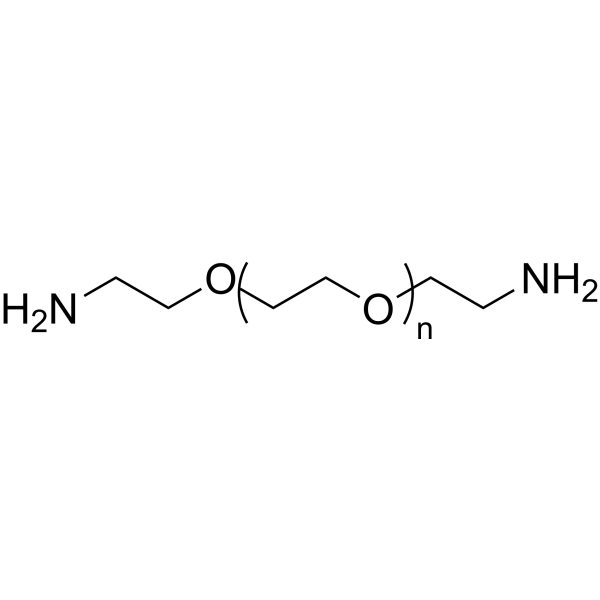
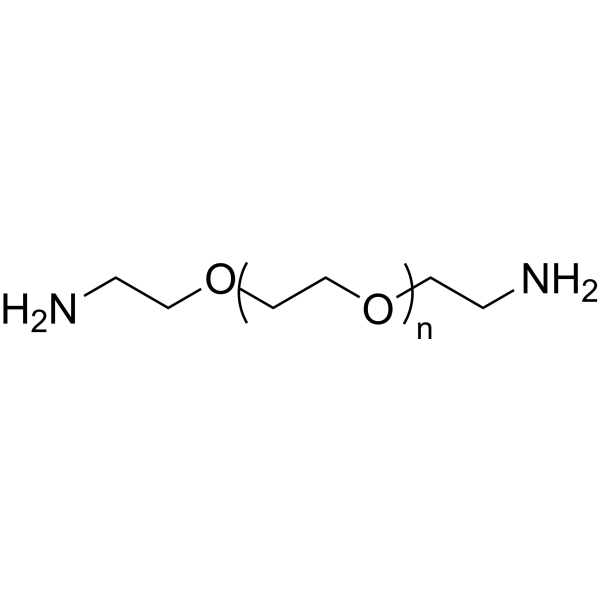
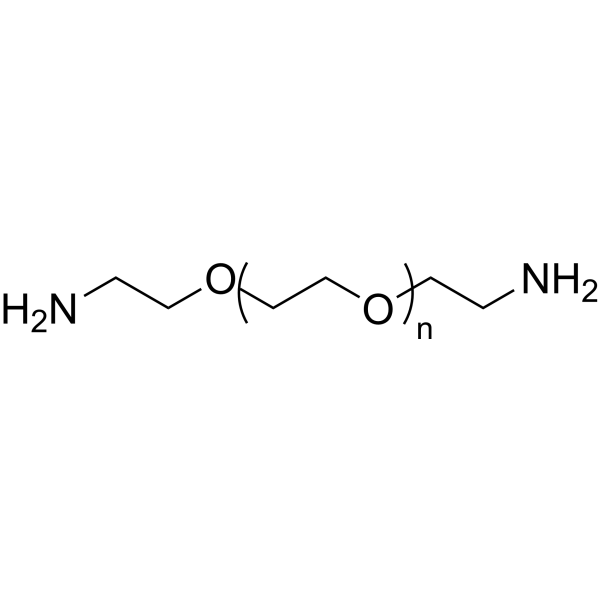
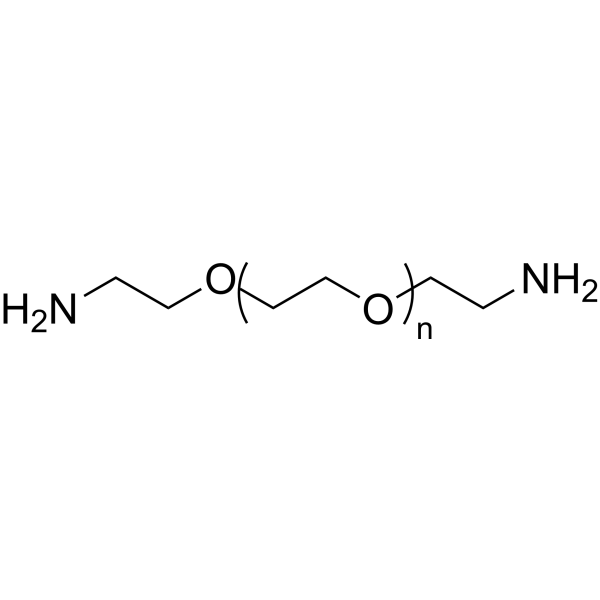
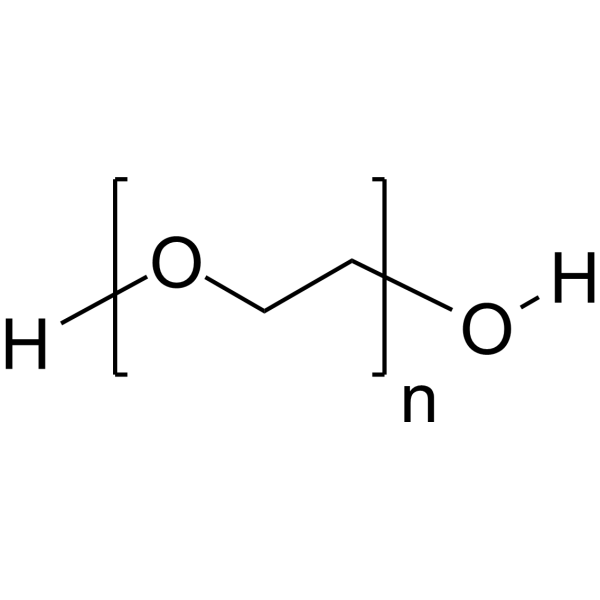
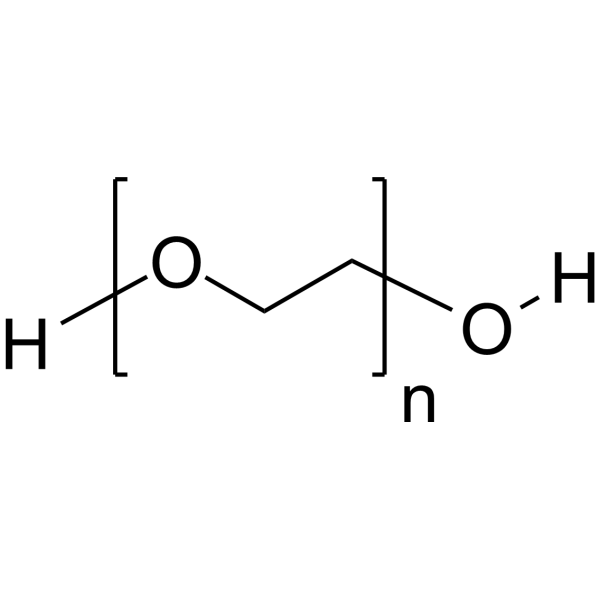
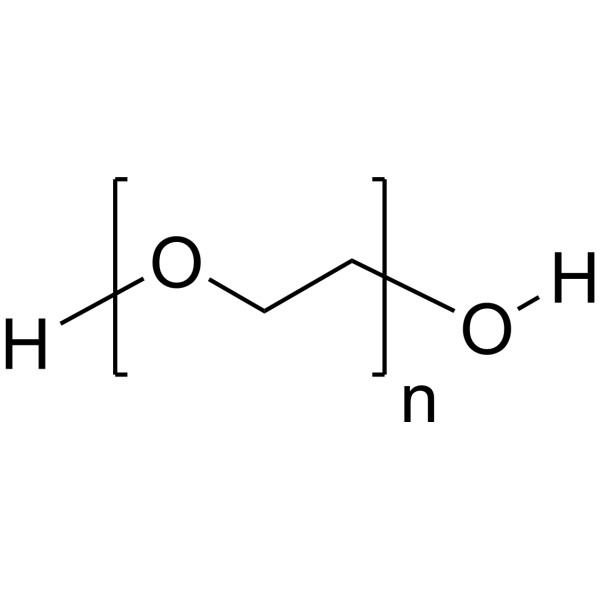
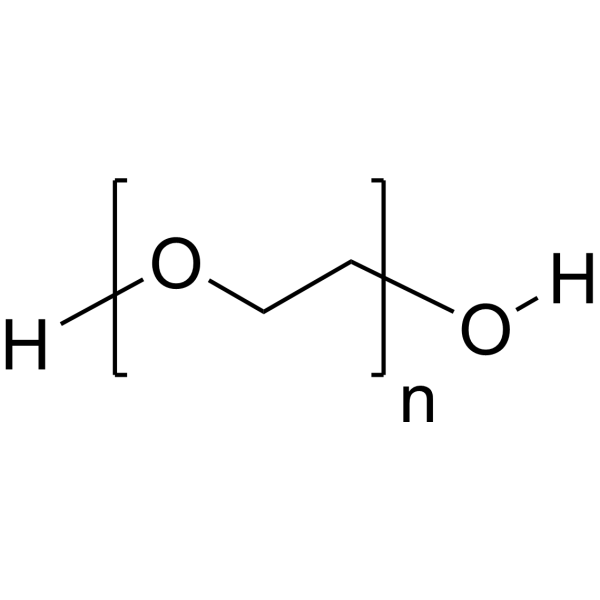
PEG4000-bis-amine (Poly(ethylene glycol)-bis-amine 4000) is a diamine-terminated polyethylene glycol that acts as a linker for conjugate synthesis. PEG4000-bis-amine facilitates the development of MUC1 aptamer-based near-infrared fluorescent probes, and also conjugates folic acid with the near-infrared dye ICG-Der-01 to form a tumor-targeting probe. PEG4000-bis-amine supports the synthesis of folic acid-PEG-DSPE conjugates for the preparation of folic acid-targeted biliposomes. PEG4000-bis-amine is widely used in studies related to breast cancer, non-small cell lung cancer, hepatocellular carcinoma, rheumatoid arthritis, and tumors with high folate receptor expression.
For research use only. We do not sell to patients.
- Purity : 99.96%
- CAS No.: 24991-53-5
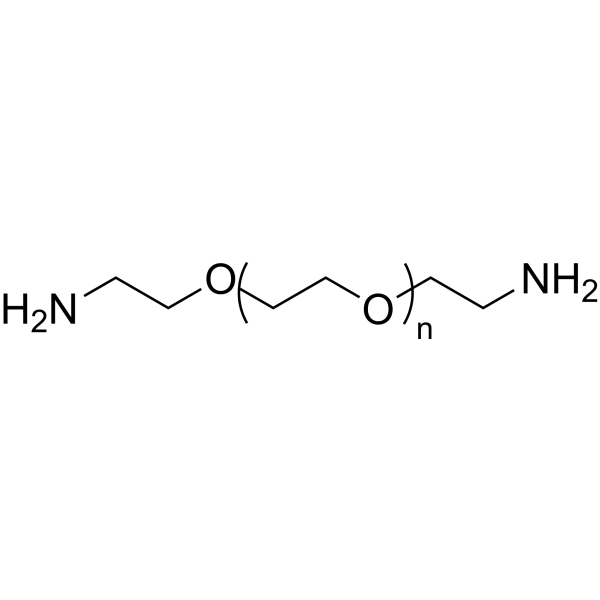
- Formula: (C2H4O)nC4H12N2O
- Molecular Weight:4000 (Average)
-
Storage:
4°C, protect from light
* In solvent : -80°C, 6 months; -20°C, 1 month (protect from light)

To place orders, for customer services and technical support, please contact: MedChemExpress USA
Tel: 609-228-6898 E-mail: [email protected] [email protected]


-
 Biological Activity
-
Chemical Information
-
Solvent & Solubility
- Purity & Documentation
- References
-
 Help & FAQs






Biological Activity
Description
In Vitro
PEG4000-bis-amine (32.0 mg; 24 h) successfully conjugates with MPA and a MUC1-targeting aptamer to form the near-infrared fluorescent probe APT-PEG-MPA, which retains the optical properties of MPA[2].
PEG4000-bis-amine (0.1 nmol/mL; 2 h) modification enhances the cell uptake of the MUC1 aptamer-based probe APT-PEG-RhB in MCF-7, A549, and HepG2 cells, with the greatest improvement seen in high MUC1-expressing MCF-7 cells[2].
MedChemExpress (MCE) has not independently confirmed the accuracy of these methods. They are for reference only.
In Vivo
PEG4000-bis-amine (i.v.)-modified MUC1 aptamer-NIR probe achieves a peak tumor-to-normal tissue ratio of 3.9 at 8 hours postinjection in low MUC1-expressing HepG2 tumor-bearing mice[2].
PEG4000-bis-amine (i.v.)-modified MUC1 aptamer-NIR probe achieves a peak tumor-to-normal tissue ratio of 13.8 at 8 hours postinjection in high MUC1-expressing MCF-7 tumors, which is significantly higher than the peak ratio of 8.6 observed in low MUC1-expressing HepG2 tumors in a dual tumor mouse model[2].
MedChemExpress (MCE) has not independently confirmed the accuracy of these methods. They are for reference only.


Chemical Information
-
CAS No. 24991-53-5
-
Appearance Solid
-
Molecular Weight 4000 (Average)
-
Formula (C2H4O)nC4H12N2O
-
Color White to off-white
-
SMILES
NCCOCCOCCN.[n]
-
Synonyms
Poly(ethylene glycol)-bis-amine 4000
-
Shipping
Room temperature in continental US; may vary elsewhere.
-
Storage
4°C, protect from light
* In solvent : -80°C, 6 months; -20°C, 1 month (protect from light)


Solvent & Solubility
In Vitro:
DMSO : 50 mg/mL (Need ultrasonic; Hygroscopic DMSO has a significant impact on the solubility of product, please use newly opened DMSO)
In Vivo:
Select the appropriate dissolution method based on your experimental animal and administration route.
- For the following dissolution methods, please ensure to first prepare a clear stock solution using an In Vitro approach and then sequentially add co-solvents:
- To ensure reliable experimental results, the clarified stock solution can be appropriately stored based on storage conditions. As for the working solution for In Vivo experiments, it is recommended to prepare freshly and use it on the same day.
- The percentages shown for the solvents indicate their volumetric ratio in the final prepared solution. If precipitation or phase separation occurs during preparation, heat and/or sonication can be used to aid dissolution.
Add each solvent one by one: 10% DMSO 40% PEG300 5% Tween-80 45% Saline
Solubility: ≥ 5 mg/mL; Clear solution
This protocol yields a clear solution of ≥ 5 mg/mL (saturation unknown).
Taking 1 mL working solution as an example, add 100 μL DMSO stock solution (50.0 mg/mL) to 400 μL PEG300, and mix evenly; then add 50 μL Tween-80 and mix evenly; then add 450 μL Saline to adjust the volume to 1 mL.
Preparation of Saline: Dissolve 0.9 g sodium chloride in ddH₂O and dilute to 100 mL to obtain a clear Saline solution.
Add each solvent one by one: 10% DMSO 90% (20% SBE-β-CD in Saline)
Solubility: ≥ 5 mg/mL; Clear solution
This protocol yields a clear solution of ≥ 5 mg/mL (saturation unknown).
Taking 1 mL working solution as an example, add 100 μL DMSO stock solution (50.0 mg/mL) to 900 μL 20% SBE-β-CD in Saline, and mix evenly.
Preparation of 20% SBE-β-CD in Saline (4°C, storage for one week): 2 g SBE-β-CD powder is dissolved in 10 mL Saline, completely dissolve until clear.
In Vivo Dissolution Calculator
Please enter the basic information of animal experiments:
-
-
-
-
Recommended: Prepare an additional quantity of animals to account for potential losses during experiments.
Please enter your animal formula composition:
-
%DMSO +
Recommended: Keep the proportion of DMSO in working solution below 2% if your animal is weak.
-
%+
-
+%Tween-80 + +
-
%Saline +
The co-solvents required include: DMSO, . All of co-solvents are available by MedChemExpress (MCE). , Tween 80. All of co-solvents are available by MedChemExpress (MCE).
Working solution concentration: 0.22 mg/mL
Method for preparing stock solution: mg drug dissolved in μL DMSO. Stock solution concentration: mg/mL. * In solvent : -80°C, 6 months; -20°C, 1 month (protect from light)
1. Take μL DMSO stock solution;
2. Add μL .
μL , mix evenly;
3. Then add μL Tween 80, mix evenly;
4. Then add μL
Please ensure that the stock solution in the first step is dissolved to a clear state, and add co-solvents in sequence. You can use ultrasonic heating (ultrasonic cleaner, recommended frequency 20-40 kHz), vortexing, etc. to assist dissolution.


Purity & Documentation
-
Data Sheet (269 KB)
-
SDS (641 KB)
- English - EN (641 KB)
- Français - FR (641 KB)
- Deutsch - DE (641 KB)
- Norwegian - NO (641 KB)
- Español - ES (641 KB)
- Swedish - SV (641 KB)
- Italian - IT (641 KB)
- Korean - KR (641 KB)
- Portuguese - PT (641 KB)
-
Handling Instructions (2659 KB)
References
[1]. Mao R, Pan H, Yang L, et al.. Bergeyella cardium variant induces a unique cytoplasmic vacuolization cell death floatptosis in macrophage. Cell discovery. 2025 Oct 21;11(1):83. [Content Brief]
[2]. Chen H, Zhao J, Zhang M, et al.. MUC1 aptamer-based near-infrared fluorescence probes for tumor imaging. Molecular imaging and biology. 2015 Feb;17(1):38-48. [Content Brief]
[3]. Verma A, Jain A, Tiwari A, et al.. Folate Conjugated Double Liposomes Bearing Prednisolone and Methotrexate for Targeting Rheumatoid Arthritis. Pharmaceutical research. 2019 Jun 19;36(8):123. [Content Brief]
[4]. Liu F, Deng D, Chen X, et al.. Folate-polyethylene glycol conjugated near-infrared fluorescence probe with high targeting affinity and sensitivity for in vivo early tumor diagnosis. Molecular imaging and biology. 2010 Dec;12(6):595-607. [Content Brief]

Calculators
Concentration (start) × Volume (start) = Concentration (final) × Volume (final)


PEG4000-bis-amine Related Classifications
HY-W115607 Related Classifications
 Powered by Bioz
Keywords
- PEG4000-bis-amine
- 24991-53-5
- Poly(ethylene glycol)-bis-amine 4000
- Biochemical Assay Reagents
- folate-PEG-DSPE conjugate
- breast cancer
- non-small lung carcinoma
- MUC1 aptamer
- rheumatoid arthritis
- folic acid
- near-infrared fluorescence probes
- folate-targeted double liposomes
- hepatocellular carcinoma
- folate receptor-overexpressed tumors
- Inhibitor
- inhibitor
- inhibit