1623 Results for "

Ubiquitin Ligase

" in MedChemExpress (MCE) Product Catalog:
Products (1623)

1623 Results for "Ubiquitin Ligase" in MCE Product Catalog:

27
27 Publications Verification
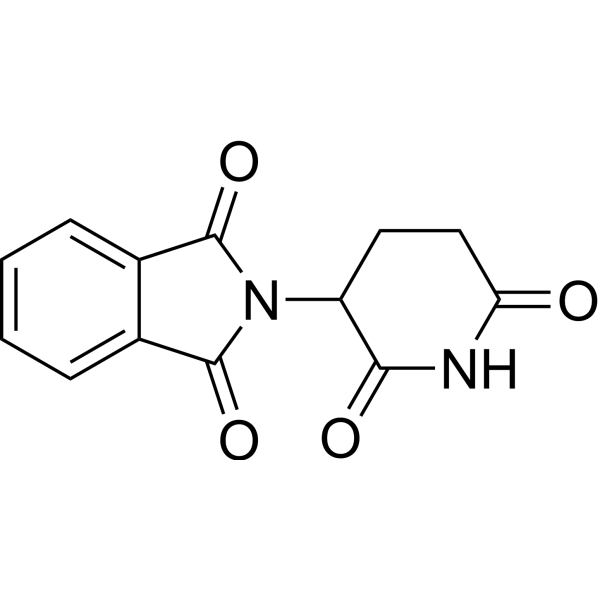
Cat. No.: HY-14658
CAS No.: 50-35-1
Purity:  99.98%
Thalidomide inhibits cereblon (CRBN), a part of the cullin-4 E3 ubiquitin ligase complex CUL4-RBX1-DDB1, with a Kd of ∼250 nM, and has immunomodulatory, anti-inflammatory and anti-angiogenic cancer properties. Thalidomide can work as molecular glue to potentiate substrate.
loading...
    loading...
19
19 Cited Publications
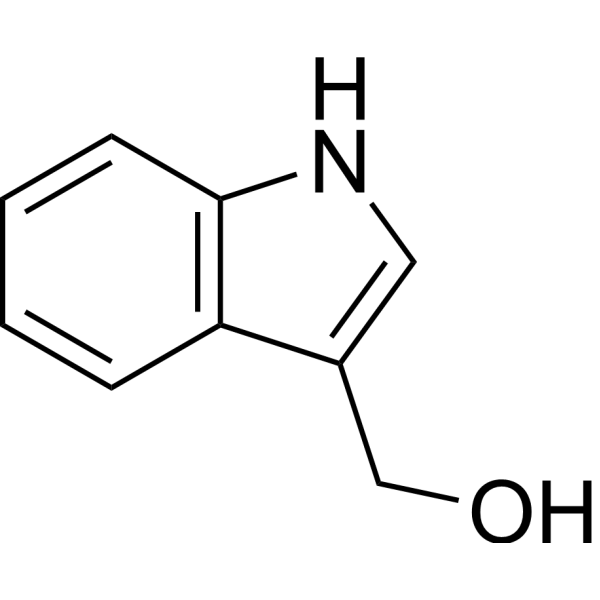
Cat. No.: HY-N0170
CAS No.: 700-06-1
Synonyms: Indole-3-methanol
Indole-3-carbinol (I3C) inhibits NF-κB activity and also is an Aryl hydrocarbon receptor (AhR) agonist, and an inhibitor of WWP1 (WW domain-containing ubiquitin E3 ligase 1).
loading...
    loading...
16
16 Cited Publications
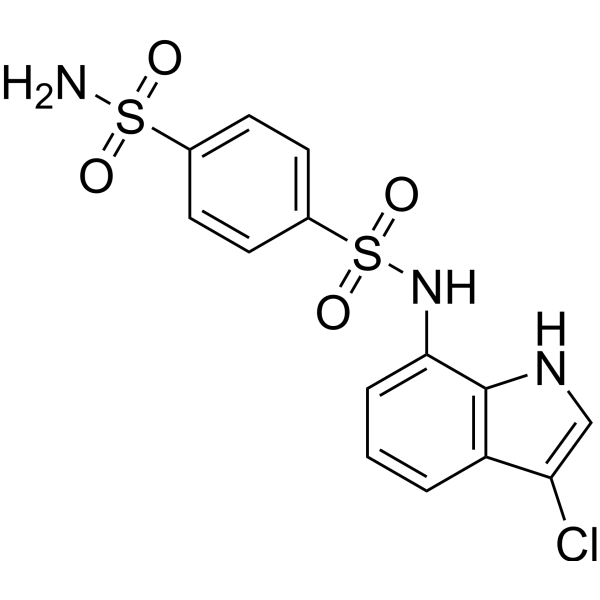
Cat. No.: HY-13650
CAS No.: 165668-41-7
Purity:  99.80%
Synonyms: E 7070
Research Areas:  

Cancer

Indisulam (E 7070) is a carbonic anhydrase inhibitor and RBM39 molecular glue degrader, with Ki values of 31, 15, and 24 nM against human carbonic anhydrase I, II, and IX, respectively, and a Ki value of 65 nM against bovine carbonic anhydrase IV. Indisulam promotes the recruitment of RBM39 to the CUL4-DCAF15 E3 ubiquitin ligase complex, triggering polyubiquitination and proteasomal degradation of RBM39. Indisulam induces aberrant pre-mRNA splicing, G1 cell cycle arrest, and cell death in cancer cells. As an anticancer agent, Indisulam drives tumor regression and growth inhibition in xenograft models. Indisulam can be used in research related to solid tumors, hematologic and lymphoid malignancies, colorectal cancer, and non-small cell lung cancer .
loading...
    loading...
10
10 Cited Publications
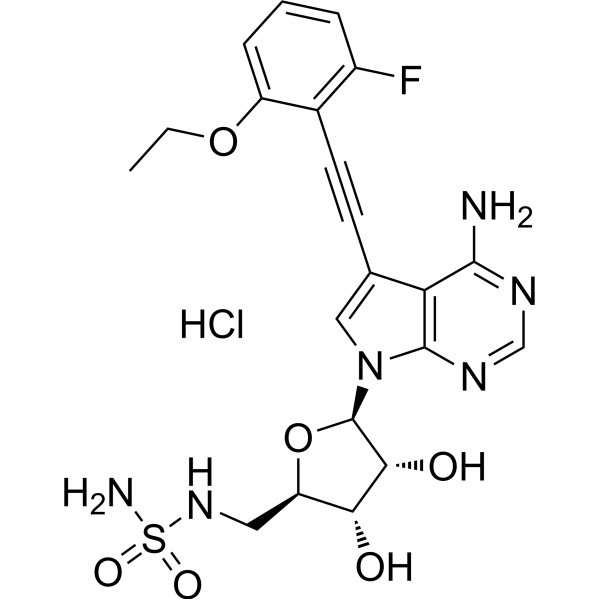
Cat. No.: HY-128586A
CAS No.: 1848959-11-4
Purity:  98.91%
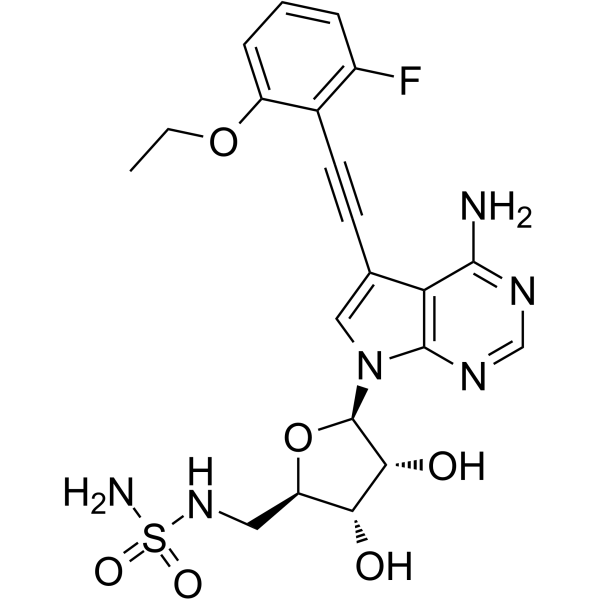
TAS4464 hydrochloride is a long-acting, highly selective covalent inhibitor targeting NEDD8-activating enzyme (NAE) (IC50=0.955 nM), and also inhibits CAII with an IC50 of 0.73 μM, which is less potent than MLN4924 (HY-70062). The IC50 values of TAS4464 hydrochloride against other E1 enzymes UAE and SAE are 449 nM and 1280 nM, respectively. TAS4464 hydrochloride targets NEDD8 in an ATP-dependent manner to inhibit NAE, blocks the neddylation pathway, causes accumulation of CRL ubiquitin ligase substrates (such as CDT1, p27, phosphorylated IκBα), and further induces tumor cell apoptosis. TAS4464 hydrochloride exhibits antiproliferative and cytotoxic effects, and has broad-spectrum antitumor activity against various hematologic and solid tumor cell lines as well as patient-derived tumor cells. TAS4464 hydrochloride has a wide therapeutic window, without obvious toxicity. TAS4464 hydrochloride can be used in the research of hematologic malignancies (leukemia, lymphoma, multiple myeloma, etc.) and solid tumors (small cell lung cancer, colorectal cancer, sarcoma, endometrial cancer, ovarian cancer, etc.) .
loading...
    loading...
10
10 Cited Publications
Cat. No.: HY-128586
CAS No.: 1848959-10-3
Purity:  99.52%
TAS4464 is a long-acting, highly selective covalent inhibitor targeting NEDD8-activating enzyme (NAE) (IC50=0.955 nM), and also inhibits CAII with an IC50 of 0.73 μM, which is less potent than MLN4924 (HY-70062). The IC50 values of TAS4464 against other E1 enzymes UAE and SAE are 449 nM and 1280 nM, respectively. TAS4464 targets NEDD8 in an ATP-dependent manner to inhibit NAE, blocks the neddylation pathway, causes accumulation of CRL ubiquitin ligase substrates (such as CDT1, p27, phosphorylated IκBα), and further induces tumor cell apoptosis. TAS4464 exhibits antiproliferative and cytotoxic effects, and has broad-spectrum antitumor activity against various hematologic and solid tumor cell lines as well as patient-derived tumor cells. TAS4464 has a wide selcetive window, without obvious toxicity. TAS4464 can be used in the research of hematologic malignancies (leukemia, lymphoma, multiple myeloma, etc.) and solid tumors (small cell lung cancer, colorectal cancer, sarcoma, endometrial cancer, ovarian cancer, etc.) .
loading...
    loading...
9
9 Cited Publications
Cat. No.: HY-129602
CAS No.: 2429877-44-9
Purity:  99.73%
Target:  

PROTACs STAT Apoptosis

Research Areas:  

Cancer

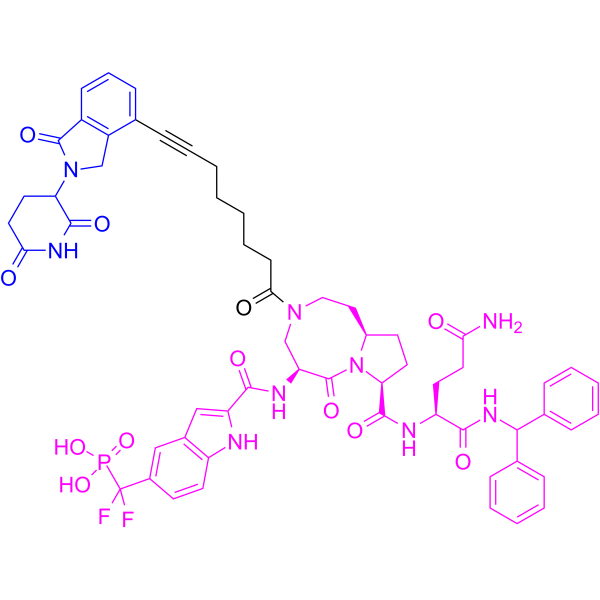
SD-36 is a potent and efficacious STAT3 PROTAC degrader (Kd=~50 nM), and demonstrates high selectivity over other STAT members. SD-36 also effectively degrades mutated STAT3 proteins in cells and suppresses the transcriptional activity of STAT3 (IC50=10 nM). SD-36 exerts robust anti-tumor activity, and achieves complete and long-lasting tumor regression in mouse tumor models. SD-36 is composed of the STAT3 inhibitor SI-109, a linker, and an analog of Cereblon ligand Lenalidomide for E3 ubiquitin ligase . SD-36 is a click chemistry reagent, it contains an Alkyne group and can undergo copper-catalyzed azide-alkyne cycloaddition (CuAAc) with molecules containing Azide groups.
loading...
    loading...
7
7 Cited Publications
Cat. No.: HY-130800
CAS No.: 1860875-51-9
Purity:  99.76%
Synonyms: CC-90009
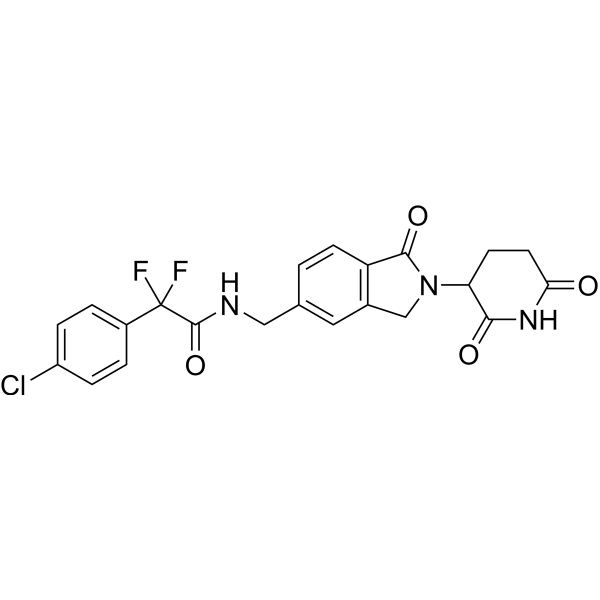
Eragidomide (CC-90009) is a GSPT1 Molecular Glue degrader. Eragidomide exhibits antiproliferative and pro-apoptotic (apoptosis) activities against acute myeloid leukemia cells. Eragidomide recruits the CRL4CRBN E3 ubiquitin ligase complex to selectively target GSPT1 for ubiquitination and proteasomal degradation. Eragidomide reduces leukemia cell engraftment and eliminates leukemia stem cells. Eragidomide promotes the activation of the GCN1/GCN2/ATF4 pathway and the integrated stress response pathway, inhibits global protein translation, promotes preferential translation of ATF4, and induces the accumulation of ATF4, CHOP and ATF3. The response to Eragidomide is regulated by the ILF2/ILF3 heterodimer complex, the mTOR signaling pathway and the integrated stress response. Eragidomide can be used in research related to acute myeloid leukemia and relapsed/refractory acute myeloid leukemia .
loading...
    loading...
7
7 Cited Publications
Cat. No.: HY-135844
CAS No.: 1456891-34-1
Target:  

E1/E2/E3 Enzyme

Research Areas:  

Inflammation/Immunology

LS-102 is a selective E3 ubiquitin ligase synoviolin (Syvn1) inhibitor. LS-102 inhibits the autoubiquitination of synoviolin with an IC50 of 35 μM. LS-102 has the potential for rheumatoid arthritis treatment .
loading...
    loading...
6
6 Cited Publications
Cat. No.: HY-145514D
CAS No.: 2451573-86-5
Target:  

PROTACs FKBP

Research Areas:  

Cancer

dTAGV-1 is a selective FKBP12 F36V PORTAC degrader. dTAGV-1 induces rapid degradation of FKBP12 F36V-tagged oncogenic fusion proteins, triggering collapse of downstream cellular signaling pathways, reduced proliferative capacity of cancer cells, and decreased levels of target proteins. dTAGV-1 is applicable to functional validation studies of cancer and undegradable oncoproteins .
loading...
    loading...
6
6 Cited Publications
Cat. No.: HY-145514
CAS No.: 2624313-15-9
Purity:  99.97%
Target:  

PROTACs FKBP

Research Areas:  

Cancer

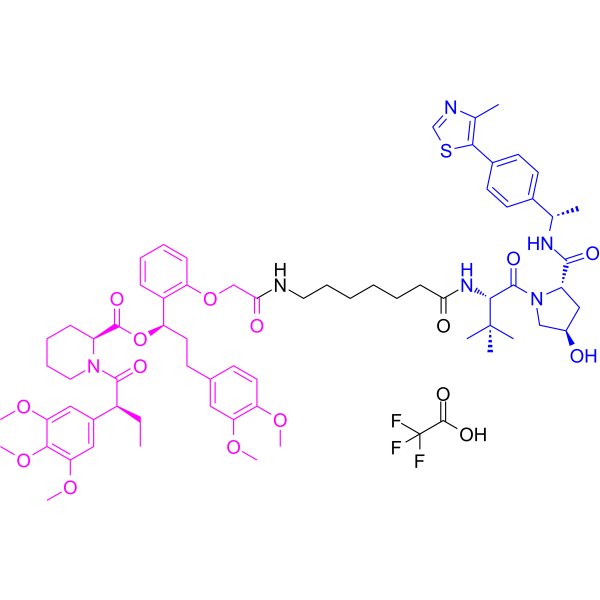
dTAGV-1 TFA is a selective FKBP12 F36V PORTAC degrader. dTAGV-1 TFA induces rapid degradation of FKBP12 F36V-tagged oncogenic fusion proteins, triggering collapse of downstream cellular signaling pathways, reduced proliferative capacity of cancer cells, and decreased levels of target proteins. dTAGV-1 TFA is applicable to functional validation studies of cancer and undegradable oncoproteins .
loading...
    loading...
6
6 Cited Publications
Cat. No.: HY-145514C
CAS No.: 2624313-16-0
Purity:  98.83%
Target:  

PROTACs FKBP

Research Areas:  

Cancer

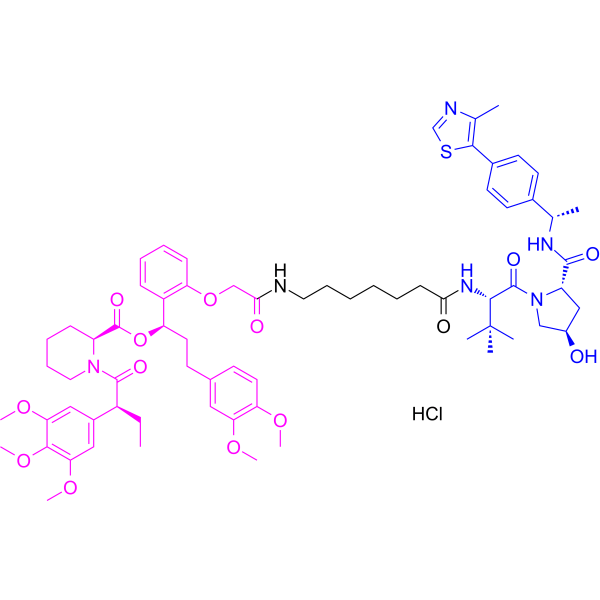
dTAGV-1 hydrochloride is a selective FKBP12 F36V PORTAC degrader. dTAGV-1 hydrochloride induces rapid degradation of FKBP12 F36V-tagged oncogenic fusion proteins, triggering collapse of downstream cellular signaling pathways, reduced proliferative capacity of cancer cells, and decreased levels of target proteins. dTAGV-1 hydrochloride is applicable to functional validation studies of cancer and undegradable oncoproteins .
loading...
    loading...
5
5 Cited Publications
Cat. No.: HY-123844
CAS No.: 1883863-52-2
Purity:  99.94%
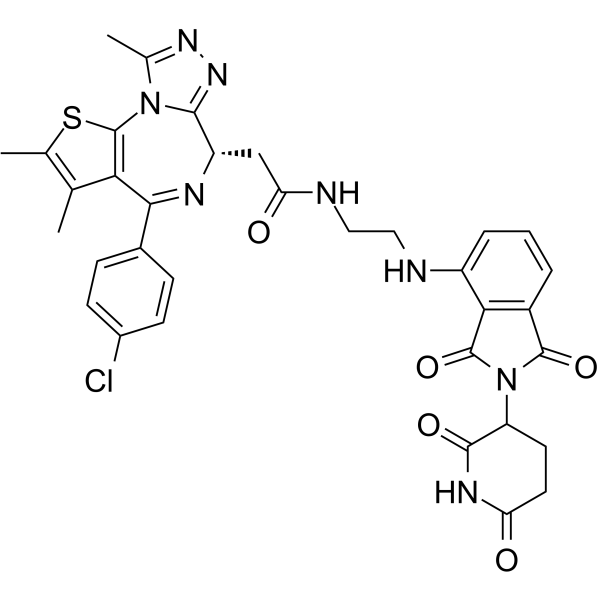
dBET57 is a potent and selective BRD4BD1 PROTAC degrader with a DC50 of approximately 500 nM. dBET57 forms a ternary complex with CRL4 CRBN and BRD4BD1, induces the ubiquitination and degradation of BRD4, and indirectly inhibits the transcription of MYCN, c-Myc and PD-L1, ultimately leading to cell cycle arrest and apoptosis. dBET57 can be used in related research on neuroblastoma, non-small cell lung cancer and colorectal cancer .
loading...
    loading...
5
5 Cited Publications
Cat. No.: HY-14571
CAS No.: 289483-69-8
Purity:  99.06%
Synonyms: ER68203-00
Research Areas:  

Infection Metabolic Disease Cancer

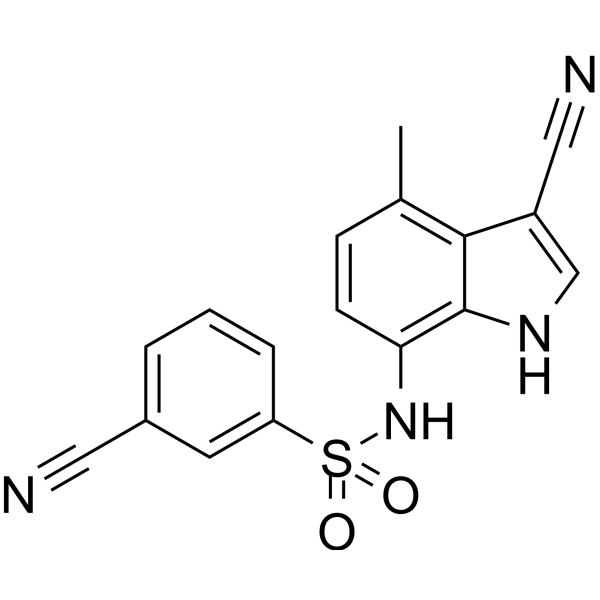
E7820 (ER68203-00), an orally active aromatic sulfonamide derivative, is a molecular glue that induces the targeted degradation of splicing factor RBM39 by recruiting the E3 ubiquitin ligase CUL4-RBX1-DDB1-DCAF15 (CRL4 DCAF15). E7820 is an angiogenesis inhibitor suppressing an expression of integrin alpha2 subunit on endothelium. E7820 inhibits rat aorta angiogenesis with an IC50 of 0.11 μg/ml. E7820 modulates α-1, α-2, α-3, and α-5 integrin mRNA expression. E7820 can be used for the study of acute myeloid leukemia (AML) .
loading...
    loading...
4
4 Cited Publications
Cat. No.: HY-123921
CAS No.: 2230821-27-7
Purity:  99.98%
Target:  

PROTACs EGFR

Research Areas:  

Cancer

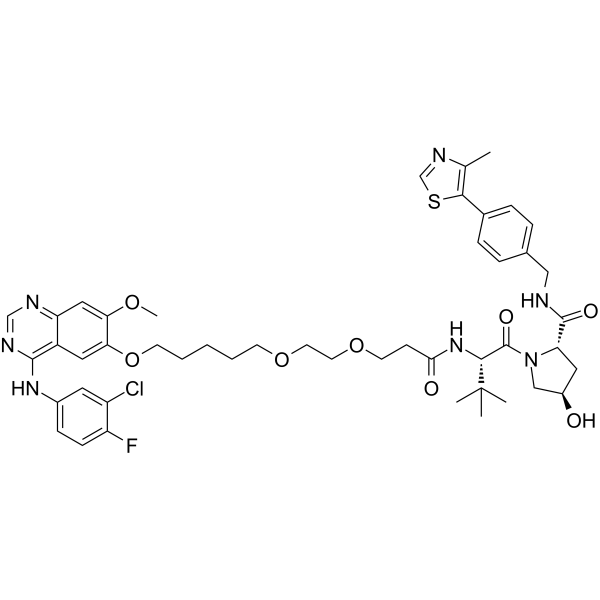
Gefitinib-based PROTAC 3 is a PROTAC degrader targeting EGFR, with a DC50 of 11.7 nM against exon 19 deletion mutants and a DC50 of 22.3 nM against EGFR L858R. Gefitinib-based PROTAC 3 selectively induces the ubiquitin-proteasome degradation of exon 19 deletion-mutant and L858R-mutant EGFR by recruiting the VHL E3 ligase. Gefitinib-based PROTAC 3 can be used for the research of EGFR mutation-positive cancers .
loading...
    loading...
4
4 Cited Publications
Cat. No.: HY-101519
CAS No.: 2093388-62-4
Purity:  99.59%
Synonyms: ZBC 260
BETd-260 (ZBC 260) is a BET PROTAC degrader. BETd-260 recruits BRD2, BRD3, and BRD4 to the CUL4-RBX1-DDB1-CRBN E3 ubiquitin ligase complex, driving cereblon-, proteasome-, and NEDD8-activating enzyme-dependent ubiquitination and degradation, with a DC50 of approximately 30-100 pM in RS4;11 cells. BETd-260 induces cancer cell apoptosis via endogenous signaling pathways, regulates the expression of the Bcl-2 family, inhibits the oncogene c-Myc, and reduces cell viability. BETd-260 suppresses tumor growth in mouse xenograft models with good biosafety. BETd-260 can be used in research related to acute leukemia, hepatocellular carcinoma, osteosarcoma, and triple-negative breast cancer .
loading...
    loading...
4
4 Cited Publications
Cat. No.: HY-129917
CAS No.: 2384184-44-3
Purity:  99.17%
Research Areas:  

Cancer

KB02-JQ1 is a highly selective and PROTAC-based BRD4 degrader (molecular glue), but does not degrade BRD2 or BRD3. KB02-JQ1 promotes BRD4 degradation by covalently modifying DCAF16 (E3 ligase) and can improve the durability of protein degradation in biological systems. JQ1 binds ubiquitin E3 ligase ligand KB02 via a linker to form KB02-JQ1 .
loading...
    loading...
4
4 Cited Publications
Cat. No.: HY-120929
CAS No.: 1875036-74-0
Purity:  98.28%
Target:  

E1/E2/E3 Enzyme c-Myc

Research Areas:  

Inflammation/Immunology Cancer

BI8622 is a specific inhibitor of the ubiquitin ligase HUWE1 with an IC50 of 3.1 μM. BI8622 can decrease the protein expression levels of c-myc and glycolytic markers as well as immune modulatory markers after HUWE1 inhibition in triple-negative breast cancer (TNBC) cell lines. BI8622 significantly protects against cisplatin (HY-17394)-induced acute kidney injury (AKI). BI8622 significantly reduces the growth of multiple myeloma (MM) cell lines and induces cell cycle arrest. BI8622 can prevent HUWE1-dependent TTBK2 ubiquitination. BI8622 can be studied in research for various diseases including medulloblastoma, acute kidney injury, breast cancer and MM .
loading...
    loading...
3
3 Cited Publications
Cat. No.: HY-122826
CAS No.: 2243076-67-5
Purity:  98.90%
ZXH-3-26 is a CRBN-recruiting BRD4 PROTAC degrader with a DC50/5h of approximately 5 nM. ZXH-3-26 drives the ubiquitination and degradation of BRD4 by recruiting BRD4BD1 to the CRL4 CRBN E3 ubiquitin ligase complex, thereby inhibiting the dynamic distribution of super-enhancers. ZXH-3-26 reverses TNF-α-induced impairment of the immunosuppressive function of mesenchymal stem cells, and affects RNA synthesis and the transcriptional elongation process of Pol II. ZXH-3-26 can be used in studies related to inflammatory arthritis, malignant tumors, and HIV latency .
loading...
    loading...
3
3 Cited Publications
Cat. No.: HY-120204
CAS No.: 1875036-75-1
Purity:  99.20%
Target:  

E1/E2/E3 Enzyme

Research Areas:  

Cancer

BI8626 is a specific inhibitor of the ubiquitin ligase HUWE1 with an IC50 of 0.9 μM .
loading...
    loading...
3
3 Cited Publications
Cat. No.: HY-43961
CAS No.: 1225383-33-4
Target:  

Ligands for E3 Ligase

Research Areas:  

Cancer

E3 ligase Ligand 8 is a ligand for E3 ubiquitin ligase. E3 ligase Ligand 8 can be connected to the ligand for protein by a linker to form PROTACs. PROTACs are inducers of ubiquitination-mediated degradation of cancer-promoting proteins .
loading...
    loading...

