



LS-102
Based on 7 publication(s) in Google Scholar
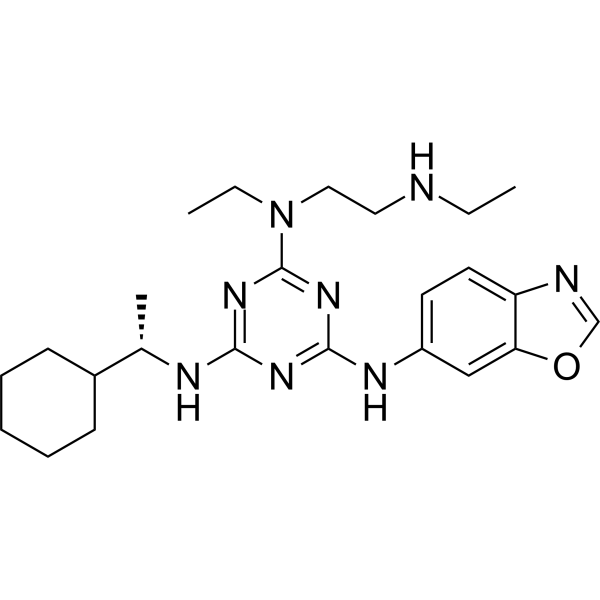
LS-102 is a selective E3 ubiquitin ligase synoviolin (Syvn1) inhibitor. LS-102 inhibits the autoubiquitination of synoviolin with an IC50 of 35 μM. LS-102 has the potential for rheumatoid arthritis treatment.
For research use only. We do not sell to patients.
- Purity : 97.89%
- CAS No.: 1456891-34-1
- Formula: C24H36N8O
- Molecular Weight:452.60
-
Storage:
-20°C, protect from light, stored under nitrogen
* In solvent : -80°C, 6 months; -20°C, 1 month (protect from light, stored under nitrogen)

To place orders, for customer services and technical support, please contact: MedChemExpress USA
Tel: 609-228-6898 E-mail: [email protected] [email protected]


-
 Biological Activity
-
Chemical Information
-
Solvent & Solubility
- Protocols
- Purity & Documentation
- References
-
 Help & FAQs


-
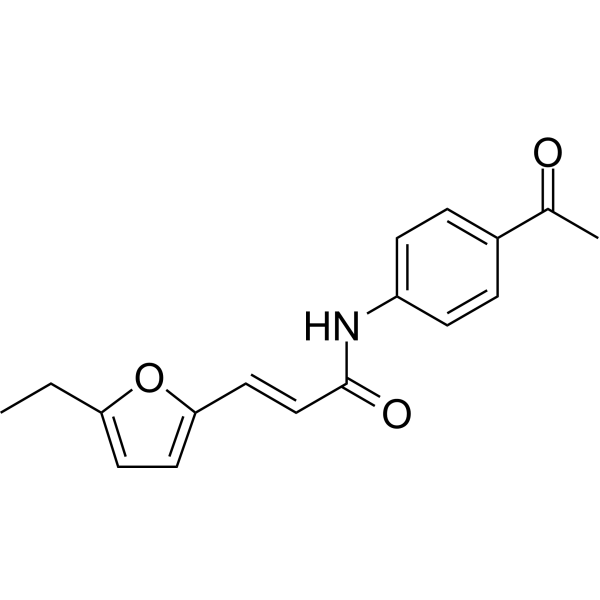
HY-110204
HeclinE1/E2/E3 Enzyme Inhibitor -
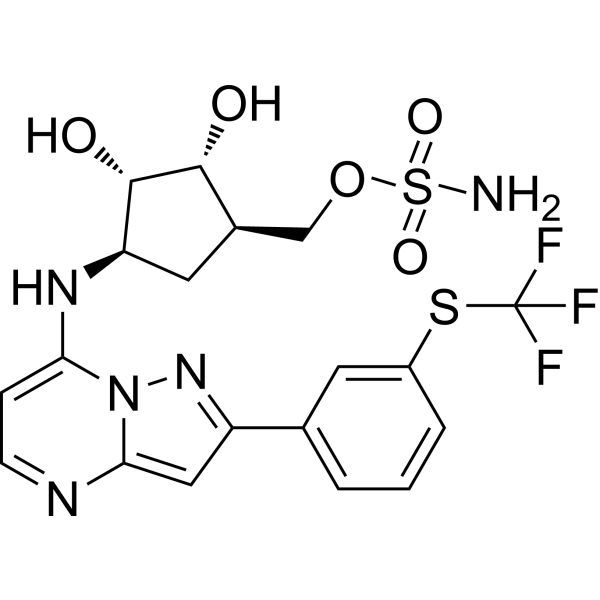
HY-100487
TAK-243UAE/E1 Inhibitor -
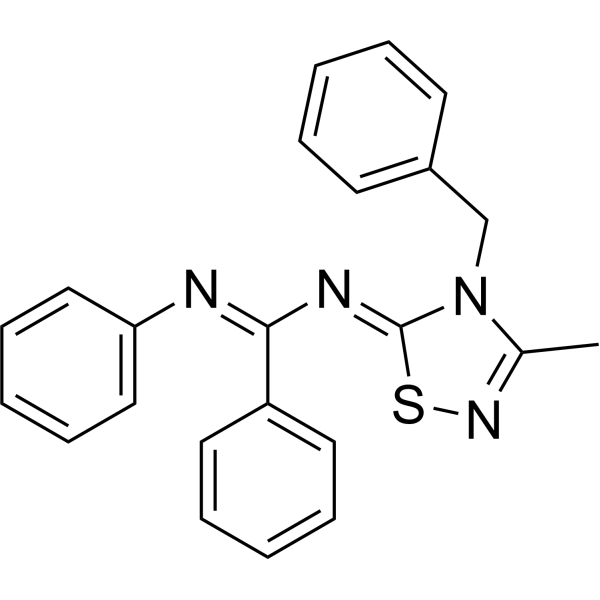
HY-123967
RNF5 inhibitor inh-02E3 ubiquitin ligase RNF5 Inhibitor -
HY-18739
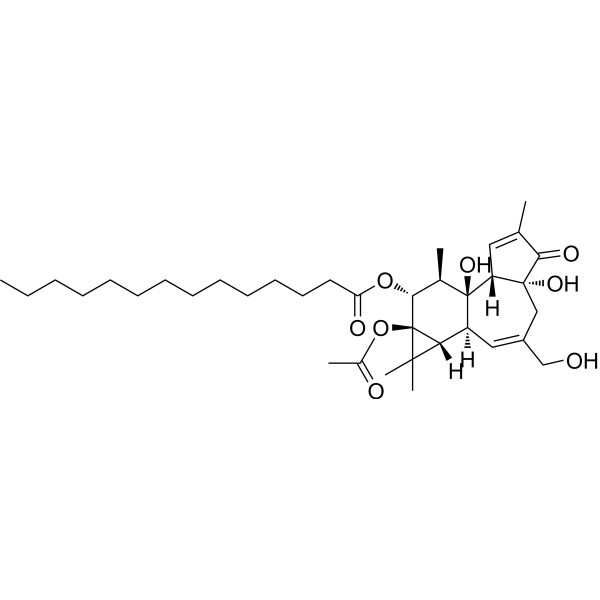
Phorbol 12-myristate 13-acetatePKC Activator -
HY-16592
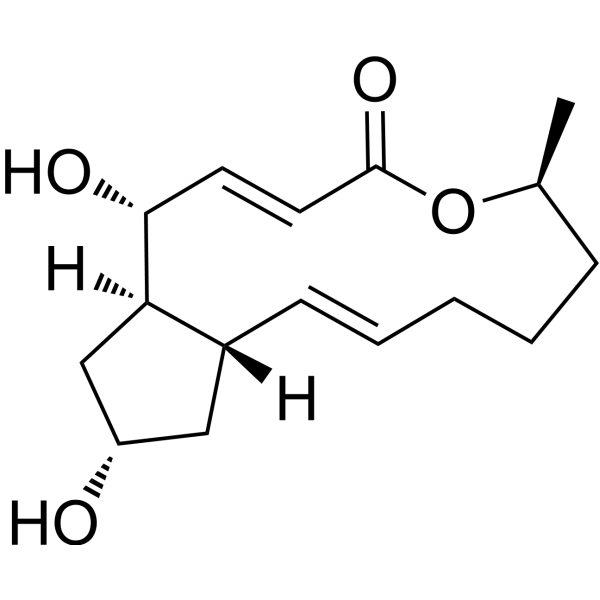
Brefeldin AProtein Transport Inhibitor -
HY-13259
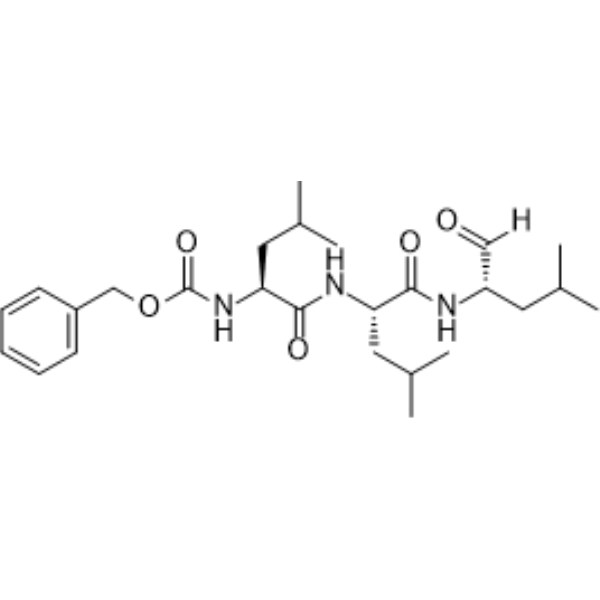
MG-132Proteasome Inhibitor -
HY-19696
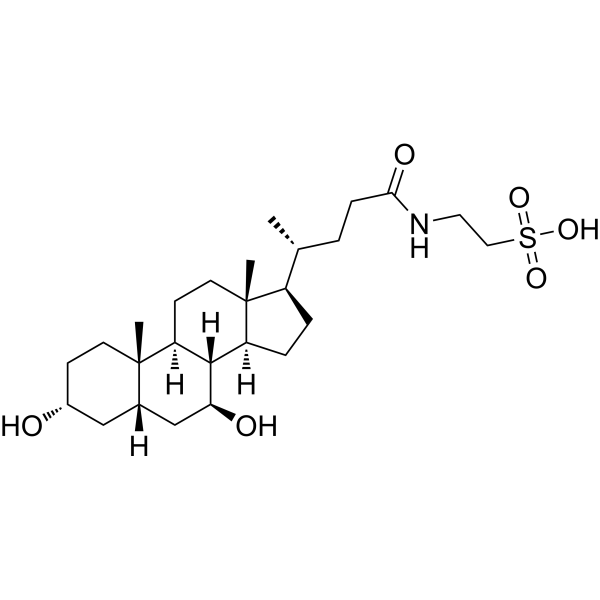
TauroursodeoxycholateEndoplasmic Reticulum Stress Inhibitor -
HY-D0079
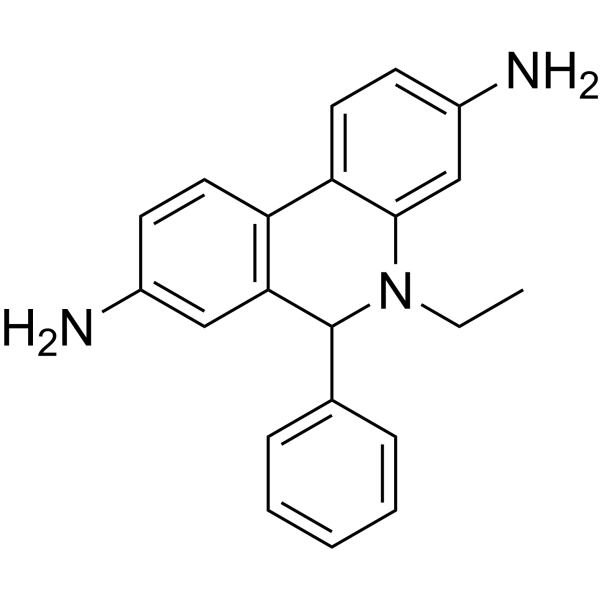
DihydroethidiumFluorescent -
HY-13324
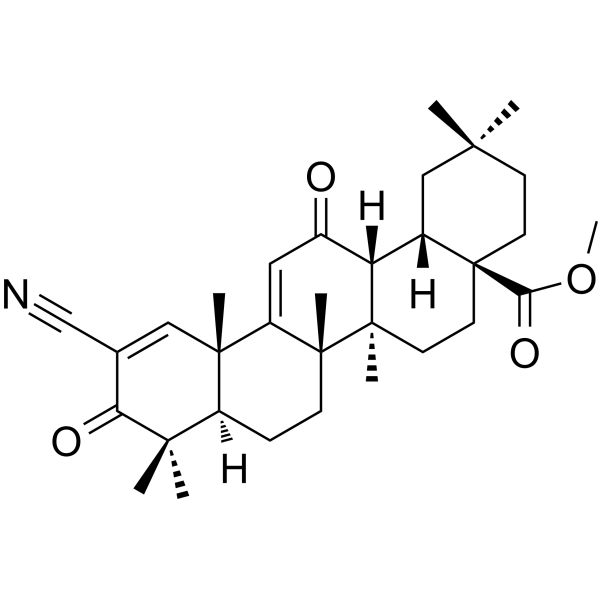
Bardoxolone methylNrf2 Activator -
HY-135233
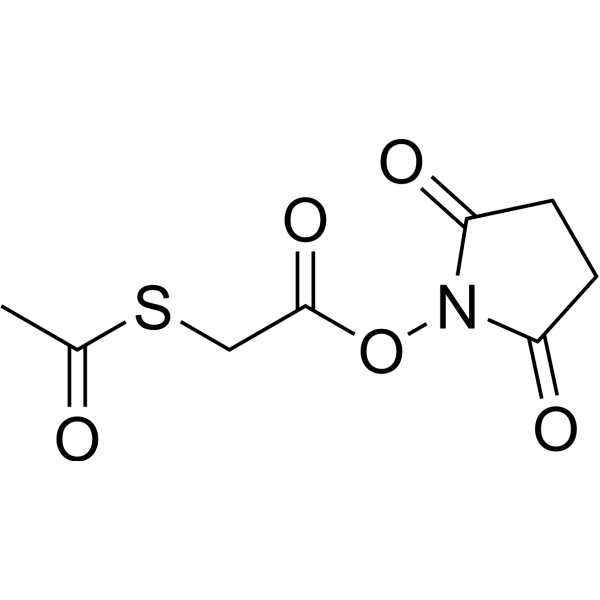
N-Succinimidyl-S-acetylthioacetateProtein Modification Agent -
HY-49116
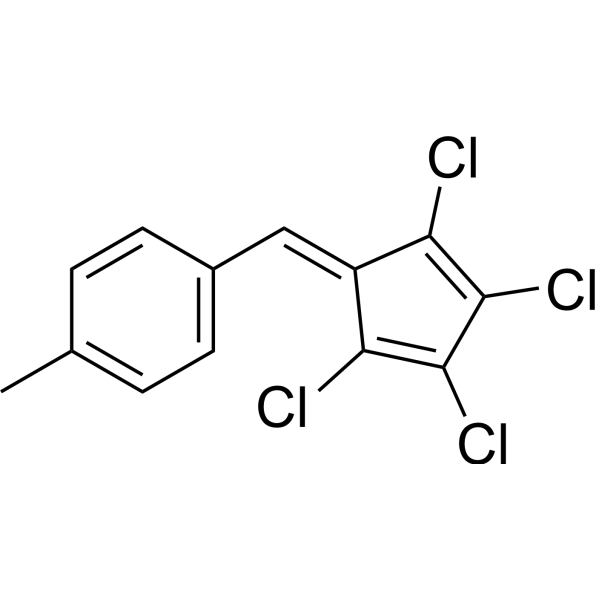
CP26ER Stress Inhibitor -
HY-111789
SubasumstatSUMOylation Inhibitor
Publications Citing Use of MedChemExpress (MCE) LS-102
More Customer Validation & Images

-
WB
-
ELISA
-
RT-PCR
-
Histological Imaging/Staining
-
In Vivo Efficacy Study


Biological Activity
Description
In Vitro
LS-102 inhibits proliferation of RSCs with an IC50 of 5.4 μM[1].
LS-102 suppresses proliferation of rheumatoid synovial cells (RSCs) in a Syvn1-dependent manner. LS-102 suppresses polyubiquitination of target proteins of Syvn1, including nuclear factor erythroid 2-related factor 2 (NRF2), V247M α-sarcoglycan mutant, and PGC-1β. LS-102 inhibits E3 ligase activity of Synoviolin (Syvn1)[2].
MedChemExpress (MCE) has not independently confirmed the accuracy of these methods. They are for reference only.
-
Cell Line:Rheumatoid synovial cells (RSCs)
-
Concentration:20, 40, 60 μM
-
Incubation Time:12 hours
-
Result:Inhibited proliferation of RSCs with an IC50 of 5.4 µM.
In Vivo
MedChemExpress (MCE) has not independently confirmed the accuracy of these methods. They are for reference only.
-
Animal Model:7-week-old DBA/1 male mice (CIA model)[1]
-
Dosage:1.3, 4.0 mg/kg
-
Administration:I.p.; daily for 4 weeks
-
Result:Reduced the clinical severity scores.


Chemical Information
-
CAS No. 1456891-34-1
-
Appearance Solid
-
Molecular Weight 452.60
-
Formula C24H36N8O
-
Color Off-white to pale pink
-
SMILES
CCNCCN(CC)C1=NC(NC2=CC=C3N=COC3=C2)=NC(N[C@H](C4CCCCC4)C)=N1
-
Shipping
Room temperature in continental US; may vary elsewhere.
-
Storage
-20°C, protect from light, stored under nitrogen
* In solvent : -80°C, 6 months; -20°C, 1 month (protect from light, stored under nitrogen)


Publications (7)
-
Journal Impact Factor
-
Most Recent
-
Nat Commun
Ubiquitination by HRD1 is essential for TLR3 trafficking and its innate immune signaling. [Abstract]2025 Dec 10. PMID: 41372171
LS-102 purchased from MedChemExpress. Usage Cited in: Nat Commun. 2025 Dec 10. [Abstract]
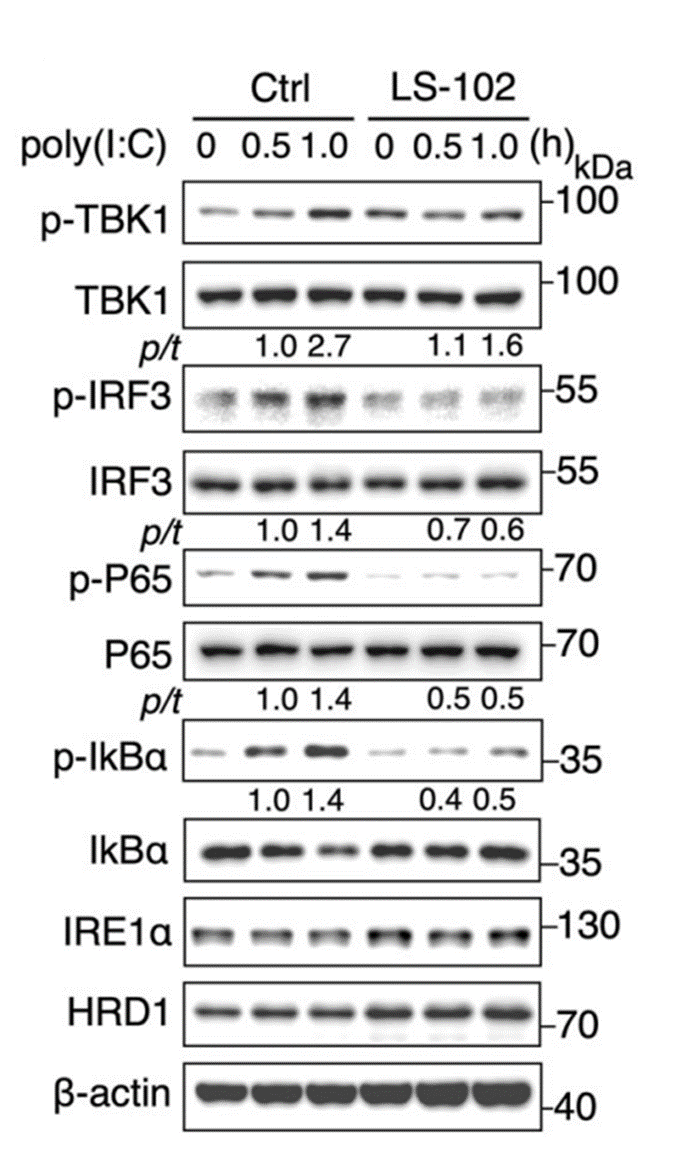
Immunoblot analysis of indicated proteins in primary macrophages treated with vehicle or LS-102 (5 μM) for 24 h, and subsequently treated with 50 μg/ml poly(I:C) for the indicated times, representative of three independent repeats.
LS-102 purchased from MedChemExpress. Usage Cited in: Nat Commun. 2025 Dec 10. [Abstract]
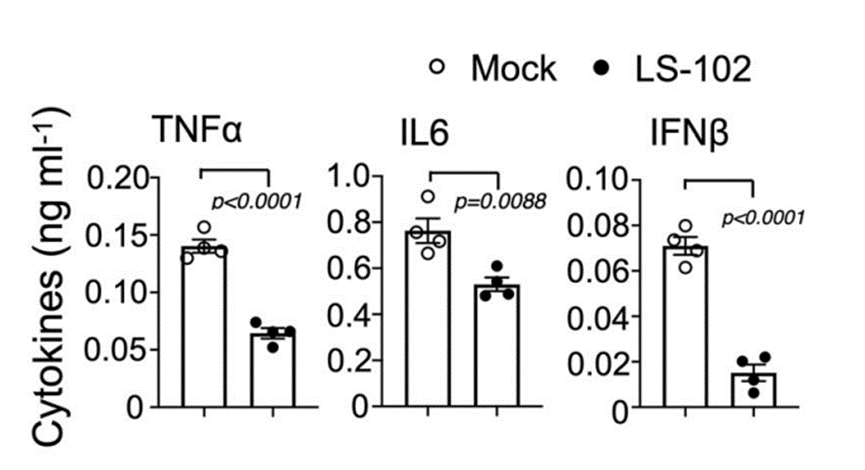
ELISA analysis of TNFα, IL6 and IFNβ in the culture supernatants of vehicle- or LS-102 (5 μM for 24 h)-treated primary macrophages, followed by poly(I:C) (50 μg/ml) treatment for 6 h.
LS-102 purchased from MedChemExpress. Usage Cited in: Nat Commun. 2025 Dec 10. [Abstract]
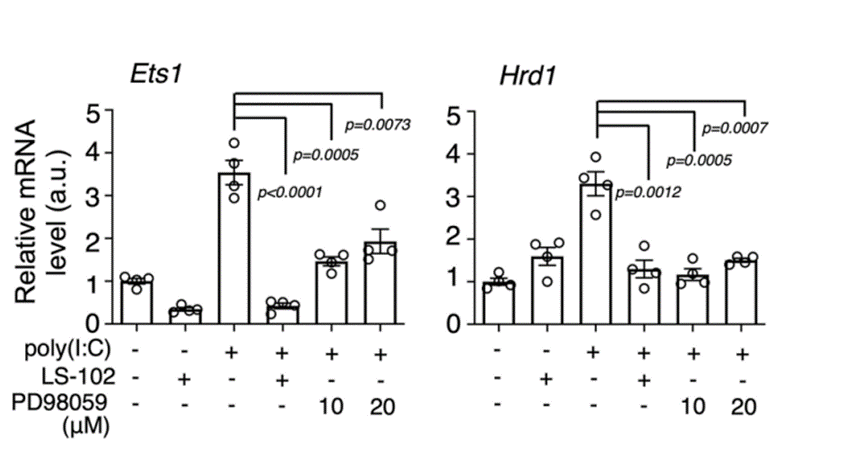
qPCR analysis of Ets1 and Hrd1 mRNA levels in macrophage cells pre-treated with LS-102 (5 μM) or ERK1/2 inhibitor PD98059 for 24 h, and then with poly(I:C) (50 μg/ml) for 3 h.
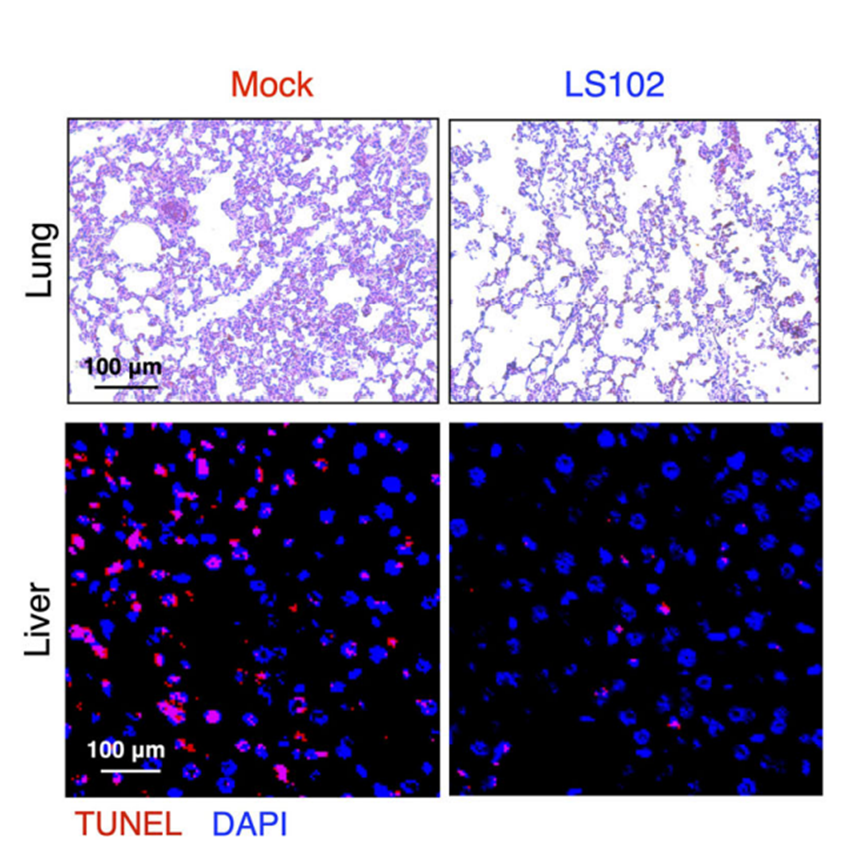
LS-102 purchased from MedChemExpress. Usage Cited in: Nat Commun. 2025 Dec 10. [Abstract]
Representative images showing lung inflammation and hepatocyte cell death in the indicated mice. Sex- and age-matched C57BL/6 mice treated with vehicle or LS-102 (10 mg/kg) for three days, followed by poly(I:C) plus D-GalN injection for 4 h, then lung sections were used for HE staining.
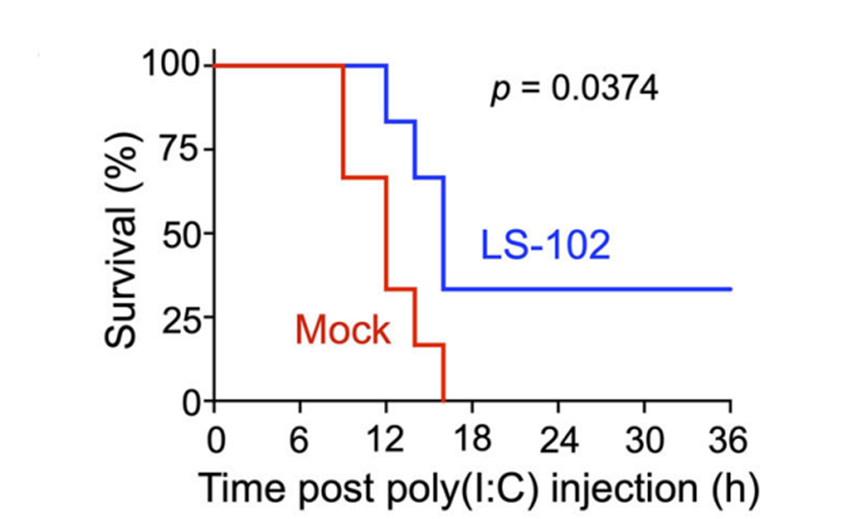
LS-102 purchased from MedChemExpress. Usage Cited in: Nat Commun. 2025 Dec 10. [Abstract]
Survivorship of C57BL/6 mice treated with vehicle or LS-102 (10 mg/kg) followed by poly(I:C) plus D-GalN (0.5 g/kg body weight) injection.
-
Cell Death Dis
SEL1L3 suppresses colorectal cancer cell growth and metastasis by preventing endoplasmic reticulum-associated degradation of STING. [Abstract]2026 May 3;17(1):586. PMID: 42071001 -
Cell Death Dis
2025 Aug 28;16(1):655. PMID: 40877231 -
J Nutr Biochem
Characterization of dietary and herbal sourced natural compounds that modulate SEL1L-HRD1 ERAD activity and alleviate protein misfolding in the ER. [Abstract]2023 Jan:111:109178. PMID: 36228974 -
Chem Biol Drug Des
Procyanidin Alleviates Diabetic Retinopathy by Activating the Expression of Activating Transcription Factor 1 Expression to Upregulate Synoviolin 1 and Inhibit the High Mobility Group Box 1/Toll-Like Receptor 4 Pathway. [Abstract]2025 Oct;106(4):e70174. PMID: 41014095 -
-


Solvent & Solubility
In Vitro:
DMSO : 100 mg/mL (220.95 mM; Need ultrasonic; Hygroscopic DMSO has a significant impact on the solubility of product, please use newly opened DMSO)
Please refer to the solubility information to select the appropriate solvent. Once prepared, please aliquot and store the solution to prevent product inactivation from repeated freeze-thaw cycles.
Storage method and period of stock solution: -80°C, 6 months; -20°C, 1 month (protect from light, stored under nitrogen). When stored at -80°C, please use it within 6 months. When stored at -20°C, please use it within 1 month.
Please refer to the solubility information to select the appropriate solvent. Once prepared, please aliquot and store the solution to prevent product inactivation from repeated freeze-thaw cycles.
Storage method and period of stock solution: -80°C, 6 months; -20°C, 1 month (protect from light, stored under nitrogen). When stored at -80°C, please use it within 6 months. When stored at -20°C, please use it within 1 month.
Concentration (start) × Volume (start) = Concentration (final) × Volume (final)
In Vivo:
Select the appropriate dissolution method based on your experimental animal and administration route.
- For the following dissolution methods, please ensure to first prepare a clear stock solution using an In Vitro approach and then sequentially add co-solvents:
- To ensure reliable experimental results, the clarified stock solution can be appropriately stored based on storage conditions. As for the working solution for In Vivo experiments, it is recommended to prepare freshly and use it on the same day.
- The percentages shown for the solvents indicate their volumetric ratio in the final prepared solution. If precipitation or phase separation occurs during preparation, heat and/or sonication can be used to aid dissolution.
Add each solvent one by one: 10% DMSO 40% PEG300 5% Tween-80 45% Saline
Solubility: ≥ 2.5 mg/mL (5.52 mM); Clear solution
This protocol yields a clear solution of ≥ 2.5 mg/mL (saturation unknown).
Taking 1 mL working solution as an example, add 100 μL DMSO stock solution (25.0 mg/mL) to 400 μL PEG300, and mix evenly; then add 50 μL Tween-80 and mix evenly; then add 450 μL Saline to adjust the volume to 1 mL.
Preparation of Saline: Dissolve 0.9 g sodium chloride in ddH₂O and dilute to 100 mL to obtain a clear Saline solution.
Add each solvent one by one: 10% DMSO 90% (20% SBE-β-CD in Saline)
Solubility: ≥ 2.5 mg/mL (5.52 mM); Clear solution
This protocol yields a clear solution of ≥ 2.5 mg/mL (saturation unknown).
Taking 1 mL working solution as an example, add 100 μL DMSO stock solution (25.0 mg/mL) to 900 μL 20% SBE-β-CD in Saline, and mix evenly.
Preparation of 20% SBE-β-CD in Saline (4°C, storage for one week): 2 g SBE-β-CD powder is dissolved in 10 mL Saline, completely dissolve until clear.
In Vivo Dissolution Calculator
Please enter the basic information of animal experiments:
-
-
-
-
Recommended: Prepare an additional quantity of animals to account for potential losses during experiments.
Please enter your animal formula composition:
-
%DMSO +
Recommended: Keep the proportion of DMSO in working solution below 2% if your animal is weak.
-
%+
-
+%Tween-80 + +
-
%Saline +
The co-solvents required include: DMSO, . All of co-solvents are available by MedChemExpress (MCE). , Tween 80. All of co-solvents are available by MedChemExpress (MCE).
Working solution concentration: 0.22 mg/mL
Method for preparing stock solution: mg drug dissolved in μL DMSO. Stock solution concentration: mg/mL. * In solvent : -80°C, 6 months; -20°C, 1 month (protect from light, stored under nitrogen)
1. Take μL DMSO stock solution;
2. Add μL .
μL , mix evenly;
3. Then add μL Tween 80, mix evenly;
4. Then add μL
Please ensure that the stock solution in the first step is dissolved to a clear state, and add co-solvents in sequence. You can use ultrasonic heating (ultrasonic cleaner, recommended frequency 20-40 kHz), vortexing, etc. to assist dissolution.


Purity & Documentation
-
Data Sheet (275 KB)
-
SDS (393 KB)
- English - EN (393 KB)
- Français - FR (393 KB)
- Deutsch - DE (393 KB)
- Norwegian - NO (393 KB)
- Español - ES (393 KB)
- Swedish - SV (393 KB)
- Italian - IT (393 KB)
- Korean - KR (393 KB)
- Portuguese - PT (393 KB)
-
Handling Instructions (2659 KB)
References
[1]. Yagishita N, et al. RING-finger type E3 ubiquitin ligase inhibitors as novel candidates for the treatment of rheumatoidarthritis. Int J Mol Med. 2012 Dec;30(6):1281-6. [Content Brief]
[2]. Fujita H, et al. Identification of the inhibitory activity of walnut extract on the E3 ligase Syvn1. Mol Med Rep. 2018 Dec;18(6):5701-5708. [Content Brief]


Complete Stock Solution Preparation Table
Please refer to the solubility information to select the appropriate solvent. Once prepared, please aliquot and store the solution to prevent product inactivation from repeated freeze-thaw cycles.
Storage method and period of stock solution: -80°C, 6 months; -20°C, 1 month (protect from light, stored under nitrogen). When stored at -80°C, please use it within 6 months. When stored at -20°C, please use it within 1 month.
| Optional Solvent | Concentration Solvent Mass | 1 mg | 5 mg | 10 mg | 25 mg |
|---|---|---|---|---|---|
| DMSO | 1 mM | 2.2095 mL | 11.0473 mL | 22.0946 mL | 55.2364 mL |
| 5 mM | 0.4419 mL | 2.2095 mL | 4.4189 mL | 11.0473 mL | |
| 10 mM | 0.2209 mL | 1.1047 mL | 2.2095 mL | 5.5236 mL | |
| 15 mM | 0.1473 mL | 0.7365 mL | 1.4730 mL | 3.6824 mL | |
| 20 mM | 0.1105 mL | 0.5524 mL | 1.1047 mL | 2.7618 mL | |
| 25 mM | 0.0884 mL | 0.4419 mL | 0.8838 mL | 2.2095 mL | |
| 30 mM | 0.0736 mL | 0.3682 mL | 0.7365 mL | 1.8412 mL | |
| 40 mM | 0.0552 mL | 0.2762 mL | 0.5524 mL | 1.3809 mL | |
| 50 mM | 0.0442 mL | 0.2209 mL | 0.4419 mL | 1.1047 mL | |
| 60 mM | 0.0368 mL | 0.1841 mL | 0.3682 mL | 0.9206 mL | |
| 80 mM | 0.0276 mL | 0.1381 mL | 0.2762 mL | 0.6905 mL | |
| 100 mM | 0.0221 mL | 0.1105 mL | 0.2209 mL | 0.5524 mL |


LS-102 Related Classifications
HY-135844 Related Classifications
 Powered by Bioz