



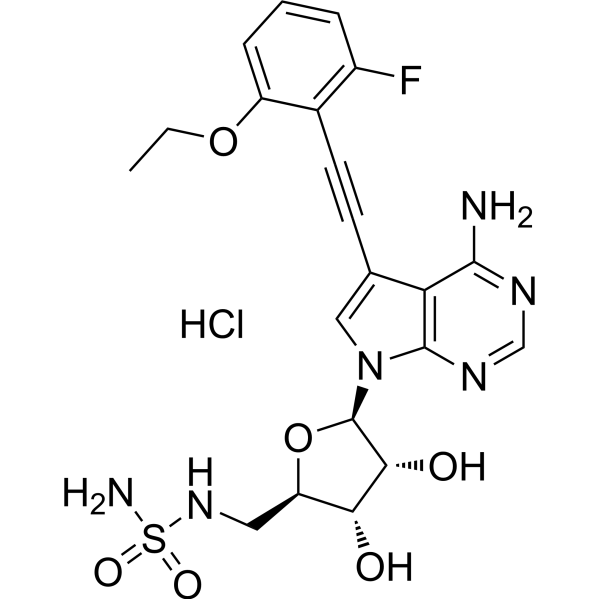
TAS4464 hydrochloride
Based on 10 publication(s) in Google Scholar
TAS4464 hydrochloride is a long-acting, highly selective covalent inhibitor targeting NEDD8-activating enzyme (NAE) (IC50=0.955 nM), and also inhibits CAII with an IC50 of 0.73 μM, which is less potent than MLN4924 (HY-70062). The IC50 values of TAS4464 hydrochloride against other E1 enzymes UAE and SAE are 449 nM and 1280 nM, respectively. TAS4464 hydrochloride targets NEDD8 in an ATP-dependent manner to inhibit NAE, blocks the neddylation pathway, causes accumulation of CRL ubiquitin ligase substrates (such as CDT1, p27, phosphorylated IκBα), and further induces tumor cell apoptosis. TAS4464 hydrochloride exhibits antiproliferative and cytotoxic effects, and has broad-spectrum antitumor activity against various hematologic and solid tumor cell lines as well as patient-derived tumor cells. TAS4464 hydrochloride has a wide therapeutic window, without obvious toxicity. TAS4464 hydrochloride can be used in the research of hematologic malignancies (leukemia, lymphoma, multiple myeloma, etc.) and solid tumors (small cell lung cancer, colorectal cancer, sarcoma, endometrial cancer, ovarian cancer, etc.).
Nur für Forschungszwecke. Wir verkaufen nicht an Patienten.
- Reinheit : 98.91%
- CAS. Nr.: 1848959-11-4
- Formel: C21H24ClFN6O6S
- Molecular Weight:542.97
-
Speicherung:
4°C, sealed storage, away from moisture
* In solvent : -80°C, 6 months; -20°C, 1 month (sealed storage, away from moisture)

To place orders, for customer services and technical support, please contact: MedChemExpress USA
Tel: 609-228-6898 E-mail: [email protected] [email protected]


-
 Biologische Aktivität
-
Chemical Information
-
Lösungsmittel & Löslichkeit
- Protokoll
- Reinheit & Dokumentation
- Verweise
-
 Help & FAQs


-
HY-10484
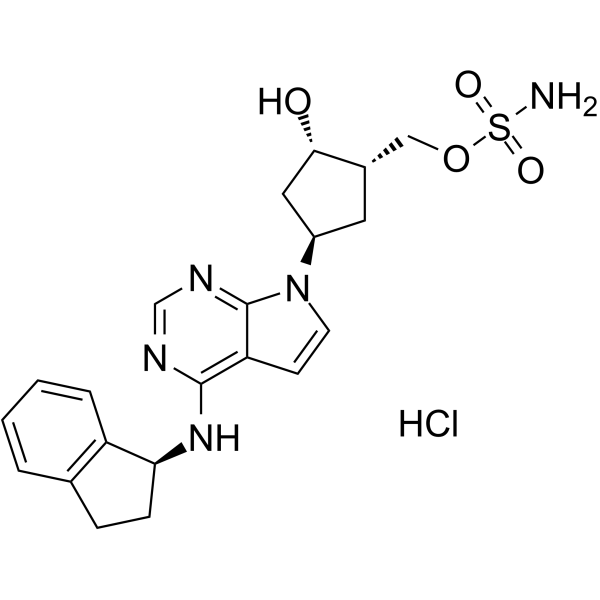
Pevonedistat hydrochlorideNAE Inhibitor -
HY-70062
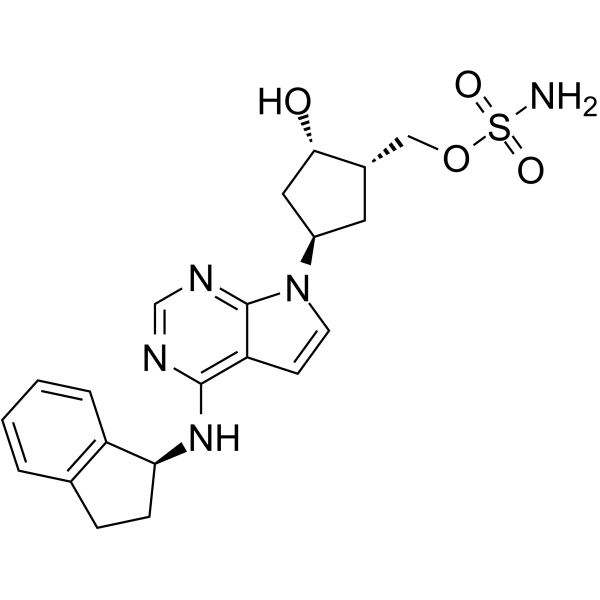
PevonedistatNAE Inhibitor -
HY-130800
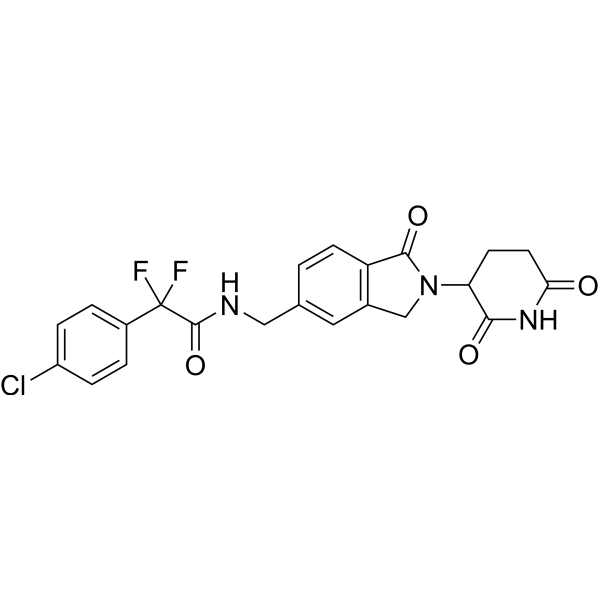
EragidomideGSPT1 Molecular Glue Degrader -
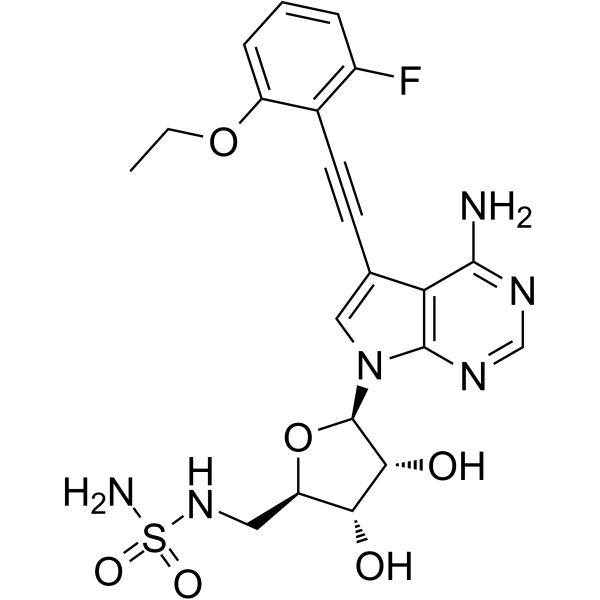
HY-128586
TAS4464NAE Inhibitor -
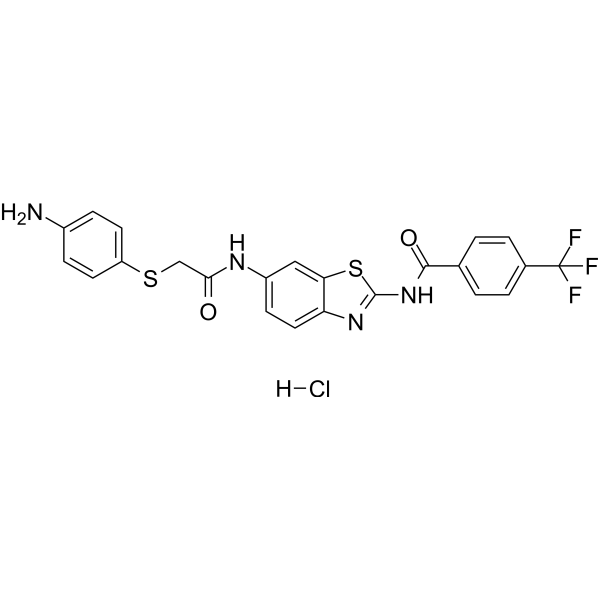
HY-101790A
ZM223 hydrochlorideNEDD8 Activating Enzyme Inhibitor -
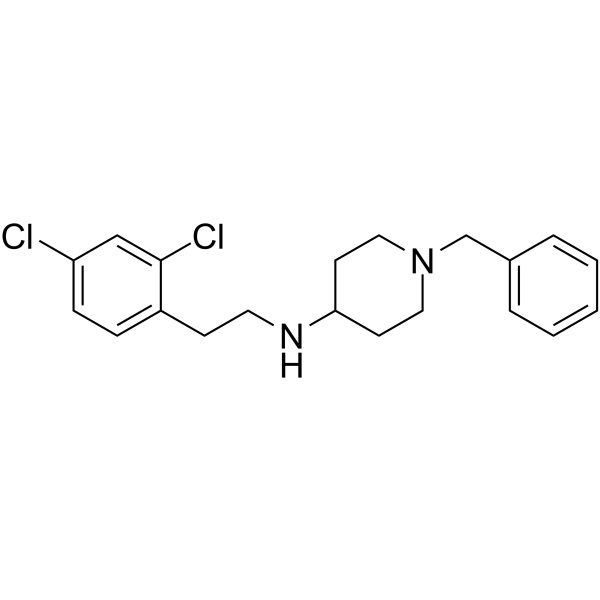
HY-115537
NAE-IN-M22NAE Inhibitor -
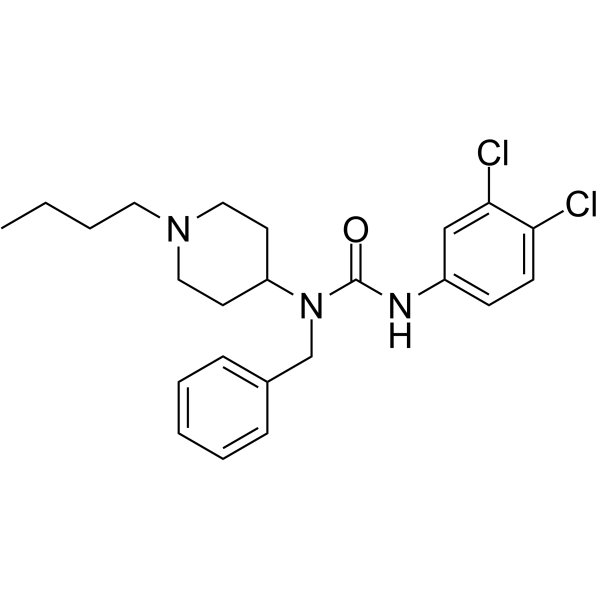
HY-111505
NAcM-OPTDCN1-UBE2M Inhibitor -

HY-70062R
Pevonedistat (Standard)NAE Inhibitor -

HY-10484R
Pevonedistat hydrochloride (Standard)Reference Standard -
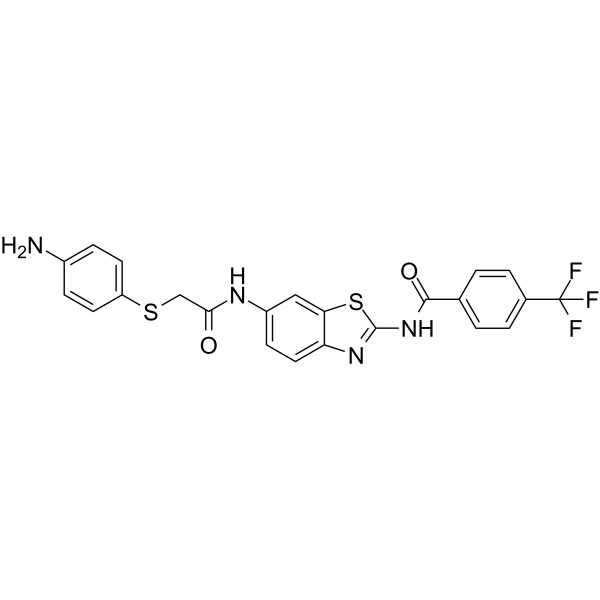
HY-101790
ZM223NEDD8-activating Enzyme Inhibitor -

HY-101790AR
ZM223 hydrochloride (Standard)Reference Standard
Publications Citing Use of MedChemExpress (MCE) TAS4464 hydrochloride
More- Nat Commun. 2024 Jan 11;15(1):468. [Abstract]
- Cell Death Dis. 2025 Mar 31;16(1):228. [Abstract]
- Proc Natl Acad Sci U S A. 2022 Feb 8;119(6):e2111737119. [Abstract]
- Sci Data. 2024 Sep 19;11(1):1024. [Abstract]
- Biochim Biophys Acta Mol Basis Dis. 2026 Apr 15;1872(6):168261. [Abstract]
- Biochim Biophys Acta Mol Basis Dis. 2024 Jun 11;1870(7):167292. [Abstract]
- Sci Rep. 2025 May 30;15(1):18978. [Abstract]
- Viruses. 2021 Aug 14;13(8):1610. [Abstract]
- Seoul National University. 2025.
- Biomed Pharmacother. 2025 Oct 3:192:118622. [Abstract]


Biologische Aktivität
Beschreibung
IC50 & Target
|
CA Ⅱ 0.73 μM (IC50) |
In Vitro
TAS4464 hydrochloride is a highly potent and selective recombinant NAE inhibitor, with over 470-fold and 1340-fold selectivity against recombinant UAE and SAE, respectively, and weak off-target inhibitory activity against CA2[1].
TAS4464 hydrochloride (1-10 μM; 24-48 h) induces apoptosis in leukemia, lymphoma, multiple myeloma and solid tumor cell lines, with the apoptosis rate increasing as the drug concentration rises[1].
TAS4464 hydrochloride (1 nM-1 μM, 4 h; 100 nM, 1-24 h) significantly increases the protein expression levels of CRL ubiquitin ligase substrates CDT1, p27, and phosphorylated IκBα in tumor cells, while reduces the level of cullin neddylation modification[1].
TAS4464 hydrochloride (0.1-10 μM; 24-48 h) significantly inhibits the migratory capacity of solid tumor cell lines such as colorectal cancer and sarcoma, with a concentration-dependent inhibitory effect[1].
MedChemExpress (MCE) has not independently confirmed the accuracy of these methods. They are for reference only. Further protocols information, click here.
-
Cell Line:Multiple hematologic malignancy cell lines (leukemia, lymphoma, multiple myeloma) and solid tumor cell lines (small cell lung cancer, colorectal cancer, sarcoma, endometrial cancer, ovarian cancer)
-
Concentration:0.1 nM, 1 nM, 10 nM, 100 nM, 1 μM, 10 μM
-
Incubation Time:24 h, 48 h, 72 h
-
Result:Significantly inhibited the cell viability of various hematologic malignancy and solid tumor cell lines in a concentration- and time-dependent manner.
-
Cell Line:Multiple tumor cell lines (hematologic and solid tumor)
-
Concentration:1 nM, 10 nM, 100 nM, 1 μM, 10 μM
-
Incubation Time:6 h, 12 h, 24 h, 48 h
-
Result:Significantly increased the protein expression levels of CRL ubiquitin ligase substrates (CDT1, p27, phosphorylated IκBα) in tumor cells, and decreased the level of cullin neddylation modification.
In Vivo
TAS4464 (100 mg/kg; i.v.; administered on days 1, 4, 8 and 11, with one cycle every 21 days; 8 cycles total) hydrochloride significantly prolongs survival and reduces tumor burden in a systemic diffuse large B-cell lymphoma model of SCID mice xenografted with TMD8-Luc[1].
MedChemExpress (MCE) has not independently confirmed the accuracy of these methods. They are for reference only.
-
Animal Model:BALB/cAJcl-nu/nu (6-week-old male; subcutaneously implanted with CCRF-CEM cells)[1]
-
Dosage:6.3 mg/kg; 12.5 mg/kg; 25 mg/kg; 50 mg/kg; 100 mg/kg
-
Administration:i.v.; weekly; 3 weeks
-
Result:Reduced mean tumor volume significantly compared to vehicle control (P < 0.05).
Achieved T/C ratios of 35%, 20%, 10%, 1%, and 0% for 6.3, 12.5, 25, 50, and 100 mg/kg, respectively.
Induced complete tumor regression at doses of 25, 50, and 100 mg/kg.
Decreased cullin1 neddylation, increased accumulation of CRL substrates CDT1, NRF2, and p-IκBα, and elevated levels of cleaved caspase-3 and cleaved PARP within 24 hours of administration.
Showed stronger, more durable reduction of NEDD8-cullin1 signal with increasing doses, with longer-lasting inhibition than MLN4924.
Caused no marked body weight loss.
-
Animal Model:C.B-17 SCID (6-week-old male; subcutaneously implanted with GRANTA-519 cells)[1]
-
Dosage:100 mg/kg
-
Administration:i.v.; weekly; 3 weeks; i.v.; twice weekly; 3 weeks
-
Result:Exerted statistically significant antitumor activity vs vehicle control at day 22 (P < 0.05).
Exceeded the antitumor activity of bortezomib and ibrutinib (P < 0.05).
Induced massive apoptosis in tumor tissue.
Caused no body weight loss exceeding 10% of initial weight.
-
Animal Model:BALB/cAJcl-nu/nu (6-week-old male; subcutaneously implanted with SU-CCS-1 cells)[1]
-
Dosage:100 mg/kg
-
Administration:i.v.; weekly; 3 weeks
-
Result:Exerted statistically significant antitumor activity vs vehicle control (P < 0.05), with marked tumor regression maintained throughout treatment.
Showed superior efficacy to doxorubicin hydrochloride, pazopanib, and MLN4924 (P < 0.05).
Induced cleaved PARP (apoptotic marker) within 4 hours post-administration, and large necrotic tumor areas by day 3.
Caused no body weight loss exceeding 10% of initial weight.
-
Animal Model:NOD-SCID (6-week-old female; subcutaneously implanted with LU5266 patient-derived cells)[1]
-
Dosage:75 mg/kg
-
Administration:i.v.; weekly; 3 weeks; i.v.; twice weekly; 3 weeks
-
Result:Exerted statistically significant antitumor activity vs vehicle control, with a majority of mice achieving complete tumor regression in both treatment groups.
Maintained tumor growth inhibition beyond 7 weeks.
Showed superior efficacy to cisplatin and etoposide (P < 0.05).
Caused no body weight loss exceeding 10% of initial weight.
-
Animal Model:SCID (6-week-old; systemically implanted via tail vein with 1×10⁷ TMD8-Luc luciferase-expressing cells; treatment initiated 11 days post-transplantation)[1]
-
Dosage:100 mg/kg
-
Administration:i.v.; on days 1, 4, 8, 11 of each 21-day cycle; 8 cycles
-
Result:Prolonged survival time significantly compared to vehicle control, with median survival time>159 days and an increase in life span of 174%.
Reduced mean relative photon value (tumor burden index) significantly compared to vehicle control.


Chemical Information
-
CAS. Nr. 1848959-11-4
-
Appearance Solid
-
Molecular Weight 542.97
-
Formel C21H24ClFN6O6S
-
Color Light yellow to khaki
-
SMILES
NC1=NC=NC2=C1C(C#CC3=C(F)C=CC=C3OCC)=CN2[C@@H]4O[C@H](CNS(=O)(N)=O)[C@@H](O)[C@H]4O.Cl
-
Versand
Room temperature in continental US; may vary elsewhere.
-
Speicherung
4°C, sealed storage, away from moisture
* In solvent : -80°C, 6 months; -20°C, 1 month (sealed storage, away from moisture)


Publications (10)
-
Journal Impact Factor
-
Most Recent
-
Nat Commun
Diabetic sensory neuropathy and insulin resistance are induced by loss of UCHL1 in Drosophila. [Abstract]2024 Jan 11;15(1):468. PMID: 38212312 -
Cell Death Dis
NUB1 reduction promotes PCNA-mediated tumor growth by disturbing the PCNA polyubiquitination/NEDDylation in hepatocellular carcinoma cells. [Abstract]2025 Mar 31;16(1):228. PMID: 40164590 -
Proc Natl Acad Sci U S A
Cullin neddylation inhibitor attenuates hyperglycemia by enhancing hepatic insulin signaling through insulin receptor substrate stabilization. [Abstract]2022 Feb 8;119(6):e2111737119. PMID: 35115401 -
Sci Data
High-throughput drug screening identifies novel therapeutics for Low Grade Serous Ovarian Carcinoma. [Abstract]2024 Sep 19;11(1):1024. PMID: 39300112 -
Biochim Biophys Acta Mol Basis Dis
2026 Apr 15;1872(6):168261. PMID: 41990488 -
Biochim Biophys Acta Mol Basis Dis
Inhibition of neddylation disturbs zygotic genome activation through histone modification change and leads to early development arrest in mouse embryos. [Abstract]2024 Jun 11;1870(7):167292. PMID: 38871031 -
Sci Rep
Neddylation status determines the therapeutic sensitivity of tyrosine kinase inhibitors in chronic myeloid leukemia. [Abstract]2025 May 30;15(1):18978. PMID: 40447744 -
Viruses
Nedd8-Activating Enzyme Is a Druggable Host Dependency Factor of Human and Mouse Cytomegalovirus. [Abstract]2021 Aug 14;13(8):1610. PMID: 34452475 -
-
Biomed Pharmacother
TAS4464, a neddylation inhibitor, mitigates Staphylococcus aureus-induced periprosthetic joint infection by modulating immunosuppressive cell functions. [Abstract]2025 Oct 3:192:118622. PMID: 41045650


Lösungsmittel & Löslichkeit
In Vitro:
DMSO : 100 mg/mL (184.17 mM; Need ultrasonic; Hygroscopic DMSO has a significant impact on the solubility of product, please use newly opened DMSO)
H2O : 5 mg/mL (9.21 mM; ultrasonic and warming and heat to 60°C)
Please refer to the solubility information to select the appropriate solvent. Once prepared, please aliquot and store the solution to prevent product inactivation from repeated freeze-thaw cycles.
Storage method and period of stock solution: -80°C, 6 months; -20°C, 1 month (sealed storage, away from moisture). When stored at -80°C, please use it within 6 months. When stored at -20°C, please use it within 1 month.
* Note: If you choose water as the stock solution, please dilute it to the working solution, then filter and sterilize it with a 0.22 μm filter before use.
Please refer to the solubility information to select the appropriate solvent. Once prepared, please aliquot and store the solution to prevent product inactivation from repeated freeze-thaw cycles.
Storage method and period of stock solution: -80°C, 6 months; -20°C, 1 month (sealed storage, away from moisture). When stored at -80°C, please use it within 6 months. When stored at -20°C, please use it within 1 month.
* Note: If you choose water as the stock solution, please dilute it to the working solution, then filter and sterilize it with a 0.22 μm filter before use.
Konzentration (Stammlösung) × Volumen (Stammlösung) = Konzentration (Ziellösung) × Volumen (Ziellösung)
In Vivo:
Select the appropriate dissolution method based on your experimental animal and administration route.
- For the following dissolution methods, please ensure to first prepare a clear stock solution using an In Vitro approach and then sequentially add co-solvents:
- To ensure reliable experimental results, the clarified stock solution can be appropriately stored based on storage conditions. As for the working solution for In Vivo experiments, it is recommended to prepare freshly and use it on the same day.
- The percentages shown for the solvents indicate their volumetric ratio in the final prepared solution. If precipitation or phase separation occurs during preparation, heat and/or sonication can be used to aid dissolution.
Add each solvent one by one: 10% DMSO 40% PEG300 5% Tween-80 45% Saline
Solubility: ≥ 2.08 mg/mL (3.83 mM); Clear solution
This protocol yields a clear solution of ≥ 2.08 mg/mL (saturation unknown).
Taking 1 mL working solution as an example, add 100 μL DMSO stock solution (20.8 mg/mL) to 400 μL PEG300, and mix evenly; then add 50 μL Tween-80 and mix evenly; then add 450 μL Saline to adjust the volume to 1 mL.
Preparation of Saline: Dissolve 0.9 g sodium chloride in ddH₂O and dilute to 100 mL to obtain a clear Saline solution.
Add each solvent one by one: 10% DMSO 90% (20% SBE-β-CD in Saline)
Solubility: ≥ 2.08 mg/mL (3.83 mM); Clear solution
This protocol yields a clear solution of ≥ 2.08 mg/mL (saturation unknown).
Taking 1 mL working solution as an example, add 100 μL DMSO stock solution (20.8 mg/mL) to 900 μL 20% SBE-β-CD in Saline, and mix evenly.
Preparation of 20% SBE-β-CD in Saline (4°C, storage for one week): 2 g SBE-β-CD powder is dissolved in 10 mL Saline, completely dissolve until clear.
In Vivo Dissolution Calculator
Please enter the basic information of animal experiments:
-
-
-
-
Recommended: Prepare an additional quantity of animals to account for potential losses during experiments.
Please enter your animal formula composition:
-
%DMSO +
Recommended: Keep the proportion of DMSO in working solution below 2% if your animal is weak.
-
%+
-
+%Tween-80 + +
-
%Saline +
The co-solvents required include: DMSO, . All of co-solvents are available by MedChemExpress (MCE). , Tween 80. All of co-solvents are available by MedChemExpress (MCE).
Working solution concentration: 0.22 mg/mL
Method for preparing stock solution: mg drug dissolved in μL DMSO. Stock solution concentration: mg/mL. * In solvent : -80°C, 6 months; -20°C, 1 month (sealed storage, away from moisture)
1. Take μL DMSO stock solution;
2. Add μL .
μL , mix evenly;
3. Then add μL Tween 80, mix evenly;
4. Then add μL
Please ensure that the stock solution in the first step is dissolved to a clear state, and add co-solvents in sequence. You can use ultrasonic heating (ultrasonic cleaner, recommended frequency 20-40 kHz), vortexing, etc. to assist dissolution.

Protokoll
-
Detection of Apoptosis
Apoptosis, also called programmed cell death, is generally characterized by distinct morphological characteristics.
-
TUNEL staining for apoptotic DNA fragmentation
TUNEL staining detects DNA strand breaks by using terminal deoxynucleotidyl transferase to add labeled nucleotides to exposed 3′-OH DNA termini, generating either microscopic staining in fixed cells or tissue sections, or fluorescence/cytometric signal in cell suspensions. TUNEL positivity reflects DNA fragmentation but should not be interpreted alone as definitive apoptosis, because TUNEL can also label necrotic, autolytic, mechanically damaged, or DNA-repair-associated DNA breaks.
-
Annexin V plus membrane-impermeant dye apoptosis staining
Annexin V-based apoptosis assays rely on the detection of phosphatidylserine (PS) externalization from the inner leaflet of the plasma membrane to the outer leaflet, an early biochemical hallmark of apoptosis. Fluorescently labeled Annexin V binds PS in a calcium-dependent manner, enabling identification of early apoptotic cells by flow cytometry or fluorescence microscopy. When combined with a membrane-impermeant DNA-binding dye (e. g. , propidium iodide), this approach allows discrimination between viable (Annexin V−/dye−), early apoptotic (Annexin V+/dye−), and late apoptotic or necrotic (Annexin V+/dye+) cell populations by assessing membrane integrity and PS exposure.
-
Apoptosis Solutions
Apoptosis is a regulated, generally non-lytic cell-death pathway that removes unwanted, damaged, infected, or abnormal cells through coordinated morphological changes, caspase activation, DNA fragmentation, and membrane remodeling. The intrinsic apoptosis pathway is controlled mainly by mitochondrial outer membrane permeabilization, BCL-2 family proteins, cytochrome c release, apoptosome formation, caspase-9 activation, and downstream executioner caspase-3/7 activation. The extrinsic apoptosis pathway is initiated by death receptors such as Fas, TNFR, and TRAIL receptors, which recruit adaptor proteins and activate caspase-8 before engaging executioner caspases or mitochondrial amplification through BID cleavage. Apoptosis is linked to many phenotypes, including cancer cell killing, tissue homeostasis, immune regulation, neurodegeneration, infection response, and treatment-induced cytotoxicity; unresolved questions include how apoptosis interacts with necroptosis, pyroptosis, ferroptos
-
Subcutaneous Cell-Line-Derived Xenograft
Subcutaneous cell-line-derived xenograft (CDX) models are established by implanting cultured human cancer cell lines into immunodeficient mice, where the injected cells form localized tumors that can be monitored in vivo as a measure of tumorigenic potential, growth kinetics, and treatment response. These models are widely used in oncology research because they allow reproducible tumor formation and enable comparative assessment of tumor growth between different cell lines or genetic manipulations in a controlled in vivo microenvironment. Subcutaneous implantation of cancer cells in immunodeficient mice is a standard approach for evaluating tumor growth behavior and therapeutic response across multiple cancer types, including prostate, esophageal, pancreatic, and colon cancer models.
-
Cell Viability Determination by MTT Colorimetric Assay
The following protocol uses the MTT colorimetric assay as a classic literature-established method for assessing cell viability/metabolic activity in cultured mammalian cells. MTT[3-(4,5-dimethylthiazol-2-yl)-2,5-diphenyltetrazolium bromide] is reduced by metabolically active cells to a colored formazan product; the amount of formazan is quantified spectrophotometrically and provides an indirect measure of metabolically active viable cells. Importantly, MTT reduction reflects cellular oxidoreductase/metabolic activity rather than an absolute direct count of living cells, so changes in cellular metabolism can alter the signal independently of cell number.


Reinheit & Dokumentation
-
Data Sheet (292 KB)
-
SDS (393 KB)
- English - EN (393 KB)
- Français - FR (393 KB)
- Deutsch - DE (393 KB)
- Norwegian - NO (393 KB)
- Español - ES (393 KB)
- Swedish - SV (393 KB)
- Italian - IT (393 KB)
- Korean - KR (393 KB)
- Portuguese - PT (393 KB)
-
Handling Instructions (2659 KB)
Verweise


Complete Stock Solution Preparation Table
Please refer to the solubility information to select the appropriate solvent. Once prepared, please aliquot and store the solution to prevent product inactivation from repeated freeze-thaw cycles.
Storage method and period of stock solution: -80°C, 6 months; -20°C, 1 month (sealed storage, away from moisture). When stored at -80°C, please use it within 6 months. When stored at -20°C, please use it within 1 month.
| Optional Solvent | Concentration Solvent Mass | 1 mg | 5 mg | 10 mg | 25 mg |
|---|---|---|---|---|---|
| H2O / DMSO | 1 mM | 1.8417 mL | 9.2086 mL | 18.4172 mL | 46.0431 mL |
| 5 mM | 0.3683 mL | 1.8417 mL | 3.6834 mL | 9.2086 mL | |
| DMSO | 10 mM | 0.1842 mL | 0.9209 mL | 1.8417 mL | 4.6043 mL |
| 15 mM | 0.1228 mL | 0.6139 mL | 1.2278 mL | 3.0695 mL | |
| 20 mM | 0.0921 mL | 0.4604 mL | 0.9209 mL | 2.3022 mL | |
| 25 mM | 0.0737 mL | 0.3683 mL | 0.7367 mL | 1.8417 mL | |
| 30 mM | 0.0614 mL | 0.3070 mL | 0.6139 mL | 1.5348 mL | |
| 40 mM | 0.0460 mL | 0.2302 mL | 0.4604 mL | 1.1511 mL | |
| 50 mM | 0.0368 mL | 0.1842 mL | 0.3683 mL | 0.9209 mL | |
| 60 mM | 0.0307 mL | 0.1535 mL | 0.3070 mL | 0.7674 mL | |
| 80 mM | 0.0230 mL | 0.1151 mL | 0.2302 mL | 0.5755 mL | |
| 100 mM | 0.0184 mL | 0.0921 mL | 0.1842 mL | 0.4604 mL |
* Note: If you choose water as the stock solution, please dilute it to the working solution, then filter and sterilize it with a 0.22 μm filter before use.


TAS4464 hydrochloride Related Classifications
HY-128586A Related Classifications
 Powered by Bioz