



ARD-69

Based on 1 Customer Validation
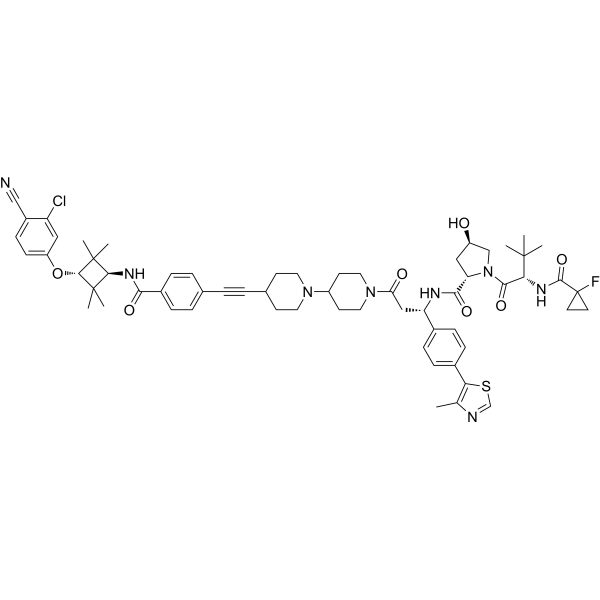
ARD-69 is a PROTAC degrader based on the E3 ubiquitin ligase VHL and targeting the androgen receptor, which can induce androgen receptor (AR) protein degradation in AR-positive prostate cancer cells. ARD-69 inhibits AR-regulated gene expression, binds to the AR ligand binding domain at one end and binds to VHL at the other end, prompting AR to be recruited to the E3 ubiquitin ligase complex, triggering proteasome degradation, thereby inhibiting AR signaling pathways and downstream gene expression (such as PSA, TMPRSS2). ARD-69 can be used to study of castration-resistant prostate cancer (mCRPC).
(Pink: Androgen Receptor ligand (HY-172624); Blue: VHL ligand (HY-47070); Black: linker).
For research use only. We do not sell to patients.
- Purity : 99.61%
- CAS No.: 2316837-10-0
- Formula: C62H74ClFN8O7S
- Molecular Weight:1129.82
-
Storage:
-20°C, protect from light, stored under nitrogen
* In solvent : -80°C, 6 months; -20°C, 1 month (protect from light, stored under nitrogen)

To place orders, for customer services and technical support, please contact: MedChemExpress USA
Tel: 609-228-6898 E-mail: [email protected] [email protected]


-
 Biological Activity
-
Chemical Information
-
Solvent & Solubility
- Protocols
- Purity & Documentation
- References
-
 Help & FAQs


-
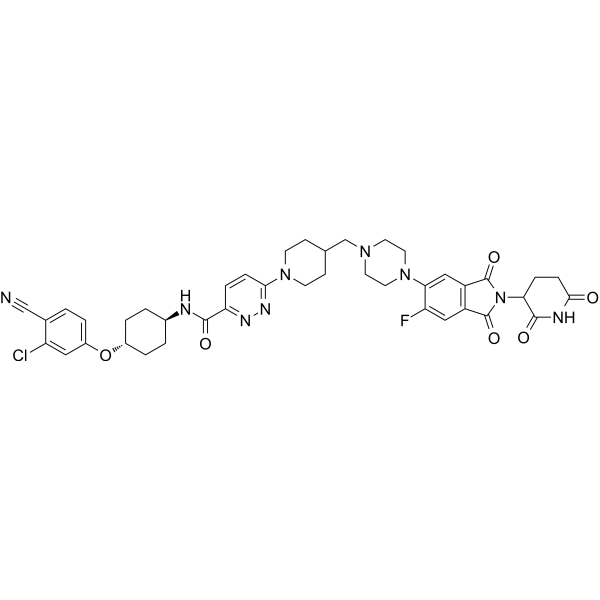
HY-138641
BavdegalutamideAR PROTAC Degrader -
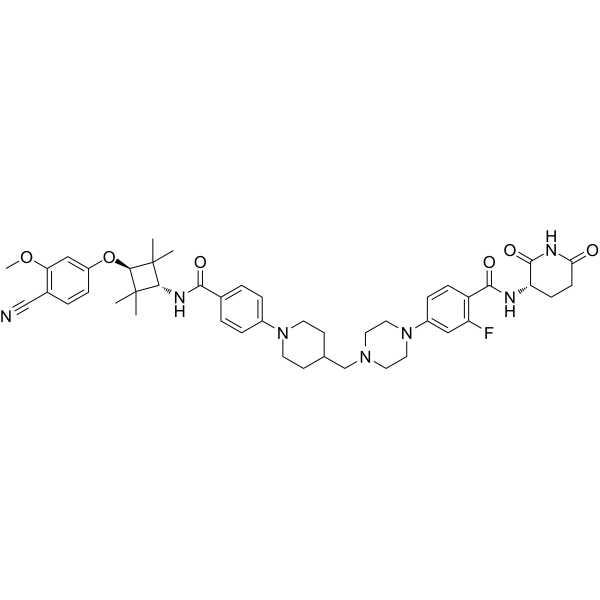
HY-153342
LuxdegalutamidePROTAC -
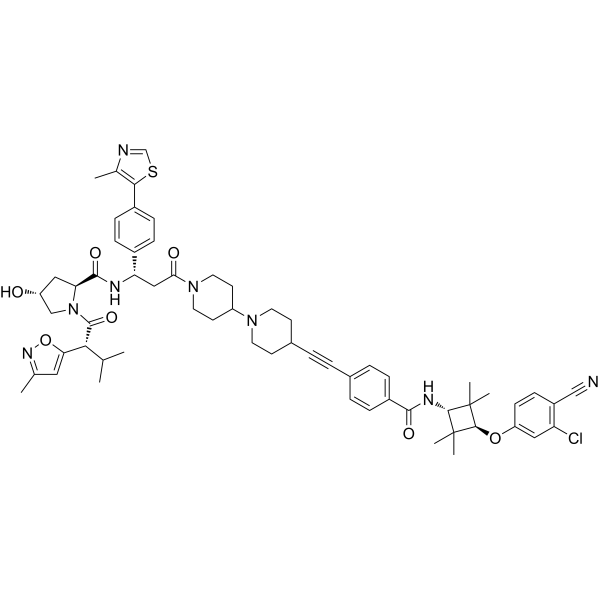
HY-139659
ARD-61Androgen Receptor Degrader -
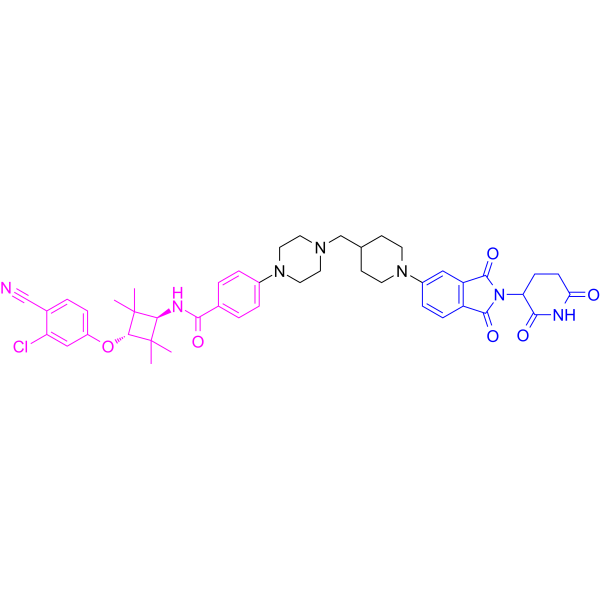
HY-132292
ARD-2128PROTAC AR Degrader -
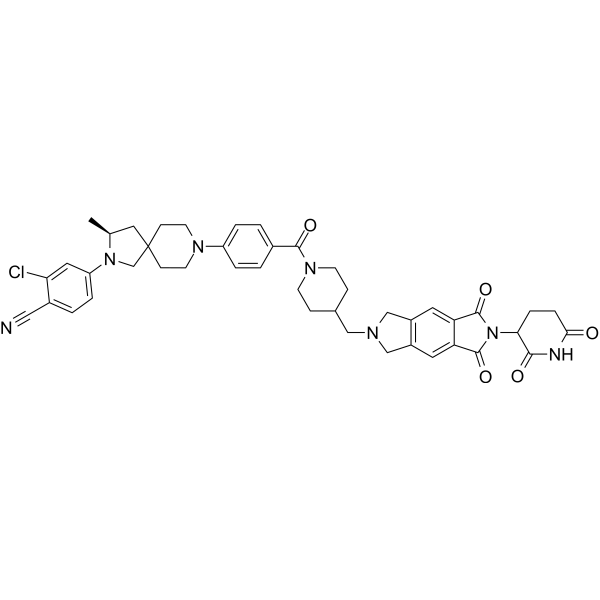
HY-156111
ARD-1676Androgen Receptor PROTAC Degrader -
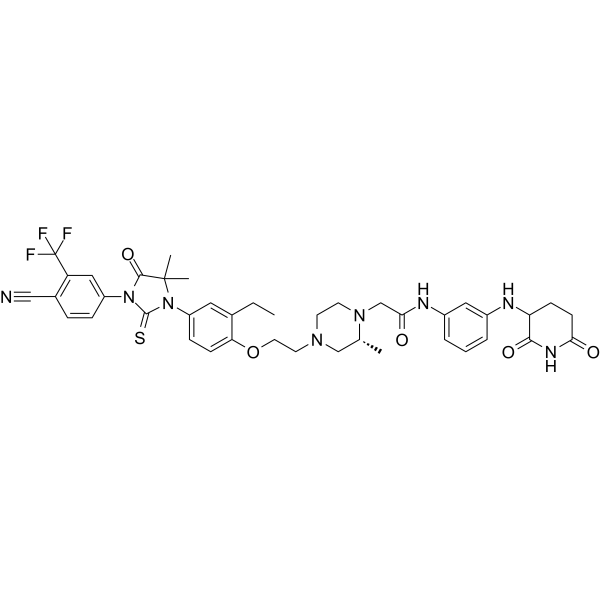
HY-158101
BMS-986365PROTAC AR Degrader -
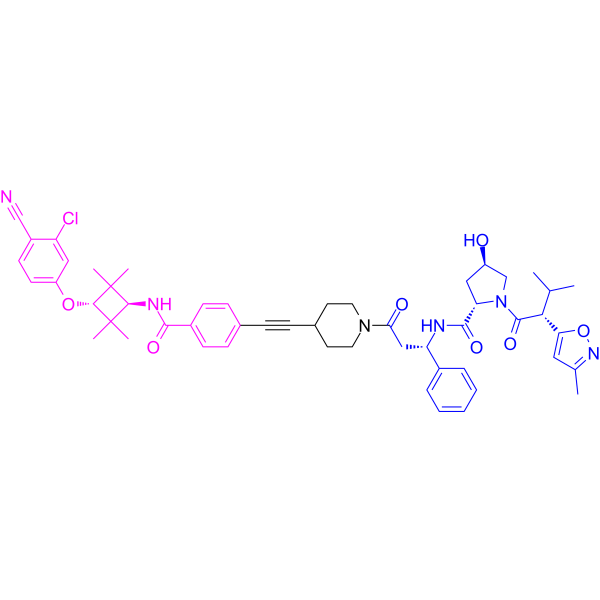
HY-133020
ARD-266PROTAC Androgen Receptor Degrader -
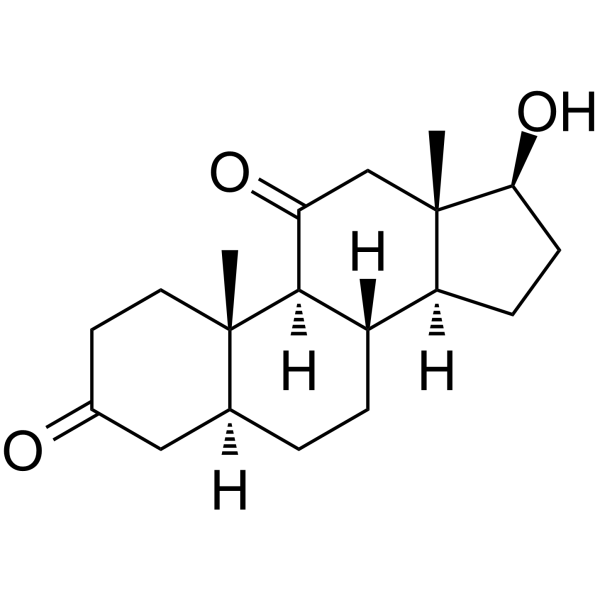
HY-135794
11-KetodihydrotestosteroneAndrogen Receptor Agonist -
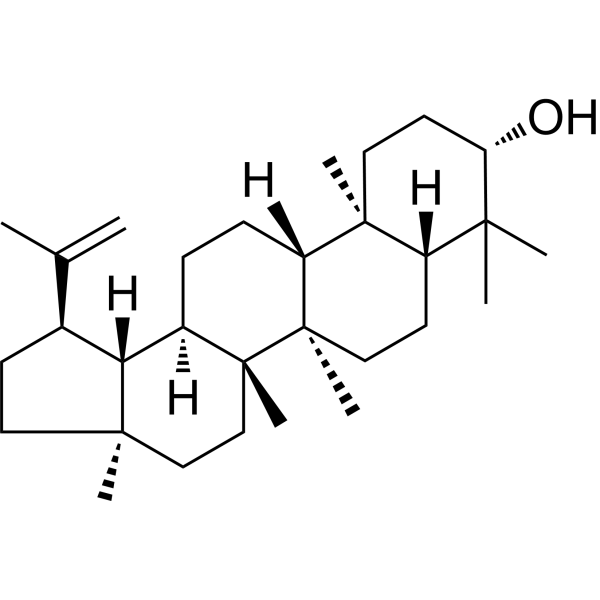
HY-N0790
LupeolAndrogen Receptor Inhibitor -
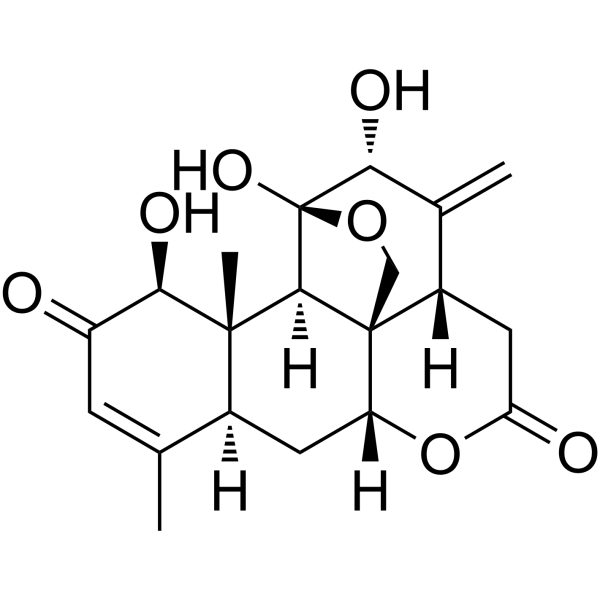
HY-N1943
AilanthoneAndrogen Receptor Inhibitor -
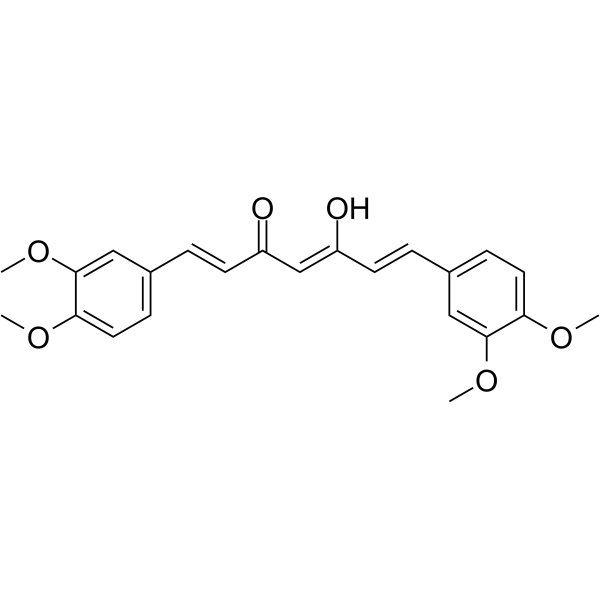
HY-15194
DimethylcurcuminAndrogen Receptor Inhibitor -

HY-N0790R
Lupeol (Standard)Androgen Receptor Inhibitor
All PROTACs Isoforms
More

Biological Activity
Description
IC50 & Target
|
VHL |
Cellular Effect
|
Cell Line

|
Type | Value | Description | References |
|---|---|---|---|---|
| CWR22R | IC50 |
183 nM
Compound: 34; ARD-69
|
Cytotoxicity against AR-positive human 22Rv1 cells assessed as inhibition of cell growth incubated for 7 days in regular culture medium by WST-8 assay
Cytotoxicity against AR-positive human 22Rv1 cells assessed as inhibition of cell growth incubated for 7 days in regular culture medium by WST-8 assay
|
[PMID: 30629437] |
| LNCaP | IC50 |
0.25 nM
Compound: 34; ARD-69
|
Cytotoxicity against AR-positive human LNCaP cells assessed as inhibition of cell growth incubated for 7 days in presence of AR agonist, R1881 in charcoal stripped medium by WST-8 assay
Cytotoxicity against AR-positive human LNCaP cells assessed as inhibition of cell growth incubated for 7 days in presence of AR agonist, R1881 in charcoal stripped medium by WST-8 assay
|
[PMID: 30629437] |
| VCaP | IC50 |
0.34 nM
Compound: 34; ARD-69
|
Cytotoxicity against AR-positive human VCaP cells assessed as inhibition of cell growth incubated for 7 days in presence of AR agonist, R1881 in charcoal stripped medium by WST-8 assay
Cytotoxicity against AR-positive human VCaP cells assessed as inhibition of cell growth incubated for 7 days in presence of AR agonist, R1881 in charcoal stripped medium by WST-8 assay
|
[PMID: 30629437] |
In Vitro
ARD-69 (0.01-10 μM; 6-24 h) induces degradation of androgen receptor (AR) in LNCaP, VCaP and 22Rv1 prostate cancer cells in a dose- and time-dependent manner, with DC50 values ??of 0.86 nM, 0.76 nM and 10.4 nM, respectively, and the highest degradation rate is >95%[1].
ARD-69 (0.01-1000 nM; 7 d) significantly inhibits the proliferation of LNCaP, VCaP and 22Rv1 cells, with IC50 values ??of 0.25 nM, 0.34 nM and 183 nM, respectively[1].
MedChemExpress (MCE) has not independently confirmed the accuracy of these methods. They are for reference only.
-
Cell Line:LNCaP, VCaP, 22Rv1 prostate cancer cells
-
Concentration:0.01-1000 nM
-
Incubation Time:7 days
-
Result:Inhibited cell growth with IC50s of 0.25 nM (LNCaP), 0.34 nM (VCaP), and 183 nM (22Rv1), significantly more effective (>100-fold) than AR antagonists like enzalutamide. qPCR analysis revealed dose-dependent suppression of AR-regulated genes (PSA, TMPRSS2, FKBP5) by >50% at 10 nM, while WB confirmed reduced AR protein levels correlating with growth inhibition.
In Vivo
MedChemExpress (MCE) has not independently confirmed the accuracy of these methods. They are for reference only.
-
Animal Model:Female severe combined immunodeficient (SCID) mice with VCaP xenograft tumors[1]
-
Dosage:50 mg/kg, dissolved in an appropriate solvent (e.g., DMSO/saline formulation)
-
Administration:Intraperitoneal (IP) injection, single dose
-
Result:Significantly reduced androgen receptor (AR) and prostate-specific antigen (PSA) protein levels in tumor tissues, with effects detectable as early as 3 hours post-treatment and persisting for at least 48 hours.
Dose-dependently decreased in AR and PSA expression relative to the loading control GAPDH, indicating sustained pharmacodynamic activity in vivo.


Chemical Information
-
CAS No. 2316837-10-0
-
Appearance Solid
-
Molecular Weight 1129.82
-
Formula C62H74ClFN8O7S
-
Color White to off-white
-
SMILES
ClC1=CC(O[C@H]2C(C)(C)[C@H](NC(C3=CC=C(C#CC4CCN(C5CCN(C(C[C@H](NC([C@H]6N(C([C@@H](NC(C7(CC7)F)=O)C(C)(C)C)=O)C[C@H](O)C6)=O)C8=CC=C(C9=C(C)N=CS9)C=C8)=O)CC5)CC4)C=C3)=O)C2(C)C)=CC=C1C#N
-
Shipping
Room temperature in continental US; may vary elsewhere.
-
Storage
-20°C, protect from light, stored under nitrogen
* In solvent : -80°C, 6 months; -20°C, 1 month (protect from light, stored under nitrogen)


Solvent & Solubility
In Vitro:
DMSO : ≥ 50 mg/mL (44.25 mM; Hygroscopic DMSO has a significant impact on the solubility of product, please use newly opened DMSO)
* "≥" means soluble, but saturation unknown.
Please refer to the solubility information to select the appropriate solvent. Once prepared, please aliquot and store the solution to prevent product inactivation from repeated freeze-thaw cycles.
Storage method and period of stock solution: -80°C, 6 months; -20°C, 1 month (protect from light, stored under nitrogen). When stored at -80°C, please use it within 6 months. When stored at -20°C, please use it within 1 month.
Please refer to the solubility information to select the appropriate solvent. Once prepared, please aliquot and store the solution to prevent product inactivation from repeated freeze-thaw cycles.
Storage method and period of stock solution: -80°C, 6 months; -20°C, 1 month (protect from light, stored under nitrogen). When stored at -80°C, please use it within 6 months. When stored at -20°C, please use it within 1 month.
Concentration (start) × Volume (start) = Concentration (final) × Volume (final)
In Vivo:
Select the appropriate dissolution method based on your experimental animal and administration route.
- For the following dissolution methods, please ensure to first prepare a clear stock solution using an In Vitro approach and then sequentially add co-solvents:
- To ensure reliable experimental results, the clarified stock solution can be appropriately stored based on storage conditions. As for the working solution for In Vivo experiments, it is recommended to prepare freshly and use it on the same day.
- The percentages shown for the solvents indicate their volumetric ratio in the final prepared solution. If precipitation or phase separation occurs during preparation, heat and/or sonication can be used to aid dissolution.
Add each solvent one by one: 10% DMSO 40% PEG300 5% Tween-80 45% Saline
Solubility: ≥ 1.25 mg/mL (1.11 mM); Clear solution
This protocol yields a clear solution of ≥ 1.25 mg/mL (saturation unknown).
Taking 1 mL working solution as an example, add 100 μL DMSO stock solution (12.5 mg/mL) to 400 μL PEG300, and mix evenly; then add 50 μL Tween-80 and mix evenly; then add 450 μL Saline to adjust the volume to 1 mL.
Preparation of Saline: Dissolve 0.9 g sodium chloride in ddH₂O and dilute to 100 mL to obtain a clear Saline solution.
In Vivo Dissolution Calculator
Please enter the basic information of animal experiments:
-
-
-
-
Recommended: Prepare an additional quantity of animals to account for potential losses during experiments.
Please enter your animal formula composition:
-
%DMSO +
Recommended: Keep the proportion of DMSO in working solution below 2% if your animal is weak.
-
%+
-
+%Tween-80 + +
-
%Saline +
The co-solvents required include: DMSO, . All of co-solvents are available by MedChemExpress (MCE). , Tween 80. All of co-solvents are available by MedChemExpress (MCE).
Working solution concentration: 0.22 mg/mL
Method for preparing stock solution: mg drug dissolved in μL DMSO. Stock solution concentration: mg/mL. * In solvent : -80°C, 6 months; -20°C, 1 month (protect from light, stored under nitrogen)
1. Take μL DMSO stock solution;
2. Add μL .
μL , mix evenly;
3. Then add μL Tween 80, mix evenly;
4. Then add μL
Please ensure that the stock solution in the first step is dissolved to a clear state, and add co-solvents in sequence. You can use ultrasonic heating (ultrasonic cleaner, recommended frequency 20-40 kHz), vortexing, etc. to assist dissolution.


Purity & Documentation
-
Data Sheet (273 KB)
-
SDS (252 KB)
- English - EN (252 KB)
- Français - FR (252 KB)
- Deutsch - DE (252 KB)
- Norwegian - NO (252 KB)
- Español - ES (252 KB)
- Swedish - SV (252 KB)
- Italian - IT (252 KB)
- Korean - KR (252 KB)
- Portuguese - PT (252 KB)
-
Handling Instructions (2659 KB)
References
[1]. Han X, et al. Discovery of ARD-69 as a Highly Potent Proteolysis Targeting Chimera (PROTAC) Degrader of Androgen Receptor (AR) for the Treatment of Prostate Cancer. J Med Chem. 2019 Jan 10. [Content Brief]
[2]. Du W. Advances in AR-targeting chimeras: a case study of proteolysis-targeting chimeras from bench to bedside. Future Med Chem. 2022 Oct;14(20):1471-1489. [Content Brief]


Complete Stock Solution Preparation Table
Please refer to the solubility information to select the appropriate solvent. Once prepared, please aliquot and store the solution to prevent product inactivation from repeated freeze-thaw cycles.
Storage method and period of stock solution: -80°C, 6 months; -20°C, 1 month (protect from light, stored under nitrogen). When stored at -80°C, please use it within 6 months. When stored at -20°C, please use it within 1 month.
| Optional Solvent | Concentration Solvent Mass | 1 mg | 5 mg | 10 mg | 25 mg |
|---|---|---|---|---|---|
| DMSO | 1 mM | 0.8851 mL | 4.4255 mL | 8.8510 mL | 22.1274 mL |
| 5 mM | 0.1770 mL | 0.8851 mL | 1.7702 mL | 4.4255 mL | |
| 10 mM | 0.0885 mL | 0.4425 mL | 0.8851 mL | 2.2127 mL | |
| 15 mM | 0.0590 mL | 0.2950 mL | 0.5901 mL | 1.4752 mL | |
| 20 mM | 0.0443 mL | 0.2213 mL | 0.4425 mL | 1.1064 mL | |
| 25 mM | 0.0354 mL | 0.1770 mL | 0.3540 mL | 0.8851 mL | |
| 30 mM | 0.0295 mL | 0.1475 mL | 0.2950 mL | 0.7376 mL | |
| 40 mM | 0.0221 mL | 0.1106 mL | 0.2213 mL | 0.5532 mL |


ARD-69 Related Classifications
HY-114402 Related Classifications
 Powered by Bioz