Search Result
Results for "
Topoisomerases
" in MedChemExpress (MCE) Product Catalog:
5
Biochemical Assay Reagents
46
Isotope-Labeled Compounds
| Cat. No. |
Product Name |
Target |
Research Areas |
Chemical Structure |
-
- HY-148820
-
|
|
Drug-Linker Conjugates for ADC
Topoisomerase
|
Cancer
|
|
Br-Val-Ala-NH2-bicyclo[1.1.1]pentane-7-MAD-MDCPT (Formula V) is a agent-linker conjugate that composed of a potent topoisomerase I inhibitor and a linker to make an antibody agent conjugate (ADC), ABBV-969 .
|
-
-
- HY-145397
-
|
AZ14170132
|
ADC Payload
Topoisomerase
|
Cancer
|
|
(4-NH2)-Exatecan (compound A), a topoisomerase inhibitor, is a derivative of Exatecan. (4-NH2)-Exatecan can be used in the synthesis of antibody-drug conjugates (ADCs) .
|
-
-
- HY-156617A
-
|
SHR169265
|
ADC Payload
Topoisomerase
|
Cancer
|
(αR)-Cyclopropaneacetamide-Exatecan (SHR169265) is a DNA Topoisomerase I inhibitor with enhanced membrane permeability (with an IC50 of 1.34 μM against the human DNA Topoisomerase I). (αR)-Cyclopropaneacetamide-Exatecan exerts cytotoxic effects by inhibiting the enzymatic activity of Topoisomerase I, and this anticancer effect is independent of the expression level of HER2. (αR)-Cyclopropaneacetamide-Exatecan is an ADC Cytotoxin derived from Exatecan (HY-13631), which can be used in research related to advanced cancers such as breast cancer, gastric cancer, colorectal cancer and non-small cell lung cancer .
|
-
-
- HY-B0063
-
|
ST1481
|
Topoisomerase
|
Cancer
|
|
Gimatecan (ST1481) is a potent topoisomerase I inhibitor. Gimatecan is an orally bioavailable camptothecin analogue with antitumor activity .
|
-
-
- HY-13727A
-
|
BBR 2778
|
Topoisomerase
|
Cancer
|
|
Pixantrone (BBR 2778) dimaleate is a topoisomerase II inhibitor and DNA intercalator, with anti-tumor activity.
|
-
-
- HY-N3488
-
|
|
Topoisomerase
Bacterial
Fungal
|
Infection
Cancer
|
|
Isodiospyrin, a natural dimeric naphthoquinone, is a human DNA topoisomerase I (Topoisomerase) inhibitor. Isodiospyrin can prevent both DNA relaxation and kinase activities of human topoisomerase I. Isodiospyrin shows anticancer, antibacterial and antifungal activities .
|
-
-
- HY-N0872
-
-
-
- HY-175203
-
-
-
- HY-19024
-
|
NSC 336628
|
Topoisomerase
|
Cancer
|
|
Merbarone (NSC 336628) is an orally active inhibitor of topoisomerase II. Merbarone acts primarily by blocking topoisomerase II-mediated DNA cleavage without stabilizing topo II-DNA covalent complexes. Merbarone is an anticancer agent .
|
-
-
- HY-177546
-
-
-
- HY-118581
-
|
|
Topoisomerase
|
Cancer
|
|
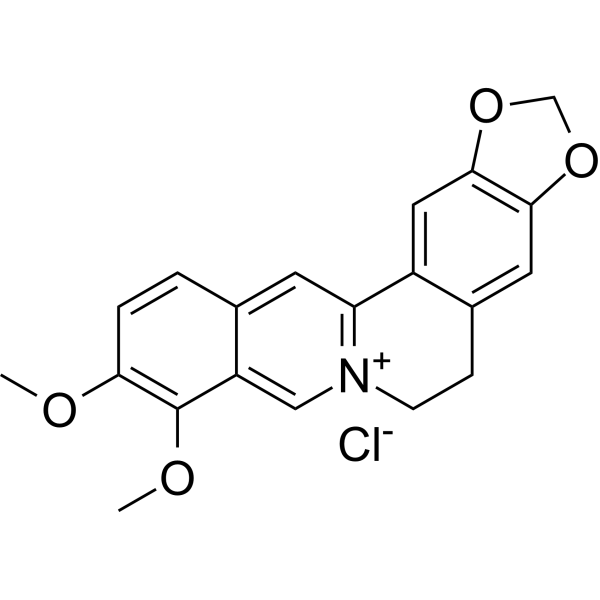
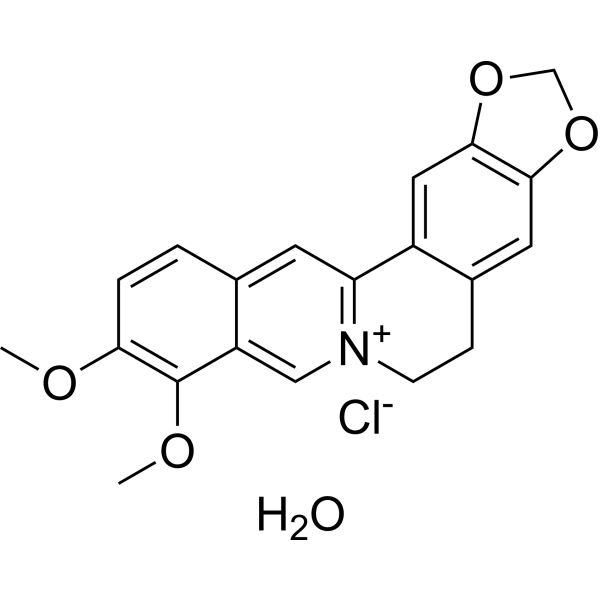
Coralyne chloride is a protoberberine alkaloid with potent anti-cancer activities. Coralyne chloride acts as a potent topoisomerase I poison and induces Top I mediated DNA cleavage . Coralyne chloride can be used for preparing?coralyne derivatives?as DNA binding fluorescent probes .
|
-
-
- HY-160774
-
|
|
Drug-Linker Conjugates for ADC
Topoisomerase
|
Cancer
|
|
Val-Cit-PABC-DOX (compound 10109), an epsilon-poly-L-lysine-based drug conjugate, is an agent-linker conjugate for ADC by using a DNA topoisomerase I and topoisomerase II inhibitor, Doxorubicin (HY-15142), linked via the linker, Val-Cit-PABC .
|
-
-
- HY-164143
-
|
|
Topoisomerase
|
Cancer
|
|
T638 is a topoisomerase II (TOP2) inhibitor. T638 inhibits TOP2A activity with a IC50 of 0.7 uM. T638 strongly inhibits cancer cell growth .
|
-
-
- HY-160806
-
|
|
ADC Payload
Topoisomerase
|
Cancer
|
|
(5-Cl)-Exatecan is a derivative of Exatecan (HY-13631) and a DNA topoisomerase inhibitor. (5-Cl)-Exatecan serves as the cytotoxic payload component in antibody-drug conjugates (ADC) targeting ROR1-positive cancers. (5-Cl)-Exatecan is applicable for the research of ROR1-positive cancers .
|
-
-
- HY-128994A
-
|
|
Drug Intermediate
|
Cancer
|
|
GGFG-Exatecan TFA is a synthetic intermediate for drug-linker conjugates used in antibody-drug conjugates (ADCs). GGFG-Exatecan TFA consists of a glycyl-glycyl-phenylalanyl-glycine (GGFG) tetrapeptide linker and a DNA topoisomerase I inhibitor Exatecan (HY-13631). GGFG-Exatecan TFA can be used for the study of cancer .
|
-
-
- HY-163487
-
|
AZD8205 drug-linker
|
Drug-Linker Conjugates for ADC
Topoisomerase
|
Cancer
|
|
Puxitatug samrotecan drug-linker (AZD8205 drug-linker) is a drug-linker conjugate for ADC, which comprises a topoisomerase I inhibitor and a linker. Puxitatug samrotecan drug-linker can be used to synthesis antibody-drug conjugate (ADC), Puxitatug samrotecan (HY-171689) .
|
-
-
- HY-106582
-
|
MST 16
|
Topoisomerase
|
Neurological Disease
Cancer
|
|
Sobuzoxane (MST-16) is an orally active topoisomerase II inhibitor. Sobuzoxane causes irreversible inhibition of cell division. Sobuzoxane can be used in the study of non-Hodgkin's lymphoma that is resistant to conventional chemotherapy or has recurred .
|
-
-
- HY-107133
-
|
|
Topoisomerase
Cytochrome P450
|
Cancer
|
|
Simmitecan hydrochloride, a 9-substituted lipophilic Camptothecin (HY-16560) derivative, is a potent topoisomerase I inhibitor. Simmitecan hydrochloride is an anticancer agent .
|
-
-
- HY-152965
-
-
-
- HY-N6054
-
|
|
Parasite
Topoisomerase
|
Infection
Inflammation/Immunology
|
|
Niranthin, a lignan with a wide spectrum of pharmacological activities. Niranthin is a potent and non-competitive inhibitor of heterodimeric type IB topoisomerase of L. donovani. Niranthin can be used for the research of drug-resistant leishmaniasis research.
|
-
-
- HY-13622A
-
|
BN 80927 free base
|
Topoisomerase
|
Cancer
|
|
Elomotecan (BN 80927 free base) is a potent inhibitor of topoisomerases I and II. Elomotecan is a camptothecin analog belonging to the homocamptothecin family (hCPT). Elomotecan reduces the proliferation of different tumor cells with higher potency than other anticancer agents of reference targeting topoisomerases I and II .
|
-
-
- HY-13622
-
|
BN 80927
|
Topoisomerase
|
Cancer
|
|
Elomotecan hydrochloride (BN 80927) is a potent inhibitor of topoisomerases I and II. Elomotecan hydrochloride (BN 80927) is a camptothecin analog belonging to the homocamptothecin family (hCPT). Elomotecan hydrochloride (BN 80927) reduces the proliferation of different tumor cells with higher potency than other anticancer agents of reference targeting topoisomerases I and II .
|
-
-
- HY-13727
-
|
BBR 2778 free base
|
Topoisomerase
|
Cancer
|
|
Pixantrone (BBR 2778 (free base)), a mitoxantrone analog, is a topoisomerase II inhibitor and DNA intercalator, with anti-tumor activity.
|
-
-
- HY-12888
-
|
|
Topoisomerase
Bacterial
|
Infection
|
|
AZD5099, an antibacterial agent, is a potent and selective bacterial topoisomerase II inhibitor. AZD5099 potently inhibits the infections caused by Gram-positive and fastidious Gram-negative bacteria .
|
-
-
- HY-128994
-
|
|
Drug Intermediate
|
Cancer
|
|
GGFG-Exatecan is a synthetic intermediate for drug-linker conjugates used in antibody-drug conjugates (ADCs). GGFG-Exatecan consists of a glycyl-glycyl-phenylalanyl-glycine (GGFG) tetrapeptide linker and a DNA topoisomerase I inhibitor Exatecan (HY-13631). GGFG-Exatecan can be used for the study of cancer .
|
-
-
- HY-13611
-
|
BN 80915
|
Topoisomerase
|
Cancer
|
|
Diflomotecan (BN 80915) is a potent and orally active inhibitor of topoisomerase I. Diflomotecan (BN 80915) causes enhanced plasma stability and has the superior preclinical anti-tumour activity compared with other established compounds .
|
-
-
- HY-179152
-
|
|
Apoptosis
Topoisomerase
|
Cancer
|
|
Apoptosis inducer 54 is an apoptosis inducer that interacts with topoisomerase II-DNA. Apoptosis inducer 54 induces cell cycle arrest at the S phase in cancer cells. Apoptosis inducer 54 significantly induces early and late apoptosis in A549 cells. Topoisomerase I-IN-20 can be used for the research of lung cancer and colon cancer .
|
-
-
- HY-13631T
-
|
(1R,9S)-DX8951f
|
Drug Derivative
ADC Payload
Topoisomerase
|
Cancer
|
|
(1R,9S)-Exatecan (DX8951f) is the (1R,9S) stereoisomer of Exatecan (HY-13631). Exatecan (DX-8951) is a DNA topoisomerase I inhibitor, with an IC50 of 2.2 μM (0.975 μg/mL), and can be used in cancer research .
|
-
-
- HY-116933
-
|
|
Topoisomerase
Bacterial
|
Infection
Inflammation/Immunology
|
|
Murrayanol is a natural carbazole alkaloid with a variety of biological activities. Murrayanol shows anti-inflammatory, topoisomerase I and topoisomerase II (Topoisomerase) inhibition activities. Murrayanol also as a mosquitocidal and antimicrobial .
|
-
-
- HY-125930
-
|
|
Topoisomerase
DNA/RNA Synthesis
|
Cancer
|
|
T-2513 is a selective topoisomerase I inhibitor. T-2513 binds covalently to and stabilizes the topoisomerase I-DNA complex and inhibits DNA replication and RNA synthesis, ultimately leading to cell death .
|
-
-
- HY-178373
-
|
|
Topoisomerase
DNA/RNA Synthesis
Reactive Oxygen Species (ROS)
MDM-2/p53
Caspase
|
Cancer
|
|
Topoisomerase I-IN-18, a derivative of Thiosemicarbazide (HY-Y0032), is a Topoisomerase I inhibitor. Topoisomerase I-IN-18 can disrupt DNA synthesis and transcription. Topoisomerase I-IN-18 inhibits tumor cell proliferation by inducing S-phase cell cycle arrest. Topoisomerase I-IN-18 can enhance mitochondria-mediated apoptosis, suppress cell migration, and increase intracellular Reactive Oxygen Species (ROS) levels. Topoisomerase I-IN-18 can increase p53 protein expression, γH2AX phosphorylation, upregulate Bax expression, downregulate Bcl-2 expression, and activate the caspase cascade. Topoisomerase I-IN-18 can be used for the study of lung cancer .
|
-
-
- HY-162587
-
|
|
Topoisomerase
|
Cancer
|
|
Fagopyrine is a DNA topoisomerase I (Topo I) inhibitor. Fagopyrine is a photosensitizer that can be used in the study of tumors .
|
-
-
- HY-143265
-
|
|
Topoisomerase
Apoptosis
Caspase
|
Cancer
|
|
Topoisomerase I inhibitor 2 (ZML-8) is a highly selective inhibitor of DNA topoisomerase I (Top1). Topoisomerase I inhibitor 2 inhibits Top1 activity and results DNA damage. Topoisomerase I inhibitor 2 blocks G2/M phase and induces apoptosis, exhibits anti-tumor effect .
|
-
-
- HY-W713570
-
|
|
Topoisomerase
|
Cancer
|
|
Nectandrin B is an inhibitor of DNA topoisomerases I and II, which is found in Saururus chinensis. Nectandrin B is promising for research of cancers .
|
-
-
- HY-174404
-
|
|
Topoisomerase
Apoptosis
Bcl-2 Family
|
Cancer
|
|
Topoisomerase II inhibitor 23 is a potent topoisomerase II inhibitor (IC50 = 0.94 μM). Topoisomerase II inhibitor 23 shows high selectivity and exceptional cytotoxic activity in MCF-7, HepG2, and HCT116 cells. Topoisomerase II inhibitor 23 induces cell cycle arrest at the G1 phase, leading to inhibition of cell proliferation. Topoisomerase II inhibitor 2 induces apoptosis by up-regulating the pro-apoptotic Bax level and down-regulating the anti-apoptotic Bcl-2 level.
|
-
-
- HY-178315
-
|
|
Topoisomerase
ADC Payload
|
Cancer
|
|
Exatecan analog 38 is a camptothecin derivative with potent topoisomerase I inhibitory activity. Exatecan analog 38 can be connected to monoclonal antibodies via linkers to form antibody-drug conjugate (ADC) molecules. Exatecan analog 38 can be used for cancer research .
|
-
-
- HY-105293
-
|
|
DNA/RNA Synthesis
Topoisomerase
|
Cancer
|
|
NSC 727357 is a DNA intercalator and topoisomerase inhibitor with antitumor activity. NSC 727357 can inhibit cells proliferation and induce G1 phase arrest. NSC 727357 can be used for the research of cancer, such as melanoma .
|
-
-
- HY-13727B
-
|
BBR 2778 hydrochloride
|
Topoisomerase
|
Cancer
|
|
Pixantrone (BBR 2778 (free base)) hydrochloride, a mitoxantrone analog, is a topoisomerase II inhibitor and DNA intercalator, with anti-tumor activity .
|
-
-
- HY-13631N
-
|
(9R)-DX8951f
|
Drug Derivative
ADC Payload
Topoisomerase
|
Cancer
|
|
(9R)-Exatecan (DX8951f) is the (1R,9S) stereoisomer of Exatecan (HY-13631). Exatecan (DX-8951) is a DNA topoisomerase I inhibitor, with an IC50 of 2.2 μM (0.975 μg/mL), and can be used in cancer research.
|
-
-
- HY-145397A
-
|
(R)-AZ14170132
|
ADC Payload
Topoisomerase
|
Cancer
|
|
(R)-(4-NH2)-Exatecan is the R enantiomer of (4-NH2)-Exatecan (Compound A). (R)-(4-NH2)-Exatecan, a topoisomerase inhibitor, is a derivative of Exatecan. (R)-(4-NH2)-Exatecan can be used in the synthesis of antibody-drug conjugates (ADCs) .
|
-
-
- HY-173243
-
|
|
Drug-Linker Conjugates for ADC
|
Cancer
|
|
Val-Ala-PAB-SN38 is a drug-linker conjugate for ADC, composed of ADC linker Val-Ala-PAB (HY-125933) and SN38 (HY-13704), which is the active metabolite of the Topoisomerase I inhibitor Irinotecan (HY-16562) .
|
-
-
- HY-161980
-
|
|
Topoisomerase
|
Infection
|
|
Topoisomerases/ribosomes-IN-1 (compound 30f) is an inhibitor of ribosomes and topoisomerases, and has inhibitory effects on constitutively macrolide-resistant bacteria. Topoisomerases/ribosomes-IN-1 can inhibit bacterial protein synthesis (IC50: 0.647 μM) and DNA replication (IC50: 0.218 μM) .
|
-
-
- HY-149002
-
|
|
Topoisomerase
Apoptosis
|
Cancer
|
|
Topoisomerase I/II inhibitor 4 (compound F16) is a potent topoisomerase I (Topo I) and II (Topo II) dual inhibitor. Topoisomerase I/II inhibitor 4 inhibits cell proliferation, invasion and migration and induces apoptosis. Topoisomerase I/II inhibitor 4 can be used for liver cancer research .
|
-
-
- HY-169106
-
|
|
Topoisomerase
Apoptosis
|
Cancer
|
|
Topoisomerase inhibitor 4 (compound 45) is a potent Topoisomerase1/2 inhibitor. Topoisomerase inhibitor 4 causes cell cycle arrest in the G2/M phase by inducing Apoptosis. Topoisomerase inhibitor 4 has antitumor activity .
|
-
-
- HY-168849
-
|
|
Topoisomerase
Bacterial
|
Infection
|
|
Topoisomerase inhibitor 5 (compound 158) is a Bacterial Topoisomerase Inhibitor inhibitor with the lowest inhibitory concentration of 0.125 μg/mL. Topoisomerase inhibitor has antituberculous activity .
|
-
-
- HY-156969
-
|
|
Topoisomerase
Btk
|
Cancer
|
|
Topoisomerase I inhibitor 11 is a potent inhibitor of Topoisomerase I. Topoisomerase I inhibitor 11 can bind to BTK .
|
-
-
- HY-N15319
-
|
Canangine
|
Topoisomerase
Fungal
|
Infection
|
|
Eupolauridine (Canangine) is a selective DNA topoisomerase II inhibitor with IC50 values of 20 μM for fungal topoisomerase I and 33 μM for human topoisomerase I. Eupolauridine exerts antifungal activity by inhibiting the catalytic activity of topoisomerase II and stabilizing its cleavage complex with DNA, leading to DNA damage. Eupolauridine is promising for research of fungal infectious diseases .
|
-
-
- HY-117543
-
|
AMP-53; 6-Ethoxyazonafide
|
Topoisomerase
|
Cancer
|
|
Ethonafide (AMP-53) is an anthracene-containing derivative of Amonafide that belongs to the Azonafide series of anticancer agents. Ethonafide (AMP-53) inhibits topoisomerase II activity by stabilizing the enzyme-DNA complex, involving both topoisomerase IIα and β .
|
-
-
- HY-174837
-
|
|
Topoisomerase
|
Cancer
|
|
Topoisomerase IIα-IN-11 (Compound 16h) is a potent Topoisomerase IIα inhibitor. Topoisomerase IIα-IN-11 shows significant inhibition on melanoma A2058 cell lines (IC50 3-6 μM). Topoisomerase IIα-IN-11 is promising for research of cancers (especially melanoma) .
|
-
-
- HY-146437
-
|
|
Topoisomerase
|
Cancer
|
|
Topoisomerase I inhibitor 6 (Compound 3) is a potent inhibitor of Topoisomerase I. Topoisomerase I inhibitor 6 is able to trap DNA-Top1 cleavage complex and found to be less cytotoxic in non-cancerous cell line. Topoisomerase I inhibitor 6 has the potential for the research of cancer diseases .
|
-
- HY-162342
-
|
|
Topoisomerase
|
Cancer
|
|
Topoisomerase I inhibitor 14 (Compound 4h) is an inhibitor for Topoisomerase I. Topoisomerase I inhibitor 14 inhibits proliferation of A549 and C6 with IC50s of 4.56 μM and 13.17 μM, without significant toxicity in healthy cells NIH3T3 (IC50 is 74.44 μM), which exhibits anticancer potency .
|
-
- HY-W278582
-
|
|
Topoisomerase
Apoptosis
|
Cancer
|
|
Topoisomerase II inhibitor 14 is a potent topoisomerase II inhibtor. Topoisomerase II inhibitor 14 induces apoptosis and arrests cell cycle at S phase and G2-M phases. Topoisomerase II inhibitor 14 exhibits antioxidant effect and decreases the level of GSH, MDA, and NO. Topoisomerase II inhibitor 14 can be used for the study of neck squamous cell carcinoma (HNSCC) .
|
-
- HY-163118
-
|
|
Topoisomerase
Apoptosis
|
Cancer
|
|
Topoisomerase II inhibitor 17 (compound 4c) is an inhibitor of thiazolopyrimidine topoisomerase (Topoisomerase) Top II (IC50: 0.23 μM). Topoisomerase II inhibitor 17 can significantly cause cell cycle disruption and apoptosis .
|
-
- HY-179018
-
|
|
Topoisomerase
Reactive Oxygen Species (ROS)
Apoptosis
|
Cancer
|
|
Topoisomerase II-IN-25 (Compound 6a) is a selective inhibitor of topoisomerase II and has no inhibitory activity on topoisomerase I. Topoisomerase II-IN-25 exhibits significant anti-PC-3 cell activity. Topoisomerase II-IN-25 significantly increases intracellular ROS levels, inducing oxidative stress. Topoisomerase II-IN-25 causes depolarization of mitochondrial membrane potential and promotes cell apoptosis. Topoisomerase II-IN-25 blocks PC-3 cells in the G2/M phase. Topoisomerase II-IN-25 can be used for the study of prostate cancer .
|
-
- HY-162381
-
|
|
Topoisomerase
|
Cancer
|
|
Topoisomerase II inhibitor 19 (compound 5h) is a DNA intercalator and topoisomerase II inhibitor (IC50 value of 0.34 μM). Topoisomerase II inhibitor 19 would induce detectable potent damage in ctDNA .
|
-
- HY-155645
-
|
|
Topoisomerase
Apoptosis
|
Cancer
|
|
Topoisomerase II inhibitor 15 (compound 2g) is a Topoisomerase II inhibitor. Topoisomerase II inhibitor 15 potently is an apoptotic inducer with greater selectivity against head and neck tumors .
|
-
- HY-174227
-
|
|
Topoisomerase
Bacterial
|
Infection
|
|
Topoisomerase inhibitor 6 (Compound REDX05931) is a dual irreversible inhibitor of DNA gyrase and topoisomerase IV (MIC=0.06 μg/mL against fluoroquinolone-resistant S. aureus). Topoisomerase inhibitor 6 blocks DNA strand break-reunion, inducing lethal DNA damage. Topoisomerase inhibitor 6 is promising for research of Gram-positive bacterial infections (e.g., S. aureus, S. pneumoniae) .
|
-
- HY-175853
-
|
|
Topoisomerase
Apoptosis
Caspase
|
Cancer
|
|
Topoisomerase II-IN-24 is a Topoisomerase IIα inhibitor with an IC50 of 41.67 μM. Topoisomerase II-IN-24 can inhibit cancer cells proliferation, induce G2/M phase arrest and induce apoptosis. Topoisomerase II-IN-24 can be used for the research of cancer, such as colon cancer .
|
-
- HY-172229
-
|
|
Topoisomerase
Bacterial
|
Infection
|
|
NBTI 5463 is a bacterial type II topoisomerases (topoisomerase II) inhibitor with antibacterial activity. NBTI 5463 inhibits GyrA and TopoIV in Pseudomonas aeruginosa and Escherichia coli. NBTI 5463 binds to topoisomerase II to prevent DNA cleavage and religation, inhibiting bacterial DNA replication and transcription. NBTI 5463 is promising for research of Gram-negative bacterial infection .
|
-
- HY-123363
-
|
F-11782
|
Topoisomerase
|
Cancer
|
|
Tafluposide (F-11782) is a DNA topoisomerase inhibitor. Tafluposide has antitumor activity .
|
-
- HY-146497
-
|
|
Topoisomerase
|
Cancer
|
|
Topoisomerase I inhibitor 7 (Compound 8) is a potent inhibitor of Topoisomerase I. Topoisomerase I inhibitor 7 significantly inhibits tumor growth (up to 79%) and increases the lifespan (153%) of mice bearing P388 lymphoma transplants. Topoisomerase I inhibitor 7 indicates prospects for further search of new antitumor agent candidates among the heteroarene-fused anthraquinones .
|
-
- HY-149309
-
|
|
Topoisomerase
|
Infection
|
|
Topoisomerase inhibitor 2 (18C) is a bacterial topoisomeraseinhibitor that exhibits potent broad-spectrum activity against multidrug-resistant Gram-negative bacteria .
|
-
- HY-W781148
-
|
|
Topoisomerase
|
Cancer
|
|
Sutopin-2 is a topoisomerase II inhibitor. Suptopin-2 affects cell cycle progression and stability of microtubules. Sutopin-2 induces cell cycle arrest by regulating the nucleocytoplasmic transport of cyclin B1 .
|
-
- HY-173458
-
|
|
Topoisomerase
|
Infection
|
|
NBTIs-IN-7 (compound 276) is a novel bacterial topoisomerase (NBTIs) inhibitor. NBTIs-IN-7 induces both single- and double-strand DNA strand breaks in the presence of gyrase .
|
-
- HY-162101
-
|
|
Topoisomerase
|
Cancer
|
|
Topoisomerase inhibitor 3 (compound 9) is a potent Topoisomerase inhibitor. Topoisomerase inhibitor 3 shows antiproliferative and anti-tumor activity .
|
-
- HY-125930A
-
|
|
Topoisomerase
DNA/RNA Synthesis
|
Cancer
|
|
T-2513 hydrochloride is a selective topoisomerase I inhibitor. T-2513 hydrochloride binds covalently to and stabilizes the topoisomerase I-DNA complex and inhibits DNA replication and RNA synthesis, ultimately leading to cell death .
|
-
- HY-113642
-
|
|
Topoisomerase
|
Cancer
|
|
CP-67804 is a quinolone derivative, is a topoisomerase II-targeted agent. CP-67804 effectively enhances DNA cleavage mediated by eukaryotic topoisomerase II. CP-67804 has potential as an antineoplastic agent .
|
-
- HY-147861
-
|
|
Topoisomerase
Apoptosis
|
Cancer
|
|
Topoisomerase II inhibitor 11 (compound 3d) is a potent Topoisomerase II inhibitor, with an IC50 of 2.89 μM. Topoisomerase II inhibitor 11 shows 92.46% inhibition on renal cancer cell line A498 with an IC50 of 3.5 μM. Topoisomerase II inhibitor 11 causes cell cycle arrest at the G2/M phase leading to cell proliferation inhibition and pro-apoptotic activity .
|
-
- HY-146316
-
|
|
Topoisomerase
|
Cancer
|
|
Topoisomerase II inhibitor 6 (Compound 5), a tryptanthrin derivative, is a potent and selective inhibitor of topoisomerase II. Topoisomerase II inhibitor 6 exhibits antiproliferative activity on different tumor cell lines. Topoisomerase II inhibitor 6 blocks the cell cycle of CCRF-CEM in the G2 phase and induces DNA DSB. Topoisomerase II inhibitor 6 has the potential for the research of cancer diseases .
|
-
- HY-155693
-
|
|
Topoisomerase
Parasite
|
Infection
|
|
Topoisomerase II inhibitor 16 (compound CT3) is a selective, orally active, brain-penetrant and irreversible trypanosomal topoisomerase II inhibitor by stabilizing double-stranded DNA:enzyme cleavage complexes. Topoisomerase II inhibitor 16 has the potential for Chagas disease research .
|
-
- HY-N10367
-
|
|
Topoisomerase
|
Cancer
|
|
Corydamine, 3-arylisoquinoline alkaloid, is a potent DNA topoisomerase I/II inhibitor. Corydamine has anti-cancer activity .
|
-
- HY-162271
-
|
|
Topoisomerase
Fungal
|
Infection
|
|
Antibacterial agent 187 (IKE7) is a derivative containing imidazole and triazolacridone structures that target yeast topoisomerase II. Antibacterial agent 187 has antifungal activity and MIC value of resistance to fluconazole (HY-B0101) is 32-64 μg/mL .
|
-
- HY-B0395D
-
|
(1R,2S,7R)-DU-6859a; DU-6857
|
Topoisomerase
Bacterial
|
Inflammation/Immunology
|
(R)-Sitafloxacin (DU-6857), a stereoisomer of Sitafloxacin (DU-6859a), is also an inhibitor of topoisomerases, with an IC50 of 0.18 μg/mL of DNA gyrase .
|
-
- HY-167671
-
|
|
Topoisomerase
|
Cancer
|
|
BE-10988 is a DNA topoisomerase inhibitor. BE-10988 inhibits the growth of Doxorubicin (HY-15142A)-resistant and vincristine-resistant P388 mouse leukemia cell lines by increasing the formation of DNA topoisomerase complexes .
|
-
- HY-13622B
-
|
BN 80927 TFA
|
Topoisomerase
|
Cancer
|
|
Elomotecan TFA is a potent inhibitor of topoisomerases I and II. Elomotecan TFA is a camptothecin analog belonging to the homocamptothecin family (hCPT). Elomotecan TFA reduces the proliferation of different tumor cells with higher potency than other anticancer agents of reference targeting topoisomerases I and II .
|
-
- HY-105178A
-
|
DA 125
|
Drug Derivative
DNA Alkylator/Crosslinker
Topoisomerase
Apoptosis
JNK
|
Cancer
|
|
Galarubicin hydrochloride (DA 125) is a novel Anthracycline derivative. Galarubicin hydrochloride shows high-affinity DNA binding and topoisomerase II inhibitory activities. Galarubicin hydrochloride induces Apoptosis. Galarubicin hydrochloride exerts cytotoxicity via JNK pathway. Galarubicin hydrochloride can be used in the research of hepatocellular carcinoma .
|
-
- HY-148719
-
|
|
Topoisomerase
|
Cancer
|
|
ARN24139(compound 3f) is a topoisomerase II (topoII) inhibitor with the IC50 of 7.3 μM. ARN24139 can inhibit cancer cell proliferation and is well tolerated in vivo .
|
-
- HY-177548
-
-
- HY-N15597
-
|
NSC 34757
|
Topoisomerase
|
Cancer
|
|
Melicopidine (NSC 34757) is a DNA topoisomerase inhibitor, which is an acridone alkaloid found in the bark of Medicosma subsessilis. Melicopidine exerts potential antitumor activity by binding to DNA or inhibiting related enzyme activity .
|
-
- HY-W665464
-
|
|
Drug Derivative
Topoisomerase
|
Cancer
|
|
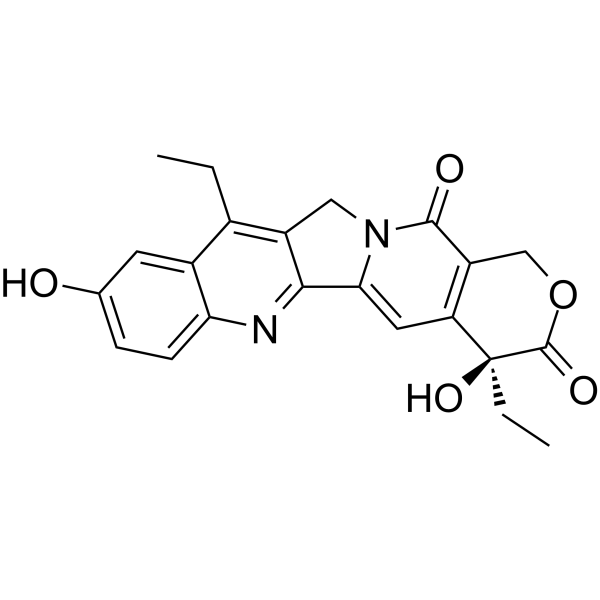
(Rac)-7-Ethyl-10-hydroxycamptothecin is the derivative of (±)-10-Hydroxycamptothecin (HY-N0275). (±)-10-Hydroxycamptothecin is an indole alkaloid that inhibits the activity of topoisomerase I and has a broad spectrum of anticancer activity .
|
-
- HY-N6054R
-
|
|
Reference Standards
Parasite
Topoisomerase
|
Infection
Inflammation/Immunology
|
|
Niranthin (Standard) is the analytical standard of Niranthin. This product is intended for research and analytical applications. Niranthin, a lignan with a wide spectrum of pharmacological activities. Niranthin is a potent and non-competitive inhibitor of heterodimeric type IB topoisomerase of L. donovani. Niranthin can be used for the research of drug-resistant leishmaniasis research.
|
-
- HY-119425R
-
|
ICRF 159 (Standard)
|
Topoisomerase
Reference Standards
|
Cancer
|
|
Razoxane (Standard) is the analytical standard of Razoxane. This product is intended for research and analytical applications. Razoxane (ICRF 159) is an antiangiogenic topoisomerase II inhibitor, can be used for the research of renal cell carcinoma (RCC) .
|
-
- HY-13727AR
-
|
BBR 2778 (Standard)
|
Reference Standards
Topoisomerase
|
Cancer
|
|
Pixantrone (Standard) is the analytical standard of Pixantrone. This product is intended for research and analytical applications. Pixantrone (BBR 2778) dimaleate is a topoisomerase II inhibitor and DNA intercalator, with anti-tumor activity.
|
-
- HY-120747
-
|
|
Bacterial
DNA/RNA Synthesis
|
Infection
|
|
A-65282 is an antibacterial agent. A-65282 inhibits P4 DNA unknotting with an IC50 value of 8 µg/mL. A 65281 induces DNA breakage mediated by calf thymus topoisomerase II .
|
-
- HY-N4329
-
|
|
Topoisomerase
|
Others
|
|
Nidulalin A is a DNA topoisomerase II inhibitor with an IC50 of 2.2 μM. Nidulalin A has an IC50 of 172 μM for DNA topoisomerase I. Nidulalin A has certain cytotoxicity .
|
-
- HY-N2062
-
|
|
Topoisomerase
|
Cancer
|
|
10-Nitrocamptothecin is a topoisomerase I inhibitor with an IC50 of 0.64 μM. 10-Nitrocamptothecin interferes with the formation of cleavable complexes, thereby inhibiting the activity of Topoisomerase I. 10-Nitrocamptothecin is applicable for cancer research .
|
-
- HY-203913
-
|
|
Topoisomerase
|
Cancer
|
|
Topoisomerase I-IN-19 (Example 36) is a Topoisomerase I inhibitor. Topoisomerase I-IN-19 can be used to investigate Topoisomerase I-mediated diseases such as cancer .
|
-
- HY-135255
-
|
|
Topoisomerase
DNA/RNA Synthesis
|
Cancer
|
|
NSC 660028 is a DNA topoisomerase II (DNA topoisomerase II) inhibitor with an ID50 of 50 μM. NSC 660028 inhibits DNA topoisomerase II and induces protein-linked DNA breaks. NSC 660028 can be used for cancer research .
|
-
- HY-181725
-
|
|
Topoisomerase
Apoptosis
MDM-2/p53
Caspase
Bcl-2 Family
Reactive Oxygen Species (ROS)
|
Cancer
|
|
Topoisomerase I-IN-20 is a Topoisomerase I inhibitor. Topoisomerase I-IN-20 disrupts DNA synthesis and transcription, thereby inhibiting the proliferation and migration of cancer cells. Topoisomerase I-IN-20 induces S-phase cell cycle arrest and mitochondria-mediated Apoptosis in cancer cells, which is characterized by upregulated expression of p53, Bax, caspase-3 and caspase-9, along with downregulated expression of Bcl-2. Topoisomerase I-IN-20 increases intracellular ROS levels. Topoisomerase I-IN-20 is applicable to lung cancer-related research .
|
-
- HY-19024R
-
|
NSC 336628 (Standard)
|
Topoisomerase
Reference Standards
|
Cancer
|
|
Merbarone (Standard) is the analytical standard of Merbarone. This product is intended for research and analytical applications. Merbarone (NSC 336628) is an orally active inhibitor of topoisomerase II. Merbarone acts primarily by blocking topoisomerase II-mediated DNA cleavage without stabilizing topo II-DNA covalent complexes. Merbarone is an anticancer agent .
|
-
- HY-182816
-
|
|
Topoisomerase
DNA/RNA Synthesis
Bacterial
|
Infection
|
|
Topoisomerase I-IN-22 is an inhibitor of MRSA DNA Topoisomerase I with an IC50 of 0.85 μg/mL. Topoisomerase I-IN-22 can specifically disrupt the cell membrane structure of MRSA, enter the interior of bacteria and inhibit the activity of DNA Topoisomerase I, thereby interfering with the processes of DNA replication and transcription. Topoisomerase I-IN-22 can be used for the research of MRSA infection .
|
-
- HY-117613
-
|
|
Topoisomerase
|
Cancer
|
|
A-74932 hydrochloride is a potent Top II inhibitor with antitumor activity. A-74932 hydrochloride inhibits the catalytic activity of mammalian DNA topoisomerase II. A-74932 hydrochloride can be used for cancer research .
|
-
- HY-182926
-
|
|
DNA/RNA Synthesis
Topoisomerase
|
Cancer
|
|
Topoisomerase I/II-IN-9 is a topoisomerase I/II inhibitor (IC50<10 μM) and a DNA damage inducer. Topoisomerase I/II-IN-9 blocks the interaction between the enzyme and DNA by binding to the DNA-binding pocket of the enzyme. Topoisomerase I/II-IN-9 activates the cGAS-STING pathway and promotes the accumulation of cytoplasmic double-stranded DNA. This further drives the production of type I interferons, CCL5, CXCL10 and interferon-stimulated genes, and induces anti-tumor immune responses in vivo. Topoisomerase I/II-IN-9 can be applied to the research of related diseases such as triple-negative breast cancer, colorectal cancer and gastric cancer .
|
-
- HY-180823
-
|
|
Topoisomerase
EGFR
Apoptosis
Caspase
Bcl-2 Family
|
Cancer
|
|
Topoisomerase II/EGFR-IN-2 (Compound 3) is an inhibitor of Topoisomerase IIα (IC50 = 0.122 μM) and EGFR-TK WT (IC50 = 16.8 μM). Topoisomerase II/EGFR-IN-2 inhibits the proliferation of HeLa and HepG2 cells, inducing cell cycle arrest and apoptosis. Topoisomerase II/EGFR-IN-2 upregulates caspase-3 and Bax, and downregulates Bcl-2. Topoisomerase II/EGFR-IN-2 can be used to study liver cancer and cervical cancer .
|
-
- HY-182054
-
|
|
Topoisomerase
Beclin1
Autophagy
Apoptosis
|
Cancer
|
|
Topoisomerase ll/ME-1-IN-1 (Compound 7a) is a Topoisomerase ll and ME-1 inhibitor with an IC50 of 5.03 μM against Topoisomerase ll. Topoisomerase ll/ME-1-IN-1 functionally inhibits the activity of Topoisomerase II and functionally blocks the activity of ME-1. Topoisomerase ll/ME-1-IN-1 induces Autophagy by upregulating the expression of Beclin-1 and LC3-II. Topoisomerase ll/ME-1-IN-1 promotes Apoptosis. Topoisomerase ll/ME-1-IN-1 exhibits antiproliferative activity against breast cancer cells and shows no toxicity to normal mammary epithelial cells. Topoisomerase ll/ME-1-IN-1 can be used in studies related to breast cancer (including triple-negative breast cancer) .
|
-
- HY-13631G
-
|
|
ADC Payload
Topoisomerase
|
Cancer
|
|
Exatecan analog 13 is a analog of Exatecan (HY-13631). Exatecan (DX-8951) is a common toxin component in ADC preparation (ADC Cytotoxin) and an inhibitor of DNA topoisomerase I (IC50 = 2.2 μM) .
|
-
- HY-N19832
-
|
|
Topoisomerase
Parasite
|
Infection
|
|
Icariside E3 is a Leishmania donovani DNA Topoisomerase IB (LdTOP1LS) inhibitor. Icariside E3 can be used for the research of leishmaniasis .
|
-
- HY-N18220
-
|
|
Others
|
Others
|
|
Naringenin-7-O-(3″,6″-di-O-p-E-coumaroyl)-β-glucopyranoside (Compound 7) is a flavonoid found in Cnidoscolus texanus. Naringenin-7-O-(3″,6″-di-O-p-E-coumaroyl)-β-glucopyranoside does not functionally modulate DNA topoisomerase I activity .
|
-
- HY-181820
-
|
|
Topoisomerase
DNA Glycosylase
Bacterial
|
Infection
|
|
Topoisomerase IV-IN-3 is a Staphylococcus aureus Topoisomerase IV inhibitor, DNA gyrase inhibitor and antibacterial agent. Topoisomerase IV-IN-3 has IC50 values of 1.32 μM and 0.48 μM against topoisomerase IV, and 0.88 μM and 0.54 μM against DNA gyrase. Topoisomerase IV-IN-3 inhibits decatenation, ATPase, and supercoiling activities of its target enzymes. Topoisomerase IV-IN-3 exerts antibacterial activity against Gram-positive and Gram-negative bacterial strains. Topoisomerase IV-IN-3 exhibits low cytotoxicity toward human fibroblast cells. Topoisomerase IV-IN-3 can be used for the research of bacterial infections .
|
-
- HY-N8250
-
|
|
Topoisomerase
PEPCK
|
Metabolic Disease
|
|
cis-THSG is a selective and orally active DNA topoisomerase II inhibitor with no activity against DNA topoisomerase I. cis-THSG suppresses transcription of PEPCK. cis-THSG reduces blood glucose levels, ameliorates glucose intolerance, and alleviates insulin resistance in high fat diet-induced diabetic male CF-1 mice. cis-THSG can be used for the research of type 2 diabetes mellitus .
|
-
- HY-173243A
-
|
|
Drug-Linker Conjugates for ADC
|
Cancer
|
|
Val-Ala-PAB-SN38 TFA is a drug-linker conjugate for ADC, composed of ADC linker Val-Ala-PAB (HY-125933) and SN38 (HY-13704), which is the active metabolite of the Topoisomerase I inhibitor Irinotecan (HY-16562) .
|
-
- HY-180509
-
|
|
Topoisomerase
MDM-2/p53
|
Cancer
|
|
Topoisomerase I/IIα-IN-1 (Compound 20i) is a Topoisomerase I/IIα inhibitor. MDM2-IN-27 can effectively block the inhibitory effect of MDM2 on p53, thereby activating the p53 pathway. MDM2-IN-27 has relatively poor anti-proliferative activity against breast cancer, colon cancer, and cutaneous squamous cell carcinoma .
|
-
- HY-W087058
-
|
|
Topoisomerase
|
Infection
|
|
1,4-Di-tert-butylbenzene is a volatile compound identified in the hexane extracts of corn cob and green millet. 1,4-Di-tert-butylbenzene shows potent inhibition against receptor proteins of Bacterial type II topoisomerase (4PLB and LpxC) in docking analysis .
|
-
- HY-139909
-
|
|
Drug-Linker Conjugates for ADC
|
Cancer
|
|
CL2E-SN-38, a highly releasable and structurally stable antibody-SN-38-conjugate, is a part of the antibody drug conjugate (ADC). SN-38, the active metabolite of Irinotecan from camptothecins, is an Topoisomerase I inhibitor .
|
-
- HY-156723
-
|
|
Topoisomerase
|
Cancer
|
|
9-Chloromethyl-10-hydroxy-11-F-Camptothecin is a novel camptothecin derivatives. 9-Chloromethyl-10-hydroxy-11-F-Camptothecin is a DNA topoisomerase I (Topo I) inhibitor, can be used in anticancer research .
|
-
- HY-139909A
-
|
|
Drug-Linker Conjugates for ADC
|
Cancer
|
|
CL2E-SN-38 TFA, a highly releasable and structurally stable antibody-SN-38-conjugate, is a part of the antibody drug conjugate (ADC). SN-38, the active metabolite of Irinotecan from camptothecins, is an Topoisomerase I inhibitor .
|
-
- HY-143484
-
|
|
Bacterial
|
Infection
|
|
844-TFM is a NBTI (novel bacterial topoisomerase inhibitor) DNA gyrase inhibitor, with an IC50 of 1.5 μM. 844-TFM exhibits bactericidal properties against M. abscessus .
|
-
- HY-119425
-
|
ICRF 159
|
Topoisomerase
|
Cancer
|
|
Razoxane (ICRF 159), a EDTA (HY-Y0682) derivative, is an orally active antiangiogenic topoisomerase II inhibitor. Razoxane has antineoplastic, antiangiogenic, and antimetastatic activities. Razoxanecan be used for the research of renal cell carcinoma (RCC), lung cancer and melanoma cancer .
|
-
- HY-N0872R
-
-
- HY-106556
-
|
Rubidazon; Rubidazone
|
DNA/RNA Synthesis
Topoisomerase
|
Cancer
|
|
Zorubicin (Rubidazon) is a derivative of Daunorubicin (HY-13062A). Zorubicin interacts with topoisomerase II and inhibits DNA polymerases. Zorubicin can be used for the research of acute leukemias and sarcomas .
|
-
- HY-175741
-
|
|
Parasite
Topoisomerase
|
Infection
|
|
IID432 is a Trypanosoma cruzi Topoisomerase II inhibitor with an EC50 of 8 nM for Trypanosoma cruzi. IID432, a single dose of 25 mg/kg, can achieve relapse-free parasite clearance in mouse models of chronic Chagas disease. IID432 can be used for Chagas disease research .
|
-
- HY-137466
-
|
|
Topoisomerase
|
Cancer
|
|
ARN-21934 is a potent, highly selective, blood-brain barrier (BBB) penetrant inhibitor for human topoisomerase II α over β. ARN-21934 inhibits DNA relaxation with an IC50 of 2 μM as compared to the anticancer agent Etoposide (IC50=120 μM). ARN-21934 exhibits a favorable in vivo pharmacokinetic profile and is a promising lead compound for anticancer research .
|
-
- HY-145399
-
|
SG 3932; AZ-0133
|
Drug-Linker Conjugates for ADC
Topoisomerase
|
Cancer
|
|
AZ14170133 (SG 3932; AZ-0133) is a Drug-Linker Conjugates for ADC. AZ14170133 consists of the ADC cytotoxic payload topoisomerase 1 inhibitor and a linker. AZ14170133 can be used for synthesis of ADC AZD9592 (HY-171124) and AZD 8205 (HY-171689). AZ14170133 can be used for the research of cancer .
|
-
- HY-177495
-
|
|
Drug-Linker Conjugates for ADC
Topoisomerase
|
Cancer
|
|
LD-38 is a drug-linker conjugate for ADC. LD-38 consists of a topoisomerase 1 inhibitor (Exatecan) (HY-13631) and a highly hydrophilic stable and cleavable linker. LD-38 can be used for synthesis of ADCs, such as KA-3123-LD38 .
|
-
- HY-180508
-
|
|
MDM-2/p53
Topoisomerase
|
Cancer
|
|
MDM2-IN-27 (Compound 20k) is an MDM2 inhibitor. MDM2-IN-27 can effectively block the inhibitory effect of MDM2 on p53, thereby activating the p53 pathway. MDM2-IN-27 has a certain topoisomerase I inhibitory activity and has a very weak inhibitory effect on topoisomerase IIα. MDM2-IN-27 exhibits significant anti-proliferative activity against breast cancer, colon cancer, and cutaneous squamous cell carcinoma .
|
-
- HY-120679A
-
|
NSC 697887 sodium
|
Topoisomerase
|
Neurological Disease
Cancer
|
|
XK469 (NSC 697887) sodium is a quinoxaline-based topoisomerase II inhibitor. XK469 sodium exhibits antiproliferative activity against neuroblastoma cells. XK469 sodium can be used in the research of neuroblastoma .
|
-
- HY-100777
-
|
|
Topoisomerase
|
Neurological Disease
Cancer
|
|
DACA (XR 5000) is a potential and blood-brain barrier-penetrating topoisomerase I and II inhibitor. DACA can be used in the research of colorectal cancer, leukemia and lung cancer .
|
-
- HY-N1457
-
|
|
P-glycoprotein
Topoisomerase
Apoptosis
DNA/RNA Synthesis
Wnt
β-catenin
Parasite
|
Infection
Metabolic Disease
Cancer
|
|
Chrysosplenetin is an orally active polymethoxyflavone. Chrysosplenetin exerts anticancer effects by inhibiting topoisomerase, protecting DNA and inducing apoptosis. Chrysosplenetin acts as an antimalarial sensitizer, reverses Artemisinin (HY-B0094) resistance by inhibiting and downregulating P-glycoprotein, and enhances the efficacy of Artemisinin. Chrysosplenetin promotes bone formation by activating the Wnt/β-catenin pathway and exerts anti-osteoporotic effects .
|
-
- HY-114684
-
|
|
Topoisomerase
|
Others
|
|
A20832 is a specific resolvase inhibitor that blocks both the recombination and topoisomerase activities of resolvase. A20832 inhibits the site-specific recombination reaction mediated by the Tn3-encoded resolvase protein at the strand cleavage step and has no effect on synapsis .
|
-
- HY-183330
-
|
|
Topoisomerase
Reactive Oxygen Species (ROS)
Apoptosis
MDM-2/p53
Caspase
Bcl-2 Family
|
Cancer
|
|
Topo I/II-IN-3 is a dual inhibitor of topoisomerase I/II (topoisomerase I/II), with an IC50 of 8.99 μM against Topo I and an IC50 of 26.92 μM against Topo II. Topo I/II-IN-3 induces DNA damage, elevates intracellular ROS levels, activates the mitochondrial apoptosis pathway, and exerts cytotoxicity against cancer cells. Topo I/II-IN-3 upregulates the expression of γ-H2AX, p53, activated caspase-9, Bax and activated caspase-3, while downregulating the expression of Bcl-2. Topo I/II-IN-3 can be used in research related to breast cancer, liver cancer and gastric cancer .
|
-
- HY-N10495
-
|
|
Antibiotic
Bacterial
Topoisomerase
|
Infection
|
|
Seconeolitsine, an antibiotic, and is an inhibitor of targeting topoisomerase I (TopA). Seconeolitsine also is a new antimicrobial agent that can inhibit S. pneumoniae growth. Seconeolitsine can inhibit TopA relaxation activity with an IC50 value of 17 μM. Seconeolitsine can be used for the research of S. pneumoniae infections resistant to other antibiotics .
|
-
- HY-164792
-
-
- HY-121782
-
|
|
Bacterial
DNA/RNA Synthesis
|
Infection
|
|
A 65281 is a potent DNA gyrase inhibitor with an IC50 value of 0.1 µg/mL. A 65281 induces DNA breakage mediated by calf thymus topoisomerase II. A 65281 inhibits P4 DNA unknotting with an IC50 value of 8 µg/mL .
|
-
- HY-164380
-
|
|
Drug-Linker Conjugates for ADC
Topoisomerase
|
Cancer
|
|
MC-Val-Cit-Gly-exatecan-β-D-glucopyranosiduronic acid (example 13) is a drug-linker conjugate that consists of a DNA topoisomerase I inhibitor Exatecan (HY-13631) and a linker (HY-180841). MC-Val-Cit-Gly-exatecan-β-D-glucopyranosiduronic acid can be used in synthesis of ADC .
|
-
- HY-145427
-
|
|
DNA-PK
|
Cancer
|
|
NU5455 is a potent, selective, and orally active inhibitor of DNA-PKcs. NU5455 administration increases both the efficacy and the toxicity of a parenterally administered topoisomerase inhibitor. NU5455 enhances the activity of Doxorubicin released locally in liver tumor xenografts without inducing any adverse effect .
|
-
- HY-149410
-
|
|
Topoisomerase
|
Cancer
|
|
MSN8C, an analog of mansonone E, is a novel catalytic inhibitor of human DNA topoisomerase II. MSN8C induces cancer cell apoptosis. MSN8C shows significant anti-tumor cell proliferation activity in vitro .
|
-
- HY-N2108
-
|
|
Drug Derivative
Drug Intermediate
Topoisomerase
|
Cancer
|
|
7-Ethylcamptothecin is a derivative of Camptothecin (HY-16560) and a DNA topoisomerase I inhibitor that exhibits significant antitumor activity against tumor cells. 7-Ethylcamptothecin serves as a key precursor for the synthesis of 20 (S)-O-substituted benzoyl-7-ethylcamptothecin compounds. 7-Ethylcamptothecin is widely used in various tumor-related scientific studies .
|
-
- HY-B0013
-
|
(-)-Ofloxacin lactate
|
Bacterial
DNA/RNA Synthesis
|
Infection
|
|
Lavofloxacin lactate ((-)-ofloxacin lactate) is a class of broad-spectrum antimicrobials that can kill or inhibit a variety of bacteria. Lavofloxacin lactate binds to DNA rotase and topoisomerase IV, resulting in blocked DNA replication and repair, thus inhibiting bacterial growth. Lavofloxacin lactate can be used to study resistance mechanisms in bacteria, including studying resistance genes and mutations .
|
-
- HY-175272
-
|
|
Drug-Linker Conjugates for ADC
Topoisomerase
|
Cancer
|
|
DBCO-PEG8-VKG-CPT2 is a drug-linker conjugate for ADC. DBCO-PEG8-VKG-CPT2 consists of a topoisomerase 1 inhibitor (7-MAD-MDCPT) (HY-132162) and a stable and cleavable linker (DBCO-PEG8-VKG) (HY-175426). DBCO-PEG8-VKG-CPT2 can be used for synthesis of ADCs .
|
-
- HY-143483
-
|
|
Bacterial
|
Infection
|
|
NBTIs-IN-5 (Compound 5r) is a NBTI (Novel Bacterial Topoisomerase Inhibitor) DNA gyrase inhibitor with an IC50 of 1.5 μM against Mycobacterium abscessus (Mabs) DNA gyrase. NBTIs-IN-5 inhibits Mabs bamboo bacterial growth with an MIC90 of 0.4 μM .
|
-
- HY-W715630
-
|
|
Topoisomerase
|
Cancer
|
|
Salvicine is a DNA topoisomerase II inhibitor (IC50=3 μM). Salvicine increases the interaction between DNA and Topo II by interacting with the ATPase domain, inhibiting DNA degradation and ATP hydrolysis. Salvicine has anticancer activities, including inhibiting Topo II, causing DNA damage, overcoming multidrug resistance, and inhibiting tumor cell adhesion .
|
-
- HY-180414
-
|
|
Bacterial
Topoisomerase
|
Infection
|
|
Premafloxacin is a potent antimicrobial agent that exhibits activity against Staphylococcus aureus, Corynebacterium bovis, and Corynebacterium amylocolatum. Premafloxacin demonstrated potent antimicrobial activity against S. aureus by targeting topoisomerase IV, and is a poor substrate for NorA efflux pump. Premafloxacin can be used for antimicrobial research .
|
-
- HY-134290
-
|
|
Topoisomerase
|
Cancer
|
|
8-Chloro-ATP, an ATP (HY-B2176) analog, is a topoisomerase II (Topo II) inhibitor. 8-Chloro-ATP inhibits DNA synthesis and induces DNA double-stranded breaks (DSBs). 8-Chloro-ATP inhibits Topo II-catalyzed ATP hydrolysis .
|
-
- HY-109113
-
|
GPX-150
|
Topoisomerase
|
Cancer
|
|
Camsirubicin (GPX-150) is a non-cardiotoxic Doxorubicin (HY-15142) analog that selectively targets topoisomerase IIβ. Camsirubicin reduces cell viability and clone formation of MDA-MB-468 breast cancer cells. Camsirubicin increases the exposure of CALR and HSP90 on the cell surface. Camsirubicin can be used for the study of breast cancer .
|
-
- HY-158230
-
|
|
Topoisomerase
|
Cancer
|
|
SN-398 is a derivative of Camptothecin (HY-158230), which is an antitumor drug. Acting by inhibiting mammalian DNA topoisomerase I (Topo I), stabilizing the Topo I-DNA complex prevents DNA rewiring to induce Topo I mediated DNA breaks. In Hela cell tests, SN-398 shows stronger antitumor activity than SN-38 (HY-13704) (IC50=1.562 μM). SN-398 can be used to study the anti-proliferation and growth inhibition of Topo I in cancer cells .
|
-
- HY-100777R
-
|
|
Topoisomerase
Reference Standards
|
Cancer
|
|
DACA (Standard) is the analytical standard of DACA (HY-100777). This product is intended for research and analytical applications. DACA (XR 5000) is a blood-brain barrier-penetrating topoisomerase I and II inhibitor. DACA can be used in the research of colorectal cancer, leukemia and lung cancer .
|
-
- HY-176762
-
|
|
Topoisomerase
|
Infection
Cancer
|
|
TOP3B-IN-1 (NSC-260610) is a Topoisomerase IIIβ (TOP3B) inhibitor. TOP3B-IN-1 fails to induce the formation of TOP3B cleavage complexes (TOP3Bccs) with both DNA and RNA, and destabilizes TOP3Bccs. TOP3B-IN-1 can be used as a control compound for the development of inhibitors targeting TOP3B .
|
-
- HY-134290A
-
|
|
Topoisomerase
|
Cancer
|
|
8-Chloro-ATP tetrasodium, an ATP (HY-B2176) analog, is a topoisomerase II (Topo II) inhibitor. 8-Chloro-ATP tetrasodium inhibits DNA synthesis and induces DNA double-stranded breaks (DSBs). 8-Chloro-ATP tetrasodium inhibits Topo II-catalyzed ATP hydrolysis .
|
-
- HY-173703
-
|
|
Topoisomerase
Drug Intermediate
|
Cancer
|
|
β-Glu-PAB(CH2NH2)-Exatecan (Compound 9a) is a topoisomerase I inhibitor. β-Glu-PAB(CH2NH2)-Exatecan binds to the topoisomerase I-DNA complex to prevent DNA strand reconnection, thereby inducing DNA breakage and cell apoptosis. β-Glu-PAB(CH2NH2)-Exatecan can be specifically cleaved by β-glucuronidase highly expressed in the tumor microenvironment to release Exatecan for cytotoxic effect. β-Glu-PAB(CH2NH2)-Exatecan is also an intermediate of Mal((3S,3aR,6S,6aR) -hexahydrofuro [3, 2-B]furan-3,6-diamine-PEG12)-β -Glu-Pab-Exatecan. β-Glu-PAB(CH2NH2)-Exatecan is promising for research of cancers .
|
-
- HY-156403
-
|
|
Topoisomerase
|
Cancer
|
|
AuM1Phe, an N-Heterocyclic carbene (NHC) metal complexe, blocks the human topoisomerase I activity and actin polymerization reaction. AuM1Phe affects the growth of MDA-MB-231 breast cancer cells, with an IC50 value of 1.2 μM .
|
-
- HY-164152
-
|
|
Antibody-Drug Conjugates (ADCs)
Topoisomerase
|
Cancer
|
|
ADC Control Human IgG1-Deruxtecan (DAR 4) is a humanized monoclonal antibody that is an isotype control of ADC human IgG1-Deruxtecan and can inhibit DNA topoisomerase I. The antibody portion is Human IgG1 kappa, Isotype Control (HY-P99001), and the drug-linker conjugate for ADC is Deruxtecan (HY-13631E) .
|
-
- HY-164152A
-
|
|
Antibody-Drug Conjugates (ADCs)
Topoisomerase
|
Cancer
|
|
ADC Control Human IgG1-Deruxtecan (DAR 8) is a humanized monoclonal antibody that is an isotype control of ADC human IgG1-Deruxtecan and can inhibit DNA topoisomerase I. The antibody portion is Human IgG1 kappa, Isotype Control (HY-P99001), and the drug-linker conjugate for ADC is Deruxtecan (HY-13631E) .
|
-
- HY-122594
-
|
|
Topoisomerase
|
Cancer
|
BNS-22 is a DNA topoisomerase II (TOP2) catalytic inhibitor with the IC50 values of 2.8 μM and 0.42 μM for human TOP2α and TOP2β, respectively. BNS-22 induces abnormal division and has anti-proliferative activity .
|
-
- HY-145851
-
|
|
HDAC
Topoisomerase
Apoptosis
|
Cancer
|
|
Top/HDAC-IN-1 (Compound 29b) is a topoisomerase/HDAC dual inhibitor with IC50s of 18, 230, 790, 87, and 5250 nM for HDAC1, HDAC2, HDAC3, HDAC6, and HDAC8, respectively. Top/HDAC-IN-1 exhibits potent antitumor activities against the HCT116 cell line with the IC50 of 180 nM. Top/HDAC-IN-1 efficiently induces apoptosis with G2 cell cycle arrest in HCT116 cells .
|
-
- HY-16560
-
|
Campathecin; (S)-(+)-Camptothecin; CPT
|
Topoisomerase
ADC Payload
MicroRNA
Influenza Virus
Apoptosis
Fungal
Antibiotic
|
Infection
Cancer
|
|
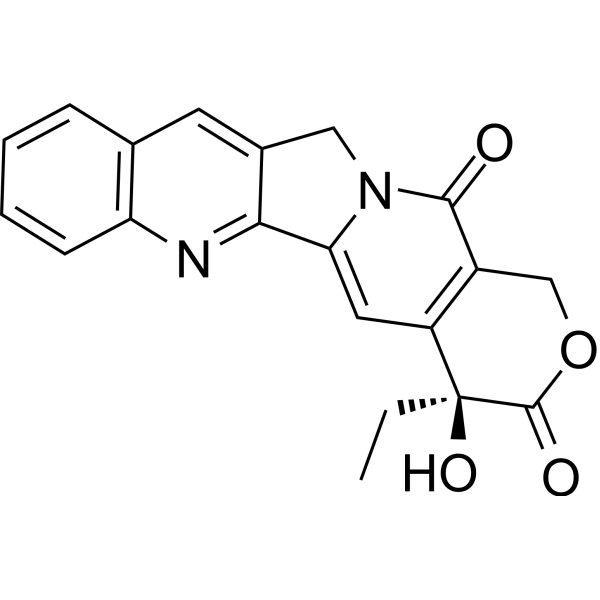
Camptothecin (CPT), a kind of alkaloid, is a DNA topoisomerase I (Topo I) inhibitor with an IC50 of 679 nM . Camptothecin (CPT) exhibits powerful antineoplastic activity against colorectal, breast, lung and ovarian cancers, modulates hypoxia-inducible factor-1α (HIF-1α) activity by changing microRNAs (miRNA) expression patterns in human cancer cells .
|
-
- HY-178330
-
|
|
Others
Topoisomerase
|
Infection
|
|
IKE16 is a fungi-selective eukaryotic topoisomerase II inhibitor, with an IC50 value of 13.68 μM. IKE16 suppresses both the DNA relaxation activity and the decatenation activity of yTOPOII selectively. IKE16 shows moderate activity against standard fungal strains (Candida albicans ATCC 10231, Saccharomyces cerevisiae ATCC 89763) with a minimum inhibitory concentration (MIC) of 2 μg/mL against S. cerevisiae ATCC 89763. IKE16 exhibits high cytotoxicity against human cells, with an EC50 of 0.07 μM in HepG2 and 0.045 μM in HEK-293. IKE16 can be used for the study of antifungal infection .
|
-
- HY-176976
-
|
|
Drug-Linker Conjugates for ADC
|
Cancer
|
|
Exatecan-mpGNNG (Compound 10a) is the linker-payload component of an antibody-drug conjugate (ADC). Exatecan-mpGNNG is composed of Exatecan (HY-13631), a potent topoisomerase I inhibitor, and the linker .
|
-
- HY-178226
-
|
|
ADC Payload
Topoisomerase
Survivin
Bcl-2 Family
IAP
|
Cancer
|
|
PBX-7016 is a Camptothecin (HY-16560) derivative. PBX-7016 can selectively inhibit Topoisomerase 1. PBX-7016 can specifically bind and degrade the cancer protein DDX5, thereby down-regulating the expression of anti-apoptotic proteins such as Survivin, Mcl-1, and XIAP, and promoting the apoptosis of cancer cells. PBX-7016 can be used to synthesis of ADCs .
|
-
- HY-160005
-
|
NSC 781517
|
Topoisomerase
DNA/RNA Synthesis
|
Cancer
|
|
LMP517 (NSC 781517) is a potent and non-camptothecin Topoisomerase I and II (TOP1 and TOP2) dual inhibitor. LMP517 can induce TOP1 and TOP2 cleavage complexes (TOP1ccs and TOP2ccs). LMP517 can induce cancer cells DNA damage and γH2AX production. LMP517 can be used for the research of cancer, such as small cell lung cancer .
|
-
- HY-175216
-
|
|
Drug-Linker Conjugates for ADC
Topoisomerase
|
Cancer
|
|
Maleimide-Ph(3,5-F)-PEG4-Val-Ala-MF-6 is a drug-linker conjugate for ADC. Maleimide-Ph(3,5-F)-PEG4-Val-Ala-MF-6 consists of a topoisomerase 1 inhibitor (Topi MF-6) (HY-175203) and a cleavable linker (Maleimide-Ph(3,5-F)-PEG4-Val-Ala) (HY-175218). Maleimide-Ph(3,5-F)-PEG4-Val-Ala-MF-6 can be used for synthesis of ADCs .
|
-
- HY-185309
-
|
|
Topoisomerase
Parasite
|
Infection
|
|
Anti-Trypanosoma cruzi agent-9 is a topoisomerase II inhibitor. Anti-Trypanosoma cruzi agent-9 inhibits the growth of Trypanosoma cruzi and Leishmania donovani .
|
-
- HY-171946
-
|
|
Drug-Linker Conjugates for ADC
Topoisomerase
|
Cancer
|
|
TGA-Val-Ala-NH2-bicyclo[1.1.1]pentane-7-MAD-MDCPT is a drug-linker conjugate for ADC. TGA-Val-Ala-NH2-bicyclo[1.1.1]pentane-7-MAD-MDCPT consists of a topoisomerase 1 inhibitor (Topi MF-6) (HY-175203) and a cleavable linker (Maleimide-Ph(3,5-F)-PEG4-Val-Ala) (HY-175218). TGA-Val-Ala-NH2-bicyclo[1.1.1]pentane-7-MAD-MDCPT can be used for synthesis of ADCs .
|
-
- HY-178145
-
|
|
Drug-Linker Conjugates for ADC
Topoisomerase
|
Cancer
|
|
Mc-Lys(PEG12)-Cap-Ala-Ala-PABC-exatecan (compound 12) is a Drug-Linker Conjugate for ADC. Mc-Lys(PEG12)-Cap-Ala-Ala-PABC-exatecan contains the ADC linker (Mc-Lys(PEG12)-Cap-Ala-Ala-PABC) (HY-178146) and a DNA topoisomerase I inhibitor Exatecan (HY-13631). Mc-Lys(PEG12)-Cap-Ala-Ala-PABC-exatecan can be used for the development of ADC targeting HER2-positive breast cancer .
|
-
- HY-164789
-
|
SKB264; MK-2870
|
Antibody-Drug Conjugates (ADCs)
TROP2
|
Cancer
|
|
Sacituzumab tirumotecan is an antibody-drug conjugate and TROP2-directed, topoisomerase I inhibitor payload-delivering agent, with a TROP2 EC50 of 2.787 ng/ml, TROP2 Ka of 0.3083 nM, and topoisomerase I IC50 of 0.7 μmol/L. Sacituzumab tirumotecan can be used for the research of metastatic triple-negative breast cancer, and metastatic non-small cell lung cancer .
|
-
- HY-107075A
-
|
|
Bacterial
|
Infection
|
|
WCK-1152 is a fluoroquinolone antibacterial agent. WCK-1152 is active against resistant pathogens bearing mutations of DNA gyrase and/or topoisomerase IV which also express efflux pumps. WCK-1152 can be used for the research of infection, such as respiratory infections caused by resistant pneumococci and staphylococci .
|
-
- HY-N19312
-
|
|
Apoptosis
Glutathione S-transferase
Topoisomerase
|
Cancer
|
|
Diospyrin is a dinaphthoquinone anticancer agent with pro-apoptotic (apoptosis) activity, glutathione S-transferase (Glutathione S-transferase) inhibitory activity, and topoisomerase (Topoisomerase) I inhibitory activity. Diospyrin is present in the heartwood of various Diospyros plants and can be used for research on Ehrlich ascites carcinoma, acute myeloid leukemia, chronic myeloid leukemia, mammary adenocarcinoma, cervical epithelial carcinoma, malignant cutaneous melanoma, laryngeal epidermoid carcinoma, human osteosarcoma, and human lymphoblastic carcinoma .
|
-
- HY-152473
-
|
|
Topoisomerase
|
Cancer
|
|
Topoisomerase IIα-IN-6 (Compound 47d) is an inhibitor of DNA topoisomerase IIα/β. Topoisomerase IIα-IN-6 inhibits human topoisomerase IIα and human topoisomerase IIβ with IC50 values of 0.67 µM and 0.55 µM, respectively. Topoisomerase IIα-IN-6 has stable metabolism .
|
-
- HY-144774
-
|
|
Topoisomerase
DNA/RNA Synthesis
Apoptosis
|
Cancer
|
|
Topoisomerase I inhibitor 5 is an effective topoisomerase inhibitor with IC50 value of. Topoisomerase I inhibitor 5 can interfere with DNA and significantly inhibit the activity of Topoisomerase I. Topoisomerase I inhibitor 5 can arrest cell cycle at the G1 phase and induce MCF-7 cells apoptosis. Topoisomerase I inhibitor 5 has potency in reversing P-gp-mediated resistance to Adriamycin .
|
-
- HY-158061
-
|
|
Topoisomerase
Apoptosis
|
Cancer
|
|
Topoisomerase II inhibitor 20 (Compound 3e) is a potent topoisomerase II (Topoisomerase II) inhibitor with an IC50 of 0.98 µM. Topoisomerase II inhibitor 20 induces apoptosis and has broad-spectrum anticancer activity .
|
-
- HY-153401
-
|
|
Topoisomerase
|
Cancer
|
|
Topoisomerase II inhibitor 13 is a topoisomerase II (Topo II) inhibitor. Topoisomerase II inhibitor 13 shows antiproliferative activity against several cancer cells. Topoisomerase II inhibitor 13 induces cancer cells apoptosis .
|
-
- HY-B0268A
-
|
Enoxacin sesquihydrate; AT-2266 hydrate; CI-919 hydrate
|
Bacterial
DNA/RNA Synthesis
MicroRNA
Antibiotic
|
Infection
Cancer
|
|
Enoxacin hydrate (Enoxacin sesquihydrate), a fluoroquinolone, interferes with DNA replication and inhibits bacterial DNA gyrase (IC50=126 µg/ml) and topoisomerase IV (IC50=26.5 µg/ml). Enoxacin hydrate is a miRNA processing activator and enhances siRNA-mediated mRNA degradation and promotes the biogenesis of endogenous miRNAs. Enoxacin hydrate has potent activities against gram-positive and -negative bacteria. Enoxacin hydrate is a cancer-specific growth inhibitor that acts by enhancing TAR RNA-binding protein 2 (TRBP)-mediated microRNA processing .
|
-
- HY-128946
-
|
|
Drug-Linker Conjugates for ADC
|
Inflammation/Immunology
Cancer
|
|
CL2A-SN-38 is a agent-linker conjugate composed of a potent a DNA Topoisomerase I inhibitor SN-38 and a linker CL2A to make antibody agent conjugate (ADC). CL2A-SN-38 provides significant and specific antitumor effects against a range of human solid tumor types. CL2A-SN-38 uses hydrolyzable linker to deliver active agents within tumor cells and in the tumor microenvironment, resulting in bystander effects .
|
-
- HY-B0268
-
|
AT 2266; CI 919
|
Bacterial
DNA/RNA Synthesis
MicroRNA
Antibiotic
|
Infection
Cancer
|
|
Enoxacin (AT 2266), a fluoroquinolone, interferes with DNA replication and inhibits bacterial DNA gyrase (IC50=126 µg/ml) and topoisomerase IV (IC50=26.5 µg/ml). Enoxacin is a miRNA processing activator and enhances siRNA-mediated mRNA degradation and promotes the biogenesis of endogenous miRNAs. Enoxacin has potent activities against gram-positive and -negative bacteria. Enoxacin is a cancer-specific growth inhibitor that acts by enhancing TAR RNA-binding protein 2 (TRBP)-mediated microRNA processing .
|
-
- HY-171747
-
|
|
Antibody-Drug Conjugates (ADCs)
EGFR
Topoisomerase
Apoptosis
|
Cancer
|
|
AMT-562 is an antibody-drug conjugate (ADC) consisting of a novel anti-HER3 antibody Ab562 (HY-P991505) conjugated to the linker MC-VA-PAB and the topoisomerase I inhibitor Exatecan (HY-13631). The ADC toxic molecule and linker portion are MC-VA-PAB-Exatecan (HY-147270). AMT-562 can induce apoptosis and has antitumor activity against pancreatic, esophageal, and gastric cancers .
|
-
- HY-171689
-
|
AZD 8205; P-Sam
|
Antibody-Drug Conjugates (ADCs)
Topoisomerase
|
Cancer
|
|
Puxitatug samrotecan (AZD 8205) is a B7-H4-directed antibody-drug conjugate (ADC) bearing a Topoisomerase I inhibitor (TOP1i) payload. Puxitatug samrotecan improves HR +/HER2 - breast cancer .
|
-
- HY-153795
-
|
|
Drug-Linker Conjugates for ADC
Topoisomerase
|
Cancer
|
|
Mal-PEG2-Gly-Gly-Phe-Gly-Exatecan is a bioactive drug-linker conjugate for ADC (Drug-Linker Conjugates for ADC). Mal-PEG2-Gly-Gly-Phe-Gly-Exatecan consists of Exatecan (HY-13631) and a linker. Mal-PEG2-Gly-Gly-Phe-Gly-Exatecan is applicable to ADC synthesis and cancer research. Exatecan acts as a DNA Topoisomerase I inhibitor .
|
-
- HY-177434
-
|
Precem-TcT; M 9140
|
Antibody-Drug Conjugates (ADCs)
Transmembrane Glycoprotein
Topoisomerase
|
Cancer
|
|
Precemtabart tocentecan (Precem-TcT; M 9140) is an anti-CEACAM5 (carcinoembryonic antigen-related cell adhesion molecule 5) antibody-drug conjugate (ADC). Precemtabart tocentecan consists of a tumor-specific anti-CEACAM5 monoclonal antibody Precemtabart (HY-P990940), a highly hydrophilic and stable cleavable β-glucuronide linker, and a topoisomerase 1 inhibitor payload Exatecan (HY-13631), and the drug-linker conjugate for ADC is Mal-Gly-PAB-Exatecan-D-glucuronic acid (HY-153179). Precemtabart tocentecan inhibits the growth of CEACAM5-positive cancer cells. Precemtabart tocentecan exhibits significant antitumor activity in CEACAM5-expressing xenograft models. Precemtabart tocentecan can be used for the study of CEACAM5-expressing advanced solid tumors, especially mCRC .
|
-
- HY-148058
-
|
|
Topoisomerase
|
Cancer
|
|
Topoisomerase I inhibitor 8 is a potent topoisomerase I inhibitor. Topoisomerase I inhibitor 8 is a hexacyclic analogue of camptothecin, and displays cytotoxic effect against tumor cells .
|
-
- HY-182748
-
|
|
Topoisomerase
DNA/RNA Synthesis
Apoptosis
|
Cancer
|
|
NL-26 is a Topoisomerase I inhibitor. NL-26 stabilizes the covalent Topoisomerase I (Topo I)-DNA complex, prevents DNA religation and triggers the DNA damage response. NL-26 induces G2/M cell cycle arrest and apoptosis in cancer cells. NL-26 can be used for the research of colorectal cancer .
|
-
- HY-146227
-
|
|
Topoisomerase
Apoptosis
|
Cancer
|
|
DNA topoisomerase II inhibitor 1 (compound 8ed) is a potent DNA topoisomerase II inhibitor. DNA topoisomerase II inhibitor 1 shows anti-proliferative activity. DNA topoisomerase II inhibitor 1 induces apoptosis and cell cycle arrest at sub G1 phase .
|
-
- HY-143266
-
|
|
Topoisomerase
Apoptosis
|
Cancer
|
|
Topoisomerase I inhibitor 3 (Compound ZML-14) is a topoisomerase I inhibitor and can interact with topoisomerase I-DNA complex. Topoisomerase I inhibitor 3 induces HepG2 cell apoptosis and arrests cell cycle at G2/M phase .
|
-
- HY-175171
-
|
|
Topoisomerase
VEGFR
c-Met/HGFR
EGFR
Estrogen Receptor/ERR
|
Cancer
|
|
Anticancer agent 276 (Compound 5) is a multi-target anticancer agent. Anticancer agent 276 has a potent anticancer activity against human tumor cells with IC50s of 6.90 and 4.48 μM for HEPG2 and MCF7 cells, respectively. Anticancer agent 276 shows strong and stable interactions across multiple targets, including Topoisomerase II, VEGFR2, c-Met, EGFR and ERα .
|
-
- HY-147877
-
|
|
Topoisomerase
|
Cancer
|
|
Topoisomerase II inhibitor 12 (Compound 8c) is a topoisomerase II (topo II) inhibitor, working as a DNA non-intercalator. Topoisomerase II inhibitor 12 shows antineoplastic activity .
|
-
- HY-156464
-
|
|
Topoisomerase
|
Infection
|
|
Topoisomerase I inhibitor 10 (compound 13) is a leishmanial topoisomerase IB inhibitor. Topoisomerase I inhibitor 10 has antileishmanial activity against L. donovani promastigotes, with the IC50 of 27.91 μM .
|
-
- HY-162341
-
|
|
Topoisomerase
|
Cancer
|
|
Topoisomerase I inhibitor 15 (compound 4b) is an inhibitor of topoisomerase I with anticancer activity. Topoisomerase I inhibitor 15 inhibits A549 cells with an IC50 of 7.34 μM .
|
-
- HY-161082
-
|
|
Topoisomerase
|
Cancer
|
|
Topoisomerase I inhibitor 12 (compound 12), a Camptothecin (HY-16560)-based derivative, is a potent Topoisomerase I inhibitor. Topoisomerase I inhibitor 12 shows anticancer activity .
|
-
- HY-171945
-
|
ABBV-400; Temab-A
|
Antibody-Drug Conjugates (ADCs)
Topoisomerase
c-Met/HGFR
|
Cancer
|
|
Telisotuzumab Adizutecan (ABBV-400) is an anti-c-Met antibody-drug conjugate (ADC). Telisotuzumab Adizutecan is composed of the humanized anti-c-Met antibody Telisotuzumab (HY-P99391) and the topoisomerase 1 inhibitor (7-MAD-MDCPT) (HY-132162). Telisotuzumab Adizutecan exhibits significant anti-tumor activity against advanced solid tumors such as colorectal cancer, gastric cancer, and non-small cell lung cancer .
|
-
- HY-B0268AR
-
|
Enoxacin sesquihydrate (Standard); AT-2266 hydrate (Standard); CI-919 hydrate (Standard)
|
Reference Standards
Bacterial
DNA/RNA Synthesis
MicroRNA
Antibiotic
|
Infection
Cancer
|
|
Enoxacin (hydrate) (Standard) is the analytical standard of Enoxacin (hydrate). This product is intended for research and analytical applications. Enoxacin hydrate (Enoxacin sesquihydrate), a fluoroquinolone, interferes with DNA replication and inhibits bacterial DNA gyrase (IC50=126 μg/ml) and topoisomerase IV (IC50=26.5 μg/ml). Enoxacin hydrate is a miRNA processing activator and enhances siRNA-mediated mRNA degradation and promotes the biogenesis of endogenous miRNAs. Enoxacin hydrate has potent activities against gram-positive and -negative bacteria. Enoxacin hydrate is a cancer-specific growth inhibitor that acts by enhancing TAR RNA-binding protein 2 (TRBP)-mediated microRNA processing [4].
|
-
- HY-162805
-
|
|
NO Synthase
Topoisomerase
Apoptosis
NF-κB
|
Inflammation/Immunology
Cancer
|
|
iNOS/TopoI-IN-1 (compound AuL9) is a multi-target hybrid molecule with anti-tumor, anti-inflammatory and antioxidant activities. iNOS/TopoI-IN-1 inhibits the growth of breast cancer cells MCF-7 and MDA MB-231 in vitro with IC50 of 3.5 μM and 6.3 μM, respectively, and induces DNA damage and apoptosis of breast cancer cells by inhibiting human topoisomerase I (TopoI) (Ki=2.72 μM). In addition, NOS/TopoI-IN-1 inhibits the expression of iNOS by inhibiting the activation of NF-kB (Ki=1.49 μM) .
|
-
- HY-W654323
-
|
|
Topoisomerase
Drug Metabolite
|
Others
|
|
PNU-142586 sodiu) is the major metabolite of Linezolid (HY-10394). PNU-142586 can inhibit the activity of DNA topoisomerase 2-α (TOP2A) and DNA topoisomerase 2-β (TOP2B). PNU-142586 interferes with DNA replication and transcription by blocking the binding of DNA to TOP2 and inhibiting ATP hydrolysis, ultimately leading to antiproliferative and cytotoxic effects, including mitochondrial dysfunction. PNU-142586 can be used to study Linezolid-induced hematotoxicity and its molecular mechanism .
|
-
- HY-169628
-
|
|
Topoisomerase
|
Cancer
|
|
Topoisomerase I/II inhibitor 7 (Compound 5h) is a Topoisomerase I/II inhibitor .
|
-
- HY-158061A
-
|
|
Topoisomerase
Apoptosis
|
Cancer
|
|
Topoisomerase II inhibitor 20 TFA is a potent topoisomerase II inhibitor with IC50 of 0.98 µM. Topoisomerase II inhibitor 20 TFA can induce apoptosis and has broad-spectrum anticancer activity .
|
-
- HY-156462
-
|
|
Topoisomerase
|
Infection
|
|
Topoisomerase I inhibitor 9 (compound 3d) is a leishmanial topoisomerase IB inhibitor. Topoisomerase I inhibitor 9 has antileishmanial activity against L. donovani promastigotes, with the IC50 of 34.81μM .
|
-
- HY-146163
-
|
|
Topoisomerase
Apoptosis
|
Cancer
|
|
Topoisomerase II inhibitor 7 (compound 3a) is a potent inhibitor of topoisomerase II alpha subtype, with an IC50 of 3.19 μM. Topoisomerase II inhibitor 7 can induce cell cycle arrest and apoptosis .
|
-
- HY-19825
-
|
|
Topoisomerase
ADC Payload
Antibiotic
|
Cancer
|
|
Rebeccamycin, an antitumor antibiotic, inhibits DNA topoisomerase I. Rebeccamycin appears to exert its primary antineoplastic effect by poisoning topoisomerase I and has negligible effect on protein kinase C and topoisomerase II .
|
-
- HY-143402
-
|
|
Topoisomerase
|
Cancer
|
|
Topoisomerase I/II inhibitor 2 (compound 1a) is a potent Topoisomerase inhibitor (IC50= 9.82 μM on Huh7 cells and 6.83 μM on LM9 cells). Topoisomerase I/II inhibitor 2 has dual inhibition on DNA topoisomerase I/II, also can obviously reduce the growth of xenograft tumor in mice model. Topoisomerase I/II inhibitor 2 has the potential value in researching liver cancer .
|
-
- HY-152187
-
|
|
Topoisomerase
Apoptosis
|
Others
|
|
Topoisomerase IIα-IN-5 is a topoisomerase II (topo II) α catalytic inhibitor. Topoisomerase IIα-IN-5 intercalates into DNA and binds to the DNA minor groove. Topoisomerase IIα-IN-5 exhibits better efficacy and less genotoxicity than Etoposide (HY-13629) .
|
-
- HY-162380
-
|
|
Topoisomerase
|
Cancer
|
|
Topoisomerase II inhibitor 18 (Compound IV) is a Quinoxaline derivative, which inhibits topoisomerase II with IC50 of 7.5 μM. Topoisomerase II inhibitor 18 inhibits proliferation, cell cycle at S phase and induces apoptosis in PC-3 cells. Topoisomerase II inhibitor 18 reveals antitumor activity against cancer .
|
-
- HY-126333
-
|
|
Topoisomerase
|
Cancer
|
|
Topoisomerase II inhibitor 1 (compound 89) is a highly efficient and selective topoisomerase IIα inhibitor .
|
-
- HY-143281
-
|
|
Topoisomerase
|
Cancer
|
|
Topoisomerase II inhibitor 5 (Compound E24) is a DNA topoisomerase II inhibitor with anticancer activities .
|
-
- HY-N0354
-
|
|
Environmental Pollutants
Virus Protease
|
Infection
Metabolic Disease
Inflammation/Immunology
Cancer
|
|
Anthraquinone is used as a precursor for dye formation and agrochemicals, existing in different organisms, such as bacteria, fungi, plants, and some animals. Anthraquinone has biological activities: anticancer, antiinflammatory, diuretic, antiarthritic, antifungal, antibacterial, antimalarial and antioxidant. Anthraquinone also plays an important role in the primary metabolism of plants by acting on the electron transport chain through the inhibition of energy transfer in the photosynthetic process. Anthraquinone can intercalates into DNA and inhibits the topoisomerase II (topo II) enzyme, resulting in cell death via Apoptosis .
|
-
- HY-16742B
-
|
|
Antibiotic
Bacterial
Topoisomerase
|
Infection
|
|
Gepotidacin mesylate hydrate is an orally active triazaacenaphthylene antibiotic and bacterial type II topoisomerase inhibitor. Gepotidacin mesylate hydrate inhibits bacterial DNA replication by blocking topoisomerase enzymes. Gepotidacin mesylate hydrate selectively inhibits topoisomerase IV and the B subunit of DNA gyrase .
|
-
- HY-B0356G
-
|
Bay-09867
|
Bacterial
Topoisomerase
Akt
β-catenin
|
Inflammation/Immunology
|
|
Ciprofloxacin GMP is Ciprofloxacin (HY-B0356) produced by using GMP guidelines. GMP small molecules works appropriately as an auxiliary reagent for cell therapy manufacture. Ciprofloxacin (Bay-09867) is an orally active, blood-brain barrier permeable fluoroquinolone antibacterial agent. Ciprofloxacin exerts bactericidal effects primarily by inhibiting topoisomerase II and IV. Ciprofloxacin inhibits the proliferation of human dental pulp stem cells and chondrocytes from young rats, and also activates the Akt signaling pathway and upregulates markers such as β-catenin and Nanog to maintain the morphological characteristics of stem cells. Ciprofloxacin induces significant neurotoxicity and tissue damage, including reducing serotonin and glutathione levels in the brain, inducing oxidative stress and depression-like behaviors, and causing articular cartilage damage. Ciprofloxacin can be applied to research related to infections of necrotic young permanent teeth and neurotoxicity .
|
-
- HY-168739
-
|
|
Topoisomerase
Reactive Oxygen Species (ROS)
Apoptosis
Survivin
Bcl-2 Family
IAP
DNA/RNA Synthesis
|
Cancer
|
|
Topoisomerase I inhibitor 17 (Compound 7h) is a Topoisomerase I (Top1) inhibitor. Topoisomerase I inhibitor 17 reduces DDX5 and reverses the locking of Top1 activity by DDX5. Topoisomerase I inhibitor 17 induces Top1-mediated DNA damage and promotes reactive oxygen species (ROS) production. Topoisomerase I inhibitor 17 induces Apoptosis (reduces antiapoptotic proteins XIAP, Bcl-2, Survivin and up-regulates pro-apoptotic proteins Bax, γH2AX). Topoisomerase I inhibitor 17 also blocks the progression of the G2/M checkpoint and induces cell cycle arrest. Topoisomerase I inhibitor 17 significantly inhibits colony formation and cell migration in colorectal cancer cells. Topoisomerase I inhibitor 17 effectively reduces tumors in human PDX tumor mice .
|
-
- HY-178174
-
|
|
DNA/RNA Synthesis
Topoisomerase
|
Cancer
|
|
MGB4 is a DNA minor groove binder. MGB4 binds to ARE-containing DNA and inhibition of topoisomerase I activity. MGB4 can impacts key cellular pathways, including inhibition oftranslation and alterations in sphingolipid and amino acid metabolism. MGB4 also reduces spermine and spermidine metabolism companied with Doxorubicin (HY-15142A). MGB4 can be used for the research of cancer, such as Prostate cancer .
|
-
- HY-173634
-
|
|
Drug-Linker Conjugates for ADC
Topoisomerase
|
Cancer
|
|
Mal((3S,3aR,6S,6aR)-Hexahydrofuro[3,2-b]furan-3,6-diamine-PEG12)-β-Glu-PAB-Exatecan (LP1) is a drug-linker conjugate composed of a potent a DNA Topoisomerase I inhibitor Exatecan (HY-13631) and a linker Mal((3S,3aR,6S,6aR)-Hexahydrofuro[3,2-b]furan-3,6-diamine-PEG12)-β-Glu-PAB (HY-173635) to make antibody agent conjugate (ADC), AZD0516 (HY-173639) .
|
-
- HY-170557
-
|
|
Topoisomerase
Apoptosis
Mitochondrial Metabolism
|
Cancer
|
|
Topoisomerase IIα-IN-10 (Compound 13r) is an inhibitor of Topoisomerase IIα. It binds to the active site of DNA when complexed with Topoisomerase IIα, and this binding is stabilized through interactions with DNA base pairs and amino acid residues. Topoisomerase IIα-IN-10 can induce Apoptosis by intercalating DNA and inhibiting Topoisomerase IIα, thereby disrupting the mitochondrial membrane potential and inhibiting the growth of HCT116 cell lines, with an IC50 of 4.37 μM against HCT116 cells. Topoisomerase IIα-IN-10 can be used for research in the field of cancer treatment .
|
-
- HY-182758
-
|
|
Topoisomerase
Apoptosis
|
Neurological Disease
Inflammation/Immunology
Cancer
|
|
Topoisomerase I-IN-21 is a promising topoisomerase I inhibitor with an IC50 of 18.79 μM. Topoisomerase I-IN-21 shows higher selectivity toward cancer cells over normal CD8 + cells. Topoisomerase I-IN-21 induces G0/G1 cell cycle arrest and apoptosis. Topoisomerase I-IN-21 activates the cGAS-STING pathway, leading to enhanced immune gene expression. Topoisomerase I-IN-21 can be used for research on leukemia, non-small-cell lung, colon, central nervous system, melanoma, ovarian, renal, prostate, and breast cancers .
|
-
- HY-150044
-
|
|
DNA/RNA Synthesis
Topoisomerase
Bacterial
|
Infection
|
|
Type II topoisomerase inhibitor 1 is a potent and selective E. coli DNA gyrase inhibitor (IC50: 1.7 nM), and forms hydrogen bonds with Asp73 residue. Type II topoisomerase inhibitor 1 inhibits topoisomerase IV activity (IC50: 0.98 μM). Type II topoisomerase inhibitor 1 can be used in the research of antibacterial area .
|
-
- HY-W178011
-
|
4,4'-Sulfonylbis(2-methylphenol)
|
Topoisomerase
|
Cancer
|
|
Topoisomerase IIα-IN-9 (NSC85582) is a bisphenol compound that has a moderate inhibitory effect on DNA topoisomerase Topoisomerase II (IC50: 571 μM). Topoisomerase IIα-IN-9 also exhibits a certain cell growth inhibitory effect, with IC50s of 117 μM and 218 μM for K562 and CHO, respectively .
|
-
- HY-152479
-
|
|
Topoisomerase
|
Cancer
|
|
Topoisomerase IIα-IN-7 is an DNA topoisomerase IIα inhibitor with an IC50 value of 7.7 µM. Topoisomerase IIα-IN-7 has broad-spectrum cytotoxicity to leukemia, lung, colon, melanoma, ovarian, kidney, prostate and breast cancer cells. Topoisomerase IIα-IN-7 has metabolic stability .
|
-
- HY-143301
-
|
|
Topoisomerase
|
Cancer
|
|
Topoisomerase I inhibitor 4 (compound 7a) is a topoisomerase I inhibitor. Topoisomerase I inhibitor 4 inhibits HepG2, A549, MCF-7 and HeLa cancer cells proliferation with IC50s of 1.20, 2.09, 1.56 and 1.92 μM, respectively. Topoisomerase I inhibitor 4 can be used for the research of cancer .
|
-
- HY-16562
-
-
- HY-159783
-
-
- HY-146020
-
|
|
Topoisomerase
|
Cancer
|
|
Topoisomerase IIα-IN-1 (compound 2) is a potent DNA-binding ligands and topoisomerase IIα inhibitor. Topoisomerase IIα-IN-1 exhibits high antiproliferative activity against human cancer cell lines .
|
-
- HY-175700
-
|
|
Topoisomerase
Apoptosis
|
Cancer
|
|
YCJ-02 is a selective Topoisomerase I (Top I) inhibitor. YCJ-02 can inhibit cell proliferation and induce apoptosis and G2/M phase arrest. YCJ-02 can induce DNA damage and increaseγ-H2AX levels. YCJ-02 can promote Top I deqradation via a ubiquitin/26S proteasome pathway. YCJ-02 increases the expressions of pro-apoptotic proteins Bad, Bax, and cleaved
caspase-3. YCJ-02 shows broad-spectrum antitumor activity. YCJ-02 can be used for the research of cancer, such as intrahepatic cholangiocarcinoma (ICC) .
|
-
- HY-161385
-
|
|
Topoisomerase
|
Cancer
|
|
Topoisomerase I inhibitor 21 (Compound 3e) is an inhibitor for Topoisomerase I through stabilization of enzyme-DNA complex. Topoisomerase I inhibitor 21 exhibits antiproliferative activity in 39 human cancer cells (JFCR39) with mean GI50 39 nM .
|
-
- HY-146021
-
|
|
Topoisomerase
|
Cancer
|
|
Topoisomerase IIα-IN-2 (compound 5) is a potent DNA-binding ligands and topoisomerase IIα inhibitor. Topoisomerase IIα-IN-2 exhibits high antiproliferative activity against human cancer cell lines. Topoisomerase IIα-IN-2 significantly induces DNA damage and arrests cancer cells at G2/M phase .
|
-
- HY-143280
-
|
|
Topoisomerase
|
Cancer
|
|
Topoisomerase II inhibitor 4 (compound E17) is a potent Topoisomerase II inhibitor. Topoisomerase II inhibitor 4 triggers G2/M cell cycle arrest and shows anti-tumor activity with strong cytotoxic and anti-proliferative effect .
|
-
- HY-146188
-
|
|
Topoisomerase
|
Cancer
|
|
Topoisomerase II inhibitor 8 (compound 22) is a potent topoisomerase II inhibitor, with an IC50 of 0.52 μM. Topoisomerase II inhibitor 8 exhibits good anti-proliferative activities and can arrest the cell cycle at G2/M phase .
|
-
- HY-122014
-
|
|
Topoisomerase
|
Others
|
|
39625 is a camptothecin ketone analogue, a stable, potent and selective topoisomerase I inhibitor, active against purified topoisomerase I and cytotoxic to cancer cells.
|
-
- HY-175269
-
|
|
DNA Alkylator/Crosslinker
DNA/RNA Synthesis
Topoisomerase
|
Cancer
|
|
MGB1Y is a noncovalent DNA minor groove binder (MGB). MGB1Y potently inhibits cancer cells proliferation and topoisomerase I activity. MGB1Y downregulates their breast cancer-related genes in MCF7 and MDA-MB-231 cells. MGB1Y has a broad-spectrum anticancer activity, such as breast cancer, colon cancer, and leukemia .
|
-
- HY-147801
-
|
|
Topoisomerase
Apoptosis
|
Cancer
|
|
Topoisomerase IIα-IN-3 (Compound 12c) is a DNA intercalative topoisomerase-IIα inhibitor. Topoisomerase IIα-IN-3 arrests cell cycle at the G0/G1 phase and induces apoptosis .
|
-
- HY-181819
-
|
|
Bacterial
Topoisomerase
|
Infection
|
|
Antibacterial agent 327 (Compound 6f) is an Antibacterial agent. Antibacterial agent 327 potently inhibits the supercoiling activity of Staphylococcus aureus DNA gyrase with an IC50 of 0.28 μM. It also inhibits the ATPase activities of DNA gyrase and Topoisomerase IV, as well as the decatenation activity of Topoisomerase IV (IC50: 0.43 μM, 0.73 μM, and 2.31 μM, respectively). Antibacterial agent 327 potently inhibits Clostridioides difficile and methicillin-resistant Staphylococcus aureus (HY-121544), with an MIC of 0.78 μg/mL for both. Antibacterial agent 327 inhibits Escherichia coli with an MIC50 of 0.78 μg/mL .
|
-
- HY-146504
-
|
|
Topoisomerase
PI3K
Apoptosis
Reactive Oxygen Species (ROS)
|
Cancer
|
|
Topoisomerase I/II inhibitor 3 (compound 7) is a potent topoisomerase I (Topo I) and II (Topo II) dual inhibitor. Topoisomerase I/II inhibitor 3 can inhibit cell proliferation, invasion and migration, and induce apoptosis by inhibiting PI3K/Akt/mTOR signaling pathway. Topoisomerase I/II inhibitor 3 can be used for liver cancer research .
|
-
- HY-B0879
-
|
|
Phosphatase
Sirtuin
Reverse Transcriptase
Topoisomerase
SARS-CoV
Parasite
Apoptosis
|
Infection
Cardiovascular Disease
Cancer
|
|
Suramin is a reversible and competitive protein-tyrosine phosphatases (PTPases) inhibitor . Suramin is a potent inhibitor of sirtuins: SirT1 (IC50=297 nM), SirT2 (IC50=1.15 μM), and SirT5 (IC50=22 μM) . Suramin is a competitive inhibitor of reverse transcriptase (DNA topoisomerase II: IC50=5 μM) . Suramin is a potent SARS-CoV-2 RNA-dependent RNA polymerase (RdRp) inhibitor .Suramin efficiently inhibits IP5K and is an antiparasitic, anti-neoplastic and anti-angiogenic agent .
|
-
- HY-E70899B
-
|
|
Topoisomerase
|
Metabolic Disease
|
|
Topoisomerase IV, Pseudomonas aeruginosa (EC 5.99.1.) is prepared by overexpressing the subunits in E. coli. Topoisomerase IV is supplied as a heterotetramer complex in Dilution buffer.
|
-
- HY-E70899D
-
|
|
Topoisomerase
|
Others
|
|
Topoisomerase IV, Acinetobacter baumannii (EC 5.99.1.) is prepared by overexpressing the subunits in E. coli. Topoisomerase IV is supplied as a heterotetramer complex in Dilution buffer.
|
-
- HY-13768D
-
|
SKF 104864A acetate; NSC 609669 acetate
|
Topoisomerase
|
Cancer
|
|
Topotecan acetate is a topoisomerase inhibitor.
|
-
- HY-157402
-
|
|
Topoisomerase
EGFR
|
Cancer
|
|
Topoisomerase II/EGFR-IN-1 is topoisomerase II/EGFR dual inhibitor. Topoisomerase II/EGFR-IN-1 has superior cytotoxic activity to MCF-7, A549 and HCT-116 cell lines, displays strong apoptotic activity and can be used for the research of cancer .
|
-
- HY-B0879A
-
|
Suramin hexasodium salt
|
Phosphatase
Sirtuin
Reverse Transcriptase
Topoisomerase
SARS-CoV
Parasite
Apoptosis
|
Infection
Cardiovascular Disease
Cancer
|
|
Suramin sodium salt (Suramin hexasodium salt) is a reversible and competitive protein-tyrosine phosphatases (PTPases) inhibitor . Suramin sodium salt is a potent inhibitor of sirtuins: SirT1 (IC50=297 nM), SirT2 (IC50=1.15 μM), and SirT5 (IC50=22 μM) . Suramin sodium salt is a competitive inhibitor of reverse transcriptase (DNA topoisomerase II: IC50=5 μM) . Suramin sodium salt is a potent SARS-CoV-2 RNA-dependent RNA polymerase (RdRp) inhibitor . Suramin sodium salt efficiently inhibits IP5K and is an antiparasitic, anti-neoplastic and anti-angiogenic agent .
|
-
- HY-147839
-
|
|
Topoisomerase
Apoptosis
|
Cancer
|
|
Topoisomerase II inhibitor 10 (compound 32a) is a potent topoisomerase II inhibitor with an IC50 value of 7.45 μM. Topoisomerase II inhibitor 10 causes cell cycle arrest at G2-M phase and induces apoptosis of HepG-2 cells. Topoisomerase II inhibitor 10 has excellent anti-proliferative activities against HepG-2, MCF-7, and HCT-116 cells .
|
-
- HY-119892
-
|
NSC 320846; BAY-H 2049
|
Topoisomerase
|
Cancer
|
|
Batracylin (NSC320846) is a potent DNA Topoisomerases I and DNA Topoisomerases II inhibitor. Batracylin shows cytotoxicity and antiproliferative activity. Batracylin induces DNA breaks .
|
-
- HY-123589
-
|
|
Bacterial
|
Others
|
|
Gyramide A is a compound mentioned in the study of the protective effect of Qnr protein on bacterial topoisomerase. Qnr has no protective effect on it, and its activity is different from that of other topoisomerase inhibitors.
|
-
- HY-E70898C
-
|
|
Topoisomerase
|
Metabolic Disease
|
|
Topoisomerase IV, E. coli (EC 5.99.1.) is prepared by overexpressing the parC and parE subunits in E. coli. Topoisomerase IV is supplied as a heterotetramer complex in Dilution buffer.
|
-
- HY-W031307
-
|
|
Topoisomerase
|
Cancer
|
|
Topoisomerase IIα-IN-8 (compound 15) is a weak human DNA topoisomerase IIa (htIIa) inhibitor, with an IC50 of 462 ± 38.0 μM .
|
-
- HY-111047
-
|
|
Topoisomerase
Bacterial
|
Infection
|
|
GSK945237 is a potent and orally active bacterial type IIA topoisomerases inhibitor. GSK945237 shows broad-spectrum activity against Gram-positive and Gram-negative bacteria (IC50 of 0.034 μg/mL against H. influenzae DNA gyrase). GSK945237 demonstrates good in vivo efficacy in a rat respiratory tract infection model. GSK945237 can be used for anti-infection research .
|
-
- HY-106307
-
|
BD84
|
Topoisomerase
|
Cancer
|
|
Retelliptine (BD84), a derivative of ellipticine, is an inhibitor of Topoisomerase II with anticancer activity. Retelliptine can bind to DNA and inhibit Topoisomerase II during DNA replication .
|
-
- HY-16562S1
-
|
|
Isotope-Labeled Compounds
Topoisomerase
Autophagy
|
Cancer
|
|
Irinotecan-d10 (hydrochloride) is the deuterium labeled Irinotecan. Irinotecan ((+)-Irinotecan) is a topoisomerase I inhibitor, preventing religation of the DNA strand by binding to topoisomerase I-DNA complex .
|
-
- HY-16562S
-
|
(+)-Irinotecan-d10; CPT-11-d10; VAL-413-d10free base
|
Topoisomerase
Autophagy
|
Cancer
|
|
Irinotecan-d10 is a deuterium labeled Irinotecan ((+)-Irinotecan). Irinotecan ((+)-Irinotecan) is a topoisomerase I inhibitor, preventing religation of the DNA strand by binding to topoisomerase I-DNA complex .
|
-
- HY-B0879AR
-
|
Suramin hexasodium salt (Standard)
|
Reference Standards
Phosphatase
Sirtuin
Reverse Transcriptase
Topoisomerase
SARS-CoV
Parasite
Apoptosis
|
Infection
Cardiovascular Disease
Cancer
|
|
Suramin (sodium salt) (Standard) is the analytical standard of Suramin (sodium salt). This product is intended for research and analytical applications. Suramin sodium salt (Suramin hexasodium salt) is a reversible and competitive protein-tyrosine phosphatases (PTPases) inhibitor . Suramin sodium salt is a potent inhibitor of sirtuins: SirT1 (IC50=297 nM), SirT2 (IC50=1.15 μM), and SirT5 (IC50=22 μM) . Suramin sodium salt is a competitive inhibitor of reverse transcriptase (DNA topoisomerase II: IC50=5 μM) . Suramin sodium salt is a potent SARS-CoV-2 RNA-dependent RNA polymerase (RdRp) inhibitor . Suramin sodium salt efficiently inhibits IP5K and is an antiparasitic, anti-neoplastic and anti-angiogenic agent .
|
-
- HY-162091
-
|
|
Topoisomerase
|
Cancer
|
|
Topoisomerase I inhibitor 13 (Compound G11) is a Topo I inhibitor that inhibits cancer cell proliferation. Topoisomerase I inhibitor 13 significantly inhibits tumor growth in vivo .
|
-
- HY-151453
-
|
|
Topoisomerase
Apoptosis
|
Cancer
|
|
Topoisomerase IIα-IN-4 (F2) is a non-intercalative ATP-competitive human DNA topoisomerase II inhibitor with an IC50 value of 3.8 and 10.1 μM for TopoIIα and TopoIIβ, respectively. Topoisomerase IIα-IN-4 shows potent potency in apoptosis induction and cell cycle arrest in HepG2 cells. Topoisomerase IIα-IN-4 exhibits strong antitumor activities against human cancer cell lines, it can be used for the research of cancer .
|
-
- HY-168632
-
|
|
Topoisomerase
Apoptosis
|
Cancer
|
|
Topoisomerase I/II inhibitor 6 (compound 3i) is a potent inhibitor of topoisomerase I and II with IC50s of 4.77 and 15 µM, respectively. Topoisomerase I/II inhibitor 6 shows antiproliferative activities against human melanoma LOX IMVI cancer cell line with IC50 values of 26.7 and 25.4 µM, respectively. Topoisomerase I/II inhibitor 6 provokes substantial levels of early, late apoptosis and increases the expression level of active caspase-3 .
|
-
- HY-175034
-
|
|
Topoisomerase
Apoptosis
MDM-2/p53
Bcl-2 Family
Caspase
|
Cancer
|
|
Topoisomerase I/II-IN-1 is a dual inhibitor of topoisomerase I/II. Topoisomerase I/II-IN-1 induces G2/M arrest and apoptosis in cancer cells by upregulating p53, p21, and Bax mRNA levels, caspase-3 protein levels, and the Bax/Bcl-2 ratio, while downregulating Bcl-2. Topoisomerase I/II-IN-1 is useful in the study of various cancers, including melanoma, renal cancer, colorectal cancer, and breast cancer .
|
-
- HY-16562R
-
|
(+)-Irinotecan (Standard); CPT-11 (Standard); VAL-413free base (Standard)
|
Reference Standards
Topoisomerase
Autophagy
|
Cancer
|
|
Irinotecan (Standard) is the analytical standard of Irinotecan. This product is intended for research and analytical applications. Irinotecan ((+)-Irinotecan) is a topoisomerase I inhibitor, preventing religation of the DNA strand by binding to topoisomerase I-DNA complex .
|
-
- HY-183091
-
|
|
Fungal
|
Infection
|
|
Antifungal agent 159 is an antifungal agent with broad-spectrum activity against phytopathogenic fungi. Antifungal agent 159 binds tightly to the active sites of exo-β-(1,3)-glucanase, topoisomerase II-DNA-nucleotide, dihydrofolate reductase, sterol 14-α demethylase and chitin synthase. Antifungal agent 159 can be used in studies related to phytopathogenic fungal infections .
|
-
- HY-146189
-
|
|
Topoisomerase
Apoptosis
|
Cancer
|
|
Topoisomerase II inhibitor 9 (Compound 19b) is a Topo II inhibitor with an IC50 of 0.97 μM. Topoisomerase II inhibitor 9 is also a classical DNA-intercalator with an IC50 of 43.51 μM. Topoisomerase II inhibitor 9 arrests the cell cycle at the G2/M phase and induces apoptosis in Hep G‐2 cells .
|
-
- HY-13061
-
-
- HY-N6800
-
-
- HY-118942
-
|
ARC 111
|
Topoisomerase
|
Cancer
|
|
Topovale (ARC 111) is a topoisomerase I inhbitor. Topovale is an antitumor agent, and shows low nM cytotoxicity against a panel of cancer cells. Topovale induces reversible topoisomerase I (TOP1) cleavage complexes in tumor cells .
|
-
- HY-14821
-
|
ST-1968
|
Topoisomerase
|
Cancer
|
|
Namitecan is a potent topoisomerase I inhibitor, with antitumor property.
|
-
- HY-E71020
-
|
|
Biochemical Assay Reagents
|
Metabolic Disease
|
|
Topoisomerase I, Human (EC 5.99.1.2) relaxes supercoiled DNA molecules. Topoisomerase I, Human (EC 5.99.1.2) initiates transient breakages and rejoins of phosphodiester bonds in superhelical turns of closed-circular DNA.
|
-
- HY-N6800A
-
-
- HY-185279
-
|
HS-20093; GSK5764227
|
Antibody-Drug Conjugates (ADCs)
CD276/B7-H3
|
Cancer
|
|
Risvutatug rezetecan (HS-20093; GSK5764227) is a B7-H3-targeting antibody-drug conjugate (ADC). Risvutatug rezetecan binds to B7-H3 on tumor cells and delivers a topoisomerase I inhibitor payload via a tumor microenvironment-responsive cleavable linker. Risvutatug rezetecan is applicable for the research of extensive-stage small cell lung cancer and non-small cell lung cancer .
|
-
- HY-115990
-
|
|
Topoisomerase
Bacterial
|
Infection
|
|
Topoisomerase IV inhibitor 2 (compound 7d) is a potent DNA topoisomerase IV (TOPO IV) inhibitor with IC50s of 0.23 μM and 0.43 μM for TOPO IV and DNA gyrase, respectively. Topoisomerase IV inhibitor 2 has anti-bacterial activity, with MICs of 0.972 μM and 0.608 μM in Staphylococcus aureus Newman and Escherichia coli ATCC8739, respectively .
|
-
- HY-115991
-
|
|
Topoisomerase
Bacterial
|
Infection
|
|
Topoisomerase IV inhibitor 2 (compound 5d) is a potent DNA topoisomerase IV (TOPO IV) inhibitor with IC50s of 0.35 μM and 0.55 μM for TOPO IV and DNA gyrase, respectively. Topoisomerase IV inhibitor 2 has anti-bacterial activity, with MICs of 1.985 μM and 0.744 μM in Staphylococcus aureus Newman and Escherichia coli ATCC8739, respectively .
|
-
- HY-16742C
-
-
- HY-119458
-
|
|
Topoisomerase
TMV
Fungal
|
Infection
|
|
Luotonin A is an antiviral and antiphytopathogenic fungus agent. Luotonin A has good antiviral activity against tobacco mosaic virus (TMV). Luotonin A also has certain inhibitory activity on topoisomerase I and topoisomerase II. Luotonin A shows antitumor activity .
|
-
- HY-15552
-
|
Podophyllotoxin
|
Microtubule/Tubulin
|
Cancer
|
|
Podofilox (Podophyllotoxin) is a potent inhibitor of microtubule assembly and DNA topoisomerase II.
|
-
- HY-13768A
-
|
SKF 104864A hydrochloride; NSC 609669 hydrochloride
|
Topoisomerase
Autophagy
Apoptosis
|
Cancer
|
|
Topotecan Hydrochloride (SKF 104864A Hydrochloride) is a Topoisomerase I inhibitor with potent antineoplastic activities.
|
-
- HY-106063
-
|
Pazellipticine; BD-40
|
Topoisomerase
|
Cancer
|
|
Pazelliptine (Pazellipticine) is a DNA topoisomerase inhibitor and antitumour agent .
|
-
- HY-14812
-
|
Cositecan; BNP 1350
|
Topoisomerase
|
Cancer
|
|
Karenitecin (Cositecan) is a topoisomerase I inhibitor, with potent anti-cancer activity.
|
-
- HY-N10115
-
-
- HY-18350A
-
|
LMP776 hydrochloride
|
Topoisomerase
|
Cancer
|
|
Indimitecan hydrochloride is a topoisomerase I (Top1) inhibitor with anticancer activities .
|
-
- HY-N6714
-
|
|
Topoisomerase
Androgen Receptor
Estrogen Receptor/ERR
Apoptosis
|
Infection
Cancer
|
|
Alternariol is an orally ingested mycotoxin produced by Alternaria, capable of inhibiting the activity of topoisomerase I and II (topoisomerase I, topoisomerase II). Alternariol has weak estrogenic (Estrogen Receptor/ERR) and androgen/antiandrogen (Androgen Receptor) effects. Alternariol can induce apoptosis, trigger cell cycle arrest, suppress innate immune responses, and exhibit anti-tumor activity. Alternariol has genotoxic, mutagenic, and endocrine-disrupting effects .
|
-
- HY-118590A
-
|
|
Topoisomerase
DNA/RNA Synthesis
Apoptosis
Fungal
|
Infection
Cardiovascular Disease
Inflammation/Immunology
Cancer
|
|
ICRF-196 is an racemic mixture of the (S,S)- and (R,R)-isomers of ICRF-193 (HY-118590). ICRF-193 is a DNA Topoisomerase II inhibitor. ICRF-193 can inhibit DNA syntheses and induces apoptosis. ICRF-193 exhibits anti-cancer and anti-inflammation effects. ICRF-193 shows cardioprotective effect against anthracycline toxicity to cardiomyocytes. ICRF-193 can be used for the researches of cancer, infection, inflammation and cardiovascular disease, such as acute promyelocytic leukemia .
|
-
- HY-183090
-
|
|
VEGFR
Apoptosis
Topoisomerase
EGFR
|
Cancer
|
|
EGFR/VEGFR2-IN-13 is a multi-target inhibitor, with an IC50 of 0.98 µM against VEGFR-2, 1.01 µM against EGFR, and 1.94 µM against topoisomerase II. EGFR/VEGFR2-IN-13 induces cell cycle arrest and apoptosis in tumor cells. As an anticancer agent, EGFR/VEGFR2-IN-13 exhibits cytotoxicity against cancer cells. EGFR/VEGFR2-IN-13 can be used in research related to breast cancer, colon cancer, and liver cancer .
|
-
- HY-183143
-
|
|
Topoisomerase
Apoptosis
TNF Receptor
PARP
STAT
P-glycoprotein
|
Cancer
|
|
Lss-11 is a topoisomerase inhibitor. LSS-11 enhances cell death in cancer cells by inducing apoptosis through increasing the DR5 protein level and PARP1 cleavage. LSS-11 dose-dependently reduces STAT3 phosphorylation, downregulates its target genes MDR1 and MRP1, reduces P-gp protein expressionwithout affecting P-gp transport function. Lss-11 is a chemosensitizer and shows synergistic anticancer effect with Paclitaxel (HY-B0015). Lss-11 can be used for the research of paclitaxel-resistant lung cancer .
|
-
- HY-183912
-
|
|
Topoisomerase
ADC Payload
|
Cancer
|
|
PY-4Car2 is a Camptothecin (HY-16560) derivative and a topoisomerase I inhibitor. PY-4Car2 functions as a warhead conjugated via a cleavable linker to the bispecific ADC TJ101. PY-4Car2 can be used as an ADC payload for the research of cancers .
|
-
- HY-W800535
-
|
|
NF-κB
p38 MAPK
mTOR
Topoisomerase
AMPK
Apoptosis
Cholinesterase (ChE)
HIF/HIF Prolyl-Hydroxylase
β-catenin
|
Infection
Metabolic Disease
Inflammation/Immunology
Cancer
|
|
Cryptolepine is an orally active multi-potent alkaloid with anti-cancer, anti-bacterial, anti-viral, anti-malarial, anti-inflammatory, anti-hyperglycemic, relieve pain and other properties. Cryptolepine acts as an inhibitor of c-Myc, mTOR, NF-κB, HIF-1, MAPK and an activator of AMPKα1/2. It intercalates into DNA, inhibits topoisomerase II (Top II), disrupts mitochondrial dynamics and induces apoptosis. Cryptolepine also exhibits anti-plasmodial and cholinesterase inhibitory activities. Cryptolepine can be used in research related to tumors (melanoma, hepatocellular carcinoma, mammary adenocarcinoma, etc.), malaria, inflammatory diseases and diabetes, particularly in studies focused on inhibiting tumor growth and anti-plasmodial infection .
|
-
- HY-N8473
-
|
(+)-Pericosine A
|
Topoisomerase
|
Cancer
|
|
Pericosine A ((+)-Pericosine A) is a topoisomerase II (Topoisomerase II) inhibitor that can be isolated from the Periconia byssoides strain. Pericosine A has significant antitumor activity in vitro and in vivo and can be used in cancer research. Pericosine A also inhibits the protein kinase epidermal growth factor receptor .
|
-
- HY-13761
-
|
VM26
|
Topoisomerase
|
Cancer
|
|
Teniposide is a podophyllotoxin derivative, acts as a topoisomerase II inhibitor, and used as a chemotherapeutic agent.
|
-
- HY-13566A
-
|
CKD-602
|
Topoisomerase
|
Cancer
|
|
Belotecan hydrochloride (CKD-602 hydrochloride), a Topoisomerase I inhibitor, is a synthetic camptothecin derivative.
|
-
- HY-16568
-
|
(+)-Irinotecan hydrochloride trihydrate; CPT-11 hydrochloride trihydrate
|
Topoisomerase
Autophagy
|
Cancer
|
|
Irinotecan hydrochloride trihydrate ((+)-Irinotecan hydrochloride trihydrate) is a topoisomerase I inhibitor with antitumor activity .
|
-
- HY-16742
-
-
- HY-169509
-
|
|
PARP
Necroptosis
Topoisomerase
RIP kinase
Mixed Lineage Kinase
|
Cancer
|
|
Topoisomerase I/II Inhibitor 8 (Compound Ru7) is a dual catalytic inhibitor of Topoisomerase I/II, capable of inducing DNA damage and PARP-1 activation, which subsequently leads to the activation of RIPK1, RIPK3, and MLKL, ultimately triggering necroptosis. Topoisomerase I/II Inhibitor 8 demonstrates remarkable anticancer activity by effectively targeting the nuclei of cancer cells and inducing cell death through necroptosis, showing great clinical potential in circumventing drug resistance in cancer treatment .
|
-
- HY-118590
-
|
|
Topoisomerase
DNA/RNA Synthesis
Apoptosis
Fungal
|
Infection
Cardiovascular Disease
Inflammation/Immunology
Cancer
|
|
ICRF-193 is a DNA Topoisomerase II inhibitor. (S,S)- and (R,R)-isomers ICRF-193 make up an racemic mixture, ICRF-196 (HY-118590A). ICRF-193 can inhibit DNA syntheses and induces apoptosis. ICRF-193 exhibits anti-cancer and anti-inflammation effects. ICRF-193 shows cardioprotective effect against anthracycline toxicity to cardiomyocytes. ICRF-193 can be used for the researches of cancer, infection, inflammation and cardiovascular disease, such as acute promyelocytic leukemia .
|
-
- HY-B0067A
-
|
SM-5887 hydrochloride
|
Topoisomerase
Bacterial
|
Cancer
|
|
Amrubicin (SM-5887) hydrochloride is a DNA topoisomerase II inhibitor, used for the research of cancer.
|
-
- HY-18350
-
|
LMP776
|
Topoisomerase
|
Cancer
|
|
Indimitecan (LMP776) is a topoisomerase I (Top1) inhibitor with anticancer activities .
|
-
- HY-16228
-
|
|
Topoisomerase
|
Cancer
|
|
Genz-644282 is a non-camptothecin topoisomerase I inhibitor, used for cancer research.
|
-
- HY-15753
-
|
NSC 71795
|
Topoisomerase
|
Cancer
|
|
Ellipticine (NSC 71795) is a potent antineoplastic agent; inhibits DNA topoisomerase II activities.
|
-
- HY-B0067
-
-
- HY-15753A
-
|
NSC 71795 hydrochloride
|
Topoisomerase
|
Cancer
|
|
Ellipticine (NSC 71795) hydrochloride is a potent antineoplastic agent; inhibits DNA topoisomerase II activities.
|
-
- HY-N11698
-
|
Allopsoralen
|
Topoisomerase
|
Infection
|
|
Bakuchicin (Allopsoralen) is a compound that can be found in Psoralea corylifolia. It has certain inhibitory activity against topoisomerase II. In the cell model infected with Simian virus 40 (SV40), the IC50 of Bakuchicin against topoisomerase II is 404 μM. Bakuchicin can be used in the research of the anti-infection field .
|
-
- HY-182417
-
|
|
Bacterial
Topoisomerase
|
Infection
|
|
PD 0305970 is an orally active bacterial gyrase and topoisomerase inhibitor. PD 0305970 shows exceptional activity against gram-positive and fastidious organisms and more modest activity against gram-negative species. PD 0305970 shows low spontaneous resistance frequencies. PD 0305970 shows antibacterial efficacy in murine streptococcal sepsis and pneumococcal pneumonia models. PD 0305970 can be used for the research of bacterial infection .
|
-
- HY-185683
-
|
DB-1311; BNT324
|
Antibody-Drug Conjugates (ADCs)
Topoisomerase
CD276/B7-H3
|
Cancer
|
|
Elfetabart drozuntecan is an antibody-drug conjugate (ADC) targeting B7H3. Elfetabart drozuntecan conjugates a humanized anti-B7H3 IgG1 monoclonal antibody with a topoisomerase I inhibitor via a cleavable linker. Elfetabart drozuntecan exerts antitumor activity in solid tumors. Elfetabart drozuntecan can be used for the research of advanced/metastatic solid tumors .
|
-
- HY-183700
-
|
|
DNA/RNA Synthesis
Topoisomerase
Bacterial
|
Infection
|
|
DNA gyrase/Topo IV-IN-3 is an inhibitor of Escherichia coli DNA gyrase and Topoisomerase IV, with IC50 values of 1.75 μM and 3.47 μM, respectively. DNA gyrase/Topo IV-IN-3 acts as a biofilm inhibitor and exhibits antibacterial activity against both Gram-negative and Gram-positive bacteria. DNA gyrase/Topo IV-IN-3 can be used in studies related to bacterial infections .
|
-
- HY-W653896
-
|
|
Isotope-Labeled Compounds
Androgen Receptor
Apoptosis
Topoisomerase
Estrogen Receptor/ERR
|
Infection
|
|
Alternariol-d2 is deuterium labeled Alternariol. Alternariol is an orally ingested mycotoxin produced by Alternaria, capable of inhibiting the activity of topoisomerase I and II (topoisomerase I, topoisomerase II). Alternariol has weak estrogenic (Estrogen Receptor/ERR) and androgen/antiandrogen (Androgen Receptor) effects. Alternariol can induce apoptosis, trigger cell cycle arrest, suppress innate immune responses, and exhibit anti-tumor activity. Alternariol has genotoxic, mutagenic, and endocrine-disrupting effects .
|
-
- HY-N6714R
-
|
|
Reference Standards
Topoisomerase
Androgen Receptor
Estrogen Receptor/ERR
Apoptosis
|
Infection
Cancer
|
|
Alternariol (Standard) is the analytical standard of Alternariol. This product is intended for research and analytical applications. Alternariol is an orally ingested mycotoxin produced by Alternaria, capable of inhibiting the activity of topoisomerase I and II (topoisomerase I, topoisomerase II). Alternariol has weak estrogenic (Estrogen Receptor/ERR) and androgen/antiandrogen (Androgen Receptor) effects. Alternariol can induce apoptosis, trigger cell cycle arrest, suppress innate immune responses, and exhibit anti-tumor activity. Alternariol has genotoxic, mutagenic, and endocrine-disrupting effects .
|
-
- HY-E70899
-
-
- HY-106702A
-
-
- HY-E70899A
-
-
- HY-13758
-
TAS-103
1 Publications Verification
BMS-247615
|
Topoisomerase
|
Cancer
|
|
TAS-103 is a dual inhibitor of DNA topoisomerase I/II, used for cancer research.
|
-
- HY-13758A
-
|
BMS-247615 dihydrochloride
|
Topoisomerase
|
Cancer
|
|
TAS-103 dihydrochloride is a dual inhibitor of DNA topoisomerase I/II, used for cancer research.
|
-
- HY-185370
-
|
Pegylated liposomal doxorubicin; Liposomal doxorubicin; Doxorubicin hydrochloride liposome
|
Liposome
Topoisomerase
Antibiotic
|
Cancer
|
|
Doxorubicin liposome is a liposome-encapsulated form of doxorubicin hydrochloride (HY-15142). Doxorubicin hydrochloride, a cytotoxic anthracycline antibiotic, is a potent human DNA topoisomerase I and topoisomerase II inhibitor. Compared to traditional doxorubicin, liposome encapsulation reduces its cardiotoxicity and prolongs its circulation time, thus enabling it to effectively target tumor tissue.
|
-
- HY-117688
-
|
|
HDAC
Topoisomerase
Apoptosis
|
Cancer
|
|
WJ35435 is a dual-targeted anticancer hybrid that induces anti-HDAC (in particular HDAC1 and HDAC6) and anti-topoisomerase I activities that causes DNA damage associated with a low DNA repair capability and induces cell cycle arrest at G1- and G2-phase to apoptosis. WJ35435 induces histone H3 acetylation and phosphorylation, α-tubulin acetylation and γ-H2AX formation to achieve anti-HDAC effect. WJ35435 is promising for research of cancer .
|
-
- HY-16562A
-
|
(+)-Irinotecan hydrochloride; CPT-11 hydrochloride; VAL-413
|
Topoisomerase
Autophagy
|
Cancer
|
|
Irinotecan hydrochloride ((+)-Irinotecan hydrochloride) is a topoisomerase I inhibitor mainly used to treat colon cancer and rectal cancer .
|
-
- HY-N2331
-
|
|
Topoisomerase
|
Cancer
|
|
Proscillaridin A is a potent poison of topoisomerase I/II activity with IC50 values of 30 nM and 100 nM, respectively .
|
-
- HY-147182
-
-
- HY-13618
-
|
J 107088; PF 804950
|
Topoisomerase
|
Cancer
|
|
Edotecarin is a potent inhibitor of topoisomerase I that can induces single-strand DNA cleavage, with IC50 of 50 nM.
|
-
- HY-E70902
-
|
|
Topoisomerase
|
Metabolic Disease
|
|
Topoisomerase II, Yeast (EC 5.99.1.3) is a nuclear enzyme that play essential roles in DNA replication, transcription, chromosome segregation, and recombination. All cells have two major forms of topoisomerases: type I, which makes single-stranded cuts in DNA, and type II enzymes, which cut and pass double-stranded DNA.
|
-
- HY-E70900
-
|
|
Topoisomerase
|
Metabolic Disease
|
|
Topoisomerase II β, Human (EC 5.99.1.3) is a nuclear enzyme that play essential roles in DNA replication, transcription, chromosome segregation, and recombination. All cells have two major forms of topoisomerases: type I, which makes single-stranded cuts in DNA, and type II enzymes, which cut and pass double-stranded DNA.
|
-
- HY-E70901
-
|
|
Topoisomerase
|
Metabolic Disease
|
|
Topoisomerase II α, Human (EC 5.99.1.3) is a nuclear enzyme that play essential roles in DNA replication, transcription, chromosome segregation, and recombination. All cells have two major forms of topoisomerases: type I, which makes single-stranded cuts in DNA, and type II enzymes, which cut and pass double-stranded DNA.
|
-
- HY-13670A
-
|
GI147211 dihydrochloride; OSI-211 dihydrochloride
|
Topoisomerase
|
Cancer
|
|
Lurtotecan dihydrochloride (GI147211), a semisynthetic Camptothecin analog, is a topoisomerase I inhibitor. Lurtotecan dihydrochloride has anticancer effects .
|
-
- HY-13565
-
|
NSC 655649; BMS 181176; BMY 27557
|
Topoisomerase
|
Cancer
|
|
Becatecarin is a rebeccamycin analog with antitumor effects. Becatecarin intercalates into DNA and inhibites the catalytic activity of topoisomerases I/II.
|
-
- HY-10982
-
|
AS1413
|
Topoisomerase
|
Cancer
|
|
Amonafide is a topoisomerase II inhibitor and DNA intercalator that induces apoptotic signaling by blocking the binding of Topo II to DNA.
|
-
- HY-131540
-
|
BN 80245
|
Topoisomerase
|
Cancer
|
|
(±)-E-Homocamptothecin (BN 80245) is a topoisomerase I inhibitor. (±)-E-Homocamptothecin can be used for the research of cancer .
|
-
- HY-100309
-
|
9-Amino-20(S)-camptothecin; 9-Amino-CPT
|
Topoisomerase
|
Cancer
|
|
9-Aminocamptothecin (9-Amino-CPT) is a topoisomerase I inhibitor with potent anticancer activity .
|
-
- HY-N0275
-
|
(±)-10-HCPT
|
Topoisomerase
|
Cancer
|
|
(±)-10-Hydroxycamptothecin is an indole alkaloid that inhibits the activity of topoisomerase I and has a broad spectrum of anticancer activity.
|
-
- HY-13551B
-
|
m-AMSA (gluconate); Acridinyl anisidide (gluconate)
|
Topoisomerase
Autophagy
|
Cancer
|
|
Amsacrine gluconate is an inhibitor of topoisomerase II, and acts as an antineoplastic agent which can intercalates into the DNA of tumor cells.
|
-
- HY-178247
-
|
4-Demethoxyadriamycinone
|
Drug Derivative
|
Cancer
|
|
4-Demethoxydoxorubicinone is a derivative of Doxorubicin (HY-15142A). 4-Demethoxydoxorubicinone can be used for the research of cancer .
|
-
- HY-173478
-
|
|
Topoisomerase
Bacterial
Antibiotic
|
Infection
|
|
OSUAB-0284 is a bacterial topoisomerase inhibitor. OSUAB-0284 has significant anti-staphylococcal activity, especially against methicillin-resistant Staphylococcus aureus (MRSA). OSUAB-0284 exerts its antibacterial effect by inhibiting bacterial topoisomerase. OSUAB-0284 can be used to study infections caused by drug-resistant bacteria such as MRSA .
|
-
- HY-182759
-
|
|
DNA Alkylator/Crosslinker
Topoisomerase
Caspase
Bcl-2 Family
Apoptosis
|
Cancer
|
|
MN33-47 is a multi-target anti-tumor compound with broad-spectrum anti-proliferative activity. MN33-47 relieves the inhibition of the mitochondrial apoptosis pathway by downregulating the anti-apoptotic protein Bcl-2, while activating caspase-3 and inhibiting Topoisomerase I activity, thereby promoting its degradation through the ubiquitin-proteasome and autophagy-lysosome pathways. MN33-47 can also induce DNA cross-linking and G2/M cell cycle arrest, inhibit cancer cell migration and activate the mitochondrial apoptosis pathway, thus exerting potent anti-tumor effects. MN33-47 can improve the water solubility of SN-38 (HY-13704), and exhibits dose-dependent tumor growth inhibition effects in CT26 tumor-bearing mouse models without obvious toxic and side effects. MN33-47 can be used in related studies on colorectal adenocarcinoma, cervical adenocarcinoma, hepatocellular carcinoma, alveolar basal epithelial adenocarcinoma, gastric cancer and colon cancer .
|
-
- HY-148819A
-
|
|
ADC Payload
Topoisomerase
|
Cancer
|
|
NH2-bicyclopentane-7-MAD-MDCPT hydrochloride (Formula I) is a topoisomerase I (TOP1) inhibitor. NH2-bicyclopentane-7-MAD-MDCPT hydrochloride is applicable to the synthesis of the ADC ABBV-969. NH2-bicyclopentane-7-MAD-MDCPT hydrochloride is used in research on lung adenocarcinoma and melanoma .
|
-
- HY-13725
-
-
- HY-W897655
-
|
O-Acetylcamptothecin
|
Topoisomerase
|
Others
|
|
20-O-Acetylcamptothecin (O-Acetylcamptothecin) is a derivative of Camptothecin (HY-16560) and an inhibitor of Topoisomerase I .
|
-
- HY-13726
-
|
Oxantrazole; NCS 349174
|
Topoisomerase
|
Cancer
|
|
Piroxantrone (Oxantrazole) is a potent DNA topoisomerase II-targeting anthrapyrazole antitumor agent. Piroxantrone displays cardiotoxicity .
|
-
- HY-13725A
-
-
- HY-122575
-
|
|
P2X Receptor
Influenza Virus
Topoisomerase
MicroRNA
Apoptosis
|
Infection
Neurological Disease
Inflammation/Immunology
|
|
Aurintricarboxylic acid is a nanomolar-potency, allosteric antagonist with selectivity towards αβ-methylene-ATP-sensitive P2X1Rs and P2X3Rs, with IC50s of 8.6 nM and 72.9 nM for rP2X1R and rP2X3R, respectively . Aurintricarboxylic acid is a potent anti-influenza agent by directly inhibiting the neuraminidase . Aurintricarboxylic acid is an inhibitor of topoisomerase II and apoptosis . Aurintricarboxylic acid is a selective inhibitor of the TWEAK-Fn14 signaling pathway . Aurintricarboxylic acid also acts as a cystathionine-lyase (CSE) inhibitor with an IC50 of 0.6 μM . Aurintricarboxylic acid is a modifier of miRNAs that regulate miRNA function, with an IC50 of 0.47 µM .
|
-
- HY-15142
-
|
Hydroxydaunorubicin hydrochloride; ADR
|
Topoisomerase
ADC Payload
AMPK
Autophagy
Apoptosis
HIV
HBV
Mitophagy
Antibiotic
Bacterial
Fluorescent Dye
|
Infection
Cancer
|
|
Doxorubicin hydrochloride (Hydroxydaunorubicin hydrochloride; ADR), a cytotoxic anthracycline antibiotic, is an anti-cancer chemotherapy agent. Doxorubicin hydrochloride is a potent human DNA topoisomerase I and topoisomerase II inhibitor with IC50s of 0.8 μM and 2.67 μM, respectively. Doxorubicin hydrochloride reduces basal phosphorylation of AMPK and its downstream target acetyl-CoA carboxylase. Doxorubicin hydrochloride induces apoptosis and autophagy .
|
-
- HY-15142A
-
-
- HY-117657
-
|
|
Topoisomerase
Bacterial
|
Inflammation/Immunology
Cancer
|
|
(-)-BO 2367, an antimicrobial quinolone, is a strong mammalian and bacterial topoisomerase II inhibitor. (-)-BO 2367 shows IC50 values with 3.8 μM, 0.5 μM, and 1 μM against the DNA relaxation activity of L1210 topoisomerase II and the supercoiling activities of Escherichia coli gyrase and Micrococcus luteus gyrase, respectively. (-)-BO 2367 is a potent antitumor agent .
|
-
- HY-U00248
-
|
MJ-III65; NSC706744
|
Topoisomerase
|
Cancer
|
|
LMP744 (MJ-III65) is a DNA intercalator and Topoisomerase I (Top1) inhibitor with antitumor activity .
|
-
- HY-N12747
-
|
|
Topoisomerase
|
Others
|
|
Dichlorogelignate (compound 4) is a selective inhibitor of topoisomerase II (Topo II). Dichlorogelignate has 100% inhibition at 50 μM .
|
-
- HY-121649
-
|
|
Topoisomerase
|
Cancer
|
|
AQ4 is a topoisomerase II inhibitor and DNA intercalator as a chemically stable cytotoxic agent in many human tumor lines .
|
-
- HY-B0526
-
-
- HY-U00248A
-
|
MJ-III65 hydrochloride; NSC706744 hydrochloride
|
Topoisomerase
|
Cancer
|
|
LMP744 hydrochloride (MJ-III65 hydrochloride) is a DNA intercalator and Topoisomerase I (Top1) inhibitor with antitumor activity .
|
-
- HY-120185
-
|
UCT-1003
|
Topoisomerase
|
Infection
Cancer
|
|
Saintopin is an antitumor antibiotic. Saintopin is also an inhibitor of DNA topoisomerases I and II. Saintopin induces DNA cleavage .
|
-
- HY-10581A
-
|
AM-1155 hydrochloride; BMS-206584 hydrochloride; PD135432 hydrochloride
|
Bacterial
Topoisomerase
Antibiotic
|
Infection
|
|
Gatifloxacin hydrochloride (AM-1155; BMS-206584; PD135432) is a potent fluoroquinolone antibiotic with broad-spectrum antibacterial activity. Gatifloxacin hydrochloride inhibits bacterial type II topoisomerases (IC50=13.8 μg/ml for S. aureus topoisomerase IV) and E. coli DNA gyrase (IC50 = 0.109 μg/ml) . Gatifloxacin hydrochloride can be used to treat bacterial conjunctivitis in vivo.
|
-
- HY-10581B
-
|
AM-1155 mesylate; BMS-206584 mesylate; PD135432 mesylate
|
Bacterial
Topoisomerase
Antibiotic
|
Infection
|
|
Gatifloxacin mesylate (AM-1155; BMS-206584; PD135432) is a potent fluoroquinolone antibiotic with broad-spectrum antibacterial activity. Gatifloxacin mesylate inhibits bacterial type II topoisomerases (IC50=13.8 μg/ml for S. aureus topoisomerase IV) and E. coli DNA gyrase (IC50 = 0.109 μg/ml) . Gatifloxacin mesylate can be used to treat bacterial conjunctivitis in vivo.
|
-
- HY-P992166
-
|
|
ADC Antibody
Collagen
|
Cancer
|
|
AB-004 is a humanized monoclonal antibody and ADC targeting uPARAP. AB-004 can be conjugated with the topoisomerase-1 inhibitor P1021 via a protease-cleavable tetrapeptide linker to form the ADC ADCE-D01. AB-004 binds to tumor cells expressing uPARAP, triggering the endocytosis of the ADC. AB-004 is applicable for cancer research .
|
-
- HY-13551
-
|
m-AMSA; acridinyl anisidide
|
Topoisomerase
Autophagy
|
Cancer
|
|
Amsacrine (m-AMSA; acridinyl anisidide) is an inhibitor of topoisomerase II, and acts as an antineoplastic agent which can intercalates into the DNA of tumor cells.
|
-
- HY-16518
-
|
SNS-595 Hydrochloride; Vosaroxin Hydrochloride; AG 7352 Hydrochloride
|
Topoisomerase
Apoptosis
|
Cancer
|
|
Voreloxin Hydrochloride is a first-in-class topoisomerase II inhibitor that intercalates DNA and induces site-selective DNA DSB, G2 arrest, and apoptosis.
|
-
- HY-126142
-
-
- HY-17381
-
-
- HY-13551A
-
|
m-AMSA hydrochloride; acridinyl anisidide hydrochloride
|
Topoisomerase
Autophagy
|
Cancer
|
|
Amsacrine hydrochloride (m-AMSA hydrochloride; acridinyl anisidide hydrochloride) is an inhibitor of topoisomerase II, and acts as an antineoplastic agent which can intercalates into the DNA of tumor cells.
|
-
- HY-13670
-
|
GI147211; OSI-211
|
Topoisomerase
|
Cancer
|
|
Lurtotecan (GI147211; OSI-211), a semisynthetic Camptothecin analog, is a topoisomerase I inhibitor. Lurtotecan has anticancer effects .
|
-
- HY-18258
-
-
- HY-13562A
-
|
AQ4N dihydrochloride
|
Topoisomerase
|
Cancer
|
|
Banoxantrone dihydrochloride is a novel bioreductive agent that can be reduced to a stable, DNA-affinic compound AQ4, which is a potent topoisomerase II inhibitor.
|
-
- HY-183594
-
|
|
Drug-Linker Conjugates for ADC
|
Others
|
|
Exatecan-(D-2,4-DHB)-NH2-AA (bPEG8)-Mal is a linker-payload conjugate. Exatecan-(D-2,4-DHB)-NH2-AA (bPEG8)-Mal contains the linker D-2,4-DHB-NH2-AA(bPEG8)-Mal (HY-183595) and the cytotoxic agent Exatecan (HY-13631), a potent DNA topoisomerase I inhibitor. Exatecan-(D-2,4-DHB)-NH2-AA (bPEG8)-Mal can be utilized for the development of antibody-drug conjugates (ADCs) .
|
-
- HY-10581C
-
|
AM-1155 sesquihydrate; BMS-206584 sesquihydrate; PD135432 sesquihydrate
|
Bacterial
Topoisomerase
Antibiotic
|
Infection
Inflammation/Immunology
|
|
Gatifloxacin sesquihydrate (AM-1155; BMS-206584; PD135432) is a potent fluoroquinolone antibiotic with broad-spectrum antibacterial activity. Gatifloxacin sesquihydrate inhibits bacterial type II topoisomerases (IC50=13.8 μg/ml for S. aureus topoisomerase IV) and E. coli DNA gyrase (IC50 = 0.109 μg/ml) . Gatifloxacin sesquihydrate can be used to treat bacterial conjunctivitis in vivo.
|
-
- HY-15552S
-
|
|
Microtubule/Tubulin
|
Cancer
|
|
Podofilox-d6 is the deuterium labeled Podofilox. Podofilox (Podophyllotoxin) is a potent inhibitor of microtubule assembly and DNA topoisomerase II .
|
-
- HY-168150
-
|
|
Topoisomerase
|
Cancer
|
|
Topoisomerase I/II inhibitor 5 (compund 1) simultaneously inhibits activities of TopoI and II by binding to and stabilizing the G4 structure .
|
-
- HY-19637
-
|
|
Topoisomerase
|
Cancer
|
|
SW044248 is a non-canonical topoisomerase I inhibitor, and selectively toxic for certain non-small cell lung cancer (NSCLC) cell lines.
|
-
- HY-13550
-
|
NSC 196473; NSC 290813
|
DNA/RNA Synthesis
|
Cancer
|
|
Ametantrone (NSC 196473) is an antitumor agent that intercalates into DNA and induces topoisomerase II (TOP2)-mediated DNA break .
|
-
- HY-143279
-
|
|
Topoisomerase
Apoptosis
|
Cancer
|
|
Topoisomerase II inhibitor 3 (Compound 6 h ) is a acridone derivatives, as well as a Type II DNA topoisomerase (topo II) inhibitor , as a topo IIα/β inhibitor with the value of IC50 is 0.17 μM for topo IIα and the value of IC50 is 0.23 μM for topo IIβ subtypes, caused obvious DNA damage, and induced apoptosis by triggering the loss of mitochondrial membrane potential .
|
-
- HY-15552R
-
|
Podophyllotoxin (Standard)
|
Reference Standards
Microtubule/Tubulin
|
Cancer
|
|
Podofilox (Standard) is the analytical standard of Podofilox. This product is intended for research and analytical applications. Podofilox (Podophyllotoxin) is a potent inhibitor of microtubule assembly and DNA topoisomerase II.
|
-
- HY-13631
-
|
DX-8951
|
ADC Payload
Topoisomerase
|
Cancer
|
|
Exatecan (DX-8951) is a DNA topoisomerase I inhibitor, with an IC50 of 2.2 μM (0.975 μg/mL), and can be used in cancer research.
|
-
- HY-116063
-
|
|
Drug-Linker Conjugates for ADC
|
Cancer
|
|
Doxorubicin-SMCC is a agent-linker conjugate for ADC. Doxorubicin-SMCC contains a non-cleavable ADC linker and a DNA topoisomerase II inhibitor Doxorubicin .
|
-
- HY-13768AR
-
|
SKF 104864A hydrochloride (Standard); NSC 609669 hydrochloride (Standard)
|
Reference Standards
Topoisomerase
Autophagy
Apoptosis
|
Cancer
|
|
Topotecan (hydrochloride) (Standard) is the analytical standard of Topotecan (hydrochloride). This product is intended for research and analytical applications. Topotecan Hydrochloride (SKF 104864A Hydrochloride) is a Topoisomerase I inhibitor with potent antineoplastic activities.
|
-
- HY-13566AS
-
|
|
Topoisomerase
|
Cancer
|
|
Belotecan-d7 (hydrochloride) is the deuterium labeled Belotecan hydrochloride. Belotecan hydrochloride (CKD-602 hydrochloride), a Topoisomerase I inhibitor, is a synthetic camptothecin derivative .
|
-
- HY-118823
-
-
- HY-146816
-
|
|
Topoisomerase
|
Infection
|
|
NBTIs-IN-6 is a bacterial topoisomerase inhibitor with certain antibacterial activity. Among them, the MIC90 for fluoroquinolone-resistant MRSA was 2 μg/mL .
|
-
- HY-10581
-
|
AM-1155; BMS-206584; PD135432
|
Bacterial
Topoisomerase
Antibiotic
|
Infection
Neurological Disease
Cancer
|
|
Gatifloxacin (AM-1155; BMS-206584; PD135432) is a potent fluoroquinolone antibiotic that can cross the blood-brain barrier, with broad-spectrum antibacterial activity. Gatifloxacin inhibits bacterial type II topoisomerases (IC50=13.8 μg/ml for S. aureus topoisomerase IV) and E. coli DNA gyrase (IC50=0.109 μg/ml) . Gatifloxacin can be used to treat bacterial conjunctivitis in vivo.
|
-
- HY-10581AS
-
|
AM-1155-d3 hydrochloride; BMS-206584-d3 hydrochloride; PD135432-d3 hydrochloride
|
Isotope-Labeled Compounds
Bacterial
Topoisomerase
Antibiotic
|
Infection
|
|
Gatifloxacin-d3 (hydrochloride) is the deuterium labeled Gatifloxacin (hydrochloride). Gatifloxacin hydrochloride (AM-1155; BMS-206584; PD135432) is a potent fluoroquinolone antibiotic with broad-spectrum antibacterial activity. Gatifloxacin hydrochloride inhibits bacterial type II topoisomerases (IC50=13.8 μg/ml for S. aureus topoisomerase IV) and E. coli DNA gyrase (IC50 = 0.109 μg/ml). Gatifloxacin hydrochloride can be used to treat bacterial conjunctivitis in vivo.
|
-
- HY-128959
-
|
|
Drug-Linker Conjugates for ADC
|
Cancer
|
|
MCC-Modified Daunorubicinol is a drug-Linker conjugates for ADC, which is composed of Modified Daunorubicinol (DNA topoisomerase II inhibitor) and MCC (ADC linker) linked .
|
-
- HY-13631A
-
|
DX8951f
|
ADC Payload
Topoisomerase
|
Cancer
|
|
Exatecan mesylate (DX8951f) is a DNA topoisomerase I inhibitor, with an IC50 of 2.2 μM (0.975 μg/mL). Exatecan mesylate can be used in cancer research.
|
-
- HY-42487
-
|
|
ADC Payload
Topoisomerase
|
Cancer
|
|
Exatecan Intermediate 1 (compound 6) is an intermediate of Exatecan (HY-13631). Exatecan is a DNA topoisomerase I inhibitor with anticancer effects .
|
-
- HY-13761R
-
|
VM26 (Standard)
|
Reference Standards
Topoisomerase
|
Cancer
|
|
Teniposide (Standard) is the analytical standard of Teniposide. This product is intended for research and analytical applications. Teniposide is a podophyllotoxin derivative, acts as a topoisomerase II inhibitor, and used as a chemotherapeutic agent.
|
-
- HY-17577
-
-
- HY-16742R
-
|
GSK2140944 (Standard)
|
Reference Standards
Antibiotic
Bacterial
Topoisomerase
|
Infection
|
|
Gepotidacin (Standard) is the analytical standard of Gepotidacin. This product is intended for research and analytical applications. Gepotidacin (GSK2140944) is a novel triazaacenaphthylene bacterial type II topoisomerase inhibitor.
|
-
- HY-N6880
-
|
(+)-Rabdosiin
|
Drug Derivative
|
Others
|
|
Rabdosiin ((+)-Rabdosiin) is a Caffeic acid (HY-N0172) tetramer. Rabdosiin can be isolated from Macrotomia euchroma .
|
-
- HY-170580
-
|
|
Topoisomerase
|
Cancer
|
|
Topo I/II-IN-1 (compound 7t) is a potent Topo I and Topo II dual inhibitor. Topo I/II-IN-1 exhibits significant cytotoxicity against MCF-7 breast cancer cell line with an IC50 of 7.45 μM .
|
-
- HY-10581AR
-
|
AM-1155 hydrochloride (Standard); BMS-206584 hydrochloride (Standard); PD135432 hydrochloride (Standard)
|
Reference Standards
Bacterial
Topoisomerase
Antibiotic
|
Infection
|
|
Gatifloxacin (hydrochloride) (Standard) is the analytical standard of Gatifloxacin (hydrochloride). This product is intended for research and analytical applications. Gatifloxacin hydrochloride (AM-1155; BMS-206584; PD135432) is a potent fluoroquinolone antibiotic with broad-spectrum antibacterial activity. Gatifloxacin hydrochloride inhibits bacterial type II topoisomerases (IC50=13.8 μg/ml for S. aureus topoisomerase IV) and E. coli DNA gyrase (IC50 = 0.109 μg/ml)[1]. Gatifloxacin hydrochloride can be used to treat bacterial conjunctivitis in vivo.
|
-
- HY-15142R
-
|
Hydroxydaunorubicin hydrochloride (Standard); ADR (Standard)
|
Reference Standards
Topoisomerase
ADC Payload
AMPK
Autophagy
Apoptosis
HIV
HBV
Mitophagy
Antibiotic
Bacterial
Fluorescent Dye
|
Infection
Cancer
|
|
Doxorubicin hydrochloride (Standard) is the analytical standard of Doxorubicin hydrochloride. This product is intended for research and analytical applications. Doxorubicin (Hydroxydaunorubicin) hydrochloride, a cytotoxic anthracycline antibiotic, is an anti-cancer chemotherapy agent. Doxorubicin hydrochloride is a potent human DNA topoisomerase I and topoisomerase II inhibitor with IC50s of 0.8 μM and 2.67 μM, respectively. Doxorubicin hydrochloride reduces basal phosphorylation of AMPK and its downstream target acetyl-CoA carboxylase. Doxorubicin hydrochloride induces apoptosis and autophagy .
|
-
- HY-19211
-
|
|
Topoisomerase
DNA/RNA Synthesis
|
Cancer
|
|
KW-2170 hydrochloride is an alkylating agent and topoisomerase II inhibitor. KW-2170 hydrochloride stabilizes the topoisomerase II-DNA complex, causing DNA double-strand breaks, thereby preventing DNA replication and transcription, and ultimately leading to the death of tumor cells. KW-2170 hydrochloride exhibits potent and broad-spectrum anti-tumor activity in various mouse and human tumor models. KW-2170 hydrochloride can be used in the research of solid tumors .
|
-
- HY-13745
-
|
MEN 10755
|
Topoisomerase
|
Cancer
|
|
Sabarubicin is a doxorubicin disaccharide analogue with striking antitumor activity. Sabarubicin is more effective than doxorubicin as a topoisomerase II poison and stimulated DNA fragmentation at lower intracellular concentrations.
|
-
- HY-N8745
-
|
|
Fungal
|
Others
|
|
α-Peltatin is an aryl lignan. α-Peltatin has anticancer and antifungal activity. α-Peltatin inhibits DNA topoisomerase and tubulin polymerization .
|
-
- HY-122139
-
|
|
Bacterial
|
Infection
|
|
Desethylene Ciprofloxacin hydrochloride is a major metabolite of Ciprofloxacin (HY-B0356). Ciprofloxacin is an orally active topoisomerase IV inhibitor. Desethylene Ciprofloxacin hydrochloride has antibacterial activity .
|
-
- HY-15753R
-
|
NSC 71795 (Standard)
|
Topoisomerase
Reference Standards
|
Cancer
|
|
Ellipticine (Standard) is the analytical standard of Ellipticine. This product is intended for research and analytical applications. Ellipticine (NSC 71795) is a potent antineoplastic agent; inhibits DNA topoisomerase II activities.
|
-
- HY-132923
-
|
|
Bacterial
|
Infection
|
|
NBTIs-IN-4 demonstrates potent antibacterial activity against diverse Gram-positive pathogens, inhibition of both DNA gyrase and topoisomerase IV, a low frequency of resistance.
|
-
- HY-15753AR
-
|
NSC 71795 hydrochloride (Standard)
|
Topoisomerase
Reference Standards
|
Cancer
|
|
Ellipticine (hydrochloride) (Standard) is the analytical standard of Ellipticine (hydrochloride). This product is intended for research and analytical applications. Ellipticine (NSC 71795) hydrochloride is a potent antineoplastic agent; inhibits DNA topoisomerase II activities.
|
-
- HY-111630
-
|
|
Topoisomerase
|
Cancer
|
|
PluriSIn #2 is a selective transcriptional inhibitor of topoisomerase II α (TOP2A). PluriSIn #2 is a compound that selectively eliminates undifferentiated human pluripotent stem cells (hPSCs) .
|
-
- HY-120173
-
|
|
Topoisomerase
|
Others
|
|
Ro 47-3359 is a pyrimido[1,6-a]benzimidazole compound with the activity of enhancing eukaryotic topoisomerase II-mediated DNA cleavage and being toxic to Kc cells.
|
-
- HY-13631U
-
|
DX-8951 hydrochloride
|
ADC Payload
Topoisomerase
|
Cancer
|
|
Exatecan (DX-8951) hydrochloride is a DNA topoisomerase I inhibitor, with an IC50 of 2.2 μM (0.975 μg/mL), and can be used in cancer research .
|
-
- HY-16568R
-
|
(+)-Irinotecan hydrochloride trihydrate (Standard); CPT-11 hydrochloride trihydrate (Standard)
|
Reference Standards
Topoisomerase
Autophagy
|
Cancer
|
|
Irinotecan (hydrochloride trihydrate) (Standard) is the analytical standard of Irinotecan (hydrochloride trihydrate). This product is intended for research and analytical applications. Irinotecan hydrochloride trihydrate ((+)-Irinotecan hydrochloride trihydrate) is a topoisomerase I inhibitor with antitumor activity .
|
-
- HY-173001
-
|
|
Topoisomerase
|
Cancer
|
|
AuL1 is an inhibitor of topoisomerase IIα (Top II) with DNA-intercalating properties. AuL1 is cytotoxic to tumor cells and can be used in the research of anticancer agents .
|
-
- HY-P3371
-
|
DS-7300a; MABX-9001a; I-DXd
|
Antibody-Drug Conjugates (ADCs)
Topoisomerase
Apoptosis
|
Cancer
|
|
Ifinatamab deruxtecan (DS-7300a) is a B7-H3-targeting Antibody-drug conjugate (ADC), which is composed of a humanized anti-B7-H3 monoclonal antibody, an enzymatically cleavable peptide-based linker, and Exatecan derivative (DXd) (HY-13631D). Ifinatamab deruxtecan is a DNA Topoisomerase I inhibitor. Ifinatamab deruxtecan induces Apoptosis. DS-7300a exerts potent antitumor activities against B7-H3-expressing tumors. against rhabdomyosarcoma, endometrial adenocarcinoma and lung adenocarcinoma. Ifinatamab deruxtecan does not exert direct immunomodulatory effects
|
-
- HY-146228
-
|
|
HSP
Apoptosis
Topoisomerase
EGFR
VEGFR
|
Cancer
|
|
HSP90-IN-13 (compound 5k) is a highly potent HSP90 pan inhibitor with an IC50 value of 25.07 nM. HSP90-IN-13 has multi-target activity against EGFR, VEGFR-2 and Topoisomerase-2. HSP90-IN-13 causes cell cycle arrest at G2/M phase and induces apoptosis of MCF-7 cells through mitochondrial-mediated pathway .
|
-
- HY-161628
-
|
|
Topoisomerase
|
Cancer
|
|
Tapcin is a dual inhibitor for topoisomerase I and topoisomerase II, with IC50 of 203 and 71 nM. Tapcin inhibits proliferations of cancer cells A-375, HeLa, Huh7.5, U2-OS, A549, Caco-2 and HT29, with IC50s of 441, 1.04, 40.5, 0.002, 0.006, 0.287 and 0.842 nM, respectively. Tapcin exhibits antitumor activity in HT29 xenograft model .
|
-
- HY-170567
-
|
|
Topoisomerase
Bacterial
Antibiotic
|
Infection
|
|
DNA gyrase/Topo IV-IN-1 (Compound 27) is an inhibitor of DNA gyrase and topoisomerase IV, exhibiting antibacterial activity. For Escherichia coli and methicillin-resistant Staphylococcus aureus DNA gyrases, DNA gyrase/Topo IV-IN-1 has an IC50 of 11 and 17 nM respectively, and for topoisomerase IV of Escherichia coli and methicillin-resistant Staphylococcus aureus, the IC50 values are 83 and 21 nM respectively. DNA gyrase/Topo IV-IN-1 can be used for research in the field of anti-infection .
|
-
- HY-10581R
-
|
AM-1155 (Standard); BMS-206584 (Standard); PD135432 (Standard)
|
Reference Standards
Bacterial
Topoisomerase
Antibiotic
|
Infection
|
|
Gatifloxacin (Standard) is the analytical standard of Gatifloxacin. This product is intended for research and analytical applications. Gatifloxacin (AM-1155; BMS-206584; PD135432) is a potent fluoroquinolone antibiotic with broad-spectrum antibacterial activity. Gatifloxacin inhibits bacterial type II topoisomerases (IC50=13.8 μg/ml for S. aureus topoisomerase IV) and E. coli DNA gyrase (IC50=0.109 μg/ml) . Gatifloxacin can be used to treat bacterial conjunctivitis in vivo.
|
-
- HY-10581CR
-
|
AM-1155 sesquihydrate (Standard); BMS-206584 sesquihydrate (Standard); PD135432 sesquihydrate (Standard)
|
Reference Standards
Bacterial
Topoisomerase
Antibiotic
|
Infection
Inflammation/Immunology
|
|
Gatifloxacin (sesquihydrate) (Standard) is the analytical standard of Gatifloxacin (sesquihydrate). This product is intended for research and analytical applications. Gatifloxacin sesquihydrate (AM-1155; BMS-206584; PD135432) is a potent fluoroquinolone antibiotic with broad-spectrum antibacterial activity. Gatifloxacin sesquihydrate inhibits bacterial type II topoisomerases (IC50=13.8 μg/ml for S. aureus topoisomerase IV) and E. coli DNA gyrase (IC50 = 0.109 μg/ml) . Gatifloxacin sesquihydrate can be used to treat bacterial conjunctivitis?in vivo.
|
-
- HY-W700069
-
|
AM-1155-d4; BMS-206584-d4; PD135432-d4
|
Isotope-Labeled Compounds
Antibiotic
Bacterial
Topoisomerase
|
Infection
|
|
Gatifloxacin-d4 (AM-1155-d4) is the deuterium labeled Gatifloxacin (HY-10581). Gatifloxacin (AM-1155; BMS-206584; PD135432) is a potent fluoroquinolone antibiotic with broad-spectrum antibacterial activity. Gatifloxacin inhibits bacterial type II topoisomerases (IC50 = 13.8 μg/mL for S. aureus topoisomerase IV) and E.coli DNA gyrase (IC50 = 0.109 μg/mL) . Gatifloxacin can be used for the study of bacterial conjunctivitis in vivo.
|
-
- HY-13631P
-
|
DX-8951 mesylate dihydrate
|
ADC Payload
Topoisomerase
|
Cancer
|
|
Exatecan (DX-8951) mesylate dihydrate is a DNA topoisomerase I inhibitor, with an IC50 of 2.2 μM (0.975 μg/mL), and can be used in cancer research .
|
-
- HY-N2331R
-
|
|
Reference Standards
Topoisomerase
|
Cancer
|
|
Proscillaridin A (Standard) is the analytical standard of Proscillaridin A. This product is intended for research and analytical applications. Proscillaridin A is a potent poison of topoisomerase I/II activity with IC50 values of 30 nM and 100 nM, respectively .
|
-
- HY-N2198
-
|
|
Topoisomerase
Apoptosis
|
Cancer
|
|
Podocarpusflavone A is a DNA topoisomerase I inhibitor. Podocarpusflavone A has moderated anti-proliferative activity and induces cell apoptosis in MCF-7. Podocarpusflavone A is developing anti-tumor agents .
|
-
- HY-181697
-
|
|
Drug-Linker Conjugates for ADC
|
Cancer
|
|
SDP-LIV1 drug-linker is a drug-linker conjugate formed by the condensation of a linker and a topoisomerase I inhibitor. It can be used for the preparation of ADCs, such as SDP-LIV1.
|
-
- HY-10534
-
|
SNS-595; Vosaroxin; AG 7352
|
Topoisomerase
Apoptosis
|
Cancer
|
|
Voreloxin (SNS-595; Vosaroxin; AG 7352) is a first-in-class topoisomerase II inhibitor that intercalates DNA and induces site-selective DNA DSB, G2 arrest, and apoptosis.
|
-
- HY-16562AR
-
|
(+)-Irinotecan hydrochloride (Standard); CPT-11 hydrochloride (Standard); VAL-413 (Standard)
|
Reference Standards
Topoisomerase
Autophagy
|
Cancer
|
|
Irinotecan (hydrochloride) (Standard) is the analytical standard of Irinotecan (hydrochloride). This product is intended for research and analytical applications. Irinotecan hydrochloride ((+)-Irinotecan hydrochloride) is a topoisomerase I inhibitor mainly used to treat colon cancer and rectal cancer .
|
-
- HY-16562AS
-
|
(+)-Irinotecan-d5 (hydrochloride; CPT-11-d5 hydrochloride; VAL-413-d5
|
Autophagy
Topoisomerase
Isotope-Labeled Compounds
|
Cancer
|
|
Irinotecan-d5 hydrochloride is deuterated labeled Irinotecan hydrochloride (HY-16562A). Irinotecan hydrochloride ((+)-Irinotecan hydrochloride) is a topoisomerase I inhibitor mainly used to treat colon cancer and rectal cancer .
|
-
- HY-16472R
-
|
|
Reference Standards
Antibiotic
Bacterial
|
Infection
|
|
Irinotecan (hydrochloride) (Standard) is the analytical standard of Irinotecan (hydrochloride). This product is intended for research and analytical applications. Irinotecan hydrochloride ((+)-Irinotecan hydrochloride) is a topoisomerase I inhibitor mainly used to treat colon cancer and rectal cancer .
|
-
- HY-121866
-
|
|
Topoisomerase
|
Cancer
|
|
Hippeastrine hydrobromide is an active alkaloid that exhibits a good dose-dependent inhibitory effect on topoisomerase I (Top I) with an IC50 of 7.25 μg/mL. Hippeastrine hydrobromide exhibits antiproliferative and anticancer activities.
|
-
- HY-13555
-
-
- HY-123143
-
|
MLN576
|
Topoisomerase
|
Cancer
|
|
XR11576 (MLN576) is an orally active inhibitor of topoisomerase I and II. XR11576 shows cytotoxicity against human and murine tumor cell lines (IC50: 6-47 nM) .
|
-
- HY-185372
-
|
Liposomal mitoxantrone
|
Liposome
Topoisomerase
PKC
|
Cancer
|
|
Mitoxantrone hydrochloride liposome is a liposome-encapsulated Mitoxantrone hydrochloride (HY-13502A) (a topoisomerase II inhibitor). Compared to regular Mitoxantrone hydrochloride, Mitoxantrone hydrochloride liposome enhances antitumor activity and prolongs drug circulation time in the body.
|
-
- HY-13562S
-
|
AQ4N d12
|
Isotope-Labeled Compounds
Topoisomerase
|
Cancer
|
|
Banoxantrone-d12 is the deuterium labeled banoxantrone. Banoxantrone is a novel bioreductive agent that can be reduced to a stable, DNA-affinic compound AQ4, which is a potent topoisomerase II inhibitor.
|
-
- HY-109855
-
|
|
Topoisomerase
Antibiotic
Bacterial
|
Infection
|
|
CP-67015, a quinolone antibiotic, is a potent topoisomerase II inhibitor. CP-67015 is a positive direct-acting mutagen in mammalian cells with both gene and chromosomal level effects .
|
-
- HY-13562AS
-
|
AQ4N-d12 dihydrochloride
|
Topoisomerase
|
Cancer
|
|
Banoxantrone-d12 (dihydrochloride) is the deuterium labeled Banoxantrone dihydrochloride. Banoxantrone is a novel bioreductive agent that can be reduced to a stable, DNA-affinic compound AQ4, which is a potent topoisomerase II inhibitor.
|
-
- HY-120679
-
|
NSC 697887
|
Topoisomerase
|
Neurological Disease
Cancer
|
|
XK469 (NSC 697887) is a quinoxaline-based topoisomerase II inhibitor. XK469 exhibits antiproliferative activity against neuroblastoma cells. XK469 can be used in the research of neuroblastoma .
|
-
- HY-10982R
-
|
AS1413 (Standard)
|
Topoisomerase
Reference Standards
|
Cancer
|
|
Amonafide (Standard) is the analytical standard of Amonafide. This product is intended for research and analytical applications. Amonafide is a topoisomerase II inhibitor and DNA intercalator that induces apoptotic signaling by blocking the binding of Topo II to DNA.
|
-
- HY-18258S
-
-
- HY-13631I
-
|
(1S,9R)-DX8951f
|
Drug Derivative
Topoisomerase
Apoptosis
|
Cancer
|
(1S,9R)-Exatecan mesylate ((1S,9R)-DX8951f) is a non-prodrug camptothecin derivative and a topoisomerase I inhibitor (IC50=0.975 μg/mL in mice and 0.82 μg/mL in humans). (1S,9R)-Exatecan mesylate blocks enzyme activity and induces apoptosis by stabilizing the enzyme-DNA cleavable complex. (1S,9R)-Exatecan mesylate not only effectively inhibits the proliferation of various malignant tumor cells and tumor growth, but also circumvents P-glycoprotein-mediated multidrug resistance. (1S,9R)-Exatecan mesylate is widely used in preclinical studies of various cancers such as pancreatic cancer, lung cancer, breast cancer, and leukemia . The chiral isomer of (1S,9R)-Exatecan mesylate is (1R,9R)-Exatecan mesylate (HY-13631J).
|
-
- HY-123393
-
|
|
Topoisomerase
|
Others
|
|
PNU-142586 is the major metabolite of Linezolid (HY-10394). PNU-142586 can inhibit the activity of DNA topoisomerase 2-α (TOP2A) and DNA topoisomerase 2-β (TOP2B). PNU-142586 interferes with DNA replication and transcription by blocking the binding of DNA to TOP2 and inhibiting ATP hydrolysis, ultimately leading to antiproliferative and cytotoxic effects, including mitochondrial dysfunction. PNU-142586 can be used to study Linezolid-induced hematotoxicity and its molecular mechanism .
|
-
- HY-178738
-
|
|
Antibiotic
Bacterial
Topoisomerase
DNA/RNA Synthesis
|
Infection
|
|
GC-072 is an orally active, 4-oxoquinolizine antibiotic that selectively inhibits bacterial DNA gyrase and Topo IV enzymes. GC-072 does not inhibit human topoisomerases I and II. GC-072 demonstrates strong antimicrobial activity against various bacterial strains, including Gram-positive, Gram-negative, and resistant bacteria. GC-072 also exhibits bactericidal activity against Burkholderia pseudomallei both extracellularly and intracellularly, leading to dose-dependent survival in mice exposed to lethal inhalational models of B. pseudomallei infection. GC-072 can be used for the research of melioidosis .
|
-
- HY-13725R
-
|
THP (Standard)
|
Reference Standards
Topoisomerase
Autophagy
Bacterial
Antibiotic
|
Infection
Cancer
|
|
Pirarubicin (Standard) is the analytical standard of Pirarubicin. This product is intended for research and analytical applications. Pirarubicin is an anthracycline antibiotics, acts as a topoisomerase II inhibitor, and is a widely used for treatment of various cancers, in particular, solid tumors.
|
-
- HY-145078
-
|
|
Drug-Linker Conjugates for ADC
|
Cancer
|
|
PNU-EDA-Gly5 is an oligo-glycine linker-payload for ADC synthesis, composed of a DNA topoisomerase I inhibitor PNU-159682 and a linker EDA-Gly5 .
|
-
- HY-106662
-
|
Chloroquinoxaline; NSC-339004
|
Molecular Glues
Topoisomerase
Parasite
|
Infection
Cancer
|
|
Chloroquinoxaline sulfonamide (Chloroquinoxaline), a structural analogue of sulfaquinoxaline, is a topoisomerase II alpha/beta poison. Chloroquinoxaline sulfonamide is used to control coccidiosis in poultry, rabbit, sheep, and cattle . Antitumor activity .
|
-
- HY-100875A
-
|
CL-216942 dihydrochloride
|
Topoisomerase
|
Cancer
|
|
Bisantrene dihydrochloride is a highly effective antitumor agent, it exerts its cytotoxicity by affecting DNA intercalation. Bisantrene dihydrochloride targets eukaryotic type II topoisomerases. Bisantrene dihydrochloride is a substrate of MDR1 .
|
-
- HY-100875
-
|
CL216942
|
Topoisomerase
|
Cancer
|
|
Bisantrene is a highly effective antitumor agent, it exerts its cytotoxicity by affecting DNA intercalation. Bisantrene targets eukaryotic type II topoisomerases. Bisantrene is a substrate of MDR1 .
|
-
- HY-U00441
-
DPBQ
1 Publications Verification
|
MDM-2/p53
Apoptosis
|
Cancer
|
|
DPBQ activates p53 and triggers apoptosis in a polyploid-specific manner, but does not inhibit topoisomerase or bind DNA. DPBQ elicits expression and phosphorylation of p53 and this effect is specific to tetraploid cells .
|
-
- HY-177585
-
|
BLD1102
|
ADC Payload
Topoisomerase
|
Cancer
|
|
BCPT02 (BLD1102) is a Topoisomerase-I inhibitor and ADC payload (ADC Payload). BCPT02 can form the ADC BCG041. BCPT02 is applicable to cancer-related research .
|
-
- HY-13725AR
-
|
THP Hydrochloride (Standard)
|
Reference Standards
Topoisomerase
Autophagy
Bacterial
Antibiotic
|
Infection
Cancer
|
|
Pirarubicin (Hydrochloride) (Standard) is the analytical standard of Pirarubicin (Hydrochloride). This product is intended for research and analytical applications. Pirarubicin Hydrochloride is an anthracycline antibiotics, acts as a topoisomerase II inhibitor, and is a widely used for treatment of various cancers, in particular, solid tumors.
|
-
- HY-B0526S
-
-
- HY-160756A
-
|
|
Drug-Linker Conjugates for ADC
|
Cancer
|
|
Val-Cit-Exatecan TFA is an agent-linker conjugate for ADC. Val-Cit-Exatecan TFA is composed of a DNA topoisomerase I Exatecan (HY-13631) and a cathepsin cleavable ADC linker .
|
-
- HY-W015490R
-
|
|
Reference Standards
DNA/RNA Synthesis
NF-κB
Monoamine Oxidase
TNF Receptor
Bacterial
|
Infection
Inflammation/Immunology
Cancer
|
|
1,4-Naphthoquinone is an inhibitor with broad-spectrum inhibitory activity targeting DNA polymerase, NF-κB and monoamine oxidase (MAO-A/B), with antibacterial and anti-biofilm efficacy. 1,4-Naphthoquinone is a competitive inhibitor of MAO-B (Ki=1.4 μM) and a non-competitive inhibitor of MAO-A (Ki=7.7 μM). 1,4-Naphthoquinone inhibits DNA polymerase pol α, β, γ, δ, ε, λ with IC50 ranging from 5.57-128 μM. 1,4-Naphthoquinone inhibits tumor cell proliferation, induces apoptosis and necrosis, and has anti-angiogenic and anti-inflammatory activities by inducing oxidative stress, depleting glutathione (GSH), inhibiting DNA polymerase-mediated DNA synthesis and blocking NF-κB nuclear translocation. 1,4-Naphthoquinone can be used in anti-bacterial , anti-tumor and anti-inflammatory studies, including inhibition of melanoma and colon cancer cell growth and endothelial cell function, as well as LPS-induced inflammation models .
|
-
- HY-122550
-
|
|
Keap1-Nrf2
Topoisomerase
Apoptosis
|
Cancer
|
|
Artemisitene, a natural derivative of Artemisinin, is a Nrf2 activator with antioxidant and anticancer activities. Artemisitene activates Nrf2 by decreasing Nrf2 ubiquitination and increasing its stability .
|
-
- HY-W015490
-
|
|
Environmental Pollutants
DNA/RNA Synthesis
NF-κB
Monoamine Oxidase
TNF Receptor
Bacterial
|
Infection
Inflammation/Immunology
Cancer
|
|
1,4-Naphthoquinone is an inhibitor with broad-spectrum inhibitory activity targeting DNA polymerase, NF-κB and monoamine oxidase (MAO-A/B), with antibacterial and anti-biofilm efficacy. 1,4-Naphthoquinone is a competitive inhibitor of MAO-B (Ki=1.4 μM) and a non-competitive inhibitor of MAO-A (Ki=7.7 μM). 1,4-Naphthoquinone inhibits DNA polymerase pol α, β, γ, δ, ε, λ with IC50 ranging from 5.57-128 μM. 1,4-Naphthoquinone inhibits tumor cell proliferation, induces apoptosis and necrosis, and has anti-angiogenic and anti-inflammatory activities by inducing oxidative stress, depleting glutathione (GSH), inhibiting DNA polymerase-mediated DNA synthesis and blocking NF-κB nuclear translocation. 1,4-Naphthoquinone can be used in anti-bacterial , anti-tumor and anti-inflammatory studies, including inhibition of melanoma and colon cancer cell growth and endothelial cell function, as well as LPS-induced inflammation models .
|
-
- HY-147729
-
-
- HY-N18184
-
|
|
Others
|
Others
|
|
Naringenin-7-O-(3''-E-p-coumaroyl-β-D-glucopyranoside) (Compound 5) is a flavonoid. Naringenin-7-O-(3''-E-p-coumaroyl-β-D-glucopyranoside) can be isolated from the aerial parts of C. texanus. Naringenin-7-O-(3''-E-p-coumaroyl-β-D-glucopyranoside) does not inhibit Topo I .
|
-
- HY-B0526R
-
|
R-802 (Standard)
|
Reference Standards
Bacterial
Topoisomerase
Antibiotic
|
Infection
Cancer
|
|
Flumequine (Standard) is the analytical standard of Flumequine. This product is intended for research and analytical applications. Flumequine (R-802) is a quinolone antibiotic, and acts as a topoisomerase II inhibitor, with an IC50 of 15 μM (3.92 μg/mL).
|
-
- HY-13631D
-
|
Exatecan derivative for ADC
|
Topoisomerase
ADC Payload
|
Cancer
|
|
DXd (Exatecan derivative for ADC) is a potent DNA topoisomerase I inhibitor, with an IC50 of 0.31 μM, used as a conjugated drug of HER2-targeting ADC (DS-8201a).
|
-
- HY-156848
-
|
|
Drug-Linker Conjugates for ADC
|
Cancer
|
|
Fmoc-GGFG-DXd is a drug-linker conjugate for ADC. Fmoc-GGFG-DXd contains a ADC linker Fmoc-GGFG and a DNA topoisomerase I inhibitor DXd (HY-13631D) .
|
-
- HY-118036
-
|
|
Topoisomerase
|
Infection
|
|
ACT-387042 is a bacterial topoisomerase inhibitor with broad-spectrum activity against Gram-positive and Gram-negative bacteria, including methicillin-resistant Staphylococcus aureus and penicillin- and fluoroquinolone-resistant Streptococcus pneumoniae .
|
-
- HY-185371
-
|
Irinotecan hydrochlorid liposomee; Liposomal irinotecan
|
Liposome
Topoisomerase
|
Cancer
|
|
Irinotecan liposome is a liposome-encapsulated form of Irinotecan hydrochlorid (HY-16562A) (a topoisomerase I inhibitor). Compared with Irinotecan, Irinotecan liposome enhances antitumor activity, reduces drug release rate, and avoids neutropenia.
|
-
- HY-16055
-
|
AR-67; DB 67
|
Topoisomerase
|
Cancer
|
|
Silatecan (AR-67; DB 67) is a Camptothecin (HY-16560) analogue with improved stability and lipophilicity. Silatecan is an inhibitor for topoisomerase I, that inhibits the DNA replication and transcription, and exhibits antitumor and radiosensitizing activities
|
-
- HY-13551AR
-
|
m-AMSA hydrochloride (Standard); acridinyl anisidide hydrochloride (Standard)
|
Topoisomerase
Autophagy
Reference Standards
|
Cancer
|
|
Amsacrine (hydrochloride) (Standard) is the analytical standard of Amsacrine (hydrochloride). This product is intended for research and analytical applications. Amsacrine hydrochloride (m-AMSA hydrochloride; acridinyl anisidide hydrochloride) is an inhibitor of topoisomerase II, and acts as an antineoplastic agent which can intercalates into the DNA of tumor cells.
|
-
- HY-13551R
-
|
m-AMSA (Standard); acridinyl anisidide (Standard)
|
Reference Standards
Topoisomerase
Autophagy
|
Cancer
|
|
Amsacrine (Standard) is the analytical standard of Amsacrine. This product is intended for research and analytical applications. Amsacrine (m-AMSA; acridinyl anisidide) is an inhibitor of topoisomerase II, and acts as an antineoplastic agent which can intercalates into the DNA of tumor cells.
|
-
- HY-13562AR
-
|
AQ4N dihydrochloride (Standard)
|
Topoisomerase
Reference Standards
|
Cancer
|
|
Banoxantrone (dihydrochloride) (Standard) is the analytical standard of Banoxantrone (dihydrochloride). This product is intended for research and analytical applications. Banoxantrone dihydrochloride is a novel bioreductive agent that can be reduced to a stable, DNA-affinic compound AQ4, which is a potent topoisomerase II inhibitor.
|
-
- HY-145513
-
|
|
Topoisomerase
|
Cancer
|
|
CL2-MMT-SN38 is a SN-38 derivative. SN-38, an anticancer agent, is an active metabolite of the Topoisomerase I inhibitor Irinotecan (CPT-11) .
|
-
- HY-156402
-
|
|
Topoisomerase
|
Cancer
|
|
AuM1Gly is a topoisomerase I inhibitor. AuM1Gly affects the growth of MDA-MB-231 breast cancer cells, with IC50?values in the low nanomolar range .
|
-
- HY-17381R
-
|
4-Demethoxydaunorubicin hydrochloride (Standard)
|
Reference Standards
Topoisomerase
Bacterial
Fungal
Autophagy
Antibiotic
DNA/RNA Synthesis
c-Myc
|
Infection
Cancer
|
|
Idarubicin (hydrochloride) (Standard) is the analytical standard of Idarubicin (hydrochloride). This product is intended for research and analytical applications. Idarubicin hydrochloride is an anthracycline antileukemic agent. It inhibits the topoisomerase II interfering with the replication of DNA and RNA transcription. Idarubicin hydrochloride inhibits the growth of bacteria and yeasts.
|
-
- HY-118726
-
|
|
Topoisomerase
|
Cancer
|
|
Luotonin F is an alkaloid found in the aerial parts of the P. nigellastrum Bunge. Luotonin F shows cytotoxic activity against mouse leukemia P-388 cells by inhibiting human topoisomerase II .
|
-
- HY-18258R
-
-
- HY-13566
-
|
CKD-602 free base
|
Topoisomerase
Apoptosis
|
Cancer
|
|
Belotecan (CKD-602 free base) is a DNA topoisomerase I inhibitor. Belotecan induces cell apoptosis and cell-cycle arrest. Belotecan is a camptothecin analogue with anti-tumor effects, it can be used for the research of cancer .
|
-
- HY-19437
-
|
AT-1727
|
Topoisomerase
|
Cancer
|
|
Bimolane (AT-1727), a human topoisomerase II inhibitor, can be used as an anti-neoplastic agent and for the research of psoriasis. Bimolane shows leukemogenic activity and induces multiple types of chromosomal aberrations in human lymphocytes .
|
-
- HY-13631AS1
-
-
- HY-13629
-
-
- HY-13768C
-
|
SKF 104864A hydrochloride hydrate; NSC 609669 hydrochloride hydrate
|
Topoisomerase
Apoptosis
Autophagy
|
Cancer
|
|
Topotecan hydrochloride hydrate is an orally active and potent Topoisomerase I inhibitor. Topotecan hydrochloride hydrate induces cell cycle arrest in G0/G1 and S phases and promotes apoptosis. Topotecan hydrochloride hydrate shows anticancer activity .
|
-
- HY-13502S
-
|
Mitozantrone-d8; NSC 301739-d8
|
Isotope-Labeled Compounds
Topoisomerase
PKC
|
Cancer
|
|
Mitoxantrone-d8 (mitozantrone-d8) is the deuterium labeled Mitoxantrone. Mitoxantrone is a topoisomerase II inhibitor and also inhibits protein kinase C (PKC) activity with an IC50 of 8.5 μM .
|
-
- HY-147408
-
|
SHR9265
|
Topoisomerase
ADC Payload
|
Cancer
|
|
Rezetecan (SHR9265) is a topoisomerase I inhibitor. In addition, Rezetecan can be used to synthesize Trastuzumab rezetecan, an antineoplastic agent. Rezetecán can be used as a cytotoxic payload (ADC Cytotoxin) in antibody-drug conjugates (ADCs) .
|
-
- HY-49556
-
|
|
Topoisomerase
|
Cancer
|
|
(S)-Benzyl 2-cyclopropyl-2-hydroxyacetate is an intermediate reactant in the synthesis of Camptothecin (HY-16560). Camptothecin is an inhibitor of the DNA topoisomerase Topo I, withIC50=679 nM .
|
-
- HY-N0275R
-
|
(±)-10-HCPT (Standard)
|
Topoisomerase
Reference Standards
|
Cancer
|
|
(±)-10-Hydroxycamptothecin (Standard) is the analytical standard of (±)-10-Hydroxycamptothecin. This product is intended for research and analytical applications. (±)-10-Hydroxycamptothecin is an indole alkaloid that inhibits the activity of topoisomerase I and has a broad spectrum of anticancer activity.
|
-
- HY-116529
-
|
|
Others
|
Others
|
|
Lamellarin E is a biologically active marine alkaloid, while the Lamellarin series of alkaloids show potential cytotoxicity, topoisomerase I inhibition, protein kinase inhibition, multidrug resistance reversal, and anti-HIV-1 activity .
|
-
- HY-159935
-
|
|
Topoisomerase
Apoptosis
|
Cancer
|
|
Top1-IN-2 (Compound 1a) is a topoisomerase 1 (Top1) inhibitor. Top1-IN-2 inhibits P-gp resistant tumor cells growth and induces cell apoptosis .
|
-
- HY-148668A
-
-
- HY-13631R
-
|
DX-8951 (Standard)
|
ADC Payload
Reference Standards
Topoisomerase
|
Cancer
|
|
Exatecan (Standard) is the analytical standard of Exatecan. This product is intended for research and analytical applications. Exatecan (DX-8951) is a DNA topoisomerase I inhibitor, with an IC50 of 2.2 μM (0.975 μg/mL), and can be used in cancer research.
|
-
- HY-119228
-
-
- HY-153013
-
|
|
Drug-Linker Conjugates for ADC
|
Cancer
|
|
SN38-COOH is used for the synthesis of antibody-drug conjugates (ADCs). SN-38 is an active metabolite of the Topoisomerase I inhibitor Irinotecan. SN-38 inhibits DNA and RNA synthesis .
|
-
- HY-125580
-
|
|
Topoisomerase
|
Cancer
|
|
Makaluvamine A is a member of Makaluvamines. Makaluvamines can be isolated from Fijian sponges of the genus Zyzzya, and possess inhibitory activity toward topoisomerase II along with cytotoxic activity against HCT-116 human colon cancer cells .
|
-
- HY-111320
-
|
|
Bacterial
Antibiotic
|
Cancer
|
|
Chrysomycin B is an antibiotic isolated from a strain of Streptomyces. Chrysomycin B causes DNA damage in the human lung adenocarcinoma A549 cell line and inhibits topoisomerase II. Chrysomycin B suppresses the growth of transplantable tumors in mice.
|
-
- HY-160788
-
-
- HY-13744
-
|
RFS 2000; 9-Nitrocamptothecin
|
Topoisomerase
|
Cancer
|
|
Rubitecan (RFS 2000), a Camptothecin derivative, is an orally active topoisomerase I inhibitor with broad antitumor activity, and induces protein-linked DNA single-strand breaks, thereby blocking DNA and RNA synthesis in dividing cells .
|
-
- HY-48878
-
|
|
ADC Payload
Topoisomerase
|
Cancer
|
|
Exatecan analog 36 is a analog of Exatecan (HY-13631). Exatecan (DX-8951) is a common toxin component in ADC preparation (ADC Cytotoxin) and an inhibitor of DNA topoisomerase I (IC50=2.2 μM) .
|
-
- HY-13631AG
-
|
DX8951f
|
ADC Payload
Topoisomerase
|
Cancer
|
|
Exatecan mesylate (DX8951f ) GMP is a GMP-class Exatecan (HY-13631). Exatecan is a DNA topoisomerase I inhibitor, with an IC50 of 2.2 μM (0.975 μg/mL), and can be used in cancer research .
|
-
- HY-164647
-
|
|
Drug-Linker Conjugates for ADC
|
Cancer
|
|
Val-Ala-PABC-N(Mesylpropane)-Exatecan is an agent-linker conjugate for ADC. Val-Ala-PABC-N(Mesylpropane)-Exatecan is a Exatecan (a DNA topoisomerase I inhibitor) d with cleavable Val-Ala-PABC-N(Mesylpropane) linker .
|
-
- HY-N6011
-
|
|
Topoisomerase
Apoptosis
|
Cancer
|
|
9-Methoxycamptothecin (MCPT), isolated from Camptotheca acuminata, has antitumor activities through topoisomerase inhibition. 9-Methoxycamptothecin (MCPT) induces strong G2/M arrest and apoptosis in cancer .
|
-
- HY-108352
-
|
VCE 004
|
Topoisomerase
|
Cancer
|
|
HU 331 (HU 331) is a highly specific Topoisomerase II inhibitor with anticancer activity. HU 331 has shown promising inhibitory effects on human cancer cell lines in vitro and human tumor xenografts in nude mice in vivo .
|
-
- HY-114983
-
|
(S)-9-Allyl-10-Hydroxycamptothecin
|
Topoisomerase
|
Cancer
|
|
Chimmitecan ((S)-9-Allyl-10-Hydroxycamptothecin), a novel 9-small-alkyl-substituted lipophilic Camptothecin (HY-16560), is a potent inhibitor of topoisomerase I. Chimmitecan exhibits anticancer activity .
|
-
- HY-181080
-
|
|
Topoisomerase
DNA/RNA Synthesis
Apoptosis
|
Cancer
|
|
TOP1/TDP1-IN-1 is a DNA topoisomerase 1B (TOP1) and tyrosyl-DNA phosphodiesterase 1 (TDP1) inhibitor with a TDP1 IC50 of 17.8 μM. TOP1/TDP1-IN-1directly suppresses TOP1 catalytic activity without forming a DNA-TOP1 ternary complex, inhibits TDP1-mediated repair of TOP1-induced DNA damage, and exhibits low acute toxicity. TOP1/TDP1-IN-1 disrupts DNA repair pathways, induces apoptosis, suppresses clonogenic growth, and elicits antiproliferative effects in cancer cells. TOP1/TDP1-IN-1 can be used for the research of non-small cell lung cancer, cervical cancer, colon cancer .
|
-
- HY-13631J
-
|
(1R,9R)-DX8951f
|
Drug Derivative
Topoisomerase
Apoptosis
|
Cancer
|
(1R,9R)-Exatecan mesylate ((1R,9R)-DX8951f) is a non-prodrug camptothecin derivative and a potent topoisomerase I inhibitor (IC50=0.975 μg/mL in mice and 0.82 μg/mL in humans). (1R,9R)-Exatecan mesylate blocks enzyme activity and induces apoptosis by stabilizing the enzyme-DNA cleavable complex. (1R,9R)-Exatecan mesylate not only effectively inhibits the proliferation of various malignant tumor cells and tumor growth, but also circumvents P-glycoprotein-mediated multidrug resistance. (1R,9R)-Exatecan mesylate is widely used in preclinical studies of multiple cancers including pancreatic cancer, lung cancer, breast cancer, and leukemia . The low-activity isomer of (1R,9R)-Exatecan mesylate is (1S,9R)-Exatecan mesylate (HY-13631I).
|
-
- HY-159966
-
|
|
Topoisomerase
HDAC
Reactive Oxygen Species (ROS)
Apoptosis
|
Cancer
|
|
Top/HDAC-IN-3 (Compound 31) is an orally active dual inhibitor of Topoisomerase and HDAC. Top/HDAC-IN-3 increases reactive oxygen species (ROS) levels, leading to DNA damage, thereby inhibiting cancer cell colony formation and migration, inducing cancer cell Apoptosis, and causing cell cycle arrest. In the NSCLC model, Top/HDAC-IN-3 exhibited significant antitumor effects, with a tumor growth inhibition (TGI) of 77.5% at 100 mg/kg, surpassing the efficacy of the HDAC inhibitor SAHA (HY-10221) and the combination of SAHA (HY-10221) with the topoisomerase inhibitor Irinotecan (HY-16562) .
|
-
- HY-49861
-
|
|
ADC Payload
Topoisomerase
|
Cancer
|
|
Exatecan intermediate 11 is an intermediate for the synthesis of Exatecan (HY-13631). Exatecan (DX-8951) is a common toxin component in ADC preparation (ADC Cytotoxin) and an inhibitor of DNA topoisomerase I (IC50=2.2 μM) .
|
-
- HY-43565B
-
|
|
ADC Payload
Topoisomerase
|
Cancer
|
|
Exatecan intermediate 10 is an intermediate in the synthesis of Exatecan (HY-13631).Exatecan (DX-8951) is a DNA topoisomerase I inhibitor with an IC50 of 2 .2 μM (0 .975 μg/mL) for use in cancer research .
|
-
- HY-400316
-
|
|
ADC Payload
Topoisomerase
|
Cancer
|
|
Exatecan intermediate 8 is an intermediate for the synthesis of Exatecan (HY-13631). Exatecan (DX-8951) is a common toxin component in ADC preparation (ADC Cytotoxin) and an inhibitor of DNA topoisomerase I (IC50=2.2 μM) .
|
-
- HY-158137
-
|
|
Drug-Linker Conjugates for ADC
|
Cancer
|
|
Val-Cit-PAB-DEA-Dxd (compound 81) is a Drug-Linker Conjugates for ADC, which is composed of a linker and a toxic molecule Dxd (DNA topoisomerase I inhibitor). Val-Cit-PAB-DEA-Dxd can be used for ADC synthesis .
|
-
- HY-43565
-
|
|
ADC Payload
Topoisomerase
|
Cancer
|
|
Exatecan intermediate 9 is an intermediate for the synthesis of Exatecan (HY-13631). Exatecan (DX-8951) is a common toxin component in ADC preparation (ADC Cytotoxin) and an inhibitor of DNA topoisomerase I (IC50=2.2 μM) .
|
-
- HY-164836
-
-
- HY-108969
-
|
NSC 366140; PD 115934
|
Topoisomerase
Apoptosis
|
Cancer
|
|
Pyrazoloacridine (NSC 366140), an intercalating agent with anti-cancer activity, inhibits the activity of topoisomerases 1 and 2. Pyrazoloacridine (NSC 366140) exhibits an IC50 of 1.25 μM in K562 myeloid leukemia cells for 24 h treatment .
|
-
- HY-17577R
-
-
- HY-13631DS
-
|
Exatecan-d5 derivative for ADC
|
Topoisomerase
ADC Payload
|
Cancer
|
|
DXd-d5 is a deuterium labeled DXd. DXd is a potent DNA topoisomerase I inhibitor, with an IC50 of 0.31 μM, used as a conjugated drug of HER2-targeting ADC (DS-8201a) .
|
-
- HY-105387
-
-
- HY-401369
-
|
|
Drug Intermediate
|
Cancer
|
|
NH2-Benzo[d][1,3]dioxole-CO-bicyclo[1.1.1]pentane-NH-TFA is a synthetic intermediate that can be used for ADCs synthesis .
|
-
- HY-15142AS1
-
|
Hydroxydaunorubicin-13C,d3 TFA
|
Isotope-Labeled Compounds
Antibiotic
Endogenous Metabolite
|
Infection
Cancer
|
|
Doxorubicin- 13C,d3 TFA is the deuterium and 13C labeled Doxorubicin. Doxorubicin (Hydroxydaunorubicin), a cytotoxic anthracycline antibiotic, is an anti-cancer chemotherapy agent. Doxorubicin inhibits topoisomerase II with an IC50 of 2.67 μM, thus stoppin
|
-
- HY-126373
-
|
SN-38G
|
Drug Metabolite
|
Cancer
|
|
SN-38 glucuronide is an inactive metabolite of the anticancer active molecule Irinotecan (HY-16562) and has toxic effects on the gastrointestinal tract. Irinotecan is a topoisomerase I inhibitor which can be used for researching colon and rectal cancer .
|
-
- HY-105510
-
|
|
Topoisomerase
DNA/RNA Synthesis
|
Cancer
|
|
Hydroxyrubicin is an antitumor agent. Hydroxyrubicin can induce topoisomerase II-mediated DNA cleavage. Hydroxyrubicin induces DNA unwinding. Hydroxyrubicin has a significant inhibitory effect on tumor cells. Hydroxyrubicin can be used for the study of Multidrug-resistant (MDR) leukemia .
|
-
- HY-16261B
-
|
(E/Z)-Aldoxorubicin hydrochloride; Doxorubicin(6-maleimidocaproyl)hydrazone hydrochloride
|
ADC Payload
Topoisomerase
|
Cancer
|
|
MC-DOXHZN ((E/Z)-Aldoxorubicin; Doxorubicin(6-maleimidocaproyl)hydrazone) hydrochloride is an albumin-binding proagent of Doxorubicin (HY-15142A) (DNA topoisomerase II inhibitor), with acid-sensitive properties. MC-DOXHZN hydrochloride can be used to synthesize ADC .
|
-
- HY-42487S1
-
|
|
Isotope-Labeled Compounds
ADC Payload
Topoisomerase
|
Cancer
|
|
Exatecan Intermediate 1-d2 is the deuterium labeled Exatecan Intermediate 1 (HY-42487). Exatecan Intermediate 1 (compound 6) is an intermediate of Exatecan (HY-13631). Exatecan is a DNA topoisomerase I inhibitor with anticancer effects.
|
-
- HY-161937
-
|
|
Topoisomerase
Bacterial
|
Infection
|
|
Antibacterial agent 236 (Compound 4l) is an orally active inhibitor for DNA gyrase and topoisomerase IV (IC50 is 3.2 and 300 nM in Staphylococcus aureus), and exhibits board-spectrum antibacterial activity. Antibacterial agent 236 exhibits good pharmacokinetic properties in mice .
|
-
- HY-N7066R
-
|
A-56619 hydrochloride (Standard)
|
Reference Standards
Bacterial
Antibiotic
|
Infection
|
|
Difloxacin (hydrochloride) (Standard) is the analytical standard of Difloxacin (hydrochloride). This product is intended for research and analytical applications. Difloxacin hydrochloride is a broad-spectrum antibacterial agent. Difloxacin hydrochloride inhibits bacterial DNA gyrase and exhibits a concentration-dependant bactericidal effect by interference with the activity of DNA gyrase and topoisomerase IV .
|
-
- HY-13630
-
|
BMY-40481
|
Topoisomerase
Bacterial
Autophagy
Apoptosis
|
Infection
Neurological Disease
Cancer
|
|
Etoposide phosphate (BMY-40481) is a potent anti-cancer chemotherapy agent and a selective topoisomerase II inhibitor to prevent re-ligation of DNA strands. Etoposide phosphate is the phosphate ester proagent of etoposide and is considered as active equivalent to Etoposide. Etoposide phosphate induces cell cycle arrest, apoptosis, and autophagy.
|
-
- HY-16261A
-
|
(E/Z)-Aldoxorubicin; Doxorubicin(6-maleimidocaproyl)hydrazone
|
ADC Payload
Topoisomerase
|
Cancer
|
|
MC-DOXHZN ((E/Z)-Aldoxorubicin; Doxorubicin(6-maleimidocaproyl)hydrazone) is an albumin-binding proagent of Doxorubicin (HY-15142A) (DNA topoisomerase II inhibitor), with acid-sensitive properties. MC-DOXHZN can be used to synthesize ADC .
|
-
- HY-13768
-
|
SKF 104864A; NSC 609669
|
Topoisomerase
Autophagy
Apoptosis
|
Cancer
|
|
Topotecan (SKF 104864A; NSC 609669) is an orally active and potent Topoisomerase I inhibitor. Topotecan induces cell cycle arrest in G0/G1 and S phases and promotes apoptosis. Topotecan shows anticancer activity .
|
-
- HY-N0716B
-
-
- HY-18626
-
|
|
Topoisomerase
|
Cancer
|
|
NK 314 is an inhibitor for topoisomerase IIα, which generates the break of DNA double-strand. NK 314 arrests the cell cycle at G2 phase in human acute myeloid leukemia cells, inhibits the proliferation of CEM with IC90 of 55 nM .
|
-
- HY-135845
-
|
CH0793011
|
Topoisomerase
|
Cancer
|
|
TP3011 (CH0793011) is an active metabolite of CH-0793076 and is a potent topoisomerase I inhibitor equipotent as SN38 . TP3011 is against cancer cell lines growth with IC50s at the range sub-nanomolar in vitro .
|
-
- HY-156755
-
|
|
Drug-Linker Conjugates for ADC
|
Cancer
|
|
Propargyl-PEG4-GGFG-DXd is a drug-linker conjugate for ADC. Propargyl-PEG4-GGFG-DXd contains a ADC linker and a DNA topoisomerase I inhibitor DXd (HY-13631D) .
|
-
- HY-164429
-
|
|
Integrin
Elastase
|
Cancer
|
|
VIP236 is a small-molecule drug conjugate targeting αvβ3 integrin. VIP236 achieves tumor homing via specific binding to αvβ3 integrin and delivers its payload to the tumor microenvironment. The linker of VIP236 is cleavable by neutrophil elastase, which is highly expressed in the tumor microenvironment, to release the payload 7-ethylcamptothecin. This payload induces DNA damage by inhibiting topoisomerase 1, thereby exerting anti-tumor effects. VIP236 exhibits excellent plasma stability and tumor targeting property, with a tumor/plasma payload ratio 10-fold higher than that of the single administration. It effectively induces tumor regression, reduces metastasis formation, and shows good tolerance in mouse models. VIP236 has been used in studies related to non-small cell lung cancer, clear cell renal cell carcinoma, colon cancer, triple-negative breast cancer, small cell lung cancer, and metastatic solid tumors .
|
-
- HY-153031
-
|
Val-Cit-PAB-DX8951
|
Drug-Linker Conjugates for ADC
Topoisomerase
|
Cancer
|
|
Val-Cit-PAB-Exatecan (Val-Cit-PAB-DX8951) is a agent-linker conjugate for ADC. Val-Cit-PAB-Exatecan is composed of a DNA topoisomerase I DX-8951 (HY-13631) and a cathepsin cleavable ADC linker .
|
-
- HY-131057
-
|
|
Drug-Linker Conjugates for ADC
|
Cancer
|
|
Mc-VC-PAB-SN38 consists a cleavable ADC linker (Mc-VC-PAB) and a DNA topoisomerase I inhibitor (SN38). Mc-VC-PAB-SN38 can be used in the synthesis of antibody-drug conjugates (ADCs) .
|
-
- HY-122139R
-
|
|
Bacterial
Reference Standards
|
Infection
|
|
Desethylene Ciprofloxacin (hydrochloride) (Standard) is the analytical standard of Desethylene Ciprofloxacin (hydrochloride). This product is intended for research and analytical applications. Desethylene Ciprofloxacin hydrochloride is a major metabolite of Ciprofloxacin (HY-B0356). Ciprofloxacin is an orally active topoisomerase IV inhibitor. Desethylene Ciprofloxacin hydrochloride has antibacterial activity .
|
-
- HY-N11536
-
|
|
Topoisomerase
Apoptosis
|
Cancer
|
|
erythro-Austrobailignan-6 is an orally active anti-cancer agent. erythro-Austrobailignan-6 inhibits DNA topoisomerase I and II activity. erythro-Austrobailignan-6 induces cell apoptosis and increases phosphorylation of p38 and JNK .
|
-
- HY-13550A
-
|
NSC 196473 acetate; NSC 290813 acetate
|
DNA/RNA Synthesis
|
Cancer
|
|
Ametantrone acetate (NSC 196473 acetate) is an antineoplastic drug with topoisomerase II inhibitory activity. Ametantrone acetate causes covalent cross-linking of DNA. The pharmacokinetic profile of Ametantrone acetate has been confirmed in clinical trials, and its elimination pathway in the body indicates the existence of a major metabolic pathway .
|
-
- HY-10919
-
|
|
Topoisomerase
Mitosis
|
Cancer
|
|
C-1311 shows to inhibit the catalytic activity of DNA topoisomerase II in vitro and in tumour cells. C-1311 prolongs G2 arrest followed by G2 to M transit and cell death during mitosis in the process of mitotic catastrophe .
|
-
- HY-10529
-
-
- HY-42487R
-
|
|
ADC Payload
Reference Standards
Topoisomerase
|
Cancer
|
|
Exatecan Intermediate 1 (Standard) is the analytical standard of Exatecan Intermediate 1. This product is intended for research and analytical applications. Exatecan Intermediate 1 (compound 6) is an intermediate of Exatecan (HY-13631). Exatecan is a DNA topoisomerase I inhibitor with anticancer effects .
|
-
- HY-B0398
-
|
|
Bacterial
Antibiotic
Topoisomerase
|
Infection
|
|
Nalidixic acid, a quinolone antibiotic, is effective against both gram-positive and gram-negative bacteria. Nalidixic acid acts in a bacteriostatic manner in lower concentrations and is bactericidal in higher concentrations. Nalidixic acid inhibits a subunit of DNA gyrase and topoisomerase IV and reversibly blocks DNA replication in susceptible bacteria .
|
-
- HY-N2306A
-
|
Aclarubicin hydrochloride
|
Topoisomerase
DNA/RNA Synthesis
Proteasome
Antibiotic
|
Cancer
|
|
Aclacinomycin A (Aclarubicin) hydrochloride is an orally active and potent anthracycline antitumor antibiotic. Aclacinomycin A hydrochloride is an inhibitor of topoisomerase I and II. Aclacinomycin A hydrochloride inhibits synthesis of nucleic acid, especially RNA. Aclacinomycin A hydrochloride might inhibit the 26S protease complex as well as the ubiquitin-ATP-dependent proteolysis .
|
-
- HY-164835
-
|
SMP-54418
|
Drug-Linker Conjugates for ADC
Microtubule/Tubulin
Topoisomerase
|
Cancer
|
|
VcMMAE-Deruxtecan (SMP-54418) is a Drug-Linker Conjugates for ADC, which is composed of a linker and a toxic molecule MMAE (HY-15162) (Microtubule inhibitor) and Exatecan (HY-13631) (DNA topoisomerase I inhibitor). VcMMAE-Deruxtecan can be used for ADC synthesis.
|
-
- HY-16261
-
|
INNO-206; DOXO-EMCH
|
Topoisomerase
ADC Payload
|
Cancer
|
|
Aldoxorubicin (INNO-206) is an albumin-binding proagent of Doxorubicin (DNA topoisomerase II inhibitor), which is released from albumin under acidic conditions. Aldoxorubicin (INNO-206) has potent antitumor activities in various cancer cell lines and in murine tumor models.
|
-
- HY-122481
-
|
|
Topoisomerase
Apoptosis
Bcl-2 Family
Cytochrome P450
|
Cancer
|
|
Thaspine acetate, an alkaloid, is a topoisomerase I and II inhibitor. Thaspine acetate induces cancer cell apoptosis. Thaspine acetate induces Bak and Bax activation, mitochondrial cytochrome c release and mitochondrial membrane permeabilization. Thaspine acetate can be isoalted from the cortex of the South American tree Croton lechleri .
|
-
- HY-143692
-
-
- HY-16261C
-
|
INNO-206 hydrochloride; DOXO-EMCH hydrochloride
|
Topoisomerase
ADC Payload
|
Cancer
|
|
Aldoxorubicin (INNO-206) hydrochloride is an albumin-binding proagent of Doxorubicin (DNA topoisomerase II inhibitor), which is released from albumin under acidic conditions. Aldoxorubicin hydrochloride (INNO-206) has potent antitumor activities in various cancer cell lines and in murine tumor models.
|
-
- HY-A0210
-
-
- HY-N2306
-
|
Aclarubicin
|
Topoisomerase
DNA/RNA Synthesis
Proteasome
Antibiotic
|
Cancer
|
|
Aclacinomycin A (Aclarubicin) is an orally active and potent anthracycline antitumor antibiotic. Aclacinomycin A is an inhibitor of topoisomerase I and II. Aclacinomycin A inhibits synthesis of nucleic acid, especially RNA. Aclacinomycin A might inhibit the 26S protease complex as well as the ubiquitin-ATP-dependent proteolysis .
|
-
- HY-171931
-
|
|
Drug-Linker Conjugates for ADC
Topoisomerase
|
Cancer
|
|
Aminocaproyl-Val-Cit-PABC-Exatecan is a drug-linker conjugate for ADC, consiting of a cleavable linker (Aminocaproyl-Val-Cit-PABC) and Exatecan (HY-13631) (topoisomerase I inhibitor). Aminocaproyl-Val-Cit-PABC-Exatecan can be used for ADC molecues synthesis .
|
-
- HY-114668
-
|
Camptothecin-20-O-propionate
|
Topoisomerase
|
Cancer
|
|
Camptothecin-20(S)-O-propionate (CZ48), the C20-propionate ester of CPT, is a highly effective anticancer agent. Camptothecin-20(S)-O-propionate (CZ48) is a topoisomerase-Ι inhibitor .
|
-
- HY-B0398A
-
|
|
Bacterial
Antibiotic
Topoisomerase
|
Infection
|
|
Nalidixic acid sodium salt, a quinolone antibiotic, is effective against both gram-positive and gram-negative bacteria. Nalidixic acid acts in a bacteriostatic manner in lower concentrations and is bactericidal in higher concentrations. Nalidixic acid inhibits a subunit of DNA gyrase and topoisomerase IV and reversibly blocks DNA replication in susceptible bacteria .
|
-
- HY-13624A
-
-
- HY-145929
-
|
MC-Val-Cit-PAB-DX8951
|
Drug-Linker Conjugates for ADC
Topoisomerase
|
Cancer
|
|
MC-Val-Cit-PAB-Exatecan (MC-Val-Cit-PAB-DX8951) is a agent-linker conjugate for ADC. MC-Val-Cit-PAB-Exatecan is composed of a DNA topoisomerase I DX-8951 (HY-13631) and a cathepsin cleavable ADC linker.
|
-
- HY-17647
-
|
ETX0914; AZD0914
|
DNA/RNA Synthesis
Bacterial
Antibiotic
|
Infection
|
|
Zoliflodacin (ETX0914;AZD0914) is a novel spiropyrimidinetrione bacterial DNA gyrase/topoisomerase inhibitor. Zoliflodacin has potent in vitro antibacterial activity against Gram-positive and Gram-negative organisms, including S. aureus with the MIC90 of 0.25 μg/mL.
|
-
- HY-114668A
-
|
Camptothecin-20-O-propionate hydrate
|
Topoisomerase
|
Cancer
|
|
Camptothecin-20(S)-O-propionate (Camptothecin-20-O-propionate) hydrate, the C20-propionate ester of CPT, is a highly effective anticancer agent. Camptothecin-20(S)-O-propionate hydrate is a topoisomerase-Ι inhibitor .
|
-
- HY-100875R
-
|
CL216942 (Standard)
|
Reference Standards
Topoisomerase
|
Cancer
|
|
Bisantrene (Standard) is the analytical standard of Bisantrene. This product is intended for research and analytical applications. Bisantrene is a highly effective antitumor agent, it exerts its cytotoxicity by affecting DNA intercalation. Bisantrene targets eukaryotic type II topoisomerases. Bisantrene is a substrate of MDR1 .
|
-
- HY-153031A
-
|
Val-Cit-PAB-DX8951 TFA
|
Drug-Linker Conjugates for ADC
Topoisomerase
|
Cancer
|
|
Val-Cit-PAB-Exatecan (Val-Cit-PAB-DX8951) TFA is a agent-linker conjugate for ADC. Val-Cit-PAB-Exatecan TFA is composed of a DNA topoisomerase I DX-8951 (HY-13631) and a cathepsin cleavable ADC linker .
|
-
- HY-162959
-
|
|
Bacterial
Topoisomerase
DNA/RNA Synthesis
|
Infection
|
|
BWC0977 is an antibacterial agent that inhibits bacterial DNA replication via inhibition of DNA gyrase and topoisomerase IV. BWC0977 exhibits a minimum inhibitory concentration (MIC90) of 0.03-2 µg/mL against MDR (Multi-Drug Resistant) Gram-negative bacteria .
|
-
- HY-13631M
-
|
|
Drug-Linker Conjugates for ADC
|
Cancer
|
|
Gly-Gly-Phe-Gly-NH-O-CO-Exatecan is a Drug-Linker Conjugates for ADC, consiting of an ADC linker and Exatecan (HY-13631) (topoisomerase I inhibitor). Gly-Gly-Phe-Gly-NH-O-CO-Exatecan can be used for ADC molecues synthesis.
|
-
- HY-13624
-
|
4'-Epidoxorubicin
|
DNA/RNA Synthesis
Topoisomerase
Apoptosis
Antibiotic
|
Cancer
|
|
Epirubicin (4'-Epidoxorubicin), a semisynthetic L-arabino derivative of doxorubicin, has an antineoplastic agent by inhibiting Topoisomerase . Epirubicin inhibits DNA and RNA synthesis. Epirubicin is a Forkhead box protein p3 (Foxp3) inhibitor and inhibits regulatory T cell activity .
|
-
- HY-18351A
-
|
LMP-400 hydrochloride; NSC-724998 hydrochloride
|
Topoisomerase
|
Infection
Cancer
|
|
Indotecan hydrochloride, an indenoisoquinoline derivative, is a potent Topoisomerase I inhibitor, with IC50s of 300, 1200, 560 nM for P388, HCT116, MCF-7 cell lines, respectively. Indotecan hydrochloride prevents the relaxation of supercoiled DNA and can be used for the research of visceral leishmaniasis .
|
-
- HY-148668
-
|
SHR-A1811 Drug-linker
|
Drug-Linker Conjugates for ADC
Topoisomerase
|
Cancer
|
|
MC-Gly-Gly-Phe-Gly-(R)-Cyclopropane-Exatecan (SHR-A1811 Drug-linker) is a agent-linker conjugates for ADC, consisting Exatecan (HY-13631). Exatecan is a DNA Topoisomerase I inhibitor (IC50=2.2 μM) .
|
-
- HY-164729
-
|
|
Antibody-Drug Conjugates (ADCs)
Topoisomerase
Apoptosis
|
Cancer
|
|
FZ-AD005 is a DLL3-targeting antibody-drug conjugate (ADC) with high selectivity, composed of the anti-DLL3 antibody FZ-A038 (HY-P990896), a dipeptide linker (Val-Ala), and DXd (HY-13631D). The Kd value of FZ-AD005 for human DLL3 ranges from 13.29 to 58.3 pmol/L. After binding to DLL3 on the cell surface, FZ-AD005 mediates endocytosis, and the payload DXd is released via cleavage by lysosomal cathepsins. DXd inhibits topoisomerase TopI to induce double-strand DNA breaks, cell cycle arrest and apoptosis, and FZ-AD005 exhibits bystander killing activity against adjacent DLL3-negative cells. FZ-AD005 shows stable circulation in vivo, has good tolerance and acceptable pharmacokinetic profiles in rats and cynomolgus monkeys, and effectively inhibits the growth of DLL3-expressing tumor cells. FZ-AD005 serves as a promising candidate molecule for research on small cell lung cancer and human neuroendocrine prostate cancer .
|
-
- HY-13562
-
|
AQ4N
|
NO Synthase
|
Cancer
|
|
Banoxantrone (AQ4N), as a prototype hypoxia selective cytotoxin, can be reduced to AQ4, a potent topoisomerase II inhibitor. Banoxantrone selectively kills hypoxic cells via an iNOS-dependent mechanism. Banoxantrone shows a potent cytotoxicity and hypoxia-selective effect enhanced by radiation .
|
-
- HY-125331
-
|
|
Topoisomerase
ADC Payload
|
Cancer
|
|
DRF-1042 is an orally active derivative of Camptothecin. DRF-1042 acts to inhibit DNA topoisomerase I. DRF-1042 shows good anticancer activity against a panel of human cancer cell lines including multi-agent resistance (MDR) phenotype .
|
-
- HY-10534R
-
|
SNS-595 (Standard); Vosaroxin (Standard); AG 7352 (Standard)
|
Reference Standards
Topoisomerase
Apoptosis
|
Cancer
|
|
Voreloxin (Standard) is the analytical standard of Voreloxin (HY-10534). This product is intended for research and analytical applications. Voreloxin (SNS-595; Vosaroxin; AG 7352) is a first-in-class topoisomerase II inhibitor that intercalates DNA and induces site-selective DNA DSB, G2 arrest, and apoptosis.
|
-
- HY-13630A
-
|
BMY-40481 disodium
|
Topoisomerase
Autophagy
Apoptosis
|
Neurological Disease
Cancer
|
|
Etoposide phosphate disodium (BMY-40481 disodium) is a potent anti-cancer chemotherapy agent and a selective topoisomerase II inhibitor to prevent re-ligation of DNA strands. Etoposide phosphate disodium is the phosphate ester proagent of etoposide and is considered as active equivalent to Etoposide. Etoposide phosphate disodium induces cell cycle arrest, apoptosis, and autophagy.
|
-
- HY-161813
-
|
|
Bacterial
Fungal
Topoisomerase
|
Infection
|
|
Antibacterial agent 229 (compound 8a) is a potent antibacterial agent. Antibacterial agent 229 shows antibacterial and antifungal abilities. Antibacterial agent 229 disrupts the integrity of the bacterial membrane, intercalates into DNA. Antibacterial agent 229 inhibits topoisomerase IV with an IC50 value of 10.88 µM .
|
-
- HY-155034
-
|
|
Topoisomerase
GLUT
|
Cancer
|
|
Antitumor agent-102 (compound 10) is a conjugate of Topoisomerase I inhibitor SN38 and glucose transporter inhibitor, targeting to colorectal cancer. Antitumor agent-102 induces higher concentrations of free SN38 in tumor tissues than Irinotecan (HY-16562) .
|
-
- HY-171931A
-
|
|
Drug-Linker Conjugates for ADC
Topoisomerase
|
Cancer
|
|
Aminocaproyl-Val-Cit-PABC-Exatecan TFA is a drug-linker conjugate for ADC, consiting of a cleavable linker (Aminocaproyl-Val-Cit-PABC) and Exatecan (HY-13631) (topoisomerase I inhibitor). Aminocaproyl-Val-Cit-PABC-Exatecan TFA can be used for ADC molecues synthesis .
|
-
- HY-13631AS
-
|
DX8951f-d5; Deuterated labeled Exatecan mesylate
|
Isotope-Labeled Compounds
ADC Payload
Topoisomerase
|
Cancer
|
|
Exatecan-d5 (DX8951f-d5) mesylate is deuterium labeled Exatecan mesylate (HY-13631A). Exatecan mesylate is a DNA topoisomerase I inhibitor, with an IC50 of 2.2 μM (0.975 μg/mL). Exatecan mesylate can be used in cancer research .
|
-
- HY-146094
-
|
|
Topoisomerase
|
Cancer
|
|
Antitumor agent-63 (Compound 40), a 20 (S)-O-linked camptothecin (CPT) glycoconjugate, is an antitumor agent without toxicity towards normal cells. Antitumor agent-63 shows high stability and very weak direct topoisomerase I (Topo I) inhibition .
|
-
- HY-D0216
-
|
|
Biochemical Assay Reagents
|
Cancer
|
|
Salicylaldoxime is an organic compound, that has been used as a reagent for the gravimetric determination and separation of Cooper, Nickel, Palladium, Lead, Bismuth and Zine. The copper complex of Salicylaldoxime has anticancer activity .
|
-
- HY-119827
-
|
F 860191
|
Topoisomerase
|
Cancer
|
|
Moflomycin (F 860191) is a compound with strong anti-leukemic activity and low mutagenicity. Moflomycin has an antiproliferative effect on the leukemic cell line HL60 in vitro (IC50=2.9 nM) . Moflomycin enhances topoisomerase II-induced DNA breaks and free radical production .
|
-
- HY-100620
-
|
APC
|
Topoisomerase
Cholinesterase (ChE)
|
Cancer
|
|
RPR121056 (APC) is a metabolite of Irinotecan (CPT-11), which is generated by CYP3A4. Irinotecan (CPT-11) is an antineoplastic agent that inhibits topoisomerase type I, causing cell death, and is widely used in the treatment of colorectal cancer. Irinotecan also directly inhibits AChE .
|
-
- HY-106662R
-
|
|
Molecular Glues
Topoisomerase
Parasite
|
Infection
Cancer
|
|
Chloroquinoxaline sulfonamide (Standard) is the analytical standard of Chloroquinoxaline sulfonamide. This product is intended for research and analytical applications. Chloroquinoxaline sulfonamide (Chloroquinoxaline), a structural analogue of sulfaquinoxaline, is a topoisomerase II alpha/beta poison. Chloroquinoxaline sulfonamide is used to control coccidiosis in poultry, rabbit, sheep, and cattle . Antitumor activity .
|
-
- HY-43565C
-
|
|
Drug Intermediate
|
Cancer
|
|
(1S,9R)-Ac-Exatecan is an intermediate for the synthesis of Exatecan (HY-13631). Exatecan (DX-8951) is a common toxin component in ADC preparation (ADC Cytotoxin) and an inhibitor of DNA topoisomerase I (IC50=2.2 μM) .
|
-
- HY-162959A
-
|
|
Bacterial
Topoisomerase
DNA/RNA Synthesis
|
Infection
|
|
BWC0977 formic is an antibacterial agent that inhibits bacterial DNA replication via inhibition of DNA gyrase and topoisomerase IV. BWC0977 formic exhibits a minimum inhibitory concentration (MIC90) of 0.03-2 µg/mL against MDR (Multi-Drug Resistant) Gram-negative bacteria .
|
-
- HY-156686
-
|
|
ADC Payload
Topoisomerase
|
Cancer
|
|
NH2-methylpropanamide-Exatecan TFA is a methylpropanamide-modified Exatecan (HY-13631), which is the common ADC Cytotoxin used in the synthesis of ADC. Exatecan is a DNA topoisomerase I inhibitor, with an IC50 of 2.2 μM (0.975 μg/mL), and can be used in cancer research .
|
-
- HY-147095
-
|
|
Drug-Linker Conjugates for ADC
Topoisomerase
|
Cancer
|
|
Val-Ala-PABC-Exatecan is a Drug-Linker Conjugates for ADC, consiting of a cleavable Tesirine linker (Val-Ala-PABC) and Exatecan (HY-13631) (topoisomerase I inhibitor). Val-Ala-PABC-Exatecan can be used for ADC molecues synthesis, such as Mal-PEGn-amide-va-Exatecan .
|
-
- HY-147095A
-
|
|
Drug-Linker Conjugates for ADC
Topoisomerase
|
Cancer
|
|
Val-Ala-PABC-Exatecan trifluoroacetate is a Drug-Linker Conjugates for ADC, consiting of a cleavable Tesirine linker (Val-Ala-PABC) and Exatecan (topoisomerase I inhibitor, HY-13631). Val-Ala-PABC-Exatecan trifluoroacetate can be used for ADC molecues synthesis, such as Mal-PEGn-amide-va-Exatecan .
|
-
- HY-44369
-
|
|
ADC Payload
Topoisomerase
|
Cancer
|
|
Exatecan Intermediate 6 is the intermediate of Exatecan (HY-13631) And Exatecan (DX-8951) is a DNA topoisomerase I inhibitor with an IC50 value of 2.2 μM (0.975 μg/mL) that can be used in cancer research. Exatecan Intermediate 6 can be used to synthesize Antibody-Drug Conjugates (ADCs).
|
-
- HY-107096
-
|
TP3076
|
Topoisomerase
|
Cancer
|
|
CH-0793076 (TP3076), a hexacyclic camptothecin analog, is active drug and major metabolite of TP300. CH-0793076 inhibits DNA topoisomerase I with an IC50 of 2.3 μM. CH-0793076 is efficacious against cells expressing BCRP (breast cancer resistance protein) .
|
-
- HY-18351
-
|
LMP-400; NSC-724998
|
Topoisomerase
|
Infection
Cancer
|
|
Indotecan (LMP-400), an indenoisoquinoline derivative, is a potent Topoisomerase I inhibitor, with IC50s of 300, 1200, 560 nM for P388, HCT116, MCF-7 cell lines, respectively. Indotecan prevents the relaxation of supercoiled DNA and can be used for the research of visceral leishmaniasis .
|
-
- HY-43564
-
|
|
ADC Payload
Topoisomerase
|
Cancer
|
|
Exatecan Intermediate 5 is the intermediate of Exatecan (HY-13631) And Exatecan (DX-8951) is a DNA topoisomerase I inhibitor with an IC50 value of 2.2 μM (0.975 μg/mL) that can be used in cancer research. Exatecan Intermediate 5 can be used to synthesize Antibody-Drug Conjugates (ADCs).
|
-
- HY-13631F
-
|
|
Drug-Linker Conjugates for ADC
Topoisomerase
|
Cancer
|
|
Gly-Gly-Phe-Gly-NH-O-CO-Exatecan, as a drug-linker conjugate composed of linker Gly-Gly-Phe-Gly-NH-O-CO and Exatecan, can be used to prepare antibody conjugate drugs. Exatecan is a DNA topoisomerase I inhibitor that can be used in cancer research .
|
-
- HY-10982A
-
|
AS1413 dihydrochloride
|
Topoisomerase
|
Others
|
|
Amonafide dihydrochloride (AS1413 dihydrochloride) is a topoisomerase II (Topo II) inhibitor and DNA intercalator with activity in inducing apoptotic signaling. Amonafide dihydrochloride can inhibit the binding of Topo II to DNA, thereby preventing the synthesis of DNA and RNA. Amonafide dihydrochloride maintains cytotoxic activity in the presence of P-glycoprotein-mediated multidrug resistance (MDR) .
|
-
- HY-13566R
-
|
CKD-602 free base (Standard)
|
Topoisomerase
Apoptosis
Reference Standards
|
Cancer
|
|
Belotecan (Standard) is the analytical standard of Belotecan. This product is intended for research and analytical applications. Belotecan (CKD-602 free base) is a DNA topoisomerase I inhibitor. Belotecan induces cell apoptosis and cell-cycle arrest. Belotecan is a camptothecin analogue with anti-tumor effects, it can be used for the research of cancer .
|
-
- HY-46081
-
|
|
ADC Payload
Topoisomerase
|
Cancer
|
|
Exatecan Intermediate 3 is the intermediate of Exatecan (HY-13631) And Exatecan (DX-8951) is a DNA topoisomerase I inhibitor with an IC50 value of 2.2 μM (0.975 μg/mL) that can be used in cancer research. Exatecan Intermediate 3 can be used to synthesize Antibody-Drug Conjugates (ADCs).
|
-
- HY-17381A
-
|
4-Demethoxydaunorubicin
|
Topoisomerase
Bacterial
Fungal
Autophagy
c-Myc
DNA/RNA Synthesis
Antibiotic
|
Infection
Cancer
|
|
Idarubicin is an orally active and potent anthracycline antileukemic agent. Idarubicin inhibits the topoisomerase II interfering with the replication of DNA and RNA transcription. Idarubicin shows induction of DNA damage. Idarubicin inhibits DNA synthesis and of c-myc expression. Idarubicin inhibits the growth of bacteria and yeasts .
|
-
- HY-B0330A
-
|
Levofloxacin hemihydrate
|
Bacterial
Antibiotic
Topoisomerase
DNA/RNA Synthesis
Orthopoxvirus
|
Infection
Cancer
|
|
Levofloxacin hydrate (Levofloxacin hemihydrate) is an orally active antibiotic and is active against both Gram-positive and Gram-negative bacteria. Levofloxacin hydrate inhibits the DNA gyrase and topoisomerase IV. Levofloxacin hydrate can be used for chronic periodontitis, airway inflammation and BK Viremia research. Levofloxacin hydrate shows anti-orthopoxvirus activity .
|
-
- HY-100875AR
-
|
CL-216942 dihydrochloride (Standard)
|
Topoisomerase
Reference Standards
|
Cancer
|
|
Bisantrene (dihydrochloride) (Standard) is the analytical standard of Bisantrene (dihydrochloride) (HY-100875A). This product is intended for research and analytical applications. Bisantrene dihydrochloride is a highly effective antitumor agent, it exerts its cytotoxicity by affecting DNA intercalation. Bisantrene dihydrochloride targets eukaryotic type II topoisomerases. Bisantrene dihydrochloride is a substrate of MDR1 .
|
-
- HY-13629R
-
|
VP-16 (Standard); VP-16-213 (Standard)
|
Reference Standards
Topoisomerase
Autophagy
Mitophagy
Bacterial
Apoptosis
Antibiotic
|
Infection
Cancer
|
|
Etoposide (Standard) is the analytical standard of Etoposide. This product is intended for research and analytical applications. Etoposide (VP-16; VP-16-213) is an anti-cancer chemotherapy agent. Etoposide inhibits topoisomerase II, thus stopping DNA replication. Etoposide induces cell cycle arrest, apoptosis and autophagy .
|
-
- HY-160649
-
|
|
Drug-Linker Conjugates for ADC
Topoisomerase
|
Cancer
|
|
MC-Gly-Gly-Phe-Gly-GABA-Exatecan is an agent linker conjugate for ADC, with an inhibitor for Topoisomerase Exatecan (HY-13631) with IC50 of 22 μM. MC-Gly-Gly-Phe-Gly-GABA-Exatecan targets various antibodies, exhibits cytotoxic and antitumor efficacy in vitro and in vivo .
|
-
- HY-13555R
-
-
- HY-16700
-
|
|
ADC Payload
Topoisomerase
|
Cancer
|
|
PNU-159682, a metabolite of the anthracycline Nemorubicin, is a highly potent DNA topoisomerase II inhibitor with excellent cytotoxicity. PNU-159682 acts as a more potent and tolerated ADC cytotoxin than Doxorubicin for ADC synthesis. PNU-159682 can be used in EDV-nanocell technology to overcome agent resistance.
|
-
- HY-W338859
-
|
|
Bacterial
Topoisomerase
Antibiotic
|
Infection
Cancer
|
|
Levofloxacin mesylate is an orally active antibiotic and is active against both Gram-positive and Gram-negative bacteria. Levofloxacin mesylate inhibits the DNA gyrase and topoisomerase IV. Levofloxacin mesylate can be used for chronic periodontitis, airway inflammation and BK Viremia research. Levofloxacin mesylate shows anti-orthopoxvirus activity .
|
-
- HY-147270
-
|
|
Drug-Linker Conjugates for ADC
Topoisomerase
|
Cancer
|
|
MC-VA-PAB-Exatecan is a agent-linker conjugate for ADC. MC-VA-PAB-Exatecan contains the ADC linker (peptide MC-VA-PAB) and a DNA topoisomerase I inhibitor Exatecan (HY-13631). MC-VA-PAB-Exatecan synthesized ADC shows good antitumor activity .
|
-
- HY-45157
-
|
|
ADC Payload
Topoisomerase
|
Cancer
|
|
Exatecan Intermediate 7 is the intermediate of Exatecan (HY-13631) And Exatecan (DX-8951) is a DNA topoisomerase I inhibitor with an IC50 value of 2.2 μM (0.975 μg/mL) that can be used in cancer research. Exatecan Intermediate 7 can be used to synthesize Antibody-Drug Conjugates (ADCs).
|
-
- HY-B0330
-
|
(-)-Ofloxacin
|
Topoisomerase
DNA/RNA Synthesis
Antibiotic
Bacterial
Orthopoxvirus
|
Infection
Cancer
|
|
Levofloxacin ((-)-Ofloxacin) is an orally active antibiotic and is active against both Gram-positive and Gram-negative bacteria. Levofloxacin inhibits the DNA gyrase and topoisomerase IV. Levofloxacin can be used for chronic periodontitis, airway inflammation and BK Viremia research. Levofloxacin shows anti-orthopoxvirus activity .
|
-
- HY-N5038
-
|
|
Topoisomerase
|
Cardiovascular Disease
Neurological Disease
Metabolic Disease
|
|
Mauritianin is an orally active kaempferol glycoside. Mauritianin can be isolated from the flowers and leaves of Acalypha indica. Mauritianin is a topoisomerase I inhibitor. Mauritianin has hepatoprotective, neuroprotective, and renoprotective activities. Mauritianin increases vascular tone when used in combination with Alcesefoliside (HY-N5049) .
|
-
- HY-126373S1
-
|
SN-38G-13C6
|
Isotope-Labeled Compounds
|
Others
|
|
SN-38 glucuronide- 13C6 is the 13C labeled SN-38 glucuronide (HY-126373) . SN-38 glucuronide is an inactive metabolite of the cancer agent Irinotecan. Irinotecan is a topoisomerase I inhibitor which can be used for researching colon and rectal cancer .
|
-
- HY-149925
-
|
|
Bacterial
DNA/RNA Synthesis
Topoisomerase
|
Infection
|
|
Antibacterial agent 138 is a benzothiazole inhibitor of bacterial DNA gyrase and topoisomerase IV. Antibacterial agent 138 exhibits favorable solubility and plasma protein binding. Antibacterial agent 138 has antibacterial activity against Gram-positive and Gram-negative strains. Antibacterial agent 138 is a dual GyrB and ParE inhibitor .
|
-
- HY-B0330C
-
-
- HY-109785A
-
|
|
Bacterial
|
Infection
|
|
(R)-Gyramide A hydrochloride is a bacterial DNA gyrase inhibitor that disrupts supercoiling activity with an IC50 value of 3.3 µM. (R)-Gyramide A hydrochloride demonstrates antibacterial activity against E. coli, P. aeruginosa, and S. enterica (MICs of 10-80 µM). (R)-Gyramide A hydrochloride does not affect the closely related enzyme topoisomerase IV.
|
-
- HY-B0356B
-
|
Bay-09867 hydrochloride monohydrate
|
Topoisomerase
Apoptosis
Antibiotic
Bacterial
Mitochondrial Metabolism
Reactive Oxygen Species (ROS)
|
Infection
Cancer
|
|
Ciprofloxacin (Bay-09867) hydrochloride monohydrate is a potent, orally active topoisomerase IV inhibitor. Ciprofloxacin hydrochloride monohydrate induces mitochondrial DNA and nuclear DNA damage and lead to mitochondrial dysfunction, ROS production. Ciprofloxacin hydrochloride monohydrate has anti-proliferative activity and induces apoptosis. Ciprofloxacin hydrochloride monohydrate is a fluoroquinolone antibiotic, exhibiting potent antibacterial activity .
|
-
- HY-108969R
-
|
NSC 366140 (Standard); PD 115934 (Standard)
|
Topoisomerase
Apoptosis
Reference Standards
|
Cancer
|
|
Pyrazoloacridine (Standard) is the analytical standard of Pyrazoloacridine. This product is intended for research and analytical applications. Pyrazoloacridine (NSC 366140), an intercalating agent with anti-cancer activity, inhibits the activity of topoisomerases 1 and 2. Pyrazoloacridine (NSC 366140) exhibits an IC50 of 1.25 μM in K562 myeloid leukemia cells for 24 h treatment .
|
-
- HY-W010800
-
|
|
Topoisomerase
DNA/RNA Synthesis
Apoptosis
Necroptosis
|
Cancer
|
|
Cholesteryl hemisuccinate is a with hepatoprotective an anticancer activity. Cholesteryl hemisuccinate inhibits Acetaminophen (AAP, HY-66005) hepatotoxicity, and prevents AAP-induced hepatic apoptosis and necrosis. Cholesteryl hemisuccinate inhibits DNA polymerase and DNA topoisomerase to inhibit DNA replication and repair and cell division. Thus, Cholesteryl hemisuccinate inhibits tumor growth .
|
-
- HY-P10765
-
|
|
Peptide-Drug Conjugates (PDCs)
Topoisomerase
|
Cancer
|
|
DTS-108 is a prodrug of SN38 (HY-13704) (a Topoisomerase I inhibitor). DTS-108 is a conjugate generated by linking SN38 to a human oligopeptide via an esterase sensitive cross-linker. DTS-108 exhibits anti-tumor activity against colorectal, lung, and mammary cancer .
|
-
- HY-14780
-
|
NXL 101
|
Antibiotic
Topoisomerase
DNA/RNA Synthesis
Bacterial
|
Infection
|
|
Viquidacin (NXL 101) is an antibiotic with inhibitory activity against topoisomerase IV and DNA gyrase. Viquidacin exhibits antibacterial activity against gram positive bacterial by inhibiting the supercoiling, decatenation and relaxation in strains Staphylococcus aureus and Escherichia coli in micromolar levels. Viquidacin inhibits S. aureus wildtype and mutants with MIC of 2-128 mg/L .
|
-
- HY-13629S1
-
-
- HY-B0536A
-
|
AM 1091 hydrochloride; CI 960 hydrochloride; PD127391 hydrochloride
|
Bacterial
Antibiotic
|
Infection
|
|
Clinafloxacin hydrochloride (AM 1091 hydrochloride) is a potent and broad-spectrum fluoroquinolone antibiotic, has inhibitory activity against gram-positive, gram-negative bacterias, and anaerobic pathogens in vitro . Clinafloxacin hydrochloride is against DNA gyrase and topoisomerase IV of S. aureus with IC50 values of 0.92 µg/ml and 1.62 µg/ml, respectively .
|
-
- HY-B0536
-
|
AM-1091; CI-960; PD 127391
|
Bacterial
Antibiotic
|
Infection
|
|
Clinafloxacin (AM 1091) is a potent and broad-spectrum fluoroquinolone antibiotic, has inhibitory activity against gram-positive, gram-negative bacterias, and anaerobic pathogens in vitro . Clinafloxacin is against DNA gyrase and topoisomerase IV of?S. aureus with IC50 values of 0.92 μg/ml and 1.62 μg/ml, respectively .
|
-
- HY-168285
-
-
- HY-13629S
-
-
- HY-101647
-
|
RP 60475
|
Topoisomerase
|
Cancer
|
|
Intoplicine (RP 60475), an antitumor derivative in the 7H-benzo[e]pyrido[4,3-b]indole series, is a DNA topoisomerase I and II inhibitor. Intoplicine strongly binds DNA (KA = 2 x 10 5 /M) and thereby increases the length of linear DNA .
|
-
- HY-107096B
-
|
TP3076 TFA
|
Topoisomerase
|
Cancer
|
|
CH-0793076 (TP3076) TFA, a hexacyclic camptothecin analog, is active drug and major metabolite of TP300. CH-0793076 TFA inhibits DNA topoisomerase I with an IC50 of 2.3 μM. CH-0793076 TFA is efficacious against cells expressing BCRP (breast cancer resistance protein) .
|
-
- HY-159483
-
|
|
Topoisomerase
Autophagy
Glutathione Peroxidase
|
Cancer
|
|
SelB-1 serves as a dual inhibitor for Topoisomerase I/II. SelB-1 possesses anticancer activity and can be utilized in the research of prostate cancer and colon cancer. Furthermore, SelB-1 is also capable of inducing autophagy gene expression and lipid peroxidation, while simultaneously reducing the level of GSH .
|
-
- HY-B1099
-
|
|
DNA/RNA Synthesis
Topoisomerase
Parasite
|
Infection
|
|
Hycanthone is a thioxanthenone DNA intercalator and inhibits RNA synthesis as well as the DNA topoisomerases I and II. Hycanthone inhibits nucleic acid biosynthesis and inhibits apurinic endonuclease-1 (APE1) by direct protein binding with a KD of 10 nM. Hycanthone is a bioactive metabolite of Lucanthone (HY-B2098) and has anti-schistosomal agent .
|
-
- HY-B0356
-
-
- HY-B0395E
-
|
(1S,2R,7S)-DU-6859a; DU-6856
|
Antibiotic
Bacterial
Topoisomerase
|
Infection
|
|
(1S,2R,7S)-Sitafloxacin (DU-6856) is an enantiomer of Sitafloxacin (HY-B0395). (1S,2R,7S)-Sitafloxacin is a topoisomerase inhibitor. (1S,2R,7S)-Sitafloxacin is an antibiotic. (1S,2R,7S)-Sitafloxacin has inhibitory activity against Escherichia coli DNA gyrase (IC50 0.18 μg/mL) and Staphylococcus aureus topoisomerase IV. (1S,2R,7S)-Sitafloxacin has antibacterial activity and can be used in the study of various bacterial infections .
|
-
- HY-10529R
-
-
- HY-W008874
-
|
|
Topoisomerase
|
Cancer
|
|
meso-Tetra(4-pyridyl)porphine (Compound 10) is a porphyrin derivative. meso-Tetra(4-pyridyl)porphine is a weak inhibitor of human topoisomerase I (Top1) with an EC50 value greater than 50 µM. meso-Tetra(4-pyridyl)porphine can be used in tumor research .
|
-
- HY-147307
-
|
|
Drug-Linker Conjugates for ADC
Topoisomerase
|
Cancer
|
|
MC-Gly-Gly-Phe-Gly-Cyclobutanecarboxylic-Exatecan is a agent-linker conjugate for ADC, contains the ADC linker (MC-Gly-Gly-Phe-Gly-Cyclobutanecarboxylic acid) and a DNA topoisomerase I inhibitor Exatecan (HY-13631). MC-Gly-Gly-Phe-Gly-Cyclobutanecarboxylic-Exatecan synthesized ADC can be used in study of cancer .
|
-
- HY-114233
-
|
MC-GGFG-DX8951
|
Drug-Linker Conjugates for ADC
Topoisomerase
|
Cancer
|
|
MC-GGFG-Exatecan (MC-GGFG-DX8951) is a agent-linker conjugate for ADC. MC-GGFG-Exatecan is a DX8951 (a DNA topoisomerase I inhibitor) derivative with protease cleavable MC-GGFG linker. MC-GGFG-Exatecan shows antitumor activity and can be used to prepare DX8951 antibody conjugate (ADC) .
|
-
- HY-13620
-
|
LU 79553
|
Topoisomerase
|
Cancer
|
|
Elinafide is an anticancer agent with a naphthalimide structure that targets DNA. Elinafide interferes with cell metabolism by inserting a planar ring into the DNA double helix and interacting with enzymes through its side chain.LU-79553 is a DNA-binding topoisomerase II inhibitor. The IC50 value of Elinafide for HT-29 cells is 0.014 μM .
|
-
- HY-P99813
-
|
HER3-DXd; U3-1402
|
Antibody-Drug Conjugates (ADCs)
|
Cancer
|
|
Patritumab deruxtecan (HER3-DXd) is an antibody-drug conjugate (ADC) consisting of a fully human anti-HER3 IgG1 monoclonal antibody Patritumab (HY-P99275) attached to a topoisomerase I inhibitor payload via a tetrapeptide-based cleavable linker. Patritumab deruxtecan shows anticancer activity .
|
-
- HY-122532
-
|
|
Histone Methyltransferase
|
Cancer
|
|
Fagaronine chloride is an alkaloid with inhibitory activity against reverse transcriptase and topoisomerase I. Fagaronine chloride can effectively inhibit the reverse transcriptase of RSii tumor virus at a concentration of 6-60 μg/mL. Fagaronine chloride rapidly blocks the synthesis of DNA polymerase by interacting with the template primer. Fagaronine chloride has shown anti-tumor potential, especially in the study of retroviral infection .
|
-
- HY-P992130
-
|
TQB2102 Antibody
|
ADC Antibody
EGFR
|
Cancer
|
|
Rolditamig (TQB2102 Antibody) is a recombinant humanized anti-human epidermal growth factor receptor 2 (HER2) antibody. Rolditamig can be conjugated with an enzyme-cleavable linker and a topoisomerase I inhibitor to form the ADC TQB2102. Rolditamig is applicable to research on solid tumors such as HER2-positive breast cancer .
|
-
- HY-123786
-
|
|
Apoptosis
Caspase
|
Cancer
|
|
NSC745887 (compound 25) is an inhibitor that targets DNA topoisomerase cleavage, activates the caspase-8/9-caspase-3-poly (ADP-ribose) polymerase cascade, and induces apoptosis in cancer cells. NSC745887 enhances γH2AX expression and causes DNA fragmentation leading to DNA damage .
|
-
- HY-B0398S
-
|
|
Isotope-Labeled Compounds
Bacterial
Antibiotic
Topoisomerase
|
Infection
|
|
Nalidixic Acid-d5 is the deuterium labeled Nalidixic acid. Nalidixic acid, a quinolone antibiotic, is effective against both gram-positive and gram-negative bacteria. Nalidixic acid acts in a bacteriostatic manner in lower concentrations and is bactericidal in higher concentrations. Nalidixic acid inhibits a subunit of DNA gyrase and topoisomerase IV and reversibly blocks DNA replication in susceptible bacteria .
|
-
- HY-13630R
-
|
BMY-40481 (Standard)
|
Reference Standards
Topoisomerase
Bacterial
Autophagy
Apoptosis
|
Infection
Neurological Disease
Cancer
|
|
Etoposide phosphate (Standard) is the analytical standard of Etoposide phosphate. This product is intended for research and analytical applications. Etoposide phosphate (BMY-40481) is a potent anti-cancer chemotherapy agent and a selective topoisomerase II inhibitor to prevent re-ligation of DNA strands. Etoposide phosphate is the phosphate ester proagent of etoposide and is considered as active equivalent to Etoposide. Etoposide phosphate induces cell cycle arrest, apoptosis, and autophagy.
|
-
- HY-N0716
-
-
- HY-101647A
-
|
RP 60475 dimesylate
|
Topoisomerase
|
Cancer
|
|
Intoplicine (RP 60475) dimesylate, an antitumor derivative in the 7H-benzo[e]pyrido[4,3-b]indole series, is a DNA topoisomerase I and II inhibitor. Intoplicine dimesylate strongly binds DNA (KA = 2 x 10 5 /M) and thereby increases the length of linear DNA .
|
-
- HY-136170
-
MC-SN38
2 Publications Verification
|
Drug-Linker Conjugates for ADC
|
Cancer
|
|
MC-SN38 is a agent-linker conjugate composed of a potent microtubule-disrupting agent SN38 and a non-cleavable MC linker to make antibody agent conjugate (ADC). SN-38, an active metabolite of the Topoisomerase I inhibitor Irinotecan, inhibits DNA synthesis and causes frequent DNA single-strand breaks .
|
-
- HY-171580
-
|
|
Drug-Linker Conjugates for ADC
Topoisomerase
|
Cancer
|
|
Mc-PEG4-Val-Ala-PAB-Exatecan is a Drug-linker conjugate for ADC. Mc-PEG4-Val-Ala-PAB-Exatecan contains the ADC linker (Mc-PEG4-Val-Ala-PAB) and a DNA topoisomerase I inhibitor Exatecan (HY-13631) .
|
-
- HY-79490
-
|
|
ADC Payload
Topoisomerase
|
Cancer
|
|
Ac-Exatecan is acetylation-modified Exatecan (HY-13631). Exatecan is a common toxin component in ADC preparation (ADC cytotoxin) and an inhibitor of DNA topoisomerase I (IC50 = 2.2 μM). Exatecan has antitumor activity. Exatecan can be used as a payload for ADC. Exatecan is effective against P-glycoprotein mediated multi-drug resistant cells .
|
-
- HY-N2306R
-
|
Aclarubicin (Standard)
|
Reference Standards
Topoisomerase
DNA/RNA Synthesis
Proteasome
Antibiotic
|
Cancer
|
|
Aclacinomycin A (Standard) is the analytical standard of Aclacinomycin A. This product is intended for research and analytical applications. Aclacinomycin A (Aclarubicin) is an orally active and potent anthracycline antitumor antibiotic. Aclacinomycin A is an inhibitor of topoisomerase I and II. Aclacinomycin A inhibits synthesis of nucleic acid, especially RNA. Aclacinomycin A might inhibit the 26S protease complex as well as the ubiquitin-ATP-dependent proteolysis .
|
-
- HY-174800
-
|
|
Topoisomerase
|
Cancer
|
|
ARN21929 is a Topoisomerase II inhibitor with an IC50 of 4.5 μM. ARN21929 exhibits excellent kinetic and thermodynamic solubility as well as metabolic stability. However, ARN21929 shows poor antiproliferative activity against A549, DU145, MCF7, HeLa, and A375 cells. ARN21929 can be used in the study of cancer .
|
-
- HY-N0716BR
-
-
- HY-W046353
-
|
o-Methoxycinnamaldehyde
|
Apoptosis
NF-κB
Topoisomerase
Mitochondrial Metabolism
Caspase
|
Cancer
|
|
2-Methoxycinnamaldehyde (o-Methoxycinnamaldehyde) is a natural compound that can be isolated from Cinnamomum cassia. 2-Methoxycinnamaldehyde inhibits topoisomerase-I/II and NF-κB signaling pathway, causes mitochondrial dysfunction, induces lysosomal vesiculation, thereby leading to DNA damage and cell apoptosis. 2-Methoxycinnamaldehyde exhibits antitumor effects .
|
-
- HY-116926
-
|
|
Antibiotic
Bacterial
DNA/RNA Synthesis
Topoisomerase
Apoptosis
|
Infection
Cancer
|
|
Deoxynybomycin is an antibiotic, that can be isolated from Streptomyces, and antibacterial activity against Staphylococcus aureus. Deoxynybomycin is the inhibitor for DNA gyrase and Topoisomerase I. Deoxynybomycin induces expression of p21/WAF1, exhibits cytotoxicity and induces apoptosis in cancer cells Saos-2, TMK-1, and THP-1 .
|
-
- HY-13624AR
-
|
4'-Epidoxorubicin hydrochloride (Standard)
|
Reference Standards
DNA/RNA Synthesis
Topoisomerase
Apoptosis
Antibiotic
|
Cancer
|
|
Epirubicin (hydrochloride) (Standard) is the analytical standard of Epirubicin (hydrochloride). This product is intended for research and analytical applications. Epirubicin hydrochloride (4'-Epidoxorubicin hydrochloride), a semisynthetic L-arabino derivative of doxorubicin, has an antineoplastic agent by inhibiting Topoisomerase . Epirubicin hydrochloride inhibits DNA and RNA synthesis. Epirubicin hydrochloride is a Forkhead box protein p3 (Foxp3) inhibitor and inhibits regulatory T cell activity .
|
-
- HY-W040298
-
-
- HY-13704S
-
|
NK012-d3
|
Topoisomerase
ADC Payload
Autophagy
|
Cancer
|
|
SN-38-d3 is the deuterium labeled SN-38. SN-38 (NK012) is an active metabolite of the Topoisomerase I inhibitor Irinotecan. SN-38 (NK012) inhibits DNA and RNA synthesis with IC50s of 0.077 and 1.3 μM, respectively .
|
-
- HY-B0356A
-
|
Bay-09867 monohydrochloride
|
Topoisomerase
Apoptosis
Antibiotic
Bacterial
Mitochondrial Metabolism
Reactive Oxygen Species (ROS)
|
Infection
Cancer
|
|
Ciprofloxacin (Bay-09867) monohydrochloride is a potent, orally active topoisomerase IV inhibitor. Ciprofloxacin monohydrochloride induces mitochondrial DNA and nuclear DNA damage and lead to mitochondrial dysfunction, ROS production. Ciprofloxacin monohydrochloride has anti-proliferative activity and induces apoptosis. Ciprofloxacin monohydrochloride is a fluoroquinolone antibiotic, exhibiting potent antibacterial activity .
|
-
- HY-B0398R
-
|
|
Reference Standards
Bacterial
Antibiotic
Topoisomerase
|
Infection
|
|
Nalidixic acid (Standard) is the analytical standard of Nalidixic acid. This product is intended for research and analytical applications. Nalidixic acid, a quinolone antibiotic, is effective against both gram-positive and gram-negative bacteria. Nalidixic acid acts in a bacteriostatic manner in lower concentrations and is bactericidal in higher concentrations. Nalidixic acid inhibits a subunit of DNA gyrase and topoisomerase IV and reversibly blocks DNA replication in susceptible bacteria .
|
-
- HY-13704
-
|
7-Ethyl-10-hydroxycamptothecin
|
Drug Metabolite
Topoisomerase
ADC Payload
Autophagy
|
Infection
Cancer
|
|
SN-38 is an active metabolite of the Topoisomerase I inhibitor Irinotecan. SN-38 can bind to RPL15. SN-38 inhibits DNA and RNA synthesis with IC50s of 0.077 and 1.3 μM, respectively. SN-38 is a payload of sacituzumab govitecan (HY -132254) .
|
-
- HY-17028
-
|
|
Bacterial
Antibiotic
DNA/RNA Synthesis
Topoisomerase
|
Infection
Inflammation/Immunology
|
|
Besifloxacin Hydrochloride is a fourth generation fluoroquinolone antibiotic. Besifloxacin Hydrochloride is a DNA gyrase and topoisomerase IV inhibitor. Besifloxacin Hydrochloride has broad-spectrum antibacterial activity, it is effective against Gram-negative and Gram-positive aerobic and anaerobic strains and reduces the incidence of drug resistance. Besifloxacin Hydrochloride has anti-inflammatory activity. Besifloxacin Hydrochloride can be used in bacterial conjunctivitis research .
|
-
- HY-106410A
-
|
DW-224a
|
Bacterial
Topoisomerase
Antibiotic
|
Infection
|
|
Zabofloxacin hydrochloride (DW-224a) is a potent and seletive inhibitor of the bacterial type II and IV topoisomerases. Zabofloxacin hydrochloride has excellent activity against gram-positive pathogens including Steptococcus aureus, Streptococcus pyogenes and S.pneumonia. Zabofloxacin hydrochloride is a novel fluoronaphthyridone quinolone that is considered as an alternative antibiotic for treatment of quinolone-susceptible (QSSP) and quinolone-resistant gonorrhea (QRSP) .
|
-
- HY-118899
-
|
|
Endogenous Metabolite
|
Cancer
|
|
XR5944 is an anti-tumor compound with DNA-targeting activity. As a topoisomerase inhibitor, XR5944 can effectively inhibit the activities of topoisomerase I and II. XR5944 shows excellent anti-tumor activity against human and mouse tumor cells in vitro and in vivo. XR5944 exhibits significant potency in multiple cell lines, with IC50 values of 0.04-0.4 nM. XR5944 is not affected by atypical drug resistance in cells and remains significantly active even in cells overexpressing P-glycoprotein or multidrug resistance-related proteins. XR5944 showed anti-tumor efficacy in human tumor models of H69 small cell lung cancer and HT29 colon cancer, inducing tumor regression in most animals in the HT29 model. XR5944 can be used to study biological processes related to colon and lung cancer .
|
-
- HY-P99843
-
|
|
TROP2
ADC Antibody
|
Cancer
|
|
Datopotamab (CDP7657) is a humanized anti trophoblast cell surface antigen 2 (TROP2) antibody. Datopotamab can generate antibody drug conjugates (ADC) (HY-141598) with DNA topoisomerase I inhibitor Deruxtecan (HY-13631E). Datopotamab can be used in the study of triple negative breast cancer and non-small cell lung cancer .
|
-
- HY-161970
-
|
|
Topoisomerase
Apoptosis
|
Cancer
|
|
XSJ05 is a camptothecin (CPT) derivative that can inhibit topoisomerase I (Topo I) to exert anti-cancer activity. XSJ05 can trigger DNA double-strand breaks, leading to DNA damage. XSJ05 can inhibit the growth of colorectal cancer (CRC), arrest the cell cycle in G2/M phase, and induce apoptosis .
|
-
- HY-145397S
-
|
AZ14170132-d5
|
Isotope-Labeled Compounds
Topoisomerase
ADC Payload
|
Cancer
|
|
(4-NH2)-Exatecan-d5 is a deuterated labeled (4-NH2)-Exatecan . (4-NH2)-Exatecan (compound A), a topoisomerase inhibitor, is a derivative of Exatecan. (4-NH2)-Exatecan can be used in the synthesis of antibody-drug conjugates (ADCs) .
|
-
- HY-148696A
-
|
|
ADC Payload
Topoisomerase
|
Cancer
|
|
Gly-Cyclopropane-Exatecan involves in the synthesis of anti-B7-H4 ADC, containing Exatecan (HY-13631), a DNA Topoisomerase I inhibitor. Gly-Cyclopropane-Exatecan participated in the formation of the ADC hu2F7-Exatecan (compound 34), which showed antitumor activity in vivo and in vitro .
|
-
- HY-W653919
-
|
|
Isotope-Labeled Compounds
Drug Metabolite
|
Cancer
|
|
SN-38 glucuronide-d3 is deuterium labeled SN-38 glucuronide. SN-38 glucuronide is an inactive metabolite of the anticancer active molecule Irinotecan (HY-16562) and has toxic effects on the gastrointestinal tract. Irinotecan is a topoisomerase I inhibitor which can be used for researching colon and rectal cancer .
|
-
- HY-145399S
-
|
SG 3932-d5; AZ-0133-d5
|
Isotope-Labeled Compounds
Drug-Linker Conjugates for ADC
Topoisomerase
|
Cancer
|
|
AZ14170133-d5 (SG 3932-d5) is the deuterium labeled AZ14170133 (HY-145399). AZ14170133 (SG 3932) is a Drug-Linker Conjugates for ADC, which comprises a topoisomerase inhibitor and a linker for ligand unit connecting. AZ14170133 can be used to synthesis antibody-drug conjugate (ADC) .
|
-
- HY-120638
-
|
|
Topoisomerase
|
Cancer
|
|
BMS-250749 is a topoisomerase I (Top I) inhibitor of the fluoroglycosyl-3,9-difluoroindolecarbazole class. BMS-250749 exhibits potent cytotoxicity and selectivity, and shows curative antitumor activity against Lewis lung cancer. BMS-250749 exhibits broad-spectrum antitumor activity superior to CPT-11 in certain preclinical xenograft models. .
|
-
- HY-13062A
-
|
Daunomycin; RP 13057; Rubidomycin
|
Topoisomerase
DNA/RNA Synthesis
ADC Payload
Autophagy
Bacterial
Antibiotic
Apoptosis
|
Infection
Neurological Disease
Cancer
|
|
Daunorubicin (Daunomycin) is a topoisomerase II inhibitor with potent anti-tumor activity. Daunorubicin inhibits DNA and RNA synthesis. Daunorubicin is a cytotoxin that inhibits cancer cell viability and induces apoptosis and necrosis. Daunorubicin is also an anthracycline antibiotic. Daunorubicin can be used in the research of infection and variety of cancers, including leukemia, non-Hodgkin lymphomas, Ewing's sarcoma, Wilms' tumor .
|
-
- HY-B0330D
-
|
Dextrofloxacin
|
Bacterial
Antibiotic
|
Infection
|
|
(R)-Ofloxacin is the dextrorotatory enantiomer of Ofloxacin (HY-B0125) and is an orally effective fluoroquinolone antibiotic. (R)-Ofloxacin can inhibit the activity of bacterial DNA topoisomerase II, interfere with bacterial DNA replication and repair, and exert a bactericidal effect. (R)-Ofloxacin has a broad-spectrum antibacterial activity and has inhibitory effects on both Gram-negative and Gram-positive bacteria .
|
-
- HY-13062
-
|
Daunomycin hydrochloride; RP 13057 hydrochloride; Rubidomycin hydrochloride
|
Topoisomerase
DNA/RNA Synthesis
ADC Payload
Bacterial
Autophagy
Apoptosis
Antibiotic
|
Infection
Neurological Disease
Cancer
|
|
Daunorubicin (Daunomycin) hydrochloride is a topoisomerase II inhibitor with potent anti-tumor activity. Daunorubicin hydrochloride inhibits DNA and RNA synthesis. Daunorubicin hydrochloride is a cytotoxin that inhibits cancer cell viability and induces apoptosis and necrosis. Daunorubicin hydrochloride is also an anthracycline antibiotic. Daunorubicin hydrochloride can be used in the research of infection and variety of cancers, including leukemia, non-Hodgkin lymphomas, Ewing's sarcoma, Wilms' tumor .
|
-
- HY-106410
-
|
DW-224a Free base
|
Bacterial
Topoisomerase
Antibiotic
|
Infection
|
|
Zabofloxacin (DW-224a Free base) is a potent and seletive inhibitor of the bacterial type II and IV topoisomerases. Zabofloxacin has excellent activity against gram-positive pathogens including Steptococcus aureus, Streptococcus pyogenes and S.pneumonia. Zabofloxacin is a novel fluoronaphthyridone quinolone that is considered as an alternative antibiotic for treatment of quinolone-susceptible (QSSP) and quinolone-resistant gonorrhea (QRSP) .
|
-
- HY-150045
-
|
|
Topoisomerase
Bacterial
|
Infection
|
|
TP0480066 is a selective topoisomerase II inhibitor with IC50s of 1.10 and 62.89 nM for DNA gyrase and topo IV, respectively. TP0480066 shows good activity of againsting various bacterial species including drug-resistant strains. TP0480066 also exhibits potent inhibitory activity to N. gonorrhoeae, can be used in study of gonorrhea .
|
-
- HY-150571
-
|
|
Topoisomerase
c-Myc
Apoptosis
ROS Kinase
|
Cancer
|
|
Anticancer agent 76 (Compound CT2-3) is an anticancer agent. Anticancer agent 76 significantly inhibits the proliferation of human NSCLC cells, induces cell cycle arrest, causes ROS generation and induces cell apoptosis .
|
-
- HY-175402
-
|
|
Drug Isomer
|
Infection
Inflammation/Immunology
|
|
(S)-5-Hydroxyequol is a (S)-stereochemistry of 5-Hydroxyequol. (S)-5-Hydroxyequol can be used for research on oxidative damage, fungal infections, inflammation, and immunosuppression .
|
-
- HY-W744739
-
-
- HY-131438
-
|
|
Topoisomerase
|
Cancer
|
|
GI-149893 is a selective topoisomerase I (TopoI) inhibitor. GI-149893 prevents DNA religation and induces irreversible DNA damage in tumor cells. GI-149893 is promising for research of cancers (e.g., colon carcinoma HT-29/SW-48, breast MX-1, prostate PC-3 xenografts) .
|
-
- HY-174151
-
|
|
Topoisomerase
Apoptosis
|
Cancer
|
|
XSJ110 is a potent irreversible topoisomerase I (Topo I) inhibitor with an IC50 value of 0.133 μM. XSJ110 blocks DNA topoisomerization, induces DNA double-strand breaks, and triggers cell cycle arrest at G0/G1 phase, inducing tumor cell apoptosis. XSJ110 is promising for research of ampullary carcinoma (AC) .
|
-
- HY-B0330AR
-
|
Levofloxacin hemihydrate (Standard)
|
Reference Standards
Bacterial
Antibiotic
Topoisomerase
DNA/RNA Synthesis
Orthopoxvirus
|
Infection
Cancer
|
|
Levofloxacin (hydrate) (Standard) is the analytical standard of Levofloxacin (hydrate). This product is intended for research and analytical applications. Levofloxacin hydrate (Levofloxacin hemihydrate) is an orally active antibiotic and is active against both Gram-positive and Gram-negative bacteria. Levofloxacin hydrate inhibits the DNA gyrase and topoisomerase IV. Levofloxacin hydrate can be used for chronic periodontitis, airway inflammation and BK Viremia research. Levofloxacin hydrate shows anti-orthopoxvirus activity .
|
-
- HY-148819
-
|
|
ADC Payload
Topoisomerase
|
Cancer
|
|
NH2-bicyclopentane-7-MAD-MDCPT (Formula I) is a topoisomerase I (TOP1) inhibitor. NH2-bicyclopentane-7-MAD-MDCPT is applicable to the synthesis of the ADC ABBV-969. NH2-bicyclopentane-7-MAD-MDCPT is used in research on lung adenocarcinoma and melanoma .
|
-
- HY-N8248A
-
|
|
Topoisomerase
|
Cancer
|
|
(-)-Eleutherin is a pyranonaphthoquinone derivative that exhibits cytotoxic activity by inhibiting DNA topoisomerase II. (-)-Eleutherin has been shown to have promising potential as a medicinal compound due to its association with naphthoquinones. (-)-Eleutherin demonstrates significant DNA fragmentation rates, indicating its strong cytotoxic effects on cells. Additionally, (-)-Eleutherin possesses higher antioxidant potential compared to control samples, contributing to its therapeutic efficacy.
|
-
- HY-B0330R
-
|
(-)-Ofloxacin (Standard)
|
Antibiotic
DNA/RNA Synthesis
Orthopoxvirus
Topoisomerase
Bacterial
Reference Standards
|
Infection
Cancer
|
|
Levofloxacin (Standard) is the analytical standard of Levofloxacin. This product is intended for research and analytical applications. Levofloxacin ((-)-Ofloxacin) is an orally active antibiotic and is active against both Gram-positive and Gram-negative bacteria. Levofloxacin inhibits the DNA gyrase and topoisomerase IV. Levofloxacin can be used for chronic periodontitis, airway inflammation and BK Viremia research. Levofloxacin shows anti-orthopoxvirus activity .
|
-
- HY-141436R
-
|
Sucrose octasulfate potassium (Standard)
|
Biochemical Assay Reagents
Reference Standards
|
Cancer
|
|
Sucrosofate (potassium) (Standard) is the analytical standard of Sucrosofate (potassium). This product is intended for research and analytical applications. Sucrosofate (Sucrose octasulfate) potassium is a sucrose acid that can be used to prepare liposomes to deliver Irinotecan (HY-16562). Irinotecan is an inhibitor of topoisomerase Topo I and is commonly used in colon and rectal cancer research. Sucrosofate nanoliposome preparation loaded with Irinotecan, also known as PEP02 or MM-398 .
|
-
- HY-17028A
-
|
|
Bacterial
Antibiotic
DNA/RNA Synthesis
Topoisomerase
|
Infection
Inflammation/Immunology
|
|
(Rac)-Besifloxacin Hydrochloride is a fourth generation fluoroquinolone antibiotic. (Rac)-Besifloxacin Hydrochloride is a DNA gyrase and topoisomerase IV inhibitor. (Rac)-Besifloxacin Hydrochloride has broad-spectrum antibacterial activity, it is effective against Gram-negative and Gram-positive aerobic and anaerobic strains and reduces the incidence of drug resistance. (Rac)-Besifloxacin Hydrochloride has anti-inflammatory activity. Besifloxacin Hydrochloride can be used in bacterial conjunctivitis research .
|
-
- HY-132561S
-
|
APC-d3
|
Isotope-Labeled Compounds
Topoisomerase
Cholinesterase (ChE)
|
Cancer
|
|
RPR121056-d3 is the deuterium labeled RPR121056. RPR121056 is a metabolite of Irinotecan (HY-16562), which is generated by CYP3A4. Irinotecan (CPT-11) is an antineoplastic agent that inhibits topoisomerase type I, causing cell death, and is widely used in the study of colorectal cancer. Irinotecan also directly inhibits AChE .
|
-
- HY-N0095
-
|
10-HCPT; 10-Hydroxycamptothecin
|
Topoisomerase
Apoptosis
|
Cancer
|
|
(S)-10-Hydroxycamptothecin (10-HCPT;10-Hydroxycamptothecin) is a DNA topoisomerase I inhibitor of isolated from the Chinese plant Camptotheca accuminata. (S)-10-Hydroxycamptothecin exhibits a remarkable apoptosis-inducing effect. (S)-10-Hydroxycamptothecin has the potential for hepatoma, gastric carcinoma, colon cancer and leukaemia treatment .
|
-
- HY-100620R
-
|
APC (Standard)
|
Drug Metabolite
Reference Standards
Topoisomerase
Cholinesterase (ChE)
|
Cancer
|
|
RPR121056 (Standard) is the analytical standard of RPR121056. This product is intended for research and analytical applications. RPR121056 (APC) is a metabolite of Irinotecan (CPT-11), which is generated by CYP3A4. Irinotecan (CPT-11) is an antineoplastic agent that inhibits topoisomerase type I, causing cell death, and is widely used in the treatment of colorectal cancer. Irinotecan also directly inhibits AChE[1].
|
-
- HY-16700G
-
|
|
ADC Payload
Topoisomerase
|
Cancer
|
|
PNU-159682 GMP is a GMP grade PNU-159682 (HY-16700). PNU-159682, a metabolite of the anthracycline Nemorubicin, is a highly potent DNA topoisomerase II inhibitor with excellent cytotoxicity. PNU-159682 acts as a more potent and tolerated ADC cytotoxin than Doxorubicin for ADC synthesis. PNU-159682 can be used in EDV-nanocell technology to overcome agent resistance.
|
-
- HY-17028R
-
|
|
Reference Standards
Bacterial
Antibiotic
DNA/RNA Synthesis
Topoisomerase
|
Infection
|
|
Besifloxacin (Hydrochloride) (Standard) is a fourth generation fluoroquinolone antibiotic. Besifloxacin Hydrochloride (Standard) is a DNA gyrase and topoisomerase IV inhibitor. Besifloxacin Hydrochloride (Standard) has broad-spectrum antibacterial activity, it is effective against Gram-negative and Gram-positive aerobic and anaerobic strains and reduces the incidence of drug resistance. Besifloxacin Hydrochloride (Standard) has anti-inflammatory activity. Besifloxacin Hydrochloride (Standard) can be used in bacterial conjunctivitis research .
|
-
- HY-B1099R
-
|
|
DNA/RNA Synthesis
Topoisomerase
Parasite
Reference Standards
|
Infection
|
|
Hycanthone (Standard) is the analytical standard of Hycanthone. This product is intended for research and analytical applications. Hycanthone is a thioxanthenone DNA intercalator and inhibits RNA synthesis as well as the DNA topoisomerases I and II. Hycanthone inhibits nucleic acid biosynthesis and inhibits apurinic endonuclease-1 (APE1) by direct protein binding with a KD of 10 nM. Hycanthone is a bioactive metabolite of Lucanthone (HY-B2098) and has anti-schistosomal agent .
|
-
- HY-B0356R
-
|
Bay-09867 (Standard)
|
Reference Standards
Topoisomerase
Apoptosis
Antibiotic
Bacterial
Mitochondrial Metabolism
Reactive Oxygen Species (ROS)
|
Infection
Cancer
|
|
Ciprofloxacin (Standard) is the analytical standard of Ciprofloxacin. This product is intended for research and analytical applications. Ciprofloxacin (Bay-09867) is a potent, orally active topoisomerase IV inhibitor. Ciprofloxacin induces mitochondrial DNA and nuclear DNA damage and lead to mitochondrial dysfunction, ROS production. Ciprofloxacin has anti-proliferative activity and induces apoptosis. Ciprofloxacin is a fluoroquinolone antibiotic, exhibiting potent antibacterial activity .
|
-
- HY-B0536R
-
|
AM-1091 (Standard); CI-960 (Standard); PD 127391 (Standard)
|
Reference Standards
Bacterial
Antibiotic
|
Infection
|
|
Clinafloxacin (Standard) is the analytical standard of Clinafloxacin. This product is intended for research and analytical applications. Clinafloxacin (AM 1091) is a potent and broad-spectrum fluoroquinolone antibiotic, has inhibitory activity against gram-positive, gram-negative bacterias, and anaerobic pathogens in vitro . Clinafloxacin is against DNA gyrase and topoisomerase IV of S. aureus with IC50 values of 0.92 µg/ml and 1.62 µg/ml, respectively .
|
-
- HY-13704R
-
|
7-Ethyl-10-hydroxycamptothecin (Standard)
|
Drug Metabolite
Reference Standards
Topoisomerase
ADC Payload
Autophagy
|
Cancer
|
|
SN-38 (Standard) is the analytical standard of SN-38. This product is intended for research and analytical applications. SN-38 is an active metabolite of the Topoisomerase I inhibitor Irinotecan. SN-38 inhibits DNA and RNA synthesis with IC50s of 0.077 and 1.3 μM, respectively. SN-38 is a payload of sacituzumab govitecan (HY -132254) .
|
-
- HY-B0067B
-
|
(R)-SM-5887
|
Topoisomerase
|
Cancer
|
|
(R)-Amrubicin ((R)-SM-5887) is an anthracycline that effectively treats lung cancer by intercalating into DNA and inhibiting topoisomerase II activity, which consequently hampers DNA replication as well as RNA and protein synthesis, leading to cell growth inhibition and apoptosis. This compound exhibits superior anti-tumor efficacy compared to traditional anthracycline drugs while lacking the cumulative cardiac toxicity typically associated with this drug class.
|
-
- HY-B0356BR
-
|
Bay-09867 hydrochloride monohydrate (Standard)
|
Reference Standards
Topoisomerase
Apoptosis
Antibiotic
Bacterial
Mitochondrial Metabolism
Reactive Oxygen Species (ROS)
|
Infection
Cancer
|
|
Ciprofloxacin (hydrochloride monohydrate) (Standard) is the analytical standard of Ciprofloxacin (hydrochloride monohydrate). This product is intended for research and analytical applications. Ciprofloxacin (Bay-09867) hydrochloride monohydrate is a potent, orally active topoisomerase IV inhibitor. Ciprofloxacin hydrochloride monohydrate induces mitochondrial DNA and nuclear DNA damage and lead to mitochondrial dysfunction, ROS production. Ciprofloxacin hydrochloride monohydrate has anti-proliferative activity and induces apoptosis. Ciprofloxacin hydrochloride monohydrate is a fluoroquinolone antibiotic, exhibiting potent antibacterial activity .
|
-
- HY-101647R
-
|
RP 60475 (Standard)
|
Topoisomerase
Reference Standards
|
Cancer
|
|
Intoplicine (Standard) is the analytical standard of Intoplicine (HY-101647). This product is intended for research and analytical applications. Intoplicine (RP 60475), an antitumor derivative in the 7H-benzo[e]pyrido[4,3-b]indole series, is a DNA topoisomerase I and II inhibitor. Intoplicine strongly binds DNA (KA = 2 x 10⁵ /M) and thereby increases the length of linear DNA .
|
-
- HY-13721
-
|
Idronoxil; Dehydroequol; Haginin E
|
Caspase
Apoptosis
Topoisomerase
|
Cancer
|
|
Phenoxodiol (Idronoxil), a synthetic analog of Genestein, activates the mitochondrial caspase system, inhibits XIAP (an apoptosis inhibitor), and sensitizes the cancer cells to Fas-mediated apoptosis. Phenoxodiol also inhibits DNA topoisomerase II by stabilizing the cleavable complex. Phenoxodiol induces cell cycle arrest in the G1/S phase of the cell cycle and upregulates p21 WAF1 via a p53 independent manner .
|
-
- HY-171138
-
|
SET0568
|
Drug-Linker Conjugates for ADC
Topoisomerase
|
Cancer
|
|
Mal-VC-PAB-DMEA-PNU-159682 is a agent-linker conjugate for ADC with potent antitumor activity by using the anti-topoisomerase II agent, PNU-159682, linked via the lysosomally cleavable dipeptide, Mc-VC-PAB. Mal-VC-PAB-DMEA-PNU-159682 can be used in the synthesis of Anti-CD22-NMS249 (HY-164761) .
|
-
- HY-B1050
-
|
SB-265805S; LB-20304a
|
Bacterial
Antibiotic
DNA/RNA Synthesis
Topoisomerase
|
Infection
|
|
Gemifloxacin mesylate (SB-265805S; LB-20304a) is an orally active broad-spectrum quinolone antibacterial antibiotic. Gemifloxacin mesylate inhibits DNA synthesis by inhibiting DNA gyrase and Topoisomerase IV activities. Gemifloxacin mesylate has potent antibacterial activities against gram-positive bacteria in vitro efficacy study, particularly Streptococci and Staphylococci. Gemifloxacin mesylate has been used in the research of respiratory tract infections .
|
-
- HY-B0330BS1
-
|
(-)-Ofloxacin-d3 hydrochloride
|
Isotope-Labeled Compounds
Antibiotic
Bacterial
Topoisomerase
DNA/RNA Synthesis
Orthopoxvirus
|
Infection
Cancer
|
|
Levofloxacin-d3 ((-)-Ofloxacin-d3) hydrochlorideis deuterium labeled Levofloxacin (hydrochloride). Levofloxacin ((-)-Ofloxacin) hydrochloride is an orally active antibiotic and is active against both Gram-positive and Gram-negative bacteria. Levofloxacin hydrochloride inhibits the DNA gyrase and topoisomerase IV. Levofloxacin hydrochloride can be used for chronic periodontitis, airway inflammation and BK Viremia research. Levofloxacin hydrochloride shows anti-orthopoxvirus activity .
|
-
- HY-W744243
-
-
- HY-108876
-
|
Daunomycincitrate; RP 13057citrate; Rubidomycincitrate
|
Topoisomerase
DNA/RNA Synthesis
ADC Payload
Autophagy
Bacterial
Antibiotic
Apoptosis
|
Infection
Neurological Disease
Cancer
|
|
Daunorubicin (Daunomycin) citrate is a topoisomerase II inhibitor with potent anti-tumor activity. Daunorubicin citrate inhibits DNA and RNA synthesis. Daunorubicin citrate is a cytotoxin that inhibits cancer cell viability and induces apoptosis and necrosis. Daunorubicin citrate is also an anthracycline antibiotic. Daunorubicin citrate can be used in the research of infection and variety of cancers, including leukemia, non-Hodgkin lymphomas, Ewing's sarcoma, Wilms' tumor .
|
-
- HY-143278
-
|
|
Topoisomerase
FLT3
Apoptosis
|
Cancer
|
|
FLT3-IN-13 (compound 20) is a potent and effective antileukemic topoisomerase II and FLT3 dual inhibitor with IC50 values of 2.26 μM and 2.26 μM, respectively. FLT3-IN-13 arrests cell cycle at G2/M phase and induce apoptosis. FLT3-IN-13 has anticytotoxic activity, particularly against leukemia .
|
-
- HY-W744235
-
-
- HY-N6865
-
-
- HY-13502B
-
|
Mitozantrone diacetate; NSC 301739 diacetate
|
Topoisomerase
PKC
Orthopoxvirus
Apoptosis
Endogenous Metabolite
|
Infection
Cancer
|
|
Mitoxantrone diacetate is a potent topoisomerase II inhibitor. Mitoxantrone diacetate also inhibits protein kinase C (PKC) activity with an IC50 of 8.5 μM. Mitoxantrone diacetate induces apoptosis of B-CLL (B-chronic lymphocytic leukaemia) cells. Mitoxantrone diacetate shows antitumor activity . Mitoxantrone diacetate also has anti-orthopoxvirus activity with EC50s of 0.25 μM and and 0.8 μM for cowpox and monkeypox, respectively .
|
-
- HY-173639
-
|
|
Antibody-Drug Conjugates (ADCs)
Topoisomerase
Apoptosis
|
Cancer
|
|
AZD0516 is a first-in-class antibody-drug conjugate (ADC) targeting six-transmembrane epithelial antigen of the prostate-2 (STEAP2). The anti-STEAP2 monoclonal antibody (mAb) is conjugated via interchain cysteines to a maleimide-reactive, β-glucuronidase-cleavable linker (HY-173635) bearing the topoisomerase 1 inhibitor, Exatecan (HY-13631). AZD0516 can be used for the study of prostate cancer .
|
-
- HY-13502
-
|
Mitozantrone; NSC 301739
|
Topoisomerase
PKC
Orthopoxvirus
Apoptosis
Endogenous Metabolite
|
Infection
Cancer
|
|
Mitoxantrone is a potent topoisomerase II inhibitor. Mitoxantrone also inhibits protein kinase C (PKC) activity with an IC50 of 8.5 μM. Mitoxantrone induces apoptosis of B-CLL (B-chronic lymphocytic leukaemia) cells. Mitoxantrone shows antitumor activity . Mitoxantrone also has anti-orthopoxvirus activity with EC50s of 0.25 μM and and 0.8 μM for cowpox and monkeypox, respectively .
|
-
- HY-N6769
-
|
Monorden
|
HSP
Bacterial
Antibiotic
Parasite
|
Infection
|
|
Radicicol is an inhibitor of Hsp90 with an IC50 value < 1 μM, and leads to proteasomal degradation . Radicicol exhibits inhibition on PDK with IC50s of 230 μM (PDK1) and 400 μM (PDK3). Radicicol is an antifungal and antimalarial antibiotic, impairs mitochondrial replication by targeting P. falciparum topoisomerase VIB . Radicicol is also an inhibitor of fat mass and obesity-associated protein (FTO), with an IC50 value of 16.04 μM .
|
-
- HY-W010800R
-
|
|
Reference Standards
Topoisomerase
DNA/RNA Synthesis
Apoptosis
Necroptosis
|
Cancer
|
|
Cholesteryl hemisuccinate (Standard) is the analytical standard of Cholesteryl hemisuccinate. This product is intended for research and analytical applications. Cholesteryl hemisuccinate is a with hepatoprotective an anticancer activity. Cholesteryl hemisuccinate inhibits Acetaminophen (AAP, HY-66005) hepatotoxicity, and prevents AAP-induced hepatic apoptosis and necrosis. Cholesteryl hemisuccinate inhibits DNA polymerase and DNA topoisomerase to inhibit DNA replication and repair and cell division. Thus, Cholesteryl hemisuccinate inhibits tumor growth[1][2].
|
-
- HY-101959
-
|
AG213
|
EGFR
Topoisomerase
|
Cancer
|
|
Tyrphostin AG213 (AG213) is an inhibitor of epidermal growth factor receptor (EGFR) protein tyrosine kinase (IC50=0.85 μM). Tyrphostin AG213 inhibits tyrosine kinase activity IC50=2.4 μM) and topoisomerase II (IC100=50 μM). Tyrphostin AG213 can induce nonapoptotic cell programmed death in tumor cells .
|
-
- HY-13768S1
-
|
|
Isotope-Labeled Compounds
Topoisomerase
Autophagy
|
Cancer
|
|
Topotecan-d6 is the deuterium labeled Topotecan. Topotecan (SKF 104864A; NSC 609669) is a Topoisomerase I inhibitor. The IC50 values of Topotecan at 24 h are 2.73±0.25 μM of U251 cells, 2.95±0.23 μM of U87 cells, 5.46±0.41 μM of GSCs-U251 and 5.95 μM of GSCs-U87 .
|
-
- HY-153067
-
|
|
Drug-Linker Conjugates for ADC
Topoisomerase
|
Cancer
|
|
Mal-cyclohexane-Gly-Gly-Phe-Gly-Exatecan (Compound 11) is a bioactive compound-linker conjugate for ADC. Mal-cyclohexane-Gly-Gly-Phe-Gly-Exatecan can conjugate with antibodies to form ADC (C-11) with anti-tumor activity. Exatecan is a DNA Topoisomerase I inhibitor. Mal-cyclohexane-Gly-Gly-Phe-Gly-Exatecan can be used in the research of squamous cell carcinoma, pancreatic adenocarcinoma and colorectal cancer .
|
-
- HY-B0356S2
-
-
- HY-13502A
-
|
Mitozantrone dihydrochloride; NSC 301739 dihydrochloride
|
Topoisomerase
PKC
Orthopoxvirus
Apoptosis
Endogenous Metabolite
|
Infection
Cancer
|
|
Mitoxantrone dihydrochloride is a potent topoisomerase II inhibitor. Mitoxantrone dihydrochloride also inhibits protein kinase C (PKC) activity with an IC50 of 8.5 μM. Mitoxantrone dihydrochloride induces apoptosis of B-CLL (B-chronic lymphocytic leukaemia) cells. Mitoxantrone dihydrochloride shows antitumor activity . Mitoxantrone dihydrochloride also has anti-orthopoxvirus activity with EC50s of 0.25 μM and and 0.8 μM for cowpox and monkeypox, respectively .
|
-
- HY-134723
-
|
|
Drug-Linker Conjugates for ADC
|
Cancer
|
|
DBCO-PEG4-GGFG-Dxd is a agent-linker conjugate for ADC with potent antitumor activity by using Dxd (a DNA topoisomerase I inhibitor), linked via the cleavable ADC linker DBCO-PEG4-GGFG . DBCO-PEG4-GGFG-Dxd is a click chemistry reagent, it contains a DBCO group that can undergo strain-promoted alkyne-azide cycloaddition (SPAAC) with molecules containing Azide groups.
|
-
- HY-164762
-
|
SHR-A1811
|
Antibody-Drug Conjugates (ADCs)
EGFR
|
Cancer
|
|
Trastuzumab rezetecan (SHR-A1811) is a HER2-targeting antibody-drug conjugate (ADC). Trastuzumab rezetecan is composed of a humanized anti-HER2 antibody (HY-P9907), a cleavable linker MC-Gly-Gly-Phe-Gly (HY-44246), and a topoisomerase I inhibitor payload Rezetecán (HY-147408). Trastuzumab rezetecan can be used for research in HER2-positive breast cancer .
|
-
- HY-156376
-
|
|
Cuproptosis
Apoptosis
Topoisomerase
Reactive Oxygen Species (ROS)
|
Inflammation/Immunology
Cancer
|
|
Cu(II)-Elesclomol is a complex formed by Elesclomol (HY-12040) and Cu 2+ (copper ions). Cu(II)-Elesclomol is also a weak inhibitor of DNA topoisomerase I. Cu(II)-Elesclomol exerts anticancer effects by inducing oxidative stress and DNA damage through copper chelation. Cu(II)-Elesclomol can inhibit tumor cell proliferation and induce cell cycle arrest and apoptosis. Cu(II)-Elesclomol can be used in the study of cancer .
|
-
- HY-W010800A
-
|
Cholesterol hydrogen succinate Tris salt; CHS-Tris
|
Biochemical Assay Reagents
Topoisomerase
DNA/RNA Synthesis
Apoptosis
Necroptosis
|
Inflammation/Immunology
Cancer
|
|
Cholesterol hemisuccinate (Cholesterol hydrogen succinate) Tris salt is a compound with hepatoprotective and anticancer activity. Cholesterol hemisuccinate Tris salt inhibits Acetaminophen (AAP) (HY-66005) hepatotoxicity, and prevents AAP-induced hepatic apoptosis and necrosis. Cholesterol hemisuccinate Tris salt inhibits DNA polymerase and DNA topoisomerase to inhibit DNA replication and repair and cell division. Cholesterol hemisuccinate Tris salt inhibits tumor growth. Cholesterol hemisuccinate Tris salt can be used for buffer preparation .
|
-
- HY-128943
-
|
|
Drug-Linker Conjugates for ADC
|
Cancer
|
|
MAC glucuronide phenol-linked SN-38 is a pH-susceptible lactone MAC glucuronide phenol-linked SN-38 (DNA topoisomerase I inhibitor) agent linker. MAC glucuronide phenol-linked SN-38 is cytotoxic across L540cy cells and Ramos cells with IC50 values of 113 and 67 ng/mL, respectively.Albumin-coupled MAC glucosidol-linked SN-38 shows good stability in mouse plasma .
|
-
- HY-B0330DS
-
|
|
Isotope-Labeled Compounds
Bacterial
Antibiotic
|
Infection
|
|
(R)-Ofloxacin-d3 is the deuterium labeled (R)-Ofloxacin. (R)-Ofloxacin is the dextrorotatory enantiomer of Ofloxacin (HY-B0125) and is an orally effective fluoroquinolone antibiotic. (R)-Ofloxacin can inhibit the activity of bacterial DNA topoisomerase II, interfere with bacterial DNA replication and repair, and exert a bactericidal effect. (R)-Ofloxacin has a broad-spectrum antibacterial activity and has inhibitory effects on both Gram-negative and Gram-positive bacteria .
|
-
- HY-106410AR
-
|
DW-224a (Standard)
|
Reference Standards
Bacterial
Topoisomerase
Antibiotic
|
Infection
|
|
Zabofloxacin hydrochloride (Standard) is the analytical standard of Zabofloxacin hydrochloride (HY-106410A). This product is intended for research and analytical applications. Zabofloxacin hydrochloride (DW-224a) is a potent and seletive inhibitor of the bacterial type II and IV topoisomerases. Zabofloxacin hydrochloride has excellent activity against gram-positive pathogens including Steptococcus aureus, Streptococcus pyogenes and S.pneumonia. Zabofloxacin hydrochloride is a novel fluoronaphthyridone quinolone that is considered as an alternative antibiotic for treatment of quinolone-susceptible (QSSP) and quinolone-resistant gonorrhea (QRSP) .
|
-
- HY-W040298R
-
|
Bay-09867 lactate (Standard)
|
Reference Standards
Topoisomerase
Apoptosis
Antibiotic
Bacterial
Mitochondrial Metabolism
Reactive Oxygen Species (ROS)
|
Infection
Cancer
|
|
Ciprofloxacin (lactate) (Standard) is the analytical standard of Ciprofloxacin (lactate). This product is intended for research and analytical applications. Ciprofloxacin (Bay-09867) lactate is a potent, orally active topoisomerase IV inhibitor. Ciprofloxacin lactate induces mitochondrial DNA and nuclear DNA damage and lead to mitochondrial dysfunction, ROS production. Ciprofloxacin lactate has anti-proliferative activity and induces apoptosis. Ciprofloxacin lactate is a fluoroquinolone antibiotic, exhibiting potent antibacterial activity [4].
|
-
- HY-161501
-
|
|
GLUT
Topoisomerase
Apoptosis
|
Cancer
|
|
3-Fluoro-evodiamine glucose (Compound 8) is an evodiamine-glucose conjugate. 3-Fluoro-evodiamine glucose activates the expression of glucose transporter 1 (GLUT1), and inhibits topoisomerase I/II. 3-Fluoro-evodiamine glucose induces apoptosis and arrests the cell cycle at G2/M phase. 3-Fluoro-evodiamine glucose exhibits antitumor efficacy in vivo and in vitro, without significant toxicity .
|
-
- HY-B0455
-
|
SC47111A hydrochloride; NY-198 hydrochloride
|
Antibiotic
Bacterial
Topoisomerase
Reactive Oxygen Species (ROS)
Apoptosis
|
Infection
Endocrinology
Cancer
|
|
Lomefloxacin hydrochloride (NY-198 hydrochloride) is an orally active difluoroquinolone antibiotic. Lomefloxacin hydrochloride prevents DNA supercoiling and replication by inhibiting bacterial topoisomerase II. Lomefloxacin hydrochloride induces ROS production and Apoptosis. Lomefloxacin hydrochloride has broad-spectrum bactericidal activity against Gram-positive and Gram-negative bacteria. Lomefloxacin hydrochloride has anticancer effects against melanoma. Lomefloxacin hydrochloride can be used in the study of systemic bacterial infections (such as Salmonella typhimurium infections), skin and melanoma .
|
-
- HY-16560S
-
|
Campathecin-d5; (S)-(+)-Camptothecin-d5; CPT-d5
|
Isotope-Labeled Compounds
Topoisomerase
ADC Payload
MicroRNA
Influenza Virus
Apoptosis
Fungal
Antibiotic
|
Infection
Cancer
|
|
Camptothecin-d5 is the deuterium labeled Camptothecin. Camptothecin (CPT), a kind of alkaloid, is a DNA topoisomerase I (Topo I) inhibitor with an IC50 of 679 nM . Camptothecin (CPT) exhibits powerful antineoplastic activity against colorectal, breast, lung and ovarian cancers, modulates hypoxia-inducible factor-1α (HIF-1α) activity by changing microRNAs (miRNA) expression patterns in human cancer cells .
|
-
- HY-158109
-
|
|
Antibody-Drug Conjugates (ADCs)
CD2
Topoisomerase
|
Cancer
|
|
M3554 is an anti-GD2 antibody-drug conjugate (ADC) based on the humanized anti-GD2 antibody. M3554 consists of the humanized monoclonal antibody hu14.18 (K322A) (HY-P991040) linked to a topoisomerase 1 inhibitor Exatecan (HY-13631) via a cleavable β-glucuronide linker. M3554 can be used for the study of neuroblastoma, osteosarcoma or glioma .
|
-
- HY-B0356AR
-
|
Bay-09867 monohydrochloride (Standard)
|
Reference Standards
Topoisomerase
Apoptosis
Antibiotic
Bacterial
Mitochondrial Metabolism
Reactive Oxygen Species (ROS)
|
Infection
Cancer
|
|
Ciprofloxacin (monohydrochloride) (Standard) is the analytical standard of Ciprofloxacin (monohydrochloride). This product is intended for research and analytical applications. Ciprofloxacin (Bay-09867) monohydrochloride is a potent, orally active topoisomerase IV inhibitor. Ciprofloxacin monohydrochloride induces mitochondrial DNA and nuclear DNA damage and lead to mitochondrial dysfunction, ROS production. Ciprofloxacin monohydrochloride has anti-proliferative activity and induces apoptosis. Ciprofloxacin monohydrochloride is a fluoroquinolone antibiotic, exhibiting potent antibacterial activity [4].
|
-
- HY-B0395DS
-
|
(1R,2S,7R)-DU6859a-d4 hydrochloride
|
Antibiotic
Bacterial
Isotope-Labeled Compounds
|
Others
|
(1R,2S,7R)-Sitafloxacin-d4 hydrochloride is deuterium labeled (1R,2S,7R)-Sitafloxacin hydrochloride (HY-B0395D). (R)-Sitafloxacin (DU-6857), a stereoisomer of Sitafloxacin (DU-6859a), is also an inhibitor of topoisomerases, with an IC50 of 0.18 μg/mL of DNA gyrase .
|
-
- HY-13768S
-
|
SKF 104864A-d5; NSC 609669-d5
|
Isotope-Labeled Compounds
Topoisomerase
Autophagy
|
Cancer
|
|
Topotecan-d5 is the deuterium labeled Topotecan. Topotecan (SKF 104864A; NSC 609669) is a Topoisomerase I inhibitor. The IC50 values of Topotecan at 24 h are 2.73±0.25 μM of U251 cells, 2.95±0.23 μM of U87 cells, 5.46±0.41 μM of GSCs-U251 and 5.95±0.24 μM of GSCs-U87 .
|
-
- HY-W046353R
-
|
o-Methoxycinnamaldehyde (Standard)
|
Reference Standards
Apoptosis
NF-κB
Mitochondrial Metabolism
Caspase
Topoisomerase
|
Cancer
|
|
2-Methoxycinnamaldehyde (Standard) is the analytical standard of 2-Methoxycinnamaldehyde. This product is intended for research and analytical applications. 2-Methoxycinnamaldehyde (o-Methoxycinnamaldehyde) is a natural compound that can be isolated from Cinnamomum cassia. 2-Methoxycinnamaldehyde inhibits topoisomerase-I/II and NF-κB signaling pathway, causes mitochondrial dysfunction, induces lysosomal vesiculation, thereby leading to DNA damage and cell apoptosis. 2-Methoxycinnamaldehyde exhibits antitumor effects .
|
-
- HY-W353258R
-
|
BAY 12-8039 monohydrate (Standard)
|
Reference Standards
Antibiotic
Topoisomerase
Bacterial
|
Infection
|
|
Moxifloxacin hydrochloride (BAY 12-8039) monohydrate (Standard) is the analytical standard of Moxifloxacin hydrochloride monohydrate. This product is intended for research and analytical applications. Moxifloxacin hydrochloride monohydrate is a blood-brain barrier-permeable, orally active topoisomerase II/IV inhibitor and a fluoroquinolone antibiotic. Moxifloxacin hydrochloride monohydrate disrupts bacterial DNA replication, transcription, repair and chromosome segregation processes. Moxifloxacin hydrochloride monohydrate exhibits activity against Gram-positive bacteria, Gram-negative bacteria, anaerobes, atypical pathogens, drug-resistant respiratory pathogens, Mycobacterium tuberculosis, mycoplasmas and Ureaplasma urealyticum.
|
-
- HY-W654130
-
|
Daunomycin-13C,d3; RP 13057-13C,d3; Rubidomycin-13C,d3
|
Isotope-Labeled Compounds
Bacterial
ADC Payload
Apoptosis
Antibiotic
Topoisomerase
Autophagy
DNA/RNA Synthesis
|
Infection
|
|
Daunorubicin- 13C,d3 is 13C and deuterium labeled Daunorubicin. Daunorubicin (Daunomycin) is a topoisomerase II inhibitor with potent anti-tumor activity. Daunorubicin inhibits DNA and RNA synthesis. Daunorubicin is a cytotoxin that inhibits cancer cell viability and induces apoptosis and necrosis. Daunorubicin is also an anthracycline antibiotic. Daunorubicin can be used in the research of infection and variety of cancers, including leukemia, non-Hodgkin lymphomas, Ewing's sarcoma, Wilms' tumor .
|
-
- HY-13062R
-
|
Daunomycin hydrochloride (Standard); RP 13057 hydrochloride (Standard); Rubidomycin hydrochloride (Standard)
|
Reference Standards
Topoisomerase
DNA/RNA Synthesis
ADC Payload
Bacterial
Autophagy
Apoptosis
Antibiotic
|
Infection
Neurological Disease
Cancer
|
|
Daunorubicin (hydrochloride) (Standard) is the analytical standard of Daunorubicin (hydrochloride). This product is intended for research and analytical applications. Daunorubicin (Daunomycin) hydrochloride is a topoisomerase II inhibitor with potent anti-tumor activity. Daunorubicin hydrochloride inhibits DNA and RNA synthesis. Daunorubicin hydrochloride is a cytotoxin that inhibits cancer cell viability and induces apoptosis and necrosis. Daunorubicin hydrochloride is also an anthracycline antibiotic. Daunorubicin hydrochloride can be used in the research of infection and variety of cancers, including leukemia, non-Hodgkin lymphomas, Ewing's sarcoma, Wilms' tumor .
|
-
- HY-101647AR
-
|
RP 60475 dimesylate (Standard)
|
Topoisomerase
Reference Standards
|
Cancer
|
|
Intoplicine (dimesylate) (Standard) is the analytical standard of Intoplicine (dimesylate) (HY-101647A). This product is intended for research and analytical applications. Intoplicine (RP 60475) dimesylate, an antitumor derivative in the 7H-benzo[e]pyrido[4,3-b]indole series, is a DNA topoisomerase I and II inhibitor. Intoplicine dimesylate strongly binds DNA (KA = 2 x 10⁵ /M) and thereby increases the length of linear DNA .
|
-
- HY-B0455A
-
|
SC47111A; NY-198
|
Bacterial
Antibiotic
Topoisomerase
Reactive Oxygen Species (ROS)
Apoptosis
|
Infection
|
|
Lomefloxacin (SC47111A) is an orally active difluoroquinolone antibiotic. Lomefloxacin prevents DNA supercoiling and replication by inhibiting bacterial topoisomerase II. Lomefloxacin induces ROS production and Apoptosis. Lomefloxacin has broad-spectrum bactericidal activity against Gram-positive and Gram-negative bacteria. Lomefloxacin has anticancer effects against melanoma. Lomefloxacin can be used in the study of systemic bacterial infections (such as Salmonella typhimurium infections), skin and melanoma .
|
-
- HY-173625
-
|
|
Drug-Linker Conjugates for ADC
Topoisomerase
|
Cancer
|
|
P5(PEG12)-VC-PAB-Exatecan (LP3) is a drug-linker conjugate composed of a potent a DNA Topoisomerase I inhibitor Exatecan (HY-13631) and a linker P5(PEG24)-VC-PAB to make antibody agent conjugate (ADC). P5(PEG12)-VC-PAB-Exatecan can be used for the research of tumor .
|
-
- HY-17460A
-
|
BMS284756 Mesylate hydrate
|
Bacterial
Topoisomerase
DNA/RNA Synthesis
Antibiotic
|
Infection
|
|
Garenoxacin (BMS284756) Mesylate hydrate is an orally active quinolone antibiotic and has a broad spectrum of activity against a wide array of gram-positive and gram-negative bacteria, anaerobes, and fastidious organisms .
|
-
- HY-17460AR
-
|
BMS284756 Mesylate hydrate (Standard)
|
Reference Standards
Bacterial
Topoisomerase
DNA/RNA Synthesis
Antibiotic
|
Infection
|
|
ACHE-IN-38 (hydrochloride) (Standard) is the analytical standard of ACHE-IN-38 (hydrochloride). This product is intended for research and analytical applications. ACHE-IN-38 hydrochloride (Compound 13b) inhibits the metabolic breakdown of the neurotransmitter acetylcholine (ACh) by the enzyme acetylcholinesterase (AChE) and hence alleviates memory deficits in patients with Alzheimer’s Disease by potentiating cholinergic transmission .
|
-
- HY-17460R
-
|
BMS284756 (Standard)
|
Reference Standards
Bacterial
Topoisomerase
DNA/RNA Synthesis
Antibiotic
|
Infection
|
|
Garenoxacin (Standard) is the analytical standard of Garenoxacin. This product is intended for research and analytical applications. Garenoxacin (BMS284756) is an orally active quinolone antibiotic and has a broad spectrum of activity against a wide array of gram-positive and gram-negative bacteria, anaerobes, and fastidious organisms .
|
-
- HY-17460
-
-
- HY-13721R
-
|
Idronoxil (Standard); Dehydroequol (Standard); Haginin E (Standard)
|
Caspase
Apoptosis
Topoisomerase
Reference Standards
|
Cancer
|
|
Phenoxodiol (Standard) is the analytical standard of Phenoxodiol. This product is intended for research and analytical applications. Phenoxodiol (Idronoxil), a synthetic analog of Genestein, activates the mitochondrial caspase system, inhibits XIAP (an apoptosis inhibitor), and sensitizes the cancer cells to Fas-mediated apoptosis. Phenoxodiol also inhibits DNA topoisomerase II by stabilizing the cleavable complex. Phenoxodiol induces cell cycle arrest in the G1/S phase of the cell cycle and upregulates p21WAF1 via a p53 independent manner .
|
-
- HY-121352
-
|
|
Drug Derivative
|
Cancer
|
|
Kibdelone C is a hexacyclic tetrahydroxanthone natural product and anticancer agent with sub-nanomolar GI50 activity against human SR leukemia and SN12C renal carcinoma cell lines. Kibdelone C disrupts the actin cytoskeleton in human cancer cells, leading to cell contraction and actin stress fiber formation, without direct actin binding, actin polymerization effects, topoisomerase I/II inhibition, or DNA binding. Kibdelone C can be used for the research of leukemia, and renal cell carcinoma .
|
-
- HY-169299
-
|
|
PARP
Topoisomerase
Apoptosis
|
Cancer
|
|
TOPOI/PARP-1-IN-2 (compound 6c) is a dual PARP-1 and topoisomerase 1 (TOPO-1) inhibitor with IC50s of 32.2 nM and 46.2 nM, respectively. TOPOI/PARP-1-IN-2 shows a selectivity for PARP-1 over PARP-2. TOPOI/PARP-1-IN-2 disrupts the cell cycle at the S phase and induces apoptosis in NCI-60 cancer cell lines .
|
-
- HY-106122
-
|
VP 19
|
Topoisomerase
DNA/RNA Synthesis
|
Cancer
|
|
NK-611 (VP 19) is an epipodophyllotoxin derivative. NK-611 induces DNA double-strand breaks by inhibiting topoisomerase II (IC50 = 56 μM). NK-611 does not inhibit microtubule polymerization, thus avoiding the side effects of the parent compound, Podofilox (HY-15552). NK-611 exhibits broad-spectrum antitumor activity and demonstrates potent efficacy in in vivo models of leukemia. NK-611 can be used in cancer research .
|
-
- HY-N0095S
-
|
10-HCPT-d5; 10-Hydroxycamptothecin-d5
|
Isotope-Labeled Compounds
Apoptosis
Topoisomerase
|
Cancer
|
|
(S)-10-Hydroxycamptothecin-d5 (10-HCPT-d5) is the deuterium labeled (S)-10-Hydroxycamptothecin. (S)-10-Hydroxycamptothecin (10-HCPT) is a DNA topoisomerase I inhibitor. (S)-10-Hydroxycamptothecin exhibits a remarkable apoptosis-inducing effect. (S)-10-Hydroxycamptothecin has the potential for hepatoma, gastric carcinoma, colon cancer and leukaemia research .
|
-
- HY-N0498
-
|
|
Parasite
Apoptosis
STAT
Topoisomerase
ERK
FAK
p38 MAPK
NF-κB
|
Inflammation/Immunology
Cancer
|
|
Nitidine chloride, a potential anti-malarial lead compound derived from Zanthoxylum nitidum (Roxb) DC, exerts potent anticancer activity through diverse pathways, including inducing apoptosis, inhibiting STAT3 signaling cascade, DNA topoisomerase 1 and 2A, ERK and c-Src/FAK associated signaling pathway, also has anti-inflammatory activity. Nitidine chloride inhibits LPS-induced inflammatory cytokines production via MAPK and NF-kB pathway .
|
-
- HY-B1050R
-
|
SB-265805S (Standard); LB-20304a (Standard)
|
Reference Standards
Bacterial
Antibiotic
DNA/RNA Synthesis
Topoisomerase
|
Infection
|
|
Gemifloxacin (mesylate) (Standard) is the analytical standard of Gemifloxacin (mesylate). This product is intended for research and analytical applications. Gemifloxacin mesylate (SB-265805S; LB-20304a) is an orally active broad-spectrum quinolone antibacterial antibiotic. Gemifloxacin mesylate inhibits DNA synthesis by inhibiting DNA gyrase and Topoisomerase IV activities. Gemifloxacin mesylate has potent antibacterial activities against gram-positive bacteria in vitro efficacy study, particularly Streptococci and Staphylococci. Gemifloxacin mesylate has been used in the research of respiratory tract infections .
|
-
- HY-162472
-
|
|
ATM/ATR
DNA-PK
|
Cancer
|
|
XRD-0394 is a potent and orally active dual ATM and DNA-PKcs inhibitor with IC50s of 0.39 nM and 0.89 nM, respectively. XRD-0394 shows selectivity over other PIKK and PI3K family members. XRD-0394 significantly enhances tumor cell killing in vitro and in vivo under therapeutic ionizing radiation conditions. XRD-0394 can potentiate the effects of PARP and topoisomerase I inhibitors in vitro .
|
-
- HY-B0330DR
-
|
Dextrofloxacin (Standard)
|
Reference Standards
Bacterial
Antibiotic
|
Infection
|
|
(R)-Ofloxacin (Standard) is the analytical standard of (R)-Ofloxacin (HY-B0330D). (R)-Ofloxacin is the dextrorotatory enantiomer of Ofloxacin (HY-B0125) and is an orally effective fluoroquinolone antibiotic. (R)-Ofloxacin can inhibit the activity of bacterial DNA topoisomerase II, interfere with bacterial DNA replication and repair, and exert a bactericidal effect. (R)-Ofloxacin has a broad-spectrum antibacterial activity and has inhibitory effects on both Gram-negative and Gram-positive bacteria .
|
-
- HY-A0170
-
|
|
Bacterial
Topoisomerase
Antibiotic
|
Infection
|
|
Trovafloxacin is a broad-spectrum quinolone antibiotic with potent activity against Gram-positive, Gram-negative and anaerobic organisms. Trovafloxacin blocks the DNA gyrase and topoisomerase IV activity. Trovafloxacin is also a potent, selective and orally active pannexin 1 channel (PANX1) inhibitor with an IC50 of 4 μM for PANX1 inward current. Trovafloxacin does not inhibit connexin 43 gap junction or PANX2. Trovafloxacin leads to dysregulated fragmentation of apoptotic cells by inhibiting PANX1 .
|
-
- HY-16560R
-
|
Campathecin (Standard); (S)-(+)-Camptothecin (Standard); CPT (Standard)
|
Reference Standards
Topoisomerase
ADC Payload
MicroRNA
Influenza Virus
Apoptosis
Fungal
Antibiotic
|
Infection
Cancer
|
|
Camptothecin (Standard) (Campathecin (Standard)) is the analytical standard of Camptothecin (HY-16560). This product is intended for research and analytical applications. Camptothecin (CPT), a kind of alkaloid, is a DNA topoisomerase I (Topo I) inhibitor with an IC50 of 679 nM. Camptothecin (CPT) exhibits powerful antineoplastic activity against colorectal, breast, lung and ovarian cancers, modulates hypoxia-inducible factor-1α (HIF-1α) activity by changing microRNAs (miRNA) expression patterns in human cancer cells.
|
-
- HY-103399
-
|
|
Bacterial
Topoisomerase
Antibiotic
|
Infection
|
|
Trovafloxacin mesylate is a broad-spectrum quinolone antibiotic with potent activity against Gram-positive, Gram-negative and anaerobic organisms. Trovafloxacin mesylate blocks the DNA gyrase and topoisomerase IV activity. Trovafloxacin mesylate is also a potent, selective and orally active pannexin 1 channel (PANX1) inhibitor with an IC50 of 4 μM for PANX1 inward current. Trovafloxacin mesylate does not inhibit connexin 43 gap junction or PANX2. Trovafloxacin mesylate leads to dysregulated fragmentation of apoptotic cells by inhibiting PANX1 .
|
-
- HY-114648
-
|
|
Bacterial
|
Infection
Cancer
|
|
AJI-9561 is a benzoxazole derivative produced by Streptomyces sp. AJI-9561 exhibits cytotoxicity and antibacterial activity. AJI-9561 inhibits the proliferation of Jurkat T cells and mouse P388 leukemia cells, with its IC50 being 0.88 and 1.63 μM respectively. AJI-9561 can be used for research on anti-cancer and antibacterial properties .
|
-
- HY-B0506
-
|
OPC7251
|
Bacterial
Antibiotic
DNA/RNA Synthesis
Interleukin Related
|
Infection
Inflammation/Immunology
|
|
Nadifloxacin (OPC7251) is a broad-spectrum quinolone antibiotic. Nadifloxacin inhibits bacterial DNA gyrase and topoisomerase IV, interfering with DNA replication. It also suppresses the production of proinflammatory cytokines (such as IL-1α, IL-6, and IL-8). Nadifloxacin exhibits antibacterial activity against various pathogens, including Propionibacterium acnes and Staphylococcus aureus. Nadifloxacin also exhibits anti-inflammatory activity. Nadifloxacin can be used in the research of skin infections such as acne vulgaris, folliculitis, and impetigo .
|
-
- HY-120750
-
|
|
Endogenous Metabolite
|
Cancer
|
|
A 62176 hydrochloride is a compound that targets DNA topoisomerase II and has the activity of inhibiting purine synthesis in cancer cells. A 62176 hydrochloride interferes with c-MYC mRNA expression by interacting with G-quadruplex. The main mechanism of action of A 62176 hydrochloride is by displacing nucleosomes from the quadruplex of non-template strand rDNA, resulting in rapid redistribution of nucleosomes. The application potential of A 62176 hydrochloride is that it causes DNA damage and relies on BRCA1/2-mediated homologous recombination and DNA-PK-mediated non-homologous end-joining pathways to repair the damage .
|
-
- HY-138298
-
|
T-DXd (solution); DS-8201 (solution); DS-8201a (solution)
|
Antibody-Drug Conjugates (ADCs)
EGFR
|
Cancer
|
|
Trastuzumab deruxtecan (T-DXd; DS-8201a) (solution) is an anti-human epidermal growth factor receptor 2 (HER2) antibody-drug conjugate (ADC). Trastuzumab deruxtecan is composed of a humanized anti-HER2 antibody, an enzymatically cleavable peptide-linker, a topoisomerase I inhibitor (a toxin component of Dxd), and the drug-linker conjugate for ADC is Deruxtecan (HY-13631E). Trastuzumab deruxtecan can be used for the research of HER2-positive breast cancer and gastric cancer .
|
-
- HY-N0498R
-
|
|
Reference Standards
Parasite
Apoptosis
STAT
Topoisomerase
ERK
FAK
p38 MAPK
NF-κB
|
Inflammation/Immunology
Cancer
|
|
Nitidine (chloride) (Standard) is the analytical standard of Nitidine (chloride). This product is intended for research and analytical applications. Nitidine chloride, a potential anti-malarial lead compound derived from Zanthoxylum nitidum (Roxb) DC, exerts potent anticancer activity through diverse pathways, including inducing apoptosis, inhibiting STAT3 signaling cascade, DNA topoisomerase 1 and 2A, ERK and c-Src/FAK associated signaling pathway. Nitidine chloride inhibits LPS-induced inflammatory cytokines production via MAPK and NF-kB pathway .
|
-
- HY-N2150
-
|
|
HDAC
DNA Methyltransferase
DNA/RNA Synthesis
Bacterial
Aminopeptidase
Farnesyl Transferase
PPAR
Apoptosis
|
Infection
Inflammation/Immunology
Cancer
|
|
Psammaplin A is a marine metabolite. Psammaplin A is a selective HDAC1 (IC50: 45 nM), DNA methyltransferases (IC50: 18.6 nM) and aminopeptidase N (APN) (IC50: 18 μM) inhibitor. Psammaplin A also inhibits DNA topoisomerase and farnesyl protein transferase. Psammaplin A is a PPARγ activator and induces apoptosis. Psammaplin A has antitumor and anti-inflammatory activities. Psammaplin A has antibacterial activity against Gram-positive bacteria and inhibits DNA synthesis and DNA gyrase activity. Psammaplin A inhibits angiogenesis .
|
-
- HY-13502AS
-
|
Mitozantrone-d8dihydrochloride; NSC 301739-d8 dihydrochloride
|
Endogenous Metabolite
PKC
Apoptosis
Topoisomerase
Orthopoxvirus
Isotope-Labeled Compounds
|
Infection
Cancer
|
|
Mitoxantrone-d8 dihydrochloride is deuterated labeled Mitoxantrone dihydrochloride (HY-13502A). Mitoxantrone dihydrochloride is a potent topoisomerase II inhibitor. Mitoxantrone dihydrochloride also inhibits protein kinase C (PKC) activity with an IC50 of 8.5 μM. Mitoxantrone dihydrochloride induces apoptosis of B-CLL (B-chronic lymphocytic leukaemia) cells. Mitoxantrone dihydrochloride shows antitumor activity . Mitoxantrone dihydrochloride also has anti-orthopoxvirus activity with EC50s of 0.25 μM and and 0.8 μM for cowpox and monkeypox, respectively .
|
-
- HY-138298A
-
|
T-DXd; DS-8201; DS-8201a
|
Antibody-Drug Conjugates (ADCs)
EGFR
|
Cancer
|
|
Trastuzumab deruxtecan (DS-8201a) is an anti-human epidermal growth factor receptor 2 (HER2) antibody-drug conjugate (ADC). Trastuzumab deruxtecan is composed of a humanized anti-HER2 antibody, an enzymatically cleavable peptide-linker, a topoisomerase I inhibitor (a toxin component of Dxd), and the drug-linker conjugate for ADC is Deruxtecan (HY-13631E). Trastuzumab deruxtecan can be used for the research of HER2-positive breast cancer and gastric cancer .
|
-
- HY-13502AS1
-
|
Mitozantrone-d8 hydrochloride; NSC 301739-d8 hydrochloride
|
Isotope-Labeled Compounds
Endogenous Metabolite
Apoptosis
Orthopoxvirus
PKC
Topoisomerase
|
Infection
Cancer
|
|
Mitoxantrone-d8 (hydrochloride) (Mitozantrone-d8 (hydrochloride)) is deuterium labeled Mitoxantrone (dihydrochloride). Mitoxantrone dihydrochloride is a potent topoisomerase II inhibitor. Mitoxantrone dihydrochloride also inhibits protein kinase C (PKC) activity with an IC50 of 8.5 μM. Mitoxantrone dihydrochloride induces apoptosis of B-CLL (B-chronic lymphocytic leukaemia) cells. Mitoxantrone dihydrochloride shows antitumor activity . Mitoxantrone dihydrochloride also has anti-orthopoxvirus activity with EC50s of 0.25 μM and and 0.8 μM for cowpox and monkeypox, respectively .
|
-
- HY-13502AR
-
|
Mitozantrone dihydrochloride (Standard); NSC 301739 dihydrochloride (Standard)
|
Reference Standards
Topoisomerase
PKC
Orthopoxvirus
Apoptosis
Endogenous Metabolite
|
Infection
Cancer
|
|
Mitoxantrone (dihydrochloride) (Standard) is the analytical standard of Mitoxantrone (dihydrochloride). This product is intended for research and analytical applications. Mitoxantrone dihydrochloride is a potent topoisomerase II inhibitor. Mitoxantrone dihydrochloride also inhibits protein kinase C (PKC) activity with an IC50 of 8.5 μM. Mitoxantrone dihydrochloride induces apoptosis of B-CLL (B-chronic lymphocytic leukaemia) cells. Mitoxantrone dihydrochloride shows antitumor activity . Mitoxantrone dihydrochloride also has anti-orthopoxvirus activity with EC50s of 0.25 μM and and 0.8 μM for cowpox and monkeypox, respectively .
|
-
- HY-156513
-
|
7-Hydroxyethyl carbamate-(10Me-11F-Camptothecin)
|
ADC Payload
|
Cancer
|
|
ZD06519 (7-Hydroxyethyl carbamate-(10Me-11F-Camptothecin)) is a camptothecin (HY-16560) analogue and a topoisomerase I inhibitor. ZD06519 is an ADC cytotoxin with a strong bystander effect, inhibiting a variety of malignancies such as HER2-positive and FRα-overexpressing tumors. ZD06519 inhibits DNA cleavage, relaxation, and reconnection processes, inducing tumor cell death. ZD06519 can be used for ADC synthesis and cancer research .
|
-
- HY-13502R
-
|
Mitozantrone (Standard); NSC 301739 (Standard)
|
Reference Standards
Topoisomerase
PKC
Orthopoxvirus
Apoptosis
Endogenous Metabolite
|
Infection
Cancer
|
|
Mitoxantrone (Standard) is the analytical standard of Mitoxantrone. This product is intended for research and analytical applications. Mitoxantrone is a potent topoisomerase II inhibitor. Mitoxantrone also inhibits protein kinase C (PKC) activity with an IC50 of 8.5 μM. Mitoxantrone induces apoptosis of B-CLL (B-chronic lymphocytic leukaemia) cells. Mitoxantrone shows antitumor activity . Mitoxantrone also has anti-orthopoxvirus activity with EC50s of 0.25 μM and and 0.8 μM for cowpox and monkeypox, respectively .
|
-
- HY-13554
-
|
|
Antibiotic
|
Cancer
|
|
Annamycin is an anthracycline antibiotic with antitumor activity. Annamycin interacts with topoisomerase II, induces double-strand DNA breaks, triggers cell death, and exerts cytotoxic effects. In mice, Annamycin inhibits the growth of advanced subcutaneous melanoma and subcutaneous squamous cell carcinoma, and prolongs the survival of mice with subcutaneous reticulosarcoma and in lung cancer lung metastasis models. Annamycin can be used in research related to melanoma, reticulum cell sarcoma, lung cancer, non-small cell lung cancer, small cell lung cancer .
|
-
- HY-173192
-
|
|
Bacterial
|
Infection
|
|
Antibacterial agent 272 (Compound Z22) is a potential antimicrobial agent targeting DNA and the DNA-topoisomerase II (DNA-Topo II) complex, exhibiting MIC values of 1 μg/mL against Staphylococcus aureus 25923 and 29213, 2 μg/mL against Staphylococcus epidermidis 12228, 2-4 μg/mL against Enterococcus faecalis, and 4 μg/mL against Pseudomonas aeruginosa 9027 and 27853, demonstrating potent antibacterial activity. This compound functions by intercalating with DNA base pairs to disrupt normal bacterial DNA function, making it suitable for research on bacterial infectious diseases .
|
-
- HY-106031
-
|
|
Topoisomerase
DNA/RNA Synthesis
|
Cancer
|
|
F-14512 is an anticancer agent that utilizes the polyamine transport system (PTS) to selectively deliver polyamine-containing drugs to cancer cells. F-14512 enhances the affinity of polyamines for DNA, thereby inhibiting topoisomerase II and achieving selective cellular uptake. F-14512 exhibits significant cytotoxicity against cells with high PTS activity and induces DNA damage. F-14512 demonstrates potent antitumor activity in the MX1 breast tumor xenograft model. F-14512 can be used to study breast cancer .
|
-
- HY-B0147A
-
|
Pefloxacinium mesylate
|
Topoisomerase
DNA/RNA Synthesis
Antibiotic
Bacterial
Parasite
|
Infection
Inflammation/Immunology
|
|
Pefloxacin (Pefloxacinium) mesylate is a broad spectrum antibiotic. Pefloxacin blocks DNA replication by inhibiting DNA gyrase. Pefloxacin mesylate inhibits DNA relaxation catalyzed by topoisomerase I with an IC50 of 45 μg/mL. Pefloxacin mesylate exhibits antibacterial activity against Escherichia coli, Pseudomonas aeruginosa, and Bacteroides fragilis with MIC90s of 0.12, 4, and 16 mg/L, respectively. Pefloxacin mesylate has anti-Plasmodium yoelii infection activity. Pefloxacin mesylate increase UVA-induced edema and immunesuppression. Pefloxacin mesylate can be used for infection studies .
|
-
- HY-B0147
-
|
Pefloxacinium
|
Antibiotic
Bacterial
Parasite
DNA/RNA Synthesis
Topoisomerase
|
Infection
Inflammation/Immunology
|
|
Pefloxacin (Pefloxacinium) is a broad spectrum antibiotic. Pefloxacin blocks DNA replication by inhibiting DNA gyrase. Pefloxacin inhibits DNA relaxation catalyzed by topoisomerase I with an IC50 of 45 μg/mL. Pefloxacin exhibits antibacterial activity against Escherichia coli, Pseudomonas aeruginosa, and Bacteroides fragilis with MIC90s of 0.12, 4, and 16 mg/L, respectively. Pefloxacin has anti-Plasmodium yoelii infection activity. Pefloxacin increase UVA-induced edema and immunesuppression. Pefloxacin can be used for infection studies .
|
-
- HY-106031A
-
|
|
Topoisomerase
DNA/RNA Synthesis
|
Cancer
|
|
F-14512 hydrochloride is an anticancer agent that utilizes the polyamine transport system (PTS) to selectively deliver polyamine-containing drugs to cancer cells. F-14512 hydrochloride enhances the affinity of polyamines for DNA, thereby inhibiting topoisomerase II and achieving selective cellular uptake. F-14512 hydrochloride exhibits significant cytotoxicity against cells with high PTS activity and induces DNA damage. F-14512 hydrochloride demonstrates potent antitumor activity in the MX1 breast tumor xenograft model. F-14512 hydrochloride could be used to study breast cancer .
|
-
- HY-N0095R
-
|
10-HCPT (Standard); 10-Hydroxycamptothecin (Standard)
|
Reference Standards
Topoisomerase
Apoptosis
|
Cancer
|
|
(S)-10-Hydroxycamptothecin (Standard) is the analytical standard of (S)-10-Hydroxycamptothecin. This product is intended for research and analytical applications. (S)-10-Hydroxycamptothecin (10-HCPT;10-Hydroxycamptothecin) is a DNA topoisomerase I inhibitor of isolated from the Chinese plant Camptotheca accuminata. (S)-10-Hydroxycamptothecin exhibits a remarkable apoptosis-inducing effect. (S)-10-Hydroxycamptothecin has the potential for hepatoma, gastric carcinoma, colon cancer and leukaemia treatment .
|
-
- HY-185101
-
|
|
Drug-Linker Conjugates for ADC
|
Cancer
|
|
MC-AcLys-GDEVD-PABC-Exatecan (MC-AcLys-GDEVD-PABC-DX8951) is a agent-linker conjugate for ADC. MC-AcLys-GDEVD-PABC-Exatecan is a DX8951 (a DNA topoisomerase I inhibitor) derivative with a novel caspase-3 cleavable peptide linker MC-AcLys-GDEVD-PABC linker. MC-AcLys-GDEVD-PABC-Exatecan can be used to prepare DX8951 antibody conjugate (ADC), and it exhibites significant bystander effect mediated by the caspase-3-triggered extracellular cleavage of the linker, enhancing payload release into the tumor microenvironment.
|
-
- HY-146138
-
|
|
EGFR
VEGFR
Casein Kinase
Topoisomerase
Microtubule/Tubulin
Apoptosis
|
Cancer
|
|
EGFR-IN-57 (Compound 25a) is a potent, orally active EGFR-TK inhibitor with an IC50 of 0.054 µM. EGFR-IN-57 also inhibits VEGFR-2, CK2α, topoisomerase IIβ and tubulin polymerization with IC50 values of 0.087, 0.171, 0.13 and 3.61 µM, respectively. EGFR-IN-57 induces cell cycle arrest at G2/M and pre-G1 phases. EGFR-IN-57 induces cancer cell apoptosis .
|
-
- HY-A0170R
-
|
|
Reference Standards
Bacterial
Topoisomerase
Antibiotic
|
Infection
|
|
Trovafloxacin (Standard) is the analytical standard of Trovafloxacin. This product is intended for research and analytical applications. Trovafloxacin is a broad-spectrum quinolone antibiotic with potent activity against Gram-positive, Gram-negative and anaerobic organisms. Trovafloxacin blocks the DNA gyrase and topoisomerase IV activity. Trovafloxacin is also a potent, selective and orally active pannexin 1 channel (PANX1) inhibitor with an IC50 of 4 μM for PANX1 inward current. Trovafloxacin does not inhibit connexin 43 gap junction or PANX2. Trovafloxacin leads to dysregulated fragmentation of apoptotic cells by inhibiting PANX1 .
|
-
- HY-179520
-
|
|
Topoisomerase
DNA/RNA Synthesis
MDM-2/p53
Bcl-2 Family
|
Cancer
|
|
XSJ151 is a topoisomerase I inhibitor, stabilizing the DNA-Topo I covalent complex and inducing DNA double-strand breaks. XSJ151-induces DNA damage activates the p53-p21 signaling pathway, specifically regulating the expression of cyclins, leading to G2/M phase cell cycle arrest and disrupting the dynamic homeostasis of Bcl-2 family proteins, thereby triggering apoptosis in gastric cancer cells. XSJ151 can be used for the study of gastric cancer .
|
-
- HY-B0330B
-
|
(-)-Ofloxacin hydrochloride
|
Antibiotic
Bacterial
DNA/RNA Synthesis
Topoisomerase
Orthopoxvirus
Apoptosis
|
Infection
Neurological Disease
Cancer
|
|
Levofloxacin hydrochloride is an orally active antibiotic. Levofloxacin inhibits DNA gyrase and topoisomerase IV activity, inducing Apoptosis. Levofloxacin hydrochloride has antibacterial activity against both Gram-positive and Gram-negative bacteria. Levofloxacin hydrochloride exhibits anticancer activity against lung cancer. Levofloxacin hydrochloride has anti-acnegenic, anxiogenic, and analgesic effects. Levofloxacin hydrochloride shortens sleep duration in mice. Levofloxacin hydrochloride can be used in the research of infectious diseases (such as tuberculosis, chronic periodontitis, bacterial infections associated with stable COPD, and BK viremia) and lung cancer .
|
-
- HY-P990947
-
|
AZD9592 Antibody
|
ADC Antibody
EGFR
|
Cancer
|
|
Tilatamig (AZD9592 Antibody) is a human antibody of the Ig (G1-κ_G1-λ2) subtype that targets EGFR/MET. Tilatamig conjugates with the Top1 inhibitor AZ14170133 (HY-145399) to form the antibody-drug conjugate (ADC) Tilatamig samrotecan (HY-171124) (AZD9592). Tilatamig accurately targets NSCLC models including EGFR-mutant, EGFR-wildtype, and EGFR tyrosine kinase inhibitor-treated ones, and its activity correlates with high expression of EGFR, c-MET and SLFN11. Tilatamig is available for in vivo anti-tumor studies in patient-derived xenograft models of non-small cell lung cancer (NSCLC) and head and neck squamous cell carcinoma (HNSCC) .
|
-
- HY-161997
-
|
|
Microtubule/Tubulin
|
Cancer
|
|
hTopo-II/tubulin-IN-1 (compound 5L) is a hTopo-II/tubulin inhibitor. hTopo-II/tubulin-IN-1 inhibits cell migration and can be used in anti-cancer research .
|
-
- HY-P992124
-
|
BAT8006 Antibody; BAT-6028
|
Folate Receptor (FR)
|
Cancer
|
|
Onvontatug (BAT8006 Antibody) is a humanized monoclonal antibody targeting folate receptor α (FRα). Onvontatug can be used to construct antibody-drug conjugates (ADCs), such as BAT8006. It is applicable to research related to platinum-resistant ovarian cancer .
|
-
- HY-N7066
-
|
A-56619 hydrochloride
|
Bacterial
DNA/RNA Synthesis
|
Infection
|
|
Difloxacin hydrochloride (A-56619 hydrochloride) is an orally active bactericidal agent. Difloxacin hydrochloride inhibits bacterial DNA gyrase. Difloxacin hydrochloride exhibits concentration-dependent bactericidal activity. Difloxacin hydrochloride shows strong in vitro activity against a variety of Gram-positive and Gram-negative bacteria. Difloxacin hydrochloride can be used in research related to colibacillosis and *Staphylococcus aureus* infections .
|
-
- HY-N0311
-
|
|
Aldose Reductase
Topoisomerase
SOD
p38 MAPK
|
Neurological Disease
Inflammation/Immunology
|
|
Emodin-8-glucoside is an anthraquinone derivative that can be isolated from Aloe vera. Emodin-8-glucoside is the inhibitor for MAPK with an inhibition constant of 430.14 pM. Emodin-8-glucoside exhibits moderate inhibitory activity against rat lens aldose reductase (ALAR) and topoisomerases II with IC50s of 14.4 μM and 66 μM. Emodin-8-glucoside exhibits antioxidant, anti-inflammatory and anti-fibrotic activities. Emodin-8-glucoside can cross the blood brain barrier .
|
-
- HY-W780694
-
|
|
Bacterial
Antibiotic
DNA/RNA Synthesis
Topoisomerase
|
Infection
|
|
PD 124816 is an orally active fluoroquinolone antibiotic. PD 124816 exerts broad-spectrum antibacterial effects by inhibiting DNA gyrase (topoisomerase IV), and it has no cross-resistance with commonly used antibiotics. PD 124816 is effective against both Gram-positive and Gram-negative bacteria (MIC₉₀ ≤ 0.06 μg/mL), and the MIC₉₀ for anaerobic bacteria (Peptostreptococcus fragi) is 1 μg/mL. PD 124816 exhibits complete bactericidal activity in a mouse model of Mycobacterium leprae infection. PD 124816 can be used for studying mixed infections and infections caused by drug-resistant bacteria .
|
-
- HY-170554
-
|
|
Antibody-Drug Conjugates (ADCs)
Topoisomerase
DNA/RNA Synthesis
|
Inflammation/Immunology
Cancer
|
|
ABBV-706 is a SEZ6-targeted topoisomerase 1 inhibitor Antibody-Drug Conjugates (ADCs), which is composed of the Linker-Payload conjugation (HY-148820) and the Anti-SEZ6 Antibody (SC17) (HY-P991041). ABBV-706 can inhibit cancer cells proliferation and induce DNA damage and G2/M arrest. ABBV-706 exhibits high efficacy against small cell lung cancer (SCLC), neuroendocrine tumors (NENs) and central nervous system (CNS) tumors .
|
-
- HY-177681
-
|
|
Drug-Linker Conjugates for ADC
Topoisomerase
Microtubule/Tubulin
|
Cancer
|
|
N-(Mal)-N-(PEG8-Val-Cit-PAB-MMAE)-N-(PEG8-Val-Cit-PAB-Exatecan) is a drug-linker conjugate for ADC (Drug-Linker Conjugate for ADC), consisting of a tubulin polymerization inhibitor MMAE (HY-15162) and a DNA topoisomerase I inhibitor Exatecan (HY-13631), and an ADC linker composition. N-(Mal)-N-(PEG8-Val-Cit-PAB-MMAE)-N-(PEG8-Val-Cit-PAB-Exatecan) can be used for synthesis of ADCs and for cancer research.
|
-
- HY-171684
-
|
|
Antibody-Drug Conjugates (ADCs)
CCR
Topoisomerase
|
Cancer
|
|
Anti-CCL2 (Carlumab)-MC-Vc-PAB-SN38 is an antibody-drug conjugate (ADC) consisting of the humanized anti-CCL2 (chemokine ligand 2) antibody Carlumab (HY-P99188) conjugated to the linker Mc-VC-PAB and the topoisomerase I inhibitor SN38 (HY-13704). The ADC toxic molecule and linker part are Mc-VC-PAB-SN38 (HY-131057). Anti-CCL2 (Carlumab)-MC-Vc-PAB-SN38 can be used in cancer research .
|
-
- HY-B0455R
-
|
SC47111A hydrochloride (Standard); NY-198 hydrochloride (Standard)
|
Reference Standards
Bacterial
Antibiotic
Topoisomerase
Reactive Oxygen Species (ROS)
Apoptosis
|
Infection
Endocrinology
Cancer
|
|
Lomefloxacin (hydrochloride) (Standard) is the analytical standard of Lomefloxacin hydrochloride (HY-B0455). This product is intended for research and analytical applications. Lomefloxacin hydrochloride (NY-198 hydrochloride) is an orally active difluoroquinolone antibiotic. Lomefloxacin hydrochloride prevents DNA supercoiling and replication by inhibiting bacterial topoisomerase II. Lomefloxacin hydrochloride induces ROS production and Apoptosis. Lomefloxacin hydrochloride has broad-spectrum bactericidal activity against Gram-positive and Gram-negative bacteria. Lomefloxacin hydrochloride has anticancer effects against melanoma. Lomefloxacin hydrochloride can be used in the study of systemic bacterial infections (such as Salmonella typhimurium infections), skin and melanoma .
|
-
- HY-B0268S2
-
|
|
Isotope-Labeled Compounds
Antibiotic
MicroRNA
DNA/RNA Synthesis
Bacterial
|
Infection
Cancer
|
|
Enoxacin-d8 (hydrate) is deuterium labeled Enoxacin. Enoxacin (AT 2266), a fluoroquinolone, interferes with DNA replication and inhibits bacterial DNA gyrase (IC50=126 μg/ml) and topoisomerase IV (IC50=26.5 μg/ml). Enoxacin is a miRNA processing activator and enhances siRNA-mediated mRNA degradation and promotes the biogenesis of endogenous miRNAs. Enoxacin has potent activities against gram-positive and -negative bacteria. Enoxacin is a cancer-specific growth inhibitor that acts by enhancing TAR RNA-binding protein 2 (TRBP)-mediated microRNA processing .
|
-
- HY-181836
-
|
|
IKK
Topoisomerase
Apoptosis
NF-κB
Reactive Oxygen Species (ROS)
Bcl-2 Family
|
Cancer
|
|
IKKβ-IN-6 is an antitumor agent. IKKβ-IN-6 inhibits IKKβ (IC50: 18.24 μM), thereby suppressing the phosphorylation of p65 and IκBα, blocking the nuclear translocation of p65, and subsequently regulating genes controlled by NF-κB. IKKβ-IN-6 also targets topoisomerase I (Topo I), induces DNA damage, ROS accumulation, loss of mitochondrial membrane potential, and S-phase arrest. IKKβ-IN-6 is applicable to related research on colorectal cancer .
|
-
- HY-B0268S1
-
|
|
Isotope-Labeled Compounds
Bacterial
DNA/RNA Synthesis
MicroRNA
Antibiotic
|
Infection
Cancer
|
|
Enoxacin-d8 (hydrochloride) is deuterium labeled Enoxacin. Enoxacin (AT 2266), a fluoroquinolone, interferes with DNA replication and inhibits bacterial DNA gyrase (IC50=126 μg/ml) and topoisomerase IV (IC50=26.5 μg/ml). Enoxacin is a miRNA processing activator and enhances siRNA-mediated mRNA degradation and promotes the biogenesis of endogenous miRNAs. Enoxacin has potent activities against gram-positive and -negative bacteria. Enoxacin is a cancer-specific growth inhibitor that acts by enhancing TAR RNA-binding protein 2 (TRBP)-mediated microRNA processing .
|
-
- HY-155073
-
|
|
Microtubule/Tubulin
Apoptosis
|
Cancer
|
|
Tubulin inhibitor 35 (compound 6b) is a dual inhibitor of topoisomerase I (IC50=~50 μM) and tubulin polymerization (IC50=5.69 μM). Tubulin inhibitor 35 inhibits migration and invasion of MGC-803 and RKO cell lines,and induces apoptosis via arresting cell cycle at G2/M phase. Tubulin inhibitor 35 exhibis potent efficacy in gastrointestinal tumor inhibiton (inhibits MGC-803 (IC50=0.09 μM) and RKO (IC50=0.2 μM) cell lines) .
|
-
- HY-B0147B
-
|
Pefloxacinium mesylate dihydrate
|
Topoisomerase
DNA/RNA Synthesis
Antibiotic
Bacterial
Parasite
|
Infection
Inflammation/Immunology
|
|
Pefloxacin (Pefloxacinium) mesylate dihydrate is a broad spectrum antibiotic. Pefloxacin mesylate dihydrate blocks DNA replication by inhibiting DNA gyrase. Pefloxacin mesylate dihydrate inhibits DNA relaxation catalyzed by topoisomerase I with an IC50 of 45 μg/mL. Pefloxacin mesylate dihydrate exhibits antibacterial activity against Escherichia coli, Pseudomonas aeruginosa, and Bacteroides fragilis with MIC90s of 0.12, 4, and 16 mg/L, respectively. Pefloxacin mesylate dihydrate has anti-Plasmodium yoelii infection activity. Pefloxacin mesylate dihydrate increase UVA-induced edema and immunesuppression. Pefloxacin mesylate dihydrate can be used for infection studies .
|
-
- HY-177684
-
|
|
Drug-Linker Conjugates for ADC
Topoisomerase
Microtubule/Tubulin
|
Cancer
|
|
N-(endo-BCN-PEG4)-N-(PEG4-Val-Cit-PAB-MMAE)-N-(PEG4-Val-Cit-PAB-Exatecan) is a drug-linker conjugate for ADC (Drug-Linker Conjugate for ADC), consisting of a tubulin polymerization inhibitor MMAE (HY-15162) and a DNA topoisomerase I inhibitor Exatecan (HY-13631), and an ADC linker composition. N-(endo-BCN-PEG4)-N-(PEG4-Val-Cit-PAB-MMAE)-N-(PEG4-Val-Cit-PAB-Exatecan) can be used for synthesis of ADCs and for cancer research.
|
-
- HY-171738
-
|
|
Antibody-Drug Conjugates (ADCs)
Topoisomerase
Sodium Channel
|
Cancer
|
|
Anti-SLC34A2 (Lifastuzumab)-MC-Vc-PAB-SN38 is an antibody-drug conjugate (ADC) consisting of the humanized anti-SLC34A2 (sodium-dependent phosphate transporter 2) antibody Lifastuzumab (HY-P99970) conjugated to the linker Mc-VC-PAB and the topoisomerase I inhibitor SN38 (HY-13704). The ADC toxic molecule and linker part are Mc-VC-PAB-SN38 (HY-131057). Anti-SLC34A2 (Lifastuzumab)-MC-Vc-PAB-SN38 can be used in cancer research .
|
-
- HY-177683
-
|
|
Drug-Linker Conjugates for ADC
Topoisomerase
Microtubule/Tubulin
|
Cancer
|
|
N-(DBCO-PEG4)-N-(PEG4-Val-Cit-PAB-MMAE)-N-(PEG4-Val-Cit-PAB-Exatecan) is a drug-linker conjugate for ADC (Drug-Linker Conjugate for ADC), consisting of a tubulin polymerization inhibitor MMAE (HY-15162) and a DNA topoisomerase I inhibitor Exatecan (HY-13631), and an ADC linker composition. N-(DBCO-PEG4)-N-(PEG4-Val-Cit-PAB-MMAE)-N-(PEG4-Val-Cit-PAB-Exatecan) can be used for synthesis of ADCs and for cancer research.
|
-
- HY-177678
-
|
|
Drug-Linker Conjugates for ADC
Topoisomerase
Microtubule/Tubulin
|
Cancer
|
|
N-(Azido-PEG4)-N-(PEG4-Val-Cit-PAB-MMAE)-N-(PEG4-Val-Cit-PAB-Exatecan) is a drug-linker conjugate for ADC (Drug-Linker Conjugate for ADC), consisting of a tubulin polymerization inhibitor MMAE (HY-15162) and a DNA topoisomerase I inhibitor Exatecan (HY-13631), and an ADC linker composition. N-(Azido-PEG4)-N-(PEG4-Val-Cit-PAB-MMAE)-N-(PEG4-Val-Cit-PAB-Exatecan) can be used for synthesis of ADCs and for cancer research.
|
-
- HY-177686
-
|
|
Drug-Linker Conjugates for ADC
Topoisomerase
Microtubule/Tubulin
|
Cancer
|
|
N-(Azido-PEG4)-N-(PEG4-Val-Cit-PAB-MMAF)-N-(PEG4-Val-Cit-PAB-Exatecan) is a drug-linker conjugate for ADC (Drug-Linker Conjugate for ADC), consisting of a tubulin polymerization inhibitor MMAE (HY-15162) and a DNA topoisomerase I inhibitor Exatecan (HY-13631), and an ADC linker composition. N-(Azido-PEG4)-N-(PEG4-Val-Cit-PAB-MMAF)-N-(PEG4-Val-Cit-PAB-Exatecan) can be used for synthesis of ADCs and for cancer research.
|
-
- HY-177685
-
|
|
Drug-Linker Conjugates for ADC
Topoisomerase
Microtubule/Tubulin
|
Cancer
|
|
N-(TCO-PEG4)-N-(PEG4-Val-Cit-PAB-MMAE)-N-(PEG4-Val-Cit-PAB-Exatecan) is a drug-linker conjugate for ADC (Drug-Linker Conjugate for ADC), consisting of a tubulin polymerization inhibitor MMAE (HY-15162) and a DNA topoisomerase I inhibitor Exatecan (HY-13631), and an ADC linker composition. N-(TCO-PEG4)-N-(PEG4-Val-Cit-PAB-MMAE)-N-(PEG4-Val-Cit-PAB-Exatecan) can be used for synthesis of ADCs and for cancer research.
|
-
- HY-177679
-
|
|
Drug-Linker Conjugates for ADC
Topoisomerase
Microtubule/Tubulin
|
Cancer
|
|
N-(Amino-PEG4)-N-(PEG4-Val-Cit-PAB-MMAE)-N-(PEG4-Val-Cit-PAB-Exatecan) is a drug-linker conjugate for ADC (Drug-Linker Conjugate for ADC), consisting of a tubulin polymerization inhibitor MMAE (HY-15162) and a DNA topoisomerase I inhibitor Exatecan (HY-13631), and an ADC linker composition. N-(Amino-PEG4)-N-(PEG4-Val-Cit-PAB-MMAE)-N-(PEG4-Val-Cit-PAB-Exatecan) can be used for synthesis of ADCs and for cancer research.
|
-
- HY-177687
-
|
|
Drug-Linker Conjugates for ADC
Topoisomerase
Microtubule/Tubulin
|
Cancer
|
|
N-(Mal-PEG4)-N-(PEG4-Val-Cit-PAB-MMAF)-N-(PEG4-Val-Cit-PAB-Exatecan) is a drug-linker conjugate for ADC (Drug-Linker Conjugate for ADC), consisting of a tubulin polymerization inhibitor MMAE (HY-15162) and a DNA topoisomerase I inhibitor Exatecan (HY-13631), and an ADC linker composition. N-(Mal-PEG4)-N-(PEG4-Val-Cit-PAB-MMAF)-N-(PEG4-Val-Cit-PAB-Exatecan) can be used for synthesis of ADCs and for cancer research.
|
-
- HY-177682
-
|
|
Drug-Linker Conjugates for ADC
Topoisomerase
Microtubule/Tubulin
|
Cancer
|
|
N-(NHS-PEG4)-N-(PEG4-Val-Cit-PAB-MMAE)-N-(PEG4-Val-Cit-PAB-Exatecan) is a drug-linker conjugate for ADC (Drug-Linker Conjugate for ADC), consisting of a tubulin polymerization inhibitor MMAE (HY-15162) and a DNA topoisomerase I inhibitor Exatecan (HY-13631), and an ADC linker composition. N-(NHS-PEG4)-N-(PEG4-Val-Cit-PAB-MMAE)-N-(PEG4-Val-Cit-PAB-Exatecan) can be used for synthesis of ADCs and for cancer research.
|
-
- HY-B0506R
-
|
OPC7251 (Standard)
|
Reference Standards
Bacterial
Antibiotic
DNA/RNA Synthesis
Interleukin Related
|
Infection
Inflammation/Immunology
|
|
Nadifloxacin (Standard) is the analytical standard of Nadifloxacin (HY-B0506). This product is intended for research and analytical applications. Nadifloxacin (OPC7251) is a broad-spectrum quinolone antibiotic. Nadifloxacin inhibits bacterial DNA gyrase and topoisomerase IV, interfering with DNA replication. It also suppresses the production of proinflammatory cytokines (such as IL-1α, IL-6, and IL-8). Nadifloxacin exhibits antibacterial activity against various pathogens, including Propionibacterium acnes and Staphylococcus aureus. Nadifloxacin also exhibits anti-inflammatory activity. Nadifloxacin can be used in the research of skin infections such as acne vulgaris, folliculitis, and impetigo .
|
-
- HY-175539
-
|
|
Bacterial
Topoisomerase
DNA/RNA Synthesis
|
Infection
|
|
DNA gyrase/Topo IV-IN-2 (Compound AK19) is an antibacterial agent with IC50 values of 0.783 μM and 7.136 μM against E. coli DNA gyrase and topoisomerase IV, respectively. DNA gyrase/Topo IV-IN-2 exhibits broad-spectrum antibacterial efficacy against both Gram-positive and Gram-negative pathogens. DNA gyrase/Topo IV-IN-2 can inhibit the biofilms of B. subtilis and MRSA, with an MIC of 1.9 μM against both B. subtilis and MRSA. DNA gyrase/Topo IV-IN-2 can be used in research related to anti-drug-resistant bacterial drugs .
|
-
- HY-177688
-
|
|
Drug-Linker Conjugates for ADC
Topoisomerase
Microtubule/Tubulin
|
Cancer
|
|
N-(NHS-PEG4)-N-(PEG4-Val-Cit-PAB-MMAF)-N-(PEG4-Val-Cit-PAB-Exatecan) is a drug-linker conjugate for ADC (Drug-Linker Conjugate for ADC), consisting of a tubulin polymerization inhibitor MMAE (HY-15162) and a DNA topoisomerase I inhibitor Exatecan (HY-13631), and an ADC linker composition. N-(NHS-PEG4)-N-(PEG4-Val-Cit-PAB-MMAF)-N-(PEG4-Val-Cit-PAB-Exatecan) can be used for synthesis of ADCs and for cancer research.
|
-
- HY-177680
-
|
|
Drug-Linker Conjugates for ADC
Topoisomerase
Microtubule/Tubulin
|
Cancer
|
|
N-(Mal-PEG4)-N-(PEG4-Val-Cit-PAB-MMAE)-N-(PEG4-Val-Cit-PAB-Exatecan) is a drug-linker conjugate for ADC (Drug-Linker Conjugate for ADC), consisting of a tubulin polymerization inhibitor MMAE (HY-15162) and a DNA topoisomerase I inhibitor Exatecan (HY-13631), and an ADC linker composition. N-(Mal-PEG4)-N-(PEG4-Val-Cit-PAB-MMAE)-N-(PEG4-Val-Cit-PAB-Exatecan) can be used for synthesis of ADCs and for cancer research.
|
-
- HY-B0147R
-
|
Pefloxacinium (Standard)
|
Reference Standards
Topoisomerase
DNA/RNA Synthesis
Antibiotic
Bacterial
Parasite
|
Infection
Inflammation/Immunology
|
|
Pefloxacin (Standard) (Pefloxacinium (Standard)) is the analytical standard of Pefloxacin (HY-B0147). This product is intended for research and analytical applications. Pefloxacin (Pefloxacinium) is a broad spectrum antibiotic. Pefloxacin blocks DNA replication by inhibiting DNA gyrase. Pefloxacin inhibits DNA relaxation catalyzed by topoisomerase I with an IC50 of 45 μg/mL. Pefloxacin exhibits antibacterial activity against Escherichia coli, Pseudomonas aeruginosa, and Bacteroides fragilis with MIC90s of 0.12, 4, and 16 mg/L, respectively. Pefloxacin has anti-Plasmodium yoelii infection activity. Pefloxacin increase UVA-induced edema and immunesuppression. Pefloxacin can be used for infection studies .
|
-
- HY-B0330BR
-
|
(-)-Ofloxacin hydrochloride (Standard)
|
Reference Standards
Antibiotic
Bacterial
DNA/RNA Synthesis
Topoisomerase
Orthopoxvirus
Apoptosis
|
Infection
Neurological Disease
Cancer
|
|
Levofloxacin (hydrochloride) (Standard) is the analytical standard of Levofloxacin hydrochloride (HY-B0330B). This product is intended for research and analytical applications. Levofloxacin hydrochloride is an orally active antibiotic. Levofloxacin inhibits DNA gyrase and topoisomerase IV activity, inducing Apoptosis. Levofloxacin hydrochloride has antibacterial activity against both Gram-positive and Gram-negative bacteria. Levofloxacin hydrochloride exhibits anticancer activity against lung cancer. Levofloxacin hydrochloride has anti-acnegenic, anxiogenic, and analgesic effects. Levofloxacin hydrochloride shortens sleep duration in mice. Levofloxacin hydrochloride can be used in the research of infectious diseases (such as tuberculosis, chronic periodontitis, bacterial infections associated with stable COPD, and BK viremia) and lung cancer .
|
-
- HY-P992356
-
|
|
Topoisomerase
|
Cancer
|
|
GENA-104A16 is a humanized monoclonal antibody targeting CNTN4, with multiple functions including immunostimulation, cytotoxicity and immunoregulation. By binding to CNTN4, GENA-104A16 blocks its interaction with APP, thereby restoring T cell function, inducing tumor cell death and regulating tumor-infiltrating immune cell populations. GENA-104A16 also exerts topoisomerase I inhibitory activity via the payload Exatecan (HY-13631). GENA-104A16 can be used in research related to colon cancer liver metastasis and other CNTN4-expressing solid tumors .
|
-
- HY-B0506S1
-
|
OPC7251-d5
|
Isotope-Labeled Compounds
Antibiotic
Bacterial
DNA/RNA Synthesis
Interleukin Related
|
Infection
Inflammation/Immunology
|
|
Nadifloxacin-d5 (OPC7251-d5) is deuterium labeled Nadifloxacin (HY-B0506). Nadifloxacin (OPC7251) is a broad-spectrum quinolone antibiotic. Nadifloxacin inhibits bacterial DNA gyrase and topoisomerase IV, interfering with DNA replication. It also suppresses the production of proinflammatory cytokines (such as IL-1α, IL-6, and IL-8). Nadifloxacin exhibits antibacterial activity against various pathogens, including Propionibacterium acnes and Staphylococcus aureus. Nadifloxacin also exhibits anti-inflammatory activity. Nadifloxacin can be used in the research of skin infections such as acne vulgaris, folliculitis, and impetigo .
|
-
- HY-B0147AR
-
|
Pefloxacinium mesylate (Standard)
|
Reference Standards
Topoisomerase
DNA/RNA Synthesis
Antibiotic
Bacterial
Parasite
|
Infection
Inflammation/Immunology
|
|
Pefloxacin mesylate (Standard) (Pefloxacinium mesylate (Standard)) is the analytical standard of Pefloxacin mesylate (HY-B0147A). This product is intended for research and analytical applications. Pefloxacin (Pefloxacinium) mesylate is a broad spectrum antibiotic. Pefloxacin blocks DNA replication by inhibiting DNA gyrase. Pefloxacin mesylate inhibits DNA relaxation catalyzed by topoisomerase I with an IC50 of 45 μg/mL. Pefloxacin mesylate exhibits antibacterial activity against Escherichia coli, Pseudomonas aeruginosa, and Bacteroides fragilis with MIC90s of 0.12, 4, and 16 mg/L, respectively. Pefloxacin mesylate has anti-Plasmodium yoelii infection activity. Pefloxacin mesylate increase UVA-induced edema and immunesuppression. Pefloxacin mesylate can be used for infection studies .
|
-
- HY-113718
-
|
|
Bacterial
Topoisomerase
DNA/RNA Synthesis
|
Infection
|
|
DS21412020 is a fluoroquinolone antibacterial agent. DS21412020 inhibits bacterial DNA gyrase (GyrA) and topoisomerase IV, leading to DNA breaks. DS21412020 exhibits significant activity against Gram-positive bacteria such as Staphylococcus aureus (MIC = 0.006 μg/mL), Streptococcus pneumoniae (MIC = 0.05 μg/mL), and Methicillin (HY-121544)-resistant Staphylococcus aureus (MIC = 0.2 μg/mL), and Gram-negative bacteria such as Escherichia coli (MIC = 0.006 μg/mL) and Pseudomonas aeruginosa (MIC = 0.78 μg/mL). DS21412020 significantly reduces bacterial load in mouse pneumonia and MRSA infection models. DS21412020 can be used in the development of next-generation quinolone antibiotics .
|
-
- HY-B0147S1
-
|
Pefloxacinium-d3
|
Isotope-Labeled Compounds
Topoisomerase
DNA/RNA Synthesis
Antibiotic
Bacterial
Parasite
|
Infection
Inflammation/Immunology
|
|
Pefloxacin-d3 (Pefloxacinium-d3) is the deuterium labeled Pefloxacin (HY-B0147). Pefloxacin (Pefloxacinium) is a broad spectrum antibiotic. Pefloxacin blocks DNA replication by inhibiting DNA gyrase. Pefloxacin inhibits DNA relaxation catalyzed by topoisomerase I with an IC50 of 45 μg/mL. Pefloxacin exhibits antibacterial activity against Escherichia coli, Pseudomonas aeruginosa, and Bacteroides fragilis with MIC90s of 0.12, 4, and 16 mg/L, respectively. Pefloxacin has anti-Plasmodium yoelii infection activity. Pefloxacin increase UVA-induced edema and immunesuppression. Pefloxacin can be used for infection studies .
|
-
- HY-B0147S
-
|
Pefloxacinium-d5
|
Isotope-Labeled Compounds
Topoisomerase
DNA/RNA Synthesis
Antibiotic
Bacterial
Parasite
|
Infection
Inflammation/Immunology
|
|
Pefloxacin-d5 (Pefloxacinium-d5) is the deuterium labeled Pefloxacin (HY-B0147). Pefloxacin (Pefloxacinium) is a broad spectrum antibiotic. Pefloxacin blocks DNA replication by inhibiting DNA gyrase. Pefloxacin inhibits DNA relaxation catalyzed by topoisomerase I with an IC50 of 45 μg/mL. Pefloxacin exhibits antibacterial activity against Escherichia coli, Pseudomonas aeruginosa, and Bacteroides fragilis with MIC90s of 0.12, 4, and 16 mg/L, respectively. Pefloxacin has anti-Plasmodium yoelii infection activity. Pefloxacin increase UVA-induced edema and immunesuppression. Pefloxacin can be used for infection studies .
|
-
- HY-42487B
-
|
|
Drug Intermediate
ADC Payload
Topoisomerase
|
Cancer
|
|
(R)-Exatecan Intermediate 1 is a key intermediate in the synthesis of Camptothecin (HY-16560) derivatives, and can be used to prepare Exatecan mesylate (DX8951f) (HY-13631A). (R)-Exatecan Intermediate 1 enables the synthesis of Exatecan, which exhibits low sensitivity to multidrug resistance and has great value in anti-tumor research .
|
-
- HY-141598
-
|
DS-1062 (solution); Dato-DXd (solution)
|
TROP2
Antibody-Drug Conjugates (ADCs)
Topoisomerase
|
Cancer
|
|
Datopotamab deruxtecan (DS-1062) solution is a TROP2-targeted antibody-drug conjugate (ADC) with human TROP2 Kd of 0.74 nmol/L. Datopotamab deruxtecan solution consists of the antibody Datopotamab (HY-P99843) and the toxic molecule-linker conjugate Deruxtecan (HY-13631E). Datopotamab deruxtecan solution binds TROP2, triggers internalization and lysosomal trafficking and releases DXd topoisomerase I inhibitor payload. Datopotamab deruxtecan solution disrupts DNA function, induces DNA damage, apoptosis, and bystander killing of tumor microenvironment cells. Datopotamab deruxtecan solution can be used in research related to triple-negative breast cancer, gastric cancer, and non-small cell lung cancer .
|
-
- HY-153360
-
|
|
Drug-Linker Conjugates for ADC
Topoisomerase
|
Cancer
|
|
MC-GGFG-AM-(10Me-11F-Camptothecin) is a linker-payload conjugate used to synthesize ZW251. ZW251 an antibody-drug conjugate (ADC) targeting human GPC3. ZW251 consists of a humanized IgG1 antibody conjugated to a novel camptothecin-based topoisomerase 1 inhibitor, ZD06519, via a linker. The linker is the maleimide anchor and a glycyl glycyl phenylalanyl glycine (GGFG)-aminomethyl (AM) cleavable linker. ZW251 has high affinity with human and cynomolgus monkey GPC3. ZW251 displays rapid internalization in GPC3-expressing HCC cell lines, and bystander-mediated killing of GPC3 negative cancer cells .
|
-
- HY-N0311R
-
|
|
Reference Standards
Aldose Reductase
Topoisomerase
SOD
p38 MAPK
|
Neurological Disease
Inflammation/Immunology
|
|
Emodin-8-glucoside (Standard) is the analytical standard of Emodin-8-glucoside. This product is intended for research and analytical applications. Emodin-8-glucoside is an anthraquinone derivative that can be isolated from Aloe vera. Emodin-8-glucoside is the inhibitor for MAPK with an inhibition constant of 430.14 pM. Emodin-8-glucoside exhibits moderate inhibitory activity against rat lens aldose reductase (ALAR) and topoisomerases II with IC50s of 14.4 μM and 66 μM. Emodin-8-glucoside exhibits antioxidant, anti-inflammatory and anti-fibrotic activities. Emodin-8-glucoside can cross the blood brain barrier .
|
-
- HY-B0147BR
-
|
Pefloxacinium mesylate dihydrate (Standard)
|
Reference Standards
Topoisomerase
DNA/RNA Synthesis
Antibiotic
Bacterial
Parasite
|
Infection
Inflammation/Immunology
|
|
Pefloxacin (Pefloxacinium) mesylate dihydrate (Standard) is the analytical standard of Pefloxacin mesylate dihydrate (HY-B0147B). This product is intended for research and analytical applications. Pefloxacin (Pefloxacinium) mesylate dihydrate is a broad spectrum antibiotic. Pefloxacin mesylate dihydrate blocks DNA replication by inhibiting DNA gyrase. Pefloxacin mesylate dihydrate inhibits DNA relaxation catalyzed by topoisomerase I with an IC50 of 45 μg/mL. Pefloxacin mesylate dihydrate exhibits antibacterial activity against Escherichia coli, Pseudomonas aeruginosa, and Bacteroides fragilis with MIC90s of 0.12, 4, and 16 mg/L, respectively. Pefloxacin mesylate dihydrate has anti-Plasmodium yoelii infection activity. Pefloxacin mesylate dihydrate increase UVA-induced edema and immunesuppression. Pefloxacin mesylate dihydrate can be used for infection studies .
|
-
- HY-171124
-
|
AZD9592
|
Antibody-Drug Conjugates (ADCs)
EGFR
c-Met/HGFR
Topoisomerase
DNA/RNA Synthesis
|
Cancer
|
|
Tilatamig samrotecan (AZD9592) is an anti-EGFR/c-MET antibody-drug conjugate (ADC). Tilatamig samrotecan consists of an anti-EGFR/c-MET antibody with the drug-linker conjugate being AZ14170133 (HY-145399) (a topoisomerase I (TOP1i) inhibitor payload). Tilatamig samrotecan induces multiple DNA damage response pathway markers (like ATM, ATR, γH2AX). Tilatamig samrotecan selectively binds to EGFR and c-MET, delivering the cytotoxic payload. Tilatamig samrotecan exerts anti-tumor activity in vivo. Tilatamig samrotecan can be used for non-small cell lung cancer (NSCLC) and head and neck squamous cell carcinoma (HNSCC) research .
|
-
- HY-N15249
-
|
Isovalerylspiramycin I; Shengjimycin E
|
Topoisomerase
DNA/RNA Synthesis
Checkpoint Kinase (Chk)
Apoptosis
Bacterial
|
Infection
Cancer
|
|
4"-Isovalerylspiramycin I (Isovalerylspiramycin I) is a topoisomerase 1 (TOP1) inhibitor and an antitumor agent. 4"-Isovalerylspiramycin I directly binds to TOP1, suppresses DNA replication, and induces DNA damage. 4"-Isovalerylspiramycin I downregulates phosphorylated CHEK1 and the ATR/CHEK1 DNA damage repair pathway, blocks DNA repair, and augments DNA damage. 4"-Isovalerylspiramycin I suppresses proliferation, migration, and invasion of osteosarcoma cells. 4"-Isovalerylspiramycin I induces apoptosis and cell cycle arrest in osteosarcoma cells. 4"-Isovalerylspiramycin I exerts antibacterial activity against methicillin-resistant Staphylococcus aureus. 4"-Isovalerylspiramycin I can be used for the research of osteosarcoma, upper respiratory bacterial infections, and methicillin-resistant Staphylococcus aureus infection .
|
-
- HY-178029
-
|
|
Ribosomal S6 Kinase (RSK)
Topoisomerase
Apoptosis
Autophagy
Reactive Oxygen Species (ROS)
|
Cancer
|
|
RSK2/TOP2-IN-1 is a RSK2/TOP2 dual inhibitor. RSK2/TOP2-IN-1 targets key tumor progression enzymes including ribosomal S6 kinase 2 and topoisomerases IIα/IIβ. RSK2/TOP2-IN-1 shows selectivity index > 2 against all squamous cell carcinoma (SCC) cell lines. RSK2/TOP2-IN-1 can induce cell apoptosis, autophagy and ROS production. RSK2/TOP2-IN-1 can be used for the research of cancer, such as squamous cell carcinoma .
|
-
- HY-181694
-
|
|
Topoisomerase
HDAC
Apoptosis
Kinesin
RAD51
|
Cancer
|
|
SeSA-HCPT is an orally active dual-target inhibitor integrating Topo I and HDAC inhibition. SeSA-HCPT induces potent DNA damage, apoptosis, S-phase arrest in prostate cancer cells. SeSA-HCPT inhibits cancer cells proliferation and migration. SeSA-HCPT impairs homologous recombination by suppressing KIF4A-RAD51 signaling. SeSA-HCPT markedly inhibits CRPC tumor growth with minimal systemic toxicity .
|
-
- HY-Y0191
-
|
2-Pyridone
|
Endogenous Metabolite
Bacterial
|
Infection
|
|
α-Pyridone (2-Pyridone) is an antibacterial agent that plays an important role in the field of biochemical research. α-Pyridone can serve as a scaffold compound to synthesize a variety of active compounds .
|
-
- HY-P992467
-
|
|
ADC Antibody
Claudin
|
Cancer
|
|
SOT102 Antibody is an IgG1 monoclonal antibody targeting CLDN18.2, and the antibody of ADC SOT102. SOT102 Antibody binds selectively to CLDN18.2, and promotes internalization. SOT102 Antibody can be used for the research of cancer [2].
|
-
- HY-P992103
-
|
BNT326/YL202 Antibody
|
ADC Payload
|
Cancer
|
|
Beruzatatug (BNT326/YL202 Antibody) is an IgG1 monoclonal antibody against HER3. Beruzatatug can be used for the synthesis of ADCs, such as BNT326/YL202 .
|
-
- HY-W342283
-
-
- HY-P991983
-
|
|
ADC Antibody
|
Cancer
|
|
DB-1310 Antibody is a monoclonal antibody inhibitor targeting HER3. DB-1310 Antibody can be used to synthesize the antibody-drug conjugate (ADC) DB-1310. DB-1310 Antibody is applicable to research related to HER3-positive solid tumors, non-small cell lung cancer, breast cancer, colon cancer and prostate cancer .
|
-
- HY-N17442
-
|
|
Topoisomerase
Caspase
PARP
Fungal
DNA/RNA Synthesis
|
Infection
Cancer
|
|
Echinoside A is a saponin. Echinoside A can be isolated from sea cucumber. Echinoside A inhibits the catalytic activity of Top2α, reduces the noncovalent binding of Top2α to DNA. Echinoside A activates Caspase-3 and induces PARP cleavage. Echinoside A induces Apoptosis. Echinoside A has anticancer activity against prostate cancer, hepatocellular carcinoma, and S-180 sarcoma. Echinoside A exhibits antifungal activity against a variety of fungi, with a minimum growth inhibitory concentration range of 3.12 to 50.0 μg/mL, including potent activity against Aspergillus and Penicillium species .
|
-
- HY-108988
-
|
|
Antibiotic
Bacterial
Topoisomerase
DNA/RNA Synthesis
|
Infection
|
|
Albicidin is a peptide antibiotic with phytotoxic activity. Albicidin potently inhibits bacterial and plant DNA gyrase at nanomolar concentrations, blocks DNA replication, and exhibits excellent antibacterial efficacy against multidrug-resistant bacteria. Albicidin possesses bactericidal activity against Gram-positive and Gram-negative microorganisms, and acts as a virulence factor for the systemic plant infection by Xanthomonas albilineans. Albicidin can be used in studies related to bacterial infections and sugarcane leaf blight .
|
-
- HY-P991564
-
|
IBI-343 antibody; HB37A6; TAK-921 Antibody
|
ADC Antibody
Claudin
|
Cancer
|
|
Arcotatug (IBI-343 antibody) is a CLDN18.2 targeting humanized monoclonal antibody. Arcotatug can be used for synthesis of ADCs .
|
-
- HY-163099
-
|
|
Drug-Linker Conjugates for ADC
Topoisomerase
Apoptosis
|
Cancer
|
|
P5 (PEG24)-VC-PAB-Exatecan is a TOP1 inhibitor payload with antibody-conjugation-dependent activity. Conjugation of P5 (PEG24)-VC-PAB-Exatecan with Trastuzumab (HY-P9907) generates a DAR8 antibody-drug conjugate (ADCs) with antibody-like pharmacokinetic properties. P5 (PEG24)-VC-PAB-Exatecan induces S-phase and G2-M-phase cell cycle arrest, DNA damage and apoptosis in target-positive tumor cells, and releases damage-associated molecular patterns (DAMP) related to immunogenic cell death (ICD). The ADCs prepared from it exert bystander killing effects on non-target tumor cells. ADCs based on P5 (PEG24)-VC-PAB-Exatecan exhibit linker stability in vitro and in vivo, show in vivo efficacy, and can be used in research related to HER2-positive cancers .
|
-
- HY-W683763A
-
|
HSR-903
|
Bacterial
|
Infection
|
|
Olamufloxacin (HSR-903) methanesulfonate is an orally active fluoroquinolone antibacterial agent. Olamufloxacin methanesulfonate inhibits DNA supercoiling activity. Olamufloxacin methanesulfonate exhibits activity against Gram-positive, Gram-negative, chlamydial, and quinolone-resistant bacterial strains. Olamufloxacin methanesulfonate can be used for the research of bacterial infections .
|
-
- HY-W683763
-
|
HSR-903 free base
|
Bacterial
|
Infection
|
|
Olamufloxacin (HSR-903) is an orally active fluoroquinolone antibacterial agent. Olamufloxacin inhibits DNA supercoiling activity. Olamufloxacin exhibits activity against Gram-positive, Gram-negative, chlamydial, and quinolone-resistant bacterial strains. Olamufloxacin can be used for the research of bacterial infections .
|
-
- HY-177442
-
|
DS-3939
|
Antibody-Drug Conjugates (ADCs)
Mucin
Topoisomerase
Apoptosis
|
Cancer
|
|
DS-3939a (DS-3939) is an anti-TA-MUC1 (tumor-associated mucin-1) antibody-drug conjugate (ADC). DS-3939a consists of a humanized anti-TA-MUC1 IgG1 monoclonal antibody Gatipotuzumab ( HY-P99634), a stable and cleavable tetrapeptide-based linker (Gly-Gly-Phe-Gly), and a DNA topoisomerase I inhibitor payload (DXd) (HY-13631D), and the drug-linker conjugate for ADC is Deruxtecan (HY-13631E). DS-3939a inhibits the growth of TA-MUC1-positive cancer cells (CFPAC-1, NCI-H2110) by inducing DNA damage and apoptosis. DS-3939a exhibits significant antitumor activity in a variety of TA-MUC1-expressing advanced solid tumors. DS-3939a can be used for the study of TA-MUC1-expressing advanced cancers .
|
-
- HY-Y0790R
-
|
p-Isopropylbenzaldehyde (Standard)
|
α-synuclein
Reference Standards
|
Infection
Neurological Disease
Inflammation/Immunology
Cancer
|
|
Cuminaldehyde Standard is the analytical standard of Cuminaldehyde. This product is intended for research and analytical applications. Cuminaldehyde is the main component of Cuminum cyminum and has multiple biological activities, including anti-inflammatory, anti-cancer, anti-diabetic, anti-injury, anti-neuropathy and antibacterial effects. Cuminaldehyde is an inhibitor of aldose reductase (IC50= 0.00085 mg/mL) and α-glucosidase (IC50=0.5 mg/mL). Cuminaldehyde also inhibits the fibrillation of α-synuclein and prevents its aggregation Cuminaldehyde can induce apoptosis in colon adenocarcinoma cells by targeting topoisomerase I and II. In addition, Cuminaldehyde also exerts anti-inflammatory activity by inhibiting lipoxygenase. Cuminaldehyde has a strong inhibitory effect on the growth of Aspergillus flavus and the biosynthesis of aflatoxin B1 (AFB1). Cuminaldehyde can exert anti-injury and anti-neuropathy effects by participating in opioid receptors, L-arginine/NO/cGMP pathways and anti-inflammatory effects. Cuminaldehyde has potential application value in the research of neurodegenerative diseases, cancer, diabetes and neuropathic pain diseases .
|
-
- HY-N12445
-
|
|
Topoisomerase
Caspase
Apoptosis
SOD
|
Metabolic Disease
Inflammation/Immunology
Cancer
|
|
Quercetin-3'-O-glucoside is an orally active flavonoid glycoside. Quercetin-3'-O-glucoside reduces liver glucose-6-phosphatase activity, alters serum insulin and glucose levels, and regulates the activities of antioxidant enzymes in the liver and kidney. Quercetin-3'-O-glucoside inhibits DNA topoisomerase II, induces S-phase cell cycle arrest and caspase-3-mediated apoptosis in hepatocellular carcinoma cells. Quercetin-3'-O-glucoside selectively inhibits EGFR-mediated signaling pathways targeting AKT, ERK1/2, FAK and MEK1/2. Quercetin-3'-O-glucoside inhibits growth factor-induced migration and invasion in pancreatic cancer cells. Quercetin-3'-O-glucoside exerts free radical scavenging effects. Quercetin-3'-O-glucoside is applicable to research related to pancreatic cancer, diabetes, hepatocellular carcinoma and malignant tumors .
|
-
- HY-P990059
-
|
INT-016; AZD8205 Antibody
|
ADC Antibody
CD276/B7-H3
|
Cancer
|
|
Puxitatug (INT-016; AZD8205 Antibody) is a monoclonal antibody targeting VTCN1/B7-H4. Puxitatug can be used to synthesize antibody-drug conjugates (ADCs), such as Puxitatug samrotecan (HY-171689), which can be applied to various solid tumors. Puxitatug can also be used for researching adjuvant therapies for gastric cancer .
|
-
- HY-P992026
-
|
|
ADC Antibody
|
Cancer
|
|
ADV-101 Antibody is a monoclonal antibody inhibitor targeting IL-1RAP. ADV-101 Antibody can be used to synthesize the antibody-drug conjugate (ADC) ADV-101. ADV-101 Antibody can be used to research related to cancer .
|
-
| Cat. No. |
Product Name |
Type |
-
- HY-138298
-
|
T-DXd (solution); DS-8201 (solution); DS-8201a (solution)
|
Fluorescent Dyes
|
|
Trastuzumab deruxtecan (T-DXd; DS-8201a) (solution) is an anti-human epidermal growth factor receptor 2 (HER2) antibody-drug conjugate (ADC). Trastuzumab deruxtecan is composed of a humanized anti-HER2 antibody, an enzymatically cleavable peptide-linker, a topoisomerase I inhibitor (a toxin component of Dxd), and the drug-linker conjugate for ADC is Deruxtecan (HY-13631E). Trastuzumab deruxtecan can be used for the research of HER2-positive breast cancer and gastric cancer .
|
-
- HY-138298A
-
|
T-DXd; DS-8201; DS-8201a
|
Fluorescent Dyes
|
|
Trastuzumab deruxtecan (DS-8201a) is an anti-human epidermal growth factor receptor 2 (HER2) antibody-drug conjugate (ADC). Trastuzumab deruxtecan is composed of a humanized anti-HER2 antibody, an enzymatically cleavable peptide-linker, a topoisomerase I inhibitor (a toxin component of Dxd), and the drug-linker conjugate for ADC is Deruxtecan (HY-13631E). Trastuzumab deruxtecan can be used for the research of HER2-positive breast cancer and gastric cancer .
|
-
- HY-141598
-
|
DS-1062 (solution); Dato-DXd (solution)
|
Fluorescent Dyes
|
|
Datopotamab deruxtecan (DS-1062) solution is a TROP2-targeted antibody-drug conjugate (ADC) with human TROP2 Kd of 0.74 nmol/L. Datopotamab deruxtecan solution consists of the antibody Datopotamab (HY-P99843) and the toxic molecule-linker conjugate Deruxtecan (HY-13631E). Datopotamab deruxtecan solution binds TROP2, triggers internalization and lysosomal trafficking and releases DXd topoisomerase I inhibitor payload. Datopotamab deruxtecan solution disrupts DNA function, induces DNA damage, apoptosis, and bystander killing of tumor microenvironment cells. Datopotamab deruxtecan solution can be used in research related to triple-negative breast cancer, gastric cancer, and non-small cell lung cancer .
|
-
- HY-164789
-
|
SKB264; MK-2870
|
Fluorescent Dyes
|
|
Sacituzumab tirumotecan is an antibody-drug conjugate and TROP2-directed, topoisomerase I inhibitor payload-delivering agent, with a TROP2 EC50 of 2.787 ng/ml, TROP2 Ka of 0.3083 nM, and topoisomerase I IC50 of 0.7 μmol/L. Sacituzumab tirumotecan can be used for the research of metastatic triple-negative breast cancer, and metastatic non-small cell lung cancer .
|
-
- HY-P3371
-
|
DS-7300a; MABX-9001a; I-DXd
|
Fluorescent Dyes
|
|
Ifinatamab deruxtecan (DS-7300a) is a B7-H3-targeting Antibody-drug conjugate (ADC), which is composed of a humanized anti-B7-H3 monoclonal antibody, an enzymatically cleavable peptide-based linker, and Exatecan derivative (DXd) (HY-13631D). Ifinatamab deruxtecan is a DNA Topoisomerase I inhibitor. Ifinatamab deruxtecan induces Apoptosis. DS-7300a exerts potent antitumor activities against B7-H3-expressing tumors. against rhabdomyosarcoma, endometrial adenocarcinoma and lung adenocarcinoma. Ifinatamab deruxtecan does not exert direct immunomodulatory effects
|
-
- HY-164152A
-
|
|
Fluorescent Dyes
|
|
ADC Control Human IgG1-Deruxtecan (DAR 8) is a humanized monoclonal antibody that is an isotype control of ADC human IgG1-Deruxtecan and can inhibit DNA topoisomerase I. The antibody portion is Human IgG1 kappa, Isotype Control (HY-P99001), and the drug-linker conjugate for ADC is Deruxtecan (HY-13631E) .
|
-
- HY-171945
-
|
ABBV-400; Temab-A
|
Fluorescent Dyes
|
|
Telisotuzumab Adizutecan (ABBV-400) is an anti-c-Met antibody-drug conjugate (ADC). Telisotuzumab Adizutecan is composed of the humanized anti-c-Met antibody Telisotuzumab (HY-P99391) and the topoisomerase 1 inhibitor (7-MAD-MDCPT) (HY-132162). Telisotuzumab Adizutecan exhibits significant anti-tumor activity against advanced solid tumors such as colorectal cancer, gastric cancer, and non-small cell lung cancer .
|
-
- HY-164152
-
|
|
Fluorescent Dyes
|
|
ADC Control Human IgG1-Deruxtecan (DAR 4) is a humanized monoclonal antibody that is an isotype control of ADC human IgG1-Deruxtecan and can inhibit DNA topoisomerase I. The antibody portion is Human IgG1 kappa, Isotype Control (HY-P99001), and the drug-linker conjugate for ADC is Deruxtecan (HY-13631E) .
|
-
- HY-177434
-
|
Precem-TcT; M 9140
|
Fluorescent Dyes
|
|
Precemtabart tocentecan (Precem-TcT; M 9140) is an anti-CEACAM5 (carcinoembryonic antigen-related cell adhesion molecule 5) antibody-drug conjugate (ADC). Precemtabart tocentecan consists of a tumor-specific anti-CEACAM5 monoclonal antibody Precemtabart (HY-P990940), a highly hydrophilic and stable cleavable β-glucuronide linker, and a topoisomerase 1 inhibitor payload Exatecan (HY-13631), and the drug-linker conjugate for ADC is Mal-Gly-PAB-Exatecan-D-glucuronic acid (HY-153179). Precemtabart tocentecan inhibits the growth of CEACAM5-positive cancer cells. Precemtabart tocentecan exhibits significant antitumor activity in CEACAM5-expressing xenograft models. Precemtabart tocentecan can be used for the study of CEACAM5-expressing advanced solid tumors, especially mCRC .
|
-
- HY-13631AG
-
|
DX8951f
|
Fluorescent Dyes
|
|
Exatecan mesylate (DX8951f ) GMP is a GMP-class Exatecan (HY-13631). Exatecan is a DNA topoisomerase I inhibitor, with an IC50 of 2.2 μM (0.975 μg/mL), and can be used in cancer research .
|
-
- HY-170554
-
|
|
Fluorescent Dyes
|
|
ABBV-706 is a SEZ6-targeted topoisomerase 1 inhibitor Antibody-Drug Conjugates (ADCs), which is composed of the Linker-Payload conjugation (HY-148820) and the Anti-SEZ6 Antibody (SC17) (HY-P991041). ABBV-706 can inhibit cancer cells proliferation and induce DNA damage and G2/M arrest. ABBV-706 exhibits high efficacy against small cell lung cancer (SCLC), neuroendocrine tumors (NENs) and central nervous system (CNS) tumors .
|
-
- HY-177442
-
|
DS-3939
|
Fluorescent Dyes
|
|
DS-3939a (DS-3939) is an anti-TA-MUC1 (tumor-associated mucin-1) antibody-drug conjugate (ADC). DS-3939a consists of a humanized anti-TA-MUC1 IgG1 monoclonal antibody Gatipotuzumab ( HY-P99634), a stable and cleavable tetrapeptide-based linker (Gly-Gly-Phe-Gly), and a DNA topoisomerase I inhibitor payload (DXd) (HY-13631D), and the drug-linker conjugate for ADC is Deruxtecan (HY-13631E). DS-3939a inhibits the growth of TA-MUC1-positive cancer cells (CFPAC-1, NCI-H2110) by inducing DNA damage and apoptosis. DS-3939a exhibits significant antitumor activity in a variety of TA-MUC1-expressing advanced solid tumors. DS-3939a can be used for the study of TA-MUC1-expressing advanced cancers .
|
-
- HY-164729
-
|
|
Fluorescent Dyes
|
|
FZ-AD005 is a DLL3-targeting antibody-drug conjugate (ADC) with high selectivity, composed of the anti-DLL3 antibody FZ-A038 (HY-P990896), a dipeptide linker (Val-Ala), and DXd (HY-13631D). The Kd value of FZ-AD005 for human DLL3 ranges from 13.29 to 58.3 pmol/L. After binding to DLL3 on the cell surface, FZ-AD005 mediates endocytosis, and the payload DXd is released via cleavage by lysosomal cathepsins. DXd inhibits topoisomerase TopI to induce double-strand DNA breaks, cell cycle arrest and apoptosis, and FZ-AD005 exhibits bystander killing activity against adjacent DLL3-negative cells. FZ-AD005 shows stable circulation in vivo, has good tolerance and acceptable pharmacokinetic profiles in rats and cynomolgus monkeys, and effectively inhibits the growth of DLL3-expressing tumor cells. FZ-AD005 serves as a promising candidate molecule for research on small cell lung cancer and human neuroendocrine prostate cancer .
|
-
- HY-173639
-
|
|
Fluorescent Dyes
|
|
AZD0516 is a first-in-class antibody-drug conjugate (ADC) targeting six-transmembrane epithelial antigen of the prostate-2 (STEAP2). The anti-STEAP2 monoclonal antibody (mAb) is conjugated via interchain cysteines to a maleimide-reactive, β-glucuronidase-cleavable linker (HY-173635) bearing the topoisomerase 1 inhibitor, Exatecan (HY-13631). AZD0516 can be used for the study of prostate cancer .
|
-
- HY-158109
-
|
|
Fluorescent Dyes
|
|
M3554 is an anti-GD2 antibody-drug conjugate (ADC) based on the humanized anti-GD2 antibody. M3554 consists of the humanized monoclonal antibody hu14.18 (K322A) (HY-P991040) linked to a topoisomerase 1 inhibitor Exatecan (HY-13631) via a cleavable β-glucuronide linker. M3554 can be used for the study of neuroblastoma, osteosarcoma or glioma .
|
-
- HY-164762
-
|
SHR-A1811
|
Fluorescent Dyes
|
|
Trastuzumab rezetecan (SHR-A1811) is a HER2-targeting antibody-drug conjugate (ADC). Trastuzumab rezetecan is composed of a humanized anti-HER2 antibody (HY-P9907), a cleavable linker MC-Gly-Gly-Phe-Gly (HY-44246), and a topoisomerase I inhibitor payload Rezetecán (HY-147408). Trastuzumab rezetecan can be used for research in HER2-positive breast cancer .
|
-
- HY-171747
-
|
|
Fluorescent Dyes
|
|
AMT-562 is an antibody-drug conjugate (ADC) consisting of a novel anti-HER3 antibody Ab562 (HY-P991505) conjugated to the linker MC-VA-PAB and the topoisomerase I inhibitor Exatecan (HY-13631). The ADC toxic molecule and linker portion are MC-VA-PAB-Exatecan (HY-147270). AMT-562 can induce apoptosis and has antitumor activity against pancreatic, esophageal, and gastric cancers .
|
-
- HY-N2306R
-
|
Aclarubicin (Standard)
|
Fluorescent Dyes
|
|
Aclacinomycin A (Standard) is the analytical standard of Aclacinomycin A. This product is intended for research and analytical applications. Aclacinomycin A (Aclarubicin) is an orally active and potent anthracycline antitumor antibiotic. Aclacinomycin A is an inhibitor of topoisomerase I and II. Aclacinomycin A inhibits synthesis of nucleic acid, especially RNA. Aclacinomycin A might inhibit the 26S protease complex as well as the ubiquitin-ATP-dependent proteolysis .
|
-
- HY-16700G
-
|
|
Fluorescent Dyes
|
|
PNU-159682 GMP is a GMP grade PNU-159682 (HY-16700). PNU-159682, a metabolite of the anthracycline Nemorubicin, is a highly potent DNA topoisomerase II inhibitor with excellent cytotoxicity. PNU-159682 acts as a more potent and tolerated ADC cytotoxin than Doxorubicin for ADC synthesis. PNU-159682 can be used in EDV-nanocell technology to overcome agent resistance.
|
-
- HY-B0356G
-
|
Bay-09867
|
Fluorescent Dyes
|
|
Ciprofloxacin GMP is Ciprofloxacin (HY-B0356) produced by using GMP guidelines. GMP small molecules works appropriately as an auxiliary reagent for cell therapy manufacture. Ciprofloxacin (Bay-09867) is an orally active, blood-brain barrier permeable fluoroquinolone antibacterial agent. Ciprofloxacin exerts bactericidal effects primarily by inhibiting topoisomerase II and IV. Ciprofloxacin inhibits the proliferation of human dental pulp stem cells and chondrocytes from young rats, and also activates the Akt signaling pathway and upregulates markers such as β-catenin and Nanog to maintain the morphological characteristics of stem cells. Ciprofloxacin induces significant neurotoxicity and tissue damage, including reducing serotonin and glutathione levels in the brain, inducing oxidative stress and depression-like behaviors, and causing articular cartilage damage. Ciprofloxacin can be applied to research related to infections of necrotic young permanent teeth and neurotoxicity .
|
| Cat. No. |
Product Name |
Type |
-
- HY-13631AG
-
|
DX8951f
|
Biochemical Assay Reagents
|
|
Exatecan mesylate (DX8951f ) GMP is a GMP-class Exatecan (HY-13631). Exatecan is a DNA topoisomerase I inhibitor, with an IC50 of 2.2 μM (0.975 μg/mL), and can be used in cancer research .
|
-
- HY-143692
-
|
|
Biochemical Assay Reagents
|
|
SQDG inhibits topoisomerase I and P-selectin receptor, exhibits anti-inflammatory, antiviral and antitumor activities. SQDG is a glycolipid that possesses sugar moieties in their head groups. SQDG is a membrane lipid that can be used to investigate the effects of structural lipid in LNP formulations .
|
-
- HY-16700G
-
|
|
Biochemical Assay Reagents
|
|
PNU-159682 GMP is a GMP grade PNU-159682 (HY-16700). PNU-159682, a metabolite of the anthracycline Nemorubicin, is a highly potent DNA topoisomerase II inhibitor with excellent cytotoxicity. PNU-159682 acts as a more potent and tolerated ADC cytotoxin than Doxorubicin for ADC synthesis. PNU-159682 can be used in EDV-nanocell technology to overcome agent resistance.
|
-
- HY-W353258R
-
|
BAY 12-8039 monohydrate (Standard)
|
Biochemical Assay Reagents
|
|
Moxifloxacin hydrochloride (BAY 12-8039) monohydrate (Standard) is the analytical standard of Moxifloxacin hydrochloride monohydrate. This product is intended for research and analytical applications. Moxifloxacin hydrochloride monohydrate is a blood-brain barrier-permeable, orally active topoisomerase II/IV inhibitor and a fluoroquinolone antibiotic. Moxifloxacin hydrochloride monohydrate disrupts bacterial DNA replication, transcription, repair and chromosome segregation processes. Moxifloxacin hydrochloride monohydrate exhibits activity against Gram-positive bacteria, Gram-negative bacteria, anaerobes, atypical pathogens, drug-resistant respiratory pathogens, Mycobacterium tuberculosis, mycoplasmas and Ureaplasma urealyticum.
|
-
- HY-B0356G
-
|
Bay-09867
|
Biochemical Assay Reagents
|
|
Ciprofloxacin GMP is Ciprofloxacin (HY-B0356) produced by using GMP guidelines. GMP small molecules works appropriately as an auxiliary reagent for cell therapy manufacture. Ciprofloxacin (Bay-09867) is an orally active, blood-brain barrier permeable fluoroquinolone antibacterial agent. Ciprofloxacin exerts bactericidal effects primarily by inhibiting topoisomerase II and IV. Ciprofloxacin inhibits the proliferation of human dental pulp stem cells and chondrocytes from young rats, and also activates the Akt signaling pathway and upregulates markers such as β-catenin and Nanog to maintain the morphological characteristics of stem cells. Ciprofloxacin induces significant neurotoxicity and tissue damage, including reducing serotonin and glutathione levels in the brain, inducing oxidative stress and depression-like behaviors, and causing articular cartilage damage. Ciprofloxacin can be applied to research related to infections of necrotic young permanent teeth and neurotoxicity .
|
| Cat. No. |
Product Name |
Target |
Research Area |
-
- HY-P10765
-
|
|
Peptide-Drug Conjugates (PDCs)
Topoisomerase
|
Cancer
|
|
DTS-108 is a prodrug of SN38 (HY-13704) (a Topoisomerase I inhibitor). DTS-108 is a conjugate generated by linking SN38 to a human oligopeptide via an esterase sensitive cross-linker. DTS-108 exhibits anti-tumor activity against colorectal, lung, and mammary cancer .
|
| Cat. No. |
Product Name |
Target |
Research Area |
Image |
-
- HY-P99843
-
|
|
TROP2
ADC Antibody
|
Cancer
|
|
Datopotamab (CDP7657) is a humanized anti trophoblast cell surface antigen 2 (TROP2) antibody. Datopotamab can generate antibody drug conjugates (ADC) (HY-141598) with DNA topoisomerase I inhibitor Deruxtecan (HY-13631E). Datopotamab can be used in the study of triple negative breast cancer and non-small cell lung cancer .
|
-
(5)
-
- HY-P3371
-
|
DS-7300a; MABX-9001a; I-DXd
|
Antibody-Drug Conjugates (ADCs)
Topoisomerase
Apoptosis
|
Cancer
|
|
Ifinatamab deruxtecan (DS-7300a) is a B7-H3-targeting Antibody-drug conjugate (ADC), which is composed of a humanized anti-B7-H3 monoclonal antibody, an enzymatically cleavable peptide-based linker, and Exatecan derivative (DXd) (HY-13631D). Ifinatamab deruxtecan is a DNA Topoisomerase I inhibitor. Ifinatamab deruxtecan induces Apoptosis. DS-7300a exerts potent antitumor activities against B7-H3-expressing tumors. against rhabdomyosarcoma, endometrial adenocarcinoma and lung adenocarcinoma. Ifinatamab deruxtecan does not exert direct immunomodulatory effects
|
-
(5)
-
- HY-164152
-
|
|
Antibody-Drug Conjugates (ADCs)
Topoisomerase
|
Cancer
|
|
ADC Control Human IgG1-Deruxtecan (DAR 4) is a humanized monoclonal antibody that is an isotype control of ADC human IgG1-Deruxtecan and can inhibit DNA topoisomerase I. The antibody portion is Human IgG1 kappa, Isotype Control (HY-P99001), and the drug-linker conjugate for ADC is Deruxtecan (HY-13631E) .
|
-
(5)
-
- HY-P991564
-
|
IBI-343 antibody; HB37A6; TAK-921 Antibody
|
ADC Antibody
Claudin
|
Cancer
|
|
Arcotatug (IBI-343 antibody) is a CLDN18.2 targeting humanized monoclonal antibody. Arcotatug can be used for synthesis of ADCs .
|
-
(5)
-
- HY-P990059
-
|
INT-016; AZD8205 Antibody
|
ADC Antibody
CD276/B7-H3
|
Cancer
|
|
Puxitatug (INT-016; AZD8205 Antibody) is a monoclonal antibody targeting VTCN1/B7-H4. Puxitatug can be used to synthesize antibody-drug conjugates (ADCs), such as Puxitatug samrotecan (HY-171689), which can be applied to various solid tumors. Puxitatug can also be used for researching adjuvant therapies for gastric cancer .
|
-
(5)
-
- HY-P990947
-
|
AZD9592 Antibody
|
ADC Antibody
EGFR
|
Cancer
|
|
Tilatamig (AZD9592 Antibody) is a human antibody of the Ig (G1-κ_G1-λ2) subtype that targets EGFR/MET. Tilatamig conjugates with the Top1 inhibitor AZ14170133 (HY-145399) to form the antibody-drug conjugate (ADC) Tilatamig samrotecan (HY-171124) (AZD9592). Tilatamig accurately targets NSCLC models including EGFR-mutant, EGFR-wildtype, and EGFR tyrosine kinase inhibitor-treated ones, and its activity correlates with high expression of EGFR, c-MET and SLFN11. Tilatamig is available for in vivo anti-tumor studies in patient-derived xenograft models of non-small cell lung cancer (NSCLC) and head and neck squamous cell carcinoma (HNSCC) .
|
-
(5)
-
- HY-P992166
-
|
|
ADC Antibody
Collagen
|
Cancer
|
|
AB-004 is a humanized monoclonal antibody and ADC targeting uPARAP. AB-004 can be conjugated with the topoisomerase-1 inhibitor P1021 via a protease-cleavable tetrapeptide linker to form the ADC ADCE-D01. AB-004 binds to tumor cells expressing uPARAP, triggering the endocytosis of the ADC. AB-004 is applicable for cancer research .
|
-
(5)
-
- HY-P992130
-
|
TQB2102 Antibody
|
ADC Antibody
EGFR
|
Cancer
|
|
Rolditamig (TQB2102 Antibody) is a recombinant humanized anti-human epidermal growth factor receptor 2 (HER2) antibody. Rolditamig can be conjugated with an enzyme-cleavable linker and a topoisomerase I inhibitor to form the ADC TQB2102. Rolditamig is applicable to research on solid tumors such as HER2-positive breast cancer .
|
-
(5)
-
- HY-P992124
-
|
BAT8006 Antibody; BAT-6028
|
Folate Receptor (FR)
|
Cancer
|
|
Onvontatug (BAT8006 Antibody) is a humanized monoclonal antibody targeting folate receptor α (FRα). Onvontatug can be used to construct antibody-drug conjugates (ADCs), such as BAT8006. It is applicable to research related to platinum-resistant ovarian cancer .
|
-
(5)
-
- HY-P992356
-
|
|
Topoisomerase
|
Cancer
|
|
GENA-104A16 is a humanized monoclonal antibody targeting CNTN4, with multiple functions including immunostimulation, cytotoxicity and immunoregulation. By binding to CNTN4, GENA-104A16 blocks its interaction with APP, thereby restoring T cell function, inducing tumor cell death and regulating tumor-infiltrating immune cell populations. GENA-104A16 also exerts topoisomerase I inhibitory activity via the payload Exatecan (HY-13631). GENA-104A16 can be used in research related to colon cancer liver metastasis and other CNTN4-expressing solid tumors .
|
-
(5)
-
- HY-P992467
-
|
|
ADC Antibody
Claudin
|
Cancer
|
|
SOT102 Antibody is an IgG1 monoclonal antibody targeting CLDN18.2, and the antibody of ADC SOT102. SOT102 Antibody binds selectively to CLDN18.2, and promotes internalization. SOT102 Antibody can be used for the research of cancer [2].
|
-
(5)
-
- HY-P992103
-
|
BNT326/YL202 Antibody
|
ADC Payload
|
Cancer
|
|
Beruzatatug (BNT326/YL202 Antibody) is an IgG1 monoclonal antibody against HER3. Beruzatatug can be used for the synthesis of ADCs, such as BNT326/YL202 .
|
-
(5)
-
- HY-P991983
-
|
|
ADC Antibody
|
Cancer
|
|
DB-1310 Antibody is a monoclonal antibody inhibitor targeting HER3. DB-1310 Antibody can be used to synthesize the antibody-drug conjugate (ADC) DB-1310. DB-1310 Antibody is applicable to research related to HER3-positive solid tumors, non-small cell lung cancer, breast cancer, colon cancer and prostate cancer .
|
-
(5)
-
- HY-P992026
-
|
|
ADC Antibody
|
Cancer
|
|
ADV-101 Antibody is a monoclonal antibody inhibitor targeting IL-1RAP. ADV-101 Antibody can be used to synthesize the antibody-drug conjugate (ADC) ADV-101. ADV-101 Antibody can be used to research related to cancer .
|
-
(5)
| Cat. No. |
Product Name |
Category |
Target |
Chemical Structure |
-
- HY-15142
-
-
-
- HY-13629
-
-
-
- HY-13704
-
-
-
- HY-16560
-
-
-
- HY-13768A
-
-
-
- HY-18258
-
-
-
- HY-13062
-
-
-
- HY-13502
-
-
-
- HY-16562A
-
-
-
- HY-10529
-
-
-
- HY-N0716B
-
-
-
- HY-A0210
-
-
-
- HY-13062A
-
-
-
- HY-13502A
-
-
-
- HY-17577
-
-
-
- HY-15142R
-
-
-
- HY-N2306
-
-
-
- HY-15552
-
-
-
- HY-13555
-
-
-
- HY-B0398
-
-
-
- HY-15753
-
-
-
- HY-15142A
-
-
-
- HY-N6769
-
-
-
- HY-N6800A
-
-
-
- HY-N2331
-
-
-
- HY-N0095
-
-
-
- HY-N0498
-
-
-
- HY-N0354
-
|
|
Seeds of Cassia tora Linn.
Quinones
Structural Classification
other families
Classification of Application Fields
Leguminosae
Anthraquinones
Other Diseases
Plants
Disease Research Fields
Source Classification
|
Environmental Pollutants
Virus Protease
|
|
Anthraquinone is used as a precursor for dye formation and agrochemicals, existing in different organisms, such as bacteria, fungi, plants, and some animals. Anthraquinone has biological activities: anticancer, antiinflammatory, diuretic, antiarthritic, antifungal, antibacterial, antimalarial and antioxidant. Anthraquinone also plays an important role in the primary metabolism of plants by acting on the electron transport chain through the inhibition of energy transfer in the photosynthetic process. Anthraquinone can intercalates into DNA and inhibits the topoisomerase II (topo II) enzyme, resulting in cell death via Apoptosis .
|
-
-
- HY-13744
-
-
-
- HY-N0716
-
-
-
- HY-N2108
-
-
-
- HY-15753A
-
-
-
- HY-N3488
-
-
-
- HY-N0872
-
-
-
- HY-N1457
-
-
-
- HY-N6714
-
-
-
- HY-100309
-
-
-
- HY-N5038
-
-
-
- HY-W046353
-
-
-
- HY-13704R
-
-
-
- HY-N0275
-
-
-
- HY-N6880
-
-
-
- HY-N2198
-
-
-
- HY-122550
-
-
-
- HY-N2306A
-
-
-
- HY-13629R
-
-
-
- HY-N10495
-
-
-
- HY-N6011
-
-
-
- HY-10529R
-
-
-
- HY-106702A
-
-
- HY-N8745
-
-
- HY-18258R
-
-
- HY-N2306R
-
-
- HY-N6865
-
-
- HY-N2150
-
-
- HY-N6054
-
-
- HY-19825
-
-
- HY-119458
-
-
- HY-116933
-
-
- HY-W713570
-
-
- HY-N6800
-
-
- HY-N8473
-
|
(+)-Pericosine A
|
Natural Products
Microorganisms
Source Classification
|
Topoisomerase
|
|
Pericosine A ((+)-Pericosine A) is a topoisomerase II (Topoisomerase II) inhibitor that can be isolated from the Periconia byssoides strain. Pericosine A has significant antitumor activity in vitro and in vivo and can be used in cancer research. Pericosine A also inhibits the protein kinase epidermal growth factor receptor .
|
-
- HY-B0398R
-
-
- HY-13062R
-
|
Daunomycin hydrochloride (Standard); RP 13057 hydrochloride (Standard); Rubidomycin hydrochloride (Standard)
|
Quinones
Structural Classification
Microorganisms
Anthraquinones
Phenols
Polyphenols
Source Classification
|
Reference Standards
Topoisomerase
DNA/RNA Synthesis
ADC Payload
Bacterial
Autophagy
Apoptosis
Antibiotic
|
|
Daunorubicin (hydrochloride) (Standard) is the analytical standard of Daunorubicin (hydrochloride). This product is intended for research and analytical applications. Daunorubicin (Daunomycin) hydrochloride is a topoisomerase II inhibitor with potent anti-tumor activity. Daunorubicin hydrochloride inhibits DNA and RNA synthesis. Daunorubicin hydrochloride is a cytotoxin that inhibits cancer cell viability and induces apoptosis and necrosis. Daunorubicin hydrochloride is also an anthracycline antibiotic. Daunorubicin hydrochloride can be used in the research of infection and variety of cancers, including leukemia, non-Hodgkin lymphomas, Ewing's sarcoma, Wilms' tumor .
|
-
- HY-16560R
-
-
- HY-N15319
-
|
Canangine
|
Alkaloids
Other Alkaloids
Cananga odorata
Plants
Annonaceae
Source Classification
|
Topoisomerase
Fungal
|
|
Eupolauridine (Canangine) is a selective DNA topoisomerase II inhibitor with IC50 values of 20 μM for fungal topoisomerase I and 33 μM for human topoisomerase I. Eupolauridine exerts antifungal activity by inhibiting the catalytic activity of topoisomerase II and stabilizing its cleavage complex with DNA, leading to DNA damage. Eupolauridine is promising for research of fungal infectious diseases .
|
-
- HY-N10367
-
-
- HY-167671
-
-
- HY-N15597
-
-
- HY-N6054R
-
-
- HY-N0872R
-
-
- HY-123589
-
-
- HY-N10115
-
-
- HY-N11698
-
-
- HY-N6714R
-
-
- HY-W897655
-
-
- HY-N12747
-
-
- HY-15552R
-
-
- HY-13768AR
-
-
- HY-15753R
-
-
- HY-15753AR
-
-
- HY-N2331R
-
-
- HY-16562AR
-
-
- HY-118726
-
-
- HY-N0275R
-
-
- HY-116529
-
-
- HY-17577R
-
-
- HY-N11536
-
-
- HY-13555R
-
-
- HY-N0716BR
-
-
- HY-13502B
-
-
- HY-W046353R
-
-
- HY-N0498R
-
-
- HY-N4329
-
-
- HY-N19832
-
-
- HY-N18220
-
-
- HY-N8250
-
-
- HY-N19312
-
|
|
Quinones
Structural Classification
Ebenaceae
Phenols
Polyphenols
Benzene Quinones
Plants
Source Classification
|
Apoptosis
Glutathione S-transferase
Topoisomerase
|
|
Diospyrin is a dinaphthoquinone anticancer agent with pro-apoptotic (apoptosis) activity, glutathione S-transferase (Glutathione S-transferase) inhibitory activity, and topoisomerase (Topoisomerase) I inhibitory activity. Diospyrin is present in the heartwood of various Diospyros plants and can be used for research on Ehrlich ascites carcinoma, acute myeloid leukemia, chronic myeloid leukemia, mammary adenocarcinoma, cervical epithelial carcinoma, malignant cutaneous melanoma, laryngeal epidermoid carcinoma, human osteosarcoma, and human lymphoblastic carcinoma .
|
-
- HY-W800535
-
|
|
Malvaceae
Structural Classification
Alkaloids
Sida acuta Burm. F.
Quinoline Alkaloids
Plants
Indole Alkaloids
Source Classification
|
NF-κB
p38 MAPK
mTOR
Topoisomerase
AMPK
Apoptosis
Cholinesterase (ChE)
HIF/HIF Prolyl-Hydroxylase
β-catenin
|
|
Cryptolepine is an orally active multi-potent alkaloid with anti-cancer, anti-bacterial, anti-viral, anti-malarial, anti-inflammatory, anti-hyperglycemic, relieve pain and other properties. Cryptolepine acts as an inhibitor of c-Myc, mTOR, NF-κB, HIF-1, MAPK and an activator of AMPKα1/2. It intercalates into DNA, inhibits topoisomerase II (Top II), disrupts mitochondrial dynamics and induces apoptosis. Cryptolepine also exhibits anti-plasmodial and cholinesterase inhibitory activities. Cryptolepine can be used in research related to tumors (melanoma, hepatocellular carcinoma, mammary adenocarcinoma, etc.), malaria, inflammatory diseases and diabetes, particularly in studies focused on inhibiting tumor growth and anti-plasmodial infection .
|
-
- HY-N18184
-
-
- HY-13502AR
-
|
Mitozantrone dihydrochloride (Standard); NSC 301739 dihydrochloride (Standard)
|
Quinones
Structural Classification
Anthraquinones
Endogenous metabolite
Source Classification
|
Reference Standards
Topoisomerase
PKC
Orthopoxvirus
Apoptosis
Endogenous Metabolite
|
|
Mitoxantrone (dihydrochloride) (Standard) is the analytical standard of Mitoxantrone (dihydrochloride). This product is intended for research and analytical applications. Mitoxantrone dihydrochloride is a potent topoisomerase II inhibitor. Mitoxantrone dihydrochloride also inhibits protein kinase C (PKC) activity with an IC50 of 8.5 μM. Mitoxantrone dihydrochloride induces apoptosis of B-CLL (B-chronic lymphocytic leukaemia) cells. Mitoxantrone dihydrochloride shows antitumor activity . Mitoxantrone dihydrochloride also has anti-orthopoxvirus activity with EC50s of 0.25 μM and and 0.8 μM for cowpox and monkeypox, respectively .
|
-
- HY-13502R
-
-
- HY-B0147
-
|
Pefloxacinium
|
Infection
Classification of Application Fields
Disease Research Fields
|
Antibiotic
Bacterial
Parasite
DNA/RNA Synthesis
Topoisomerase
|
|
Pefloxacin (Pefloxacinium) is a broad spectrum antibiotic. Pefloxacin blocks DNA replication by inhibiting DNA gyrase. Pefloxacin inhibits DNA relaxation catalyzed by topoisomerase I with an IC50 of 45 μg/mL. Pefloxacin exhibits antibacterial activity against Escherichia coli, Pseudomonas aeruginosa, and Bacteroides fragilis with MIC90s of 0.12, 4, and 16 mg/L, respectively. Pefloxacin has anti-Plasmodium yoelii infection activity. Pefloxacin increase UVA-induced edema and immunesuppression. Pefloxacin can be used for infection studies .
|
-
- HY-N0095R
-
-
- HY-N0311
-
-
- HY-N0311R
-
-
- HY-N15249
-
|
Isovalerylspiramycin I; Shengjimycin E
|
Structural Classification
Natural Products
Microorganisms
Source Classification
|
Topoisomerase
DNA/RNA Synthesis
Checkpoint Kinase (Chk)
Apoptosis
Bacterial
|
|
4"-Isovalerylspiramycin I (Isovalerylspiramycin I) is a topoisomerase 1 (TOP1) inhibitor and an antitumor agent. 4"-Isovalerylspiramycin I directly binds to TOP1, suppresses DNA replication, and induces DNA damage. 4"-Isovalerylspiramycin I downregulates phosphorylated CHEK1 and the ATR/CHEK1 DNA damage repair pathway, blocks DNA repair, and augments DNA damage. 4"-Isovalerylspiramycin I suppresses proliferation, migration, and invasion of osteosarcoma cells. 4"-Isovalerylspiramycin I induces apoptosis and cell cycle arrest in osteosarcoma cells. 4"-Isovalerylspiramycin I exerts antibacterial activity against methicillin-resistant Staphylococcus aureus. 4"-Isovalerylspiramycin I can be used for the research of osteosarcoma, upper respiratory bacterial infections, and methicillin-resistant Staphylococcus aureus infection .
|
-
- HY-Y0191
-
-
- HY-N17442
-
|
|
Triterpenes
Structural Classification
Polysaccharides
Animals
Terpenoids
Saccharides
Source Classification
|
Topoisomerase
Caspase
PARP
Fungal
DNA/RNA Synthesis
|
|
Echinoside A is a saponin. Echinoside A can be isolated from sea cucumber. Echinoside A inhibits the catalytic activity of Top2α, reduces the noncovalent binding of Top2α to DNA. Echinoside A activates Caspase-3 and induces PARP cleavage. Echinoside A induces Apoptosis. Echinoside A has anticancer activity against prostate cancer, hepatocellular carcinoma, and S-180 sarcoma. Echinoside A exhibits antifungal activity against a variety of fungi, with a minimum growth inhibitory concentration range of 3.12 to 50.0 μg/mL, including potent activity against Aspergillus and Penicillium species .
|
-
- HY-Y0790R
-
|
p-Isopropylbenzaldehyde (Standard)
|
Structural Classification
Ketones, Aldehydes, Acids
Rudbeckia laciniata L.
Umbelliferae
Plants
Endogenous metabolite
Source Classification
|
α-synuclein
Reference Standards
|
|
Cuminaldehyde Standard is the analytical standard of Cuminaldehyde. This product is intended for research and analytical applications. Cuminaldehyde is the main component of Cuminum cyminum and has multiple biological activities, including anti-inflammatory, anti-cancer, anti-diabetic, anti-injury, anti-neuropathy and antibacterial effects. Cuminaldehyde is an inhibitor of aldose reductase (IC50= 0.00085 mg/mL) and α-glucosidase (IC50=0.5 mg/mL). Cuminaldehyde also inhibits the fibrillation of α-synuclein and prevents its aggregation Cuminaldehyde can induce apoptosis in colon adenocarcinoma cells by targeting topoisomerase I and II. In addition, Cuminaldehyde also exerts anti-inflammatory activity by inhibiting lipoxygenase. Cuminaldehyde has a strong inhibitory effect on the growth of Aspergillus flavus and the biosynthesis of aflatoxin B1 (AFB1). Cuminaldehyde can exert anti-injury and anti-neuropathy effects by participating in opioid receptors, L-arginine/NO/cGMP pathways and anti-inflammatory effects. Cuminaldehyde has potential application value in the research of neurodegenerative diseases, cancer, diabetes and neuropathic pain diseases .
|
-
- HY-N12445
-
|
|
Malvaceae
Structural Classification
Flavonols
Flavonoids
Abelmoschus manihot (Linn.) Medicus
Plants
Source Classification
|
Topoisomerase
Caspase
Apoptosis
SOD
|
|
Quercetin-3'-O-glucoside is an orally active flavonoid glycoside. Quercetin-3'-O-glucoside reduces liver glucose-6-phosphatase activity, alters serum insulin and glucose levels, and regulates the activities of antioxidant enzymes in the liver and kidney. Quercetin-3'-O-glucoside inhibits DNA topoisomerase II, induces S-phase cell cycle arrest and caspase-3-mediated apoptosis in hepatocellular carcinoma cells. Quercetin-3'-O-glucoside selectively inhibits EGFR-mediated signaling pathways targeting AKT, ERK1/2, FAK and MEK1/2. Quercetin-3'-O-glucoside inhibits growth factor-induced migration and invasion in pancreatic cancer cells. Quercetin-3'-O-glucoside exerts free radical scavenging effects. Quercetin-3'-O-glucoside is applicable to research related to pancreatic cancer, diabetes, hepatocellular carcinoma and malignant tumors .
|
-
| Cat. No. |
Product Name |
Chemical Structure |
-
- HY-13631AS
-
|
|
|
Exatecan-d5 (DX8951f-d5) mesylate is deuterium labeled Exatecan mesylate (HY-13631A). Exatecan mesylate is a DNA topoisomerase I inhibitor, with an IC50 of 2.2 μM (0.975 μg/mL). Exatecan mesylate can be used in cancer research .
|
-
-
- HY-13631DS
-
|
|
|
DXd-d5 is a deuterium labeled DXd. DXd is a potent DNA topoisomerase I inhibitor, with an IC50 of 0.31 μM, used as a conjugated drug of HER2-targeting ADC (DS-8201a) .
|
-
-
- HY-13704S
-
|
|
|
SN-38-d3 is the deuterium labeled SN-38. SN-38 (NK012) is an active metabolite of the Topoisomerase I inhibitor Irinotecan. SN-38 (NK012) inhibits DNA and RNA synthesis with IC50s of 0.077 and 1.3 μM, respectively .
|
-
-
- HY-13566AS
-
|
|
|
Belotecan-d7 (hydrochloride) is the deuterium labeled Belotecan hydrochloride. Belotecan hydrochloride (CKD-602 hydrochloride), a Topoisomerase I inhibitor, is a synthetic camptothecin derivative .
|
-
-
- HY-16562S1
-
|
|
|
Irinotecan-d10 (hydrochloride) is the deuterium labeled Irinotecan. Irinotecan ((+)-Irinotecan) is a topoisomerase I inhibitor, preventing religation of the DNA strand by binding to topoisomerase I-DNA complex .
|
-
-
- HY-15142AS1
-
|
|
|
Doxorubicin- 13C,d3 TFA is the deuterium and 13C labeled Doxorubicin. Doxorubicin (Hydroxydaunorubicin), a cytotoxic anthracycline antibiotic, is an anti-cancer chemotherapy agent. Doxorubicin inhibits topoisomerase II with an IC50 of 2.67 μM, thus stoppin
|
-
-
- HY-126373S1
-
|
|
|
SN-38 glucuronide- 13C6 is the 13C labeled SN-38 glucuronide (HY-126373) . SN-38 glucuronide is an inactive metabolite of the cancer agent Irinotecan. Irinotecan is a topoisomerase I inhibitor which can be used for researching colon and rectal cancer .
|
-
-
- HY-16560S
-
|
|
|
Camptothecin-d5 is the deuterium labeled Camptothecin. Camptothecin (CPT), a kind of alkaloid, is a DNA topoisomerase I (Topo I) inhibitor with an IC50 of 679 nM . Camptothecin (CPT) exhibits powerful antineoplastic activity against colorectal, breast, lung and ovarian cancers, modulates hypoxia-inducible factor-1α (HIF-1α) activity by changing microRNAs (miRNA) expression patterns in human cancer cells .
|
-
-
- HY-18258S
-
|
|
|
Berberine-d6 (chloride) is the deuterium labeled Berberine chloride. Berberine chloride is an alkaloid that acts as an antibiotic. Berberine chloride induces reactive oxygen species (ROS) generation and inhibits DNA topoisomerase. Antineoplastic properties .
|
-
-
- HY-W744739
-
|
|
|
Betulinic acid-d3 (Lupatic acid-d3) is a deuterium labeled Betulinic acid (HY-10529). Betulinic acid is a natural pentacyclic triterpenoid, acts as a eukaryotic topoisomerase I inhibitor, with an IC50 of 5 μM, and possesses anti-HIV, anti-malarial, anti-inflammatory and anti-tumor properties . Betulinic acid can cross the blood-brain barrier.
|
-
-
- HY-13768S1
-
|
|
|
Topotecan-d6 is the deuterium labeled Topotecan. Topotecan (SKF 104864A; NSC 609669) is a Topoisomerase I inhibitor. The IC50 values of Topotecan at 24 h are 2.73±0.25 μM of U251 cells, 2.95±0.23 μM of U87 cells, 5.46±0.41 μM of GSCs-U251 and 5.95 μM of GSCs-U87 .
|
-
-
- HY-W653896
-
|
|
|
Alternariol-d2 is deuterium labeled Alternariol. Alternariol is an orally ingested mycotoxin produced by Alternaria, capable of inhibiting the activity of topoisomerase I and II (topoisomerase I, topoisomerase II). Alternariol has weak estrogenic (Estrogen Receptor/ERR) and androgen/antiandrogen (Androgen Receptor) effects. Alternariol can induce apoptosis, trigger cell cycle arrest, suppress innate immune responses, and exhibit anti-tumor activity. Alternariol has genotoxic, mutagenic, and endocrine-disrupting effects .
|
-
-
- HY-13562AS
-
|
|
|
Banoxantrone-d12 (dihydrochloride) is the deuterium labeled Banoxantrone dihydrochloride. Banoxantrone is a novel bioreductive agent that can be reduced to a stable, DNA-affinic compound AQ4, which is a potent topoisomerase II inhibitor.
|
-
-
- HY-13562S
-
|
|
|
Banoxantrone-d12 is the deuterium labeled banoxantrone. Banoxantrone is a novel bioreductive agent that can be reduced to a stable, DNA-affinic compound AQ4, which is a potent topoisomerase II inhibitor.
|
-
-
- HY-B0526S
-
|
|
|
Flumequine- 13C3 is the 13C3 labeled Flumequine. Flumequine (R-802) is a quinolone antibiotic, and acts as a topoisomerase II inhibitor, with an IC50 of 15 μM (3.92 μg/mL).
|
-
-
- HY-13631AS1
-
|
|
|
Exatecan-d3 (DX8951f-d3) mesylate is deuterium-labeled Exatecan mesylate (HY-13631A). Exatecan mesylate is a DNA topoisomerase I inhibitor, with an IC50 of 0.975 μg/mL .
|
-
-
- HY-B0398S
-
|
|
|
Nalidixic Acid-d5 is the deuterium labeled Nalidixic acid. Nalidixic acid, a quinolone antibiotic, is effective against both gram-positive and gram-negative bacteria. Nalidixic acid acts in a bacteriostatic manner in lower concentrations and is bactericidal in higher concentrations. Nalidixic acid inhibits a subunit of DNA gyrase and topoisomerase IV and reversibly blocks DNA replication in susceptible bacteria .
|
-
-
- HY-W744243
-
|
|
|
Etoposide-d4 (VP-16-d4; VP-16-213-d4) is the deuterium labeled Etoposide (HY-13629). Etoposide (VP-16; VP-16-213) is an anti-cancer chemotherapy agent. Etoposide inhibits topoisomerase II, thus stopping DNA replication. Etoposide induces cell cycle arrest, apoptosis and autophagy .
|
-
-
- HY-W654130
-
|
|
|
Daunorubicin- 13C,d3 is 13C and deuterium labeled Daunorubicin. Daunorubicin (Daunomycin) is a topoisomerase II inhibitor with potent anti-tumor activity. Daunorubicin inhibits DNA and RNA synthesis. Daunorubicin is a cytotoxin that inhibits cancer cell viability and induces apoptosis and necrosis. Daunorubicin is also an anthracycline antibiotic. Daunorubicin can be used in the research of infection and variety of cancers, including leukemia, non-Hodgkin lymphomas, Ewing's sarcoma, Wilms' tumor .
|
-
-
- HY-B0268S1
-
|
|
|
Enoxacin-d8 (hydrochloride) is deuterium labeled Enoxacin. Enoxacin (AT 2266), a fluoroquinolone, interferes with DNA replication and inhibits bacterial DNA gyrase (IC50=126 μg/ml) and topoisomerase IV (IC50=26.5 μg/ml). Enoxacin is a miRNA processing activator and enhances siRNA-mediated mRNA degradation and promotes the biogenesis of endogenous miRNAs. Enoxacin has potent activities against gram-positive and -negative bacteria. Enoxacin is a cancer-specific growth inhibitor that acts by enhancing TAR RNA-binding protein 2 (TRBP)-mediated microRNA processing .
|
-
-
- HY-16562S
-
|
|
|
Irinotecan-d10 is a deuterium labeled Irinotecan ((+)-Irinotecan). Irinotecan ((+)-Irinotecan) is a topoisomerase I inhibitor, preventing religation of the DNA strand by binding to topoisomerase I-DNA complex .
|
-
-
- HY-15552S
-
|
|
|
Podofilox-d6 is the deuterium labeled Podofilox. Podofilox (Podophyllotoxin) is a potent inhibitor of microtubule assembly and DNA topoisomerase II .
|
-
-
- HY-10581AS
-
|
|
|
Gatifloxacin-d3 (hydrochloride) is the deuterium labeled Gatifloxacin (hydrochloride). Gatifloxacin hydrochloride (AM-1155; BMS-206584; PD135432) is a potent fluoroquinolone antibiotic with broad-spectrum antibacterial activity. Gatifloxacin hydrochloride inhibits bacterial type II topoisomerases (IC50=13.8 μg/ml for S. aureus topoisomerase IV) and E. coli DNA gyrase (IC50 = 0.109 μg/ml). Gatifloxacin hydrochloride can be used to treat bacterial conjunctivitis in vivo.
|
-
-
- HY-W700069
-
|
|
|
Gatifloxacin-d4 (AM-1155-d4) is the deuterium labeled Gatifloxacin (HY-10581). Gatifloxacin (AM-1155; BMS-206584; PD135432) is a potent fluoroquinolone antibiotic with broad-spectrum antibacterial activity. Gatifloxacin inhibits bacterial type II topoisomerases (IC50 = 13.8 μg/mL for S. aureus topoisomerase IV) and E.coli DNA gyrase (IC50 = 0.109 μg/mL) . Gatifloxacin can be used for the study of bacterial conjunctivitis in vivo.
|
-
-
- HY-16562AS
-
|
|
|
Irinotecan-d5 hydrochloride is deuterated labeled Irinotecan hydrochloride (HY-16562A). Irinotecan hydrochloride ((+)-Irinotecan hydrochloride) is a topoisomerase I inhibitor mainly used to treat colon cancer and rectal cancer .
|
-
-
- HY-13502S
-
|
|
|
Mitoxantrone-d8 (mitozantrone-d8) is the deuterium labeled Mitoxantrone. Mitoxantrone is a topoisomerase II inhibitor and also inhibits protein kinase C (PKC) activity with an IC50 of 8.5 μM .
|
-
-
- HY-13629S
-
|
|
|
Etoposide-d3 (VP-16-d3) is the deuterium labeled Etoposide (HY-13629). Etoposide (VP-16) is an anti-cancer chemotherapy agent. Etoposide inhibits topoisomerase II, thus stopping DNA replication. Etoposide induces cell cycle arrest, apoptosis and autophagy .
|
-
-
- HY-13629S1
-
|
|
|
Etoposide- 13C,d3 is the 13C- and deuterium labeled Etoposide. Etoposide (VP-16; VP-16-213) is an anti-cancer chemotherapy agent. Etoposide inhibits topoisomerase II, thus stopping DNA replication. Etoposide induces cell cycle arrest, apoptosis and autophagy .
|
-
-
- HY-145397S
-
|
|
|
(4-NH2)-Exatecan-d5 is a deuterated labeled (4-NH2)-Exatecan . (4-NH2)-Exatecan (compound A), a topoisomerase inhibitor, is a derivative of Exatecan. (4-NH2)-Exatecan can be used in the synthesis of antibody-drug conjugates (ADCs) .
|
-
-
- HY-W653919
-
|
|
|
SN-38 glucuronide-d3 is deuterium labeled SN-38 glucuronide. SN-38 glucuronide is an inactive metabolite of the anticancer active molecule Irinotecan (HY-16562) and has toxic effects on the gastrointestinal tract. Irinotecan is a topoisomerase I inhibitor which can be used for researching colon and rectal cancer .
|
-
-
- HY-145399S
-
|
|
|
AZ14170133-d5 (SG 3932-d5) is the deuterium labeled AZ14170133 (HY-145399). AZ14170133 (SG 3932) is a Drug-Linker Conjugates for ADC, which comprises a topoisomerase inhibitor and a linker for ligand unit connecting. AZ14170133 can be used to synthesis antibody-drug conjugate (ADC) .
|
-
-
- HY-132561S
-
|
|
|
RPR121056-d3 is the deuterium labeled RPR121056. RPR121056 is a metabolite of Irinotecan (HY-16562), which is generated by CYP3A4. Irinotecan (CPT-11) is an antineoplastic agent that inhibits topoisomerase type I, causing cell death, and is widely used in the study of colorectal cancer. Irinotecan also directly inhibits AChE .
|
-
-
- HY-B0330BS1
-
|
|
|
Levofloxacin-d3 ((-)-Ofloxacin-d3) hydrochlorideis deuterium labeled Levofloxacin (hydrochloride). Levofloxacin ((-)-Ofloxacin) hydrochloride is an orally active antibiotic and is active against both Gram-positive and Gram-negative bacteria. Levofloxacin hydrochloride inhibits the DNA gyrase and topoisomerase IV. Levofloxacin hydrochloride can be used for chronic periodontitis, airway inflammation and BK Viremia research. Levofloxacin hydrochloride shows anti-orthopoxvirus activity .
|
-
-
- HY-W744235
-
|
|
|
Levofloxacin-d3 sodium is the deuterium labeled Levofloxacin sodium (HY-B0330C). Levofloxacin ((-)-Ofloxacin) sodium is an orally active antibiotic and is active against both Gram-positive and Gram-negative bacteria. Levofloxacin sodium inhibits the DNA gyrase and topoisomerase IV. Levofloxacin sodium can be used for chronic periodontitis, airway inflammation and BK Viremia research. Levofloxacin sodium shows anti-orthopoxvirus activity .
|
-
-
- HY-B0356S2
-
|
|
|
Ciprofloxacin-d4 (Bay-09867-d4) is deuterium labeled Ciprofloxacin. Ciprofloxacin (Bay-09867) is a potent, orally active topoisomerase IV inhibitor. Ciprofloxacin induces mitochondrial DNA and nuclear DNA damage and lead to mitochondrial dysfunction, ROS production. Ciprofloxacin has anti-proliferative activity and induces apoptosis. Ciprofloxacin is a fluoroquinolone antibiotic, exhibiting potent antibacterial activity .
|
-
-
- HY-B0330DS
-
|
|
|
(R)-Ofloxacin-d3 is the deuterium labeled (R)-Ofloxacin. (R)-Ofloxacin is the dextrorotatory enantiomer of Ofloxacin (HY-B0125) and is an orally effective fluoroquinolone antibiotic. (R)-Ofloxacin can inhibit the activity of bacterial DNA topoisomerase II, interfere with bacterial DNA replication and repair, and exert a bactericidal effect. (R)-Ofloxacin has a broad-spectrum antibacterial activity and has inhibitory effects on both Gram-negative and Gram-positive bacteria .
|
-
-
- HY-B0395DS
-
|
|
(1R,2S,7R)-Sitafloxacin-d4 hydrochloride is deuterium labeled (1R,2S,7R)-Sitafloxacin hydrochloride (HY-B0395D). (R)-Sitafloxacin (DU-6857), a stereoisomer of Sitafloxacin (DU-6859a), is also an inhibitor of topoisomerases, with an IC50 of 0.18 μg/mL of DNA gyrase .
|
-
-
- HY-13768S
-
|
|
|
Topotecan-d5 is the deuterium labeled Topotecan. Topotecan (SKF 104864A; NSC 609669) is a Topoisomerase I inhibitor. The IC50 values of Topotecan at 24 h are 2.73±0.25 μM of U251 cells, 2.95±0.23 μM of U87 cells, 5.46±0.41 μM of GSCs-U251 and 5.95±0.24 μM of GSCs-U87 .
|
-
-
- HY-N0095S
-
|
|
|
(S)-10-Hydroxycamptothecin-d5 (10-HCPT-d5) is the deuterium labeled (S)-10-Hydroxycamptothecin. (S)-10-Hydroxycamptothecin (10-HCPT) is a DNA topoisomerase I inhibitor. (S)-10-Hydroxycamptothecin exhibits a remarkable apoptosis-inducing effect. (S)-10-Hydroxycamptothecin has the potential for hepatoma, gastric carcinoma, colon cancer and leukaemia research .
|
-
-
- HY-13502AS
-
|
|
|
Mitoxantrone-d8 dihydrochloride is deuterated labeled Mitoxantrone dihydrochloride (HY-13502A). Mitoxantrone dihydrochloride is a potent topoisomerase II inhibitor. Mitoxantrone dihydrochloride also inhibits protein kinase C (PKC) activity with an IC50 of 8.5 μM. Mitoxantrone dihydrochloride induces apoptosis of B-CLL (B-chronic lymphocytic leukaemia) cells. Mitoxantrone dihydrochloride shows antitumor activity . Mitoxantrone dihydrochloride also has anti-orthopoxvirus activity with EC50s of 0.25 μM and and 0.8 μM for cowpox and monkeypox, respectively .
|
-
-
- HY-13502AS1
-
|
|
|
Mitoxantrone-d8 (hydrochloride) (Mitozantrone-d8 (hydrochloride)) is deuterium labeled Mitoxantrone (dihydrochloride). Mitoxantrone dihydrochloride is a potent topoisomerase II inhibitor. Mitoxantrone dihydrochloride also inhibits protein kinase C (PKC) activity with an IC50 of 8.5 μM. Mitoxantrone dihydrochloride induces apoptosis of B-CLL (B-chronic lymphocytic leukaemia) cells. Mitoxantrone dihydrochloride shows antitumor activity . Mitoxantrone dihydrochloride also has anti-orthopoxvirus activity with EC50s of 0.25 μM and and 0.8 μM for cowpox and monkeypox, respectively .
|
-
-
- HY-B0268S2
-
|
|
|
Enoxacin-d8 (hydrate) is deuterium labeled Enoxacin. Enoxacin (AT 2266), a fluoroquinolone, interferes with DNA replication and inhibits bacterial DNA gyrase (IC50=126 μg/ml) and topoisomerase IV (IC50=26.5 μg/ml). Enoxacin is a miRNA processing activator and enhances siRNA-mediated mRNA degradation and promotes the biogenesis of endogenous miRNAs. Enoxacin has potent activities against gram-positive and -negative bacteria. Enoxacin is a cancer-specific growth inhibitor that acts by enhancing TAR RNA-binding protein 2 (TRBP)-mediated microRNA processing .
|
-
-
- HY-B0147S1
-
|
|
|
Pefloxacin-d3 (Pefloxacinium-d3) is the deuterium labeled Pefloxacin (HY-B0147). Pefloxacin (Pefloxacinium) is a broad spectrum antibiotic. Pefloxacin blocks DNA replication by inhibiting DNA gyrase. Pefloxacin inhibits DNA relaxation catalyzed by topoisomerase I with an IC50 of 45 μg/mL. Pefloxacin exhibits antibacterial activity against Escherichia coli, Pseudomonas aeruginosa, and Bacteroides fragilis with MIC90s of 0.12, 4, and 16 mg/L, respectively. Pefloxacin has anti-Plasmodium yoelii infection activity. Pefloxacin increase UVA-induced edema and immunesuppression. Pefloxacin can be used for infection studies .
|
-
-
- HY-B0147S
-
|
|
|
Pefloxacin-d5 (Pefloxacinium-d5) is the deuterium labeled Pefloxacin (HY-B0147). Pefloxacin (Pefloxacinium) is a broad spectrum antibiotic. Pefloxacin blocks DNA replication by inhibiting DNA gyrase. Pefloxacin inhibits DNA relaxation catalyzed by topoisomerase I with an IC50 of 45 μg/mL. Pefloxacin exhibits antibacterial activity against Escherichia coli, Pseudomonas aeruginosa, and Bacteroides fragilis with MIC90s of 0.12, 4, and 16 mg/L, respectively. Pefloxacin has anti-Plasmodium yoelii infection activity. Pefloxacin increase UVA-induced edema and immunesuppression. Pefloxacin can be used for infection studies .
|
-
-
- HY-B0506S1
-
|
|
|
Nadifloxacin-d5 (OPC7251-d5) is deuterium labeled Nadifloxacin (HY-B0506). Nadifloxacin (OPC7251) is a broad-spectrum quinolone antibiotic. Nadifloxacin inhibits bacterial DNA gyrase and topoisomerase IV, interfering with DNA replication. It also suppresses the production of proinflammatory cytokines (such as IL-1α, IL-6, and IL-8). Nadifloxacin exhibits antibacterial activity against various pathogens, including Propionibacterium acnes and Staphylococcus aureus. Nadifloxacin also exhibits anti-inflammatory activity. Nadifloxacin can be used in the research of skin infections such as acne vulgaris, folliculitis, and impetigo .
|
-
-
- HY-42487S1
-
|
|
|
Exatecan Intermediate 1-d2 is the deuterium labeled Exatecan Intermediate 1 (HY-42487). Exatecan Intermediate 1 (compound 6) is an intermediate of Exatecan (HY-13631). Exatecan is a DNA topoisomerase I inhibitor with anticancer effects.
|
-
| Cat. No. |
Product Name |
|
Classification |
-
- HY-134723
-
|
|
|
ADC Synthesis
DBCO
|
|
DBCO-PEG4-GGFG-Dxd is a agent-linker conjugate for ADC with potent antitumor activity by using Dxd (a DNA topoisomerase I inhibitor), linked via the cleavable ADC linker DBCO-PEG4-GGFG . DBCO-PEG4-GGFG-Dxd is a click chemistry reagent, it contains a DBCO group that can undergo strain-promoted alkyne-azide cycloaddition (SPAAC) with molecules containing Azide groups.
|
-
- HY-160788
-
|
|
|
DBCO
|
|
DBCO-β-Glu-PEG12-Exatecan (Compound 107) is an inhibitor for topoisomerase I. DBCO-β-Glu-PEG12-Exatecan can be used as a Drug-Linker Conjugate for ADC molecule .
|
-
- HY-164792
-
|
|
|
DBCO
|
|
DBCO-PEG3-VC-Exatecan (compound 25) is a Drug-Linker Conjugate for ADC. DBCO-PEG3-VC-Exatecan contains the ADC linker (DBCO-PEG3-VC) and a DNA topoisomerase I inhibitor Exatecan (HY-13631) .
|
-
- HY-163099
-
|
|
|
Alkynes
|
|
P5 (PEG24)-VC-PAB-Exatecan is a TOP1 inhibitor payload with antibody-conjugation-dependent activity. Conjugation of P5 (PEG24)-VC-PAB-Exatecan with Trastuzumab (HY-P9907) generates a DAR8 antibody-drug conjugate (ADCs) with antibody-like pharmacokinetic properties. P5 (PEG24)-VC-PAB-Exatecan induces S-phase and G2-M-phase cell cycle arrest, DNA damage and apoptosis in target-positive tumor cells, and releases damage-associated molecular patterns (DAMP) related to immunogenic cell death (ICD). The ADCs prepared from it exert bystander killing effects on non-target tumor cells. ADCs based on P5 (PEG24)-VC-PAB-Exatecan exhibit linker stability in vitro and in vivo, show in vivo efficacy, and can be used in research related to HER2-positive cancers .
|
-
- HY-173625
-
|
|
|
Alkynes
|
|
P5(PEG12)-VC-PAB-Exatecan (LP3) is a drug-linker conjugate composed of a potent a DNA Topoisomerase I inhibitor Exatecan (HY-13631) and a linker P5(PEG24)-VC-PAB to make antibody agent conjugate (ADC). P5(PEG12)-VC-PAB-Exatecan can be used for the research of tumor .
|
| Cat. No. |
Product Name |
|
Classification |
-
- HY-W010800
-
|
|
|
Cholesterol
|
|
Cholesteryl hemisuccinate is a with hepatoprotective an anticancer activity. Cholesteryl hemisuccinate inhibits Acetaminophen (AAP, HY-66005) hepatotoxicity, and prevents AAP-induced hepatic apoptosis and necrosis. Cholesteryl hemisuccinate inhibits DNA polymerase and DNA topoisomerase to inhibit DNA replication and repair and cell division. Thus, Cholesteryl hemisuccinate inhibits tumor growth .
|
-
- HY-185370
-
|
Pegylated liposomal doxorubicin; Liposomal doxorubicin; Doxorubicin hydrochloride liposome
|
|
Liposome
|
|
Doxorubicin liposome is a liposome-encapsulated form of doxorubicin hydrochloride (HY-15142). Doxorubicin hydrochloride, a cytotoxic anthracycline antibiotic, is a potent human DNA topoisomerase I and topoisomerase II inhibitor. Compared to traditional doxorubicin, liposome encapsulation reduces its cardiotoxicity and prolongs its circulation time, thus enabling it to effectively target tumor tissue.
|
-
- HY-185372
-
|
Liposomal mitoxantrone
|
|
Liposome
|
|
Mitoxantrone hydrochloride liposome is a liposome-encapsulated Mitoxantrone hydrochloride (HY-13502A) (a topoisomerase II inhibitor). Compared to regular Mitoxantrone hydrochloride, Mitoxantrone hydrochloride liposome enhances antitumor activity and prolongs drug circulation time in the body.
|
-
- HY-185371
-
|
Irinotecan hydrochlorid liposomee; Liposomal irinotecan
|
|
Liposome
|
|
Irinotecan liposome is a liposome-encapsulated form of Irinotecan hydrochlorid (HY-16562A) (a topoisomerase I inhibitor). Compared with Irinotecan, Irinotecan liposome enhances antitumor activity, reduces drug release rate, and avoids neutropenia.
|
| Cat. No. |
Product Name |
Target |
Research Areas |
Chemical Structure |
-
- HY-B0356G
-
|
Bay-09867
|
Bacterial
Topoisomerase
Akt
β-catenin
|
Inflammation/Immunology
|
|
Ciprofloxacin GMP is Ciprofloxacin (HY-B0356) produced by using GMP guidelines. GMP small molecules works appropriately as an auxiliary reagent for cell therapy manufacture. Ciprofloxacin (Bay-09867) is an orally active, blood-brain barrier permeable fluoroquinolone antibacterial agent. Ciprofloxacin exerts bactericidal effects primarily by inhibiting topoisomerase II and IV. Ciprofloxacin inhibits the proliferation of human dental pulp stem cells and chondrocytes from young rats, and also activates the Akt signaling pathway and upregulates markers such as β-catenin and Nanog to maintain the morphological characteristics of stem cells. Ciprofloxacin induces significant neurotoxicity and tissue damage, including reducing serotonin and glutathione levels in the brain, inducing oxidative stress and depression-like behaviors, and causing articular cartilage damage. Ciprofloxacin can be applied to research related to infections of necrotic young permanent teeth and neurotoxicity .
|
-
-
- HY-13631AG
-
|
DX8951f
|
ADC Payload
Topoisomerase
|
Cancer
|
|
Exatecan mesylate (DX8951f ) GMP is a GMP-class Exatecan (HY-13631). Exatecan is a DNA topoisomerase I inhibitor, with an IC50 of 2.2 μM (0.975 μg/mL), and can be used in cancer research .
|
-
-
- HY-16700G
-
|
|
ADC Payload
Topoisomerase
|
Cancer
|
|
PNU-159682 GMP is a GMP grade PNU-159682 (HY-16700). PNU-159682, a metabolite of the anthracycline Nemorubicin, is a highly potent DNA topoisomerase II inhibitor with excellent cytotoxicity. PNU-159682 acts as a more potent and tolerated ADC cytotoxin than Doxorubicin for ADC synthesis. PNU-159682 can be used in EDV-nanocell technology to overcome agent resistance.
|
-
Your information is safe with us. * Required Fields.
Inquiry Information
- Product Name:
- Cat. No.:
- Quantity:
- MCE Japan Authorized Agent:

