



2-Methoxycinnamaldehyde

Based on 1 Customer Validation
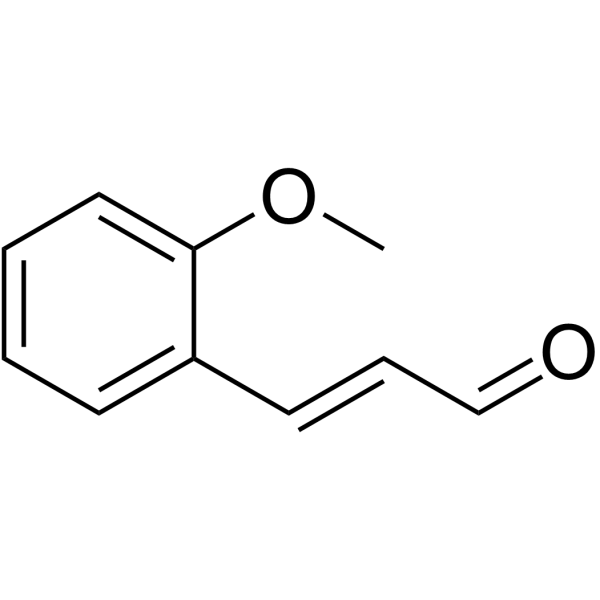
2-Methoxycinnamaldehyde (o-Methoxycinnamaldehyde) is a natural compound that can be isolated from Cinnamomum cassia. 2-Methoxycinnamaldehyde inhibits topoisomerase-I/II and NF-κB signaling pathway, causes mitochondrial dysfunction, induces lysosomal vesiculation, thereby leading to DNA damage and cell apoptosis. 2-Methoxycinnamaldehyde exhibits antitumor effects.
연구목적의 판매만을 진행합니다. 환자를 대상으로 한 판매는 하지 않습니다.
- Purity : 98.0%
- CAS No.: 1504-74-1
- 화학식: C10H10O2
- 분자량:162.19
-
보관:
-20°C, stored under nitrogen
* In solvent : -80°C, 6 months; -20°C, 1 month (stored under nitrogen)

To place orders, for customer services and technical support, please contact: MedChemExpress USA
Tel: 609-228-6898 E-mail: [email protected] [email protected]


-
 Biological Activity
-
Chemical Information
-
용액&용해도
- Protocol
- 순도&문서
- References
-
 Help & FAQs


-
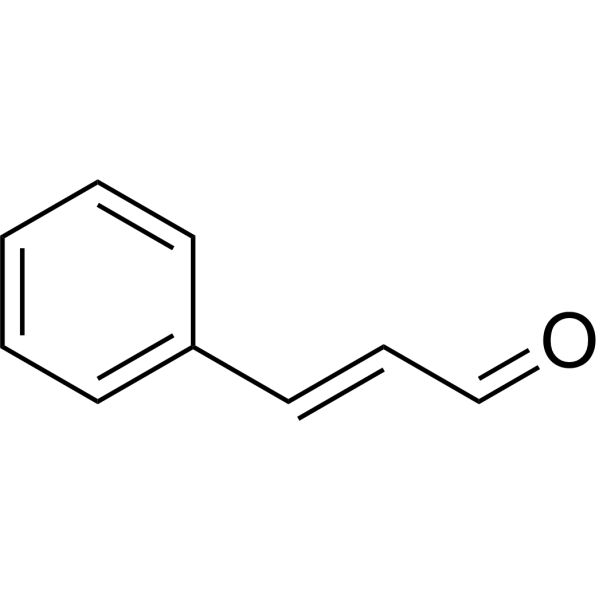
HY-W019711
trans-Cinnamaldehyde -

HY-W046353R
2-Methoxycinnamaldehyde (Standard) -
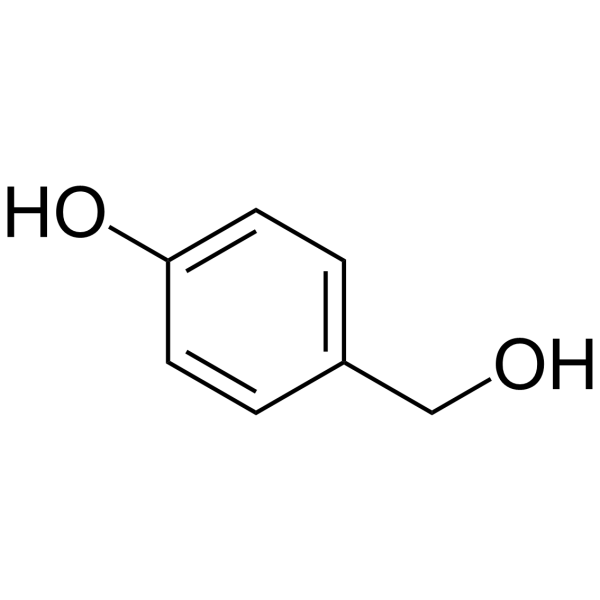
HY-Y0892
4-Hydroxybenzyl alcohol -
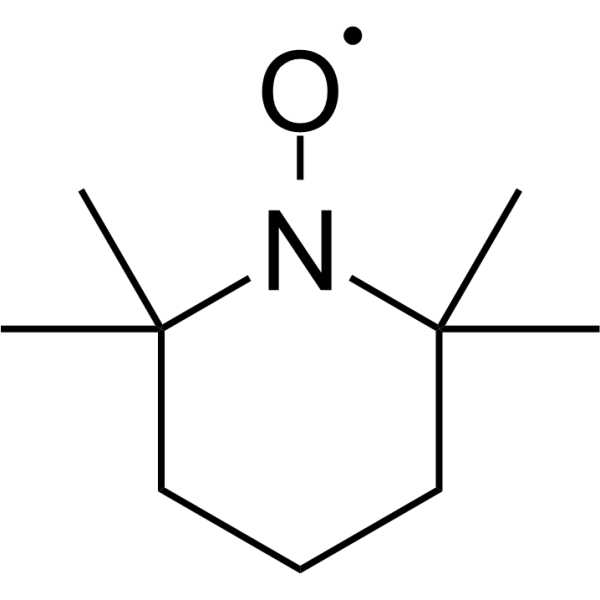
HY-W001187
TempoNitroxide Radical -

HY-Y0892R
4-Hydroxybenzyl alcohol (Standard) -
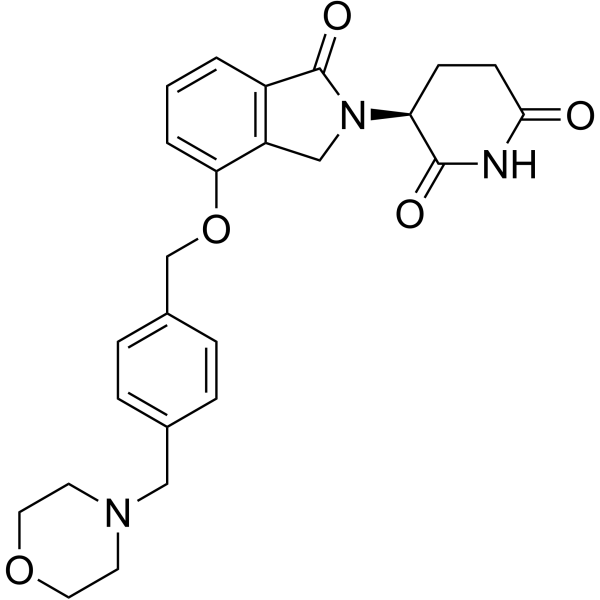
HY-101291
IberdomideCELMoD -
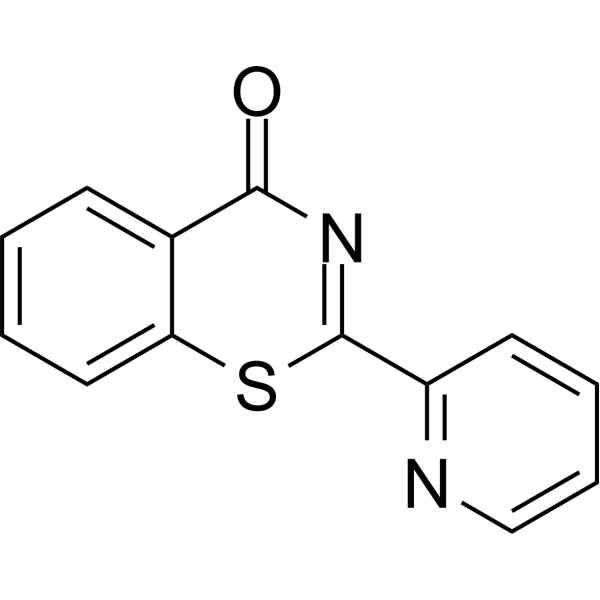
HY-110084
BTZO-1MIF Binder -

HY-W001187R
Tempo (Standard)Nitroxide Radical -

HY-101291R
Iberdomide (Standard)CELMoD


Biological Activity
제품 설명
Cellular Effect
|
Cell Line

|
Type | Value | Description | References |
|---|---|---|---|---|
| RAW264.7 | IC50 |
31 μM
Compound: 2-MCA
|
Inhibition of NF-kappaB transfected in LPS-stimulated mouse RAW264.7 cells
Inhibition of NF-kappaB transfected in LPS-stimulated mouse RAW264.7 cells
|
[PMID: 18823786] |
In Vitro
2-Methoxycinnamaldehyde (10-160 μM, 48 h) promotes the lactate dehydrogenase (LDH) release in cell NCI-H520, exhibits cytotoxicity, and inhibits the proliferation of NCI-H520 with an IC50 of 12.11 μM[2].
2-Methoxycinnamaldehyde (10-40 μM, 48 h) decreases mitochondrial membrane potential, activates caspase-3/9, induces apoptosis in NCI-H520[2].
2-Methoxycinnamaldehyde (0-50 μM, 48 h) modulates expressions of cell cycle regulatory proteins, inhibits TNF-α-induced MMP-9 expression, and inhibits the migration of human aortic smooth muscle cells (HASMCs)[3].
MedChemExpress (MCE) has not independently confirmed the accuracy of these methods. They are for reference only.
-
Cell Line:NCI-H520
-
Concentration:10-160 μM
-
Incubation Time:48 h
-
Result:Inhibited cell survival.
-
Cell Line:NCI-H520
-
Concentration:10-40 μM
-
Incubation Time:48 h
-
Result:Induced nuclear condensation, fragmentation, cell membrane blebbing, and apoptotic body formation.
-
Cell Line:HASMC
-
Concentration:0-50 μM
-
Incubation Time:24 h
-
Result:Reduced the levels of cyclin D1, cyclin D3, and CDK6. Increased the levels of p21 and p27.
In Vivo
MedChemExpress (MCE) has not independently confirmed the accuracy of these methods. They are for reference only.
-
Animal Model:Mouse NCI-H520 xenograft models[3]
-
Dosage:5-20 mg/kg
-
Administration:intratumoral injection, once daily for 49 days
-
Result:Inhibited tumor growth.
- Detection of Apoptosis
- TUNEL staining for apoptotic DNA fragmentation
- Annexin V plus membrane-impermeant dye apoptosis staining
- Mitochondrial membrane-potential and mitochondrial mass staining
- Apoptosis Solutions
- Research Protocol for Inflammation-related Diseases
- Lysosome and acidic-vesicle live-cell staining
- Genotoxicity/Mutagenicity Study


Chemical Information
-
CAS No. 1504-74-1
-
Appearance Solid
-
분자량 162.19
-
화학식 C10H10O2
-
Color White to yellow
-
SMILES
O=C/C=C/C1=CC=CC=C1OC
-
Synonyms
o-Methoxycinnamaldehyde
-
Structure Classification
-
Initial Source
-
선적
Room temperature in continental US; may vary elsewhere.
-
보관
-20°C, stored under nitrogen
* In solvent : -80°C, 6 months; -20°C, 1 month (stored under nitrogen)


용액&용해도
In Vitro:
DMSO : 100 mg/mL (616.56 mM; Need ultrasonic; Hygroscopic DMSO has a significant impact on the solubility of product, please use newly opened DMSO)
Please refer to the solubility information to select the appropriate solvent. Once prepared, please aliquot and store the solution to prevent product inactivation from repeated freeze-thaw cycles.
Storage method and period of stock solution: -80°C, 6 months; -20°C, 1 month (stored under nitrogen). When stored at -80°C, please use it within 6 months. When stored at -20°C, please use it within 1 month.
Please refer to the solubility information to select the appropriate solvent. Once prepared, please aliquot and store the solution to prevent product inactivation from repeated freeze-thaw cycles.
Storage method and period of stock solution: -80°C, 6 months; -20°C, 1 month (stored under nitrogen). When stored at -80°C, please use it within 6 months. When stored at -20°C, please use it within 1 month.
Concentration (start) × Volume (start) = Concentration (final) × Volume (final)
In Vivo:
Select the appropriate dissolution method based on your experimental animal and administration route.
- For the following dissolution methods, please ensure to first prepare a clear stock solution using an In Vitro approach and then sequentially add co-solvents:
- To ensure reliable experimental results, the clarified stock solution can be appropriately stored based on storage conditions. As for the working solution for In Vivo experiments, it is recommended to prepare freshly and use it on the same day.
- The percentages shown for the solvents indicate their volumetric ratio in the final prepared solution. If precipitation or phase separation occurs during preparation, heat and/or sonication can be used to aid dissolution.
Add each solvent one by one: 10% DMSO 40% PEG300 5% Tween-80 45% Saline
Solubility: ≥ 2.5 mg/mL (15.41 mM); Clear solution
This protocol yields a clear solution of ≥ 2.5 mg/mL (saturation unknown).
Taking 1 mL working solution as an example, add 100 μL DMSO stock solution (25.0 mg/mL) to 400 μL PEG300, and mix evenly; then add 50 μL Tween-80 and mix evenly; then add 450 μL Saline to adjust the volume to 1 mL.
Preparation of Saline: Dissolve 0.9 g sodium chloride in ddH₂O and dilute to 100 mL to obtain a clear Saline solution.
In Vivo Dissolution Calculator
Please enter the basic information of animal experiments:
-
-
-
-
Recommended: Prepare an additional quantity of animals to account for potential losses during experiments.
Please enter your animal formula composition:
-
%DMSO +
Recommended: Keep the proportion of DMSO in working solution below 2% if your animal is weak.
-
%+
-
+%Tween-80 + +
-
%Saline +
The co-solvents required include: DMSO, . All of co-solvents are available by MedChemExpress (MCE). , Tween 80. All of co-solvents are available by MedChemExpress (MCE).
Working solution concentration: 0.22 mg/mL
Method for preparing stock solution: mg drug dissolved in μL DMSO. Stock solution concentration: mg/mL. * In solvent : -80°C, 6 months; -20°C, 1 month (stored under nitrogen)
1. Take μL DMSO stock solution;
2. Add μL .
μL , mix evenly;
3. Then add μL Tween 80, mix evenly;
4. Then add μL
Please ensure that the stock solution in the first step is dissolved to a clear state, and add co-solvents in sequence. You can use ultrasonic heating (ultrasonic cleaner, recommended frequency 20-40 kHz), vortexing, etc. to assist dissolution.


순도&문서
-
Data Sheet (278 KB)
-
SDS (393 KB)
- English - EN (393 KB)
- Français - FR (393 KB)
- Deutsch - DE (393 KB)
- Norwegian - NO (393 KB)
- Español - ES (393 KB)
- Swedish - SV (393 KB)
- Italian - IT (393 KB)
- Korean - KR (393 KB)
- Portuguese - PT (393 KB)
-
Handling Instructions (2659 KB)
References
[1]. Wong HY, et al. Cinnamomum verum Component 2-Methoxycinnamaldehyde: A Novel Anticancer Agent with Both Anti-Topoisomerase I and II Activities in Human Lung Adenocarcinoma A549 Cells In Vitro and In Vivo. Phytother Res. 2016 Feb;30(2):331-40. [Content Brief]
[2]. Liu YH, et al. Cinnamomum verum ingredient 2-methoxycinnamaldehyde: a new antiproliferative drug targeting topoisomerase I and II in human lung squamous cell carcinoma NCI-H520 cells. Eur J Cancer Prev. 2017 Jul;26(4):314-323. [Content Brief]
[3]. Jin YH, et al. 2-Methoxycinnamaldehyde inhibits the TNF-α-induced proliferation and migration of human aortic smooth muscle cells. Int J Mol Med. 2017 Jan;39(1):191-198. [Content Brief]


Complete Stock Solution Preparation Table
Please refer to the solubility information to select the appropriate solvent. Once prepared, please aliquot and store the solution to prevent product inactivation from repeated freeze-thaw cycles.
Storage method and period of stock solution: -80°C, 6 months; -20°C, 1 month (stored under nitrogen). When stored at -80°C, please use it within 6 months. When stored at -20°C, please use it within 1 month.
| Optional Solvent | Concentration Solvent Mass | 1 mg | 5 mg | 10 mg | 25 mg |
|---|---|---|---|---|---|
| DMSO | 1 mM | 6.1656 mL | 30.8280 mL | 61.6561 mL | 154.1402 mL |
| 5 mM | 1.2331 mL | 6.1656 mL | 12.3312 mL | 30.8280 mL | |
| 10 mM | 0.6166 mL | 3.0828 mL | 6.1656 mL | 15.4140 mL | |
| 15 mM | 0.4110 mL | 2.0552 mL | 4.1104 mL | 10.2760 mL | |
| 20 mM | 0.3083 mL | 1.5414 mL | 3.0828 mL | 7.7070 mL | |
| 25 mM | 0.2466 mL | 1.2331 mL | 2.4662 mL | 6.1656 mL | |
| 30 mM | 0.2055 mL | 1.0276 mL | 2.0552 mL | 5.1380 mL | |
| 40 mM | 0.1541 mL | 0.7707 mL | 1.5414 mL | 3.8535 mL | |
| 50 mM | 0.1233 mL | 0.6166 mL | 1.2331 mL | 3.0828 mL | |
| 60 mM | 0.1028 mL | 0.5138 mL | 1.0276 mL | 2.5690 mL | |
| 80 mM | 0.0771 mL | 0.3854 mL | 0.7707 mL | 1.9268 mL | |
| 100 mM | 0.0617 mL | 0.3083 mL | 0.6166 mL | 1.5414 mL |


2-Methoxycinnamaldehyde Related Classifications
HY-W046353 Related Classifications
 Powered by Bioz