



Tyrphostin AG213
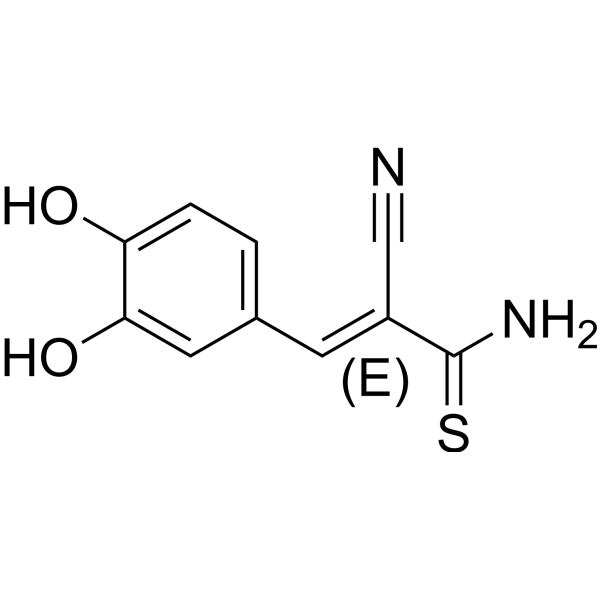
Tyrphostin AG213 (AG213) is an inhibitor of epidermal growth factor receptor (EGFR) protein tyrosine kinase (IC50=0.85 μM). Tyrphostin AG213 inhibits tyrosine kinase activity IC50=2.4 μM) and topoisomerase II (IC100=50 μM). Tyrphostin AG213 can induce nonapoptotic cell programmed death in tumor cells.
Nos produits utilisent uniquement pour la recherche. Nous ne vendons pas aux patients.
- CAS No.: 122520-86-9
- Formule: C10H8N2O2S
- Masse moléculaire:220.25
-
Stockage:
Please store the product under the recommended conditions in the Certificate of Analysis.

To place orders, for customer services and technical support, please contact: MedChemExpress USA
Tel: 609-228-6898 E-mail: [email protected] [email protected]


-
 Activité biologique
-
Chemical Information
- Protocole
- Pureté et documentation
- Références
-
 Help & FAQs


-
HY-101042
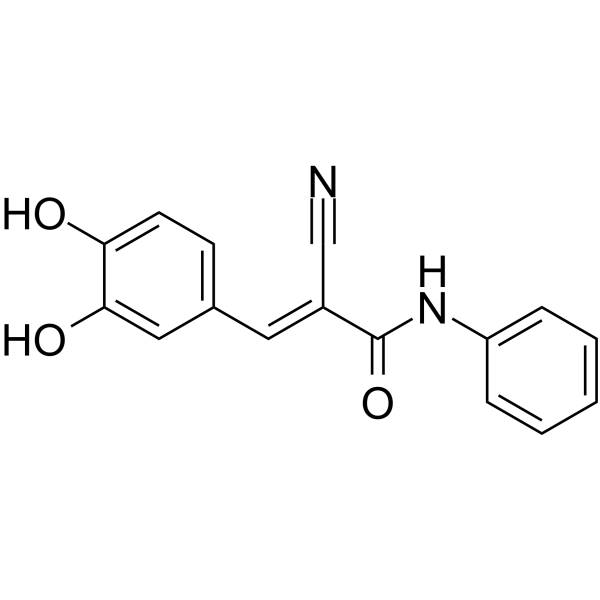
AG-494EGFR Inhibitor -
HY-15772
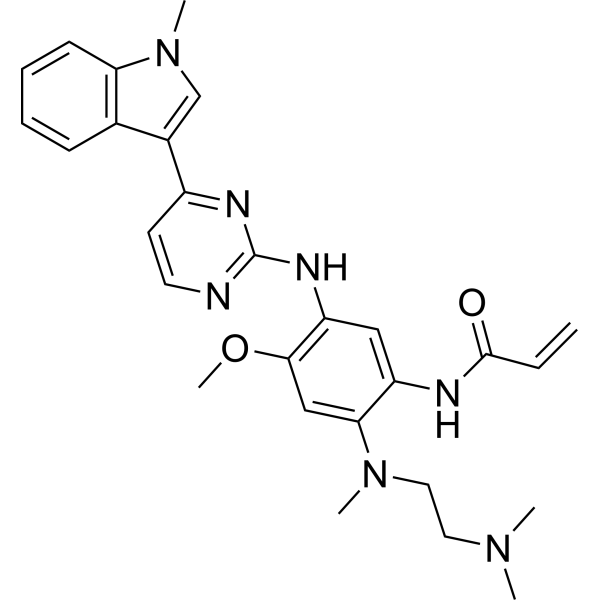
OsimertinibMutant-Selective EGFR Inhibitor -
HY-20878
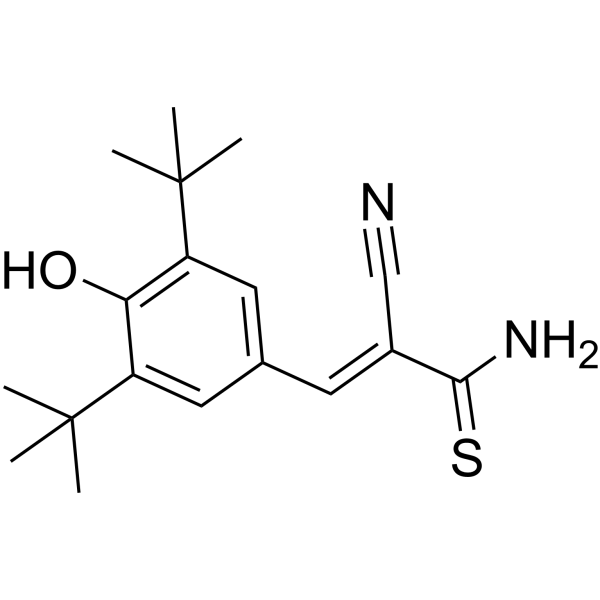
Tyrphostin AG 879TrKA Receptor Inhibitor -
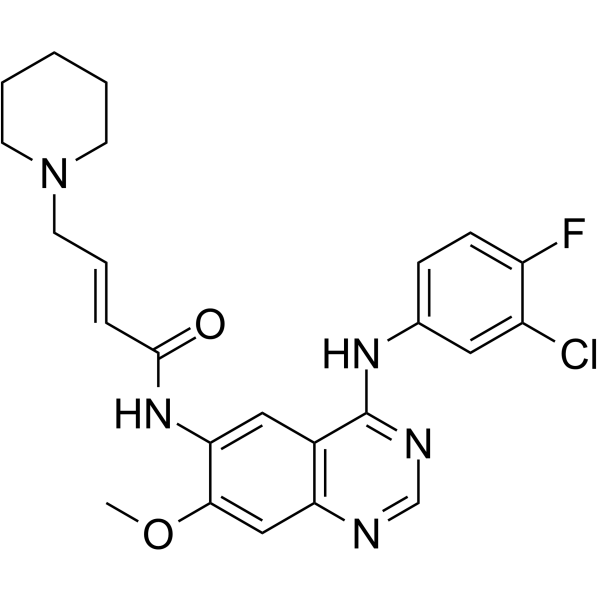
HY-13272
DacomitinibErbB Inhibitor -
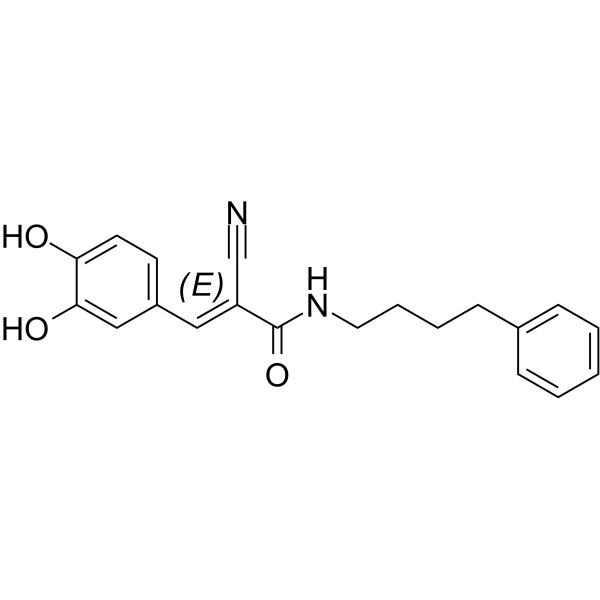
HY-101041
(E)-AG 556EGFR Inhibitor -

HY-15772R
Osimertinib (Standard)Mutant-Selective EGFR Inhibitor -
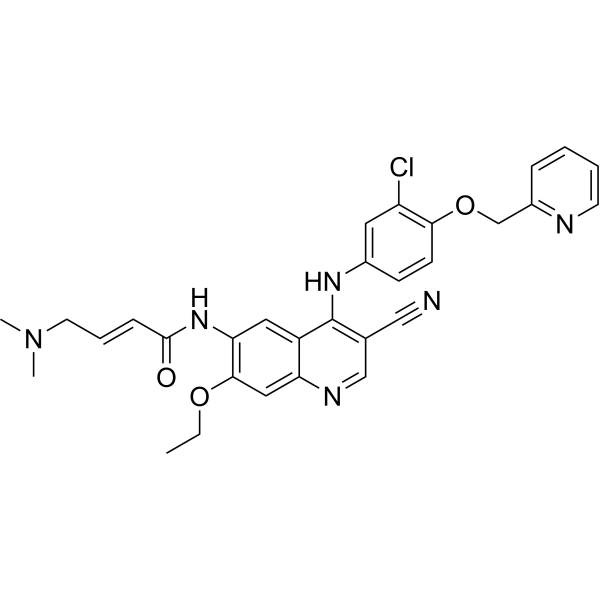
HY-32721
NeratinibHER2/EGFR Inhibitor -
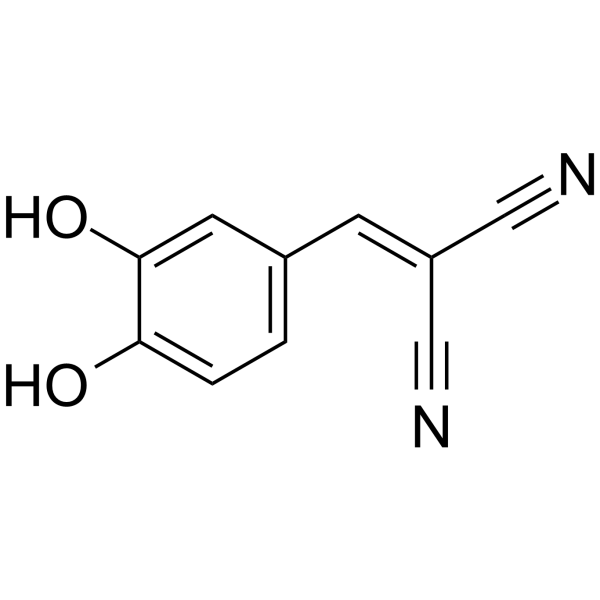
HY-15644
Tyrphostin 23EGFR Inhibitor -
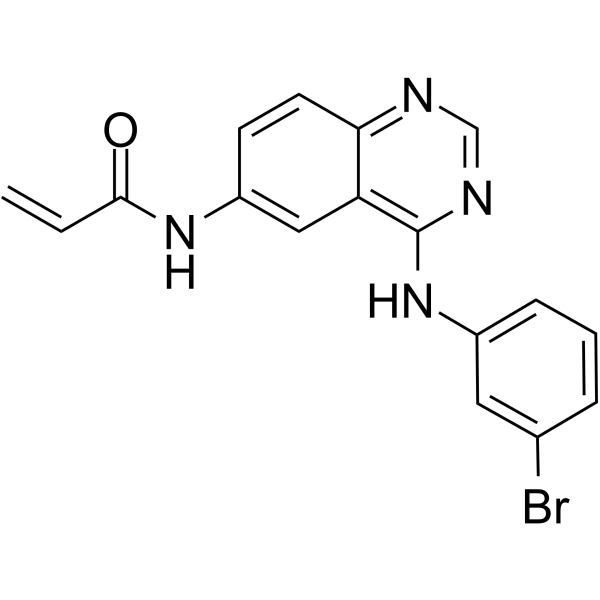
HY-13896
PD168393EGFR Tyrosine Kinase Inhibitor -
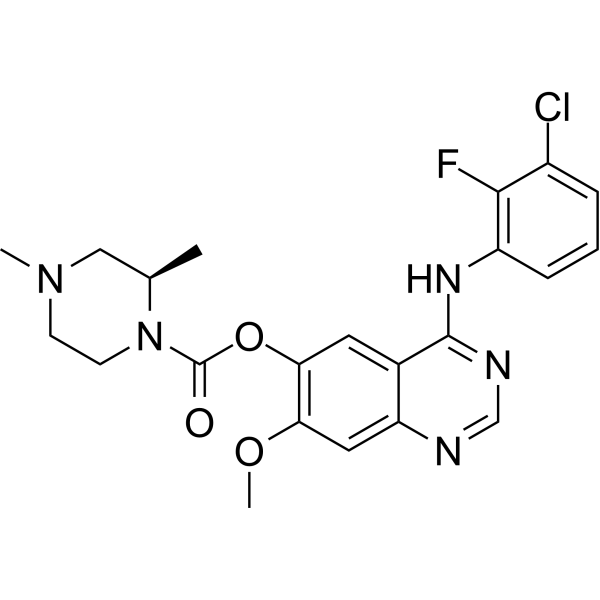
HY-18750
ZorifertinibEGFR Inhibitor -
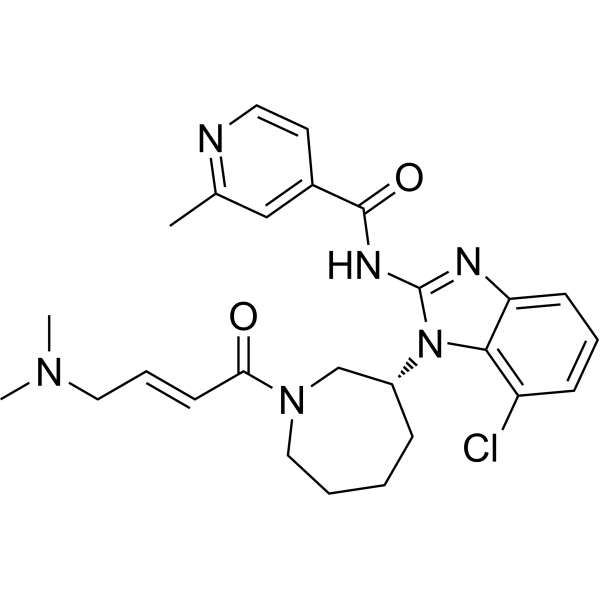
HY-12872
NazartinibEGFR Inhibitor -
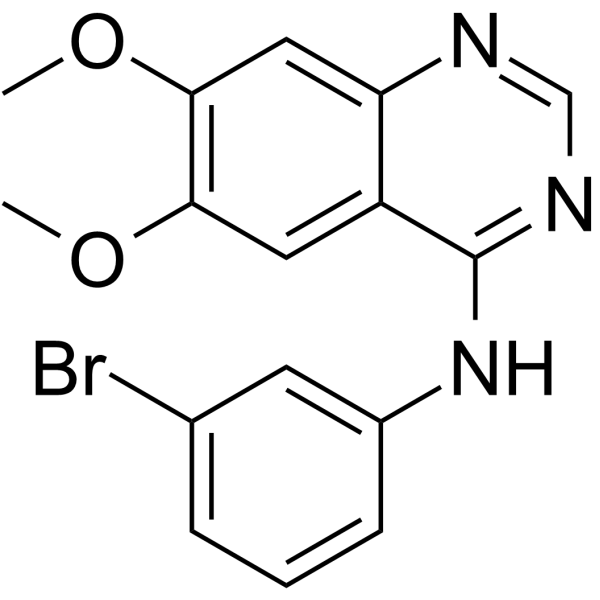
HY-14346
PD153035EGFR Inhibitor
Voir tous les produits spécifiques à Isoform EGFR
MoreVoir tous les produits spécifiques à Isoform Topoisomerase
More

Activité biologique
Description
Cellular Effect
|
Cell Line

|
Type | Value | Description | References |
|---|---|---|---|---|
| A-431 | IC50 |
3 μM
Compound: 125, RG-50864 (AG-213)
|
Inhibition of EGFR in human A431 cells
Inhibition of EGFR in human A431 cells
|
[PMID: 1479375] |
In Vitro
Tyrphostin AG213 (25 μM, 50 μM, and 75 μM; 24 h, 48 h, and 96 h) increases wound closure time in human umbilical vein endothelial cell (HUVEC) monolayer[1].
Tyrphostin AG213 (100 μM; 1 h) interferes with HUVEC focal adhesion and stress fiber formation[1].
Tyrphostin AG213 (100 μM; 24 h) inhibits adherence-related tyrosine phosphorylation of pp125FAK in HUVEC[1].
Tyrphostin AG213 (10 μM; 24 h) inhibits tyrosine kinase activity, and (4.55-455 mM; 24-72 h) inhibits HT-29 cell viability dose- and time-dependently[2].
MedChemExpress (MCE) has not independently confirmed the accuracy of these methods. They are for reference only. Further protocols information, click here.


Chemical Information
-
CAS No. 122520-86-9
-
Masse moléculaire 220.25
-
Formule C10H8N2O2S
-
SMILES
S=C(/C(C#N)=C/C1=CC=C(C(O)=C1)O)N
-
Synonyms
AG213
-
Livraison
Room temperature in continental US; may vary elsewhere.
-
Stockage
Please store the product under the recommended conditions in the Certificate of Analysis.

Protocole
-
Kinase activity and phosphorylation assays
Kinase activity assays measure the ability of kinases to transfer phosphate groups from ATP to specific substrates, while phosphorylation assays detect the presence and levels of phosphorylated proteins. Common methods include radiolabeled ATP incorporation (e. g. ,), ADP release detection via bioluminescence (e. g. ,[3]), enzyme-linked immunosorbent assays (ELISA) for phospho-specific epitopes (e. g. ,[6]), and microtiter-based formats for high-throughput screening (e. g. ,[8]). The ADP-Glo assay quantifies kinase activity by measuring ADP produced during phosphorylation using a luciferase-based system. Radiometric assays involve autoradiography or scintillation counting after incorporation of 32P-labeled ATP into substrate proteins. ELISA-based approaches rely on phospho-specific antibodies to detect activated kinases in cell lysates or purified samples.
-
Protocol for Kinase activity and phosphorylation assays
Kinase activity assays measure transfer of phosphate from ATP to a protein or peptide substrate, generating phosphorylated substrate, ADP, or incorporated radiolabeled phosphate as the readout; phosphorylation assays measure site-specific phosphorylation in cells or tissues as a proxy for kinase-pathway activation, inhibition, or substrate regulation. Phosphorylation can be detected by phospho-specific Western blot, immunoprecipitation kinase assay, phospho-immunofluorescence, phospho-flow cytometry, luminescent ADP detection, radiolabeled ATP incorporation, or reporter-based pathway assays, and these readouts can be applied to cancer cells, primary neurons, mouse tumors, organoids, inflammatory macrophages, ferroptosis studies, and mitophagy studies when the kinase target is biologically relevant.


Pureté et documentation
-
Fiche technique (266 KB)
-
SDS (252 KB)
- Français - FR (252 KB)
- Deutsch - DE (252 KB)
- Norwegian - NO (252 KB)
- Español - ES (252 KB)
- Swedish - SV (252 KB)
- Italian - IT (252 KB)
- Korean - KR (252 KB)
- Portuguese - PT (252 KB)
-
Instruction de manipulation (2659 KB)
Références

Calculators
Concentration (start) × Volume (start) = Concentration (final) × Volume (final)


Tyrphostin AG213 Related Classifications
HY-101959 Related Classifications
 Powered by Bioz