



Amsacrine hydrochloride
Based on 8 publication(s) in Google Scholar
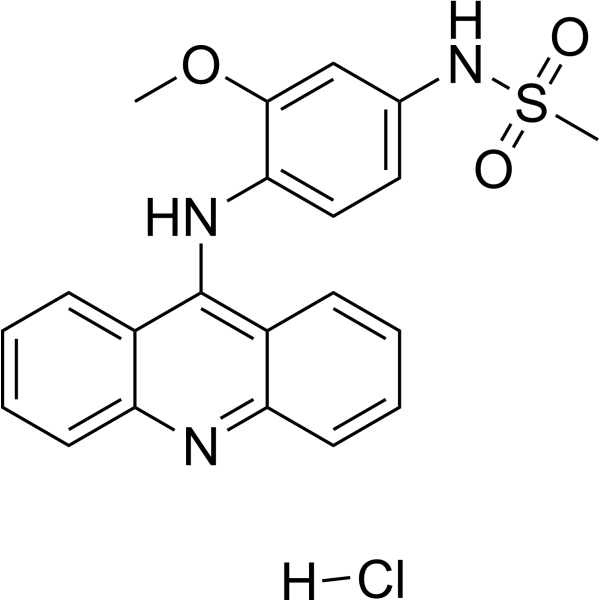
Amsacrine hydrochloride (m-AMSA hydrochloride; acridinyl anisidide hydrochloride) is an inhibitor of topoisomerase II, and acts as an antineoplastic agent which can intercalates into the DNA of tumor cells.
For research use only. We do not sell to patients.
- Purity : 99.92%
- CAS No.: 54301-15-4
- Formula: C21H20ClN3O3S
- Molecular Weight:429.92
-
Storage:
4°C, sealed storage, away from moisture and light
* In solvent : -80°C, 6 months; -20°C, 1 month (sealed storage, away from moisture and light)

To place orders, for customer services and technical support, please contact: MedChemExpress USA
Tel: 609-228-6898 E-mail: [email protected] [email protected]


-
 Biological Activity
-
Chemical Information
-
Solvent & Solubility
- Protocol
- Purity & Documentation
- References
-
 Help & FAQs


-
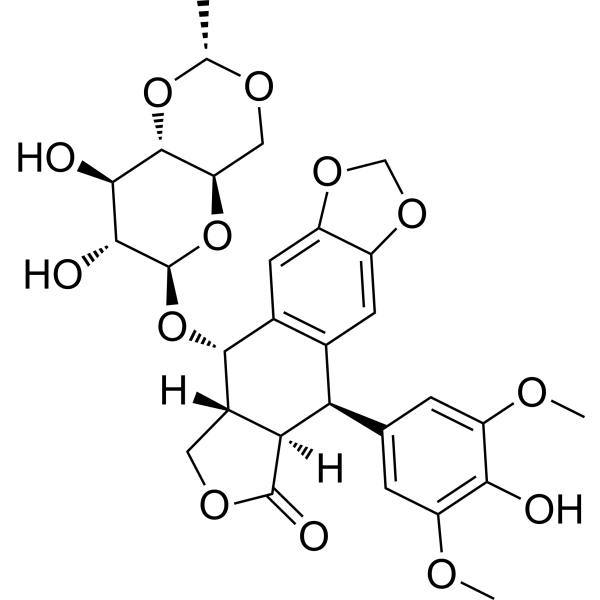
HY-13629
EtoposideTopoisomerase II Inhibitor -
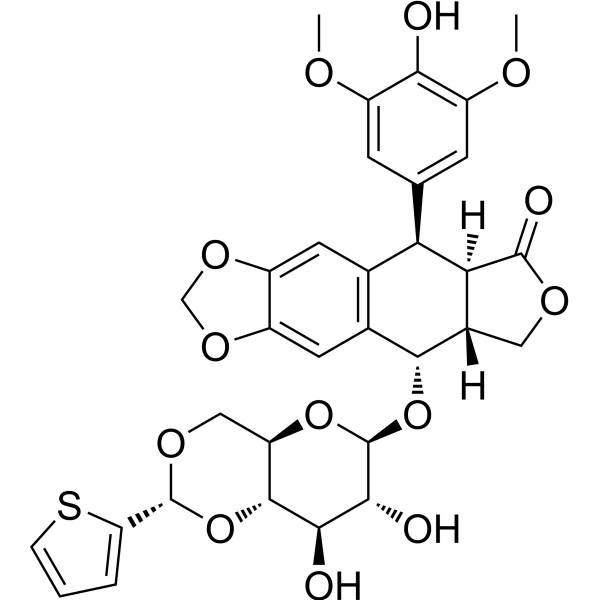
HY-13761
TeniposideTopoisomerase Inhibitor -
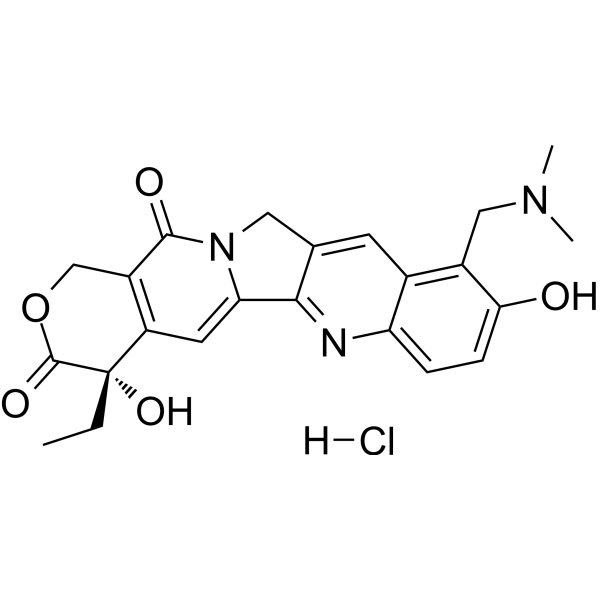
HY-13768A
Topotecan hydrochlorideTopoisomerase I Inhibitor -
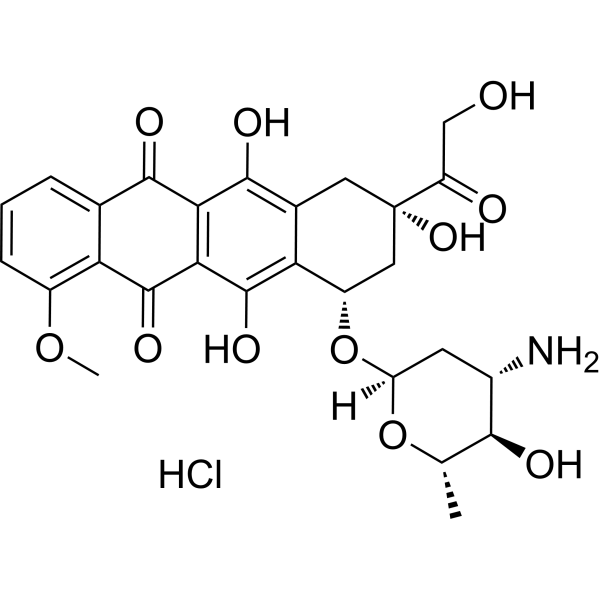
HY-13624A
Epirubicin hydrochlorideDNA/RNA Synthesis Inhibitor -
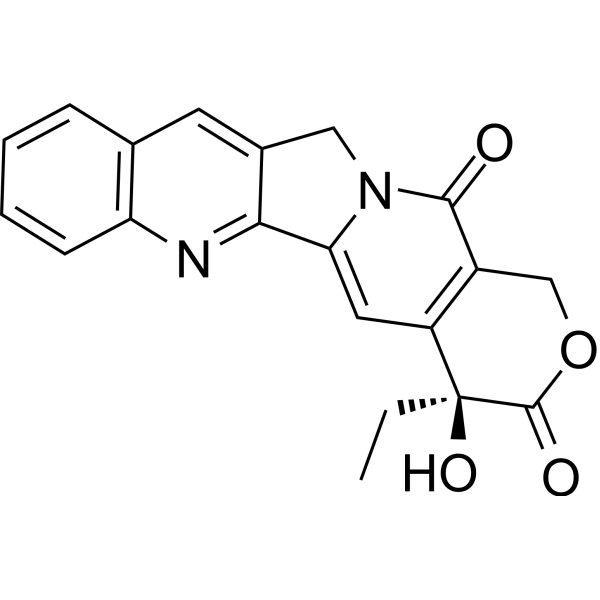
HY-16560
CamptothecinTopo I inhibitor -
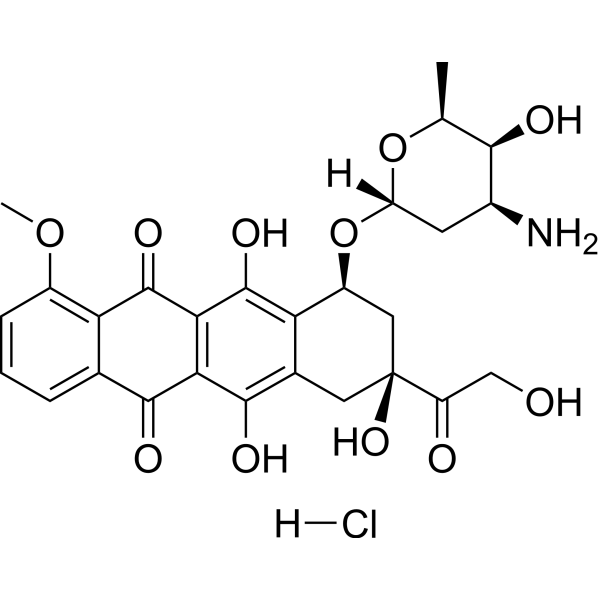
HY-15142
Doxorubicin hydrochlorideTopoisomerase Inhibitor -
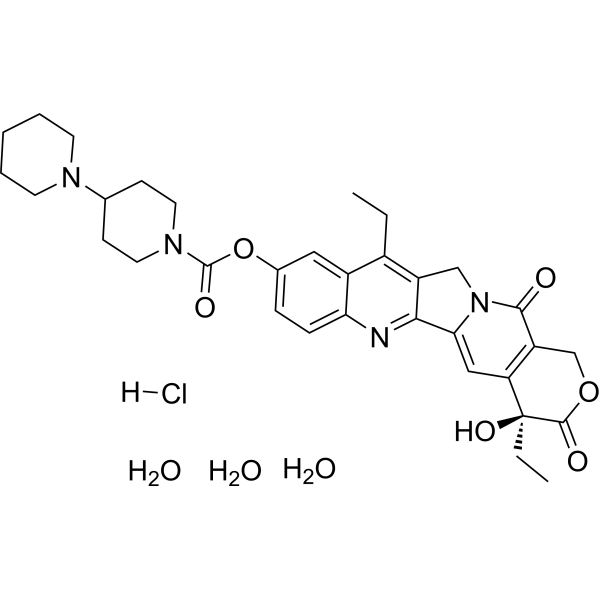
HY-16568
Irinotecan hydrochloride trihydrateTopoisomerase I Inhibitor -
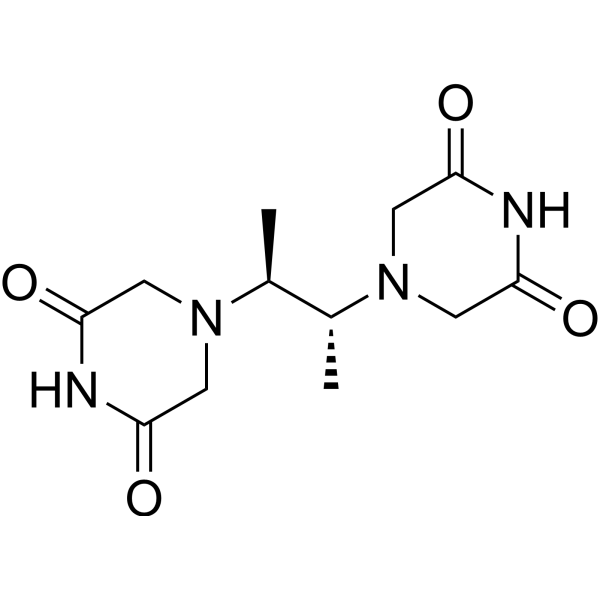
HY-118590
ICRF-193Topoisomerase II Inhibitor -
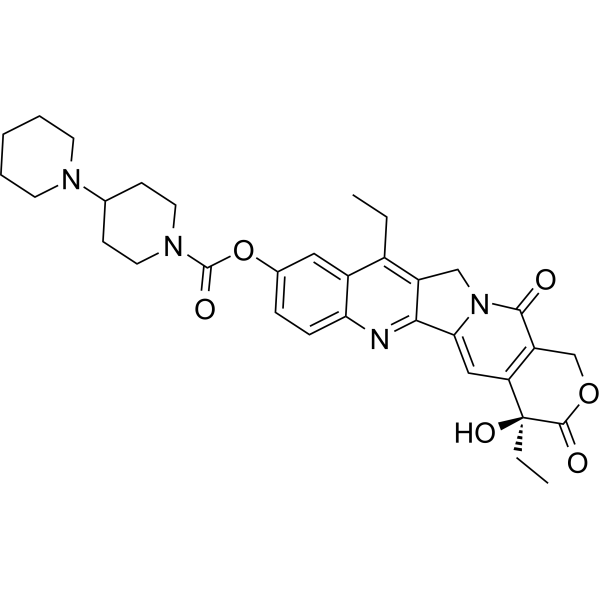
HY-16562
IrinotecanTopoisomerase I Inhibitor -
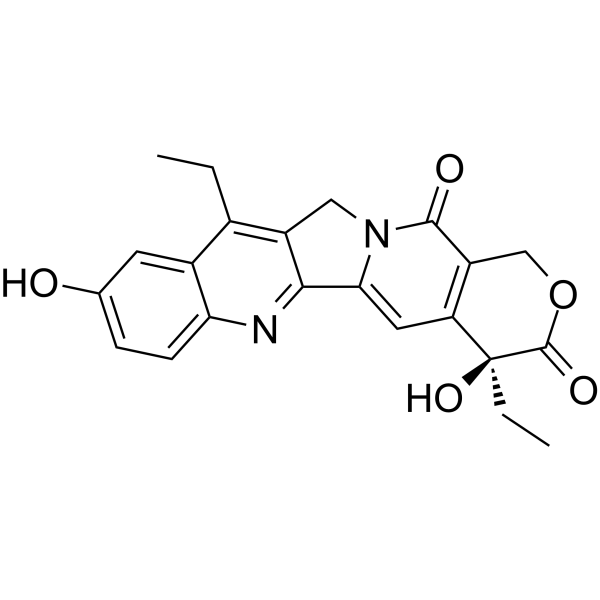
HY-13704
SN-38Topoisomerase I Inhibitor -
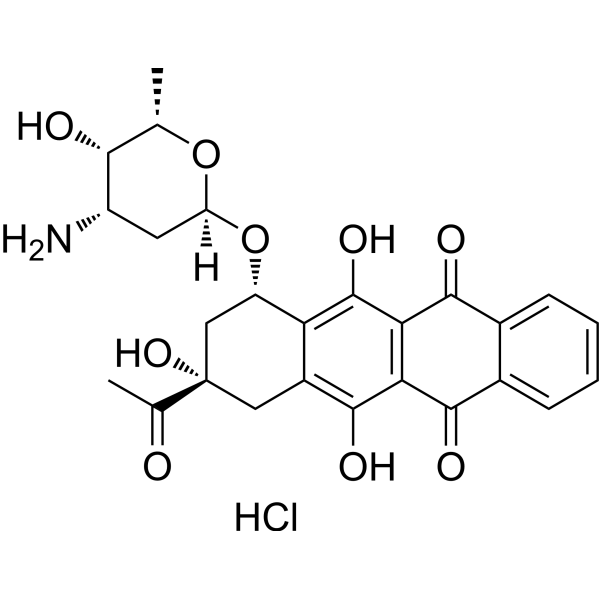
HY-17381
Idarubicin hydrochlorideTopo II Inhibitor -
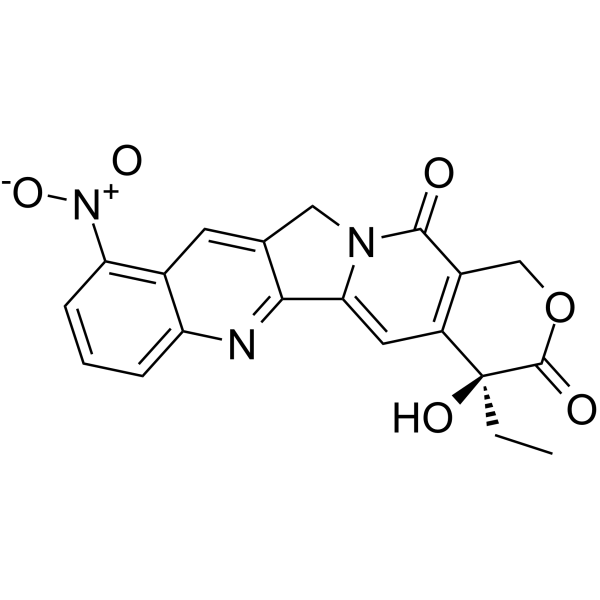
HY-13744
RubitecanTopoisomerase Inhibitor
Publications Citing Use of MedChemExpress (MCE) Amsacrine hydrochloride
More- Cell Metab. 2022 Mar 1;34(3):424-440.e7. [Abstract]
- J Adv Res. 2024 Apr:58:117-128. [Abstract]
- ACS Environ Au. 2025 Aug 5;5(6):573-582. [Abstract]
- Anal Chem. 2025 Jun 3;97(21):11099-11109. [Abstract]
- J Mol Med (Berl). 2019 Aug;97(8):1183-1193. [Abstract]
- Nucleic Acid Ther. 2023 Aug;33(4):248-264. [Abstract]
- University of Colorado Denver. 2024.
- bioRxiv. September 29, 2021.
All Topoisomerase Isoforms
More

Biological Activity
Description
IC50 & Target
[1]|
Topoisomerase II |
In Vitro
Amsacrine (mAMSA) blocks HERG currents in HEK 293 cells and Xenopus oocytes in a concentration-dependent manner, with IC50 values of 209.4 nM and 2.0 μM, respectively. Amsacrine (mAMSA) causes a negative shift in the voltage dependence of both activation (?7.6 mV) and inactivation (?7.6 mV). HERG current block by Amsacrine (mAMSA) is not frequency dependent[1]. In vitro studies of normal human lymphocytes with various concentrations of Amsacrine (mAMSA), show both increased levels of chromosomal aberrations, ranging from 8% to 100%, and increase SCEs, ranging from 1.5 times the normal at the lowest concentration studied (0.005 μg/mL) to 12 times the normal (0.25 μg/mL)[3]. Amsacrine (mAMSA)-induced apoptosis of U937 cells is characterized by caspase-9 and caspase-3 activation, increased intracellular Ca2+ concentration, mitochondrial depolarization, and MCL1 down-regulation. Amsacrine induces MCL1 down-regulation by decreasing its stability. Further, amsacrine-treated U937 cells show AKT degradation and Ca2+-mediated ERK inactivation[4].
MedChemExpress (MCE) has not independently confirmed the accuracy of these methods. They are for reference only.
In Vivo
MedChemExpress (MCE) has not independently confirmed the accuracy of these methods. They are for reference only.


Chemical Information
-
CAS No. 54301-15-4
-
Appearance Solid
-
Molecular Weight 429.92
-
Formula C21H20ClN3O3S
-
Color Orange to red
-
SMILES
CS(=O)(NC1=CC=C(NC2=C(C=CC=C3)C3=NC4=CC=CC=C42)C(OC)=C1)=O.[H]Cl
-
Synonyms
m-AMSA hydrochloride; acridinyl anisidide hydrochloride
-
Shipping
Room temperature in continental US; may vary elsewhere.
-
Storage
4°C, sealed storage, away from moisture and light
* In solvent : -80°C, 6 months; -20°C, 1 month (sealed storage, away from moisture and light)


Publications (8)
-
Journal Impact Factor
-
Most Recent
-
Cell Metab
Imatinib and methazolamide ameliorate COVID-19-induced metabolic complications via elevating ACE2 enzymatic activity and inhibiting viral entry. [Abstract]2022 Mar 1;34(3):424-440.e7. PMID: 35150639 -
J Adv Res
Postantibiotic leukocyte enhancement-mediated reduction of intracellular bacteria by macrophages. [Abstract]2024 Apr:58:117-128. PMID: 37290606 -
ACS Environ Au
Machine Learning-Assisted Recognition of Environmental Sulfur-Containing Chemicals in Nontargeted Mass Spectrometry Analysis of Inadequate Mass Resolution. [Abstract]2025 Aug 5;5(6):573-582. PMID: 41277996 -
Anal Chem
Exposome-Scale Investigation of Cl-/Br-Containing Chemicals Using High-Resolution Mass Spectrometry, Multistage Machine Learning, and Cloud Computing. [Abstract]2025 Jun 3;97(21):11099-11109. PMID: 40401576 -
J Mol Med (Berl)
2019 Aug;97(8):1183-1193. PMID: 31201471 -
Nucleic Acid Ther
Mammalian Target of Rapamycin Inhibition Enhances Delivery and Activity of Antisense Oligonucleotides in Uveal Melanoma Cells. [Abstract]2023 Aug;33(4):248-264. PMID: 37389884 -
-


Solvent & Solubility
In Vitro:
DMSO : 62.5 mg/mL (145.38 mM; Need ultrasonic; Hygroscopic DMSO has a significant impact on the solubility of product, please use newly opened DMSO)
Please refer to the solubility information to select the appropriate solvent. Once prepared, please aliquot and store the solution to prevent product inactivation from repeated freeze-thaw cycles.
Storage method and period of stock solution: -80°C, 6 months; -20°C, 1 month (sealed storage, away from moisture and light). When stored at -80°C, please use it within 6 months. When stored at -20°C, please use it within 1 month.
Please refer to the solubility information to select the appropriate solvent. Once prepared, please aliquot and store the solution to prevent product inactivation from repeated freeze-thaw cycles.
Storage method and period of stock solution: -80°C, 6 months; -20°C, 1 month (sealed storage, away from moisture and light). When stored at -80°C, please use it within 6 months. When stored at -20°C, please use it within 1 month.
Concentration (start) × Volume (start) = Concentration (final) × Volume (final)
In Vivo:
Select the appropriate dissolution method based on your experimental animal and administration route.
- For the following dissolution methods, please ensure to first prepare a clear stock solution using an In Vitro approach and then sequentially add co-solvents:
- To ensure reliable experimental results, the clarified stock solution can be appropriately stored based on storage conditions. As for the working solution for In Vivo experiments, it is recommended to prepare freshly and use it on the same day.
- The percentages shown for the solvents indicate their volumetric ratio in the final prepared solution. If precipitation or phase separation occurs during preparation, heat and/or sonication can be used to aid dissolution.
Add each solvent one by one: 10% DMSO 40% PEG300 5% Tween-80 45% Saline
Solubility: ≥ 2.08 mg/mL (4.84 mM); Clear solution
This protocol yields a clear solution of ≥ 2.08 mg/mL (saturation unknown).
Taking 1 mL working solution as an example, add 100 μL DMSO stock solution (20.8 mg/mL) to 400 μL PEG300, and mix evenly; then add 50 μL Tween-80 and mix evenly; then add 450 μL Saline to adjust the volume to 1 mL.
Preparation of Saline: Dissolve 0.9 g sodium chloride in ddH₂O and dilute to 100 mL to obtain a clear Saline solution.
In Vivo Dissolution Calculator
Please enter the basic information of animal experiments:
-
-
-
-
Recommended: Prepare an additional quantity of animals to account for potential losses during experiments.
Please enter your animal formula composition:
-
%DMSO +
Recommended: Keep the proportion of DMSO in working solution below 2% if your animal is weak.
-
%+
-
+%Tween-80 + +
-
%Saline +
The co-solvents required include: DMSO, . All of co-solvents are available by MedChemExpress (MCE). , Tween 80. All of co-solvents are available by MedChemExpress (MCE).
Working solution concentration: 0.22 mg/mL
Method for preparing stock solution: mg drug dissolved in μL DMSO. Stock solution concentration: mg/mL. * In solvent : -80°C, 6 months; -20°C, 1 month (sealed storage, away from moisture and light)
1. Take μL DMSO stock solution;
2. Add μL .
μL , mix evenly;
3. Then add μL Tween 80, mix evenly;
4. Then add μL
Please ensure that the stock solution in the first step is dissolved to a clear state, and add co-solvents in sequence. You can use ultrasonic heating (ultrasonic cleaner, recommended frequency 20-40 kHz), vortexing, etc. to assist dissolution.

Protocol
Animal Administration[2]
Mice[2]
Amsacrine (mAMSA) is investigated in three separated experiments. In the first experiment, animals are treated by intraperitoneal injection with 0.5, 1.5 and 4.5 mg/kg of Amsacrine (mAMSA) and bone marrow is sampled 24 h after treatment. Preliminary negative MN results at this sampling time lead to the use of 30 h sampling time for Amsacrine (mAMSA). Thus, in the second experiment, mice are treated with 0.5, 1.5 and 4.5 mg/kg of Amsacrine (mAMSA) and bone marrow is sampled 30 h after treatment. The doses and sampling times for Amsacrine are chosen by reference to earlier studies and the selected doses are within the dose range used for human chemotherapy. The results again show that the micronuclei frequency in the bone marrow of mice is not affected by treatment with any of the selected doses of the test agent, at 30 h sampling time, thus, in the third experiment, mice are treated with 6, 9 and 12 mg/kg of Amsacrine and bone marrow is sampled 24 and 30 h after treatment.
MedChemExpress (MCE) has not independently confirmed the accuracy of these methods. They are for reference only.


Purity & Documentation
-
Data Sheet (285 KB)
-
SDS (480 KB)
- English - EN (480 KB)
- Français - FR (480 KB)
- Deutsch - DE (480 KB)
- Norwegian - NO (480 KB)
- Español - ES (480 KB)
- Swedish - SV (480 KB)
- Italian - IT (480 KB)
- Korean - KR (480 KB)
- Portuguese - PT (480 KB)
-
Handling Instructions (2659 KB)
References
[1]. Thomas D, et al. Inhibition of cardiac HERG currents by the DNA topoisomerase II inhibitor amsacrine: mode of action. Br J Pharmacol. 2004 Jun;142(3):485-94. [Content Brief]
[2]. Attia SM. Molecular cytogenetic evaluation of the mechanism of genotoxic potential of amsacrine and nocodazole in mouse bone marrow cells. J Appl Toxicol. 2013 Jun;33(6):426-33. [Content Brief]
[3]. Kao-Shan CS, et al. Cytogenetic effects of amsacrine on human lymphocytes in vivo and in vitro. Cancer Treat Rep. 1984 Jul-Aug;68(7-8):989-97. [Content Brief]
[4]. Lee YC, et al. Amsacrine-induced apoptosis of human leukemia U937 cells is mediated by the inhibition of AKT- and ERK-induced stabilization of MCL1. Apoptosis. 2017 Mar;22(3):406-420. [Content Brief]


Complete Stock Solution Preparation Table
Please refer to the solubility information to select the appropriate solvent. Once prepared, please aliquot and store the solution to prevent product inactivation from repeated freeze-thaw cycles.
Storage method and period of stock solution: -80°C, 6 months; -20°C, 1 month (sealed storage, away from moisture and light). When stored at -80°C, please use it within 6 months. When stored at -20°C, please use it within 1 month.
| Optional Solvent | Concentration Solvent Mass | 1 mg | 5 mg | 10 mg | 25 mg |
|---|---|---|---|---|---|
| DMSO | 1 mM | 2.3260 mL | 11.6301 mL | 23.2601 mL | 58.1504 mL |
| 5 mM | 0.4652 mL | 2.3260 mL | 4.6520 mL | 11.6301 mL | |
| 10 mM | 0.2326 mL | 1.1630 mL | 2.3260 mL | 5.8150 mL | |
| 15 mM | 0.1551 mL | 0.7753 mL | 1.5507 mL | 3.8767 mL | |
| 20 mM | 0.1163 mL | 0.5815 mL | 1.1630 mL | 2.9075 mL | |
| 25 mM | 0.0930 mL | 0.4652 mL | 0.9304 mL | 2.3260 mL | |
| 30 mM | 0.0775 mL | 0.3877 mL | 0.7753 mL | 1.9383 mL | |
| 40 mM | 0.0582 mL | 0.2908 mL | 0.5815 mL | 1.4538 mL | |
| 50 mM | 0.0465 mL | 0.2326 mL | 0.4652 mL | 1.1630 mL | |
| 60 mM | 0.0388 mL | 0.1938 mL | 0.3877 mL | 0.9692 mL | |
| 80 mM | 0.0291 mL | 0.1454 mL | 0.2908 mL | 0.7269 mL | |
| 100 mM | 0.0233 mL | 0.1163 mL | 0.2326 mL | 0.5815 mL |


Amsacrine hydrochloride Related Classifications
HY-13551A Related Classifications
 Powered by Bioz