



Pirarubicin Hydrochloride
Based on 26 publication(s) in Google Scholar
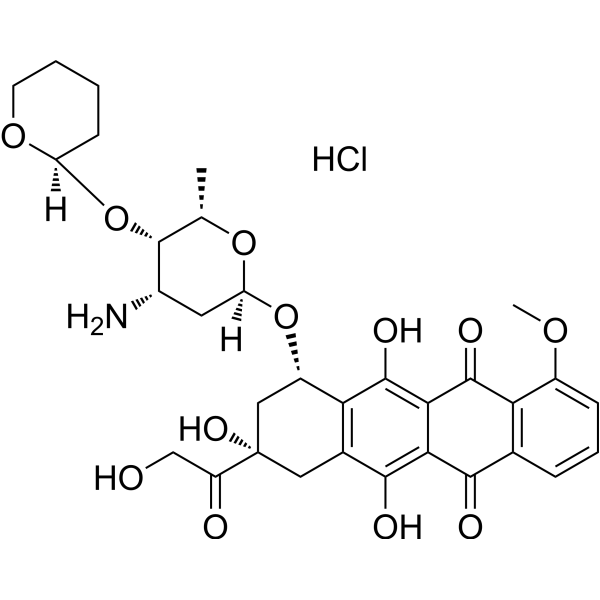
Pirarubicin Hydrochloride is an anthracycline antibiotics, acts as a topoisomerase II inhibitor, and is a widely used for treatment of various cancers, in particular, solid tumors.
For research use only. We do not sell to patients.
- Purity : 99.14%
- CAS No.: 95343-20-7
- Formula: C32H38ClNO12
- Molecular Weight:664.10
-
Storage:
4°C, sealed storage, away from moisture and light
* In solvent : -80°C, 6 months; -20°C, 1 month (sealed storage, away from moisture and light)

To place orders, for customer services and technical support, please contact: MedChemExpress USA
Tel: 609-228-6898 E-mail: [email protected] [email protected]


-
 Biological Activity
-
Chemical Information
-
Solvent & Solubility
- Protocol
- Purity & Documentation
- References
-
 Help & FAQs


-
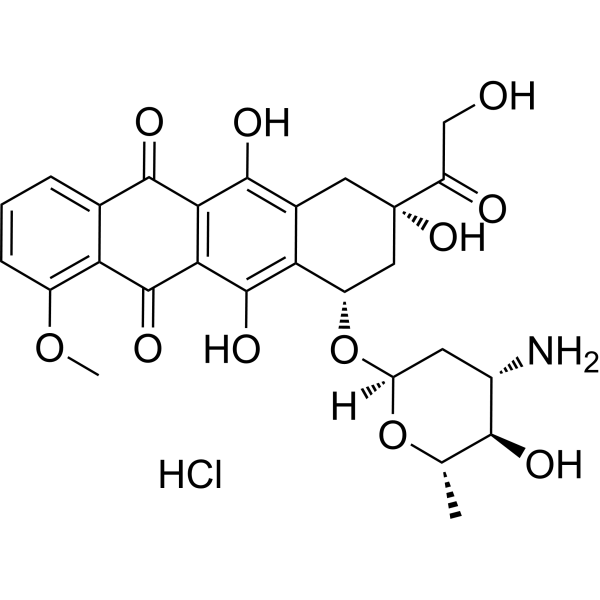
HY-13624A
Epirubicin hydrochloride -
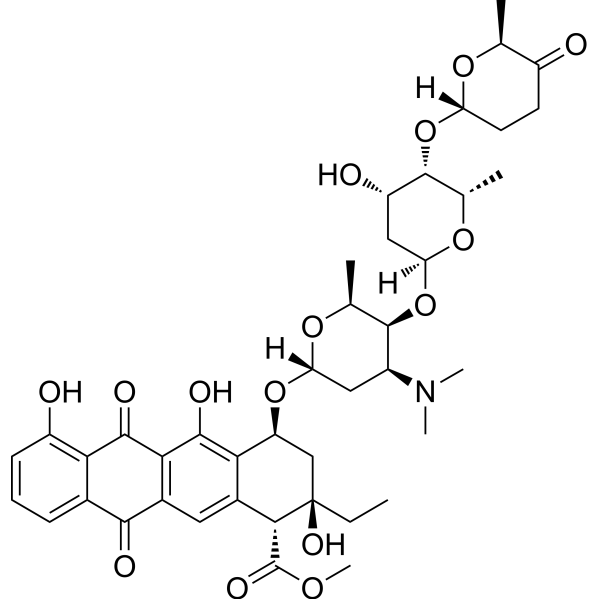
HY-N2306
Aclacinomycin A -
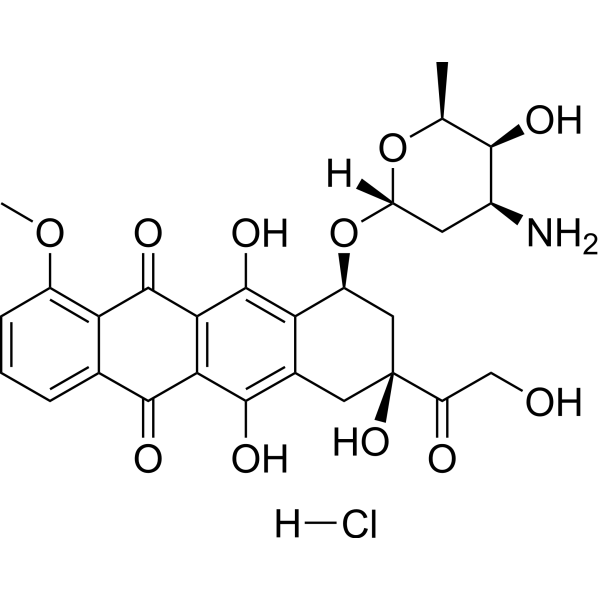
HY-15142
Doxorubicin hydrochloride -
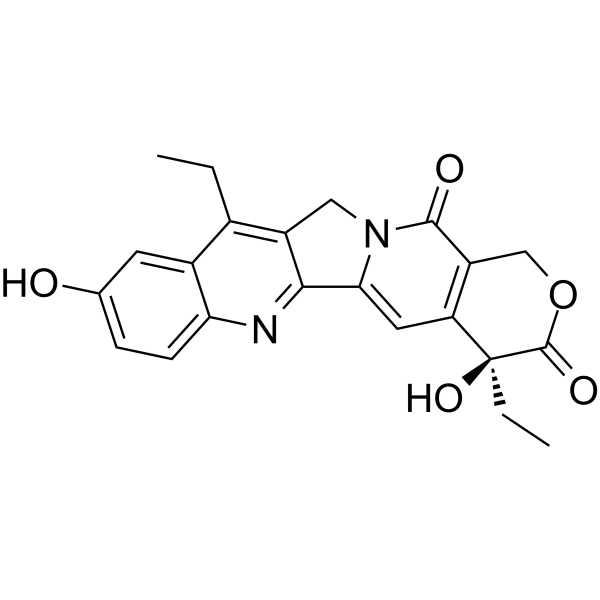
HY-13704
SN-38 -
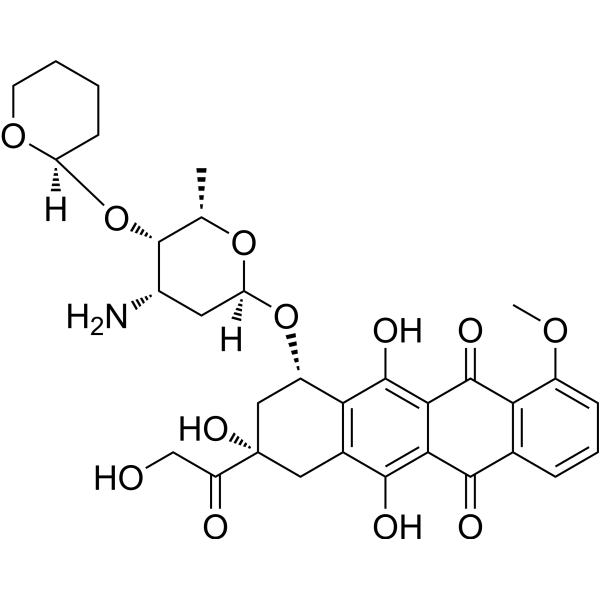
HY-13725
Pirarubicin -
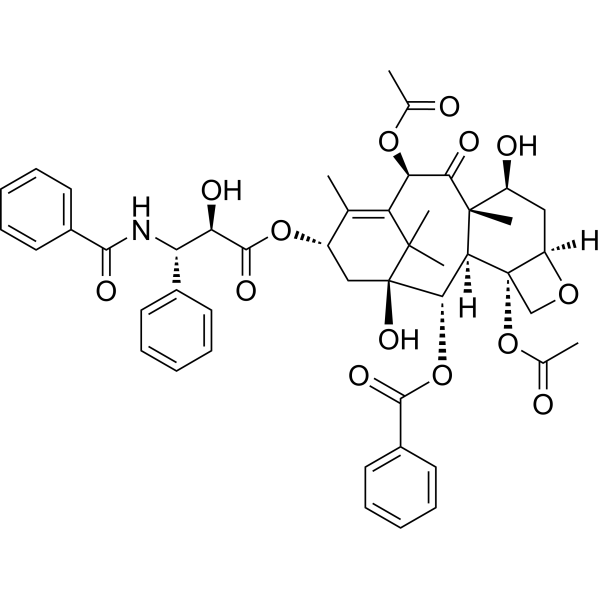
HY-B0015
Paclitaxel -
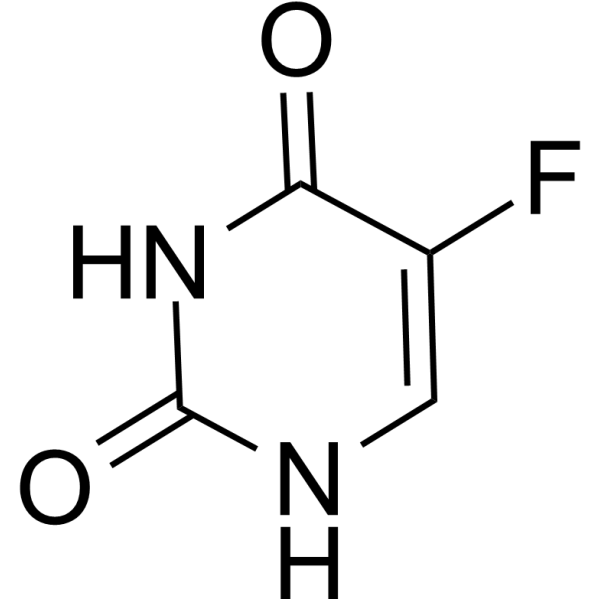
HY-90006
5-Fluorouracil -
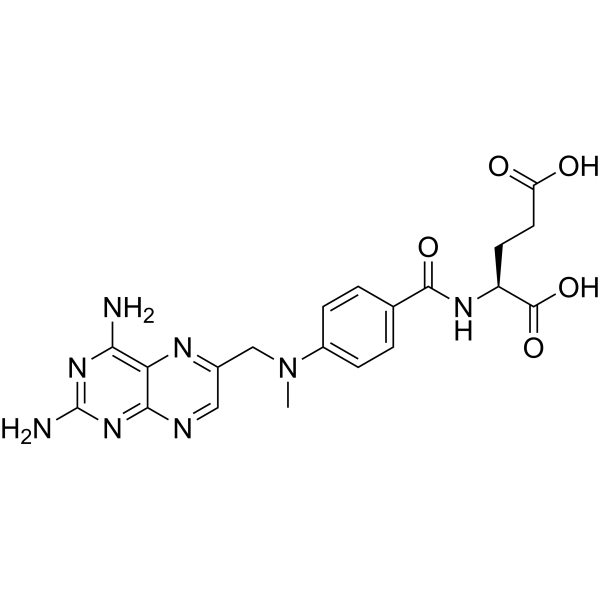
HY-14519
Methotrexate -
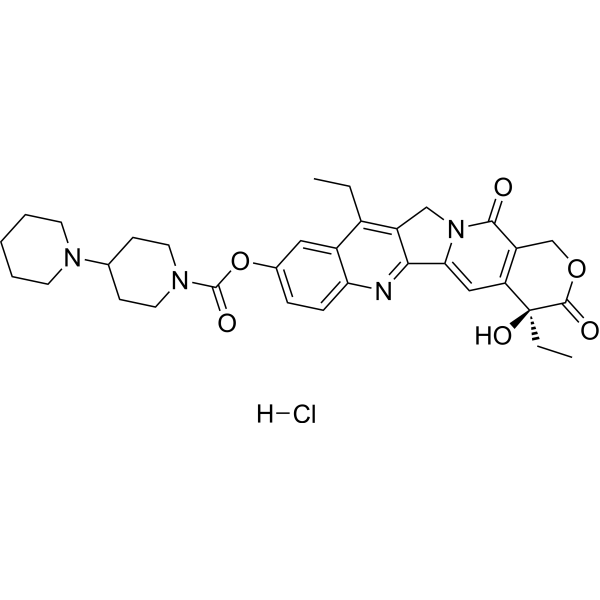
HY-16562A
Irinotecan hydrochloride -
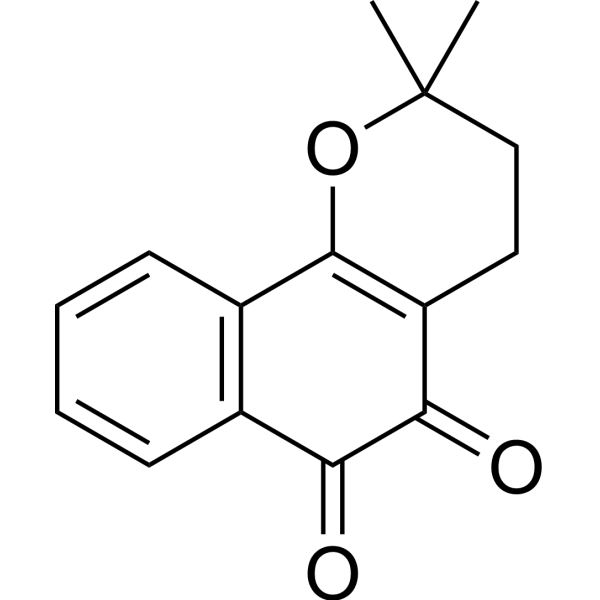
HY-13555
β-Lapachone -
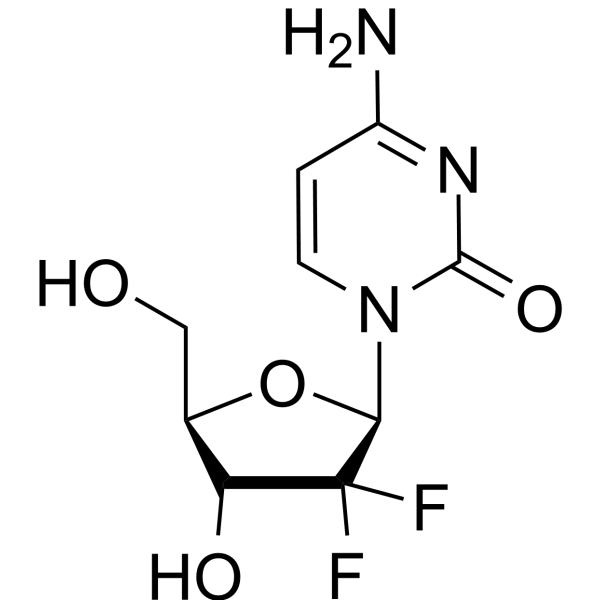
HY-17026
Gemcitabine -

HY-13704R
SN-38 (Standard)
Publications Citing Use of MedChemExpress (MCE) Pirarubicin Hydrochloride
More- J Control Release. 2026 May 10:393:114808. [Abstract]
- Int J Biol Macromol. 2024 Apr 10;267(Pt 2):131514. [Abstract]
- Int J Mol Med. 2023 Jul;52(1):55. [Abstract]
- EMBO Mol Med. 2025 Nov 26. [Abstract]
- Cancer Drug Resist. 2020 Sep 4;3(4):947-958. [Abstract]
- Nanoscale Horiz. 2025 Jun 23;10(7):1465-1477. [Abstract]
- Int J Pharm. 2022 May 25;620:121761. [Abstract]
- Int J Mol Sci. 2025 Oct 20;26(20):10189. [Abstract]
- Biomolecules. 2025 Jul 6;15(7):971. [Abstract]
- Nanoscale. 2024 Nov 7;16(43):20131-20146. [Abstract]
- AAPS PharmSciTech. 2024 Sep 7;25(7):211. [Abstract]
- Mol Med Rep. 2024 May;29(5):84. [Abstract]
- J Mol Med (Berl). 2019 Aug;97(8):1183-1193. [Abstract]
- Int J Cancer. 2024 Jul 15;155(2):324-338. [Abstract]
- Cancers (Basel). 2023 Apr 26;15(9):2487. [Abstract]
- iScience. 2026 Jan 27;29(2):114786. [Abstract]
- Toxicol Appl Pharmacol. 2023 Mar 1:462:116411. [Abstract]
- Genomics. 2022 Jan;114(1):125-137. [Abstract]
- Integr Cancer Ther. 2025 Jan-Dec:24:15347354251368410. [Abstract]
- Int J Hyperthermia. 2024 Feb 12;41(1):2316085. [Abstract]
- Biol Methods Protoc. 2025 Feb 13;10(1):bpaf012. [Abstract]
- J Mol Liq. 2023 Jun 12, 122324.
- University of Paris. 2022 Sep 19.
- Heliyon. 2022 Jun 8;8(6):e09643. [Abstract]
- E3S Web of Conferences. 233, 02010 (2021).
- J Mol Liq. 2020, 114633.
All Topoisomerase Isoforms
MoreAll Antibiotic Isoforms
More

Biological Activity
Description
IC50 & Target
[1]|
Topoisomerase II |
In Vitro
Pirarubicin is a topoisomerase II inhibitor[1].
Pirarubicin shows inhibitory activities against M5076 and Ehrlich cells, with IC50s of 0.366 and 0.078 μM, respectively. The cytotoxicity of Pirarubicin toward M5076 cells is lower than toward Ehrlich cells, and this is due to the much lower expression of topoisomerase II in M5076 cells than in Ehrlich cells[2].
Pirarubicin (2.5, 5, 10 μg/mL) significantly induces autophagy in a dose dependent manner in bladder cancer (T24, EJ, 5637, J82 and UM-UC-3) cells. Furthmore, Pirarubicin (5 μg/mL) induces apoptosis through inhibition of mTOR/p70S6K/4E-BP1 in bladder cancer cells, and this effect is enhanced by inhibition of autophagy[3].
MedChemExpress (MCE) has not independently confirmed the accuracy of these methods. They are for reference only.
In Vivo
MedChemExpress (MCE) has not independently confirmed the accuracy of these methods. They are for reference only.


Chemical Information
-
CAS No. 95343-20-7
-
Appearance Solid
-
Molecular Weight 664.10
-
Formula C32H38ClNO12
-
Color Pink to red
-
SMILES
O=C1C2=C(C=CC=C2OC)C(C3=C(O)C4=C([C@@H](O[C@@]5([H])C[C@H](N)[C@H](O[C@@]6([H])OCCCC6)[C@H](C)O5)C[C@@](C(CO)=O)(O)C4)C(O)=C31)=O.Cl
-
Synonyms
THP Hydrochloride
-
Shipping
Room temperature in continental US; may vary elsewhere.
-
Storage
4°C, sealed storage, away from moisture and light
* In solvent : -80°C, 6 months; -20°C, 1 month (sealed storage, away from moisture and light)


Publications (26)
-
Journal Impact Factor
-
Most Recent
-
J Control Release
Squid tentacle-mimetic magnetically targeted nanomotors to overcome the bladder barrier for synergistic chemotherapy-immunotherapy of bladder cancer. [Abstract]2026 May 10:393:114808. PMID: 41839262 -
Int J Biol Macromol
Nucleus-targeting DNase I self-assembly delivery system guided by pirarubicin for programmed multi-drugs release and combined anticancer therapy. [Abstract]2024 Apr 10;267(Pt 2):131514. PMID: 38608986 -
Int J Mol Med
Scutellarein regulates the PTEN/AKT/NFκB signaling pathway to reduce pirarubicin related liver inflammation. [Abstract]2023 Jul;52(1):55. PMID: 37232353 -
EMBO Mol Med
Isomeranzin activates Gnas-AMPK signaling to drive white adipose browning and curb obesity in mice. [Abstract]2025 Nov 26. PMID: 41299101 -
Cancer Drug Resist
Dichloroacetate enhances the antitumor effect of pirarubicin via regulating the ROS-JNK signaling pathway in liver cancer cells. [Abstract]2020 Sep 4;3(4):947-958. PMID: 35582217 -
Nanoscale Horiz
pH-Triggered delivery of pirarubicin-gemcitabine duo using polymeric nanoparticles for synergistic breast cancer therapy. [Abstract]2025 Jun 23;10(7):1465-1477. PMID: 40396269 -
Int J Pharm
Development and evaluation of PLA based hybrid block copolymeric nanoparticles for systemic delivery of pirarubicin as an anti-cancer agent. [Abstract]2022 May 25;620:121761. PMID: 35472512 -
Int J Mol Sci
Atractylodes macrocephala Koidz. Polysaccharide Alleviates Chemotherapy-Induced Depression-Like Behaviors Through the Gut-Brain Axis. [Abstract]2025 Oct 20;26(20):10189. PMID: 41155481 -
Biomolecules
Predictive and Prognostic Relevance of ABC Transporters for Resistance to Anthracycline Derivatives. [Abstract]2025 Jul 6;15(7):971. PMID: 40723843 -
Nanoscale
Folic acid-targeted redox responsive polylactic acid-based nanoparticles co-delivering pirarubicin and salinomycin suppress breast cancer tumor growth in vivo. [Abstract]2024 Nov 7;16(43):20131-20146. PMID: 39420738 -
AAPS PharmSciTech
Concomitant Delivery of Pirarubicin and Salinomycin Synergistically Enhanced the Efficacy of Cancer Therapy and Reduced the Risk of Cancer Relapse. [Abstract]2024 Sep 7;25(7):211. PMID: 39242397 -
Mol Med Rep
Food therapy of scutellarein ameliorates pirarubicin‑induced cardiotoxicity in rats by inhibiting apoptosis and ferroptosis through regulation of NOX2‑induced oxidative stress. [Abstract]2024 May;29(5):84. PMID: 38516760 -
J Mol Med (Berl)
2019 Aug;97(8):1183-1193. PMID: 31201471 -
Int J Cancer
Establishment of patient-derived organoids for guiding personalized therapies in breast cancer patients. [Abstract]2024 Jul 15;155(2):324-338. PMID: 38533706 -
Cancers (Basel)
Genome-Wide Screening Identifies Gene AKR1C1 Critical for Resistance to Pirarubicin in Bladder Cancer. [Abstract]2023 Apr 26;15(9):2487. PMID: 37173953 -
iScience
Biomimetic hydrogel for the construction of patient-derived bladder cancer organoids with aggressive growth. [Abstract]2026 Jan 27;29(2):114786. PMID: 41704753 -
Toxicol Appl Pharmacol
Ring finger protein 10 improves pirarubicin-induced cardiac inflammation by regulating the AP-1/Meox2 signaling pathway. [Abstract]2023 Mar 1:462:116411. PMID: 36740146 -
Genomics
The potential role of c-MYC and polyamine metabolism in multiple drug resistance in bladder cancer investigated by metabonomics. [Abstract]2022 Jan;114(1):125-137. PMID: 34843906 -
Integr Cancer Ther
Peach Gum Polysaccharide Prevents Chemotherapy-Induced Intestinal Injury and Degenerative Behavior. [Abstract]2025 Jan-Dec:24:15347354251368410. PMID: 40847988 -
Int J Hyperthermia
Validation of hyperthermia as an enhancer of chemotherapeutic efficacy: insights from a bladder cancer organoid model. [Abstract]2024 Feb 12;41(1):2316085. PMID: 38346911 -
Biol Methods Protoc
Optimizing drug sensitivity assays in patient-derived tumor organoids: a comparison of IC50 estimation methods and experimental parameters. [Abstract]2025 Feb 13;10(1):bpaf012. PMID: 40060949 -
-
-
Heliyon
Association between TOP2A, RRM1, HER2, ERCC1 expression and response to chemotherapy in patients with non-muscle invasive bladder cancer. [Abstract]2022 Jun 8;8(6):e09643. PMID: 35711974 -
-


Solvent & Solubility
In Vitro:
DMSO : 20.83 mg/mL (31.37 mM; Need ultrasonic; Hygroscopic DMSO has a significant impact on the solubility of product, please use newly opened DMSO)
H2O : < 0.1 mg/mL (insoluble)
Please refer to the solubility information to select the appropriate solvent. Once prepared, please aliquot and store the solution to prevent product inactivation from repeated freeze-thaw cycles.
Storage method and period of stock solution: -80°C, 6 months; -20°C, 1 month (sealed storage, away from moisture and light). When stored at -80°C, please use it within 6 months. When stored at -20°C, please use it within 1 month.
Please refer to the solubility information to select the appropriate solvent. Once prepared, please aliquot and store the solution to prevent product inactivation from repeated freeze-thaw cycles.
Storage method and period of stock solution: -80°C, 6 months; -20°C, 1 month (sealed storage, away from moisture and light). When stored at -80°C, please use it within 6 months. When stored at -20°C, please use it within 1 month.
Concentration (start) × Volume (start) = Concentration (final) × Volume (final)
In Vivo:
Select the appropriate dissolution method based on your experimental animal and administration route.
- For the following dissolution methods, please ensure to first prepare a clear stock solution using an In Vitro approach and then sequentially add co-solvents:
- To ensure reliable experimental results, the clarified stock solution can be appropriately stored based on storage conditions. As for the working solution for In Vivo experiments, it is recommended to prepare freshly and use it on the same day.
- The percentages shown for the solvents indicate their volumetric ratio in the final prepared solution. If precipitation or phase separation occurs during preparation, heat and/or sonication can be used to aid dissolution.
Add each solvent one by one: 10% DMSO 40% PEG300 5% Tween-80 45% Saline
Solubility: ≥ 2.08 mg/mL (3.13 mM); Clear solution
This protocol yields a clear solution of ≥ 2.08 mg/mL (saturation unknown).
Taking 1 mL working solution as an example, add 100 μL DMSO stock solution (20.8 mg/mL) to 400 μL PEG300, and mix evenly; then add 50 μL Tween-80 and mix evenly; then add 450 μL Saline to adjust the volume to 1 mL.
Preparation of Saline: Dissolve 0.9 g sodium chloride in ddH₂O and dilute to 100 mL to obtain a clear Saline solution.
In Vivo Dissolution Calculator
Please enter the basic information of animal experiments:
-
-
-
-
Recommended: Prepare an additional quantity of animals to account for potential losses during experiments.
Please enter your animal formula composition:
-
%DMSO +
Recommended: Keep the proportion of DMSO in working solution below 2% if your animal is weak.
-
%+
-
+%Tween-80 + +
-
%Saline +
The co-solvents required include: DMSO, . All of co-solvents are available by MedChemExpress (MCE). , Tween 80. All of co-solvents are available by MedChemExpress (MCE).
Working solution concentration: 0.22 mg/mL
Method for preparing stock solution: mg drug dissolved in μL DMSO. Stock solution concentration: mg/mL. * In solvent : -80°C, 6 months; -20°C, 1 month (sealed storage, away from moisture and light)
1. Take μL DMSO stock solution;
2. Add μL .
μL , mix evenly;
3. Then add μL Tween 80, mix evenly;
4. Then add μL
Please ensure that the stock solution in the first step is dissolved to a clear state, and add co-solvents in sequence. You can use ultrasonic heating (ultrasonic cleaner, recommended frequency 20-40 kHz), vortexing, etc. to assist dissolution.

Protocol
Cell Assay[3]
MTS is used to analyze cell survival. Briefly, cells are plated in 96-well plates in triplicate at 2 × 10³ cells per well and cultured in growth medium. Then cells are treated with pirarubicin at different concentrations (2.5 μg/mL, 5 μg/mL, 10 μg/mL) for 24 h. MTS reagent (5 mg/mL) is added and incubated at 37°C for 4 h. The absorbance is monitored at 490 nm using a microplate reader[3].
MedChemExpress (MCE) has not independently confirmed the accuracy of these methods. They are for reference only.
Animal Administration[4]
An acute cardiac toxicity model is established by a single dose of 18 mg/kg pirarubicin through the caudal vein injection. Thirty-six rats are randomized equally to six groups: normal control, cardiac injury (THP) model, dexrazoxane (180 mg/kg), low-dose rutin (25 mg/kg), middle-dose rutin (50 mg/kg), and high-dose rutin (100 mg/kg). Rats in the rutin-treated group are administered different doses of rutin and CMC-Na for 7 days by gavage and a single dose of 18 mg/kg pirarubicin through caudal vein injection. Rats in the dexrazoxane-treated group receive sodium carboxymethylcellulose (CMC-Na) by gavage for six days. 40 mg/kg dexrazoxane is then administered to rats by intraperitoneal injection and 18 mg/kg pirarubicin is administered by caudal vein injection on day 7. Rats in the THP model group receive CMC-Na by gavage for seven days, followed by pirarubicin 18 mg/kg through the caudal vein injection on day 7. Rats in the normal control group receive CMC-Na by gavage for seven days, followed by saline through caudal vein injection on day 7[4].
MedChemExpress (MCE) has not independently confirmed the accuracy of these methods. They are for reference only.


Purity & Documentation
-
Data Sheet (285 KB)
-
SDS (393 KB)
- English - EN (393 KB)
- Français - FR (393 KB)
- Deutsch - DE (393 KB)
- Norwegian - NO (393 KB)
- Español - ES (393 KB)
- Swedish - SV (393 KB)
- Italian - IT (393 KB)
- Korean - KR (393 KB)
- Portuguese - PT (393 KB)
-
Handling Instructions (2659 KB)
References
[1]. Takigawa N, et al. Cytotoxic effect of topoisomerase II inhibitors against adriamycin- and etoposide-resistant small cell lung cancer sublines. Gan To Kagaku Ryoho. 1993 May;20(7):929-35. [Content Brief]
[2]. Nagai K, et al. Relationships between the in vitro cytotoxicity and transport characteristics of pirarubicin and doxorubicin in M5076 ovarian sarcoma cells, and comparison with those in Ehrlich ascites carcinoma cells. Cancer Chemother Pharmacol. 2002 Mar;49(3):244-50. Epub 2002 Jan 8. [Content Brief]
[3]. Li K, et al. Pirarubicin induces an autophagic cytoprotective response through suppression of the mammalian target of rapamycin signaling pathway in human bladder cancer cells. Biochem Biophys Res Commun. 2015 May 1;460(2):380-5. [Content Brief]
[4]. Wang YD, et al. Cardioprotective effects of rutin in rats exposed to pirarubicin toxicity. J Asian Nat Prod Res. 2017 Oct 27:1-13. [Content Brief]


Complete Stock Solution Preparation Table
Please refer to the solubility information to select the appropriate solvent. Once prepared, please aliquot and store the solution to prevent product inactivation from repeated freeze-thaw cycles.
Storage method and period of stock solution: -80°C, 6 months; -20°C, 1 month (sealed storage, away from moisture and light). When stored at -80°C, please use it within 6 months. When stored at -20°C, please use it within 1 month.
| Optional Solvent | Concentration Solvent Mass | 1 mg | 5 mg | 10 mg | 25 mg |
|---|---|---|---|---|---|
| DMSO | 1 mM | 1.5058 mL | 7.5290 mL | 15.0580 mL | 37.6449 mL |
| 5 mM | 0.3012 mL | 1.5058 mL | 3.0116 mL | 7.5290 mL | |
| 10 mM | 0.1506 mL | 0.7529 mL | 1.5058 mL | 3.7645 mL | |
| 15 mM | 0.1004 mL | 0.5019 mL | 1.0039 mL | 2.5097 mL | |
| 20 mM | 0.0753 mL | 0.3764 mL | 0.7529 mL | 1.8822 mL | |
| 25 mM | 0.0602 mL | 0.3012 mL | 0.6023 mL | 1.5058 mL | |
| 30 mM | 0.0502 mL | 0.2510 mL | 0.5019 mL | 1.2548 mL |


Pirarubicin Hydrochloride Related Classifications
HY-13725A Related Classifications
 Powered by Bioz