



RPR121056

Based on 1 Customer Validation
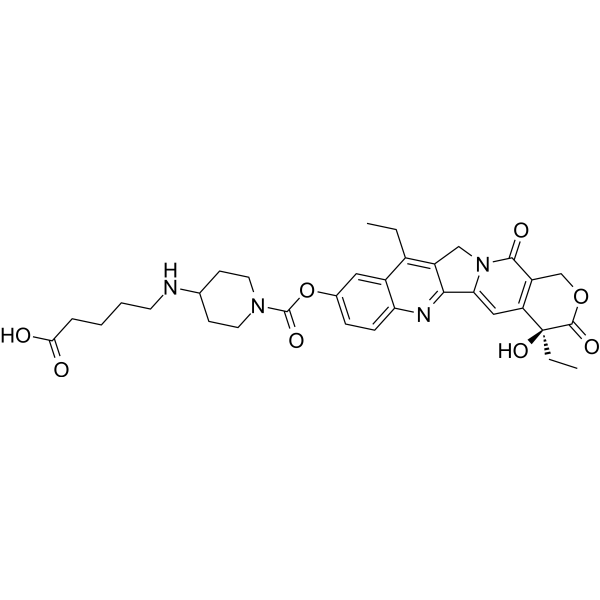
RPR121056 (APC) is a metabolite of Irinotecan (CPT-11), which is generated by CYP3A4. Irinotecan (CPT-11) is an antineoplastic agent that inhibits topoisomerase type I, causing cell death, and is widely used in the treatment of colorectal cancer. Irinotecan also directly inhibits AChE.
For research use only. We do not sell to patients.
- Purity : 99.88%
- CAS No.: 181467-56-1
- Formula: C33H38N4O8
- Molecular Weight:618.68
-
Storage:Powder -20°C, 3 years ; In solvent -80°C, 6 months , -20°C, 1 month

To place orders, for customer services and technical support, please contact: MedChemExpress USA
Tel: 609-228-6898 E-mail: [email protected] [email protected]


-
 Biological Activity
-
Chemical Information
-
Solvent & Solubility
- Protocols
- Purity & Documentation
- References
-
 Help & FAQs


-
HY-13704
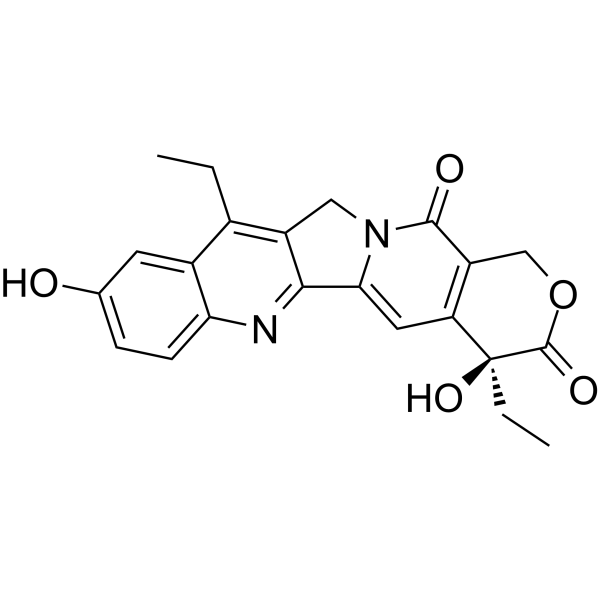
SN-38Topoisomerase I Inhibitor -
HY-16560
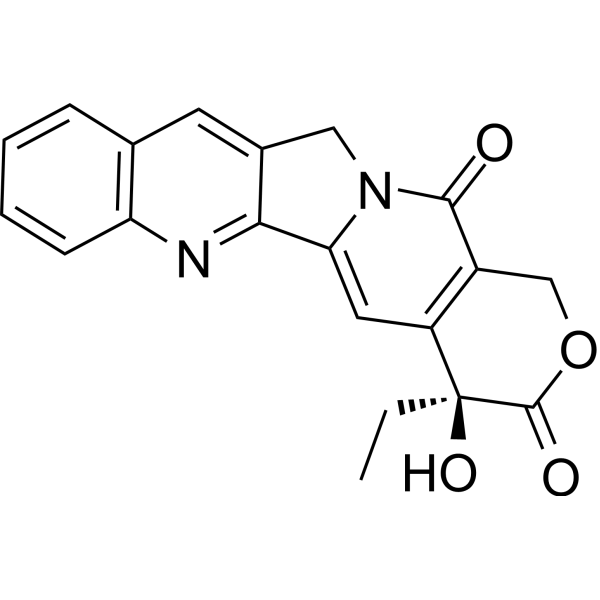
CamptothecinTopo I inhibitor -
HY-126373
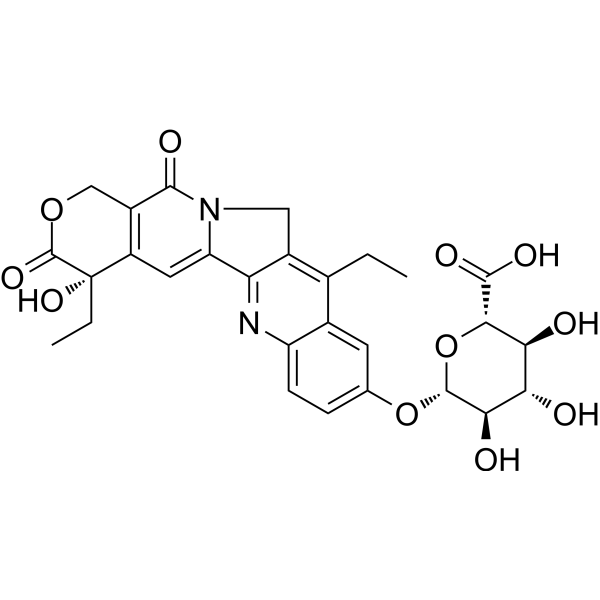
SN-38 glucuronideInactive Metabolite of Irinotecan -
HY-N0275
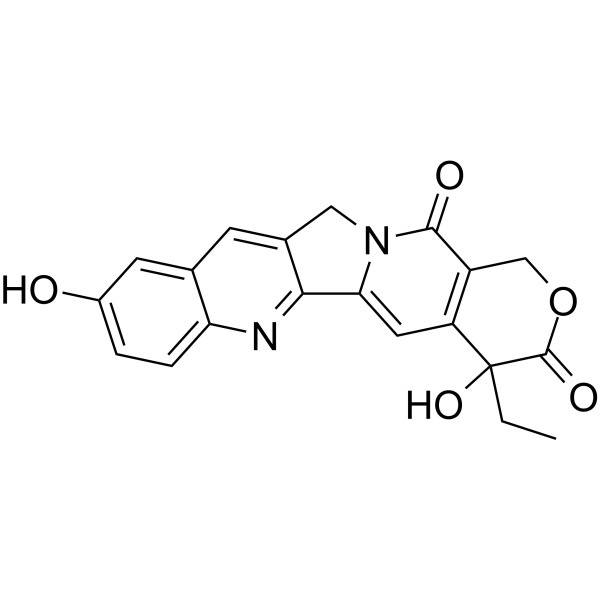
(±)-10-HydroxycamptothecinTopoisomerase Inhibitor -

HY-16560R
Camptothecin (Standard)Standard of Camptothecin -

HY-N0275R
(±)-10-Hydroxycamptothecin (Standard)Topoisomerase Inhibitor -

HY-100620R
RPR121056 (Standard)Topoisomerase I Inhibitor
All Topoisomerase Isoforms
More

Biological Activity
Description
IC50 & Target
|
AChE |


Chemical Information
-
CAS No. 181467-56-1
-
Appearance Solid
-
Molecular Weight 618.68
-
Formula C33H38N4O8
-
Color Light yellow to yellow
-
SMILES
O=C(N1CCC(NCCCCC(O)=O)CC1)OC2=CC=C3N=C4C(CN5C(C(COC([C@@]6(CC)O)=O)=C6C=C54)=O)=C(CC)C3=C2
-
Synonyms
APC
-
Shipping
Room temperature in continental US; may vary elsewhere.
-
Storage
Powder -20°C 3 years In solvent -80°C 6 months -20°C 1 month


Solvent & Solubility
In Vitro:
DMSO : 200 mg/mL (323.27 mM; Need ultrasonic; Hygroscopic DMSO has a significant impact on the solubility of product, please use newly opened DMSO)
Please refer to the solubility information to select the appropriate solvent. Once prepared, please aliquot and store the solution to prevent product inactivation from repeated freeze-thaw cycles.
Storage method and period of stock solution: -80°C, 6 months; -20°C, 1 month. When stored at -80°C, please use it within 6 months. When stored at -20°C, please use it within 1 month.
Please refer to the solubility information to select the appropriate solvent. Once prepared, please aliquot and store the solution to prevent product inactivation from repeated freeze-thaw cycles.
Storage method and period of stock solution: -80°C, 6 months; -20°C, 1 month. When stored at -80°C, please use it within 6 months. When stored at -20°C, please use it within 1 month.
Concentration (start) × Volume (start) = Concentration (final) × Volume (final)


Purity & Documentation
-
Data Sheet (269 KB)
-
SDS (479 KB)
- English - EN (479 KB)
- Français - FR (479 KB)
- Deutsch - DE (479 KB)
- Norwegian - NO (479 KB)
- Español - ES (479 KB)
- Swedish - SV (479 KB)
- Italian - IT (479 KB)
- Korean - KR (479 KB)
- Portuguese - PT (479 KB)
-
Handling Instructions (2659 KB)
References


Complete Stock Solution Preparation Table
Please refer to the solubility information to select the appropriate solvent. Once prepared, please aliquot and store the solution to prevent product inactivation from repeated freeze-thaw cycles.
Storage method and period of stock solution: -80°C, 6 months; -20°C, 1 month. When stored at -80°C, please use it within 6 months. When stored at -20°C, please use it within 1 month.
| Optional Solvent | Concentration Solvent Mass | 1 mg | 5 mg | 10 mg | 25 mg |
|---|---|---|---|---|---|
| DMSO | 1 mM | 1.6163 mL | 8.0817 mL | 16.1634 mL | 40.4086 mL |
| 5 mM | 0.3233 mL | 1.6163 mL | 3.2327 mL | 8.0817 mL | |
| 10 mM | 0.1616 mL | 0.8082 mL | 1.6163 mL | 4.0409 mL | |
| 15 mM | 0.1078 mL | 0.5388 mL | 1.0776 mL | 2.6939 mL | |
| 20 mM | 0.0808 mL | 0.4041 mL | 0.8082 mL | 2.0204 mL | |
| 25 mM | 0.0647 mL | 0.3233 mL | 0.6465 mL | 1.6163 mL | |
| 30 mM | 0.0539 mL | 0.2694 mL | 0.5388 mL | 1.3470 mL | |
| 40 mM | 0.0404 mL | 0.2020 mL | 0.4041 mL | 1.0102 mL | |
| 50 mM | 0.0323 mL | 0.1616 mL | 0.3233 mL | 0.8082 mL | |
| 60 mM | 0.0269 mL | 0.1347 mL | 0.2694 mL | 0.6735 mL | |
| 80 mM | 0.0202 mL | 0.1010 mL | 0.2020 mL | 0.5051 mL | |
| 100 mM | 0.0162 mL | 0.0808 mL | 0.1616 mL | 0.4041 mL |


RPR121056 Related Classifications
HY-100620 Related Classifications
 Powered by Bioz