Search Result
Results for "
Tubulin inhibitor
" in MedChemExpress (MCE) Product Catalog:
11
Biochemical Assay Reagents
15
Isotope-Labeled Compounds
| Cat. No. |
상품명 |
Target |
연구분야 |
Chemical Structure |
-
- HY-19474
-
|
Ansamitocin P-0
|
Microtubule/Tubulin
ADC Payload
Apoptosis
|
Cancer
|
|
Maytansinol (Ansamitocin P-0) is a derivative of Maytansine. Maytansinol can inhibit tubulin polymerization and induce apoptosis. Maytansinol has antitumor activity. Maytansinol can be used in cancer drug research .
|
-
-
- HY-157544
-
-
-
- HY-112607
-
|
|
Microtubule/Tubulin
Apoptosis
|
Cancer
|
|
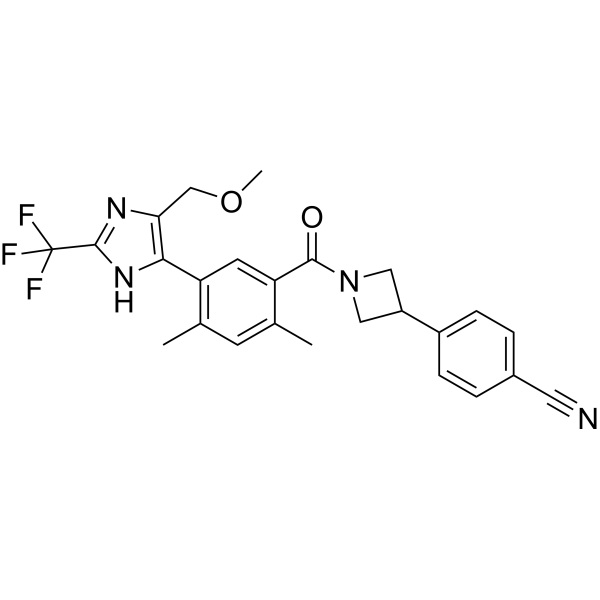
Tubulin inhibitor 1 is a tubulin inhibitor, inhibits tubulin polymerization. Tubulin inhibitor 1 shows potent anti-tumor activity, casues cellular mitotic arrest in the G2/M phase, and induces cellular apoptosis .
|
-
-
- HY-145951
-
|
|
Drug-Linker Conjugates for ADC
|
Cancer
|
|
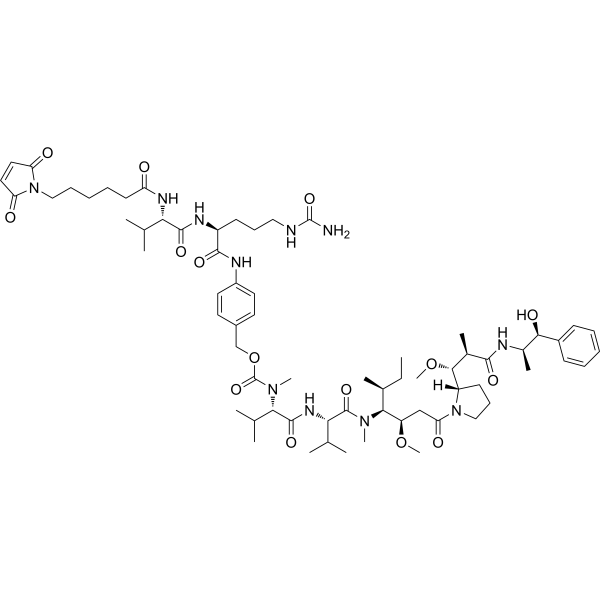
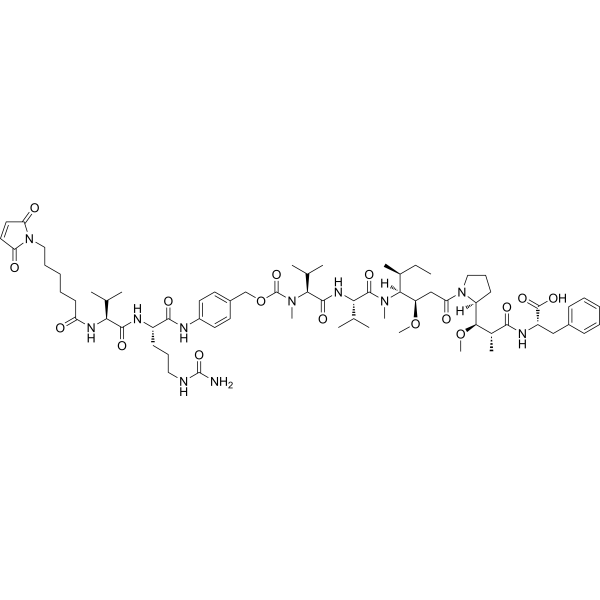
Amidate-VC-PAB-MMAF consists a cleavable ADC linker (Amidate-VC-PAB) and a potent tubulin polymerization inhibitor (MMAF). Amidate-VC-PAB-MMAF can be used in the synthesis of antibody-drug conjugates (ADCs). Amidate-VC-PAB-MMAF reduces off-target cytotoxicity of ADCs .
|
-
-
- HY-136121
-
|
|
Microtubule/Tubulin
|
Cancer
|
|
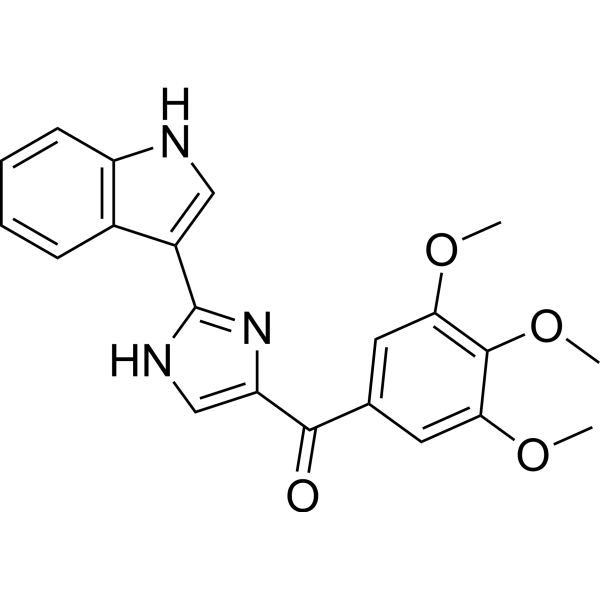
Tubulin inhibitor 6 (Compound 14b) is a tubulin inhibitor and a potent inhibitor of multiple cancer cell lines. Tubulin inhibitor 6 inhibits tubulin polymerization with an IC50 of 0.87 μM. Tubulin inhibitor 6 inhibits K562 cell growth with an IC50 of 840 nM .
|
-
-
- HY-143251
-
|
|
Microtubule/Tubulin
Apoptosis
|
Cancer
|
|
Tubulin inhibitor 13 (E27) is a potent tubulin inhibitor with an IC50 value of 16.1 μM for the tubulin polymerization inhibition. Tubulin inhibitor 13 inhibits migration and invasion of cancer cells, induces apoptosis and has anticancer activity .
|
-
-
- HY-151879
-
-
-
- HY-152156
-
|
|
Microtubule/Tubulin
Apoptosis
|
Cancer
|
|
Tubulin inhibitor 11 is a potent and orally active tubulin inhibitor. Tubulin inhibitor 11 targets the Colchicine binding site on tubulin, inhibits tubulin polymerization, promotes mitotic blockade and apoptosis .
|
-
-
- HY-178357
-
|
|
Microtubule/Tubulin
|
Cancer
|
|
Tubulin-IN-58 (Compound 26) is a tubulin inhibitor. Tubulin-IN-58 can be used for the study of cancer .
|
-
-
- HY-145820
-
|
|
Apoptosis
Microtubule/Tubulin
|
Cancer
|
|
Tubulin inhibitor 14 is a potent NQO2 (quinone oxidoreductase 2) inhibitor with an IC50 of 1.0 μM. Tubulin inhibitor 14 also inhibits tubulin polymerization and the formation of endothelial cell capillary-like tubes. Tubulin inhibitor 14 is a microtubule-destabilizing agent with potential tumor-selectivity and antiangiogenic and vascular disrupting features .
|
-
-
- HY-157165
-
|
|
Microtubule/Tubulin
PARP
|
Cancer
|
|
Tubulin/PARP-IN-1 (compound 14) is a dual PARP-tubulin inhibitor with activity against endometrial cancer. Tubulin/PARP-IN-1 inhibits PARP and tubulin with IC50s of 74 nM (PARP1), 109 nM (PARP2), and 1.4 μM (Microtubule/Tubulin), respectively. Tubulin/PARP-IN-1 can induce apoptosis and autophagy and cause cell cycle arrest in the G2/M phase .
|
-
-
- HY-149016
-
|
|
Microtubule/Tubulin
Farnesyl Transferase
|
Cancer
|
|
Tubulin polymerization-IN-25 (compound 17f) is a dual inhibitor of tubulin polymerization and farnesyl transferase (FTase) with IC50s of 1.11 μM and 0.39 μM, respectively. Tubulin polymerization-IN-25 displays cytotoxicity and excellent antitumor activity .
|
-
-
- HY-177021
-
|
|
Microtubule/Tubulin
Apoptosis
|
Cancer
|
|
Tubulin-IN-51 is an orally available, potent tubulin inhibitor (IC50 = 31 nM). Tubulin-IN-51 promotes tubulin polymerization in vitro and does not compete with Paclitaxel (HY-B0015) for binding. Tubulin-IN-51 inhibits the binding of Vinblastine (HY-13780) to tubulin. Tubulin-IN-51 downregulates the proportion of cells in the G1 phase and induces apoptosis. Tubulin-IN-51 inhibits tumor growth in multiple nude mouse xenograft models .
|
-
-
- HY-149856
-
|
|
Microtubule/Tubulin
Apoptosis
|
Cancer
|
|
Tubulin inhibitor 33, a tubulin polymerization inhibitor, inhibits tubulin polymerization in a dose-dependent manner with an IC50 of 9.05 μM. Tubulin inhibitor 33 has antitumor effects and induces cell apoptosis that can be used for antitumor research .
|
-
-
- HY-175555
-
|
|
Microtubule/Tubulin
Apoptosis
|
Cancer
|
|
Tubulin-IN-54 is a tubulin inhibitor. Tubulin-IN-54 exhibits anti-proliferative activity against various cancer cells. Tubulin-IN-54 inhibits tubulin polymerization, disrupts microtubule networks, induces G2/M cell cycle arrest, and promotes cancer cell apoptosis. Tubulin-IN-54 demonstrates significant anti-tumor efficacy in mice bearing PC-3/TxR xenografts. Tubulin-IN-54 can be used for the study of taxane-resistant cancers (prostate cancer, melanoma) .
|
-
-
- HY-152030
-
|
|
Microtubule/Tubulin
MMP
Apoptosis
|
Cancer
|
|
Tubulin/MMP-IN-2 is dual inhibitor of tubulin and matrix metalloproteinases. Tubulin/MMP-IN-2 can strongly inhibit tubulin polymerization and induces cell apoptosis. Tubulin/MMP-IN-2 has inhibitory activities against MMP-2, MMP-3 and MMP-9 with IC50 values of 24.95 μM, 31.60 μM and 22.37 μM, respectively. Tubulin/MMP-IN-2 can be used for the research of cancer .
|
-
-
- HY-146711
-
|
|
Microtubule/Tubulin
|
Cancer
|
|
Tubulin inhibitor 24 is a potent tubulin inhibitor. Tubulin inhibitor 24 inhibits tubulin polymerization. Tubulin inhibitor 24 induces cell cycle arrest at the G2/M phase in a concentration-dependent manner. Tubulin inhibitor 24 shows antitumor activity with no obvious toxicity .
|
-
-
- HY-145821
-
|
|
Microtubule/Tubulin
|
Cancer
|
|
Tubulin inhibitor 15 is a potent tubulin inhibitor. Tubulin inhibitor 15 shows antiproliferative activity. Tubulin inhibitor 15 shows cytotoxicity in HepG2 cells .
|
-
-
- HY-145822
-
|
|
Microtubule/Tubulin
|
Cancer
|
|
Tubulin inhibitor 16 is a potent tubulin inhibitor. Tubulin inhibitor 16 shows antiproliferative activity. Tubulin inhibitor 16 shows cytotoxicity in HepG2 cells .
|
-
-
- HY-151996
-
|
|
Microtubule/Tubulin
|
Cardiovascular Disease
|
|
Tubulin inhibitor 31 is a potent tubulin inhibitor with an IC50 value of 4 μM. Tubulin inhibitor 31 shows anti-proliferative activity. Tubulin inhibitor 31 inhibits the HUVEC migration .
|
-
-
- HY-115956
-
|
|
Microtubule/Tubulin
|
Cancer
|
|
Tubulin inhibitor 18 (compound 5j) is a potent inhibitor of tubulin. Tubulin inhibitor 18 is a chalcone compound. Tubulin inhibitor 18 has the potential for the research of cancer diseases .
|
-
-
- HY-136123
-
|
|
Microtubule/Tubulin
|
Cancer
|
|
Tubulin inhibitor 8 (Compound 33b) is a tubulin inhibitor and a potent inhibitor of multiple cancer cell lines. Tubulin inhibitor 8 inhibits tubulin polymerization with an IC50 of 0.73 μM. Tubulin inhibitor 8 inhibits K562 cell growth with an IC50 of 14 nM .
|
-
-
- HY-136122
-
|
|
Microtubule/Tubulin
|
Cancer
|
|
Tubulin inhibitor 7 (Compound 33c) is a tubulin inhibitor and a potent inhibitor of multiple cancer cell lines. Tubulin inhibitor 7 inhibits tubulin polymerization with an IC50 of 0.52 μM. Tubulin inhibitor 7 inhibits K562 cell growth with an IC50 of 11 nM .
|
-
-
- HY-144818
-
|
|
Apoptosis
Microtubule/Tubulin
|
Cancer
|
|
Tubulin inhibitor 23 is a potent Tubulin inhibitor with an IC50 of 4.8 µM. Tubulin inhibitor 23 induces cell apoptosis. Tubulin inhibitor 23 shows antiangiogenic activity in a dose-dependent manner. Tubulin inhibitor 23 has the potential for the research of leukaemia .
|
-
-
- HY-115957
-
|
|
Microtubule/Tubulin
|
Cancer
|
|
Tubulin inhibitor 19 (compound 9b) is a potent inhibitor of tubulin. Tubulin inhibitor 19 is an indole chalcone compound. Tubulin inhibitor 19 has the potential for the research of cancer diseases .
|
-
-
- HY-162625
-
|
|
Microtubule/Tubulin
Apoptosis
|
Cancer
|
|
Tubulin inhibitor 47 (compound C11) is a potent tubulin inhibitor. Tubulin inhibitor 47 induces apoptosis and cell cycle arrest at the M phase. Tubulin inhibitor 47 shows anti-tumor activity .
|
-
-
- HY-163195
-
|
|
Microtubule/Tubulin
|
Cancer
|
|
Tubulin inhibitor 40 (compound 45) is a tubulin inhibitor with IC50 of 1.2 μM. Tubulin inhibitor 40 shows selective cytotoxicity towards cancer cells. Tubulin inhibitor 40 processes antitumor activity .
|
-
-
- HY-115958
-
|
|
Microtubule/Tubulin
|
Cancer
|
|
Tubulin inhibitor 20 (compound 1) is a potent inhibitor of tubulin. Tubulin inhibitor 20 has the potential for the research of cancer diseases .
|
-
-
- HY-149252
-
|
|
Apoptosis
Microtubule/Tubulin
|
Cancer
|
|
Tubulin inhibitor 32 is a potent and orally active tubulin inhibitor. Tubulin inhibitor 32 shows anti-proliferative activity and inhibits microtubule polymerization. Tubulin inhibitor 32 induces Apoptosis and cell cycle arrest at G2/M phase. Tubulin inhibitor 32 shows anti-tumor activity .
|
-
-
- HY-147888
-
|
|
Microtubule/Tubulin
|
Cancer
|
|
Tubulin inhibitor 29 (compound 3c) is a potent tubulin inhibitor with an IC50 value of 1.2 µM. Tubulin inhibitor 29 shows antiproliferative effects with an IC50 value of 7.5 µM for MCF-7 cells. Tubulin inhibitor 29 inhibits tubulin assembly and bounds in the colchicine site .
|
-
-
- HY-149364
-
|
|
Microtubule/Tubulin
Apoptosis
|
Cancer
|
|
Tubulin inhibitor 34 (compound b5) is a potent anticancer agent. Tubulin inhibitor 34 can inhibit tubulin polymerization and induce G2/M arrest and apoptosis. Tubulin inhibitor 34 exhibits significant antivascular and antitumor activity .
|
-
-
- HY-161747
-
|
|
Microtubule/Tubulin
|
Cancer
|
|
Tubulin inhibitor 46 (Compound 21) is a potent tubulin assembly inhibitor. Tubulin inhibitor 46 has antiproliferative activities, with GI50 values of 0.0095-33 μM for cancer and non-cancerous cells. Tubulin inhibitor 46 can be used for the reserch of cancer .
|
-
-
- HY-149375
-
|
|
Microtubule/Tubulin
|
Cancer
|
|
Tubulin inhibitor 37 (Compound 12) is a Tubulin inhibitor that can effectively inhibit Tubulin aggregation (IC50=1.3 µM). Tubulin inhibitor 37 exhibits antiproliferative activity against human tumor cell lines and has potential for studying cancer .
|
-
-
- HY-144817
-
|
|
Microtubule/Tubulin
|
Cancer
|
|
Tubulin inhibitor 27 (DYT-1) is a tubulin polymerisation inhibitor with an IC50 of 25.6 μM. Tubulin inhibitor 27 shows anti-angiogenesis and antitumor activities .
|
-
-
- HY-137866
-
|
|
Microtubule/Tubulin
|
Cancer
|
|
Tubulin inhibitor 9 (compound 7) is a tubulin (Microtubule/Tubulin)Inhibitors with anticancer activity (MDA-MB 231, IC50=0.9 nM) .
|
-
-
- HY-144748
-
|
|
Microtubule/Tubulin
Apoptosis
|
Cancer
|
|
Tubulin inhibitor 17 (Compound 3b) is a tubulin polymerization inhibitor with an IC50 of 12.38 µM. Tubulin inhibitor 17 has anticancer activities and induces cell apoptosis .
|
-
-
- HY-172616
-
|
|
Microtubule/Tubulin
|
Cancer
|
|
Tubulin inhibitor 50 (compound 07) is a tubulin inhibitor that increases the mitochondrial reactive oxygen species level. Tubulin inhibitor 50 has anti-cancer effect in HeLa cells with IC50 value of 0.46 μM. Tubulin inhibitor 50 shows low toxicity in normal cell lines .
|
-
-
- HY-146778
-
|
|
Microtubule/Tubulin
|
Cancer
|
|
Tubulin inhibitor 25 is a potent tubulin inhibitor with an IC50 value of 0.98 μM. Tubulin inhibitor 25 exhibits remarkable activity against cancer cell line HT29. Tubulin inhibitor 25 displays the potent inhibition on cell migration and tube formation that contributes to the anti-angiogenesis .
|
-
-
- HY-146366
-
|
|
Microtubule/Tubulin
|
Cancer
|
|
Tubulin inhibitor 26 (compound 3c) is a potent inhibitor of tubulin. Tubulin inhibitor 26 is an indazole derivative compound. Tubulin inhibitor 26 shows noteworthy low nanomolar potency against HepG2, HCT116, SW620, HT29 and A549 cancer cell lines. Tubulin inhibitor 26 arrests tumor cell in G2/M phase and induced cell apoptosis. Tubulin inhibitor 26 suppresses tumor growth in vivo without affecting the mice body weight .
|
-
-
- HY-143250
-
|
|
Microtubule/Tubulin
|
Cancer
|
|
Tubulin inhibitor 12 (Hit 9) is a novel tubulin inhibitor (IC50=25.3 μM). Tubulin inhibitor 12 shows anti-tumor activity and anti-proliferative activity .
|
-
-
- HY-147887
-
|
|
Microtubule/Tubulin
|
Cancer
|
|
Tubulin inhibitor 28 (compound 2g) is a potent tubulin inhibitor with an IC50 value of 1.2 µM. Tubulin inhibitor 28 shows anti-proliferative activity for MCF-7 cells .
|
-
-
- HY-162593
-
|
|
Microtubule/Tubulin
|
Cancer
|
|
Tubulin inhibitor 45 (compound 5) is an inhibitor of tubulin protein active sites. Tubulin inhibitor 45 against MCF7 and HePG2 cancer cells with IC50 values of 11 μM and 13 μM .
|
-
-
- HY-144797
-
|
|
Microtubule/Tubulin
|
Cancer
|
|
Tubulin inhibitor 22 (compound 4c) is a potent inhibitor of tubulin with anti-angiogenesis and anti-cancer properties. Tubulin inhibitor 22 arrests MGC-803 cell cycle at G2/M phase. Tubulin inhibitor 22 dose-dependently causes Caspase-induced apoptosis of MGC-803 cells through mitochondrial dysfunction .
|
-
-
- HY-168721
-
|
|
Microtubule/Tubulin
|
Cancer
|
|
Tubulin inhibitor 48 (compound 16) is an anti-cancer agent targeting tubulin. Tubulin inhibitor 48 has an IC50 of 0.1 and 0.07 μM for LN-229 and Capan-1 cell, respectively .
|
-
-
- HY-149374
-
|
|
Microtubule/Tubulin
|
Cancer
|
|
Tubulin inhibitor 36 (Compound 10) is a novel and potent tubulin inhibitor and inhibits the polymerization of microtubular protein then induces apoptosis with an IC50 value of 1.5±0.1 μM. Tubulin inhibitor 36 (Compound 10) has significant anti-mitotic effect and exhibits activities against glioblastoma cells. Tubulin inhibitor 36 (Compound 10) has anti-tumor effects and can be used for glioblastoma multiforme (GBM) research .
|
-
-
- HY-149376
-
|
|
Microtubule/Tubulin
|
Cancer
|
|
Tubulin inhibitor 38 (compound 14) is a tetrazole-based Tubulin inhibitor with antiproliferative potencies. Tubulin inhibitor 38 (100 nM,24 h) mediates mitotic arrest,blocks cell cycle at G2/M phase and induces apoptosis. Tubulin inhibitor 38 exhibits high cytotoxicity with high selectivity index among HeLa,MCF7,and U87 MG cells .
|
-
-
- HY-115970
-
|
|
Microtubule/Tubulin
|
Cancer
|
|
Tubulin inhibitor 21 (compound 6f), a chalcone- and melatonin- based hybrid, is a potent tubulin inhibitor. Tubulin inhibitor 21 induces a remarkable cytotoxic activity toward SW480 cells (IC50=0.26 μM) with lower effect against nonmalignant cells .
|
-
-
- HY-160854
-
|
|
Microtubule/Tubulin
Apoptosis
|
Cancer
|
|
Tubulin inhibitor 43 (Compound 29) has significant antitumor activity. Tubulin inhibitor 43 inhibits the proliferation and growth of cancer cells by inhibiting the activity of β-microtubulin, and finally induces apoptosis .
|
-
-
- HY-160853
-
|
|
Apoptosis
Microtubule/Tubulin
|
Cancer
|
|
Tubulin inhibitor 42 (Compound 14b) dose-dependently inhibited the activity of β-microtubulin (IC50 = 3.5 µM).Tubulin inhibitor 42 interferes with microtubule dynamic homeostasis, resulting in the arrest of the cancer cell cycle in the G2/M phase and inducing apoptosis. Tubulin inhibitor 42 significantly inhibits the angiogenic process in vitro and in vivo, preventing vascularization and tumor growth .
|
-
-
- HY-155073
-
|
|
Microtubule/Tubulin
Apoptosis
|
Cancer
|
|
Tubulin inhibitor 35 (compound 6b) is a dual inhibitor of topoisomerase I (IC50=~50 μM) and tubulin polymerization (IC50=5.69 μM). Tubulin inhibitor 35 inhibits migration and invasion of MGC-803 and RKO cell lines,and induces apoptosis via arresting cell cycle at G2/M phase. Tubulin inhibitor 35 exhibis potent efficacy in gastrointestinal tumor inhibiton (inhibits MGC-803 (IC50=0.09 μM) and RKO (IC50=0.2 μM) cell lines) .
|
-
- HY-161614
-
|
|
Microtubule/Tubulin
|
Cancer
|
|
Tubulin inhibitor 44 (Compound 26r) is an inhibitor for tubullin. Tubulin inhibitor 44 exhibits cytotoxicity in cancer cells NCI-H460, BxPC-3 and HT-29, with IC50s of 0.96, 0.66 and 0.61 nM, respectively .
|
-
- HY-161256
-
|
|
Microtubule/Tubulin
Apoptosis
|
Cancer
|
|
Tubulin inhibitor 41 (Compd D19), a promising anti-GBM (glioblastoma) lead compound and tublin inhibitor with BBB permeability, induces G2/M phase arrest, resulted in cell apoptosis and inhibits the migration of U87 cells .
|
-
- HY-152088
-
-
- HY-162126
-
|
|
Microtubule/Tubulin
YAP
|
Cancer
|
|
Tubulin polymerization-IN-58 (Compound K18) is a tubulin polymerization inhibitor with an IC50 of 0.446 μM. Tubulin polymerization-IN-58 also induces the degradation of oncogenic protein YAP via the UPS pathway, thus can be used for cancer research .
|
-
- HY-178325
-
|
|
Microtubule/Tubulin
Apoptosis
|
Cancer
|
|
Tubulin-IN-57 is a Tubulin inhibitor. Tubulin-IN-57 is a potent antiproliferative agent that inhibits clonogenic formation, migration, and invasion of ovarian cancer cells. Tubulin-IN-57 inhibits tubulin polymerization, which in turn induces G2/M arrest and apoptosis in SKOV3 cells. Tubulin-IN-57 demonstrates potent antitumor activity without observable toxicity in an SKOV3 xenograft model. Y60S can be used for the study of ovarian cancer .
|
-
- HY-155139
-
|
|
Microtubule/Tubulin
Apoptosis
|
Cancer
|
|
Tubulin polymerization-IN-45, a tubulin-targeting agent, is a tubulin polymerization inhibitor. Tubulin polymerization-IN-45 binds to the colchicine site of tubulin. Tubulin polymerization-IN-45 induces apoptotic cell death in hepatocellular cancer (HCC) cells .
|
-
- HY-155841
-
|
|
Microtubule/Tubulin
Mitosis
|
Cancer
|
|
Tubulin polymerization-IN-46 (compound 9q) is a microtubule/Tubulin inhibitor that inhibits tubulin polymerization and induces apoptosis. Tubulin polymerization-IN-46 inhibits mitosis and arrests MCF-7 cells in the G2/M phase. Tubulin polymerization-IN-46 has anti-proliferative activity against MCF-7 breast cancer cells with an IC50 of 10 nM .
|
-
- HY-168111
-
-
- HY-16036A
-
|
12'-Methylthiovinblastine hydrochloride
|
Microtubule/Tubulin
Mitosis
|
Cancer
|
|
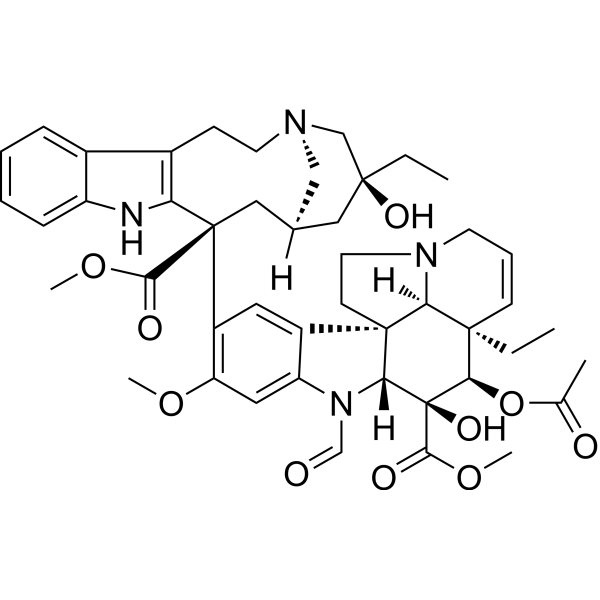
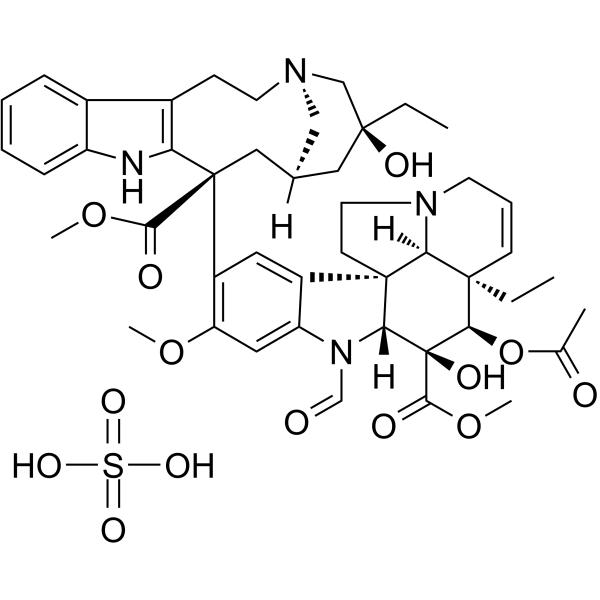
ALB-109564 (12'-Methylthiovinblastine) hydrochloride, a tubulin inhibitor, is a cytotoxic agent designed to kill cancer cells by disrupting mitosis .
|
-
- HY-155359
-
|
|
Microtubule/Tubulin
|
Cancer
|
|
Tubulin polymerization-IN-55 is a potent inhibitor of Tubulin Polymerization. Tubulin polymerization-IN-55 has antiproliferative activity against A549, K562, HepG2, MDA-MB-231 and HFL-1 with IC50 s of 8, 3, 9, 24 and 62 nM, respectively .
|
-
- HY-174411
-
|
|
Microtubule/Tubulin
MMP
Bcl-2 Family
Reactive Oxygen Species (ROS)
Caspase
|
Cancer
|
|
Tubulin polymerization-IN-82 is a tubulin inhibitor. Tubulin polymerization-IN-82 inhibits cell migration and invasion, and triggers cell apoptosis through the mitochondria and ER stress mediated pathway. Tubulin polymerization-IN-82 exhibits antitumor activity against drug resistance cancer cells, and inhibits tumor growth, can be used for liver cancer research .
|
-
- HY-19474R
-
|
Ansamitocin P-0 (Standard)
|
Reference Standards
Microtubule/Tubulin
ADC Payload
Apoptosis
|
Cancer
|
|
Maytansinol (Standard) is the analytical standard of Maytansinol. This product is intended for research and analytical applications. Maytansinol (Ansamitocin P-0) is a derivative of Maytansine. Maytansinol can inhibit tubulin polymerization and induce apoptosis. Maytansinol has antitumor activity. Maytansinol can be used in cancer drug research[1][2].
|
-
- HY-122151
-
|
|
Microtubule/Tubulin
Apoptosis
|
Cancer
|
|
MPT0B002 is a potent microtubule inhibitor with anticancer activities. MPT0B002 disrupts tubulin polymerization, induces apoptosis, and arrests cell cycle at the G2/M phase .
|
-
- HY-171165
-
|
|
Microtubule/Tubulin
|
Cancer
|
|
JC168 is a phenyl analog of peloruside and serves as a microtubule inhibitor, demonstrating antiproliferative and anticancer activities. JC168 promotes tubulin polymerization, thereby interfering with microtubule dynamics, and can be utilized in research related to microtubule-associated disorders .
|
-
- HY-155686
-
|
|
Microtubule/Tubulin
|
Cancer
|
|
Tubulinpolymer-in-44 (compound 7w) is a strong and effective Tubulin inhibitor, with an IC50 value of 0.21 μM. Tubulinpolymer-in-44 induces apoptosis by arresting G2/M phase, which can be used for cancer research.
|
-
- HY-175292
-
|
|
EGFR
Microtubule/Tubulin
|
Cancer
|
|
EGFR WT/T790M-IN-3 is an irreversible covalent EGFR WT and EGFR T790M inhibitor with IC50s value of 28.1 and 24.6 nM. EGFR WT/T790M-IN-3 hampers tubulin polymerization through IC50 value of 5.1 μM. EGFR WT/T790M-IN-3 shows significant anti-proliferative effects on HCT116 and T47D cells, with IC50 values of 3.12 and 4.12 μM, respectively. EGFR WT/T790M-IN-3 can be used for the study of cancers such as non-small cell lung cancer, colon cancer and breast cancer .
|
-
- HY-148265
-
|
|
Microtubule/Tubulin
|
Cancer
|
|
Antiproliferative agent-14 (compound 3b) a potent tubulin polymerization inhibitor, with an IC50 of 3.41 μM. Antiproliferative agent-14 has excellent antiproliferative activity. Antiproliferative agent-14 possess the ability to arrest cells at G2/M phases of the cell cycle .
|
-
- HY-155249
-
|
|
Microtubule/Tubulin
|
Cancer
|
|
KGP591 is a tubulin polymerization inhibitor (IC50 0.57 µM). KGP591 induces significant G2/M stagnation, inhibits cell migration, disrupts microtubule structure and cell morphology in MDA-MB-231 cells. KGP591 shows antitumor activity in orthotopic model of kidney cancer (RENCA) .
|
-
- HY-159510
-
|
|
Apoptosis
VEGFR
Microtubule/Tubulin
Reactive Oxygen Species (ROS)
|
Cancer
|
|
VEGFR-2-IN-51 (compound 19) is an orally active dual-target inhibitor of VEGFR-2 (IC50=15.33 μM) and tubulin (IC50=0.76 μM) with anti-tumor activity. VEGFR-2-IN-51 induces tumor cell apoptosis by reducing mitochondrial membrane potential and increasing reactive oxygen species (ROS) levels. VEGFR-2-IN-51 exerts anti-angiogenic effects by blocking the VEGFR-2/PI3K/AKT signaling pathway. In addition, VEGFR-2-IN-51 has significant anti-proliferative activity against the gastric cancer cell line MGC-803 (IC50=0.005 μM) .
|
-
- HY-151398
-
|
|
Microtubule/Tubulin
|
Cancer
|
|
Tubulin polymerization-IN-37 is a tubulin polymerization inhibitor (IC50: 2.3 μΜ). Tubulin polymerization-IN-37 binds to the colchicine site of tubulin and inhibits colchicine binding. Tubulin polymerization-IN-37 can be used in the research of cancers, such as lymphomas .
|
-
- HY-151397
-
|
|
Microtubule/Tubulin
|
Cancer
|
|
Tubulin polymerization-IN-36 is a tubulin polymerization inhibitor (IC50: 2.8 μΜ). Tubulin polymerization-IN-36 binds to the colchicine site of tubulin and inhibits colchicine binding. Tubulin polymerization-IN-36 can be used in the research of cancers, such as lymphomas .
|
-
- HY-146362
-
|
|
Microtubule/Tubulin
Apoptosis
|
Cancer
|
|
Tubulin polymerization-IN-17 (compound 23g) is a potent inhibitor of tubulin polymerization. Tubulin polymerization-IN-17 exhibits tubulin depolymerization and induced cell apoptosis and inhibits migration. Tubulin polymerization-IN-17 has the potential for the research of cancer diseases .
|
-
- HY-151393
-
|
|
Microtubule/Tubulin
|
Cancer
|
|
Tubulin polymerization-IN-32 is a tubulin polymerization inhibitor. Tubulin polymerization-IN-32 inhibits cancer cell proliferation. Tubulin polymerization-IN-32 can be used in the research of cancers like lymphomas .
|
-
- HY-151982
-
|
|
Microtubule/Tubulin
|
Cardiovascular Disease
Cancer
|
|
Tubulin polymerization-IN-39 is a tubulin polymerization inhibitor (IC50: 4.9 μM). Tubulin polymerization-IN-39 occupies the colchicine-binding site. Tubulin polymerization-IN-39 inhibits cancer cell proliferation .
|
-
- HY-178038
-
|
|
Microtubule/Tubulin
Reactive Oxygen Species (ROS)
|
Cancer
|
|
Tubulin-IN-56 is a tubulin inhibitor. Tubulin-IN-56 exerts cytotoxic effects against colon cancer cell lines (LS180, HCT116, SW620, LoVo). Tubulin-IN-56 downregulates βIII-tubulin and upregulates βIVa-tubulin in colon cancer cell lines. Tubulin-IN-56 inhibits cell invasiveness and elevates intracellular ROS levels in colon cancer cell lines. Tubulin-IN-56 can be used for the study of colon cancer .
|
-
- HY-156737
-
|
|
Microtubule/Tubulin
|
Cancer
|
|
Tubulin polymerization-IN-49 (compound 12d) is a potent tubulin polymerization inhibitor. Tubulin polymerization-IN-49 bound to colchicine site on tubulin and inhibited tubulin polymerization. Tubulin polymerization-IN-49 induces cell cycle arrest at G2/M phase and apoptosis. Tubulin polymerization-IN-49 has anticancer active and prevents tumor generation, inhibits tumor proliferation and angiogenesis .
|
-
- HY-101989
-
|
|
Microtubule/Tubulin
Apoptosis
|
Cancer
|
|
Tubulin polymerization-IN-24 (compound HMBA) is a potent tubulin polymerization inhibitor. Tubulin polymerization-IN-24 inhibits MCF-7 cells proliferation. Tubulin polymerization-IN-24 induces apoptosis and cell cycle arrest at G2/M phase. Tubulin polymerization-IN-24 increase the GTP hydrolysis rate and inhibits microtubule assembly .
|
-
- HY-175512
-
|
|
Microtubule/Tubulin
Apoptosis
Reactive Oxygen Species (ROS)
|
Cancer
|
|
Tubulin-IN-53 is a potent Tubulin inhibitor with an IC50 of 6.06 μM. Tubulin-IN-53 inhibits the polymerization of tubulin by targeting the colchicine binding site of tubulin and destroys the microtubule network. Tubulin-IN-53 induces MCF-7 cell cycle arrest in the G2/M phase and apoptosis, and inhibits cell migration accompanied by the decrease of mitochondrial membrane potential and increase the accumulation of ROS. Tubulin-IN-53 destroys the angiogenesis of human umbilical vein endothelial cells.Tubulin-IN-53 can used for the study of cancers such as breast cancer and lung cancer .
|
-
- HY-150772
-
|
|
Microtubule/Tubulin
HDAC
Apoptosis
Mitochondrial Metabolism
|
Cancer
|
|
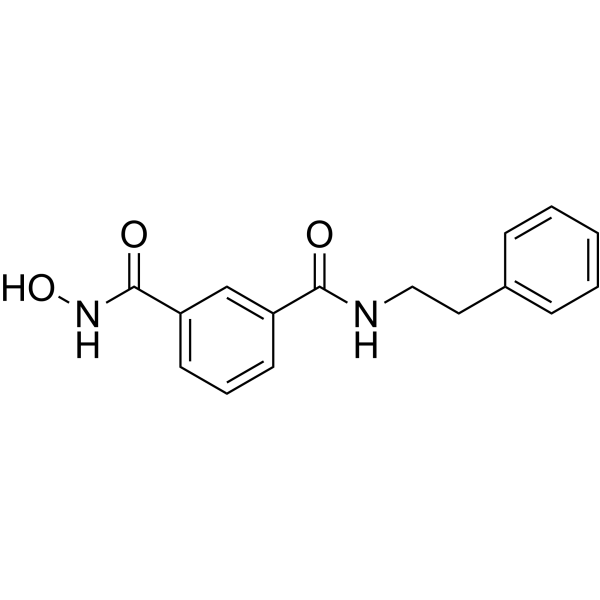
Tubulin/HDAC-IN-1 is a dual tubulin and HDAC-IN-1 inhibitor through CH/π interaction with tubulin and hydrogen bond interaction with HDAC8. Tubulin/HDAC-IN-1 inhibits tubulin polymerization and selectively inhibits HDAC8 (IC50: 150 nM). Tubulin/HDAC-IN-1 has cytotoxicity against various human cancer cells, also arrests cell cycle in the G2/M phase and induces cell apoptosis. Tubulin/HDAC-IN-1 can be used in the research of hematologic and solid tumors such as neuroblastoma, leukemia .
|
-
- HY-157320
-
|
|
Microtubule/Tubulin
Apoptosis
|
Cancer
|
|
Tubulin/PARP-IN-2 (compound 14) is a dual PARP-Tubulin inhibitor. Tubulin/PARP-IN-2 inhibits PARP1, PARP2, and tubulin activity with IC50 values of 74 nM, 109 nM, and 1.4 µM, respectively. Tubulin/PARP-IN-2 induces apoptosis as well as autophagy. Tubulin/PARP-IN-2 causes cell cycle arrest at the G2/M phase .
|
-
- HY-161997
-
|
|
Microtubule/Tubulin
|
Cancer
|
|
hTopo-II/tubulin-IN-1 (compound 5L) is a hTopo-II/tubulin inhibitor. hTopo-II/tubulin-IN-1 inhibits cell migration and can be used in anti-cancer research .
|
-
- HY-146310
-
|
|
Microtubule/Tubulin
|
Cancer
|
|
Tubulin polymerization-IN-15 (compound 4) is a potent inhibitor of tubulin polymerization. Tubulin polymerization-IN-15 has the potential for the research of cancer diseases .
|
-
- HY-143446
-
|
|
Microtubule/Tubulin
|
Cancer
|
|
Tubulin polymerization-IN-7 (compound 5) is a potent inhibitor of tubulin polymerization. Tubulin polymerization-IN-7 has the potential for the research of cancer diseases .
|
-
- HY-144132
-
|
|
Apoptosis
Microtubule/Tubulin
|
Cancer
|
|
αβ-Tubulin-IN-1 is a potent and orally active αβ-Tubulin inhibitor. αβ-Tubulin-IN-1 induces cell cycle arrest at G2/M and efficient apoptosis. αβ-Tubulin-IN-1 inhibits tumor cell migration and Metastasis. αβ-Tubulin-IN-1 shows significant antitumor efficacy in a dose dependent manner .
|
-
- HY-149578
-
|
|
Microtubule/Tubulin
HDAC
|
Cancer
|
|
Tubulin/HDAC-IN-3 (compound 12a) is a potent tubulin/HDAC dual inhibitor. Tubulin/HDAC-IN-3 effectively disrupts tubulin polymerization (IC50: 5.4 μM). Tubulin/HDAC-IN-3 exhibits potent HDAC1/8 inhibitory activities, with IC50 values of 0.155 and 0.177 μM, respectively. Tubulin/HDAC-IN-3 works through blocking cellular cycle, inducing apoptosis and inhibiting colony formation .
|
-
- HY-163664
-
|
|
Microtubule/Tubulin
|
Cancer
|
|
Tubulin polymerization-IN-63 (compound 6) is a tubulin polymerization inhibitor. The IC50 value of Tubulin polymerization-IN-63 for MES-SA cells is 0.29 μM. Tubulin polymerization-IN-63 can be used in cancer research .
|
-
- HY-146505
-
|
|
Microtubule/Tubulin
Apoptosis
Reactive Oxygen Species (ROS)
|
Cancer
|
|
Tubulin polymerization-IN-6 (compound 5f) is a potent tubulin polymerization inhibitor, with an IC50 of 1.09 μM. Tubulin polymerization-IN-6 inhibits cell migration and tube formation and contributes to the anti-angiogenesis. Tubulin polymerization-IN-6 can greatly inhibit tumor growth on HT29 xenograft Balb/c nude mice .
|
-
- HY-163983
-
|
|
Microtubule/Tubulin
Apoptosis
PARP
Caspase
|
Cancer
|
|
Tubulin polymerization-IN-68 (compound 32) is a tubulin inhibitor that can inhibit tubulin polymerization and destroy the cellular microtubule network. Tubulin polymerization-IN-68 can upregulate the expression of PARP-1 and caspase-3 and induce cell apoptosis, and has anticancer activity. Tubulin polymerization-IN-68 can effectively inhibit HepG2 (IC50=93 nM) and significantly inhibit the growth of HepG2 xenograft tumors in nude mice by oral administration .
|
-
- HY-169882
-
|
|
Microtubule/Tubulin
|
Cancer
|
|
Tubulin inhibitor 49 (Compound 18) is an inhibitor for tubulin polymerization with an IC50 of 48 μM. Tubulin inhibitor 49 disrupts the cell microtubule network, arrests the cell cycle at G2 phase, and exhibits cytotoxicity (IC50=8.8 μM in HeLa cell). Tubulin inhibitor 49 can be used in the research of cervical cancer .
|
-
- HY-169882A
-
|
|
Microtubule/Tubulin
|
Cancer
|
|
Tubulin inhibitor 49 (Compound 18) hydrobromide is an inhibitor for tubulin polymerization with an IC50 of 48 μM. Tubulin inhibitor 49 hydrobromide disrupts the cell microtubule network, arrests the cell cycle at G2 phase, and exhibits cytotoxicity (IC50=8.8 μM in HeLa cell). Tubulin inhibitor 49 hydrobromide can be used in the research of cervical cancer .
|
-
- HY-182081
-
|
|
Microtubule/Tubulin
Interleukin Related
|
Cancer
|
|
Tubulin polymerization-IN-90 is a tubulin polymerization inhibitor. Tubulin polymerization-IN-90 disrupts tubulin polymerization by binding to the nocodazole-binding site on β-tubulin. Tubulin polymerization-IN-90 induces the release of extracellular vesicles marked by the tetraspanin CD63. Tubulin polymerization-IN-90 induces the release of IL-8 from cells. Tubulin polymerization-IN-90 reduces the viability of cancer cells. Tubulin polymerization-IN-90 can be used in the research of cancers such as acute T-lymphoblastic leukemia .
|
-
- HY-161763
-
|
|
Microtubule/Tubulin
|
Cancer
|
|
Tubulin polymerization-IN-65 is a tubulin polymerisation inhibitor with a broad spectrum cytotoxic. Tubulin polymerization-IN-65 induces G2 + M cell cycle arrest .
|
-
- HY-182753
-
|
|
Microtubule/Tubulin
P-glycoprotein
Apoptosis
CDK
Bcl-2 Family
|
Cancer
|
|
Tubulin-IN-66 is a tubulin (tubulin) and P-gp inhibitor with antiproliferative activity against cancer cells. Tubulin-IN-66 covalently binds to the Colchicine (HY-16569)-binding site at Cys239 of the β-tubulin subunit, inhibits tubulin polymerization and disrupts the microtubule network. Tubulin-IN-66 inhibits P-gp function to overcome multidrug resistance. Tubulin-IN-66 arrests the cell cycle at the G2/M phase and induces apoptosis (apoptosis). Tubulin-IN-66 inhibits colony formation and migration of cancer cells. Tubulin-IN-66 can be used in the research of tumors such as breast cancer .
|
-
- HY-183271
-
|
|
Microtubule/Tubulin
|
Cancer
|
|
Tubulin-IN-67 is a tubulin inhibitor. Tubulin-IN-67 binds to the colchicine-binding site of tubulin, inhibiting tubulin polymerization. Tubulin-IN-67 arrests cancer cell cycle at the G2/M phase and triggers apoptosis in cancer cells. Tubulin-IN-67 can be used for the research of hepatocellular carcinoma, cervical carcinoma, breast carcinoma .
|
-
- HY-P11770
-
|
|
Microtubule/Tubulin
|
Others
|
|
α-Tubulin (residues 440-451) (α-Tubulin Tail) is a Microtubule growth inhibitor. α-Tubulin (residues 440-451) transiently interacts with the longitudinal polymerization interface of α-tubulin, regulating the apparent association and dissociation rates of tubulin at the microtubule growing end. α-Tubulin (residues 440-451) inhibits microtubule growth .
|
-
- HY-177988
-
|
|
Microtubule/Tubulin
|
Cancer
|
|
Tubulin polymerization-IN-87 (Compound 9) is a tubulin polymerization inhibitor. Tubulin polymerization-IN-87 disrupts tubulin polymerization and induces G2/M cell cycle arrest. Tubulin polymerization-IN-87 exhibits anti-tubulin and anti-proliferative effects. Tubulin polymerization-IN-87 exhibits anticancer activity against ovarian cancer .
|
-
- HY-181763
-
|
|
Microtubule/Tubulin
Apoptosis
CDK
|
Cancer
|
|
Tubulin-IN-65 (Compound Imp-18) is a Tubulin inhibitor. Tubulin-IN-65 exhibits tubulin-disrupting activity. Tubulin-IN-65 disrupts microtubule integrity. Tubulin-IN-65 induces Apoptosis and increases the expression of CDK1 and Cyclin B1. Tubulin-IN-65 possesses anticancer activity against breast cancer and colorectal cancer. Tubulin-IN-65 can be used in research related to triple-negative breast cancer and colorectal adenocarcinoma .
|
-
- HY-182039
-
|
|
Microtubule/Tubulin
Caspase
Apoptosis
|
Cancer
|
|
Tubulin polymerization-IN-89 is a tubulin polymerization inhibitor. Tubulin polymerization-IN-89 binds to the colchicine-binding site on tubulin heterodimers, disrupting tubulin polymerization and microtubule formation. Tubulin polymerization-IN-89 induces apoptosis in melanoma cells and arrests the cell cycle at the G2/M phase. Tubulin polymerization-IN-89 can be used in studies related to metastatic melanoma .
|
-
- HY-W874392
-
|
|
Microtubule/Tubulin
|
Cancer
|
|
Tubulin polymerization-IN-74 (compound 11) is a Tubulin polymerization inhibitor, with IC50 of 15 μM. Tubulin polymerization-IN-74 can be used in anticancer research .
|
-
- HY-172611
-
|
|
Microtubule/Tubulin
|
Cancer
|
|
Tubulin polymerization-IN-78 (compound 10a) is a tubulin polymerization inhibitor with an IC50 value of 2.69 μM. Tubulin polymerization-IN-78 shows antiproliferative activity .
|
-
- HY-163105
-
|
|
Microtubule/Tubulin
|
Cancer
|
|
Tubulin/NEDDylation-IN-1 (compound C11) is a dual inhibitor of tubulin (Microtubule/Tubulin)-NEDDylation (IC50 for tubulin=2.40 μM), which has strong anti-proliferative activity. Neddylation is a protein post-translational modification that covalently tags the ubiquitin-like protein NEDD8 to target proteins. Tubulin/NEDDylation-IN-1 forms hydrogen bonds with residues of tubulin and E1 NEDD8 activating enzyme (NAE) through methoxy and dithiocarbamate groups and inhibits NEDDylation and microtubulin in an ATP-dependent manner. tube polymerization .
|
-
- HY-180193
-
|
|
Microtubule/Tubulin
Apoptosis
|
Cancer
|
|
Tubulin polymerization-IN-86 (Compound B6) is an effective inhibitor of tubulin polymerization. Tubulin polymerization-IN-86 effectively inhibits microtubulin polymerization by binding to the colchicine binding sites on microtubulin, thereby disrupting the microtubule cytoskeleton within the cell. Tubulin polymerization-IN-86 exhibits potent anti-proliferative activity against a variety of cancer cell lines. Tubulin polymerization-IN-86 induces cell cycle arrest, apoptosis, inhibits cell migration, invasion, and long-term survival ability. Tubulin polymerization-IN-86 inhibits tumor growth in mice and can be used for the study of melanoma .
|
-
- HY-178466
-
|
|
Microtubule/Tubulin
P-glycoprotein
Apoptosis
|
Cancer
|
|
Tubulin polymerization/P-gp-IN-1 is a Tubulin polymerization/P-gp dual inhibitor. Tubulin polymerization/P-gp-IN-1 inhibits tubulin polymerization and induces G2/M arrest and apoptosis. Tubulin polymerization/P-gp-IN-1 reverses MDR by inhibiting P-gp efflux function. Tubulin polymerization/P-gp-IN-1 has dual functions: direct antitumor activity and reversal of P-gp-mediated Cisplatin (HY-17394) resistance. Tubulin polymerization/P-gp-IN-1 stable binds to the tubulin CBS (ΔG = −12.4 kcal/mol) and the P-gp hydrophobic lumen (ΔG = −10.8 kcal/mol). Tubulin polymerization/P-gp-IN-1 can be used for the study of drug-resistant cervical cancer .
|
-
- HY-168565
-
|
|
Apoptosis
Microtubule/Tubulin
Reactive Oxygen Species (ROS)
|
Cancer
|
|
Tubulin polymerization-IN-70 (compound Q19) is a potent tubulin polymerization inhibitor. Tubulin polymerization-IN-70 shows antiproliferative activity. Tubulin polymerization-IN-70 target the colchicine binding site of tubulin and inhibited tubulin polymerization. Tubulin polymerization-IN-70 induces apoptosis and cell cycle arrest at G2/M phase. Tubulin polymerization-IN-70 induces mitochondrial membrane potential decrease and increases the levels of reactive oxygen species (ROS). Tubulin polymerization-IN-70 shows antiangiogenic and anticancer activity .
|
-
- HY-155459
-
|
|
Microtubule/Tubulin
Mitosis
|
Cancer
|
|
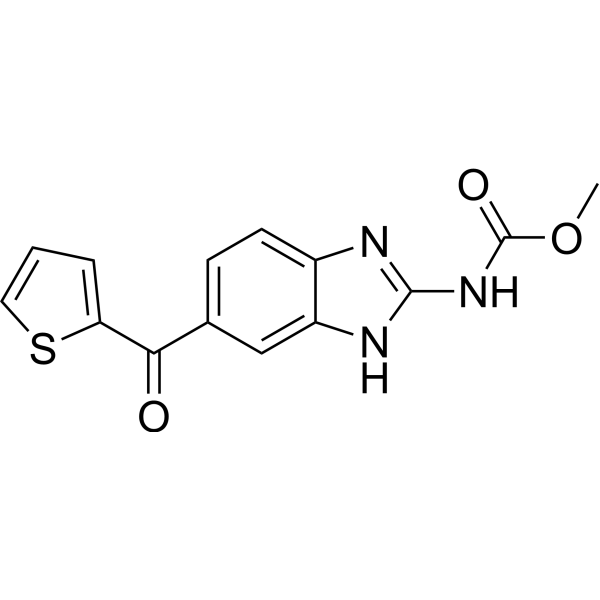
Tubulin polymerization-IN-57 (compound 5a) is a tubulin inhibitor and is an α-naphthoxy-substituted carbendazim (HY-13582) derivative. Tubulin polymerization-IN-57 induces mitotic arrest and inhibits cancer cell proliferation .
|
-
- HY-W011996
-
|
|
Microtubule/Tubulin
|
Cancer
|
|
2-Methylthiophenothiazine (compound 17) is a precursor of tubulin inhibitor with potential anticancer activity and can inhibit tubulin aggregation .
|
-
- HY-155963
-
|
|
Microtubule/Tubulin
|
Cancer
|
|
Tubulin polymerization-IN-48 (Compound 4k) is a tubulin polymerization inhibitor. Tubulin polymerization-IN-48 has a moderate effect on disruption of the microtubule network. Tubulin polymerization-IN-48 inhibits neuroblastoma cancer cell proliferation, with IC50s of 79 and 165 nM for Chp-134 and Kelly cell line .
|
-
- HY-155962
-
|
|
Microtubule/Tubulin
|
Cancer
|
|
Tubulin polymerization-IN-47 (Compound 4h) is a tubulin polymerization inhibitor and mitotic inhibitor. Tubulin polymerization-IN-47 inhibits neuroblastoma cancer cell proliferation, with IC50s of 7 and 12 nM for Chp-134 and Kelly cell line .
|
-
- HY-146863
-
|
|
Microtubule/Tubulin
|
Cancer
|
|
Tubulin polymerization-IN-10 is a potent tubulin polymerization inhibitor with an IC50 of 4.25±0.75 μM. Tubulin polymerization-IN-10 has anti-tumor effects .
|
-
- HY-146378
-
|
|
Microtubule/Tubulin
|
Cancer
|
|
Tubulin polymerization-IN-20 (compound 11) is a potent inhibitor of tubulin polymerization. Tubulin polymerization-IN-20 has the potential for the research of breast cancers and chemoresistant colon cancers .
|
-
- HY-146377
-
|
|
Microtubule/Tubulin
|
Cancer
|
|
Tubulin polymerization-IN-19 (compound 4) is a potent inhibitor of tubulin polymerization. Tubulin polymerization-IN-20 has the potential for the research of breast cancers and chemoresistant colon cancers .
|
-
- HY-146376
-
|
|
Microtubule/Tubulin
|
Cancer
|
|
Tubulin polymerization-IN-18 (compound 8) is a potent inhibitor of tubulin polymerization. Tubulin polymerization-IN-18 has the potential for the research of breast cancers and chemoresistant colon cancers .
|
-
- HY-176201
-
|
|
Microtubule/Tubulin
Apoptosis
|
Cancer
|
|
Tubulin polymerization-IN-80 (Compound 32) is a potent tubulin polymerization inhibitor with antiproliferative activity. Tubulin polymerization-IN-80 disrupts microtubule formation and leads to cell cycle arrest and apoptosis. Tubulin polymerization-IN-80 is promising for research of cancers .
|
-
- HY-183329
-
|
|
Microtubule/Tubulin
Apoptosis
|
Cancer
|
|
Tubulin polymerization-IN-92, an analog of KX-01 (HY-10340), is a potent orally active tubulin polymerization inhibitor that binds tubulin with a Ka of 1.29 μM. Tubulin polymerization-IN-92 simultaneously occupies the colchicine site in β-tubulin and a cavity in α-tubulin. Tubulin polymerization-IN-92 exerts antiproliferative activity, induces G2/M cell cycle arrest and apoptosis in cancer cells. Tubulin polymerization-IN-92 inhibits tumor growth in mouse xenograft models. Tubulin polymerization-IN-92 can be used for the research of colon cancer, cervical cancer, and Paclitaxel (HY-B0015)-resistant ovarian cancer .
|
-
- HY-177138
-
|
|
Microtubule/Tubulin
|
Cancer
|
|
Tubulin-IN-52 is a tubulin inhibitor. Tubulin-IN-52 demonstrates significant cytotoxicity toward a variety of
cancer cell types including prostate, lung, and ovarian cancers with strong activity toward highly aggressive cancer lines (IC50 = 0.9-3.8 mM). Tubulin-IN-52 significantly inhibits the growth of established tumors without noticeable toxicity. Tubulin-IN-52 can be used for the study of cancer .
|
-
- HY-172395
-
|
|
Microtubule/Tubulin
Topoisomerase
Apoptosis
Reactive Oxygen Species (ROS)
|
Cancer
|
|
TopoII/tubulin-IN-1 (Compound 1B8) is a TopoII/tubulin inhibitor. TopoII/tubulin-IN-1 can inhibit the proliferation and the level of ROS of tumor cells, induce apoptosis and cell cycle arrest of tumor cells, but has no significant cytotoxicity to normal cells. TopoII/tubulin-IN-1 has antitumor activity .
|
-
- HY-162264
-
|
|
Microtubule/Tubulin
Proton Pump
Apoptosis
|
Inflammation/Immunology
Cancer
|
|
Tubulin polymerization/V-ATPase-IN-1 (compound F10) is a Tubulin polymerization/V-ATPase inhibitor. Tubulin polymerization/V-ATPase-IN-1 shows robust antiproliferation activity against four human cancer cell lines, and exerts antiproliferative activity by inhibiting tubulin and V-ATPase. Tubulin polymerization/V-ATPase-IN-1 induces immunogenic cell death in addition to apoptosis, and inhibits tumor growth in an RM-1 homograft model with enhanced T lymphocyte infiltration .
|
-
- HY-170778
-
|
|
Microtubule/Tubulin
|
Cancer
|
|
Tubulin polymerization-IN-77 (Compound 15c) is a tubulin polymerization inhibitor that exerts anti-glioblastoma activity by inhibiting tubulin polymerization. Tubulin polymerization-IN-77 demonstrates significant blood-brain barrier permeability, effectively inducing G2/M phase arrest and triggering apoptosis in GBM cells, while also significantly inhibiting tumor cell migration .
|
-
- HY-146164
-
|
|
Microtubule/Tubulin
|
Metabolic Disease
Cancer
|
|
Tubulin polymerization-IN-21 (compound 9a) is a tubulin polymerization inhibitor. Tubulin polymerization-IN-21 exhibits anti-cancer activity through disrupting cellular integrity and affecting glucose metabolism .
|
-
- HY-29866
-
|
|
Microtubule/Tubulin
|
Cancer
|
|
Tubulin polymerization-IN-75 (Compound 6) is an inhibitor for tubulin polymerization with an IC50 of 30 μM. Tubulin polymerization-IN-75 inhibits the proliferation of cancer cell Huh7 and 293T with IC50 of 14.3 μM and 13.8 μM .
|
-
- HY-183762
-
|
|
Microtubule/Tubulin
Apoptosis
|
Cancer
|
|
Tubulin-IN-68 is a tubulin inhibitor with an IC50 of 19.3 μM. Tubulin-IN-68 exhibits antiproliferative activity against human cancer cells. Tubulin-IN-68 induces G2/M phase cell cycle arrest. Tubulin-IN-68 induces apoptosis. Tubulin-IN-68 can be used in the research of colorectal cancer, hepatocellular carcinoma, breast cancer, and T-cell leukemia .
|
-
- HY-147896
-
|
|
Microtubule/Tubulin
|
Cancer
|
|
Tubulin polymerization-IN-29 (compound 6g) is a potent tubulin polymerization inhibitor. Tubulin polymerization-IN-29 exhibits potent antiproliferative activity. Tubulin polymerization-IN-29 can induce HeLa cells arrest in G2/M phase .
|
-
- HY-170563
-
|
|
Microtubule/Tubulin
Apoptosis
|
Cancer
|
|
Tubulin polymerization-IN-72 (Compound 4a4) is an anticancer agent that acts as a tubulin polymerization inhibitor. It inhibits tubulin polymerization by binding to the colchicine site, leading to cancer cell arrest in the G2/M phase and inducing their apoptosis (Apoptosis). Tubulin polymerization-IN-72 has an IC50 of 0.4-2.7 nM against cancer cells.
|
-
- HY-162319
-
|
|
Apoptosis
HDAC
Microtubule/Tubulin
Reactive Oxygen Species (ROS)
|
Cancer
|
|
Tubulin/HDAC-IN-4 (compound 9n) is a dual Tubulin and HDAC inhibitor with IC50 values of 0.73, 0.43, 0.62, 2.34 µM for HDAC1, HDAC2, HDAC6, HDAC7, respectively. Tubulin/HDAC-IN-4 inhibits the tubulin polymerization by targeting the colchicine binding site. Tubulin/HDAC-IN-4 induces apoptosis and cell cycle arrest at G2/M phase. Tubulin/HDAC-IN-4 induces a significant elevation of intracellular ROS levels. Tubulin/HDAC-IN-4 shows anti-angiogenesis activity and anticancer activity .
|
-
- HY-145868
-
|
|
Microtubule/Tubulin
Apoptosis
|
Cancer
|
|
Tubulin polymerization-IN-3 (compound 4c) is a potent tubulin polymerization inhibitor, with an IC50 of 3.84 µM. Tubulin polymerization-IN-3 can induce apoptosis in colon cancer cells .
|
-
- HY-163270
-
|
|
Microtubule/Tubulin
|
Cancer
|
|
PM534, tubulin targeting agent, inhibits tubulin assembly with IC50 values of 0.8-3.2 nM. PM534 binds to the colchicine site of tubulin, which has high antitumor activity .
|
-
- HY-147981
-
|
|
Microtubule/Tubulin
Apoptosis
|
Cancer
|
|
Tubulin polymerization-IN-31 (Compound 4c) is a tubulin polymerization inhibitor with an IC50 of 3.64 μM. Tubulin polymerization-IN-31 induces cancer cell apoptosis and shows antitumor activity .
|
-
- HY-179385
-
|
|
Microtubule/Tubulin
Phosphatase
Apoptosis
|
Cancer
|
|
Tubulin-IN-62 is a tubulin inhibitor targeting the colchicine-binding site. Tubulin-IN-62 exhibits IC50 values of 17.2 nM and 19.3 nM against SKOV3 and HCC827 cells, respectively. Tubulin-IN-62 inhibits microtubule polymerization, arrests the cell cycle at the G2/M phase, and induces apoptosis. Tubulin-IN-62 demonstrates significant antitumor efficacy in vivo with good tolerability. Tubulin-IN-62 can be used in ovarian cancer and non-small cell lung cancer (NSCLC) research .
|
-
- HY-147848
-
|
|
Microtubule/Tubulin
|
Cancer
|
|
Tubulin polymerization-IN-27 (compound 5j) is a tubulin polymerization inhibitor. Tubulin polymerization-IN-27 can arrest cell cycle at G2/M phase and induce apoptosis .
|
-
- HY-147824
-
|
|
Microtubule/Tubulin
Apoptosis
|
Cancer
|
|
Tubulin polymerization-IN-22 is a tubulin polymerization inhibitor with an IC50 of 8.1 μM. Tubulin polymerization-IN-22 arrests cell cycle at G2/M phase and induces apoptosis .
|
-
- HY-156271
-
|
|
Microtubule/Tubulin
|
Cancer
|
|
Tubulin polymerization-IN-52 (compound SC23) is a potent tubulin polymerization inhibitor, with an IC50 of 2.9 μM .
|
-
- HY-179160
-
|
|
Microtubule/Tubulin
Apoptosis
Reactive Oxygen Species (ROS)
|
Cancer
|
|
Tubulin-IN-61 is a tubulin polymerization inhibitor with an IC50 of ≤7.63 μM. Tubulin-IN-61 induces early apoptosis and triggers significant G2/M phase arrest. Tubulin-IN-61 elevates intracellular ROS levels. Tubulin-IN-61 shows high activity against MCF-7 cells with an IC50 of 5.61 μM. Tubulin-IN-61 can be used for the research of breast cancer .
|
-
- HY-146211
-
|
|
Microtubule/Tubulin
Apoptosis
|
Cancer
|
|
Tubulin polymerization-IN-14 (Compound 20a) is a tubulin polymerization inhibitor with an IC50 of 3.15 μM. Tubulin polymerization-IN-14 shows potent anti-vascular and anticancer activities, induces cancer cell apoptosis .
|
-
- HY-181491
-
|
|
Microtubule/Tubulin
EGFR
Akt
mTOR
Ras
Apoptosis
Autophagy
|
Cancer
|
|
Tubulin-IN-64 is a sulfonated styrylquinazoline derivative with high selectivity antitumor activity. Tubulin-IN-64 targets tubulin, inhibits the EGFR/Akt/mTOR and EGFR/Ras signaling pathways, induces cell cycle arrest, apoptosis and autophagy. Tubulin-IN-64 exhibits significant antitumor efficacy in the zebrafish GBM xenograft model. Tubulin-IN-64 can be used for the research on glioblastoma and leukemia .
|
-
- HY-144786
-
|
|
Microtubule/Tubulin
Apoptosis
|
Cancer
|
|
Tubulin polymerization-IN-4 is a potent tubulin polymerization inhibitor with IC50 value of 4.6 μM. Tubulin polymerization-IN-4 can disrupt tubulin polymerization and vasculature, arrest the cell cycle at the G2/M phase, induce apoptosis, and suppress clonogenesis and migration in HeLa cells. Tubulin polymerization-IN-4 can be used for researching cervical cancer .
|
-
- HY-161338
-
|
|
Microtubule/Tubulin
Apoptosis
|
Cancer
|
|
Tubulin polymerization-IN-61 (Compound 9a) is a tubulin polymerization inhibitor. Tubulin polymerization-IN-61 destroys the microtubule skeleton, blocks the cell cycle in G2/M phase, induces Apoptosis, and inhibits cancer cell migration and colony formation. Tubulin polymerization-IN-61 shows antitumor activity in vivo against 4T1 xenograft model .
|
-
- HY-155043
-
|
|
Microtubule/Tubulin
|
Cancer
|
|
Tubulin polymerization-IN-42 (compound 10j), an indole-substituted furanone, is an inhibitor of tubulin polymerization with anti-cancer activity .
|
-
- HY-176743
-
|
|
Microtubule/Tubulin
Apoptosis
|
Cancer
|
|
Tubulin polymerization-IN-81 is a selective Tubulin inhibitor with an IC50 of 5.41 μM. Tubulin polymerization-IN-81 possesses a significant anti-proliferative activity, unique ROS-mediated apoptotic mechanism and potent anti-microtubule activity. Tubulin polymerization-IN-81 can be used in anti-tumor research .
|
-
- HY-163356
-
|
|
Microtubule/Tubulin
Apoptosis
|
Cancer
|
|
Tubulin polymerization-IN-60 (BF3) is a tubulin polymerization inhibitor with anticancer activity. Tubulin polymerization-IN-60 (BF3) belongs to the colchicine binding site inhibitors (CBSIs) and disturbs cell cycle progression leading to G2/M arrest and apoptosis .
|
-
- HY-179159
-
|
|
Microtubule/Tubulin
|
Cancer
|
|
Tubulin-IN-60 (Compound 4) is a tubulin polymerization inhibitor, with an IC50 of 0.19 μM. Tubulin-IN-60 has anti-cancer activity against colorectal, pancreatic, T-cell acute lymphoblastic leukemia cancer .
|
-
- HY-143447
-
|
|
Microtubule/Tubulin
|
Cancer
|
|
Tubulin polymerization-IN-8 (compound IIc) is a potent inhibitor of tubulin polymerization. Tubulin polymerization-IN-8 concentration-dependently causes cell cycle arrest at the G2/M phase in HCT116 tumor cells, and displays a significant inhibition of tubulin polymerization with an IC50 value of 12.7 μM. Tubulin polymerization-IN-8 has the potential for the research of cancer diseases [ 1].
|
-
- HY-175713
-
|
|
Microtubule/Tubulin
Apoptosis
Reactive Oxygen Species (ROS)
|
Cancer
|
|
Tubulin/CDC5L-IN-1 is a Tubulin/CDC5L dual inhibitor. Tubulin/CDC5L-IN-1 targets to CDCL5 with a KD of 103.7 μM. Tubulin/CDC5L-IN-1 can inhibit multiple cancer cell proliferation and induce G2/M phase arrest. Tubulin/CDC5L-IN-1 induce cell apoptosis and ROS production. Tubulin/CDC5L-IN-1 exhibits antiangiogenic effects. Tubulin/CDC5L-IN-1 can be used for the research of cancer, such as colon carcinoma .
|
-
- HY-175874
-
|
|
Microtubule/Tubulin
PI3K
Akt
Apoptosis
|
Cancer
|
|
Tubulin-IN-55 is a tubulin inhibitor. Tubulin-IN-55 disrupts the PI3K/Akt signaling pathway in cancer cells. Tubulin-IN-55 exerts broad-spectrum anti-proliferative activity against multiple tumor cells (HeLa, HCT116, 4T1, A549, H1299, MDA-MB231). Tubulin-IN-55 induces G2/M phase arrest and apoptosis, and inhibits tumor cell migration/invasion in cancer cells. Tubulin-IN-55 demonstrates potent antitumor efficacy in orthotopic autologous transplantation mice. Tubulin-IN-55 can be used for the study of cancer .
|
-
- HY-161863
-
|
|
Microtubule/Tubulin
Reactive Oxygen Species (ROS)
Apoptosis
|
Cancer
|
|
Tubulin polymerization-IN-67 (Compound 5h) is an inhibitor for tubulin polymerization on colchicine binding site with an IC50 of 2.92 μM. Tubulin polymerization-IN-67 inhibits the proliferation of cancer cells HT29, A549, U2OS, MG-63 and HeLa with IC50s of 0.12-4.13 μM. Tubulin polymerization-IN-67 arrests the cell cycle at G2/M phase, induces apoptosis in cell U2OS, inhibits the cell migration of A549. Tubulin polymerization-IN-67 reduces the mitochondrial membrane potential (MMP) and increase intracellular ROS, inhibits the angiogenesis in HUVECs. Tubulin polymerization-IN-67 exhibits antitumor efficacy in mice
|
-
- HY-106008
-
|
BAL27862
|
Microtubule/Tubulin
|
Cancer
|
|
Avanbulin (BAL27862) is a potent, Colchicine site-binding, tubulin assembly inhibitor. Avanbulin inhibits tubulin assembly at 37 °C with an IC50 of 1.4 μM. Avanbulin binds to tubulin with an apparent Kd value of 244 nM. Avanbulin can be used for the research of cancer and cell division .
|
-
- HY-170924
-
|
|
Microtubule/Tubulin
Apoptosis
Mitosis
|
Cancer
|
|
Tubulin polymerization-IN-76 (compound 20b) is a potent and orally active Tubulin polymerization inhibitor. Tubulin polymerization-IN-76 inhibits Tubulin polymerization with an IC50 of 2.505 μM by acting on the colchicine binding site, thereby disrupting intracellular Microtubule networks and interfering with cell mitosis. Tubulin polymerization-IN-76 demonstrates exceptional efficacy against MGC-803 and HGC-27 cells with IC50s of 1.61 and 1.82 nM, respectively. Tubulin polymerization-IN-76 effectively inhibits the colony formation and cell migration activities, and induces G2/M phase cycle arrest and Apoptosis in MGC-803 and HGC-27 cells.Tubulin polymerization-IN-76 shows a broad-spectrum antiproliferative activity .
|
-
- HY-179049
-
|
|
EGFR
Microtubule/Tubulin
Akt
ERK
Autophagy
Atg8/LC3
p62
Ferroptosis
Reactive Oxygen Species (ROS)
|
Cancer
|
|
EGFR/tubulin-IN-1 (Compound 26) is a dual-target inhibitor of EGFR and tubulin. EGFR/tubulin-IN-1 significantly reduces the levels of p-EGFR, p-AKT, and p-ERK in cells, disrupting the microtubule structure of the cells. EGFR/tubulin-IN-1 significantly inhibits the proliferation of H1975 cells and significantly blocks the cells in the G2/M phase. EGFR/tubulin-IN-1 induces the expression of autophagy markers LC3B-II and Beclin-1, while down-regulating the expression of p62. EGFR/tubulin-IN-1 induces ferroptosis, with increased ROS content and depletion of glutathione (GSH). EGFR/tubulin-IN-1 inhibits epithelial-mesenchymal transition (EMT) and tumor metastasis. EGFR/tubulin-IN-1 has a significant tumor-suppressing effect in the H1975 transplanted tumor nude mouse model. EGFR/tubulin-IN-1 can be used for the study of non-small cell lung cancer .
|
-
- HY-146311
-
|
|
Microtubule/Tubulin
|
Cancer
|
|
Tubulin polymerization-IN-16 (compound 5g) is a potent inhibitor of tubulin polymerization. Tubulin polymerization-IN-16 shows most potent against cancer cells, with IC50 values of 0.084-0.221 μM. Tubulin polymerization-IN-16 potently disrupts microtubule/tubulin dynamics, induces cell cycle arrest at G2/M phase in SGC-7901 cells .
|
-
- HY-146006
-
|
|
Microtubule/Tubulin
MMP
|
Cancer
|
|
Tubulin/MMP-IN-1 (compound 15g) is a potent inhibitor of tubulin and MMP. Tubulin/MMP-IN-1 has the potential for the research of cancer diseases. Tubulin/MMP-IN-1 suppresses tubulin polymerization, induces cell cycle arrest at the G2/M phase, leads to reactive oxidative stress (ROS) generation of HepG2 cells, and results in apoptosis by the mitochondrial-dependent apoptotic pathway .
|
-
- HY-147947
-
|
|
Microtubule/Tubulin
|
Cancer
|
|
Tubulin polymerization-IN-30 (compound 6e) is a potent Tubulin polymerization inhibitor. Tubulin polymerization-IN-30 is a colchicine binding site inhibitor. Tubulin polymerization-IN-30 can disrupt intracellular microtubule organization, arrest cell cycle at the G2/M phase. Tubulin polymerization-IN-30 exhibits the high potency against the cancer cell lines including SGC-7901, A549 and HeLa, with IC50 values of 2.16, 2.21, and 0.403 μM .
|
-
- HY-163692
-
|
|
Microtubule/Tubulin
Apoptosis
|
Cancer
|
|
Tubulin polymerization-IN-64 (Compound 8a) is an inhibitor for tubulin polymerization by occupying the colchicine binding site of tubulin, with IC50 of 6.9 μM. Tubulin polymerization-IN-64 inhibits proliferations of cancer cells A549, HeLa, HCT116 and HT-29, with IC50s of 2.42, 10.33, 6.28, 5.33 μM, respectively. Tubulin polymerization-IN-64 arrests cell cycle at G2/M phase, induces apoptosis in A549 .
|
-
- HY-181074
-
|
|
Microtubule/Tubulin
Apoptosis
Bcl-2 Family
|
Neurological Disease
Cancer
|
|
Tubulin polymerization-IN-88 is a tubulin inhibitor that blocks tubulin polymerization, leading to microtubule destabilization and disruption of the mitotic spindle. Tubulin polymerization-IN-88 induces G2/M phase arrest and apoptosis in cancer cells, and inhibits cancer cell migration and self-renewal of cancer stem cells. It exhibits in vitro anti-proliferative activity against cancer cells with selectivity over normal cells. Tubulin polymerization-IN-88 also demonstrates in vivo anti-cancer activity without significant toxicity. Tubulin polymerization-IN-88 is applicable for research on glioblastoma, lung cancer, endometrial cancer, ovarian cancer, and leukemia .
|
-
- HY-144299
-
|
|
Microtubule/Tubulin
Apoptosis
|
Cancer
|
|
Tubulin polymerization-IN-5 (compound 20q) is a potent tubulin inhibitor with potential anticancer activities. Tubulin polymerization-IN-5 can arrest ESCC cells at G2/M phase and cause cells apoptosis .
|
-
- HY-169418
-
|
|
Microtubule/Tubulin
Apoptosis
|
Cancer
|
|
Tubulin polymerization-IN-71 (Compound 4k) is an inhibitor for tubulin polymerization with an IC50 of 3.06 μM. Tubulin polymerization-IN-71 inhibits the proliferation of cancer cell MG-63 and U2OS with IC50 of 0.08-0.14 μM. Tubulin polymerization-IN-71 arrests the cell cycle at G2/M phase, and induces apoptosis in MG-63 .
|
-
- HY-151394
-
|
|
Microtubule/Tubulin
|
Cancer
|
|
Tubulin polymerization-IN-33 is an inhibitor of [1,2]oxazoloisoindoles tubulin polymerization, exhibits high antiproliferative activity against the NCI panel .
|
-
- HY-P10589
-
|
|
Microtubule/Tubulin
|
Cancer
|
|
Phomopsinamine A is a derivative of Phomopsin A (HY-N6793). Phomopsinamine A is an inhibitor for tubulin polymerization with IC50 of 0.53 μM. Phomopsinamine A inhibits the binding of Vinblastine (HY-13780) to tubulin (IC50 =0.56 μM), promotes the the binding of Colchicine (HY-16569) to tubulin (IC50 =0.32 μM) .
|
-
- HY-120921
-
|
RH-7281
|
Fungal
Microtubule/Tubulin
|
Infection
|
|
Zoxamide (RH-7281) is an oomycete Fungicide and covalent β-tubulin inhibitor. RH-7281 inhibits the assembly of tubulin into microtubules in vitro. Zoxamide binds covalently to β-tubulin, disrupting microtubule assembly and the cytoskeleton. Zoxamide blocks nuclear division in germinated hyphae of Phytophthora capsici and inhibits hyphal growth of Phytophthora capsici .
|
-
- HY-146818
-
|
|
Microtubule/Tubulin
|
Cancer
|
|
Tubulin polymerization-IN-12 is a tubulin polymerization inhibitor (IC50=0.75 μM). Tubulin polymerization-IN-12 arrests cell cycle at G2/M phase, and exhibits cytotoxicity against cancer cells .
|
-
- HY-163062
-
|
|
Microtubule/Tubulin
Apoptosis
Complement System
|
Cancer
|
|
Tubulin/NRP1-IN-1 (compound TN-2) is a dual inhibitor of Tubulin and NRP1 with IC50s of 0.71 and 0.85 μM, respectively. Tubulin/NRP1-IN-1 significantly inhibits the viability of prostate tumor cell lines and induces apoptosis .
|
-
- HY-148193
-
|
|
ADC Payload
Microtubule/Tubulin
|
Cancer
|
|
Tubulin polymerization-IN-38 is an analogue of Tubulysin (HY-128914), a potent anticancer agent. Tubulin polymerization-IN-38 inhibits tubulin polymerization (tubulin polymerisation), thereby inducing apoptosis (apoptosis). Tubulysin series products are potent anti-microtubule toxins (anti-microtubule toxins) and can be used as ADC cytotoxins (ADC Cytotoxin) to synthesize ADCs .
|
-
- HY-146718
-
|
|
Microtubule/Tubulin
Apoptosis
|
Cancer
|
|
Tubulin polymerization-IN-9 is a potent tubulin inhibitor with IC50 of 1.82 μM. Tubulin polymerization-IN-9 causes cell cycle arrest at G2/M phase, and induces cell apoptosis and depolarized mitochondria of K562 cells. Tubulin polymerization-IN-9 has potent anti-vascular and antitumor activities .
|
-
- HY-175565
-
|
|
Microtubule/Tubulin
VEGFR
Reactive Oxygen Species (ROS)
Apoptosis
|
Cancer
|
|
Tubulin/VEGFR-2-IN-1 is a dual inhibitor of tubulin and VEGFR-2 (IC50 = 1.52 μM) with anti-angiogenic activity. Tubulin/VEGFR-2-IN-1 exhibits potent cytotoxicity against the cancer cells. Tubulin/VEGFR-2-IN-1 elevates ROS production, induces apoptosis and causes G0/G1 phase arrest in HepG-2 cells. Tubulin/VEGFR-2-IN-1 inhibits the migratory ability and the clonogenic ability in HepG-2 cells. Tubulin/VEGFR-2-IN-1 can be used for the study of cancer .
|
-
- HY-146209
-
|
|
Microtubule/Tubulin
Apoptosis
|
Cancer
|
|
Tubulin polymerization-IN-13 (Compound 4f) is a tubulin polymerization inhibitor (IC50=0.37 μM). Tubulin polymerization-IN-13 shows anti-proliferative activity against cancer cells, induces apoptosis and potential antivascular activity .
|
-
- HY-155315
-
|
|
Microtubule/Tubulin
|
Cancer
|
|
Tubulin polymerization-IN-51(compound 7u) is a tubulin polymerization inhibitor with IC50 value of 2.55 - 17.89μM for SK-Mel-28 cells. Tubulin polymerization-IN-51 can be used for cancer research .
|
-
- HY-157543
-
|
|
Microtubule/Tubulin
Apoptosis
|
Cancer
|
|
Tubulin polymerization-IN-59 is a tubulin polymerization inhibitor and colchicine binding site inhibitor (CBSI) (IC50 = 6.1 μM). Tubulin polymerization-IN-59 exerts potent antiproliferative activity against cancer cells, while showing lower cytotoxicity to normal cells. Tubulin polymerization-IN-59 arrests colorectal cancer HCT 116 cells in G2/M phase, induces cell apoptosis, and suppresses tumor cell colony formation and migration. Tubulin polymerization-IN-59 can be used for the study of colorectal cancer (CRC) .
|
-
- HY-146817
-
|
|
Microtubule/Tubulin
Apoptosis
|
Cancer
|
|
Tubulin polymerization-IN-11 is a potent tubulin polymerization inhibitor with an IC50 value of 3.4 μM. Tubulin polymerization-IN-11 shows antiproliferative activity. Tubulin polymerization-IN-11 induces Apoptosis and cell cycle arrest at G2/M phase. Tubulin polymerization-IN-11 decreases the expression of cyclin B1, p-cdc2, and Bcl-2 protein levels and increases the expression of cleaved PARP .
|
-
- HY-161641
-
|
|
Microtubule/Tubulin
|
Cancer
|
|
Tubulin polymerization-IN-62 (Compound 14b) is an inhibitor for microtubule polymerization (IC50 is 7.5 μM) and a degrader for α- and β-tubulin. Tubulin polymerization-IN-62 inhibits proliferation of cancer cells MCF-7, A549 and HCT-116, with IC50 of 32, 60 and 29 nM, respectively. Tubulin polymerization-IN-62 arrests the cell cycle at G2/M phase, inhibits the migration of MCF-7. Tubulin polymerization-IN-62 exhibits antitumor efficacy with a tumor growth inhibition rate (TGI) of 74.27% in 4T1 homograft mouse model .
|
-
- HY-41047
-
|
|
Apoptosis
|
Cancer
|
|
Taltobulin intermediate-1 is an intermediate in the synthesis of Taltobulin (HY-15584). Taltobulin is a common toxin component in ADC preparation (ADC Cytotoxin), and it is also a powerful tubulin (Microtubule/Tubulin) inhibitor. Taltobulin disrupts tubulin polymerization, induces mitotic arrest, and induces apoptosis .
|
-
- HY-41069
-
|
|
Apoptosis
|
Cancer
|
|
Taltobulin intermediate-7 is an intermediate in the synthesis of Taltobulin (HY-15584). Taltobulin is a common toxin component in ADC preparation (ADC Cytotoxin), and it is also a powerful tubulin (Microtubule/Tubulin) inhibitor. Taltobulin disrupts tubulin polymerization, induces mitotic arrest, and induces apoptosis .
|
-
- HY-41066
-
|
|
Apoptosis
|
Cancer
|
|
Taltobulin intermediate-5 is an intermediate in the synthesis of Taltobulin (HY-15584). Taltobulin is a common toxin component in ADC preparation (ADC Cytotoxin), and it is also a powerful tubulin (Microtubule/Tubulin) inhibitor. Taltobulin disrupts tubulin polymerization, induces mitotic arrest, and induces apoptosis .
|
-
- HY-46004
-
|
|
Apoptosis
|
Cancer
|
|
Taltobulin intermediate-10 is an intermediate in the synthesis of Taltobulin (HY-15584). Taltobulin is a common toxin component in ADC preparation (ADC Cytotoxin), and it is also a powerful tubulin (Microtubule/Tubulin) inhibitor. Taltobulin disrupts tubulin polymerization, induces mitotic arrest, and induces apoptosis .
|
-
- HY-41055
-
|
|
ADC Payload
|
Cancer
|
|
Taltobulin intermediate-4 is an intermediate in the synthesis of Taltobulin (HY-15584). Taltobulin is a common toxin component in ADC preparation (ADC Cytotoxin), and it is also a powerful tubulin (Microtubule/Tubulin) inhibitor. Taltobulin disrupts tubulin polymerization, induces mitotic arrest, and induces apoptosis .
|
-
- HY-41070
-
|
|
Microtubule/Tubulin
ADC Payload
|
Cancer
|
|
Taltobulin intermediate-8 is an intermediate in the synthesis of Taltobulin (HY-15584). Taltobulin is a common toxin component in ADC preparation (ADC Cytotoxin), and it is also a powerful tubulin (Microtubule/Tubulin) inhibitor. Taltobulin disrupts tubulin polymerization, induces mitotic arrest, and induces apoptosis .
|
-
- HY-46005
-
|
|
Apoptosis
|
Cancer
|
|
Taltobulin intermediate-11 is an intermediate in the synthesis of Taltobulin (HY-15584). Taltobulin is a common toxin component in ADC preparation (ADC Cytotoxin), and it is also a powerful tubulin (Microtubule/Tubulin) inhibitor. Taltobulin disrupts tubulin polymerization, induces mitotic arrest, and induces apoptosis .
|
-
- HY-41061
-
|
|
Apoptosis
|
Cancer
|
|
D-Boc Valine methyl ester is an intermediate in the synthesis of Taltobulin (HY-15584). Taltobulin is a common toxin component in ADC preparation (ADC Cytotoxin), and it is also a powerful tubulin (Microtubule/Tubulin) inhibitor. Taltobulin disrupts tubulin polymerization, induces mitotic arrest, and induces apoptosis .
|
-
- HY-46006
-
|
|
Apoptosis
|
Cancer
|
|
Taltobulin intermediate-12 is an intermediate in the synthesis of Taltobulin (HY-15584). Taltobulin is a common toxin component in ADC preparation (ADC Cytotoxin), and it is also a powerful tubulin (Microtubule/Tubulin) inhibitor. Taltobulin disrupts tubulin polymerization, induces mitotic arrest, and induces apoptosis .
|
-
- HY-41043
-
|
|
Apoptosis
|
Cancer
|
|
Taltobulin intermediate-2 is an intermediate in the synthesis of Taltobulin (HY-15584). Taltobulin is a common toxin component in ADC preparation (ADC Cytotoxin), and it is also a powerful tubulin (Microtubule/Tubulin) inhibitor. Taltobulin disrupts tubulin polymerization, induces mitotic arrest, and induces apoptosis .
|
-
- HY-41054
-
|
|
Apoptosis
|
Cancer
|
|
Taltobulin intermediate-3 is an intermediate in the synthesis of Taltobulin (HY-15584). Taltobulin is a common toxin component in ADC preparation (ADC Cytotoxin), and it is also a powerful tubulin (Microtubule/Tubulin) inhibitor. Taltobulin disrupts tubulin polymerization, induces mitotic arrest, and induces apoptosis .
|
-
- HY-155314
-
|
|
Microtubule/Tubulin
|
Cancer
|
|
Tubulin polymerization-IN-50 (compound 7n) is a inhibitor of tubulin polymerization, with the IC50 of 5.05 μM in SK-Mel-28 cells. Tubulin polymerization-IN-50 induces the cell cycle arrest in the G2/M phase .
|
-
- HY-41067
-
|
|
Apoptosis
|
Cancer
|
|
Taltobulin intermediate-6 is an intermediate in the synthesis of Taltobulin (HY-15584). Taltobulin is a common toxin component in ADC preparation (ADC Cytotoxin), and it is also a powerful tubulin (Microtubule/Tubulin) inhibitor. Taltobulin disrupts tubulin polymerization, induces mitotic arrest, and induces apoptosis .
|
-
- HY-155350
-
|
|
Microtubule/Tubulin
|
Others
|
|
Tubulin polymerization-IN-53 (compound 4b) is an inhibitor of β-tubulin polymerization. Tubulin polymerization-IN-53 can arrest the cell cycle at the G2/M stage. Tubulin polymerization-IN-53 has antiproliferative efficacy against the MDA-MB-231 cell line with an IC50 value of 3.24 μM .
|
-
- HY-149363
-
|
|
Microtubule/Tubulin
Apoptosis
|
Cancer
|
|
Tubulin polymerization-IN-43 (compound 15h) is a tubulin polymerization inhibitor. Tubulin polymerization-IN-43 disrupts cellular microtubule networks by targeting the Colchicine (HY-16569) site, and promots cell cycle arrest of leukemia cells at G2/M phase and cell apoptosis, as well as inhibiting angiogenesis .
|
-
- HY-154960
-
|
|
Akt
Apoptosis
Microtubule/Tubulin
|
Cancer
|
|
Tubulin/AKT1-IN-1 (Compound D1-1) is an inhibitor of tubulin polymerization and AKT pathway activation. Tubulin/AKT1-IN-1 significantly inhibits the proliferation and metastasis of H1975 cells and slightly induced their apoptosis and can be used for non-small-cell lung cancer (NSCLC) research .
|
-
- HY-41045
-
|
|
Apoptosis
|
Cancer
|
|
(Rac)-Taltobulin intermediate-1 is an intermediate in the synthesis of Taltobulin (HY-15584). Taltobulin is a common toxin component in ADC preparation (ADC Cytotoxin), and it is also a powerful tubulin (Microtubule/Tubulin) inhibitor. Taltobulin disrupts tubulin polymerization, induces mitotic arrest, and induces apoptosis .
|
-
- HY-161825
-
|
|
Microtubule/Tubulin
Apoptosis
|
Cancer
|
|
Tubulin polymerization-IN-66 (Compound 13) inhibits colony formation and tubulin polymerization. Tubulin polymerization-IN-66 induces apoptosis. Tubulin polymerization-IN-66 inhibits cell viability of A549, A2780, SKOV3, HCC827 cells, with IC50s of 0.84, 0.38, 0.31, 0.34 nM respectively. Tubulin polymerization-IN-66 is also active against the Paclitaxel (HY-B0015)-resistant cancer cell line A2780/T and its parental cell line A2780 .
|
-
- HY-152143
-
|
Tubulin polymerization-IN-41
|
Microtubule/Tubulin
Apoptosis
|
Cancer
|
|
KY216 (Tubulin polymerization-IN-41) is a potent tubulin polymerization inhibitor with the IC50 of 2.61 μM. KY216 targets the Colchicine-binding site of tubulin. KY216 can be used for the study of non-small cell lung cancer (NSCLC) and breast cancer .
|
-
- HY-176283
-
|
|
Microtubule/Tubulin
Histone Demethylase
Apoptosis
Wee1
Bcl-2 Family
Caspase
|
Cancer
|
|
Tubulin/LSD1-IN-1 is an effective dual inhibitor of Tubulin polymerization and LSD1 (IC50 = 1.72 μM). Tubulin/LSD1-IN-1 has broad-spectrum antiproliferative activity against cancer cell lines. Tubulin/LSD1-IN-1 inhibits tubulin polymerization by targeting colchicine binding sites, thereby disrupting the microtubule network in gastric cancer cells. Tubulin/LSD1-IN-1 increases the methylation levels of H3K4me1/2 and H3K9me2/3, thereby achieving epigenetic regulation. Tubulin/LSD1-IN-1 induces G2/M arrest, promotes apoptosis, and effectively inhibits colony formation of gastric cancer cells .
|
-
- HY-151395
-
|
|
Microtubule/Tubulin
|
Cancer
|
|
Tubulin polymerization-IN-34 is an inhibitor of [1,2]oxazoloisoindoles tubulin polymerization, demonstrates high selectivity against marginal zone lymphoma VL51 cell line .
|
-
- HY-151396
-
|
|
Microtubule/Tubulin
|
Cancer
|
|
Tubulin polymerization-IN-35 is an inhibitor of [1,2]oxazoloisoindoles tubulin polymerization, demonstrates high selectivity against marginal zone lymphoma VL51 cell line .
|
-
- HY-172088
-
|
|
Microtubule/Tubulin
MMP
NF-κB
Apoptosis
|
Cancer
|
|
Tubulin/MMP-IN-3 (Compound 15j) is the dual inhibitor for tubulin polymerization and MMP, and inhibits MMP-2 and MMP-9 with IC50 of 21.13 μM and 19.24 μM. Tubulin/MMP-IN-3 inhibits NF-κB signaling pathway, causes mitochondrial dysfunction and the apoptosis through a mitochondrial-dependent pathway. Tubulin/MMP-IN-3 exhibits antiproliferative activity in a variety of cancer cells, arrests the cell cycle at G2/M phase, and exhibits antitumor efficacy in mouse models .
|
-
- HY-181143
-
|
|
PROTACs
Microtubule/Tubulin
Apoptosis
Reactive Oxygen Species (ROS)
|
Cancer
|
|
PROTAC Tubulin degrader-2 is a cereblon (CRBN)-dependent α/β-tubulin PROTAC degrader with DC50 values of 1.73 μM and 1.38 μM. PROTAC Tubulin degrader-2 can inhibit cancer cells proliferation and migration. PROTAC Tubulin degrader-2 can induce G2/M arrest, apoptosis, ROS accumulation. PROTAC Tubulin degrader-2 can be used for the research of cancer, such as non-small-cell lung cancer .
|
-
- HY-124397
-
|
ZD-6126; AZD-6126; ANG-453
|
Microtubule/Tubulin
|
Cancer
|
|
N-Acetylcolchinol phosphate is an inhibitor of tubulin polymerisation. N-Acetylcolchinol phosphate can bind to tubulin cytoskeleton of the endothelial cells in blood vessels of tumor. N-Acetylcolchinol phosphate can be studied in anti-cancer research .
|
-
- HY-100374
-
|
|
Drug-Linker Conjugates for ADC
|
Cancer
|
|
Val-Cit-PAB-MMAE is a agent-linker conjugate for ADC. Val-Cit-PAB-MMAE contains the ADCs linker (peptide Val-Cit-PAB) and a potent tubulin inhibitor MMAE (HY-15162). MMAE a potent mitotic inhibitor by inhibiting tubulin polymerization.
|
-
- HY-173039
-
|
|
Microtubule/Tubulin
Keap1-Nrf2
Reactive Oxygen Species (ROS)
Apoptosis
|
Cancer
|
|
α-Tubulin polymerization-IN-1 (Compound 8l) is an inhibitor for α-Tubulin polymerization. α-Tubulin polymerization-IN-1 modulates the NRF2/KEAP-1 signaling pathway, induces ROS generation in PC-3 cell, thereby inducing apoptosis in PC-3. α-Tubulin polymerization-IN-1 inhibits the proliferation of PC-3 cell with a GI50 of 0.17 µM, arrests the cell cycle at G2/M phase. α-Tubulin polymerization-IN-1 exhibits antitumor efficacy in mouse model .
|
-
- HY-155523
-
|
|
Microtubule/Tubulin
HDAC
Apoptosis
|
Cancer
|
|
Tubulin/HDAC-IN-2 (Compound II-19k) is a dual inhibitor of Tubulin and HDAC, with an IC50 of 0.403 μM, 0.591μM, 3.552μM, 0.459μM for HDAC1/2/3/6. Tubulin/HDAC-IN-2 blocks cell cycle arrest at G2 phase, induces cell apoptosis. Tubulin/HDAC-IN-2 inhibits the growth of hematoma and solid tumor cells, reduces tumor metastasis, and also inhibits tumor growth in a liver tumor allograft mouse model .
|
-
- HY-178960
-
|
|
Microtubule/Tubulin
Apoptosis
|
Cancer
|
|
Tubulin-IN-59 (Compound 8g) is an orally active Tubulin inhibitor. Tubulin-IN-59 exhibits potent anti-proliferative activity against HCT116 colorectal cancer, HeLa cervical cancer, and HepG2 liver cancer cell lines, with its IC₅₀ value ranging from 16 to 35 nM. Tubulin-IN-59 arrests HeLa cells in the G2/M phase and induces cell apoptosis. Tubulin-IN-59 demonstrates significant anti-tumor activity in the HT29 human colon cancer mouse xenograft model. Tubulin-IN-59 can be used for the study of colorectal cancer and cervical cancer .
|
-
- HY-106008R
-
|
BAL27862 (Standard)
|
Reference Standards
Microtubule/Tubulin
|
Cancer
|
|
Avanbulin (Standard) is the analytical standard of Avanbulin (HY-106008). This product is intended for research and analytical applications. Avanbulin (BAL27862) is a potent, Colchicine site-binding, tubulin assembly inhibitor. Avanbulin inhibits tubulin assembly at 37 °C with an IC50 of 1.4 μM. Avanbulin binds to tubulin with an apparent Kd value of 244 nM. Avanbulin can be used for the research of cancer and cell division .
|
-
- HY-16777
-
-
- HY-146715
-
|
|
Microtubule/Tubulin
Apoptosis
|
Cancer
|
|
IDO/Tubulin-IN-2 (HT2) is a potent TDO and tubulin inhibitor. IDO/Tubulin-IN-2 also shows potent activity against U87, HepG2, A549, HCT-116, and LO2 cancer cell lines, with IC50 values of 0.43, 0.036, 0.041, 0.095 and 1.04 μM, respectively. IDO/Tubulin-IN-2 remarkably promotes the antitumor activity .
|
-
- HY-170505
-
|
|
Microtubule/Tubulin
Herbicide
|
Others
|
|
Icafolin-methyl is a herbicide and plant β-tubulin (Microtubule/Tubulin) inhibitor. Icafolin-methyl binds to the β-tubulin region of the Colchicine (HY-16569) binding site, thereby blocking the polymerization of plant tubulin. As a non-selective herbicide, Icafolin-methyl exhibits post-emergence activity against weeds in both cool-season and warm-season cropping systems, including resistant ryegrass and darnel biotypes. Icafolin-methyl can be used for herbicide research .
|
-
- HY-15162A
-
|
Monomethyl auristatin E-d8; Deuterated labeled MMAE
|
Microtubule/Tubulin
ADC Payload
|
Cancer
|
|
MMAE-d8 is a deuterated labeled MMAE, a potent mitotic inhibitor and a tubulin inhibitor.
|
-
- HY-180159
-
|
|
Microtubule/Tubulin
Apoptosis
|
Cancer
|
|
Tubulin-IN-63 is a potent tubulin polymerization inhibitor targeting the colchicine-binding site, with an IC50 of 6.03 µM. Tubulin-IN-63 disrupts microtubule dynamics, induces G2/M arrest and apoptosis, thereby suppressing cancer cell proliferation. Tubulin-IN-63 disrupts capillary network formation in human umbilical vein endothelial cells (HUVECs) and exhibits in vivo antitumor efficacy in a B16-F10 mouse model. Tubulin-IN-63 can be used for the research of cancers, such as melanoma, lung cancer, and liver cancer .
|
-
- HY-162098
-
|
|
PROTACs
Microtubule/Tubulin
Apoptosis
|
Cancer
|
|
PROTAC tubulin-Degrader-1 is a α/β/β3-tubulin PROTAC degrader. PROTAC tubulin-Degrader-1 exhibits potent anti-proliferative activity against multiple human tumor cell lines. PROTAC tubulin-Degrader-1 induces G2/M phase arrest and apoptosis and inhibits colony formation in A549 and A549/Taxol cells. PROTAC tubulin-Degrader-1demonstrates potent anti-tumor efficacy in A549 and A549/Taxol (Taxol-resistant) xenograft model. PROTAC tubulin-Degrader-1 can be used for the study of non-small cell lung cancer (NSCLC). (Pink: Tubulin ligand (HY-N2146), Blue: CRBN Ligand (HY-10984), Black: Linker (HY-N6056)) .
|
-
- HY-161145
-
|
|
EGFR
Apoptosis
Microtubule/Tubulin
|
Cancer
|
|
EGFR/microtubule-IN-1 (Compound 10c) is a dual inhibitor targeting EGFR and tubulin. The IC50 for inhibiting EGFR is 10.66 nM. EGFR/microtubule-IN-1 can reduce the phosphorylation levels of EGFR, AKT and ERK, hinder tubulin polymerization, and induce apoptosis .
|
-
- HY-15482
-
D-64131
2 Publications Verification
|
Microtubule/Tubulin
|
Cancer
|
|
D-64131 is an orally active tubulin inhibitor, with an IC50 of 0.53 μM for tubulin polymerization. D-64131 has antimitotic activity. D-64131 can be used for cancer research .
|
-
- HY-114302
-
CCB02
1 Publications Verification
|
Microtubule/Tubulin
|
Cancer
|
|
CCB02 is a selective CPAP-tubulin interaction inhibitor, binding to tubulin and competing for the CPAP binding site of β-tubulin, with an IC50 of 689 nM, and shows potent anti-tumor activity. CCB02 shows no inhibition on the cell cycle- and centrosome-related kinases, or the phosphorylation status of Aurora A, Plk1, Plk2, CDK2, and CHK1 .
|
-
- HY-149021
-
|
|
Microtubule/Tubulin
Apoptosis
|
Cancer
|
|
Tubulin polymerization-IN-28 (compound-4) is a microtubule protein polymerization inhibitor with highly selective anticancer activity. Tubulin polymerization-IN-28 can be activated by NQO1 and effectively release combretastatin A-4 to kill tumor cells. Tubulin polymerization-IN-28 can induce cell apoptosis and be used in anti-cancer research .
|
-
- HY-15750
-
-
- HY-15581
-
|
Demethyldolastatin 10; Monomethylauristatin D; Monomethyl Dolastatin 10
|
Microtubule/Tubulin
ADC Payload
|
Cancer
|
|
MMAD is a potent tubulin inhibitor, is a toxin payload in antibody agent conjugates (ADCs).
|
-
- HY-139625
-
|
|
Microtubule/Tubulin
|
Cancer
|
|
Dolastatinol is a synthetic analog of dolastatin 10 and low nanomolar inhibitor of tubulin polymerization.
|
-
- HY-15580
-
-
- HY-N0282
-
|
|
Microtubule/Tubulin
Apoptosis
|
Inflammation/Immunology
Cancer
|
|
Demecolcine is a potent mitotic inhibitor with an IC50 value of 2.4 μM for inhibition of tubulin polymerization. Colcemid (Demecolcine) can interact with tubulin dimers to induce anti-mitotic action and inhibit microtubule growth. Colcemid (Demecolcine) can be used for inflammatory disorders and cancer research .
|
-
- HY-16191
-
|
|
Microtubule/Tubulin
Apoptosis
HIF/HIF Prolyl-Hydroxylase
Mitosis
|
Cancer
|
|
ELR510444 is an orally active tubulin inhibitor with an IC50 of 10 μM. ELR510444 binds to the colchicine-binding site on β-tubulin, inhibits tubulin assembly, depolymerizes microtubules and blocks HIF activity. ELR510444 induces cellular microtubule loss, abnormal mitotic spindle, mitotic arrest, apoptosis, morphological changes in tumor endothelial cells, and inhibits cancer cell proliferation, angiogenesis and tumor growth. ELR510444 can be used in research related to various cancers such as renal cell carcinoma .
|
-
- HY-100761
-
|
|
Microtubule/Tubulin
Apoptosis
|
Cancer
|
|
SS28, a SRT501 analog with oral bioavailability, inhibits tubulin polymerization to cause cell cycle arrest at G2/M phase. SS28 results in apoptosis rather than necrosis tubulin .
|
-
- HY-180190
-
|
|
Microtubule/Tubulin
Bcl-2 Family
MDM-2/p53
CDK
Apoptosis
|
Cancer
|
|
Tubulin polymerization-IN-85 (Compound C21) is a tubulin polymerization inhibitor (IC50 = 1.59 μM) targeting the colchicine binding site. Tubulin polymerization-IN-85 can cause cancer cells G2/M phase arrest and induce apoptosis. Tubulin polymerization-IN-85 downregulates the expression of Bcl-2, Bcl-xl, Mcl-1, Cyclin B1, cdc25, cdc2 protein and upregulates P53, P21, Bad and Bax levels. Tubulin polymerization-IN-85 can be used for the research of cancer, such as cervical cancer .
|
-
- HY-170864
-
-
- HY-107492
-
-
- HY-14672
-
|
Auristatin PE; TZT-1027
|
Microtubule/Tubulin
|
Cancer
|
|
Soblidotin (Auristatin PE) is a novel synthetic Dolastatin 10 derivative and inhibitor of tubulin polymerization.
|
-
- HY-16114
-
BNC105
1 Publications Verification
|
Microtubule/Tubulin
|
Cancer
|
|
BNC105 is a tubulin polymerization inhibitor with potent antiproliferative and tumor vascular disrupting properties.
|
-
- HY-156423
-
|
|
Microtubule/Tubulin
JAK
|
Cancer
|
|
Tubulin/JAK2-IN-1 (compound 7g) is a dual inhibitor of Janus kinase 2 (JAK2) and microtubule. Tubulin/JAK2-IN-1 has potent antiproliferative activity against the cancer cells .
|
-
- HY-10222
-
|
BMS-247550; Aza-epothilone B
|
Microtubule/Tubulin
Apoptosis
Bacterial
|
Cancer
|
|
Ixabepilone (BMS-247550) is an orally bioavailable microtubule inhibitor, which binds to tubulin and promotes tubulin polymerization and microtubule stabilization, thereby arrests cells in the G2-M phase of the cell cycle and induces tumor cell apoptosis.
|
-
- HY-176171
-
|
|
Microtubule/Tubulin
Hippo (MST)
YAP
Apoptosis
|
Cancer
|
|
Tubulin polymerization-IN-79 (Compound C20) is a tubulin polymerization inhibitor. Tubulin polymerization-IN-79 shows potent antiproliferative activity against esophageal cancer cells (e.g., KYSE450, IC50=0.36 μM; EC-109, IC50=0.63 μM). Tubulin polymerization-IN-79 occupies the colchicine binding site to disrupt microtubule network integrity, activating the Hippo signaling pathway, downregulating the oncogenic protein YAP expression, and inducing G2/M phase arrest and apoptosis in esophageal cancer cells. Tubulin polymerization-IN-79 is promising for research of esophageal cancers .
|
-
- HY-180292
-
|
|
VEGFR
Microtubule/Tubulin
Reactive Oxygen Species (ROS)
Apoptosis
|
Cancer
|
|
Tubulin/VEGFR-2-IN-2 is an orally active tubulin and VEGFR-2 inhibitor with IC50s of 3.27 and 0.09 μM, respectively. Tubulin/VEGFR-2-IN-2 exerts the antitumor effects through multifaceted pathways, including enhancing reactive oxygen species (ROS) generation, disrupting mitochondrial membrane potential, inducing apoptosis, and arresting the cell cycle. Tubulin/VEGFR-2-IN-2 demonstrates anti-angiogenic properties by significantly impairing endothelial cell migration, invasion, and tube formation in vitro. Tubulin/VEGFR-2-IN-2 suppresses angiogenesis, tumor growth, and metastasis in vivo. Tubulin/VEGFR-2-IN-2 can be used for non-small lung cancer, breast cancer, gastric cancer and lymphoma .
|
-
- HY-175018
-
|
|
VEGFR
Microtubule/Tubulin
Apoptosis
|
Cardiovascular Disease
Cancer
|
|
VEGFR-2-IN-71 is a dual VEGFR2/tubulin inhibitor. VEGFR-2-IN-71 inhibits tumor cell proliferation and induces apoptosis and cell cycle arrest. VEGFR-2-IN-71 inhibits angiogenesis in the chick chorioallantoic membrane (CAM) model. VEGFR-2-IN-71 inhibits tumor growth in the HGC-27 xenograft model by inhibiting VEGFR2 and tubulin. VEGFR-2-IN-71 has low oral bioavailability in rats. VEGFR-2-IN-71 can be used in cancer research .
|
-
- HY-152089
-
-
- HY-170568
-
|
|
Microtubule/Tubulin
Apoptosis
|
Cancer
|
|
Tubulin polymerization-IN-73 (Compound 37) is an inhibitor for microtubule polymerization with an IC50 of 1.8 μM. Tubulin polymerization-IN-73 arrests the cell cycle at G2/M phase, induces apoptosis in A549 cell, inhibits the proliferation of A549 WT and A549/T resistant cell with IC50 of 0.023 μM and 0.057 μM. Tubulin polymerization-IN-73 exhibits antitumor efficacy in mouse model .
|
-
- HY-159921
-
|
|
Microtubule/Tubulin
|
Cancer
|
|
Tubulin Polymerization-IN-1 prodrug (Compound 2b) is a palladium (Pd)-mediated tubulin polymerization inhibitor prodrug. Developed based on colchicine binding site inhibitors (CBSIs), it reduces toxicity and enhances targeted release properties. Compared to the parent compound, Tubulin Polymerization-IN-1 prodrug exhibited 68.3-fold lower cytotoxicity, which can be restored in situ in the presence of Pd resin. Mechanistic studies showed that its anticancer activity is consistent with CBSIs. In vivo, Tubulin Polymerization-IN-1 prodrug significantly inhibited tumor growth (63.2%) when activated by Pd resin. It holds promise for research in the field of anticancer therapy .
|
-
- HY-149020
-
|
|
Microtubule/Tubulin
Apoptosis
|
Cancer
|
|
Tubulin polymerization-IN-26 (compound 12h) can inhibit the polymerization of microtubulin by binding to the colchicine binding site of microtubulin with an IC50 value of 4.64 μM. Tubulin polymerization-IN-26 can induce apoptosis and inhibit cell metastasis or migration, and can be used as a potential compound for lung cancer research .
|
-
- HY-121993
-
|
|
Wnt
Microtubule/Tubulin
|
Cancer
|
|
Combretastatin A-1 is a microtubule polymerization inhibitor that binds to the colchicine-binding site of tubulin. Combretastatin A-1 inhibits the Wnt/β-catenin pathway through tubulin depolymerization mediated AKT deactivation. Combretastatin A-1 exhibits anti-tumor and anti-vascular effects .
|
-
- HY-178441
-
|
|
Pyruvate Kinase
Reactive Oxygen Species (ROS)
Apoptosis
Microtubule/Tubulin
|
Metabolic Disease
Cancer
|
|
PKM2-IN-11 is a PKM2 inhibitor (IC50 = 0.363 μM). PKM2-IN-11 has dual mechanisms involving pyruvate kinase M2 (PKM2) inhibition and microtubule stabilization. PKM2-IN-11 can decrease PKM2 protein levels in MCF-7 cells. PKM2-IN-11 can slightly reduce reactive oxygen species (ROS) levels and significantly increase early apoptotic cells. PKM2-IN-11 induces G2/M phase arrest. PKM2-IN-11 can be used for the study of breast cancer .
|
-
- HY-100374G
-
|
|
Drug-Linker Conjugates for ADC
|
Cancer
|
|
Val-Cit-PAB-MMAE GMP is a GMP grade Val-Cit-PAB-MMAE (HY-100374). Val-Cit-PAB-MMAE is a agent-linker conjugate for ADC. Val-Cit-PAB-MMAE contains the ADCs linker (peptide Val-Cit-PAB) and a potent tubulin inhibitor MMAE (HY-15162). MMAE a potent mitotic inhibitor by inhibiting tubulin polymerization.
|
-
- HY-155956
-
|
|
Microtubule/Tubulin
Apoptosis
Bcl-2 Family
JNK
PARP
|
Cancer
|
|
GM-90257 is a microtubule acetylation inhibitor. GM-90257 binds directly to α-tubulin. GM-90257 prevents the recruitment of α-tubulin acetyltransferase 1 (αTAT1) to the K40 residue in α-tubulin. GM-90257 causes Apoptosis, downregulates BCl-2, and activates JNK and PARP. GM-90257 has anticancer activity against breast cancer .
|
-
- HY-115364
-
|
SKF 29044
|
Microtubule/Tubulin
Parasite
|
Infection
|
|
Parbendazole is a potent inhibitor of microtubule assembly, destabilizes tubulin, with an EC50 of 530 nM, and exhibits a broad-spectrum anthelmintic activity.
|
-
- HY-13503
-
-
- HY-100861
-
-
- HY-119548
-
|
|
Microtubule/Tubulin
|
Cancer
|
|
Bifidenone is a tubulin polymerization inhibitor that exhibits antiproliferative activity against a range of human cancer cell lines .
|
-
- HY-155362
-
|
|
Microtubule/Tubulin
Apoptosis
|
Cancer
|
|
Tubulin polymerization-IN-56 (compound 8l), an indazole derivative, is a potent tubulin polymerization inhibitor through interacting with the colchicine site, resulting in cell cycle arrest and cellular apoptosis. polymerization-IN-56 reduces cell migration and leads to more potent inhibition of tumor growth in vivo .
|
-
- HY-16491
-
|
DJ-927
|
Microtubule/Tubulin
|
Cancer
|
|
Tesetaxel (DJ-927) is an orally active and brain-penetrant taxane tubulin inhibitor. Tesetaxel inhibits tubulin depolymerization with an IC50 of 0.44 μM. Tesetaxel inhibits cancer cells proliferation and shows potent antitumor activity against P-glycoprotein-positive cancer cells. Tesetaxel can be used for the research of cancer, such as solid tumors, liver metastasis, and advanced breast cancer .
|
-
- HY-176537
-
|
|
Microtubule/Tubulin
|
Cancer
|
|
RGN6024 is a brain-penetrant, orally active and reversible small molecule tubulin destabilizer. RGN6024 inhibits microtubule polymerization both in biochemical and cellular assays, binds to the colchicine binding pocket of β-tubulin (SPR: Kd = 6.7 μM; tryptophan assay: Kd = 7.4 μM), and triggers G2/M arrest in glioblastoma (GB) cells. RGN6024 retains activity in βIII-tubulin overexpressing cells. RGN6024 inhibits tumor growth in a GB xenograft mouse model. RGN6024 can be used for the study of glioblastoma (GB) .
|
-
- HY-120490
-
|
|
Apoptosis
Microtubule/Tubulin
Mitosis
|
Cancer
|
|
NMK-TD-100 is a modulator for microtubule. NMK-TD-100 binds to tubulin, inhibits the tubulin polymerization with an IC50 of 17.5 µM, inhibits mitosis, and decreases mitochondrial membrane potential (MMP). NMK-TD-100 inhibits the proliferation of HeLa with an IC50 of 1.42 µM, arrests cell cycle at G2/M phase, induces apoptosis in HeLa .
|
-
- HY-N0282R
-
|
|
Reference Standards
Microtubule/Tubulin
Apoptosis
|
Inflammation/Immunology
Cancer
|
|
Colcemid (Standard) is the analytical standard of Colcemid. This product is intended for research and analytical applications. Colcemid (Demecolcine) is a potent mitotic inhibitor with an IC50 value of 2.4 μM for inhibition of tubulin polymerization. Colcemid (Demecolcine) can interact with tubulin dimers to induce anti-mitotic action and inhibit microtubule growth. Colcemid (Demecolcine) can be used for inflammatory disorders and cancer research .
|
-
- HY-162227
-
|
|
Microtubule/Tubulin
Apoptosis
|
Cancer
|
|
Antitumor agent-138 (compound 5b) is an inhibitor against tubulin polymerization at tubulin colchicine-binding sites, with IC50 of 1.87 μM. Antitumor agent-138 arrests the cell cycle at G2/M phase and induces an apoptosis in MCF-7 cells. Antitumor agent-138 inhibits cells migration and angiogenesis .
|
-
- HY-N9842
-
|
|
Microtubule/Tubulin
|
Infection
|
|
Violanone, an isoflavanone compound, can inhibit tubulin polymerization. Violanone also exhibits larvicidal activity against A. aegypti .
|
-
- HY-78828A
-
|
|
Microtubule/Tubulin
|
Others
Cancer
|
|
(S)-Dolaphenine hydrochloride is a component of Dolastatin 10 (HY-15580). Dolastatin 10, an antineoplastic agent, inhibits tubulin polymerization .
|
-
- HY-N3950
-
|
|
Microtubule/Tubulin
|
Cancer
|
|
Glochidiol is an orally active tubulin polymerization inhibitor with an IC50 of 2.76 μM. Glochidiol shows anti-cancer activity .
|
-
- HY-N2415
-
|
|
Microtubule/Tubulin
|
Cancer
|
|
Podophyllotoxone is isolated from the roots of Dysosma versipellis and has anti-cancer activities.Podophyllotoxone is able to inhibit the tubulin polymerization .
|
-
- HY-168128
-
|
|
Microtubule/Tubulin
|
Cancer
|
|
Tubulin polymerization-IN-69 (compund 6c) significantly inhibits microtubule/tubulin polymerization in vitro (78.3% inhibition) with an IC50 value of 6.53 μM, and rapidly induces apoptotic cell death and G2/M cell cycle arrest in MCF-7 cells .
|
-
- HY-179516
-
|
|
Akt
Microtubule/Tubulin
Apoptosis
|
Cancer
|
|
AKT1-IN-11, a Podophyllotoxin (HY-15552) derivative, is a AKT1/tubulin dual inhibitor. AKT1-IN-11 down-regulates the phosphorylation level of AKT kinase in tumor cells, disrupting cell proliferation, causeing G2/M phase arrest and inducing apoptosis. AKT1-IN-11 also promotes tubulin depolymerization. AKT1-IN-11 can be used for the research of colorectal cancer .
|
-
- HY-W072781
-
|
|
Microtubule/Tubulin
|
Cancer
|
|
N-Deacetylthiocolchicine is a tubulin inhibitor with an IC50 value of 2.2 nM in MDR-negative MDA-MB 231 breast cancer cells. N-Deacetylthiocolchicine exerts antiproliferative activity by binding to tubulin to interfere with microtubule assembly, arresting cells in mitosis during the cell cycle. N-Deacetylthiocolchicine is promising for research of malignancies such as breast cancer .
|
-
- HY-10222R
-
|
BMS-247550 (Standard); Aza-epothilone B (Standard)
|
Reference Standards
Microtubule/Tubulin
Apoptosis
Bacterial
|
Cancer
|
|
Ixabepilone (Standard) is the analytical standard of Ixabepilone. This product is intended for research and analytical applications. Ixabepilone (BMS-247550) is an orally bioavailable microtubule inhibitor, which binds to tubulin and promotes tubulin polymerization and microtubule stabilization, thereby arrests cells in the G2-M phase of the cell cycle and induces tumor cell apoptosis.
|
-
- HY-15740
-
-
- HY-N6793
-
|
|
Microtubule/Tubulin
|
Cancer
|
|
Phomopsin A is a cyclic hexapeptide mycotoxin isolated from the fungus Phomopsis leptostomiformis. Phomopsin A is a noncompetitive inhibitor of the binding of radiolabeled vincristine to tubulin .
|
-
- HY-15742
-
-
- HY-78883
-
|
|
Microtubule/Tubulin
|
Cancer
|
|
ON 01500 is a tubulin inhibitor with a Kd of 21 nM. ON 01500 exerts microtubule-destabilizing effects in cells. ON 01500 can be used the study of cancers .
|
-
- HY-120890
-
|
|
Microtubule/Tubulin
|
Cancer
|
|
3,4',5-Trismethoxybenzophenone (compound 16a) is a potent tubulin assembly inhibitor with an IC50 value of 2.6 µM .
|
-
- HY-179372
-
|
|
Microtubule/Tubulin
Apoptosis
|
Cancer
|
|
Tubulin polymerization-IN-84 inhibits tubulin polymerization by targeting the colchicine-binding pocket, with anIC50 = 10.9 μM. Tubulin polymerization-IN-84 shows antiproliferative activity against Jurkat, B16-F10, HCT116, and MDA-MB-231 cells (IC50 = 60 nM, 380 nM, 138 nM, and 1.054 μM). Tubulin polymerization-IN-84 induces G2/M-phase arrest and apoptosis in B16-F10 cells. Tubulin polymerization-IN-84 suppresses tumor growth in a B16-F10 melanoma model and potentiates anti-tumor immunity in combination with a PD-L1 mAb for the research of T-cell acute lymphoblastic leukemia, melanoma, colon cancer, and breast cancer.
|
-
- HY-141606
-
|
BAY 94-9343
|
Microtubule/Tubulin
Antibody-Drug Conjugates (ADCs)
|
Cancer
|
|
Anetumab ravtansine (BAY 94-9343) is a selective and highly potent antibody-drug conjugate (ADC) to target maytansinoid tubulin. Anetumab ravtansine consists of a human anti-mesothelin antibody conjugated to the maytansinoid tubulin inhibitor DM4. Anetumab ravtansine shows antitumor efficacy correlated with the amount of mesothelin expressed in patient-derived xenograft tumor models .
|
-
- HY-116852
-
|
|
Microtubule/Tubulin
Apoptosis
|
Cancer
|
|
Thiocolchicine, a derivative modified in the C Ring of Colchicine (HY-16569) with enhanced biological properties. Thiocolchicine is a potent inhibitor of tubulin polymerization (IC50=2.5 µM) and competitively binds to tubulin with a Ki of 0.7 µM. Thiocolchicine induces cell apoptosis . Thiocolchicine can be used as an ADC cytotoxin in ADC technology.
|
-
- HY-16146
-
|
OXi-4503 tetrasodium
|
Wnt
Microtubule/Tubulin
|
Cancer
|
|
Combretastatin A-1 phosphate (OXi-4503) tetrasodium, a proagent of Combretastatin A-1, is a microtubule polymerization inhibitor that binds to the colchicine-binding site of tubulin. Combretastatin A-1 phosphate tetrasodium inhibits the Wnt/β-catenin pathway through tubulin depolymerization mediated AKT deactivation. Combretastatin A-1 phosphate tetrasodium exhibits anti-tumor and anti-vascular effects .
|
-
- HY-146506
-
|
|
Microtubule/Tubulin
|
Cancer
|
|
isoCA-4, a Combretastatin A4 derivative, is a tubulin polymerization inhibitor. isoCA-4 has anti-proliferative activities .
|
-
- HY-15582G
-
-
- HY-124083
-
|
|
Microtubule/Tubulin
Apoptosis
Caspase
Mitochondrial Metabolism
|
Cancer
|
MPT0B214 is a microtubule inhibitor that strongly binds to the colchicine binding site of tubulin, preventing tubulin polymerization. MPT0B214 induces apoptosis through a mitochondrial/caspase 9 dependent pathway and shows cytotoxicity across various human tumor cell lines. MPT0B214 can be used for cancer research .
|
-
- HY-153032
-
|
|
Drug-Linker Conjugates for ADC
|
Cancer
|
|
Val-Ala-PAB-MMAE is a Drug-Linker Conjugate for ADC, consisting of ADC linker (Val-Ala-PAB) and MMAE. MMAE is an effective inhibitor of tubulin.
|
-
- HY-139879
-
|
|
PARP
|
Cancer
|
|
PARP1-IN-6 is a dual tubulin/PARP-1 inhibitor with IC50 values of 0.94 and 0.48 μM, respectively.
|
-
- HY-41049
-
|
|
ADC Linker
|
Cancer
|
|
NSC 135130 (compound 11a) is a BOC-protected ADC linker that can be linked to tubulin-targeting inhibitors.Can be used to synthesize drug conjugates .
|
-
- HY-139326
-
-
- HY-100567
-
-
- HY-135660
-
|
|
Drug-Linker Conjugates for ADC
|
Cancer
|
|
MMAE-SMCC is a agent-linker conjugate for ADC. MMAE-SMCC is composed of a potent mitotic and a tubulin inhibitor MMAE and a linker SMCC to make antibody agent conjugate.
|
-
- HY-N8287
-
|
|
Microtubule/Tubulin
|
Cancer
|
|
Oxaline is a fungal alkaloid that can be isolated from Penicillium oxalicum. Oxaline inhibits tubulin polymerization, resulting in cell cycle arrest at the M phase .
|
-
- HY-15741
-
-
- HY-78933
-
|
|
Microtubule/Tubulin
ADC Payload
|
Cancer
|
|
Fmoc-MMAE is a protective group-conjugated monomethyl auristatin E (MMAE), which is a potent tubulin inhibitor. Fmoc-MMAE can be used in the synthesis of ADC .
|
-
- HY-153428
-
-
- HY-116799
-
|
|
Microtubule/Tubulin
|
Cancer
|
|
NSC 145669 is an inhibitor for tubulin polymerization with IC50 of 1.7 μM. NSC 145669 exhibits cytotoxicity in cancer cells and reveals antileukemic efficacy in mice .
|
-
- HY-121993R
-
|
|
Wnt
Microtubule/Tubulin
Reference Standards
|
Cancer
|
|
Combretastatin A-1 (Standard) is the analytical standard of Combretastatin A-1. This product is intended for research and analytical applications. Combretastatin A-1 is a microtubule polymerization inhibitor that binds to the colchicine-binding site of tubulin. Combretastatin A-1 inhibits the Wnt/β-catenin pathway through tubulin depolymerization mediated AKT deactivation. Combretastatin A-1 exhibits anti-tumor and anti-vascular effects .
|
-
- HY-148542
-
|
SD-142
|
Endogenous Metabolite
|
Cardiovascular Disease
Cancer
|
|
EpoY (SD-142) acts as an irreversible inhibitor of the brain's primary tubulin tyrosine carboxypeptidase (TCP), a complex formed by vasohibin-1 (VASH1) and the small vasohibin binding protein (SVBP). By inhibiting TCP with an IC50 value of approximately 500 nM, EpoY effectively decreases levels of detyrosinated alpha-tubulin, which is crucial for microtubule dynamics and neuronal differentiation. This inhibition leads to significant differentiation defects and has been linked to underlying issues associated with cancer and cardiomyopathies.
|
-
- HY-101982
-
|
Lys-Nε-MCC-DM1
|
Drug-Linker Conjugates for ADC
|
Cancer
|
|
Lys-SMCC-DM1 (Lys-Nε-MCC-DM1) is a agent-linker conjugates for ADC that can inhibit tubulin polymerization. Lys-SMCC-DM1 is the active metabolite of T-DM1. T-DM1 is a HER2-targeting ADC with a tubulin polymerization inhibitor DM1. Lys-SMCC-DM1 can be used in the research of breast cancer .
|
-
- HY-13270
-
|
E7010
|
Microtubule/Tubulin
Autophagy
Apoptosis
|
Cancer
|
|
ABT-751 (E7010) is a novel, highly orally bioavailable sulfonamides antimitotic compound and tubulin binder. It prevents tubulin aggregation by binding to the colchicine site on β-tubulin, leading to cell cycle arrest in G2/M phase and inducing apoptosis, thus effectively preventing cell division. ABT-751 induces autophagy by inhibiting the AKT/MTOR signaling pathway. ABT-751 showed significant inhibition against various types of cancer cells, including lung, gastric, colon, and breast cancer .
|
-
- HY-16457
-
|
MST 997
|
Microtubule/Tubulin
Caspase
Apoptosis
|
Cancer
|
|
Simotaxel (MST 997) is an orally active derivative of the taxane class. Simotaxel binds to β-tubulin and promotes tubulin polymerization (EC₅₀ = 0.9 μM), inhibits tubulin depolymerization, and causes cell cycle arrest at the G₂-M phase. Simotaxel disrupts the formation of the mitotic spindle and triggers the caspase-dependent apoptotic pathway (apoptosis). Simotaxel has inhibitory effects on Paclitaxel (HY-B0015) sensitive cell lines and overcomes drug resistance. Simotaxel can be used to study Paclitaxel / Docetaxel (HY-B0011) resistant solid tumors .
|
-
- HY-115364S
-
-
- HY-156958
-
-
- HY-128896
-
-
- HY-148022
-
|
|
Microtubule/Tubulin
|
Cancer
|
|
NSC 330770, a demethylated hydrogenated molecule, is a potent tubulin polymerization inhibitor (IC50 of 2 μM). NSC 330770 elicites GTPase activity and the formation of abnormal polymers .
|
-
- HY-N8745
-
|
|
Fungal
|
Others
|
|
α-Peltatin is an aryl lignan. α-Peltatin has anticancer and antifungal activity. α-Peltatin inhibits DNA topoisomerase and tubulin polymerization .
|
-
- HY-128960
-
-
- HY-13647
-
|
|
Polo-like Kinase (PLK)
Mitosis
|
Cancer
|
|
HMN-176 is a stilbene derivative which inhibits mitosis, interfering with polo-like kinase-1 (plk1), without significant effect on tubulin polymerization.
|
-
- HY-116852S
-
|
|
Microtubule/Tubulin
Apoptosis
|
Cancer
|
|
Thiocolchicine-d3 is deuterium labeled Thiocolchicine. Thiocolchicine, a derivative modified in the C Ring of Colchicine (HY-16569) with enhanced biological properties. Thiocolchicine is a potent inhibitor of tubulin polymerization (IC50=2.5 μM) and competitively binds to tubulin with a Ki of 0.7 μM. Thiocolchicine induces cell apoptosis . Thiocolchicine can be used as an ADC cytotoxin in ADC technology.
|
-
- HY-133207
-
|
|
Microtubule/Tubulin
|
Cancer
|
|
Myoseverin B is a microtubule assembly inhibitor capable of inhibiting the polymerization of tubulin (IC50 = 2 μM) and exhibiting low cytotoxicity in most cell types. Myoseverin B can be used in research as an antitumor agent .
|
-
- HY-15162G
-
|
MMAE; SGD-1010; Vedotin
|
Microtubule/Tubulin
Apoptosis
ADC Payload
|
Cancer
|
|
Monomethyl auristatin E (MMAE) (GMP) is Monomethyl auristatin E (HY-15162) produced by using GMP guidelines. Monomethyl auristatin E is a tubulin polymerization inhibitor .
|
-
- HY-129071
-
|
|
Microtubule/Tubulin
|
Cancer
|
|
Vindesine sulfate is a potent tubulin inhibitor with an Ki of 0.110 μM. Vindesine sulfate shows anti-proliferation effect in vitro. Vindesine sulfate shows antitumor effect in vivo .
|
-
- HY-158208
-
|
|
Apoptosis
|
Cancer
|
|
PMMB276 is a potent inhibitor of β-tubulin isotype III (Tubb3) polymerization and induced apoptosis. PMMB276 plays an important role in cancer research .
|
-
- HY-43304
-
|
|
Microtubule/Tubulin
Mitosis
|
Cancer
|
|
N-Boc-dolaproine-methyl is the amino acid residue of the pentapeptide Dolastatin 10 (HY-15580). Dolastatin 10 inhibits tubulin polymerization and mitosis and has anticancer activity .
|
-
- HY-130960
-
|
|
ADC Payload
Microtubule/Tubulin
|
Cancer
|
|
Tubulysin IM-3 is a microtubule/Tubulin inhibitor that can act as an ADC cytotoxin (ADC Cytotoxin) and an anti-microtubule toxin (anti-microtubule toxins). Used for ADC synthesis.
|
-
- HY-130959
-
|
|
ADC Payload
Microtubule/Tubulin
|
Cancer
|
|
Tubulysin IM-2 is a microtubule/Tubulin inhibitor that can act as an ADC cytotoxin (ADC Cytotoxin) and an anti-microtubule toxin (anti-microtubule toxins). Used for ADC synthesis.
|
-
- HY-119587
-
|
|
Microtubule/Tubulin
|
Cancer
|
|
Alestramustine is an antineoplastic cytostatic agent that disrupts microtubule function by binding to microtubule-associated proteins and β-tubulin through its active metabolites, effectively inhibiting cell division.
|
-
- HY-181019
-
|
|
Microtubule/Tubulin
Apoptosis
Bcl-2 Family
Caspase
|
Neurological Disease
Cancer
|
|
iMPZ-8 is a β-tubulin polymerization inhibitor that inhibits β-tubulin protein expression, disrupts microtubule structure, impairs microtubule organization. iMPZ-8 inhibits proliferation and reduces cellular migration and colonization in cancer cells. iMPZ-8 induces G2/M phase arrestand induces apoptosis via the BAX-Caspase-3 intrinsic apoptotic signaling pathway. iMPZ-8 can be used for the research of cancer, suah as breast cancer, neuroblastoma and colon cancer .
|
-
- HY-13520
-
Nocodazole
Maximum Cited Publications
119 Publications Verification
Oncodazole; R17934
|
Bcr-Abl
Autophagy
Microtubule/Tubulin
Apoptosis
Mitosis
|
Cancer
|
|
Nocodazole (Oncodazole) is a rapidly-reversible inhibitor of microtubule. Nocodazole binds to β-tubulin and disrupts microtubule assembly/disassembly dynamics, which prevents mitosis and induces apoptosis in tumor cells. Nocodazole inhibits Bcr-Abl.
|
-
- HY-138008
-
|
|
Microtubule/Tubulin
Apoptosis
|
Cancer
|
|
WX-132-18B is a tubulin inhibitor with an IC50 of 0.45-0.99 nM. WX-132-18B selectively binds to the colchicine-binding site on tubulin, reduces microtubule content via depolymerization, and inhibits tubulin polymerization. WX-132-18B induces tumor cell cycle arrest, apoptosis and changes in nuclear membrane permeability, and decreases mitochondrial membrane potential. WX-132-18B exhibits antiproliferative activity against endothelial cells and human tumor cells, and inhibits the proliferation and growth of xenograft tumors in mice. WX-132-18B can be used in research related to sarcoma, non-small cell lung cancer, gastric cancer and breast cancer .
|
-
- HY-42912A
-
|
|
Microtubule/Tubulin
Mitosis
|
Cancer
|
|
N-Boc-dolaproine-OH dicyclohexylamine is the amino acid residue of the pentapeptide Dolastatin 10 (HY-15580). Dolastatin 10 inhibits tubulin polymerization and mitosis and has anticancer activity .
|
-
- HY-128951
-
|
|
Drug-Linker Conjugates for ADC
|
Cancer
|
|
AMCC-DM1 is a drug-linker conjugate composed of a potent a tubulin inhibitor DM4 and a linker AMCC to make antibody drug conjugate. AMCC is a noncleavable linker .
|
-
- HY-12460
-
|
|
Drug-Linker Conjugates for ADC
|
Cancer
|
|
SPDB-DM4 is a agent-linker conjugate for ADC by using the maytansinebased payload (DM4, a tubulin inhibitor) via a SPDB linker, exhibiting potent anti-tumor activity.
|
-
- HY-148339
-
|
|
Drug-Linker Conjugates for ADC
|
Others
|
|
Fmoc-VAP-MMAE is a agent-linker conjugates for ADC. Fmoc-VAP-MMAE consists of an ADC linker and a tubulin inhibitor MMAE (HY-15162), with a protective Fmoc group .
|
-
- HY-130958
-
|
|
ADC Payload
Microtubule/Tubulin
|
Cancer
|
|
Tubulysin IM-1 is a microtubule/Tubulin inhibitor that can act as an ADC cytotoxin (ADC Cytotoxin) and an anti-microtubule toxin (anti-microtubule toxins). Used for ADC synthesis .
|
-
- HY-42912
-
|
|
Microtubule/Tubulin
Mitosis
|
Cancer
|
|
N-Boc-dolaproine-OH ((+)-phenylethylamine) is the amino acid residue of the pentapeptide Dolastatin 10 (HY-15580). Dolastatin 10 inhibits tubulin polymerization and mitosis and has anticancer activity .
|
-
- HY-110090
-
|
|
Microtubule/Tubulin
Kinesin
Apoptosis
|
Cancer
|
|
UA62784 is a microtubule polymerization inhibitor that interacts with tubulin dimers. UA62784 is a novel specific inhibitor of centromere protein E (CENP-E) kinesin. UA62784 can be used for the study of pancreatic cancer .
|
-
- HY-109109
-
|
CKD-581
|
HDAC
Apoptosis
|
Cancer
|
|
Alteminostat (CKD-581) is a potent HDAC inhibitor. Alteminostat inhibits the class I-II HDAC family via histone H3 and tubulin acetylation. Alteminostat can be used for lymphoma and multiple myeloma research .
|
-
- HY-150511
-
|
|
Microtubule/Tubulin
Apoptosis
|
Cancer
|
|
3-(3-Phenoxybenzyl)amino-β-carboline is a potent tubulin inhibitor. 3-(3-Phenoxybenzyl)amino-β-carboline promotes selective degradation of αβ-tubulin heterodimers. 3-(3-Phenoxybenzyl)amino-β-carboline induces G2/M phase cell cycle arrest and apoptosis. 3-(3-Phenoxybenzyl)amino-β-carboline exhibits anticancer activity .
|
-
- HY-128914
-
|
|
ADC Payload
Microtubule/Tubulin
Apoptosis
|
Cancer
|
|
Tubulysin is a microtubule destabilizer that binds to the β-tubulin peptide site adjacent to the vinca alkaloid binding site and inhibits tubulin polymerization. Tubulysin induces apoptosis and exhibits antiproliferative activity against a variety of human cancer cells, including multidrug-resistant strains. Tubulysin can be conjugated to antibodies via a disulfide-containing quaternary ammonium linker for ADC synthesis . Tubulysin is applicable to tumor-related research .
|
-
- HY-W007614
-
|
3-Fluoro-para-anisaldehyde
|
Drug Intermediate
|
Cancer
|
|
3-Fluoro-4-methoxybenzaldehyde (3-Fluoro-para-anisaldehyde) is a drug intermediate that can be used to synthesize the fluorinated derivative of Combretastatin A-4 (HY-N2146), which has anti-cancer activity.
|
-
- HY-123707
-
|
|
Microtubule/Tubulin
|
Cancer
|
|
KPU-300 (compound 6b) is a tubulin inhibitor. KPU-300 has potent cytotoxicity with an IC50 value of 7.0 nM against HT-29 cells .
|
-
- HY-33046A
-
|
(2R,3R)-BOC-dolaproine dicyclohexylamine
|
Microtubule/Tubulin
Mitosis
|
Cancer
|
|
N-Boc-dolaproine dicyclohexylamine is an amino acid residue of the pentapeptide Dolastatin 10 (HY-15580). Dolastatin 10 inhibits tubulin polymerization and mitosis and has anticancer activity. And contains dicyclohexylamine .
|
-
- HY-136317
-
|
|
Drug-Linker Conjugates for ADC
|
Cancer
|
|
MC-betaglucuronide-MMAE-1 is a agent-linker conjugate for ADC with potent antitumor activity by using MMAE (a tubulin polymerization inhibitor), linked via the cleavable ADC linker MC-betaglucuronide.
|
-
- HY-136321
-
|
|
Drug-Linker Conjugates for ADC
|
Cancer
|
|
MC-betaglucuronide-MMAE-2 is a agent-linker conjugate for ADC with potent antitumor activity by using MMAE (a tubulin polymerization inhibitor), linked via the cleavable ADC linker MC-betaglucuronide.
|
-
- HY-120786
-
|
6-(3′,4′,5′-Trimethoxybenzoyl)quinoline
|
Microtubule/Tubulin
Apoptosis
|
Cancer
|
|
MPT0B014 is a tubulin polymerization inhibitor. MPT0B014 induces cancer cell apoptosis. MPT0B014 can be used for the research of cancer .
|
-
- HY-130233
-
|
|
Microtubule/Tubulin
|
Cancer
|
|
S516 (Compound 22) is an active metabolite of CKD-516 and a potent tubulin polymerization inhibitor with an IC50 of 4.29 μM. S516 has marked antitumor activity .
|
-
- HY-164787
-
-
- HY-115364R
-
|
SKF 29044 (Standard)
|
Reference Standards
Microtubule/Tubulin
Parasite
|
Infection
|
|
Parbendazole (Standard) is the analytical standard of Parbendazole. This product is intended for research and analytical applications. Parbendazole is a potent inhibitor of microtubule assembly, destabilizes tubulin, with an EC50 of 530 nM, and exhibits a broad-spectrum anthelmintic activity.
|
-
- HY-128961
-
|
|
Drug-Linker Conjugates for ADC
|
Cancer
|
|
MC-Alkyl-Hydrazine Modified MMAF is a agent-linker conjugate for ADC with potent antitumor activity by using the Modified MMAF (a tubulin inhibitor), linked via the noncleavable MC-Alkyl-Hydrazine .
|
-
- HY-13503R
-
|
Epo A (Standard)
|
Reference Standards
Microtubule/Tubulin
Apoptosis
|
Cancer
|
|
Epothilone A (Standard) is the analytical standard of Epothilone A. This product is intended for research and analytical applications. Epothilone A is a competitive inhibitor of the binding of [3H] paclitaxel to tubulin polymers, with a Ki of 0.6-1.4 μM.
|
-
- HY-49053
-
|
|
Microtubule/Tubulin
Mitosis
|
Cancer
|
|
N-Boc-dolaproine-amide-Me-Phe is the amino acid residue of the pentapeptide Dolastatin 10 (HY-15580). Dolastatin 10 inhibits tubulin polymerization and mitosis and has anticancer activity .
|
-
- HY-13270A
-
|
E7010 hydrochloride
|
Microtubule/Tubulin
Autophagy
Apoptosis
|
Cancer
|
|
ABT-751 (E7010) hydrochloride is a novel, highly orally bioavailable sulfonamides antimitotic compound and tubulin binder. It prevents tubulin aggregation by binding to the colchicine site on β-tubulin, leading to cell cycle arrest in G2/M phase and inducing apoptosis, thus effectively preventing cell division. ABT-751 (E7010) hydrochloride induces autophagy by inhibiting the AKT/MTOR signaling pathway. ABT-751 (E7010) hydrochloride showed significant inhibition against various types of cancer cells, including lung, gastric, colon, and breast cancer .
|
-
- HY-115941
-
|
|
HDAC
Microtubule/Tubulin
Apoptosis
|
Cancer
|
|
HDAC-IN-9 is a potent and selective tubulin and HDAC dual inhibitor. HDAC-IN-9 inhibits the invasion and migration of A549 cells. HDAC-IN-9 shows potent antitumor and antiangiogenic effect in vitro and in vivo .
|
-
- HY-182478
-
|
|
Microtubule/Tubulin
|
Cancer
|
|
MDL-27048, a tubulin inhibitor, binds competitively, reversibly to the Colchicine (HY-16569)-binding site on tubulin heterodimers. MDL-27048 inhibits microtubule assembly, induces slow depolymerization of preassembled microtubules, disrupts microtubule polymerization-depolymerization dynamics, and disrupts cytoplasmic microtubule networks. MDL-27048 exerts growth inhibitory effects on human cancer cells, induces mitotic arrest, and does not disrupt actin filaments at microtubule-depolymerizing concentrations. MDL-27048 can be used for the research of malignant tumors .
|
-
- HY-N14734
-
|
|
Apoptosis
Fungal
Microtubule/Tubulin
Mitosis
|
Cancer
|
|
Disorazol A1 is an tubulin inhibitor with antifungal activity. Disorazol A1 functions by inhibiting tubulin polymerization, interfering with microtubule formation, blocking mitosis, thus arresting the cell cycle at the G2/M phase and inducing apoptosis. Disorazol A1 also exhibits an inhibitory effect against L929 mouse fibroblasts with an IC50 value of 3 pM. Disorazol A1 causes the accumulation of p53 protein in the cell nucleus. Disorazol A1 is promising for research of cancers .
|
-
- HY-159155
-
|
|
CDK
Microtubule/Tubulin
|
Cancer
|
|
CDK2/4-IN-1 (compound B-4a) is a CDK2/4 inhibitor and a tubulin polymerization inhibitor. CDK2/4-IN-1 can be used in cancer research .
|
-
- HY-14949
-
|
TTI-237
|
Microtubule/Tubulin
|
Cancer
|
|
Cevipabulin (TTI-237) is an oral, microtubule-active antitumor compound and inhibits the binding of [ 3H] vinblastine to tubulin, with an IC50 of 18-40 nM for cytotoxicity in human tumor cell line .
|
-
- HY-19811
-
-
- HY-172542
-
|
|
Tau Protein
|
Neurological Disease
|
|
TTBK1/2-IN-1 (compound 3) is a potent Tau tubulin kinase 1 (TTBK1) and TTBK2 inhibitor with IC50s of 816 nM and 384 nM, respectively .
|
-
- HY-78738
-
|
|
ADC Linker
|
Cancer
|
|
MC-Val-Cit-PAB is a cleavable ADC Linker that forms part of VcMMAE (HY-15575). VcMMAE is Drug-Linker Conjugates for ADCs. The ADC Cytotoxin in VcMMAE is MMAE, a tubulin polymerization inhibitor.
|
-
- HY-111015A
-
|
|
Microtubule/Tubulin
|
Cancer
|
|
IRC-083927 is an orally effective tubulin inhibitor. IRC-083927 binds to the colchicine site on tubulin to inhibit its polymerization, thereby inducing G2-M phase cell cycle arrest in tumor cells. IRC-083927 significantly inhibits endothelial cell proliferation and in vitro angiogenesis, and exhibits remarkable antitumor activity. IRC-083927 can be widely applied in relevant studies on human cervical cancer, breast cancer, pancreatic cancer, prostate cancer, as well as small cell and non-small cell lung cancer .
|
-
- HY-121085
-
|
|
Microtubule/Tubulin
|
Cancer
|
|
CID-663143 targets microtubule-associated proteins, not tubulin itself, to inhibit the polymerization process within cells. CID-663143 inhibits cancer cell growth (IC50: <100 nM for HT-1080, BJeLR, MCF10A cells) .
|
-
- HY-130080
-
|
Maytansinoid DM3
|
ADC Payload
Microtubule/Tubulin
|
Cancer
|
|
DM3 (Maytansinoid DM3), a Maytansine (HY-13674) analog bearing disulfide or thiol groups, and is a tubulin inhibitor. DM3 a cytotoxic moiety of antibody-drug conjugates (ADCs) .
|
-
- HY-13603
-
|
EPC2407
|
Microtubule/Tubulin
Apoptosis
|
Cardiovascular Disease
Cancer
|
|
Crolibulin (EPC2407) is a tubulin polymerization inhibitor, with potent apoptosis induction and cell growth inhibition. Crolibulin has anti-tumor activity. Crolibulin also has cardiovascular toxicity and neurotoxicity .
|
-
- HY-136315
-
-
- HY-W705792
-
-
- HY-160702
-
|
|
Drug-Linker Conjugates for ADC
|
Cancer
|
|
DMBA-SIL-Mal-MMAE is a cytotoxin-linker conjugate for ADC with potent antitumor activity by using the anti-mitotic agent, monomethyl auristatin E (MMAE, a tubulin inhibitor), linked DMBA-SIL-Mal .
|
-
- HY-15162
-
|
MMAE; SGD-1010
|
Microtubule/Tubulin
ADC Payload
Apoptosis
|
Cancer
|
|
Monomethyl auristatin E (MMAE; SGD-1010) is a synthetic derivative of dolastatin 10 and functions as a potent mitotic inhibitor by inhibiting tubulin polymerization. MMAE is widely used as a cytotoxic component of antibody-drug conjugates (ADCs) to treat several different cancer types.
|
-
- HY-16187
-
|
|
HIF/HIF Prolyl-Hydroxylase
Apoptosis
|
Cancer
|
|
EL-102 is a hypoxia-induced factor 1 (Hif1α) inhibitor. EL-102 induces apoptosis, inhibits tubulin polymerisation and shows activities against prostate cancer. EL-102 can be used for the research of cancer .
|
-
- HY-W098008
-
|
|
Parasite
Microtubule/Tubulin
|
Infection
|
|
Fenbendazole analog-1 (compound 9) is a 2-methoxycarbonylamino-derived antiparasitic compound and inhibits rat brain tubulin polymerization. Fenbendazole analog-1 inhibits the growth of the protozoa Giardia lamblia, Entamoeba histolytica, and the worm Trichinella spiralis .
|
-
- HY-113957
-
|
|
HDAC
|
Cancer
|
|
MPI_5a is a potent and selective HDAC6 inhibitor (IC50=36 nM). MPI_5a weakly inhibits other HDAC isoforms. MPI_5a inhibits acyl-tubulin accumulation in cells with an IC50 value of 210 nM .
|
-
- HY-172617
-
|
|
BMI1
Microtubule/Tubulin
Apoptosis
|
Cancer
|
|
APD-94 is a dual inhibitor targeting tubulin and Bmi-1. APD-94 interfers tubulin normal polymerization. APD-94 suppresses the expression of Bmi-1. APD-94 causes cell cycle arrest at the G2/M phase in cancer cells and induces apoptosis, thus inhibiting cancer cell proliferation. APD-94 represses the growth of HT29 cell xenografts in NOD/SCID mice. APD-94 can be used for colorectal cancer study .
|
-
- HY-78931
-
|
|
ADC Linker
|
Cancer
|
|
Boc-Dap-NE is an intermediate in the synthesis of Monomethyl auristatin E (HY-15162), which is an inhibitor of tubulin polymerization. Monomethyl auristatin E can be used to synthesize Antibody-Drug Conjugates (ADCs) as ADC Cytotoxin.
|
-
- HY-128908
-
|
|
Drug-Linker Conjugates for ADC
|
Cancer
|
|
MC-Val-Cit-PAB-Indibulin is a agent-linker conjugate for ADC with potent antitumor activity by using Indibulin (an orally applicable inhibitor of tubulin assembly), linked via the ADC linker MC-Val-Cit-PAB.
|
-
- HY-106825
-
|
|
Microtubule/Tubulin
|
Cancer
|
|
Clanfenur is a substituted benzoylphenylurea, an analogue of the pesticide fenfluramide, with potential antineoplastic activity. Clanfenur can bind to the colchicine-binding site on β-tubulin, inhibit microtubule polymerization, and thus prevent tumor cell replication .
|
-
- HY-116446
-
|
|
Microtubule/Tubulin
|
Cancer
|
|
Pironetin is an α/β unsaturated lactone isolated from Streptomyces species. Pironetin binds to α-tubulin and is a potent inhibitor of microtubule polymerization, and has cell cycle arrest and antitumor activity .
|
-
- HY-126492
-
|
|
Drug-Linker Conjugates for ADC
|
Cancer
|
|
Vat-Cit-PAB-Monomethyl Dolastatin 10 is a agent-linker conjugate for ADC with potent antitumor activity by using Monomethyl Dolastatin 10 (a potent tubulin inhibitor), linked via the ADC linker Vat-Cit-PAB.
|
-
- HY-164788
-
-
- HY-136610
-
|
|
Cholinesterase (ChE)
|
Neurological Disease
|
|
Chlorpyrifos-oxon, an active metabolite of Chlorpyrifos, is a potent phosphorylating agent that potently inhibits AChE. Chlorpyrifos-oxon can induce cross-linking between subunits of tubulin and disrupt microtubule function .
|
-
- HY-126693
-
|
|
Drug-Linker Conjugates for ADC
|
Cancer
|
|
SC-VC-PAB-DM1 is a agent-linker conjugate for ADC with with potent antitumor activity by using DM1 (Mertansine, a tubulin inhibitor) , linked via the ADC linker SC-VC-PAB .
|
-
- HY-78932D
-
|
|
Drug Derivative
Mitosis
|
Cancer
|
|
(2R,3R)-Dap-NE hydrochloride is the amino acid residue of the pentapeptide Dolastatin 10 (HY-15580). Dolastatin 10 inhibits tubulin polymerization and mitosis and has anticancer activity .
|
-
- HY-16514
-
|
|
Drug Derivative
Microtubule/Tubulin
|
Cancer
|
|
Vindesine is a derivative of Vinblastine (HY-13780). Vindesine binds to and stabilizes tubulin . Vindesine inhibits mitosis in cancer cells and prevents the invasion of normal tissues by malignant cells. Vindesine can be used in cancer research .
|
-
- HY-N16440
-
|
|
Drug Derivative
|
Others
|
|
Phomopsin D, a mycotoxin, is a derivative of Phomopsin A (HY-N6793). Phomopsin A is a cyclic hexapeptide mycotoxin isolated from the fungus Phomopsis leptostomiformis. Phomopsin A is a noncompetitive inhibitor of the binding of radiolabeled vincristine to tubulin .
|
-
- HY-128954
-
-
- HY-100566
-
|
|
Drug-Linker Conjugates for ADC
|
Cancer
|
|
SuO-Val-Cit-PAB-MMAE is a agent-linker conjugate for ADC by using the anti-mitotic agent, monomethyl auristatin E (MMAE, a tubulin inhibitor), linked via the peptide SuO-Val-Cit-PAB .
|
-
- HY-78932C
-
|
|
Microtubule/Tubulin
Mitosis
|
Cancer
|
|
(2S,3R)-Dap-NE hydrochloride is the amino acid residue of the pentapeptide Dolastatin 10 (HY-15580). Dolastatin 10 inhibits tubulin polymerization and mitosis and has anticancer activity .
|
-
- HY-14949C
-
|
TTI-237 fumarate
|
Microtubule/Tubulin
|
Cancer
|
|
Cevipabulin fumarate (TTI-237 fumarate) is an oral, microtubule-active, antitumor compound and inhibits the binding of [ 3H]NSC 49842 to tubulin, with an IC50 of 18-40 nM for cytotoxicity in human tumor cell line .
|
-
- HY-13270R
-
|
E7010 (Standard)
|
Microtubule/Tubulin
Autophagy
Apoptosis
Reference Standards
|
Cancer
|
|
ABT-751 (Standard) is the analytical standard of ABT-751. This product is intended for research and analytical applications. ABT-751 (E7010) is a novel, highly orally bioavailable sulfonamides antimitotic compound and tubulin binder. It prevents tubulin aggregation by binding to the colchicine site on β-tubulin, leading to cell cycle arrest in G2/M phase and inducing apoptosis, thus effectively preventing cell division. ABT-751 induces autophagy by inhibiting the AKT/MTOR signaling pathway. ABT-751 showed significant inhibition against various types of cancer cells, including lung, gastric, colon, and breast cancer .
|
-
- HY-D3153
-
|
|
Apoptosis
Caspase
Microtubule/Tubulin
|
Inflammation/Immunology
|
|
PbQ is a tubulin inhibitor (with an IC50 of 5 μM against goat tubulin) and a fluorescent probe for cuprous ions Cu (I). PbQ can penetrate the membrane of peripheral blood mononuclear cells, form a stable 1:1 complex with Cu + ions, and exhibits low toxicity and good biocompatibility toward macrophage cell lines. In addition, PbQ promotes tubulin degradation and disrupts the microtubule network in lung epithelial cells without affecting actin. PbQ also possesses genotoxicity by forming DNA base adducts, and it can activate caspase-3 and apoptosis-related genes, induce loss of mitochondrial membrane potential, and trigger cell apoptosis. PbQ can be used in studies related to chronic obstructive pulmonary disease .
|
-
- HY-16569S
-
-
- HY-16569S1
-
-
- HY-121524
-
|
|
Microtubule/Tubulin
|
Cancer
|
|
DJ101 is a potent and metabolically stable tubulin inhibitor. DJ101 targets the colchicine binding site and overcomes taxane resistance. DJ101 also inhibits melanoma tumor growth and lung metastasis. DJ101 can be used for prostate cancer research .
|
-
- HY-136314
-
|
|
Drug-Linker Conjugates for ADC
|
Cancer
|
|
DBCO-PEG4-VC-PAB-MMAE consists a ADC linker (DBCO-PEG4-VC-PAB) and a tubulin polymerization inhibitor MMAE (HY-15162). DBCO-PEG4-VC-PAB-MMAE can be used in the synthesis of antibody-agent conjugates (ADCs). MMAE is a synthetic derivative of dolastatin 10 and functions as a potent mitotic inhibitor by inhibiting tubulin polymerization. DBCO-PEG4-VC-PAB-MMAE is a click chemistry reagent, it contains a DBCO group that can undergo strain-promoted alkyne-azide cycloaddition (SPAAC) with molecules containing Azide groups.
|
-
- HY-178110
-
|
|
HDAC
Microtubule/Tubulin
Histone Methyltransferase
|
Cancer
|
|
HDAC6-IN-65 is a selective HDAC6 inhibitor (IC50 = 0.9 nM) and also exhibits a certain suppressive effect on HDAC3 (IC50 = 39.4 nM). HDAC6-IN-65 can induce the accumulation of α-tubulin (ac-tubulin) and acetylated histone H3 (ac-histone H3, a class I HDAC inhibition marker) in Neuro-2a cells. HDAC6-IN-65 can be used for the study of melanoma .
|
-
- HY-13598
-
|
CKD-516
|
Microtubule/Tubulin
|
Cancer
|
|
Valecobulin (CKD516) is a valine proagent of (S516) and a vascular disrupting agent (VDA). Valecobulin is a potent β-tubulin polymerization inhibitor with marked antitumor activity against murine and human solid tumors .
|
-
- HY-14949D
-
|
TTI-237 fumarate dihydrate
|
Microtubule/Tubulin
|
Cancer
|
|
Cevipabulin (TTI-237) fumarate dihydrate) is an oral, microtubule-active, antitumor compound and inhibits the binding of [ 3H]NSC 49842 to tubulin, with an IC50 of 18-40 nM for cytotoxicity in human tumor cell line .
|
-
- HY-128894
-
|
|
Drug-Linker Conjugates for ADC
|
Cancer
|
|
MC-Sq-Cit-PAB-Dolastatin10 is a agent-linker conjugate for ADC with potent antitumor activity by using Dolastatin10 (a tubulin polymerization inhibitor), linked via the ADC linker MC-Sq-Cit-PAB.
|
-
- HY-127166
-
|
O10-Demethylcolchicine
|
Microtubule/Tubulin
|
Inflammation/Immunology
|
|
Colchiceine is one of several metabolites of the anti-gout medication Colchicine (HY-16569). Colchicine is a tubulin inhibitor and a microtubule disrupting agent, and may protect rats from developing liver injury and fibrosis .
|
-
- HY-44177
-
|
|
Drug-Linker Conjugates for ADC
|
Cancer
|
|
Val-Cit-PAB-MMAF sodium is a drug-Linker conjugate for ADC. Val-Cit-PAB-MMAF sodium contains the ADCs linker (peptide Val-Cit-PAB) and a potent tubulin polymerization inhibitor MMAF (HY-15579)
|
-
- HY-147239
-
|
|
Drug-Linker Conjugates for ADC
|
Cancer
|
|
MC-VA-PABC-MMAE is a agent-linker conjugate for ADC. MC-VA-PABC-MMAE contains the ADCs linker (peptide MC-VA-PABC) and a potent tubulin polymerization inhibitor MMAE (HY-15162) .
|
-
- HY-W013437
-
|
|
Microtubule/Tubulin
|
Cancer
|
|
7-Benzoyloxindole (Compound 4a) is a tubulin destabilizer. 7-Benzoyloxindole disrupts the structure of microtubulin, thereby inhibiting the growth of tumor cells. 7-Benzoyloxindole can be used in the research of gastric cancer and lung cancer .
|
-
- HY-158208A
-
|
|
Apoptosis
|
Cancer
|
|
(1S)-PMMB276 is the (1S)-enantiomer of PMMB276 (HY-158208). PMMB276 is a potent inhibitor of β-tubulin isotype III (Tubb3) polymerization and induced apoptosis .
|
-
- HY-141596
-
|
|
Drug-Linker Conjugates for ADC
|
Cancer
|
|
Lys-Nε-SPDB-DM4 is a agent-linker conjugate composed of a potent a tubulin inhibitor DM4 and a linker Lys-Nε-SPDB to make antibody agent conjugate (ADC) .
|
-
- HY-141833
-
|
|
Drug-Linker Conjugates for ADC
|
Cancer
|
|
Bi-Mc-VC-PAB-MMAE consists ADCs linker (Bi-Mc-Val-Cit-PAB) and potent tubulin inhibitor (MMAE, HY-15162). Bi-Mc-VC-PAB-MMAE is a drug-linker conjugate for ADC.
|
-
- HY-15579A
-
|
Monomethylauristatin F hydrochloride
|
Microtubule/Tubulin
ADC Payload
|
Cancer
|
|
MMAF (Monomethylauristatin F) hydrochloride is a potent tubulin polymerization inhibitor and is used as a antitumor agent. MMAF hydrochloride is widely used as a cytotoxic component of antibody-drug conjugates (ADCs) such as Vorsetuzumab mafodotin and SGN-CD19A .
|
-
- HY-147092
-
|
|
Environmental Pollutants
Microtubule/Tubulin
Herbicide
|
Infection
|
|
Oryzalin is a dinitroaniline herbicide with antimitotic and antileishmanial activities. Oryzalin can bind to plant tubulin, inhibit the polymerization of microtubules in plant cells, and affect chromosome migration. Oryzalin can also be used to induce chromosome doubling .
|
-
- HY-149249
-
|
|
Microtubule/Tubulin
Apoptosis
Histone Demethylase
|
Cancer
|
|
MY-943 is a potent tubulin polymerization and LSD1 inhibitor with anticancer activity. MY-943 induces G2/M phase arrest and apoptosis, and inhibits cell migration. MY-943 can be used for gastric cancer research .
|
-
- HY-106021
-
|
ILX651 free base
|
Microtubule/Tubulin
Prolyl Endopeptidase (PREP)
|
Cancer
|
|
Tasidotin (ILX651 free base) is a tubulin inhibitor and competitive Prolyl Endopeptidase (PREP) inhibitor, with an IC50 of 10 μM against bovine tubulin. Tasidotin exhibits high cerebrospinal fluid penetration in non-human primates. Tasidotin antagonizes microtubule assembly and induces an extended assembly lag phase, thereby inhibiting mitosis and cell proliferation, and exerts cytotoxic and oncolytic effects on cancer cells. Tasidotin is metabolized into polypeptides and proline inside cells, and its in vivo metabolism is mediated by prolyl endopeptidase. Tasidotin can be applied in research related to Burkitt's lymphoma, breast cancer, leukemia, melanoma, central nervous system malignancies and various solid tumors .
|
-
- HY-162089
-
|
|
Microtubule/Tubulin
Apoptosis
|
Cancer
|
|
MY-1442 (I-3) is a microtubulin polymerization inhibitor. MY-875 inhibits tubulin polymerization by targeting colchicine binding sites. MY-1442 has anticancer activity. MY-1442 can induce apoptosis of MGC-803 cells and inhibit cell migration .
|
-
- HY-33046
-
|
(2R,3R)-BOC-dolaproine
|
Microtubule/Tubulin
Mitosis
|
Cancer
|
|
N-Boc-dolaproine ((2R,3R)-BOC-dolaproine) is the amino acid residue of the pentapeptide Dolastatin 10 (HY-15580). Dolastatin 10 inhibits tubulin polymerization and mitosis and has anticancer activity .
|
-
- HY-79255
-
|
|
ADC Payload
Microtubule/Tubulin
|
Cancer
|
|
Fmoc-MMAF-OMe is an anticancer agent and tubulin polymerization inhibitor with an Fmoc protecting group. The active ingredient of Fmoc-MMAF-OMe, MMAF (HY-15579), is the cytotoxic (ADC Cytotoxin) component of classic antibody drug conjugates (ADCs) .
|
-
- HY-171822
-
-
- HY-19813A
-
|
|
Drug-Linker Conjugates for ADC
|
Cancer
|
|
mDPR-Val-Cit-PAB-MMAE TFA is a drug-linker conjugate for ADC (Drug-Linker Conjugates for ADC), consisting of a tubulin polymerization inhibitor MMAE (HY-15162) and an ADC linker (peptide Val-Cit- PAB) composition [1] .
|
-
- HY-154915
-
-
- HY-148128
-
|
|
Microtubule/Tubulin
ADC Payload
|
Cancer
|
|
TAM470 is a novel cytolysin, inhibiting tubulin polymerization and microtubule depolymerization. TAM470 can be used in the synthesis of OMTX705 as payload molecule, OMTX705 is a novel FAP-targeting antibody-drug conjugates (ADCs) with antitumor activity .
|
-
- HY-15575
-
|
MC-Val-Cit-PAB-MMAE; mc-vc-PAB-MMAE; Vedotin
|
Drug-Linker Conjugates for ADC
Microtubule/Tubulin
|
Cancer
|
|
VcMMAE (mc-vc-PAB-MMAE) is a agent-linker conjugate for ADC with potent antitumor activity by using the anti-mitotic agent, monomethyl auristatin E (MMAE, a tubulin inhibitor), linked via the lysosomally cleavable dipeptide, valine-citrulline (vc).
|
-
- HY-119427
-
|
|
Microtubule/Tubulin
|
Cancer
|
|
Anti-melanoma agent 3 (compound 5cb) is a 2-aryl-4-benzoyl-imidazole (ABI) derivative and an inhibitor of melanoma xenogeneic tumors. Anti-melanoma agent 3 exerts anticancer activity by interacting with the colchicine binding site to inhibit tubulin polymerization .
|
-
- HY-15583
-
|
|
ADC Payload
Microtubule/Tubulin
|
Cancer
|
|
Auristatin F is a potent cytotoxin in antibo-conjugated agents and an analogue of MMAF. Auristatin F is a potent microtubule inhibitor and vascular damaging agent (VDA). Auristatin F inhibits cell division by preventing tubulin aggregation.Auristatin F can be used in antibody-drug conjugates (ADC) .
|
-
- HY-147725
-
|
|
Microtubule/Tubulin
|
Cancer
|
|
Microtubule inhibitor 4 (compound 2) is a potent microtubule inhibitor. Microtubule inhibitor 4 shows cytotoxicity with IC50s of 4.0, 3.2, 2.1 nM for NCI-H460, BxPC-3, HT-29 cells, respectively. Microtubule inhibitor 4 shows the inhibition of tubulin polymerization .
|
-
- HY-42484
-
|
Eribulin intermediate
|
Microtubule/Tubulin
|
Cancer
|
|
ER-076349 (Eribulin intermediate) is an inhibitor of tubulin polymerization, induces G2-M cell cycle arrest, and disrupts mitotic spindles. ER-076349 inhibits cancer cell growth, and inhibits tumor growth in several human tumor xenografts. ER-076349 is an analog of Halichondrin B .
|
-
- HY-118748
-
|
SRF
|
Microtubule/Tubulin
|
Cancer
|
|
Suprafenacine is a cell permeable, tubulin-destabilizing molecule which bind microtubules at the colchicine-binding site and inhibit polymerization. Suprafenacine can induce G2/M cell cycle arrest and apoptosis, and can be used for cancer research .
|
-
- HY-147872
-
|
|
VEGFR
Microtubule/Tubulin
Apoptosis
|
Cancer
|
|
VEGFR-2-IN-22 (Compound 25) is a dual VEGFR-2 and β-tubulin polymerization inhibitor with an IC50 of 19.82 nM against VEGFR-2. VEGFR-2-IN-22 induces apoptosis .
|
-
- HY-146358
-
|
|
Microtubule/Tubulin
|
Cancer
|
|
Anticancer agent 49 (compound 69) is a broad spectrum anticancer agent. Anticancer agent 49 inhibits tubulin polymerization. Anticancer agent 49 shows antiproliferative activity. Anticancer agent 49 has the potential for the research of solid and hematological tumors .
|
-
- HY-15579
-
|
Monomethylauristatin F
|
Microtubule/Tubulin
ADC Payload
|
Cancer
|
|
MMAF (Monomethylauristatin F) is a potent tubulin polymerization inhibitor and is used as a antitumor agent. MMAF (Monomethylauristatin F) is widely used as a cytotoxic component of antibody-drug conjugates (ADCs) such as vorsetuzumab mafodotin and SGN-CD19A .
|
-
- HY-15579B
-
|
Monomethylauristatin F sodium
|
Microtubule/Tubulin
ADC Payload
|
Cancer
|
|
MMAF sodium (Monomethylauristatin F sodium) is a potent tubulin polymerization inhibitor and is used as a antitumor agent. MMAF sodium (Monomethylauristatin F sodium) is widely used as a cytotoxic component of antibody-drug conjugates (ADCs) such as Vorsetuzumab mafodotin and SGN-CD19A .
|
-
- HY-146250
-
|
|
Microtubule/Tubulin
|
Cancer
|
|
Antitumor Agent-71 is an antiproliferative activity antitumor agent and against tumor cell lines with IC50 values ranging from 3.98-15.70 μM. Antitumor Agent-71 is an antitumor agent that can inhibit tubulin polymerization.
|
-
- HY-13520R
-
|
Oncodazole (Standard); R17934 (Standard)
|
Bcr-Abl
Autophagy
Microtubule/Tubulin
Apoptosis
Mitosis
Reference Standards
|
Cancer
|
|
Nocodazole (Standard) is the analytical standard of Nocodazole. This product is intended for research and analytical applications. Nocodazole (Oncodazole) is a rapidly-reversible inhibitor of microtubule. Nocodazole binds to β-tubulin and disrupts microtubule assembly/disassembly dynamics, which prevents mitosis and induces apoptosis in tumor cells. Nocodazole inhibits Bcr-Abl.
|
-
- HY-13589
-
|
LU103793 free base
|
Microtubule/Tubulin
Mitosis
|
Cancer
|
|
Cemadotin (LU103793) is a water-soluble synthetic analogue of Dolastatin 15 (HY-P1126) that inhibits cell proliferation in vitro and the growth of tumor xenografts in mice. Cemadotin blocks cells at mitosis, and exhibits Ki value of 1 μM for inhibiting tubulin. Cemadotin can be used to research anticancer .
|
-
- HY-13589A
-
|
LU103793 hydrochloride
|
Microtubule/Tubulin
Mitosis
|
Cancer
|
|
Cemadotin (LU103793) hydrochloride is a water-soluble synthetic analogue of Dolastatin 15 (HY-P1126) that inhibits cell proliferation in vitro and the growth of tumor xenografts in mice. Cemadotin hydrochloride blocks cells at mitosis, and exhibits Ki value of 1 μM for inhibiting tubulin. Cemadotin hydrochloride can be used to research anticancer .
|
-
- HY-13598A
-
|
CKD-516 hydrochloride
|
Microtubule/Tubulin
|
Cancer
|
|
Valecobulin hydrochloride (CKD-516 hydrochloride) is a valine proagent of S516 (HY-130233) and a vascular disrupting agent (VDA). Valecobulin hydrochloride is a potent β-tubulin polymerization inhibitor with marked antitumor activity against murine and human solid tumors .
|
-
- HY-169322
-
|
Mal-Exo-EVC-MMAE
|
Drug-Linker Conjugates for ADC
Microtubule/Tubulin
|
Cancer
|
|
APL-1081 (Mal-Exo-EVC-MMAE) is part of an antibody-conjugated active molecule (ADC). APL-1081 is conjugated with an ADC linker (peptide Mal-Exo-EEVC) and a potent tubulin polymerization inhibitor, MMAE (HY-15162) .
|
-
- HY-164923
-
|
Hemiasterlin methyl ester
|
Microtubule/Tubulin
|
Cancer
|
|
SPA107 (Hemiasterlin methyl ester) is a Hemiasterlin (HY-117371) analog. SPA107 inhibits the polymerization of tubulin, exhibits antimitotic activity (IC50 of 0.5 nM) and cytotoxicity in p53 mutated MCF-7 cell with IC50 of 0.5 nM .
|
-
- HY-13614
-
|
|
Microtubule/Tubulin
Apoptosis
Caspase
|
Cardiovascular Disease
Cancer
|
|
E7974 is a selective inhibitor of α-tubulin (α-tubulin) with an IC50 of 3.9 μM. E7974 disrupts mitotic spindle formation, induces G2-M phase cell cycle arrest, initiates apoptosis, activates caspase-3, and induces poly (ADP-ribose) polymerase cleavage. E7974 reduces the area of choroidal neovascularization in mouse models, and exerts anti-angiogenic effects when loaded in modified micelles. E7974 can be used in research related to cancer and choroidal neovascularization .
|
-
- HY-12797
-
|
|
Microtubule/Tubulin
Mitosis
|
Cancer
|
|
GF 15 is an inhibitor of centrosomal clustering during cell mitosis, with an EC50 value of 900 nM for inducing multipolar spindles. GF 15 is a derivative of griseofulvin that inhibits tubulin polymerization at concentrations above 25 μM. GF 15 inhibits tumor growth and significantly prolongs survival in mouse xenograft models of human colon cancer and multiple myeloma .
|
-
- HY-149414
-
|
|
Microtubule/Tubulin
Apoptosis
ERK
TGF-beta/Smad
|
Cancer
|
|
MY-673 is a colchicine binding site inhibitor (CBSI), that inhibits tubulin polymerization. MY-673 inhibits the ERK signaling pathway, which in turn affects SMAD4 protein expression levels in the TGF-β/SMAD pathway. MY-673 inhibited cell proliferation, migration and induced apoptosis in vivo and in vitro .
|
-
- HY-182602
-
|
|
Microtubule/Tubulin
Cytochrome P450
|
Cancer
|
|
KOSN 1724 is an anticancer agent. KOSN 1724 disrupts tubulin activity, stabilizes microtubules, and inhibits cancer cells proliferation. KOSN 1724 inhibits cytochrome P450 3A4, CYP2C9, and CYP2C19 activity. KOSN 1724 can be used for the research of cancer .
|
-
- HY-101982R
-
|
Lys-Nε-MCC-DM1 (Standard)
|
Reference Standards
Drug-Linker Conjugates for ADC
|
Cancer
|
|
Lys-SMCC-DM1 (Standard) is the analytical standard of Lys-SMCC-DM1 (HY-101982). This product is intended for research and analytical applications. Lys-SMCC-DM1 (Lys-Nε-MCC-DM1) is a agent-linker conjugates for ADC that can inhibit tubulin polymerization. Lys-SMCC-DM1 is the active metabolite of T-DM1. T-DM1 is a HER2-targeting ADC with a tubulin polymerization inhibitor DM1. Lys-SMCC-DM1 can be used in the research of breast cancer .
|
-
- HY-183632
-
|
|
Microtubule/Tubulin
Apoptosis
|
Neurological Disease
Cancer
|
|
QW-5-70 is a potent colchicine‑site tubulin inhibitor that blocks tubulin polymerization. QW-5-70 induces mitotic and G2/M cell cycle arrest, triggers mitochondrial apoptosis, and suppresses cancer cell colony formation and migration. QW-5-70 overcomes P‑glycoprotein‑mediated multidrug resistance and inhibits drug‑resistant tumor growth. QW-5-70 demonstrates strong in vitro and in vivo antitumor efficacy in neuroblastoma and prostate cancer models. QW-5-70 can be used for the research of high-risk neuroblastoma and castration-resistant prostate cancer .
|
-
- HY-126681
-
|
NHS-VC-PAB-MMAE
|
Drug-Linker Conjugates for ADC
|
Cancer
|
|
SC-VC-PAB-MMAE (NHS-VC-PAB-MMAE) is a agent-linker conjugate for ADC with potent antitumor activity by using the anti-mitotic agent, monomethyl auristatin E (MMAE, a tubulin inhibitor), linked via the cleavable linker SC-VC-PAB .
|
-
- HY-W591408
-
|
|
Drug-Linker Conjugates for ADC
|
Cancer
|
|
DBCO-Val-Cit-PAB-MMAE is a drug-linker conjugate, which can be used for the synthesis of ADC molecules. MMAE (HY-15162) is a tubulin inhibitor, which can be used as an ADC toxin. DBCO-Val-Cit-PAB is the linker with the electrophilic group .
|
-
- HY-17595
-
|
|
Parasite
Apoptosis
Microtubule/Tubulin
|
Infection
Cancer
|
|
Mebendazole is a highly effective, broad-spectrum antihelmintic against nematode infestations. Mebendazole also exhibits inhibitory effect against glioblastoma multiforme (GBM), inhibits Hedgehog pathway and tubulin polymerization. Mebendazole is orally active and can cross CNS penetration .
|
-
- HY-79254
-
|
|
ADC Payload
|
Cancer
|
|
MMAF intermediate 2 is an intermediate for the synthesis of MMAF (HY-15579). MMAF (Monomethylauristatin F) is a potent inhibitor of tubulin polymerization and the cytotoxic (ADC Cytotoxin) component of classic antibody drug conjugates (ADCs), such as Vorsetuzumab mafodotin and SGN-CD19A .
|
-
- HY-148245
-
|
|
Drug-Linker Conjugates for ADC
|
Cancer
|
|
OH-Glu-Val-Cit-PAB-MMAE consists a cleavable ADC linker (OH-Glu-Val-Cit-PAB) and a potent tubulin inhibitor (MMAE). SuO-Glu-Val-Cit-PAB-MMAE can be used in the synthesis of antibody-drug conjugates (ADCs) .
|
-
- HY-126686
-
|
|
Drug-Linker Conjugates for ADC
|
Cancer
|
|
Mal-Phe-C4-VC-PAB-MMAE is made by MMAE conjugated to Mal-Phe-C4-VC-PAB linker. Monomethyl auristatin E (MMAE), a potent tubulin inhibitor, is a toxin payload in antibody agent conjugate.
|
-
- HY-15584A
-
|
HTI-286 trifluoroacetate; SPA-110 trifluoroacetate
|
Microtubule/Tubulin
ADC Payload
Apoptosis
|
Cancer
|
|
Taltobulin trifluoroacetate (HTI-286 trifluoroacetate), a synthetic analogue of the tripeptide hemiasterlin, is a potent antimicrotubule agent that circumvents P-glycoprotein-mediated resistance in vitro and in vivo. Taltobulin trifluoroacetate inhibits the polymerization of purified tubulin, disrupts microtubule organization in cells, and induces mitotic arrest, as well as apoptosis .
|
-
- HY-15584B
-
|
HTI-286 hydrochloride; SPA-110 hydrochloride
|
Microtubule/Tubulin
ADC Payload
Apoptosis
|
Cancer
|
|
Taltobulin hydrochloride (HTI-286 hydrochloride), a synthetic analogue of the tripeptide hemiasterlin, is a potent antimicrotubule agent that circumvents P-glycoprotein-mediated resistance in vitro and in vivo. Taltobulin hydrochloride inhibits the polymerization of purified tubulin, disrupts microtubule organization in cells, and induces mitotic arrest, as well as apoptosis .
|
-
- HY-79253
-
|
|
ADC Payload
|
Cancer
|
|
MMAF intermediate 1 is an intermediate in the synthesis of MMAF (HY-15579). MMAF (Monomethylauristatin F) is a potent inhibitor of tubulin polymerization and the cytotoxic (ADC Cytotoxin) component of classic antibody drug conjugates (ADCs), such as Vorsetuzumab mafodotin and SGN-CD19A .
|
-
- HY-15584
-
|
HTI-286; SPA-110
|
Microtubule/Tubulin
ADC Payload
Apoptosis
|
Cancer
|
|
Taltobulin (HTI-286), a synthetic analogue of the tripeptide hemiasterlin, is a potent antimicrotubule agent that circumvents P-glycoprotein-mediated resistance in vitro and in vivo. Taltobulin inhibits the polymerization of purified tubulin, disrupts microtubule organization in cells, and induces mitotic arrest, as well as apoptosis .
|
-
- HY-181675
-
|
|
Microtubule/Tubulin
Apoptosis
Bcl-2 Family
Caspase
|
Cancer
|
|
CHNQD-01522 is a microtubule inhibitor targeting the colchicine binding site on β-tubulin. CHNQD-01522 binds to the colchicine binding site on β-tubulin, inhibits microtubule polymerization, and evades P-glycoprotein transport in cancer cells. CHNQD-01522 inhibits proliferation, suppresses tumor cell colony formation, arrests cell cycle in G2/M phases, and induces apoptosis in cancer cells. CHNQD-01522 upregulates of Bax and activation of caspase-9 and caspase-3. CHNQD-01522 shows anti-tumor efficacy in subcutaneous and orthotopic hepatocellular carcinoma xenograft tumor models. CHNQD-01522 can be used for the research of hepatocellular carcinoma .
|
-
- HY-116664
-
|
|
Apoptosis
Ras
Raf
Caspase
|
Cancer
|
|
DPQZ is an anti-tubulin agent that inhibits cell separation and induces cell cycle arrest at the G2/M phase. In addition, DPQZ induces caspase-dependent apoptosis of HSC-3 cells by inhibiting Ras/Raf and activating MAP kinase. DPQZ can be used in the study of oral cancer .
|
-
- HY-114545
-
|
|
Microtubule/Tubulin
Apoptosis
|
Cancer
|
|
5HPP-33 is an inhibitor for tubulin polymerization with IC50 of 8.1 μM. 5HPP-33 inhibits the proliferation of leukemia cell and multiple myeloma cells with IC50 of 1-10 μM, arrests the cell cycle at G2/M phase, and induces apoptosis .
|
-
- HY-N12331
-
|
|
Microtubule/Tubulin
|
Cancer
|
|
Ohchinolide B is a tubulin inhibitor. Ohchinolide B inhibits microtubule polymerization (IC50=2.3 μM) and induces G2/M phase cell cycle arrest via mitochondrial apoptotic pathways. Ohchinolide B is promising for research of solid tumors (e.g., breast, lung cancer) .
|
-
- HY-117612
-
|
|
Microtubule/Tubulin
Akt
|
Cancer
|
|
KS-99 is a dual inhibitor with both tubulin polymerization inhibitory activity and Akt pathway inhibitory activity. KS-99 inhibits cancer cell proliferation and induces cancer cell apoptosis. KS-99 can be used in research related to colorectal cancer, breast cancer, lung epithelial cancer and melanoma .
|
-
- HY-152916
-
|
|
Drug-Linker Conjugates for ADC
|
Cancer
|
|
mp-dLAE-PABC-MMAE is a agent-linker conjugate for ADC. mp-dLAE-PABC-MMAE contains a potent tubulin inhibitor Monomethyl auristatin E (HY-15162). mp-dLAE-PABC-MMAE can be used to synthesis antibody-drug conjugates (ADCs) .
|
-
- HY-129071R
-
|
|
Reference Standards
Microtubule/Tubulin
|
Cancer
|
|
Vindesine (sulfate) (Standard) is the analytical standard of Vindesine (sulfate). This product is intended for research and analytical applications. Vindesine sulfate is a potent tubulin inhibitor with an Ki of 0.110 μM. Vindesine sulfate shows anti-proliferation effect in vitro. Vindesine sulfate shows antitumor effect in vivo .
|
-
- HY-141156
-
|
|
Drug-Linker Conjugates for ADC
|
Cancer
|
|
Mal-PEG8-Val-Cit-PAB-MMAE is a agent-linker conjugate for ADC. Mal-PEG8-Val-Cit-PAB-MMAE contains a cleavable ADC linker and a potent tubulin inhibitor MMAE (HY-15162) .
|
-
- HY-147286
-
|
|
Drug-Linker Conjugates for ADC
|
Cancer
|
|
Ac-Lys-Val-Cit-PABC-MMAE is a agent-linker conjugate for ADC. Ac-Lys-Val-Cit-PABC-MMAE contains the ADC linker (peptide Ac-Lys-Val-Cit-PABC) and a potent tubulin polymerization inhibitor MMAE (HY-15162) .
|
-
- HY-156758
-
|
|
Drug-Linker Conjugates for ADC
|
Cancer
|
|
Mal-PEG8-Val-Cit-PAB-MMAF is a drug-linker conjugate for ADC. Mal-PEG8-Val-Cit-PAB-MMAF contains a cleavable ADC linker and a potent tubulin inhibitor MMAE (HY-15162) .
|
-
- HY-175021
-
|
|
HDAC
Carbonic Anhydrase
Microtubule/Tubulin
PARP
Apoptosis
Bcl-2 Family
Caspase
|
Cancer
|
|
HDAC-IN-91 is a multiple inhibitor of HDAC (IC50 = 134.22 nM for HDAC1, 66.29 nM for HDAC2), carbonic anhydrase (CA) (Ki = 72.03 nM for CA IX, 50.76 nM for XII), and tubulin polymerization ( IC50 = 2.56 μM). HDAC-IN-91 inhibits PARP1 and increases the Bax/Bcl-2 ratio. HDAC-IN-91 blocks the cell cycle at the G2/M phase and induces apoptosis through a mitochondrial apoptosis activation mechanism. HDAC-IN-91 can exert potent cytotoxic activity through tubulin polymerization inhibition. HDAC-IN-91 can be used in breast, colorectal, cervical and lung cancer research .
|
-
- HY-122185
-
|
|
Apoptosis
Microtubule/Tubulin
|
Cancer
|
|
Anticancer agent 211 (AK301) can inhibit tubulin polymerization. Anticancer agent 211 can block the division of human colon cancer cells. Anticancer agent 211 can increase the sensitivity of human colon cancer cells to apoptotic ligands and promote cell apoptosis .
|
-
- HY-119126
-
|
|
Microtubule/Tubulin
|
Cancer
|
|
PK-3 is a cancer cell growth inhibitor with microtubule-binding activity. PK-3 binds to tubulin, disrupts the intracellular microtubule network required for mitosis, and induces cell death. PK-3 can be used in research related to chronic myeloid leukemia .
|
-
- HY-120062
-
|
|
Fatty Acid Synthase (FASN)
|
Cancer
|
|
TVB-3664 is an orally available, reversible, potent, selective and highly bioavailable fatty acid synthase (FASN) inhibitor, with IC50 values of 18 nM and 12 nM for human and mouse cell palmitate synthesis, respectively. TVB-3664 significantly reduces tubulin palmitoylation and mRNA expression .
|
-
- HY-13649
-
|
ZIO 301; D 24851
|
Apoptosis
Microtubule/Tubulin
Checkpoint Kinase (Chk)
|
Neurological Disease
Cancer
|
|
Indibulin (ZIO 301), an orally applicable inhibitor of tubulin assembly, shows potent anticancer activity with a minimal neurotoxicity. Indibulin reduces inter-kinetochoric tension, produces aberrant spindles, activates mitotic checkpoint proteins Mad2 and BubR1, and induces mitotic arrest and apoptosis .
|
-
- HY-152225
-
|
|
HDAC
Apoptosis
|
Cancer
|
|
MC2625 is a potent pyridine-containing histone deacetylase (HDAC) inhibitor. MC2625 show selective HDAC3 and HDAC6 inhibition with IC50s of 80 nM and 11 nM. MC2625 increases acetyl-H3 and acetyl-tubulin levels and inhibits cancer stem cells (CSCs) growth by apoptosis induction .
|
-
- HY-78908
-
|
|
Microtubule/Tubulin
|
Cancer
|
|
Monomethyl auristatin E intermediate-11 is an intermediate reactant in the synthesis of Monomethyl auristatin E (HY-15162). Monomethyl auristatin E (MMAE) is a microtubule/tubulin inhibitor with anticancer activity. MMAE is widely used as the cytotoxic component (ADC Cytotoxin) of antibody-drug conjugates (ADCs) .
|
-
- HY-33048
-
|
|
Microtubule/Tubulin
|
Cancer
|
|
Monomethyl auristatin E intermediate-1 is an intermediate reagent in the synthesis of Monomethyl auristatin E (HY-15162). Monomethyl auristatin E (MMAE) is a microtubule/tubulin inhibitor with anticancer activity. MMAE is widely used as the cytotoxic component (ADC Cytotoxin) of antibody-drug conjugates (ADCs) .
|
-
- HY-78910
-
|
|
Microtubule/Tubulin
|
Cancer
|
|
Monomethyl auristatin E intermediate-12 is an intermediate reagent in the synthesis of Monomethyl auristatin E (HY-15162). Monomethyl auristatin E (MMAE) is a microtubule/tubulin inhibitor with anticancer activity. MMAE is widely used as the cytotoxic component (ADC Cytotoxin) of antibody-drug conjugates (ADCs) .
|
-
- HY-78903A
-
|
|
Microtubule/Tubulin
|
Cancer
|
|
Monomethyl auristatin E intermediate-10 is an intermediate reagent in the synthesis of Monomethyl auristatin E (HY-15162). Monomethyl auristatin E (MMAE) is a microtubule/tubulin inhibitor with anticancer activity. MMAE is widely used as the cytotoxic component (ADC Cytotoxin) of antibody-drug conjugates (ADCs) .
|
-
- HY-78911
-
|
|
Microtubule/Tubulin
|
Cancer
|
|
Monomethyl auristatin E intermediate-13 is an intermediate reagent in the synthesis of Monomethyl auristatin E (HY-15162). Monomethyl auristatin E (MMAE) is a microtubule/tubulin inhibitor with anticancer activity. MMAE is widely used as the cytotoxic component (ADC Cytotoxin) of antibody-drug conjugates (ADCs) .
|
-
- HY-79196
-
|
|
Microtubule/Tubulin
|
Cancer
|
|
Monomethyl auristatin E intermediate-15 is an intermediate reagent in the synthesis of Monomethyl auristatin E (HY-15162). Monomethyl auristatin E (MMAE) is a microtubule/tubulin inhibitor with anticancer activity. MMAE is widely used as the cytotoxic component (ADC Cytotoxin) of antibody-drug conjugates (ADCs) .
|
-
- HY-79198
-
|
|
Microtubule/Tubulin
Drug Intermediate
ADC Payload
|
Cancer
|
|
Monomethyl auristatin E intermediate-16 is an intermediate reagent in the synthesis of Monomethyl auristatin E (HY-15162). Monomethyl auristatin E (MMAE) is a microtubule/tubulin inhibitor with anticancer activity. MMAE is widely used as the cytotoxic component (ADC Cytotoxin) of antibody-drug conjugates (ADCs) .
|
-
- HY-124946
-
|
|
HDAC
Sirtuin
Apoptosis
|
Cancer
|
|
C1A is a class I/II HDACs and sirtuin inhibitor with an IC50 of 479 nM for HDAC6. C1A induces sustained acetylation of HDAC6 substrates, α-tubulin and HSP90. C1A shows srtong anticancer effcts, and induces apoptosis in cancer cells .
|
-
- HY-43147
-
|
|
Microtubule/Tubulin
|
Cancer
|
|
Monomethyl auristatin E intermediate-4 is an intermediate reagent in the synthesis of Monomethyl auristatin E (HY-15162). Monomethyl auristatin E (MMAE) is a microtubule/tubulin inhibitor with anticancer activity. MMAE is widely used as the cytotoxic component (ADC Cytotoxin) of antibody-drug conjugates (ADCs) .
|
-
- HY-136610S
-
|
|
Isotope-Labeled Compounds
Cholinesterase (ChE)
|
Neurological Disease
|
|
Chlorpyrifos-oxon-d10 is the deuterium labeled Chlorpyrifos-oxon. Chlorpyrifos-oxon, an active metabolite of Chlorpyrifos, is a potent phosphorylating agent that potently inhibits AChE. Chlorpyrifos-oxon can induce cross-linking between subunits of tubulin and disrupt microtubule function .
|
-
- HY-78903
-
|
|
Microtubule/Tubulin
Drug Intermediate
|
Cancer
|
|
Monomethyl auristatin E intermediate-9 is an intermediate reagent in the synthesis of Monomethyl auristatin E (HY-15162). Monomethyl auristatin E (MMAE) is a microtubule/tubulin inhibitor with anticancer activity. MMAE is widely used as the cytotoxic component (ADC Cytotoxin) of antibody-drug conjugates (ADCs) .
|
-
- HY-78901A
-
|
|
Microtubule/Tubulin
|
Cancer
|
|
Monomethyl auristatin E intermediate-8 is an intermediate reagent in the synthesis of Monomethyl auristatin E (HY-15162). Monomethyl auristatin E (MMAE) is a microtubule/tubulin inhibitor with anticancer activity. MMAE is widely used as the cytotoxic component (ADC Cytotoxin) of antibody-drug conjugates (ADCs) .
|
-
- HY-177307
-
-
- HY-78899
-
|
|
Microtubule/Tubulin
Drug Intermediate
|
Cancer
|
|
Monomethyl auristatin E intermediate-6 is an intermediate reagent in the synthesis of Monomethyl auristatin E (HY-15162). Monomethyl auristatin E (MMAE) is a microtubule/tubulin inhibitor with anticancer activity. MMAE is widely used as the cytotoxic component (ADC Cytotoxin) of antibody-drug conjugates (ADCs) .
|
-
- HY-78901
-
|
|
Microtubule/Tubulin
|
Cancer
|
|
Monomethyl auristatin E intermediate-7 is an intermediate reagent in the synthesis of Monomethyl auristatin E (HY-15162). Monomethyl auristatin E (MMAE) is a microtubule/tubulin inhibitor with anticancer activity. MMAE is widely used as the cytotoxic component (ADC Cytotoxin) of antibody-drug conjugates (ADCs) .
|
-
- HY-79205
-
|
|
Microtubule/Tubulin
|
Cancer
|
|
Monomethyl auristatin E intermediate-17 is an intermediate reagent in the synthesis of Monomethyl auristatin E (HY-15162). Monomethyl auristatin E (MMAE) is a microtubule/tubulin inhibitor with anticancer activity. MMAE is widely used as the cytotoxic component (ADC Cytotoxin) of antibody-drug conjugates (ADCs) .
|
-
- HY-49413
-
|
|
Microtubule/Tubulin
|
Cancer
|
|
Monomethyl auristatin E intermediate-2 is an intermediate reagent in the synthesis of Monomethyl auristatin E (HY-15162). Monomethyl auristatin E (MMAE) is a microtubule/tubulin inhibitor with anticancer activity. MMAE is widely used as the cytotoxic component (ADC Cytotoxin) of antibody-drug conjugates (ADCs) .
|
-
- HY-43149
-
|
|
Microtubule/Tubulin
|
Cancer
|
|
Monomethyl auristatin E intermediate-5 is an intermediate reagent in the synthesis of Monomethyl auristatin E (HY-15162). Monomethyl auristatin E (MMAE) is a microtubule/tubulin inhibitor with anticancer activity. MMAE is widely used as the cytotoxic component (ADC Cytotoxin) of antibody-drug conjugates (ADCs) .
|
-
- HY-78913
-
|
|
ADC Payload
|
Cancer
|
|
Monomethyl auristatin E intermediate-14 is an intermediate reagent in the synthesis of Monomethyl auristatin E (HY-15162). Monomethyl auristatin E (MMAE) is a microtubule/tubulin inhibitor with anticancer activity. MMAE is widely used as the cytotoxic component (ADC Cytotoxin) of antibody-drug conjugates (ADCs) .
|
-
- HY-131056
-
|
|
Drug-Linker Conjugates for ADC
|
Cancer
|
|
Gly3-VC-PAB-MMAE consists a cleavable ADC linker (Gly3-VC-PAB) and a potent tubulin inhibitor (MMAE). Gly3-VC-PAB-MMAE can be used in the synthesis of antibody-drug conjugates (ADCs) .
|
-
- HY-43146
-
|
|
Microtubule/Tubulin
|
Cancer
|
|
Monomethyl auristatin E intermediate-3 is an intermediate reagent in the synthesis of Monomethyl auristatin E (HY-15162). Monomethyl auristatin E (MMAE) is a microtubule/tubulin inhibitor with anticancer activity. MMAE is widely used as the cytotoxic component (ADC Cytotoxin) of antibody-drug conjugates (ADCs) .
|
-
- HY-163511
-
|
|
Akt
Apoptosis
mTOR
PI3K
Microtubule/Tubulin
|
Cancer
|
|
PI3K/Akt/mTOR-IN-4 (compound 4r) is a potent PI3K/Akt/mTOR and tubulin polymerization inhibitor. PI3K/Akt/mTOR-IN-4 induce apoptosis and cell cycle arrest at G2/M phase. PI3K/Akt/mTOR-IN-4 decreases the expression of p-PI3K, p-Akt, and p-mTOR, β-tubulin .
|
-
- HY-181766
-
|
|
EGFR
VEGFR
COX
Microtubule/Tubulin
Apoptosis
|
Neurological Disease
Cancer
|
|
EGFR/VEGFR2-IN-11 is an EGFR/VEGFR2 inhibitor with IC50 values of 0.62 μM (human EGFR), 2.26 μM (human VEGFR-2), 17.38 μM (human COX-2), and 19.31 μM (human tubulin). EGFR/VEGFR2-IN-11 inhibits COX-2 activity and tubulin polymerization. EGFR/VEGFR2-IN-11 induces cell cycle arrest and apoptosis. EGFR/VEGFR2-IN-11 exerts selective and antiproliferative activity against human cancer cells. EGFR/VEGFR2-IN-11 can be used for the research of colon carcinoma, breast carcinoma, leukemia, lymphoma, glioblastoma .
|
-
- HY-123699
-
|
|
HDAC
Microtubule/Tubulin
|
Cancer
|
|
NCT-10b is a selective HDAC6 inhibitor. NCT-10b mediates preferential α-tubulin acetylation without major histone H4 acetylation.NCT-10b can be used for the research of multiple myeloma .
|
-
- HY-176064
-
|
|
HDAC
Autophagy
|
Cancer
|
|
HDAC6-IN-58 (compound 24c) is a selective HDAC6 inhibitor with IC50 values of 9.5 nM and 7374.5 nM for HDAC6 and HDAC1, respectively. HDAC6-IN-58 increases tubulin acetylation, exerts antiproliferative effects, and induces autophagy .
|
-
- HY-182649
-
|
|
HDAC
Apoptosis
Microtubule/Tubulin
|
Cancer
|
|
NN-429 is a selective HDAC6 inhibitor. NN-429 induces apoptosis, increases the acetylation level of α-tubulin, and exhibits cytotoxicity against cancer cells. NN-429 is applicable to research related to acute myeloid leukemia, multiple myeloma and lymphoma .
|
-
- HY-185577
-
|
|
Drug-Linker Conjugates for ADC
Microtubule/Tubulin
Apoptosis
|
Cancer
|
|
MMAE-PAB-Gyykr is a drug-linker conjugate for ADC, consisting of a cleavable ADC linker (Arg-Lys-Tyr-Tyr-Gly) and a potent tubulin inhibitor Monomethyl auristatin E (MMAE) (HY-15162). MMAE-PAB-Gyykr can be used in the synthesis of antibody-drug conjugates (ADCs) .
|
-
- HY-W714212
-
|
|
Herbicide
Microtubule/Tubulin
DNA/RNA Synthesis
Apoptosis
|
Others
|
|
Fluchloralin is a dinitroaniline herbicide that effectively controls annual gramineous and broadleaf weeds primarily by inhibiting tubulin synthesis and cell division . Fluchloralin exhibits cytotoxicity and genotoxicity, and promotes cell apoptosis by activating apoptotic signaling proteins, forming DNA ladder bands, inducing cell shrinkage and nuclear fragmentation .
|
-
- HY-180224
-
|
|
HDAC
Microtubule/Tubulin
Apoptosis
|
Cardiovascular Disease
Cancer
|
|
HDAC6-IN-70 (Compound 9q) is a selective HDAC6 inhibitor with an IC50 of 29 nM. HDAC6-IN-70 effectively inhibits tubulin polymerization and HDAC6. HDAC6-IN-70 causes Apoptosis. HDAC6-IN-70 shows anticancer effects on hematological malignancies and colorectal cancers .
|
-
- HY-18700
-
|
|
HDAC
|
Cancer
|
|
BRD73954 is a potent HDAC inhibitor and selectively inhibiting both HDAC6 and HDAC8 with IC50 values of 0.0036, 0.12, 9, 12, 23 µM for HDAC6, HDAC8, HDAC2, HDAC1 and HDAC3, respectively. BRD73954 decreases the levels of HDAC6, associated with upregulation of Ac-Tubulin .
|
-
- HY-10498A
-
|
CYT-997 dihydrochloride
|
Microtubule/Tubulin
Reactive Oxygen Species (ROS)
Apoptosis
|
Cancer
|
|
Lexibulin dihydrochloride (CYT-997 dihydrochloride) is a potent and orally active tubulin polymerisation inhibitor with IC50s of 10-100 nM in cancer cell lines; with potent cytotoxic and vascular disrupting activity in vitro and in vivo . Lexibulin dihydrochloride induces cell apoptosis and induces mitochondrial ROS generation in GC cells .
|
-
- HY-146357
-
|
|
Microtubule/Tubulin
|
Cancer
|
|
Anticancer agent 48 (compound 48) is a broad spectrum anticancer agent. Anticancer agent 48 inhibits tubulin polymerization. Anticancer agent 48 shows antiproliferative activity. Anticancer agent 48 shows antitumor activity in vivo. Anticancer agent 48 has the potential for the research of solid and hematological tumors .
|
-
- HY-N1098R
-
|
|
Reference Standards
HIF/HIF Prolyl-Hydroxylase
|
Inflammation/Immunology
|
|
Colchiceine (Standard) is the analytical standard of Colchiceine. This product is intended for research and analytical applications. Colchiceine is one of several metabolites of the anti-gout medication Colchicine (HY-16569). Colchicine is a tubulin inhibitor and a microtubule disrupting agent, and may protect rats from developing liver injury and fibrosis .
|
-
- HY-127166R
-
|
O10-Demethylcolchicine (Standard)
|
Microtubule/Tubulin
Reference Standards
|
Inflammation/Immunology
|
|
Colchiceine (Standard) is the analytical standard of Colchiceine. This product is intended for research and analytical applications. Colchiceine is one of several metabolites of the anti-gout medication Colchicine (HY-16569). Colchicine is a tubulin inhibitor and a microtubule disrupting agent, and may protect rats from developing liver injury and fibrosis .
|
-
- HY-158308
-
|
|
HDAC
|
Cancer
|
|
HDAC6-IN-41 (Compound E24) is a selective inhibitor for histone deacetylase 6 (HDAC6), with IC50 of 14 and 422 nM, for HDAC6 and HDAC8, respectively. HDAC6-IN-41 upregulates the acetylation of α-tubulin and histone site SMC3 .
|
-
- HY-111187
-
|
KX-02
|
Src
Microtubule/Tubulin
Apoptosis
|
Cancer
|
|
KX2-361 (KX-02) is a Src-kinase and tubulin polymerization inhibitor. KX2-361 shows good oral bioavailability and readily crosses the BBB in mice. KX2-361 shows anti-tumor activity and induces apoptosis of Glioblastoma (GBM) cell .
|
-
- HY-P991874
-
|
|
ADC Antibody
CD3
|
Cancer
|
|
AMG-224 Antibody is an anti-human BCMA IgG1 antibody. AMG-224 Antibody can generate antibody drug conjugate (ADC) (AMG 224) with a tubulin inhibitor Mertansine (HY-19792). AMG-224 Antibody can be used for the study of multiple myeloma .
|
-
- HY-112786
-
|
Vc-MMAF
|
Drug-Linker Conjugates for ADC
|
Cancer
|
|
MC-Val-Cit-PAB-MMAF (Vc-MMAF) is a drug-linker conjugate for ADC by using the tubulin inhibitor, MMAF (HY-15579), linked via cathepsin cleavable MC-Val-Cit-PAB (HY-78738). MC-Val-Cit-PAB-MMAF shows antitumor activity .
|
-
- HY-10498
-
|
CYT-997
|
Microtubule/Tubulin
Reactive Oxygen Species (ROS)
Apoptosis
|
Cancer
|
|
Lexibulin (CYT-997) is a potent and orally active tubulin polymerisation inhibitor with IC50s of 10-100 nM in cancer cell lines; with potent cytotoxic and vascular disrupting activity in vitro and in vivo . Lexibulin induces cell apoptosis and induces mitochondrial ROS generation in GC cells .
|
-
- HY-172544
-
|
|
Tau Protein
|
Neurological Disease
|
|
TTBK1/2-IN-3 (Compound 10) is a potent inhibitor of tau tubulin kinase 1 (TTBK1) and TTBK2, with IC50 values of 579 nM and 258 nM, respectively. TTBK1/2-IN-3 inhibits the phosphorylation of TDP-43. TTBK1/2-IN-3 reduces the expression of primary cilia on the surface of iPSCs .
|
-
- HY-13691
-
|
Ro-31-7453
|
Apoptosis
Akt
mTOR
Microtubule/Tubulin
Mitosis
|
Cancer
|
|
MKC-1 (Ro-31-7453) is an orally active and potent cell cycle inhibitor with broad antitumor activity. MKC-1 inhibits the Akt/mTOR pathway. MKC-1 arrests cellular mitosis and induces cell apoptosis by binding to a number of different cellular proteins including tubulin and members of the importin β family .
|
-
- HY-15162R
-
|
MMAE (Standard); SGD-1010 (Standard); Vedotin (Standard)
|
Reference Standards
Microtubule/Tubulin
Apoptosis
|
Cancer
|
|
Monomethyl auristatin E (MMAE) (Standard) is the analytical standard of Monomethyl auristatin E (HY-15162). This product is intended for research and analytical applications. Monomethyl auristatin E is a synthetic derivative of dolastatin 10 and functions as a potent mitotic inhibitor by inhibiting tubulin polymerization. MMAE is widely used as a cytotoxic component of antibody-drug conjugates (ADCs) against several different cancer types .
|
-
- HY-15583S
-
|
|
Isotope-Labeled Compounds
ADC Payload
Microtubule/Tubulin
|
Cancer
|
|
Auristatin F-d8 is deuterium labeled Auristatin F (HY-15583). Auristatin F is a potent cytotoxin in antibo-conjugated agents and an analogue of MMAF. Auristatin F is a potent microtubule inhibitor and vascular damaging agent (VDA). Auristatin F inhibits cell division by preventing tubulin aggregation.Auristatin F can be used in antibody-drug conjugates (ADC) .
|
-
- HY-121989
-
|
(Z)-3,5,4'-Trimethoxystilbene
|
Microtubule/Tubulin
HCV
CDK
Akt
PAK
|
Infection
Metabolic Disease
Cancer
|
|
cis-Trismethoxy resveratrol ((Z)-3,5,4'-Trimethoxystilbene) is an anti-HCV agent and Tubulin inhibitor, with an IC50 of 4 μM against Tubulin. cis-Trismethoxy resveratrol induces G2/M phase cell cycle arrest, reduces DCLK1, decreases CDK1 levels, blocks phosphorylation of Akt Ser 473, and induces the expression of p21 Cip1/Waf1. cis-Trismethoxy resveratrol exhibits anti-tumor and hepatoprotective activities. cis-Trismethoxy resveratrol can be used in studies related to colon adenocarcinoma, hepatocellular carcinoma, hepatitis C, and liver injury .
|
-
- HY-148870
-
|
|
ADC Payload
|
Cancer
|
|
Maytansinoid B is a kind of ADC Cytotoxin. Maytansinoid B can be used to conjugates with antibodies to form antibody-drug conjugates (ADCs). Maytansinoids are known as antimitotic agents, binding to tubulin and inhibiting microtubule assembly. Maytansinoids induces G2/M arrest in the cell cycle to induce apoptosis .
|
-
- HY-178333
-
|
|
HDAC
|
Cancer
|
|
HDAC6-IN-66 is a potent and selective histone deacetylase (HDAC) 6 inhibitor with an IC50 of 1.8 nM. HDAC6-IN-66 induces α-tubulin acetylation over histone H3. HDAC6-IN-66 can be used for the research of cancer .
|
-
- HY-169922
-
|
|
HDAC
Parasite
Caspase
|
Cancer
|
|
HDAC-IN-82 (Compound 18b) is a histone deacetylase (HDAC) inhibitor with selective antiplasmodial and anticancer activity. HDAC-IN-82 shows potent antiproliferative activity and caspase 3/7 activation in cancer cells. HDAC-IN-82 causes hyperacetylation of histone H3 and α-tubulin .
|
-
- HY-136610R
-
|
|
Cholinesterase (ChE)
|
Neurological Disease
|
|
Chlorpyrifos-oxon (Standard) is the analytical standard of Chlorpyrifos-oxon. This product is intended for research and analytical applications. Chlorpyrifos-oxon, an active metabolite of Chlorpyrifos, is a potent phosphorylating agent that potently inhibits AChE. Chlorpyrifos-oxon can induce cross-linking between subunits of tubulin and disrupt microtubule function .
|
-
- HY-15575S
-
|
MC-Val-Cit-PAB-MMAE-d8; mc-vc-PAB-MMAE-d8
|
Drug-Linker Conjugates for ADC
Microtubule/Tubulin
|
Cancer
|
|
VcMMAE-d8 is an isotope of VcMMAE (HY-15575). VcMMAE-d8 is a agent-linker conjugate for ADC with potent antitumor activity by using the anti-mitotic agent, monomethyl auristatin E (MMAE, a tubulin inhibitor), linked via the lysosomally cleavable dipeptide, valine-citrulline (vc) .
|
-
- HY-78738G
-
|
|
ADC Linker
|
Cancer
|
|
MC-Val-Cit-PAB GMP is a GMP grade MC-Val-Cit-PAB (HY-78738). MC-Val-Cit-PAB is an intermediate in the synthesis of VcMMAE (HY-15575), which is a Drug-Linker Conjugates for ADC. Monomethyl auristatin E can be used to inhibit Microtubule/Tubulin as ADC Cytotoxin.
|
-
- HY-177307A
-
|
|
Drug-Linker Conjugates for ADC
Microtubule/Tubulin
|
Cancer
|
|
Mal-Val-Lys-PAB-MMAE TFA is a drug-linker conjugate for ADC. Mal-Val-Lys-PAB-MMAE TFA consists of a Tubulin inhibitor (MMAE) (HY-15162) and a linker (Mal-Val-Lys-PAB). Mal-Val-Lys-PAB-MMAE TFA can be used for synthesis of ADCs .
|
-
- HY-130989
-
|
NHS-Glutarate-Val-Cit-PAB-MMAE
|
Drug-Linker Conjugates for ADC
|
Cancer
|
|
SuO-Glu-Val-Cit-PAB-MMAE (NHS-Glutarate-Val-Cit-PAB-MMAE) consists a cleavable ADC linker (SuO-Glu-Val-Cit-PAB) and a potent tubulin inhibitor (MMAE). SuO-Glu-Val-Cit-PAB-MMAE can be used in the synthesis of antibody-drug conjugates (ADCs) .
|
-
- HY-119118
-
|
|
Microtubule/Tubulin
|
Cancer
|
|
J-30 is an orally active and potent tubulin inhibitor (IC50=15-20 nM). J-30 disrupts microtubule polymerization and induces G2/M phase arrest. J-30 is promising for research of solid tumors (e.g., gastric, oral) .
|
-
- HY-117759
-
|
KAR-2
|
Microtubule/Tubulin
|
Cancer
|
|
Deacetoxyvinzolidine (KAR-2) is a bis-indol derivative with high anti-microtubular and anti-tumour activities. Deacetoxyvinzolidine exhibits high affinity for bovine purified brain tubulin (Kd of 3 μM) and inhibits microtubule assembly at a concentration of 10 nM. Deacetoxyvinzolidine does not possess anti-calmodulin activity. Deacetoxyvinzolidine can be used for the study of leukaemia .
|
-
- HY-130081
-
|
|
ADC Payload
Microtubule/Tubulin
|
Cancer
|
|
DM3-SMe is a maytansine derivative and a tubulin inhibitor, and is a cytotoxic moiety of antibody-drug conjugates (ADCs), which can be linked to antibody through disulfide bond or stable thioether bond. DM3-SMe shows highly cytotoxic activity in vitro with an IC50 of 0.0011 nM .
|
-
- HY-78931G
-
|
|
ADC Linker
|
Cancer
|
|
Boc-Dap-NE (GMP) is Boc-Dap-NE (HY-78931) produced by using GMP guidelines. Boc-Dap-NE is an intermediate in the synthesis of Monomethyl auristatin E (HY-15162), which is an inhibitor of tubulin polymerization. Monomethyl auristatin E can be used to synthesize Antibody-Drug Conjugates (ADCs) as ADC Cytotoxin.
|
-
- HY-14389
-
|
|
Microtubule/Tubulin
|
Cancer
|
|
LP-261 is a potent and orally active anti-mitotic agent and shows an inhibition of in vitro tubulin polymerization with an EC50 of 3.2 μM . LP-261 inhibits growth of a human non-small-cell lung tumor (NCI-H522) in vivo and can be used for cancer research .
|
-
- HY-172543
-
|
|
Tau Protein
|
Neurological Disease
|
|
TTBK1/2-IN-2 (compound 9) is a potent Tau tubulin kinase 1 (TTBK1) and TTBK2 inhibitor with IC50s of 384 nM and 175 nM, respectively. TTBK1/2-IN-2 shows a significant ciliogenesis phenotype in human induced pluripotent stem cells (iPSCs) .
|
-
- HY-15579BG
-
|
Monomethylauristatin F sodium
|
Microtubule/Tubulin
ADC Payload
|
Cancer
|
|
MMAF sodium GMP is a GMP grade MMAF (sodium) (HY-15579B). MMAF sodium (Monomethylauristatin F sodium) is a potent tubulin polymerization inhibitor and is used as a antitumor agent. MMAF sodium (Monomethylauristatin F sodium) is widely used as a cytotoxic component of antibody-drug conjugates (ADCs) such as Vorsetuzumab mafodotin and SGN-CD19A .
|
-
- HY-175350
-
|
OncoFAP glidotin
|
FAP
Microtubule/Tubulin
|
Cancer
|
|
OncoFAP-GlyPro-MMAE is a FAP small molecule-drug conjugate (SMDC) with an IC50 of 0.49 nM. OncoFAP-GlyPro-MMAE consists of a FAP Ligand OncoFAP (HY-145938), a Tubulin inhibitor (MMAE) (HY-15162) and a linker. OncoFAP-GlyPro-MMAE can be used for cancers like renal cancer research .
|
-
- HY-171734
-
-
- HY-147092R
-
|
|
Reference Standards
Microtubule/Tubulin
Herbicide
|
Infection
|
|
Oryzalin (Standard) is the analytical standard of Oryzalin (HY-147092). This product is intended for research and analytical applications. Oryzalin is a dinitroaniline herbicide with antimitotic and antileishmanial activities. Oryzalin can bind to plant tubulin, inhibit the polymerization of microtubules in plant cells, and affect chromosome migration. Oryzalin can also be used to induce chromosome doubling .
|
-
- HY-B2050
-
|
|
Environmental Pollutants
Herbicide
Microtubule/Tubulin
|
Others
|
|
Trifluralin is a selective, preemergence, soil-applied herbicide providing control of many important annual grass and broadleaf weed species. Trifluralin prevents weed growth by inhibiting root development through the interruption of mitosis. Trifluralin binds to tubulin and results in the failure of spindle apparatus and cell plate formation. Trifluralin inhibits radicle development on roots. Trifluralin inhibits cell mitosis. Trifluralin is considered to be neurotoxic and haematotoxic .
|
-
- HY-118295
-
|
|
Endogenous Metabolite
|
Cancer
|
|
Pyrimidine-indole hybrid is a compound that inhibits ciliogenesis and has the activity of antagonizing the Hedgehog signaling pathway by destabilizing microtubules. Pyrimidine-indole hybrid exerts its biological effects by inhibiting ciliogenesis and deconstructing the stable form of α-tubulin. Pyrimidine-indole hybrid has shown its unique mechanism of action in in vitro cell experiments and zebrafish embryo models, interfering with microtubule dynamics .
|
-
- HY-144898
-
|
|
Microtubule/Tubulin
Apoptosis
|
Cancer
|
|
SB-216 is an BBB-penetrable tubulin polymerization inhibitor. SB-216 can inhibit the proliferation and migration, and induce apoptosis and cell cycle arrest of tumor cells. SB-216 has good in vivo metabolic stability and low toxicity, but its oral bioavailability is limited. SB-216 has antitumor activity and can be used in the research of tumors such as melanoma .
|
-
- HY-15582
-
|
|
Microtubule/Tubulin
ADC Payload
|
Cancer
|
|
Auristatin E is a cytotoxic microtubule polymerization inhibitor with potent and selective antitumor activity. Auristatin E is a cytotoxin in antibody-drug conjugates (ADC). Auristatin E inhibits cell division by blocking the polymerisation of tubulin, promising for research in B-cell malignancies. Auristatin E, a synthetic analogue of the Dolastatin 10 (HY-15580), is linear peptides comprised of four amino acids .
|
-
- HY-171183
-
|
|
Microtubule/Tubulin
Apoptosis
|
Cancer
|
|
AB8939 is an effective small moleculeMicrotubule/Tubulin polymerization inhibitor with anti-tumor activity (it inhibits tumor cell proliferation with an IC50 of less than 10 nM). AB8939 can effectively evade resistance mechanisms mediated by things like P-glycoprotein and myeloperoxidase. AB8939 can induce G2/M phase cell cycle arrest and apoptosis in cells .
|
-
- HY-N17845
-
|
|
Microtubule/Tubulin
|
Cancer
|
|
3,3'-Dihydroxy-2,6-bis(4-hydroxybenzyl)-5-methoxybibenzyl, a stilbenoid compound, is a tubulin inhibitor with an IC50 of 10 μM. 3,3'-Dihydroxy-2,6-bis(4-hydroxybenzyl)-5-methoxybibenzyl inhibits tubulin polymerization. 3,3'-Dihydroxy-2,6-bis(4-hydroxybenzyl)-5-methoxybibenzyl functions as a potentiator that potentiates SN-38 (HY-13704) cytotoxicity in BCRP-transduced cancer cells. 3,3'-Dihydroxy-2,6-bis(4-hydroxybenzyl)-5-methoxybibenzyl can be used for the study of breast cancer .
|
-
- HY-183147A
-
|
|
Amino acid Transporter
|
Cancer
|
|
LAT1-IN-2 hydrochloride is an orally active anticancer agent, as well as a LAT1 substrate and tubulin-binding agent. LAT1-IN-2 hydrochloride relies on LAT1 for cellular uptake, disrupts microtubule formation by binding to the colchicine site of tubulin, and induces actin depolymerization to transform cells into a spherical shape. LAT1-IN-2 hydrochloride effectively inhibits tumor growth in xenograft mice. Compared with Etoposide (HY-13629), LAT1-IN-2 hydrochloride shows higher distribution in tumor tissues, lower distribution in major organs, and better tolerability. LAT1-IN-2 hydrochloride has been applied in studies related to esophageal cancer .
|
-
- HY-78899A
-
|
|
Microtubule/Tubulin
|
Cancer
|
|
(4R,5S)-Monomethyl auristatin E intermediate-6 is an intermediate reagent in the synthesis of Monomethyl auristatin E (HY-15162). Monomethyl auristatin E (MMAE) is a microtubule/tubulin inhibitor with anticancer activity. MMAE is widely used as the cytotoxic component (ADC Cytotoxin) of antibody-drug conjugates (ADCs) .
|
-
- HY-15578G
-
|
Maleimidocaproyl monomethylauristatin F
|
Drug-Linker Conjugates for ADC
|
Cancer
|
|
McMMAF GMP is a GMP grade McMMAF (HY-15578). McMMAF is a protective group (maleimidocaproyl)-conjugated MMAF, which is a potent tubulin polymerization inhibitor. McMMAF can be used as a agent-linker for antibody-drug conjugates (ADC). McMMAF is uncleavable, and must be internalized and degraded within a cell, releasing cysteine-McMMAF as the active agent .
|
-
- HY-78931F
-
|
|
Drug Intermediate
|
Cancer
|
|
(R,S,S,S,R)-Boc-Dap-NE is an isomer of the dipeptide Boc-Dap-NE (HY-78931). Boc-Dap-NE is an intermediate in the synthesis of Monomethyl auristatin E (HY-15162), which is an inhibitor of tubulin polymerization. Monomethyl auristatin E can be used to synthesize Antibody-Drug Conjugates (ADCs) as ADC Cytotoxin.
|
-
- HY-164309
-
|
|
Drug-Linker Conjugates for ADC
|
Cancer
|
|
DBCO-PEG3-Glu-Val-Cit-PABC-MMAE is a drug-linker conjugate for ADC. DBCO-PEG3-Glu-Val-Cit-PABC-MMAE contains a potent tubulin inhibitor Monomethyl auristatin E (MMAE, HY-15162) and can be used for synthesis of dual-drug ADC .
|
-
- HY-78931C
-
|
|
Drug Intermediate
|
Cancer
|
|
(S,S,R,S,R)-Boc-Dap-NE is an isomer of the dipeptide Boc-Dap-NE (HY-78931). Boc-Dap-NE is an intermediate in the synthesis of Monomethyl auristatin E (HY-15162), which is an inhibitor of tubulin polymerization. Monomethyl auristatin E can be used to synthesize Antibody-Drug Conjugates (ADCs) as ADC Cytotoxin.
|
-
- HY-N0687
-
-
- HY-164146
-
|
|
Drug-Linker Conjugates for ADC
Microtubule/Tubulin
|
Cancer
|
|
BCN-HS-PEG2(vcPABC-MMAE)2 is a drug-linker conjugate for ADC consists an ADC linker and a tubulin polymerization inhibitor MMAE (HY-15162). BCN-HS-PEG2(vcPABC-MMAE)2 can be used in the synthesis of antibody-agent conjugates (ADCs) .
|
-
- HY-17595R
-
|
|
Reference Standards
Parasite
Apoptosis
Microtubule/Tubulin
|
Infection
Cancer
|
|
Mebendazole (Standard) is the analytical standard of Mebendazole. This product is intended for research and analytical applications. Mebendazole is a highly effective, broad-spectrum antihelmintic against nematode infestations. Mebendazole also exhibits inhibitory effect against glioblastoma multiforme (GBM), inhibits Hedgehog pathway and tubulin polymerization. Mebendazole is orally active and can cross CNS penetration .
|
-
- HY-78931E
-
|
|
Drug Intermediate
|
Cancer
|
|
(R,S,R,S,R)-Boc-Dap-NE is an isomer of the dipeptide Boc-Dap-NE (HY-78931). Boc-Dap-NE is an intermediate in the synthesis of Monomethyl auristatin E (HY-15162), which is an inhibitor of tubulin polymerization. Monomethyl auristatin E can be used to synthesize Antibody-Drug Conjugates (ADCs) as ADC Cytotoxin.
|
-
- HY-104023
-
|
|
Polo-like Kinase (PLK)
|
Cancer
|
|
ZK-Thiazolidinone is an ATP-competitive Polo-like kinase 1 (Plk1) inhibitor with an IC50 of 19 nM. ZK-Thiazolidinone inhibits tumor cell proliferation, induces cell cycle arrest and typical mitotic defects. ZK-Thiazolidinone impairs the recruitment of γ-tubulin and Aurora A kinase to centrosomes, resulting in failure of bipolar spindle maintenance and sister chromatid arm cohesion.\nZK-Thiazolidinone is applicable for cancer research .
|
-
- HY-147768
-
|
|
PI3K
Akt
Microtubule/Tubulin
MMP
Apoptosis
|
Cancer
|
|
PI3K/AKT-IN-2 (Compound 12c) is a PI3K and AKT inhibitor. PI3K/AKT-IN-2 blocks the epithelial-mesenchymal transition (EMT) and induces apoptosis. PI3K/AKT-IN-2 inhibits the polymerization of tubulin .
|
-
- HY-B0223
-
-
- HY-182245
-
|
|
Microtubule/Tubulin
Carbonic Anhydrase
Apoptosis
MDM-2/p53
|
Cancer
|
|
Anticancer agent 314 is a multi-target anticancer agent with tubulin polymerization inhibitory activity (IC50 = 6.35 μM) and human carbonic anhydrase IX (Ki = 27.1 nM) and XII (Ki 20.9 = nM) inhibitory activity. Anticancer agent 314 binds to the colchicine-binding pocket of tubulin and inhibits tumor-associated carbonic anhydrase isoforms via zinc coordination within enzyme active sites. Anticancer agent 314 induces G2/M phase cell cycle arrest, apoptosis via p53-dependent signaling, and broad-spectrum antiproliferative activity across multiple cancer cells. Anticancer agent 314 can be used for the research of cancer, such as leukemia, melanoma, ovarian cancer .
|
-
- HY-101741
-
|
A-289099
|
Microtubule/Tubulin
Apoptosis
|
Cancer
|
|
A-259745 is an orally active antimitotic agent that binds to the colchicine-binding site of tubulin. A-259745 exhibits potent in vitro cytotoxic activity against both multi-drug-resistant and non-multi-drug-resistant cancer cell lines, with ED50 values of 0.018 μM against HCT-15 and 0.028 μM against NCI-H460 cell lines. A-259745 inhibits tubulin polymerization, disrupts the dynamic equilibrium of the mitotic spindle, arrests dividing cells in metaphase, and subsequently induces apoptosis. A-259745 shows dose-dependent antitumor efficacy in murine tumor models. A-259745 can be used for the study of cancer .
|
-
- HY-B2050S
-
|
|
Isotope-Labeled Compounds
Microtubule/Tubulin
|
Others
|
|
Trifluralin-d14 is the deuterium labeled Trifluralin. Trifluralin is a selective, preemergence, soil-applied herbicide providing control of many important annual grass and broadleaf weed species. Trifluralin prevents weed growth by inhibiting root development through the interruption of mitosis. Trifluralin binds to tubulin and results in the failure of spindle apparatus and cell plate formation. Trifluralin inhibits radicle development on roots. Trifluralin inhibits cell mitosis. Trifluralin is considered to be neurotoxic and haematotoxic .
|
-
- HY-W674149
-
|
|
Microtubule/Tubulin
|
Cancer
|
|
ABI-274 is a tubulin and colchicine binding site inhibitor. ABI-274 significantly promotes cancer cell apoptosis in vitro when combined with vemurafenib (HY-12057). ABI-274 exhibits potent synergistic efficacy in the vemurafenib-resistant xenograft model in nude mice. ABI-274 can be studied in research on melanoma .
|
-
- HY-150363
-
|
|
Antibody-Drug Conjugates (ADCs)
Microtubule/Tubulin
|
Cancer
|
|
ADC Control Human IgG1-sulfo-SPDB-DM4 is an antibody-drug conjugate (ADC) and can inhibit tubulin polymerization. The antibody portion is Human IgG1 kappa, Isotype Control (HY-P99001), and the drug-linker conjugate for ADC is sulfo-SPDB-DM4 (HY-101141) .
|
-
- HY-180347
-
|
|
Microtubule/Tubulin
|
Neurological Disease
|
|
HD-800 is a tubulin inhibitor with an IC50 of 4.3 nM and an EC50 for depolymerization of 24 nM. HD-800 can be used to generate a radioactive tracer [11C]HD-800, and [11C]HD-800 can penetrate the blood-brain barrier and be used for positron emission tomography (PET) in various neurological diseases .
|
-
- HY-171140
-
|
|
PROTACs
HDAC
|
Cancer
|
|
PROTAC HDAC6 degrader 3 (Compound 4) is a selective inhibitor and degrader for HDAC6 with an IC50 of 686 nM and a DC50 of 171 nM. PROTAC HDAC6 degrader 3 promotes the acetylation of α-tubulin . (Pink: ligand for target protein (HY-171141); Blue: ligand for E3 ligase VHL (HY-150803))
|
-
- HY-128910
-
|
|
Drug-Linker Conjugates for ADC
Microtubule/Tubulin
|
Cancer
|
|
MC-VC(S)-PABQ-Tubulysin M is a synthetic ADC drug-linker conjugate composed of the tubulin polymerization inhibitor Tubulysin M (an ADC Cytotoxin) (HY-N7053) and MC-VC(S)- PABQ (an ADC linker) is connected. MC-VC(S)-PABQ-Tubulysin M is effective against multidrug-resistant lymphoma cell lines and tumors .
|
-
- HY-13649R
-
|
ZIO 301 (Standard); D 24851 (Standard)
|
Microtubule/Tubulin
Apoptosis
Reference Standards
|
Neurological Disease
Cancer
|
|
Indibulin (Standard) is the analytical standard of Indibulin. This product is intended for research and analytical applications. Indibulin (ZIO 301), an orally applicable inhibitor of tubulin assembly, shows potent anticancer activity with a minimal neurotoxicity. Indibulin reduces inter-kinetochoric tension, produces aberrant spindles, activates mitotic checkpoint proteins Mad2 and BubR1, and induces mitotic arrest and apoptosis .
|
-
- HY-147949
-
|
|
Microtubule/Tubulin
Apoptosis
|
Cancer
|
|
SKLB0565 is a potent tubulin inhibitor. SKLB0565 shows significant anti-proliferative activity against CRC (colorectal carcinoma) cell lines, with IC50 values ranging from 0.012 μM to 0.081 μM. SKLB0565 causes G2/M phase arrest and mitochondria-mediated intrinsic apoptosis. SKLB0565 inhibits cell migration and disrupted the tube formation of HUVECs .
|
-
- HY-168073
-
|
|
EGFR
VEGFR
Apoptosis
Microtubule/Tubulin
|
Cancer
|
|
EGFR/VEGFR2-IN-1 (Compound 10e) is a VEGFR-2 and EGFR inhibitor (IC50: 0.26 and 0.14 μM respectively). EGFR/VEGFR2-IN-1 inhibits tubulin polymerization with an IC50 of 40.9 μM. EGFR/VEGFR2-IN-1 induces apoptosis. EGFR/VEGFR2-IN-1 can be used for research of antileukemia and antilymphoma .
|
-
- HY-171191
-
|
|
Antibody-Drug Conjugates (ADCs)
Microtubule/Tubulin
c-Met/HGFR
|
Cancer
|
|
REGN5093-M114 is a bispecific antibody-drug conjugate (ADC) that targets two epitopes of the MET receptor tyrosine kinase inhibits the proliferation of NSCLC cells, exhibits antitumor efficacy in mouse models. REGN5093-M114 is composed of the human monoclonal anti-MET antibody Davutamig (HY-P990073) and the tubulin-inhibiting linker-payload (HY-148528) .
|
-
- HY-105409
-
|
NVP-XAA-296; XAA 296
|
Microtubule/Tubulin
Apoptosis
|
Cancer
|
|
Discodermolide (NVP-XAA-296) is a potent microtubule-stabilizing agent with a Ki of 0.4 μM. Discodermolide stabilizes microtubules, induces G2 or M phase cell cycle arrest and apoptosis, leading to inhibition of cancer cell proliferation. Discodermolide competitively inhibits the binding of Paclitaxel (HY-B0015) to tubulin polymers, and inhibits the growth of Paclitaxel-resistant cells. Discodermolide can be used for breast and colon cancer research .
|
-
- HY-157323
-
|
|
HDAC
Apoptosis
|
Cancer
|
|
HDAC6-IN-28 (compound 10C) is a potent inhibitor of HDAC6 with an IC50 of 261 nM. HDAC6-IN-28 significantly induces apoptosis and S-phase arrest in B16-F10 cells. HDAC6-IN-28 efficiently increases the expression of acetylated-α-tubulin in vitro and in vivo .
|
-
- HY-N1391
-
|
10-Deacetylpaclitaxel
|
Microtubule/Tubulin
|
Cancer
|
|
10-Deacetyltaxol (10-Deacetylpaclitaxel) is a taxane derivative isolated from Taxus wallichiana Zucc . 10-Deacetyltaxol (10-Deacetylpaclitaxel) promotes the polymerization of tubulin and to inhibit the depolymerization of microtubules induced by cold or by calcium ions in vitro . 10-Deacetyltaxol (10-Deacetylpaclitaxel) exhibits cytotoxicity in human glial and neuroblastoma cell-lines .
|
-
- HY-164153
-
|
|
Antibody-Drug Conjugates (ADCs)
Microtubule/Tubulin
|
Cancer
|
|
ADC Control Human IgG1-vcMMAE (solution) is a humanized monoclonal antibody that is an isotype control of ADC human IgG1-vcMMAE and can inhibit tubulin polymerization. The antibody portion is Human IgG1 kappa, Isotype Control (HY-P99001), and the drug-linker conjugate for ADC is vcMMAE (HY-15575) .
|
-
- HY-149920
-
|
|
Microtubule/Tubulin
|
Cancer
|
|
Anticancer agent 98 (compound 12k) is a microtubule/tubulin-polymerization inhibitor (Kd=16.9 μM). Anticancer agent 98 exerts antiproliferative potency against tumor cells, exhibits anti-angiogenesis effect in vitro. Anticancer agent 98 exhibits good human and mouse liver microsomes stability with both t1/2>300 min .
|
-
- HY-78931B
-
|
|
Drug Intermediate
|
Cancer
|
|
(S,S,S,S,R)-Boc-Dap-NE is the inactive isomer of Boc-Dap-NE (HY-78931), and can be used as an experimental control. Boc-Dap-NE, is an intermediate in the synthesis of Monomethyl auristatin E (HY-15162), which is an inhibitor of tubulin polymerization. Monomethyl auristatin E can be used to synthesize Antibody-Drug Conjugates (ADCs) as ADC Cytotoxin.
|
-
- HY-78931A
-
|
|
Drug Intermediate
|
Cancer
|
|
(R,S,S,R,S)-Boc-Dap-NE is the inactive isomer of Boc-Dap-NE (HY-78931), and can be used as an experimental control. Boc-Dap-NE, is an intermediate in the synthesis of Monomethyl auristatin E (HY-15162), which is an inhibitor of tubulin polymerization. Monomethyl auristatin E can be used to synthesize Antibody-Drug Conjugates (ADCs) as ADC Cytotoxin.
|
-
- HY-132242
-
|
SFN-NAC
|
HDAC
Apoptosis
Drug Metabolite
|
Cancer
|
|
DL-Sulforaphane N-acetyl-L-cysteine (SFN-NAC) is an orally active HDAC inhibitor and metabolite of sulforaphane (HY-13755) with longer half-life and better blood-brain barrier permeability. DL-Sulforaphane N-acetyl-L-cysteine activates autophagy-mediated downregulation of α-tubulin expression through the ERK pathway and can be used in cancer research .
|
-
- HY-121009
-
|
|
Histone Acetyltransferase
Microtubule/Tubulin
|
Cancer
|
|
CCT077791 is a PCAF (IC50: 7.3 μM (FlashPlate); 2.2 μM (Filter assay)) and p300 histone acetyltransferase inhibitor. CCT077791 reduces total acetylation of histones H3 and H4, levels of specific acetylated lysine marks, and acetylation of α-tubulin. CCT077791 can be used in the research of colorectal cancer .
|
-
- HY-139726
-
|
|
Drug-Linker Conjugates for ADC
|
Cancer
|
|
Mal-PEG4-Val-Cit-PAB-MMAE is part of a drug-linker conjugate for ADC. Mal-PEG4-Val-Cit-PAB-MMAE contains a degradable ADC linker Mal-PEG4-Val-Cit-PAB (HY-126672) and a potent tubulin inhibitor MMAE (HY-15162) .
|
-
- HY-16569
-
|
|
Environmental Pollutants
Apoptosis
Autophagy
Microtubule/Tubulin
NOD-like Receptor (NLR)
|
Cancer
|
|
Colchicine, an orally active alkaloid, is a potent tubulin inhibitor and a microtubule disrupting agent. Colchicine inhibits microtubule polymerization with an IC50 of 3 nM. Colchicine is also a competitive antagonist of the α3 glycine receptors (GlyRs). Colchicine prevents non-steroidal anti-inflammatory drug (NSAID)-induced small intestinal injury by inhibiting activation of the NLRP3 inflammasome. Colchicine has extensive anti-inflammatory, immunosuppressive and strong anti-fibrosis effects and has the potential for gouty arthritis research .
|
-
- HY-146261
-
|
|
Microtubule/Tubulin
Indoleamine 2,3-Dioxygenase (IDO)
Apoptosis
|
Cancer
|
|
HI5 is a potent tublin and IDO inhibitor, with an IC50 value of 70 nM in HeLa cells. HI5 inhibit IDO expression and decrease kynurenine production, leading to stimulating T cells activation and proliferation. HI5 can inhibit tubulin polymerization and cell migration, cause G2/M phase arrest, and induce apoptosis via the mitochondrial dependent apoptosis pathway and cause reactive oxidative stress generation in HeLa cells. HI5 can be used for researching anticancer .
|
-
- HY-W854934
-
|
|
Microtubule/Tubulin
|
Cancer
|
|
IKP-104 is a microtubule/tubulin inhibitor (IC50 = 1.31 μM). IKP-104 arrests cells in mitosis and the M phase by inhibiting microtubule polymerization and inducing cytoskeletal microtubule depolymerization. IKP-104 inhibits the growth of mouse and human tumor cell lines. IKP-104 exhibits anti-tumor effects in mouse ascites tumors and lung cancer models. IKP-104 is useful in the research of cancers such as leukemia, lung cancer and melanoma .
|
-
- HY-B2050R
-
|
|
Reference Standards
Microtubule/Tubulin
Herbicide
|
Others
|
|
Trifluralin (Standard) is the analytical standard of Trifluralin. This product is intended for research and analytical applications. Trifluralin is a selective, preemergence, soil-applied herbicide providing control of many important annual grass and broadleaf weed species. Trifluralin prevents weed growth by inhibiting root development through the interruption of mitosis. Trifluralin binds to tubulin and results in the failure of spindle apparatus and cell plate formation. Trifluralin inhibits radicle development on roots. Trifluralin inhibits cell mitosis. Trifluralin is considered to be neurotoxic and haematotoxic .
|
-
- HY-16569B
-
|
|
Biochemical Assay Reagents
Microtubule/Tubulin
|
Inflammation/Immunology
Cancer
|
|
Colchicine,suitable for plant cell culture, an orally active alkaloid, is a potent tubulin inhibitor and a microtubule disrupting agent. Colchicine inhibits microtubule polymerization with an IC50 of 3 nM. Colchicine is also a competitive antagonist of the α3 glycine receptors (GlyRs). Colchicine prevents non-steroidal anti-inflammatory drug (NSAID)-induced small intestinal injury by inhibiting activation of the NLRP3 inflammasome. Colchicine,suitable for plant cell culture can be used for plant cell culture .
|
-
- HY-130082
-
|
|
ADC Payload
Microtubule/Tubulin
|
Cancer
|
|
DM4-SMe is a metabolite of antibody-maytansin conjugates (AMCs) and a tubulin inhibitor, and also a cytotoxic moiety of antibody-drug conjugates (ADCs), which can be linked to antibody through disulfide bond or stable thioether bond. DM4-SMe inhibits KB cells with an IC50 of 0.026 nM. DM4-SMe is a highly toxic metabolite that can be oxidized and detoxified by human liver microsomes .
|
-
- HY-163368
-
|
|
HDAC
|
Inflammation/Immunology
|
|
HDAC6-IN-34 (compound 21) is an oral active and selective HDAC6 inhibitor with the IC50 of 18 nM. HDAC6-IN-34 increases the acetylation level of tubulin without affecting histone acetylation in cutaneous T-cell lymphoma cells and inhibits TNF-α secretion in LPS (HY-D1056)-stimulated macrophage cells. HDAC6-IN-34 shows excellent anti-arthritic efficacy in rat .
|
-
- HY-168326
-
|
|
DNA/RNA Synthesis
Microtubule/Tubulin
|
Cancer
|
|
Antiproliferative agent-64 (Compound 76) is an inhibitor for eukaryotic translation initiation factor 4E (eIF4E), that block the secondary structure of mRNA, thereby inhibiting protein translation. Antiproliferative agent-64 inhibits the 5' untranslated region (5'UTR) of c-Myc (c-myc 5'UTR) with an EC50 of 1.2 nM, inhibits 5'UTR encoding tubulin (tub 5'UTR) with an EC50 of 40 nM. Antiproliferative agent-64 inhibits the proliferation of MDA-MB-231 with an EC50 of 7 nM .
|
-
- HY-173361
-
|
|
Microtubule/Tubulin
|
Cancer
|
|
Anticancer agent 270 (Compound 8e) is an inhibitor that acts on tubulin. Its IC50 value against MCF-7 breast cancer cells is 1.02 μM. Through a dual mechanism of action, namely inducing Apoptosis and destabilizing microtubules, it exerts significant anti-proliferative activity against breast cancer cells. Anticancer agent 270 can be applied to research in the field of cancer .
|
-
- HY-103257
-
|
NSC656158
|
Microtubule/Tubulin
|
Cancer
|
|
CHM-1, a microtubule-destabilizing agent, inhibits tubulin polymerization. CHM-1 is a potent and selective antimitotic antitumor activity against human hepatocellular carcinoma. CHM-1 induces growth inhibition and apoptosis via G2-M phase arrest in human hepatocellular carcinoma cells by activation of Cdc2 kinase activity .
|
-
- HY-N10341
-
|
|
IFNAR
ROCK
|
Inflammation/Immunology
Cancer
|
|
Centaureidin is an orally active IFN-promoter that can be isolated from Bidens pilosa with an EC50 of 0.9 μg/mL. Centaureidin activates the Rho signal pathway, leading to actin and tubulin disassembly, and resulting in dendrite retraction and stress fiber formation in melanocytes. Centaureidin shows high tumor cell growth inhibitory activities. Centaureidin significantly inhibits paw edema in mice [1][2][3][4][5].
|
-
- HY-10498R
-
|
CYT-997 (Standard)
|
Reference Standards
Microtubule/Tubulin
Reactive Oxygen Species (ROS)
Apoptosis
|
Cancer
|
|
Lexibulin (Standard) is the analytical standard of Lexibulin. This product is intended for research and analytical applications. Lexibulin (CYT-997) is a potent and orally active tubulin polymerisation inhibitor with IC50s of 10-100 nM in cancer cell lines; with potent cytotoxic and vascular disrupting activity in vitro and in vivo . Lexibulin induces cell apoptosis and induces mitochondrial ROS generation in GC cells .
|
-
- HY-162518
-
|
|
Kinesin
Microtubule/Tubulin
|
Cancer
|
|
Eg5-IN-3 (5) is an Eg5 inhibitor that targets the novel allosteric pocket (α4/α6/L11). Eg5-IN-3 (5) causes tubulin assembly distortion with irregular morphology, resulting in a typical mitotic arrest similar to Monastrol (HY-101071A) .
|
-
- HY-133492
-
|
|
Drug-Linker Conjugates for ADC
|
Cancer
|
|
DBCO-PEG4-MMAF is a agent-linker conjugate for ADC with potent antitumor activity by using the tubulin polymerization inhibitor, MMAF, linked via the linker DBCO-PEG4. DBCO-PEG4-MMAF is a click chemistry reagent, it contains a DBCO group that can undergo strain-promoted alkyne-azide cycloaddition (SPAAC) with molecules containing Azide groups.
|
-
- HY-101982A
-
|
(Rac)-Lys-Nε-MCC-DM1
|
Drug-Linker Conjugates for ADC
|
Cancer
|
|
(Rac)-Lys-SMCC-DM1 ((Rac)-Lys-Nε-MCC-DM1) is the racemate of Lys-SMCC-DM1 (HY-101982). Lys-SMCC-DM1 is a linker-payload component that has the potential to inhibit tubulin polymerization. Lys-SMCC-DM1 is the active metabolite of T-DM1 .
|
-
- HY-181673
-
|
|
Microtubule/Tubulin
Apoptosis
Bcl-2 Family
Caspase
PARP
|
Cancer
|
|
ICD inducer-2 is a immunogenic cell death inducer. ICD inducer-2 binds to the colchicine binding site on tubulin to inhibit tubulin polymerization. ICD inducer-2 exhibits broad-spectrum antiproliferative activity across multiple cancer cell lines. ICD inducer-2 inhibits cells migration, causes G2/M phase and induces apoptosis. ICD inducer-2 promotes infiltration of CD4+ and CD8+ T cells into the tumor microenvironment. ICD inducer-2 downregulates antiapoptotic protein Bcl-2, upregulates proapoptotic proteins Bax and Bim-1, and increases cleaved caspase 3, cleaved caspase 9, and cleaved PARP levels. ICD inducer-2 overcomes paclitaxel resistance in xenograft models and achieves tumor growth inhibition. ICD inducer-2 can be used for the research of cancer, such as lung carcinoma .
|
-
- HY-180449
-
|
|
Microtubule/Tubulin
Wnt
|
Cancer
|
|
Anticancer agent 291 (Compound 2406) is an anti-cancer agent. Anticancer agent 291 interferes with the integrity of the β-tubulin cytoskeleton and inhibits the Wnt/β-catenin signal transduction. Anticancer agent 291 significantly inhibits the invasion, migration and colony formation of tumor cells. Anticancer agent 291 induces the cell cycle of EC-9706 and HT-29 cells to arrest at the G2/M phase and inhibits cell proliferation. Anticancer agent 291 can be used for the study of gastrointestinal cancer .
|
-
- HY-N1243
-
|
|
Microtubule/Tubulin
Apoptosis
|
Cancer
|
|
Tubulysin B is a highly cytotoxic peptide and potent microtubule destabilizing agents isolated from the myxobacteria Archangium geophyra and Angiococcus disciformis. Tubulysin B has IC50 values in the picomolar range against many cancer cell lines, including those with multidrug resistant properties .Tubulysin B is a cytotoxic activity tubulysin which inhibits tubulin polymerization and leads to cell cycle arrest and apoptosis .
|
-
- HY-183790
-
|
|
Microtubule/Tubulin
Apoptosis
Caspase
|
Cancer
|
|
SMU-G4 is a Tubulin polymerization inhibitor. SMU-G4 induces G2/M phase cell cycle arrest, triggers Apoptosis, and upregulates the expression of Cleaved-Caspase 3. SMU-G4 exhibits in vivo anti-tumor activity in melanoma xenograft models. SMU-G4 can be used for research related to melanoma .
|
-
- HY-130558
-
|
|
Apoptosis
Microtubule/Tubulin
|
Cancer
|
|
SL-1-73 is a tubulin ligand. SL-1-73 exhibits antitumor activity against esophageal squamous cell carcinoma (ESCC) both in vitro and in vivo by inhibiting microtubule assembly, inducing G2/M phase cell cycle arrest and apoptosis, and disrupting tumor blood vessels. SL-1-73 can be used for the research of ESCC and other tumors .
|
-
- HY-180934
-
|
|
HDAC
Proteasome
Microtubule/Tubulin
|
Cancer
|
|
AMC-3-030 is a selective and potent dual inhibitor targeting HDAC6 and chymotrypsin-like proteasome with IC50 values of 884 and 4.17 nM. AMC-3-030 has a proliferation inhibitory effect. AMC-3-030 can reduce α-tubulin and β-actin levels. AMC-3-030 can be used for research of multiple myeloma .
|
-
- HY-176733
-
|
|
HDAC
Free Fatty Acid Receptor
Microtubule/Tubulin
ERK
|
Neurological Disease
|
|
HDAC6-IN-61 (Compound 4e) is a HDAC6 inhibitor (IC50: 73 nM) with selectivity over other HDAC isoforms. HDAC6-IN-61 is also a GPR40 activator. HDAC6-IN-61 increases acetylated tubulin and ERK phosphorylation levels. HDAC6-IN-61 can be used for research of neuroinflammation such as Alzheimer's disease .
|
-
- HY-15579G
-
|
Monomethylauristatin F
|
Microtubule/Tubulin
ADC Payload
|
Cancer
|
|
MMAF (Monomethylauristatin F) GMP is a GMP grade MMAF (HY-15579). GMP small molecules works appropriately as an auxiliary reagent for cell therapy manufacture. MMAF (Monomethylauristatin F) is a potent tubulin polymerization inhibitor and is used as a antitumor agent. MMAF (Monomethylauristatin F) is widely used as a cytotoxic component of antibody-drug conjugates (ADCs) such as vorsetuzumab mafodotin and SGN-CD19A .
|
-
- HY-170834
-
|
|
Microtubule/Tubulin
|
Cancer
|
|
Antiproliferative agent-66 (Compound B3) is an antiproliferative agent that induces apoptosis and cell cycle arrest with IC50 values in the range of 2.03-3.6 µM against SH-SY5Y neuroblastoma, HT-29 colorectal adenocarcinoma, and fibroblast cells. Antiproliferative agent-66 is also a tubulin polymerization inhibitor with an IC50 of 0.79 µM .
|
-
- HY-181429
-
|
|
Drug-Linker Conjugates for ADC
|
Cancer
|
|
Fmoc-Gly-Gly-Phe-Gly-Paclitaxel (Compound 16a-3) is a drug-linker conjugates for ADC. Fmoc-Gly-Gly-Phe-Gly-Paclitaxel contains the ADC linker Fmoc-Gly-Gly-Phe-OH (HY-131833) and a potent tubulin polymerization inhibitor Paclitaxel (HY-B0015). Fmoc-Gly-Gly-Phe-Gly-Paclitaxel can be used for the research of cancer .
|
-
- HY-164154
-
|
|
Antibody-Drug Conjugates (ADCs)
Microtubule/Tubulin
|
Cancer
|
|
ADC Control Human IgG1-vcMMAF is a humanized monoclonal antibody that is an isotype control of ADC human IgG1-vcMMAF and can inhibit tubulin polymerization. The antibody portion is Human IgG1 kappa, Isotype Control (HY-P99001), and the drug-linker conjugate for ADC is MC-Val-Cit-PAB-MMAF (vcMMAF; HY-112786) .
|
-
- HY-180147
-
|
|
Microtubule/Tubulin
Reactive Oxygen Species (ROS)
Apoptosis
|
Cancer
|
|
Microtubule-IN-14 (Compound 10u) is a microtubule inhibitor. Microtubule-IN-14 inhibits the polymerization of tubulin, thereby preventing the formation of the spindle apparatus in cell mitosis and blocking the cell cycle at the G2/M phase. Microtubule-IN-14 induces a decrease in mitochondrial membrane potential and a burst of reactive oxygen species (ROS), promoting tumor cell apoptosis. Microtubule-IN-14 can be used for the study of non-small cell lung cancer and liver cancer .
|
-
- HY-13691R
-
|
Ro-31-7453 (Standard)
|
Apoptosis
Akt
mTOR
Microtubule/Tubulin
Mitosis
Reference Standards
|
Cancer
|
|
MKC-1 (Standard) is the analytical standard of MKC-1. This product is intended for research and analytical applications. MKC-1 (Ro-31-7453) is an orally active and potent cell cycle inhibitor with broad antitumor activity. MKC-1 inhibits the Akt/mTOR pathway. MKC-1 arrests cellular mitosis and induces cell apoptosis by binding to a number of different cellular proteins including tubulin and members of the importin β family .
|
-
- HY-B0223R
-
-
- HY-180148
-
|
|
Microtubule/Tubulin
Reactive Oxygen Species (ROS)
Apoptosis
|
Cancer
|
|
Microtubule-IN-15 (Compound 10v) is a microtubule inhibitor. Microtubule-IN-15 inhibits the polymerization of tubulin, thereby preventing the formation of the spindle apparatus in cell mitosis and blocking the cell cycle at the G2/M phase. Microtubule-IN-15 induces a decrease in mitochondrial membrane potential and a burst of reactive oxygen species (ROS), promoting tumor cell apoptosis. Microtubule-IN-15 can be used for the study of non-small cell lung cancer and liver cancer .
|
-
- HY-156088
-
|
|
Apoptosis
Microtubule/Tubulin
Mitosis
|
Cancer
|
|
SSE1806 is a derivative of podophyllotoxin (a natural antimitotic agent) and a microtubule/tubulin inhibitor with significant anticancer and antiproliferative activities. The GI50 of SSE1806 on cancer cell growth ranges from 1.29-21.15 μM. SSE1806 causes mitotic abnormalities and G2/M phase arrest, increases p53 expression, and inhibits colon cancer organoid growth. SSE1806 is able to overcome multidrug resistance in cell lines overexpressing MDR-1 .
|
-
- HY-15582S
-
|
|
Isotope-Labeled Compounds
Microtubule/Tubulin
ADC Payload
|
Cancer
|
|
Auristatin E-d8 is the deuterium labeled Auristatin E (HY-15582). Auristatin E is a cytotoxic microtubule polymerization inhibitor with potent and selective antitumor activity. Auristatin E is a cytotoxin in antibody-drug conjugates (ADC). Auristatin E inhibits cell division by blocking the polymerisation of tubulin, promising for research in B-cell malignancies. Auristatin E, a synthetic analogue of the Dolastatin 10 (HY-15580), is linear peptides comprised of four amino acids .
|
-
- HY-182080
-
|
|
Microtubule/Tubulin
|
Inflammation/Immunology
|
|
EVs inducer-1 is a release inducer of immunostimulatory extracellular vesicles (EVs). EVs inducer-1 inhibits tubulin polymerization. EVs inducer-1 enhances the release of immunostimulatory EVs by antigen-presenting cells, increases the release of EV particles from dendritic cells, and elevates CD63 reporter gene activity. EVs inducer-1 inhibits the viability of proliferating cells. EVs inducer-1 is applicable for research related to immune regulation .
|
-
- HY-182904
-
|
|
HDAC
Collagen
Interleukin Related
Microtubule/Tubulin
|
Endocrinology
|
|
GV-001 is a selective and orally active HDAC6 inhibitor with an IC50 of 1.18 nM against HDAC6. GV-001 selectively enhances α-tubulin acetylation, reduces sIL-6 and Collagen I levels, suppresses renal cyst growth, and upregulates PC1 expression. GV-001 can be used for the study of autosomal dominant polycystic kidney disease (ADPKD) .
|
-
- HY-145313
-
|
|
Tau Protein
|
Neurological Disease
|
|
TTBK1-IN-2 (compound 29) is a potent Tau-Tubulin kinase (TTBK1) inhibitor with IC50s of 0.24 and 4.22 µM, respectively. TTBK1-IN-2 reveals good brain penetration in vivo and is able to reduce TDP-43 phosphorylation not only in cell cultures but also in the spinal cord of transgenic TDP-43 mice .
|
-
- HY-145827
-
|
|
Kinesin
Microtubule/Tubulin
|
Cancer
|
|
KIF18A-IN-4 is a moderately potent ATP and microtubule (MT) noncompetitive KIF18A inhibitor (IC50=6.16 μM). KIF18A-IN-4 has selectivity against a large panel of mitotic kinesins and kinases, and does not show any direct effects on tubulin assembly. KIF18A-IN-4 exhibits anti-tumor activity .
|
-
- HY-N13795
-
|
|
Polo-like Kinase (PLK)
Microtubule/Tubulin
|
Cancer
|
|
3,4,3'-Tri-O-methylflavellagic acid is a flavonoid inhibitor that targets αβ-tubulin (colchicine binding site) and polo-like kinase-1 (PLK-1), and can be isolated from the roots of Anogeissus leiocarpus. 3,4,3'-Tri-O-methylflavellagic acid interferes with microtubule assembly dynamics and kinase activity, exhibiting anti-cancer cell proliferation and potent anti-nociceptive effects .
|
-
- HY-105066
-
|
|
Microtubule/Tubulin
Amyloid-β
|
Neurological Disease
|
|
Davunetide is an eight amino acid snippet derived from activity-dependent neuroprotective protein (ADNP), a neurotrophic factor that exists in the mammalian CNS. Davunetide possesses neuroprotective, neurotrophic and cognitive protective roperties. Davunetide, a microtubule-stabilizing peptide, interacts with and stabilises neuron-specific βIII-tubulin in vitro. Davunetide penetrates the blood-brain barrier and is non-toxic. Davunetide inhibits Aβ aggregation and Aβ-induced neurotoxicity .
|
-
- HY-131158
-
|
|
Drug-Linker Conjugates for ADC
|
Cancer
|
|
DBCO-PEG3-Glu-VC-PABC-MMAF (compound s19b) is a drug-linker conjugate for ADC by using the tubulin inhibitor, MMAF (HY-15579), linked via cathepsin cleavable DBCO-PEG3-Glu-VC-PABC. DBCO-PEG3-Glu-VC-PABC-MMAF can be used in the synthesis of antibody-drug conjugates (ADCs) .
|
-
- HY-123905
-
|
|
MicroRNA
Parasite
|
Infection
Cancer
|
|
LIN28 inhibitor LI71 is a LIN28 inhibitor that effectively inhibits LIN28:let-7 binding (IC50: 7 μM). LIN28 inhibitor LI71 can abolish LIN28-mediated oligouridylation of let-7 precursor (IC50: 27 μM). LIN28 inhibitor LI71 has potential application value in LIN28-driven cancer research. LIN28 inhibitor LI71 inhibits the interaction of cold shock protein of Plasmodium falciparum (PfCoSP) with DNA and α/β tubulin and has an inhibitory effect on Plasmodium falciparum .
|
-
- HY-W741136
-
|
|
Drug Isomer
Microtubule/Tubulin
NOD-like Receptor (NLR)
Autophagy
Apoptosis
|
Inflammation/Immunology
|
|
(R)-Colchicine is the R-isomer of Colchicine (HY-16569). Colchicine, an orally active alkaloid, is a potent tubulin inhibitor and a microtubule disrupting agent. Colchicine inhibits microtubule polymerization with an IC50 of 3 nM. Colchicine is also a competitive antagonist of the α3 glycine receptors (GlyRs). Colchicine prevents non-steroidal anti-inflammatory drug (NSAID)-induced small intestinal injury by inhibiting activation of the NLRP3 inflammasome. Colchicine has extensive anti-inflammatory, immunosuppressive and strong anti-fibrosis effects and has the potential for gouty arthritis research .
|
-
- HY-W021267
-
|
|
Reactive Oxygen Species (ROS)
|
Inflammation/Immunology
|
|
3-Demethylcolchicine, a colchicine metabolite and anti-inflammatory agent, exhibits potent tubulin-binding activity. 3-Demethylcolchicine inhibits carrageenan-induced rat paw edema. 3-Demethylcolchicine bears a hydroxyl group on its carbocyclic ring; this group participates in free radical scavenging processes, allowing it to act as a free radical scavenger. 3-Demethylcolchicine is applicable to studies related to carrageenan-induced paw edema .
|
-
- HY-176765
-
|
|
Drug-Linker Conjugates for ADC
Microtubule/Tubulin
|
Cancer
|
|
DBCO-PEG4-VA-PABC-MMAE is a drug-linker conjugate for ADC. DBCO-PEG4-VA-PABC-MMAE consists of a tubulin inhibitor (MMAE) (HY-15162) and a cleavable linker (DBCO-PEG4-VA-PABC). DBCO-PEG4-VA-PABC-MMAE can be used for synthesis of ADC ABBV-400 (HY-171945) .
|
-
- HY-182412
-
|
|
Sirtuin
|
Cancer
|
|
NH4-6 is a SIRT2 inhibitor with an IC50 of 0.032 μM against SIRT2 and an IC50 of 3 μM against SIRT1. NH4-6 inhibits the deacetylase activity of SIRT1. As a cytotoxic agent, NH4-6 reduces cancer cell viability, suppresses anchorage-independent growth of cancer cells, induces acetylation of α-tubulin, and promotes acetylation of p53. NH4-6 can be used in the research of breast cancer .
|
-
- HY-Z8644
-
|
N-Formyl-N-deacetylcolchicine
|
Microtubule/Tubulin
Apoptosis
|
Cancer
|
|
N-Deacetyl-N-formylcolchicine (N-Formyl-N-deacetylcolchicine, Compound 11) is a selective inhibitor targeting the colchicine-binding site of tubulin. N-Deacetyl-N-formylcolchicine shows antiproliferative activity against various cancer cell lines with IC50 values of 32.61-100.28 nM. N-Deacetyl-N-formylcolchicine inhibits microtubule polymerization to block cell division, induces cancer cell apoptosis and suppresses migration. N-Deacetyl-N-formylcolchicine is promising for research of cancers such as lung cancer and various solid tumors .
|
-
- HY-155068
-
|
|
Microtubule/Tubulin
Reactive Oxygen Species (ROS)
Apoptosis
PERK
Eukaryotic Initiation Factor (eIF)
IRE1
|
Cancer
|
|
FC-11 is a tubulin inhibitor. FC-116 inhibits the proliferation of colorectal cancer (CRC) cells, with IC50 values of 4.52 nM for HCT116 cells and 18.69 nM for CT26 cells. FC-11 can induce ER stress to generate excess ROS, leading to mitochondrial damage, thereby promoting apoptosis in colorectal cancer (CRC) cells by targeting microtubules. FC-116 exerts potent anti-tumor effects in vivo. FC-11 can be used for the study of colorectal cancer .
|
-
- HY-N16760
-
|
|
Microtubule/Tubulin
HIV
|
Infection
|
|
Wikstrol B (compound 5) is a biflavonoid microtubule/tubulin inhibitor and HIV-1 inhibitor. Wikstrol B has an IC50 value of 184 μM for microtubule polymerization and an EC50 of 3.02 μM against HIV-1, acting on early events of HIV-1 replication. Wikstrol B exerts antifungal activity by inducing morphological deformation of Pyricularia oryzae hyphae and exerts anti-mitotic activity by inhibiting microtubule polymerization. Wikstrol B can be used in research related to antifungal, antitumor, and anti-AIDS applications. Wikstrol B can be naturally extracted from the roots of Wikstroemia indica .
|
-
- HY-155197
-
|
|
Microtubule/Tubulin
Estrogen Receptor/ERR
|
Cancer
|
|
ER degrader 7 (Compound 35t) is an ERα and ERβ degrader. ER degrader 7 inhibits tubulin polymerization. ER degrader 7 inhibits cell viability with IC50s of 0.06, 2.56, 15.84, 1.59, 1.67, 1.37 μM for MCF-7, T47D, MCF-10A, LCC2, T47D D538G, and T47D Y537S cells respectively. ER degrader 7 also inhibits breast cancer tumor growth .
|
-
- HY-16569R
-
|
|
Reference Standards
Microtubule/Tubulin
NOD-like Receptor (NLR)
Autophagy
Apoptosis
|
Cancer
|
|
Colchicine (Standard) is the analytical standard of Colchicine. This product is intended for research and analytical applications. Colchicine, an orally active alkaloid, is a potent tubulin inhibitor and a microtubule disrupting agent. Colchicine inhibits microtubule polymerization with an IC50 of 3 nM. Colchicine is also a competitive antagonist of the α3 glycine receptors (GlyRs). Colchicine prevents non-steroidal anti-inflammatory drug (NSAID)-induced small intestinal injury by inhibiting activation of the NLRP3 inflammasome. Colchicine has extensive anti-inflammatory, immunosuppressive and strong anti-fibrosis effects and has the potential for gouty arthritis research .
|
-
- HY-163894
-
|
|
Apoptosis
HDAC
|
Cancer
|
|
HDAC6-IN-48 (compound 5i) is a potent and selective HDAC6 inhibitor with IC50 values of 5.16, 396.72, 638.08 nM for HDAC6, HDAC3, HDAC1, respectively. HDAC6-IN-48 induces apoptosis and cell cycle arrest at G0/G1 phase. HDAC6-IN-48 increases the protein expression of acetylated α-tubulin .
|
-
- HY-N7052
-
|
|
ADC Payload
Microtubule/Tubulin
|
Cancer
|
|
Tubulysin I is a highly cytotoxic anti-microtubule toxin (anti-microtubule toxins) that is synthesized as an ADC cytotoxin (ADC Cytotoxin). Tubulysin I can be isolated from the myxobacteria Archangium geophyra and Angiococcus disciformis. Tubulysin I displays extremely potent cytotoxic activity in mammalian cells, including multidrug-resistant cell lines, with IC50 values in the low nanomolar range. Tubulysin I inhibits microtubule/tubulin polymerization and leads to cell cycle arrest and apoptosis .
|
-
- HY-P99705
-
|
RG-7599; DNIB-0600A; NaPi2b-ADC
|
Antibody-Drug Conjugates (ADCs)
|
Cancer
|
|
Lifastuzumab vedotin (RG-7599; DNIB0600A) is an antibody-drug conjugate (ADC) that comprises a humanized IgG1 anti-NaPi2b monoclonal antibody (MNIB2126A) and a potent antimitotic agent, monomethyl auristatin E (MMAE), which inhibits cell division by blocking the polymerization of tubulin. Lifastuzumab vedotin has the potential for non-small cell lung cancer (NSCLC) and platinum-resistant ovarian cancer (PROC) research .
|
-
- HY-N7053
-
|
|
ADC Payload
Microtubule/Tubulin
|
Cancer
|
|
Tubulysin M is a highly cytotoxic anti-microtubule toxin (anti-microtubule toxins) that is synthesized as an ADC cytotoxin (ADC Cytotoxin). Tubulysin M can be isolated from the myxobacteria Archangium geophyra and Angiococcus disciformis. Tubulysin M displays extremely potent cytotoxic activity in mammalian cells, including multidrug-resistant cell lines, with IC50 values in the low nanomolar range. Tubulysin M inhibits microtubule/tubulin polymerization and leads to cell cycle arrest and apoptosis .
|
-
- HY-146013
-
|
|
Sirtuin
Microtubule/Tubulin
|
Cancer
|
|
Sirt1/2-IN-1 (Compound 7) is a SIRT1 and SIRT2 inhibitor with IC50 values of 1.81, 2.10 and 20.5 µg/mL against SIRT1, SIRT2 and SIRT3, respectively. Sirt1/2-IN-1 displays activity in hyperacetylation of α-tubulin protein with an IC50 of 32.05 µg/mL. Sirt1/2-IN-1 shows prominent anticancer activity .
|
-
- HY-120599
-
|
VERU-111; ABI-231
|
Microtubule/Tubulin
Apoptosis
HPV
|
Cancer
|
|
VERU-111 (ABI-231) is a potent and orally active α and β tubulin inhibitor, which displays strong antiproliferative activity, with an average IC50 of 5.2 nM against panels of melanoma and prostate cancer cell lines. VERU-111 (ABI-231) suppresses tumor growth and metastatic phenotypes of cervical cancer cells via targeting HPV E6 and E7, and has potential for the treatment of prostate cancer .
|
-
- HY-N7049
-
|
|
ADC Payload
Microtubule/Tubulin
|
Cancer
|
|
Tubulysin F is a highly cytotoxic anti-microtubule toxin (anti-microtubule toxins) that is synthesized as an ADC cytotoxin (ADC Cytotoxin). Tubulysin F can be isolated from the myxobacteria Archangium geophyra and Angiococcus disciformis. Tubulysin F displays extremely potent cytotoxic activity in mammalian cells, including multidrug-resistant cell lines, with IC50 values in the low nanomolar range. Tubulysin F inhibits microtubule/Tubulin polymerization and leads to cell cycle arrest and apoptosis .
|
-
- HY-171683
-
|
|
Antibody-Drug Conjugates (ADCs)
CCR
Microtubule/Tubulin
Apoptosis
|
Cancer
|
|
Anti-CCL2 (Carlumab)-VcMMAE is an antibody-drug conjugate (ADC) consisting of the humanized anti-CCL2 (chemokine ligand 2) antibody Carlumab (HY-P99188) conjugated with valine-citrulline (vc) and the tubulin inhibitor MMAE (HY-15162). The ADC toxic molecule and linker part are McMMAE (HY-15575). Anti-CCL2 (Carlumab)-VcMMAE induces apoptosis and can be used in cancer research .
|
-
- HY-133147
-
|
|
HDAC
Apoptosis
|
Cancer
|
|
HDAC3/6-IN-2 (compound 15) is a potent HDAC6 and HDAC3 inhibitor, with IC50 values of 0.368 and 0.635 μM, respectively. HDAC3/6-IN-2 shows antitumor activity, and induces cancer cell apoptosis. HDAC3/6-IN-2 decreases the levels of HDAC6 and HDAC3, associated with upregulation of acetylated H3 and α-tubulin .
|
-
- HY-180214
-
|
|
HDAC
|
Cardiovascular Disease
Neurological Disease
|
|
HDAC6-IN-69 is a brain-penetrant and highly selective HDAC6 inhibitor with an IC50 of 4.0 nM. HDAC6-IN-69 shows >176-fold against other HDAC isoforms. HDAC6-IN-69 engages the target in neuronal cells by dose-dependently upregulating acetylated α-tubulin in virto. HDAC6-IN-69 has neuroprotective effect and can be used for ischemic stroke research .
|
-
- HY-181639
-
|
|
HDAC
Apoptosis
|
Cancer
|
|
HDAC6-IN-75 is a selective HDAC6 inhibitor with an IC50 of 0.17 nM against HDAC6. HDAC6-IN-75 induces the accumulation of acetylated α-tubulin in glioma cells. HDAC6-IN-75 triggers cell cycle changes, increases the SubG1 cell population, and promotes apoptosis in glioma cells and glioblastoma stem cells. HDAC6-IN-75 is applicable for glioma-related research .
|
-
- HY-130538
-
|
|
HDAC
|
Cancer
|
|
1-Naphthohydroxamic acid (Compound 2) is a potent and selective HDAC8 inhibitor with an IC50 of 14 μM. 1-Naphthohydroxamic acid is more selectively for HDAC8 than class I HDAC1 and class II HDAC6 (IC50 >100 μM). 1-Naphthohydroxamic acid does not increase global histone H4 acetylation and also does not reduce total intracellular HDAC activity .1-Naphthohydroxamic acid can induce tubulin acetylation .
|
-
- HY-164239
-
|
|
Drug-Linker Conjugates for ADC
Microtubule/Tubulin
|
Cancer
|
|
NH2-PEG3-VC-PAB-MMAE is a drug-linker conjugate for ADC, consisting of a cleavable ADC linker (NH2-PEG3-VC-PAB) and a potent tubulin inhibitor Monomethyl auristatin E (MMAE) (HY-15162). NH2-PEG3-VC-PAB-MMAE can be used in the synthesis of antibody-drug conjugates (ADCs) .
|
-
- HY-N7050
-
|
|
ADC Payload
Microtubule/Tubulin
|
Cancer
|
|
Tubulysin G is a highly cytotoxic anti-microtubule toxin (anti-microtubule toxins) that is synthesized as an ADC cytotoxin (ADC Cytotoxin). Tubulysin G can be isolated from the myxobacteria Archangium geophyra and Angiococcus disciformis. Tubulysin G displays extremely potent cytotoxic activity in mammalian cells, including multidrug-resistant cell lines, with IC50 values in the low nanomolar range. Tubulysin G inhibits microtubule/tubulin polymerization and leads to cell cycle arrest and apoptosis .
|
-
- HY-N2348
-
|
|
ADC Payload
Microtubule/Tubulin
|
Cancer
|
|
Tubulysin D is a highly cytotoxic anti-microtubule toxin (anti-microtubule toxins) that is synthesized as an ADC cytotoxin (ADC Cytotoxin). Tubulysin D can be isolated from the myxobacteria Archangium geophyra and Angiococcus disciformis. Tubulysin D displays extremely potent cytotoxic activity in mammalian cells, including multidrug-resistant cell lines, with IC50 values in the low nanomolar range. Tubulysin D inhibits microtubule/Tubulin polymerization and leads to cell cycle arrest and apoptosis .
|
-
- HY-N2346
-
|
|
ADC Payload
Microtubule/Tubulin
|
Cancer
|
|
Tubulysin E is a highly cytotoxic anti-microtubule toxin (anti-microtubule toxins) that is synthesized as an ADC cytotoxin (ADC Cytotoxin). Tubulysin E can be isolated from the myxobacteria Archangium geophyra and Angiococcus disciformis. Tubulysin E displays extremely potent cytotoxic activity in mammalian cells, including multidrug-resistant cell lines, with IC50 values in the low nanomolar range. Tubulysin E inhibits microtubule/Tubulin polymerization and leads to cell cycle arrest and apoptosis .
|
-
- HY-134968
-
|
|
Tau Protein
|
Neurological Disease
|
|
TTBK1-IN-1 is a potent, selective and brain-penetrant tau tubulin kinase 1 (TTBK1) inhibitor with an IC50 of 2.7 nM. TTBK1-IN-1 can be used for the research of alzheimer’s disease and related tauopathies . TTBK1-IN-1 is a click chemistry reagent, it contains an Alkyne group and can undergo copper-catalyzed azide-alkyne cycloaddition (CuAAc) with molecules containing Azide groups.
|
-
- HY-N2347
-
|
|
ADC Payload
Microtubule/Tubulin
|
Cancer
|
|
Tubulysin C is a highly cytotoxic anti-microtubule toxin (anti-microtubule toxins) that is synthesized as an ADC cytotoxin (ADC Cytotoxin). Tubulysin C can be isolated from the myxobacteria Archangium geophyra and Angiococcus disciformis. Tubulysin C displays extremely potent cytotoxic activity in mammalian cells, including multidrug-resistant cell lines, with IC50 values in the low nanomolar range. Tubulysin C inhibits microtubule/Tubulin polymerization and leads to cell cycle arrest and apoptosis .
|
-
- HY-135714
-
|
EKZ-001
|
HDAC
Microtubule/Tubulin
|
Neurological Disease
Cancer
|
Bavarostat (EKZ-001) is a blood-brain barrier-permeable, potent HDAC6 inhibitor and PET radiotracer, with an IC50 as low as 17 nM against human HDAC6. Bavarostat can be labeled with 18F and used as a probe to map HDAC6 distribution and measure target occupancy in the brains of non-human primates. Bavarostat also selectively modulates tubulin acetylation, but not histone acetylation. Bavarostat is applicable for research on Alzheimer's disease, other neurodegenerative disorders, and cancers .
|
-
- HY-171682
-
|
|
Antibody-Drug Conjugates (ADCs)
CCR
Microtubule/Tubulin
Apoptosis
|
Cancer
|
|
Anti-CCL2 (Carlumab)-McMMAF is an antibody-drug conjugate (ADC) consisting of the humanized anti-CCL2 (chemokine ligand 2) antibody Carlumab (HY-P99188) conjugated to the protective group maleimidocaproyl and the tubulin inhibitor MMAF (HY-15579). The ADC toxic molecule and linker part are McMMAF (HY-15578). Anti-CCL2 (Carlumab)-McMMAF induces apoptosis and can be used in cancer research .
|
-
- HY-N0687R
-
|
|
Reference Standards
Microtubule/Tubulin
Apoptosis
NF-κB
PERK
|
Metabolic Disease
Inflammation/Immunology
Endocrinology
|
|
Vindoline (Standard) is an analytical standard of Vindoline (HY-N0687). This product is intended for research and analytical applications. Vindoline is an orally active vinca alkaloid. Vindoline can be extracted from the leaves of Catharanthus roseus. Vindoline has a weak inhibitory effect on the self-assembly of tubulin. Vindoline alleviates Apoptosis, inhibits p-p65 and p-ERK. Vindoline improves diabetes, bone loss, osteoarthritis, and kidney damage .
|
-
- HY-N7051
-
|
|
ADC Payload
Microtubule/Tubulin
|
Cancer
|
|
Tubulysin H is a highly cytotoxic anti-microtubule toxin (anti-microtubule toxins) that is synthesized as an ADC cytotoxin (ADC Cytotoxin). Tubulysin H can be isolated from the myxobacteria Archangium geophyra and Angiococcus disciformis. Tubulysin H displays extremely potent cytotoxic activity in mammalian cells, including multidrug-resistant cell lines, with IC50 values in the low nanomolar range. Tubulysin H inhibits microtubule/tubulin polymerization and leads to cell cycle arrest and apoptosis .
|
-
- HY-136893
-
|
|
Microtubule/Tubulin
Apoptosis
Caspase
Bcl-2 Family
|
Cancer
|
|
SP-6-27 is a tubulin depolymerizing agent that binds to the colchicine site of β-tubulin. SP-6-27 induces G2/M cell cycle arrest in ovarian cancer cells. SP-6-27 enhances intrinsic apoptosis in ovarian cancer cells through upregulation of Bax, Apaf-1, caspase-6, caspase-9, and caspase-3. SP-6-27 reduces ovarian cancer cell migration. SP-6-27 inhibits capillary tube formation by human umbilical vein endothelial cells. SP-6-27 shows minimum cytotoxicity to normal ovarian epithelia. SP-6-27 shows enhanced cytotoxicity in chemo-sensitive/resistant ovarian cancer cells when combined with Cisplatin (HY-17394). SP-6-27 can be used for the research of ovarian cancer .
|
-
- HY-110280
-
|
|
HDAC
Apoptosis
|
Cancer
|
|
MC1742 is a potent HDAC inhibitor, with IC50s of 0.1 μM, 0.11 μM, 0.02 μM, 0.007 μM, 0.61 μM, 0.04 μM and 0.1 μM for HDAC1, HDAC2, HDAC3, HDAC6, HDAC8, HDAC10 and HDAC11, respectively. MC1742 can increase acetyl-H3 and acetyl-tubulin levels and inhibits cancer stem cells growth. MC1742 can induce growth arrest, apoptosis, and differentiation in sarcoma CSC .
|
-
- HY-B0223S4
-
|
SKF-62979-d3-1
|
Reactive Oxygen Species (ROS)
|
Cancer
|
|
Albendazole-d3-1 (SKF-62979-d3-1) is the deuterium labeled Albendazole (HY-B0223). Albendazole (SKF-62979) is an orally active and broad-spectrum parasiticide with high effectiveness and low host toxicity, is used for the research of gastrointestinal parasites in humans and animals. Albendazole induces apoptosis and autophagy in cancer cells. Albendazole also inhibits tubulin polymerization and HIF-1α, VEGF expression, has antioxidant activity, and inhibits the glycolytic process in cancer cells .
|
-
- HY-146138
-
|
|
EGFR
VEGFR
Casein Kinase
Topoisomerase
Microtubule/Tubulin
Apoptosis
|
Cancer
|
|
EGFR-IN-57 (Compound 25a) is a potent, orally active EGFR-TK inhibitor with an IC50 of 0.054 µM. EGFR-IN-57 also inhibits VEGFR-2, CK2α, topoisomerase IIβ and tubulin polymerization with IC50 values of 0.087, 0.171, 0.13 and 3.61 µM, respectively. EGFR-IN-57 induces cell cycle arrest at G2/M and pre-G1 phases. EGFR-IN-57 induces cancer cell apoptosis .
|
-
- HY-163834
-
|
|
HDAC
|
Cancer
|
|
HDAC6-IN-47 (Compound S-29b) is inhibitor for HDAC, which exhibits high affinities to HDAC1, HDAC2, HDAC3, HDAC6, HDAC8, HDAC10 with Ki of 60, 56, 162, 0.44, 362 and 849 nM, respectively. HDAC6-IN-47 causes tubulin hyperacetylation in MV4-11, inhibits the proliferation of MV4-11 with an EC50 of 0.50 µM. HDAC6-IN-47 can be used in research of leukemia .
|
-
- HY-148443
-
|
|
Eukaryotic Initiation Factor (eIF)
|
Cancer
|
|
eIF4A3-IN-9 is a Rocaglate analog. eIF4A3-IN-9 interferes with the assembly of the eIF4F translation complex, with EC50 values of 29 and 450 nM against myc-LUC and tub-LUC, respectively. eIF4A3-IN-9 can be used for the research of tumor pathogenesis .
|
-
- HY-123905A
-
|
|
Drug Isomer
MicroRNA
Parasite
|
Infection
Cancer
|
|
LIN28 inhibitor LI71 enantiomer is the less active enantiomer of LIN28 inhibitor LI71 (HY-123905). LIN28 inhibitor LI71 is a LIN28 inhibitor that effectively inhibits LIN28:let-7 binding (IC50: 7 μM). LIN28 inhibitor LI71 can abolish LIN28-mediated oligouridylation of let-7 precursor (IC50: 27 μM). LIN28 inhibitor LI71 has potential application value in LIN28-driven cancer research. LIN28 inhibitor LI71 inhibits the interaction of cold shock protein of Plasmodium falciparum (PfCoSP) with DNA and α/β tubulin and has an inhibitory effect on Plasmodium falciparum .
|
-
- HY-101287
-
|
|
Microtubule/Tubulin
JNK
Apoptosis
Caspase
|
Cancer
|
|
MPT0B392, an orally active quinoline derivative, induces c-Jun N-terminal kinase (JNK) activation, leading to apoptosis. MPT0B392 inhibits tubulin polymerization and triggers induction of the mitotic arrest, followed by mitochondrial membrane potential loss and caspases cleavage by activation of JNK and ultimately leads to apoptosis. MPT0B392 is demonstrated to be a novel microtubule-depolymerizing agent and enhances the cytotoxicity of sirolimus in sirolimus-resistant acute leukemic cells and the multidrug resistant cell line .
|
-
- HY-19812
-
|
LCB14-0602
|
Drug-Linker Conjugates for ADC
|
Cancer
|
|
Acetylene-linker-Val-Cit-PABC-MMAE (LCB14-0602) consists the ADCs linker (Acetylene-linker-Val-Cit-PABC) and potent tubulin inhibitor (MMAE). Acetylene-linker-Val-Cit-PABC-MMAE (LCB14-0602) is a agent-linker conjugate for ADC. Acetylene-linker-Val-Cit-PABC-MMAE is a click chemistry reagent, it contains an Alkyne group and can undergo copper-catalyzed azide-alkyne cycloaddition (CuAAc) with molecules containing Azide groups.
|
-
- HY-12273
-
|
|
TGF-β Receptor
Organoid
Microtubule/Tubulin
|
Cardiovascular Disease
Neurological Disease
|
|
DMH-1 (GMP) is GMP grade DMH-1 (HY-12273). DMH-1 is a selective BMP inhibitor. DMH-1 upregulates the expression of SOX1. DMH-1 increases cardiomyocyte progenitor cells and promotes the differentiation of mouse embryonic stem cells into cardiomyocytes. DMH-1 induces the differentiation of hiPSC-derived neural progenitor cells into β3-tubulin-positive neurons .
|
-
- HY-400684
-
|
|
Bacterial
|
Cancer
|
|
Tubulysin A intermediate-1 is an intermediate in the synthesis of the cytotoxic peptide Tubulysin A (HY-15995). Tubulysin A (TubA) is an antibiotic, anti-microtubule toxins, and apoptosis inducer isolated from myxobacteria. Tubulysin A has anti-angiogenic, anti-microtubule, anti-mitotic, and anti-proliferative activities. Tubulysin A arrests cells in the G2/M phase, effectively inhibits tubulin polymerization, and induces depolymerization of detached microtubules. Tubulysin A acts as an ADC cytotoxin (ADC Cytotoxin) to synthesize ADC .
|
-
- HY-N1391R
-
|
10-Deacetylpaclitaxel (Standard)
|
Reference Standards
Microtubule/Tubulin
|
Cancer
|
|
10-Deacetyltaxol (Standard) is the analytical standard of 10-Deacetyltaxol. This product is intended for research and analytical applications. 10-Deacetyltaxol (10-Deacetylpaclitaxel) is a taxane derivative isolated from Taxus wallichiana Zucc . 10-Deacetyltaxol (10-Deacetylpaclitaxel) promotes the polymerization of tubulin and to inhibit the depolymerization of microtubules induced by cold or by calcium ions in vitro . 10-Deacetyltaxol (10-Deacetylpaclitaxel) exhibits cytotoxicity in human glial and neuroblastoma cell-lines .
|
-
- HY-N0060AR
-
|
Coniferic acid sodium (Standard)
|
Reference Standards
FGFR
Endogenous Metabolite
Reactive Oxygen Species (ROS)
|
Cardiovascular Disease
Cancer
|
|
10-Deacetyltaxol (Standard) is the analytical standard of 10-Deacetyltaxol. This product is intended for research and analytical applications. 10-Deacetyltaxol (10-Deacetylpaclitaxel) is a taxane derivative isolated from Taxus wallichiana Zucc . 10-Deacetyltaxol (10-Deacetylpaclitaxel) promotes the polymerization of tubulin and to inhibit the depolymerization of microtubules induced by cold or by calcium ions in vitro . 10-Deacetyltaxol (10-Deacetylpaclitaxel) exhibits cytotoxicity in human glial and neuroblastoma cell-lines .
|
-
- HY-159936
-
|
|
HDAC
PPAR
Apoptosis
|
Cancer
|
|
CS4 is a selective HDAC inhibitor with the IC50 values of 38 nM, 12 nM, 5.8 μM, 19 μM and 61 μM against of HDAC1, HDAC6, HDAC8, HDAC4 and HDAC11, respectively. CS4 promotes α-tubulin and histone 3 acetylation. CS4 activates PPARγ and blocks glycolysis. CS4 induces cell cycle arrest at G2 phase and apoptosis, and shows anticancer effect both in vivo and in vitro .
|
-
- HY-153514
-
|
|
HDAC
Microtubule/Tubulin
Apoptosis
|
Cancer
|
|
HDAC-IN-54 is a HDAC inhibitor with an IC50 of 25 nM against human HDAC1, 66 nM against HDAC2, 6.5 nM against HDAC3, and 281 nM against HDAC6. HDAC-IN-54 induces acetylation of α-tubulin and histone H3. HDAC-IN-54 acts synergistically with cisplatin to induce cancer cell apoptosis. HDAC-IN-54 can be used in research related to head and neck cancer, ovarian cancer, and tongue squamous cell carcinoma .
|
-
- HY-172820
-
|
DP303c
|
Antibody-Drug Conjugates (ADCs)
EGFR
|
Cancer
|
|
Trastuzumab envedotin (DP303c) is a anti-human epidermal growth factor receptor 2 (HER2) antibody-drug conjugate (ADC). Trastuzumab envedotin is composed of the tubulin polymerization inhibitor Monomethyl auristatin E (MMAE) (HY-15162) to the anti-HER2 antibody DP001 via a cleavable linker. Trastuzumab envedotin can be used for the research of HER2-positive solid tumors, such as breast cancer, colorectal cancer, and gastric cancer .
|
-
- HY-100591
-
|
|
Sirtuin
|
Neurological Disease
Inflammation/Immunology
Cancer
|
|
SirReal2 is a potent, isotype-selective Sirt2 inhibitor with an IC50 value of 140 nM and has very little effect on the activities of Sirt3-5. SirReal2 leads to tubulin hyperacetylation in HeLa cells and induces destabilization of the checkpoint protein BubR1. SirReal2 combined with VS-5584 (HY-16585) suppresses tumor growth and extends the survival rate of mice in tumor xenograft model. SirReal2 is is promising for research of cancer, inflammation and neurodegeneration .
|
-
- HY-155112
-
|
|
Microtubule/Tubulin
FLT3
Bcr-Abl
|
Cancer
|
|
Antiproliferative agent-30 (Compound 8g) inhibits tubulin assembly and inhibits FLT3 and Abl1. Antiproliferative agent-30 has vascular-disrupting activity. Antiproliferative agent-30 has broad antiproliferative activities against cancer cell lines (IC50s: 0.054 nM, 0.008 nM, 0.144 nM for HCT-116, K562, MV-4-11 cells respectively). Antiproliferative agent-30 also has anticancer effect against AML with FLT3-ITD-TKD mutation .
|
-
- HY-112806
-
|
|
Drug-Linker Conjugates for ADC
HDAC
EGFR
Microtubule/Tubulin
|
Cancer
|
|
ST8155AA1 is a part of antibody agent conjugates (ADCs) charged with HDAC inhibitor. ST8155AA1 induces α-tubulin, histone H3/H4 acetylation via direct enzymatic inhibition. ST8155AA1 recognizes and binds EGFR, undergoes internalization into EGFR-expressing tumor cells. ST8155AA1 inhibits cancer cell proliferation and exerts activity in mouse tumor models. ST8155AA1 can be used for the research of non-small cell lung cancer .
|
-
- HY-177681
-
|
|
Drug-Linker Conjugates for ADC
Topoisomerase
Microtubule/Tubulin
|
Cancer
|
|
N-(Mal)-N-(PEG8-Val-Cit-PAB-MMAE)-N-(PEG8-Val-Cit-PAB-Exatecan) is a drug-linker conjugate for ADC (Drug-Linker Conjugate for ADC), consisting of a tubulin polymerization inhibitor MMAE (HY-15162) and a DNA topoisomerase I inhibitor Exatecan (HY-13631), and an ADC linker composition. N-(Mal)-N-(PEG8-Val-Cit-PAB-MMAE)-N-(PEG8-Val-Cit-PAB-Exatecan) can be used for synthesis of ADCs and for cancer research.
|
-
- HY-181793
-
|
|
VEGFR
HDAC
Microtubule/Tubulin
|
Cancer
|
|
VEGFR2/HDAC-IN-1 is a dual selective enzymatic inhibitor of VEGFR2 kinase and HDAC6 with oral activity. VEGFR2/HDAC-IN-1 has an IC50 of 19.19 nM for VEGFR2 and 0.165 μM for HDAC6. VEGFR2/HDAC-IN-1 increases α-tubulin acetylation, exerts antiproliferative effects, inhibits tumor growth, and exhibits antiangiogenic activity. VEGFR2/HDAC-IN-1 can be used for the research of colorectal carcinoma and hepatocellular carcinoma .
|
-
- HY-155728
-
|
|
Sirtuin
Apoptosis
|
Cancer
|
|
Sirt1/2-IN-3 (compound PS9) is a dual inhibitor of SIRT1/2 with IC50s of 1.4 μM (SIRT1) and 2.0 μM (SIRT2), respsectivley. Sirt1/2-IN-3 completely blocks p53 deacetylation, and increase of p53 and α-tubulin acetylation. Sirt1/2-IN-3 induces apoptosis and shows anti-proliferation activity against human leukemia cell lines .
|
-
- HY-155727
-
|
|
Sirtuin
Apoptosis
|
Cancer
|
|
Sirt1/2-IN-2 (compound hsa55) is a dual inhibitor of SIRT1/2 with IC50s of 1.8 μM (SIRT1) and 2.4 μM (SIRT2), respsectivley. Sirt1/2-IN-2 completely blocks p53 deacetylation, and increase of p53 and α-tubulin acetylation. Sirt1/2-IN-2 induces apoptosis and shows anti-proliferation activity against human leukemia cell lines .
|
-
- HY-179019
-
|
|
HDAC
Microtubule/Tubulin
Apoptosis
Caspase
|
Neurological Disease
Cancer
|
|
HDAC-IN-94 is a potent, selective HDAC6 inhibitor (IC50 = 4.5 nM). HDAC-IN-94 shows >1000-fold selectivity over HDAC8 and shows minimal activity against other isoforms (HDAC1-3/10). HDAC-IN-94 induces α-tubulin hyperacetylation, apoptosis, and G2/M cell cycle arrest, exhibiting potent anti-tumor efficacy with low cytotoxicity. HDAC-IN-94 can be used for neuroblastoma and glioblastoma research .
|
-
- HY-13265
-
AR-42
4 Publications Verification
HDAC-42; OSU-HDAC42
|
HDAC
Autophagy
Apoptosis
|
Cancer
|
|
AR-42 (HDAC-42; OSU-HDAC42) is a potent, orally bioavailable pan-HDAC inhibitor (IC50=16 nM). AR-42 induces growth inhibition, cell-cycle arrest, apoptosis, and activation of caspases-3/7. AR-42 promotes hyperacetylation of H3, H4, and alpha-tubulin, and up-regulation of p21. AR-42 shows cytotoxicity against various human cancer cell lines .
|
-
- HY-171737
-
|
|
Antibody-Drug Conjugates (ADCs)
Sodium Channel
Microtubule/Tubulin
Apoptosis
|
Cancer
|
|
Anti-SLC34A2 (Lifastuzumab)-McMMAF is an antibody-drug conjugate (ADC) consisting of the humanized anti-SLC34A2 (sodium-dependent phosphate transporter 2) antibody Lifastuzumab (HY-P99970) conjugated to the protective group maleimidocaproyl and the tubulin inhibitor MMAF (HY-15579). The ADC toxic molecule and linker part McMMAF (HY-15578). Anti-SLC34A2 (Lifastuzumab)-McMMAF induces apoptosis and can be used in cancer research .
|
-
- HY-148057
-
|
|
Drug-Linker Conjugates for ADC
|
Cancer
|
|
TCO-PEG4-VC-PAB-MMAE is a agent-linker conjugate for ADC. TCO-PEG4-VC-PAB-MMAE contains a cleavable ADC linker (TCO-PEG4-VC-PA) and a potent tubulin inhibitor MMAE (HY-15162) . TCO-PEG4-VC-PAB-MMAE is a click chemistry reagent, it contains a TCO group that can undergo an inverse electron demand Diels-Alder reaction (iEDDA) with molecules containing Tetrazine groups.
|
-
- HY-12273G
-
|
|
Organoid
TGF-β Receptor
Microtubule/Tubulin
|
Cardiovascular Disease
Neurological Disease
|
|
DMH-1 (GMP) is GMP grade DMH-1 (HY-12273). DMH-1 (GMP) is a selective BMP inhibitor. DMH-1 (GMP) upregulates the expression of SOX1. DMH-1 (GMP) increases cardiomyocyte progenitor cells and promotes the differentiation of mouse embryonic stem cells into cardiomyocytes. DMH-1 (GMP) induces the differentiation of hiPSC-derived neural progenitor cells into β3-tubulin-positive neurons .
|
-
- HY-130559
-
|
|
Microtubule/Tubulin
Apoptosis
|
Cancer
|
|
SL-3-19 is a tubulin ligand. SL-3-19 exhibits antitumor activity against esophageal squamous cell carcinoma (ESCC) both in vitro and in vivo by inhibiting microtubule assembly, inducing G2/M phase cell cycle arrest and apoptosis, and disrupting tumor blood vessels. SL-3-19 has a higher activity than SL-1-73 (HY-130558). SL-3-19 can be used for the research of ESCC and other tumors .
|
-
- HY-105066R
-
|
|
Reference Standards
Microtubule/Tubulin
Amyloid-β
|
Neurological Disease
|
|
Davunetide (Standard) is the analytical standard of Davunetide (HY-105066). This product is intended for research and analytical applications. Davunetide is an eight amino acid snippet derived from activity-dependent neuroprotective protein (ADNP), a neurotrophic factor that exists in the mammalian CNS. Davunetide possesses neuroprotective, neurotrophic and cognitive protective roperties. Davunetide, a microtubule-stabilizing peptide, interacts with and stabilises neuron-specific βIII-tubulin in vitro. Davunetide penetrates the blood-brain barrier and is non-toxic. Davunetide inhibits Aβ aggregation and Aβ-induced neurotoxicity .
|
-
- HY-182720
-
|
|
HDAC
Microtubule/Tubulin
|
Cancer
|
|
FT108 is a selective HDAC6 inhibitor with an IC50 of 0.026 μM. FT108 exhibits only modest in vitro activity against HDAC3 and HDAC8 with IC50 values of 6.68 and 4.07 μM. FT108 increases acetylation of tubulin and has little to no effect on acetylated histone H3 levels. FT108 lacks activity against myeloproliferative neoplasm cell lines, and does not suppress JAK2 phosphorylation or its downstream targets pSTAT3 and pSTAT5 .
|
-
- HY-151153
-
|
|
HDAC
Microtubule/Tubulin
Caspase
Apoptosis
|
Cancer
|
|
HDAC1-IN-5 is a potent HDAC1 inhibitor with IC50 values of 15 nM and 20 nM for HDAC1 and HDAC6, respectively. HDAC1-IN-5 can enhance the acetylation of histone H3 and α-tubulin, as well as promote the activation of caspase 3 in cancer cells, thereby inducing apoptosis. HDAC1-IN-5 induces chromatin damage by binding with DNA. HDAC1-IN-5 has strong inhibitory activity against tumor growth in xenograft mice .
|
-
- HY-103257R
-
|
NSC656158 (Standard)
|
Reference Standards
Microtubule/Tubulin
|
Cancer
|
|
CHM-1 (Standard) is the analytical standard of CHM-1 (HY-103257). This product is intended for research and analytical applications. CHM-1, a microtubule-destabilizing agent, inhibits tubulin polymerization. CHM-1 is a potent and selective antimitotic antitumor activity against human hepatocellular carcinoma. CHM-1 induces growth inhibition and apoptosis via G2-M phase arrest in human hepatocellular carcinoma cells by activation of Cdc2 kinase activity .
|
-
- HY-126690
-
|
|
Drug-Linker Conjugates for ADC
|
Cancer
|
|
DBCO-(PEG2-VC-PAB-MMAE)2 is made by MMAE conjugated to the cleavable DBCO-(PEG2-VC-PAB)2 linker. Monomethyl auristatin E (MMAE), a potent tubulin inhibitor, is a toxin payload in antibody agent conjugate . DBCO-(PEG2-VC-PAB-MMAE)2 is a click chemistry reagent, it contains a DBCO group that can undergo strain-promoted alkyne-azide cycloaddition (SPAAC) with molecules containing Azide groups.
|
-
- HY-146169
-
|
|
Reactive Oxygen Species (ROS)
Microtubule/Tubulin
|
Cancer
|
|
Antitumor agent-68 is a potent tubulin inhibitor. Antitumor agent-68 shows potent anticancer activity with IC50s of 3.6 and 3.8 μM for HeLa and MCF-7 cells, respectively. Antitumor agent-68 exhibits good scavenging activity of ROS and DPPH radical in a dose-dependent manner . Antitumor agent-68 is a click chemistry reagent, it contains an Alkyne group and can undergo copper-catalyzed azide-alkyne cycloaddition (CuAAc) with molecules containing Azide groups.
|
-
- HY-178336
-
|
|
VD/VDR
HDAC
Microtubule/Tubulin
|
Inflammation/Immunology
Cancer
|
|
AC-340 is a potent hybrid VDR agonist/HDAC inhibitor. AC-340 superinduces VDR target genes (e.g., CYP24A1) and inhibits HDAC6 (IC50 = 0.37 μM) with ~10-fold selectivity over HDAC2. AC-340 induces VDR hyperagonism by causing widespread protein hyperacetylation (e.g., tubulin and H3K9/K27), which leads to elevated H3K27 acetylation on VDR target genes. AC-340 can be used for melanoma cancer research .
|
-
- HY-183560
-
|
|
HDAC
Apoptosis
|
Cancer
|
|
HDAC6-IN-82 is a selective HDAC6 inhibitor with an IC50 of 4.9 nM against HDAC6. HDAC6-IN-82 inhibits HDAC1 (112 nM), HDAC2 (737 nM), HDAC3 (623 nM), HDAC8 (1140 nM), HDAC10 (91.4 nM) and HDAC11 (219 nM). HDAC6-IN-82 reduces cancer cell viability, induces cell cycle arrest, triggers apoptosis, and increases the acetylation levels of H3K9 and α-tubulin. HDAC6-IN-82 can be used in cancer-related research such as leukemia .
|
-
- HY-112440
-
|
Methuosis inducer 1
|
Microtubule/Tubulin
NF-κB
MDM-2/p53
PI3K
Akt
c-Myc
mTOR
Autophagy
|
Cancer
|
|
HZX-02-059 is an allosteric inhibitor of PIKFYVE, and a methuosis inducer. HZX-02-059 disrupts the PIKfyve/TFEB axis, suppresses tubulin polymerization, reduces phosphorylated mTOR levels, downregulates p53, PI3K/AKT, c-Myc, and NF-κB pathways. HZX-02-059 induces G2/M cell cycle arrest, apoptosis, and inhibits cancer cell proliferation. HZX-02-059 can be used for the research of lymphoma, double-hit lymphoma, and B-cell acute lymphoblastic leukemia .
|
-
- HY-112749
-
|
|
Heme Oxygenase (HO)
Reactive Oxygen Species (ROS)
Mitochondrial Metabolism
Microtubule/Tubulin
Caspase
Apoptosis
|
Cancer
|
|
ME-344 is an Isoflavone. ME-344 increases mitochondrial ROS generation. ME-344 inhibits tubulin polymerization. ME-344 inhibits HO-1 and impacts its mitochondrial translocation. ME-344 induces Apoptosis through Caspase 3 activation. ME-344 synergizes with Vinblastine in leukemia cells. ME-344 displays anti-tumor activity against leukemia and lung tumor. ME-344 can be used in the research of lung cancer, acute myeloid leukemia, and HER2-negative breast cancer .
|
-
- HY-175698
-
|
|
ACSL Family
Ferroptosis
Microtubule/Tubulin
COX
Glutathione Peroxidase
|
Cancer
|
|
Ferroptosis inducer-9 is a ferroptosis inducer and colchicine site tubulin polymerization inhibitor. Ferroptosis inducer-9 inhibits MCF-7 cell growth with an IC50 of 14 nM and inhibits [ 3H]colchicine binding. Ferroptosis inducer-9 reduces expression of GPX4 and FTH, increases COX2 and ACSL4, lowers GSH, NADP+, and NADPH levels, increases LPO, MDA, and Fe(II) levels, and decreases SOD concentrations. Ferroptosis inducer-9 demonstrates significant anti-tumor efficacy in HCT116 CRC xenograft model. Ferroptosis inducer-9 can be used for the study of triple negative breast cancer (TNBC) and colorectal cancer (CRC) .
|
-
- HY-182747
-
|
|
HDAC
Autophagy
Apoptosis
|
Cancer
|
|
HDAC6-IN-79 is a HDAC6 inhibitor with an IC50 of 98.40 nM, and it also exhibits inhibitory activity against other HDAC subtypes (HDAC1: 639.0 nM, HDAC2: 798.9 nM, HDAC8: 865.7 nM, HDAC4: 1187 nM). HDAC6-IN-79 induces acetylation of α-tubulin and histone H3, reduces the viability of cancer cells, activates the autophagy pathway and induces apoptosis. HDAC6-IN-79 can be used for research related to urothelial carcinoma (bladder cancer) .
|
-
- HY-171681
-
|
|
Antibody-Drug Conjugates (ADCs)
CCR
Microtubule/Tubulin
|
Cancer
|
|
Anti-CCL2 (Carlumab)-SPDB-DM4 is an antibody-drug conjugate (ADC) consisting of the humanized anti-CCL2 (chemokine ligand 2) antibody Carlumab (HY-P99188) conjugated with the linker SPDB (HY-12448) and the tubulin inhibitor DM4 (HY-12454). The ADC toxic molecule and linker part are sulfo-SPDB-DM4 (HY-101141). Anti-CCL2 (Carlumab)-SPDB-DM4 can be used in cancer research .
|
-
- HY-134968A
-
|
|
Tau Protein
|
Neurological Disease
|
|
(R)-TTBK1-IN-1 is a potent, selective and brain-penetrant tau tubulin kinase 1 (TTBK1) inhibitor. (R)-TTBK1-IN-1 is an enantiomer of TTBK1-IN-1 (HY-134968). (R)-TTBK1-IN-1 can be used in the research of alzheimer’s disease and related tauopathies . (R)-TTBK1-IN-1 is a click chemistry reagent, it contains an Alkyne group and can undergo copper-catalyzed azide-alkyne cycloaddition (CuAAc) with molecules containing Azide groups.
|
-
- HY-177683
-
|
|
Drug-Linker Conjugates for ADC
Topoisomerase
Microtubule/Tubulin
|
Cancer
|
|
N-(DBCO-PEG4)-N-(PEG4-Val-Cit-PAB-MMAE)-N-(PEG4-Val-Cit-PAB-Exatecan) is a drug-linker conjugate for ADC (Drug-Linker Conjugate for ADC), consisting of a tubulin polymerization inhibitor MMAE (HY-15162) and a DNA topoisomerase I inhibitor Exatecan (HY-13631), and an ADC linker composition. N-(DBCO-PEG4)-N-(PEG4-Val-Cit-PAB-MMAE)-N-(PEG4-Val-Cit-PAB-Exatecan) can be used for synthesis of ADCs and for cancer research.
|
-
- HY-177678
-
|
|
Drug-Linker Conjugates for ADC
Topoisomerase
Microtubule/Tubulin
|
Cancer
|
|
N-(Azido-PEG4)-N-(PEG4-Val-Cit-PAB-MMAE)-N-(PEG4-Val-Cit-PAB-Exatecan) is a drug-linker conjugate for ADC (Drug-Linker Conjugate for ADC), consisting of a tubulin polymerization inhibitor MMAE (HY-15162) and a DNA topoisomerase I inhibitor Exatecan (HY-13631), and an ADC linker composition. N-(Azido-PEG4)-N-(PEG4-Val-Cit-PAB-MMAE)-N-(PEG4-Val-Cit-PAB-Exatecan) can be used for synthesis of ADCs and for cancer research.
|
-
- HY-161783
-
|
|
HDAC
Keap1-Nrf2
Reactive Oxygen Species (ROS)
Apoptosis
|
Neurological Disease
|
|
HDAC6-IN-45 (Compound 15) is a selective inhibitor for HDAC6 with IC50 of 15.2 nM. HDAC6-IN-45 exhibits neurotrophic through the upregulation of GAP43 and Beta-3 tubulin markers. HDAC6-IN-45 activates the Nrf2 signaling pathway, reduces H2O2-induced ROS production, inhibits apoptosis in PC12, and exhibits neuroprotective efficacy in SCOP-induced zebrafish Alzheimer's Disease models. HDAC6-IN-45 exhibits antioxidant activity and good blood-brain barrier (BBB) permeability .
|
-
- HY-177686
-
|
|
Drug-Linker Conjugates for ADC
Topoisomerase
Microtubule/Tubulin
|
Cancer
|
|
N-(Azido-PEG4)-N-(PEG4-Val-Cit-PAB-MMAF)-N-(PEG4-Val-Cit-PAB-Exatecan) is a drug-linker conjugate for ADC (Drug-Linker Conjugate for ADC), consisting of a tubulin polymerization inhibitor MMAE (HY-15162) and a DNA topoisomerase I inhibitor Exatecan (HY-13631), and an ADC linker composition. N-(Azido-PEG4)-N-(PEG4-Val-Cit-PAB-MMAF)-N-(PEG4-Val-Cit-PAB-Exatecan) can be used for synthesis of ADCs and for cancer research.
|
-
- HY-177685
-
|
|
Drug-Linker Conjugates for ADC
Topoisomerase
Microtubule/Tubulin
|
Cancer
|
|
N-(TCO-PEG4)-N-(PEG4-Val-Cit-PAB-MMAE)-N-(PEG4-Val-Cit-PAB-Exatecan) is a drug-linker conjugate for ADC (Drug-Linker Conjugate for ADC), consisting of a tubulin polymerization inhibitor MMAE (HY-15162) and a DNA topoisomerase I inhibitor Exatecan (HY-13631), and an ADC linker composition. N-(TCO-PEG4)-N-(PEG4-Val-Cit-PAB-MMAE)-N-(PEG4-Val-Cit-PAB-Exatecan) can be used for synthesis of ADCs and for cancer research.
|
-
- HY-177679
-
|
|
Drug-Linker Conjugates for ADC
Topoisomerase
Microtubule/Tubulin
|
Cancer
|
|
N-(Amino-PEG4)-N-(PEG4-Val-Cit-PAB-MMAE)-N-(PEG4-Val-Cit-PAB-Exatecan) is a drug-linker conjugate for ADC (Drug-Linker Conjugate for ADC), consisting of a tubulin polymerization inhibitor MMAE (HY-15162) and a DNA topoisomerase I inhibitor Exatecan (HY-13631), and an ADC linker composition. N-(Amino-PEG4)-N-(PEG4-Val-Cit-PAB-MMAE)-N-(PEG4-Val-Cit-PAB-Exatecan) can be used for synthesis of ADCs and for cancer research.
|
-
- HY-177687
-
|
|
Drug-Linker Conjugates for ADC
Topoisomerase
Microtubule/Tubulin
|
Cancer
|
|
N-(Mal-PEG4)-N-(PEG4-Val-Cit-PAB-MMAF)-N-(PEG4-Val-Cit-PAB-Exatecan) is a drug-linker conjugate for ADC (Drug-Linker Conjugate for ADC), consisting of a tubulin polymerization inhibitor MMAE (HY-15162) and a DNA topoisomerase I inhibitor Exatecan (HY-13631), and an ADC linker composition. N-(Mal-PEG4)-N-(PEG4-Val-Cit-PAB-MMAF)-N-(PEG4-Val-Cit-PAB-Exatecan) can be used for synthesis of ADCs and for cancer research.
|
-
- HY-177682
-
|
|
Drug-Linker Conjugates for ADC
Topoisomerase
Microtubule/Tubulin
|
Cancer
|
|
N-(NHS-PEG4)-N-(PEG4-Val-Cit-PAB-MMAE)-N-(PEG4-Val-Cit-PAB-Exatecan) is a drug-linker conjugate for ADC (Drug-Linker Conjugate for ADC), consisting of a tubulin polymerization inhibitor MMAE (HY-15162) and a DNA topoisomerase I inhibitor Exatecan (HY-13631), and an ADC linker composition. N-(NHS-PEG4)-N-(PEG4-Val-Cit-PAB-MMAE)-N-(PEG4-Val-Cit-PAB-Exatecan) can be used for synthesis of ADCs and for cancer research.
|
-
- HY-16138
-
|
CG-200745
|
HDAC
MDM-2/p53
Apoptosis
|
Cancer
|
|
Ivaltinostat (CG-200745) is an orally active, potent pan-HDAC inhibitor which has the hydroxamic acid moiety to bind zinc at the bottom of catalytic pocket. Ivaltinostat inhibits deacetylation of histone H3 and tubulin. Ivaltinostat induces the accumulation of p53, promotes p53-dependent transactivation, and enhances the expression of MDM2 and p21 (Waf1/Cip1) proteins. Ivaltinostat enhances the sensitivity of Gemcitabine-resistant cells to Gemcitabine (HY-16138) and 5-Fluorouracil (5-FU; HY-90006). Ivaltinostat induces apoptosis and has anti-tumour effects .
|
-
- HY-177684
-
|
|
Drug-Linker Conjugates for ADC
Topoisomerase
Microtubule/Tubulin
|
Cancer
|
|
N-(endo-BCN-PEG4)-N-(PEG4-Val-Cit-PAB-MMAE)-N-(PEG4-Val-Cit-PAB-Exatecan) is a drug-linker conjugate for ADC (Drug-Linker Conjugate for ADC), consisting of a tubulin polymerization inhibitor MMAE (HY-15162) and a DNA topoisomerase I inhibitor Exatecan (HY-13631), and an ADC linker composition. N-(endo-BCN-PEG4)-N-(PEG4-Val-Cit-PAB-MMAE)-N-(PEG4-Val-Cit-PAB-Exatecan) can be used for synthesis of ADCs and for cancer research.
|
-
- HY-177688
-
|
|
Drug-Linker Conjugates for ADC
Topoisomerase
Microtubule/Tubulin
|
Cancer
|
|
N-(NHS-PEG4)-N-(PEG4-Val-Cit-PAB-MMAF)-N-(PEG4-Val-Cit-PAB-Exatecan) is a drug-linker conjugate for ADC (Drug-Linker Conjugate for ADC), consisting of a tubulin polymerization inhibitor MMAE (HY-15162) and a DNA topoisomerase I inhibitor Exatecan (HY-13631), and an ADC linker composition. N-(NHS-PEG4)-N-(PEG4-Val-Cit-PAB-MMAF)-N-(PEG4-Val-Cit-PAB-Exatecan) can be used for synthesis of ADCs and for cancer research.
|
-
- HY-177680
-
|
|
Drug-Linker Conjugates for ADC
Topoisomerase
Microtubule/Tubulin
|
Others
|
|
N-(Mal-PEG4)-N-(PEG4-Val-Cit-PAB-MMAE)-N-(PEG4-Val-Cit-PAB-Exatecan) is a drug-linker conjugate for ADC (Drug-Linker Conjugate for ADC), consisting of a tubulin polymerization inhibitor MMAE (HY-15162) and a DNA topoisomerase I inhibitor Exatecan (HY-13631), and an ADC linker composition. N-(Mal-PEG4)-N-(PEG4-Val-Cit-PAB-MMAE)-N-(PEG4-Val-Cit-PAB-Exatecan) can be used for synthesis of ADCs and for cancer research.
|
-
- HY-176561
-
|
|
Casein Kinase
HDAC
|
Cancer
|
|
IOR-160 is a dual inhibitor of casein kinase 2 (CK2) and HDACs. IOR-160 exhibits high selectivity for CK2 (IC50 = 1.7 nM) and broad inhibitory activity against HDAC (HDAC 1, 2, 3, and 6 with IC50s of 3.3 nM, 24.0 nM, 3.9 nM, and 13.0 nM, respectively, with low activity for HDAC8). IOR-160 modulates key cellular signaling pathways by inhibiting AKT phosphorylation and increasing acetylated α-tubulin. IOR-160 inhibits tumor growth and reduces tumor burden through dual CK2/HDAC inhibition. IOR-160 is indicated for use in triple-negative breast cancer research .
|
-
- HY-156091
-
|
|
PI3K
HDAC
|
Cancer
|
|
PI3Kα/HDAC6-IN-1 (compound 21j) is a dual PI3Kα/HDAC6 inhibitor with IC50 of 2.9 and 26 nM, respectively. PI3Kα/HDAC6-IN-1 also inhibits AKT(Ser473) phosphorylation and induces the accumulation of acetylated α-tubulin without affecting acetylated histones H3 and H4. PI3Kα/HDAC6-IN-1 efficiently inhibits L-363 cell line (IC50=0.17 μM) and has good anti-cancer activity .
|
-
- HY-N0488A
-
Vincristine
Maximum Cited Publications
74 Publications Verification
Leurocristine; NSC-67574; 22-Oxovincaleukoblastine
|
Apoptosis
Microtubule/Tubulin
Mitosis
|
Infection
Cancer
|
|
Vincristine (Leurocristine; NSC-67574; 22-Oxovincaleukoblastine) is a microtubule inhibitor that disrupts microtubule polymerization by binding to β-tubulin (with a Ki of 85 nM in bovine), arrests the cell cycle and induces apoptosis. Vincristine inhibits cell replication, tumor blood flow and the proliferation of various cancer cells, while triggering effects such as oxidative stress, inflammation, calcium overload, epithelial-mesenchymal transition and peripheral neuropathic pain. Vincristine upregulates the expression of various transporters and nuclear receptors, and enriches gastric cancer stem-like cells. Vincristine is used in research related to various tumors including acute lymphoblastic leukemia, lymphoma, melanoma, gastric cancer, solid tumors and sarcomas .
|
-
- HY-16138A
-
|
CG-200745 formic
|
HDAC
MDM-2/p53
Apoptosis
|
Inflammation/Immunology
Endocrinology
Cancer
|
|
Ivaltinostat (CG-200745) formic is an orally active, potent pan-HDAC inhibitor which has the hydroxamic acid moiety to bind zinc at the bottom of catalytic pocket. Ivaltinostat formic inhibits deacetylation of histone H3 and tubulin. Ivaltinostat formic induces the accumulation of p53, promotes p53-dependent transactivation, and enhances the expression of MDM2 and p21 (Waf1/Cip1) proteins. Ivaltinostat formic enhances the sensitivity of Gemcitabine-resistant cells to Gemcitabine (HY-16138) and 5-Fluorouracil (5-FU; HY-90006). Ivaltinostat formic induces apoptosis and has anti-tumour effects .
|
-
- HY-130990
-
|
|
Drug-Linker Conjugates for ADC
|
Cancer
|
|
DBCO-PEG4-Val-Cit-PAB-MMAF consists a cleavable 4 unit PEG ADC linker (DBCO-PEG4-Val-Cit-PAB) and a potent tubulin polymerization inhibitor (MMAF). DBCO-PEG4-Val-Cit-PAB-MMAF can be used in the synthesis of antibody-drug conjugates (ADCs) . DBCO-PEG4-Val-Cit-PAB-MMAF is a click chemistry reagent, it contains a DBCO group that can undergo strain-promoted alkyne-azide cycloaddition (SPAAC) with molecules containing Azide groups.
|
-
- HY-W714183
-
|
|
Herbicide
ERK
p38 MAPK
JNK
PI3K
Akt
Apoptosis
Microtubule/Tubulin
|
Metabolic Disease
|
|
Dinitramine is a herbicide. Dinitramine activates the Erk/P38/JNK/MAPK pathway and inactivates the PI3k/Akt pathway in testicular cells. Dinitramine induces endoplasmic reticulum stress, dysregulation of calcium homeostasis in the cytoplasm and mitochondria, apoptosis, and downregulated expression of cell cycle genes in testicular cells. Dinitramine reduces the viability and proliferation capacity of testicular cells, and inhibits cell division by suppressing the synthesis of tubulin. Dinitramine induces abnormal heart development, inhibited angiogenesis, inflammatory responses, apoptosis, and impaired embryonic growth in zebrafish embryos .
|
-
- HY-168102
-
|
|
Microtubule/Tubulin
Apoptosis
|
Cancer
|
|
Antiproliferative agent-59 (Compound 14u) is an inhibitor for tubulin polymerization. Antiproliferative agent-59 exhibits antiproliferative activities against cancer cells Huh7, SGC-7901, and MCF-7 with IC50 of 0.03, 0.18, and 0.13μM. Antiproliferative agent-59 arrests the cell cycle at G2/M phase and induces apoptosis in Huh7 cell. Antiproliferative agent-59 exhibits antitumor efficacy against liver cancer in Huh7 xenograft mouse models, without significant toxicity .
|
-
- HY-N0488
-
|
Leurocristine sulfate; NSC-67574 sulfate; 22-Oxovincaleukoblastine sulfate
|
Apoptosis
Microtubule/Tubulin
Mitosis
|
Cancer
|
|
Vincristine (Leurocristine; NSC-67574; 22-Oxovincaleukoblastine) sulfate is a microtubule inhibitor that disrupts microtubule polymerization by binding to β-tubulin (with a Ki of 85 nM in bovine), arrests the cell cycle and induces apoptosis. Vincristine sulfate inhibits cell replication, tumor blood flow and the proliferation of various cancer cells, while triggering effects such as oxidative stress, inflammation, calcium overload, epithelial-mesenchymal transition and peripheral neuropathic pain. Vincristine sulfate upregulates the expression of various transporters and nuclear receptors, and enriches gastric cancer stem-like cells. Vincristine sulfate is used in research related to various tumors including acute lymphoblastic leukemia, lymphoma, melanoma, gastric cancer, solid tumors and sarcomas .
|
-
- HY-178351
-
|
|
HDAC
Microtubule/Tubulin
Apoptosis
Caspase
Bcl-2 Family
|
Cancer
|
|
HDAC6-IN-67 is a selective HDAC6 inhibitor (IC50 = 17.15 nM) that exhibits 19-fold selectivity over HDAC1. HDAC6-IN-67 selectively inhibits HDAC6 by interacting with Ser531 and His614. HDAC6-IN-67 induces apoptosis by inducing the cleavage of caspases 9, 8, 3, and PARP, upregulating Bax expression, and downregulating Bcl-2 expression. HDAC6-IN-67 effectively induces the acetylation of α-tubulin, without affecting histone H3 acetylation in MCF-7/ADR cells. HDAC6-IN-67 can be used for the study of breast cancer .
|
-
- HY-116568
-
|
JAU-6476
|
Fungal
Cytochrome P450
Microtubule/Tubulin
Mitochondrial Metabolism
DNA/RNA Synthesis
Apoptosis
Fatty Acid Synthase (FASN)
|
Infection
Metabolic Disease
Endocrinology
|
|
Prothioconazole is an orally active broad-spectrum fungicide. Prothioconazole weakly inhibits CaCYP51 activity in Candida albicans, with an apparent IC50 of approximately 120 μM. Prothioconazole disrupts Microtubule stability by reducing the acetylation level of α-tubulin. Prothioconazole induces Mitochondrial dysfunction, oxidative stress, DNA damage, and Apoptosis. Prothioconazole accumulates 14-methylated sterols and depletes ergosterol in cells, culture media, plants, and animals. Prothioconazole interferes with pyruvate metabolism and glycolysis/gluconeogenesis processes in mouse liver, downregulates Fasn mRNA expression, and induces hepatotoxicity and renal metabolic disorders. Prothioconazole reduces the fertility of female mice. Prothioconazole inhibits body weight gain and increases liver/kidney indices in mice. Prothioconazole can be used in studies related to candidiasis .
|
-
- HY-100591R
-
|
|
Sirtuin
Reference Standards
|
Neurological Disease
Inflammation/Immunology
Cancer
|
|
SirReal2 (Standard) is the analytical standard of SirReal2 (HY-100591). This product is intended for research and analytical applications. SirReal2 is a potent, isotype-selective Sirt2 inhibitor with an IC50 value of 140 nM and has very little effect on the activities of Sirt3-5. SirReal2 leads to tubulin hyperacetylation in HeLa cells and induces destabilization of the checkpoint protein BubR1. SirReal2 combined with VS-5584 (HY-16585) suppresses tumor growth and extends the survival rate of mice in tumor xenograft model. SirReal2 is is promising for research of cancer, inflammation and neurodegeneration .
|
-
- HY-130273
-
|
|
HDAC
HSP
Microtubule/Tubulin
PD-1/PD-L1
|
Cancer
|
|
HDAC/HSP90-IN-1 (compound 20) is a potent dual inhibitor of HDAC (IC50 = 194 nM) and HSP90 (HSP90α IC50 = 153 nM). HDAC/HSP90-IN-1 induces HSP70 expression, downregulates HSP90 client proteins, and promotes acetylation of α-tubulin and histone H3 in cancer cells. HDAC/HSP90-IN-1 reduces PD-L1 expression in IFN-γ treated H1975 cells. HDAC/HSP90-IN-1 can be used for cancer research, such as lung and colon cancer .
|
-
- HY-169096
-
|
|
Microtubule/Tubulin
Apoptosis
|
Cancer
|
|
DPP-21 is an inhibitor of tubulin polymerization (IC50: 2.4 μM). DPP-21 shows anti-proliferative activity against cancer cell lines, with IC50s of 0.38 nM (HCT116), 11.69 nM (B16), 5.37 nM (HeLa), 9.53 nM (MCF7), 8.94 nM (H23) and 9.37 nM (HepG2) respectively. DPP-21 arrests the cell cycle in the G2/M phase of mitosis, subsequently inducing tumor cell apoptosis (decreases Bcl-2 but upregulates the pro-apoptotic protein Bax) .
|
-
- HY-130274
-
|
|
HDAC
HSP
Microtubule/Tubulin
PD-1/PD-L1
|
Cancer
|
|
HDAC/HSP90-IN-2 (compound 26) is a potent dual inhibitor of HDAC (IC50 = 360 nM) and HSP90 (HSP90α IC50 = 77 nM). HDAC/HSP90-IN-2 induces HSP70 expression, downregulates HSP90 client proteins, and promotes acetylation of α-tubulin and histone H3 in cancer cells. HDAC/HSP90-IN-2 reduces PD-L1 expression in IFN-γ treated H1975 cells. HDAC/HSP90-IN-2 can be used for cancer research, such as lung and colon cancer .
|
-
- HY-W025074
-
|
|
Sirtuin
Histone Methyltransferase
|
Cancer
|
|
BML-278 is a SIRT1 activator (EC150: 1 μM). BML-278 increases H3K9 methylation and inhibits H3K9 acetylation in both the paternal and maternal pronucleus. BML-278 improves early embryonic development. BML-278 arrests the cell cycle at the G1/S phase, and reduces senescence in primary human mesenchymal cells. BML-278 reduces tubulin acetylation in U937 cells. BML-278 also increases mitochondrial density in murine C2C12 myoblasts .
|
-
- HY-171736
-
|
|
Antibody-Drug Conjugates (ADCs)
Sodium Channel
Microtubule/Tubulin
|
Cancer
|
|
Anti-SLC34A2 (Lifastuzumab)-SPDB-DM4 is an antibody-drug conjugate (ADC) consisting of the humanized anti-SLC34A2 (sodium-dependent phosphate transporter 2) antibody Lifastuzumab (HY-P99970) conjugated with the linker SPDB (HY-12448) and the tubulin inhibitor DM4 (HY-12454). The ADC toxic molecule and linker part are sulfo-SPDB-DM4 (HY-101141). Anti-SLC34A2 (Lifastuzumab)-SPDB-DM4 can be used in cancer research .
|
-
- HY-153739
-
|
|
Drug-Linker Conjugates for ADC
|
Cancer
|
|
N3-PEG3-VC-PAB-MMAF (Comp T-88-5) is a drug-linker conjugate containing the ADC linker N3-PEG3-VC-PAB and the tubulin inhibitor MMAF . N3-PEG3-VC-PAB-MMAF is a click chemistry reagent, it contains an Azide group and can undergo copper-catalyzed azide-alkyne cycloaddition reaction (CuAAc) with molecules containing Alkyne groups. It can also undergo strain-promoted alkyne-azide cycloaddition (SPAAC) reactions with molecules containing DBCO or BCN groups.
|
-
- HY-P9980
-
|
GSK2857914
|
ADC Antibody
TNF Receptor
|
Cancer
|
|
Belantamab (GSK2857916) is a humanized IgG1 anti-BCMA/TNFRSF17 monoclonal antibody. Belantamab is linked to MMAF (HY-15579) through a non-cleavable ADC linker to synthesize the antibody-active molecule conjugate (ADC) Belantamab mafodotin (HY-P3239). After binding to BCMA on the surface of tumor cells, Belantamab mafodotin enters the cell through receptor-mediated endocytosis. After entering the cell, Belantamab mafodotin releases MMAF, blocks cell division by inhibiting tubulin polymerization, arrests the cell cycle and induces cell apoptosis. Belantamab can be used for the study of multiple myeloma, especially relapsed/refractory multiple myeloma .
|
-
- HY-101287R
-
|
|
Microtubule/Tubulin
Reference Standards
JNK
Apoptosis
Caspase
|
Cancer
|
|
MPT0B392 (Standard) is the analytical standard of MPT0B392 (HY-101287). This product is intended for research and analytical applications. MPT0B392, an orally active quinoline derivative, induces c-Jun N-terminal kinase (JNK) activation, leading to apoptosis. MPT0B392 inhibits tubulin polymerization and triggers induction of the mitotic arrest, followed by mitochondrial membrane potential loss and caspases cleavage by activation of JNK and ultimately leads to apoptosis. MPT0B392 is demonstrated to be a novel microtubule-depolymerizing agent and enhances the cytotoxicity of sirolimus in sirolimus-resistant acute leukemic cells and the multidrug resistant cell line .
|
-
- HY-W190943
-
|
|
Drug-Linker Conjugates for ADC
|
Cancer
|
|
Azido-PEG4-Val-Cit-PAB-MMAE is a agent-linker conjugate for ADC by using the anti-mitotic agent, monomethyl auristatin E (MMAE, a tubulin inhibitor), linked via the cleavable linker Azido-PEG4-Val-Cit-PAB-OH . Azido-PEG4-Val-Cit-PAB-MMAE is a click chemistry reagent, it contains an Azide group and can undergo copper-catalyzed azide-alkyne cycloaddition reaction (CuAAc) with molecules containing Alkyne groups. It can also undergo strain-promoted alkyne-azide cycloaddition (SPAAC) reactions with molecules containing DBCO or BCN groups.
|
-
- HY-163691
-
|
|
Carbonic Anhydrase
|
Cancer
|
|
Antitumor agent-163 (Compound 3) is a photosensitizer used in Molecular-Targeted Photodynamic Therapy (MT-PDT) targeting carbonic anhydrase IX (CAIX). Antitumor agent-163 inactivates CAIX protein via singlet oxygen under 540 nm wavelength light, without affecting internal standard proteins such as α-tubulin, β-actin, and proliferating cell nuclear antigen (PCNA). Antitumor agent-163 induces cell membrane damage, inhibits cell viability (IC50 is 0.2 and 0.05 μM for A549 and U87MG). Antitumor agent-163 exhibits antitumor efficacy in mouse model .
|
-
- HY-P990673
-
|
DSTP-3086S Antibody; RG-7450 Antibody
|
ADC Antibody
Transmembrane Glycoprotein
Mitosis
|
Cancer
|
|
Vandortuzumab (DSTP-3086S Antibody; RG-7450 Antibody) is a humanized anti-STEAP1 IgG1 antibody and antimitotic agent that can be conjugated with MMAE (HY-15162) to form the antibody-drug conjugate (ADC) Vandortuzumab vedotin. Vandortuzumab vedotin specifically binds to STEAP1 and drives internalization of the complex, releasing the MMAE (HY-15162) payload intracellularly. After binding to tubulin, MMAE inhibits cell division and induces cell death. Vandortuzumab exhibits antitumor activity in preclinical xenograft models of prostate cancer and can be used for research related to metastatic castration-resistant prostate cancer (mCRPC) .
|
-
- HY-171572
-
|
|
Antibody-Drug Conjugates (ADCs)
Microtubule/Tubulin
Apoptosis
|
Inflammation/Immunology
Cancer
|
|
Atezolizumab-MMAE is an anti-PD-L1 antibody-drug conjugate (ADC) with an EC50 of 1.1 nM. Atezolizumab-MMAE is composed of a humanized anti-PD-L1 antibody (Atezolizumab) (HY-P9904), a lysosomally cleavable dipeptide linker (valine-citrulline), a tubulin inhibitor (MMAE) (HY-15162), and the drug-linker conjugate for ADC is VcMMAE (HY-15575). Atezolizumab-MMAE has a potent cytotoxicity (EC50: 9.75-11.94 nM) and immune activation effect. Atezolizumab-MMAE has a significantly anti-tumor activity in MC38 xenograft PD-1-humanized immune system mice model .
|
-
- HY-N0488S2
-
|
Leurocristine-d6 sulfate; NSC-67574-d6 sulfate; 22-Oxovincaleukoblastine-d6 sulfate
|
Isotope-Labeled Compounds
Apoptosis
Mitosis
Microtubule/Tubulin
|
Cancer
|
|
Vincristine-d6 (sulfate) is the deuterium labeled Vincristine sulfate. Vincristine sulfate (Leurocristine; NSC-67574; 22-Oxovincaleukoblastine) is a microtubule inhibitor that disrupts microtubule polymerization by binding to β-tubulin (with a Ki of 85 nM in bovine), arrests the cell cycle and induces apoptosis. Vincristine sulfate inhibits cell replication, tumor blood flow and the proliferation of various cancer cells, while triggering effects such as oxidative stress, inflammation, calcium overload, epithelial-mesenchymal transition and peripheral neuropathic pain. Vincristine sulfate upregulates the expression of various transporters and nuclear receptors, and enriches gastric cancer stem-like cells. Vincristine sulfate is used in research related to various tumors including acute lymphoblastic leukemia, lymphoma, melanoma, gastric cancer, solid tumors and sarcomas .
|
-
- HY-N0488S
-
|
Leurocristine-d3 sulfate; NSC-67574-d3 sulfate; 22-Oxovincaleukoblastine-d3 sulfate
|
Isotope-Labeled Compounds
Apoptosis
Microtubule/Tubulin
Mitosis
|
Cancer
|
|
Vincristine-d3 sulfate is the deuterium labeled Vincristine sulfate. Vincristine sulfate (Leurocristine; NSC-67574; 22-Oxovincaleukoblastine) is a microtubule inhibitor that disrupts microtubule polymerization by binding to β-tubulin (with a Ki of 85 nM in bovine), arrests the cell cycle and induces apoptosis. Vincristine sulfate inhibits cell replication, tumor blood flow and the proliferation of various cancer cells, while triggering effects such as oxidative stress, inflammation, calcium overload, epithelial-mesenchymal transition and peripheral neuropathic pain. Vincristine sulfate upregulates the expression of various transporters and nuclear receptors, and enriches gastric cancer stem-like cells. Vincristine sulfate is used in research related to various tumors including acute lymphoblastic leukemia, lymphoma, melanoma, gastric cancer, solid tumors and sarcomas .
|
-
- HY-100874
-
|
|
Drug-Linker Conjugates for ADC
|
Cancer
|
|
N3-PEG3-vc-PAB-MMAE is a synthesized agent-linker conjugate for ADC that incorporates the MMAE (a tubulin inhibitor ) and 3-unit PEG linker. N3-PEG3-vc-PAB-MMAE shows potent antitumor activity. N3-PEG3-vc-PAB-MMAE is a click chemistry reagent, it contains an Azide group and can undergo copper-catalyzed azide-alkyne cycloaddition reaction (CuAAc) with molecules containing Alkyne groups. It can also undergo strain-promoted alkyne-azide cycloaddition (SPAAC) reactions with molecules containing DBCO or BCN groups.
|
-
- HY-173182
-
|
|
Microtubule/Tubulin
P-glycoprotein
|
Cancer
|
|
Antitumor agent-200 (Compound 2g) is a microtubule synthesis inhibitor. By binding to the colchicine site of tubulin, it causes G2/M cell cycle arrest and generates reactive oxygen species (ROS). Antitumor agent-200 exhibits significant inhibitory activity against MCF7/ADR and KBV200 cell lines with overexpression of P-glycoprotein (P-gp), with drug resistance indices (DRI) of 0.83 and 0.58 respectively. In the MCF-7 xenograft model, Antitumor agent-200 (25 mg/kg, intraperitoneal injection) can achieve a tumor growth inhibition rate of 57.2%. Antitumor agent-200 can be used in the research of the anti-cancer field .
|
-
- HY-181843
-
|
|
HDAC
Apoptosis
Histone Acetyltransferase
Microtubule/Tubulin
Caspase
|
Cancer
|
|
HDAC-IN-99 is a histone deacetylase (HDAC) inhibitor with an IC50 of 37.73 nM, and it exhibits potent inhibitory activity against HDAC1 (IC50 = 48.09 nM), HDAC2 (IC50 = 300.28 nM) and HDAC6 (IC50 = 9.16 nM). HDAC-IN-99 exerts broad-spectrum antiproliferative activity in various cancer cell lines. HDAC-IN-99 induces S-phase cell cycle arrest and apoptosis in colon cancer cells, increases the acetylation levels of histone H3, histone H4 and α-tubulin, and upregulates the expression of p21 as well as the cleavage of caspase-3. HDAC-IN-99 displays antitumor activity in colon cancer xenograft models. HDAC-IN-99 can be used for the research of colon cancer .
|
-
- HY-N0488R
-
|
Leurocristine sulfate (Standard); NSC-67574 sulfate (Standard); 22-Oxovincaleukoblastine sulfate (Standard)
|
Reference Standards
Apoptosis
Microtubule/Tubulin
Mitosis
|
Cancer
|
|
Vincristine (sulfate) (Standard) is the analytical standard of Vincristine (sulfate). This product is intended for research and analytical applications. Vincristine sulfate (Leurocristine; NSC-67574; 22-Oxovincaleukoblastine) is a microtubule inhibitor that disrupts microtubule polymerization by binding to β-tubulin (with a Ki of 85 nM in bovine), arrests the cell cycle and induces apoptosis. Vincristine sulfate inhibits cell replication, tumor blood flow and the proliferation of various cancer cells, while triggering effects such as oxidative stress, inflammation, calcium overload, epithelial-mesenchymal transition and peripheral neuropathic pain. Vincristine sulfate upregulates the expression of various transporters and nuclear receptors, and enriches gastric cancer stem-like cells. Vincristine sulfate is used in research related to various tumors including acute lymphoblastic leukemia, lymphoma, melanoma, gastric cancer, solid tumors and sarcomas .
|
-
- HY-120339
-
|
|
Microtubule/Tubulin
FAK
MEK
ERK
MMP
Caspase
PARP
Apoptosis
MDM-2/p53
|
Cancer
|
|
STK899704 is a tubulin polymerization inhibitor. STK899704 exhibits broad-spectrum inhibitory activity against various cancer cell lines with IC50 values ranging from 0.2 to 1.0 μM. STK899704 disrupts the mitotic spindle structure, inducing G2/M phase cell cycle arrest. STK899704 inhibits the migration ability of HT29 cells by downregulating the FAK-MEK-ERK signaling pathway, thereby suppressing the expression and activity of MMP-2 and MMP-9. STK899704 activates caspase-3/7/8/9, leading to PARP cleavage and inducing apoptosis. STK899704 induces cellular senescence through the p53 pathway. STK899704 can be used in research on skin cancer, lung cancer, colon cancer, and other cancers .
|
-
- HY-N0488S1
-
|
Leurocristine-d3-1 sulfate; NSC-67574-d3-1 sulfate; 22-Oxovincaleukoblastine-d3-1 sulfate
|
Isotope-Labeled Compounds
Apoptosis
Mitosis
Microtubule/Tubulin
|
Cancer
|
|
Vincristine-d3 sulfate is the deuterium labeled Vincristine sulfate. Vincristine-1 sulfate (Leurocristine; NSC-67574; 22-Oxovincaleukoblastine) is a microtubule inhibitor that disrupts microtubule polymerization by binding to β-tubulin (with a Ki of 85 nM in bovine), arrests the cell cycle and induces apoptosis. Vincristine-1 sulfate inhibits cell replication, tumor blood flow and the proliferation of various cancer cells, while triggering effects such as oxidative stress, inflammation, calcium overload, epithelial-mesenchymal transition and peripheral neuropathic pain. Vincristine-1 sulfate upregulates the expression of various transporters and nuclear receptors, and enriches gastric cancer stem-like cells. Vincristine-1 sulfate is used in research related to various tumors including acute lymphoblastic leukemia, lymphoma, melanoma, gastric cancer, solid tumors and sarcomas .
|
-
- HY-174396
-
|
|
PI3K
HDAC
Bcl-2 Family
Caspase
Reactive Oxygen Species (ROS)
Apoptosis
Histone Methyltransferase
Microtubule/Tubulin
|
Cancer
|
|
PI3Kδ/HDAC6-IN-1 (Compound 22E) is an orally active and dual inhibitor of PI3Kδ and HDAC6 with IC50 values of 2.4 nM and 6.2 nM, respectively. PI3Kδ/HDAC6-IN-1 exhibits potent antiproliferative effects on non-Hodgkin lymphoma (NHL) cells and possesses in vivo antitumor activity without significant toxicity. PI3Kδ/HDAC6-IN-1 arrests the cell cycle at the G0/G1 phase and induces apoptosis. PI3Kδ/HDAC6-IN-1 blocks the PI3K/AKT/mTOR signaling pathway and increases the acetylation levels of α-tubulin and histone H3 .
|
-
- HY-181926
-
|
|
COX
HDAC
Microtubule/Tubulin
Interleukin Related
Amyloid-β
Tau Protein
|
Neurological Disease
|
|
COX-2/HDAC6-IN-1 (Compound 11e) is a dual COX-2 and HDAC6 inhibitor, with an IC50 of 0.12 μM against HDAC6 and an IC50 of 0.66 μM against COX-2. COX-2/HDAC6-IN-1 enhances the acetylation level of α-tubulin, regulates epigenetic gene expression, and inhibits the expression of pro-inflammatory mediators (COX-2, IL-1β, IL-6 and TNF-α). COX-2/HDAC6-IN-1 promotes Amyloid-β clearance and reduces excessive phosphorylation of Tau protein. COX-2/HDAC6-IN-1 maintains neuronal morphology by stabilizing MAP2, protects synaptic integrity by regulating synapsin, and restores the expression of memory-related genes. COX-2/HDAC6-IN-1 possesses neuroprotective activity and improves learning and memory abilities in Scopolamine (HY-N0296)-induced Alzheimer's disease mouse models. COX-2/HDAC6-IN-1 is applicable to research related to Alzheimer's disease .
|
-
-
- HY-164153
-
|
|
Fluorescent Dyes
|
|
ADC Control Human IgG1-vcMMAE (solution) is a humanized monoclonal antibody that is an isotype control of ADC human IgG1-vcMMAE and can inhibit tubulin polymerization. The antibody portion is Human IgG1 kappa, Isotype Control (HY-P99001), and the drug-linker conjugate for ADC is vcMMAE (HY-15575) .
|
-
- HY-15162G
-
|
MMAE; SGD-1010; Vedotin
|
Fluorescent Dyes
|
|
Monomethyl auristatin E (MMAE) (GMP) is Monomethyl auristatin E (HY-15162) produced by using GMP guidelines. Monomethyl auristatin E is a tubulin polymerization inhibitor .
|
-
- HY-164154
-
|
|
Fluorescent Dyes
|
|
ADC Control Human IgG1-vcMMAF is a humanized monoclonal antibody that is an isotype control of ADC human IgG1-vcMMAF and can inhibit tubulin polymerization. The antibody portion is Human IgG1 kappa, Isotype Control (HY-P99001), and the drug-linker conjugate for ADC is MC-Val-Cit-PAB-MMAF (vcMMAF; HY-112786) .
|
-
- HY-12273G
-
|
|
Fluorescent Dyes
|
|
DMH-1 (GMP) is GMP grade DMH-1 (HY-12273). DMH-1 (GMP) is a selective BMP inhibitor. DMH-1 (GMP) upregulates the expression of SOX1. DMH-1 (GMP) increases cardiomyocyte progenitor cells and promotes the differentiation of mouse embryonic stem cells into cardiomyocytes. DMH-1 (GMP) induces the differentiation of hiPSC-derived neural progenitor cells into β3-tubulin-positive neurons .
|
-
- HY-78738G
-
|
|
Fluorescent Dyes
|
|
MC-Val-Cit-PAB GMP is a GMP grade MC-Val-Cit-PAB (HY-78738). MC-Val-Cit-PAB is an intermediate in the synthesis of VcMMAE (HY-15575), which is a Drug-Linker Conjugates for ADC. Monomethyl auristatin E can be used to inhibit Microtubule/Tubulin as ADC Cytotoxin.
|
-
- HY-15579G
-
|
Monomethylauristatin F
|
Fluorescent Dyes
|
|
MMAF (Monomethylauristatin F) GMP is a GMP grade MMAF (HY-15579). GMP small molecules works appropriately as an auxiliary reagent for cell therapy manufacture. MMAF (Monomethylauristatin F) is a potent tubulin polymerization inhibitor and is used as a antitumor agent. MMAF (Monomethylauristatin F) is widely used as a cytotoxic component of antibody-drug conjugates (ADCs) such as vorsetuzumab mafodotin and SGN-CD19A .
|
-
- HY-100374G
-
|
|
Fluorescent Dyes
|
|
Val-Cit-PAB-MMAE GMP is a GMP grade Val-Cit-PAB-MMAE (HY-100374). Val-Cit-PAB-MMAE is a agent-linker conjugate for ADC. Val-Cit-PAB-MMAE contains the ADCs linker (peptide Val-Cit-PAB) and a potent tubulin inhibitor MMAE (HY-15162). MMAE a potent mitotic inhibitor by inhibiting tubulin polymerization.
|
-
- HY-15578G
-
|
Maleimidocaproyl monomethylauristatin F
|
Fluorescent Dyes
|
|
McMMAF GMP is a GMP grade McMMAF (HY-15578). McMMAF is a protective group (maleimidocaproyl)-conjugated MMAF, which is a potent tubulin polymerization inhibitor. McMMAF can be used as a agent-linker for antibody-drug conjugates (ADC). McMMAF is uncleavable, and must be internalized and degraded within a cell, releasing cysteine-McMMAF as the active agent .
|
-
- HY-171191
-
|
|
Fluorescent Dyes
|
|
REGN5093-M114 is a bispecific antibody-drug conjugate (ADC) that targets two epitopes of the MET receptor tyrosine kinase inhibits the proliferation of NSCLC cells, exhibits antitumor efficacy in mouse models. REGN5093-M114 is composed of the human monoclonal anti-MET antibody Davutamig (HY-P990073) and the tubulin-inhibiting linker-payload (HY-148528) .
|
-
- HY-172820
-
|
DP303c
|
Fluorescent Dyes
|
|
Trastuzumab envedotin (DP303c) is a anti-human epidermal growth factor receptor 2 (HER2) antibody-drug conjugate (ADC). Trastuzumab envedotin is composed of the tubulin polymerization inhibitor Monomethyl auristatin E (MMAE) (HY-15162) to the anti-HER2 antibody DP001 via a cleavable linker. Trastuzumab envedotin can be used for the research of HER2-positive solid tumors, such as breast cancer, colorectal cancer, and gastric cancer .
|
-
- HY-15582G
-
|
|
Fluorescent Dyes
|
|
Auristatin E (GMP) is Auristatin E (HY-15582) produced by using GMP guidelines. Auristatin E is a tubulin polymerization inhibitor .
|
-
- HY-78931G
-
|
|
Fluorescent Dyes
|
|
Boc-Dap-NE (GMP) is Boc-Dap-NE (HY-78931) produced by using GMP guidelines. Boc-Dap-NE is an intermediate in the synthesis of Monomethyl auristatin E (HY-15162), which is an inhibitor of tubulin polymerization. Monomethyl auristatin E can be used to synthesize Antibody-Drug Conjugates (ADCs) as ADC Cytotoxin.
|
-
- HY-15579BG
-
|
Monomethylauristatin F sodium
|
Fluorescent Dyes
|
|
MMAF sodium GMP is a GMP grade MMAF (sodium) (HY-15579B). MMAF sodium (Monomethylauristatin F sodium) is a potent tubulin polymerization inhibitor and is used as a antitumor agent. MMAF sodium (Monomethylauristatin F sodium) is widely used as a cytotoxic component of antibody-drug conjugates (ADCs) such as Vorsetuzumab mafodotin and SGN-CD19A .
|
-
- HY-D3153
-
|
|
Fluorescent Dyes
|
|
PbQ is a tubulin inhibitor (with an IC50 of 5 μM against goat tubulin) and a fluorescent probe for cuprous ions Cu (I). PbQ can penetrate the membrane of peripheral blood mononuclear cells, form a stable 1:1 complex with Cu + ions, and exhibits low toxicity and good biocompatibility toward macrophage cell lines. In addition, PbQ promotes tubulin degradation and disrupts the microtubule network in lung epithelial cells without affecting actin. PbQ also possesses genotoxicity by forming DNA base adducts, and it can activate caspase-3 and apoptosis-related genes, induce loss of mitochondrial membrane potential, and trigger cell apoptosis. PbQ can be used in studies related to chronic obstructive pulmonary disease .
|
-
- HY-15162G
-
|
MMAE; SGD-1010; Vedotin
|
Biochemical Assay Reagents
|
|
Monomethyl auristatin E (MMAE) (GMP) is Monomethyl auristatin E (HY-15162) produced by using GMP guidelines. Monomethyl auristatin E is a tubulin polymerization inhibitor .
|
-
- HY-12273G
-
|
|
Biochemical Assay Reagents
|
|
DMH-1 (GMP) is GMP grade DMH-1 (HY-12273). DMH-1 (GMP) is a selective BMP inhibitor. DMH-1 (GMP) upregulates the expression of SOX1. DMH-1 (GMP) increases cardiomyocyte progenitor cells and promotes the differentiation of mouse embryonic stem cells into cardiomyocytes. DMH-1 (GMP) induces the differentiation of hiPSC-derived neural progenitor cells into β3-tubulin-positive neurons .
|
-
- HY-78738G
-
|
|
Biochemical Assay Reagents
|
|
MC-Val-Cit-PAB GMP is a GMP grade MC-Val-Cit-PAB (HY-78738). MC-Val-Cit-PAB is an intermediate in the synthesis of VcMMAE (HY-15575), which is a Drug-Linker Conjugates for ADC. Monomethyl auristatin E can be used to inhibit Microtubule/Tubulin as ADC Cytotoxin.
|
-
- HY-16569B
-
|
|
Biochemical Assay Reagents
|
|
Colchicine,suitable for plant cell culture, an orally active alkaloid, is a potent tubulin inhibitor and a microtubule disrupting agent. Colchicine inhibits microtubule polymerization with an IC50 of 3 nM. Colchicine is also a competitive antagonist of the α3 glycine receptors (GlyRs). Colchicine prevents non-steroidal anti-inflammatory drug (NSAID)-induced small intestinal injury by inhibiting activation of the NLRP3 inflammasome. Colchicine,suitable for plant cell culture can be used for plant cell culture .
|
-
- HY-15579G
-
|
Monomethylauristatin F
|
Biochemical Assay Reagents
|
|
MMAF (Monomethylauristatin F) GMP is a GMP grade MMAF (HY-15579). GMP small molecules works appropriately as an auxiliary reagent for cell therapy manufacture. MMAF (Monomethylauristatin F) is a potent tubulin polymerization inhibitor and is used as a antitumor agent. MMAF (Monomethylauristatin F) is widely used as a cytotoxic component of antibody-drug conjugates (ADCs) such as vorsetuzumab mafodotin and SGN-CD19A .
|
-
- HY-100374G
-
|
|
Biochemical Assay Reagents
|
|
Val-Cit-PAB-MMAE GMP is a GMP grade Val-Cit-PAB-MMAE (HY-100374). Val-Cit-PAB-MMAE is a agent-linker conjugate for ADC. Val-Cit-PAB-MMAE contains the ADCs linker (peptide Val-Cit-PAB) and a potent tubulin inhibitor MMAE (HY-15162). MMAE a potent mitotic inhibitor by inhibiting tubulin polymerization.
|
-
- HY-15578G
-
|
Maleimidocaproyl monomethylauristatin F
|
Biochemical Assay Reagents
|
|
McMMAF GMP is a GMP grade McMMAF (HY-15578). McMMAF is a protective group (maleimidocaproyl)-conjugated MMAF, which is a potent tubulin polymerization inhibitor. McMMAF can be used as a agent-linker for antibody-drug conjugates (ADC). McMMAF is uncleavable, and must be internalized and degraded within a cell, releasing cysteine-McMMAF as the active agent .
|
-
- HY-W007614
-
|
3-Fluoro-para-anisaldehyde
|
Biochemical Assay Reagents
|
|
3-Fluoro-4-methoxybenzaldehyde (3-Fluoro-para-anisaldehyde) is a drug intermediate that can be used to synthesize the fluorinated derivative of Combretastatin A-4 (HY-N2146), which has anti-cancer activity.
|
-
- HY-15582G
-
|
|
Biochemical Assay Reagents
|
|
Auristatin E (GMP) is Auristatin E (HY-15582) produced by using GMP guidelines. Auristatin E is a tubulin polymerization inhibitor .
|
-
- HY-78931G
-
|
|
Biochemical Assay Reagents
|
|
Boc-Dap-NE (GMP) is Boc-Dap-NE (HY-78931) produced by using GMP guidelines. Boc-Dap-NE is an intermediate in the synthesis of Monomethyl auristatin E (HY-15162), which is an inhibitor of tubulin polymerization. Monomethyl auristatin E can be used to synthesize Antibody-Drug Conjugates (ADCs) as ADC Cytotoxin.
|
-
- HY-15579BG
-
|
Monomethylauristatin F sodium
|
Biochemical Assay Reagents
|
|
MMAF sodium GMP is a GMP grade MMAF (sodium) (HY-15579B). MMAF sodium (Monomethylauristatin F sodium) is a potent tubulin polymerization inhibitor and is used as a antitumor agent. MMAF sodium (Monomethylauristatin F sodium) is widely used as a cytotoxic component of antibody-drug conjugates (ADCs) such as Vorsetuzumab mafodotin and SGN-CD19A .
|
| Cat. No. |
상품명 |
Target |
Research Area |
-
- HY-15580
-
-
- HY-105066
-
|
|
Microtubule/Tubulin
Amyloid-β
|
Neurological Disease
|
|
Davunetide is an eight amino acid snippet derived from activity-dependent neuroprotective protein (ADNP), a neurotrophic factor that exists in the mammalian CNS. Davunetide possesses neuroprotective, neurotrophic and cognitive protective roperties. Davunetide, a microtubule-stabilizing peptide, interacts with and stabilises neuron-specific βIII-tubulin in vitro. Davunetide penetrates the blood-brain barrier and is non-toxic. Davunetide inhibits Aβ aggregation and Aβ-induced neurotoxicity .
|
-
- HY-13589
-
|
LU103793 free base
|
Microtubule/Tubulin
Mitosis
|
Cancer
|
|
Cemadotin (LU103793) is a water-soluble synthetic analogue of Dolastatin 15 (HY-P1126) that inhibits cell proliferation in vitro and the growth of tumor xenografts in mice. Cemadotin blocks cells at mitosis, and exhibits Ki value of 1 μM for inhibiting tubulin. Cemadotin can be used to research anticancer .
|
-
- HY-P10589
-
|
|
Microtubule/Tubulin
|
Cancer
|
|
Phomopsinamine A is a derivative of Phomopsin A (HY-N6793). Phomopsinamine A is an inhibitor for tubulin polymerization with IC50 of 0.53 μM. Phomopsinamine A inhibits the binding of Vinblastine (HY-13780) to tubulin (IC50 =0.56 μM), promotes the the binding of Colchicine (HY-16569) to tubulin (IC50 =0.32 μM) .
|
-
- HY-13589A
-
|
LU103793 hydrochloride
|
Microtubule/Tubulin
Mitosis
|
Cancer
|
|
Cemadotin (LU103793) hydrochloride is a water-soluble synthetic analogue of Dolastatin 15 (HY-P1126) that inhibits cell proliferation in vitro and the growth of tumor xenografts in mice. Cemadotin hydrochloride blocks cells at mitosis, and exhibits Ki value of 1 μM for inhibiting tubulin. Cemadotin hydrochloride can be used to research anticancer .
|
-
- HY-P11770
-
|
|
Microtubule/Tubulin
|
Others
|
|
α-Tubulin (residues 440-451) (α-Tubulin Tail) is a Microtubule growth inhibitor. α-Tubulin (residues 440-451) transiently interacts with the longitudinal polymerization interface of α-tubulin, regulating the apparent association and dissociation rates of tubulin at the microtubule growing end. α-Tubulin (residues 440-451) inhibits microtubule growth .
|
-
- HY-105066R
-
|
|
Reference Standards
Microtubule/Tubulin
Amyloid-β
|
Neurological Disease
|
|
Davunetide (Standard) is the analytical standard of Davunetide (HY-105066). This product is intended for research and analytical applications. Davunetide is an eight amino acid snippet derived from activity-dependent neuroprotective protein (ADNP), a neurotrophic factor that exists in the mammalian CNS. Davunetide possesses neuroprotective, neurotrophic and cognitive protective roperties. Davunetide, a microtubule-stabilizing peptide, interacts with and stabilises neuron-specific βIII-tubulin in vitro. Davunetide penetrates the blood-brain barrier and is non-toxic. Davunetide inhibits Aβ aggregation and Aβ-induced neurotoxicity .
|
| Cat. No. |
상품명 |
Target |
Research Area |
Image |
-
- HY-P9980
-
|
GSK2857914
|
ADC Antibody
TNF Receptor
|
Cancer
|
|
Belantamab (GSK2857916) is a humanized IgG1 anti-BCMA/TNFRSF17 monoclonal antibody. Belantamab is linked to MMAF (HY-15579) through a non-cleavable ADC linker to synthesize the antibody-active molecule conjugate (ADC) Belantamab mafodotin (HY-P3239). After binding to BCMA on the surface of tumor cells, Belantamab mafodotin enters the cell through receptor-mediated endocytosis. After entering the cell, Belantamab mafodotin releases MMAF, blocks cell division by inhibiting tubulin polymerization, arrests the cell cycle and induces cell apoptosis. Belantamab can be used for the study of multiple myeloma, especially relapsed/refractory multiple myeloma .
|
-
(5)
-
- HY-164153
-
|
|
Antibody-Drug Conjugates (ADCs)
Microtubule/Tubulin
|
Cancer
|
|
ADC Control Human IgG1-vcMMAE (solution) is a humanized monoclonal antibody that is an isotype control of ADC human IgG1-vcMMAE and can inhibit tubulin polymerization. The antibody portion is Human IgG1 kappa, Isotype Control (HY-P99001), and the drug-linker conjugate for ADC is vcMMAE (HY-15575) .
|
-
(5)
-
- HY-P990673
-
|
DSTP-3086S Antibody; RG-7450 Antibody
|
ADC Antibody
Transmembrane Glycoprotein
Mitosis
|
Cancer
|
|
Vandortuzumab (DSTP-3086S Antibody; RG-7450 Antibody) is a humanized anti-STEAP1 IgG1 antibody and antimitotic agent that can be conjugated with MMAE (HY-15162) to form the antibody-drug conjugate (ADC) Vandortuzumab vedotin. Vandortuzumab vedotin specifically binds to STEAP1 and drives internalization of the complex, releasing the MMAE (HY-15162) payload intracellularly. After binding to tubulin, MMAE inhibits cell division and induces cell death. Vandortuzumab exhibits antitumor activity in preclinical xenograft models of prostate cancer and can be used for research related to metastatic castration-resistant prostate cancer (mCRPC) .
|
-
(5)
-
- HY-141606
-
|
BAY 94-9343
|
Microtubule/Tubulin
Antibody-Drug Conjugates (ADCs)
|
Cancer
|
|
Anetumab ravtansine (BAY 94-9343) is a selective and highly potent antibody-drug conjugate (ADC) to target maytansinoid tubulin. Anetumab ravtansine consists of a human anti-mesothelin antibody conjugated to the maytansinoid tubulin inhibitor DM4. Anetumab ravtansine shows antitumor efficacy correlated with the amount of mesothelin expressed in patient-derived xenograft tumor models .
|
-
(5)
-
- HY-164154
-
|
|
Antibody-Drug Conjugates (ADCs)
Microtubule/Tubulin
|
Cancer
|
|
ADC Control Human IgG1-vcMMAF is a humanized monoclonal antibody that is an isotype control of ADC human IgG1-vcMMAF and can inhibit tubulin polymerization. The antibody portion is Human IgG1 kappa, Isotype Control (HY-P99001), and the drug-linker conjugate for ADC is MC-Val-Cit-PAB-MMAF (vcMMAF; HY-112786) .
|
-
(5)
-
- HY-P991874
-
|
|
ADC Antibody
CD3
|
Cancer
|
|
AMG-224 Antibody is an anti-human BCMA IgG1 antibody. AMG-224 Antibody can generate antibody drug conjugate (ADC) (AMG 224) with a tubulin inhibitor Mertansine (HY-19792). AMG-224 Antibody can be used for the study of multiple myeloma .
|
-
(5)
| Cat. No. |
상품명 |
Category |
Target |
Chemical Structure |
-
- HY-16569
-
-
-
- HY-N0488
-
|
Leurocristine sulfate; NSC-67574 sulfate; 22-Oxovincaleukoblastine sulfate
|
Apocynaceae
Alkaloids
Structural Classification
Classification of Application Fields
Anti-aging
Plants
Disease Research Fields
Alkaloid Dimers
Catharanthus roseus (L.) G. Don
Source Classification
Cancer
|
Apoptosis
Microtubule/Tubulin
Mitosis
|
|
Vincristine (Leurocristine; NSC-67574; 22-Oxovincaleukoblastine) sulfate is a microtubule inhibitor that disrupts microtubule polymerization by binding to β-tubulin (with a Ki of 85 nM in bovine), arrests the cell cycle and induces apoptosis. Vincristine sulfate inhibits cell replication, tumor blood flow and the proliferation of various cancer cells, while triggering effects such as oxidative stress, inflammation, calcium overload, epithelial-mesenchymal transition and peripheral neuropathic pain. Vincristine sulfate upregulates the expression of various transporters and nuclear receptors, and enriches gastric cancer stem-like cells. Vincristine sulfate is used in research related to various tumors including acute lymphoblastic leukemia, lymphoma, melanoma, gastric cancer, solid tumors and sarcomas .
|
-
-
- HY-N0282
-
-
-
- HY-N0488A
-
Vincristine
Maximum Cited Publications
74 Publications Verification
Leurocristine; NSC-67574; 22-Oxovincaleukoblastine
|
Apocynaceae
Alkaloids
Structural Classification
Classification of Application Fields
Plants
Disease Research Fields
Alkaloid Dimers
Catharanthus roseus (L.) G. Don
Source Classification
Cancer
|
Apoptosis
Microtubule/Tubulin
Mitosis
|
|
Vincristine (Leurocristine; NSC-67574; 22-Oxovincaleukoblastine) is a microtubule inhibitor that disrupts microtubule polymerization by binding to β-tubulin (with a Ki of 85 nM in bovine), arrests the cell cycle and induces apoptosis. Vincristine inhibits cell replication, tumor blood flow and the proliferation of various cancer cells, while triggering effects such as oxidative stress, inflammation, calcium overload, epithelial-mesenchymal transition and peripheral neuropathic pain. Vincristine upregulates the expression of various transporters and nuclear receptors, and enriches gastric cancer stem-like cells. Vincristine is used in research related to various tumors including acute lymphoblastic leukemia, lymphoma, melanoma, gastric cancer, solid tumors and sarcomas .
|
-
-
- HY-19474
-
-
-
- HY-129071
-
-
-
- HY-15580
-
-
-
- HY-13503
-
-
-
- HY-N0687
-
-
-
- HY-N7053
-
-
-
- HY-N1243
-
-
-
- HY-N1391
-
-
-
- HY-W021267
-
-
-
- HY-N0282R
-
-
-
- HY-N2415
-
-
-
- HY-N10341
-
|
|
Flavonoids
Flavones
Tanacetum microphyllum DC.
Plants
Compositae
Source Classification
|
IFNAR
ROCK
|
|
Centaureidin is an orally active IFN-promoter that can be isolated from Bidens pilosa with an EC50 of 0.9 μg/mL. Centaureidin activates the Rho signal pathway, leading to actin and tubulin disassembly, and resulting in dendrite retraction and stress fiber formation in melanocytes. Centaureidin shows high tumor cell growth inhibitory activities. Centaureidin significantly inhibits paw edema in mice [1][2][3][4][5].
|
-
-
- HY-16569R
-
|
|
Structural Classification
Natural Products
other families
Plants
Source Classification
|
Reference Standards
Microtubule/Tubulin
NOD-like Receptor (NLR)
Autophagy
Apoptosis
|
|
Colchicine (Standard) is the analytical standard of Colchicine. This product is intended for research and analytical applications. Colchicine, an orally active alkaloid, is a potent tubulin inhibitor and a microtubule disrupting agent. Colchicine inhibits microtubule polymerization with an IC50 of 3 nM. Colchicine is also a competitive antagonist of the α3 glycine receptors (GlyRs). Colchicine prevents non-steroidal anti-inflammatory drug (NSAID)-induced small intestinal injury by inhibiting activation of the NLRP3 inflammasome. Colchicine has extensive anti-inflammatory, immunosuppressive and strong anti-fibrosis effects and has the potential for gouty arthritis research .
|
-
-
- HY-N8745
-
-
-
- HY-N2348
-
-
-
- HY-N6793
-
-
-
- HY-N7052
-
-
-
- HY-N7050
-
-
-
- HY-N2347
-
-
-
- HY-N8287
-
-
-
- HY-127166
-
-
-
- HY-N7049
-
-
-
- HY-N2346
-
-
-
- HY-N0687R
-
-
-
- HY-N7051
-
-
-
- HY-N0488R
-
|
Leurocristine sulfate (Standard); NSC-67574 sulfate (Standard); 22-Oxovincaleukoblastine sulfate (Standard)
|
Apocynaceae
Alkaloids
Structural Classification
Plants
Alkaloid Dimers
Catharanthus roseus (L.) G. Don
Source Classification
|
Reference Standards
Apoptosis
Microtubule/Tubulin
Mitosis
|
|
Vincristine (sulfate) (Standard) is the analytical standard of Vincristine (sulfate). This product is intended for research and analytical applications. Vincristine sulfate (Leurocristine; NSC-67574; 22-Oxovincaleukoblastine) is a microtubule inhibitor that disrupts microtubule polymerization by binding to β-tubulin (with a Ki of 85 nM in bovine), arrests the cell cycle and induces apoptosis. Vincristine sulfate inhibits cell replication, tumor blood flow and the proliferation of various cancer cells, while triggering effects such as oxidative stress, inflammation, calcium overload, epithelial-mesenchymal transition and peripheral neuropathic pain. Vincristine sulfate upregulates the expression of various transporters and nuclear receptors, and enriches gastric cancer stem-like cells. Vincristine sulfate is used in research related to various tumors including acute lymphoblastic leukemia, lymphoma, melanoma, gastric cancer, solid tumors and sarcomas .
|
-
-
- HY-19474R
-
-
-
- HY-N9842
-
-
-
- HY-N3950
-
-
-
- HY-13503R
-
-
-
- HY-N14734
-
|
|
Natural Products
Microorganisms
Source Classification
|
Apoptosis
Fungal
Microtubule/Tubulin
Mitosis
|
|
Disorazol A1 is an tubulin inhibitor with antifungal activity. Disorazol A1 functions by inhibiting tubulin polymerization, interfering with microtubule formation, blocking mitosis, thus arresting the cell cycle at the G2/M phase and inducing apoptosis. Disorazol A1 also exhibits an inhibitory effect against L929 mouse fibroblasts with an IC50 value of 3 pM. Disorazol A1 causes the accumulation of p53 protein in the cell nucleus. Disorazol A1 is promising for research of cancers .
|
-
-
- HY-129071R
-
-
-
- HY-N1098R
-
-
-
- HY-127166R
-
-
-
- HY-N1391R
-
|
10-Deacetylpaclitaxel (Standard)
|
Structural Classification
Terpenoids
Taxaceae
Diterpenoids
Plants
Taxus wallichiana Zucc.
Source Classification
|
Reference Standards
Microtubule/Tubulin
|
|
10-Deacetyltaxol (Standard) is the analytical standard of 10-Deacetyltaxol. This product is intended for research and analytical applications. 10-Deacetyltaxol (10-Deacetylpaclitaxel) is a taxane derivative isolated from Taxus wallichiana Zucc . 10-Deacetyltaxol (10-Deacetylpaclitaxel) promotes the polymerization of tubulin and to inhibit the depolymerization of microtubules induced by cold or by calcium ions in vitro . 10-Deacetyltaxol (10-Deacetylpaclitaxel) exhibits cytotoxicity in human glial and neuroblastoma cell-lines .
|
-
-
- HY-N0060AR
-
-
-
- HY-N16440
-
-
-
- HY-N12331
-
-
-
- HY-N17845
-
|
|
Bletilla striata (Thunb. ex Murray) Rchb. f.
Structural Classification
Simple Phenylpropanols
Orchidaceae
Phenylpropanoids
Plants
Source Classification
|
Microtubule/Tubulin
|
|
3,3'-Dihydroxy-2,6-bis(4-hydroxybenzyl)-5-methoxybibenzyl, a stilbenoid compound, is a tubulin inhibitor with an IC50 of 10 μM. 3,3'-Dihydroxy-2,6-bis(4-hydroxybenzyl)-5-methoxybibenzyl inhibits tubulin polymerization. 3,3'-Dihydroxy-2,6-bis(4-hydroxybenzyl)-5-methoxybibenzyl functions as a potentiator that potentiates SN-38 (HY-13704) cytotoxicity in BCRP-transduced cancer cells. 3,3'-Dihydroxy-2,6-bis(4-hydroxybenzyl)-5-methoxybibenzyl can be used for the study of breast cancer .
|
-
-
- HY-N13795
-
-
-
- HY-N16760
-
|
|
Structural Classification
Flavonoids
Flavones
Thymelaeaceae
Phenols
Plants
Source Classification
Wikstroemia indica
|
Microtubule/Tubulin
HIV
|
|
Wikstrol B (compound 5) is a biflavonoid microtubule/tubulin inhibitor and HIV-1 inhibitor. Wikstrol B has an IC50 value of 184 μM for microtubule polymerization and an EC50 of 3.02 μM against HIV-1, acting on early events of HIV-1 replication. Wikstrol B exerts antifungal activity by inducing morphological deformation of Pyricularia oryzae hyphae and exerts anti-mitotic activity by inhibiting microtubule polymerization. Wikstrol B can be used in research related to antifungal, antitumor, and anti-AIDS applications. Wikstrol B can be naturally extracted from the roots of Wikstroemia indica .
|
-
| Cat. No. |
상품명 |
Chemical Structure |
-
- HY-15162A
-
|
|
|
MMAE-d8 is a deuterated labeled MMAE, a potent mitotic inhibitor and a tubulin inhibitor.
|
-
-
- HY-15575S
-
|
|
|
VcMMAE-d8 is an isotope of VcMMAE (HY-15575). VcMMAE-d8 is a agent-linker conjugate for ADC with potent antitumor activity by using the anti-mitotic agent, monomethyl auristatin E (MMAE, a tubulin inhibitor), linked via the lysosomally cleavable dipeptide, valine-citrulline (vc) .
|
-
-
- HY-15582S
-
|
|
|
Auristatin E-d8 is the deuterium labeled Auristatin E (HY-15582). Auristatin E is a cytotoxic microtubule polymerization inhibitor with potent and selective antitumor activity. Auristatin E is a cytotoxin in antibody-drug conjugates (ADC). Auristatin E inhibits cell division by blocking the polymerisation of tubulin, promising for research in B-cell malignancies. Auristatin E, a synthetic analogue of the Dolastatin 10 (HY-15580), is linear peptides comprised of four amino acids .
|
-
-
- HY-N0488S
-
|
|
|
Vincristine-d3 sulfate is the deuterium labeled Vincristine sulfate. Vincristine sulfate (Leurocristine; NSC-67574; 22-Oxovincaleukoblastine) is a microtubule inhibitor that disrupts microtubule polymerization by binding to β-tubulin (with a Ki of 85 nM in bovine), arrests the cell cycle and induces apoptosis. Vincristine sulfate inhibits cell replication, tumor blood flow and the proliferation of various cancer cells, while triggering effects such as oxidative stress, inflammation, calcium overload, epithelial-mesenchymal transition and peripheral neuropathic pain. Vincristine sulfate upregulates the expression of various transporters and nuclear receptors, and enriches gastric cancer stem-like cells. Vincristine sulfate is used in research related to various tumors including acute lymphoblastic leukemia, lymphoma, melanoma, gastric cancer, solid tumors and sarcomas .
|
-
-
- HY-16569S
-
|
|
|
Colchicine-d6 is the deuterium labeled Colchicine. Colchicine is a tubulin inhibitor and a microtubule disrupting agent. Colchicine inhibits microtubule polymerization with an IC50 of 3 nM . Colchicine is also a competitive antagonist of the α3 glycine receptors (GlyRs) .
|
-
-
- HY-16569S1
-
|
|
|
Colchicine-d3 is the deuterium labeled Colchicine. Colchicine is a tubulin inhibitor and a microtubule disrupting agent. Colchicine inhibits microtubule polymerization with an IC50 of 3 nM . Colchicine is also a competitive antagonist of the α3 glycine receptors (GlyRs) .
|
-
-
- HY-N0488S2
-
|
|
|
Vincristine-d6 (sulfate) is the deuterium labeled Vincristine sulfate. Vincristine sulfate (Leurocristine; NSC-67574; 22-Oxovincaleukoblastine) is a microtubule inhibitor that disrupts microtubule polymerization by binding to β-tubulin (with a Ki of 85 nM in bovine), arrests the cell cycle and induces apoptosis. Vincristine sulfate inhibits cell replication, tumor blood flow and the proliferation of various cancer cells, while triggering effects such as oxidative stress, inflammation, calcium overload, epithelial-mesenchymal transition and peripheral neuropathic pain. Vincristine sulfate upregulates the expression of various transporters and nuclear receptors, and enriches gastric cancer stem-like cells. Vincristine sulfate is used in research related to various tumors including acute lymphoblastic leukemia, lymphoma, melanoma, gastric cancer, solid tumors and sarcomas .
|
-
-
- HY-N0488S1
-
|
|
|
Vincristine-d3 sulfate is the deuterium labeled Vincristine sulfate. Vincristine-1 sulfate (Leurocristine; NSC-67574; 22-Oxovincaleukoblastine) is a microtubule inhibitor that disrupts microtubule polymerization by binding to β-tubulin (with a Ki of 85 nM in bovine), arrests the cell cycle and induces apoptosis. Vincristine-1 sulfate inhibits cell replication, tumor blood flow and the proliferation of various cancer cells, while triggering effects such as oxidative stress, inflammation, calcium overload, epithelial-mesenchymal transition and peripheral neuropathic pain. Vincristine-1 sulfate upregulates the expression of various transporters and nuclear receptors, and enriches gastric cancer stem-like cells. Vincristine-1 sulfate is used in research related to various tumors including acute lymphoblastic leukemia, lymphoma, melanoma, gastric cancer, solid tumors and sarcomas .
|
-
-
- HY-115364S
-
|
|
|
Parbendazole-d3 is the deuterium labeled Parbendazole. Parbendazole is a potent inhibitor of microtubule assembly, destabilizes tubulin, with an EC50 of 530 nM, and exhibits a broad-spectrum anthelmintic activity.
|
-
-
- HY-116852S
-
|
|
|
Thiocolchicine-d3 is deuterium labeled Thiocolchicine. Thiocolchicine, a derivative modified in the C Ring of Colchicine (HY-16569) with enhanced biological properties. Thiocolchicine is a potent inhibitor of tubulin polymerization (IC50=2.5 μM) and competitively binds to tubulin with a Ki of 0.7 μM. Thiocolchicine induces cell apoptosis . Thiocolchicine can be used as an ADC cytotoxin in ADC technology.
|
-
-
- HY-W705792
-
|
|
|
Ethaboxam-d5 (Intego solo-d5) is the deuterium labeled Ethaboxam (HY-107492). Ethaboxam is a β-tubulin inhibitor that can be used as anti-oomycete fungicide .
|
-
-
- HY-136610S
-
|
|
|
Chlorpyrifos-oxon-d10 is the deuterium labeled Chlorpyrifos-oxon. Chlorpyrifos-oxon, an active metabolite of Chlorpyrifos, is a potent phosphorylating agent that potently inhibits AChE. Chlorpyrifos-oxon can induce cross-linking between subunits of tubulin and disrupt microtubule function .
|
-
-
- HY-15583S
-
|
|
|
Auristatin F-d8 is deuterium labeled Auristatin F (HY-15583). Auristatin F is a potent cytotoxin in antibo-conjugated agents and an analogue of MMAF. Auristatin F is a potent microtubule inhibitor and vascular damaging agent (VDA). Auristatin F inhibits cell division by preventing tubulin aggregation.Auristatin F can be used in antibody-drug conjugates (ADC) .
|
-
-
- HY-B2050S
-
|
|
|
Trifluralin-d14 is the deuterium labeled Trifluralin. Trifluralin is a selective, preemergence, soil-applied herbicide providing control of many important annual grass and broadleaf weed species. Trifluralin prevents weed growth by inhibiting root development through the interruption of mitosis. Trifluralin binds to tubulin and results in the failure of spindle apparatus and cell plate formation. Trifluralin inhibits radicle development on roots. Trifluralin inhibits cell mitosis. Trifluralin is considered to be neurotoxic and haematotoxic .
|
-
-
- HY-B0223S4
-
|
|
|
Albendazole-d3-1 (SKF-62979-d3-1) is the deuterium labeled Albendazole (HY-B0223). Albendazole (SKF-62979) is an orally active and broad-spectrum parasiticide with high effectiveness and low host toxicity, is used for the research of gastrointestinal parasites in humans and animals. Albendazole induces apoptosis and autophagy in cancer cells. Albendazole also inhibits tubulin polymerization and HIF-1α, VEGF expression, has antioxidant activity, and inhibits the glycolytic process in cancer cells .
|
-
| Cat. No. |
상품명 |
|
Classification |
-
- HY-136314
-
|
|
|
ADC Synthesis
DBCO
|
|
DBCO-PEG4-VC-PAB-MMAE consists a ADC linker (DBCO-PEG4-VC-PAB) and a tubulin polymerization inhibitor MMAE (HY-15162). DBCO-PEG4-VC-PAB-MMAE can be used in the synthesis of antibody-agent conjugates (ADCs). MMAE is a synthetic derivative of dolastatin 10 and functions as a potent mitotic inhibitor by inhibiting tubulin polymerization. DBCO-PEG4-VC-PAB-MMAE is a click chemistry reagent, it contains a DBCO group that can undergo strain-promoted alkyne-azide cycloaddition (SPAAC) with molecules containing Azide groups.
|
-
- HY-148057
-
|
|
|
ADC Synthesis
TCO
|
|
TCO-PEG4-VC-PAB-MMAE is a agent-linker conjugate for ADC. TCO-PEG4-VC-PAB-MMAE contains a cleavable ADC linker (TCO-PEG4-VC-PA) and a potent tubulin inhibitor MMAE (HY-15162) . TCO-PEG4-VC-PAB-MMAE is a click chemistry reagent, it contains a TCO group that can undergo an inverse electron demand Diels-Alder reaction (iEDDA) with molecules containing Tetrazine groups.
|
-
- HY-133492
-
|
|
|
DBCO
ADC Synthesis
|
|
DBCO-PEG4-MMAF is a agent-linker conjugate for ADC with potent antitumor activity by using the tubulin polymerization inhibitor, MMAF, linked via the linker DBCO-PEG4. DBCO-PEG4-MMAF is a click chemistry reagent, it contains a DBCO group that can undergo strain-promoted alkyne-azide cycloaddition (SPAAC) with molecules containing Azide groups.
|
-
- HY-130990
-
|
|
|
DBCO
ADC Synthesis
|
|
DBCO-PEG4-Val-Cit-PAB-MMAF consists a cleavable 4 unit PEG ADC linker (DBCO-PEG4-Val-Cit-PAB) and a potent tubulin polymerization inhibitor (MMAF). DBCO-PEG4-Val-Cit-PAB-MMAF can be used in the synthesis of antibody-drug conjugates (ADCs) . DBCO-PEG4-Val-Cit-PAB-MMAF is a click chemistry reagent, it contains a DBCO group that can undergo strain-promoted alkyne-azide cycloaddition (SPAAC) with molecules containing Azide groups.
|
-
- HY-100874
-
|
|
|
ADC Synthesis
Azide
|
|
N3-PEG3-vc-PAB-MMAE is a synthesized agent-linker conjugate for ADC that incorporates the MMAE (a tubulin inhibitor ) and 3-unit PEG linker. N3-PEG3-vc-PAB-MMAE shows potent antitumor activity. N3-PEG3-vc-PAB-MMAE is a click chemistry reagent, it contains an Azide group and can undergo copper-catalyzed azide-alkyne cycloaddition reaction (CuAAc) with molecules containing Alkyne groups. It can also undergo strain-promoted alkyne-azide cycloaddition (SPAAC) reactions with molecules containing DBCO or BCN groups.
|
-
- HY-126690
-
|
|
|
DBCO
|
|
DBCO-(PEG2-VC-PAB-MMAE)2 is made by MMAE conjugated to the cleavable DBCO-(PEG2-VC-PAB)2 linker. Monomethyl auristatin E (MMAE), a potent tubulin inhibitor, is a toxin payload in antibody agent conjugate . DBCO-(PEG2-VC-PAB-MMAE)2 is a click chemistry reagent, it contains a DBCO group that can undergo strain-promoted alkyne-azide cycloaddition (SPAAC) with molecules containing Azide groups.
|
-
- HY-W190943
-
|
|
|
Azide
ADC Synthesis
|
|
Azido-PEG4-Val-Cit-PAB-MMAE is a agent-linker conjugate for ADC by using the anti-mitotic agent, monomethyl auristatin E (MMAE, a tubulin inhibitor), linked via the cleavable linker Azido-PEG4-Val-Cit-PAB-OH . Azido-PEG4-Val-Cit-PAB-MMAE is a click chemistry reagent, it contains an Azide group and can undergo copper-catalyzed azide-alkyne cycloaddition reaction (CuAAc) with molecules containing Alkyne groups. It can also undergo strain-promoted alkyne-azide cycloaddition (SPAAC) reactions with molecules containing DBCO or BCN groups.
|
-
- HY-176765
-
|
|
|
DBCO
|
|
DBCO-PEG4-VA-PABC-MMAE is a drug-linker conjugate for ADC. DBCO-PEG4-VA-PABC-MMAE consists of a tubulin inhibitor (MMAE) (HY-15162) and a cleavable linker (DBCO-PEG4-VA-PABC). DBCO-PEG4-VA-PABC-MMAE can be used for synthesis of ADC ABBV-400 (HY-171945) .
|
-
- HY-19812
-
|
LCB14-0602
|
|
Alkynes
ADC Synthesis
|
|
Acetylene-linker-Val-Cit-PABC-MMAE (LCB14-0602) consists the ADCs linker (Acetylene-linker-Val-Cit-PABC) and potent tubulin inhibitor (MMAE). Acetylene-linker-Val-Cit-PABC-MMAE (LCB14-0602) is a agent-linker conjugate for ADC. Acetylene-linker-Val-Cit-PABC-MMAE is a click chemistry reagent, it contains an Alkyne group and can undergo copper-catalyzed azide-alkyne cycloaddition (CuAAc) with molecules containing Azide groups.
|
-
- HY-W591408
-
|
|
|
DBCO
|
|
DBCO-Val-Cit-PAB-MMAE is a drug-linker conjugate, which can be used for the synthesis of ADC molecules. MMAE (HY-15162) is a tubulin inhibitor, which can be used as an ADC toxin. DBCO-Val-Cit-PAB is the linker with the electrophilic group .
|
-
- HY-164309
-
|
|
|
DBCO
|
|
DBCO-PEG3-Glu-Val-Cit-PABC-MMAE is a drug-linker conjugate for ADC. DBCO-PEG3-Glu-Val-Cit-PABC-MMAE contains a potent tubulin inhibitor Monomethyl auristatin E (MMAE, HY-15162) and can be used for synthesis of dual-drug ADC .
|
-
- HY-153739
-
|
|
|
ADC Synthesis
Azide
|
|
N3-PEG3-VC-PAB-MMAF (Comp T-88-5) is a drug-linker conjugate containing the ADC linker N3-PEG3-VC-PAB and the tubulin inhibitor MMAF . N3-PEG3-VC-PAB-MMAF is a click chemistry reagent, it contains an Azide group and can undergo copper-catalyzed azide-alkyne cycloaddition reaction (CuAAc) with molecules containing Alkyne groups. It can also undergo strain-promoted alkyne-azide cycloaddition (SPAAC) reactions with molecules containing DBCO or BCN groups.
|
-
- HY-131158
-
|
|
|
DBCO
|
|
DBCO-PEG3-Glu-VC-PABC-MMAF (compound s19b) is a drug-linker conjugate for ADC by using the tubulin inhibitor, MMAF (HY-15579), linked via cathepsin cleavable DBCO-PEG3-Glu-VC-PABC. DBCO-PEG3-Glu-VC-PABC-MMAF can be used in the synthesis of antibody-drug conjugates (ADCs) .
|
-
- HY-159921
-
|
|
|
Alkynes
|
|
Tubulin Polymerization-IN-1 prodrug (Compound 2b) is a palladium (Pd)-mediated tubulin polymerization inhibitor prodrug. Developed based on colchicine binding site inhibitors (CBSIs), it reduces toxicity and enhances targeted release properties. Compared to the parent compound, Tubulin Polymerization-IN-1 prodrug exhibited 68.3-fold lower cytotoxicity, which can be restored in situ in the presence of Pd resin. Mechanistic studies showed that its anticancer activity is consistent with CBSIs. In vivo, Tubulin Polymerization-IN-1 prodrug significantly inhibited tumor growth (63.2%) when activated by Pd resin. It holds promise for research in the field of anticancer therapy .
|
| Cat. No. |
상품명 |
Target |
연구분야 |
Chemical Structure |
-
- HY-100374G
-
|
|
Drug-Linker Conjugates for ADC
|
Cancer
|
|
Val-Cit-PAB-MMAE GMP is a GMP grade Val-Cit-PAB-MMAE (HY-100374). Val-Cit-PAB-MMAE is a agent-linker conjugate for ADC. Val-Cit-PAB-MMAE contains the ADCs linker (peptide Val-Cit-PAB) and a potent tubulin inhibitor MMAE (HY-15162). MMAE a potent mitotic inhibitor by inhibiting tubulin polymerization.
|
-
-
- HY-15582G
-
-
-
- HY-15162G
-
|
MMAE; SGD-1010; Vedotin
|
Microtubule/Tubulin
Apoptosis
ADC Payload
|
Cancer
|
|
Monomethyl auristatin E (MMAE) (GMP) is Monomethyl auristatin E (HY-15162) produced by using GMP guidelines. Monomethyl auristatin E is a tubulin polymerization inhibitor .
|
-
-
- HY-78738G
-
|
|
ADC Linker
|
Cancer
|
|
MC-Val-Cit-PAB GMP is a GMP grade MC-Val-Cit-PAB (HY-78738). MC-Val-Cit-PAB is an intermediate in the synthesis of VcMMAE (HY-15575), which is a Drug-Linker Conjugates for ADC. Monomethyl auristatin E can be used to inhibit Microtubule/Tubulin as ADC Cytotoxin.
|
-
-
- HY-78931G
-
|
|
ADC Linker
|
Cancer
|
|
Boc-Dap-NE (GMP) is Boc-Dap-NE (HY-78931) produced by using GMP guidelines. Boc-Dap-NE is an intermediate in the synthesis of Monomethyl auristatin E (HY-15162), which is an inhibitor of tubulin polymerization. Monomethyl auristatin E can be used to synthesize Antibody-Drug Conjugates (ADCs) as ADC Cytotoxin.
|
-
-
- HY-15579BG
-
|
Monomethylauristatin F sodium
|
Microtubule/Tubulin
ADC Payload
|
Cancer
|
|
MMAF sodium GMP is a GMP grade MMAF (sodium) (HY-15579B). MMAF sodium (Monomethylauristatin F sodium) is a potent tubulin polymerization inhibitor and is used as a antitumor agent. MMAF sodium (Monomethylauristatin F sodium) is widely used as a cytotoxic component of antibody-drug conjugates (ADCs) such as Vorsetuzumab mafodotin and SGN-CD19A .
|
-
-
- HY-15578G
-
|
Maleimidocaproyl monomethylauristatin F
|
Drug-Linker Conjugates for ADC
|
Cancer
|
|
McMMAF GMP is a GMP grade McMMAF (HY-15578). McMMAF is a protective group (maleimidocaproyl)-conjugated MMAF, which is a potent tubulin polymerization inhibitor. McMMAF can be used as a agent-linker for antibody-drug conjugates (ADC). McMMAF is uncleavable, and must be internalized and degraded within a cell, releasing cysteine-McMMAF as the active agent .
|
-
-
- HY-15579G
-
|
Monomethylauristatin F
|
Microtubule/Tubulin
ADC Payload
|
Cancer
|
|
MMAF (Monomethylauristatin F) GMP is a GMP grade MMAF (HY-15579). GMP small molecules works appropriately as an auxiliary reagent for cell therapy manufacture. MMAF (Monomethylauristatin F) is a potent tubulin polymerization inhibitor and is used as a antitumor agent. MMAF (Monomethylauristatin F) is widely used as a cytotoxic component of antibody-drug conjugates (ADCs) such as vorsetuzumab mafodotin and SGN-CD19A .
|
-
-
- HY-12273G
-
|
|
Organoid
TGF-β Receptor
Microtubule/Tubulin
|
Cardiovascular Disease
Neurological Disease
|
|
DMH-1 (GMP) is GMP grade DMH-1 (HY-12273). DMH-1 (GMP) is a selective BMP inhibitor. DMH-1 (GMP) upregulates the expression of SOX1. DMH-1 (GMP) increases cardiomyocyte progenitor cells and promotes the differentiation of mouse embryonic stem cells into cardiomyocytes. DMH-1 (GMP) induces the differentiation of hiPSC-derived neural progenitor cells into β3-tubulin-positive neurons .
|
-
Your information is safe with us. * Required Fields.
Inquiry Information
- 상품명:
- Cat. No.:
- 수량:
- MCE Japan Authorized Agent:

