



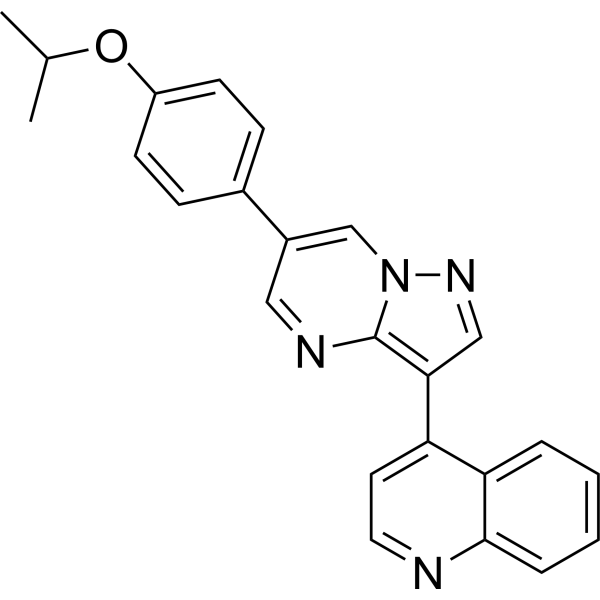
DMH-1 (GMP) is GMP grade DMH-1 (HY-12273). DMH-1 (GMP) is a selective BMP inhibitor. DMH-1 (GMP) upregulates the expression of SOX1. DMH-1 (GMP) increases cardiomyocyte progenitor cells and promotes the differentiation of mouse embryonic stem cells into cardiomyocytes. DMH-1 (GMP) induces the differentiation of hiPSC-derived neural progenitor cells into β3-tubulin-positive neurons.
Para uso exclusivo en investigación. No vendemos a pacientes.
- No. CAS: 1206711-16-1
- Fòrmula: C24H20N4O
- Peso molecular:380.44
-
Almacenamiento:
Please store the product under the recommended conditions in the Certificate of Analysis.


To place orders, for customer services and technical support, please contact: MedChemExpress USA
Tel: 609-228-6898 E-mail: [email protected] [email protected]


-
 Actividad biológica
-
Chemical Information
- Protocolo
- Pureza y Documentación
- Referencias
-
 Help & FAQs


-
HY-12273
DMH-1BMP Inhibitor -

HY-12273R
DMH-1 (Standard)Standard of DMH-1 -
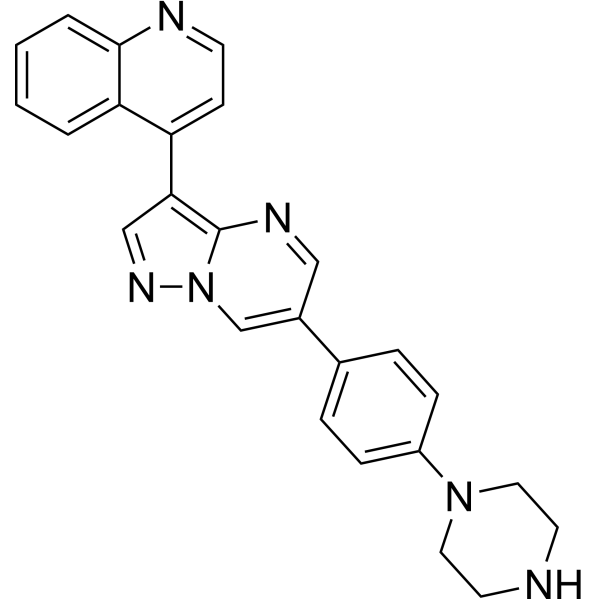
HY-12071
LDN193189ALK2/3 Inhibitor -
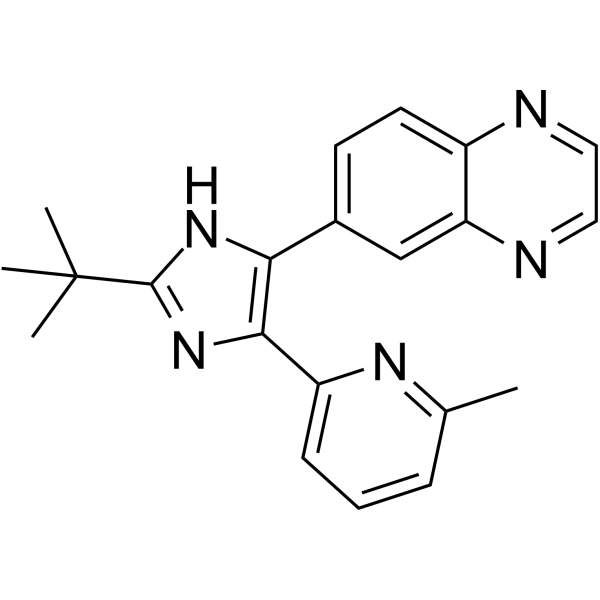
HY-12043
SB 525334ALK5 Inhibitor -
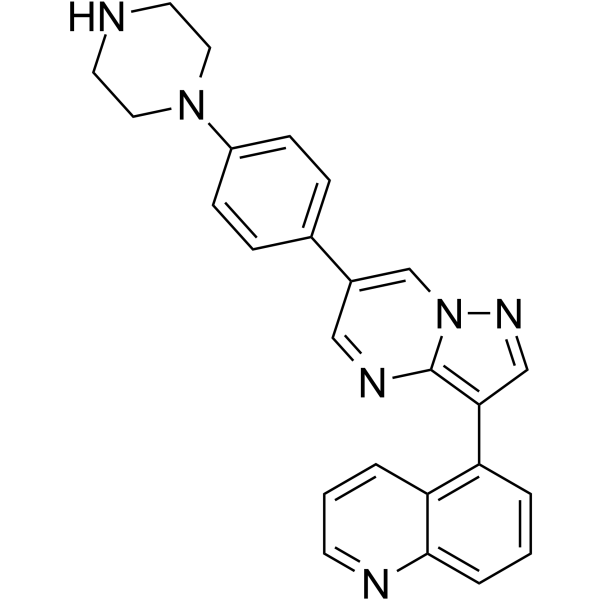
HY-15897
LDN-212854ALK2 Inhibitor -
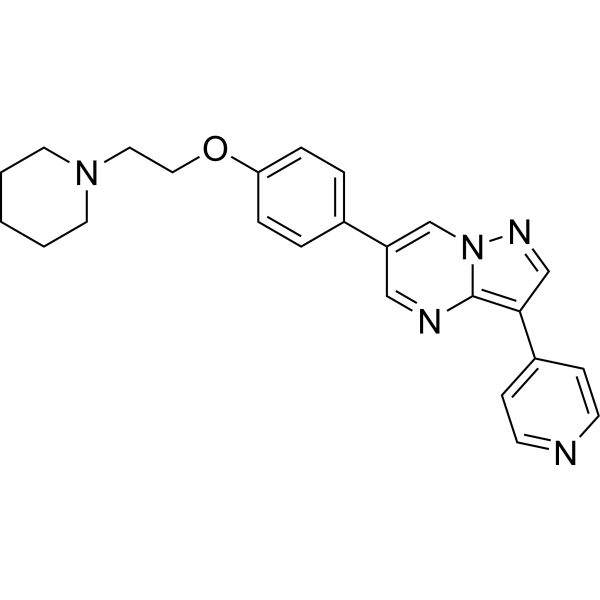
HY-13418A
DorsomorphinAMPK Inhibitor -
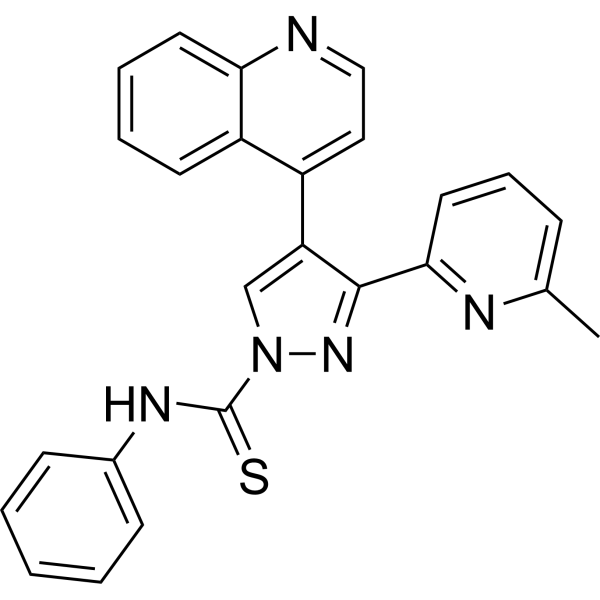
HY-10432
A 83-01ALK4/5/7 Inhibitor -
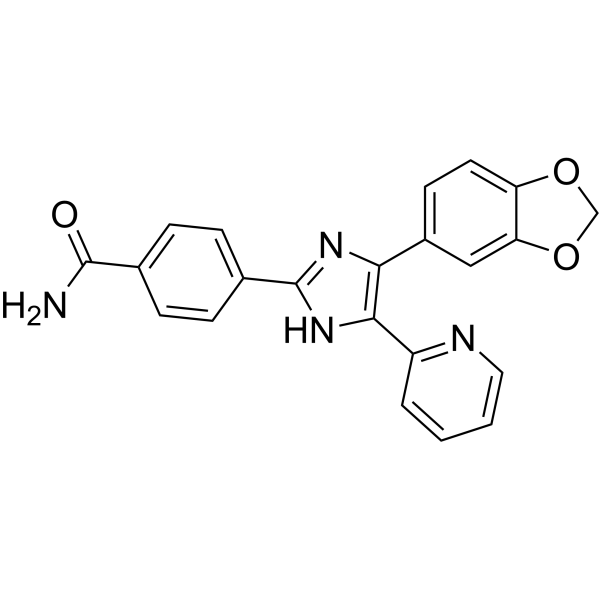
HY-10431
SB-431542TGF-β Receptor Kinase Inhibitor -
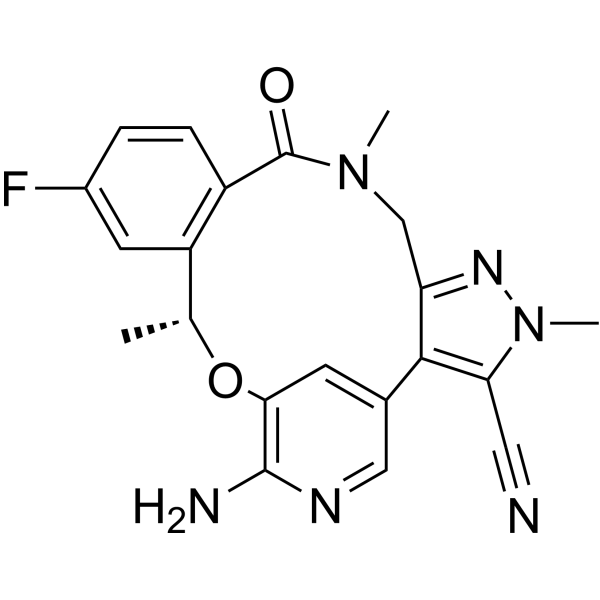
HY-12215
LorlatinibALK/ROS1 Inhibitor -
HY-13012
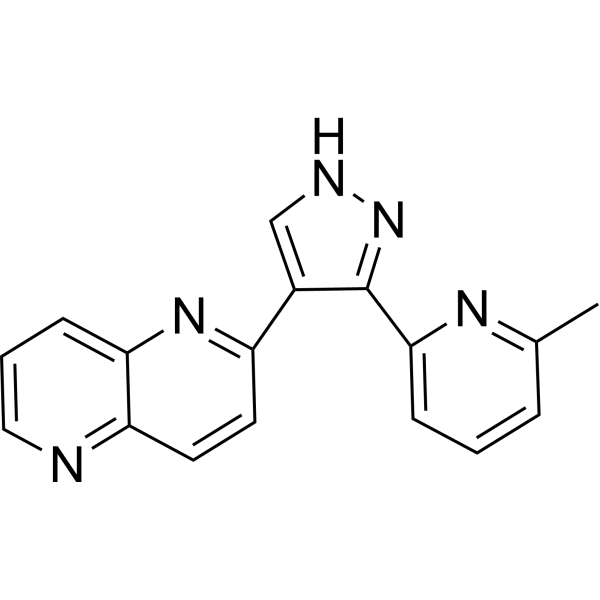
RepSoxTGFβR-1/ALK5 Inhibitor -
HY-12071G
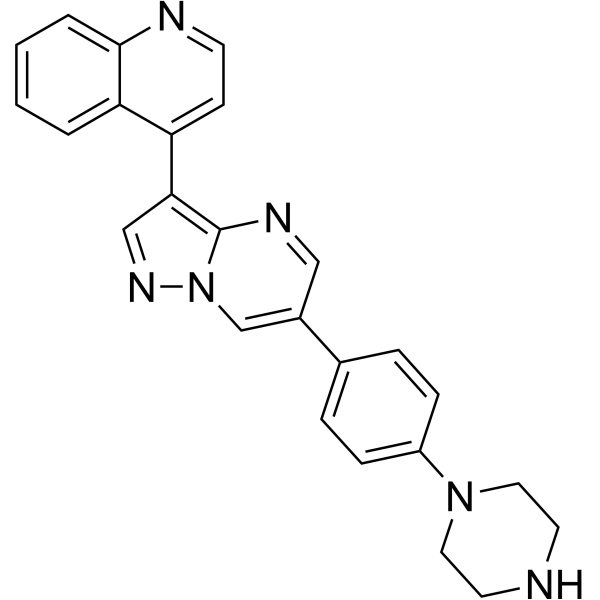
LDN193189 (GMP)ALK2/3 Inhibitor -
HY-12278
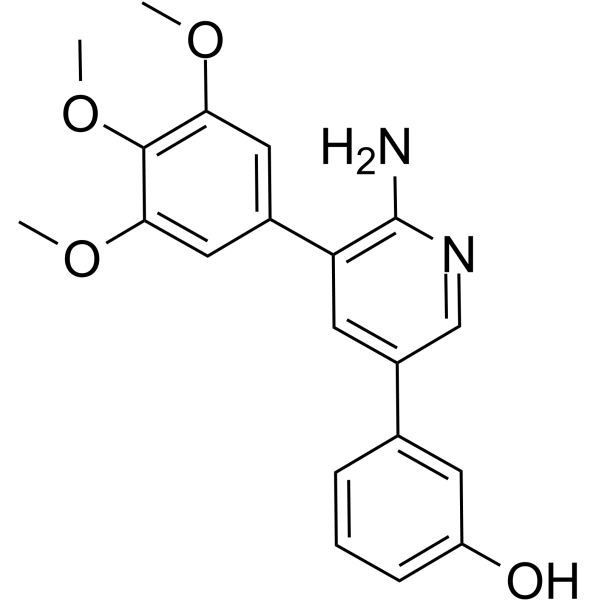
K02288BMPI Inhibitor


Actividad biológica
Descripciòn
IC50 & Target
[1]|
BMP |
In Vitro
DMH-1 (GMP) (0.5 μM) induces the formation of beating embryoid bodies (EBs), with an efficiency of approximately 20% on day 7, peaking at approximately 75% on day 9. Its efficiency at all evaluated time points is significantly higher than that of the DMSO control group[1].
DMH-1 (GMP) (0.5 μM) specifically upregulates the expression profile of canonical cardiogenic genes, including BryT, Mesp1, Isl1 and Nkx2.5, and does not significantly induce the expression of non-cardiomyocyte mesodermal, endodermal or ectodermal markers compared with the DMSO control group[1].
DMH-1 (GMP) (0.5 μM; 24-48 h) does not induce cell apoptosis[1].
DMH-1 (GMP) (0.5-10 μM; 7 days) increases the expression of SOX1 in hiPSCs in a concentration-dependent manner[2].
DMH-1 (GMP) (0.5 μM) induces hiPSC-derived neural progenitor cells to differentiate into β3-tubulin-positive neurons[2].
MedChemExpress (MCE) has not independently confirmed the accuracy of these methods. They are for reference only. Further protocols information, click here.
-
Cell Line:CGR8 mouse embryonic stem cell-derived EBs
-
Concentration:0.5 μM
-
Incubation Time:from induction, assessed at Day 3, Day 4, Day 6, Day 8, Day 10
-
Result:Significantly upregulated pre-mesoderm marker BryT (Day 3, Day 4), mesoderm lineage marker Mesp1 (Day 3, Day 4), second heart field marker Isl1 (Day 3, Day 4), and cardiomyocyte-specific marker Nkx2.5 (Day 6, Day 8, Day 10) relative to DMSO vehicle control.
Did not specifically induce hematopoietic marker Gata1, multipotent progenitor marker Kdr/Flk-1, smooth muscle marker Myh11, endoderm markers Sox17 or FoxA2, or ectoderm marker Nestin relative to DMSO vehicle control.
Induced a modest 2.3-fold increase in endocardial marker VE-CAM on Day 10 relative to DMSO.


Chemical Information
-
No. CAS 1206711-16-1
-
Peso molecular 380.44
-
Fòrmula C24H20N4O
-
SMILES
CC(C)OC1=CC=C(C2=CN3C(N=C2)=C(C4=CC=NC5=CC=CC=C45)C=N3)C=C1
-
Envío
Room temperature in continental US; may vary elsewhere.
-
Almacenamiento
Please store the product under the recommended conditions in the Certificate of Analysis.

Protocolo
-
RNA extraction experimental
By lysing cells, releasing RNA, and removing impurities such as proteins and DNA, high-purity RNA products are finally obtained. The commonly used traditional method is the guanidine isothiocyanate/phenol/chloroform method (Trizol), which is suitable for a variety of animal materials including animal tissues, microorganisms, cultured cells, etc., and most plant materials.
-
Human pluripotent stem cell neural induction and neuron differentiation
Human pluripotent stem cell neural induction can be achieved by blocking BMP and TGFβ/Activin/Nodal SMAD signaling, which suppresses non-neural differentiation and promotes early neuroectodermal identity; the expected readout is loss of pluripotency markers such as OCT4 and induction of neural markers such as PAX6, followed by neural progenitor and neuron marker acquisition during differentiation. This protocol uses dual-SMAD neural induction as the core induction method, followed by cortical neuron differentiation as a representative neuron differentiation model; published cortical protocols describe generation of cortical progenitors, temporally ordered cortical projection neurons, action-potential firing, synaptogenesis, and neural network formation over an approximately 80-day process.


Pureza y Documentación
-
Ficha de datos (276 KB)
-
SDS (252 KB)
- Français - FR (252 KB)
- Deutsch - DE (252 KB)
- Norwegian - NO (252 KB)
- Español - ES (252 KB)
- Swedish - SV (252 KB)
- Italian - IT (252 KB)
- Korean - KR (252 KB)
- Portuguese - PT (252 KB)
-
Instrucciones de manejo (2659 KB)
Referencias
[1]. Ao A, et al. DMH1, a novel BMP small molecule inhibitor, increases cardiomyocyte progenitors and promotes cardiac differentiation in mouse embryonic stem cells. PLoS One. 2012;7(7):e41627. [Content Brief]
[2]. Neely MD, et al. DMH1, a highly selective small molecule BMP inhibitor promotes neurogenesis of hiPSCs: comparison of PAX6 and SOX1 expression during neural induction. ACS Chem Neurosci. 2012;3(6):482-491. [Content Brief]

Calculators
Concentration (start) × Volume (start) = Concentration (final) × Volume (final)


DMH-1 (GMP) Related Classifications
HY-12273G Related Classifications
 Powered by Bioz