



Trifluralin (Standard)
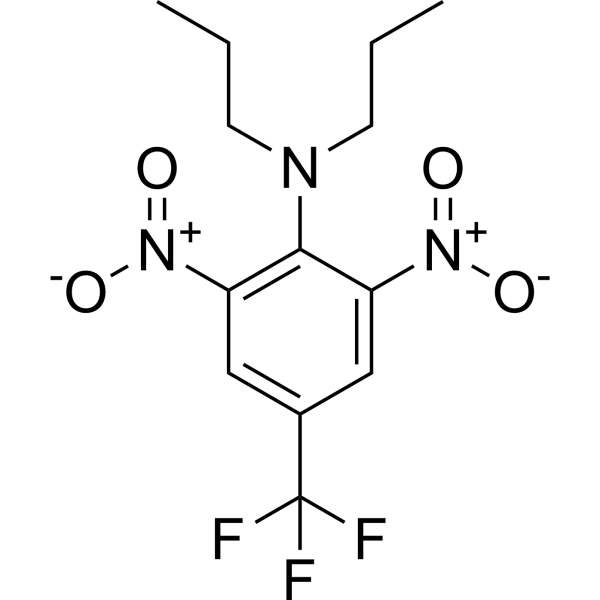
Trifluralin (Standard) is the analytical standard of Trifluralin. This product is intended for research and analytical applications. Trifluralin is a selective, preemergence, soil-applied herbicide providing control of many important annual grass and broadleaf weed species. Trifluralin prevents weed growth by inhibiting root development through the interruption of mitosis. Trifluralin binds to tubulin and results in the failure of spindle apparatus and cell plate formation. Trifluralin inhibits radicle development on roots. Trifluralin inhibits cell mitosis. Trifluralin is considered to be neurotoxic and haematotoxic.
For research use only. We do not sell to patients.
- Purity : 95%
- CAS No.: 1582-09-8
- Formula: C13H16F3N3O4
- Molecular Weight:335.28
-
Storage:
Please store the product under the recommended conditions in the Certificate of Analysis.


To place orders, for customer services and technical support, please contact: MedChemExpress USA
Tel: 609-228-6898 E-mail: [email protected] [email protected]


-
 Product Information
-
Chemical Information
- Purity & Documentation
-
 Help & FAQs


-
HY-B2050
TrifluralinPre-Emergence Herbicide -
HY-B0863
GlyphosateEPSPS Inhibitor -
HY-B0863R
Glyphosate (Standard)Herbicide -
HY-W019870
Glufosinate ammoniumHerbicide -
HY-B0862
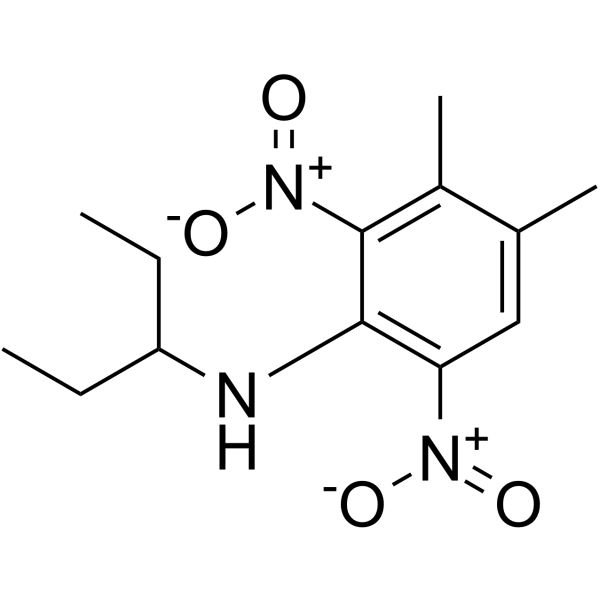
PendimethalinHerbicide -
HY-B2046
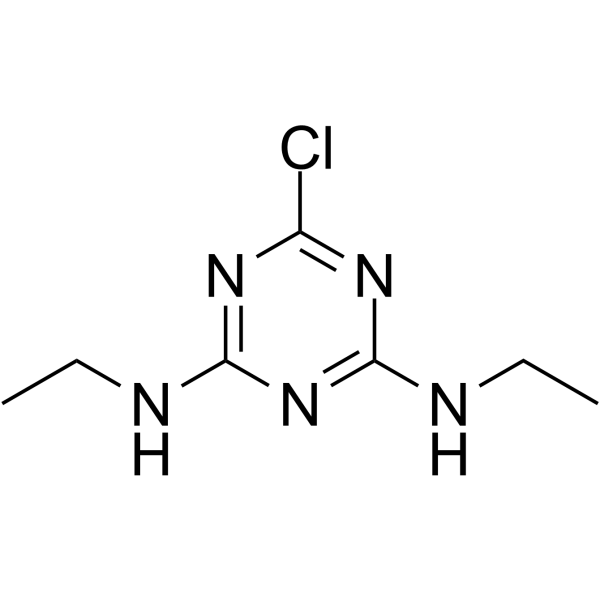
SimazineHerbicide -
HY-112820
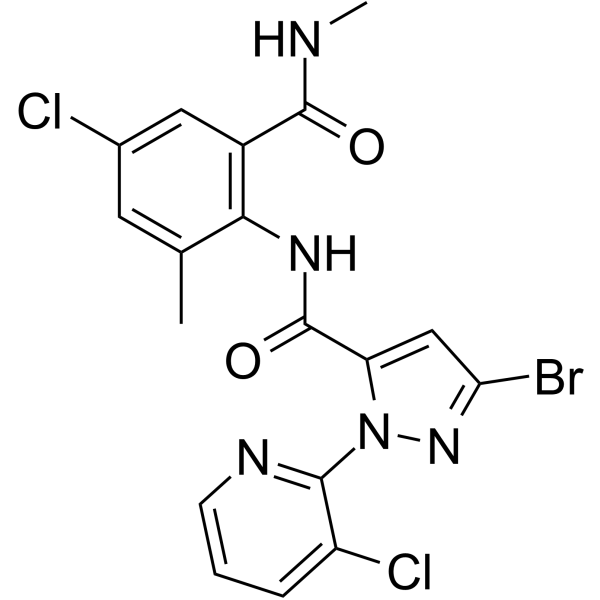
ChlorantraniliproleInsecticide -
HY-121324
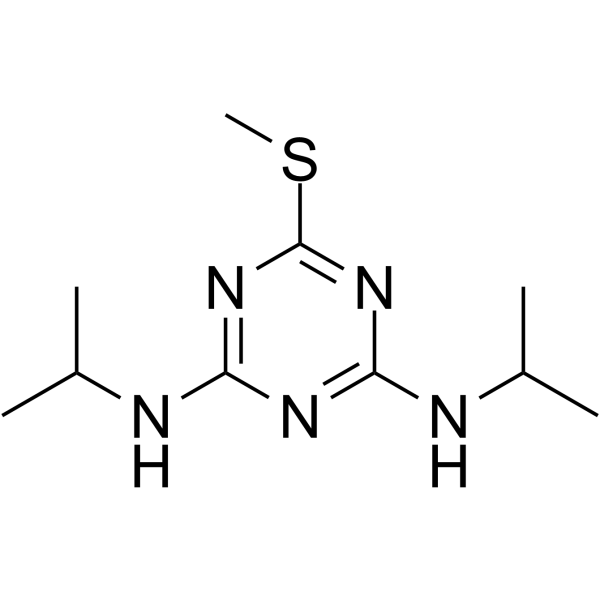
PrometrynHerbicide -
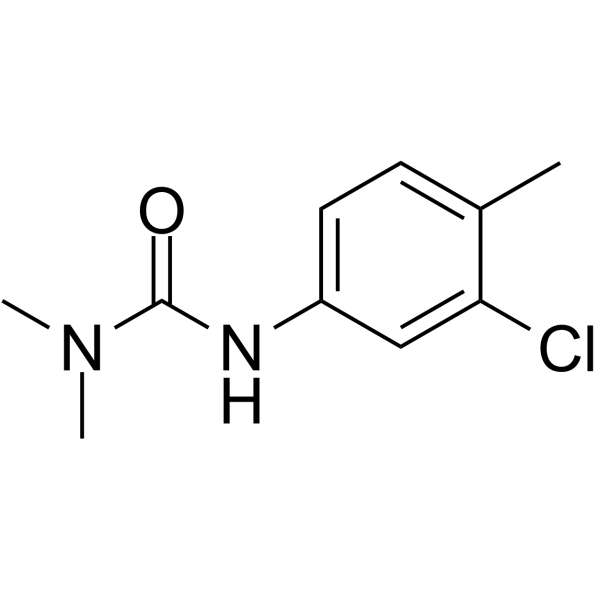
HY-B2023
ChlorotoluronHerbicide -
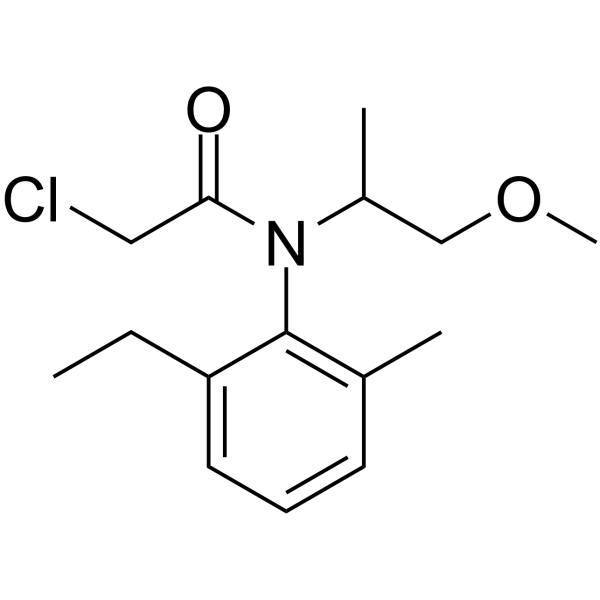
HY-B1871
MetolachlorHerbicide -
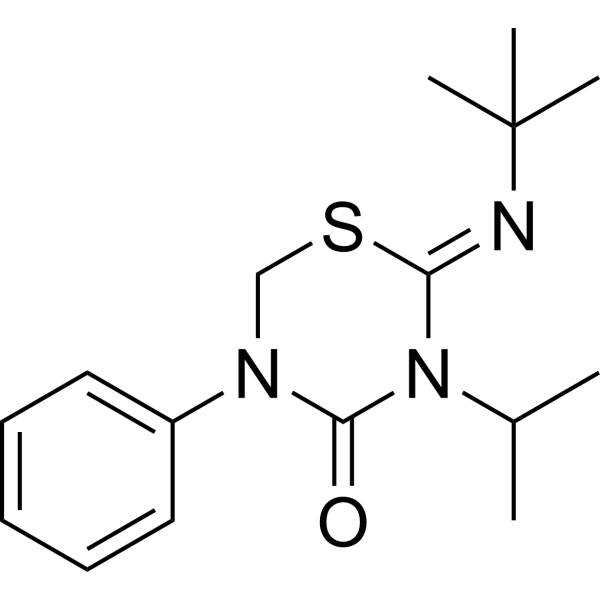
HY-B0831
BuprofezinChitin Synthesis Inhibitor -
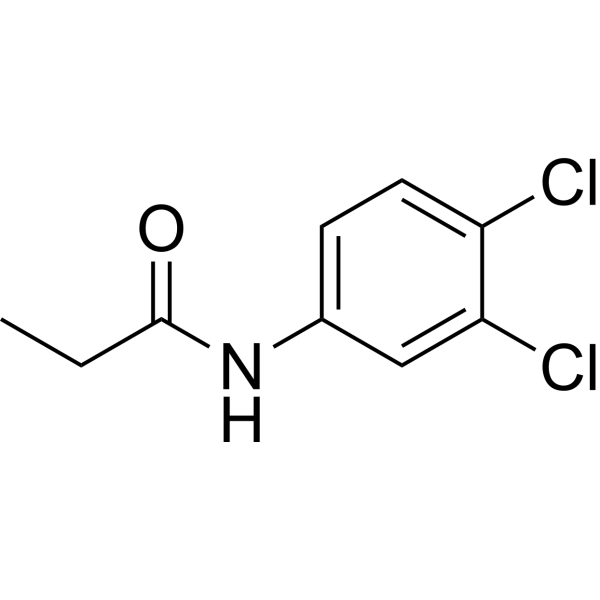
HY-B2030
PropanilHerbicide


Product Information
Information
Application
The compound is the grade of analytical standard, which is the reference standard supplied assay. It is commonly used in qualitative, quantitative and methodological research experiments in HPLC, GC and MS.


Chemical Information
-
CAS No. 1582-09-8
-
Molecular Weight 335.28
-
Formula C13H16F3N3O4
-
SMILES
FC(C1=CC([N+]([O-])=O)=C(N(CCC)CCC)C([N+]([O-])=O)=C1)(F)F
-
Shipping
Room temperature in continental US; may vary elsewhere.
-
Storage
Please store the product under the recommended conditions in the Certificate of Analysis.


Purity & Documentation
References
[1]. Grover, R., et al., (1997). Environmental fate of trifluralin. Reviews of environmental contamination and toxicology, 153, 1–64. [Content Brief]
[3]. Ebert, E., et al., (1992). Toxicology and hazard potential of trifluralin. Food and chemical toxicology : an international journal published for the British Industrial Biological Research Association, 30(12), 1031–1044. [Content Brief]
[4]. Poleksić, V., & Karan, V. (1999). Effects of trifluralin on carp: biochemical and histological evaluation. Ecotoxicology and environmental safety, 43(2), 213–221. [Content Brief]

Calculators
Concentration (start) × Volume (start) = Concentration (final) × Volume (final)


Trifluralin (Standard) Related Classifications
HY-B2050R Related Classifications
 Powered by Bioz