



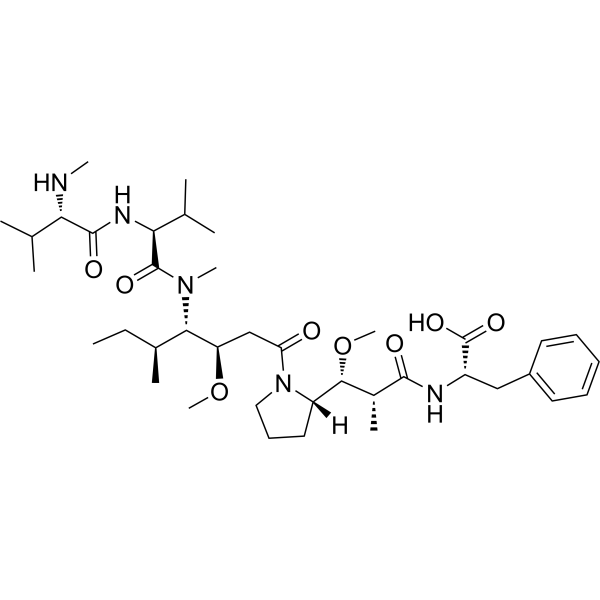
MMAF (Monomethylauristatin F) GMP is a GMP grade MMAF (HY-15579). GMP small molecules works appropriately as an auxiliary reagent for cell therapy manufacture. MMAF (Monomethylauristatin F) is a potent tubulin polymerization inhibitor and is used as a antitumor agent. MMAF (Monomethylauristatin F) is widely used as a cytotoxic component of antibody-drug conjugates (ADCs) such as vorsetuzumab mafodotin and SGN-CD19A.
For research use only. We do not sell to patients.
- CAS No.: 745017-94-1
- Formula: C39H65N5O8
- Molecular Weight:731.96
-
Storage:
Please store the product under the recommended conditions in the Certificate of Analysis.

To place orders, for customer services and technical support, please contact: MedChemExpress USA
Tel: 609-228-6898 E-mail: [email protected] [email protected]


-
 Biological Activity
-
Chemical Information
- Protocols
- Purity & Documentation
- References
-
 Help & FAQs


-
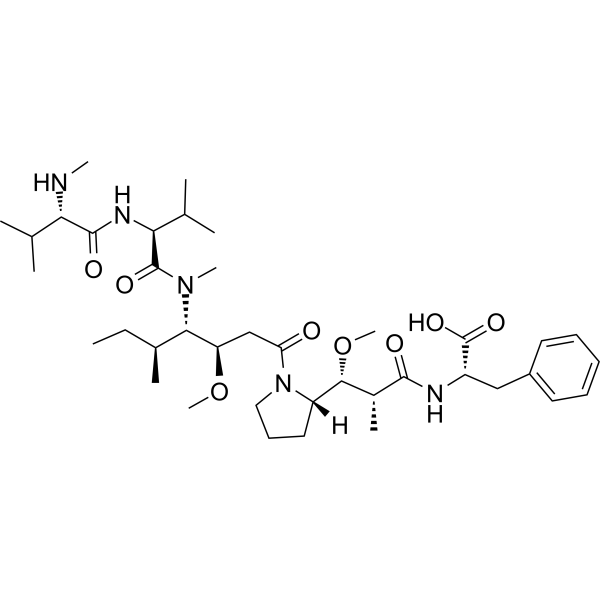
HY-15579
MMAFTubulin Inhibitor -
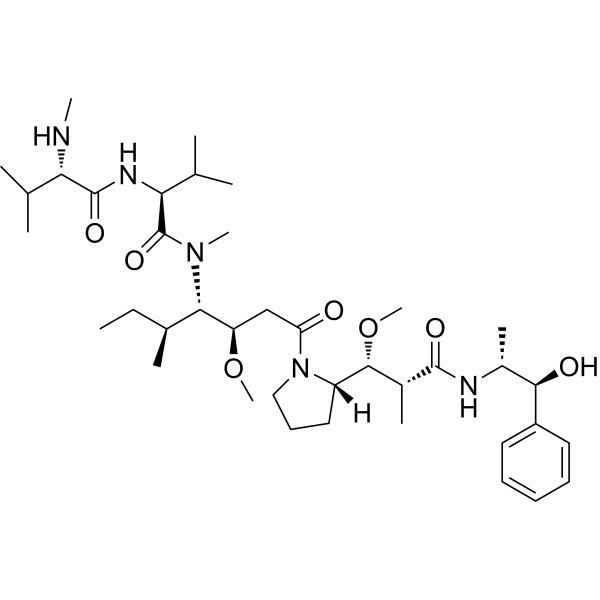
HY-15162
Monomethyl auristatin EAntimitotic Agent -
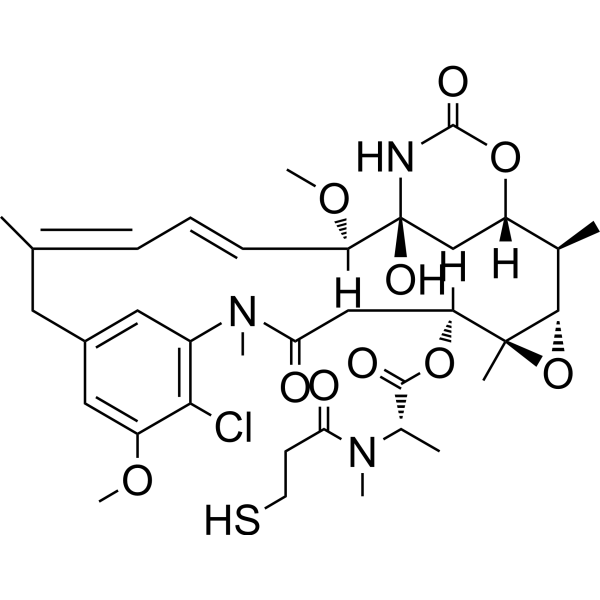
HY-19792
MertansineMicrotubule-Targeted Cytotoxin -
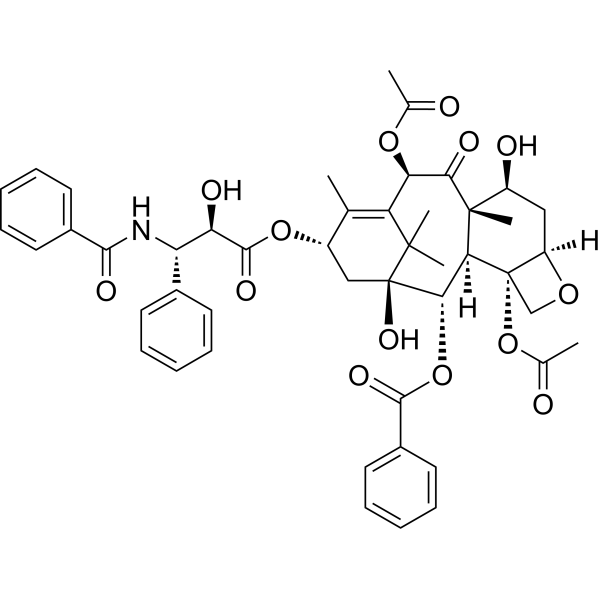
HY-B0015
PaclitaxelAntitumor Agent -

HY-15162R
Monomethyl auristatin E (Standard)Analytical Standard -
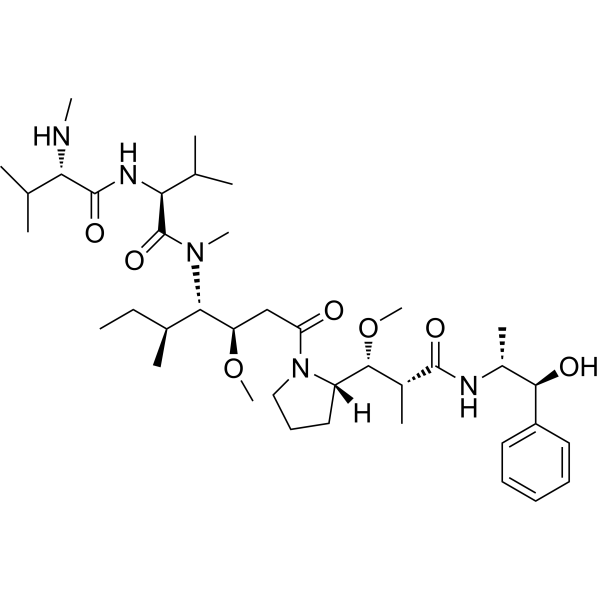
HY-15162G
Monomethyl auristatin E (GMP)GMP-Grade MMAE -

HY-B0015R
Paclitaxel (Standard)Antitumor Agent -
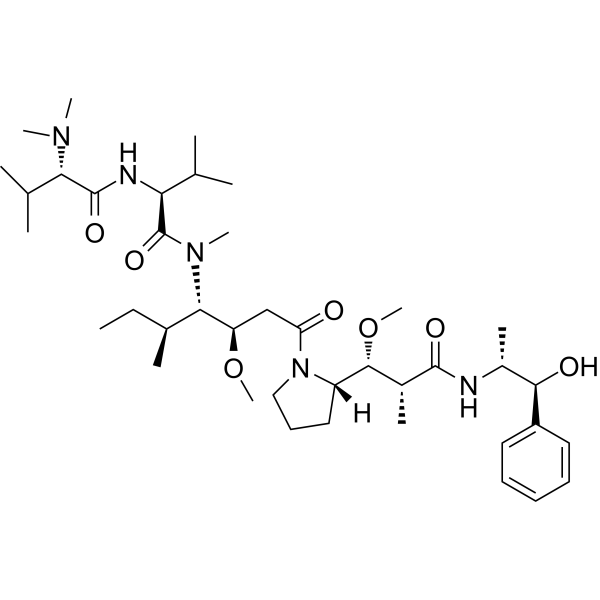
HY-15582
Auristatin ETubulin Modifier, Antibody-drug Conjugates -
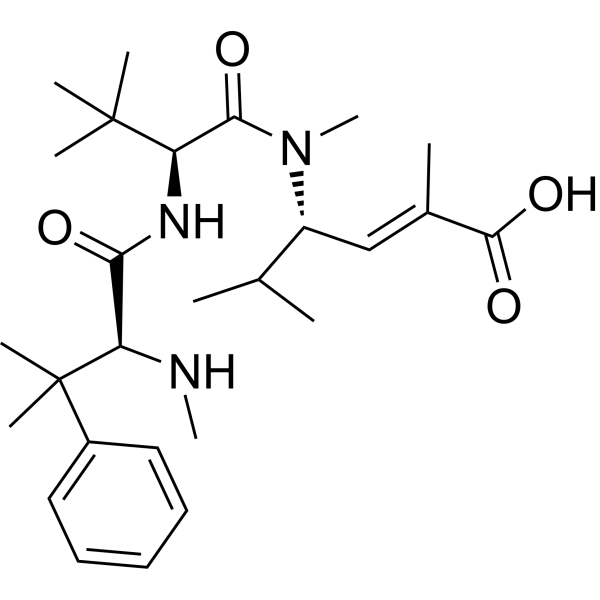
HY-15584
TaltobulinTubulin Inhibitor -
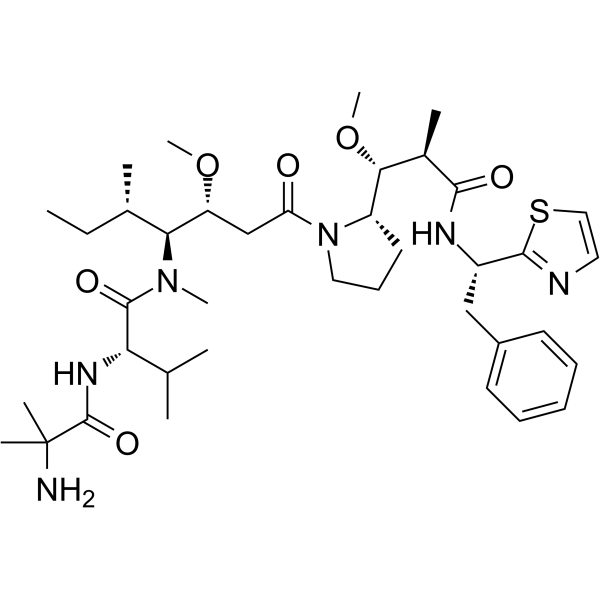
HY-12522
PF-06380101Microtubule Inhibitor -
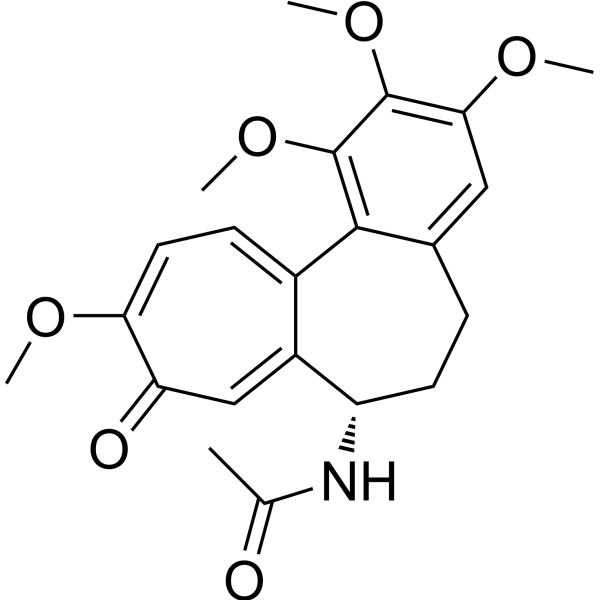
HY-16569
ColchicineTubulin Inhibitor -
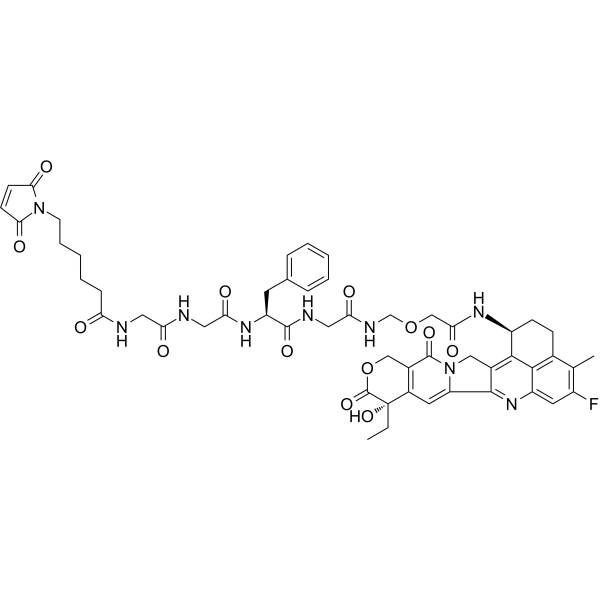
HY-13631E
DeruxtecanDrug-Linker Conjugates for ADC


Biological Activity
Description
IC50 & Target
IC50: 119 nM (Cytotoxicity, Karpas 299 cell), 105 nM (Cytotoxicity, H3396 cell), 257 nM (Cytotoxicity, 786-O cell), 200 nM (Cytotoxicity, Caki-1, cell)[4]
Cellular Effect
|
Cell Line

|
Type | Value | Description | References |
|---|---|---|---|---|
| BT-474 | GI50 |
0.24 nM
Compound: 6-OMe, MMAF-OMe
|
Cytotoxicity against human BT474 cells assessed as cell viability incubated fore 4 days by MTS assay
Cytotoxicity against human BT474 cells assessed as cell viability incubated fore 4 days by MTS assay
|
[PMID: 25431858] |
| BT-474 | IC50 |
8.8 nM
Compound: MMAF
|
Cytotoxicity against human BT-474 cells assessed as reduction in cell viability incubated for 96 hrs by XTT assay
Cytotoxicity against human BT-474 cells assessed as reduction in cell viability incubated for 96 hrs by XTT assay
|
[PMID: 34676042] |
| H3396 | IC50 |
105 nM
Compound: 39; MMAF
|
Cytotoxicity against human H3396 cells assessed as cell growth inhibition
Cytotoxicity against human H3396 cells assessed as cell growth inhibition
|
[PMID: 35072477] |
| H3396 | IC50 |
105 nM
Compound: 4; MMAF
|
Cytotoxicity against human H3396 cells assessed as inhibition of cell growth incubated for 96 hrs by Alamar blue assay
Cytotoxicity against human H3396 cells assessed as inhibition of cell growth incubated for 96 hrs by Alamar blue assay
|
[PMID: 39068862] |
| HCT-116 | IC50 |
2.88 μM
Compound: 39; MMAF
|
Cytotoxicity against human HCT-116 cells assessed as reduction inc cell viability
Cytotoxicity against human HCT-116 cells assessed as reduction inc cell viability
|
[PMID: 35072477] |
| HL-60 | IC50 |
137 nM
Compound: 39; MMAF
|
Cytotoxicity against P-gp negative human HL-60 cells assessed as reduction inc cell viability
Cytotoxicity against P-gp negative human HL-60 cells assessed as reduction inc cell viability
|
[PMID: 35072477] |
| HT-29 | IC50 |
10 nM
Compound: 39; MMAF
|
Cytotoxicity against human HT-29 cells assessed as cell growth inhibition
Cytotoxicity against human HT-29 cells assessed as cell growth inhibition
|
[PMID: 35072477] |
| MDA-MB-361 | GI50 |
0.21 nM
Compound: 6-OMe, MMAF-OMe
|
Cytotoxicity against human MDA-MB-361 cells assessed as cell viability incubated fore 4 days by MTS assay
Cytotoxicity against human MDA-MB-361 cells assessed as cell viability incubated fore 4 days by MTS assay
|
[PMID: 25431858] |
| NCI-N87 | GI50 |
0.44 nM
Compound: 6-OMe, MMAF-OMe
|
Cytotoxicity against human NCI-N87 cells assessed as cell viability incubated fore 4 days by MTS assay
Cytotoxicity against human NCI-N87 cells assessed as cell viability incubated fore 4 days by MTS assay
|
[PMID: 25431858] |
| SK-BR-3 | IC50 |
5.3 nM
Compound: MMAF
|
Cytotoxicity against human SKBR3 cells assessed as reduction in cell viability incubated for 96 hrs by XTT assay
Cytotoxicity against human SKBR3 cells assessed as reduction in cell viability incubated for 96 hrs by XTT assay
|
[PMID: 34676042] |
In Vitro
MMAF inhibits anaplastic large cell lymphoma Karpas 299, breast carcinoma H3396, renal cell carcinoma 786-O and Caki-1 cells with IC50s of 119, 105, 257 and 200 nM in vitro cytotoxicity assay[4].
MedChemExpress (MCE) has not independently confirmed the accuracy of these methods. They are for reference only. Further protocols information, click here.
In Vivo
MedChemExpress (MCE) has not independently confirmed the accuracy of these methods. They are for reference only.


Chemical Information
-
CAS No. 745017-94-1
-
Appearance Solid
-
Molecular Weight 731.96
-
Formula C39H65N5O8
-
Color White to off-white
-
SMILES
CC(C)[C@H](NC)C(N[C@H](C(N([C@@H]([C@@H](C)CC)[C@H](OC)CC(N1CCC[C@@]1([H])[C@H](OC)[C@@H](C)C(N[C@H](C(O)=O)CC2=CC=CC=C2)=O)=O)C)=O)C(C)C)=O
-
Synonyms
Monomethylauristatin F (GMP)
-
Shipping
Room temperature in continental US; may vary elsewhere.
-
Storage
Please store the product under the recommended conditions in the Certificate of Analysis.

Protocols
-
Cell Viability Determination by MTT Colorimetric Assay
The following protocol uses the MTT colorimetric assay as a classic literature-established method for assessing cell viability/metabolic activity in cultured mammalian cells. MTT[3-(4,5-dimethylthiazol-2-yl)-2,5-diphenyltetrazolium bromide] is reduced by metabolically active cells to a colored formazan product; the amount of formazan is quantified spectrophotometrically and provides an indirect measure of metabolically active viable cells. Importantly, MTT reduction reflects cellular oxidoreductase/metabolic activity rather than an absolute direct count of living cells, so changes in cellular metabolism can alter the signal independently of cell number.


Purity & Documentation
-
Data Sheet (275 KB)
-
SDS (252 KB)
- Français - FR (252 KB)
- Deutsch - DE (252 KB)
- Norwegian - NO (252 KB)
- Español - ES (252 KB)
- Swedish - SV (252 KB)
- Italian - IT (252 KB)
- Korean - KR (252 KB)
- Portuguese - PT (252 KB)
-
Handling Instructions (2659 KB)
References
[1]. Doronina SO, et al. Enhanced activity of monomethylauristatin F through monoclonal antibody delivery: effects of linker technology on efficacy and toxicity. Bioconjug Chem. 2006 Jan-Feb;17(1):114-24. [Content Brief]
[2]. Lee JW, et al. EphA2 targeted chemotherapy using an antibody drug conjugate in endometrial carcinoma. Clin Cancer Res. 2010 May 1;16(9):2562-70. [Content Brief]
[3]. Lee JJ, et al. Enzymatic prenylation and oxime ligation for the synthesis of stable and homogeneous protein-drug conjugates for targeted therapy. Angew Chem Int Ed Engl. 2015 Oct 5;54(41):12020-4. [Content Brief]
[4]. Kim EG, et al. Strategies and Advancement in Antibody-Drug Conjugate Optimization for Targeted CancerTherapeutics. [Content Brief]

Calculators
Concentration (start) × Volume (start) = Concentration (final) × Volume (final)


MMAF (GMP) Related Classifications
HY-15579G Related Classifications
 Powered by Bioz