1. Search Result
Search Result
Results for "

dehydrogenases

" in MedChemExpress (MCE) Product Catalog:

1083

Inhibitors & Agonists

1

Screening Libraries

9

Fluorescent Dyes

21

Biochemical Assay Reagents

11

Peptides

1

MCE Kits

164

Natural
Products

53

Isotope-Labeled Compounds

5

Click Chemistry

10

Oligonucleotides

Targets Recommended:
Cat. No. Product Name Target Research Areas Chemical Structure
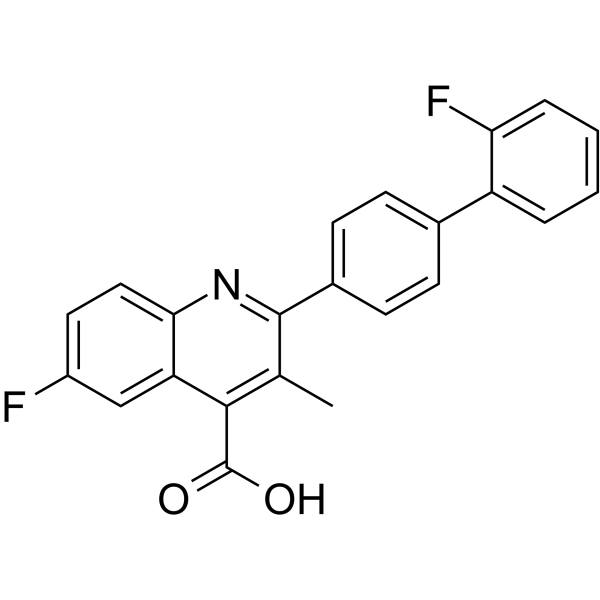
  • HY-Y0445A
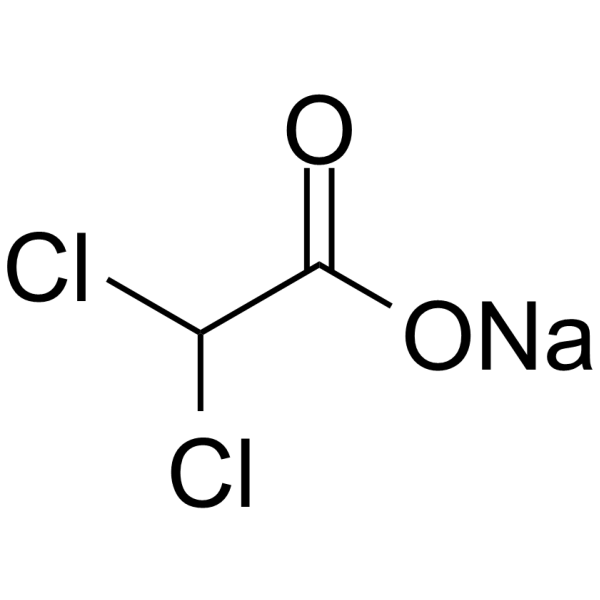
    Sodium dichloroacetate
    25+ Cited Publications

    PDK-1 NKCC PDHK Reactive Oxygen Species (ROS) Apoptosis Cancer
    Sodium dichloroacetate is an orally active pyruvate dehydrogenase kinase (PDK) inhibitor. Sodium dichloroacetate also stimulates pyruvate dehydrogenase (PDH) activity and works as a Na +-K +-2Cl cotransporter (NKCC) inhibitor. Sodium dichloroacetate prevents the phosphorylation of the E1α subunit of PDC, promoting the entry of pyruvate into the mitochondria for oxidative metabolism, reducing lactate production, and simultaneously increasing the production of reactive oxygen species (ROS). Sodium dichloroacetate inhibits tumor cell proliferation and induces apoptosis. Sodium dichloroacetate is promising for research of cancers .
    Sodium dichloroacetate
  • HY-15925
    Nitro blue tetrazolium chloride
    Maximum Cited Publications
    6 Publications Verification

    NBT

    Fluorescent Dye Others
    Nitro blue tetrazolium chloride (NBT) is a substrate for dehydrogenases; is used with the alkaline phosphatase substrate 5-Bromo-4-Chloro-3-Indolyl Phosphate (BCIP) in western blotting and immunohistological staining procedures .
    Nitro blue tetrazolium chloride
  • HY-137592

    ε-NAD

    Fluorescent Dye Phosphodiesterase (PDE) Glutamate Dehydrogenase (GLDH) Others
    Nicotinamide 1,N6-ethenoadenine dinucleotide (ε-NAD) is a fluorescent analog of NAD. Nicotinamide 1,N6-ethenoadenine dinucleotide can be cleaved by phosphodiesterase I (from C. adamanteus venom) and binds to bovine liver glutamate dehydrogenase. Nicotinamide 1,N6-ethenoadenine dinucleotide can serve as a substrate for G-ADP ribosylation of G proteins catalyzed by bacterial toxins. Nicotinamide 1,N6-ethenoadenine dinucleotide can be used as a fluorescent substrate for the study of ADP ribosylation reactions .
    Nicotinamide 1,N6-ethenoadenine dinucleotide
  • HY-B0876
    Fomepizole
    4 Publications Verification

    4-Methylpyrazole

    Cytochrome P450 Metabolic Disease
    Fomepizole (4-Methylpyrazole) is a potent cytochrome P450 (CYP2E1) inhibitor. Fomepizole is a competitive inhibitor of the enzyme alcohol dehydrogenase. Fomepizole blocks further conversion of methanol and ethylene glycol to toxic metabolites. Fomepizole has the potential for an antidote for ethylene glycol or methanol poisoning .
    Fomepizole
  • HY-W012926
    Dihydrouracil
    1 Publications Verification

    5,6-Dihydrouracil

    Endogenous Metabolite Metabolic Disease
    Dihydrouracil (5,6-Dihydrouracil), a metabolite of Uracil, can be used as a marker for identification of dihydropyrimidine dehydrogenase (DPD)-deficient .
    Dihydrouracil
  • HY-W010450
    Thymine
    1 Publications Verification

    Endogenous Metabolite Metabolic Disease Cancer
    Thymine, one of the four bases of DNA, is a substrate for rat liver dihydropyrimidine dehydrogenase (DPD), with a Km value of 2.2 μM, Ki of 24 μM (using 5-FU as the DPD substrate), and a specific activity of 0.68 nmol/min/mg .
    Thymine
  • HY-P2807I

    Lactate Dehydrogenase Others
    L-Lactate Dehydrogenase, rabbit muscle is a biological material or organic compound that can be used in life science research .
    L-Lactate Dehydrogenase, rabbit muscle
  • HY-W004784

    Endogenous Metabolite Others
    3-Butynoic acid is an inhibitor of acyl CoA dehydrogenase. 3-Butynoic acid is a click chemistry reagent, it contains an Alkyne group and can undergo copper-catalyzed azide-alkyne cycloaddition (CuAAc) with molecules containing Azide groups. 3-Butynoic acid can reduce the formation of propionate and acrylic acid concentration-dependently .
    3-Butynoic acid
  • HY-76006

    M-Hydroxybenzaldehyde

    Aldehyde Dehydrogenase (ALDH) NF-κB p38 MAPK Cardiovascular Disease Inflammation/Immunology
    3-Hydroxybenzaldehyde (3-HBA) is a precursor compound for phenolic compounds like Protocatechuic aldehyde (PCA) (HY-N0295). 3-Hydroxybenzaldehyde, produced by 3-hydroxybenzyl-alcohol dehydrogenase, is a substrate of aldehyde dehydrogenase (ALDH) in rats and humans. 3-Hydroxybenzaldehyde has vasculoprotective effects in vitro and in vivo. 3-Hydroxybenzaldehyde is proming for research of atherosclerosis .
    3-Hydroxybenzaldehyde
  • HY-134421

    HMG-CoA Reductase (HMGCR) Metabolic Disease
    2-Butenoyl coenzyme A lithium is an inactivator and a substrate of Plasmodium falciparum enoyl-β-hydroxyacyl-acyl carrier protein (ACP) reductase and other enoyl-CoA reductases, and it is also the lithium salt of trans-2-methyl-2-butenoyl coenzyme A. 2-Butenoyl coenzyme A lithium acts on short-chain and medium-chain coenzyme A dehydrogenases as well as glutaryl-CoA dehydrogenase, and shows no activity against wild-type isovaleryl-CoA dehydrogenase. 2-Butenoyl coenzyme A lithium functions as a metabolite in the L-isoleucine catabolic pathway, and can serve as a substrate in the activity assay of 3-ketothiolase. 2-Butenoyl coenzyme A lithium is applicable to research related to 3-ketothiolase deficiency .
    2-Butenoyl coenzyme A lithium
  • HY-116934
    5-Pentadecylresorcinol
    1 Publications Verification

    Adipostatin A

    Insecticide Infection Cancer
    5-Pentadecylresorcinol (Adipostatin A) is a glycerol-3-phosphate dehydrogenase (GPDH) inhibitor with an IC50 of 4.1 μM. Adipostatin A shows good larvicidal activity against Aedes aegypti .
    5-Pentadecylresorcinol
  • HY-148570
    PHGDH-IN-3
    1 Publications Verification

    Phosphoglycerate Dehydrogenase (PHGDH) Cancer
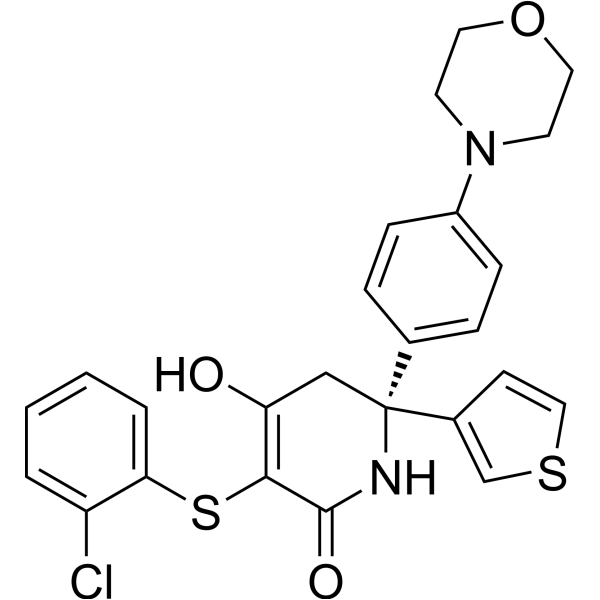
    PHGDH-IN-3 is an orally active phosphoglycerate dehydrogenase (PHGDH) inhibitor. PHGDH-IN-3 inhibits PHGDH with an IC50 value of 2.8 μM. PHGDH-IN-3 can be used for the research of cancer .
    PHGDH-IN-3
  • HY-D0007

    Tetrazolium blue

    Biochemical Assay Reagents Others
    Blue Tetrazolium is a tetrazolium salt chromogenic dye that can be reduced to a dark blue formazan product. Blue Tetrazolium is applicable for assays such as succinate dehydrogenase activity detection and reducing sugar quantification. Blue Tetrazolium also serves as a novel corrosion inhibitor for cold-rolled steel in hydrochloric acid solutions. Blue Tetrazolium has a broad wavelength range (480-600 nm), with the maximum absorbance observed at 540 nm .
    Blue Tetrazolium
  • HY-136882

    PDHK Cancer
    TM-1 is a potent inhibitor of pyruvate dehydrogenase kinase (PDHK1). TM-1 inhibits PDHK1 and PDHK2 with IC50s of 2.97 μM and 5.2 μM, respectively. TM-1 blocks pyruvate dehydrogenase complex (PDHC) phosphorylation, and inhibits cell proliferation .
    TM-1
  • HY-113098

    Lactate Dehydrogenase Drug Derivative Metabolic Disease
    2-Oxovaleric acid is an analog of Pyruvate and a substrate inhibitor of Lactate dehydrogenase, exhibiting substrate inhibitory activity against lactate dehydrogenase from Phycomyces blakesleeanus .
    2-Oxovaleric acid
  • HY-P3186A

    GDH-NAD

    Endogenous Metabolite Metabolic Disease
    NAD-dependent glucose dehydrogenase (GDH-NAD) is an oxidoreductase that uses NAD + as a coenzyme, specifically catalyzes the dehydrogenation of glucose to gluconolactone, and reduces NAD + to NADH. NAD-dependent glucose dehydrogenase exhibits favorable substrate selectivity and stability, and is not affected by oxygen .
    NAD-dependent Glucose dehydrogenase
  • HY-126003

    Aldehyde Dehydrogenase (ALDH) Cancer
    ALDH1A1-IN-2 (compound 297) is a potent inhibitor of aldehyde dehydrogenase 1a1 (aldh1a1). Aldehyde dehydrogenases (ALDH) constitute a family of enzymes that play a critical role in oxidizing various cytotoxic xenogenic and biogenic aldehydes. ALDH1A1-IN-2 has the potential for the research of cancer, inflammation, or obesity .
    ALDH1A1-IN-2
  • HY-122373

    Aldehyde Dehydrogenase (ALDH) Drug Derivative Metabolic Disease
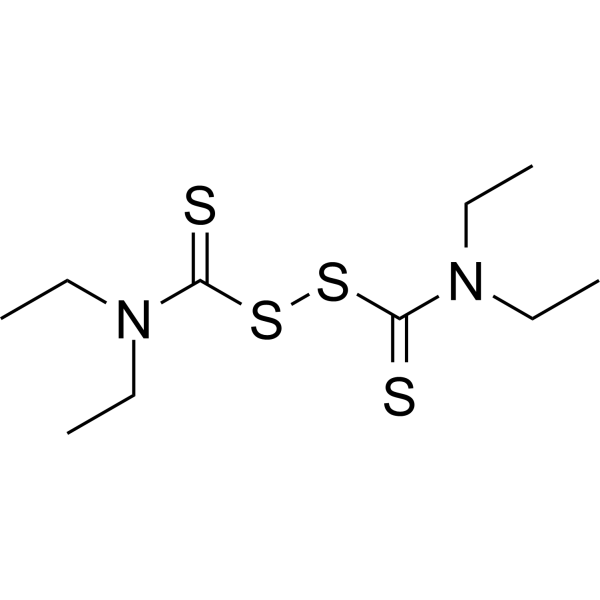
    Coprine is an orally active disulfiram (HY-B0240)-like component and an inhibitor of aldehyde dehydrogenase. Coprine is isolated from Coprinus atranentarius. Coprine inhibits low Km aldehyde dehydrogenase in rat liver and increases blood acetaldehyde levels during in vivo ethanol metabolism. Coprine does not inhibit semi-purified low Km aldehyde dehydrogenase from rat liver in vitro. Coprine can be used in studies related to alcoholism .
    Coprine
  • HY-128888

    Isocitrate Dehydrogenase (IDH) Cancer
    (R,R)-GSK321 is a wild-type isocitrate dehydrogenase 1 (WT IDH1) inhibitor with an IC50 value of 120 nM. (R,R)-GSK321 as a mutant R132H IDH1 inhibitor, is an isomer of GSK321 with some wild-type cross reactivity .
    (R,R)-GSK321
  • HY-131485

    3-APAD, 90%; 3-Acetylpyridine NAD, 90%

    Lactate Dehydrogenase Metabolic Disease
    3-Acetylpyridine adenine dinucleotide, 90% is an analog of nicotinamide adenine dinucleotide (NAD). 33-Acetylpyridine adenine dinucleotide, 90% collaboratively inhibits Lactate Dehydrogenase (LDH) with bisulfite .
    3-Acetylpyridine adenine dinucleotide, 90%
  • HY-41648

    Isocitrate Dehydrogenase (IDH) Cancer
    IDH1 Inhibitor 8 (91) is isocitrate dehydrogenase 1 (IDH1) inhibitor. IDH1 Inhibitor 8 can be used for the research of cancer .
    IDH1 Inhibitor 8
  • HY-135658

    Dihydroorotate Dehydrogenase DNA/RNA Synthesis Inflammation/Immunology
    hDHODH-IN-1 is a human dihydroorotate dehydrogenase (hDHODH) inhibitor. hDHODH-IN-1 has anti-inflammatory effect .
    hDHODH-IN-1
  • HY-135282

    Dihydroorotate Dehydrogenase DNA/RNA Synthesis Infection
    DHODH-IN-1 (compound 18d) is a potent Dihydroorotate Dehydrogenase (DHODH) inhibitor with an IC50 of 25 nM. DHODH-IN-1 is an inhibitor of pyrimidine biosynthesis pathway .
    DHODH-IN-1
  • HY-114702
    M77976
    2 Publications Verification

    PDHK Metabolic Disease
    M77976 is a specific ATP-competitive inhibitor of PDK4 (pyruvate dehydrogenase kinase isoforms 4), with an IC50 of 648 μM. M77976 is potential for the research of obesity and diabetes .
    M77976
  • HY-139005

    BAAA-DA

    Fluorescent Dye Others
    BODIPY aminoacetaldehyde diethyl acetal is a stable precursor to BODIPY-aminoacetaldehyde and can be converted into BODIPY-aminoacetaldehyde under acidic conditions. BODIPY-aminoacetaldehyde is a fluorescent substrate for aldehyde dehydrogenase (ALDH) .
    BODIPY aminoacetaldehyde diethyl acetal
  • HY-139319
    LDHA-IN-3
    2 Publications Verification

    Lactate Dehydrogenase Cancer
    LDHA-IN-3 (compound 2), as a selenobenzene compound, is a potent, noncompetitive lactate dehydrogenase (LDHA) inhibitor (IC50=145.2 nM). LDHA-IN-3 can be used for the research of cancer .
    LDHA-IN-3
  • HY-139983
    SDH-IN-1
    1 Publications Verification

    Fungal Infection
    SDH-IN-1 (compound 4i) is a succinate dehydrogenase (SDH) inhibitor with an IC50 of 4.53 μM. SDH-IN-1 has potent antifungal activities. SDH-IN-1 displays potent activity against S. sclerotiorum (EC50 of 0.14 mg/L) .
    SDH-IN-1
  • HY-CE02028

    Glutaconyl-coenzyme A

    Endogenous Metabolite Metabolic Disease
    Glutaconyl-CoA (Glutaconyl-coenzyme A) is a key metabolic intermediate in the mitochondrial catabolic pathways of lysine, hydroxylysine and tryptophan. Glutaconyl-CoA competitively inhibits wild-type glutaryl-CoA dehydrogenase (GCDH) with a Ki value of 1.1 µM. Glutaconyl-CoA is generated via the oxidative decarboxylation of glutaryl-CoA catalyzed by GCDH, and is subsequently further metabolized. Glutaconyl-CoA can be used in the research of type I glutaric aciduria .
    Glutaconyl-CoA
  • HY-147216A
    AXKO-0046 dihydrochloride
    5 Publications Verification

    Lactate Dehydrogenase Metabolic Disease Inflammation/Immunology Cancer
    AXKO-0046 dihydrochloride, indole derivative, is an uncompetitive Lactate dehydrogenase B (LDHB) selective inhibitor. AXKO-0046 dihydrochloride has LDHB inhibitory activity with an EC50 value of 42 nM. AXKO-0046 dihydrochloride can be used for the research of cancer metabolism .
    AXKO-0046 dihydrochloride
  • HY-113165A
    Isobutyryl-L-carnitine chloride
    1 Publications Verification

    Endogenous Metabolite Metabolic Disease
    Isobutyryl-L-carnitine chloride is a product of the acyl-CoA dehydrogenases .
    Isobutyryl-L-carnitine chloride
  • HY-164094A

    Mitochondrial Metabolism Metabolic Disease
    Isobutyryl-CoA trisodium is a substrate of isobutyryl-CoA dehydrogenase .
    Isobutyryl-CoA trisodium
  • HY-117124

    IMPDH Others
    BMS-337197 is an inosine monophosphate dehydrogenase (IMPDH) inhibitor .
    BMS-337197
  • HY-147342

    Drug Metabolite IMPDH Cancer
    β-Benzamide adenine dinucleotide is a biologically active metabolite of benzamide riboside. β-Benzamide adenine dinucleotide is a competitive inhibitor of human NAD kinase with a Ki value of 90 μM, and inhibits human IMPDH with IC50 values of 0.787 μM and 0.884 μM for type I and type II, respectively. β-Benzamide adenine dinucleotide exhibits inhibitory activities against lactate dehydrogenase, glutamate dehydrogenase, and malate dehydrogenase. β-Benzamide adenine dinucleotide can be used for the study of chronic myelogenous leukemia .
    β-Benzamide adenine dinucleotide
  • HY-B1877

    Environmental Pollutants Herbicide Cancer
    Nitrofen is a selective contact herbicide. Nitrofen is a retinal dehydrogenase (belongs to the ALDH family) and protoporphyrinogen oxidase inhibitor .
    Nitrofen
  • HY-103391

    Amino Acid Decarboxylase Metabolic Disease
    Qc1 is a reversible and noncompetitive threonine dehydrogenase (TDH) inhibitor. Qc1 can be used for the research of Metabolic disease .
    Qc1
  • HY-118391

    N-Benzoyl-L-phenylalanine; Bz-L-Phe-OH

    Carboxypeptidase Others
    Benzoyl-L-phenylalanine (N-Benzoyl-L-phenylalanine) is a chorisate mutase-prephenate dehydrogenase inhibitor .
    Benzoyl-L-phenylalanine
  • HY-132606

    DCR-PHXC

    Small Interfering RNA (siRNA) Lactate Dehydrogenase Metabolic Disease
    Nedosiran (DCR-PHXC) is an RNA interference (RNAi) targeting lactate dehydrogenase (LDH). Nedosiran represents an impactful potential therapeutic for primary hyperoxaluria (PH) with end-stage renal disease (ESRD). Nedosiran is a GalNAc-dsRNA conjugate .
    Nedosiran
  • HY-W775091

    IKF-5411

    Fungal Succinate Dehydrogenase Infection
    Isofetamid (IKF-5411) is a succinate dehydrogenase inhibitor and a fungicide. Isofetamid exhibits good control effects against various fungal diseases such as gray mold, white mold, and powdery mildew. Isofetamid is promising for research of plant fungal diseases .
    Isofetamid
  • HY-W587974

    10-Hydroxygeraniol

    Biochemical Assay Reagents Metabolic Disease
    8-Hydroxygeraniol (10-Hydroxygeraniol) is a monoterpene that can be prepared from geranyl acetate. 8-Hydroxygeraniol is a substrate for 8-hydroxygeraniol dehydrogenase .
    8-Hydroxygeraniol
  • HY-W016203

    Sodium phenylpyruvate

    Endogenous Metabolite PDI Infection Metabolic Disease
    Phenylpyruvic acid sodium is a endogenous metabolite that participates in the synthesis of 3-phenyllactic acid (PLA) by lactate dehydrogenase. Phenylpyruvic acid is a precursor of the antifungal compound phenyllactic acid. Phenylpyruvic acid can improve the antifungal activity of eight lactic acid bacterial strains through the addition into a dedined growth medium. Phenylpyruvic acid demonstrates improved inhibitory activity against fungal bread contaminants Aspergillus niger and Penicillium roqueforti. Phenylpyruvic acid affects enzyme activity of the pentose phosphate pathway involved in the oxidative phase in rat brain homogenates. Phenylpyruvic acid can reduce glucose-6-phosphate dehydrogenase activity .
    Phenylpyruvic acid sodium
  • HY-12688

    Mitochondrial Metabolism Reactive Oxygen Species (ROS) Amyloid-β Neurological Disease Inflammation/Immunology
    Succinyl phosphonate is a α-Ketoglutarate Dehydrogenase Complex (KGDHC) modulator with neuroprotective activity. Succinyl phosphonate protects this complex, reduces cellular succinyl-CoA concentration, downregulates protein succinylation levels, and inhibits the activity of the α-ketoglutarate dehydrogenase complex. Succinyl phosphonate corrects hypoxic or ethanol-induced behavioral impairments, modulates exploratory behavior and emotional stress responses, and improves hypoxia tolerance. Succinyl phosphonate reduces glutamate excitotoxicity, restores the activity of the α-ketoglutarate dehydrogenase complex, reverses the changes in glutamate dehydrogenase and glutamine synthetase activities induced by β-amyloid (Amyloid-β), modulates cognitive function, and prevents β-amyloid-induced neuronal damage. Succinyl phosphonate improves microglial senescence, alleviates neuroinflammation, reactive oxygen species (ROS) production, lipid peroxidation, and the expression of proinflammatory cytokines. Succinyl phosphonate can be used in the research of Alzheimer's disease, aging-related neuroinflammation, and Parkinson's disease .
    Succinyl phosphonate
  • HY-113128S

    Isotope-Labeled Compounds Endogenous Metabolite Metabolic Disease
    sn-Glycerol 3-phosphate- 13C3 disodium is the 13C-labeled sn-Glycerol 3-phosphate disodium. sn-Glycerol 3-phosphate disodium is produced by cytosolic glycerol 3-phosphate dehydrogenase pathway through the reduction of dihydroxyacetone phosphate using NADH formed during glycolysis .
    sn-Glycerol 3-phosphate-13C3 disodium
  • HY-B0876A
    Fomepizole hydrochloride
    4 Publications Verification

    4-Methylpyrazole hydrochloride

    Cytochrome P450 Metabolic Disease
    Fomepizole (4-Methylpyrazole) hydrochloride is a potent and orally active cytochrome P450 (CYP2E1) inhibitor. Fomepizole hydrochloride is a competitive inhibitor of the enzyme alcohol dehydrogenase. Fomepizole hydrochloride blocks further conversion of methanol and ethylene glycol to toxic metabolites. Fomepizole hydrochloride has the potential for an antidote for ethylene glycol or methanol poisoning .
    Fomepizole hydrochloride
  • HY-W612338

    9-ONA

    Acetyl-CoA Carboxylase Inflammation/Immunology
    9-Oxononanoic acid (9-ONA) is an orally active acetyl-CoA carboxylase inhibitor. 9-Oxononanoic acid inhibits acetyl-CoA carboxylase via accumulation of long-chain acyl-CoA. 9-Oxononanoic acid increases carnitine palmitoyltransferase, isocitrate dehydrogenase and glucose 6-phosphate dehydrogenase activity to elevate β-oxidation and support NADPH (HY-113324) supplyactivity. 9-Oxononanoic acid stimulates phospholipase A2 activity via post-translational, non-transcriptional mechanisms. 9-Oxononanoic acid can be used for the research of atherothrombosis .
    9-Oxononanoic acid
  • HY-P2740B

    Endogenous Metabolite Metabolic Disease
    Alcohol dehydrogenase, yeast is an alcohol dehydrogenase expressed in yeast. It can catalyze the conversion between ethanol and acetaldehyde, while also reducing NAD or NADP, and it plays a role in glycolysis and aerobic respiration .
    Alcohol dehydrogenase, yeast
  • HY-164094

    Isobutyryl-coenzyme A

    Mitochondrial Metabolism Metabolic Disease
    Isobutyryl-CoA is a substrate of isobutyryl-CoA dehydrogenase .
    Isobutyryl-CoA
  • HY-P2807K

    Endogenous Metabolite Metabolic Disease
    L-Lactate Dehydrogenase, bovine muscle is an oxidoreductase. L-Lactate Dehydrogenase, bovine muscle catalyzes the reversible conversion of lactate to pyruvate with the reduction of NAD+ to NADH .
    L-Lactate Dehydrogenase, bovine muscle
  • HY-P2807J

    Lactate Dehydrogenase Metabolic Disease
    L-Lactate Dehydrogenase (L-LDH), pig muscle is an L-lactate dehydrogenase found in pig muscle, mainly present in anaerobic tissues (skeletal muscle, red blood cells). L-Lactate Dehydrogenase (L-LDH), pig muscle can interact with acidic liposomes at low pH, causing protein to adsorb onto the liposomes and inhibit enzyme activity. The IC50 values for L-Lactate Dehydrogenase (L-LDH), pig muscle are 0.05 μM for cardiolipin and 1.3 μM for phosphatidylserine liposomes .
    L-Lactate Dehydrogenase (L-LDH), pig muscle
  • HY-125863A

    G6PD (Leuconostoc sp., recombinant)

    Endogenous Metabolite Metabolic Disease
    Glucose-6-phosphate dehydrogenase (Leuconostoc sp., recombinant) is an NADP-dependent enzyme in the pentose phosphate pathway, which is one of the ways glucose is metabolized. Glucose-6-phosphate dehydrogenase (Leuconostoc sp., recombinant) can be used to quantify ATP, glucose, and creatine kinase .
    Glucose-6-phosphate dehydrogenase (Leuconostoc sp., recombinant)
  • HY-Y1668

    Pivalic aldehyde

    Drug Derivative Others
    Trimethylacetaldehyde (Pivalic aldehyde) is an analog of Betaine aldehyde. Trimethylacetaldehyde has a significant enzyme inhibitory activity towards betaine aldehyde dehydrogenase. Trimethylacetaldehyde can be used for osmoprotectants of E.coli research .
    Trimethylacetaldehyde

Inquiry Online

Your information is safe with us. * Required Fields.

Salutation


Country or Region *

Applicant Name *


Organization Name *

Department *


Email Address *


Product Name *

Cat. No.


Requested quantity *

Phone Number *


Remarks

Inquiry Online

Inquiry Information

Product Name:
Cat. No.:
Quantity:
MCE Japan Authorized Agent:

