



Gimeracil
Based on 4 publication(s) in Google Scholar
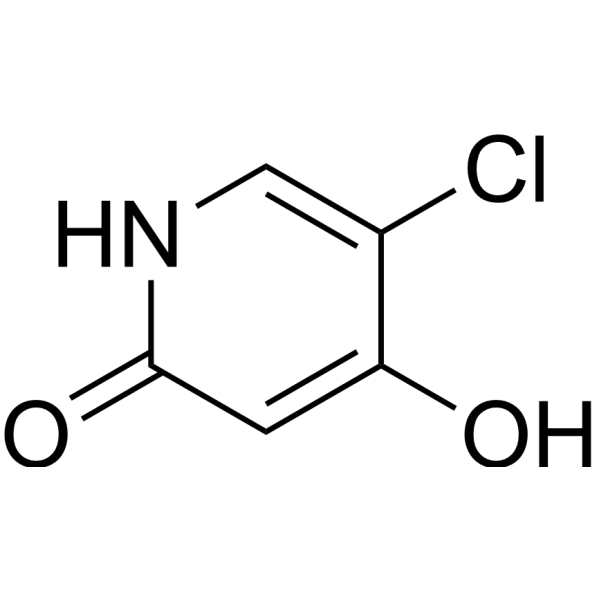
Gimeracil, a component of an oral fluoropyrimidine derivative S-1, inhibits DNA DSB repair and is a potent inhibitor of DPYD (dihydropyrimidine dehydrogenase, DPD).
연구목적의 판매만을 진행합니다. 환자를 대상으로 한 판매는 하지 않습니다.
- Purity : 99.94%
- CAS No.: 103766-25-2
- 화학식: C5H4ClNO2
- 분자량:145.54
-
보관:Powder -20°C, 3 years , 4°C, 2 years ; In solvent -80°C, 2 years , -20°C, 1 year

To place orders, for customer services and technical support, please contact: MedChemExpress USA
Tel: 609-228-6898 E-mail: [email protected] [email protected]


-
 Biological Activity
-
Chemical Information
-
용액&용해도
- 순도&문서
- References
-
 Help & FAQs


-
HY-17400
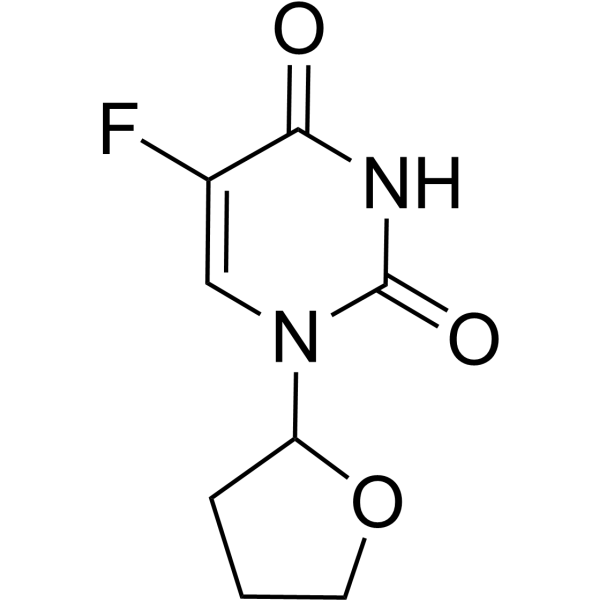
Tegafur5-FU Prodrug -
HY-15453
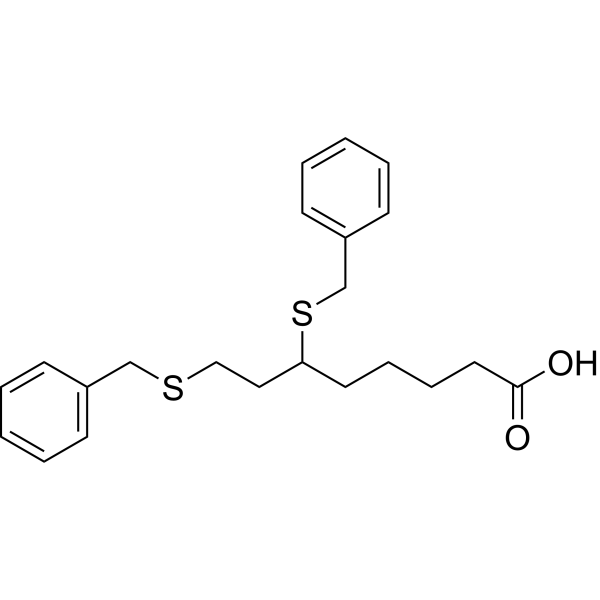
DevimistatMitochondrial Metabolism Inhibitor -
HY-17511
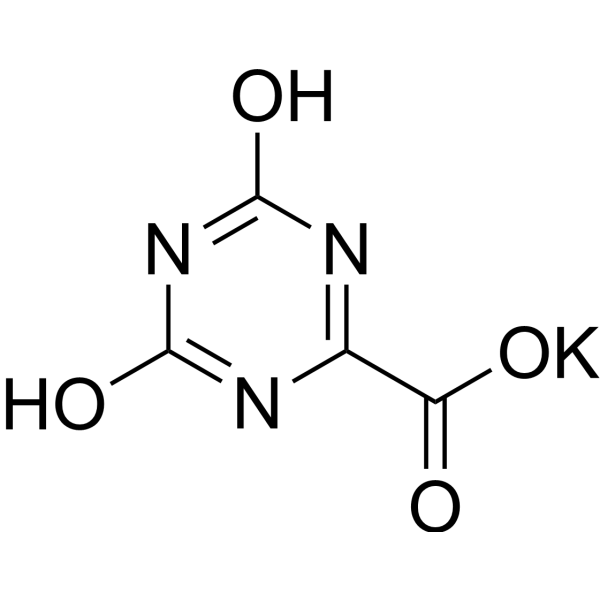
Potassium oxonateUricase Inhibitor -
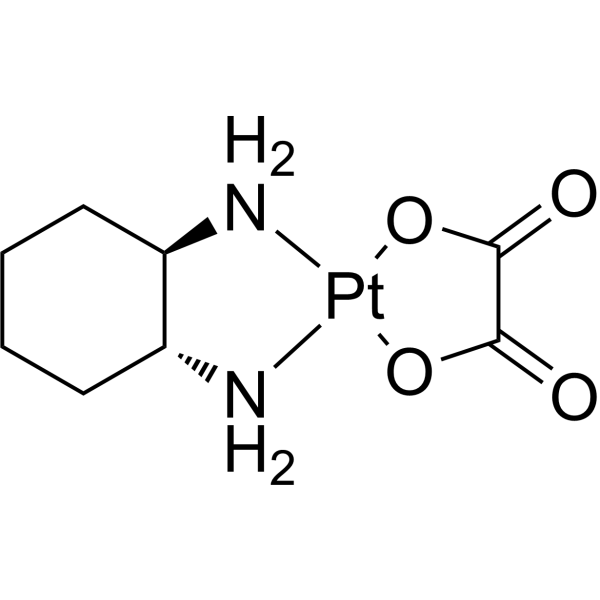
HY-17371
OxaliplatinDNA Synthesis Inhibitor -
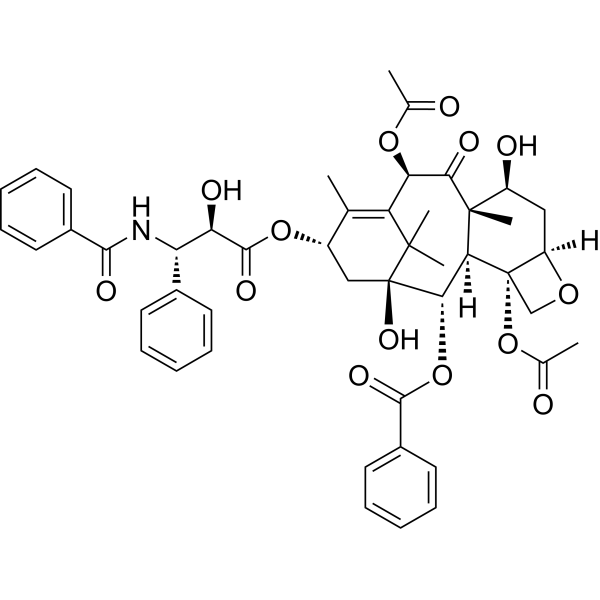
HY-B0015
PaclitaxelAntitumor Agent -
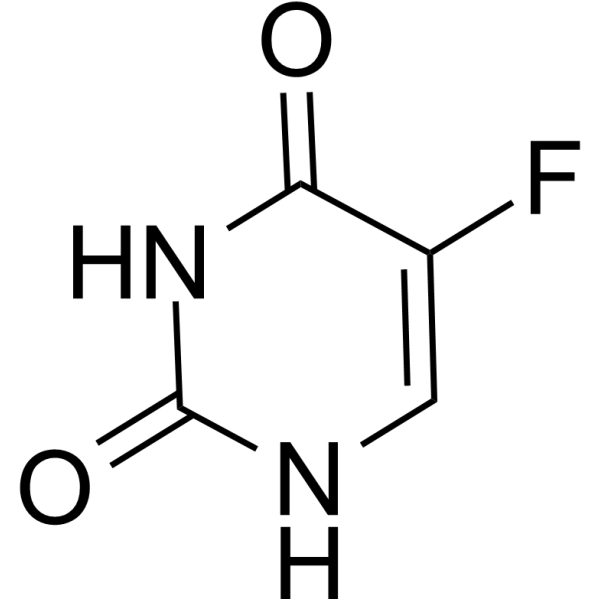
HY-90006
5-FluorouracilThymidylate Synthase Inhibitor -
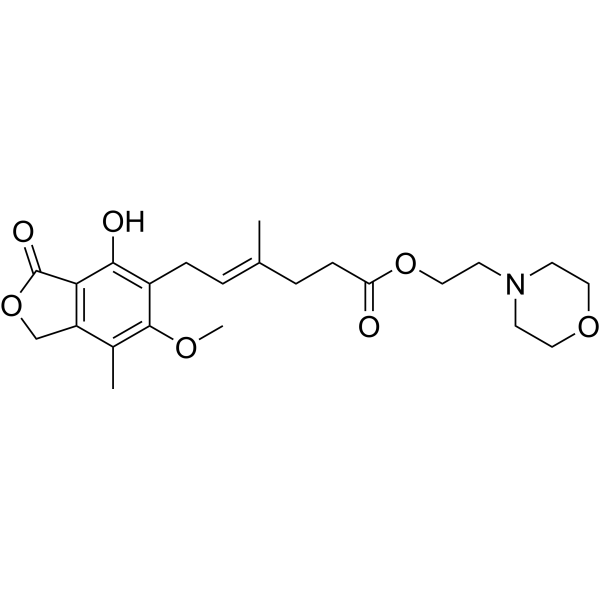
HY-B0199
Mycophenolate MofetilIMPDH Inhibitor -
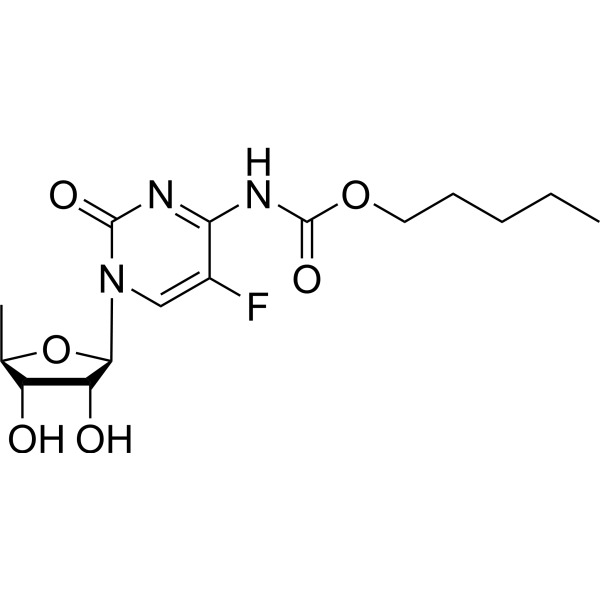
HY-B0016
CapecitabineDNA/RNA Synthesis Inhibitor -
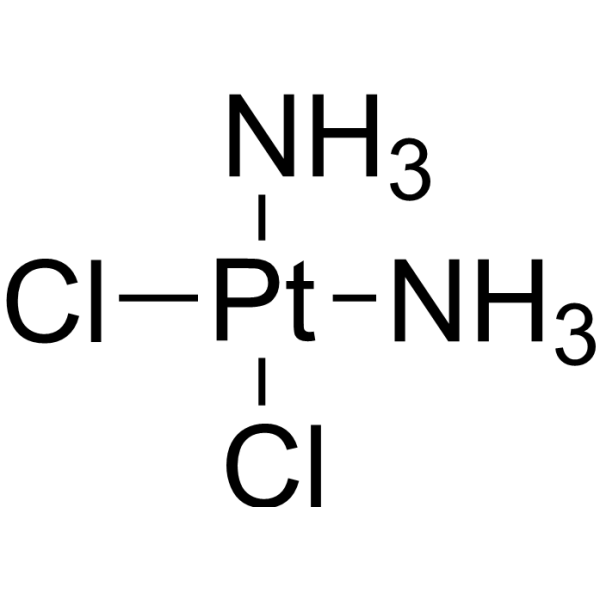
HY-17394
CisplatinDNA Alkylator -
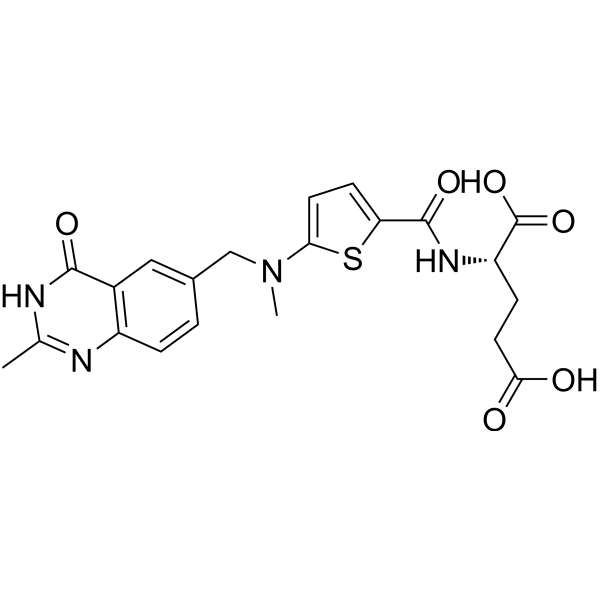
HY-10821
RaltitrexedThymidylate Synthase Inhibitor -
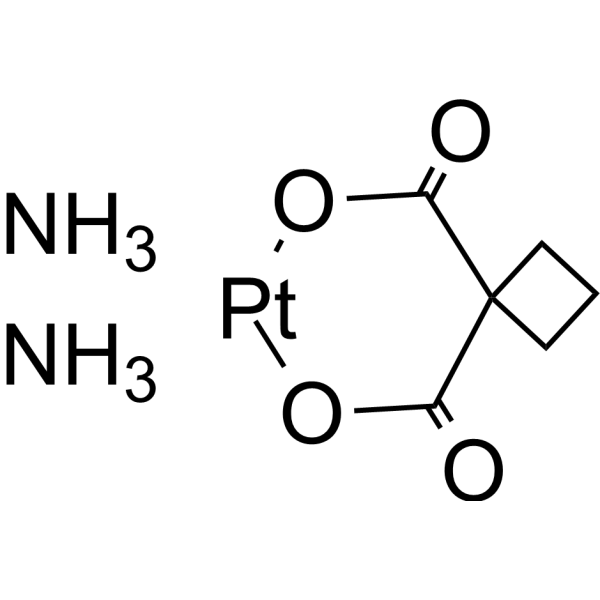
HY-17393
CarboplatinDNA Synthesis Inhibitor -
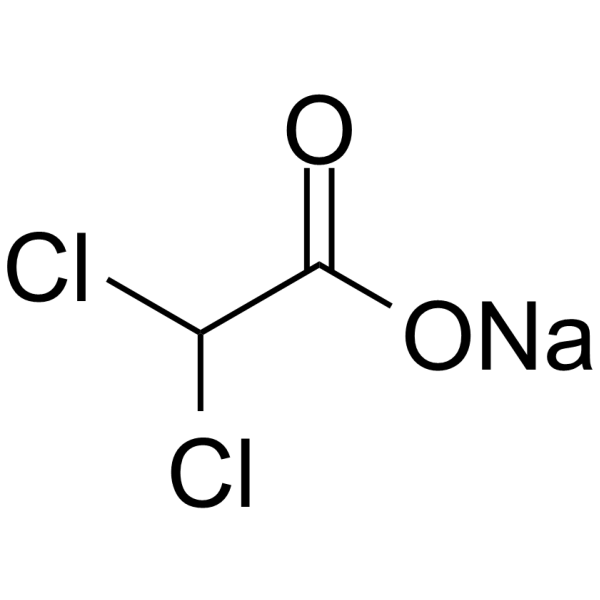
HY-Y0445A
Sodium dichloroacetatePDK Inhibitor
Publications Citing Use of MedChemExpress (MCE) Gimeracil
MoreAll DNA/RNA Synthesis Isoforms
More

Biological Activity
제품 설명
In Vitro
Gimeracil reduces the frequency of neo-positive clones. Additionally, it sensitized the cells in S-phase more than in G0/G1[1].
Gimeracil may enhance the efficacy of radiotherapy through the suppression of HR-mediated DNA repair pathways[1].
Gimeracil pretreatment significantly restrains the formation of radiation-induced foci of Rad51 and RPA, whereas it increased the number of foci of Nbs1, Mre11, Rad50, and FancD2[2].
MedChemExpress (MCE) has not independently confirmed the accuracy of these methods. They are for reference only.
-
Cell Line:DLD-1, HeLa, and LC-11 cell lines.
-
Concentration:1 mM.
-
Incubation Time:48 h.
-
Result:Inhibits the repair of irradiation-induced DNA double strand breaks.
Did not increase the c-H2AX foci residual at 24 h in unirradiated cells.
In Vivo
MedChemExpress (MCE) has not independently confirmed the accuracy of these methods. They are for reference only.
-
Animal Model:Nude mice (Lu-99, LC-11, KB/C3 and PAN-4 tumors were xenografted)[3].
-
Dosage:2.5-25 mg/kg.
-
Administration:Orally.
-
Result:Exhibited anti-tumor activity.
Clinical Trial
| NCT Number | Sponsor | Condition | Start Date |
Phase

|
|---|---|---|---|---|
| NCT01329991 | Plexxikon| | 2011-05 | PHASE1 |


Chemical Information
-
CAS No. 103766-25-2
-
Appearance Solid
-
분자량 145.54
-
화학식 C5H4ClNO2
-
Color White to light brown
-
SMILES
O=C1C=C(O)C(Cl)=CN1
-
Synonyms
Gimestat
-
선적
Room temperature in continental US; may vary elsewhere.
-
보관
Powder -20°C 3 years 4°C 2 years In solvent -80°C 2 years -20°C 1 year


Publications (4)
-
Journal Impact Factor
-
Most Recent
-
-
Adv Sci (Weinh)
Primary Human Pancreatic Cancer Cells Cultivation in Microfluidic Hydrogel Microcapsules for Drug Evaluation. [Abstract]2023 Apr;10(12):e2206004. PMID: 36808707 -
Anal Chem
Exposome-Scale Investigation of Cl-/Br-Containing Chemicals Using High-Resolution Mass Spectrometry, Multistage Machine Learning, and Cloud Computing. [Abstract]2025 Jun 3;97(21):11099-11109. PMID: 40401576 -


용액&용해도
In Vitro:
DMSO : 100 mg/mL (687.10 mM; Need ultrasonic; Hygroscopic DMSO has a significant impact on the solubility of product, please use newly opened DMSO)
Please refer to the solubility information to select the appropriate solvent. Once prepared, please aliquot and store the solution to prevent product inactivation from repeated freeze-thaw cycles.
Storage method and period of stock solution: -80°C, 2 years; -20°C, 1 year. When stored at -80°C, please use it within 2 years. When stored at -20°C, please use it within 1 year.
Please refer to the solubility information to select the appropriate solvent. Once prepared, please aliquot and store the solution to prevent product inactivation from repeated freeze-thaw cycles.
Storage method and period of stock solution: -80°C, 2 years; -20°C, 1 year. When stored at -80°C, please use it within 2 years. When stored at -20°C, please use it within 1 year.
Concentration (start) × Volume (start) = Concentration (final) × Volume (final)
In Vivo:
Select the appropriate dissolution method based on your experimental animal and administration route.
- For the following dissolution methods, please ensure to first prepare a clear stock solution using an In Vitro approach and then sequentially add co-solvents:
- To ensure reliable experimental results, the clarified stock solution can be appropriately stored based on storage conditions. As for the working solution for In Vivo experiments, it is recommended to prepare freshly and use it on the same day.
- The percentages shown for the solvents indicate their volumetric ratio in the final prepared solution. If precipitation or phase separation occurs during preparation, heat and/or sonication can be used to aid dissolution.
Add each solvent one by one: 10% DMSO 40% PEG300 5% Tween-80 45% Saline
Solubility: ≥ 2.5 mg/mL (17.18 mM); Clear solution
This protocol yields a clear solution of ≥ 2.5 mg/mL (saturation unknown).
Taking 1 mL working solution as an example, add 100 μL DMSO stock solution (25.0 mg/mL) to 400 μL PEG300, and mix evenly; then add 50 μL Tween-80 and mix evenly; then add 450 μL Saline to adjust the volume to 1 mL.
Preparation of Saline: Dissolve 0.9 g sodium chloride in ddH₂O and dilute to 100 mL to obtain a clear Saline solution.
Add each solvent one by one: 10% DMSO 90% (20% SBE-β-CD in Saline)
Solubility: ≥ 2.5 mg/mL (17.18 mM); Clear solution
This protocol yields a clear solution of ≥ 2.5 mg/mL (saturation unknown).
Taking 1 mL working solution as an example, add 100 μL DMSO stock solution (25.0 mg/mL) to 900 μL 20% SBE-β-CD in Saline, and mix evenly.
Preparation of 20% SBE-β-CD in Saline (4°C, storage for one week): 2 g SBE-β-CD powder is dissolved in 10 mL Saline, completely dissolve until clear.
In Vivo Dissolution Calculator
Please enter the basic information of animal experiments:
-
-
-
-
Recommended: Prepare an additional quantity of animals to account for potential losses during experiments.
Please enter your animal formula composition:
-
%DMSO +
Recommended: Keep the proportion of DMSO in working solution below 2% if your animal is weak.
-
%+
-
+%Tween-80 + +
-
%Saline +
The co-solvents required include: DMSO, . All of co-solvents are available by MedChemExpress (MCE). , Tween 80. All of co-solvents are available by MedChemExpress (MCE).
Working solution concentration: 0.22 mg/mL
Method for preparing stock solution: mg drug dissolved in μL DMSO. Stock solution concentration: mg/mL.
1. Take μL DMSO stock solution;
2. Add μL .
μL , mix evenly;
3. Then add μL Tween 80, mix evenly;
4. Then add μL
Please ensure that the stock solution in the first step is dissolved to a clear state, and add co-solvents in sequence. You can use ultrasonic heating (ultrasonic cleaner, recommended frequency 20-40 kHz), vortexing, etc. to assist dissolution.


순도&문서
-
Data Sheet (277 KB)
-
SDS (393 KB)
- English - EN (393 KB)
- Français - FR (393 KB)
- Deutsch - DE (393 KB)
- Norwegian - NO (393 KB)
- Español - ES (393 KB)
- Swedish - SV (393 KB)
- Italian - IT (393 KB)
- Korean - KR (393 KB)
- Portuguese - PT (393 KB)
-
Handling Instructions (2659 KB)
References
[1]. Masaru Takagi, et al. Gimeracil sensitizes cells to radiation via inhibition of homologous recombination. Radiother Oncol. 2010 Aug;96(2):259-66. [Content Brief]
[2]. Koh-Ichi Sakata, et al. Gimeracil, an inhibitor of dihydropyrimidine dehydrogenase, inhibits the early step in homologous recombination. Cancer Sci. 2011 Sep;102(9):1712-6. [Content Brief]
[3]. Masakazu Fukushima, et al. Gimeracil, a component of S-1, may enhance the antitumor activity of X-ray irradiation in human cancer xenograft models in vivo. Oncol Rep. 2010 Nov;24(5):1307-13. [Content Brief]


Complete Stock Solution Preparation Table
Please refer to the solubility information to select the appropriate solvent. Once prepared, please aliquot and store the solution to prevent product inactivation from repeated freeze-thaw cycles.
Storage method and period of stock solution: -80°C, 2 years; -20°C, 1 year. When stored at -80°C, please use it within 2 years. When stored at -20°C, please use it within 1 year.
| Optional Solvent | Concentration Solvent Mass | 1 mg | 5 mg | 10 mg | 25 mg |
|---|---|---|---|---|---|
| DMSO | 1 mM | 6.8710 mL | 34.3548 mL | 68.7096 mL | 171.7741 mL |
| 5 mM | 1.3742 mL | 6.8710 mL | 13.7419 mL | 34.3548 mL | |
| 10 mM | 0.6871 mL | 3.4355 mL | 6.8710 mL | 17.1774 mL | |
| 15 mM | 0.4581 mL | 2.2903 mL | 4.5806 mL | 11.4516 mL | |
| 20 mM | 0.3435 mL | 1.7177 mL | 3.4355 mL | 8.5887 mL | |
| 25 mM | 0.2748 mL | 1.3742 mL | 2.7484 mL | 6.8710 mL | |
| 30 mM | 0.2290 mL | 1.1452 mL | 2.2903 mL | 5.7258 mL | |
| 40 mM | 0.1718 mL | 0.8589 mL | 1.7177 mL | 4.2944 mL | |
| 50 mM | 0.1374 mL | 0.6871 mL | 1.3742 mL | 3.4355 mL | |
| 60 mM | 0.1145 mL | 0.5726 mL | 1.1452 mL | 2.8629 mL | |
| 80 mM | 0.0859 mL | 0.4294 mL | 0.8589 mL | 2.1472 mL | |
| 100 mM | 0.0687 mL | 0.3435 mL | 0.6871 mL | 1.7177 mL |


Gimeracil Related Classifications
HY-17469 Related Classifications
 Powered by Bioz