



Vidofludimus
Based on 5 publication(s) in Google Scholar
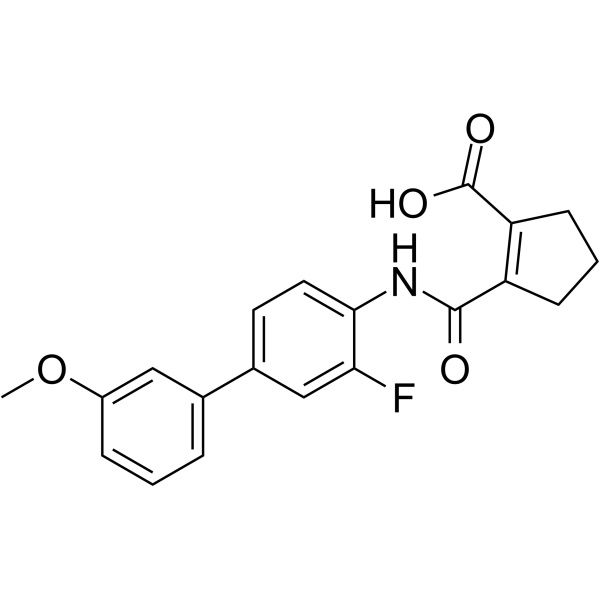
Vidofludimus is an orally active inhibitor for dihydroorotate dehydrogenase (DHODH) and also is a novel modulator for farnesoid X receptor (FXR). Vidofludimus, as an immunomodulatory agent, can be used for the research of autoimmune disorders such as inflammatory bowel disease (IBD). Vidofludimus also can be used for the research of fatty liver by targeting FXR.
For research use only. We do not sell to patients.
- Purity : 99.14%
- CAS No.: 717824-30-1
- Formula: C20H18FNO4
- Molecular Weight:355.36
-
Storage:Powder -20°C, 3 years , 4°C, 2 years ; In solvent -80°C, 2 years , -20°C, 1 year

To place orders, for customer services and technical support, please contact: MedChemExpress USA
Tel: 609-228-6898 E-mail: [email protected] [email protected]


-
 Biological Activity
-
Chemical Information
-
Solvent & Solubility
- Protocols
- Purity & Documentation
- References
-
 Help & FAQs


-
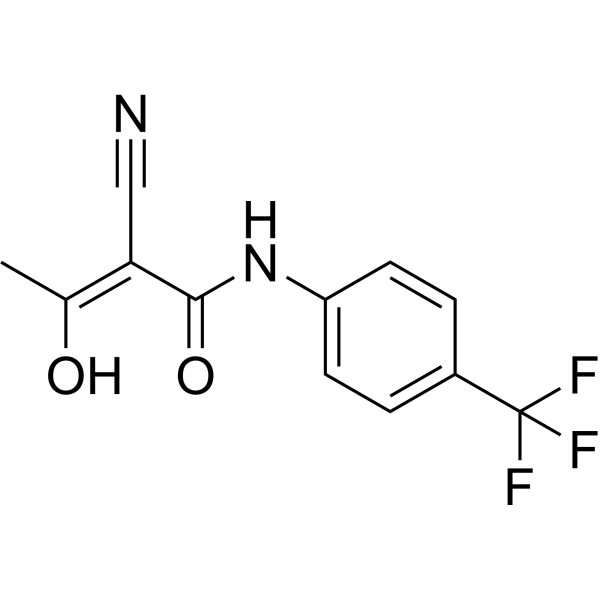
HY-15405
TeriflunomideLeflunomide Active Metabolite -
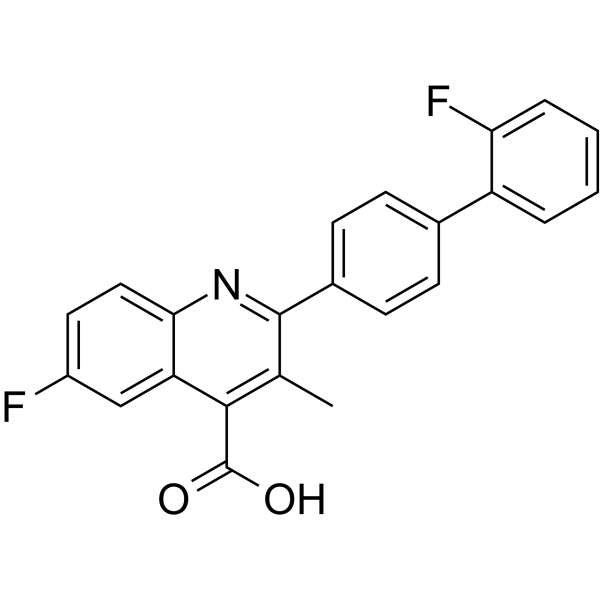
HY-108325
BrequinarDHODH Inhibitor -
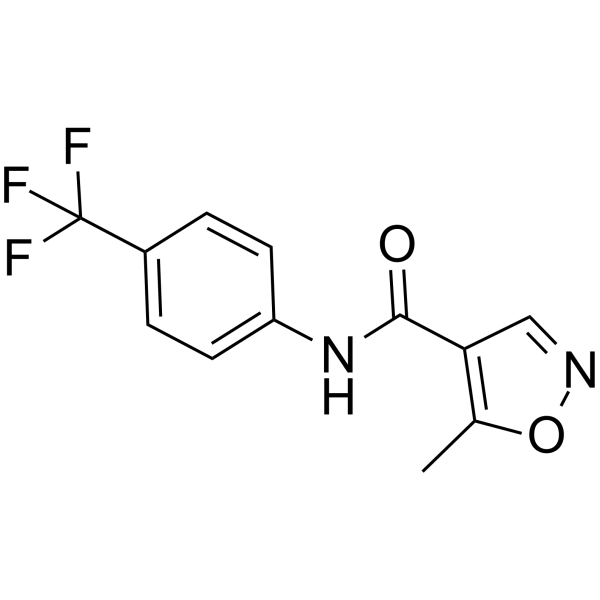
HY-B0083
LeflunomideDHODH Inhibitor -
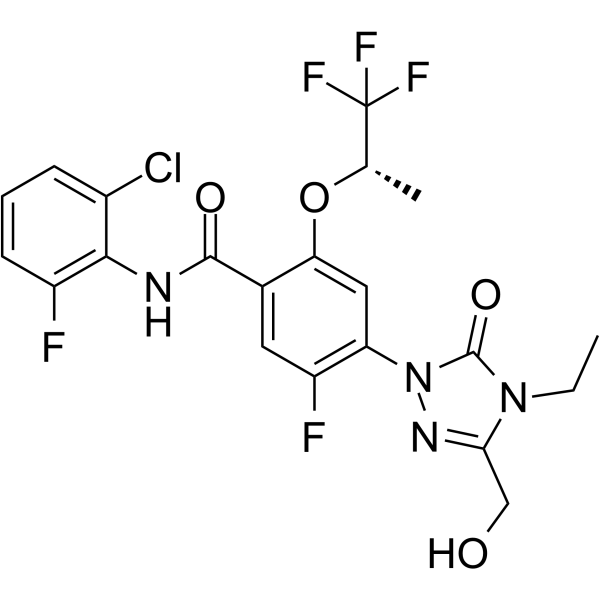
HY-112645
BAY-2402234DHODH Inhibitor -
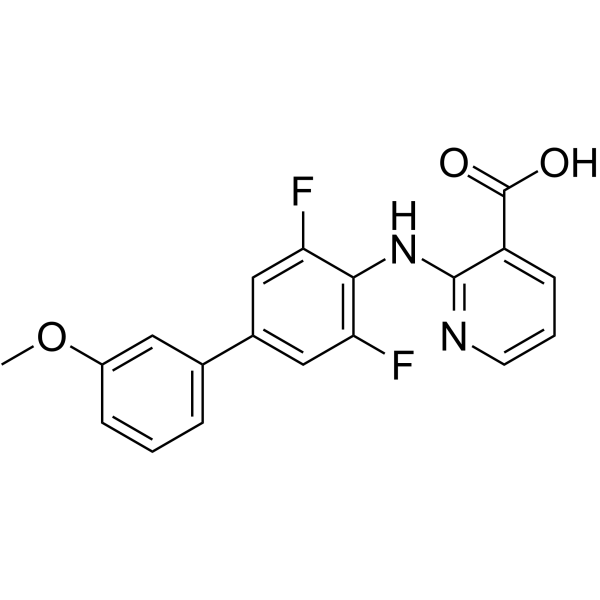
HY-129239
FarudodstatDHODH Inhibitor -
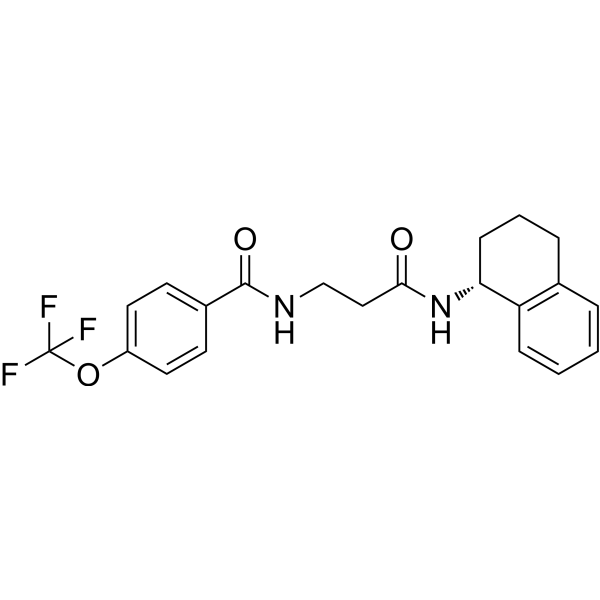
HY-100688
ML390DHODH Inhibitor -
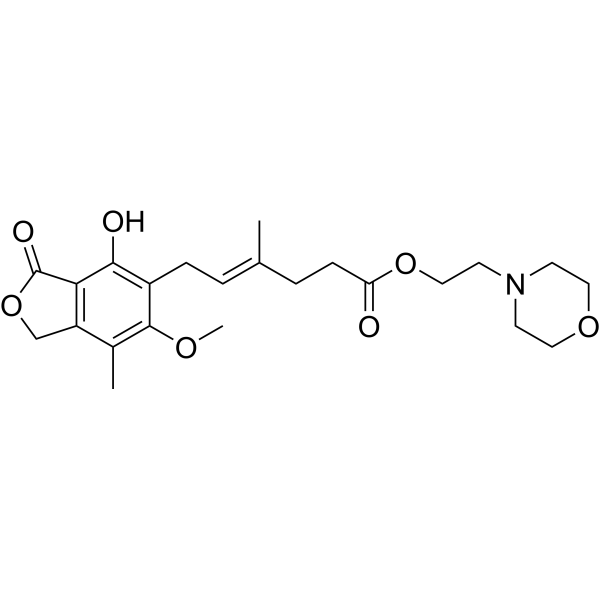
HY-B0199
Mycophenolate MofetilIMPDH Inhibitor -
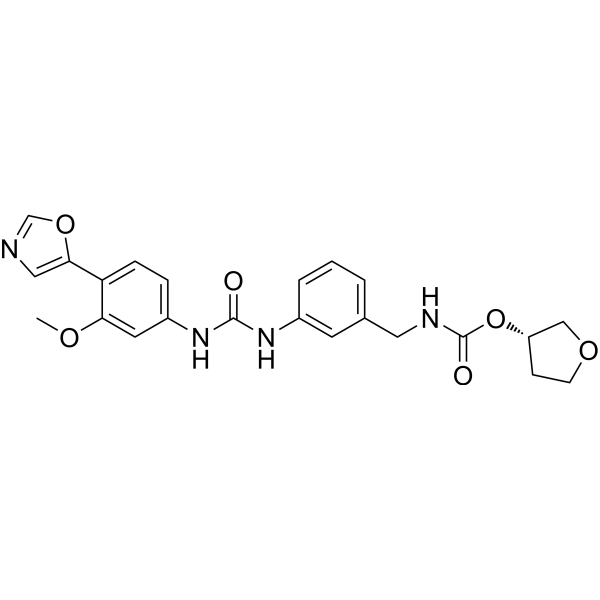
HY-13986
MerimepodibIMPDH Inhibitor -
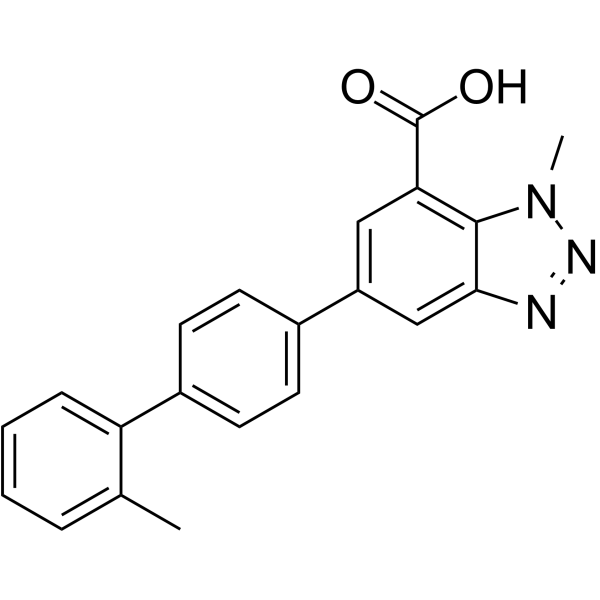
HY-137463
AG-636DHODH Inhibitor -
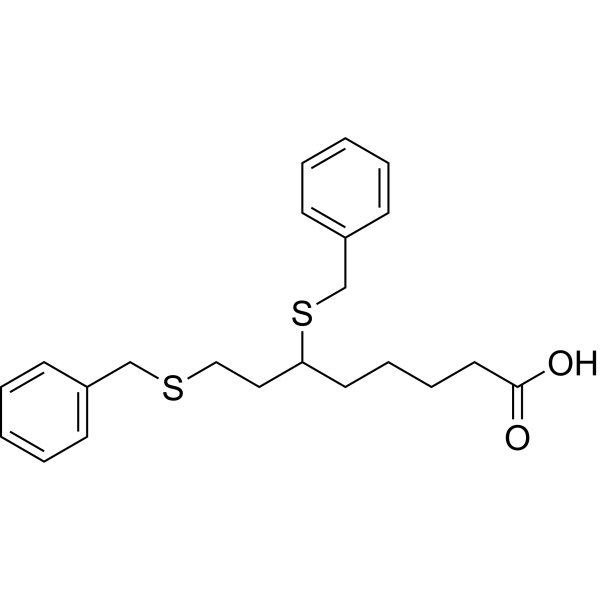
HY-15453
DevimistatMitochondrial Metabolism Inhibitor -
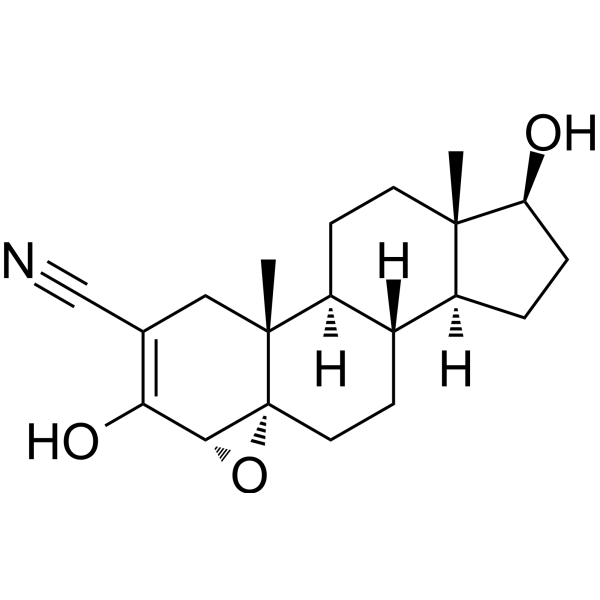
HY-14281
Trilostane3-β-Hydroxysteroid Dehydrogenase Inhibitor -
HY-101966
NCT-503PHGDH Inhibitor
Publications Citing Use of MedChemExpress (MCE) Vidofludimus
More

Biological Activity
Description
|
IL-17 |
In Vitro
Vidofludimus (0-1 µM) selectively activats FXR in a concentration dependent manner with an EC50 value of about 450 nM in inducing the recruitment of various coactivator LXXLL motifs[1].
Vidofludimus (0-8 μM) blocks nuclear translocation of p65 by suppressing IKK-IκB-NF-κB pathway[1].
Vidofludimus has inhibitory activity for human DHODH with an IC50 value of 160 nM[2].
Vidofludimus inhibits dihydro-orotate dehydrogenase and lymphocyte proliferation in vitro[3].
Vidofludimus inhibits interleukin (IL)-17 secretion in vitro independently of effects on lymphocyte proliferation[3].
Vidofludimus completely blocks IL-23 + IL-1β-stimulated secretion of IL-17 by colonic strips in ex vivo[3].
MedChemExpress (MCE) has not independently confirmed the accuracy of these methods. They are for reference only.
-
Cell Line:HepG2 cells or MEFs
-
Concentration:2, 8 μM
-
Incubation Time:1 h
-
Result:Inhibited of TNFα-induced IKKα/β phosphorylation and IκBα degradation.
-
Cell Line:HepG2 cells
-
Concentration:5 μM
-
Incubation Time:24 h
-
Result:Inhibited the increase of NF-κB target genes MCP-1 and CXCL-2 upon TNFα stimulation.
In Vivo
Vidofludimus (p.o; 60 mg/kg; for 6 days) effectively improves many parameters of TNBS-induced colitis in rats and has inhibitory effects on colonic STAT3 and IL-17[3].
MedChemExpress (MCE) has not independently confirmed the accuracy of these methods. They are for reference only.
-
Animal Model:homozygous FXR deficient (FXR KO) mice[1]
(10-week-old, male) -
Dosage:20 mg/kg
-
Administration:oral, 20 mg/kg/day
-
Result:Revealed multifocal inflammatory cell infiltration and edema with crypt and epithelial cell destruction and ulceration.
-
Animal Model:NAFLD Model[1]
(10-11 weeks old male obese Lepob/ob C57BL/6 (ob/ob) mice) -
Dosage:10 mg/kg
-
Administration:intraperitoneally, once daily, for 14 days
-
Result:Significantly reduced body weight loss, prevented colonic shortening, decreased histological scores, and disease activity index (DAI) scores in WT mice.
Significantly decreased colonic mRNA expression of the pro-inflammatorygenes interleukin (IL)-1β, IL-6, IL-17, and prostaglandin-endoperoxide synthase 2 (COX-2).
-
Animal Model:Wistar rats[3]
-
Dosage:60 mg/kg
-
Administration:p.o., for 6 days
-
Result:Effectively reduced macroscopic and histological pathology and the numbers of CD3+ T cells in vivo.
Reduced nuclear signal transducer and activator of transcription 3 (STAT3) binding and IL-17 levels.


Chemical Information
-
CAS No. 717824-30-1
-
Appearance Solid
-
Molecular Weight 355.36
-
Formula C20H18FNO4
-
Color Light yellow to gray
-
SMILES
O=C(C1=C(C(NC2=CC=C(C3=CC=CC(OC)=C3)C=C2F)=O)CCC1)O
-
Synonyms
4sc-101; SC12267
-
Shipping
Room temperature in continental US; may vary elsewhere.
-
Storage
Powder -20°C 3 years 4°C 2 years In solvent -80°C 2 years -20°C 1 year


Publications (5)
-
Journal Impact Factor
-
Most Recent
-
-
J Med Virol
Identification of dihydroorotate dehydrogenase inhibitor, vidofludimus, as a potent and novel inhibitor for influenza virus. [Abstract]2024 Jan;96(1):e29372. PMID: 38235544 -
ChemMedChem
Synthesis and Characterization of DHODH Inhibitors Based on the Vidofludimus Scaffold with Pronounced Anti-SARS-CoV-2 Activity. [Abstract]2024 Oct 1;19(19):e202400292. PMID: 38887198 -
-


Solvent & Solubility
In Vitro:
DMSO : ≥ 46 mg/mL (129.45 mM; Hygroscopic DMSO has a significant impact on the solubility of product, please use newly opened DMSO)
* "≥" means soluble, but saturation unknown.
Please refer to the solubility information to select the appropriate solvent. Once prepared, please aliquot and store the solution to prevent product inactivation from repeated freeze-thaw cycles.
Storage method and period of stock solution: -80°C, 2 years; -20°C, 1 year. When stored at -80°C, please use it within 2 years. When stored at -20°C, please use it within 1 year.
Please refer to the solubility information to select the appropriate solvent. Once prepared, please aliquot and store the solution to prevent product inactivation from repeated freeze-thaw cycles.
Storage method and period of stock solution: -80°C, 2 years; -20°C, 1 year. When stored at -80°C, please use it within 2 years. When stored at -20°C, please use it within 1 year.
Concentration (start) × Volume (start) = Concentration (final) × Volume (final)
In Vivo:
Select the appropriate dissolution method based on your experimental animal and administration route.
- For the following dissolution methods, please ensure to first prepare a clear stock solution using an In Vitro approach and then sequentially add co-solvents:
- To ensure reliable experimental results, the clarified stock solution can be appropriately stored based on storage conditions. As for the working solution for In Vivo experiments, it is recommended to prepare freshly and use it on the same day.
- The percentages shown for the solvents indicate their volumetric ratio in the final prepared solution. If precipitation or phase separation occurs during preparation, heat and/or sonication can be used to aid dissolution.
Add each solvent one by one: 10% DMSO 40% PEG300 5% Tween-80 45% Saline
Solubility: 2.5 mg/mL (7.04 mM); Suspended solution; Need ultrasonic
This protocol yields a suspended solution of 2.5 mg/mL. Suspended solution can be used for oral and intraperitoneal injection.
Taking 1 mL working solution as an example, add 100 μL DMSO stock solution (25.0 mg/mL) to 400 μL PEG300, and mix evenly; then add 50 μL Tween-80 and mix evenly; then add 450 μL Saline to adjust the volume to 1 mL.
Preparation of Saline: Dissolve 0.9 g sodium chloride in ddH₂O and dilute to 100 mL to obtain a clear Saline solution.
Add each solvent one by one: 10% DMSO 90% (20% SBE-β-CD in Saline)
Solubility: 2.5 mg/mL (7.04 mM); Suspended solution; Need ultrasonic
This protocol yields a suspended solution of 2.5 mg/mL. Suspended solution can be used for oral and intraperitoneal injection.
Taking 1 mL working solution as an example, add 100 μL DMSO stock solution (25.0 mg/mL) to 900 μL 20% SBE-β-CD in Saline, and mix evenly.
Preparation of 20% SBE-β-CD in Saline (4°C, storage for one week): 2 g SBE-β-CD powder is dissolved in 10 mL Saline, completely dissolve until clear.
In Vivo Dissolution Calculator
Please enter the basic information of animal experiments:
-
-
-
-
Recommended: Prepare an additional quantity of animals to account for potential losses during experiments.
Please enter your animal formula composition:
-
%DMSO +
Recommended: Keep the proportion of DMSO in working solution below 2% if your animal is weak.
-
%+
-
+%Tween-80 + +
-
%Saline +
The co-solvents required include: DMSO, . All of co-solvents are available by MedChemExpress (MCE). , Tween 80. All of co-solvents are available by MedChemExpress (MCE).
Working solution concentration: 0.22 mg/mL
Method for preparing stock solution: mg drug dissolved in μL DMSO. Stock solution concentration: mg/mL.
1. Take μL DMSO stock solution;
2. Add μL .
μL , mix evenly;
3. Then add μL Tween 80, mix evenly;
4. Then add μL
Please ensure that the stock solution in the first step is dissolved to a clear state, and add co-solvents in sequence. You can use ultrasonic heating (ultrasonic cleaner, recommended frequency 20-40 kHz), vortexing, etc. to assist dissolution.


Purity & Documentation
-
Data Sheet (281 KB)
-
SDS (392 KB)
- English - EN (392 KB)
- Français - FR (392 KB)
- Deutsch - DE (392 KB)
- Norwegian - NO (392 KB)
- Español - ES (392 KB)
- Swedish - SV (392 KB)
- Italian - IT (392 KB)
- Korean - KR (392 KB)
- Portuguese - PT (392 KB)
-
Handling Instructions (2659 KB)
References
[1]. Yanlin Zhu, et al. Repositioning an Immunomodulatory Drug Vidofludimus as a Farnesoid X Receptor Modulator With Therapeutic Effects on NAFLD. Front Pharmacol. 2020 May 14;11:590. [Content Brief]
[2]. Andreas Muehler, et al. Vidofludimus calcium, a next generation DHODH inhibitor for the Treatment of relapsing-remitting multiple sclerosis. Mult Scler Relat Disord. 2020 Aug;43:102129. [Content Brief]
[3]. Leo R Fitzpatrick, et al. Vidofludimus inhibits colonic interleukin-17 and improves hapten-induced colitis in rats by a unique dual mode of action. J Pharmacol Exp Ther. 2012 Sep;342(3):850-60. [Content Brief]


Complete Stock Solution Preparation Table
Please refer to the solubility information to select the appropriate solvent. Once prepared, please aliquot and store the solution to prevent product inactivation from repeated freeze-thaw cycles.
Storage method and period of stock solution: -80°C, 2 years; -20°C, 1 year. When stored at -80°C, please use it within 2 years. When stored at -20°C, please use it within 1 year.
| Optional Solvent | Concentration Solvent Mass | 1 mg | 5 mg | 10 mg | 25 mg |
|---|---|---|---|---|---|
| DMSO | 1 mM | 2.8140 mL | 14.0702 mL | 28.1405 mL | 70.3512 mL |
| 5 mM | 0.5628 mL | 2.8140 mL | 5.6281 mL | 14.0702 mL | |
| 10 mM | 0.2814 mL | 1.4070 mL | 2.8140 mL | 7.0351 mL | |
| 15 mM | 0.1876 mL | 0.9380 mL | 1.8760 mL | 4.6901 mL | |
| 20 mM | 0.1407 mL | 0.7035 mL | 1.4070 mL | 3.5176 mL | |
| 25 mM | 0.1126 mL | 0.5628 mL | 1.1256 mL | 2.8140 mL | |
| 30 mM | 0.0938 mL | 0.4690 mL | 0.9380 mL | 2.3450 mL | |
| 40 mM | 0.0704 mL | 0.3518 mL | 0.7035 mL | 1.7588 mL | |
| 50 mM | 0.0563 mL | 0.2814 mL | 0.5628 mL | 1.4070 mL | |
| 60 mM | 0.0469 mL | 0.2345 mL | 0.4690 mL | 1.1725 mL | |
| 80 mM | 0.0352 mL | 0.1759 mL | 0.3518 mL | 0.8794 mL | |
| 100 mM | 0.0281 mL | 0.1407 mL | 0.2814 mL | 0.7035 mL |


Vidofludimus Related Classifications
HY-14908 Related Classifications
 Powered by Bioz
Keywords
- Vidofludimus
- 717824-30-1
- 4sc-101
- SC12267
- SC12267
- SC 12267
- SC-12267
- Dihydroorotate Dehydrogenase
- Interleukin Related
- FXR
- oral
- non-alcoholic fatty liver disease (NAFLD)
- dihydroorotate dehydrogenase (DHODH)
- farnesoid X receptor (FXR)
- immunomodulatory
- inflammatory bowel disease (IBD)
- fatty liver
- Inhibitor
- inhibitor
- inhibit