



Merimepodib
Based on 2 publication(s) in Google Scholar
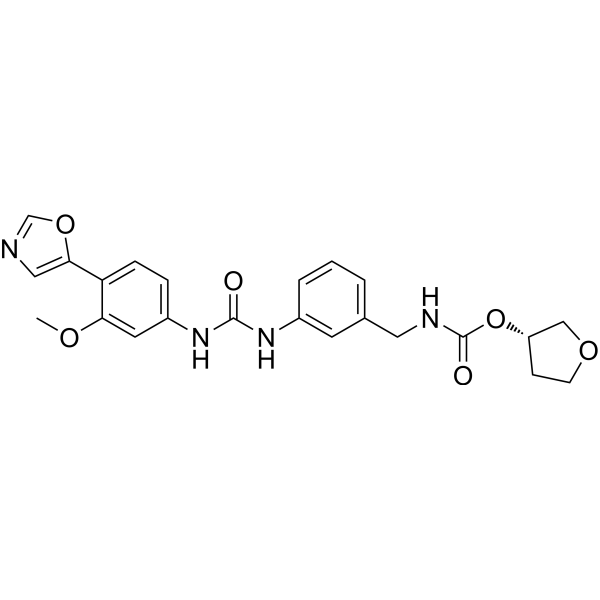
Merimepodib (VX-497) is a noncompetitive and oral inhibitor of inosine monophosphate dehydrogenase (IMPDH) with broad spectrum antiviral activities.
For research use only. We do not sell to patients.
- Purity : 99.27%
- CAS No.: 198821-22-6
- Formula: C23H24N4O6
- Molecular Weight:452.46
-
Storage:Powder -20°C, 3 years , 4°C, 2 years ; In solvent -80°C, 2 years , -20°C, 1 year

To place orders, for customer services and technical support, please contact: MedChemExpress USA
Tel: 609-228-6898 E-mail: [email protected] [email protected]


-
 Biological Activity
-
Chemical Information
-
Solvent & Solubility
- Protocols
- Purity & Documentation
- References
-
 Help & FAQs


-
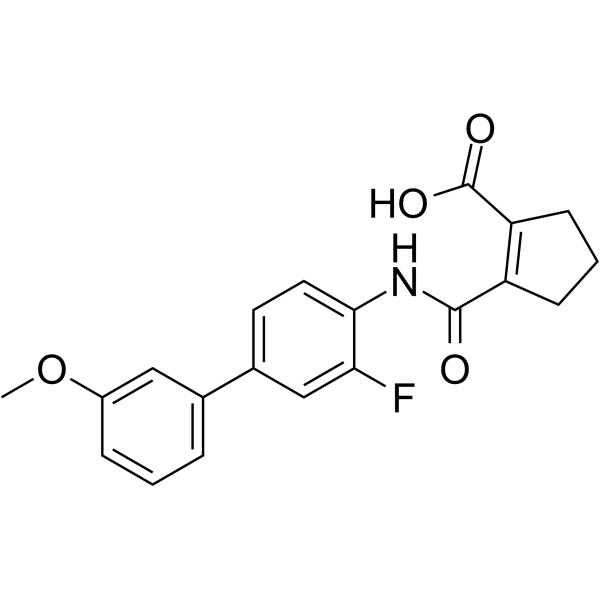
HY-14908
VidofludimusDHODH Inhibitor -
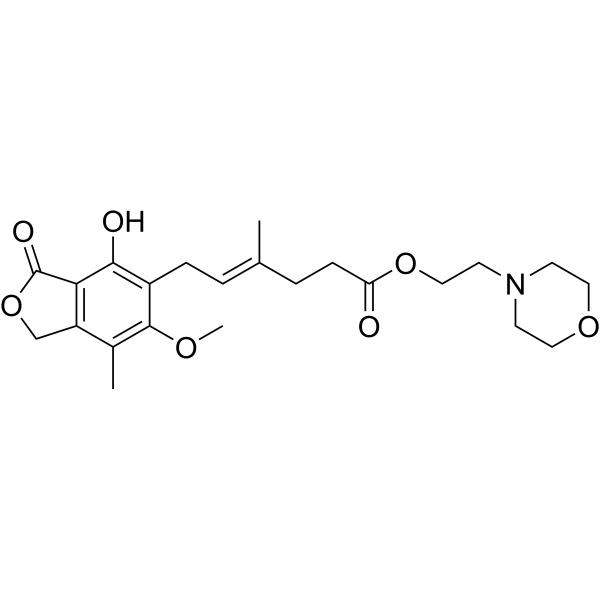
HY-B0199
Mycophenolate MofetilIMPDH Inhibitor -
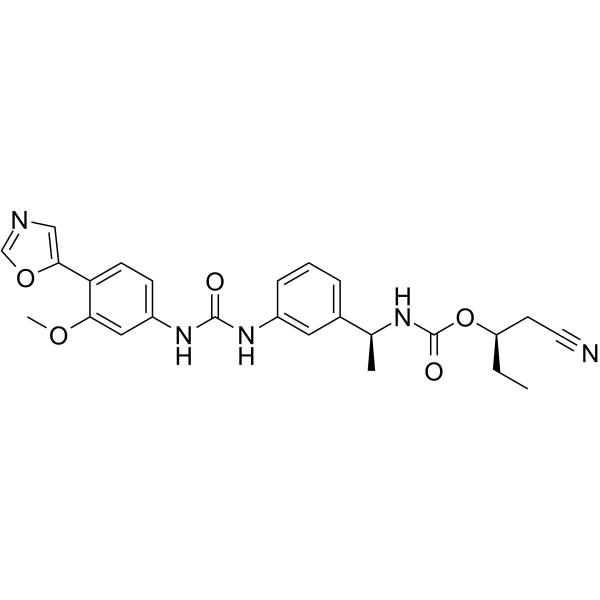
HY-13560
AVN-944IMPDH Inhibitor -
HY-B0434
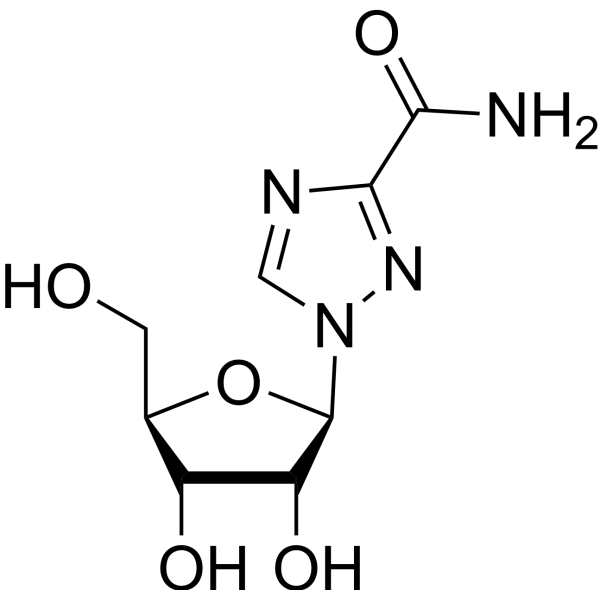
RibavirinAntiviral Agent -
HY-15601
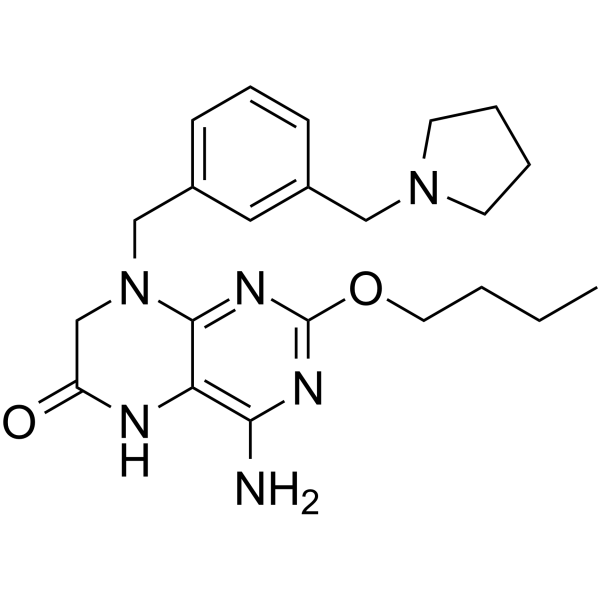
VesatolimodTLR7 Agonist -
HY-15405
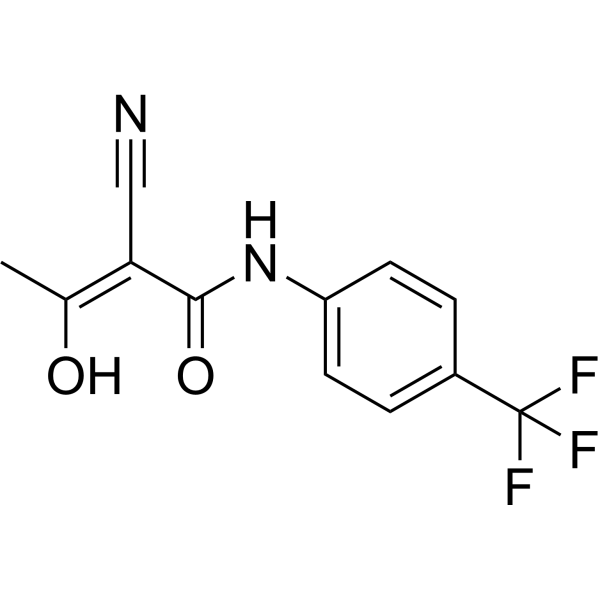
TeriflunomideLeflunomide Active Metabolite -
HY-B0083
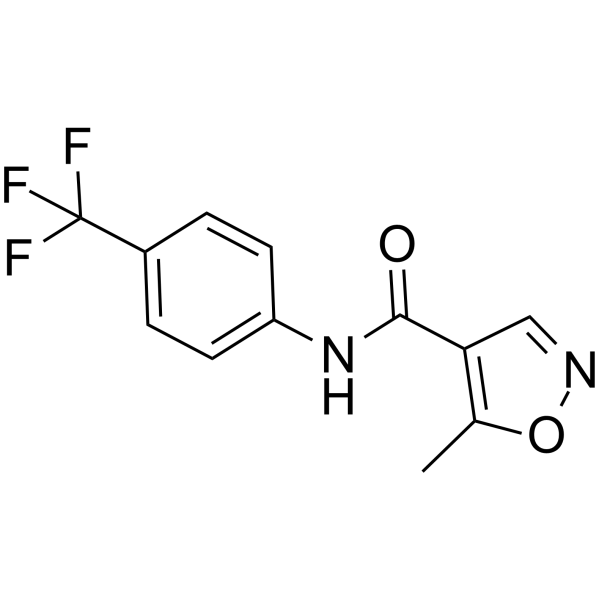
LeflunomideDHODH Inhibitor -
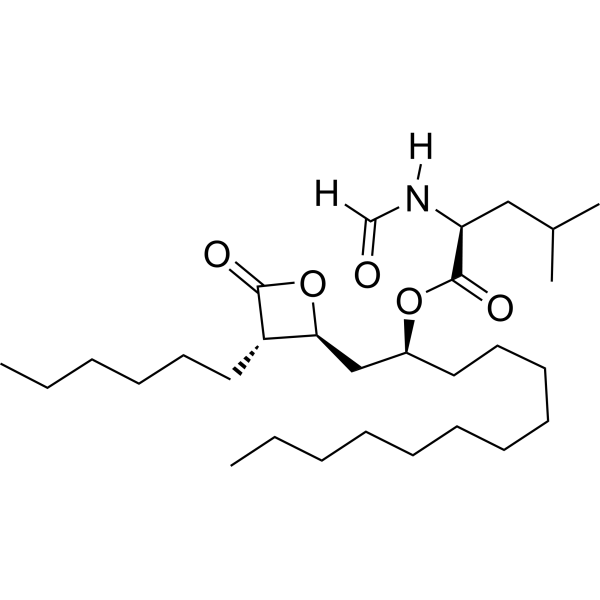
HY-B0218
OrlistatFASN Inhibitor -
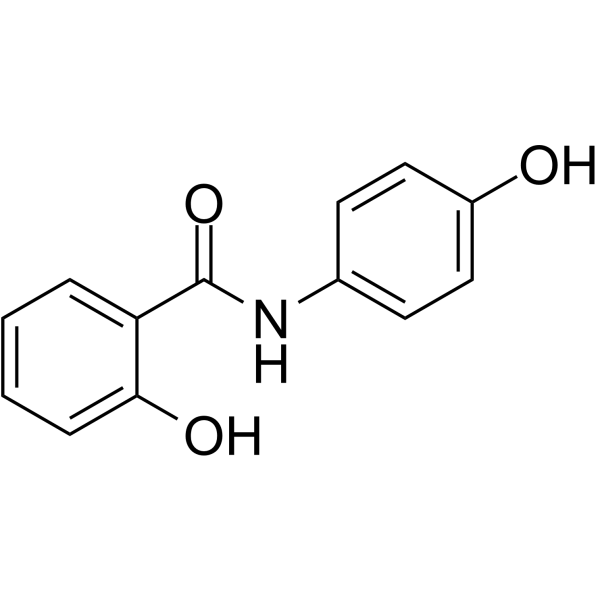
HY-B2116
OsalmidHBV Inhibitor -
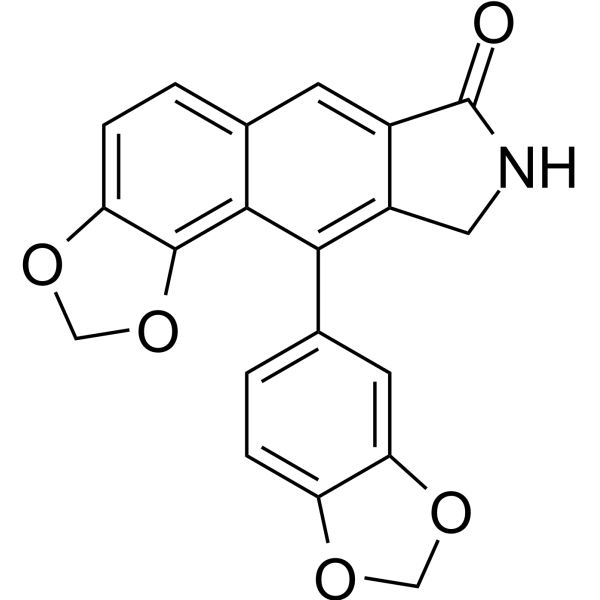
HY-16679
Helioxanthin derivative 5-4-2HBV Inhibitor -
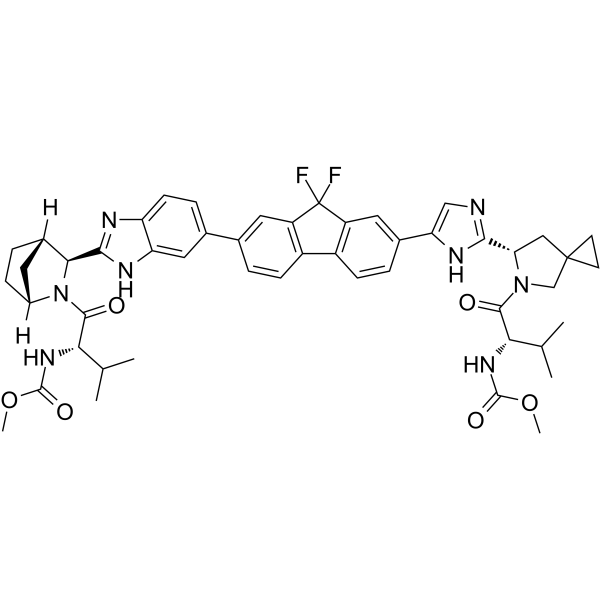
HY-15602
LedipasvirHCV NS5A Inhibitor -
HY-16678
HelioxanthinAntiviral Agent
Publications Citing Use of MedChemExpress (MCE) Merimepodib
More Customer Validation & Images

-
IF
-
WB
-
Cell Proliferation/Viability Assay


Biological Activity
Description
Cellular Effect
|
Cell Line

|
Type | Value | Description | References |
|---|---|---|---|---|
| CCRF-CEM | IC50 |
0.43 μM
Compound: VX-497
|
In vitro secondary T-cell (CEM) proliferation assay
In vitro secondary T-cell (CEM) proliferation assay
|
[PMID: 12014950] |
| CCRF-CEM | IC50 |
0.49 μM
Compound: VX-497
|
Inhibitory activity against proliferation of CEM cell line
Inhibitory activity against proliferation of CEM cell line
|
[PMID: 12565969] |
| CCRF-CEM | IC50 |
490 nM
Compound: VX-497
|
Inhibition of CEM (human leukemia) cell proliferation.
Inhibition of CEM (human leukemia) cell proliferation.
|
[PMID: 14505670] |
| Huh-7 | CC50 |
>10 μM
Compound: 46
|
Cytotoxicity against human HuH7 cells by MTS assay
Cytotoxicity against human HuH7 cells by MTS assay
|
[PMID: 31549836] |
In Vitro
VX-497 has antiproliferative effect on lymphoid and keratinocyte cells. The antiproliferative effect of VX-497 in cells is reversed within 48 h of its removal[1]. VX-497 has intermediate antiviral activity against a second group of viruses, which includes HSV-1, parainfluenza-3 virus, BVDV, VEEV, and dengue virus, with IC50s ranging from 6 to 19 μM. VX-497 is 100-fold more potent, with an IC50 of 380 nM and a corresponding CC50 of 5.2 μM, for a therapeutic index of 14. The antiviral activity of VX-497 in HepG2.2.2.15 cells is reversed threefold by the addition of guanosine[2].
MedChemExpress (MCE) has not independently confirmed the accuracy of these methods. They are for reference only. Further protocols information, click here.
In Vivo
MedChemExpress (MCE) has not independently confirmed the accuracy of these methods. They are for reference only.
Clinical Trial
| NCT Number | Sponsor | Condition | Start Date |
Phase
|
|---|---|---|---|---|
| NCT01329991 | Plexxikon| | 2011-05 | PHASE1 |


Chemical Information
-
CAS No. 198821-22-6
-
Appearance Solid
-
Molecular Weight 452.46
-
Formula C23H24N4O6
-
Color Off-white to light yellow
-
SMILES
O=C(O[C@@H]1COCC1)NCC2=CC=CC(NC(NC3=CC=C(C4=CN=CO4)C(OC)=C3)=O)=C2
-
Synonyms
VX-497; MMPD
-
Shipping
Room temperature in continental US; may vary elsewhere.
-
Storage
Powder -20°C 3 years 4°C 2 years In solvent -80°C 2 years -20°C 1 year


Publications (2)
-
Journal Impact Factor
-
Most Recent
-
Antiviral Res
Merimepodib, an IMPDH inhibitor, suppresses replication of Zika virus and other emerging viral pathogens. [Abstract]2018 Jan:149:34-40. PMID: 29126899
Merimepodib purchased from MedChemExpress. Usage Cited in: Antiviral Res. 2018 Jan:149:34-40. [Abstract]
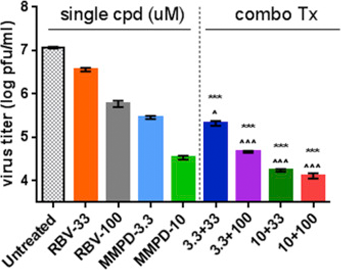
Reduction in virus production is significantly enhanced in combinations of MMPD and RBV compared with either agent alone, with up to 3 log reduction in virus titer relative to untreated control.
-
Mol Immunol
Antiviral activity of merimepodib against foot and mouth disease virus in vitro and in vivo. [Abstract]2019 Oct:114:226-232. PMID: 31386979
Merimepodib purchased from MedChemExpress. Usage Cited in: Mol Immunol. 2019 Oct:114:226-232. [Abstract]
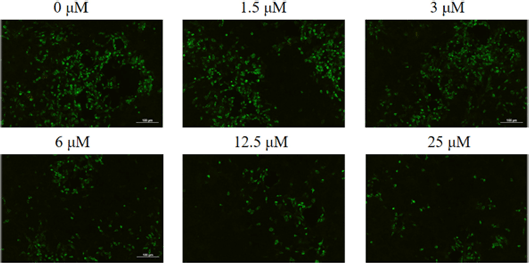
IBRS-2 cells in 12-well plates are infected with 100 TCID50 FMDV O/MY98/BY/2010. The cells were treated with or without Merimepodib at indicated concentration for 12 h. The FMDV antigens were determined by IFA, the green fluorescence represents the intracelluar distribution of FMDV.
Merimepodib purchased from MedChemExpress. Usage Cited in: Mol Immunol. 2019 Oct:114:226-232. [Abstract]
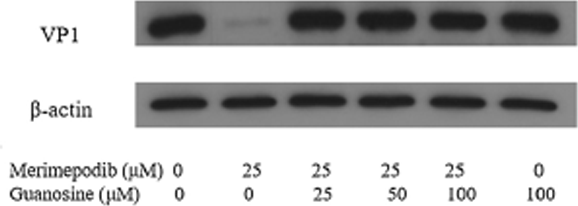
The viral VP1 protein and β-actin are detected by western blot. β-actin was used as an internal control. A serial dilution of guanosine (from 100 μM to 25μM) are added to FMDV infected IBRS-2 cells, when treated with 25 μM merimepodib for 48 h. Cell viability and VP1 protein is analysed as described above.


Solvent & Solubility
In Vitro:
DMSO : ≥ 31 mg/mL (68.51 mM; Hygroscopic DMSO has a significant impact on the solubility of product, please use newly opened DMSO)
* "≥" means soluble, but saturation unknown.
Please refer to the solubility information to select the appropriate solvent. Once prepared, please aliquot and store the solution to prevent product inactivation from repeated freeze-thaw cycles.
Storage method and period of stock solution: -80°C, 2 years; -20°C, 1 year. When stored at -80°C, please use it within 2 years. When stored at -20°C, please use it within 1 year.
Please refer to the solubility information to select the appropriate solvent. Once prepared, please aliquot and store the solution to prevent product inactivation from repeated freeze-thaw cycles.
Storage method and period of stock solution: -80°C, 2 years; -20°C, 1 year. When stored at -80°C, please use it within 2 years. When stored at -20°C, please use it within 1 year.
Concentration (start) × Volume (start) = Concentration (final) × Volume (final)
In Vivo:
Select the appropriate dissolution method based on your experimental animal and administration route.
- For the following dissolution methods, please ensure to first prepare a clear stock solution using an In Vitro approach and then sequentially add co-solvents:
- To ensure reliable experimental results, the clarified stock solution can be appropriately stored based on storage conditions. As for the working solution for In Vivo experiments, it is recommended to prepare freshly and use it on the same day.
- The percentages shown for the solvents indicate their volumetric ratio in the final prepared solution. If precipitation or phase separation occurs during preparation, heat and/or sonication can be used to aid dissolution.
Add each solvent one by one: 10% DMSO 40% PEG300 5% Tween-80 45% Saline
Solubility: ≥ 2.5 mg/mL (5.53 mM); Clear solution
This protocol yields a clear solution of ≥ 2.5 mg/mL (saturation unknown).
Taking 1 mL working solution as an example, add 100 μL DMSO stock solution (25.0 mg/mL) to 400 μL PEG300, and mix evenly; then add 50 μL Tween-80 and mix evenly; then add 450 μL Saline to adjust the volume to 1 mL.
Preparation of Saline: Dissolve 0.9 g sodium chloride in ddH₂O and dilute to 100 mL to obtain a clear Saline solution.
Add each solvent one by one: 10% DMSO 90% (20% SBE-β-CD in Saline)
Solubility: ≥ 2.5 mg/mL (5.53 mM); Clear solution
This protocol yields a clear solution of ≥ 2.5 mg/mL (saturation unknown).
Taking 1 mL working solution as an example, add 100 μL DMSO stock solution (25.0 mg/mL) to 900 μL 20% SBE-β-CD in Saline, and mix evenly.
Preparation of 20% SBE-β-CD in Saline (4°C, storage for one week): 2 g SBE-β-CD powder is dissolved in 10 mL Saline, completely dissolve until clear.
In Vivo Dissolution Calculator
Please enter the basic information of animal experiments:
-
-
-
-
Recommended: Prepare an additional quantity of animals to account for potential losses during experiments.
Please enter your animal formula composition:
-
%DMSO +
Recommended: Keep the proportion of DMSO in working solution below 2% if your animal is weak.
-
%+
-
+%Tween-80 + +
-
%Saline +
The co-solvents required include: DMSO, . All of co-solvents are available by MedChemExpress (MCE). , Tween 80. All of co-solvents are available by MedChemExpress (MCE).
Working solution concentration: 0.22 mg/mL
Method for preparing stock solution: mg drug dissolved in μL DMSO. Stock solution concentration: mg/mL.
1. Take μL DMSO stock solution;
2. Add μL .
μL , mix evenly;
3. Then add μL Tween 80, mix evenly;
4. Then add μL
Please ensure that the stock solution in the first step is dissolved to a clear state, and add co-solvents in sequence. You can use ultrasonic heating (ultrasonic cleaner, recommended frequency 20-40 kHz), vortexing, etc. to assist dissolution.

Protocols
-
Research Protocol for Infectious Diseases
Infectious-disease experiments test how pathogens interact with host barriers, innate immune receptors, inflammatory signaling, pathogen replication, and tissue injury; pattern-recognition receptors such as TLRs, RIG-I-like receptors, NOD-like receptors, and inflammasomes detect microbial molecules and activate NF-κB, interferon, and cytokine responses. The central hypothesis is that infection severity reflects the balance between pathogen burden and host response: protective inflammation restricts pathogen growth, whereas excessive or mislocalized inflammation contributes to tissue damage and disease phenotype. Unresolved questions include which host pathways are protective versus pathogenic, why some infection models fail to translate to human disease, and which combined readouts best predict clinically relevant infection outcomes.


Purity & Documentation
-
Data Sheet (274 KB)
-
SDS (393 KB)
- English - EN (393 KB)
- Français - FR (393 KB)
- Deutsch - DE (393 KB)
- Norwegian - NO (393 KB)
- Español - ES (393 KB)
- Swedish - SV (393 KB)
- Italian - IT (393 KB)
- Korean - KR (393 KB)
- Portuguese - PT (393 KB)
-
Handling Instructions (2659 KB)
References
[1]. Jain J, et al. VX-497: a novel, selective IMPDH inhibitor and immunosuppressive agent. J Pharm Sci. 2001 May;90(5):625-37. [Content Brief]
[2]. Markland W, et al. Broad-spectrum antiviral activity of the IMP dehydrogenase inhibitor VX-497: a comparison with ribavirin and demonstration of antiviral additivity with alpha interferon. Antimicrob Agents Chemother. 2000 Apr;44(4):859-66. [Content Brief]
[3]. Decker CJ, et al. The novel IMPDH inhibitor VX-497 prolongs skin graft survival and improves graft versus host disease in mice. Drugs Exp Clin Res. 2001;27(3):89-95. [Content Brief]


Complete Stock Solution Preparation Table
Please refer to the solubility information to select the appropriate solvent. Once prepared, please aliquot and store the solution to prevent product inactivation from repeated freeze-thaw cycles.
Storage method and period of stock solution: -80°C, 2 years; -20°C, 1 year. When stored at -80°C, please use it within 2 years. When stored at -20°C, please use it within 1 year.
| Optional Solvent | Concentration Solvent Mass | 1 mg | 5 mg | 10 mg | 25 mg |
|---|---|---|---|---|---|
| DMSO | 1 mM | 2.2101 mL | 11.0507 mL | 22.1014 mL | 55.2535 mL |
| 5 mM | 0.4420 mL | 2.2101 mL | 4.4203 mL | 11.0507 mL | |
| 10 mM | 0.2210 mL | 1.1051 mL | 2.2101 mL | 5.5254 mL | |
| 15 mM | 0.1473 mL | 0.7367 mL | 1.4734 mL | 3.6836 mL | |
| 20 mM | 0.1105 mL | 0.5525 mL | 1.1051 mL | 2.7627 mL | |
| 25 mM | 0.0884 mL | 0.4420 mL | 0.8841 mL | 2.2101 mL | |
| 30 mM | 0.0737 mL | 0.3684 mL | 0.7367 mL | 1.8418 mL | |
| 40 mM | 0.0553 mL | 0.2763 mL | 0.5525 mL | 1.3813 mL | |
| 50 mM | 0.0442 mL | 0.2210 mL | 0.4420 mL | 1.1051 mL | |
| 60 mM | 0.0368 mL | 0.1842 mL | 0.3684 mL | 0.9209 mL |


Merimepodib Related Classifications
HY-13986 Related Classifications
 Powered by Bioz