



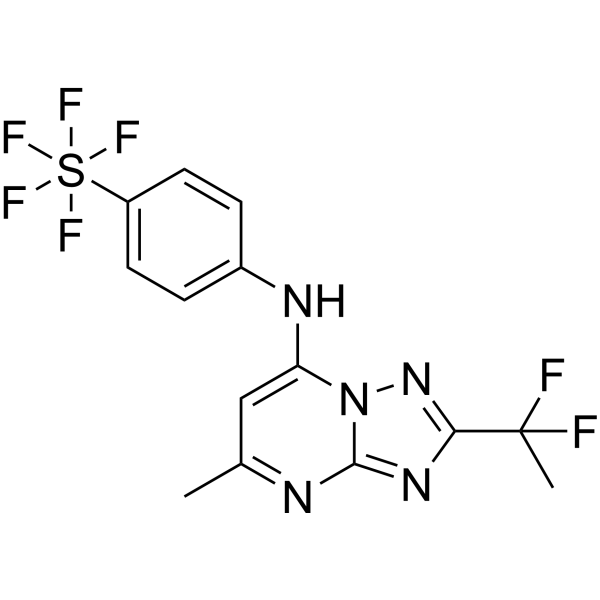
DSM265
Based on 2 publication(s) in Google Scholar
DSM265 is a long-duration inhibitor of P. falciparum dihydroorotate dehydrogenase (PfDHODH) with an IC50 of 8.9 nM. DSM265 can also inhibit the growth of Pf3D7 parasites with an EC50 of 4.3 nM.
For research use only. We do not sell to patients.
- Purity : 99.92%
- CAS No.: 1282041-94-4
- Formula: C14H12F7N5S
- Molecular Weight:415.33
-
Storage:Powder -20°C, 3 years , 4°C, 2 years ; In solvent -80°C, 2 years , -20°C, 1 year

To place orders, for customer services and technical support, please contact: MedChemExpress USA
Tel: 609-228-6898 E-mail: [email protected] [email protected]


-
 Biological Activity
-
Chemical Information
-
Solvent & Solubility
- Purity & Documentation
- References
-
 Help & FAQs


-
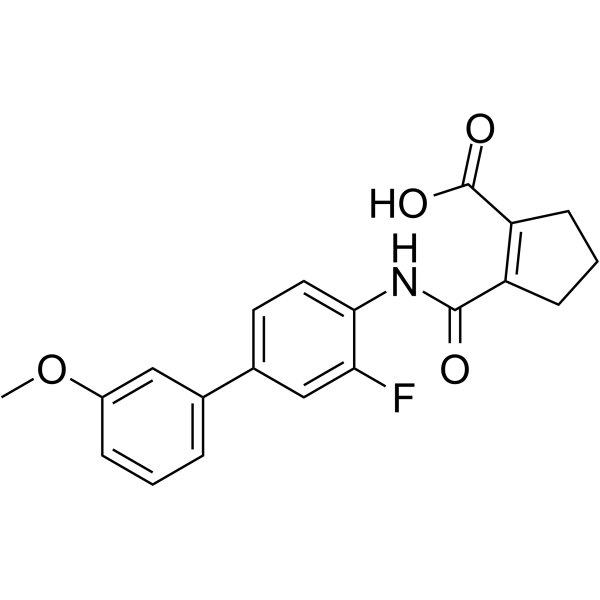
HY-14908
VidofludimusDHODH Inhibitor -
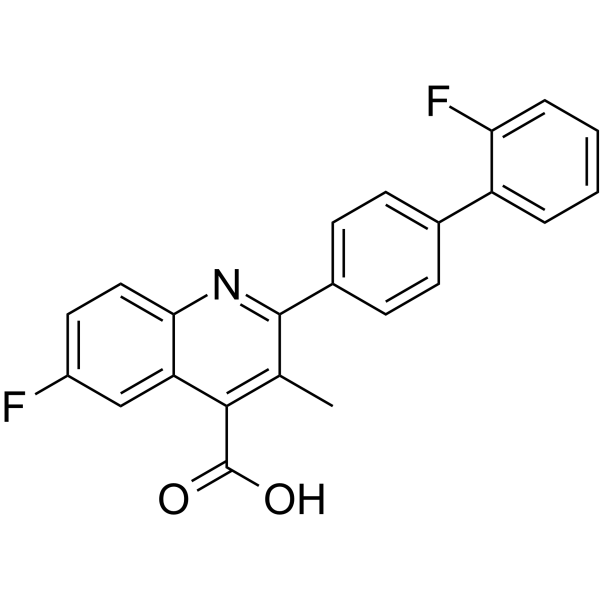
HY-108325
BrequinarDHODH Inhibitor -
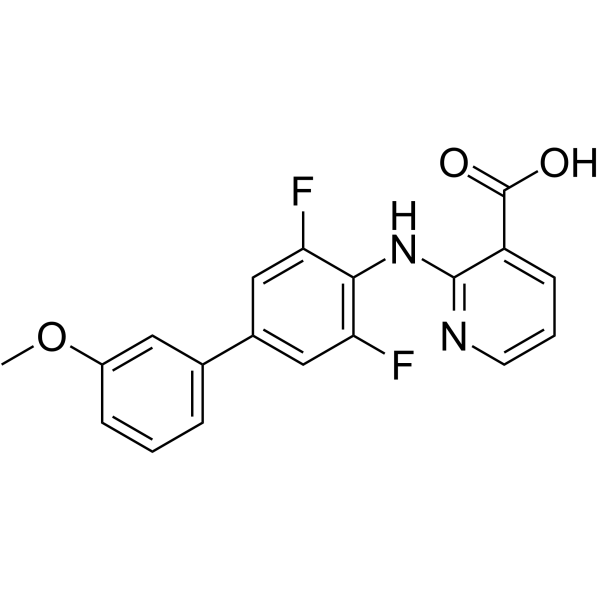
HY-129239
FarudodstatDHODH Inhibitor -
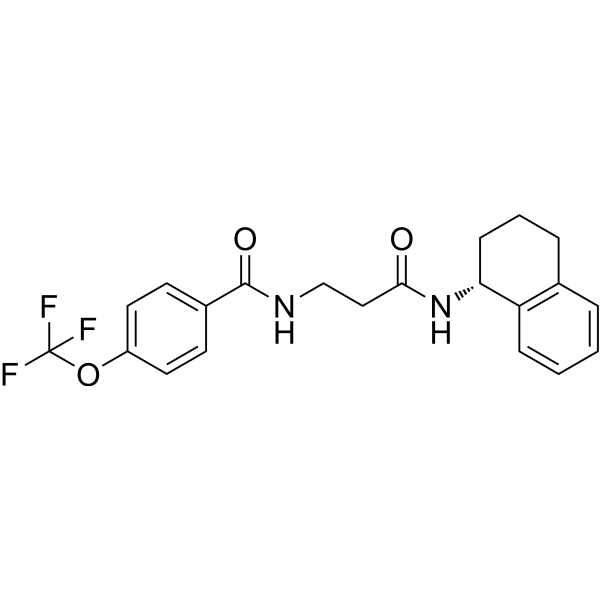
HY-100688
ML390DHODH Inhibitor -
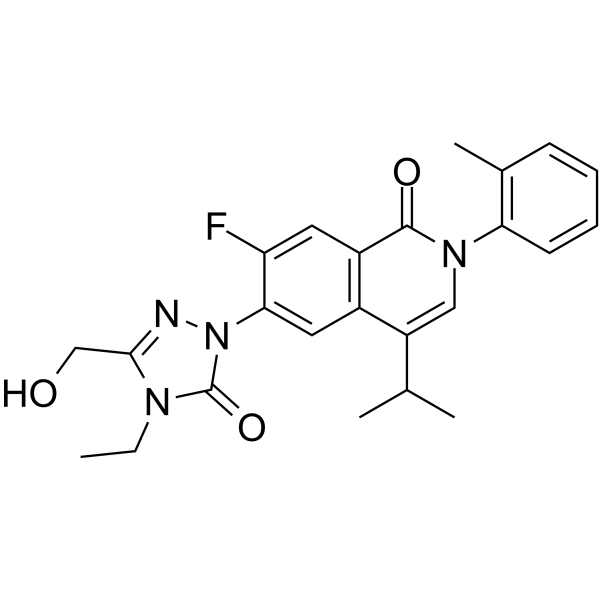
HY-139189
JNJ-74856665DHODH Inhibitor -
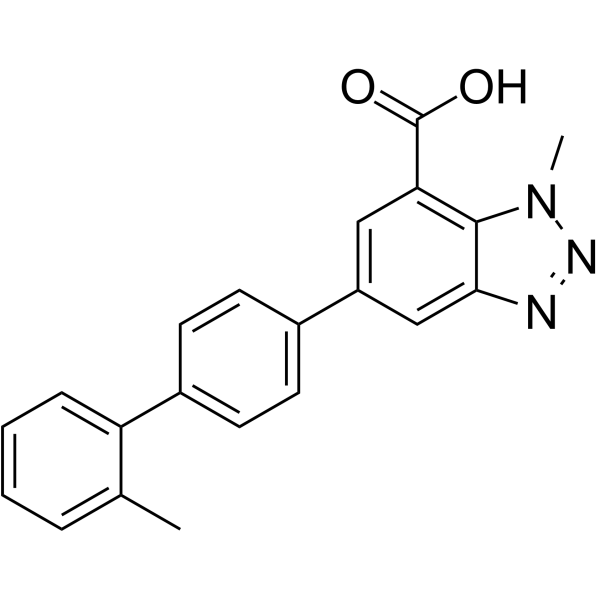
HY-137463
AG-636DHODH Inhibitor -
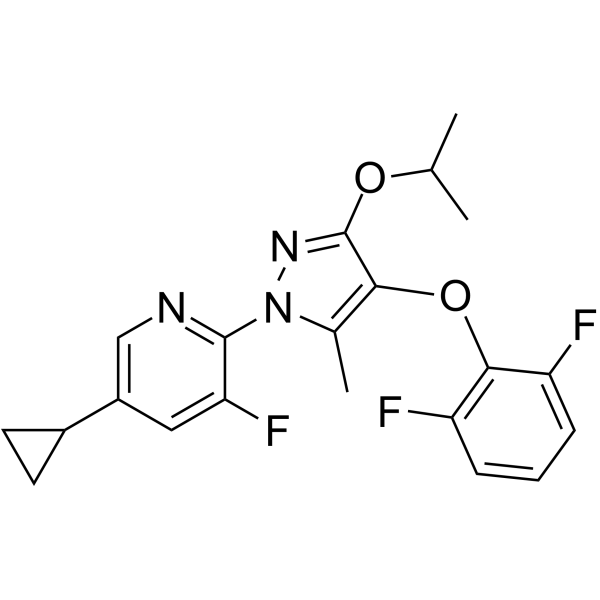
HY-135282
DHODH-IN-1Potent DHODH Inhibitor -
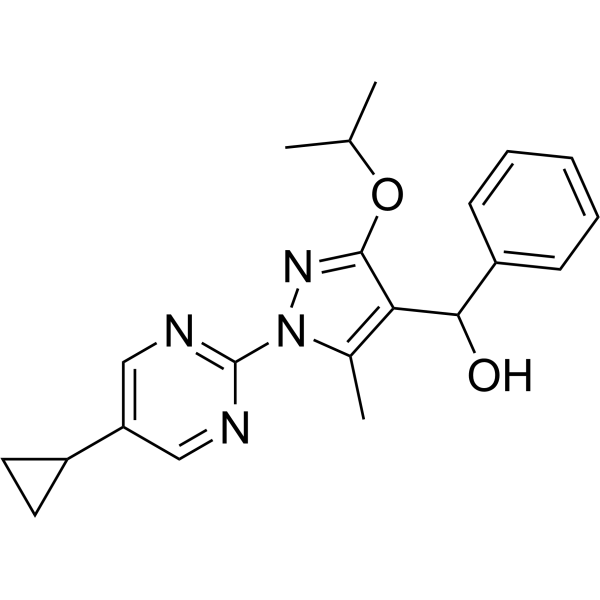
HY-128787
hDHODH-IN-4DHODH Inhibitor -
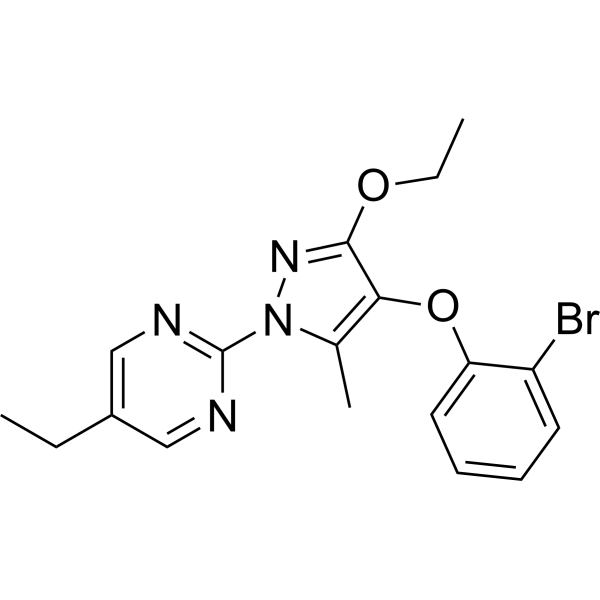
HY-135570
hDHODH-IN-3HsDHODH Inhibitor -
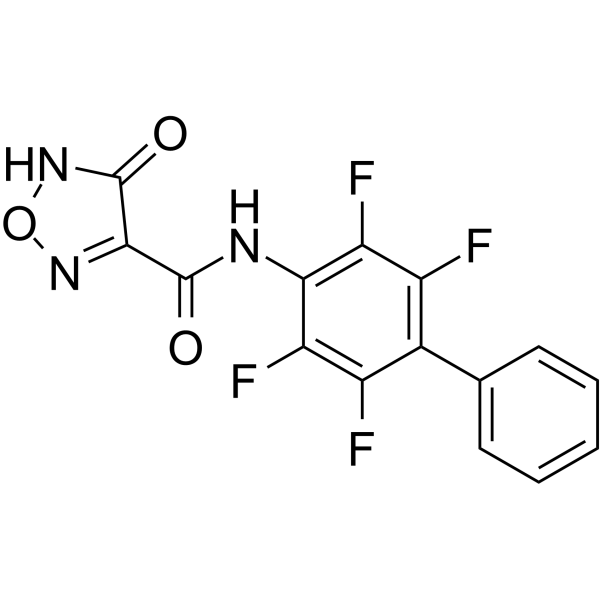
HY-135678
DHODH-IN-14DHODH Inhibitor -
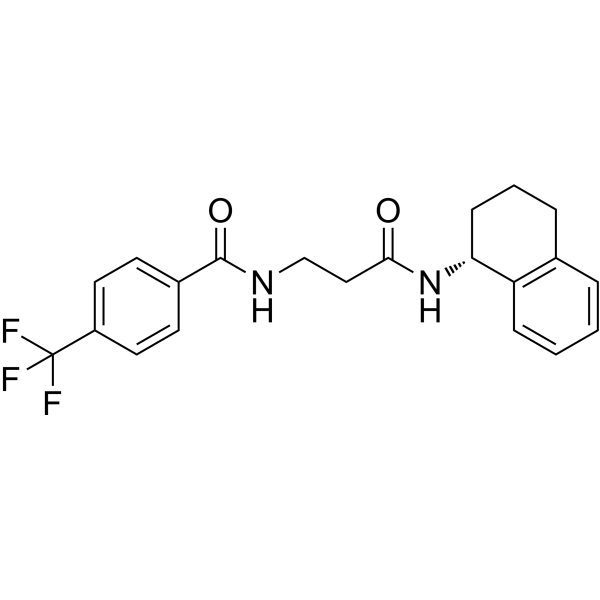
HY-135664
hDHODH-IN-5DHODH Inhibitor -
HY-112645
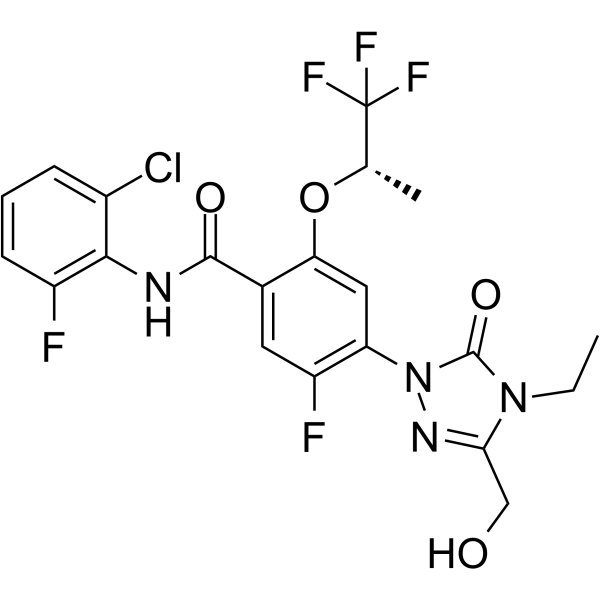
BAY-2402234DHODH Inhibitor
Publications Citing Use of MedChemExpress (MCE) DSM265
MoreAll Parasite Isoforms
More

Biological Activity
Description
IC50 & Target
[1]|
Plasmodium |
Cellular Effect
|
Cell Line

|
Type | Value | Description | References |
|---|---|---|---|---|
| HepG2 | CC50 |
>30 μM
Compound: DSM265
|
Cytotoxicity against human HepG2 cells assessed as reduction in cell viability incubated for 72 hrs by CellTiter-Glo assay
Cytotoxicity against human HepG2 cells assessed as reduction in cell viability incubated for 72 hrs by CellTiter-Glo assay
|
[PMID: 33620219] |
| HepG2 | CC50 |
>50 μM
Compound: 1; DSM265
|
Cytotoxicity against human HepG2 cells assessed as reduction in cell viability
Cytotoxicity against human HepG2 cells assessed as reduction in cell viability
|
[PMID: 32248693] |
| HepG2 | EC50 |
>50 μM
Compound: 38, DSM265
|
Cytotoxicity against human HepG2 cells
Cytotoxicity against human HepG2 cells
|
[PMID: 21696174] |
| L1210 | CC50 |
>50 μM
Compound: 1; DSM265
|
Cytotoxicity against mouse L1210 cells assessed as reduction in cell viability
Cytotoxicity against mouse L1210 cells assessed as reduction in cell viability
|
[PMID: 32248693] |
| L1210 | EC50 |
>50 μM
Compound: 38, DSM265
|
Cytotoxicity against mouse L1210 cells
Cytotoxicity against mouse L1210 cells
|
[PMID: 21696174] |
In Vivo
DSM265 has moderate terminal elimination half-life (t1/2) of 2-4 hours for mice (0.5 to 75 mg/kg, oral) [2].
MedChemExpress (MCE) has not independently confirmed the accuracy of these methods. They are for reference only.
-
Animal Model:NOD-scid IL-2Rγnull (NSG) mice (23-36 g)[2]
-
Dosage:0.5 to 75 mg/kg
-
Administration:Oral administration; twice daily; for 4 days
-
Result:Had potent antimalarial activity with 90% effective dose (ED90) of 3 mg/kg per day (1.5 mg/kg twice daily).
Clinical Trial
| NCT Number | Sponsor | Condition | Start Date |
Phase
|
|---|---|---|---|---|
| NCT01329991 | Plexxikon| | 2011-05 | PHASE1 |


Chemical Information
-
CAS No. 1282041-94-4
-
Appearance Solid
-
Molecular Weight 415.33
-
Formula C14H12F7N5S
-
Color White to off-white
-
SMILES
CC1=NC2=NC(C(C)(F)F)=NN2C(NC3=CC=C(S(F)(F)(F)(F)F)C=C3)=C1
-
Synonyms
PfSPZ
-
Shipping
Room temperature in continental US; may vary elsewhere.
-
Storage
Powder -20°C 3 years 4°C 2 years In solvent -80°C 2 years -20°C 1 year


Publications (2)
-
Journal Impact Factor
-
Most Recent
-
Travel Med Infect Dis
Artemisinin resistance-associated gene mutations in Plasmodium falciparum: A case study of severe malaria from Mozambique. [Abstract]2024 Jan-Feb:57:102684. PMID: 38159875 -
ACS Infect Dis
Integral Solvent-Induced Protein Precipitation for Target-Engagement Studies in Plasmodium falciparum. [Abstract]2024 Dec 13;10(12):4073-4086. PMID: 39631773


Solvent & Solubility
In Vitro:
DMSO : 50 mg/mL (120.39 mM; Need ultrasonic; Hygroscopic DMSO has a significant impact on the solubility of product, please use newly opened DMSO)
Ethanol : 11.11 mg/mL (26.75 mM; Need ultrasonic)
Please refer to the solubility information to select the appropriate solvent. Once prepared, please aliquot and store the solution to prevent product inactivation from repeated freeze-thaw cycles.
Storage method and period of stock solution: -80°C, 2 years; -20°C, 1 year. When stored at -80°C, please use it within 2 years. When stored at -20°C, please use it within 1 year.
Please refer to the solubility information to select the appropriate solvent. Once prepared, please aliquot and store the solution to prevent product inactivation from repeated freeze-thaw cycles.
Storage method and period of stock solution: -80°C, 2 years; -20°C, 1 year. When stored at -80°C, please use it within 2 years. When stored at -20°C, please use it within 1 year.
Concentration (start) × Volume (start) = Concentration (final) × Volume (final)
In Vivo:
Select the appropriate dissolution method based on your experimental animal and administration route.
- For the following dissolution methods, please ensure to first prepare a clear stock solution using an In Vitro approach and then sequentially add co-solvents:
- To ensure reliable experimental results, the clarified stock solution can be appropriately stored based on storage conditions. As for the working solution for In Vivo experiments, it is recommended to prepare freshly and use it on the same day.
- The percentages shown for the solvents indicate their volumetric ratio in the final prepared solution. If precipitation or phase separation occurs during preparation, heat and/or sonication can be used to aid dissolution.
Add each solvent one by one: 10% DMSO 40% PEG300 5% Tween-80 45% Saline
Solubility: ≥ 2.75 mg/mL (6.62 mM); Clear solution
This protocol yields a clear solution of ≥ 2.75 mg/mL (saturation unknown).
Taking 1 mL working solution as an example, add 100 μL DMSO stock solution (27.5 mg/mL) to 400 μL PEG300, and mix evenly; then add 50 μL Tween-80 and mix evenly; then add 450 μL Saline to adjust the volume to 1 mL.
Preparation of Saline: Dissolve 0.9 g sodium chloride in ddH₂O and dilute to 100 mL to obtain a clear Saline solution.
In Vivo Dissolution Calculator
Please enter the basic information of animal experiments:
-
-
-
-
Recommended: Prepare an additional quantity of animals to account for potential losses during experiments.
Please enter your animal formula composition:
-
%DMSO +
Recommended: Keep the proportion of DMSO in working solution below 2% if your animal is weak.
-
%+
-
+%Tween-80 + +
-
%Saline +
The co-solvents required include: DMSO, . All of co-solvents are available by MedChemExpress (MCE). , Tween 80. All of co-solvents are available by MedChemExpress (MCE).
Working solution concentration: 0.22 mg/mL
Method for preparing stock solution: mg drug dissolved in μL DMSO. Stock solution concentration: mg/mL.
1. Take μL DMSO stock solution;
2. Add μL .
μL , mix evenly;
3. Then add μL Tween 80, mix evenly;
4. Then add μL
Please ensure that the stock solution in the first step is dissolved to a clear state, and add co-solvents in sequence. You can use ultrasonic heating (ultrasonic cleaner, recommended frequency 20-40 kHz), vortexing, etc. to assist dissolution.


Purity & Documentation
-
Data Sheet (294 KB)
-
SDS (557 KB)
- English - EN (557 KB)
- Français - FR (557 KB)
- Deutsch - DE (557 KB)
- Norwegian - NO (557 KB)
- Español - ES (557 KB)
- Swedish - SV (557 KB)
- Italian - IT (557 KB)
- Korean - KR (557 KB)
- Portuguese - PT (557 KB)
-
Handling Instructions (2659 KB)
References
[1]. Kokkonda S, et al. Tetrahydro-2-naphthyl and 2-Indanyl Triazolopyrimidines Targeting Plasmodium falciparumDihydroorotate Dehydrogenase Display Potent and Selective Antimalarial Activity. J Med Chem. 2016 Jun 9;59(11):5416-31. [Content Brief]
[2]. Phillips MA, et al. A long-duration dihydroorotate dehydrogenase inhibitor (DSM265) for prevention and treatment of malaria. Sci Transl Med. 2015 Jul 15;7(296):296ra111. [Content Brief]


Complete Stock Solution Preparation Table
Please refer to the solubility information to select the appropriate solvent. Once prepared, please aliquot and store the solution to prevent product inactivation from repeated freeze-thaw cycles.
Storage method and period of stock solution: -80°C, 2 years; -20°C, 1 year. When stored at -80°C, please use it within 2 years. When stored at -20°C, please use it within 1 year.
| Optional Solvent | Concentration Solvent Mass | 1 mg | 5 mg | 10 mg | 25 mg |
|---|---|---|---|---|---|
| Ethanol / DMSO | 1 mM | 2.4077 mL | 12.0386 mL | 24.0772 mL | 60.1931 mL |
| 5 mM | 0.4815 mL | 2.4077 mL | 4.8154 mL | 12.0386 mL | |
| 10 mM | 0.2408 mL | 1.2039 mL | 2.4077 mL | 6.0193 mL | |
| 15 mM | 0.1605 mL | 0.8026 mL | 1.6051 mL | 4.0129 mL | |
| 20 mM | 0.1204 mL | 0.6019 mL | 1.2039 mL | 3.0097 mL | |
| 25 mM | 0.0963 mL | 0.4815 mL | 0.9631 mL | 2.4077 mL | |
| DMSO | 30 mM | 0.0803 mL | 0.4013 mL | 0.8026 mL | 2.0064 mL |
| 40 mM | 0.0602 mL | 0.3010 mL | 0.6019 mL | 1.5048 mL | |
| 50 mM | 0.0482 mL | 0.2408 mL | 0.4815 mL | 1.2039 mL | |
| 60 mM | 0.0401 mL | 0.2006 mL | 0.4013 mL | 1.0032 mL | |
| 80 mM | 0.0301 mL | 0.1505 mL | 0.3010 mL | 0.7524 mL | |
| 100 mM | 0.0241 mL | 0.1204 mL | 0.2408 mL | 0.6019 mL |


DSM265 Related Classifications
HY-100184 Related Classifications
 Powered by Bioz