



9-Oxononanoic acid

Based on 1 Customer Validation
9-Oxononanoic acid (9-ONA) is an orally active acetyl-CoA carboxylase inhibitor. 9-Oxononanoic acid inhibits acetyl-CoA carboxylase via accumulation of long-chain acyl-CoA. 9-Oxononanoic acid increases carnitine palmitoyltransferase, isocitrate dehydrogenase and glucose 6-phosphate dehydrogenase activity to elevate β-oxidation and support NADPH (HY-113324) supplyactivity. 9-Oxononanoic acid stimulates phospholipase A2 activity via post-translational, non-transcriptional mechanisms. 9-Oxononanoic acid can be used for the research of atherothrombosis.
For research use only. We do not sell to patients.
- Purity : 98.29%
- CAS No.: 2553-17-5
- Formula: C9H16O3
- Molecular Weight:172.22
-
Storage:
4°C, sealed storage, away from moisture and light
* In solvent : -80°C, 1 year; -20°C, 6 months (sealed storage, away from moisture and light)


To place orders, for customer services and technical support, please contact: MedChemExpress USA
Tel: 609-228-6898 E-mail: [email protected] [email protected]


-
 Biological Activity
-
Chemical Information
-
Solvent & Solubility
- Purity & Documentation
- References
-
 Help & FAQs


-
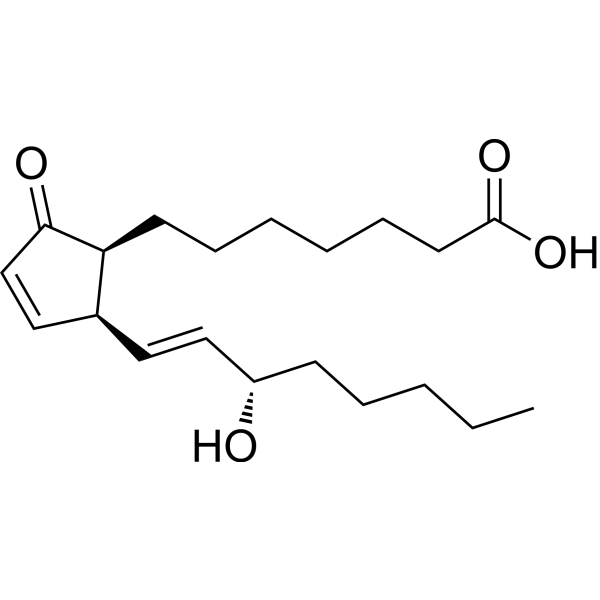
HY-114599
8-iso Prostaglandin A1AtOPR3 Substrate -
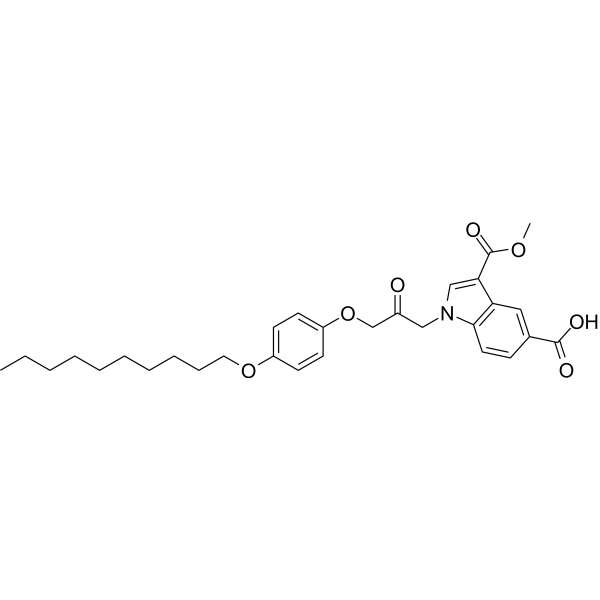
HY-116301
CAY10502cPLA2α Inhibitor -
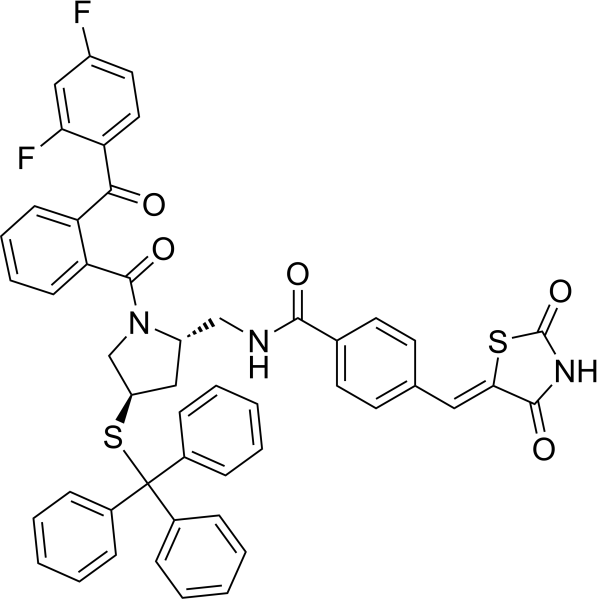
HY-111376
PyrrophenonePLA2 Inhibitor -
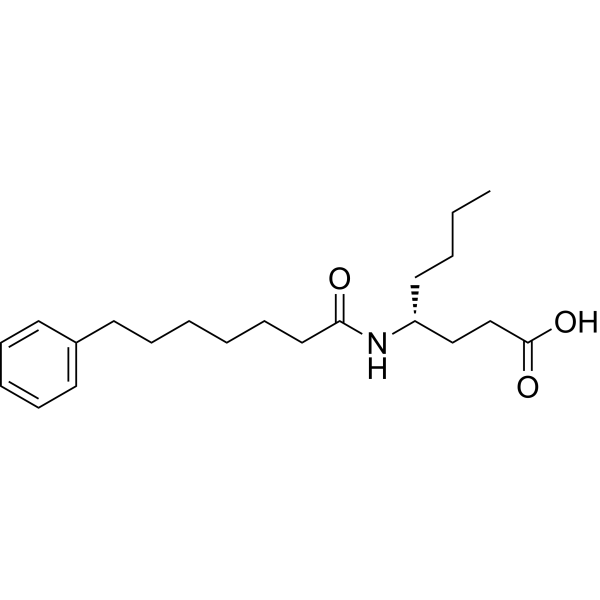
HY-120441
CAY10590sPLA2 Inhibitor -
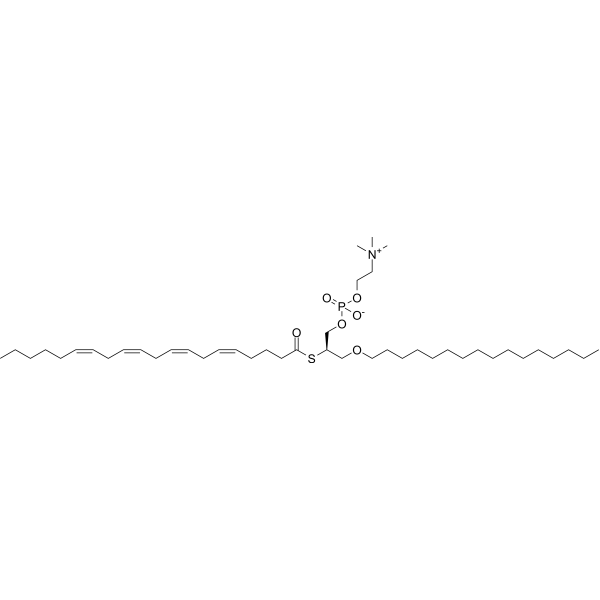
HY-W127380
Arachidonoyl thio-PCBiochemical Assay Reagent -

HY-137348
10-Pyrene-PCBiochemical Assay Reagent -

HY-W713925
Diheptanoyl Thio-PC -
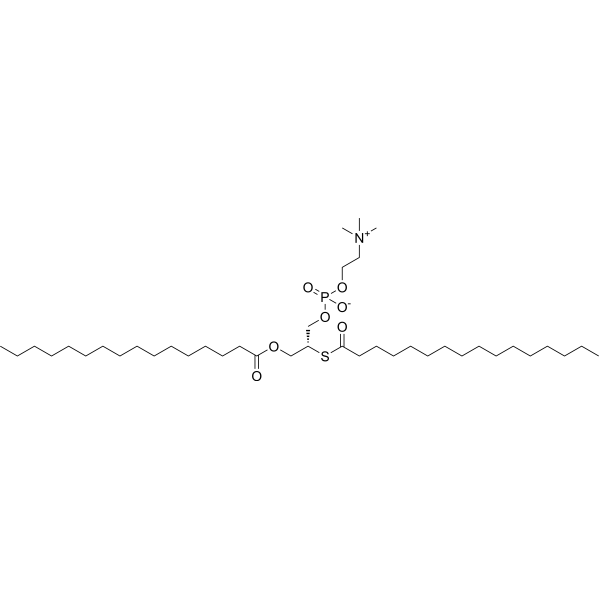
HY-125744
Palmitoyl thio-PCChromogenic Substrate -
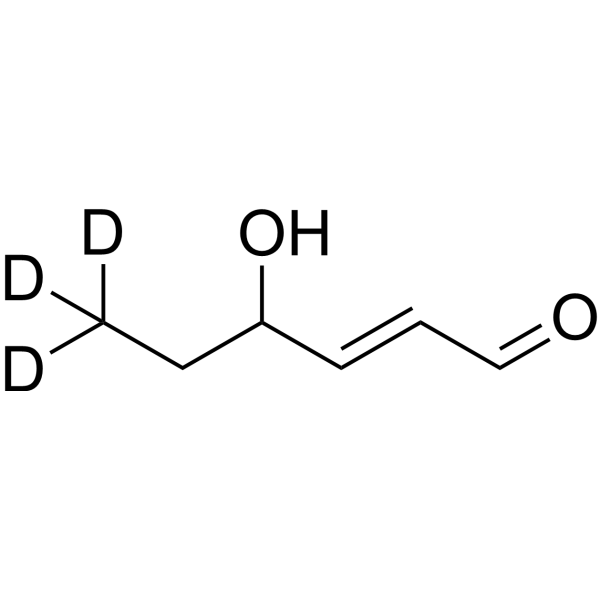
HY-124355S
4-Hydroxy hexenal-d3Stable Isotope -
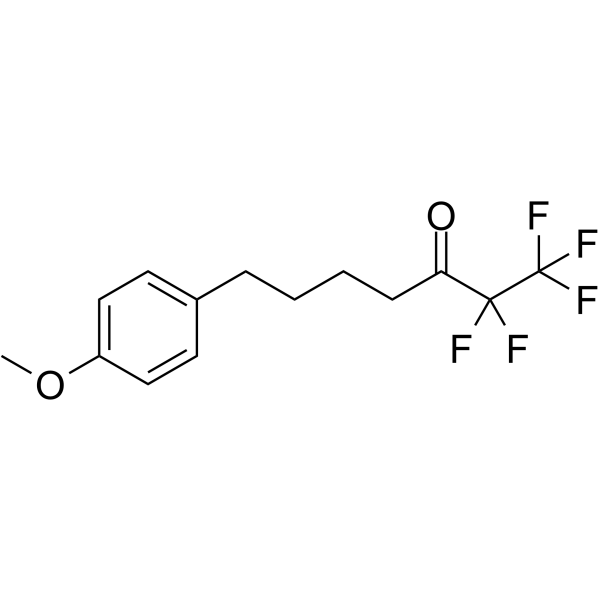
HY-125986
GK187GVIA iPLA2 Inhibitor -
HY-114524S
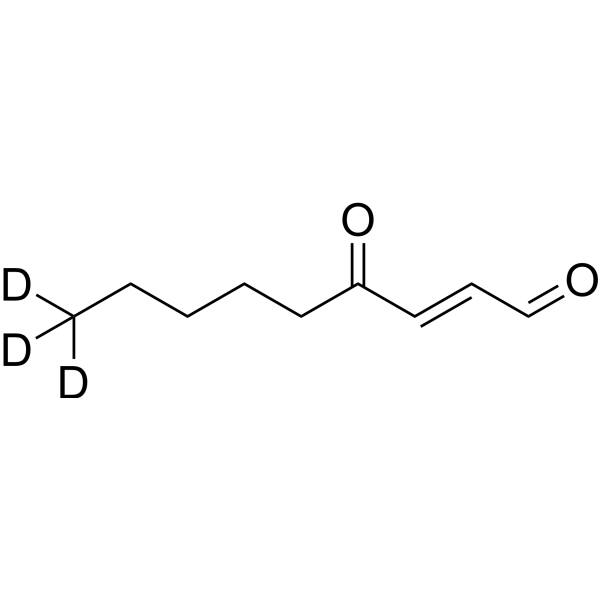
(E)-4-Oxo-2-nonenal-d3Stable Isotope


Biological Activity
Description
In Vitro
9-Oxononanoic acid (9-ONA) (1-9 μM; 10 min) treatment of fresh human whole blood increases PLA2 activity and TxB2 levels in a dose-dependent manner, with 3 μM increasing PLA2 activity by ~10% and TxB2 levels by ~50[2].
9-Oxononanoic acid (3-9 μM; 10 min) incubation of fresh human whole blood under nitrogen at 37°C restores and increases both PLA2 activity and TxB2 levels significantly, while incubation under nitrogen alone suppresses PLA2 activity and TxB2 production[2].
9-Oxononanoic acid (1-3 μM; 15 min) treatment of human platelet-rich plasma induces dose-dependent platelet aggregation[2].
MedChemExpress (MCE) has not independently confirmed the accuracy of these methods. They are for reference only. .
In Vivo
MedChemExpress (MCE) has not independently confirmed the accuracy of these methods. They are for reference only.
-
Animal Model:Wistar (male, 6 weeks old, ~100 g)[1]
-
Dosage:100 mg
-
Administration:i.g.; single dose
-
Result:Reduced de novo hepatic fatty acid synthesis by 80% when using [3H]acetate as a substrate.
Reduced de novo hepatic fatty acid synthesis by 70% when using [14C]glucose as a substrate.
Decreased hepatic acetyl-CoA carboxylase activity by 60%.
Increased hepatic carnitine palmitoyltransferase activity by 35%.
Lowered serum triacylglycerol levels by 30%.
Increased hepatic NADPH/NADP ratio from 2.19 to 5.67.
Increased hepatic glucose 6-phosphate dehydrogenase activity by 15%.
Increased hepatic isocitrate dehydrogenase activity by 15%.
Increased hepatic long-chain acyl-CoA levels from 39.0 to 81.3 nmol/g liver.
Increased hepatic acetyl-CoA levels from 45.4 to 59.6 nmol/g liver.
Increased hepatic CoASH levels from 80.0 to 190.6 nmol/g liver.
Increased hepatic long-chain acyl-CoA/acetyl-CoA ratio from 0.859 to 1.36.
Caused no changes in body weight gain, relative liver weight, serum free fatty acid levels, hepatic NADH/NAD ratio, hepatic phosphogluconate dehydrogenase activity, hepatic malate dehydrogenase activity, or hepatic fatty acid composition (except a minor reduction in phospholipid linoleic acid percentage).


Chemical Information
-
CAS No. 2553-17-5
-
Appearance Solid
-
Molecular Weight 172.22
-
Formula C9H16O3
-
Color White to off-white
-
SMILES
O=CCCCCCCCC(O)=O
-
Synonyms
9-ONA
-
Structure Classification
-
Initial Source
-
Shipping
Room temperature in continental US; may vary elsewhere.
-
Storage
4°C, sealed storage, away from moisture and light
* In solvent : -80°C, 1 year; -20°C, 6 months (sealed storage, away from moisture and light)


Solvent & Solubility
In Vitro:
DMSO : 100 mg/mL (580.65 mM; Need ultrasonic; Hygroscopic DMSO has a significant impact on the solubility of product, please use newly opened DMSO)
Please refer to the solubility information to select the appropriate solvent. Once prepared, please aliquot and store the solution to prevent product inactivation from repeated freeze-thaw cycles.
Storage method and period of stock solution: -80°C, 1 year; -20°C, 6 months (sealed storage, away from moisture and light). When stored at -80°C, please use it within 1 year. When stored at -20°C, please use it within 6 months.
Please refer to the solubility information to select the appropriate solvent. Once prepared, please aliquot and store the solution to prevent product inactivation from repeated freeze-thaw cycles.
Storage method and period of stock solution: -80°C, 1 year; -20°C, 6 months (sealed storage, away from moisture and light). When stored at -80°C, please use it within 1 year. When stored at -20°C, please use it within 6 months.
Concentration (start) × Volume (start) = Concentration (final) × Volume (final)
In Vivo:
Select the appropriate dissolution method based on your experimental animal and administration route.
- For the following dissolution methods, please ensure to first prepare a clear stock solution using an In Vitro approach and then sequentially add co-solvents:
- To ensure reliable experimental results, the clarified stock solution can be appropriately stored based on storage conditions. As for the working solution for In Vivo experiments, it is recommended to prepare freshly and use it on the same day.
- The percentages shown for the solvents indicate their volumetric ratio in the final prepared solution. If precipitation or phase separation occurs during preparation, heat and/or sonication can be used to aid dissolution.
Add each solvent one by one: 10% DMSO 40% PEG300 5% Tween-80 45% Saline
Solubility: ≥ 5 mg/mL (29.03 mM); Clear solution
This protocol yields a clear solution of ≥ 5 mg/mL (saturation unknown).
Taking 1 mL working solution as an example, add 100 μL DMSO stock solution (50.0 mg/mL) to 400 μL PEG300, and mix evenly; then add 50 μL Tween-80 and mix evenly; then add 450 μL Saline to adjust the volume to 1 mL.
Preparation of Saline: Dissolve 0.9 g sodium chloride in ddH₂O and dilute to 100 mL to obtain a clear Saline solution.
Add each solvent one by one: 10% DMSO 90% (20% SBE-β-CD in Saline)
Solubility: ≥ 5 mg/mL (29.03 mM); Clear solution
This protocol yields a clear solution of ≥ 5 mg/mL (saturation unknown).
Taking 1 mL working solution as an example, add 100 μL DMSO stock solution (50.0 mg/mL) to 900 μL 20% SBE-β-CD in Saline, and mix evenly.
Preparation of 20% SBE-β-CD in Saline (4°C, storage for one week): 2 g SBE-β-CD powder is dissolved in 10 mL Saline, completely dissolve until clear.
In Vivo Dissolution Calculator
Please enter the basic information of animal experiments:
-
-
-
-
Recommended: Prepare an additional quantity of animals to account for potential losses during experiments.
Please enter your animal formula composition:
-
%DMSO +
Recommended: Keep the proportion of DMSO in working solution below 2% if your animal is weak.
-
%+
-
+%Tween-80 + +
-
%Saline +
The co-solvents required include: DMSO, . All of co-solvents are available by MedChemExpress (MCE). , Tween 80. All of co-solvents are available by MedChemExpress (MCE).
Working solution concentration: 0.22 mg/mL
Method for preparing stock solution: mg drug dissolved in μL DMSO. Stock solution concentration: mg/mL. * In solvent : -80°C, 1 year; -20°C, 6 months (sealed storage, away from moisture and light)
1. Take μL DMSO stock solution;
2. Add μL .
μL , mix evenly;
3. Then add μL Tween 80, mix evenly;
4. Then add μL
Please ensure that the stock solution in the first step is dissolved to a clear state, and add co-solvents in sequence. You can use ultrasonic heating (ultrasonic cleaner, recommended frequency 20-40 kHz), vortexing, etc. to assist dissolution.


Purity & Documentation
-
Data Sheet (270 KB)
-
SDS (394 KB)
- English - EN (394 KB)
- Français - FR (394 KB)
- Deutsch - DE (394 KB)
- Norwegian - NO (394 KB)
- Español - ES (394 KB)
- Swedish - SV (394 KB)
- Italian - IT (394 KB)
- Korean - KR (394 KB)
- Portuguese - PT (394 KB)
-
Handling Instructions (2659 KB)
References
[1]. Minamoto S, et al. Effect of orally administered 9-oxononanoic acid on lipogenesis in rat liver. Biochim Biophys Acta. 1988;958(2):199-204. [Content Brief]
[2]. Ren R, et al. A lipid peroxidation product 9-oxononanoic acid induces phospholipase A2 activity and thromboxane A2 production in human blood. J Clin Biochem Nutr. 2013 May;52(3):228-33. [Content Brief]


Complete Stock Solution Preparation Table
Please refer to the solubility information to select the appropriate solvent. Once prepared, please aliquot and store the solution to prevent product inactivation from repeated freeze-thaw cycles.
Storage method and period of stock solution: -80°C, 1 year; -20°C, 6 months (sealed storage, away from moisture and light). When stored at -80°C, please use it within 1 year. When stored at -20°C, please use it within 6 months.
| Optional Solvent | Concentration Solvent Mass | 1 mg | 5 mg | 10 mg | 25 mg |
|---|---|---|---|---|---|
| DMSO | 1 mM | 5.8065 mL | 29.0326 mL | 58.0653 mL | 145.1632 mL |
| 5 mM | 1.1613 mL | 5.8065 mL | 11.6131 mL | 29.0326 mL | |
| 10 mM | 0.5807 mL | 2.9033 mL | 5.8065 mL | 14.5163 mL | |
| 15 mM | 0.3871 mL | 1.9355 mL | 3.8710 mL | 9.6775 mL | |
| 20 mM | 0.2903 mL | 1.4516 mL | 2.9033 mL | 7.2582 mL | |
| 25 mM | 0.2323 mL | 1.1613 mL | 2.3226 mL | 5.8065 mL | |
| 30 mM | 0.1936 mL | 0.9678 mL | 1.9355 mL | 4.8388 mL | |
| 40 mM | 0.1452 mL | 0.7258 mL | 1.4516 mL | 3.6291 mL | |
| 50 mM | 0.1161 mL | 0.5807 mL | 1.1613 mL | 2.9033 mL | |
| 60 mM | 0.0968 mL | 0.4839 mL | 0.9678 mL | 2.4194 mL | |
| 80 mM | 0.0726 mL | 0.3629 mL | 0.7258 mL | 1.8145 mL | |
| 100 mM | 0.0581 mL | 0.2903 mL | 0.5807 mL | 1.4516 mL |


9-Oxononanoic acid Related Classifications
HY-W612338 Related Classifications
 Powered by Bioz