



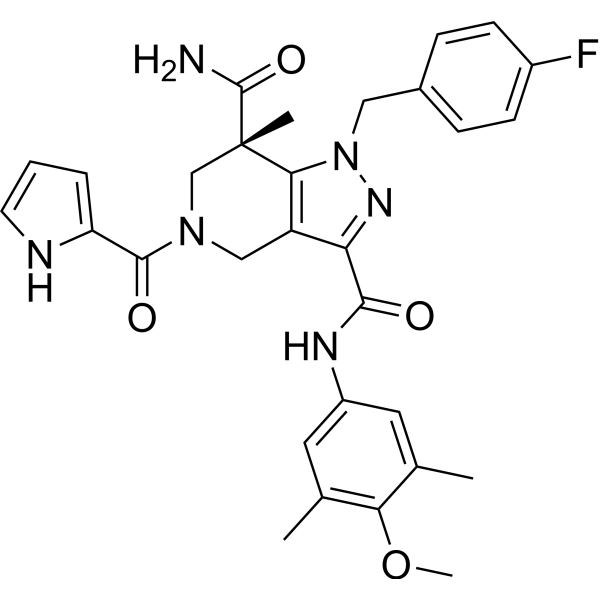
GSK864
Based on 8 publication(s) in Google Scholar
GSK864, a chemical probe, is an isocitrate dehydrogenase 1 (IDH1) mutant inhibitor; inhibits IDH1 mutants R132C, R132H, and R132G with IC50 values of 8.8, 15.2 and 16.6 nM.
Nur für Forschungszwecke. Wir verkaufen nicht an Patienten.
- Reinheit : 99.91%
- CAS. Nr.: 1816331-66-4
- Formel: C30H31FN6O4
- Molecular Weight:558.60
-
Speicherung:Powder -20°C, 3 years , 4°C, 2 years ; In solvent -80°C, 2 years , -20°C, 1 year

To place orders, for customer services and technical support, please contact: MedChemExpress USA
Tel: 609-228-6898 E-mail: [email protected] [email protected]


-
 Biologische Aktivität
-
Chemical Information
-
Lösungsmittel & Löslichkeit
- Reinheit & Dokumentation
- Verweise
-
 Help & FAQs


-
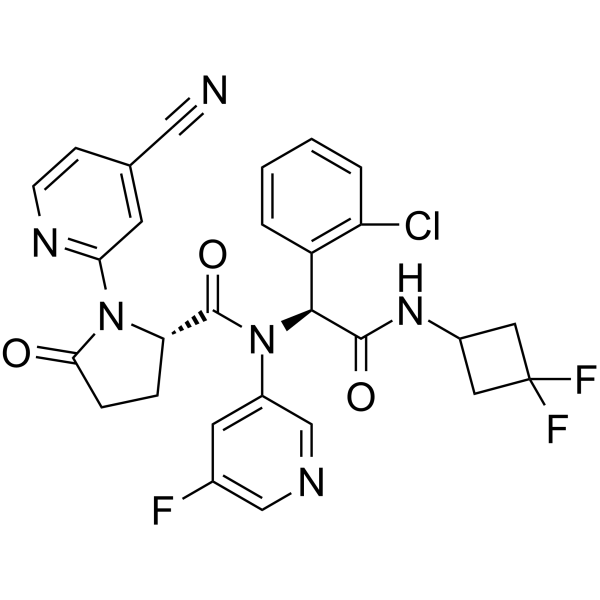
HY-18767
IvosidenibIDH1 Inhibitor -
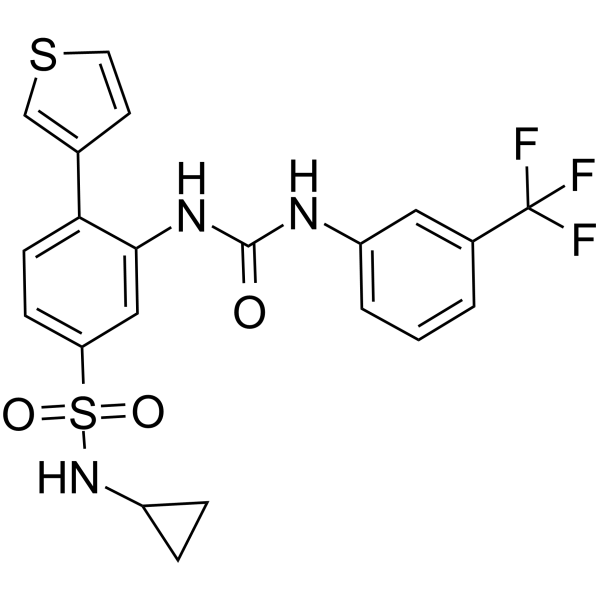
HY-15734
AGI-6780Anti-cancer Agent -
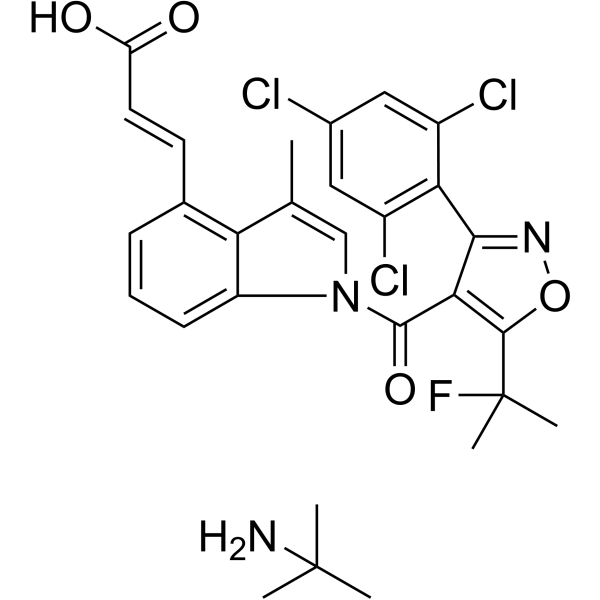
HY-129545
DS-1001bIDH-1 Inhibtior -
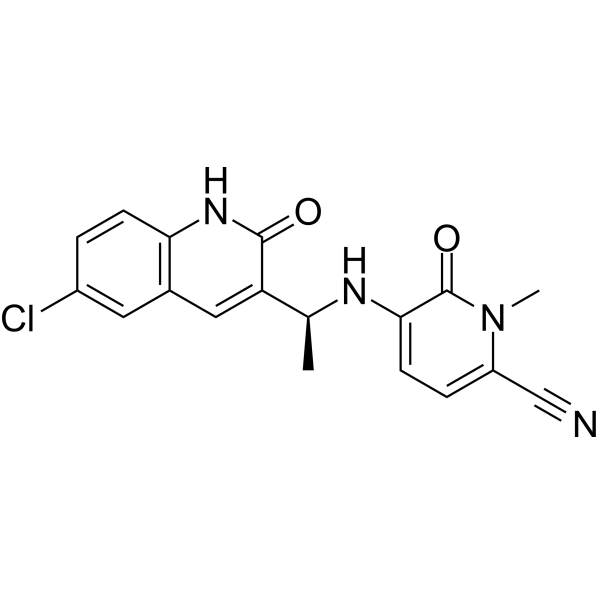
HY-114226
OlutasidenibIDH1m Inhibitor -
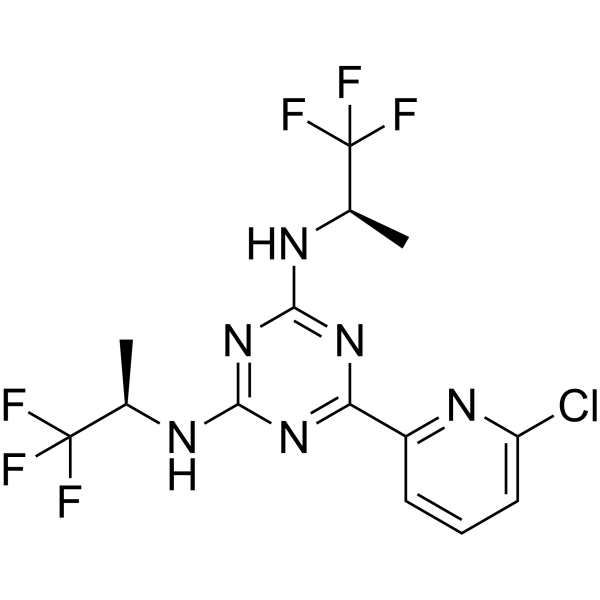
HY-104042
VorasidenibmIDH1/2 Inhibitor -
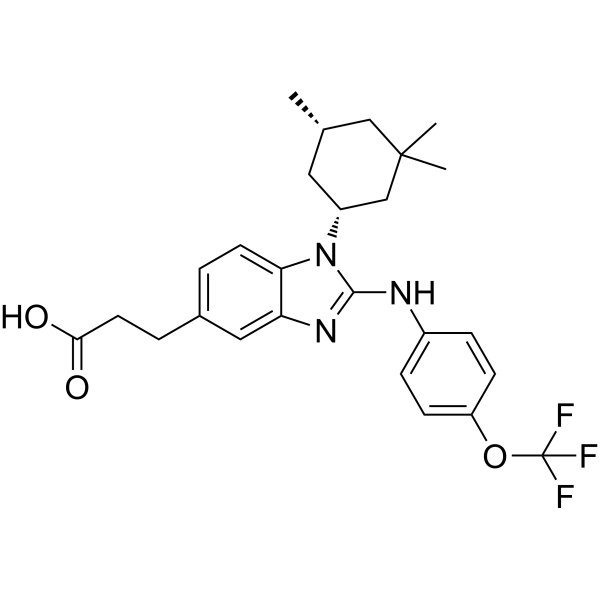
HY-100020
BAY-1436032Pan-mutant-IDH1 Inhibitor -
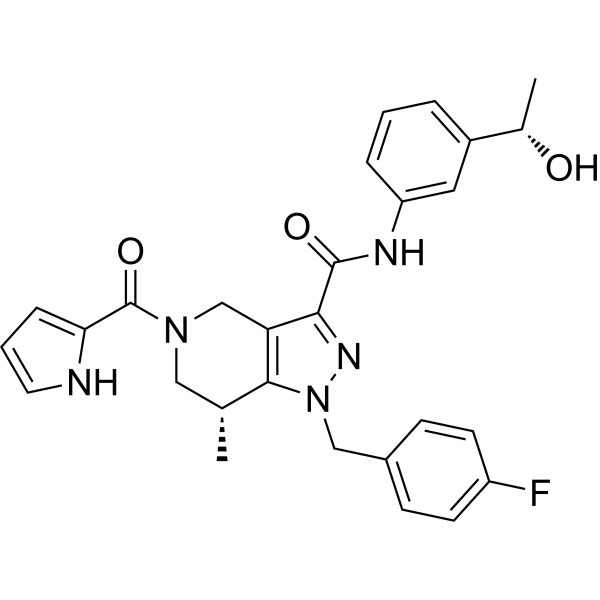
HY-18948
GSK321IDH1 Inhibitor -
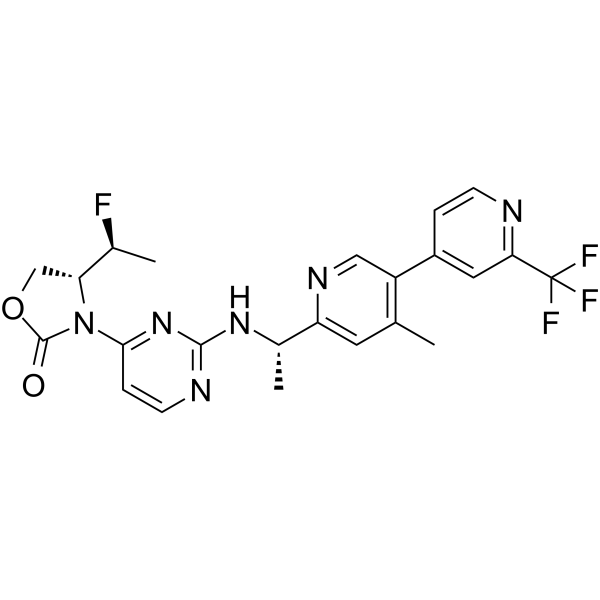
HY-104036
IDH-305IDH1(R132) Inhibitor -
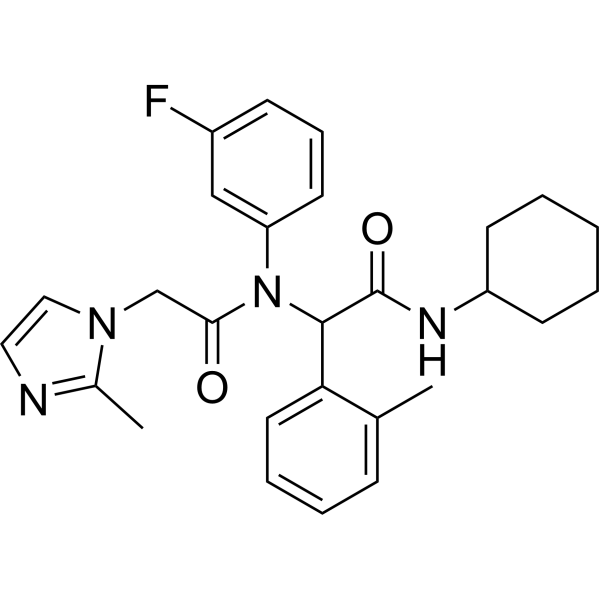
HY-18082
AGI-5198IDH1 Inhibitor -
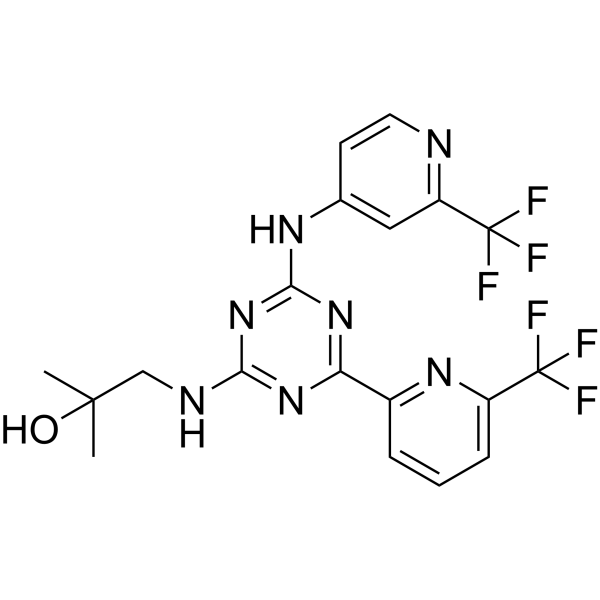
HY-18690
EnasidenibMutant IDH2 Inhibitor -
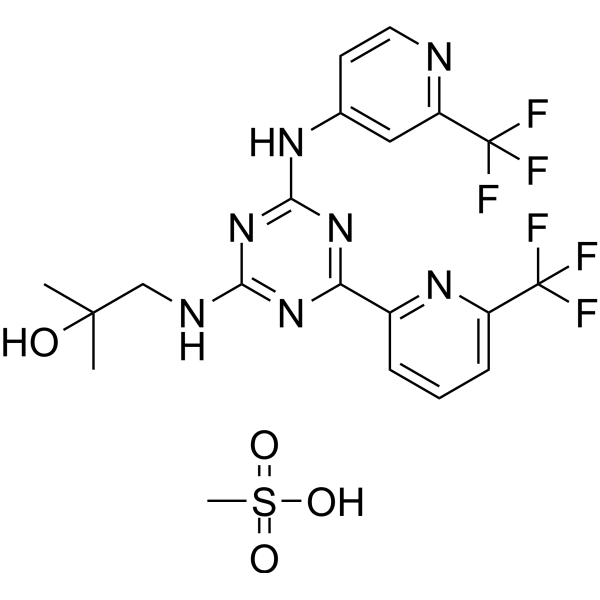
HY-18690A
Enasidenib mesylateMutant IDH2 Inhibitor -
HY-12475
Mutant IDH1-IN-1Mutant IDH1 Inhibitor
Publications Citing Use of MedChemExpress (MCE) GSK864
More- Nature. 2026 Jul;655(8123):790-800. [Abstract]
- Gut. 2020 Feb;69(2):231-242. [Abstract]
- Nat Commun. 2026 Feb 12;17(1):1214. [Abstract]
- Nat Commun. 2025 Jul 26;16(1):6913. [Abstract]
- Nat Commun. 2022 Aug 15;13(1):4785. [Abstract]
- Nat Chem Biol. 2026 Jan 13. [Abstract]
- ACS Med Chem Lett. 2018 May 1;9(7):606-611. [Abstract]
- bioRxiv. 2024 Feb 11:2024.02.06.578742. [Abstract]


Biologische Aktivität
Beschreibung
IC50 & Target
|
IDH1 |
In Vitro
In Vivo
MedChemExpress (MCE) has not independently confirmed the accuracy of these methods. They are for reference only.


Chemical Information
-
CAS. Nr. 1816331-66-4
-
Appearance Solid
-
Molecular Weight 558.60
-
Formel C30H31FN6O4
-
Color Light brown to brown
-
SMILES
FC(C=C1)=CC=C1CN2N=C(C(NC3=CC(C)=C(OC)C(C)=C3)=O)C4=C2[C@](C(N)=O)(C)CN(C(C5=CC=CN5)=O)C4
-
Versand
Room temperature in continental US; may vary elsewhere.
-
Speicherung
Powder -20°C 3 years 4°C 2 years In solvent -80°C 2 years -20°C 1 year


Publications (8)
-
Journal Impact Factor
-
Most Recent
-
Nature
2026 Jul;655(8123):790-800. PMID: 42203879 -
Gut
HNF4α pathway mapping identifies wild-type IDH1 as a targetable metabolic node in gastric cancer. [Abstract]2020 Feb;69(2):231-242. PMID: 31068366 -
Nat Commun
Human iPSC-based Modeling of Pulmonary Fibrosis Reveals p300/CBP Inhibition Suppresses Alveolar Transitional Cell State. [Abstract]2026 Feb 12;17(1):1214. PMID: 41680175 -
Nat Commun
A genetically encoded biosensor for point-of-care and live-cell detection of D-2-hydroxyglutarate. [Abstract]2025 Jul 26;16(1):6913. PMID: 40715112 -
Nat Commun
Resistance to the isocitrate dehydrogenase 1 mutant inhibitor ivosidenib can be overcome by alternative dimer-interface binding inhibitors. [Abstract]2022 Aug 15;13(1):4785. PMID: 35970853 -
Nat Chem Biol
2026 Jan 13. PMID: 41530531 -
ACS Med Chem Lett
Synthesis and Evaluation of a 18F-Labeled Triazinediamine Analogue for Imaging Mutant IDH1 Expression in Gliomas by PET. [Abstract]2018 May 1;9(7):606-611. PMID: 30034587 -
bioRxiv
αKG-mediated carnitine synthesis promotes homologous recombination via histone acetylation. [Abstract]2024 Feb 11:2024.02.06.578742. PMID: 38370789


Lösungsmittel & Löslichkeit
In Vitro:
DMSO : 100 mg/mL (179.02 mM; Need ultrasonic; Hygroscopic DMSO has a significant impact on the solubility of product, please use newly opened DMSO)
Please refer to the solubility information to select the appropriate solvent. Once prepared, please aliquot and store the solution to prevent product inactivation from repeated freeze-thaw cycles.
Storage method and period of stock solution: -80°C, 2 years; -20°C, 1 year. When stored at -80°C, please use it within 2 years. When stored at -20°C, please use it within 1 year.
Please refer to the solubility information to select the appropriate solvent. Once prepared, please aliquot and store the solution to prevent product inactivation from repeated freeze-thaw cycles.
Storage method and period of stock solution: -80°C, 2 years; -20°C, 1 year. When stored at -80°C, please use it within 2 years. When stored at -20°C, please use it within 1 year.
Konzentration (Stammlösung) × Volumen (Stammlösung) = Konzentration (Ziellösung) × Volumen (Ziellösung)
In Vivo:
Select the appropriate dissolution method based on your experimental animal and administration route.
- For the following dissolution methods, please ensure to first prepare a clear stock solution using an In Vitro approach and then sequentially add co-solvents:
- To ensure reliable experimental results, the clarified stock solution can be appropriately stored based on storage conditions. As for the working solution for In Vivo experiments, it is recommended to prepare freshly and use it on the same day.
- The percentages shown for the solvents indicate their volumetric ratio in the final prepared solution. If precipitation or phase separation occurs during preparation, heat and/or sonication can be used to aid dissolution.
Add each solvent one by one: 10% DMSO 40% PEG300 5% Tween-80 45% Saline
Solubility: ≥ 2.5 mg/mL (4.48 mM); Clear solution
This protocol yields a clear solution of ≥ 2.5 mg/mL (saturation unknown).
Taking 1 mL working solution as an example, add 100 μL DMSO stock solution (25.0 mg/mL) to 400 μL PEG300, and mix evenly; then add 50 μL Tween-80 and mix evenly; then add 450 μL Saline to adjust the volume to 1 mL.
Preparation of Saline: Dissolve 0.9 g sodium chloride in ddH₂O and dilute to 100 mL to obtain a clear Saline solution.
Add each solvent one by one: 10% DMSO 90% (20% SBE-β-CD in Saline)
Solubility: 2.5 mg/mL (4.48 mM); Suspended solution; Need ultrasonic
This protocol yields a suspended solution of 2.5 mg/mL. Suspended solution can be used for oral and intraperitoneal injection.
Taking 1 mL working solution as an example, add 100 μL DMSO stock solution (25.0 mg/mL) to 900 μL 20% SBE-β-CD in Saline, and mix evenly.
Preparation of 20% SBE-β-CD in Saline (4°C, storage for one week): 2 g SBE-β-CD powder is dissolved in 10 mL Saline, completely dissolve until clear.
In Vivo Dissolution Calculator
Please enter the basic information of animal experiments:
-
-
-
-
Recommended: Prepare an additional quantity of animals to account for potential losses during experiments.
Please enter your animal formula composition:
-
%DMSO +
Recommended: Keep the proportion of DMSO in working solution below 2% if your animal is weak.
-
%+
-
+%Tween-80 + +
-
%Saline +
The co-solvents required include: DMSO, . All of co-solvents are available by MedChemExpress (MCE). , Tween 80. All of co-solvents are available by MedChemExpress (MCE).
Working solution concentration: 0.22 mg/mL
Method for preparing stock solution: mg drug dissolved in μL DMSO. Stock solution concentration: mg/mL.
1. Take μL DMSO stock solution;
2. Add μL .
μL , mix evenly;
3. Then add μL Tween 80, mix evenly;
4. Then add μL
Please ensure that the stock solution in the first step is dissolved to a clear state, and add co-solvents in sequence. You can use ultrasonic heating (ultrasonic cleaner, recommended frequency 20-40 kHz), vortexing, etc. to assist dissolution.


Reinheit & Dokumentation
-
Data Sheet (281 KB)
-
SDS (251 KB)
- English - EN (251 KB)
- Français - FR (251 KB)
- Deutsch - DE (251 KB)
- Norwegian - NO (251 KB)
- Español - ES (251 KB)
- Swedish - SV (251 KB)
- Italian - IT (251 KB)
- Korean - KR (251 KB)
- Portuguese - PT (251 KB)
-
Handling Instructions (2659 KB)
Verweise


Complete Stock Solution Preparation Table
Please refer to the solubility information to select the appropriate solvent. Once prepared, please aliquot and store the solution to prevent product inactivation from repeated freeze-thaw cycles.
Storage method and period of stock solution: -80°C, 2 years; -20°C, 1 year. When stored at -80°C, please use it within 2 years. When stored at -20°C, please use it within 1 year.
| Optional Solvent | Concentration Solvent Mass | 1 mg | 5 mg | 10 mg | 25 mg |
|---|---|---|---|---|---|
| DMSO | 1 mM | 1.7902 mL | 8.9509 mL | 17.9019 mL | 44.7547 mL |
| 5 mM | 0.3580 mL | 1.7902 mL | 3.5804 mL | 8.9509 mL | |
| 10 mM | 0.1790 mL | 0.8951 mL | 1.7902 mL | 4.4755 mL | |
| 15 mM | 0.1193 mL | 0.5967 mL | 1.1935 mL | 2.9836 mL | |
| 20 mM | 0.0895 mL | 0.4475 mL | 0.8951 mL | 2.2377 mL | |
| 25 mM | 0.0716 mL | 0.3580 mL | 0.7161 mL | 1.7902 mL | |
| 30 mM | 0.0597 mL | 0.2984 mL | 0.5967 mL | 1.4918 mL | |
| 40 mM | 0.0448 mL | 0.2238 mL | 0.4475 mL | 1.1189 mL | |
| 50 mM | 0.0358 mL | 0.1790 mL | 0.3580 mL | 0.8951 mL | |
| 60 mM | 0.0298 mL | 0.1492 mL | 0.2984 mL | 0.7459 mL | |
| 80 mM | 0.0224 mL | 0.1119 mL | 0.2238 mL | 0.5594 mL | |
| 100 mM | 0.0179 mL | 0.0895 mL | 0.1790 mL | 0.4475 mL |


GSK864 Related Classifications
HY-19540 Related Classifications
 Powered by Bioz